Muromachi turned sword making into an industry: the uchigatana rose with massed infantry warfare, Osafune and Seki produced bundle swords beside custom orders, and the Ming trade carried Japanese blades abroad by the tens of thousands.
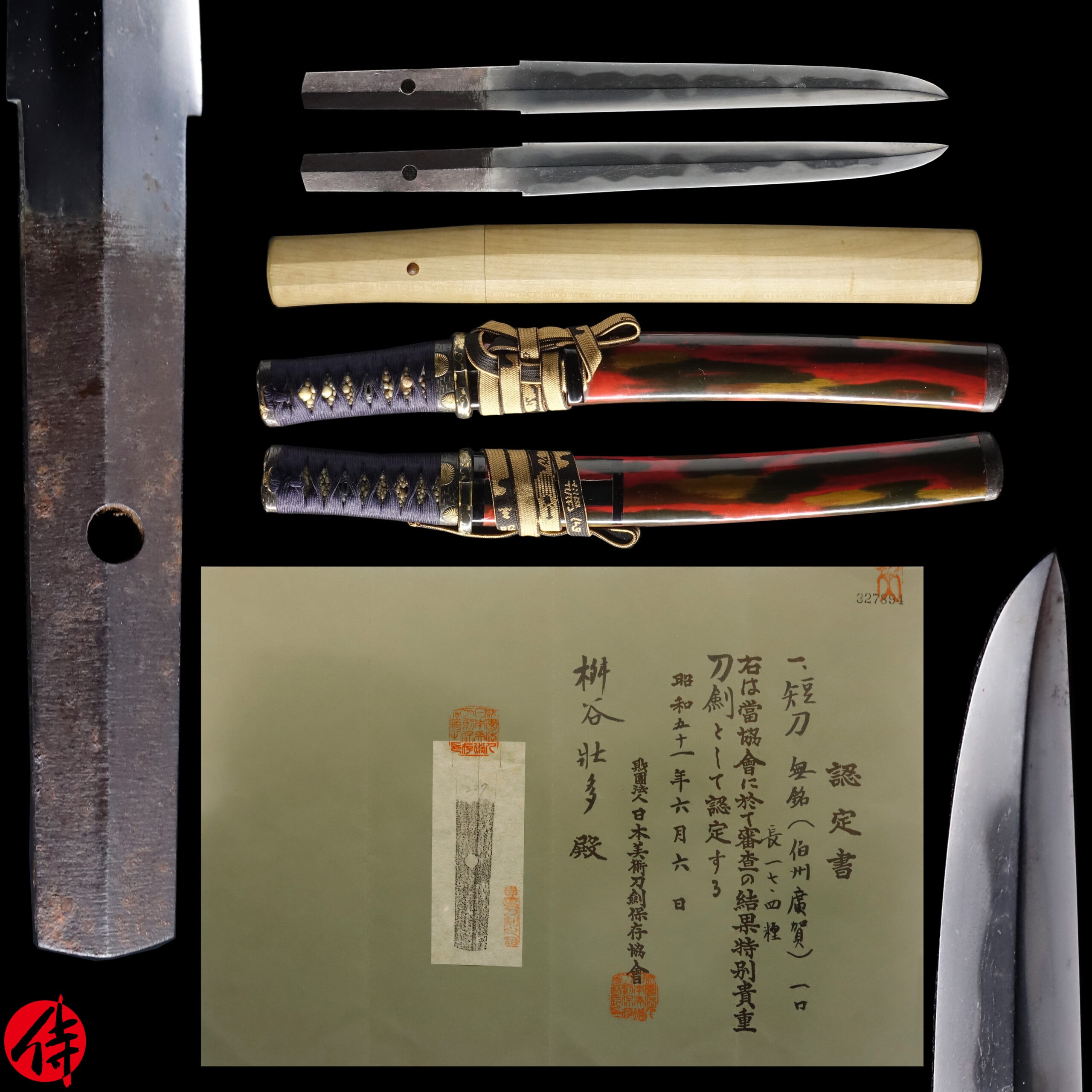
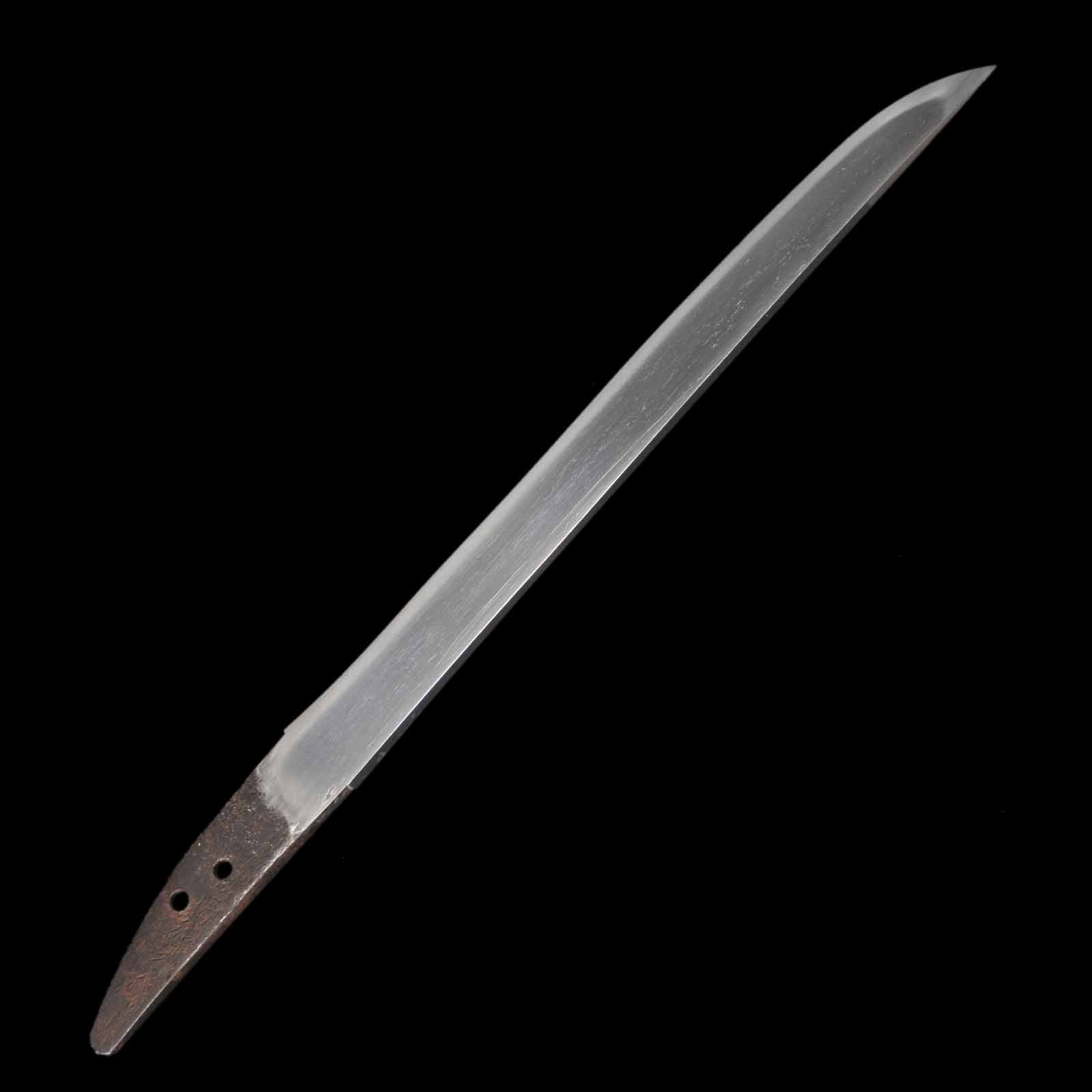
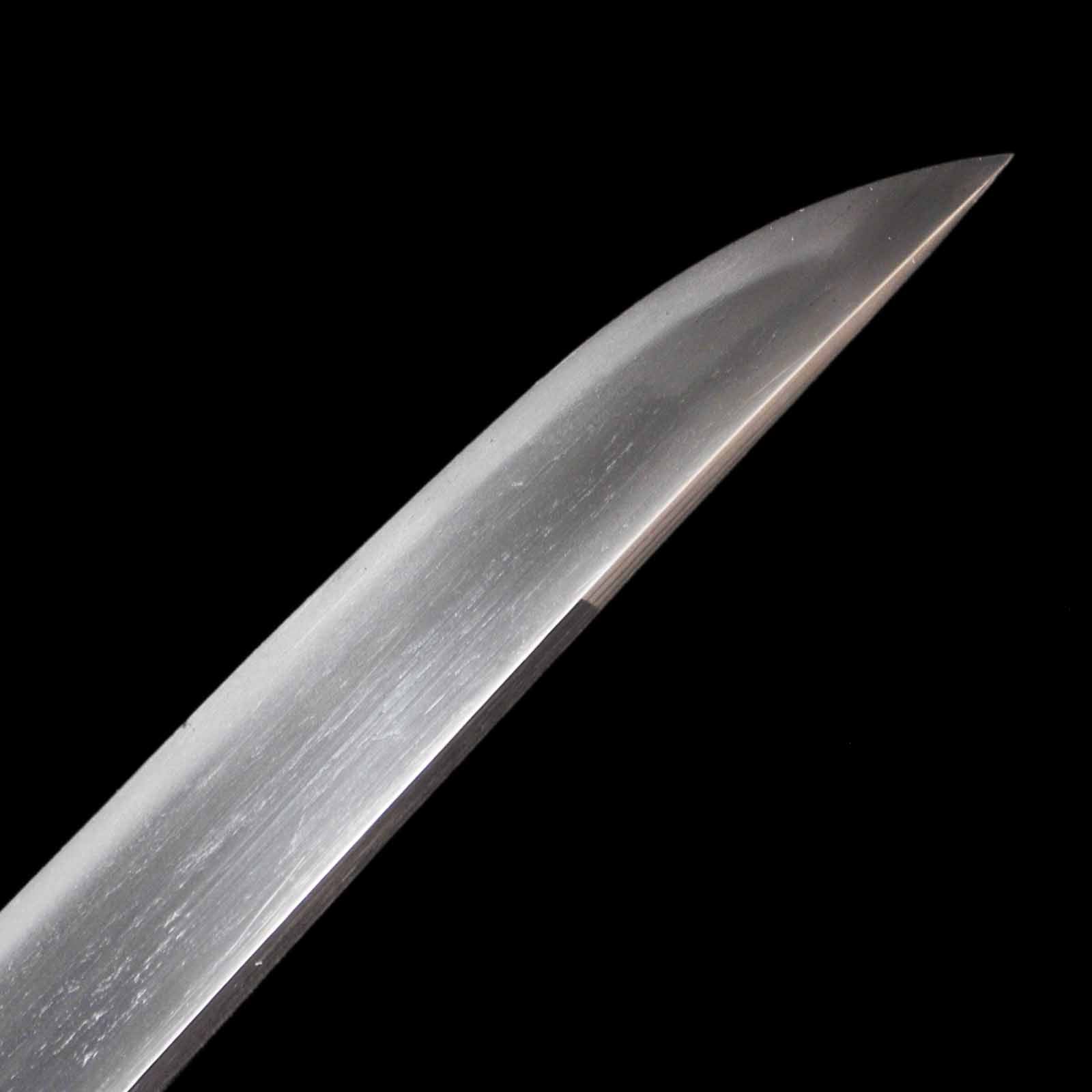
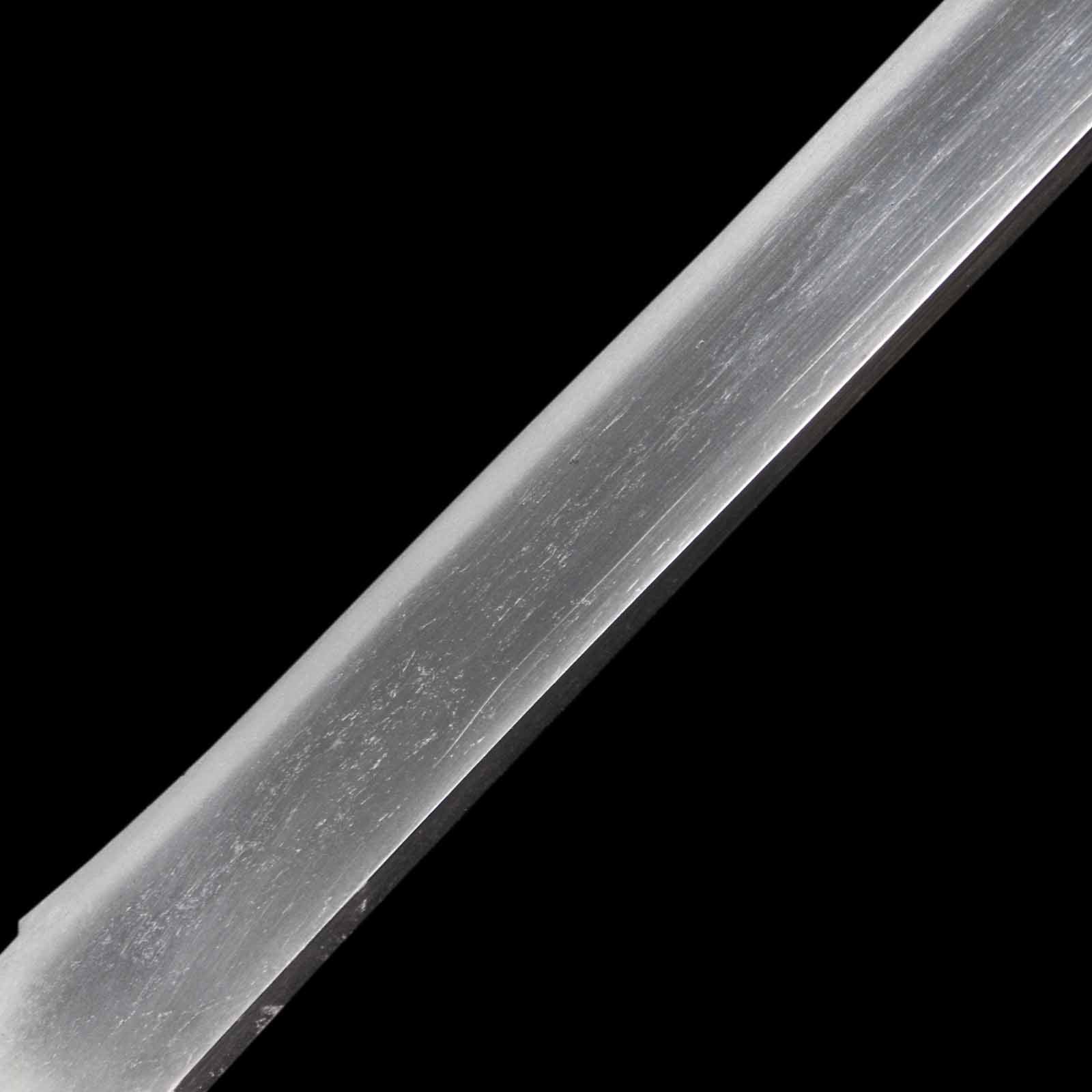
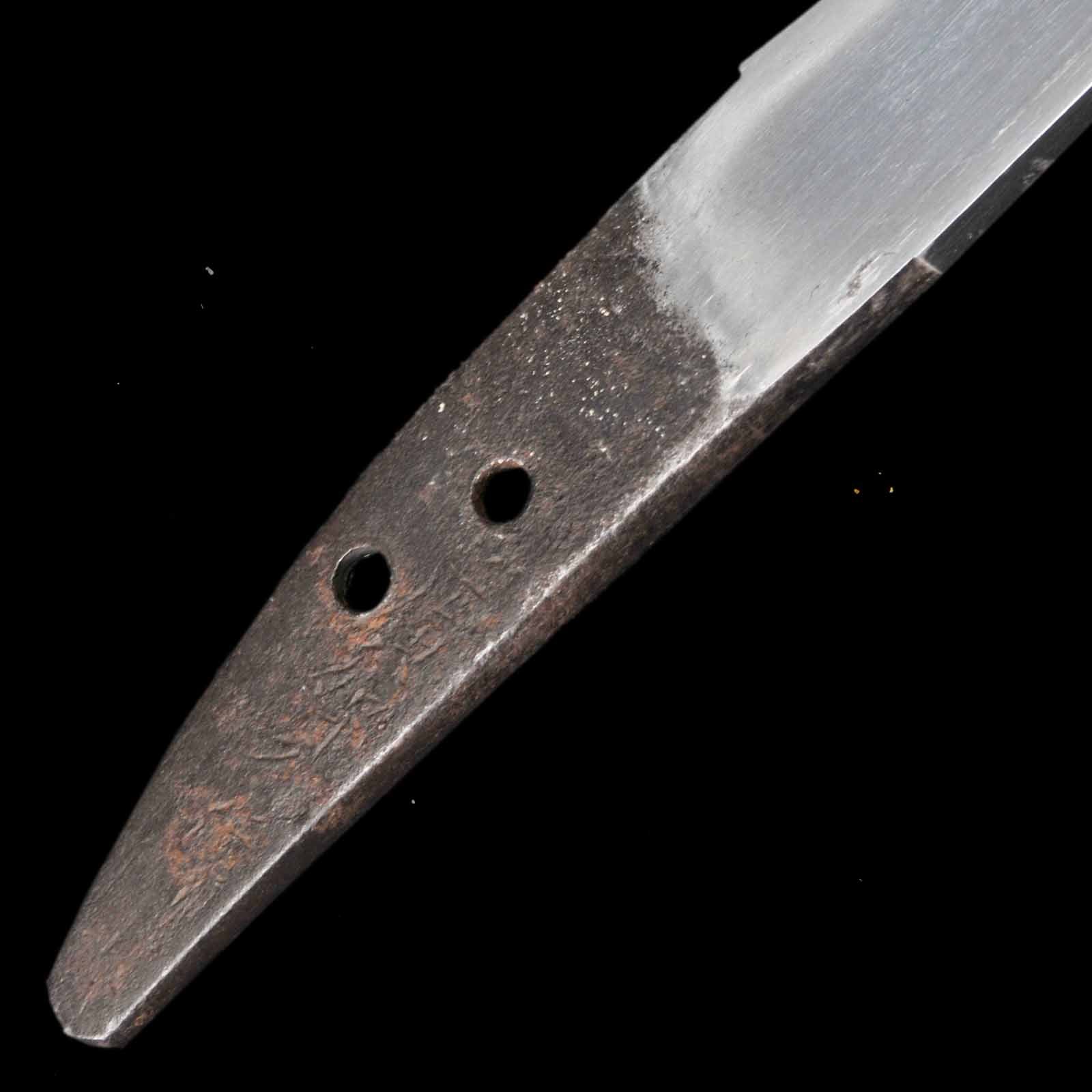
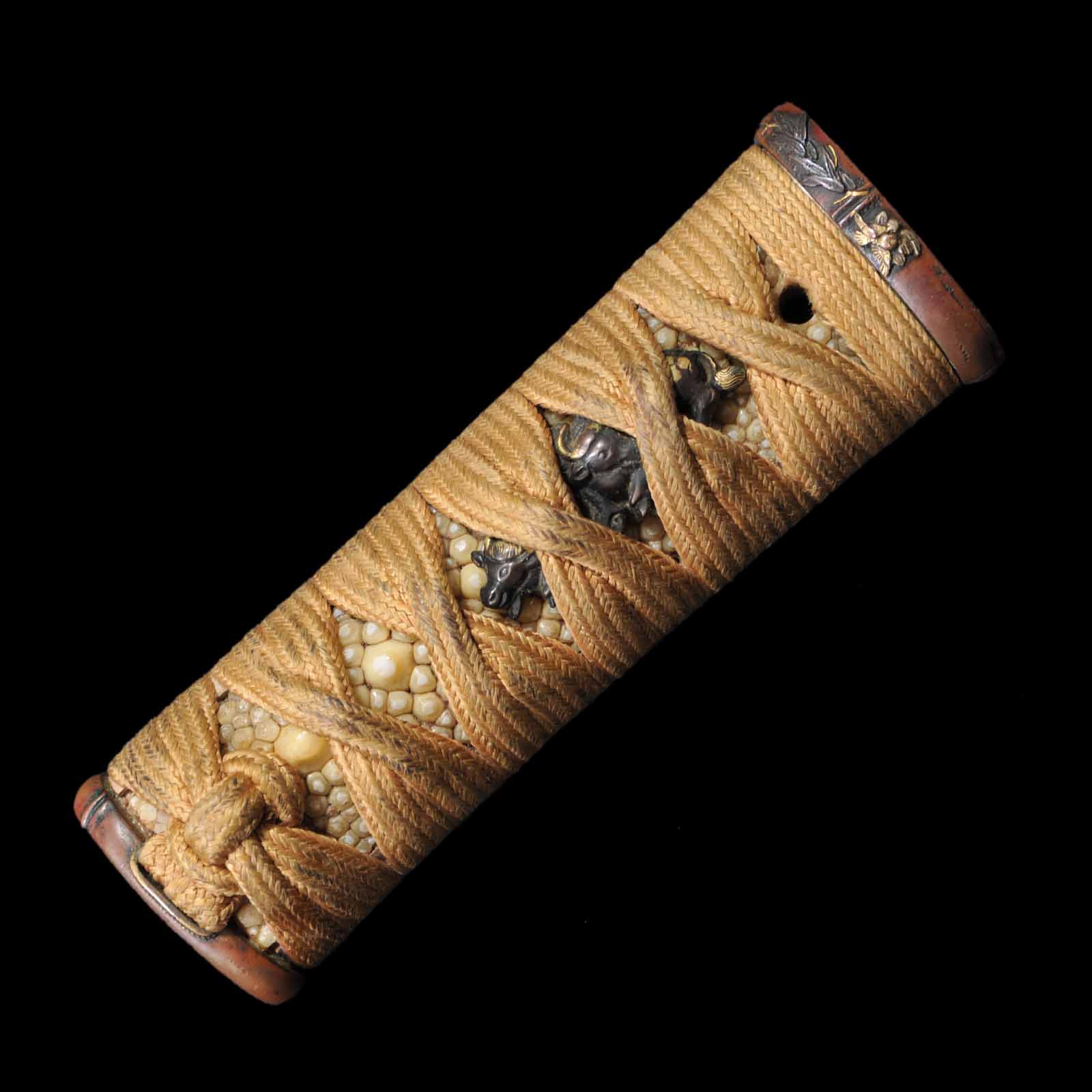
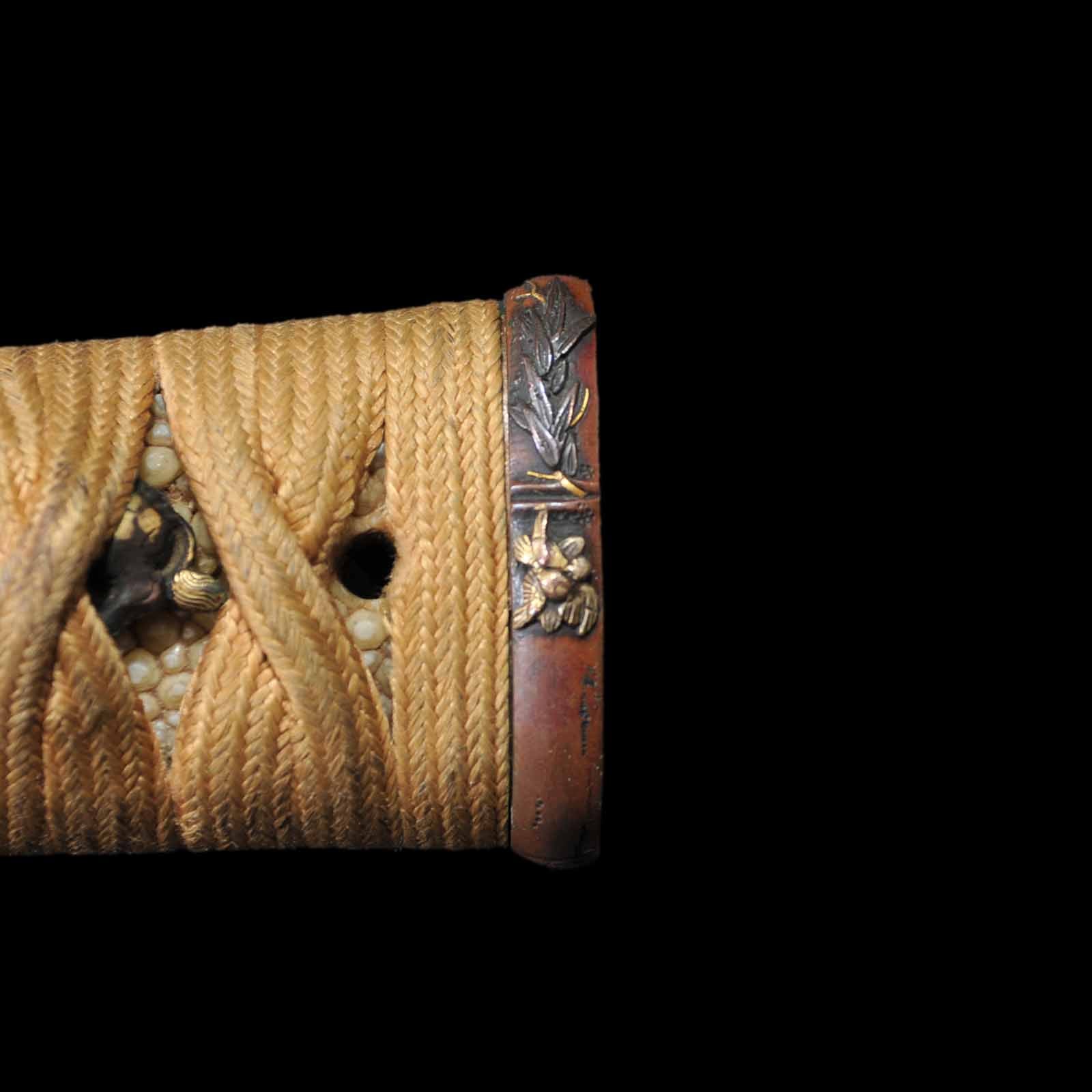
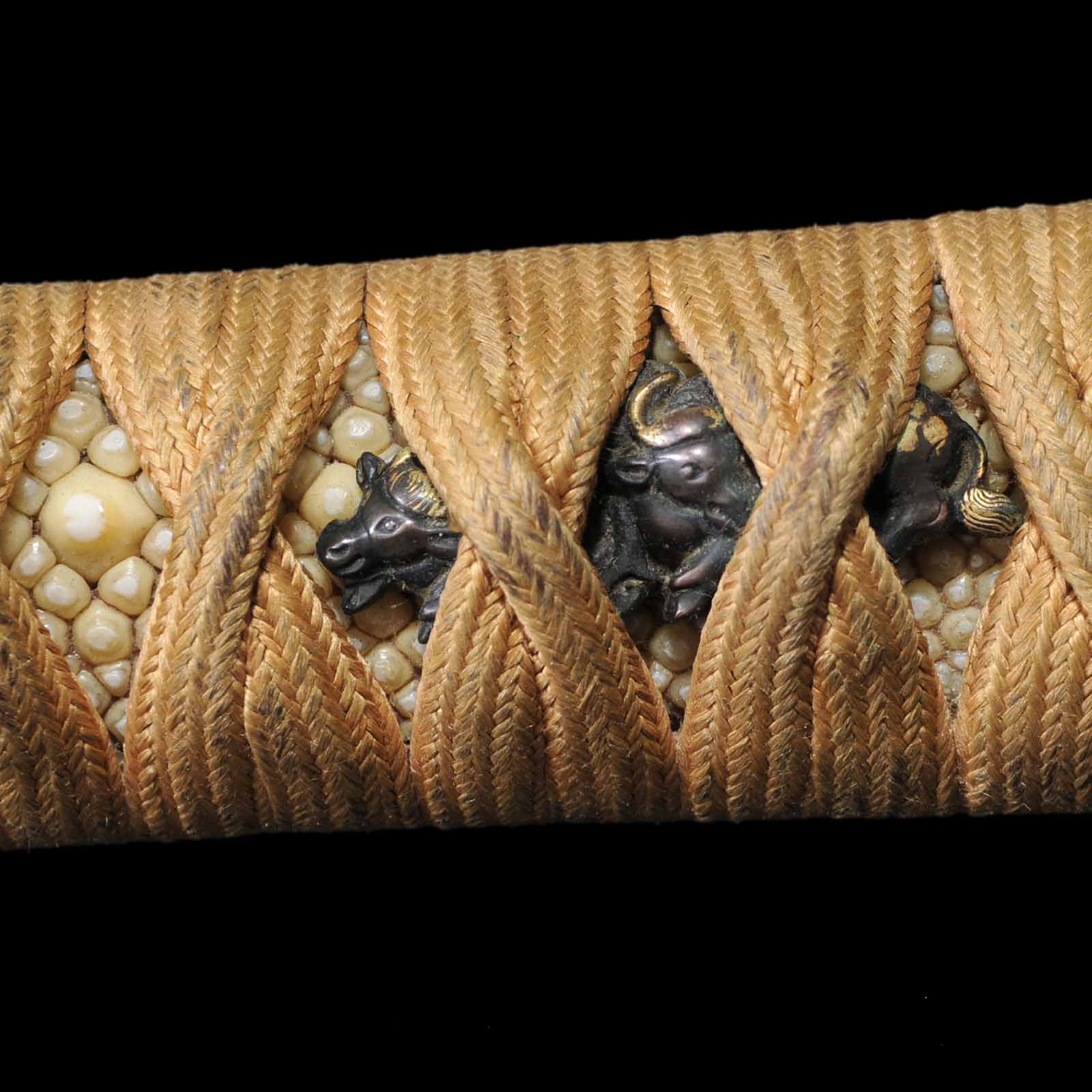
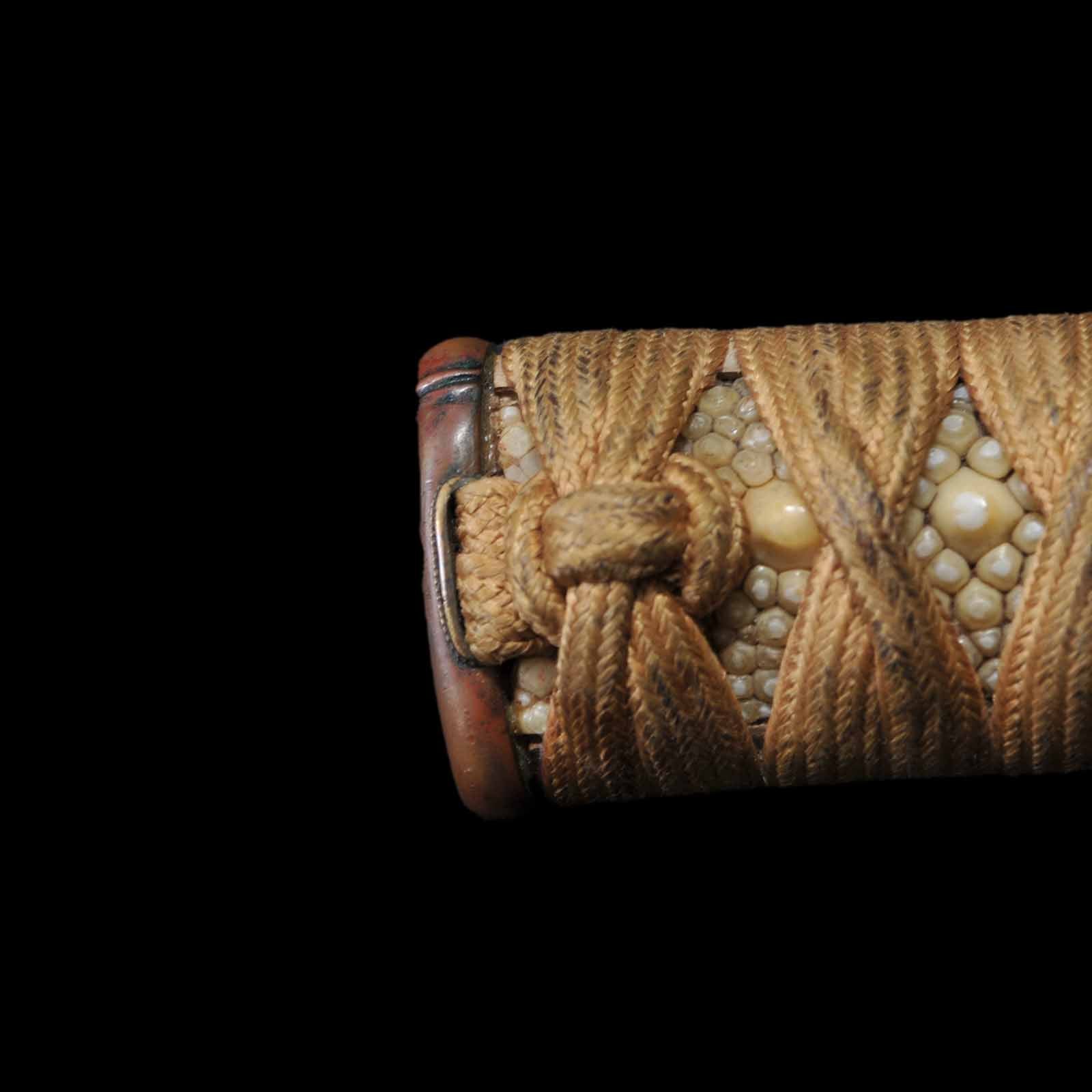
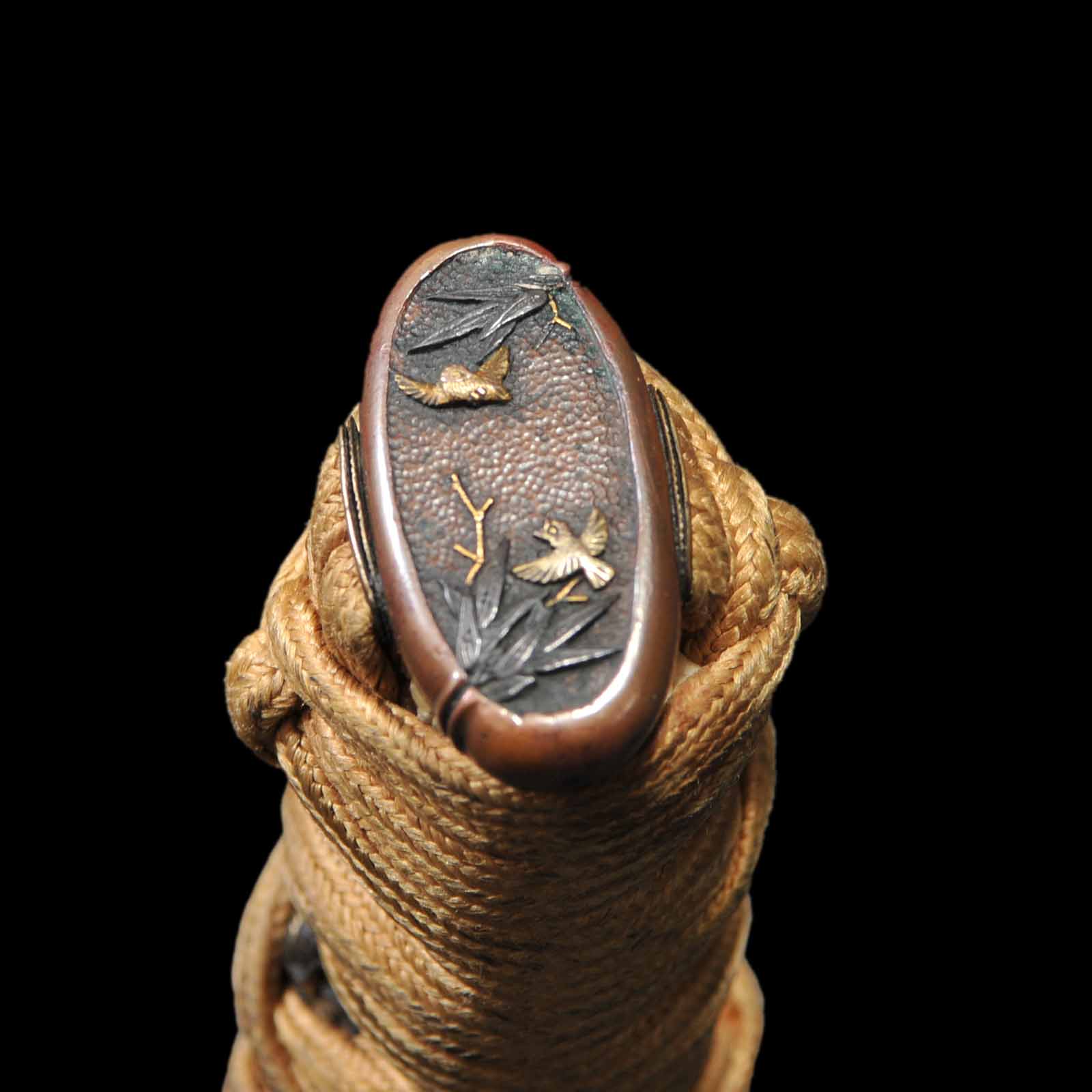
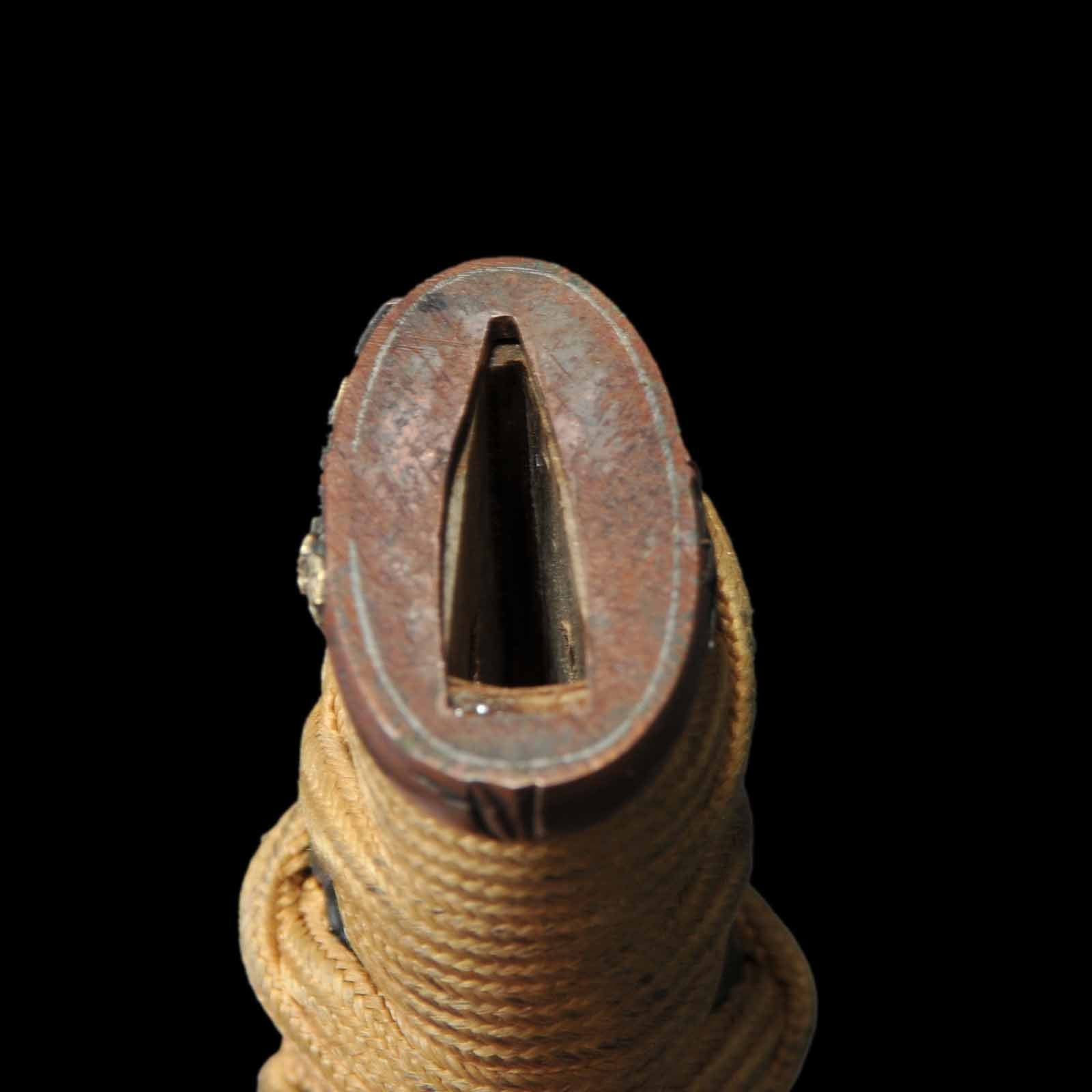
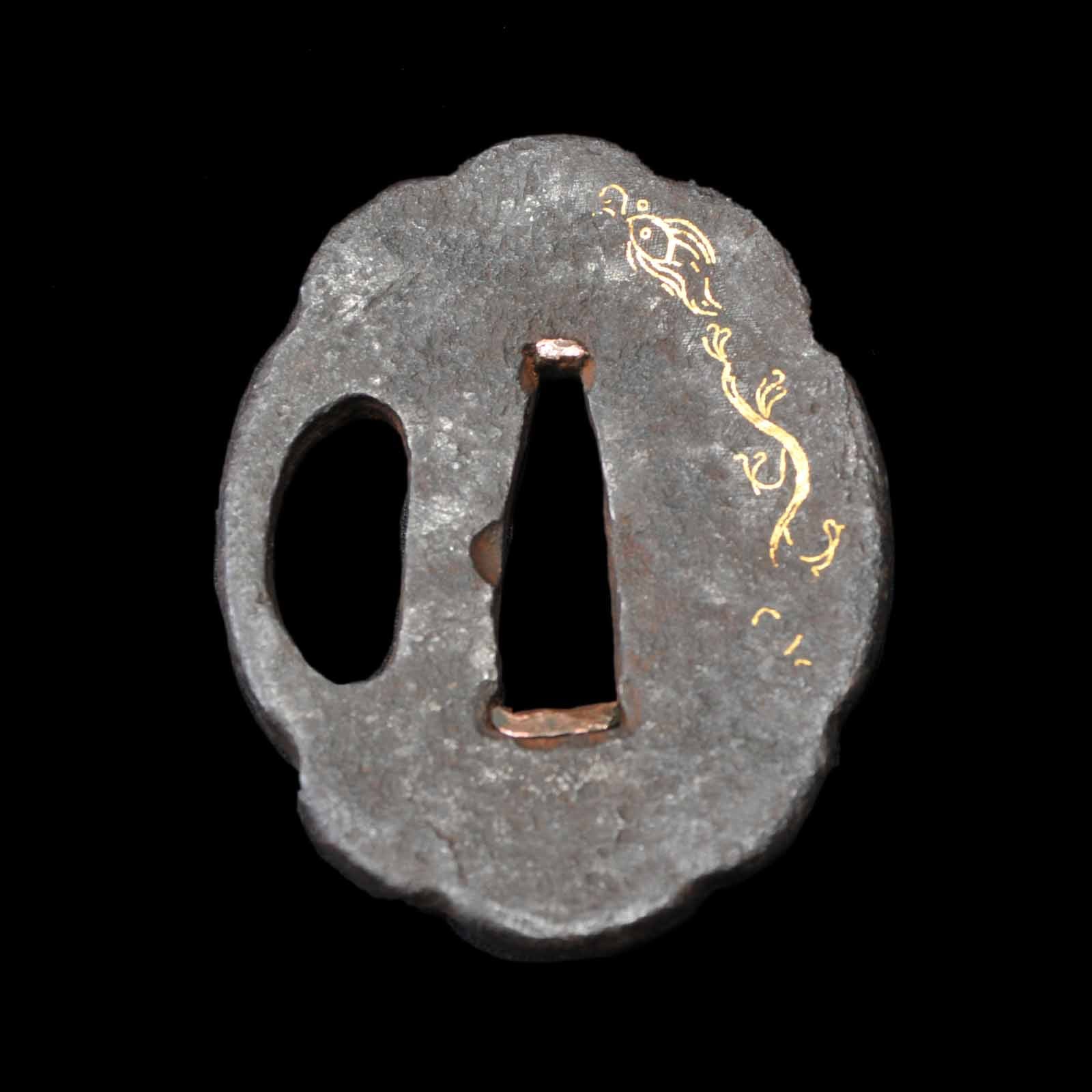
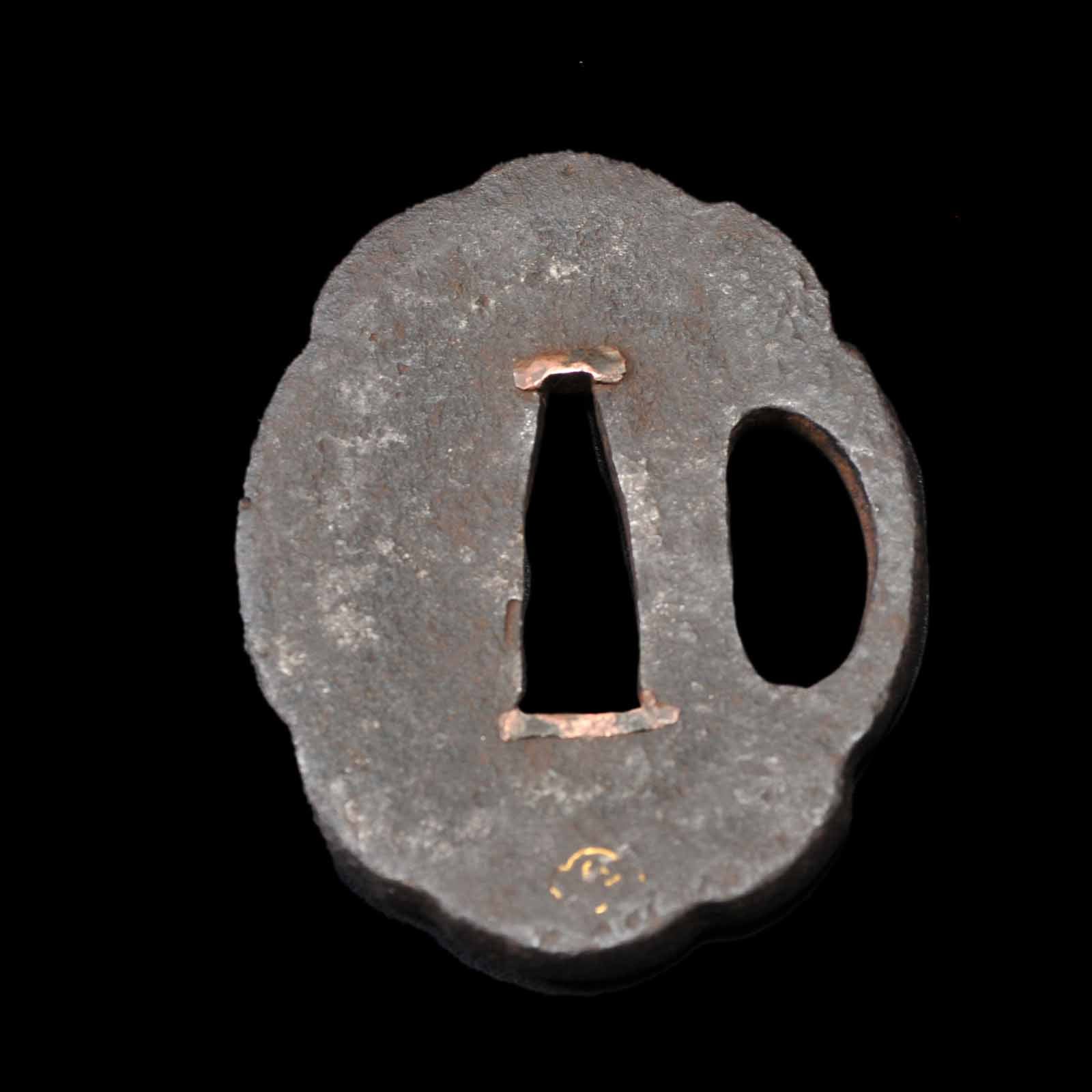
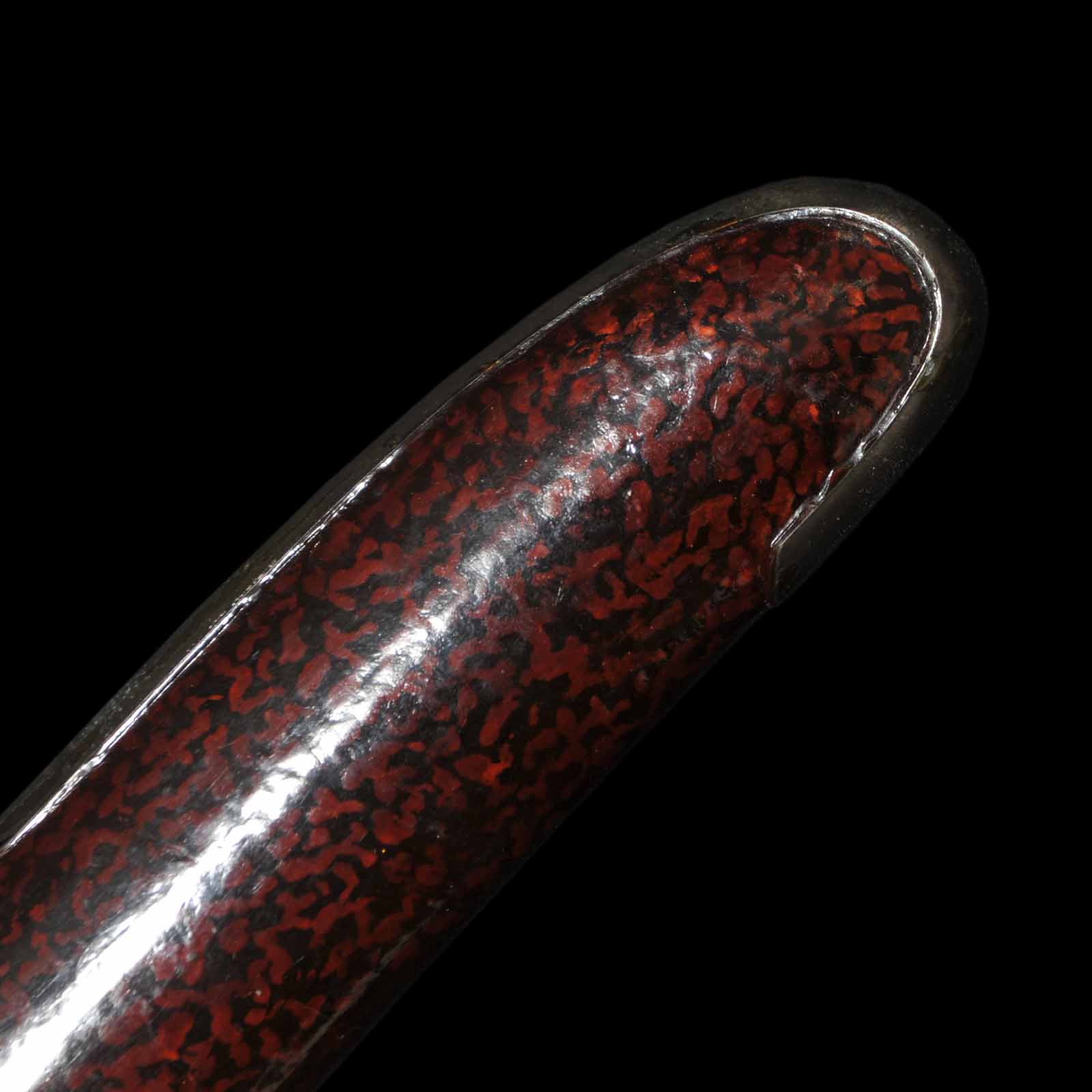
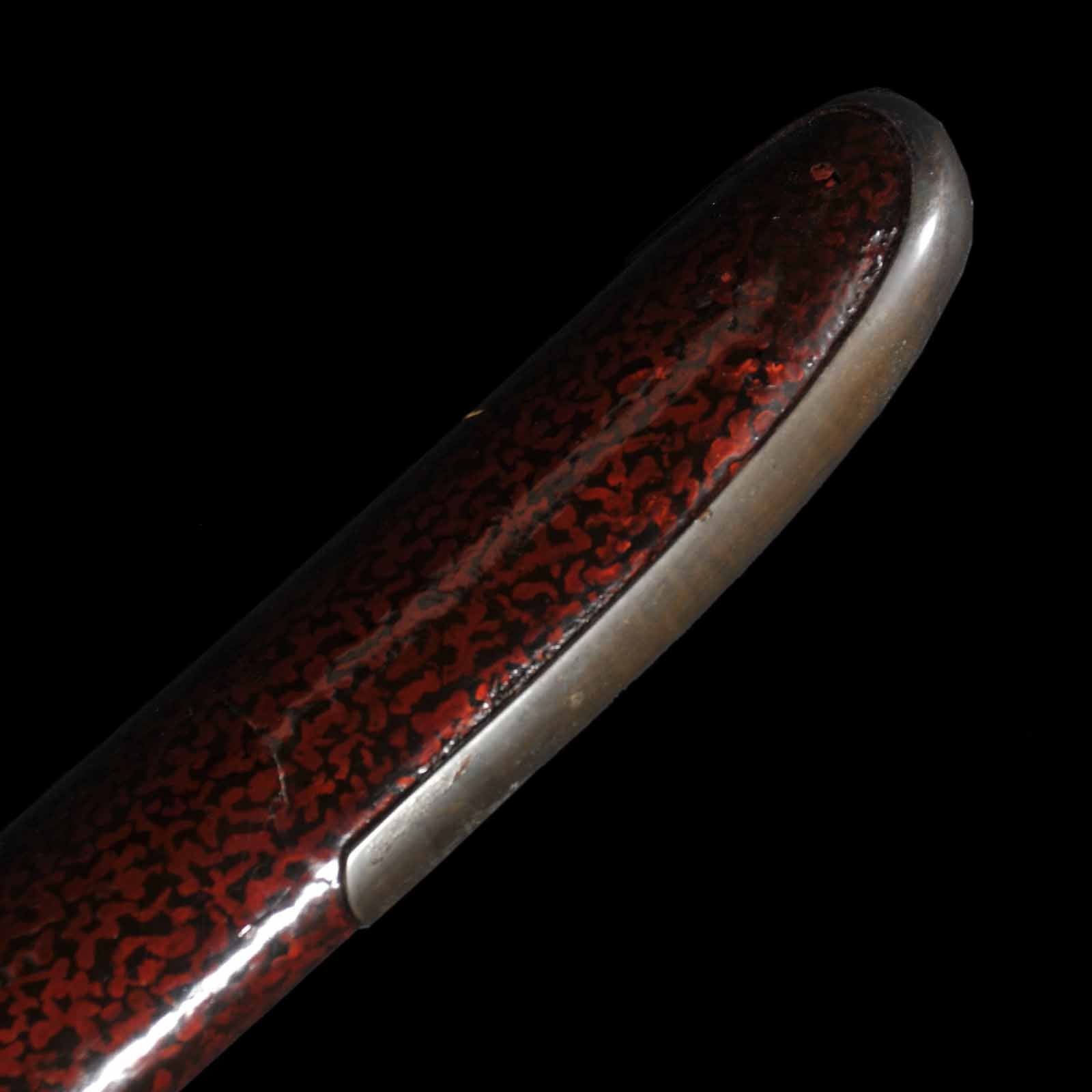
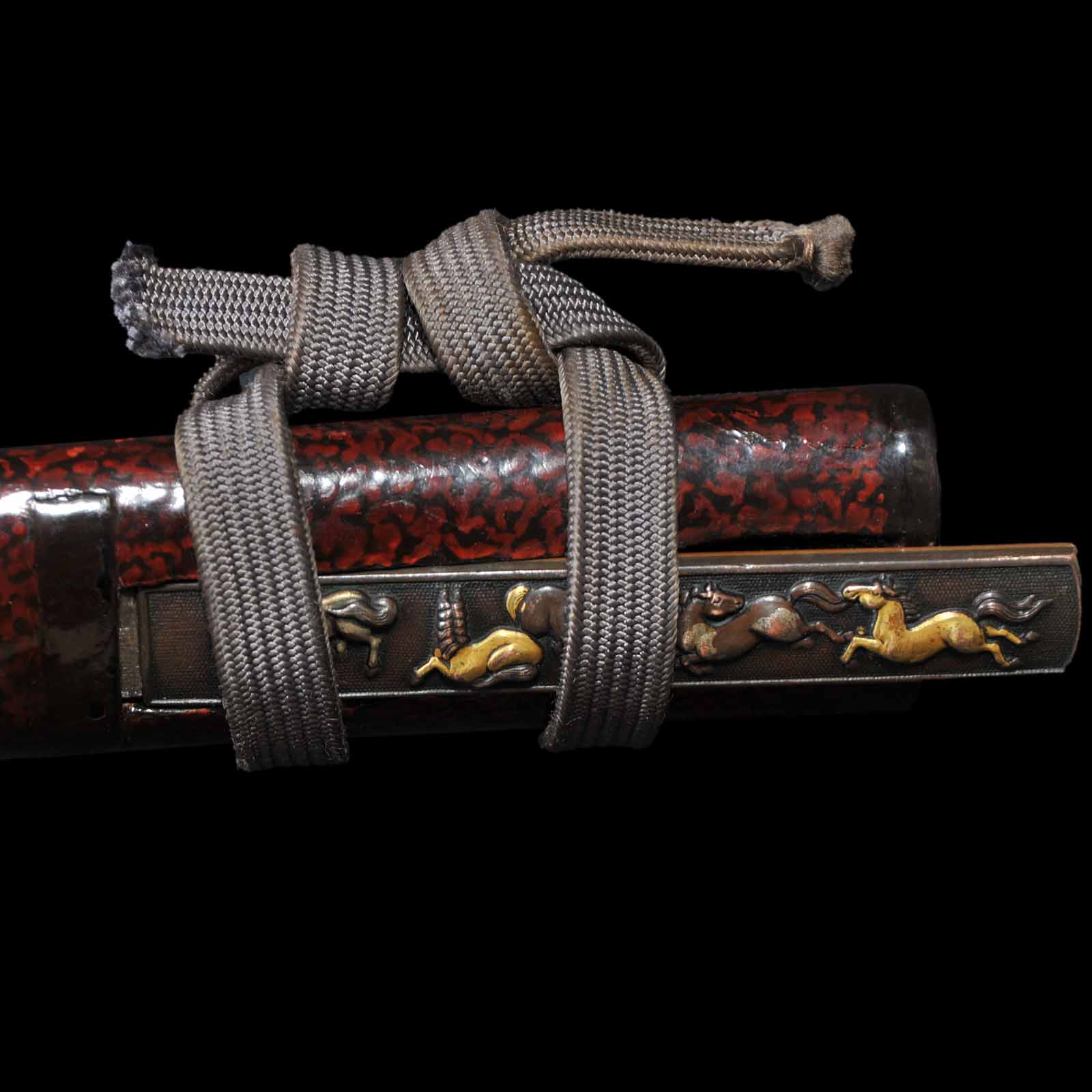
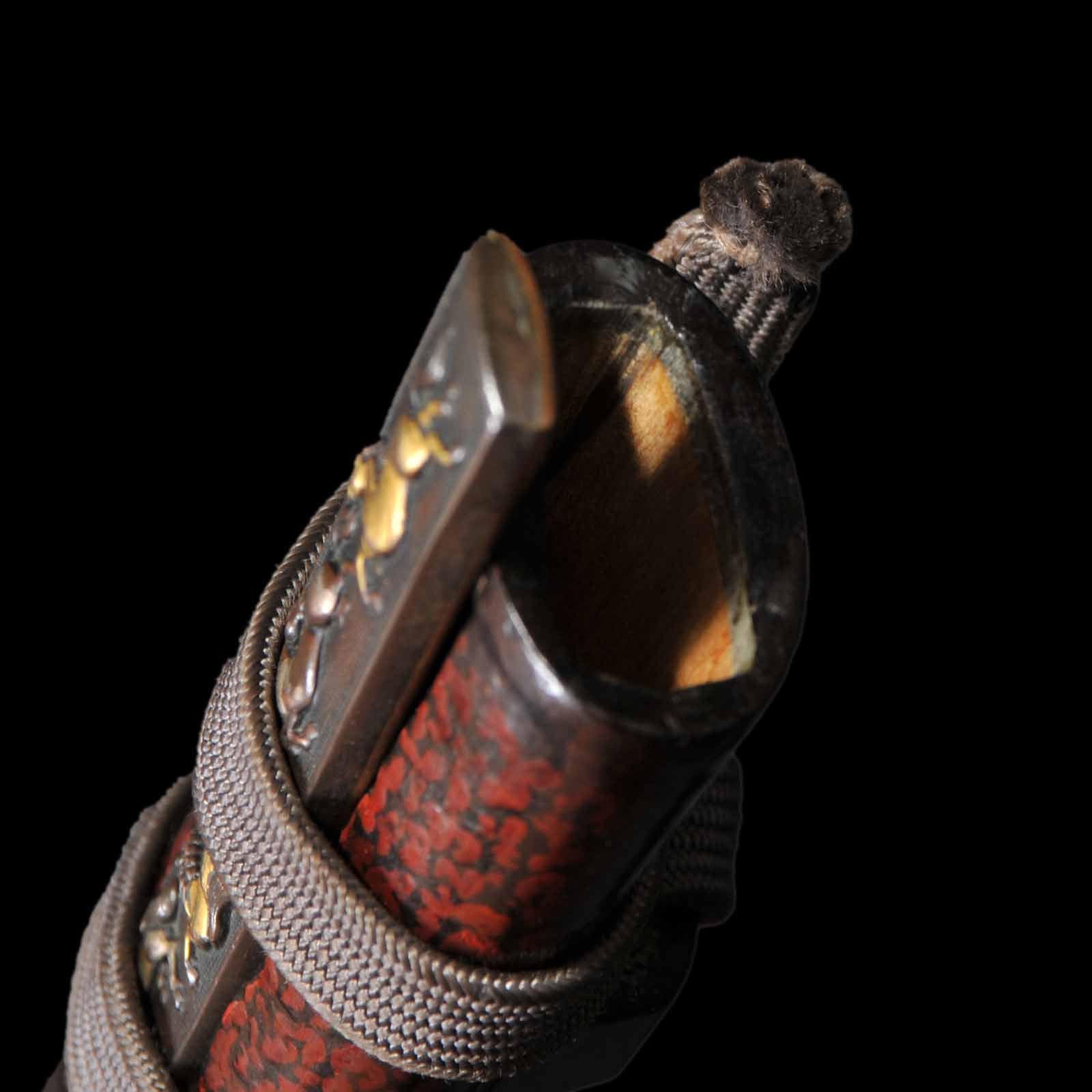
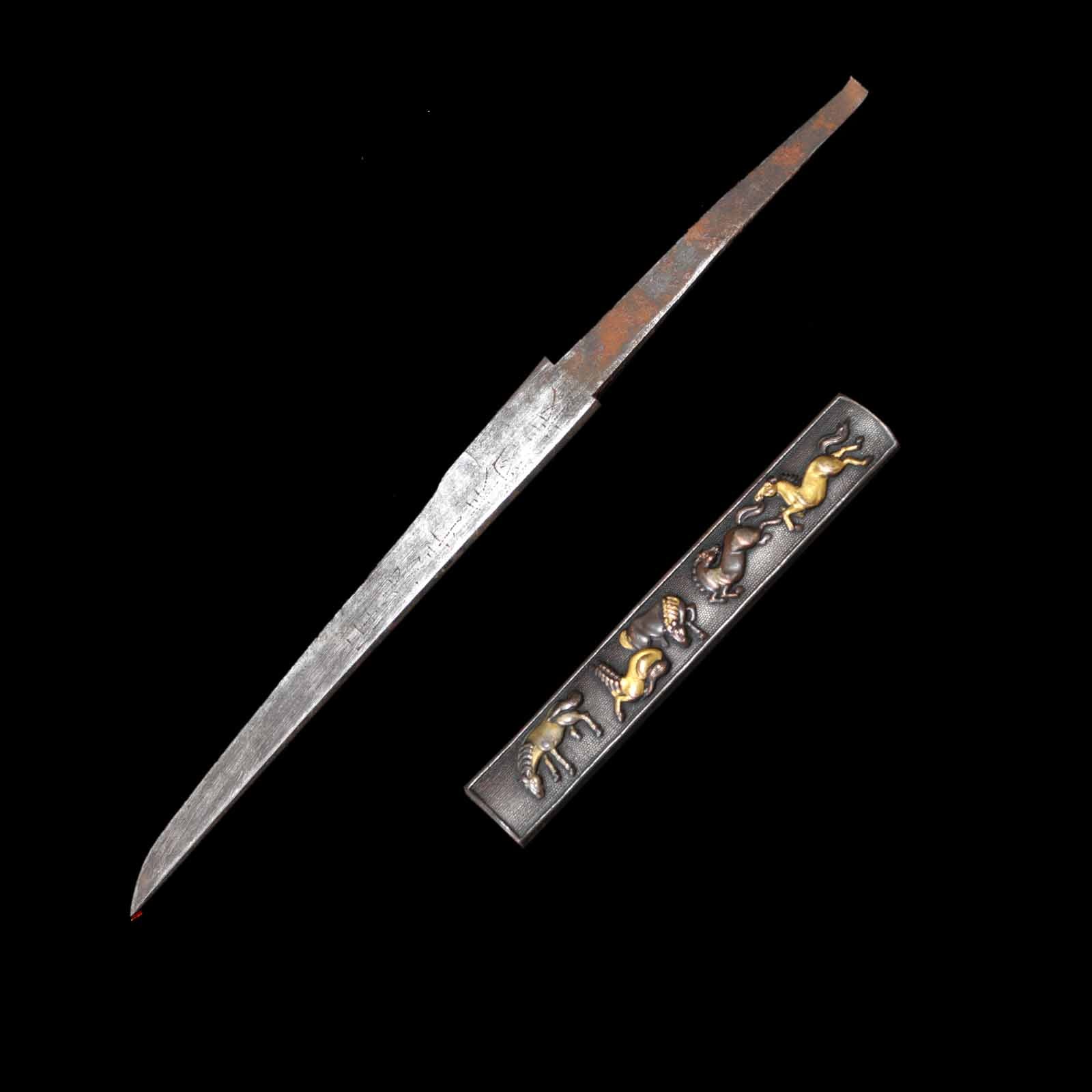
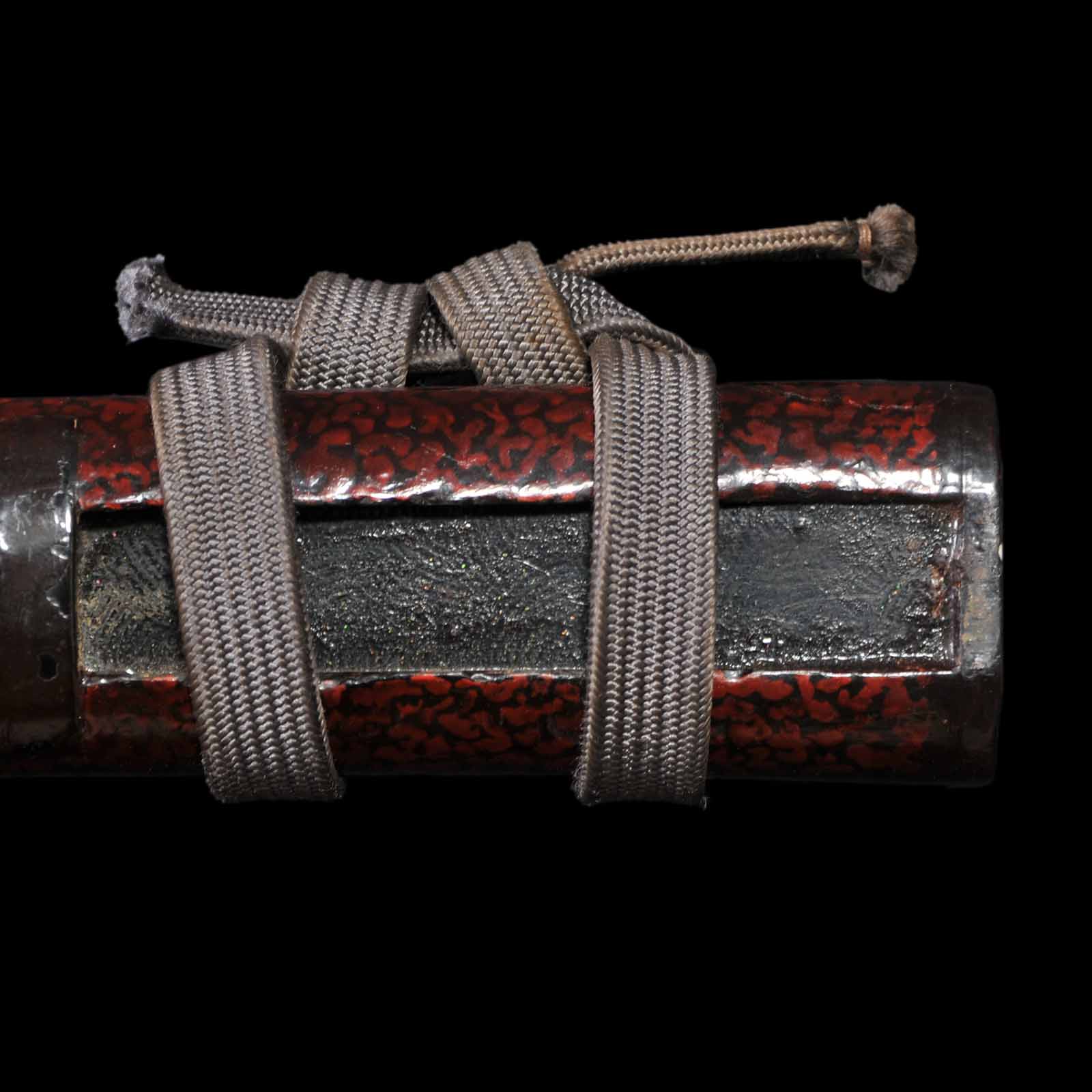
This is a tanto by Hiroyoshi from the Koto era, featuring an ubu nakago and accompanied by a koshirae. The blade is polished and exhibits active itame hada with hataraki such as chikei and yubashiri. The koshirae has metal fittings and scabbard lacquering with a kozuka.
 NihontoWatch
mei · Bunmei (1469-1487) · nagasa 25cm · sori 0.1cm
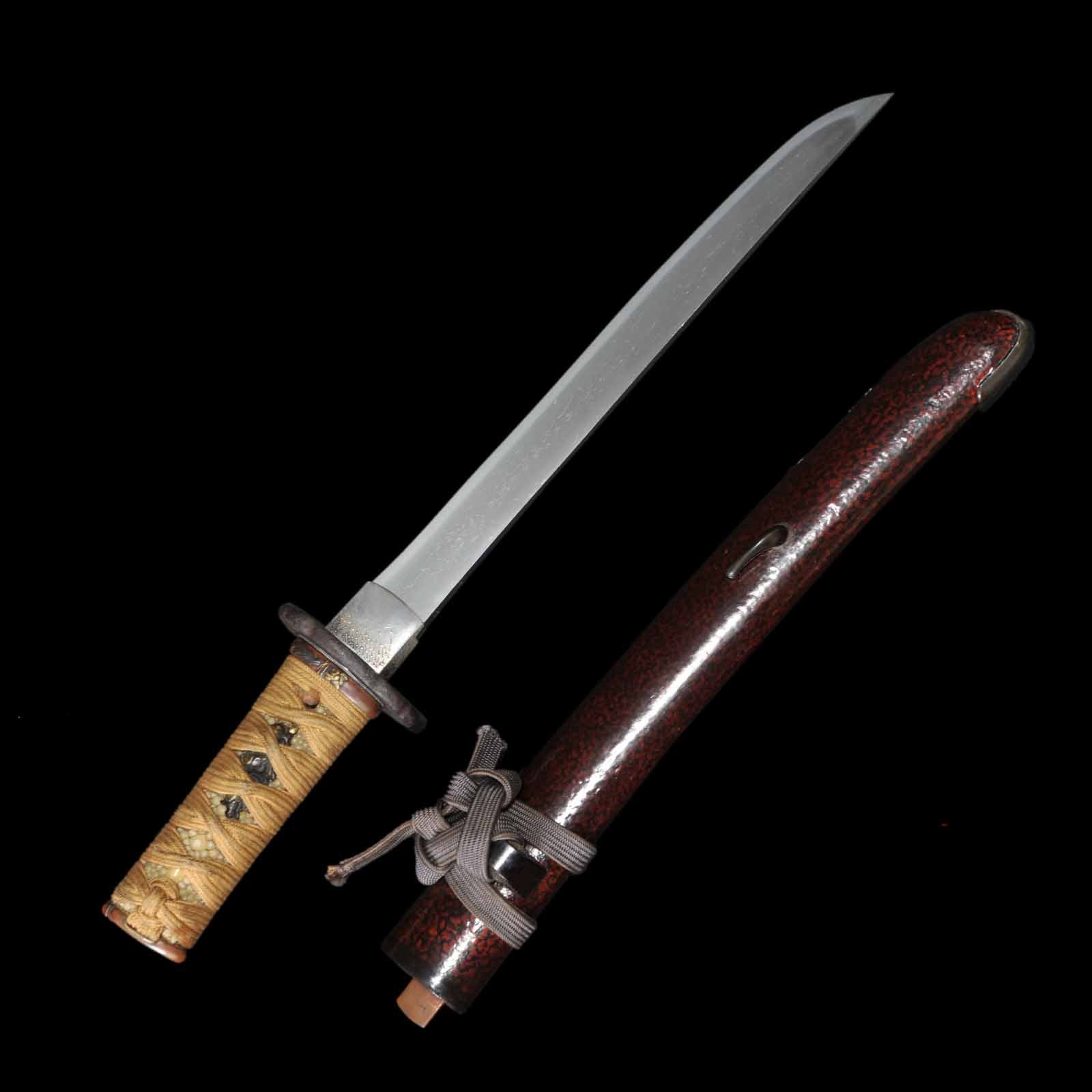
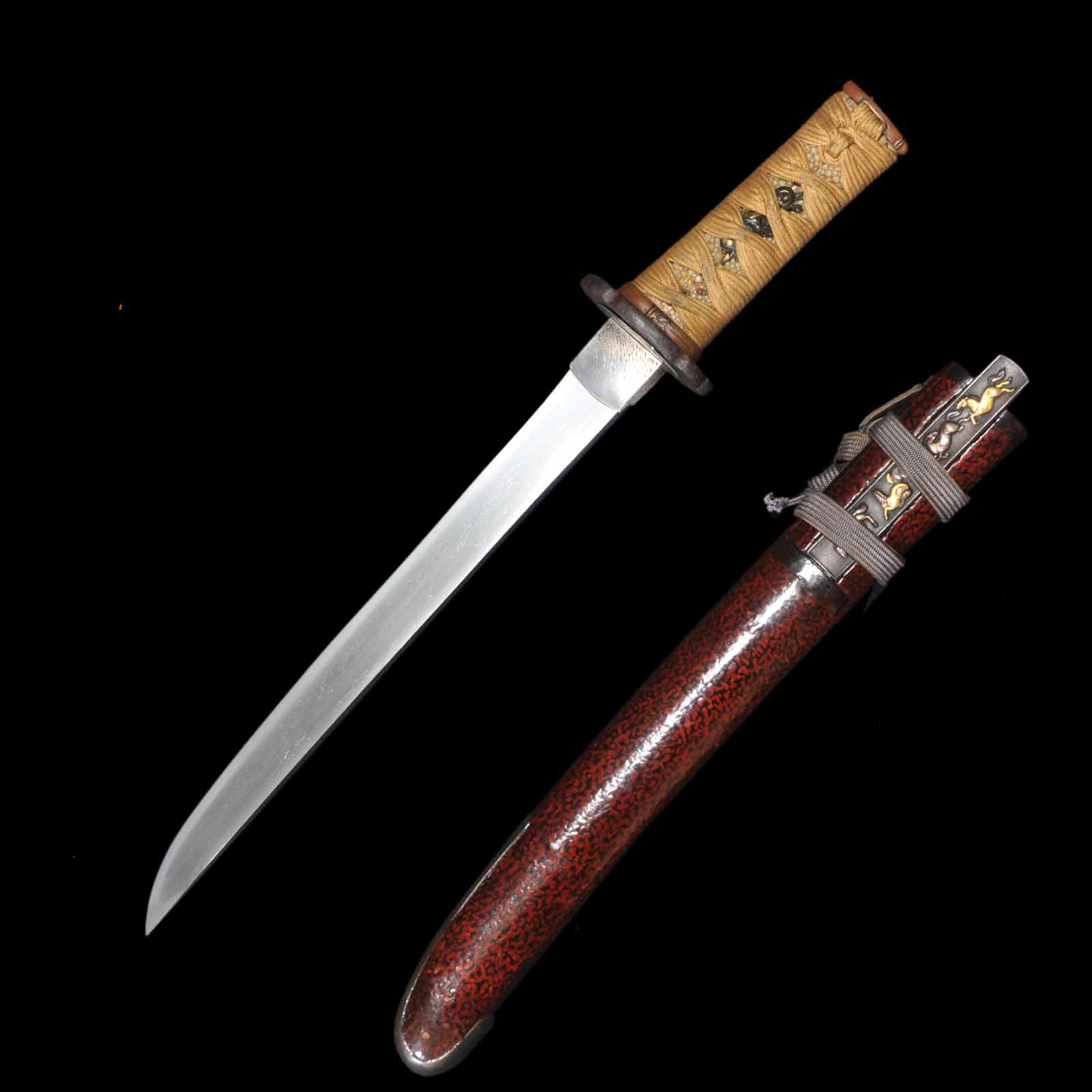
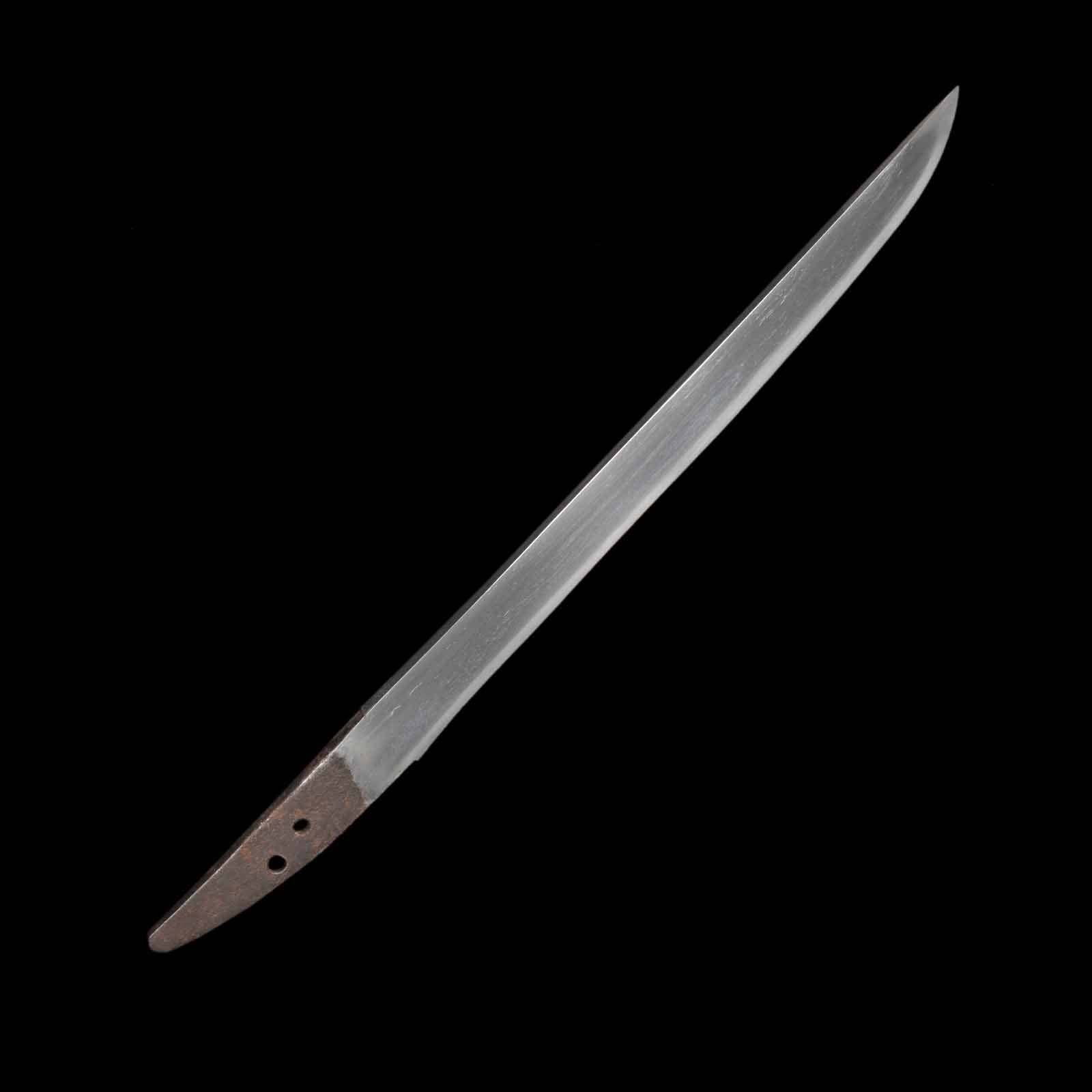
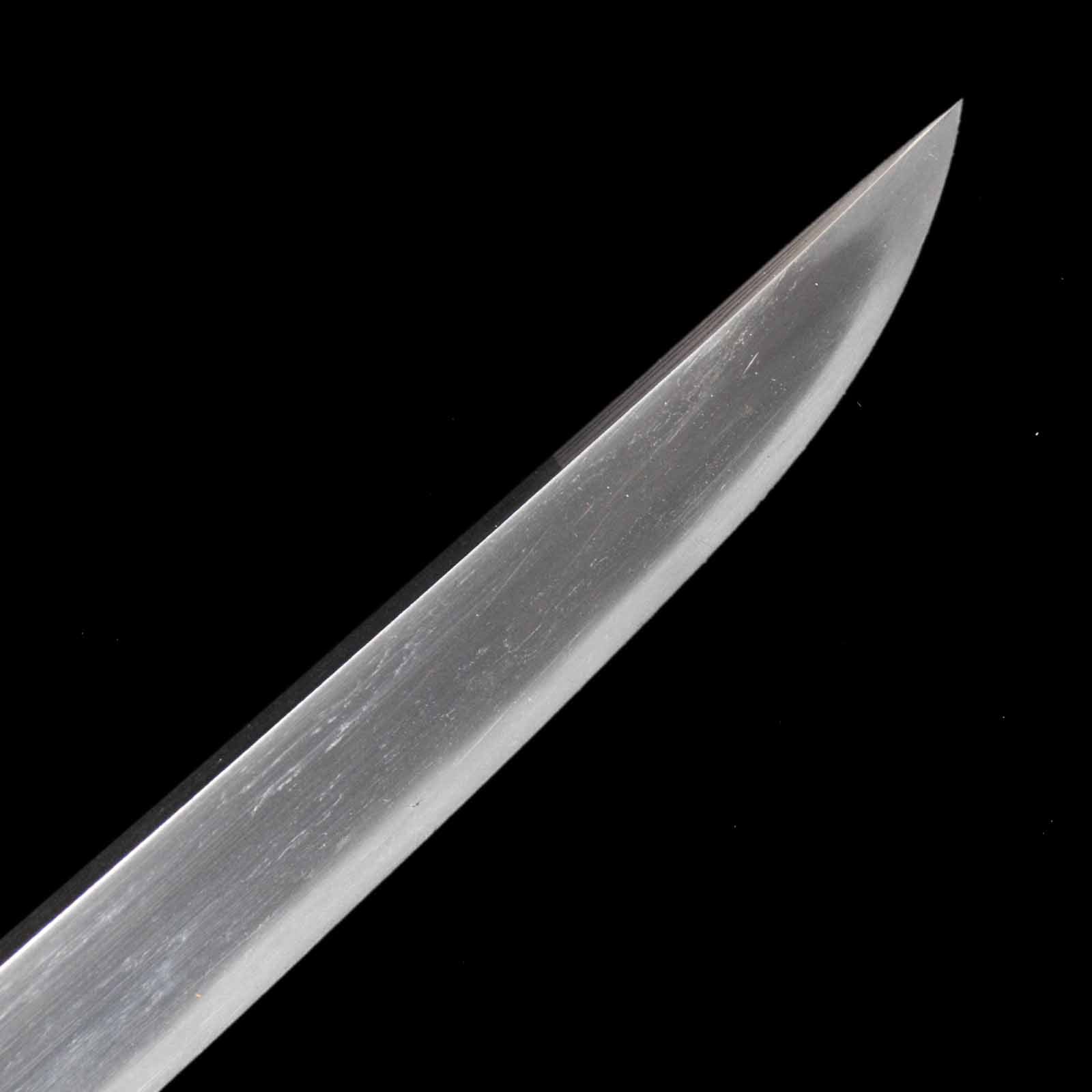
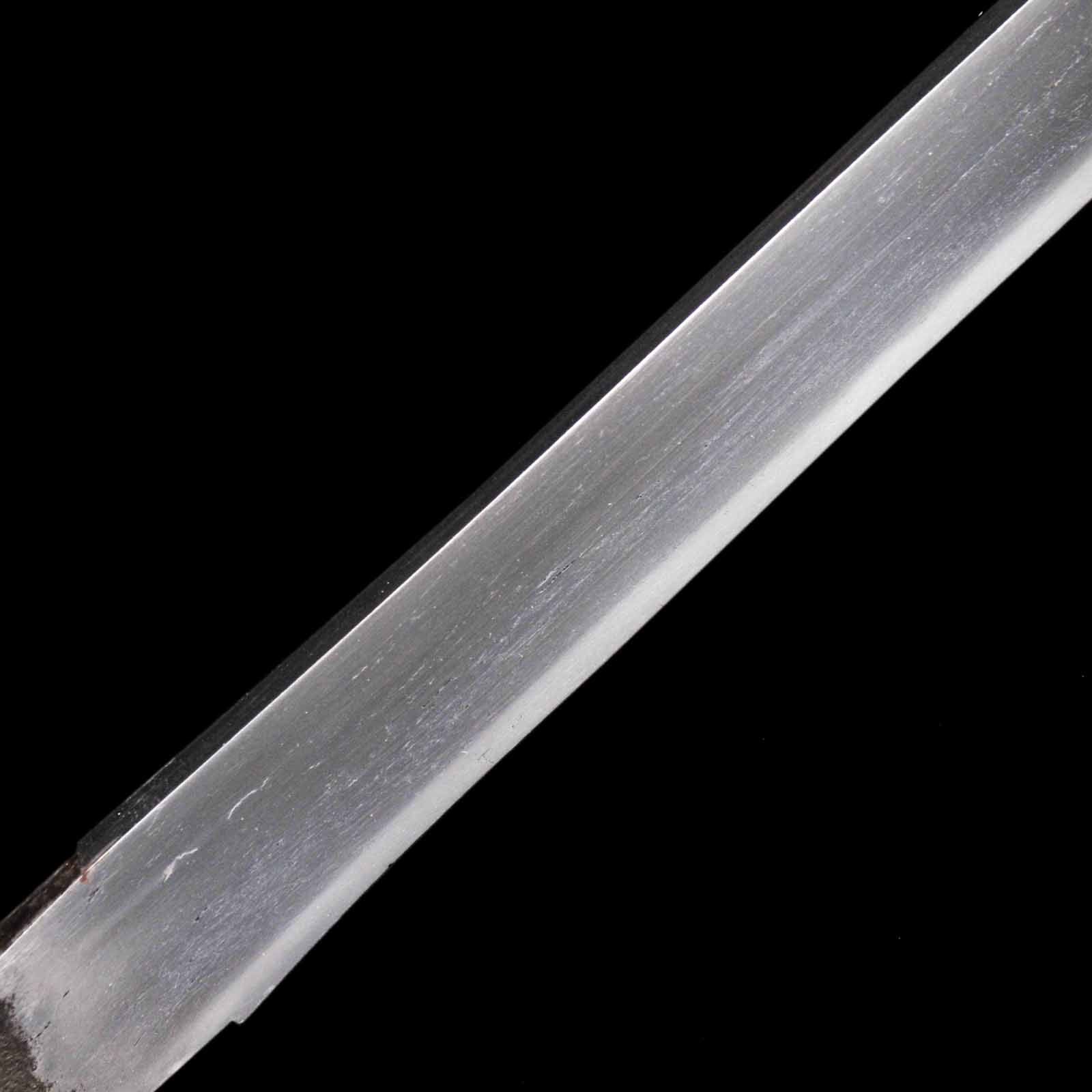
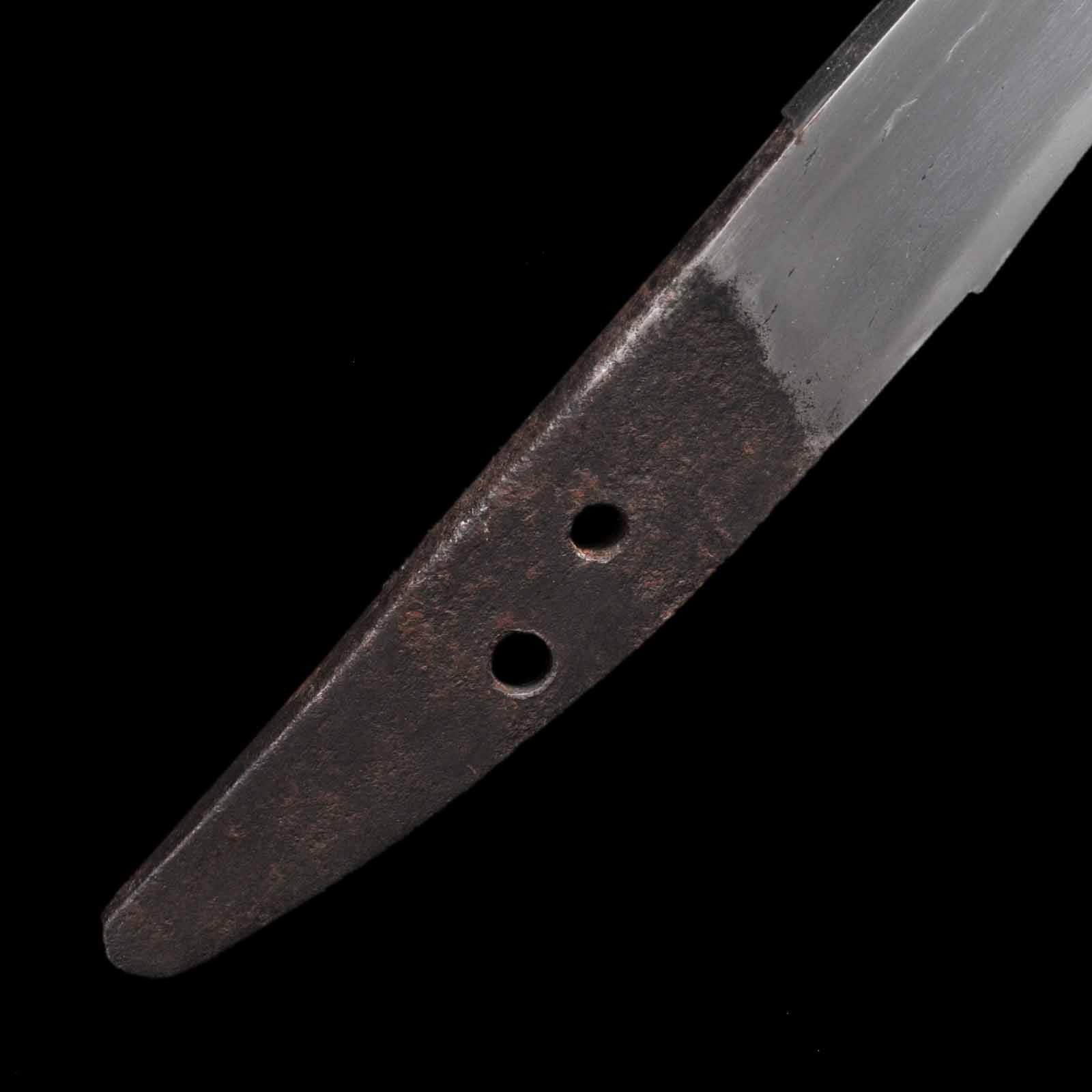
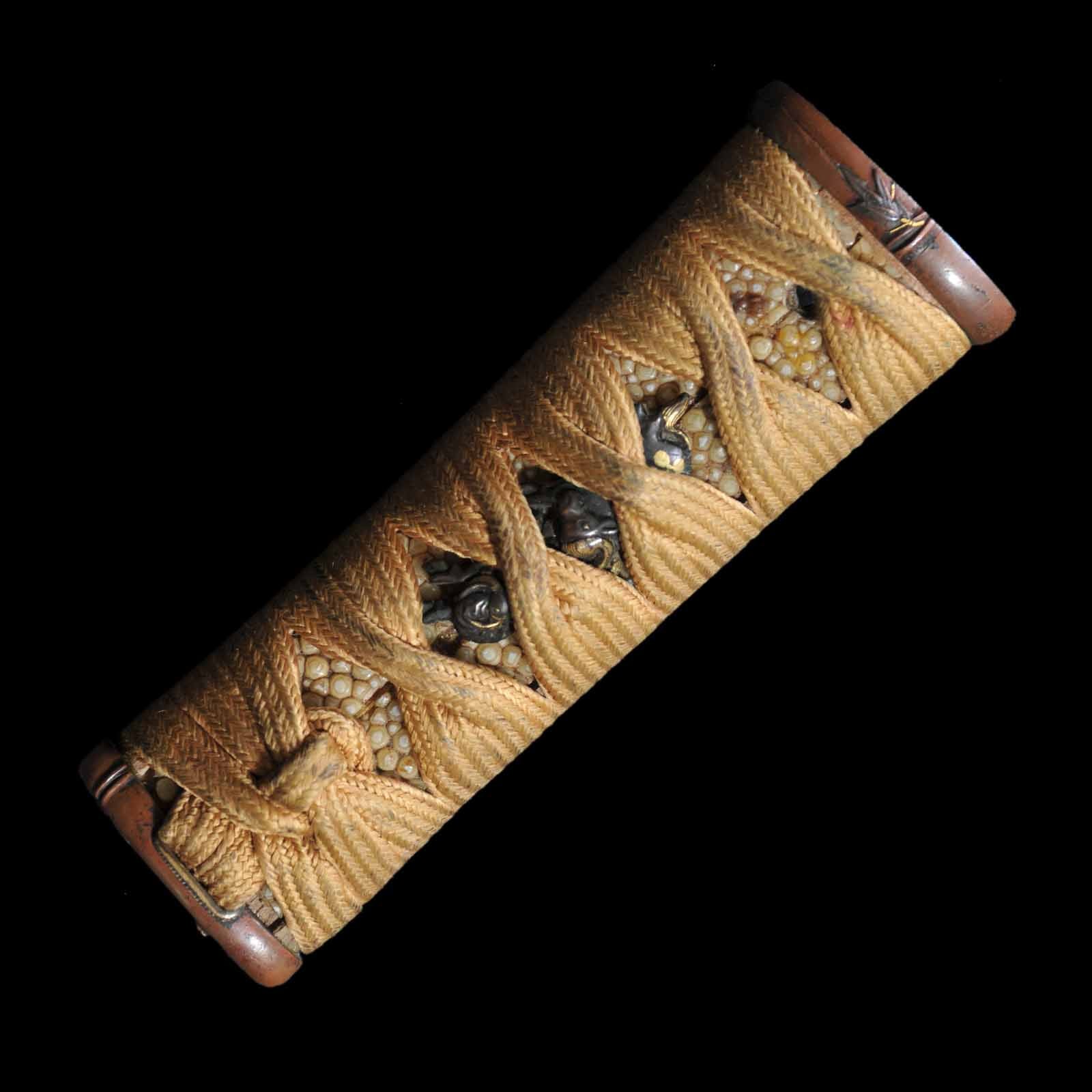
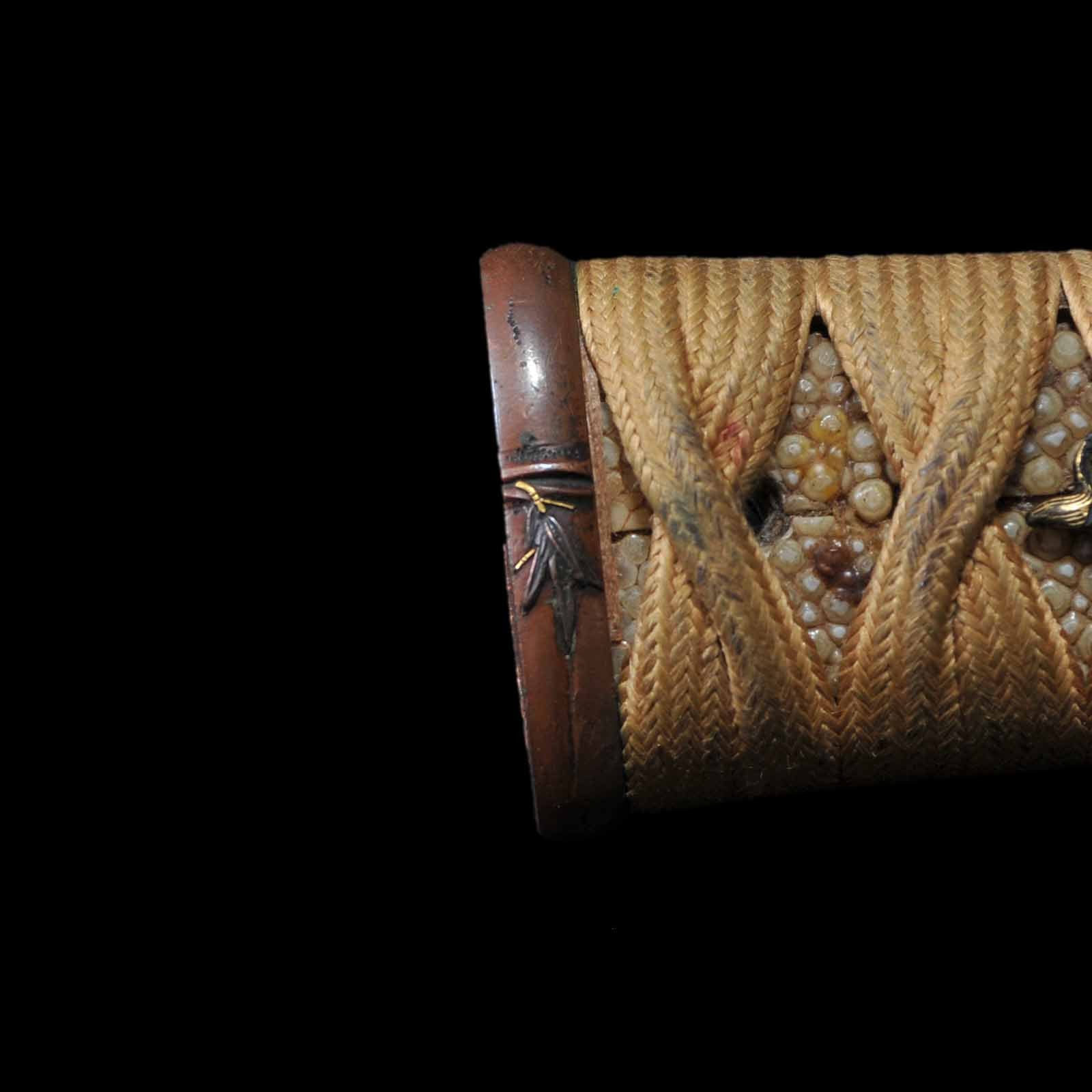
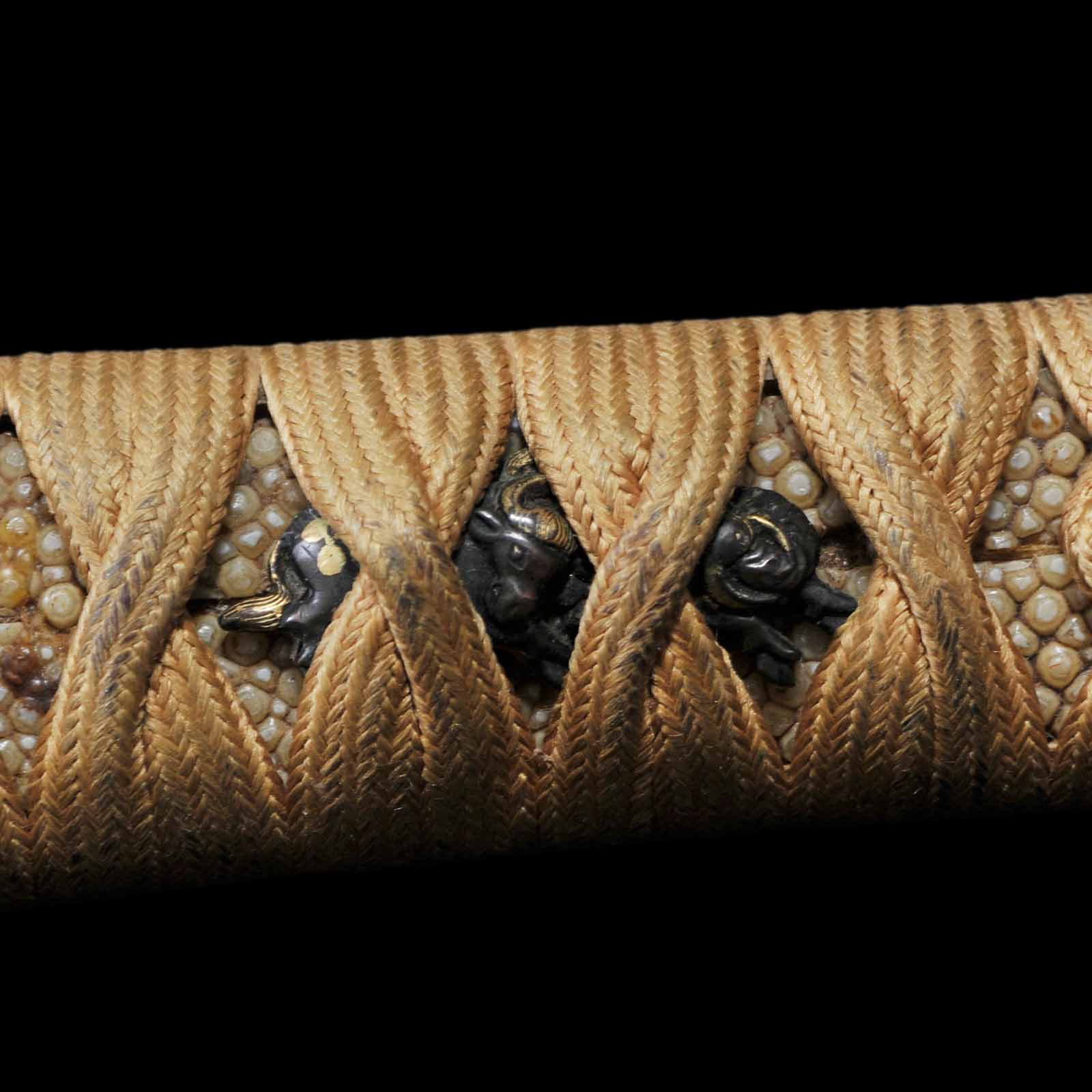
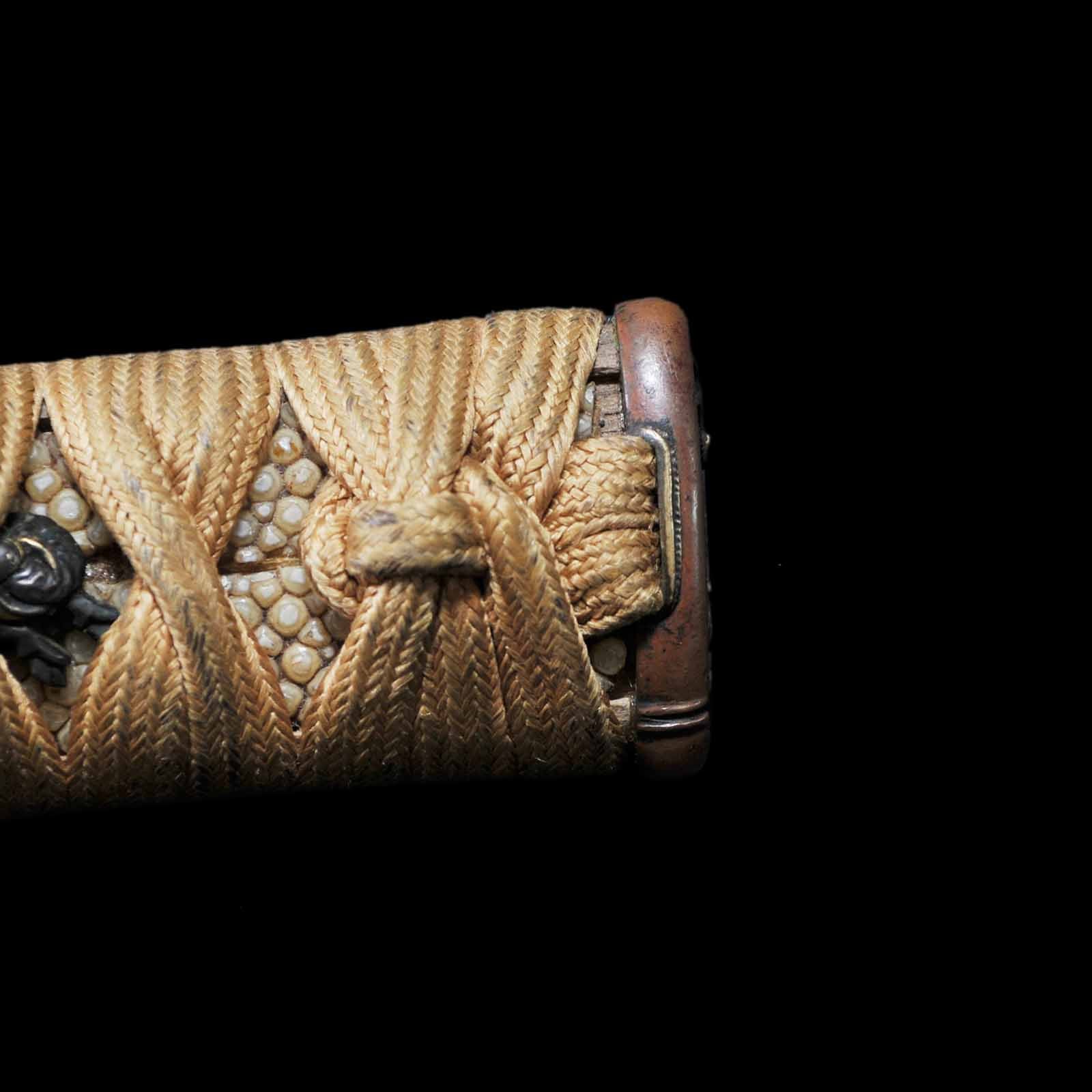
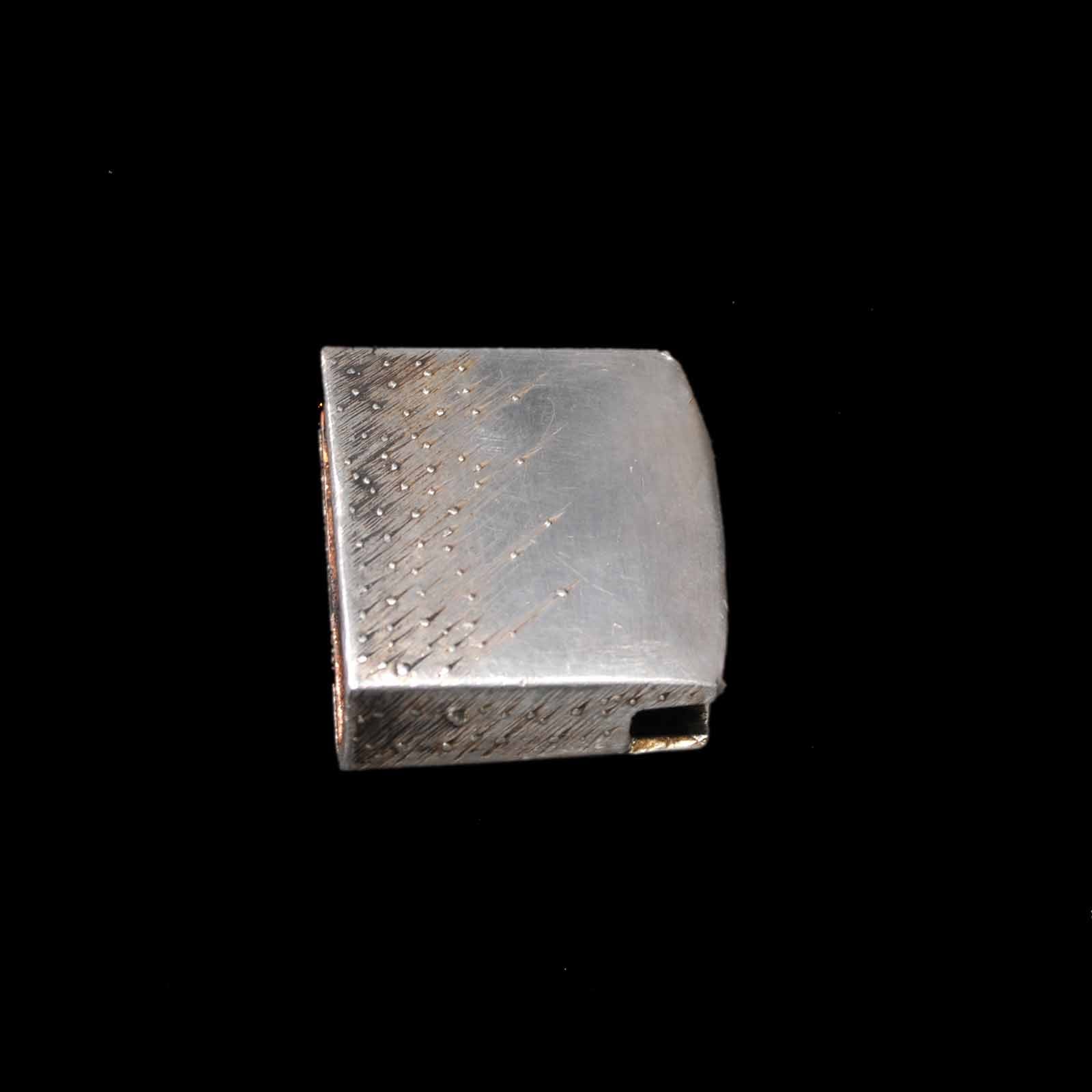
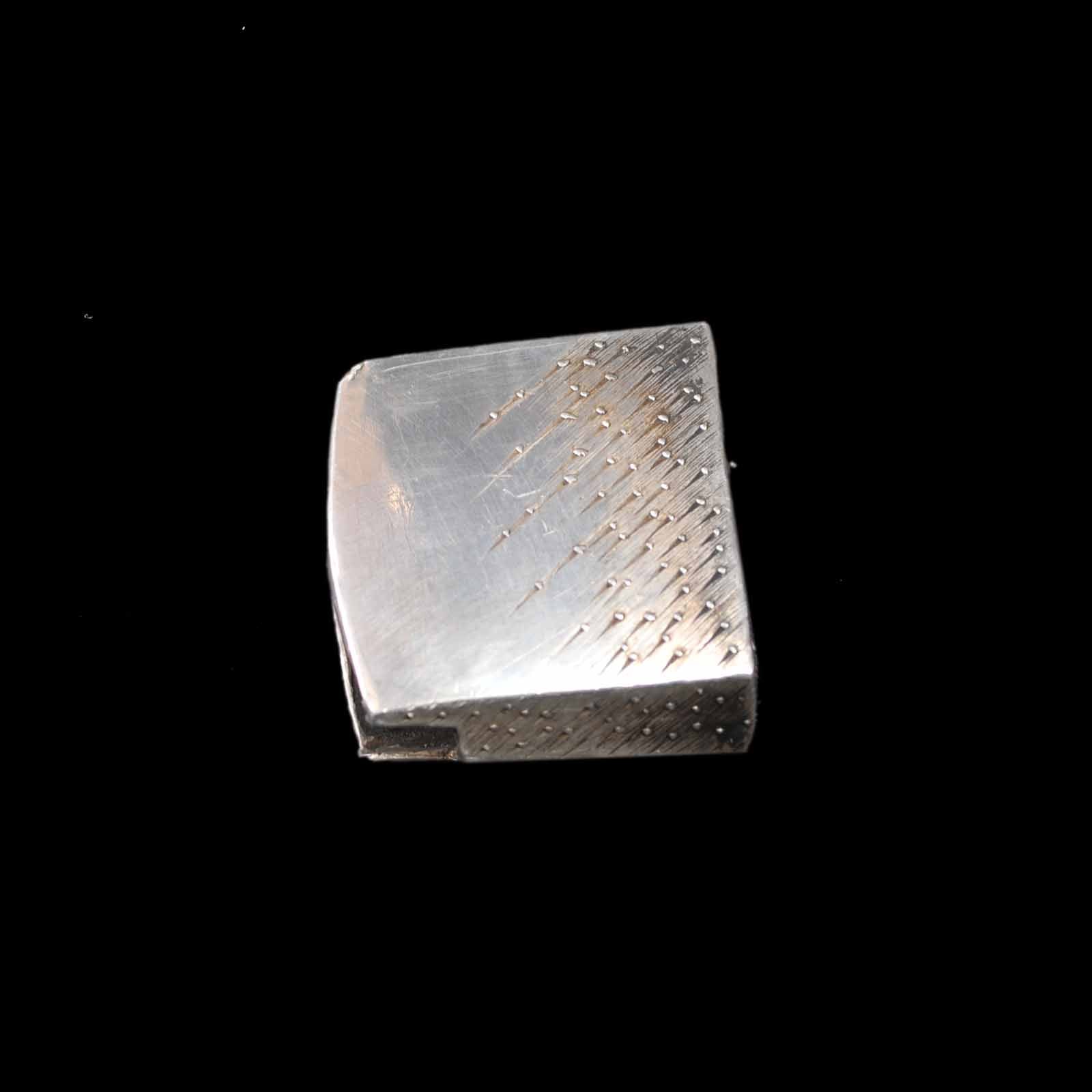
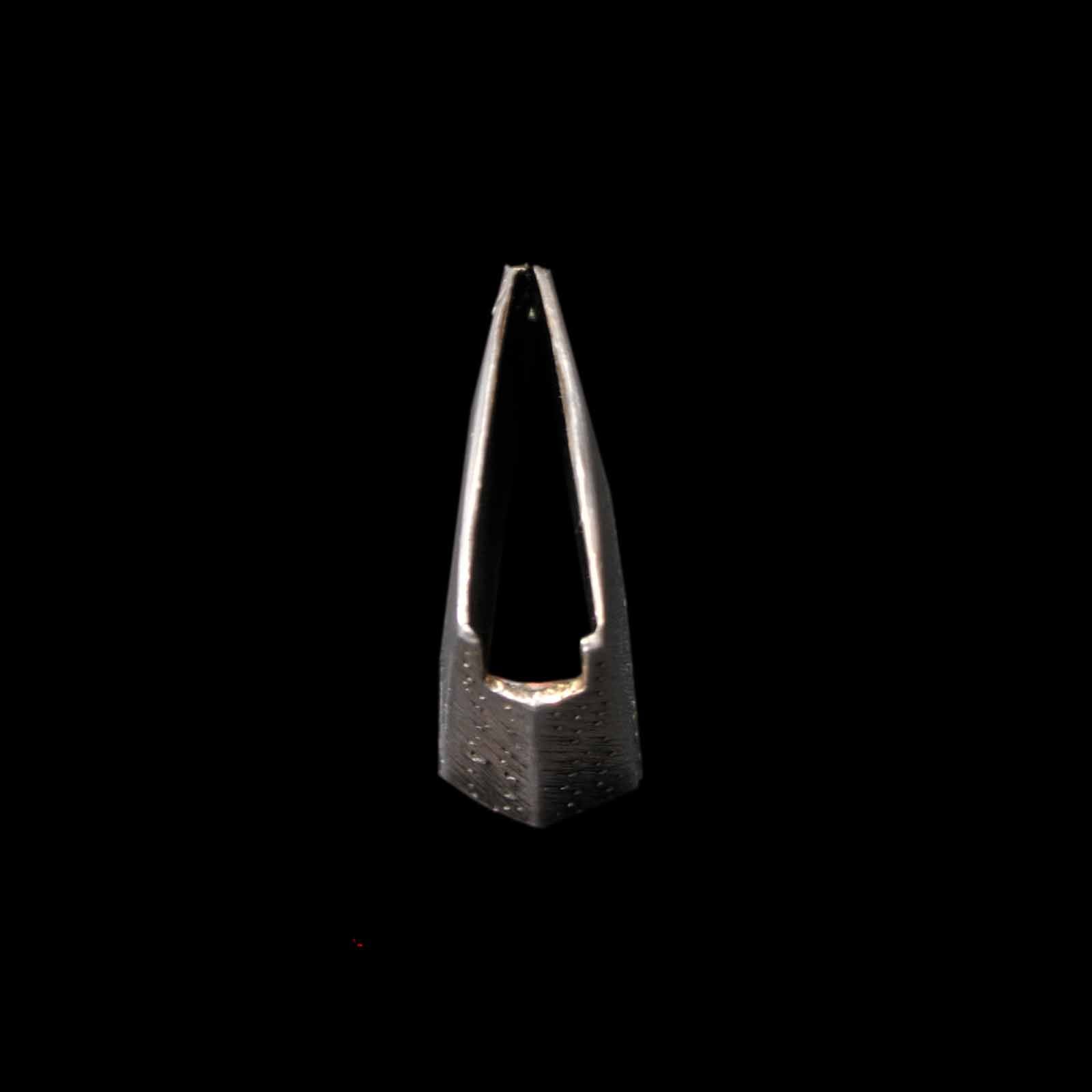
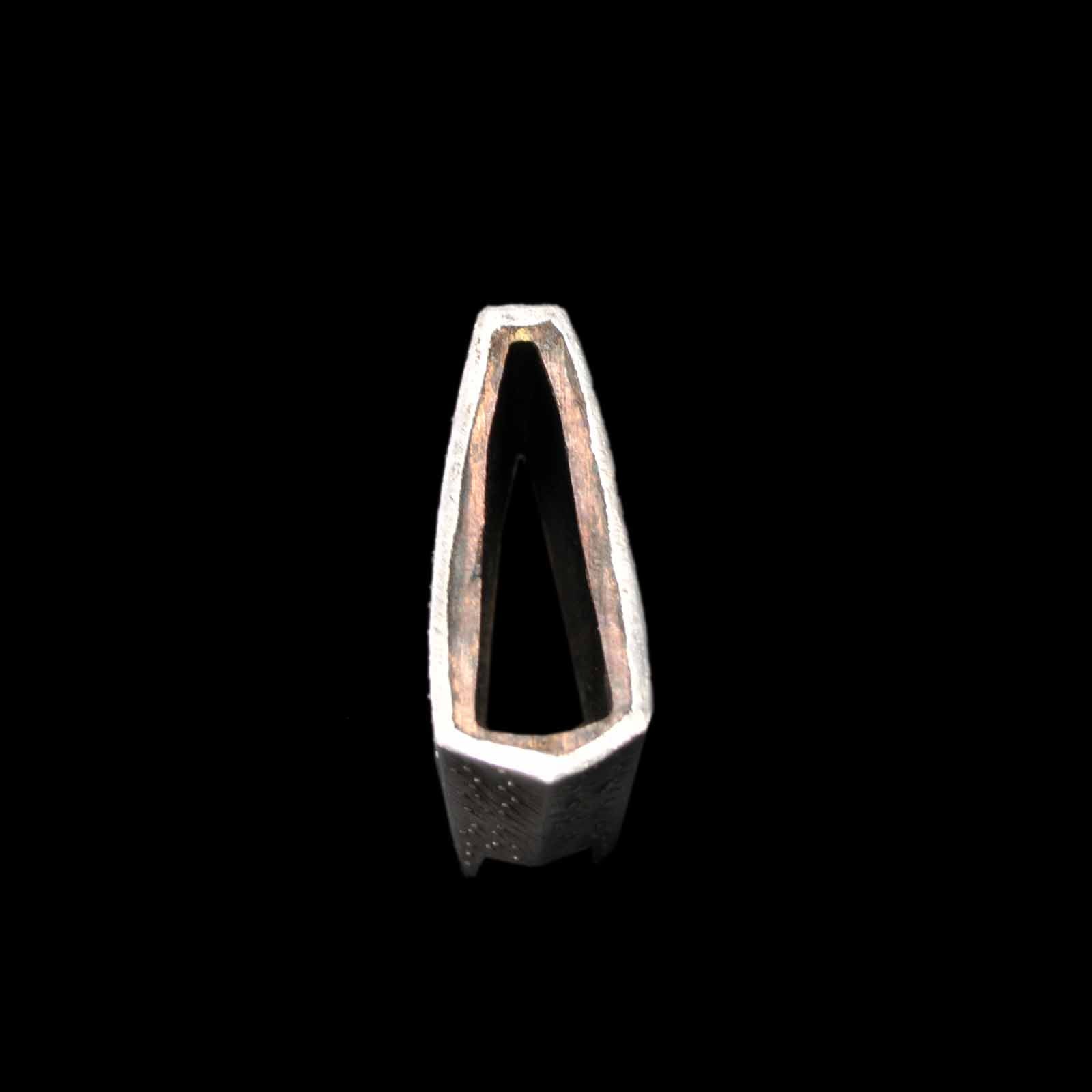
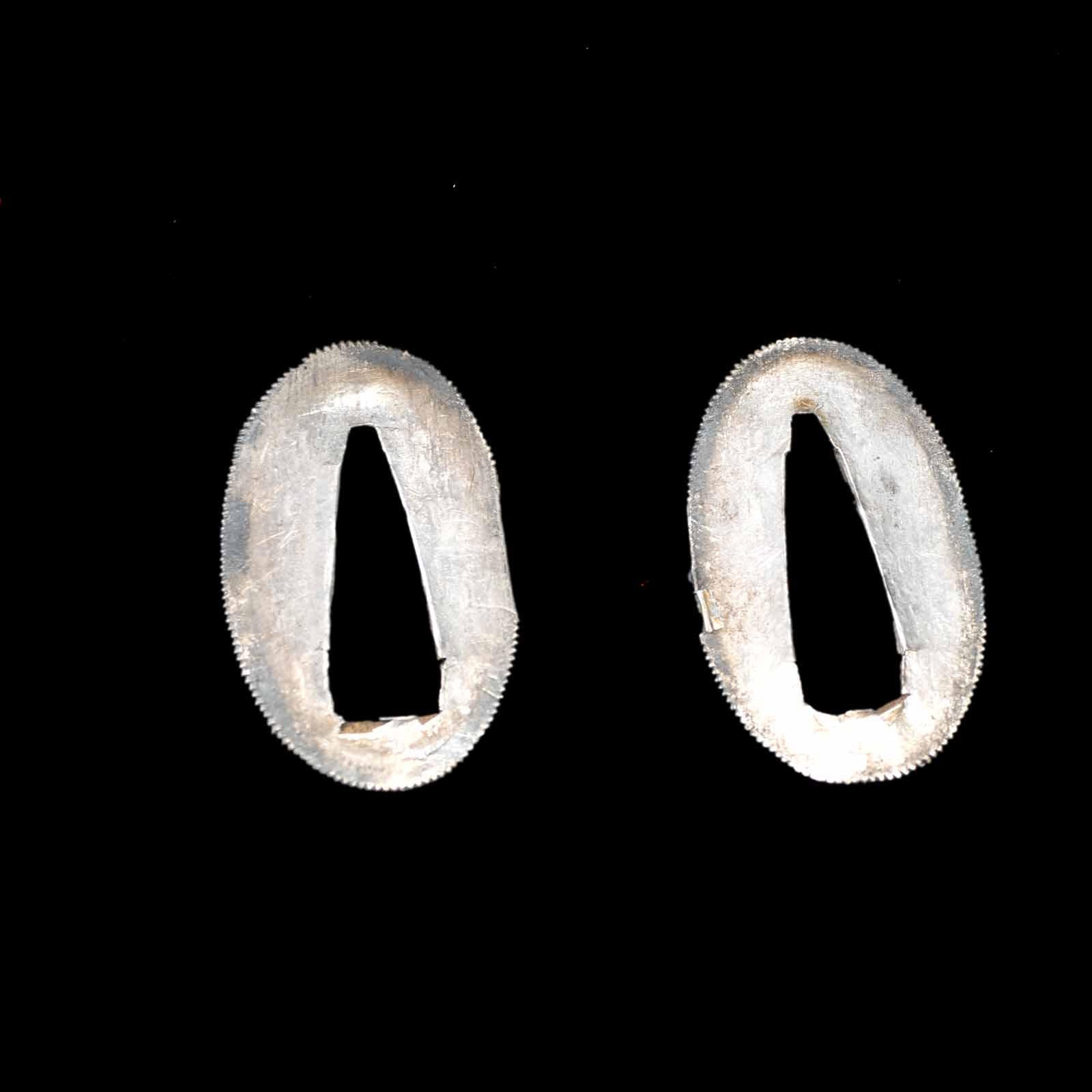
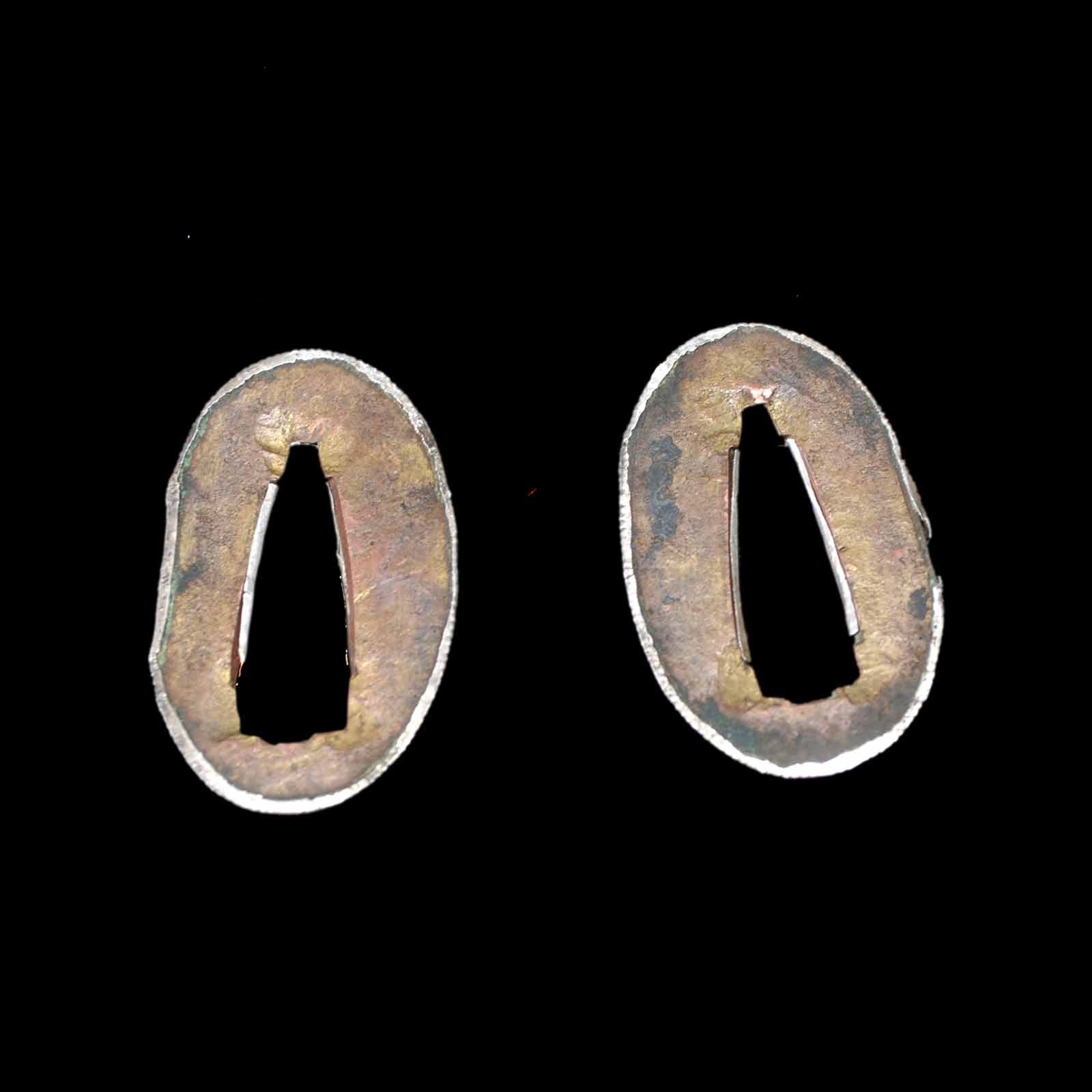
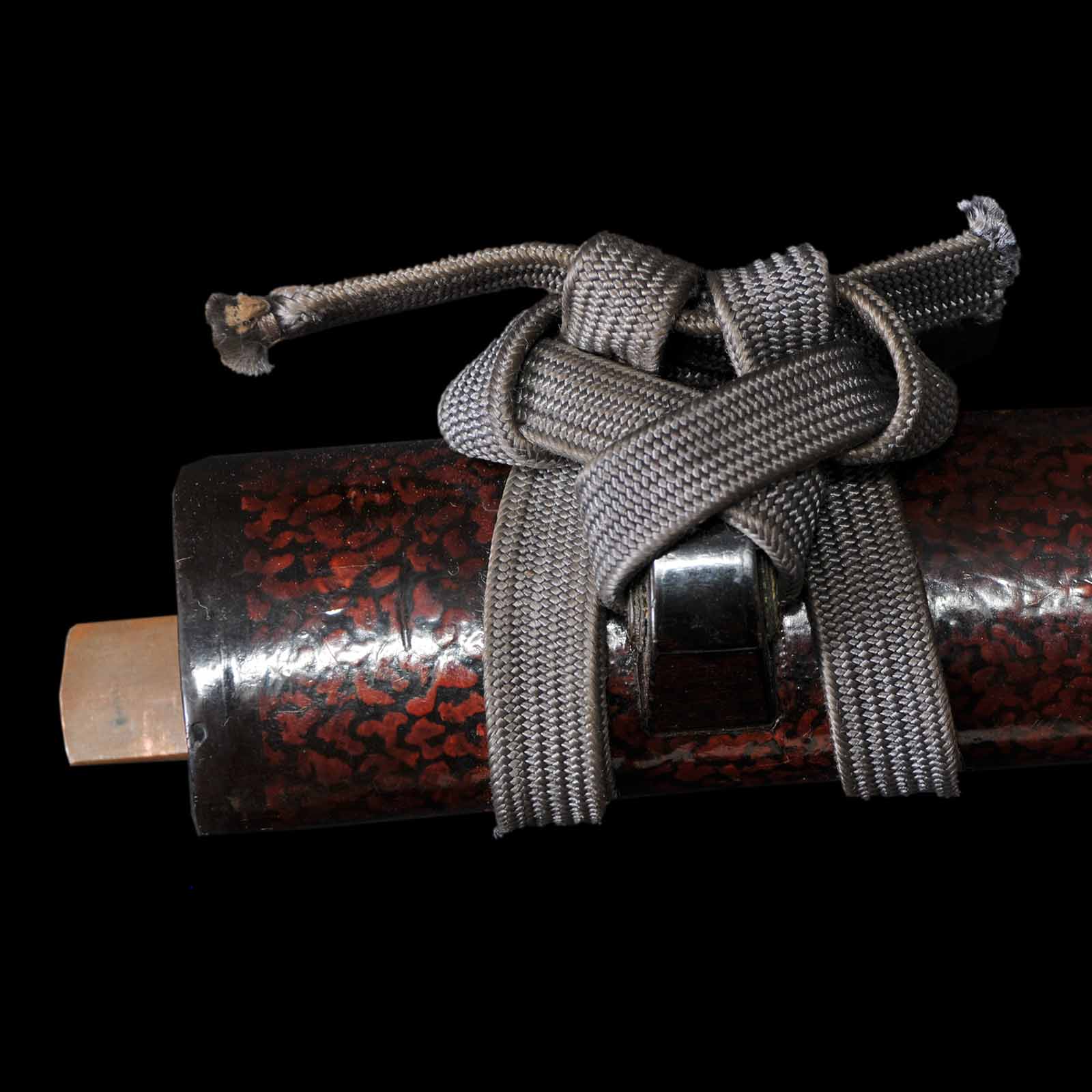
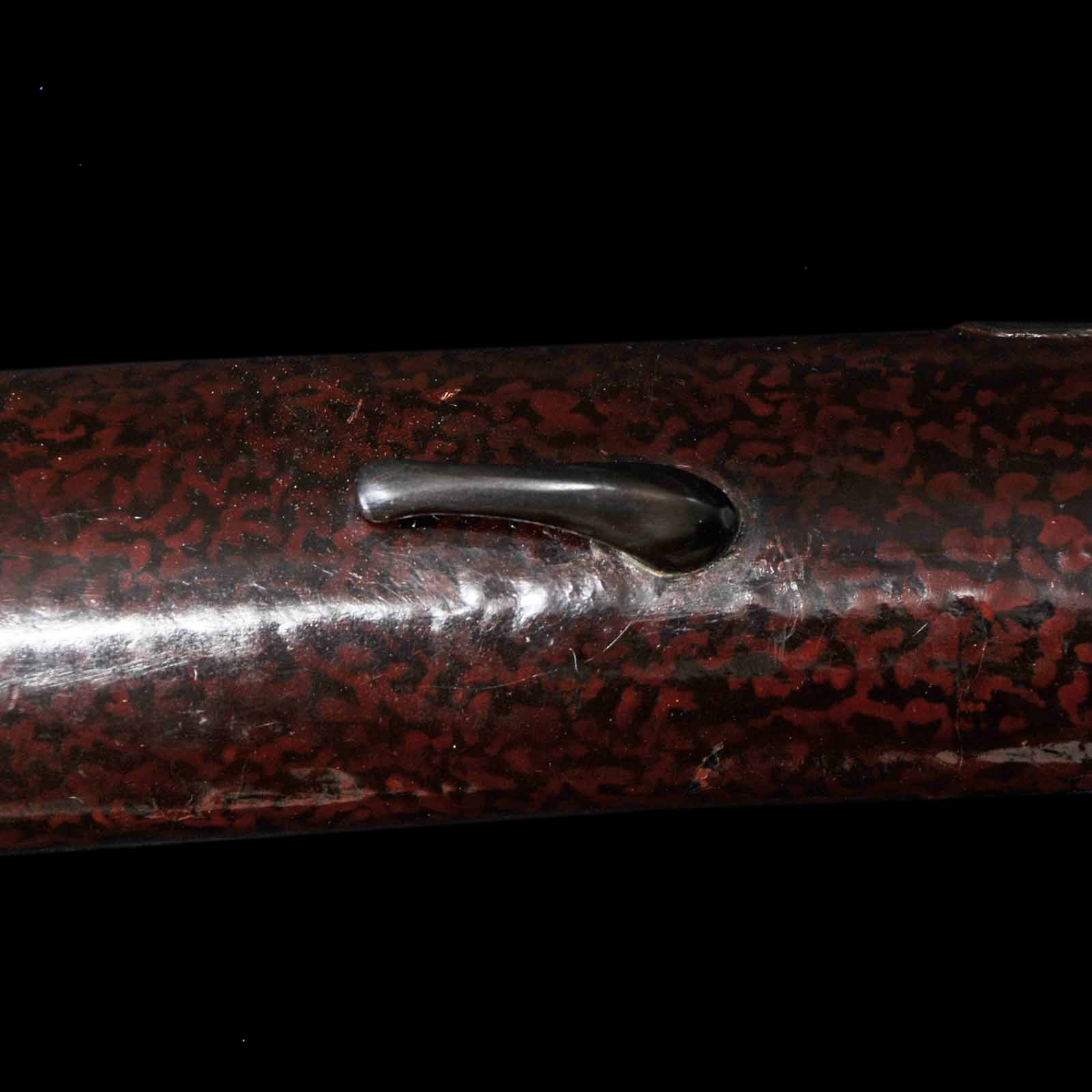
Hoki Hiroga (Mita Gorozaemon line) · Hoki · around 1532-1565
Fujishiro Jo saku · Tōken Taikan top 37%
1 piece on the market now
Hiroyoshi of Hoki Province, who signed himself Mita Gorozaemon no Jo, worked at Tsuwara through the Tenbun and Eiroku eras of the late Muromachi period, and the dated tanto of Tenbun 2 (1533), cut on the mune with an age inscription reading that it was made at sixty-one years, is regarded as the earliest dated work of his hand[[c:1]]. The name Hiroyoshi, read Hiroga, first appears in Hoki around the Bunmei era and runs over several generations of the same signature down into the shinto period, the line dividing into a Doso-o house that forged at the Kajimachi district of Kurayoshi and the Mita house of this smith, who resided at Tsuwara and later worked between Tsuwara and Kurayoshi. The published sources transmit him as a pupil of the Sagami smith Tsunahiro, 「相州綱広の門人と伝え」[[c:2]], so that what reaches this corner of the San'in coast with him is the late Soshu manner of the age, carried into a province better known for Mount Daisen than for its forges. Among the several smiths who signed Hoshu Hiroga, the published sources judge those signing Mita Gorozaemon no Jo to be the most skillful, 「見田五郎左衛門尉と銘するものが特に上手である」[[c:3]], and they place him with Wakasa Fuyuhiro as a representative maker of the[[c:4]] San'in region in the late Muromachi period[[c:5]].
The feature that most distinguishes his work is that it is two hands rather than one, a duality the published sources state outright. His blades, they write, divide into those of a Soshu-influenced character and those showing a Bizen-like style, 「相州風のものと, 備前風のものと」[[c:6]], and certain pieces incorporate aspects of both the late Soshu and late Bizen lineages, 「末相州と末備前両派のおもむきが加味されたもの」[[c:7]]. The Soshu side is the fuller register, a large gunome-midare, at times a koshi-hiraki gunome or an o-notare base showing a compound, double-structured feeling. Choji-ashi and yo enter thickly, frequent tobiyaki builds into hitatsura, and the temper is well filled with nie, threaded with sunagashi and a little kinsuji. The Bizen-toned side is the calmer one, a broad suguha-cho into which gunome are mixed, carrying ashi and yo with ko-nie adhering and sunagashi touched in. The boshi follows the temper beneath it, running midare-komi over the irregular work and turning back deeply, an ichimai-like feeling continuing down the mune into muneyaki, while over the straighter temper it goes straight to a rounded turnback with a long yakisage.
Under both manners lies one jigane, a tightly forged ko-itame with fine ji-nie densely adhering, mixed in places with mokume and crossed by chikei, and on the largest of the katana a faint whitish utsuri rises in the ji. On the Eiroku 8 katana the ji carries intermingled jifu, the patchy steel that gives the late San'in work its particular look, and in the tanto the ko-itame opens conspicuously into nagare-hada on both faces. The published sources draw attention to this ji directly, observing that within his steel there is a rustic flavor and a darkened, bronzy tone, 「かな色に黒味あるものがあってそこがこの派の見どころともなっている」[[c:8]], and they make this character of ji and ha one of the chief attractions of the group rather than a defect of provincial forging. The hamon over it is rich in nie on the Soshu pieces and bright with ashi and yo over the suguha, and on the tanto the suguha base carries a shallow notare with kuichigai-ba about the waist, the hardened width broadening above the monouchi with a suggestion of yubashiri.
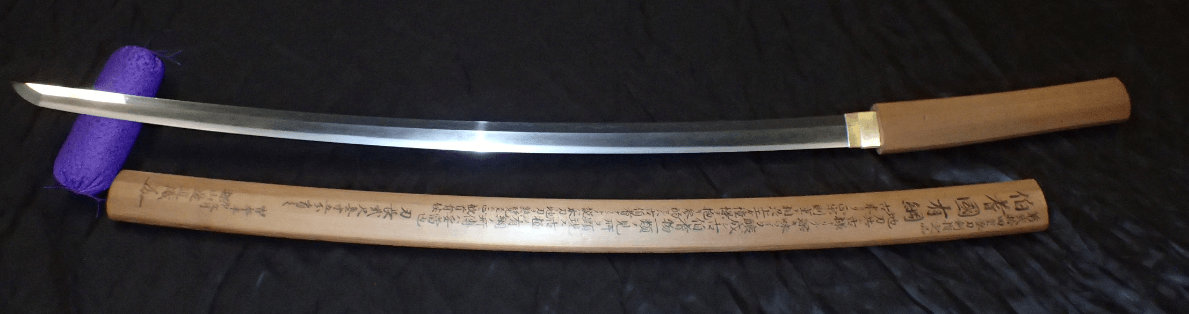
The sugata is as legible as the temper. His katana are shinogi-zukuri with sakizori and an extended chu-kissaki, one a high-shinogi blade with deep sori, another koshizori with funbari at the base, the form the published sources call a quintessential Muromachi uchigatana[[c:9]]. The tanto is hira-zukuri, wide of mihaba and thick of kasane with a receding fukura, the yoroi-doshi shape made for piercing armor, and it carries a koshi-hi on the omote and gomabashi on the ura. Every recorded blade is ubu and every one is long-signed toward the mune, most often the full Mita Gorozaemon no Jo Hiroga title with an Eiroku or Tenbun date, and at times a patron's name or, on the Tenbun tanto, an age inscription, so that his record is unusually precise in its dating. Those dated works span from Tenbun 5 (1536) through Genki 3 (1572), and the present blades carry Tenbun 2, Eiroku 1, Eiroku 4 and Eiroku 8 dates, fixing his activity firmly across the middle and third quarter of the sixteenth century.
Within the broader Hiroga name his place is that of the prized Mita branch, the hand the published commentary singles out for skill while the Doso-o house and the later same-name generations stand around it. The comparisons the sources draw are to his contemporaries rather than to his teacher. His Eiroku katana is judged in no way inferior to the works of the contemporaneous Sue-Bizen group, 「末備前派の作などに比して遜色がな」い[[c:10]], and his style is set close to Bizen Kiyomitsu, Wakasa Fuyuhiro and Bungo Munekage, the working smiths of the same decade across the San'in and Sanyo provinces. What sets his own blades apart within that company is grounded in their own description, the tobiyaki passing into hitatsura on the Soshu side and the broad gunome over a darkened, jifu-flecked ji on the Bizen-toned side, not in any borrowed resemblance. The Soshu manner he descends from Tsunahiro he carries as a provincial idiom, harder and more rustic than the metropolitan Sagami work, and it is that rustic note, named in the sources, that identifies the group.
The connoisseurship around Hiroyoshi is that of a skilled provincial master rather than a celebrated name. The reference texts place him at Jo-saku in Fujishiro's ranking and at four hundred points in the Toko Taikan, the assessment of a competent and collectible smith well below the first rank of the age. He holds no National Treasures and no Important Cultural Properties, and his designated record stands at five blades, all at the Juyo level, none yet risen to Tokubetsu Juyo. Provenance, where it survives, is real and worth naming. A naginata of his came down from Ukita Hideie into the Maeda family, the Eiroku 8 katana was long dedicated to Hiroto Shrine in Banshu, for which it was made to a patron's order, and a Mita Gorozaemon tanto is recorded in the Imperial collection. The remaining holders on record are private. For a collector this places him within reach in a way the great Soshu and Bizen names are not. A signed, ubu Hiroga katana of the wide Soshu midare with its tobiyaki and hitatsura, or one of the broad suguha-cho of the calmer manner, is the kind of dated, legible late-Muromachi work that comes to market from time to time and rewards a patient eye, a sound blade by the most skilled hand of the Hoki Hiroga line.
Where Hiroyoshi stands among comparable artisans: across all of nihontō, and within tradition, era, and period. The tiers (Foremost · Leading · Major · Notable) weigh official designations from the NBTHK and Japan's Agency for Cultural Affairs, together with historical honors of lasting repute such as the Sansaku and Meibutsu-chō.
Select a lens to see how it's measured.
Years he was demonstrably active, proven by signed-and-dated blades
Wakimono · Hoki
Phase: Sue-Hoki末伯耆· 1334–1600
4 pieces on the market now
Where Ko-Hoki belongs to the dawn of the curved blade under Yasutsuna and the Ohara circle, Sue-Hoki names the province's late continuation, the smiths of Hoki who worked through the closing phase of the Muromachi period rather than its founding age. The setsumei gather this later body around a few documented lines. Chief among them is the Hiroyoshi (広賀) name, also read Hiroga and Hiroka, which the records first place around the Bunmei era (1469 to 1487) and carry on into the shinto period across several generations. That line is transmitted as descending from Tsunahiro of Sagami: the first Hiroyoshi is said to have gone down to Soshu Kamakura during the Tenbun era and, his study completed, returned home, after which the name divided into two houses, the Mita and the Doso. To these the commentary adds Yukikage of the Inaba ko-kaji (dated Choroku 2/1458) and Morihiro of the Sainoo group at Kurayoshi, placed around the Tensho era. The published sources rank Hiroga, with Wakasa Fuyuhiro, among the representative makers of the San'in region in this period. The setsumei describe a style that has moved away from the dark, open, archaic register of the Ohara masters toward the shared idiom of late-Muromachi production. The construction is the uchigatana of the age: shinogi-zukuri with sakizori and an extended chu-kissaki, the jigane a tightly forged ko-itame with ji-nie rather than the large, conspicuously standing itame of Yasutsuna.
The records read the hamon as belonging to two manners. One is the late-Soshu approach, with large gunome-midare, tobiyaki developing into hitatsura, and thickly gathered nie; the other follows late Bizen. A suguha base mixed with gunome and choji recurs across the Hiroyoshi blades, and one tanto's explanation notes that the school specialized in gunome and hitatsura, so that a suguha work stood as a rarity. The setsumei place this output close in feeling to Sue-Bizen Kiyomitsu, Wakasa Fuyuhiro, and Bungo Munekage, situating Sue-Hoki within a standardized San'in current rather than the singular provincial vigor of the older phase. For kantei the commentary fixes the distinction differently than it does for Ko-Hoki. Where the ancient phase is held apart from old Bizen by its dark, open steel, the later Hoki blades are read against their late-Muromachi neighbors and against finer work: the Morihiro katana is described as approaching the impression of an old niji Kunitoshi and as a piece that might be mistaken for a superior (joko) smith's hand. The signing habits anchor identity, the long mei giving residence and the Mita or Doso house, with dated examples from Tenbun through Eiroku and into the Tensho era. Provenance is recorded at the modest scale of the working blade: one Eiroku 8 katana was made for a patron of Banshu Hiroto and long dedicated to Hiroto Shrine, the roughened nakago attributed to its years in that keeping. Learn more →
| Smith | Era | Designated |
|---|---|---|
| Yasutsuna安綱 | 987-1150 | 35 |
| Ohara大原 | 987-1596 | 16 |
| Sadatsuna貞綱 | 1184-1185 | 19 |
| Hiroyoshi廣賀 | 1532-1565 | 6 |
| Aritsuna有綱 | 1181-1182 | 5 |
The Muromachi period (1392 to 1573)
Muromachi turned sword making into an industry: the uchigatana rose with massed infantry warfare, Osafune and Seki produced bundle swords beside custom orders, and the Ming trade carried Japanese blades abroad by the tens of thousands.
We could not find an authenticity certificate on the seller’s listing. Japanese swords and fittings are normally papered by the NBTHK (or the NTHK). Without one, the attribution is the seller’s own assessment and has not been independently verified — treat it with caution and ask the dealer about certification before buying.
As a general rule, returns/exchanges are not accepted on Japanese sword orders unless damaged upon delivery. Other items: returns/exchanges accepted within 7 days of delivery. Cancellation for personal reasons incurs a 30% restocking fee (70% refunded). Return shipping must be prepaid and insured by the buyer; shipping/handling fees are non-refundable. Contact katana@tozando.co.jp to initiate a return.
This is a tanto by Hiroyoshi from the Koto era, featuring an ubu nakago and accompanied by a koshirae. The blade is polished and exhibits active itame hada with hataraki such as chikei and yubashiri. The koshirae has metal fittings and scabbard lacquering with a kozuka.
NihontoWatchmei · Bunmei (1469-1487) · nagasa 25cm · sori 0.1cm
Hoki Hiroga (Mita Gorozaemon line) · Hoki · around 1532-1565
Fujishiro Jo saku · Tōken Taikan top 37%
1 piece on the market now
Hiroyoshi of Hoki Province, who signed himself Mita Gorozaemon no Jo, worked at Tsuwara through the Tenbun and Eiroku eras of the late Muromachi period, and the dated tanto of Tenbun 2 (1533), cut on the mune with an age inscription reading that it was made at sixty-one years, is regarded as the earliest dated work of his hand[[c:1]]. The name Hiroyoshi, read Hiroga, first appears in Hoki around the Bunmei era and runs over several generations of the same signature down into the shinto period, the line dividing into a Doso-o house that forged at the Kajimachi district of Kurayoshi and the Mita house of this smith, who resided at Tsuwara and later worked between Tsuwara and Kurayoshi. The published sources transmit him as a pupil of the Sagami smith Tsunahiro, 「相州綱広の門人と伝え」[[c:2]], so that what reaches this corner of the San'in coast with him is the late Soshu manner of the age, carried into a province better known for Mount Daisen than for its forges. Among the several smiths who signed Hoshu Hiroga, the published sources judge those signing Mita Gorozaemon no Jo to be the most skillful, 「見田五郎左衛門尉と銘するものが特に上手である」[[c:3]], and they place him with Wakasa Fuyuhiro as a representative maker of the[[c:4]] San'in region in the late Muromachi period[[c:5]].
The feature that most distinguishes his work is that it is two hands rather than one, a duality the published sources state outright. His blades, they write, divide into those of a Soshu-influenced character and those showing a Bizen-like style, 「相州風のものと, 備前風のものと」[[c:6]], and certain pieces incorporate aspects of both the late Soshu and late Bizen lineages, 「末相州と末備前両派のおもむきが加味されたもの」[[c:7]]. The Soshu side is the fuller register, a large gunome-midare, at times a koshi-hiraki gunome or an o-notare base showing a compound, double-structured feeling. Choji-ashi and yo enter thickly, frequent tobiyaki builds into hitatsura, and the temper is well filled with nie, threaded with sunagashi and a little kinsuji. The Bizen-toned side is the calmer one, a broad suguha-cho into which gunome are mixed, carrying ashi and yo with ko-nie adhering and sunagashi touched in. The boshi follows the temper beneath it, running midare-komi over the irregular work and turning back deeply, an ichimai-like feeling continuing down the mune into muneyaki, while over the straighter temper it goes straight to a rounded turnback with a long yakisage.
Under both manners lies one jigane, a tightly forged ko-itame with fine ji-nie densely adhering, mixed in places with mokume and crossed by chikei, and on the largest of the katana a faint whitish utsuri rises in the ji. On the Eiroku 8 katana the ji carries intermingled jifu, the patchy steel that gives the late San'in work its particular look, and in the tanto the ko-itame opens conspicuously into nagare-hada on both faces. The published sources draw attention to this ji directly, observing that within his steel there is a rustic flavor and a darkened, bronzy tone, 「かな色に黒味あるものがあってそこがこの派の見どころともなっている」[[c:8]], and they make this character of ji and ha one of the chief attractions of the group rather than a defect of provincial forging. The hamon over it is rich in nie on the Soshu pieces and bright with ashi and yo over the suguha, and on the tanto the suguha base carries a shallow notare with kuichigai-ba about the waist, the hardened width broadening above the monouchi with a suggestion of yubashiri.
The sugata is as legible as the temper. His katana are shinogi-zukuri with sakizori and an extended chu-kissaki, one a high-shinogi blade with deep sori, another koshizori with funbari at the base, the form the published sources call a quintessential Muromachi uchigatana[[c:9]]. The tanto is hira-zukuri, wide of mihaba and thick of kasane with a receding fukura, the yoroi-doshi shape made for piercing armor, and it carries a koshi-hi on the omote and gomabashi on the ura. Every recorded blade is ubu and every one is long-signed toward the mune, most often the full Mita Gorozaemon no Jo Hiroga title with an Eiroku or Tenbun date, and at times a patron's name or, on the Tenbun tanto, an age inscription, so that his record is unusually precise in its dating. Those dated works span from Tenbun 5 (1536) through Genki 3 (1572), and the present blades carry Tenbun 2, Eiroku 1, Eiroku 4 and Eiroku 8 dates, fixing his activity firmly across the middle and third quarter of the sixteenth century.
Within the broader Hiroga name his place is that of the prized Mita branch, the hand the published commentary singles out for skill while the Doso-o house and the later same-name generations stand around it. The comparisons the sources draw are to his contemporaries rather than to his teacher. His Eiroku katana is judged in no way inferior to the works of the contemporaneous Sue-Bizen group, 「末備前派の作などに比して遜色がな」い[[c:10]], and his style is set close to Bizen Kiyomitsu, Wakasa Fuyuhiro and Bungo Munekage, the working smiths of the same decade across the San'in and Sanyo provinces. What sets his own blades apart within that company is grounded in their own description, the tobiyaki passing into hitatsura on the Soshu side and the broad gunome over a darkened, jifu-flecked ji on the Bizen-toned side, not in any borrowed resemblance. The Soshu manner he descends from Tsunahiro he carries as a provincial idiom, harder and more rustic than the metropolitan Sagami work, and it is that rustic note, named in the sources, that identifies the group.
The connoisseurship around Hiroyoshi is that of a skilled provincial master rather than a celebrated name. The reference texts place him at Jo-saku in Fujishiro's ranking and at four hundred points in the Toko Taikan, the assessment of a competent and collectible smith well below the first rank of the age. He holds no National Treasures and no Important Cultural Properties, and his designated record stands at five blades, all at the Juyo level, none yet risen to Tokubetsu Juyo. Provenance, where it survives, is real and worth naming. A naginata of his came down from Ukita Hideie into the Maeda family, the Eiroku 8 katana was long dedicated to Hiroto Shrine in Banshu, for which it was made to a patron's order, and a Mita Gorozaemon tanto is recorded in the Imperial collection. The remaining holders on record are private. For a collector this places him within reach in a way the great Soshu and Bizen names are not. A signed, ubu Hiroga katana of the wide Soshu midare with its tobiyaki and hitatsura, or one of the broad suguha-cho of the calmer manner, is the kind of dated, legible late-Muromachi work that comes to market from time to time and rewards a patient eye, a sound blade by the most skilled hand of the Hoki Hiroga line.
Where Hiroyoshi stands among comparable artisans: across all of nihontō, and within tradition, era, and period. The tiers (Foremost · Leading · Major · Notable) weigh official designations from the NBTHK and Japan's Agency for Cultural Affairs, together with historical honors of lasting repute such as the Sansaku and Meibutsu-chō.
Select a lens to see how it's measured.
Years he was demonstrably active, proven by signed-and-dated blades
Wakimono · Hoki
Phase: Sue-Hoki末伯耆· 1334–1600
4 pieces on the market now
Where Ko-Hoki belongs to the dawn of the curved blade under Yasutsuna and the Ohara circle, Sue-Hoki names the province's late continuation, the smiths of Hoki who worked through the closing phase of the Muromachi period rather than its founding age. The setsumei gather this later body around a few documented lines. Chief among them is the Hiroyoshi (広賀) name, also read Hiroga and Hiroka, which the records first place around the Bunmei era (1469 to 1487) and carry on into the shinto period across several generations. That line is transmitted as descending from Tsunahiro of Sagami: the first Hiroyoshi is said to have gone down to Soshu Kamakura during the Tenbun era and, his study completed, returned home, after which the name divided into two houses, the Mita and the Doso. To these the commentary adds Yukikage of the Inaba ko-kaji (dated Choroku 2/1458) and Morihiro of the Sainoo group at Kurayoshi, placed around the Tensho era. The published sources rank Hiroga, with Wakasa Fuyuhiro, among the representative makers of the San'in region in this period. The setsumei describe a style that has moved away from the dark, open, archaic register of the Ohara masters toward the shared idiom of late-Muromachi production. The construction is the uchigatana of the age: shinogi-zukuri with sakizori and an extended chu-kissaki, the jigane a tightly forged ko-itame with ji-nie rather than the large, conspicuously standing itame of Yasutsuna.
The records read the hamon as belonging to two manners. One is the late-Soshu approach, with large gunome-midare, tobiyaki developing into hitatsura, and thickly gathered nie; the other follows late Bizen. A suguha base mixed with gunome and choji recurs across the Hiroyoshi blades, and one tanto's explanation notes that the school specialized in gunome and hitatsura, so that a suguha work stood as a rarity. The setsumei place this output close in feeling to Sue-Bizen Kiyomitsu, Wakasa Fuyuhiro, and Bungo Munekage, situating Sue-Hoki within a standardized San'in current rather than the singular provincial vigor of the older phase. For kantei the commentary fixes the distinction differently than it does for Ko-Hoki. Where the ancient phase is held apart from old Bizen by its dark, open steel, the later Hoki blades are read against their late-Muromachi neighbors and against finer work: the Morihiro katana is described as approaching the impression of an old niji Kunitoshi and as a piece that might be mistaken for a superior (joko) smith's hand. The signing habits anchor identity, the long mei giving residence and the Mita or Doso house, with dated examples from Tenbun through Eiroku and into the Tensho era. Provenance is recorded at the modest scale of the working blade: one Eiroku 8 katana was made for a patron of Banshu Hiroto and long dedicated to Hiroto Shrine, the roughened nakago attributed to its years in that keeping. Learn more →
| Smith | Era | Designated |
|---|---|---|
| Yasutsuna安綱 | 987-1150 | 35 |
| Ohara大原 | 987-1596 | 16 |
| Sadatsuna貞綱 | 1184-1185 | 19 |
| Hiroyoshi廣賀 | 1532-1565 | 6 |
| Aritsuna有綱 | 1181-1182 | 5 |
The Muromachi period (1392 to 1573)
Muromachi turned sword making into an industry: the uchigatana rose with massed infantry warfare, Osafune and Seki produced bundle swords beside custom orders, and the Ming trade carried Japanese blades abroad by the tens of thousands.
We could not find an authenticity certificate on the seller’s listing. Japanese swords and fittings are normally papered by the NBTHK (or the NTHK). Without one, the attribution is the seller’s own assessment and has not been independently verified — treat it with caution and ask the dealer about certification before buying.
As a general rule, returns/exchanges are not accepted on Japanese sword orders unless damaged upon delivery. Other items: returns/exchanges accepted within 7 days of delivery. Cancellation for personal reasons incurs a 30% restocking fee (70% refunded). Return shipping must be prepaid and insured by the buyer; shipping/handling fees are non-refundable. Contact katana@tozando.co.jp to initiate a return.