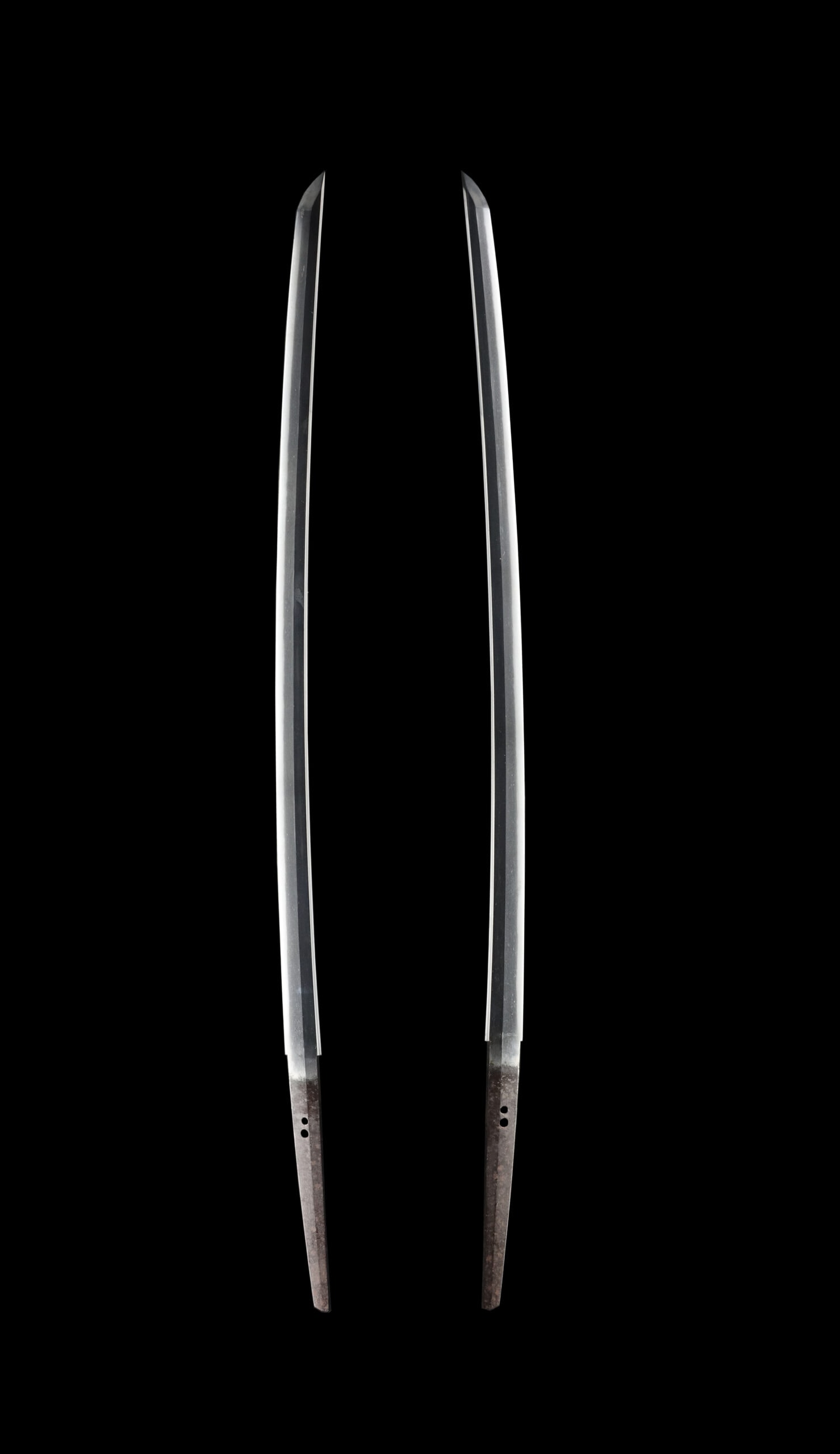
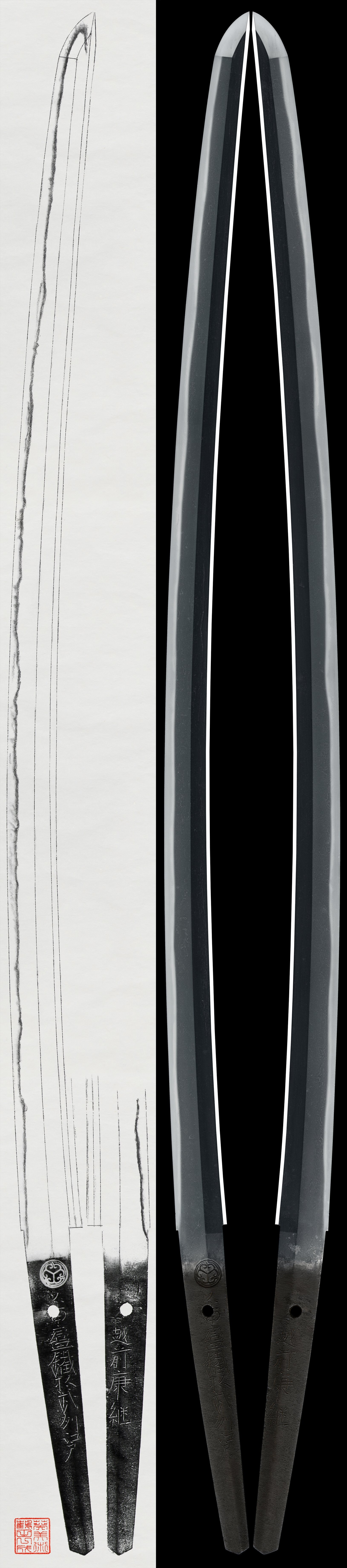
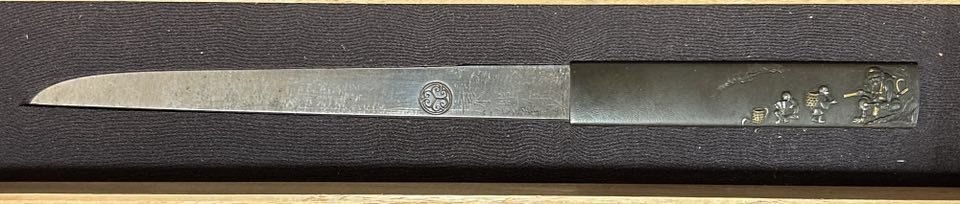
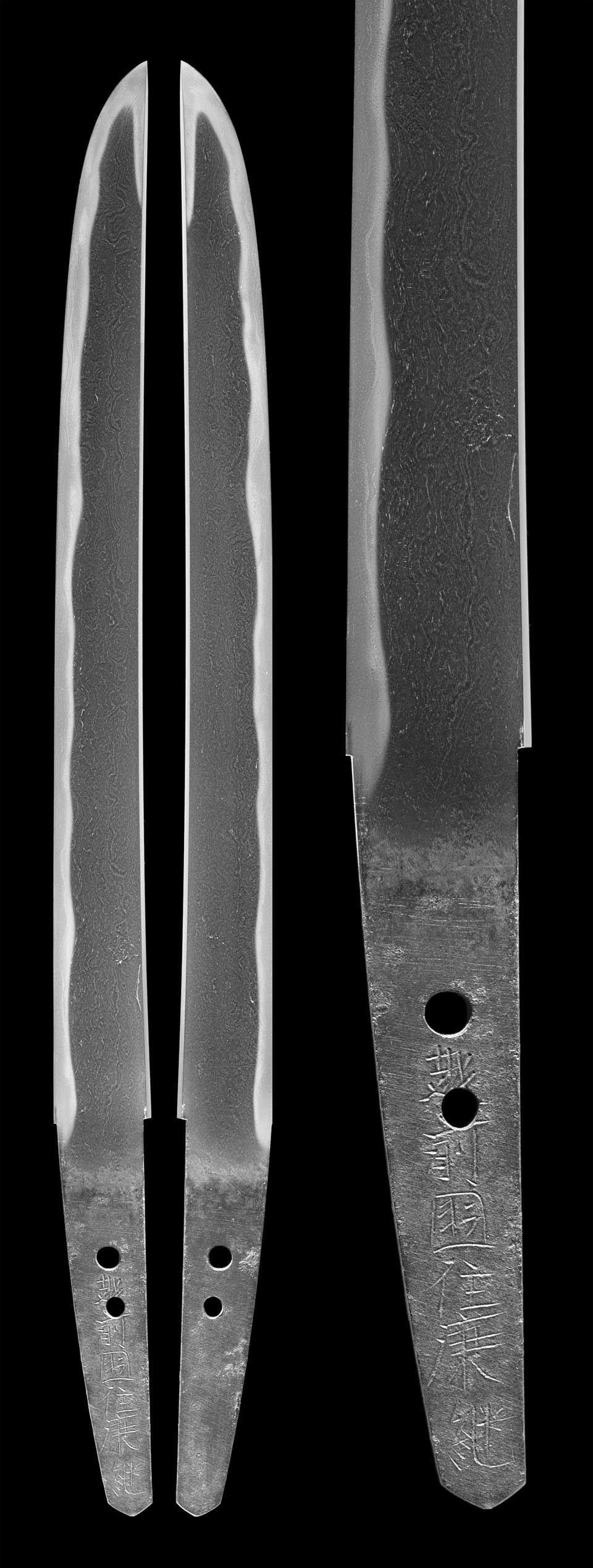
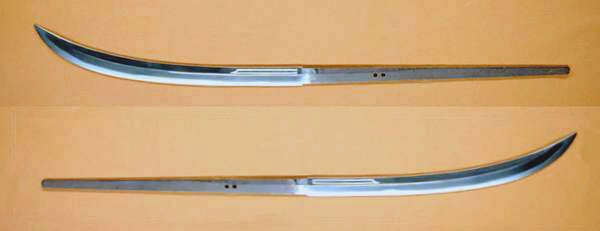
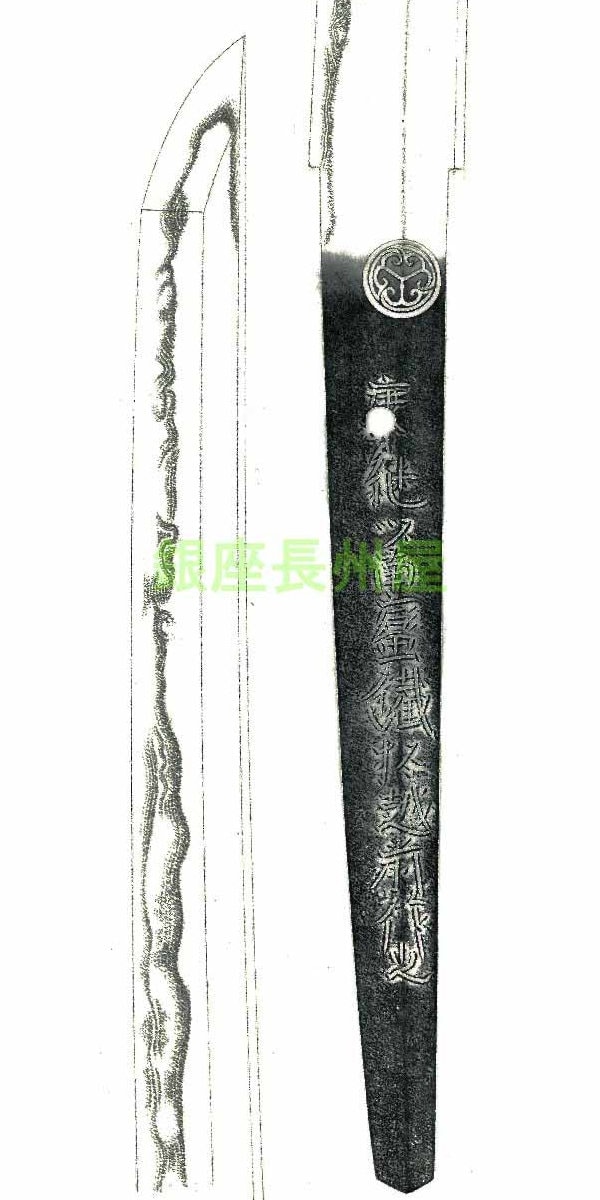
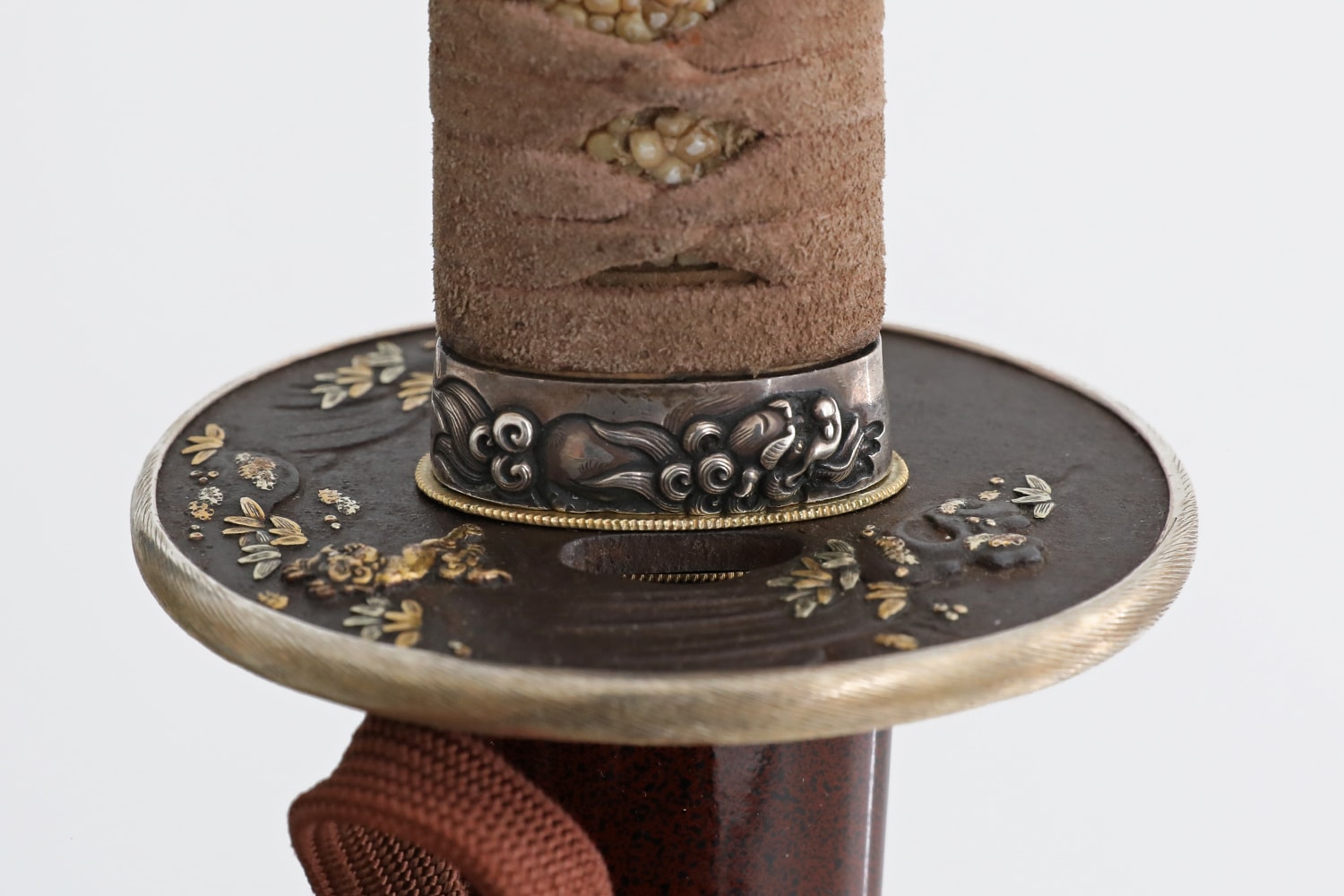
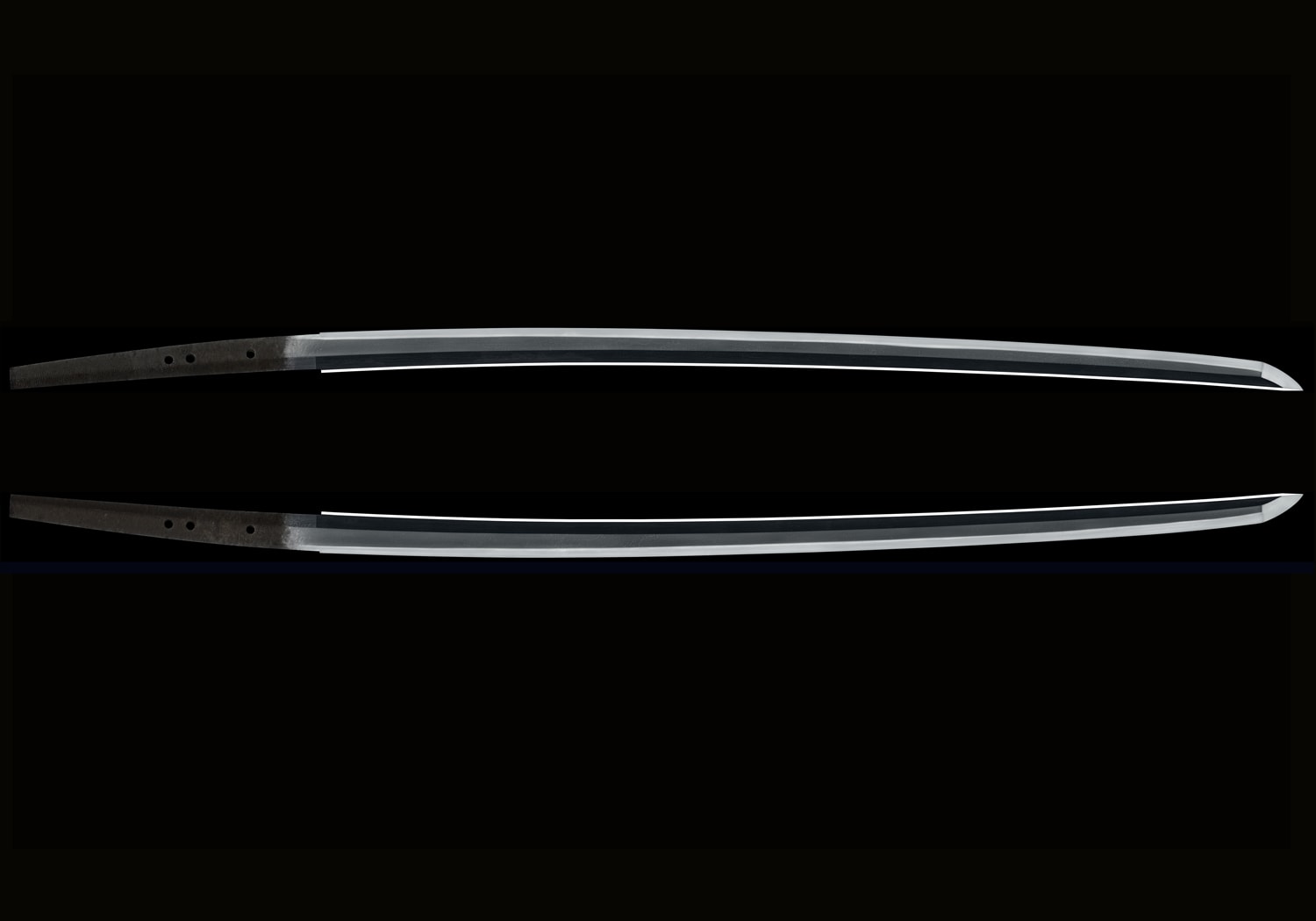
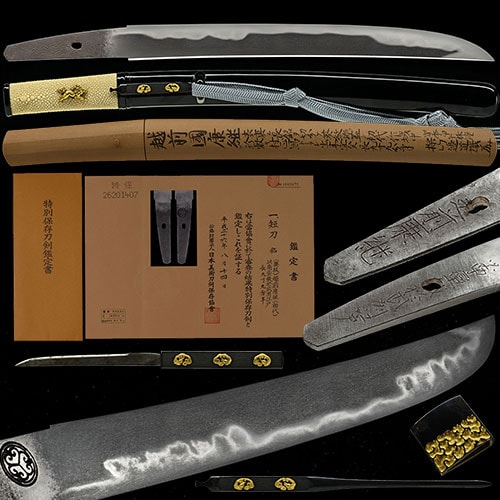
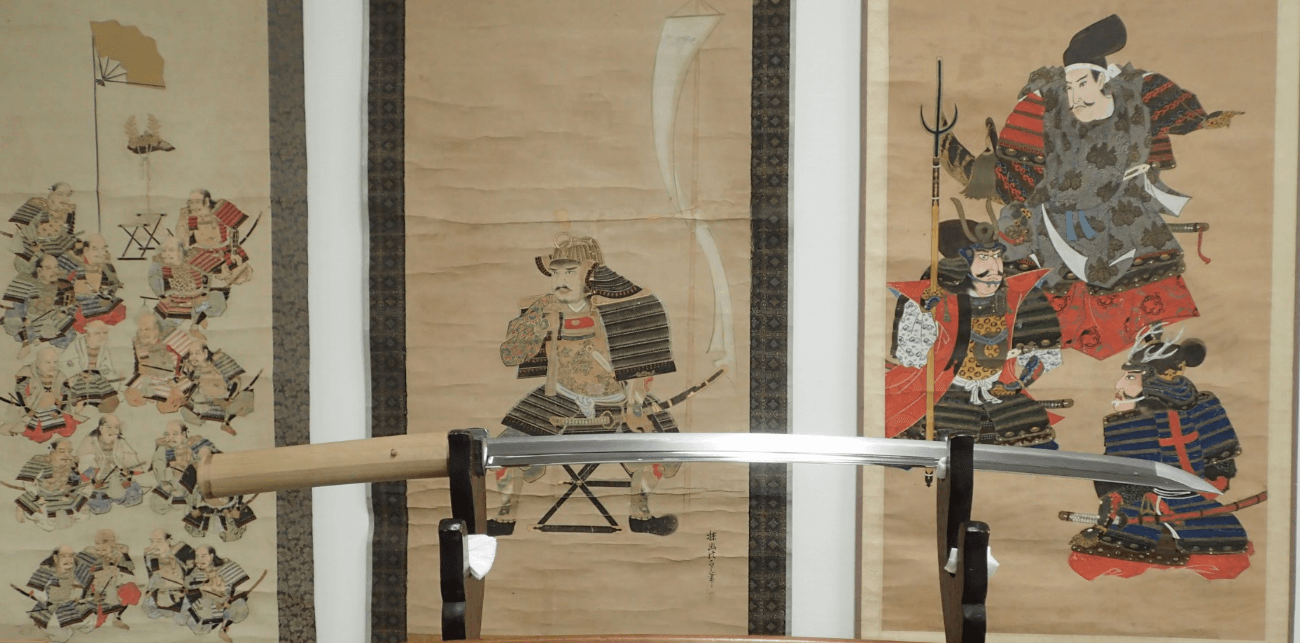
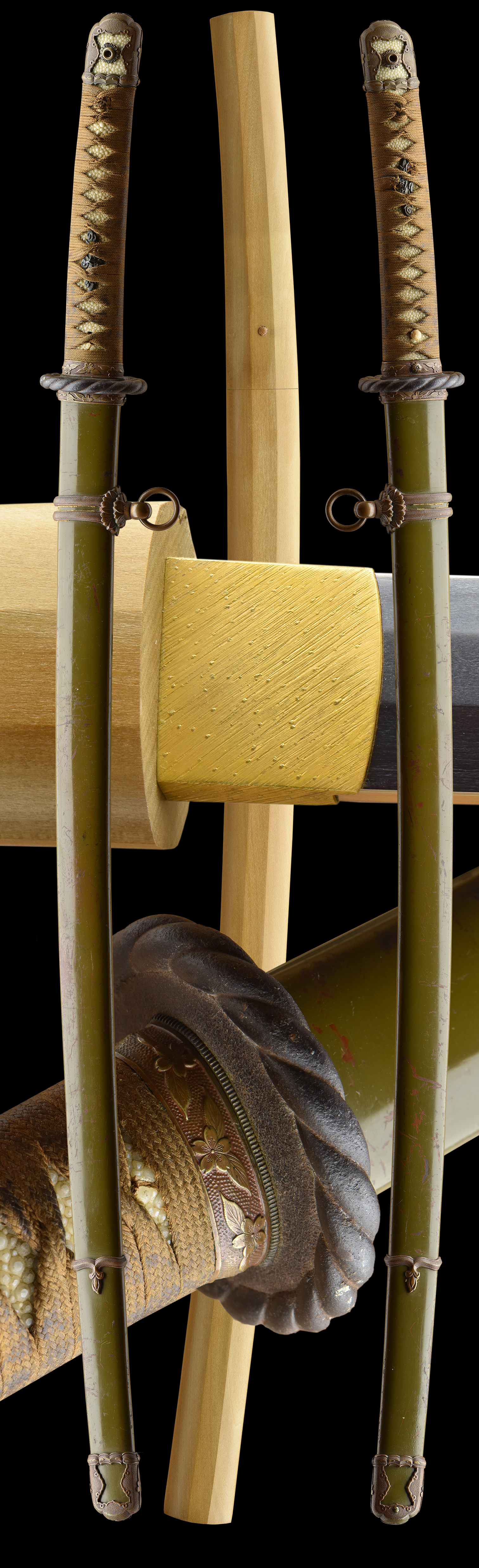
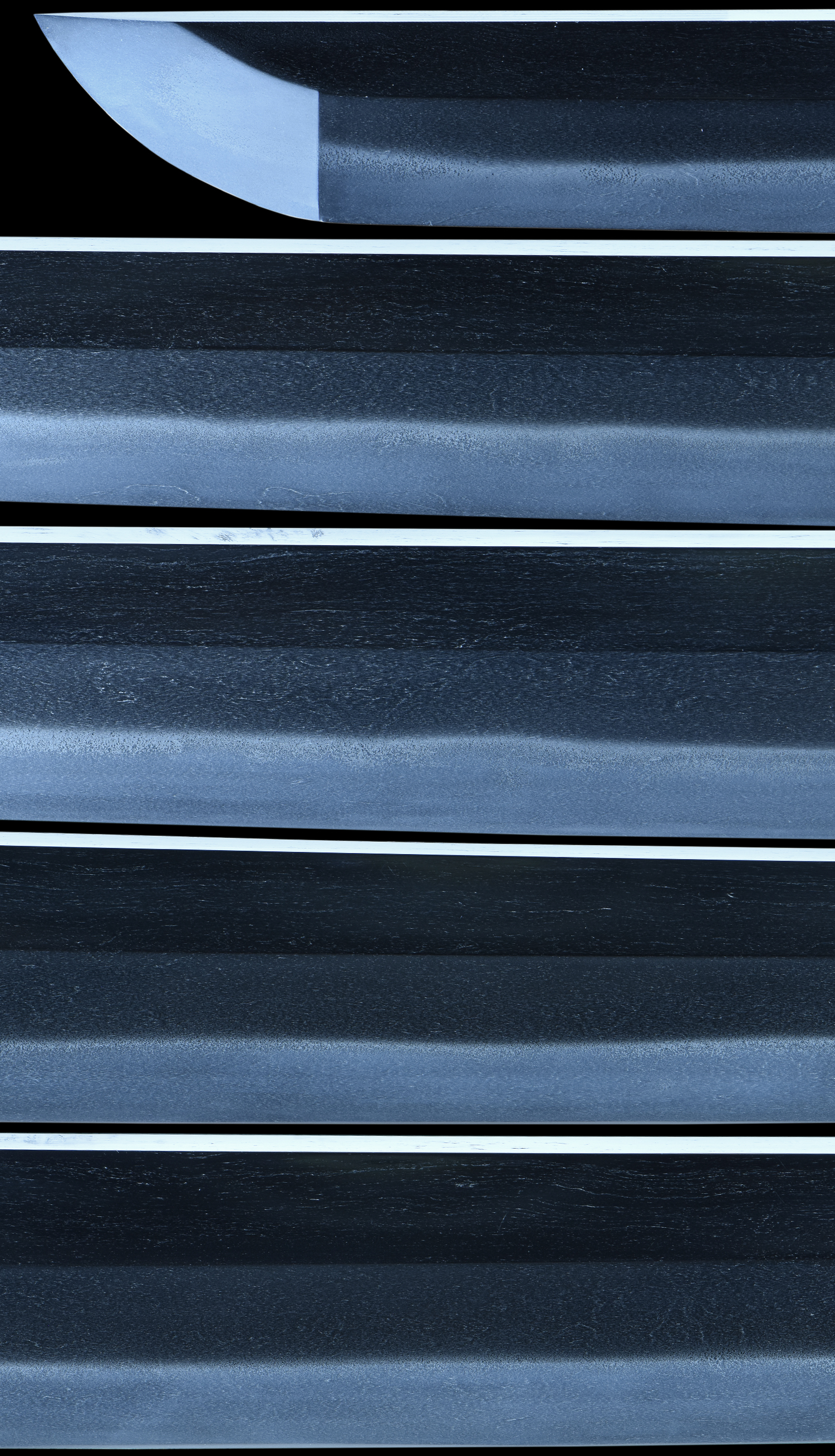
This is a katana by the 3rd generation Yasutsugu from the Edo period. The blade has good activity and a rich, dark hada. It comes with papers from the Nihon Tōken Hozon Kai (NTHK) from Japan and is mounted with an antique tsuba and menuki.
 NihontoWatchBETA
signed · Yasutsugu · Shinto · nagasa 67.31cm · sori 1.5cm
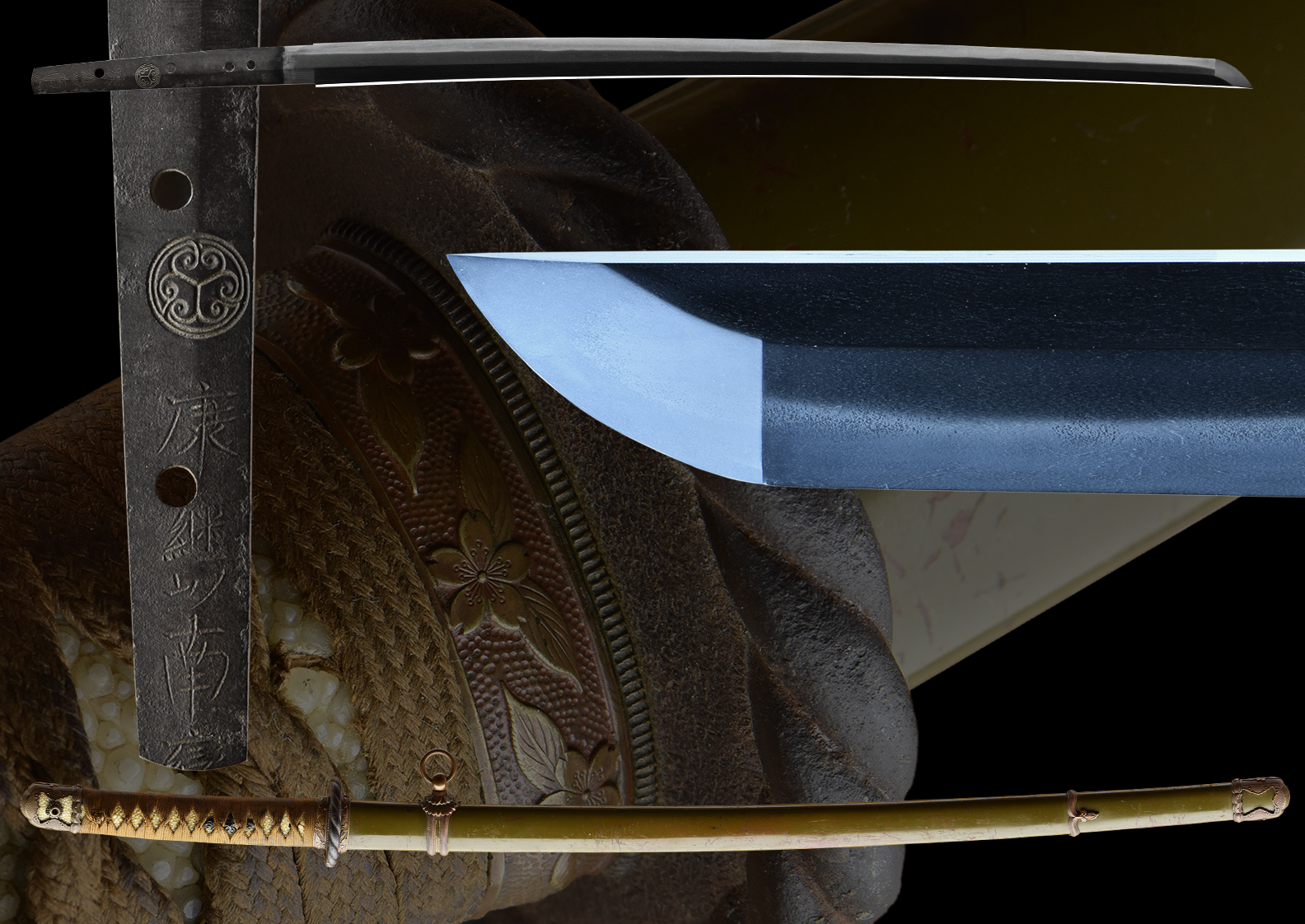

Shinto · Echizen · around 1660-1673
Tōken Taikan top 14%
7 pieces on the market now
Where Yasutsugu stands among comparable artisans: across all of nihontō, and within tradition, era, and period. The tiers (Foremost · Leading · Major · Notable) weigh official designations from the NBTHK and Japan's Agency for Cultural Affairs, together with historical honors of lasting repute such as the Sansaku and Meibutsu-chō.
Select a lens to see how it's measured.
Years he was demonstrably active, proven by signed-and-dated blades
Shinto · Echizen
50 pieces on the market now
The Shimosaka name began not as a single hand but as a trademark shared by a band of Echizen smiths at the dawn of the shinto era, and the designated record gathers their work under that one signature rather than parsing it into individuals. The published sources read the early inscriptions, the generic Echizen no Kuni Shimosaka and the titled Higo Daijo Fujiwara Shimosaka, as the product of a group, of which the first-generation Yasutsugu served as the representative. Learn more →
| Smith | Era | Designated |
|---|---|---|
| Yasutsugu康繼 | 1596-1615 | 74 |
| Yasutsugu康繼 | 1624-1644 | 27 |
| Yasutsugu康繼 | 1661-1673 | 8 |
| Sadakuni貞國 | 1596-1615 | 11 |
| Shigetaka重高 | 1596-1615 | 6 |
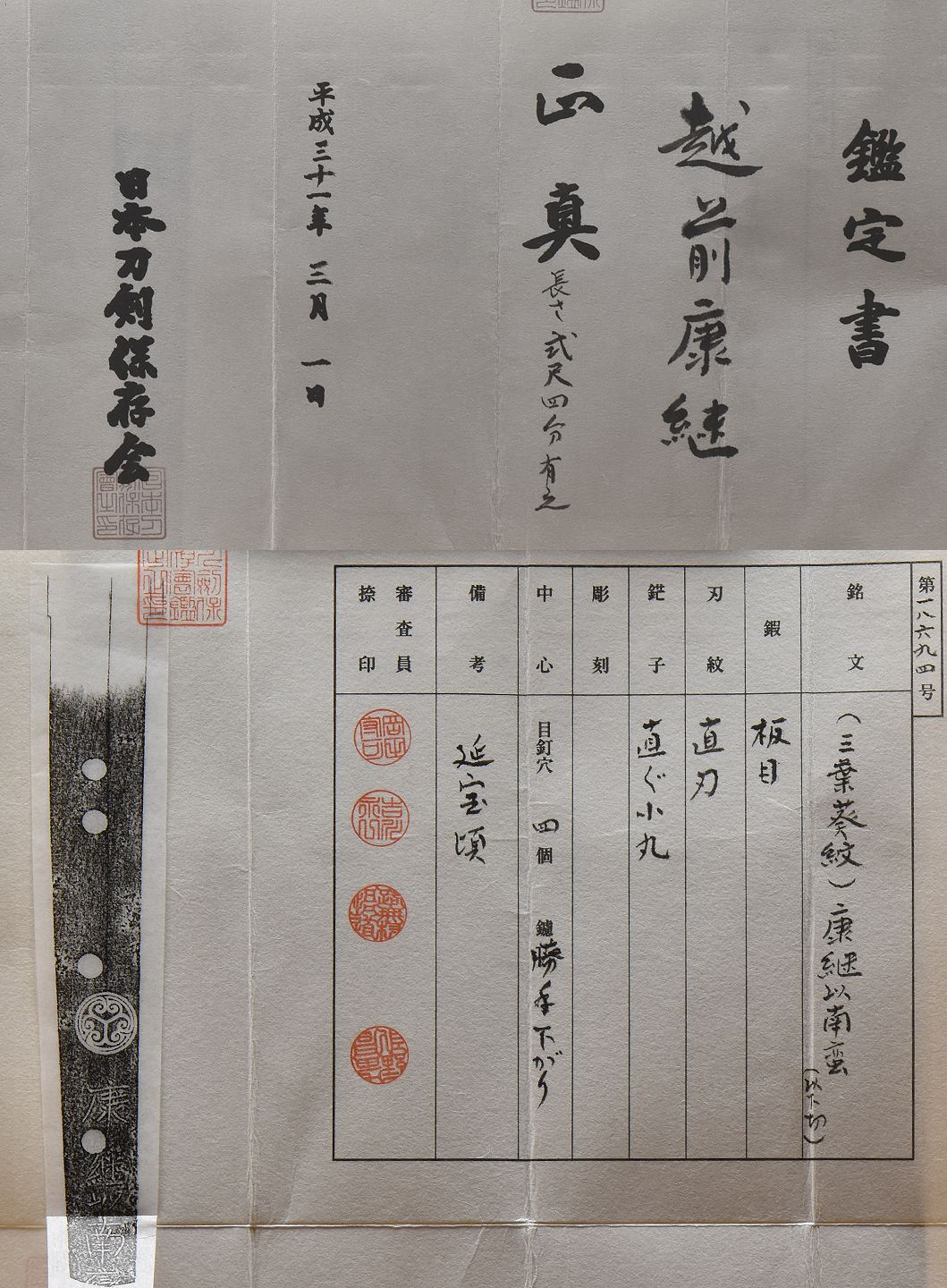
The NTHK’s principal certificate, issued for a blade of considerable quality. It confirms a genuine signature, or, for an unsigned (mumei) work, records the judges’ attribution to a smith or school. The paper carries a detailed worksheet with a numerical point score.
The NTHK (Nihon Tōken Hozon Kai, the Society for the Preservation of the Japanese Sword) is the oldest of Japan’s sword-appraisal bodies, founded in 1910, decades before the NBTHK. After the death of its long-serving head it divided into two successor societies, the NTHK and the NTHK-NPO, both of which continue to hold shinsa. NTHK certificates are known for a detailed worksheet that records a numerical point score alongside the judges’ written opinion, and the society is especially respected for its attribution of unsigned (mumei) work.
We offer a 48 hour inspection period for all Antique items shipped within the United States only. If the item is not to your satisfaction, we will gladly refund your money less any shipping and handling fees. All sales are final after the 48 hour inspection period. Please note that all discounted items are a final sale and not returnable.
This is a katana by the 3rd generation Yasutsugu from the Edo period. The blade has good activity and a rich, dark hada. It comes with papers from the Nihon Tōken Hozon Kai (NTHK) from Japan and is mounted with an antique tsuba and menuki.
NihontoWatchBETAsigned · Yasutsugu · Shinto · nagasa 67.31cm · sori 1.5cm
Shinto · Echizen · around 1660-1673
Tōken Taikan top 14%
7 pieces on the market now
Where Yasutsugu stands among comparable artisans: across all of nihontō, and within tradition, era, and period. The tiers (Foremost · Leading · Major · Notable) weigh official designations from the NBTHK and Japan's Agency for Cultural Affairs, together with historical honors of lasting repute such as the Sansaku and Meibutsu-chō.
Select a lens to see how it's measured.
Years he was demonstrably active, proven by signed-and-dated blades
Shinto · Echizen
50 pieces on the market now
The Shimosaka name began not as a single hand but as a trademark shared by a band of Echizen smiths at the dawn of the shinto era, and the designated record gathers their work under that one signature rather than parsing it into individuals. The published sources read the early inscriptions, the generic Echizen no Kuni Shimosaka and the titled Higo Daijo Fujiwara Shimosaka, as the product of a group, of which the first-generation Yasutsugu served as the representative. Learn more →
| Smith | Era | Designated |
|---|---|---|
| Yasutsugu康繼 | 1596-1615 | 74 |
| Yasutsugu康繼 | 1624-1644 | 27 |
| Yasutsugu康繼 | 1661-1673 | 8 |
| Sadakuni貞國 | 1596-1615 | 11 |
| Shigetaka重高 | 1596-1615 | 6 |
The NTHK’s principal certificate, issued for a blade of considerable quality. It confirms a genuine signature, or, for an unsigned (mumei) work, records the judges’ attribution to a smith or school. The paper carries a detailed worksheet with a numerical point score.
The NTHK (Nihon Tōken Hozon Kai, the Society for the Preservation of the Japanese Sword) is the oldest of Japan’s sword-appraisal bodies, founded in 1910, decades before the NBTHK. After the death of its long-serving head it divided into two successor societies, the NTHK and the NTHK-NPO, both of which continue to hold shinsa. NTHK certificates are known for a detailed worksheet that records a numerical point score alongside the judges’ written opinion, and the society is especially respected for its attribution of unsigned (mumei) work.
We offer a 48 hour inspection period for all Antique items shipped within the United States only. If the item is not to your satisfaction, we will gladly refund your money less any shipping and handling fees. All sales are final after the 48 hour inspection period. Please note that all discounted items are a final sale and not returnable.