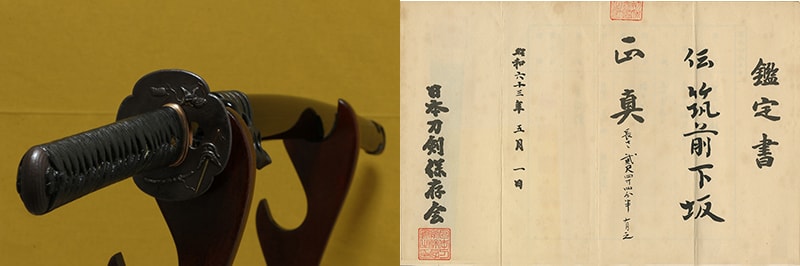
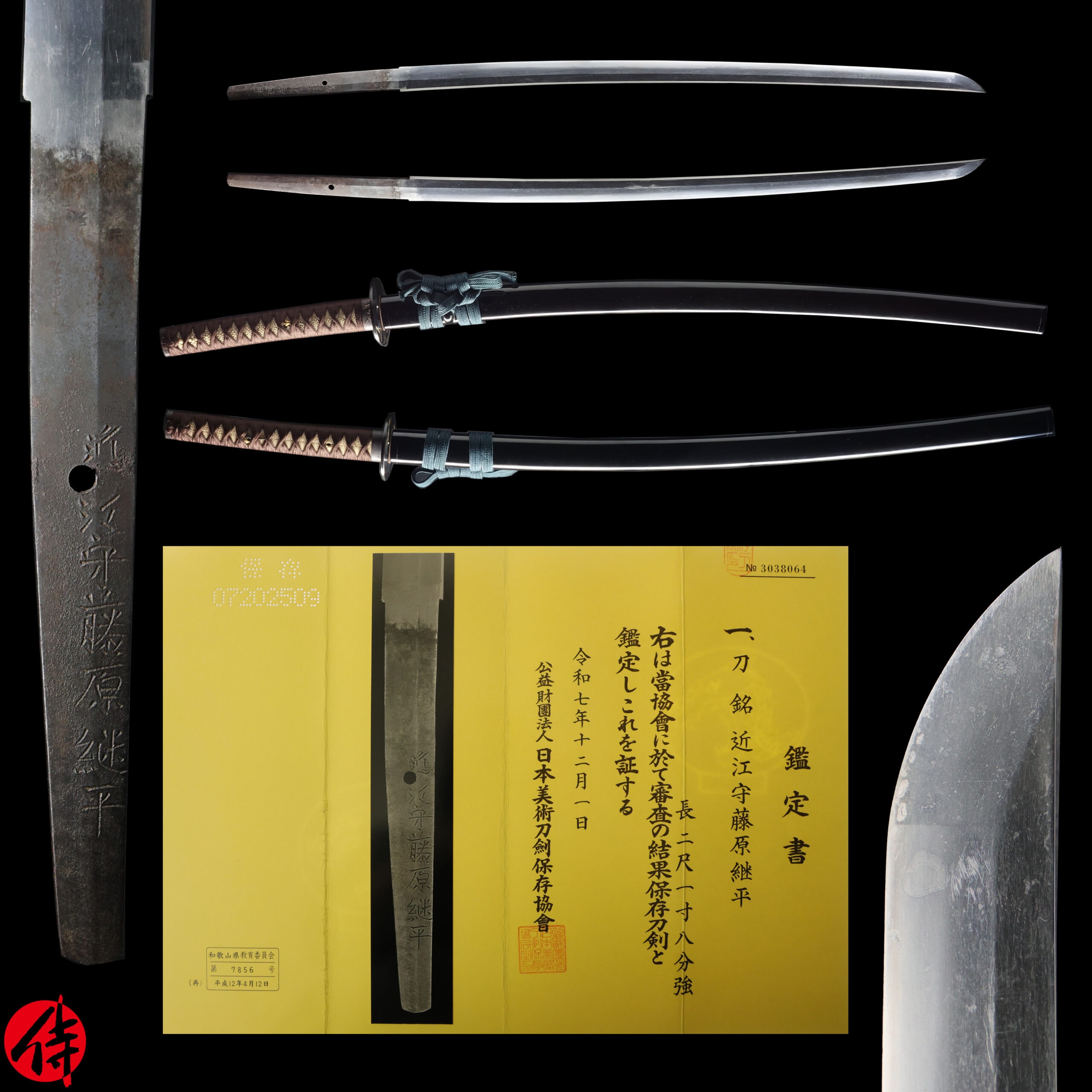
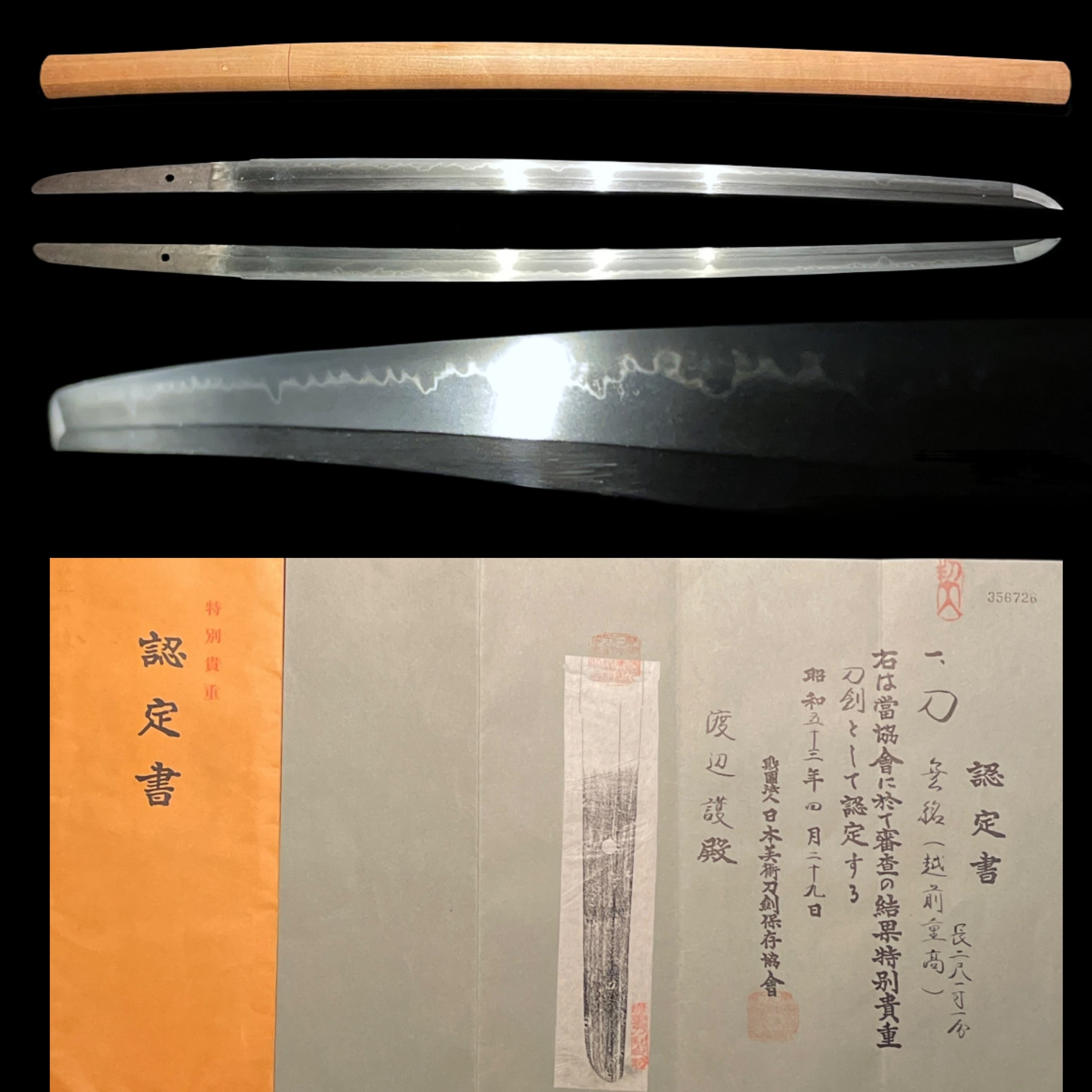
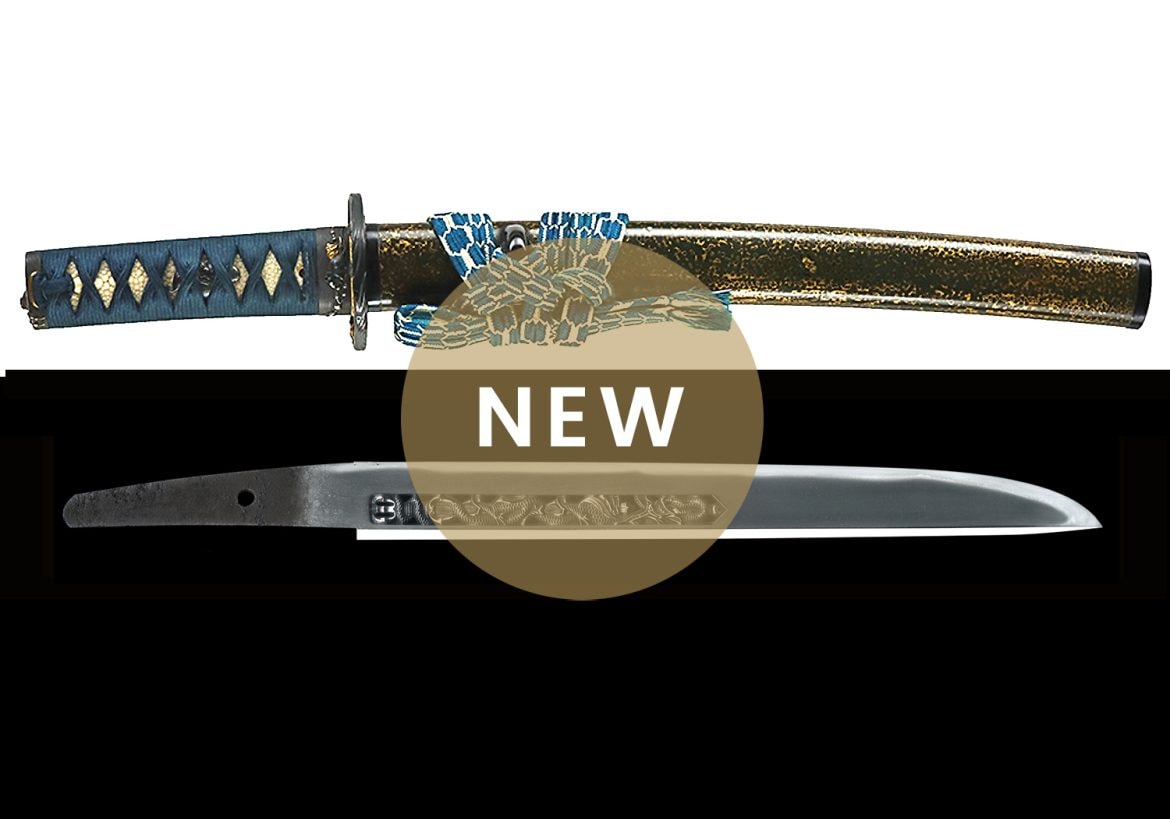
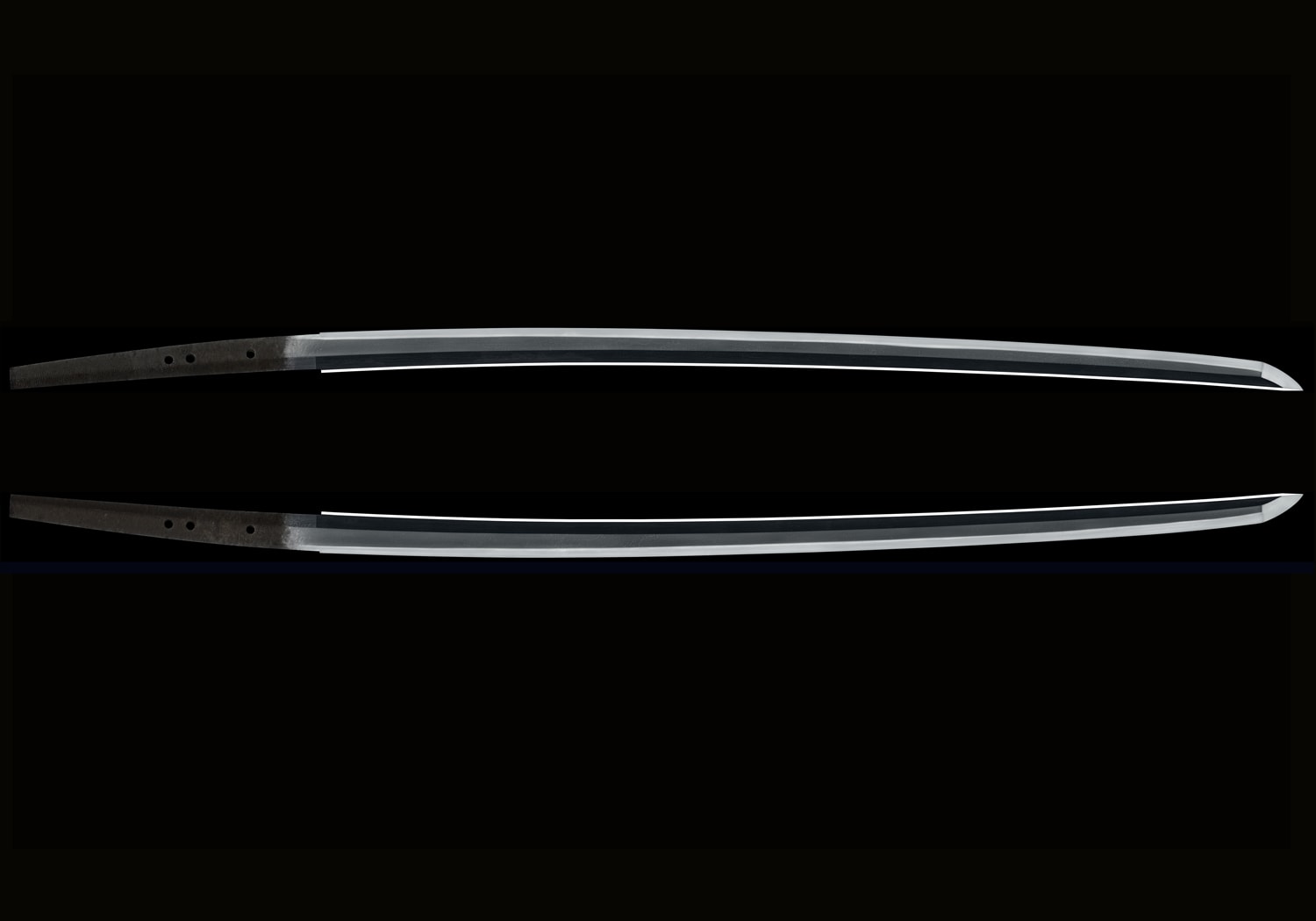
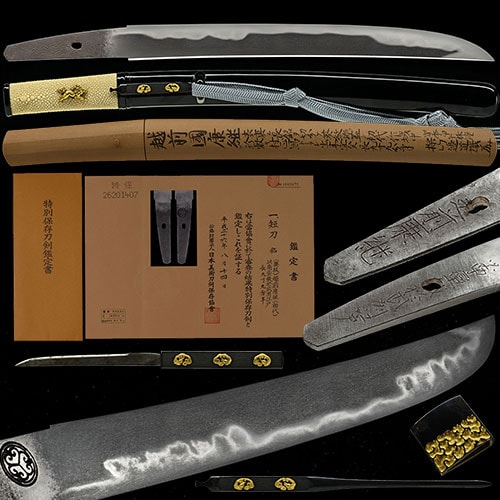
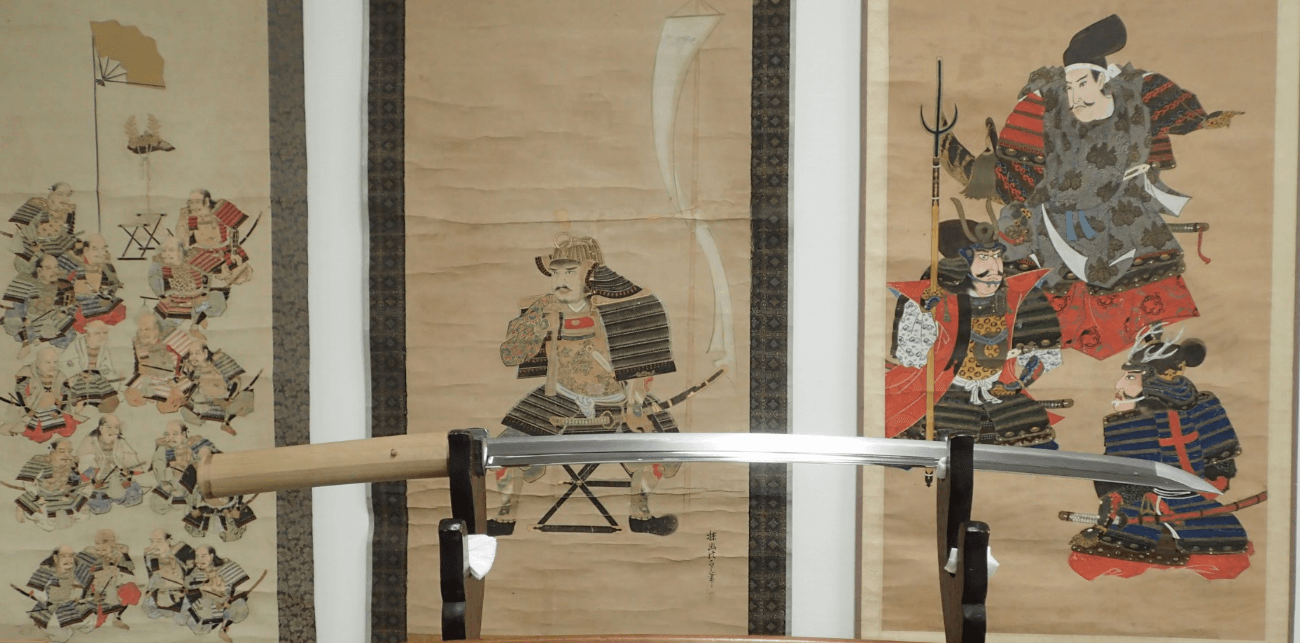
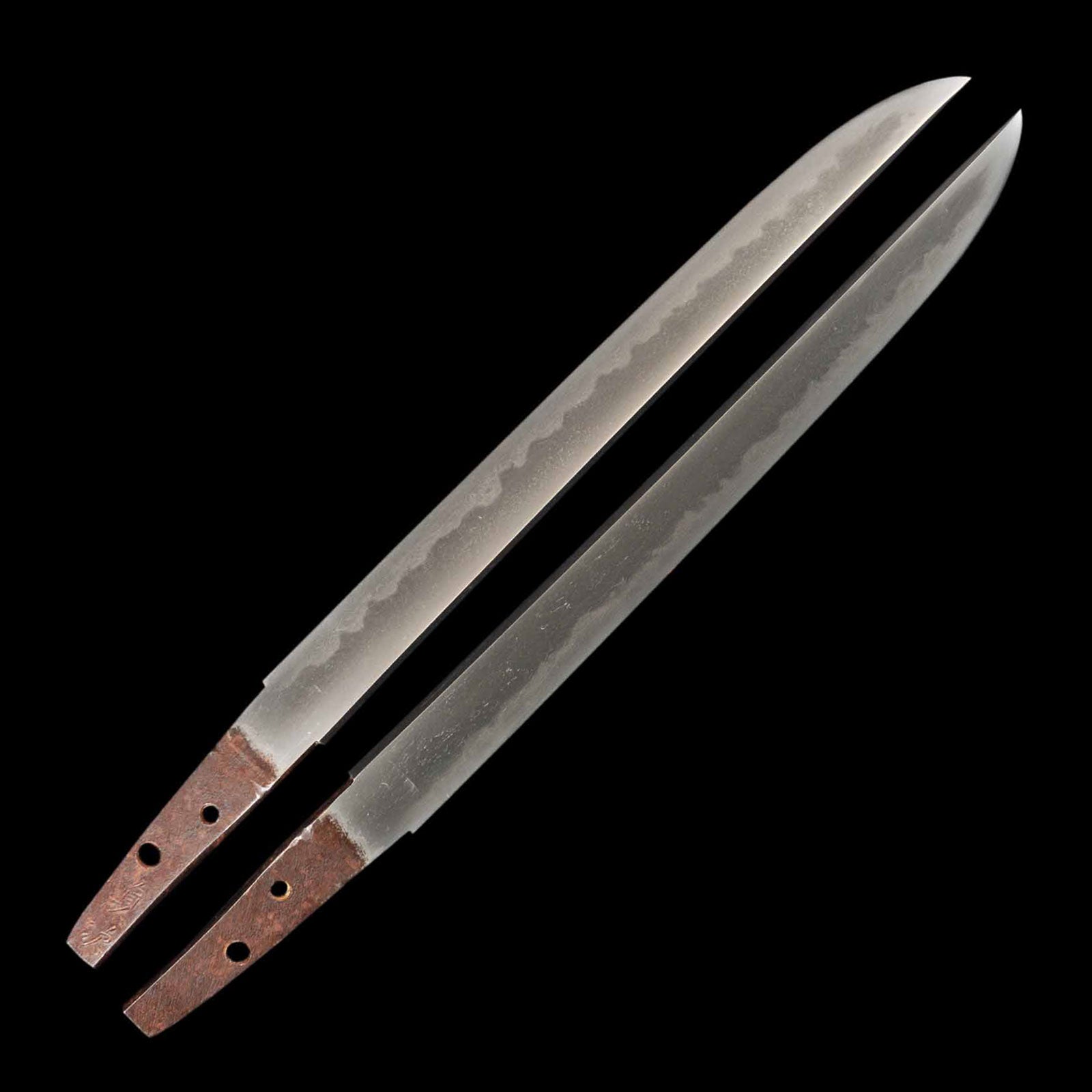
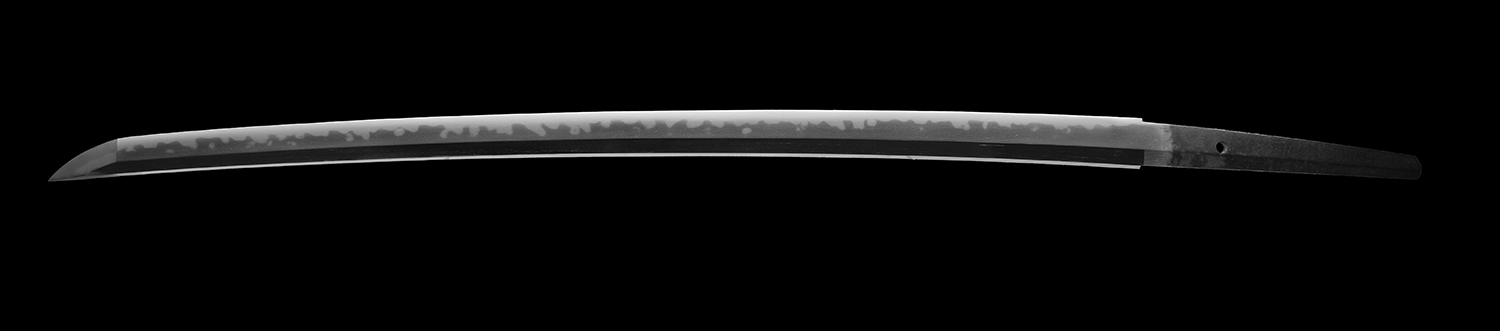
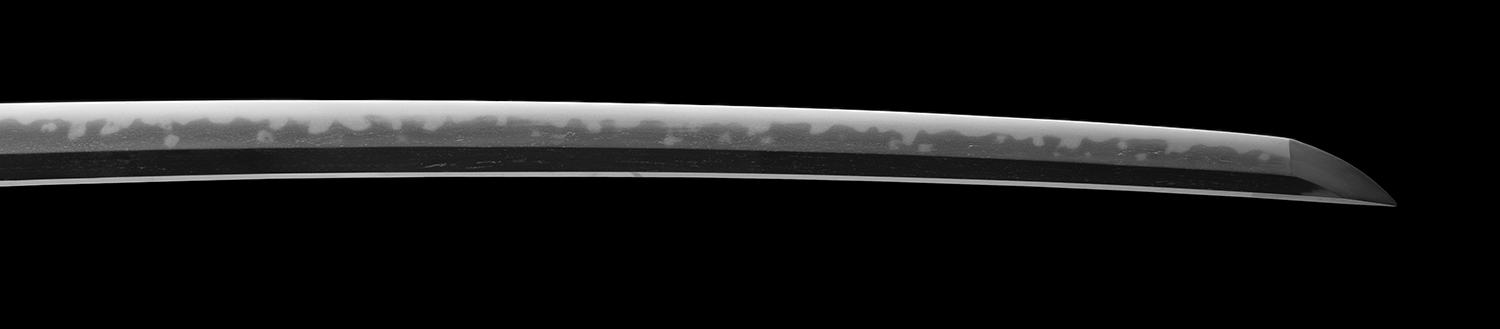
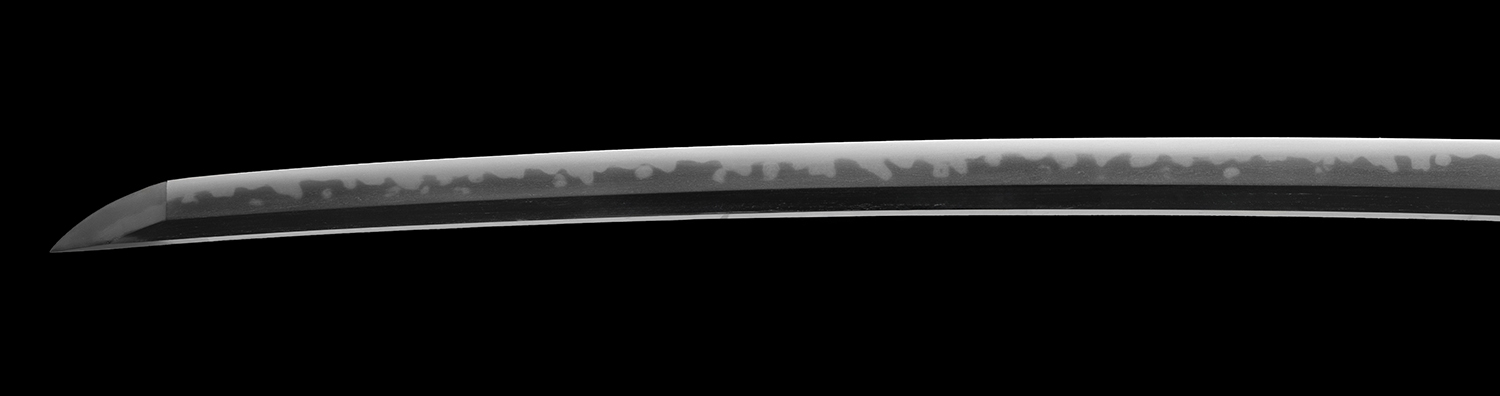
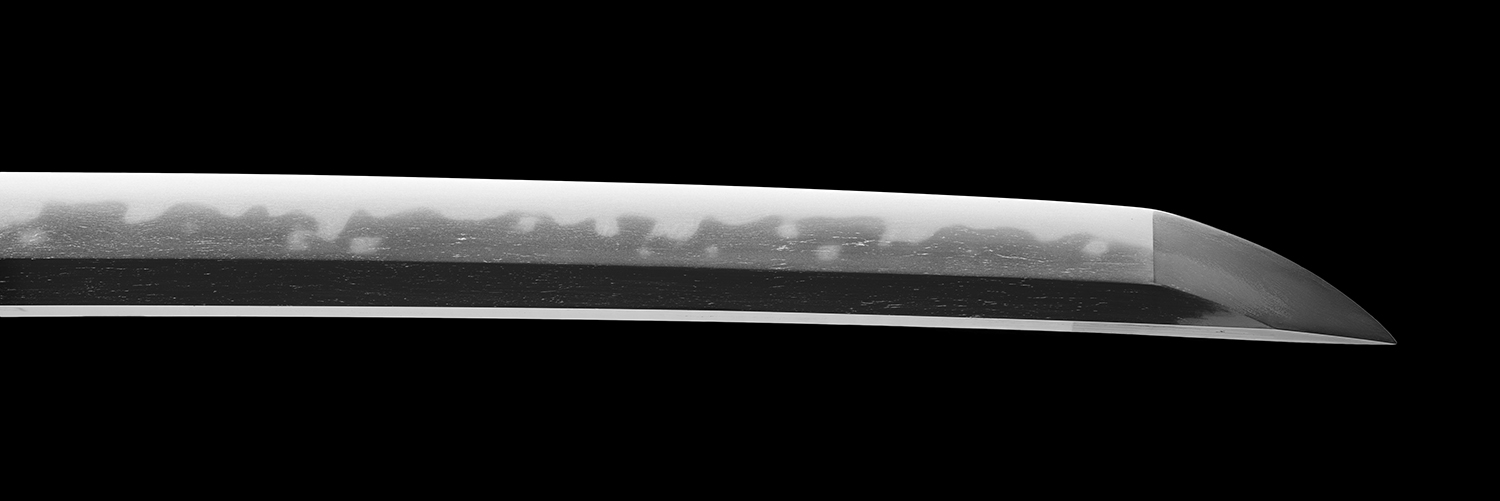
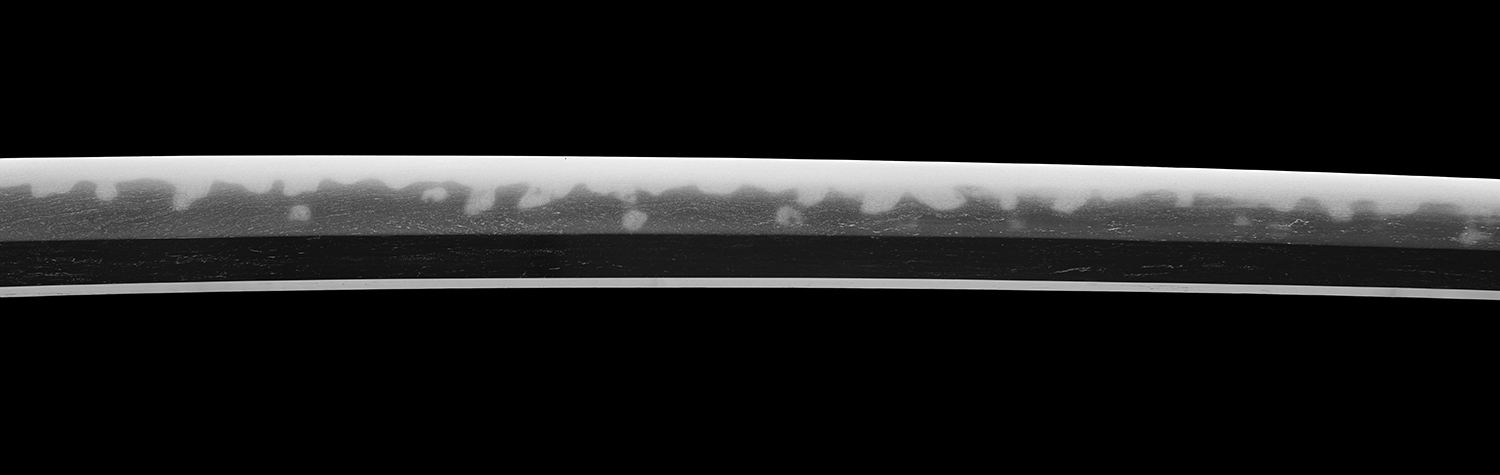
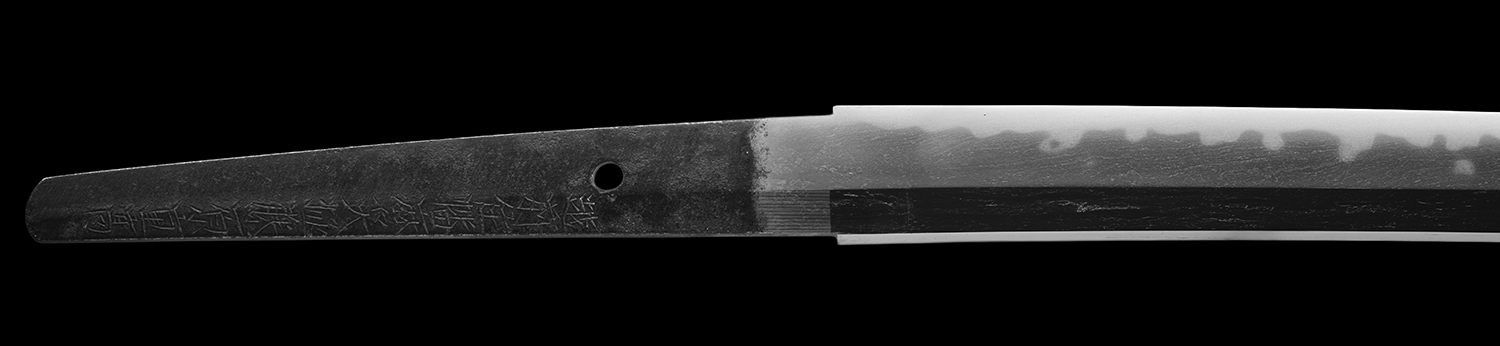
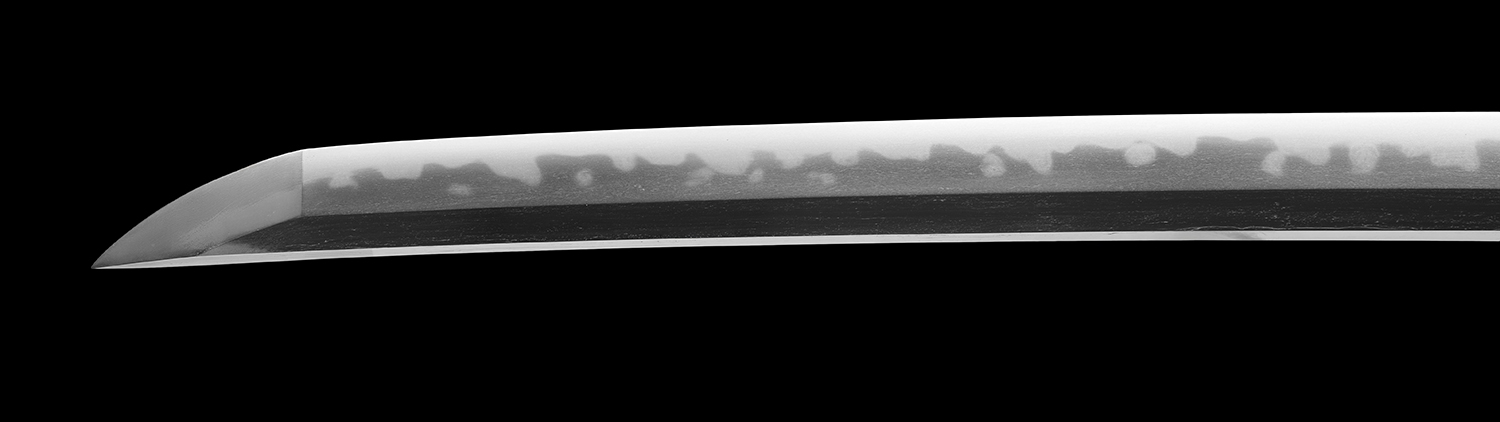
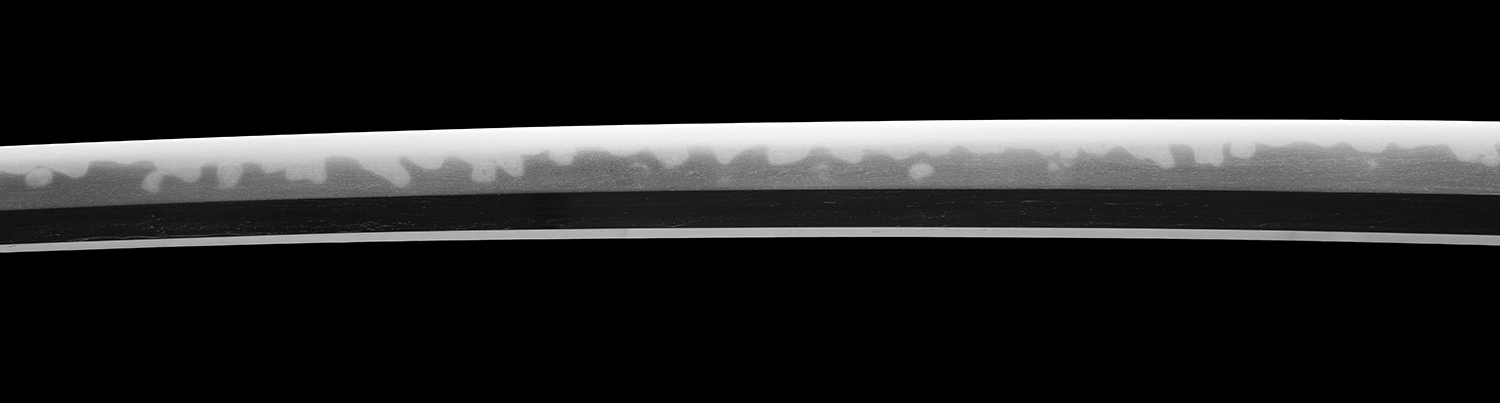
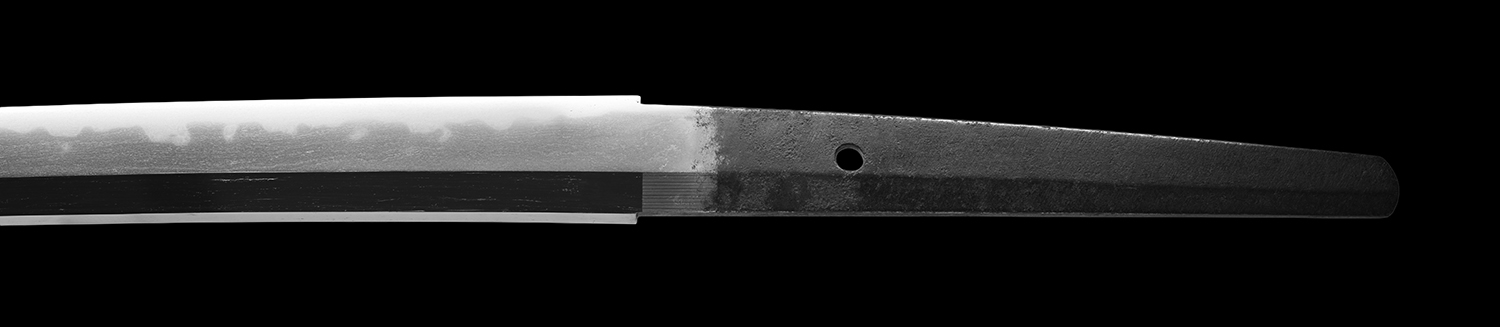
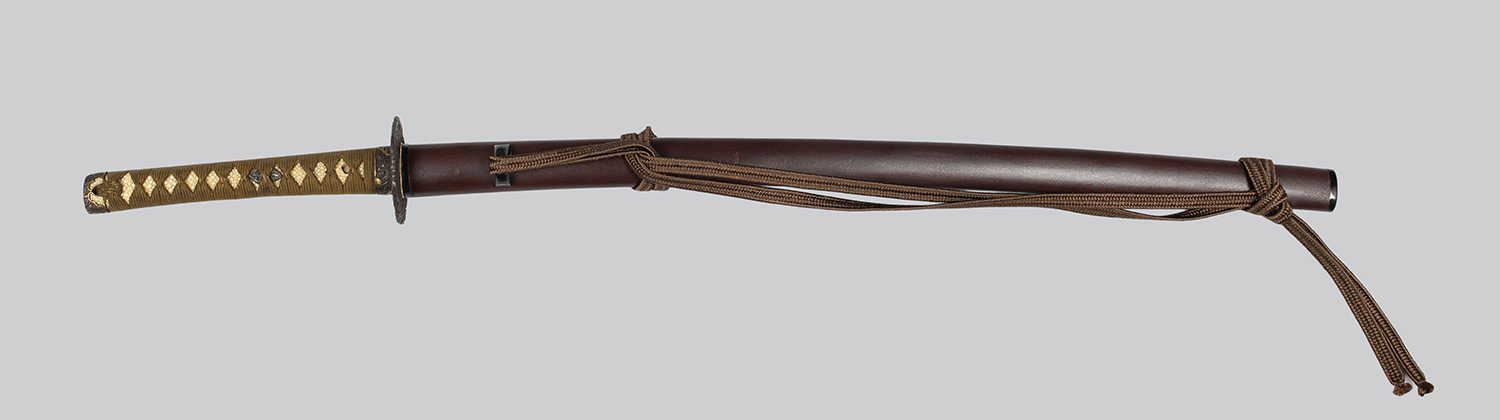
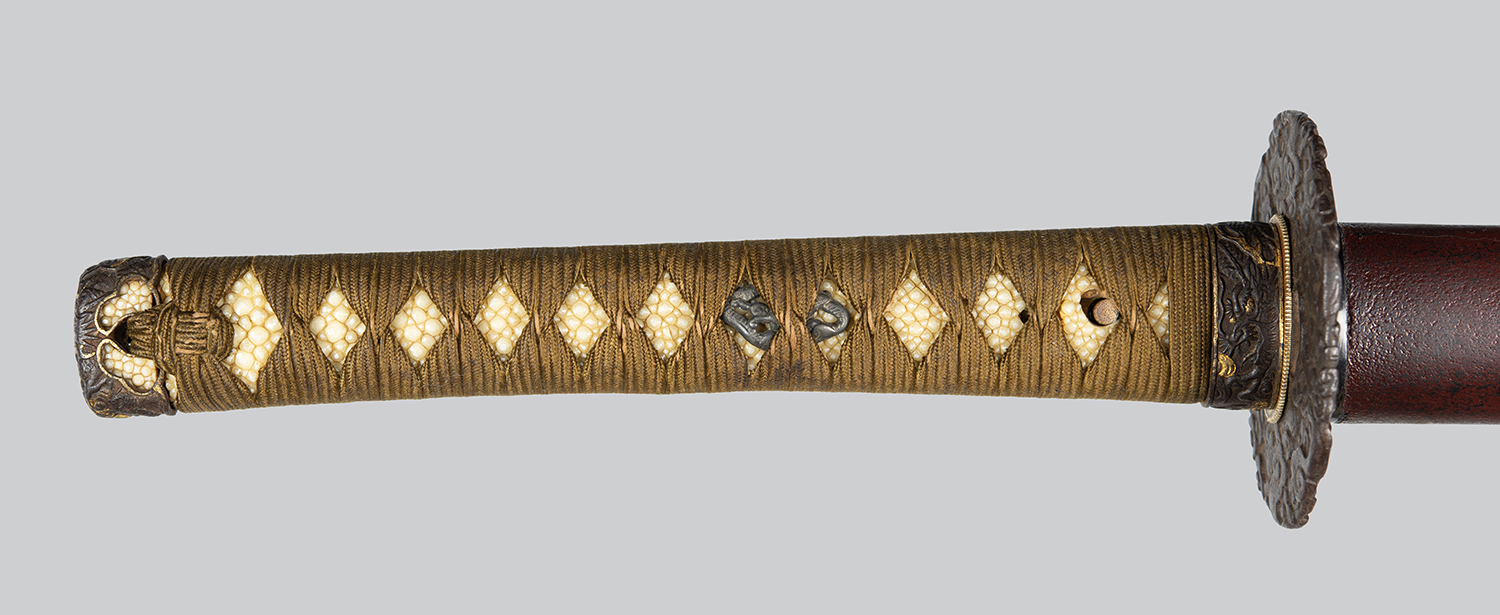
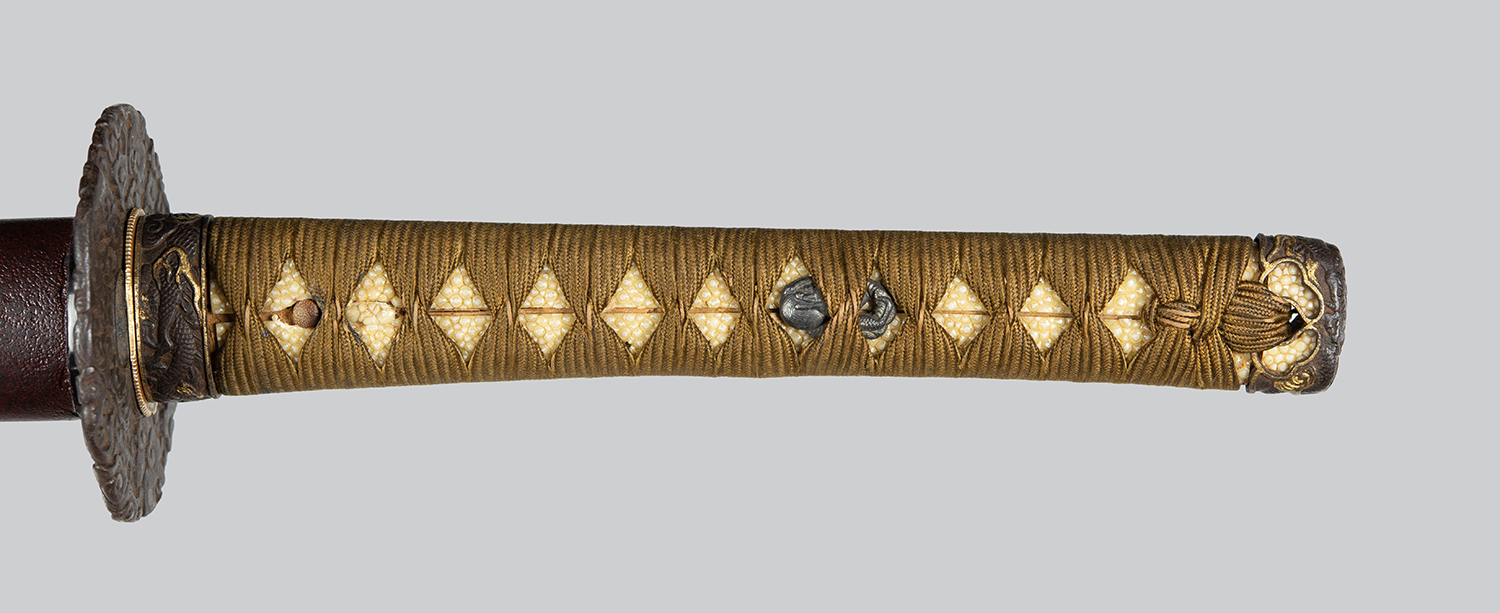
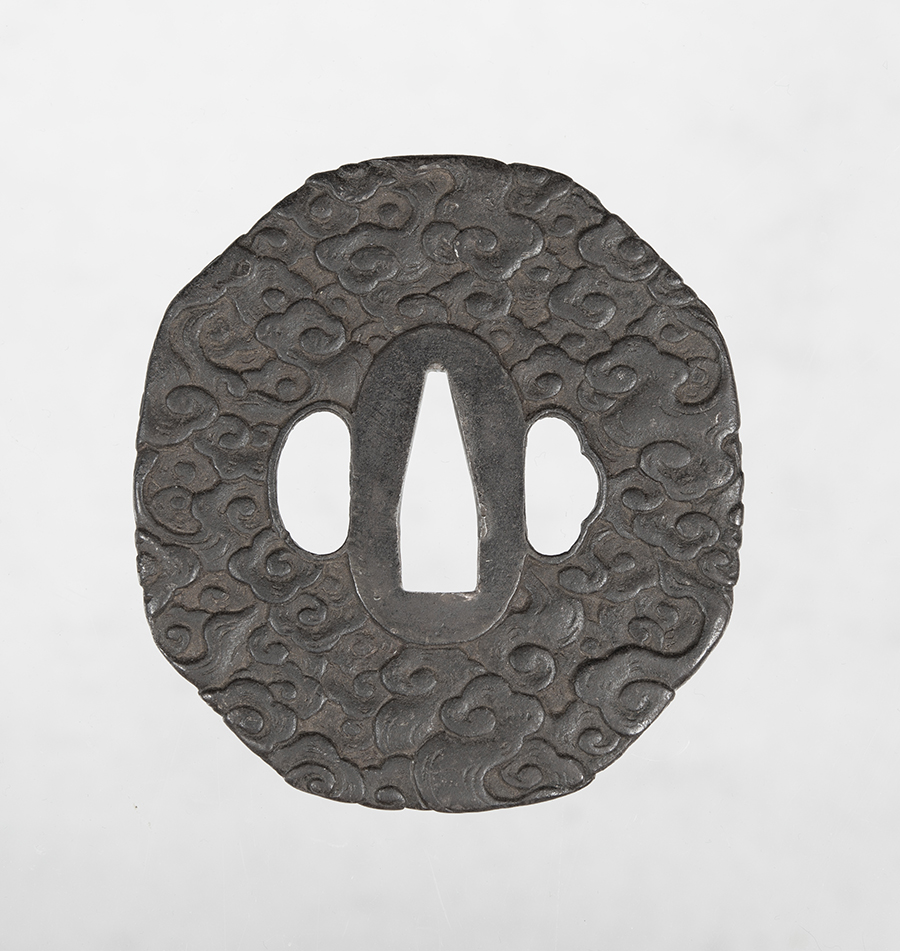
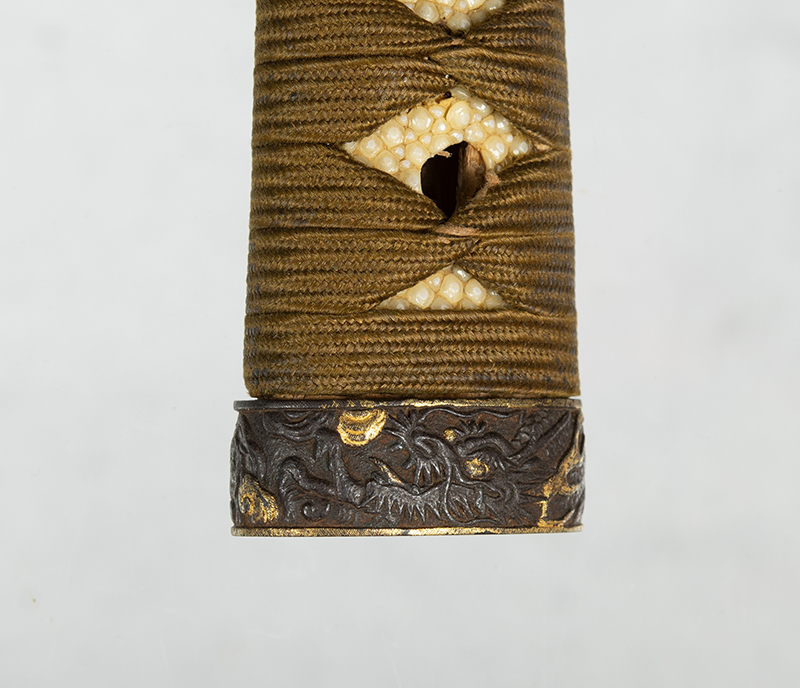
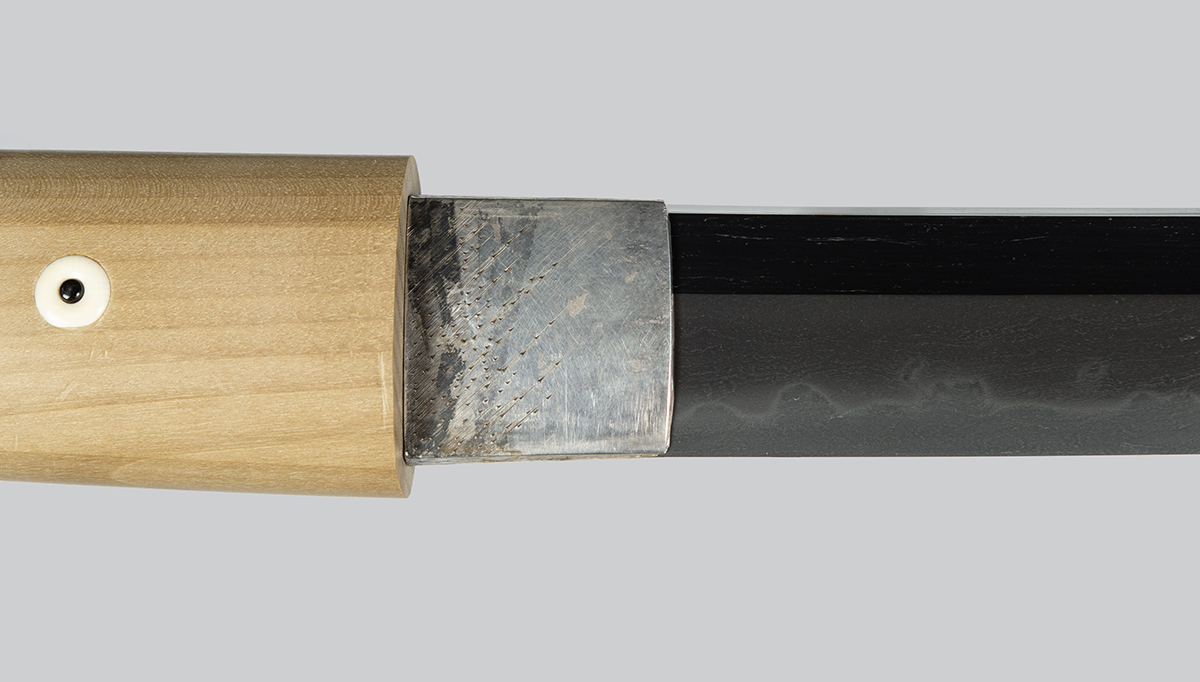
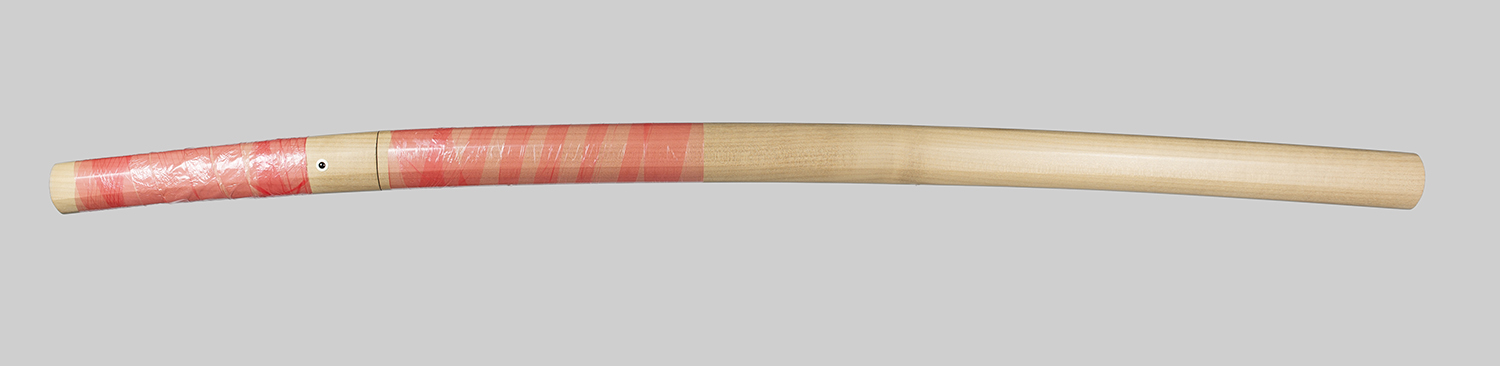
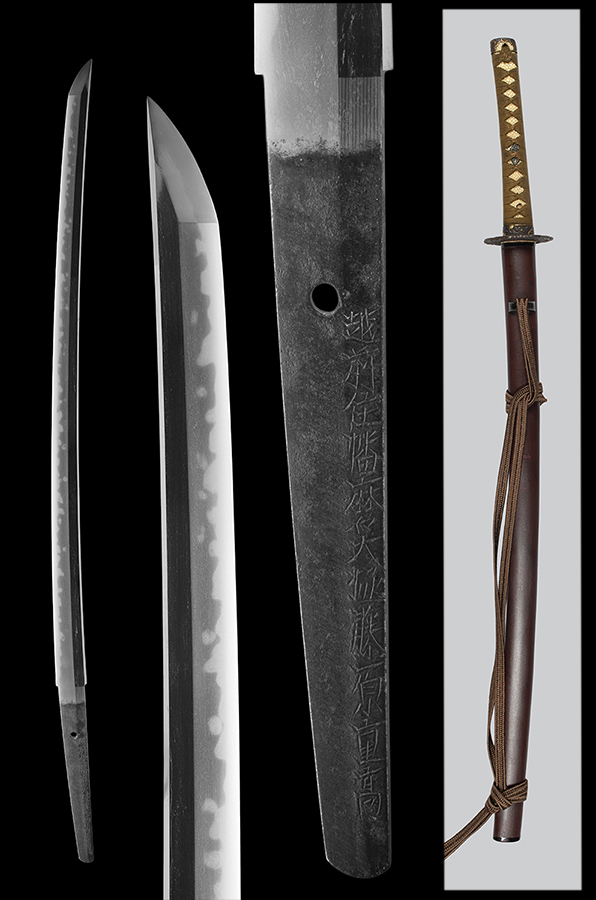
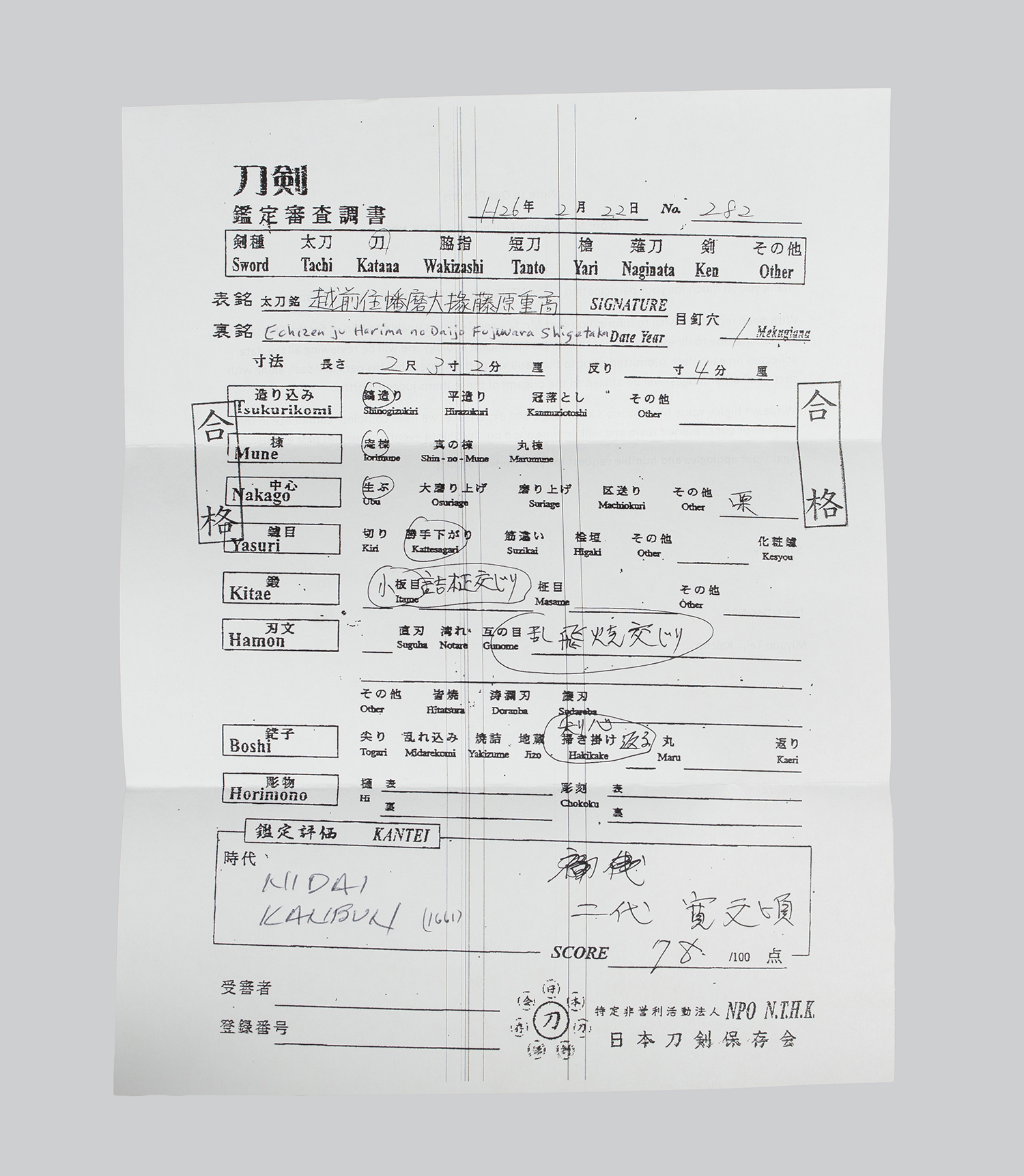
This is a powerful Kanbun Shinto katana by the second generation Echizen Shigetaka, a smith highly regarded for his skill. The blade features a clear Kanbun Shinto sugata with ko-nie deki gunome midare hamon and a prominent mixed masame and itame kitae. It comes with a composite koshirae and an NTHK 78-point Kanteisho paper, indicating its high quality.
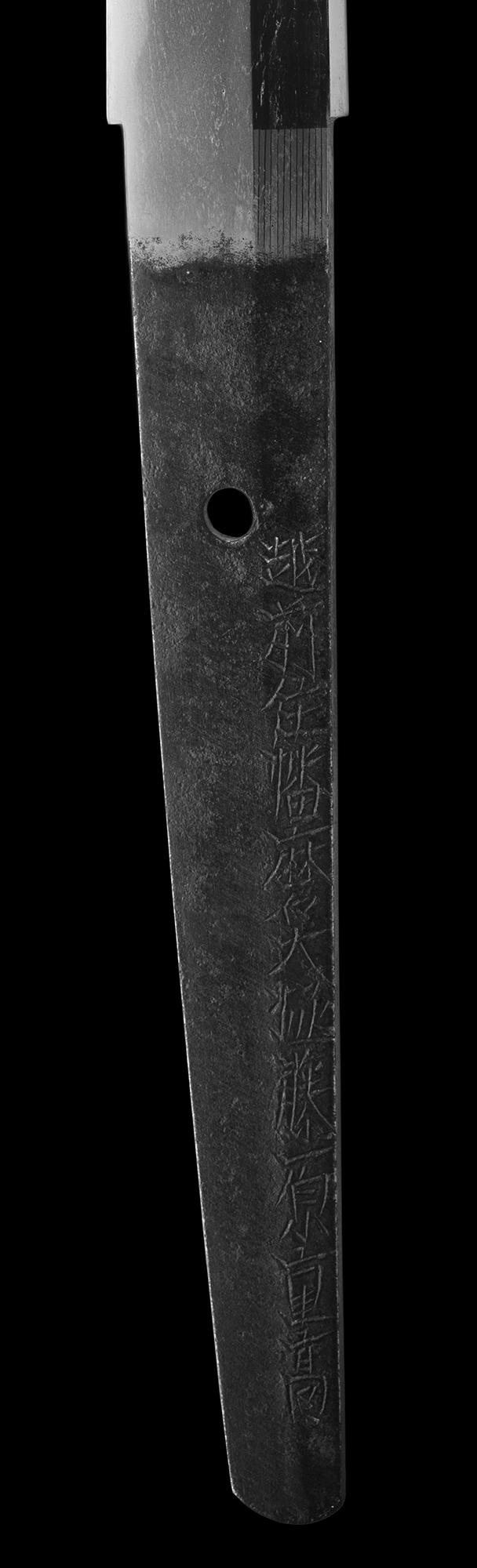
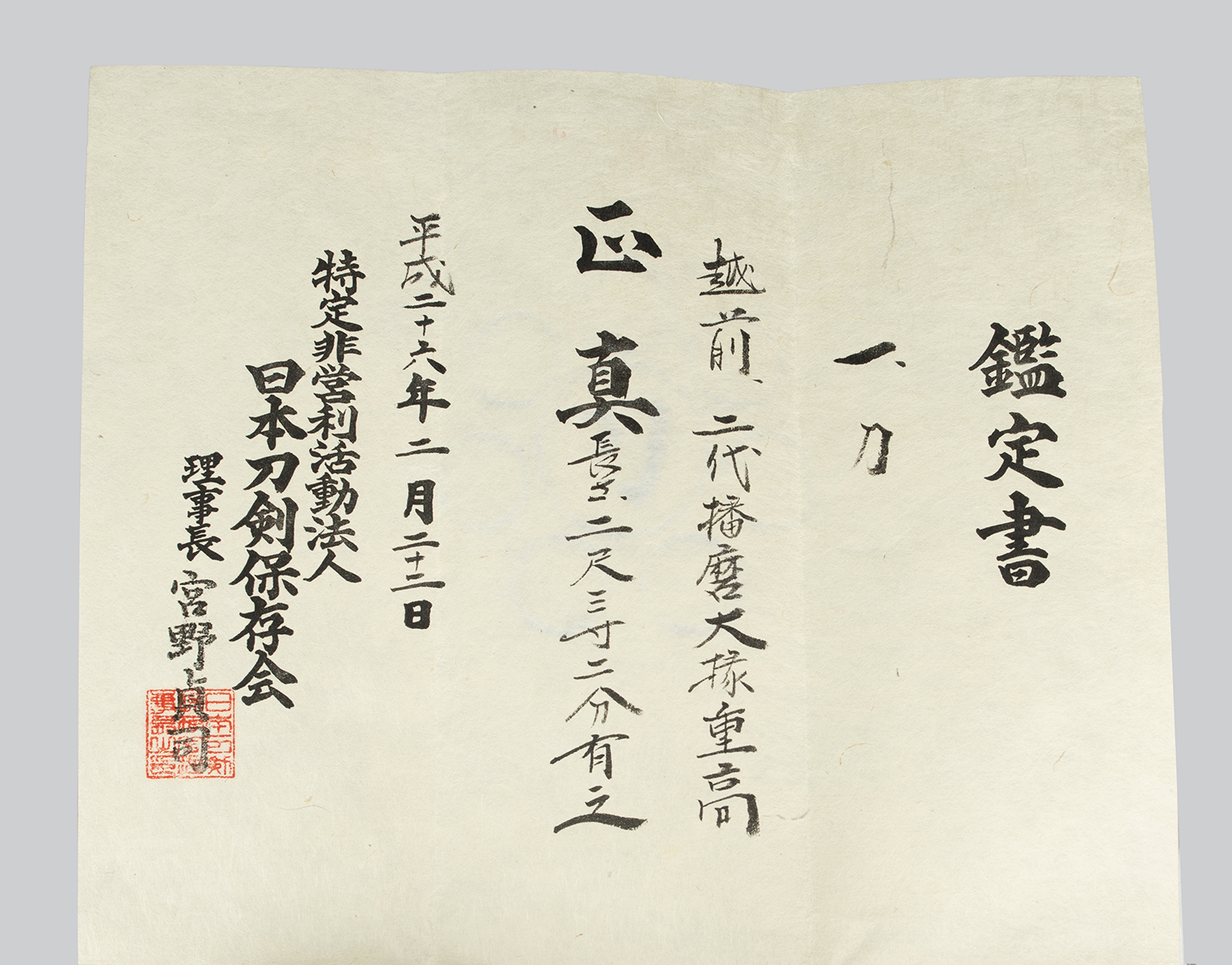
Certificate reading — 銘 越前二代播磨大掾重高
 NihontoWatchBETA
mei · Echizen Shinto · Shinto · nagasa 70.3cm · sori 1.1cm

Shinto · Echizen
50 pieces on the market now
The Shimosaka name began not as a single hand but as a trademark shared by a band of Echizen smiths at the dawn of the shinto era, and the designated record gathers their work under that one signature rather than parsing it into individuals. The published sources read the early inscriptions, the generic Echizen no Kuni Shimosaka and the titled Higo Daijo Fujiwara Shimosaka, as the product of a group, of which the first-generation Yasutsugu served as the representative. Learn more →
| Smith | Era | Designated |
|---|---|---|
| Yasutsugu康繼 | 1596-1615 | 74 |
| Yasutsugu康繼 | 1624-1644 | 27 |
| Yasutsugu康繼 | 1661-1673 | 8 |
| Sadakuni貞國 | 1596-1615 | 11 |
| Shigetaka重高 | 1596-1615 | 6 |
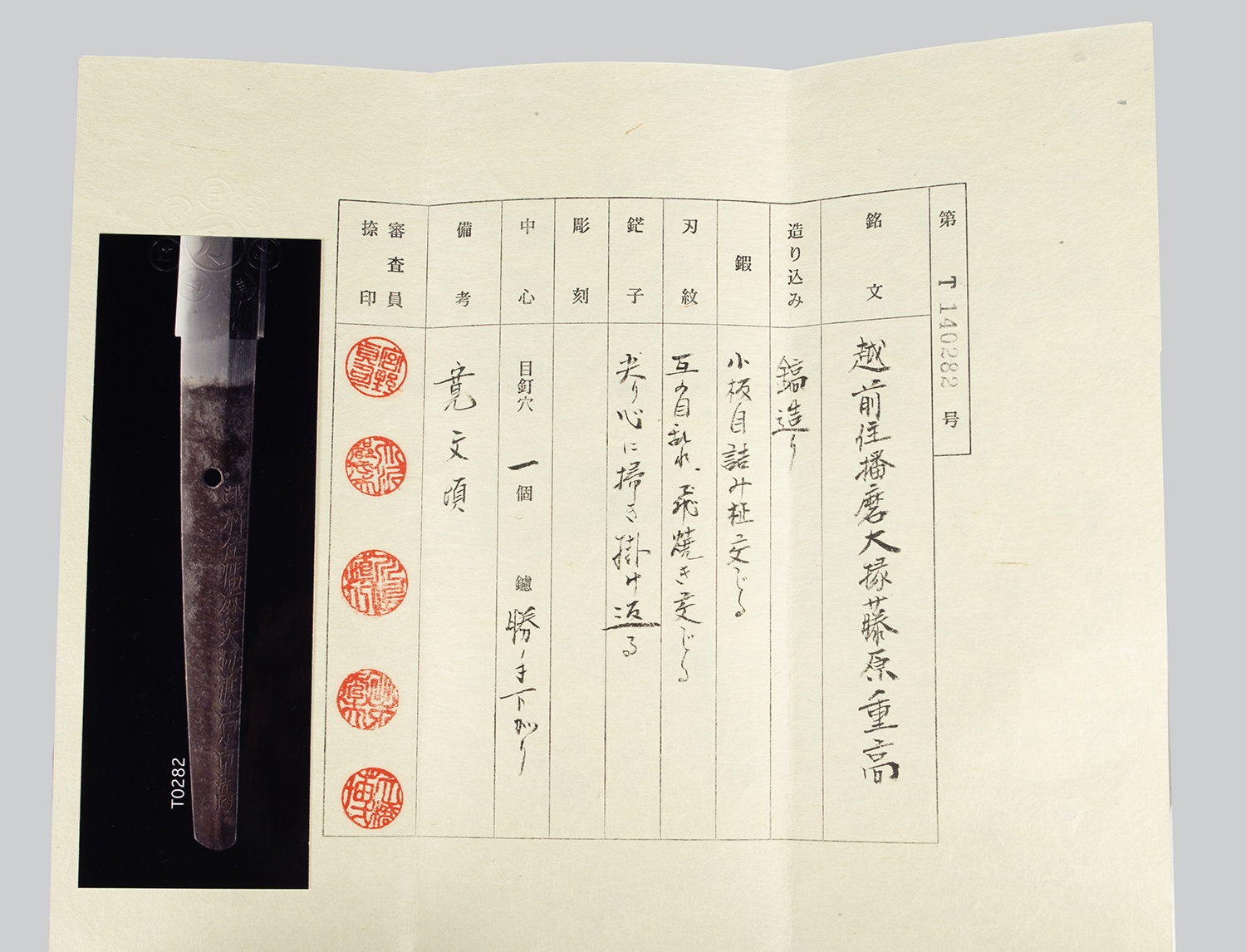
The NTHK’s principal certificate, issued for a blade of considerable quality. It confirms a genuine signature, or, for an unsigned (mumei) work, records the judges’ attribution to a smith or school. The paper carries a detailed worksheet with a numerical point score.
The NTHK (Nihon Tōken Hozon Kai, the Society for the Preservation of the Japanese Sword) is the oldest of Japan’s sword-appraisal bodies, founded in 1910, decades before the NBTHK. After the death of its long-serving head it divided into two successor societies, the NTHK and the NTHK-NPO, both of which continue to hold shinsa. NTHK certificates are known for a detailed worksheet that records a numerical point score alongside the judges’ written opinion, and the society is especially respected for its attribution of unsigned (mumei) work.
3 day inspection period on all sales. Items can be returned for any reason for a full refund, less return shipping cost. Returned items must be in the same condition as when purchased.
This is a powerful Kanbun Shinto katana by the second generation Echizen Shigetaka, a smith highly regarded for his skill. The blade features a clear Kanbun Shinto sugata with ko-nie deki gunome midare hamon and a prominent mixed masame and itame kitae. It comes with a composite koshirae and an NTHK 78-point Kanteisho paper, indicating its high quality.
Certificate reading — 銘 越前二代播磨大掾重高
NihontoWatchBETAmei · Echizen Shinto · Shinto · nagasa 70.3cm · sori 1.1cm
Shinto · Echizen
50 pieces on the market now
The Shimosaka name began not as a single hand but as a trademark shared by a band of Echizen smiths at the dawn of the shinto era, and the designated record gathers their work under that one signature rather than parsing it into individuals. The published sources read the early inscriptions, the generic Echizen no Kuni Shimosaka and the titled Higo Daijo Fujiwara Shimosaka, as the product of a group, of which the first-generation Yasutsugu served as the representative. Learn more →
| Smith | Era | Designated |
|---|---|---|
| Yasutsugu康繼 | 1596-1615 | 74 |
| Yasutsugu康繼 | 1624-1644 | 27 |
| Yasutsugu康繼 | 1661-1673 | 8 |
| Sadakuni貞國 | 1596-1615 | 11 |
| Shigetaka重高 | 1596-1615 | 6 |
The NTHK’s principal certificate, issued for a blade of considerable quality. It confirms a genuine signature, or, for an unsigned (mumei) work, records the judges’ attribution to a smith or school. The paper carries a detailed worksheet with a numerical point score.
The NTHK (Nihon Tōken Hozon Kai, the Society for the Preservation of the Japanese Sword) is the oldest of Japan’s sword-appraisal bodies, founded in 1910, decades before the NBTHK. After the death of its long-serving head it divided into two successor societies, the NTHK and the NTHK-NPO, both of which continue to hold shinsa. NTHK certificates are known for a detailed worksheet that records a numerical point score alongside the judges’ written opinion, and the society is especially respected for its attribution of unsigned (mumei) work.
3 day inspection period on all sales. Items can be returned for any reason for a full refund, less return shipping cost. Returned items must be in the same condition as when purchased.