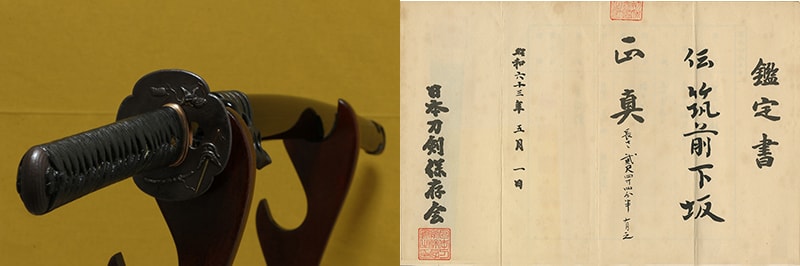
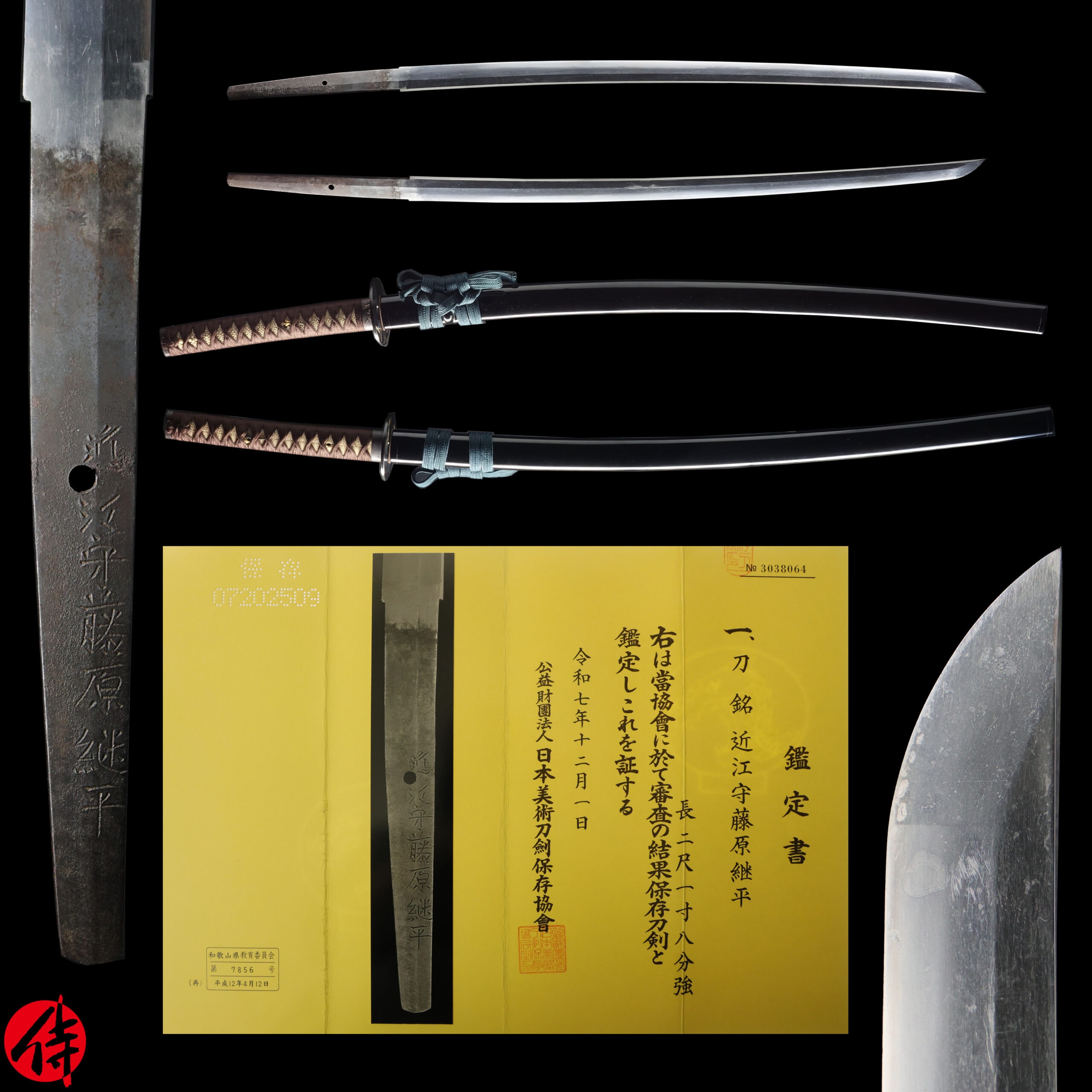
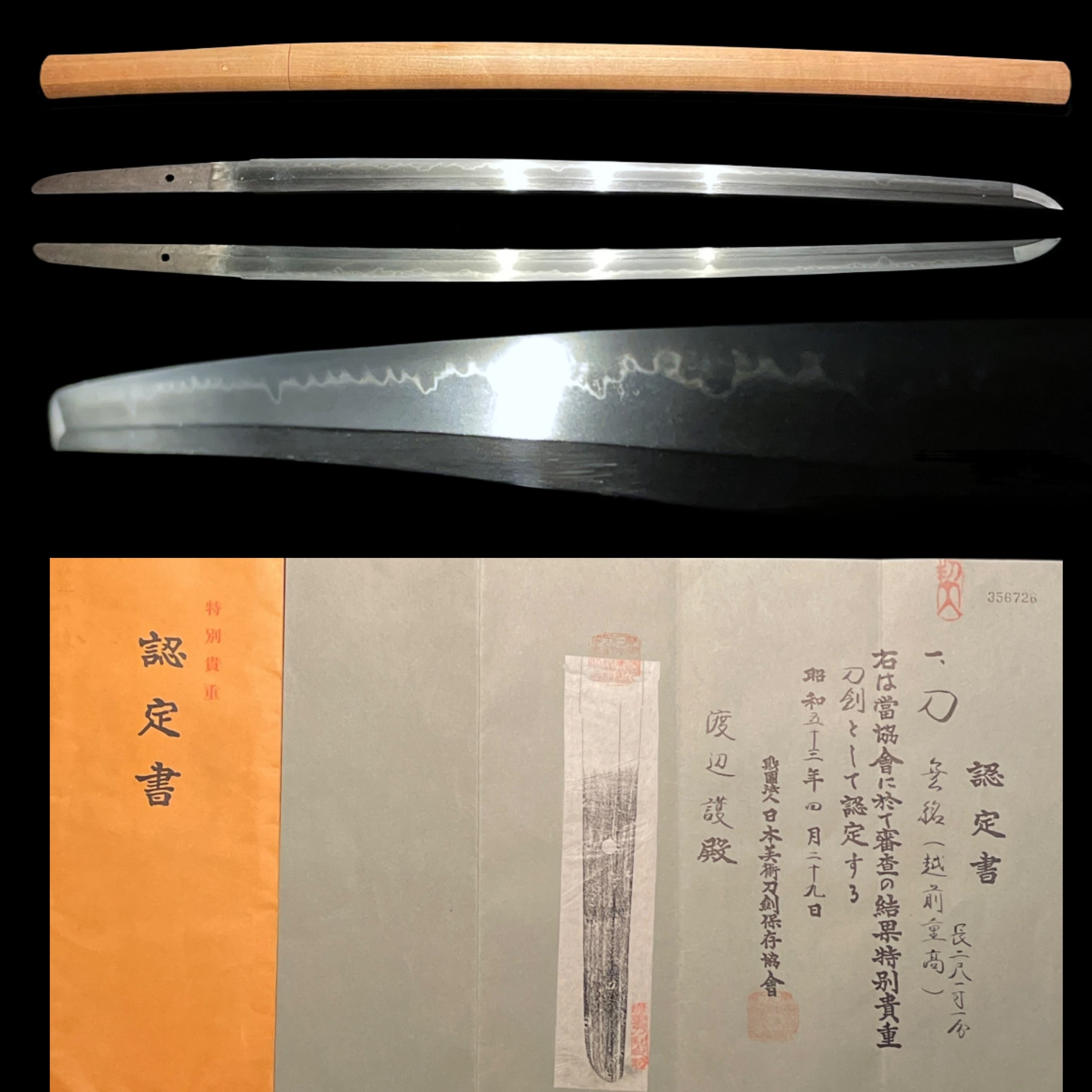
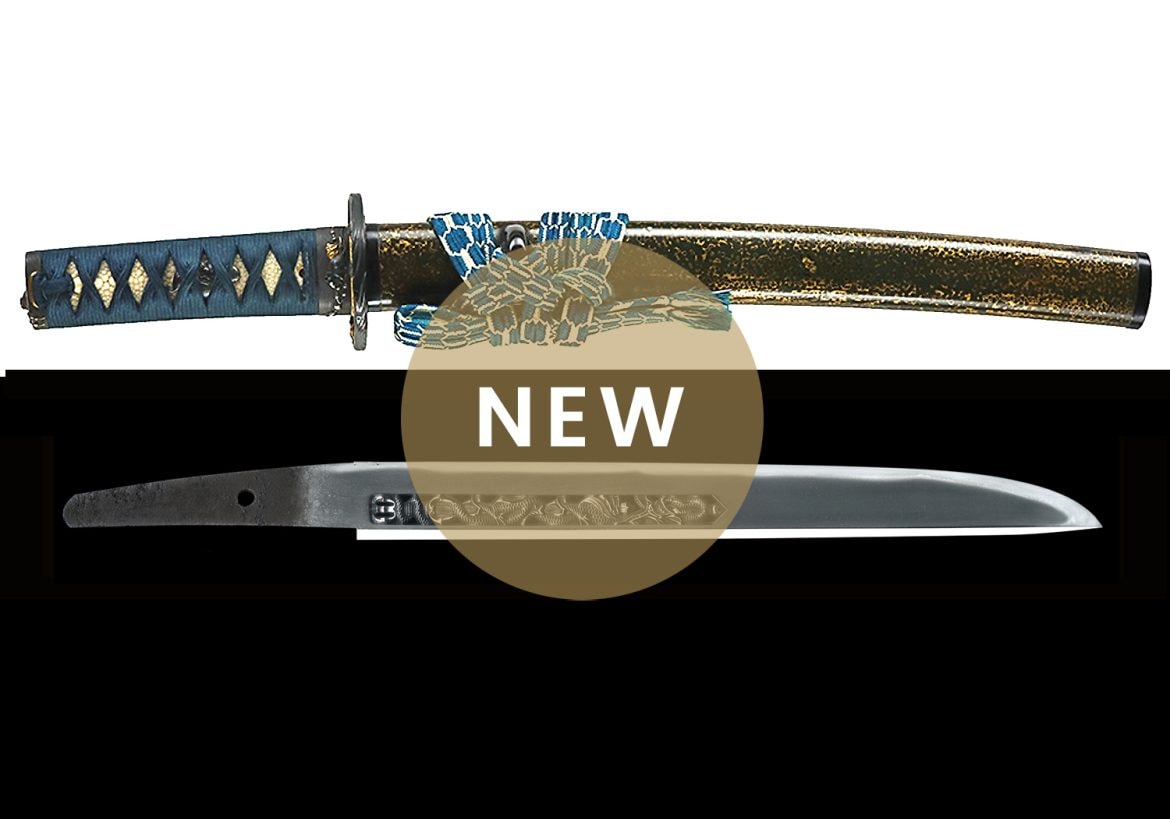
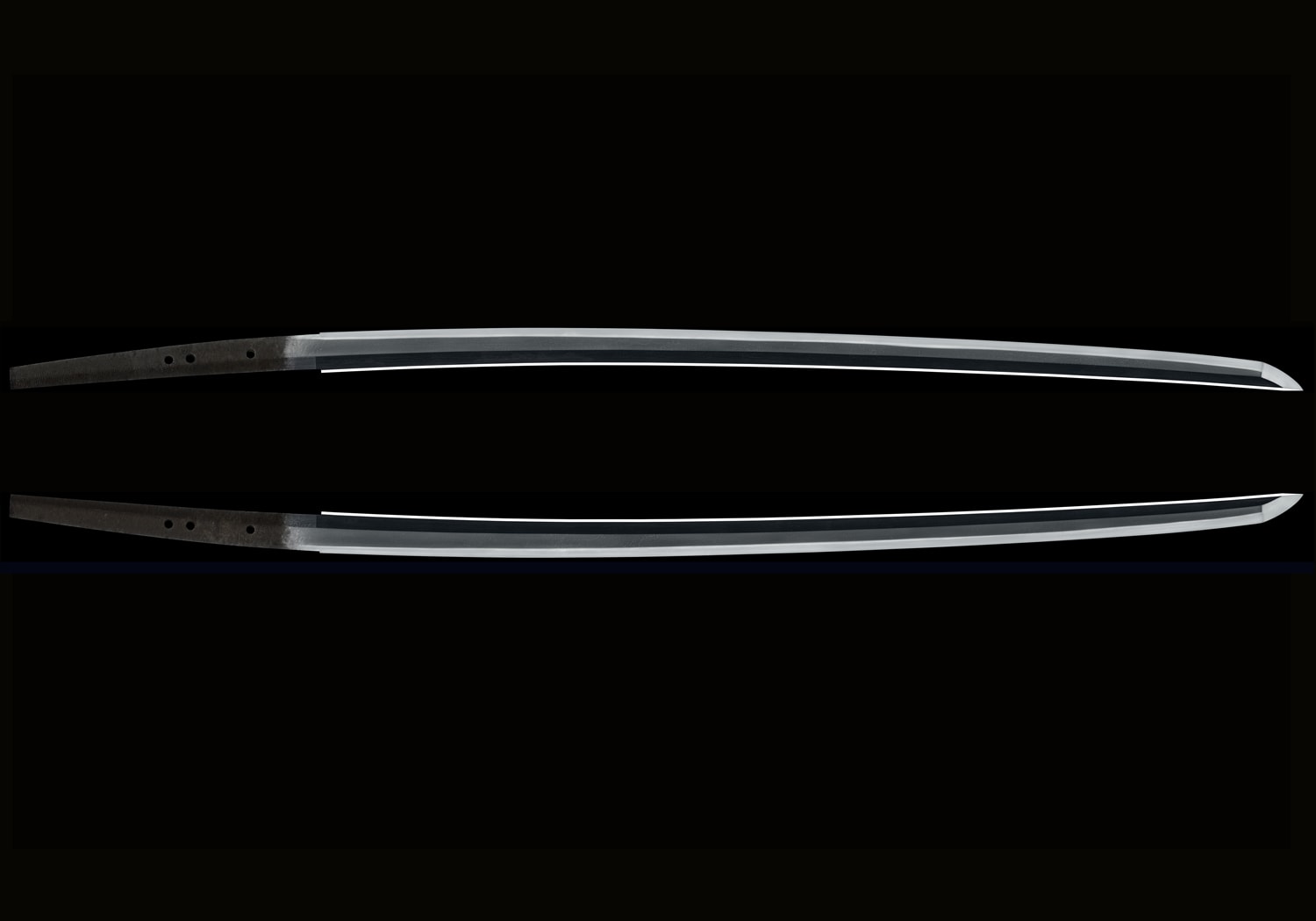
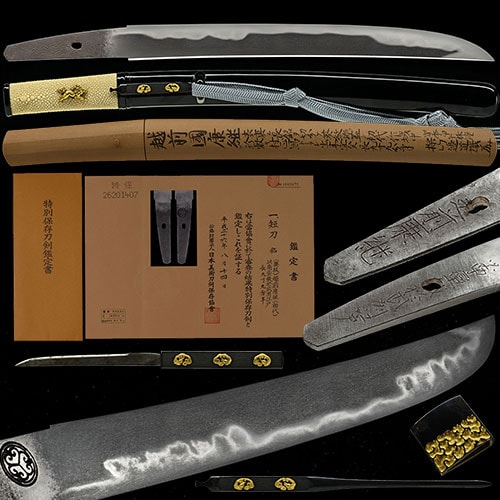
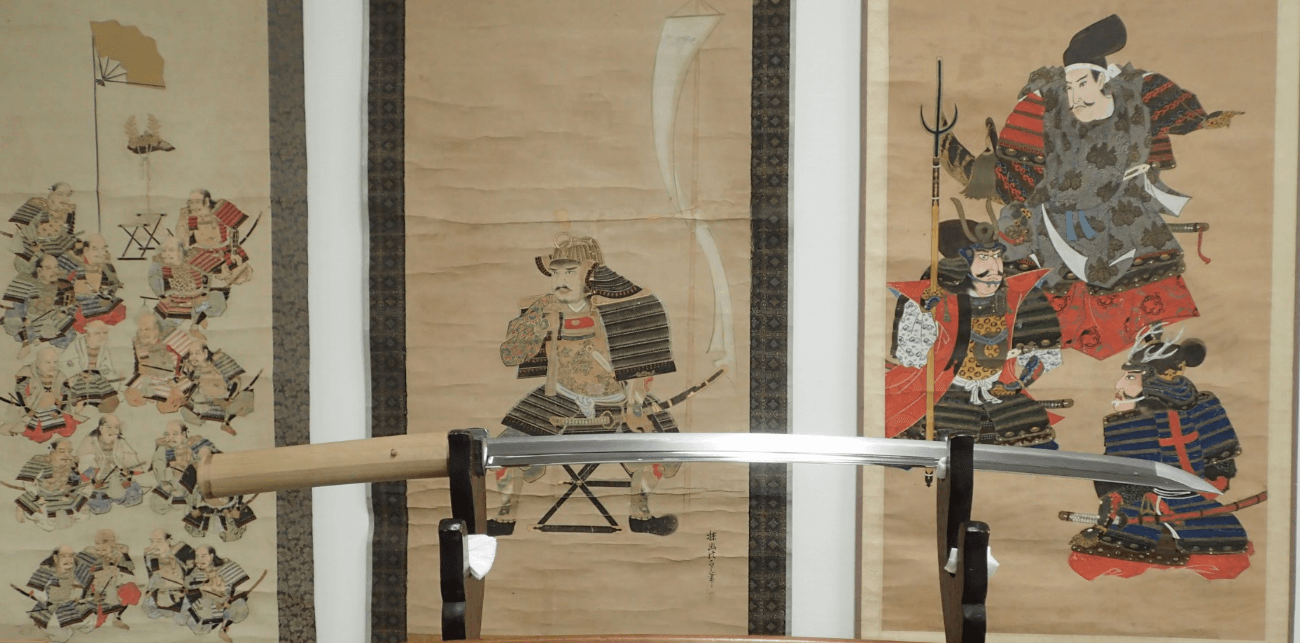
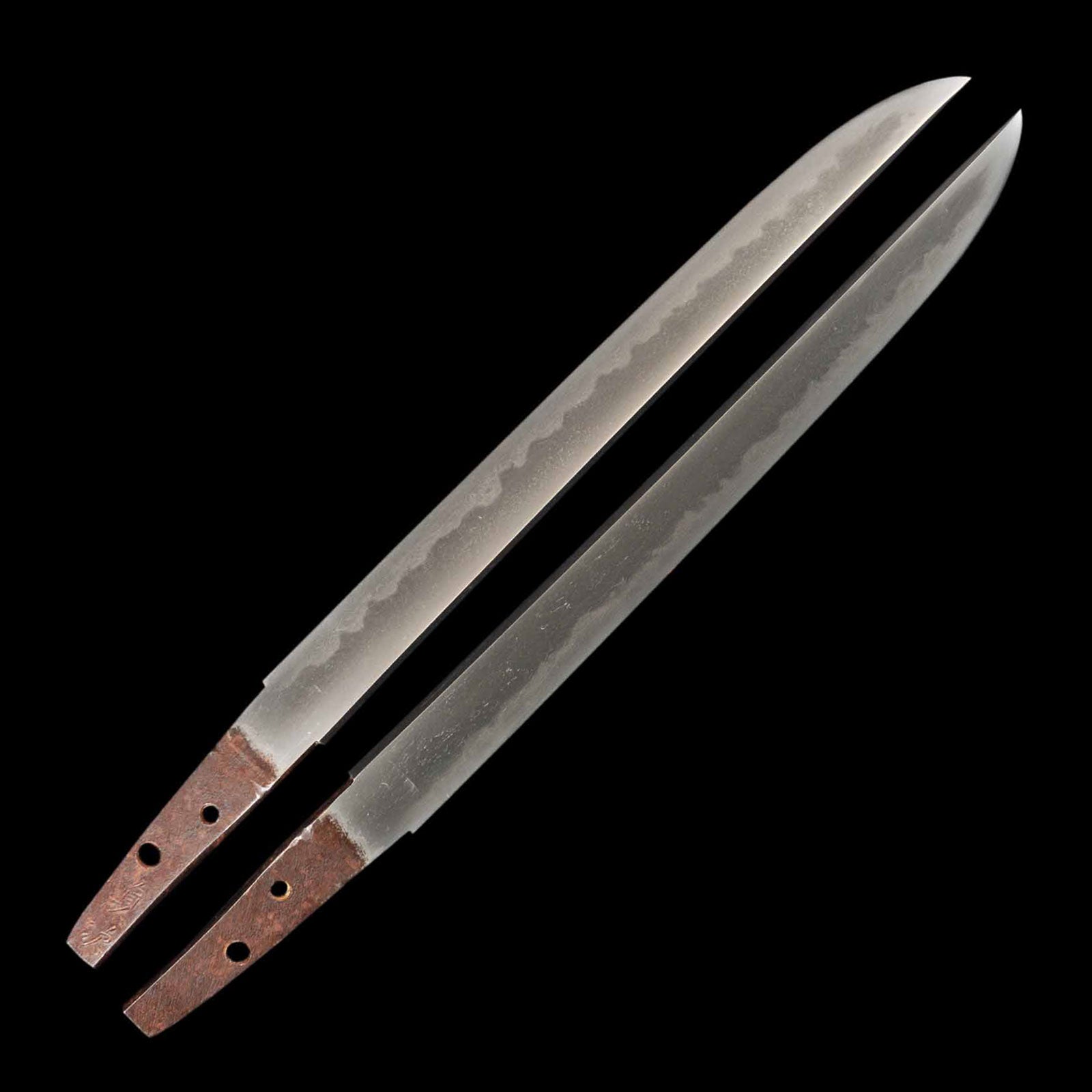
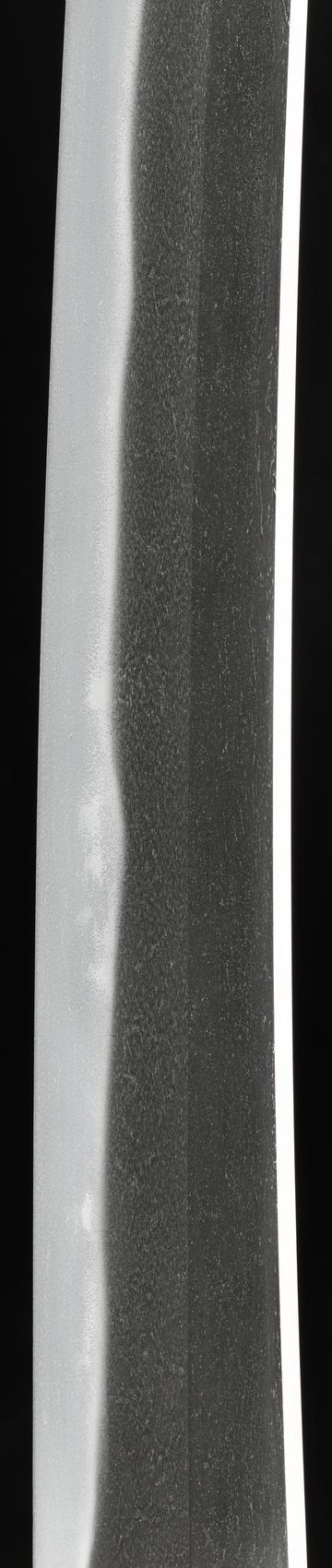
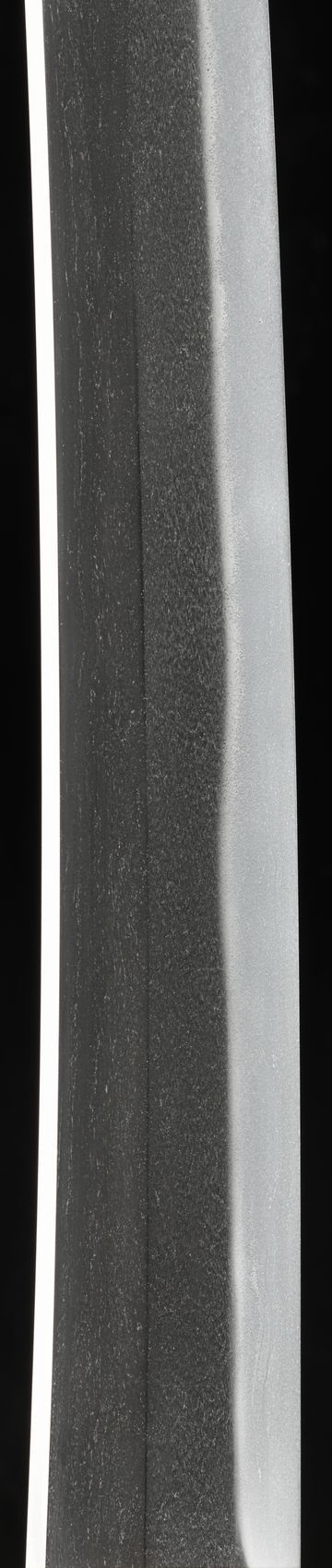
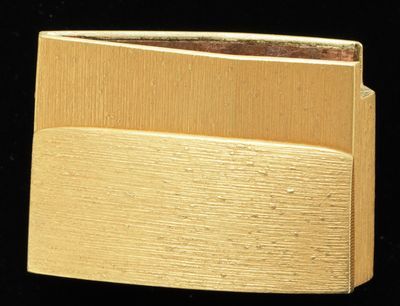
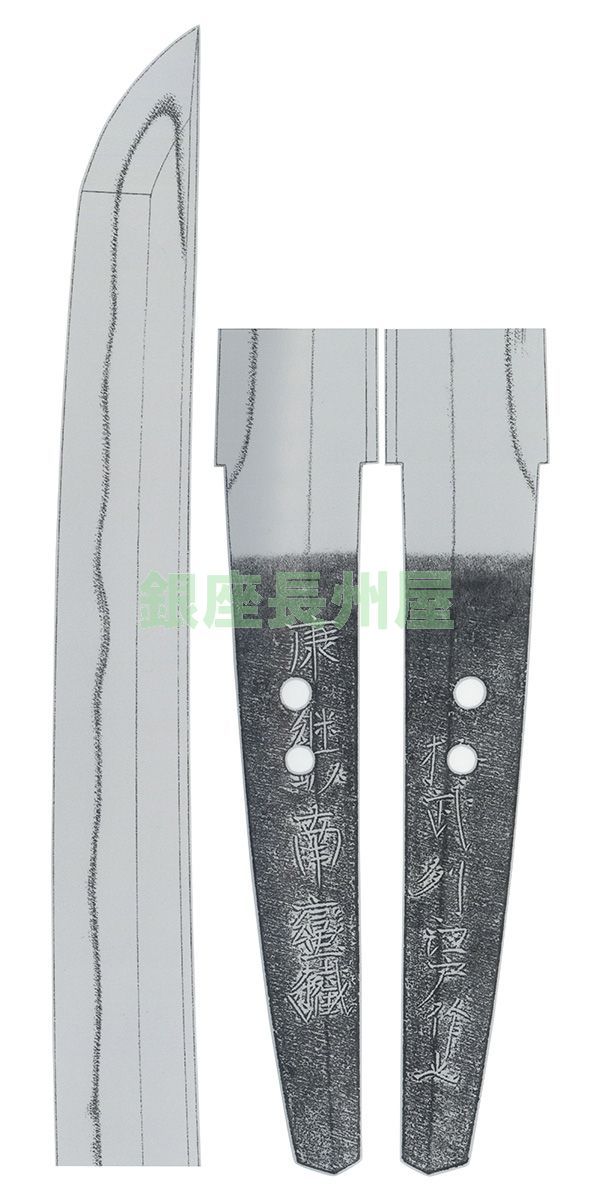
This is a wakizashi by the 3rd Generation Yasutsugu, made in Musashi province during the Kanbun era (1661-1672). It features a wide body, thick kasane, and a refined shape with a slightly high sori. The blade exhibits a beautiful jigane with a vibrant, pear-skin-like texture and a suguha-based hamon with abundant nie, creating a bright and clear appearance. It comes with a Tokubetsu Hozon certificate from the NBTHK.
 NihontoWatchBETA
mei · Edo · nagasa 51.6cm · sori 1.39cm






Shinto · Echizen
50 pieces on the market now
The Shimosaka name began not as a single hand but as a trademark shared by a band of Echizen smiths at the dawn of the shinto era, and the designated record gathers their work under that one signature rather than parsing it into individuals. The published sources read the early inscriptions, the generic Echizen no Kuni Shimosaka and the titled Higo Daijo Fujiwara Shimosaka, as the product of a group, of which the first-generation Yasutsugu served as the representative. Learn more →
| Smith | Era | Designated |
|---|---|---|
| Yasutsugu康繼 | 1596-1615 | 74 |
| Yasutsugu康繼 | 1624-1644 | 27 |
| Yasutsugu康繼 | 1661-1673 | 8 |
| Sadakuni貞國 | 1596-1615 | 11 |
| Shigetaka重高 | 1596-1615 | 6 |
A Hozon-certified blade judged to show notably superior workmanship and a better state of preservation. The bar is higher: re-tempered blades and most unsigned Muromachi/Edo works are excluded.
The NBTHK (Nihon Bijutsu Tōken Hozon Kyōkai, the Society for the Preservation of Japanese Art Swords) is a public-interest incorporated foundation founded in 1948 and supervised by Japan’s Agency for Cultural Affairs (Bunkachō); it is based at the Japanese Sword Museum in Tokyo. Its expert panels physically examine each submitted work (shinsa) and issue a certificate (kanteishō) ranking it by artistic and historical merit. NBTHK papers are the most widely recognized standard of authentication for Japanese swords and fittings.
NBTHK official siteIf, due to our fault, the item differs significantly from its proper condition, the item may be returned. Cooling-off is within one week of the item's arrival.
This is a wakizashi by the 3rd Generation Yasutsugu, made in Musashi province during the Kanbun era (1661-1672). It features a wide body, thick kasane, and a refined shape with a slightly high sori. The blade exhibits a beautiful jigane with a vibrant, pear-skin-like texture and a suguha-based hamon with abundant nie, creating a bright and clear appearance. It comes with a Tokubetsu Hozon certificate from the NBTHK.
NihontoWatchBETAmei · Edo · nagasa 51.6cm · sori 1.39cm
Shinto · Echizen
50 pieces on the market now
The Shimosaka name began not as a single hand but as a trademark shared by a band of Echizen smiths at the dawn of the shinto era, and the designated record gathers their work under that one signature rather than parsing it into individuals. The published sources read the early inscriptions, the generic Echizen no Kuni Shimosaka and the titled Higo Daijo Fujiwara Shimosaka, as the product of a group, of which the first-generation Yasutsugu served as the representative. Learn more →
| Smith | Era | Designated |
|---|---|---|
| Yasutsugu康繼 | 1596-1615 | 74 |
| Yasutsugu康繼 | 1624-1644 | 27 |
| Yasutsugu康繼 | 1661-1673 | 8 |
| Sadakuni貞國 | 1596-1615 | 11 |
| Shigetaka重高 | 1596-1615 | 6 |
A Hozon-certified blade judged to show notably superior workmanship and a better state of preservation. The bar is higher: re-tempered blades and most unsigned Muromachi/Edo works are excluded.
The NBTHK (Nihon Bijutsu Tōken Hozon Kyōkai, the Society for the Preservation of Japanese Art Swords) is a public-interest incorporated foundation founded in 1948 and supervised by Japan’s Agency for Cultural Affairs (Bunkachō); it is based at the Japanese Sword Museum in Tokyo. Its expert panels physically examine each submitted work (shinsa) and issue a certificate (kanteishō) ranking it by artistic and historical merit. NBTHK papers are the most widely recognized standard of authentication for Japanese swords and fittings.
NBTHK official siteIf, due to our fault, the item differs significantly from its proper condition, the item may be returned. Cooling-off is within one week of the item's arrival.