Sengoku Seki was an industry: smiths organized under their tutelary Kasuga shrine, arming the war bands of central Japan. Magoroku Kanemoto’s sanbonsugi and the finest Kanesada work prove quality survived inside mass production.
 NihontoWatchNihontoWatch
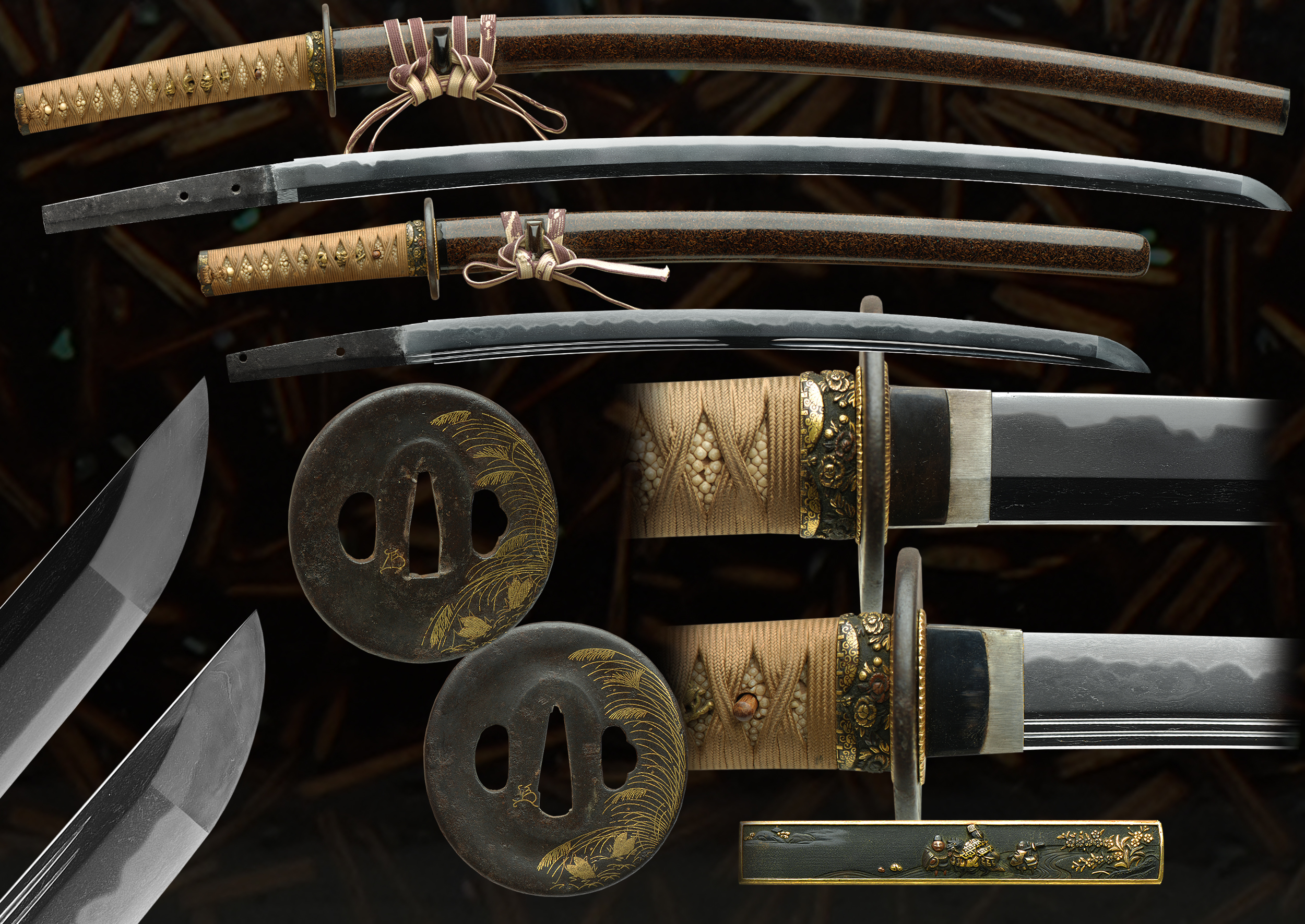
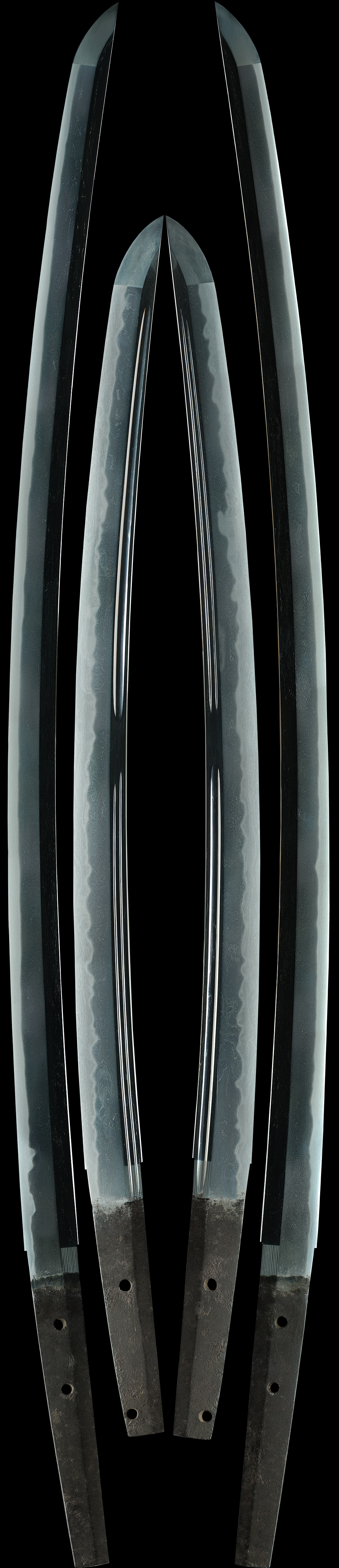
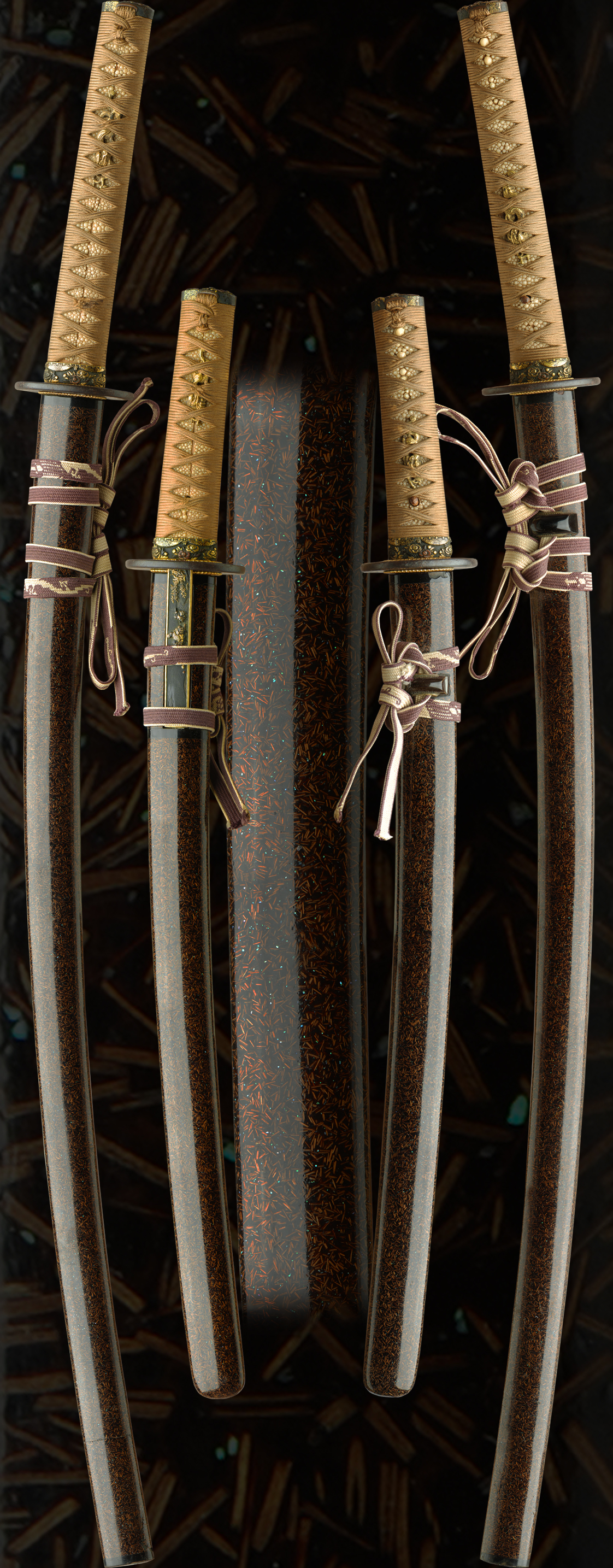
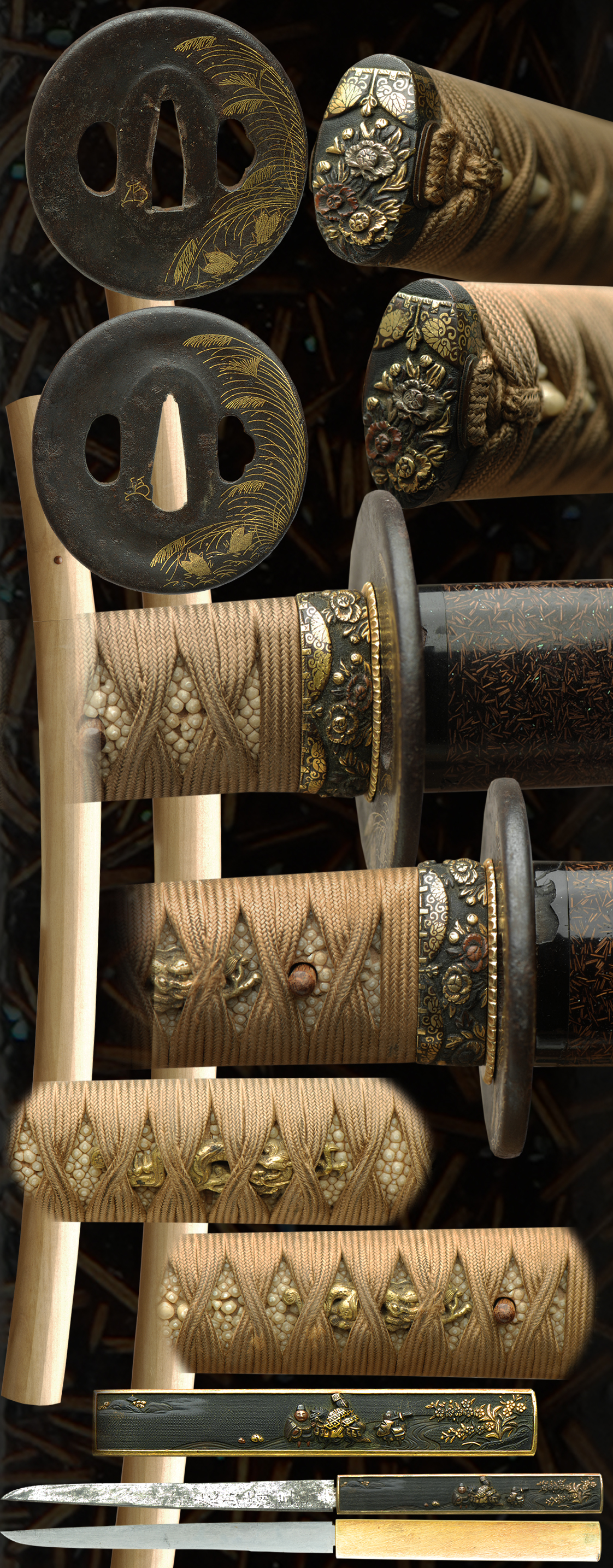
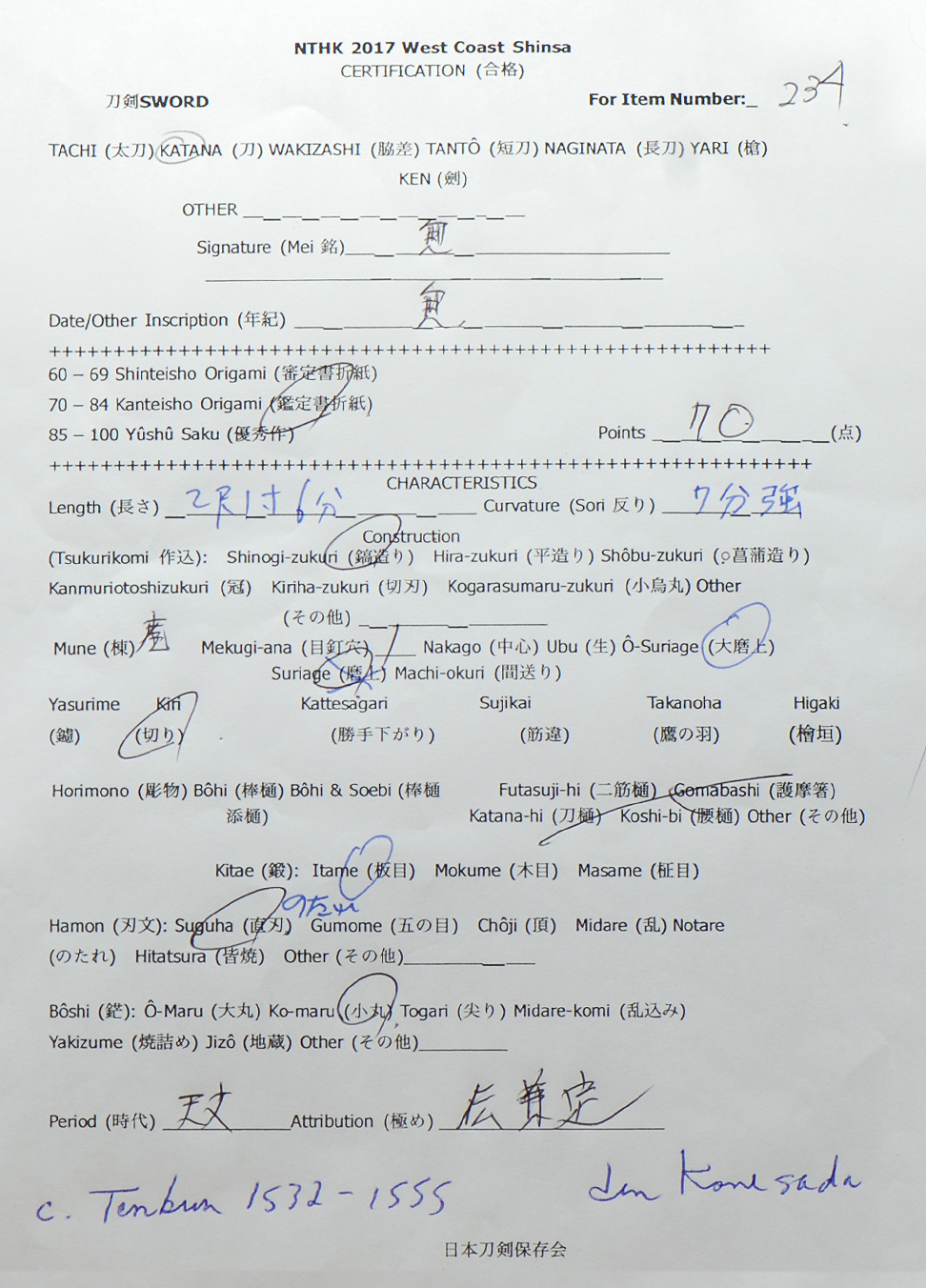
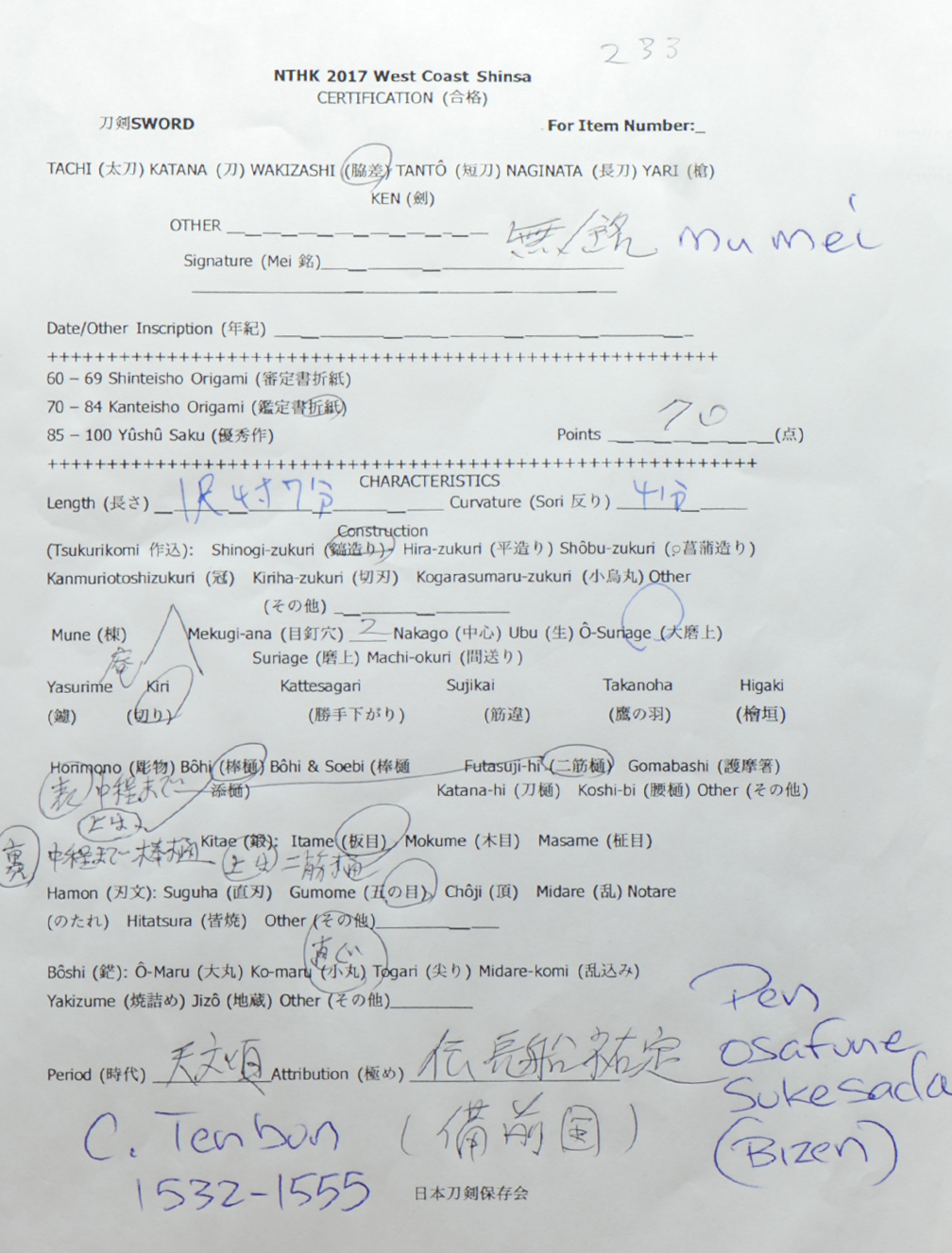
Authentic Period Daisho (fss-759) A True Samurai Daisho, These swords, both Koto pieces (1500’s era) are mounted in a spectacular pair of original Edo period mounts with inlayed style lacquered saya accentuated with abalone throughout. The Motif is of a floral design framed within a textile like curtain and are in pristine condition. The flowers that are used are called Paulowinia, it is a flower pattern referred to in Japanese as Go-Shichi-No-Kiri and was used to represent the Prime minister of Japan in later times. The Menuki are of gold washed dragons and the Kozuka is of a scholar or monks traversing their way to a town in the distance, a very cool scene indeed and quite nice.The Tsuba are of iron with gold inlay of the Musashi plains grass with small winged insects at the bottom both with gold Mon to the maker. The Same or rayskin is of very high quality with a large pattern nodule exposed. The ito is a goldish brown and the sageo is mauvish and white with dragon motif. These sageo with dragon weaved in them are fragile and very old. They are very unique.The Daisho habaki are both 2-piece with shakudo foil bases and the tops are of silver foil both original to the blades and matching.The Dai-to was attributed to Den Kanesada. A beautiful blade in pristine polish and loaded with activity from the koto period an O-suriage piece. Within the Sugu-ha there is hotsure, sunagahi and kinsugi. The hada is a dense and beautiful swirling itame and mokume mix. The hada has some course areas that stand out as in many koto era blades. The KANESADA line of sword smiths of the Mino school are the most famous craftsman of Sue-seki along with KANEMOTO. KANESADA the Second generation, often called Nosada, is still very much-prized as Owazamono. This blade has an attribute of KANESADA most likely a later generation smith of this line. This sword is more than likely early koto to mid koto era. At the head of the school was Mino Kanemoto and Kanesada,there are many sword smiths in Mino province that used this name.The most famous sword smith is 2nd generation ” Izumi Kami Kanesada”.The Sho-to was attributed to Bizen Den of the koto period. An O-suriage piece this sword has a hamon based in midare-ba throughout with an incredible amount of hataraki. The hada is an itame nagare with ji-nie and some Masame. The sword has a very rare version of horimono in the form of bohi on both sides. One side is a double set of gomabashi while the other side sports a set of gomabashi with a wide single Bohi also.“According to Nagayama Bizen-den begins at the end of the Heian Period with the Ko-Bizen School and carried on by the Ichimonji School. Mid-Kamakura period we see the rise of the Osafune School. Nagayama divides discussion of Bizen into two main areas; 1) by main school and change over time, 2) by leading swordsmiths. This discussion will only attempt to summarize the main schools and change over time.”Late Heain Period – Early Kamakura:Ko-Bizen has choji-midare in nioi-deki. See influence on Yamato-den with hamon based on suguha mixed with ko-midare and ko-choji in nie deki. The hamon then evolves into one based on midare, hada is mokume, chu-mokume or ko-mokume. Jifu utsuri is often seen. Finally choji-midare in nioi completed by the Fukuoka Ichimonji School.Middle and Late Kamakura Period:Jigane is soft and well forged, mainly mokume with some o-hada patterns, midare-utsuri or choji-utsuri, some ji-fu-utsuri. Other items remain the same for the most part from the previous period. Boshi is midare-komi, ko-midare and ko-maru.Nambokucho Period:The shape now reflects the grander style of the period, longer swords with longer kissaki. Workmanship begins to reflect the So-den, or soshu style. Jigane is some, has utsuri and o-mokume hada combined with dark jigane that looks like “swimming catfish” (don’t even ask me what that means). There is also ko-mokume hada which stands out and also has utsuri. Hamon, if wide, loses its utsuri. Hamon changes and we begin to see notare-midare and saka-midare forms. Boshi is usually midare komi, in proportion to the hamon but kaeri seems to getting longer.Early Muromachi Period:Shape now reduced in size from previous period, return to style of Kamakura period. Sori inclined to sakizori (which is different from the koshizori of earlier times). Hamon is koshihiraita midare with choji-midare. Utsuri is now straight. Also see some midare and suguha.Late Muromachi Period:Hada loses it appearance of wetness/oiliness. Utsuri is now rarely seen and if seen is no longer distinct. Koshihiraita midare with special variety known as crab-claw choji. Considerable nie in the hamon. Nie kuzure is seen. Scattered nioi.Both swords are mounted in shirasaya to protect the polish and the koshirae have wooden tsunagi for displaying and storage.” The wearing ofdaishōwas limited to the samurai class, and became a symbol or badge of their rank.Daishōmay have became popular around the end of the Muromachi period (1336 to
NihontoWatchOffered by Nihonto Antiques
This piece has sold
21 on the market
Get an email when new Kanesada School work hits the market.

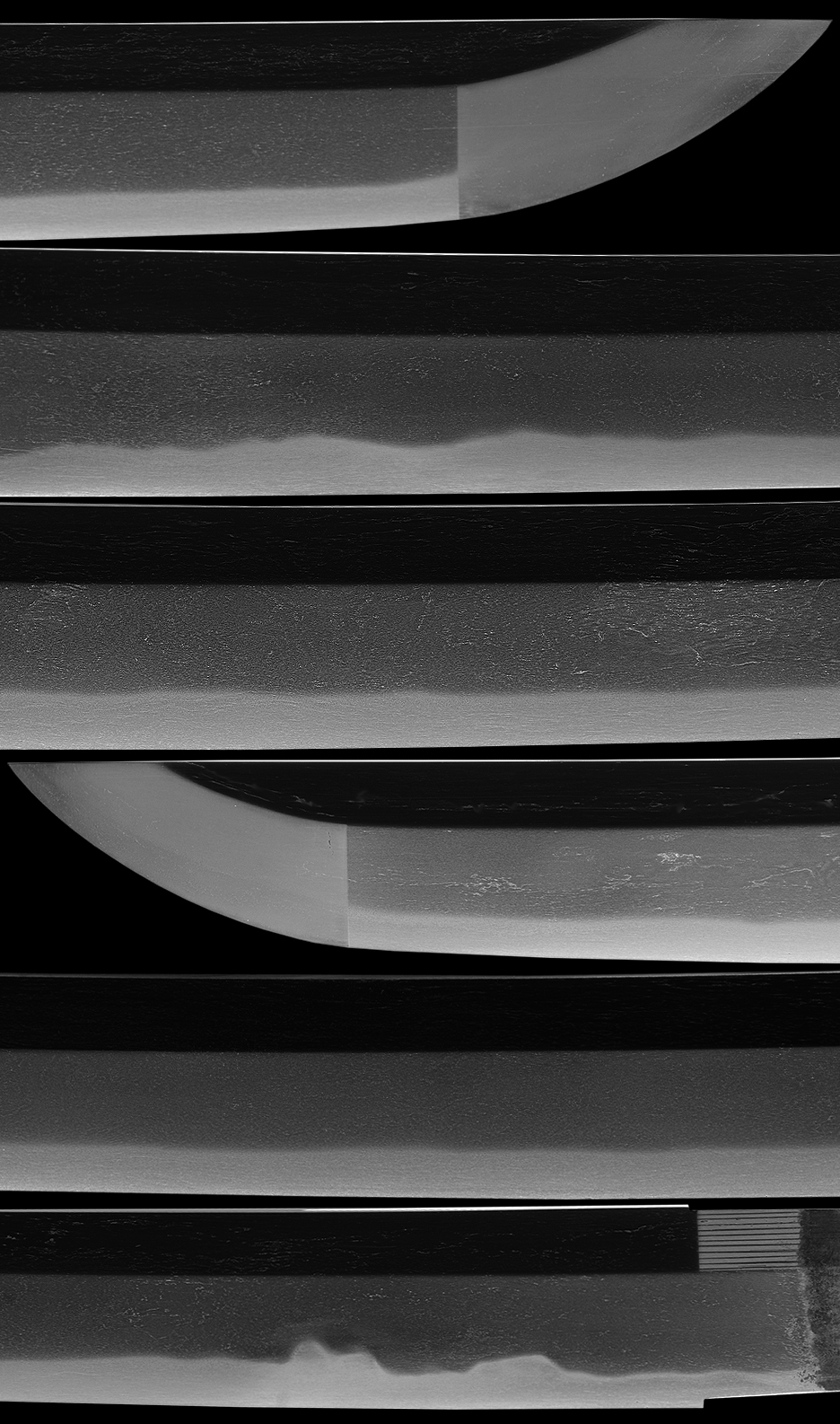
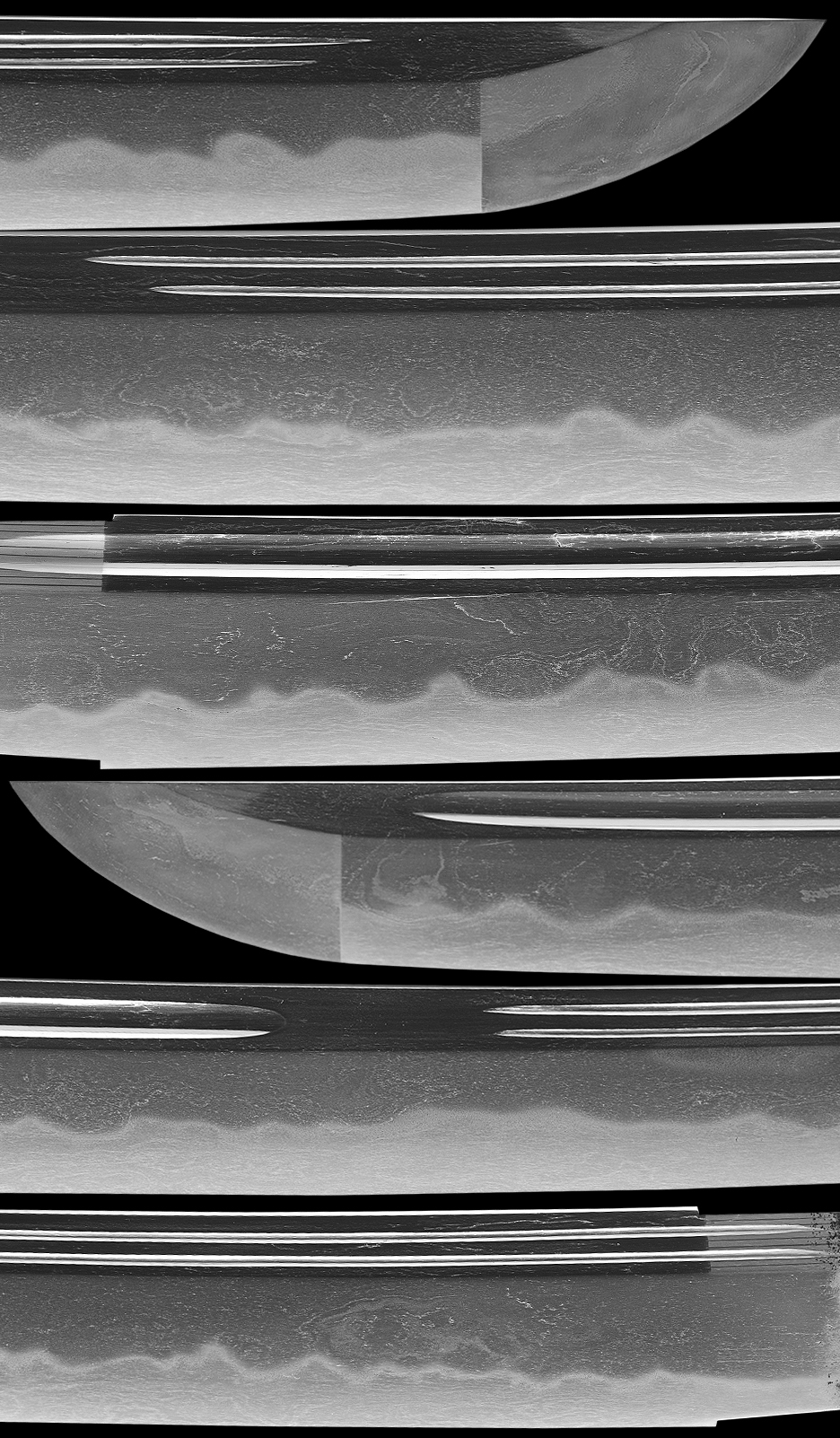
Mino-den · Mino
21 pieces on the market now
Seki in Mino province supplied the base for the Kanesada line, whose blades the NBTHK places among the representative work of the Mino-den in the closing phase of the Muromachi period. The setsumei consistently pair Kanesada with Kanemoto as the two leading masters of Sue-Seki, the late Seki group active with Seki as its center, where (as one 31st-session katana notes) the Mino smiths flourished second only to Bizen. Within the line the signatures sort by how the character sada (定) is cut: when the element under the u-kanmuri (う冠) appears as 之, the smith is called Nosada (之定), and when it appears as 疋, Hikisada (疋定). Several generations and individuals carried each name, which the entries for the tantō in Honma's inventory of the Imperial collection (Kotō #85 to #87) state makes precise identification difficult; a kanwaku of ordinary workmanship is mentioned alongside them, and one entry records that a Kanesada was called Hachiya Seki, residing at Hachiya in the same province. The standout is the second-generation Izumi no Kami Kanesada, the Nosada the records single out for high technical ability and for receiving, rare in the kotō era, the court title Izumi no Kami. Per the Kotō Mei Shūroku cited in the 14th Tokuju setsumei, he first cut sada in kaisho (standard script) and shifted to the 之 form, the change placed by extant works between the eleventh month of Meiō 8 and before the eighth month of Meiō 9, with Nosada signatures running on to about Daiei 6 (1526). Several blades carry domain provenance: Nosada works pass through the Tosa Yamanouchi, Akita Satake, Shimazu, and Tatebayashi Akimoto families, and one was made for Takeda Nobutora, father of Shingen. The shared vocabulary the setsumei draw is a refined itame-hada, frequently mixed with nagare (flowing grain) or mokume and tending to stand up as hada-dachi, carrying ji-nie, chikei, and very often a whitish shirake-utsuri. Against Kanemoto's pointed, togariba-dominant sanbon-sugi, Kanesada is defined by variety: rounded gunome, ko-notare, and gunome-chōji, with togariba and yahazu-like elements mixed in, ashi and yō entering, sunagashi and kinsuji running, and a nioiguchi the records repeatedly call bright and clear (saeru). A second register is the elegant suguha the setsumei name Rai-utsushi, an evocation of Rai work that the 30th-session tantō likens directly to Rai Kuniyoshi; the 45th-session tantō ties the same Kyō-modeled chū-suguha to a Nosada early signature.
The hand is read most clearly in Nosada: a gunome-chōji base broken into modest rises and falls, a jigane that is brighter and more thoroughly nerareta (well-kneaded) than ordinary Sue-Seki, and, on katana, a slender to standard mihaba with pronounced taper and slightly elevated sakizori. When Nosada turns to notare the silhouette broadens with a larger kissaki. The bōshi runs midare-komi to ko-maru, at times Jizō-flavored, and a mizukage-like stand-up at the machi recurs. Lesser Kanesada and the Hikisada works read as plainer and, where togari-heavy gunome dominates a tantō, the inventory entries judge the manner unusual and late. For kantei the registers converge on Seki signatures: taka-no-ha (and on tantō often higaki) yasurime, ubu kurijiri or, in later years, iriyama-gata tangs with sujikai file, and the diagnostic 之-versus-疋 reading of sada. Tang-form drift, higaki kurijiri giving way to sujikai iriyama-gata, lets the 50th-session tantō be dated to late Daiei. The cutting reputation is carried in metal: kinzōgan cutting-test inscriptions appear on the 14th-session Tokuju katana, owned as a personal sash-sword by Miura Shōgen, karō of the Kii Tokugawa, and on a 58th-session katana, while another names Kosuga Tatewaki of the Tsuyama Matsudaira and another the Nawa cutting record. The Jūyō-Bijutsuhin Nosada for Takeda Nobutora is recorded in the Kokon Kaji Bikō and Mino-tō Taikan; the 62nd-session katana survives in the oshigata of Kōzu Haku. On this evidence the line holds standing as the Mino tradition's most accomplished late voice, Nosada its peak hand for a brightness and refinement uncommon for Seki. Learn more →
| Smith | Era | Designated |
|---|---|---|
| Kanesada兼定 | 1492-1515 | 35 |
| Kanesada兼定 | 1532-1555 | 0 |
| Kanesada兼定 | 1558-1570 | 0 |
| Kanesada兼定 | 1573-1592 | 0 |
| Kanesada兼定 | 1521-1528 | 1 |
Mino in the Muromachi period
Sengoku Seki was an industry: smiths organized under their tutelary Kasuga shrine, arming the war bands of central Japan. Magoroku Kanemoto’s sanbonsugi and the finest Kanesada work prove quality survived inside mass production.
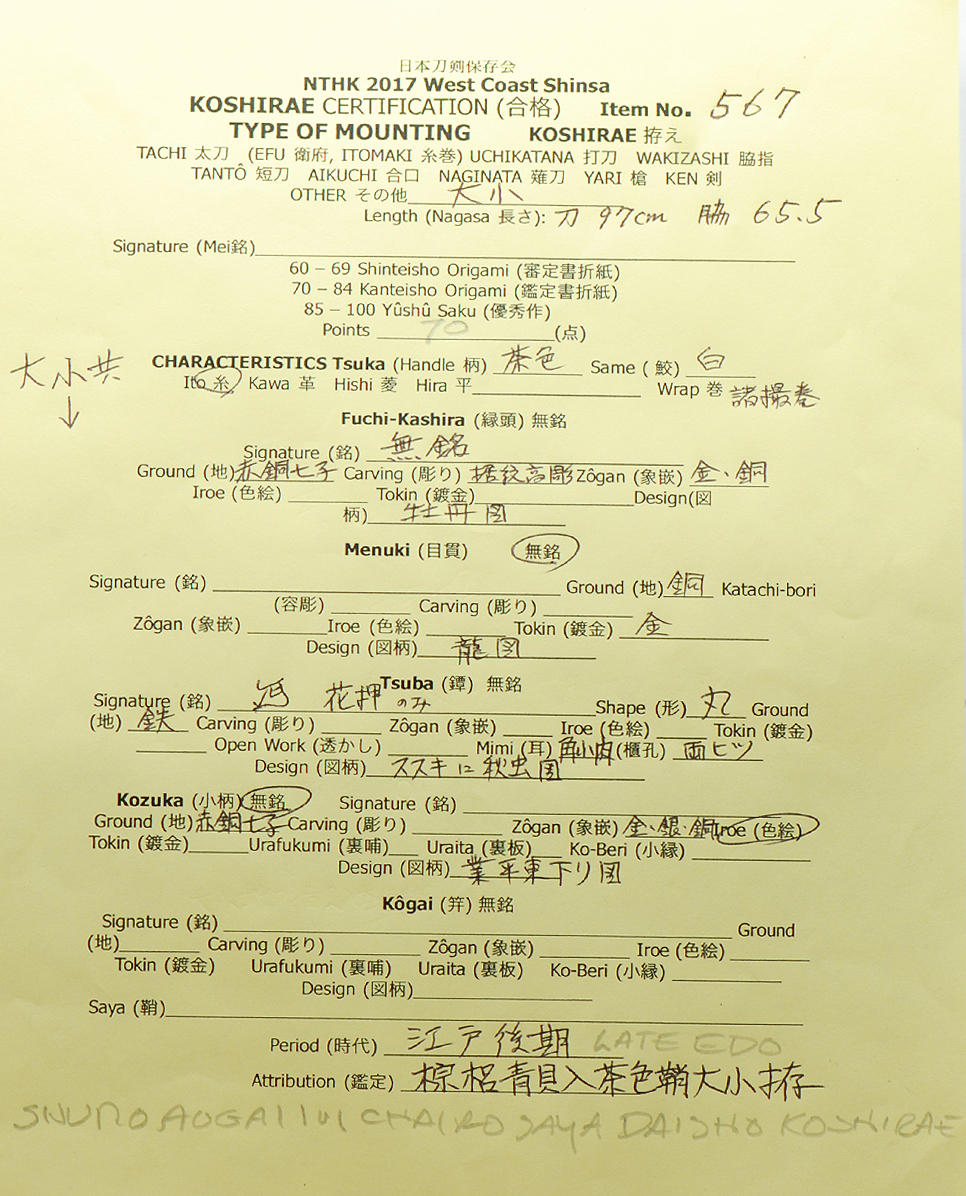
The NTHK’s principal certificate, issued for a blade of considerable quality. It confirms a genuine signature, or, for an unsigned (mumei) work, records the judges’ attribution to a smith or school. The paper carries a detailed worksheet with a numerical point score.
The NTHK (Nihon Tōken Hozon Kai, the Society for the Preservation of the Japanese Sword) is the oldest of Japan’s sword-appraisal bodies, founded in 1910, decades before the NBTHK. After the death of its long-serving head it divided into two successor societies, the NTHK and the NTHK-NPO, both of which continue to hold shinsa. NTHK certificates are known for a detailed worksheet that records a numerical point score alongside the judges’ written opinion, and the society is especially respected for its attribution of unsigned (mumei) work.
We offer a 48 hour inspection period for all Antique items shipped within the United States only. If the item is not to your satisfaction, we will gladly refund your money less any shipping and handling fees. All sales are final after the 48 hour inspection period. Please note that all discounted items are a final sale and not returnable.