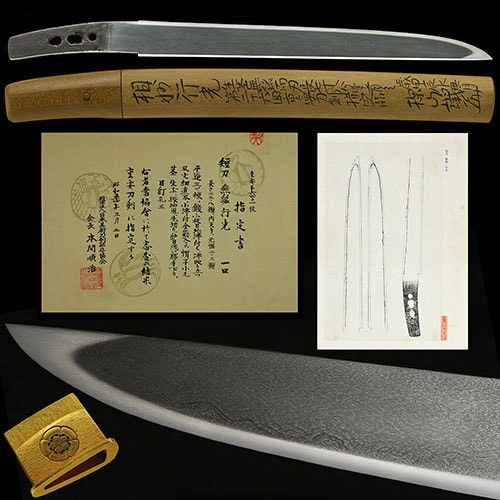
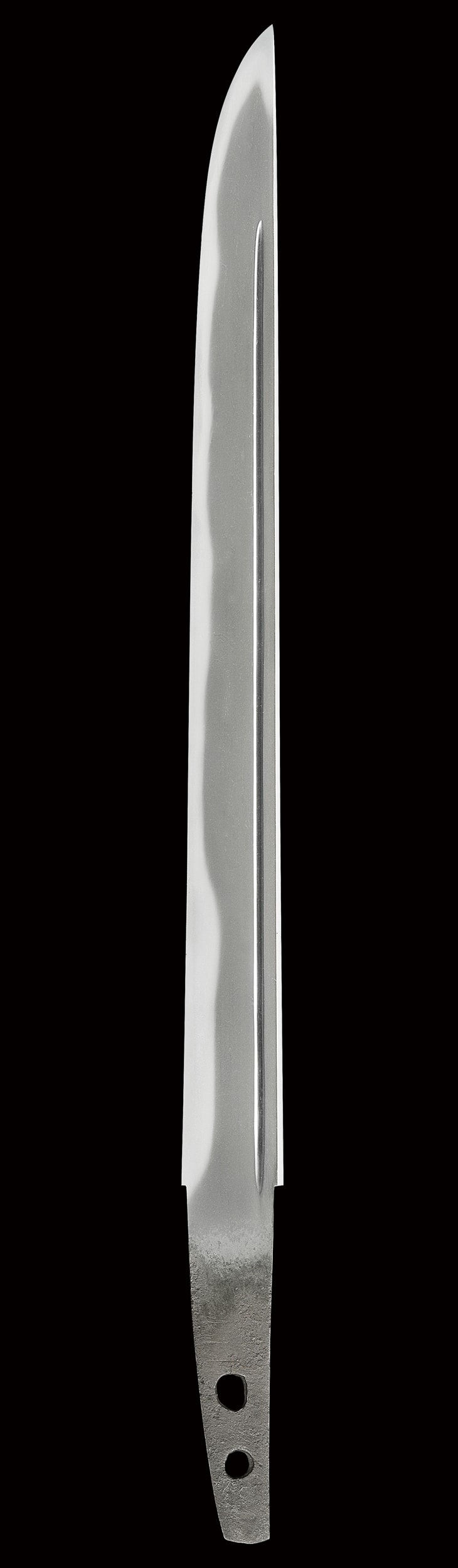
Sōshū was born in a boomtown: Kamakura, seat of the warrior government, dense with elite patrons. Tradition holds that master smiths were summoned east to serve it, and from their students came Shintōgo Kunimitsu and then Masamune.
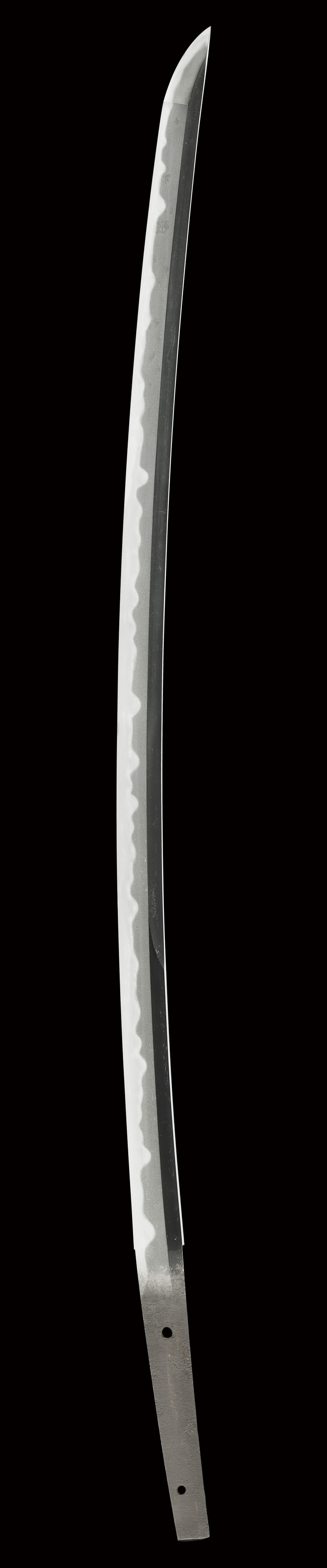
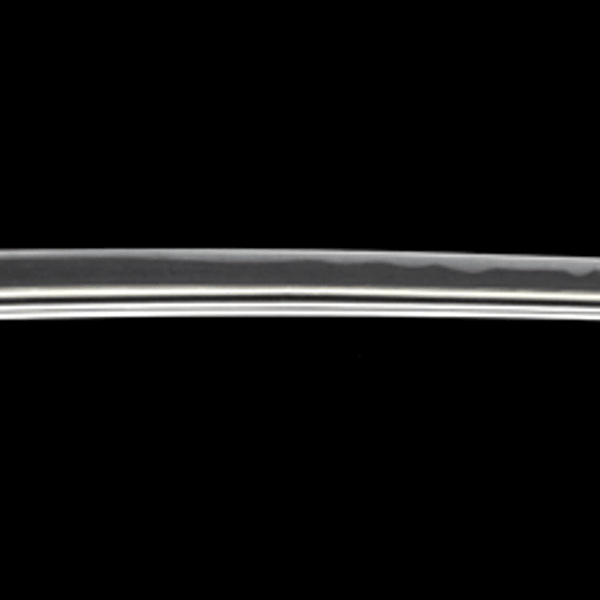
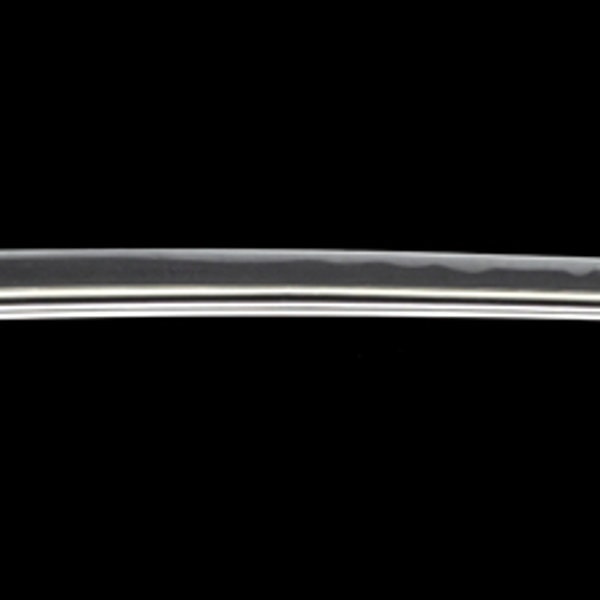
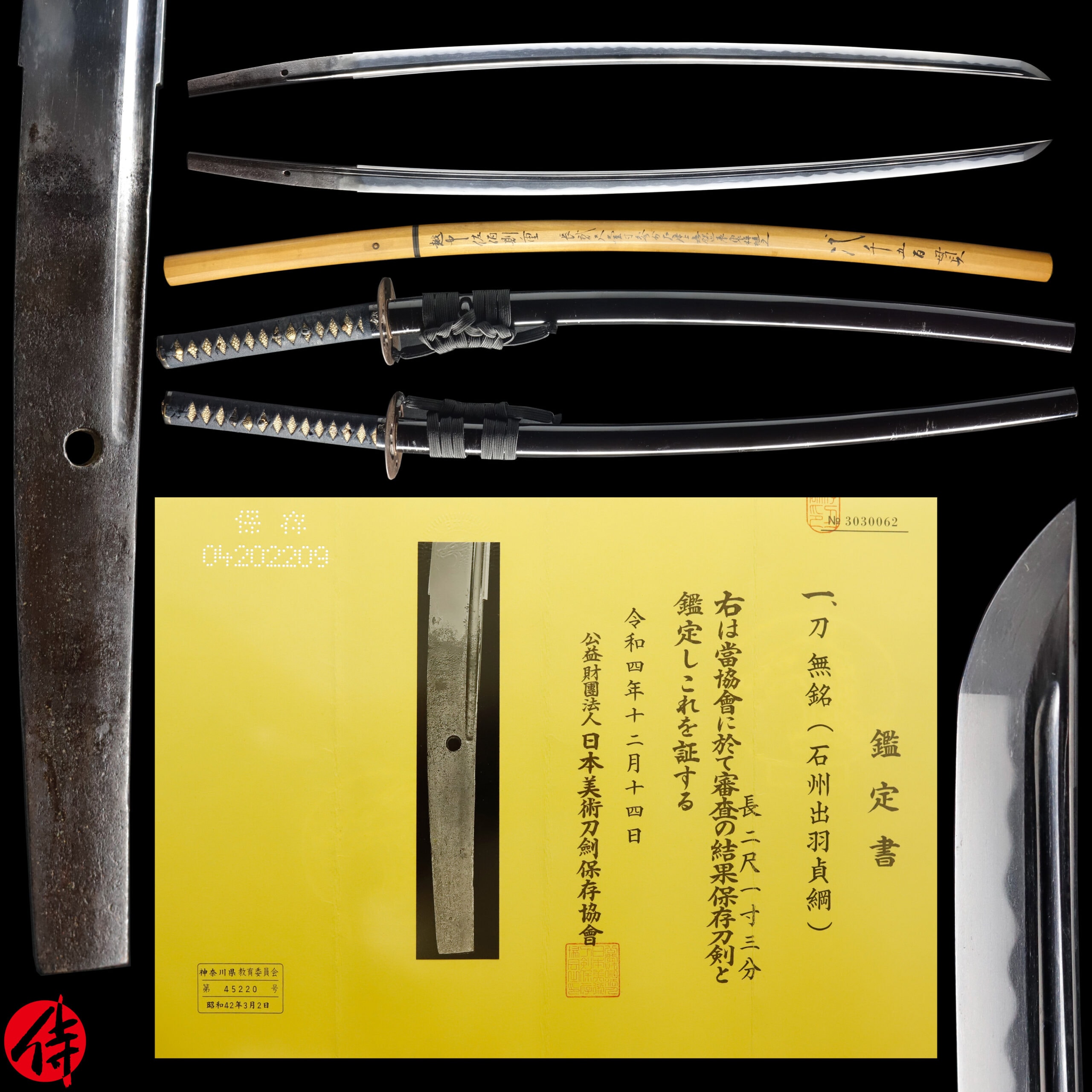
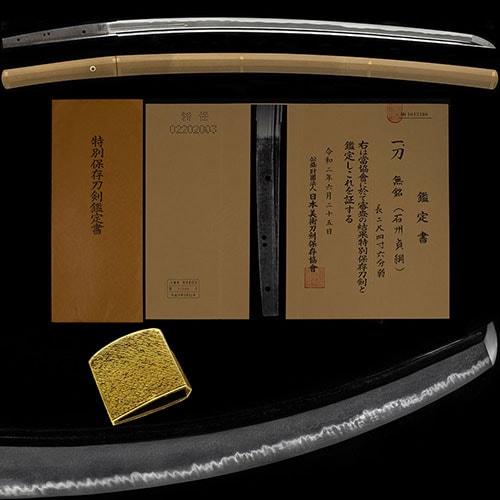
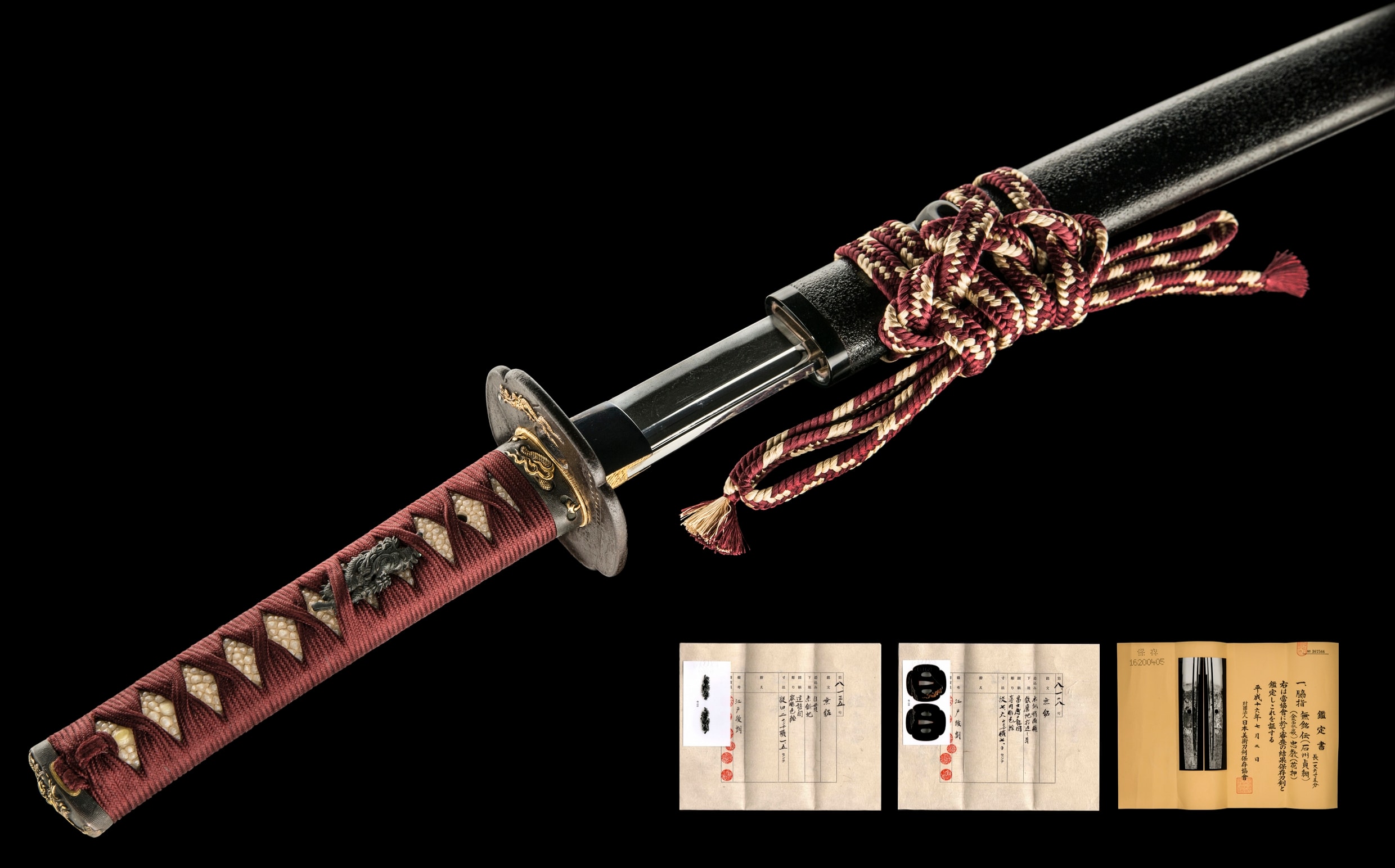
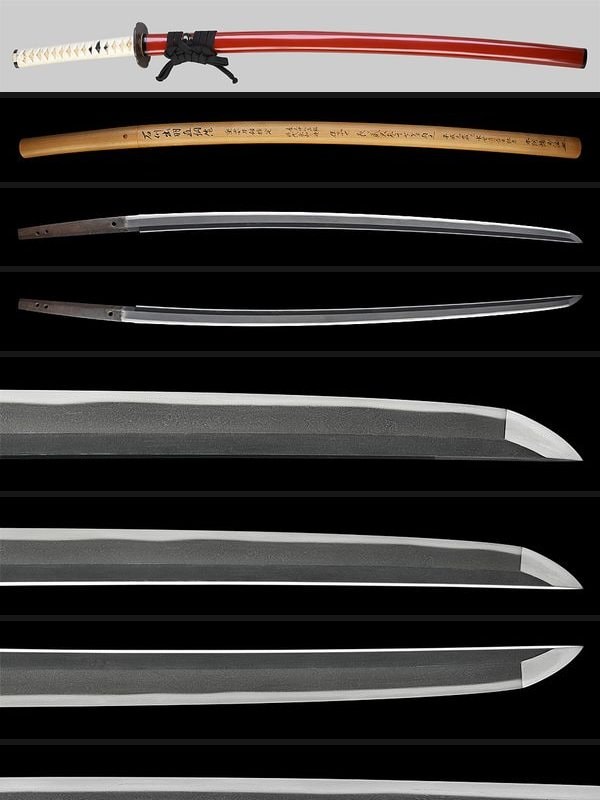
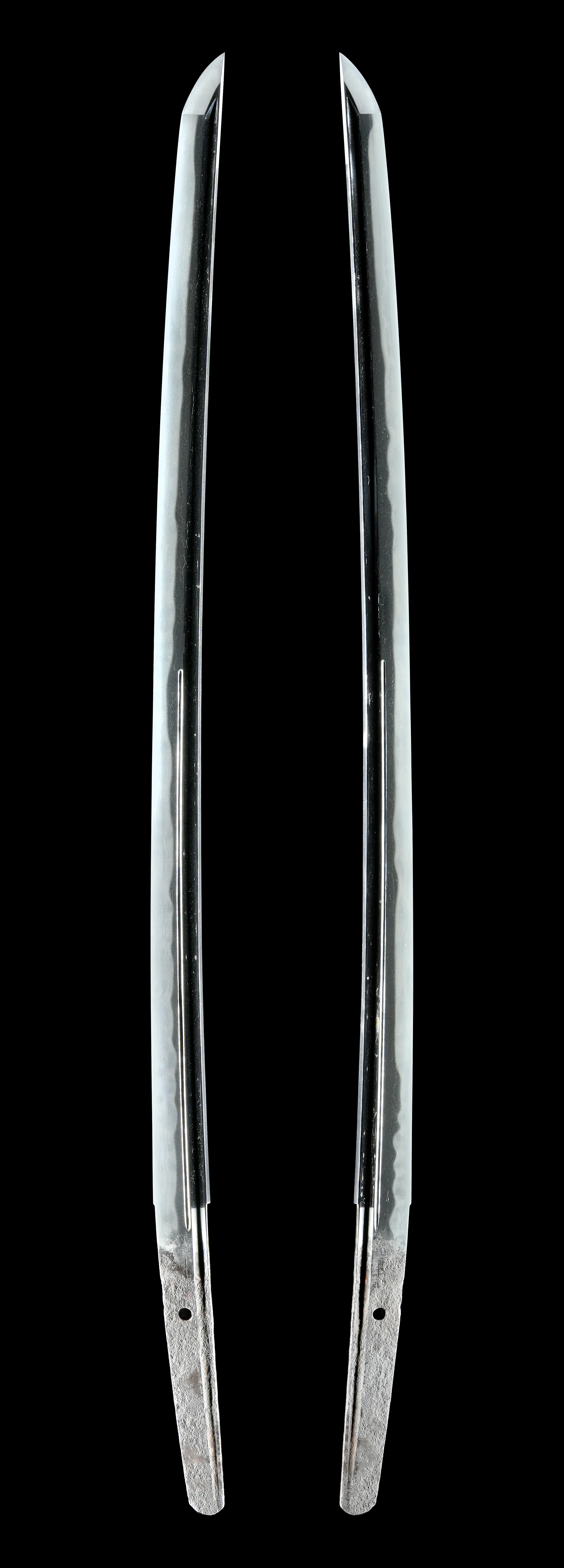
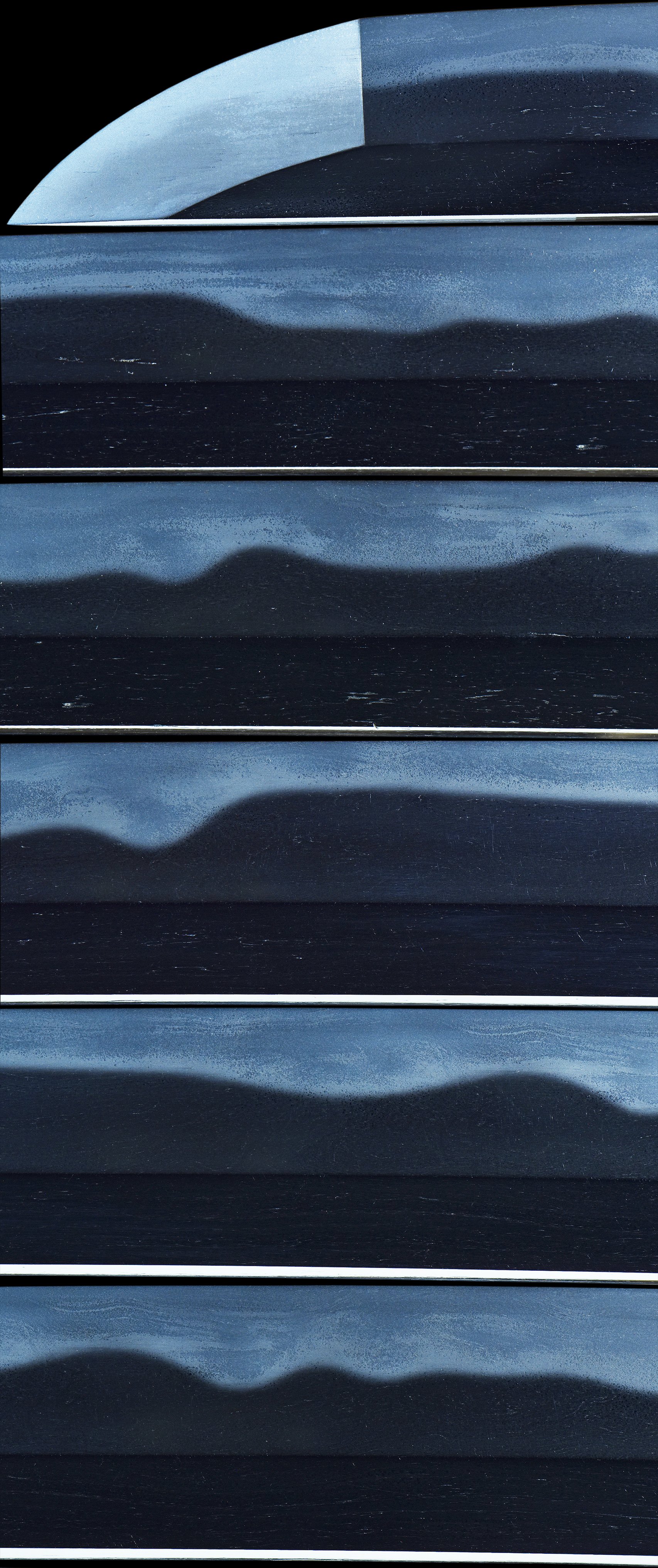
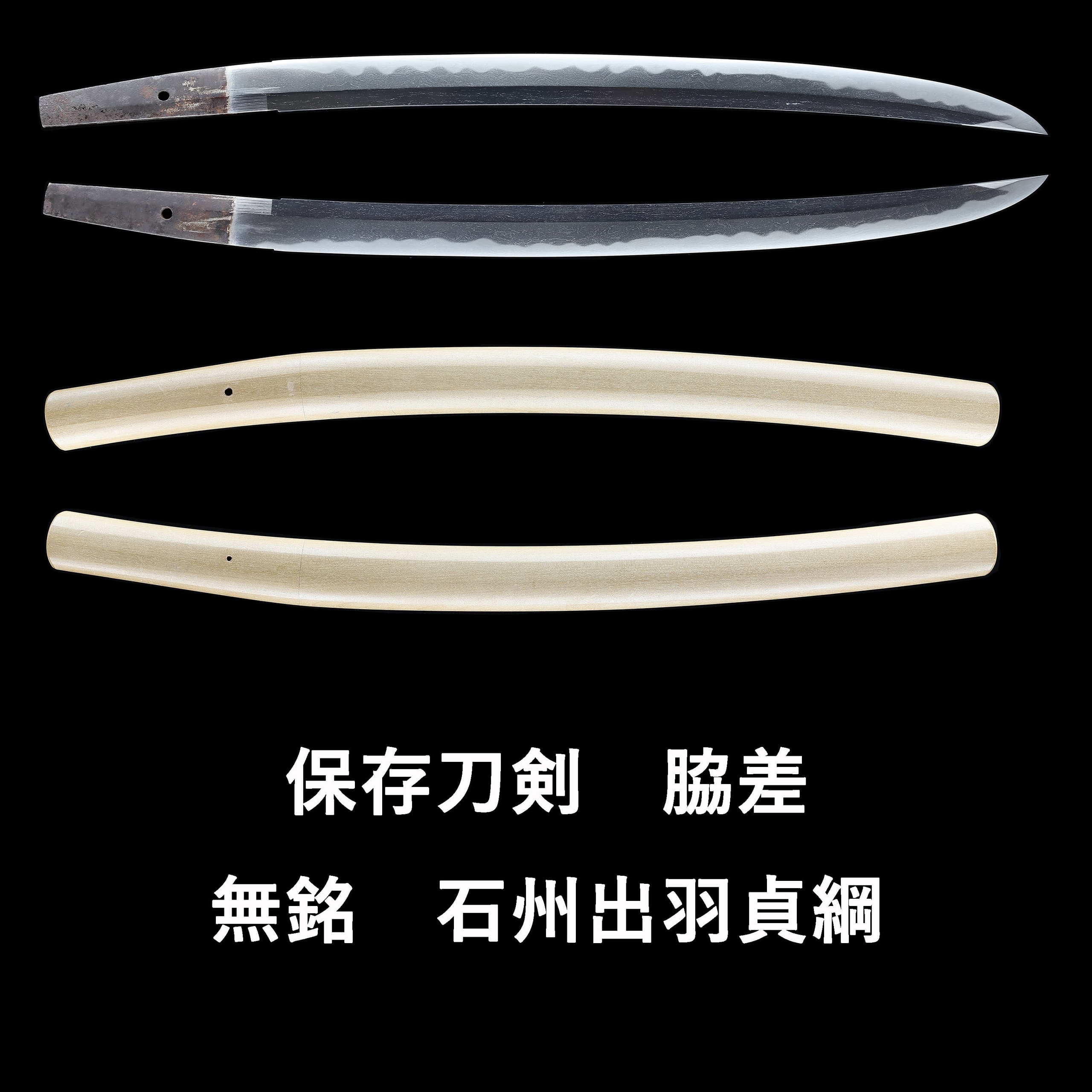
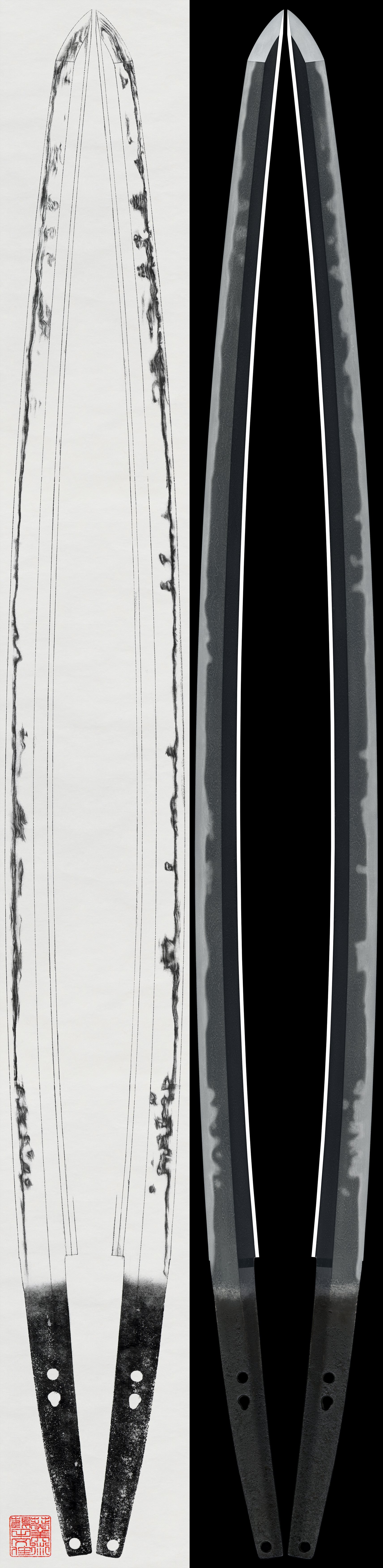
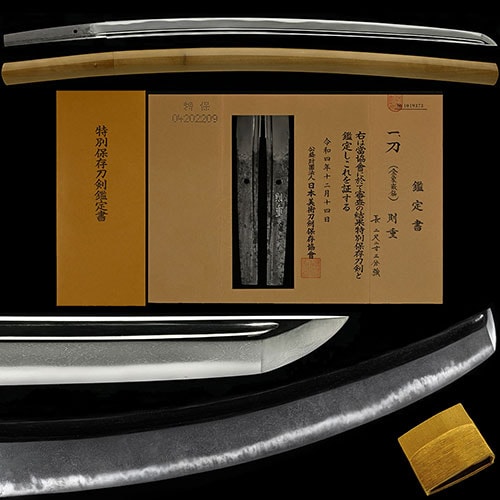
This is a katana by Sekisyu Sadatsuna from the Nanbokucho period. The blade features Kinsuji and Sunagashi, and comes with a Kuro-rouiro Nurisaya Uchigatana Koshirae. It is designated as a Tokubetsu Hozon Token.
 NihontoWatch
Kamakura · nagasa 70.1cm · sori 1.7cm
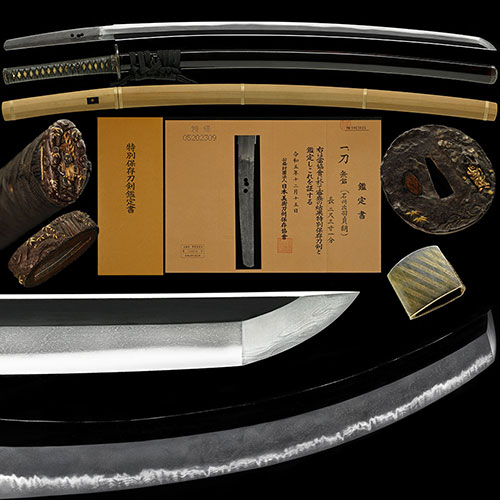


Sekishu Naotsuna school (Iwami, Soshu-den) · Iwami · around 1352-1356
Fujishiro Jo saku · Tōken Taikan top 26%
1 piece on the market now
A signed tantō in the fiftieth Jūyō session carries a large six-character inscription, Sekishū Dewa Sadatsuna, cut across the second mekugi-ana, and it is this rare full signature that anchors the smith. Sadatsuna worked at Izuha in Iwami Province in the late Nanbokuchō period, and the published sources transmit him as a son of the first-generation Naotsuna, the Sekishū master counted among the pupils of Masamune who carried the Sōshū tradition into the provinces of the San'in coast. The reference works record the name across three or even four generations descending into the Muromachi period, the first placed about the Shōhei era, the later hands in Meitoku, Ōei and Kōshō. Because signed pieces survive almost only from after the entry into Muromachi, and examples dated to the Nanbokuchō are scarcely encountered, his earliest work is read on the evidence of the ji and ha rather than from an inscription, which is why so much of his designated body is mumei tachi and katana appraised to his hand.
The recurring verdict across his blades is that Sadatsuna resembles Naotsuna while tempering a gunome smaller in scale. His hamon is fundamentally a gunome-midare, present on every one of his designated blades, that runs in linked sequences across the ha, mixed with togariba and angular kaku-gunome, and at times a round-headed gunome and a slight chōji-gokoro. Ashi enter, the nioi runs deep, and the nie adheres strongly, coarsening here and there into rough crystals. Through this temper kinsuji and sunagashi work vigorously, with yubashiri drifting in places, so that the activity within the ha is conspicuous rather than quiet. The single clearest tell sits in the bōshi, which brushes into hakikake on most of his blades, sometimes burning out in a yakitsume manner, sometimes turning back in ko-maru with a pointed tendency and a long kaeri. It is in the point that the Sōshū inheritance shows most plainly, the swept nie carrying the temper past the yokote.
The jigane is a standing itame mixed with mokume and a flowing nagare-hada, the grain opening rather than closing, so that the published sources reach for the word zanguri to describe its loose, granular surface. Over it ji-nie adheres well and often dust-fine, chikei enter, and the steel takes on a kana-iro tone darkened toward black, a provincial Iwami jigane that distinguishes the school from the tighter, brighter ji of the Sagami masters it imitates. On the tantō a jifu-like mottling gathers toward the lower half, and the ji-nie thickens to a fine dense cover. The whitish shirake cast that marks much wakimono work appears on one early tachi but is not his rule; more typical is the dark, active ji against which the kinsuji and sunagashi of the ha stand out.
The published sources draw his work into two registers. They state plainly that he is seen both in a gunome-based manner and in a ko-notare-based manner, and that in either case the nie adheres well and the sunagashi is applied vigorously. The gunome manner is the principal one, the linked midare with its angular and pointed elements and its strong, sometimes coarse nie. The ko-notare manner runs a shallow notare or small notare into the gunome, the nioiguchi tending to sink toward a subdued shizumi, the kinsuji and sunagashi drawn out long, and it is carried above all by his hira-zukuri tantō, broad and slightly sun-nobi with thick kasane and very shallow sori. Form follows the late date: the suriage katana run to standing itame in a blackish steel, while the one slender, deep-curved, ko-kissaki tachi with its two-character signature keeps a classical Kamakura silhouette that the published commentary calls archaic in feeling even as the nie-laden temper marks it as Naotsuna's circle.
What places him is the line itself. The published sources name his manner as that of the Sekishū Naotsuna group expressing the Sōshū-den, and an appraisal to Sadatsuna as a follower within Naotsuna's circle is one they say can be accepted for exactly these reasons. Of the first designated tachi they write that strong nie, frequent sunagashi and intermixed yubashiri mean 「相州伝が認められ, 直綱に通じるものがある」[[c:1]], that the Sōshū tradition is recognized and there are points in common with Naotsuna. The smith-level characterization repeated almost verbatim across his blades is 「直綱に似て, 互の目調のものと小のたれ調のものを見る」[[c:2]], that he resembles Naotsuna and is seen in gunome and ko-notare manners alike. He is the school's hand at one remove from its founder, faithful to the Sōshū idiom but working it smaller, darker and more provincial than the Sagami originals, and standing above the Nagahama smiths, Shōmatsu, Shōsada and Rinshō, who are counted as his subsequent line.
Sadatsuna is rated Jō-saku in the Fujishiro ranking, and eight of his blades hold the rank of Jūyō-Tōken, with no National Treasure or Important Cultural Property among them; his record is that of a sound provincial master, not a great name. A signed tantō of his is called by the published sources 「貞綱の見どころがよくあらわれている」[[c:3]], a piece in which Sadatsuna's points of interest are well brought out, and a fine and forceful example among his works. One of his katana descends with an origami written by Hon'ami Kōjō and dated Enpō 7, the year 1679, which attributes it to Sadatsuna and which the modern commentary affirms on the strength of the blackish itame and the linked gunome of well-adhering ko-nie. Provenance is otherwise thin, with no daimyō houses or museums recorded among his blades, so the honest account is of a body held quietly in private hands. For a collector his work is among the more attainable of the Sōshū-influenced provincial masters: most of his designated blades sit in the Jūyō tier rather than locked away as patrimony, and a signed example, fixing the name with certainty, is the rarer and more desirable encounter, coming to light only from time to time and with patience.
Where Sadatsuna stands among comparable artisans: across all of nihontō, and within tradition, era, and period. The tiers (Foremost · Leading · Major · Notable) weigh official designations from the NBTHK and Japan's Agency for Cultural Affairs, together with historical honors of lasting repute such as the Sansaku and Meibutsu-chō.
Select a lens to see how it's measured.
Soshu-den · Iwami
6 pieces on the market now
In Iwami Province, called Sekishū, a line of smiths signing Naotsuna (直綱) worked in the manner of the Soshu-den far from Sagami, carrying that tradition into the San'in region during the Nanbokuchō period. The setsumei record several smiths of this name, the older tradition books placing a first generation in the Kenmu era, a second in Eiwa, and a third in Ōei, though the NBTHK is careful to note that a strict separation of the generations still awaits further study. The first-generation Naotsuna, sometimes given the family name Ishikawa, is transmitted as a pupil of Sagami Masamune and counted among the so-called Masamune Juttetsu, the Ten Disciples; the appraisals repeatedly add that, considered chronologically, a direct connection to Masamune seems difficult, and that the correctness of the tradition must be left to future research. Signed work of the first generation is rare, and the tachi signed Iwami no Kuni Naotsuna is described as exceedingly valuable for that reason. The shared hand is built on a forging of itame mixed with mokume that tends to stand (hada-dachi) and often runs with nagare, thickly covered in ji-nie with chikei entering well; the steel reads dark, an iron-toned kanashoku with a blackish cast that the appraisals treat as a recognition point. Upon this ground the temper is a gunome-based midare, the gunome frequently angular and run together in linked sequences, mixed with ko-notare, ko-gunome, and pointed togariba. Ashi and yō enter densely, nie adheres thickly and at times coarsely, and kinsuji and sunagashi run prominently through the ha, often joined by yubashiri, tobiyaki, and intermittent muneyaki. The bōshi is typically midare-komi with vigorous hakikake, returning in ko-maru or yakizume. These traits the NBTHK reads as the influence of the Soshu-den made plain, sharing an underlying current with Shizu and Samonji; one fourth-session tachi draws the comparison directly.
A chōji-flavored, Bizen-leaning element is occasionally mixed into the gunome, and faint utsuri is noted on a single katana, but the nie-laden Soshu character governs. To recognize Naotsuna's hand is to read this combination together: dark standing itame, an angular gunome base, and abundant kinsuji and sunagashi, set in the wide mihaba and ō-kissaki of the Enbun and Jōji moment. The line extends through smiths the setsumei name in their own right. Sadatsuna, recorded as a son of the first-generation Naotsuna and likewise resident at Izuha (Deawa) in Iwami, works in a manner that closely resembles Naotsuna's, seen both in a gunome-based and a ko-notare-based style and marked in either case by well-applied nie and vigorous sunagashi; his signed tantō, including a six-character Sekishū Deawa Sadatsuna, anchor the attribution of his mumei pieces. Masatsuna, given as a son of Sekishū Naotsuna and active from Nanbokuchō into the Muromachi period, is met in a bold, open ō-itame of zanguri texture with standing grain. The Suesada lineage, begun by a son of Sadatsuna, carried the tradition further into the Muromachi period and produced an ōdachi exceeding five shaku, and the appraisals trace still later Nagahama followers such as Shōsue, Shōsada, Yōtei, and Rinshō. As kantei points the register fixes the dark kanashoku, the angular and locally linked gunome, the thick and sometimes uneven nie, and the conspicuous kinsuji and sunagashi, with the su-ken and bonji carvings recorded on several blades. Across the surviving body of signed and mumei work, gathered in the Jūyō-Bijutsuhin registers and in references such as the Kokon Kaji Bikō, Naotsuna stands as the carrier of the Soshu manner into Iwami, a provincial reading of Masamune's tradition recognized by its own settled vocabulary. Learn more →
| Smith | Era | Designated |
|---|---|---|
| Naotsuna直綱 | 1334-1338 | 74 |
| Sadatsuna貞綱 | 1352-1356 | 8 |
| Masatsuna正綱 | 1444-1449 | 1 |
| Naotsuna直綱 | 1469-1487 | 0 |
| Naoshige直重 | 1368-1375 | 1 |
Sōshū in the Kamakura period
Sōshū was born in a boomtown: Kamakura, seat of the warrior government, dense with elite patrons. Tradition holds that master smiths were summoned east to serve it, and from their students came Shintōgo Kunimitsu and then Masamune.
A Hozon-certified blade judged to show notably superior workmanship and a better state of preservation. The bar is higher: re-tempered blades and most unsigned Muromachi/Edo works are excluded.
The NBTHK (Nihon Bijutsu Tōken Hozon Kyōkai, the Society for the Preservation of Japanese Art Swords) is a public-interest incorporated foundation founded in 1948 and supervised by Japan’s Agency for Cultural Affairs (Bunkachō); it is based at the Japanese Sword Museum in Tokyo. Its expert panels physically examine each submitted work (shinsa) and issue a certificate (kanteishō) ranking it by artistic and historical merit. NBTHK papers are the most widely recognized standard of authentication for Japanese swords and fittings.
NBTHK official siteReturns/exchanges/cancellations not accepted after shipment except for significant defects; if defective, return/exchange possible within 3 days of arrival (return shipping paid by customer).
This is a katana by Sekisyu Sadatsuna from the Nanbokucho period. The blade features Kinsuji and Sunagashi, and comes with a Kuro-rouiro Nurisaya Uchigatana Koshirae. It is designated as a Tokubetsu Hozon Token.
NihontoWatchKamakura · nagasa 70.1cm · sori 1.7cm
Sekishu Naotsuna school (Iwami, Soshu-den) · Iwami · around 1352-1356
Fujishiro Jo saku · Tōken Taikan top 26%
1 piece on the market now
A signed tantō in the fiftieth Jūyō session carries a large six-character inscription, Sekishū Dewa Sadatsuna, cut across the second mekugi-ana, and it is this rare full signature that anchors the smith. Sadatsuna worked at Izuha in Iwami Province in the late Nanbokuchō period, and the published sources transmit him as a son of the first-generation Naotsuna, the Sekishū master counted among the pupils of Masamune who carried the Sōshū tradition into the provinces of the San'in coast. The reference works record the name across three or even four generations descending into the Muromachi period, the first placed about the Shōhei era, the later hands in Meitoku, Ōei and Kōshō. Because signed pieces survive almost only from after the entry into Muromachi, and examples dated to the Nanbokuchō are scarcely encountered, his earliest work is read on the evidence of the ji and ha rather than from an inscription, which is why so much of his designated body is mumei tachi and katana appraised to his hand.
The recurring verdict across his blades is that Sadatsuna resembles Naotsuna while tempering a gunome smaller in scale. His hamon is fundamentally a gunome-midare, present on every one of his designated blades, that runs in linked sequences across the ha, mixed with togariba and angular kaku-gunome, and at times a round-headed gunome and a slight chōji-gokoro. Ashi enter, the nioi runs deep, and the nie adheres strongly, coarsening here and there into rough crystals. Through this temper kinsuji and sunagashi work vigorously, with yubashiri drifting in places, so that the activity within the ha is conspicuous rather than quiet. The single clearest tell sits in the bōshi, which brushes into hakikake on most of his blades, sometimes burning out in a yakitsume manner, sometimes turning back in ko-maru with a pointed tendency and a long kaeri. It is in the point that the Sōshū inheritance shows most plainly, the swept nie carrying the temper past the yokote.
The jigane is a standing itame mixed with mokume and a flowing nagare-hada, the grain opening rather than closing, so that the published sources reach for the word zanguri to describe its loose, granular surface. Over it ji-nie adheres well and often dust-fine, chikei enter, and the steel takes on a kana-iro tone darkened toward black, a provincial Iwami jigane that distinguishes the school from the tighter, brighter ji of the Sagami masters it imitates. On the tantō a jifu-like mottling gathers toward the lower half, and the ji-nie thickens to a fine dense cover. The whitish shirake cast that marks much wakimono work appears on one early tachi but is not his rule; more typical is the dark, active ji against which the kinsuji and sunagashi of the ha stand out.
The published sources draw his work into two registers. They state plainly that he is seen both in a gunome-based manner and in a ko-notare-based manner, and that in either case the nie adheres well and the sunagashi is applied vigorously. The gunome manner is the principal one, the linked midare with its angular and pointed elements and its strong, sometimes coarse nie. The ko-notare manner runs a shallow notare or small notare into the gunome, the nioiguchi tending to sink toward a subdued shizumi, the kinsuji and sunagashi drawn out long, and it is carried above all by his hira-zukuri tantō, broad and slightly sun-nobi with thick kasane and very shallow sori. Form follows the late date: the suriage katana run to standing itame in a blackish steel, while the one slender, deep-curved, ko-kissaki tachi with its two-character signature keeps a classical Kamakura silhouette that the published commentary calls archaic in feeling even as the nie-laden temper marks it as Naotsuna's circle.
What places him is the line itself. The published sources name his manner as that of the Sekishū Naotsuna group expressing the Sōshū-den, and an appraisal to Sadatsuna as a follower within Naotsuna's circle is one they say can be accepted for exactly these reasons. Of the first designated tachi they write that strong nie, frequent sunagashi and intermixed yubashiri mean 「相州伝が認められ, 直綱に通じるものがある」[[c:1]], that the Sōshū tradition is recognized and there are points in common with Naotsuna. The smith-level characterization repeated almost verbatim across his blades is 「直綱に似て, 互の目調のものと小のたれ調のものを見る」[[c:2]], that he resembles Naotsuna and is seen in gunome and ko-notare manners alike. He is the school's hand at one remove from its founder, faithful to the Sōshū idiom but working it smaller, darker and more provincial than the Sagami originals, and standing above the Nagahama smiths, Shōmatsu, Shōsada and Rinshō, who are counted as his subsequent line.
Sadatsuna is rated Jō-saku in the Fujishiro ranking, and eight of his blades hold the rank of Jūyō-Tōken, with no National Treasure or Important Cultural Property among them; his record is that of a sound provincial master, not a great name. A signed tantō of his is called by the published sources 「貞綱の見どころがよくあらわれている」[[c:3]], a piece in which Sadatsuna's points of interest are well brought out, and a fine and forceful example among his works. One of his katana descends with an origami written by Hon'ami Kōjō and dated Enpō 7, the year 1679, which attributes it to Sadatsuna and which the modern commentary affirms on the strength of the blackish itame and the linked gunome of well-adhering ko-nie. Provenance is otherwise thin, with no daimyō houses or museums recorded among his blades, so the honest account is of a body held quietly in private hands. For a collector his work is among the more attainable of the Sōshū-influenced provincial masters: most of his designated blades sit in the Jūyō tier rather than locked away as patrimony, and a signed example, fixing the name with certainty, is the rarer and more desirable encounter, coming to light only from time to time and with patience.
Where Sadatsuna stands among comparable artisans: across all of nihontō, and within tradition, era, and period. The tiers (Foremost · Leading · Major · Notable) weigh official designations from the NBTHK and Japan's Agency for Cultural Affairs, together with historical honors of lasting repute such as the Sansaku and Meibutsu-chō.
Select a lens to see how it's measured.
Soshu-den · Iwami
6 pieces on the market now
In Iwami Province, called Sekishū, a line of smiths signing Naotsuna (直綱) worked in the manner of the Soshu-den far from Sagami, carrying that tradition into the San'in region during the Nanbokuchō period. The setsumei record several smiths of this name, the older tradition books placing a first generation in the Kenmu era, a second in Eiwa, and a third in Ōei, though the NBTHK is careful to note that a strict separation of the generations still awaits further study. The first-generation Naotsuna, sometimes given the family name Ishikawa, is transmitted as a pupil of Sagami Masamune and counted among the so-called Masamune Juttetsu, the Ten Disciples; the appraisals repeatedly add that, considered chronologically, a direct connection to Masamune seems difficult, and that the correctness of the tradition must be left to future research. Signed work of the first generation is rare, and the tachi signed Iwami no Kuni Naotsuna is described as exceedingly valuable for that reason. The shared hand is built on a forging of itame mixed with mokume that tends to stand (hada-dachi) and often runs with nagare, thickly covered in ji-nie with chikei entering well; the steel reads dark, an iron-toned kanashoku with a blackish cast that the appraisals treat as a recognition point. Upon this ground the temper is a gunome-based midare, the gunome frequently angular and run together in linked sequences, mixed with ko-notare, ko-gunome, and pointed togariba. Ashi and yō enter densely, nie adheres thickly and at times coarsely, and kinsuji and sunagashi run prominently through the ha, often joined by yubashiri, tobiyaki, and intermittent muneyaki. The bōshi is typically midare-komi with vigorous hakikake, returning in ko-maru or yakizume. These traits the NBTHK reads as the influence of the Soshu-den made plain, sharing an underlying current with Shizu and Samonji; one fourth-session tachi draws the comparison directly.
A chōji-flavored, Bizen-leaning element is occasionally mixed into the gunome, and faint utsuri is noted on a single katana, but the nie-laden Soshu character governs. To recognize Naotsuna's hand is to read this combination together: dark standing itame, an angular gunome base, and abundant kinsuji and sunagashi, set in the wide mihaba and ō-kissaki of the Enbun and Jōji moment. The line extends through smiths the setsumei name in their own right. Sadatsuna, recorded as a son of the first-generation Naotsuna and likewise resident at Izuha (Deawa) in Iwami, works in a manner that closely resembles Naotsuna's, seen both in a gunome-based and a ko-notare-based style and marked in either case by well-applied nie and vigorous sunagashi; his signed tantō, including a six-character Sekishū Deawa Sadatsuna, anchor the attribution of his mumei pieces. Masatsuna, given as a son of Sekishū Naotsuna and active from Nanbokuchō into the Muromachi period, is met in a bold, open ō-itame of zanguri texture with standing grain. The Suesada lineage, begun by a son of Sadatsuna, carried the tradition further into the Muromachi period and produced an ōdachi exceeding five shaku, and the appraisals trace still later Nagahama followers such as Shōsue, Shōsada, Yōtei, and Rinshō. As kantei points the register fixes the dark kanashoku, the angular and locally linked gunome, the thick and sometimes uneven nie, and the conspicuous kinsuji and sunagashi, with the su-ken and bonji carvings recorded on several blades. Across the surviving body of signed and mumei work, gathered in the Jūyō-Bijutsuhin registers and in references such as the Kokon Kaji Bikō, Naotsuna stands as the carrier of the Soshu manner into Iwami, a provincial reading of Masamune's tradition recognized by its own settled vocabulary. Learn more →
| Smith | Era | Designated |
|---|---|---|
| Naotsuna直綱 | 1334-1338 | 74 |
| Sadatsuna貞綱 | 1352-1356 | 8 |
| Masatsuna正綱 | 1444-1449 | 1 |
| Naotsuna直綱 | 1469-1487 | 0 |
| Naoshige直重 | 1368-1375 | 1 |
Sōshū in the Kamakura period
Sōshū was born in a boomtown: Kamakura, seat of the warrior government, dense with elite patrons. Tradition holds that master smiths were summoned east to serve it, and from their students came Shintōgo Kunimitsu and then Masamune.
A Hozon-certified blade judged to show notably superior workmanship and a better state of preservation. The bar is higher: re-tempered blades and most unsigned Muromachi/Edo works are excluded.
The NBTHK (Nihon Bijutsu Tōken Hozon Kyōkai, the Society for the Preservation of Japanese Art Swords) is a public-interest incorporated foundation founded in 1948 and supervised by Japan’s Agency for Cultural Affairs (Bunkachō); it is based at the Japanese Sword Museum in Tokyo. Its expert panels physically examine each submitted work (shinsa) and issue a certificate (kanteishō) ranking it by artistic and historical merit. NBTHK papers are the most widely recognized standard of authentication for Japanese swords and fittings.
NBTHK official siteReturns/exchanges/cancellations not accepted after shipment except for significant defects; if defective, return/exchange possible within 3 days of arrival (return shipping paid by customer).