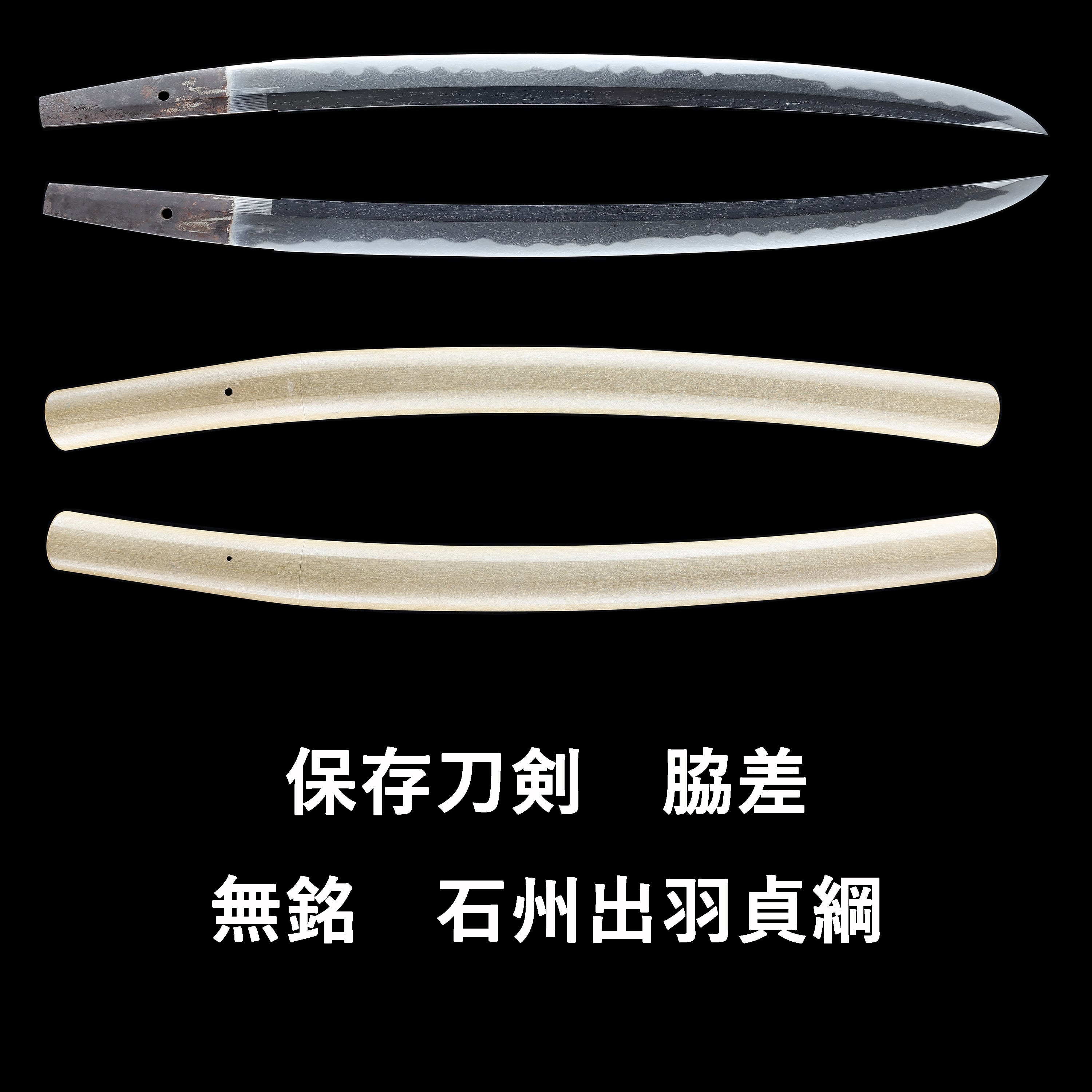
In Iwami Province, called Sekishū, a line of smiths signing Naotsuna (直綱) worked in the manner of the Soshu-den far from Sagami, carrying that tradition into the San'in region during the Nanbokuchō period. The setsumei record several smiths of this name, the older tradition books placing a first generation in the Kenmu era, a second in Eiwa, and a third in Ōei, though the NBTHK is careful to note that a strict separation of the generations still awaits further study. The first-generation Naotsuna, sometimes given the family name Ishikawa, is transmitted as a pupil of Sagami Masamune and counted among the so-called Masamune Juttetsu, the Ten Disciples; the appraisals repeatedly add that, considered chronologically, a direct connection to Masamune seems difficult, and that the correctness of the tradition must be left to future research. Signed work of the first generation is rare, and the tachi signed Iwami no Kuni Naotsuna is described as exceedingly valuable for that reason. The shared hand is built on a forging of itame mixed with mokume that tends to stand (hada-dachi) and often runs with nagare, thickly covered in ji-nie with chikei entering well; the steel reads dark, an iron-toned kanashoku with a blackish cast that the appraisals treat as a recognition point. Upon this ground the temper is a gunome-based midare, the gunome frequently angular and run together in linked sequences, mixed with ko-notare, ko-gunome, and pointed togariba. Ashi and yō enter densely, nie adheres thickly and at times coarsely, and kinsuji and sunagashi run prominently through the ha, often joined by yubashiri, tobiyaki, and intermittent muneyaki. The bōshi is typically midare-komi with vigorous hakikake, returning in ko-maru or yakizume. These traits the NBTHK reads as the influence of the Soshu-den made plain, sharing an underlying current with Shizu and Samonji; one fourth-session tachi draws the comparison directly.
A chōji-flavored, Bizen-leaning element is occasionally mixed into the gunome, and faint utsuri is noted on a single katana, but the nie-laden Soshu character governs. To recognize Naotsuna's hand is to read this combination together: dark standing itame, an angular gunome base, and abundant kinsuji and sunagashi, set in the wide mihaba and ō-kissaki of the Enbun and Jōji moment. The line extends through smiths the setsumei name in their own right. Sadatsuna, recorded as a son of the first-generation Naotsuna and likewise resident at Izuha (Deawa) in Iwami, works in a manner that closely resembles Naotsuna's, seen both in a gunome-based and a ko-notare-based style and marked in either case by well-applied nie and vigorous sunagashi; his signed tantō, including a six-character Sekishū Deawa Sadatsuna, anchor the attribution of his mumei pieces. Masatsuna, given as a son of Sekishū Naotsuna and active from Nanbokuchō into the Muromachi period, is met in a bold, open ō-itame of zanguri texture with standing grain. The Suesada lineage, begun by a son of Sadatsuna, carried the tradition further into the Muromachi period and produced an ōdachi exceeding five shaku, and the appraisals trace still later Nagahama followers such as Shōsue, Shōsada, Yōtei, and Rinshō. As kantei points the register fixes the dark kanashoku, the angular and locally linked gunome, the thick and sometimes uneven nie, and the conspicuous kinsuji and sunagashi, with the su-ken and bonji carvings recorded on several blades. Across the surviving body of signed and mumei work, gathered in the Jūyō-Bijutsuhin registers and in references such as the Kokon Kaji Bikō, Naotsuna stands as the carrier of the Soshu manner into Iwami, a provincial reading of Masamune's tradition recognized by its own settled vocabulary. Learn more →

 NihontoWatch