


NihontoWatch Mon

NihontoWatchBETA

MarketAuctions
Encyclopedia
NihontoWatch Mon

NihontoWatchBETA

MarketAuctions
Encyclopedia

Description

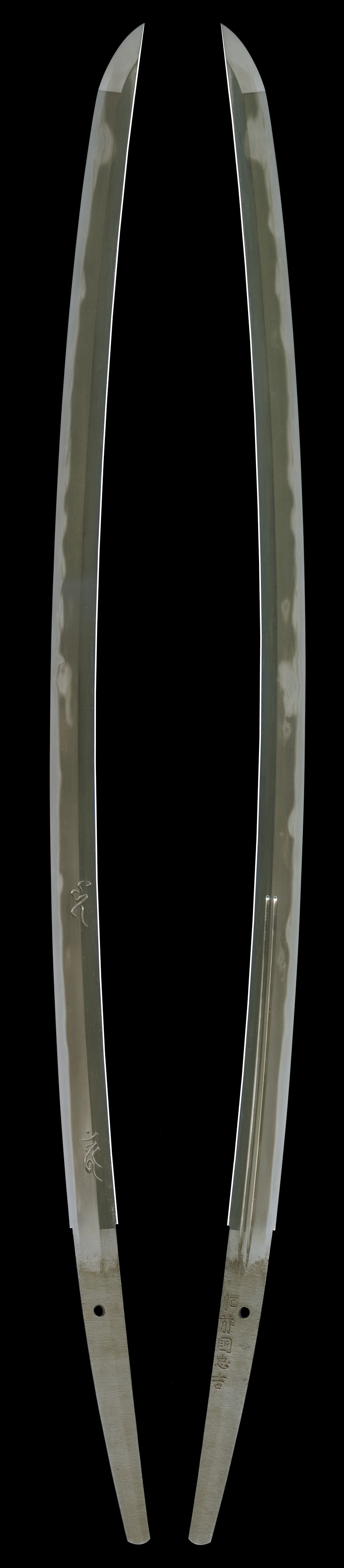
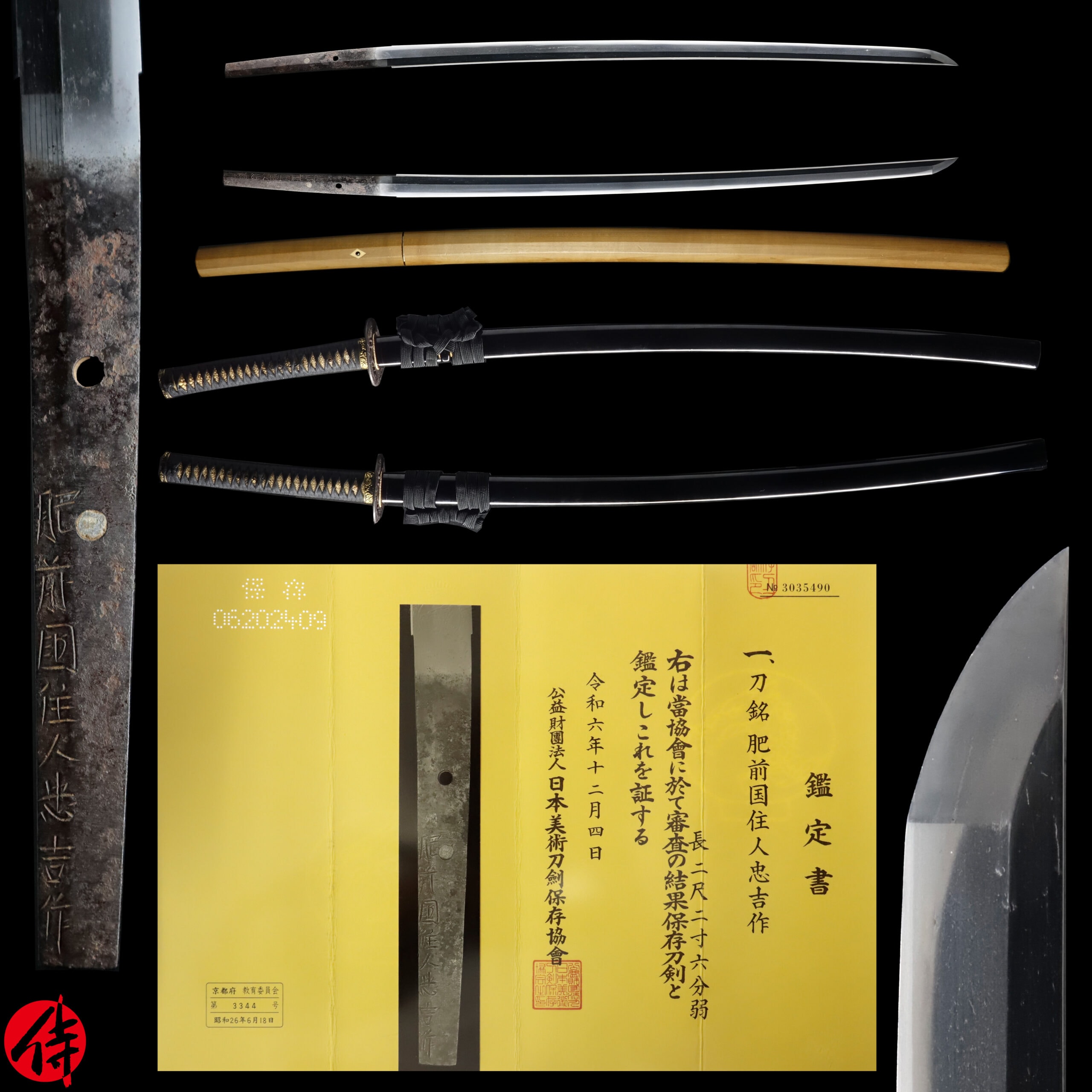
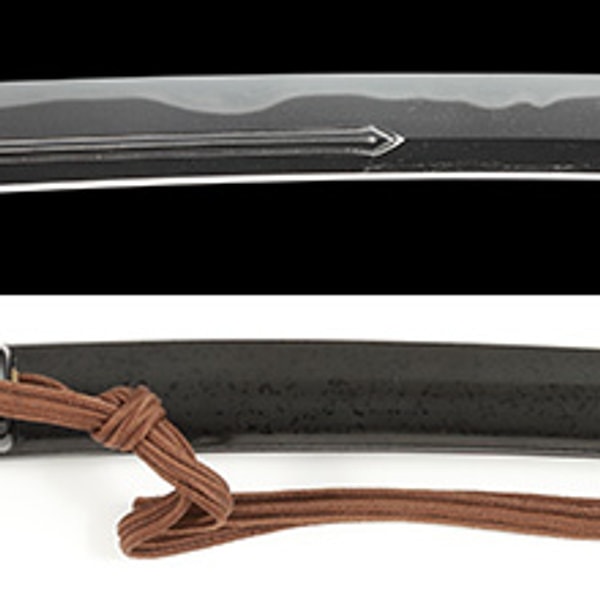
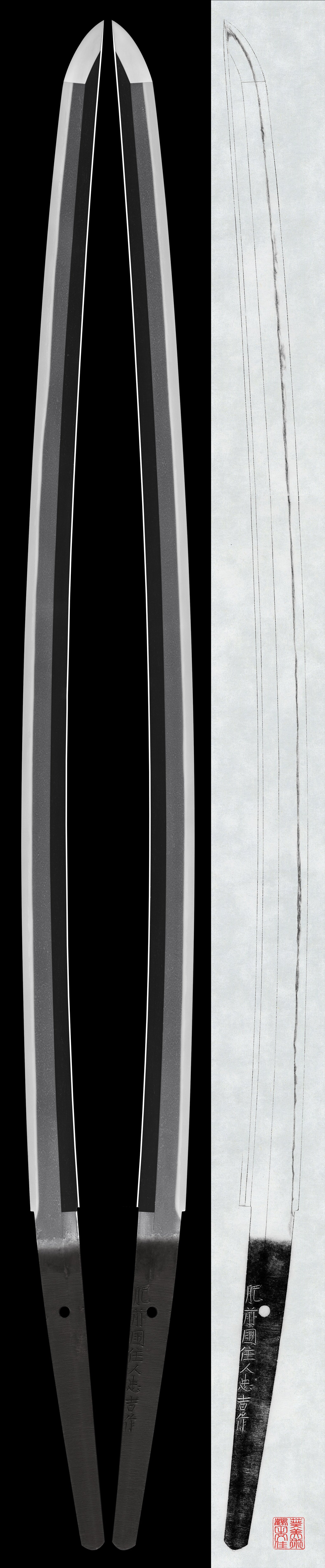
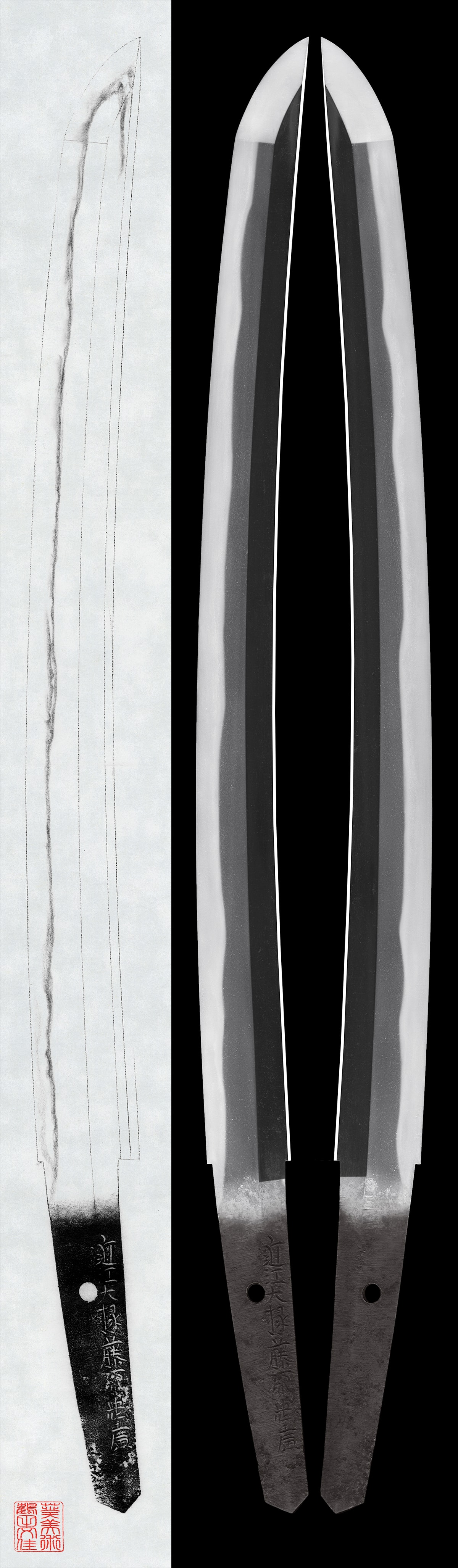
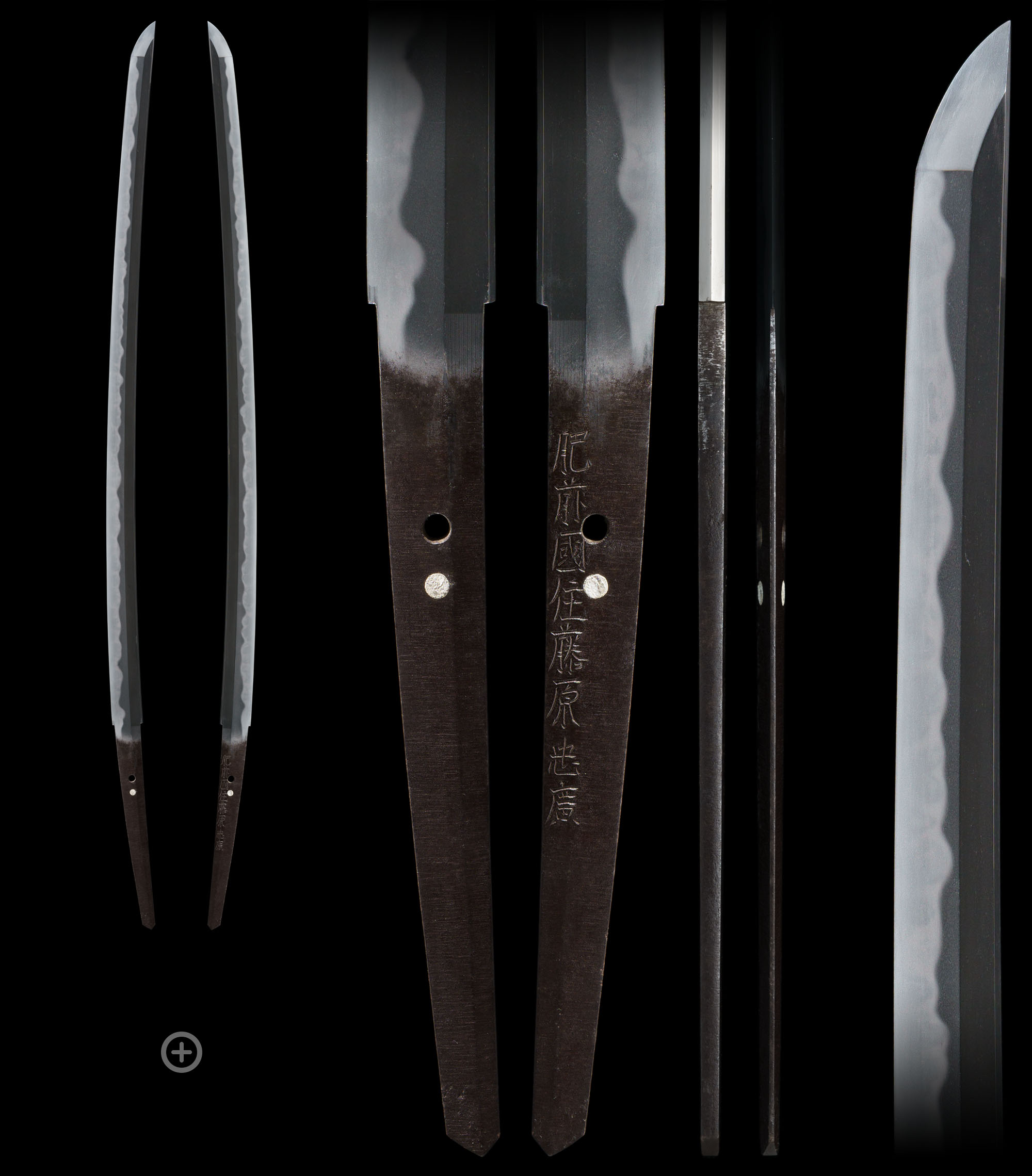
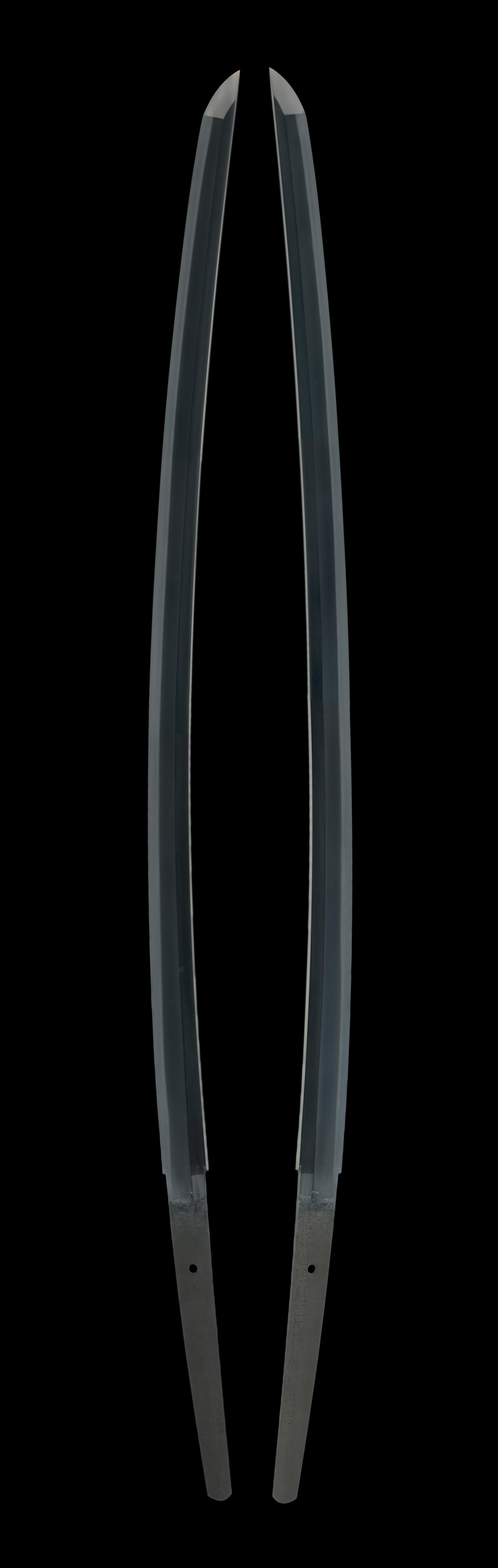
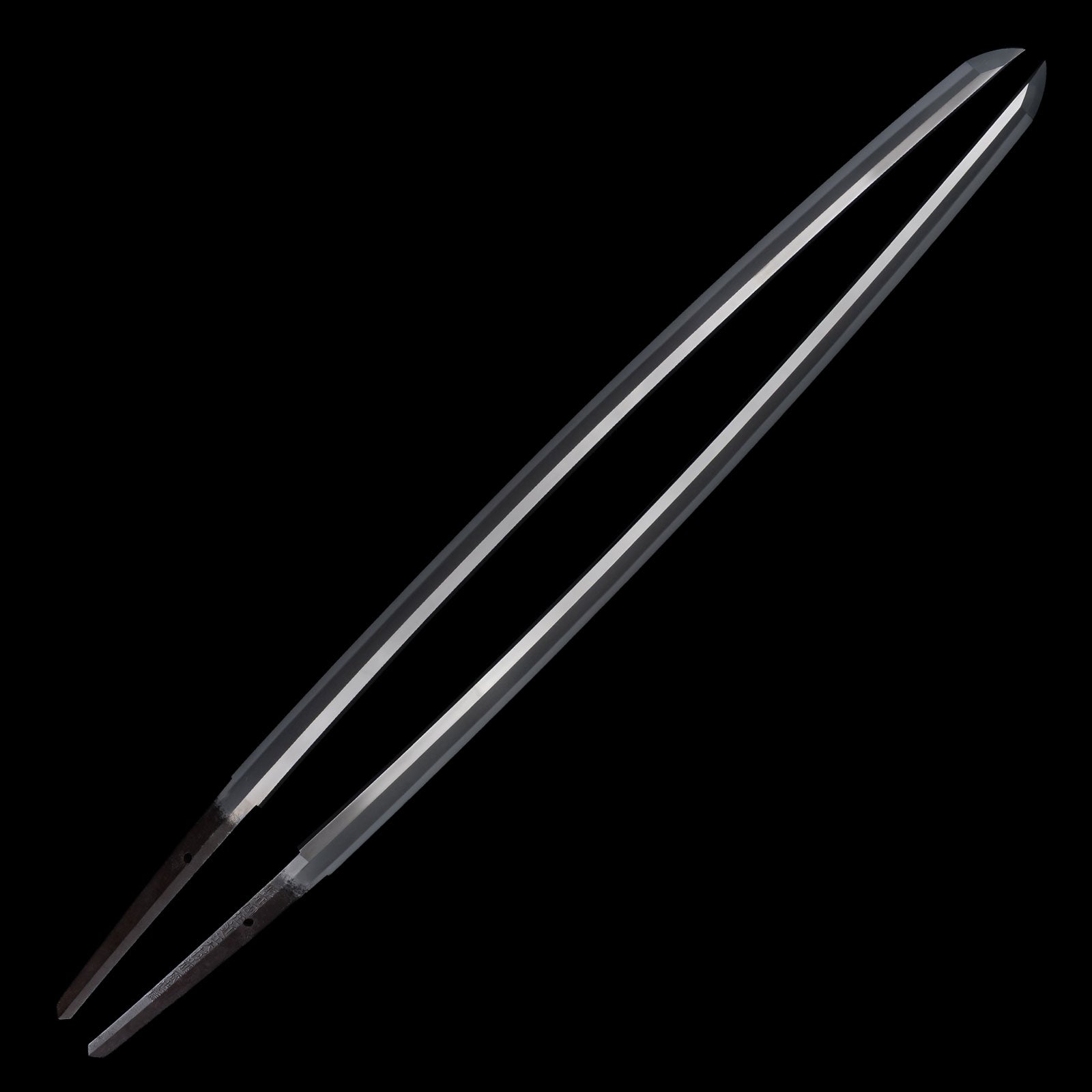
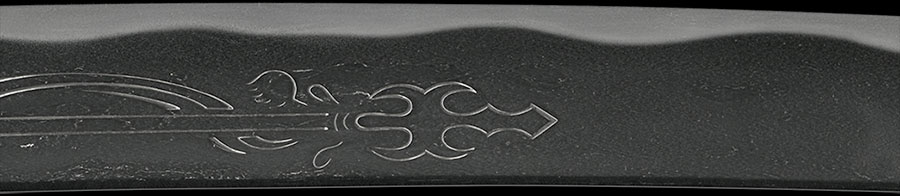
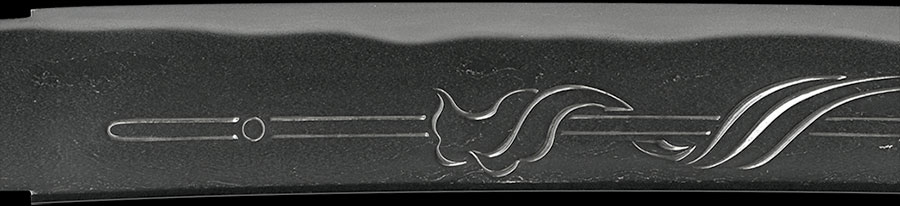
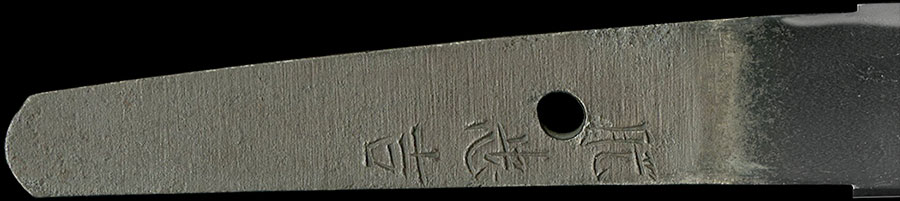
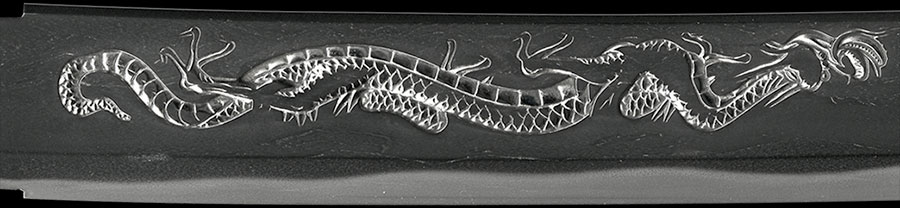
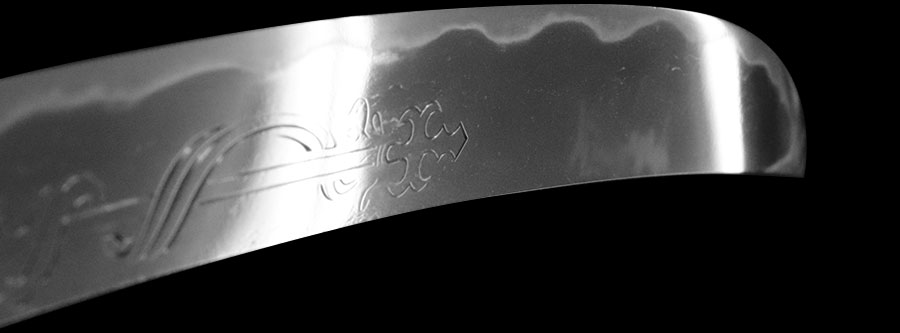
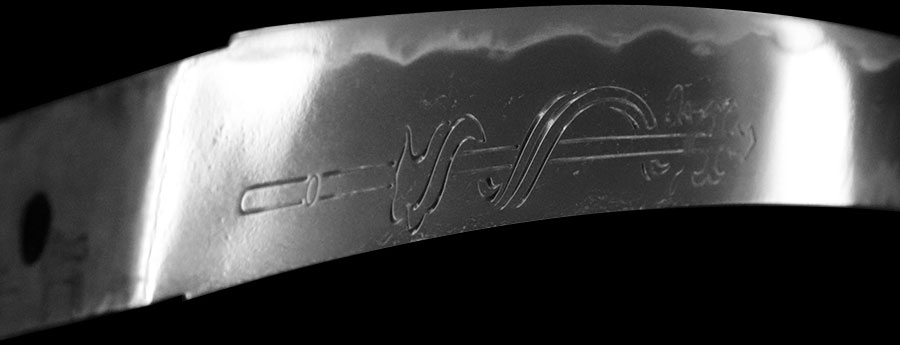
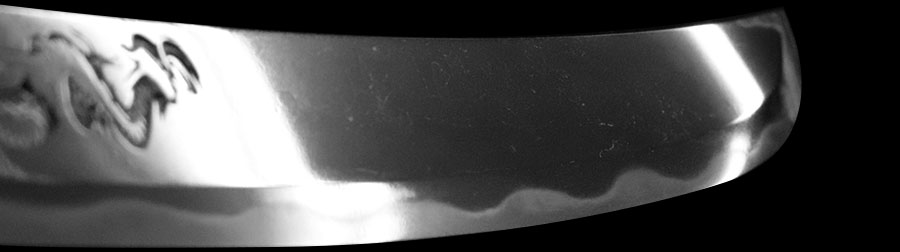
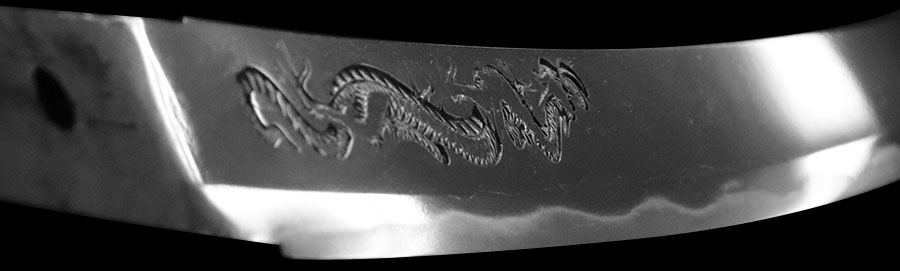
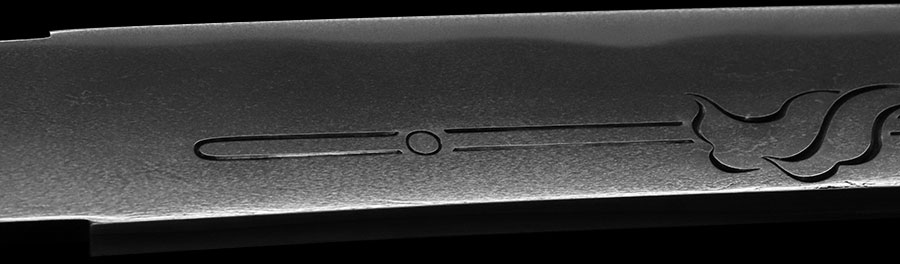
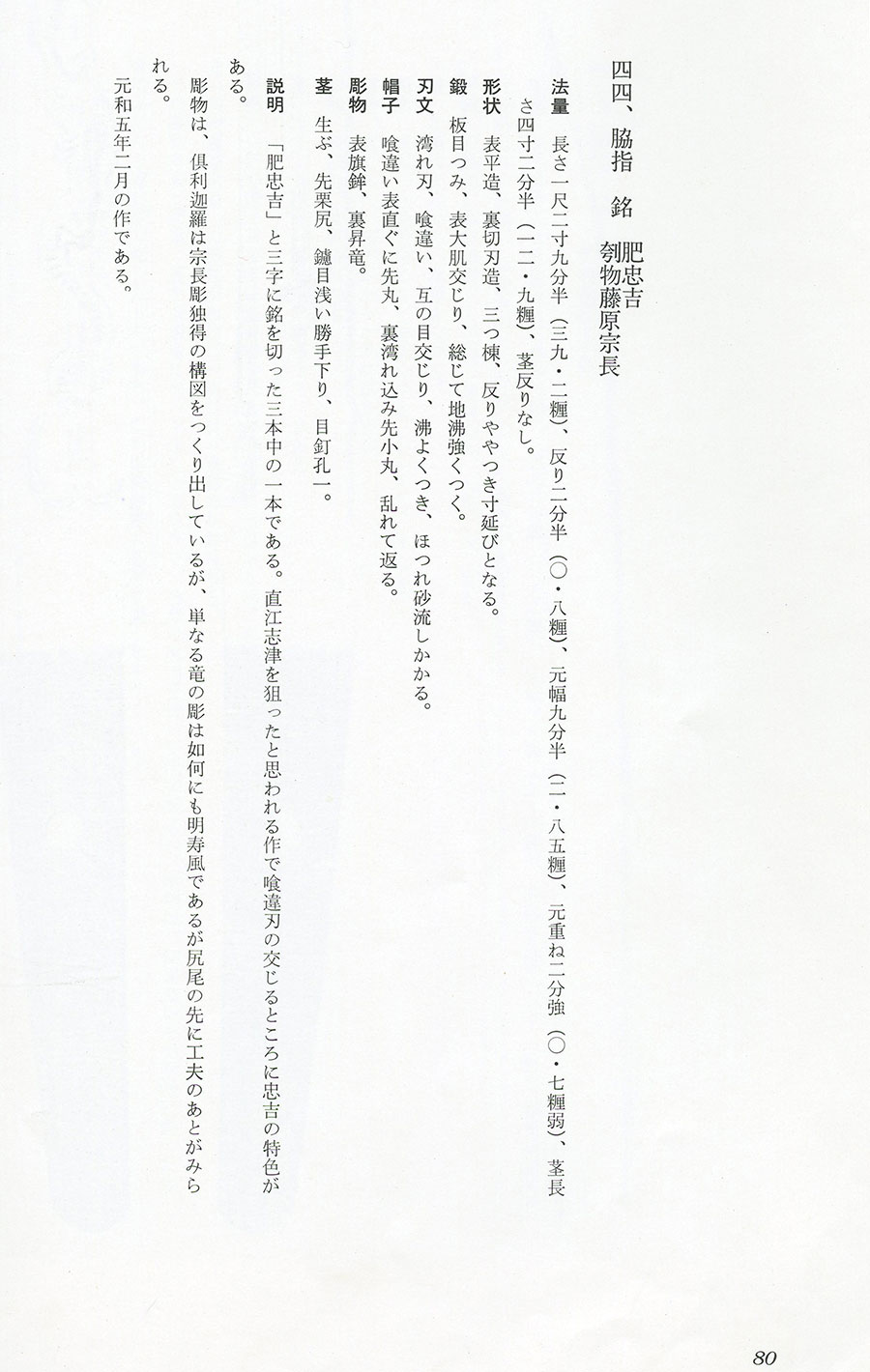
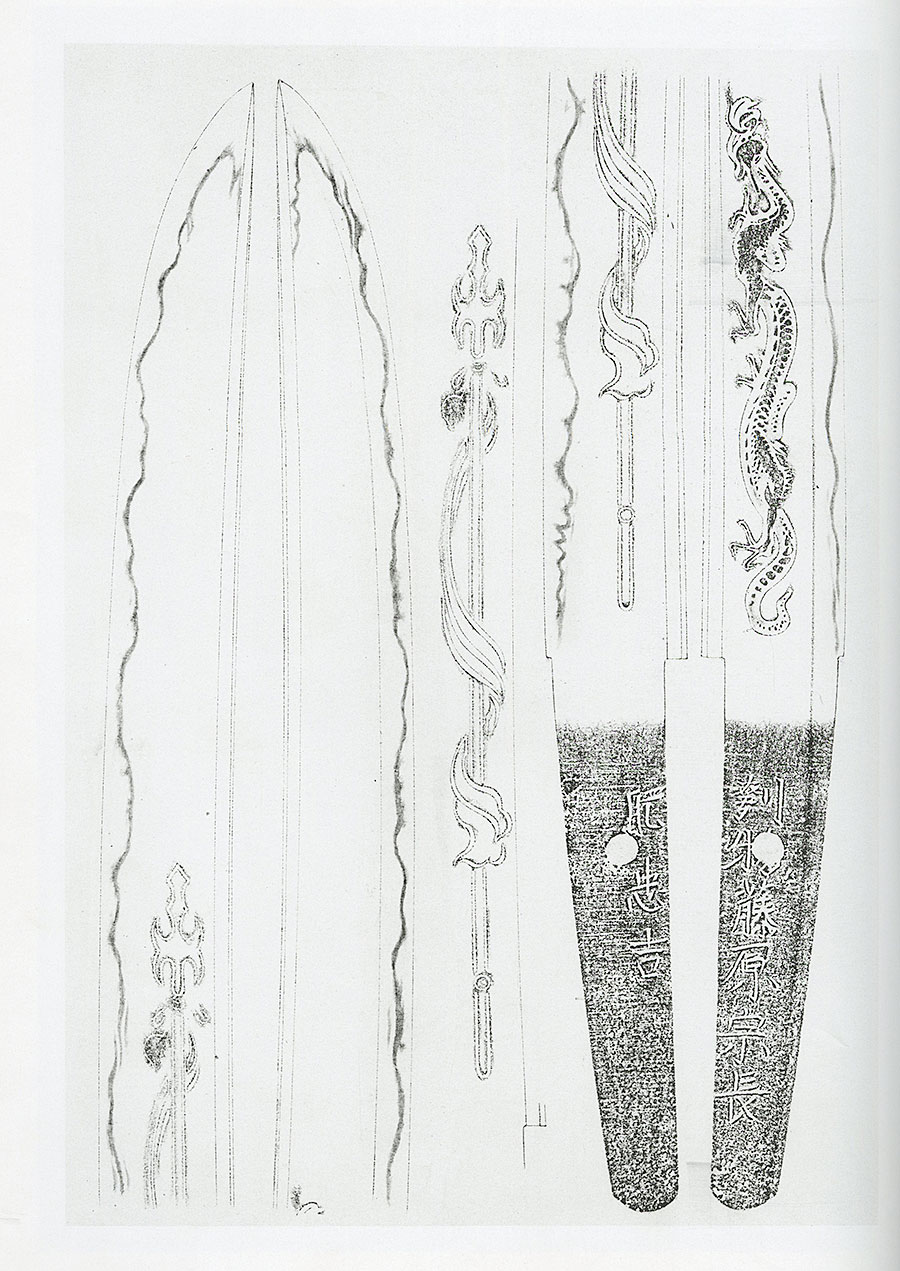
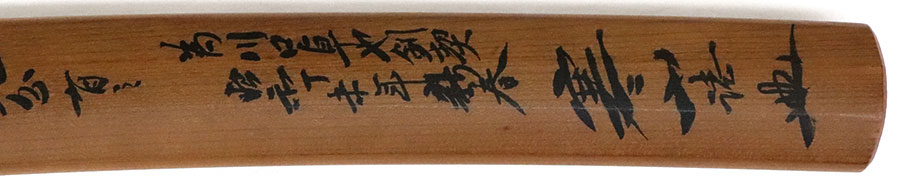
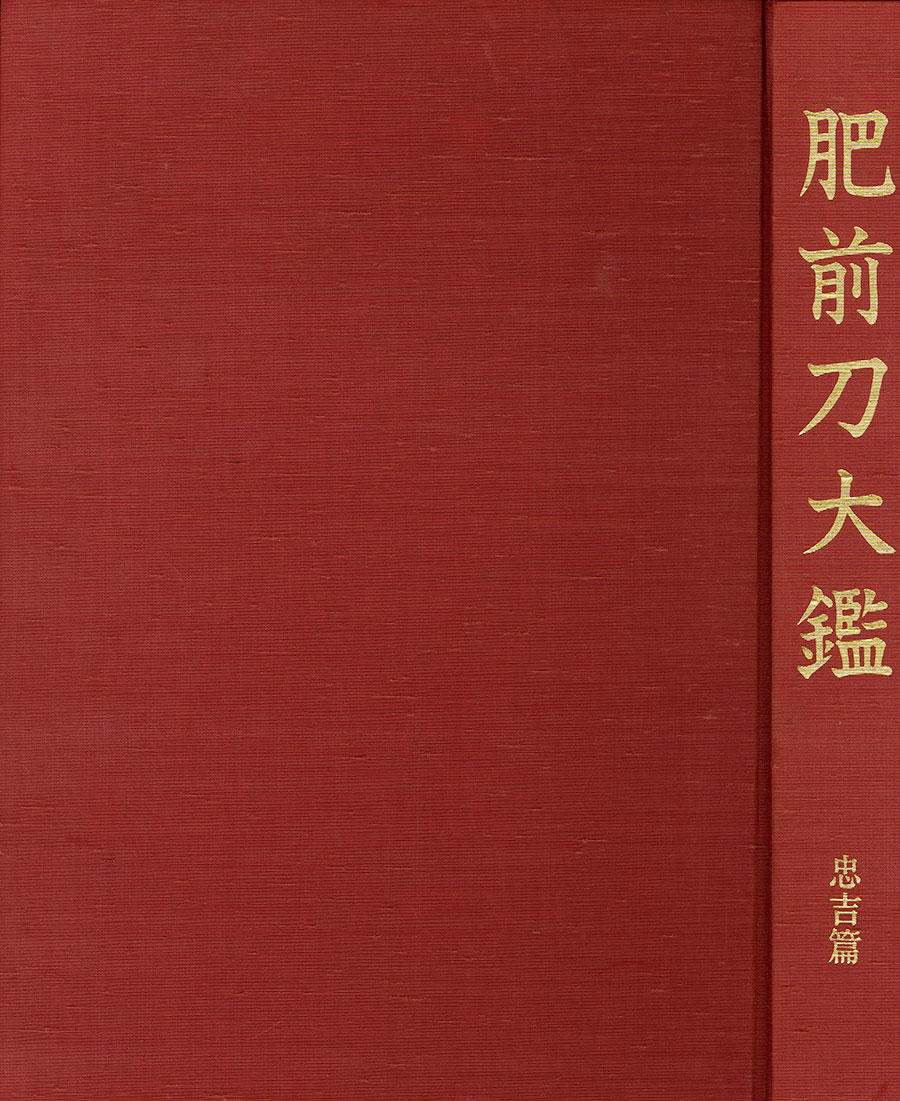
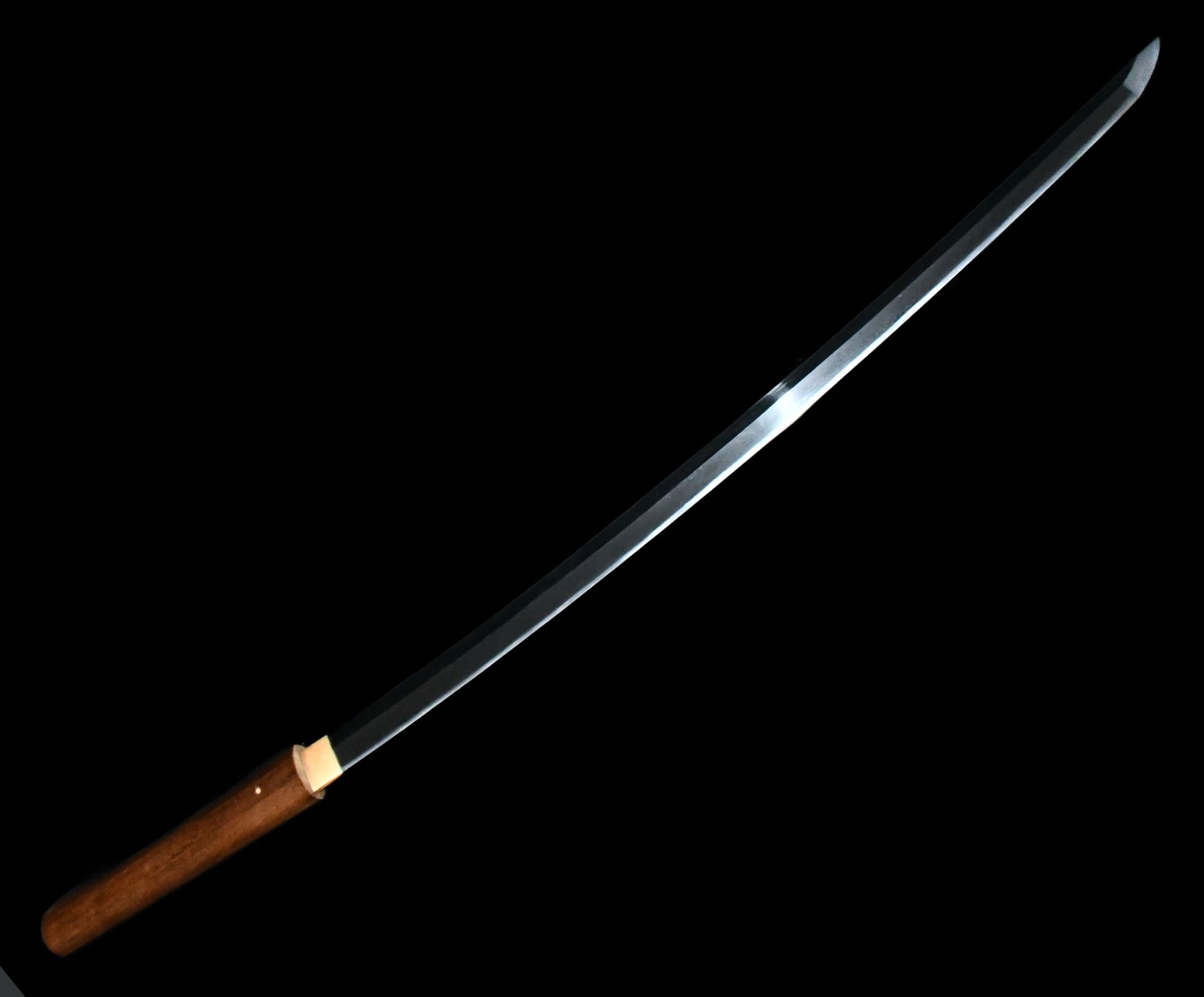
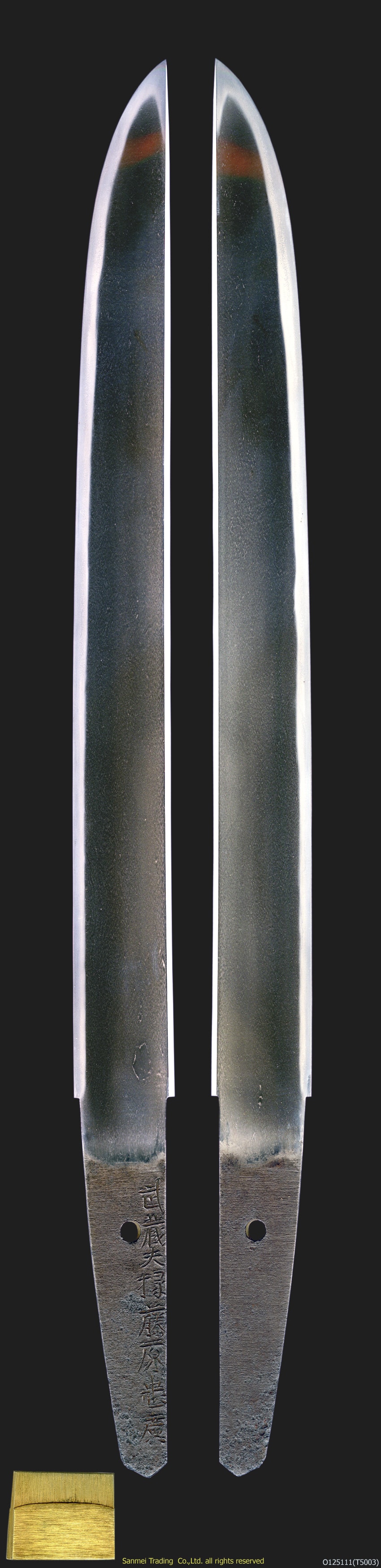
The Hizen Tadayoshi sanji-mei is very famous, and since ancient times only three such swords have been known to exist: the one owned by Inukai Bokudo, its kage-uchi, and this sword. All three examples were crafted in Genna 5. Munenaga, along with Tadayoshi, became a disciple of Umetada Myoju, and the horimono on this blade is a magnificent example of Myoju’s direct style. This has been a famous sword since ancient times. Recorded in the Hizen To Taikan.

NBTHK Setsumei

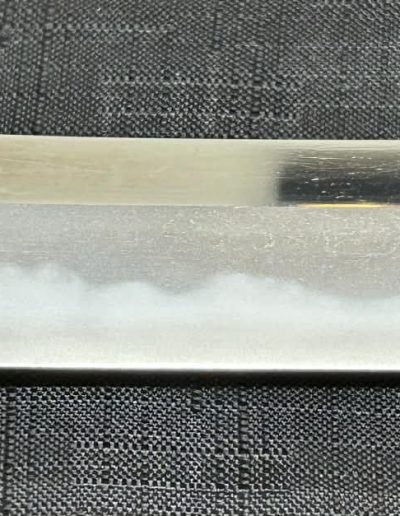
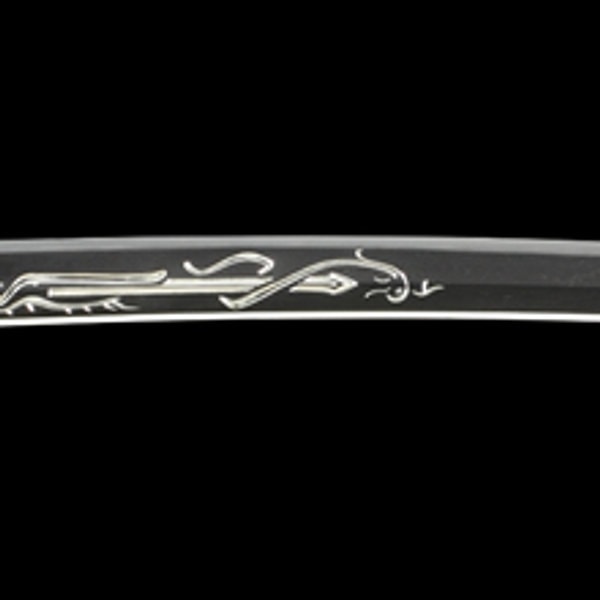
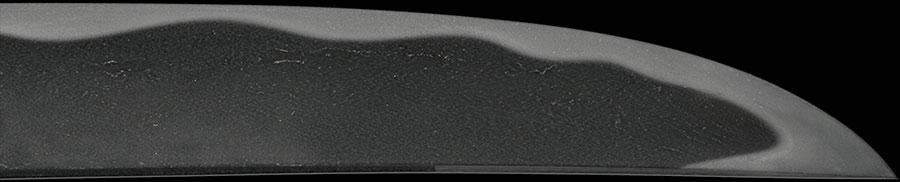
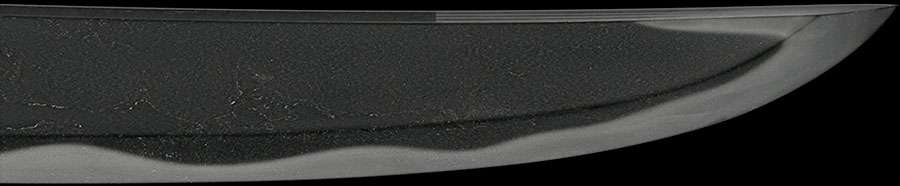
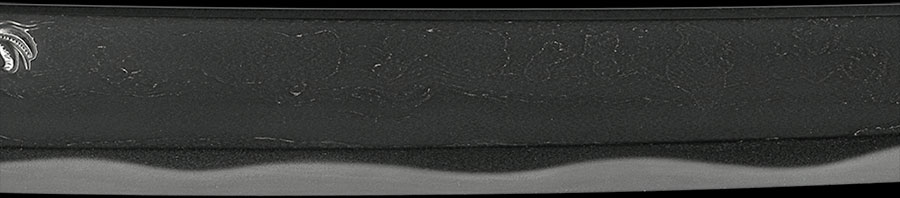
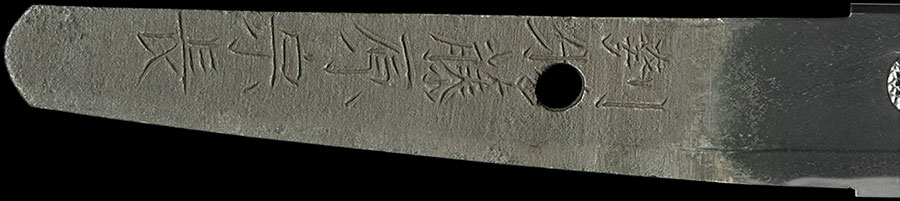
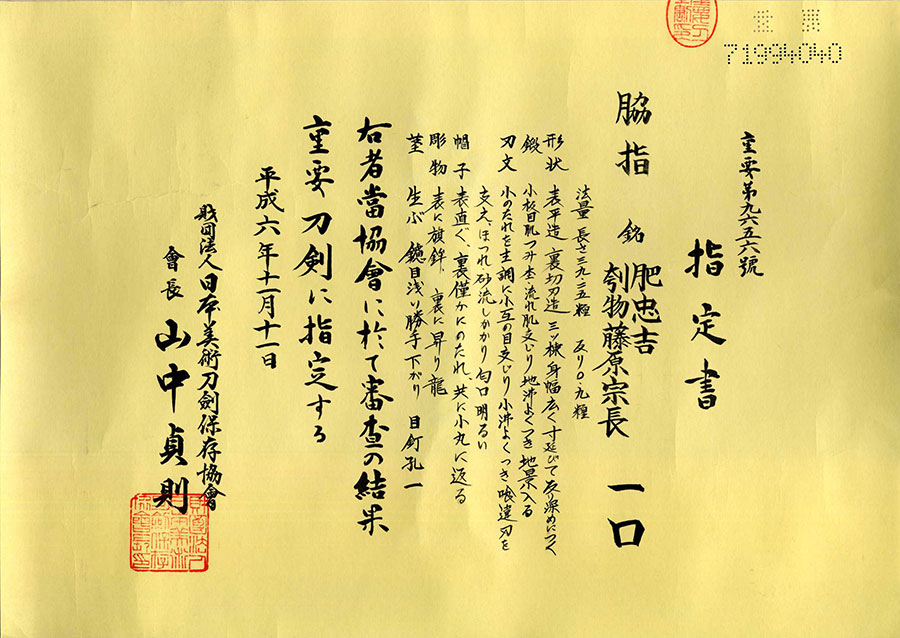
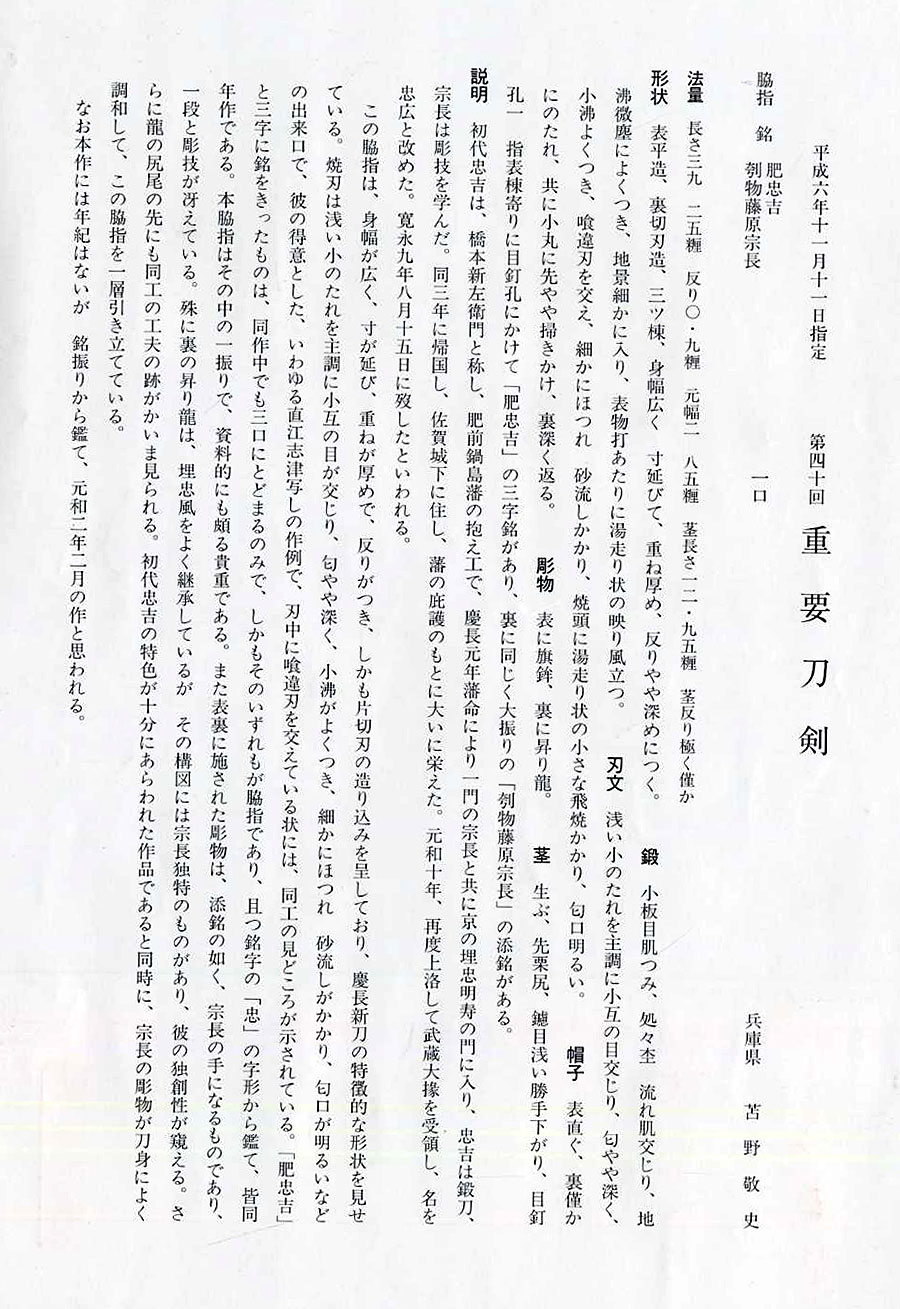
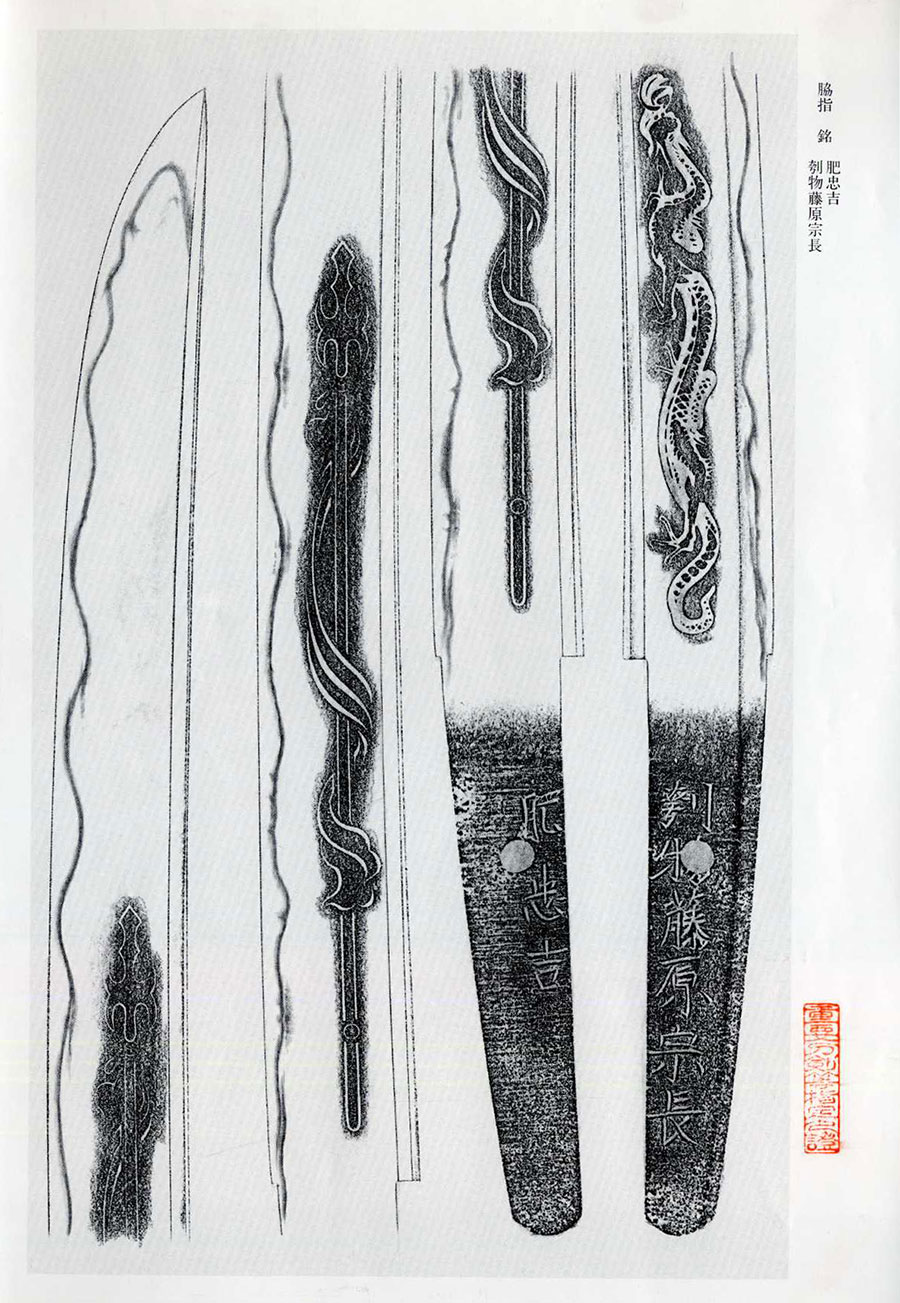
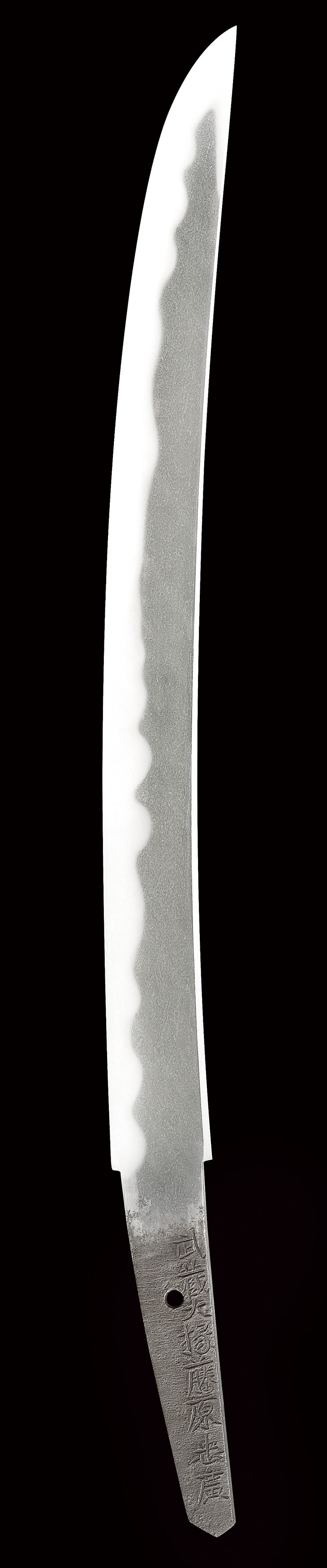
Jūyō-Tōken, 40th Session — Designated November 11, 1994 Wakizashi, mei: Hizen Tadakichi (肥忠吉) Measurements Nagasa 39.25 cm, sori 0.9 cm, motohaba 2.85 cm, nakago-nagasa 12.95 cm, nakago-sori extremely slight Description Keijō: One side (omote) is hira-zukuri; the reverse (ura) is kiriba-zukuri, giving a katakiriba construction; mitsu-mune; wide mihaba with slightly extended proportions, somewhat thick kasane, and rather deep sori. Kitae: Tight ko-itame-hada, with mokume and nagare-hada mixed in places; fine ji-nie densely adheres, with delicate chikei; around the omote monouchi there appears an utsuri-like aspect resembling yubashiri. Hamon: Shallow ko-notare as the main tone, with mixed ko-gunome; nioi is somewhat deep; ko-nie adheres well; includes kuichigai-ba, with fine hotsure and sunagashi; toward the yakigashira appear small tobiyaki resembling yubashiri; the nioiguchi is bright. Bōshi: Omote is straight; ura shows slight notare; both form ko-maru with the tip somewhat hakikake; on the ura the return is deep. Horimono: Omote: hata-hoko; ura: rising dragon. Nakago: Ubu; kurijiri; shallow katte-sagari yasurime; one mekugi-ana; on the sashi-omote, toward the mune and running into the vicinity of the peg hole, there is a three-character signature “肥忠吉”; on the reverse there is likewise a large supplementary inscription “刳物藤原宗長”. Artisan Hizen Tadakichi, first generation (Shodai) (肥前忠吉) Era Early Shintō; considered a work of Genna 2 (1616), 2nd month (inferred) Explanation The first-generation Tadakichi was known as Hashimoto Shinzaburō and served as a retained smith (kakae-kō) of the Nabeshima domain of Hizen. In Keichō 1 (1596), by domain order, he entered in Kyōto the school of Umetada Myōju together with a member of his lineage, Munenaga. Tadakichi studied forging, while Munenaga studied carving techniques. They returned to their home province in Keichō 3 (1598), took up residence in the castle town of Saga, and prospered greatly under the domain’s patronage. In Genna 10 (1624) he again went up to Kyōto, received the court title Musashi Daijō, and changed his name to Tadahiro. It is said that he died on the fifteenth day of the eighth month of Kan’ei 9 (1632). This wakizashi has a wide mihaba, slightly extended length, somewhat thick kasane, and noticeable sori; moreover, it displays a katakiriba form, thus presenting a characteristic shape of Keichō-era Shintō. The tempered edge is centered on shallow ko-notare mixed with ko-gunome, with somewhat deep nioi and well-adhering ko-nie, together with fine hotsure and sunagashi, and a bright nioiguchi. This workmanship represents an example of what Tadakichi especially excelled in—so-called “Naoe Shizu utsushi”—and the manner in which kuichigai-ba is interwoven within the ha highlights one of this smith’s chief points of interest. Works in which he cut the signature “肥忠吉” in three characters are limited, even within his oeuvre, to only three blades; moreover, all of them are wakizashi, and judging from the form of the character “忠,” they are all works of the same year. This wakizashi is one of those examples, and is also extremely valuable as documentary material. Furthermore, the carvings applied to both sides were executed by Munenaga, as indicated by the supplementary inscription, and his carving skill is exceptionally crisp. In particular, the rising dragon on the reverse strongly inherits the Umetada manner, yet the composition contains elements unique to Munenaga, allowing one to perceive his originality. One may also glimpse his ingenuity in the treatment of the very end of the dragon’s tail. This is a work in which the distinctive traits of the first-generation Tadakichi are fully manifested; at the same time, Munenaga’s carvings harmonize superbly with the blade and further enhance this wakizashi. Although this work bears no date inscription, judging from the manner of the signature, it is thought to have been made in the second month of Genna 2 (1616).
NihontoWatch MonNihontoWatchBETA
MarketAuctionsEncyclopedia
Swords›Hizen Tadayoshi›Tadayoshi›Juyo Wakizashi by Hizen Tadayoshi with Kurimono by Fujiwara Munenaga
wakizashiJūyō
Hizen Tadayoshi

Juyo Wakizashi by Hizen Tadayoshi with Kurimono by Fujiwara Munenaga

Edo · nagasa 39.25cm · sori 0.8cm

Price on request
Visit seller website →
Hizen Tadayoshi — 1 of 26
Hizen Tadayoshi — 2 of 26
Hizen Tadayoshi — 3 of 26
Hizen Tadayoshi — 4 of 26
Hizen Tadayoshi — 5 of 26
Hizen Tadayoshi — 6 of 26
Hizen Tadayoshi — 7 of 26
Hizen Tadayoshi — 8 of 26
Hizen Tadayoshi — 9 of 26
Hizen Tadayoshi — 10 of 26
Hizen Tadayoshi — 11 of 26
Hizen Tadayoshi — 12 of 26
Hizen Tadayoshi — 13 of 26
Hizen Tadayoshi — 14 of 26
Hizen Tadayoshi — 15 of 26
Hizen Tadayoshi — 16 of 26
Hizen Tadayoshi — 17 of 26
Hizen Tadayoshi — 18 of 26
Hizen Tadayoshi — 19 of 26
Hizen Tadayoshi — 20 of 26
Hizen Tadayoshi — 21 of 26
Hizen Tadayoshi — 22 of 26
Hizen Tadayoshi — 23 of 26
Hizen Tadayoshi — 24 of 26
Hizen Tadayoshi — 25 of 26
Hizen Tadayoshi — 26 of 26
1 / 26
1 / 26
Hizen Tadayoshi — 1 of 26Hizen Tadayoshi — 2 of 26Hizen Tadayoshi — 3 of 26Hizen Tadayoshi — 4 of 26Hizen Tadayoshi — 5 of 26Hizen Tadayoshi — 6 of 26Hizen Tadayoshi — 7 of 26Hizen Tadayoshi — 8 of 26Hizen Tadayoshi — 9 of 26Hizen Tadayoshi — 10 of 26Hizen Tadayoshi — 11 of 26Hizen Tadayoshi — 12 of 26Hizen Tadayoshi — 13 of 26Hizen Tadayoshi — 14 of 26Hizen Tadayoshi — 15 of 26Hizen Tadayoshi — 16 of 26Hizen Tadayoshi — 17 of 26Hizen Tadayoshi — 18 of 26Hizen Tadayoshi — 19 of 26Hizen Tadayoshi — 20 of 26Hizen Tadayoshi — 21 of 26Hizen Tadayoshi — 22 of 26Hizen Tadayoshi — 23 of 26Hizen Tadayoshi — 24 of 26Hizen Tadayoshi — 25 of 26Hizen Tadayoshi — 26 of 26
Measurements & details
Smith
Hizen Tadayoshi
Type
Wakizashi
School
Hizen Tadayoshi
Period
Around 1596–1632(Keicho)
Province
肥前
Measurements
Nagasa 39.25cmSori 0.8cmMotohaba 3cmSakihaba 1.84cmKasane 0.66cm
Description

The Hizen Tadayoshi sanji-mei is very famous, and since ancient times only three such swords have been known to exist: the one owned by Inukai Bokudo, its kage-uchi, and this sword. All three examples were crafted in Genna 5. Munenaga, along with Tadayoshi, became a disciple of Umetada Myoju, and the horimono on this blade is a magnificent example of Myoju’s direct style. This has been a famous sword since ancient times. Recorded in the Hizen To Taikan.

NBTHK Zufu Commentary

Juyo #40

AI translation — may contain errors

-, 40th Session — Designated November 11, 1994

, : Tadakichi (肥忠吉)

Measurements 39.25 cm, 0.9 cm, 2.85 cm, 12.95 cm, extremely slight

Description Keijō: One side () is ; the reverse () is , giving a construction; ; wide with slightly extended proportions, somewhat thick , and rather deep . : Tight , with and mixed in places; fine densely adheres, with delicate ; around the there appears an -like aspect resembling . : Shallow as the main tone, with mixed ; is somewhat deep; adheres well; includes , with fine and ; toward the appear small resembling ; the is bright. : is straight; shows slight ; both form with the tip somewhat ; on the the return is deep. : : hata-; : rising dragon. : ; ; shallow ; one ; on the , toward the and running into the vicinity of the peg hole, there is a three-character signature “肥忠吉”; on the reverse there is likewise a large supplementary inscription “刳物藤原宗長”.

Artisan Tadakichi, first generation () (肥前忠吉)

Era Early ; considered a work of Genna 2 (1616), 2nd month (inferred)

Explanation The first-generation Tadakichi was known as Hashimoto Shinzaburō and served as a retained smith (kakae-kō) of the Nabeshima domain of . In Keichō 1 (1596), by domain order, he entered in Kyōto the school of Myōju together with a member of his lineage, Munenaga. Tadakichi studied forging, while Munenaga studied carving techniques. They returned to their home province in Keichō 3 (1598), took up residence in the castle town of Saga, and prospered greatly under the domain’s patronage. In Genna 10 (1624) he again went up to Kyōto, received the court title Daijō, and changed his name to Tadahiro. It is said that he died on the fifteenth day of the eighth month of ’ei 9 (1632).

This has a wide , slightly extended length, somewhat thick , and noticeable ; moreover, it displays a form, thus presenting a characteristic shape of Keichō-era . The tempered edge is centered on shallow mixed with , with somewhat deep and well-adhering , together with fine and , and a bright . This workmanship represents an example of what Tadakichi especially excelled in—so-called “Naoe ”—and the manner in which is interwoven within the highlights one of this smith’s chief points of interest.

Works in which he cut the signature “肥忠吉” in three characters are limited, even within his oeuvre, to only three blades; moreover, all of them are , and judging from the form of the character “忠,” they are all works of the year. This is one of those examples, and is also extremely valuable as documentary material.

Furthermore, the carvings applied to both sides were executed by Munenaga, as indicated by the supplementary inscription, and his carving skill is exceptionally crisp. In particular, the rising dragon on the reverse strongly inherits the manner, yet the composition contains elements unique to Munenaga, allowing one to perceive his originality. One may also glimpse his ingenuity in the treatment of the very end of the dragon’s tail. This is a work in which the distinctive traits of the first-generation Tadakichi are fully manifested; at the time, Munenaga’s carvings harmonize superbly with the blade and further enhance this .

Although this work bears no date inscription, judging from the manner of the signature, it is thought to have been made in the second month of Genna 2 (1616).

About the maker

Tadayoshi

忠吉

Hizen (Tadayoshi) · Hizen · around 1596-1632

Fujishiro Sai-jo saku · Tōken Taikan top 5%

10 pieces on the market now

›

The first-generation Tadayoshi of Hizen, the published sources record, styled himself Hashimoto Shinzaemon and served as a retained smith of the Nabeshima of Hizen. By domain order in Keicho 1 (1596) he went up to Kyoto together with the carver Munenaga and entered the school of Umetada Myoju, where he studied sword forging while Munenaga learned carving; they returned to their province in Keicho 3 (1598), and Tadayoshi settled in the castle town below Saga, where under the domain's patronage the line flourished greatly. His dated work begins from the eighth month of Keicho 5 (1600) and runs to the eighth month of Kan'ei 9 (1632), the year he died, a working career the published sources reckon at thirty-two years. In Genna 10 (1624) he went up to Kyoto a second time, received the court title Musashi Daijo, and changed his name from Tadayoshi to Tadahiro, altering his clan name from Minamoto to Fujiwara. He is the founder of Hizen-to, and the school he raised under Nabeshima patronage came to dominate the sword-making of Kyushu.

His mainstay is a bright, tight suguha tempered upon the fine jigane that is the signature of Hizen work. The published sources describe it plainly: "his favored suguha is tempered upon a well-knit ko-itame, the distinctive jigane commonly called kome-nuka-hada, and in it he aimed at the manner of the Rai school"[[c:1]]. The temper is a chu-suguha or hiro-suguha carrying only a shallow notare, at times mixed with ko-gunome, into which ko-ashi and yo enter; the nioiguchi is deep with finely clustered ko-nie, and it tightens to a bright clarity. Yet, the same sources note, the work departs from the Rai originals it looks to: the nioiguchi is tighter and brighter, fine chikei enter the ji abundantly, and the forging "has rather more vigor than the Rai pieces"[[c:2]]. The temper and the steel together carry the recognition.

That steel is the heart of the matter. The forging is a dense, well-knit ko-itame, at times with mokume mixed in, over which ji-nie gathers as the finest particles and lies thickly; fine chikei enter intricately and the steel is notably clear. The published sources give it its name as a feature peculiar to his hand, the surface taking on the "distinctive kome-nuka-hada"[[c:3]], the fine, bright, rice-bran texture that no other school produces. Upon it the boshi runs straight and turns back in a quiet ko-maru, the regular finish of a Hizen point. This combination, the clear konuka-hada beneath a tight bright suguha, is what the published record returns to again and again as the founder's proper manner, the work that places his suguha at the head of the tradition.

His early years are another matter, and the published sources read them as a period of copies. The constant formula is repeated almost verbatim from blade to blade: "his early manner comprises a wide range, full of utsushi-mono"[[c:4]], naming Naoe-Shizu, old Yamato work, and the Rai and Kamakura masters. In the Naoe-Shizu vein he forges a ko-notare mixed with ko-gunome, ko-ashi entering and sunagashi running, the nioiguchi slightly tightened, a manner the sources say inherits the ko-notare that was Myoju's particular forte and is "commonly called Naoe-Shizu utsushi"[[c:5]]. In the old-Yamato vein the itame grows larger and flows toward the edge, kuichigaiba and nijuba mix in with hotsure and frequent sunagashi, and even the boshi finishes with a touch of hakikake; of one such piece the sources say it shows "the most archaic manner among Tadayoshi's works, with deep, lingering appeal"[[c:6]], the hakikake boshi standing as the exception to the rule that the Hizen point turns back in a quiet ko-maru. He admired the Kamakura tanto masters as well, above all Rai Kunimitsu, and copied the Bizen Kagemitsu on occasion, one katakiriba tanto being an utsushi of a Kagemitsu transmitted in the Nabeshima house.

The through-line of his career is the signature itself, which the published sources divide into three forms by period. He cut "Hizen no Kuni Tadayoshi" in five characters, the so-called five-character Tadayoshi mei; he signed in eight characters as "Hizen no Kuni junin Tadayoshi saku," the junin mei; and after the Musashi Daijo title of Genna 10 (1624) he used the "Musashi Daijo Tadahiro" signature, the rename being a single hand's chronology and not a change of person. The presentation pieces signed "Hizen no Kuni ju Fujiwara Tadahiro" without the title are the kenjo-mei, ordered by the Nabeshima, who held the title-signature unnecessary on a blade made for the house. The kiriba-zukuri pieces common in his Tadayoshi years, the sources note, become rare under the Tadahiro name. The mei is cut on the ura, the practice of Tadayoshi and his line; almost all of his recorded work is signed, 125 of 129 records carrying his hand, so the signature is itself part of the appraisal, though the five-character form, imitated by the later Tosa-no-kami and the third-generation Mutsu-no-kami, dates a piece only together with the rest of the workmanship.

From him descends the whole Hizen school. His son the second-generation Omi Daijo Tadahiro carried on the konuka-hada and the suguha to become the most prolific of the Hizen smiths, and the line continued through the third-generation Mutsu-no-kami Tadayoshi and the Tosa-no-kami branch, the published sources noting that the third generation in particular returned in style toward his grandfather the founder, especially accomplished in suguha and skilled also at choji-midare. Tadayoshi is Sai-jo saku in Fujishiro's grading. The weight of designation behind his name runs to one Important Cultural Property, ten Tokubetsu Juyo and a large body of Juyo, one hundred and eighteen blades in the Tokubetsu Juyo and Juyo tiers, with a single prewar Juyo Bijutsuhin piece and no National Treasures; one hundred and twenty-seven of his works survive with an official record. His blades carry a Nabeshima provenance and pass through notable hands, the recorded transmissions naming the Owari Tokugawa Family, the Satake Family and the Imperial Family among others, with a kinzogan cutting-test inscription on one and a Myoju soemei on another that documents his discipleship. The bulk of what survives is held in long-standing collections and institutions such as the Takamatsu Historical Museum, and most are kept rather than traded; one comes to open hands only from time to time, and as the founder's own work it is a landmark of the Hizen tradition when it does.

Historical importance

Where Tadayoshi stands among comparable artisans: across all of nihontō, and within tradition, era, and period. The tiers (Foremost · Leading · Major · Notable) weigh official designations from the NBTHK and Japan's Agency for Cultural Affairs, together with historical honors of lasting repute such as the Sansaku and Meibutsu-chō.

随一
Foremost
屈指
Leading
有数
Major
著名
Notable

Select a lens to see how it's measured.

Designation record
124 designated works
Jūyō Bunkazai
1
Jūyō Bijutsuhin
5
Gyobutsu (Imperial)
3
Tokubetsu Jūyō
9
Jūyō
106
10 works by Tadayoshi on the market→
Tadayoshi — full profileHizen (Tadayoshi) school

Dated Works

Years he was demonstrably active, proven by signed-and-dated blades

Active period
1600–1632Editorial estimate: 1596–1632
14 of 119 designated works carry a date
1600
1610
1620
1630
1640
About the school

Hizen Tadayoshi

肥前忠吉

Shinto · Hizen

114 pieces on the market now

›

The Hizen Tadayoshi school began with a single domain commission. In Keicho 1 (1596) the Nabeshima of Hizen ordered Hashimoto Shinzaemon, the smith who would sign Tadayoshi, up to Kyoto with the carver Munenaga; there he entered the gate of Umetada Myoju and studied forging while Munenaga learned the chisel. The two returned to the province in Keicho 3 (1598), and Tadayoshi settled in the castle town below Saga, where under the domain's patronage the line grew into the dominant sword-making house of Kyushu. Learn more →

27 recorded smiths510 designated works
Leading smiths
SmithEraDesignated
Tadayoshi忠吉1596-1632124
Tadayoshi忠吉1662-168159
Tadahiro忠廣1624-1693170
Masahiro正廣1624-165532
Tadakuni忠國1648-165232
Explore the Hizen Tadayoshi school →
NBTHK Certificate
Jūyō Tōken重要刀剣
Important Sword
›

A blade of top-grade workmanship and condition, formally judged to rank with a nationally recognized Important Art Object (Jūyō Bijutsuhin). Awarded only at the NBTHK’s competitive annual examination.

Of Japan’s roughly 2.5 million registered swords, only 12,307 (about 1 in 203) have ever attained Jūyō.

About the NBTHK›

The NBTHK (Nihon Bijutsu Tōken Hozon Kyōkai, the Society for the Preservation of Japanese Art Swords) is a public-interest incorporated foundation founded in 1948 and supervised by Japan’s Agency for Cultural Affairs (Bunkachō); it is based at the Japanese Sword Museum in Tokyo. Its expert panels physically examine each submitted work (shinsa) and issue a certificate (kanteishō) ranking it by artistic and historical merit. NBTHK papers are the most widely recognized standard of authentication for Japanese swords and fittings.

NBTHK official site→
Seller
N
Nipponto
Established 1953 · 73 yrs on the market
🇯🇵Ships from Japan
›
✓Verified dealernipponto.co.jp
✓Ships worldwide✓English supportPayPalCredit card
Return policy

For returns due to customer circumstances, the cost is the customer's responsibility. For returns due to our mis-shipment or a defective item, we bear the cost.

View all of Nipponto’s listings→View this item on the dealer’s site→

More works by Hizen Tadayoshi

View all →
Katanahanbai
Tokuho
Wakizashi - Tokuho - by Hizen Tadayoshi - Hizen Kuni Ju Tadayoshi SakuWakizashi - Tokuho - by Hizen Tadayoshi - Hizen Kuni Ju Tadayoshi Saku

Wakizashi

ByHizen Tadayoshi
¥1,650,000
Sanmei
Tokuho
Tanto - Tokuho - by Hizen Tadayoshi - Tanto signed Musashi Daijo Fujiwara TADAHIRO with Black Ro-iro Lacquered Scabbard Aikuchi-style Tanto KoshiraeTanto - Tokuho - by Hizen Tadayoshi - Tanto signed Musashi Daijo Fujiwara TADAHIRO with Black Ro-iro Lacquered Scabbard Aikuchi-style Tanto Koshirae

Tantō

ByHizen Tadayoshi
¥2,000,000
Aoi Art
Tokuho
Katana - Tokuho - by Hizen Tadayoshi - Hizen Koku TadayoshiKatana - Tokuho - by Hizen Tadayoshi - Hizen Koku Tadayoshi

Katana

ByHizen Tadayoshi
¥2,500,000
Toyuukai
Tokuho
Katana - Tokuho - by Hizen Tadayoshi - Hizenkoku Junin Tadayoshi - NBTHK Tokubetsu HozonKatana - Tokuho - by Hizen Tadayoshi - Hizenkoku Junin Tadayoshi - NBTHK Tokubetsu Hozon

Katana

ByHizen Tadayoshi
¥4,800,000
Katanahanbai
Jūyō
Katana - Jūyō - by Hizen Tadayoshi - Hizen Kuni TadayoshiKatana - Jūyō - by Hizen Tadayoshi - Hizen Kuni Tadayoshi

Katana

ByHizen Tadayoshi
Ask
Choshuya
Tokuho
Wakizashi - Tokuho - by Hizen Tadayoshi - Hizen Kuni ju Fujiwara TadahiroWakizashi - Tokuho - by Hizen Tadayoshi - Hizen Kuni ju Fujiwara Tadahiro

Wakizashi

ByHizen Tadayoshi
Ask
Nihonto Australia
Hozon
Wakizashi - Hozon - by Hizen Tadayoshi - Tadahiro with NBTHK Hozon CertificateWakizashi - Hozon - by Hizen Tadayoshi - Tadahiro with NBTHK Hozon Certificate

Wakizashi

ByHizen Tadayoshi
Ask
Choshuya
Tanto - by Hizen Tadayoshi - Musashi Daijo Fujiwara TadahiroTanto - by Hizen Tadayoshi - Musashi Daijo Fujiwara Tadahiro

Tantō

ByHizen Tadayoshi
Ask

Previously sold by Hizen Tadayoshi

Choshuya
Wakizashi - by Hizen Tadayoshi - Hizen Kuni Junin Tadayoshi SakuWakizashi - by Hizen Tadayoshi - Hizen Kuni Junin Tadayoshi Saku
Sold

Wakizashi

ByHizen Tadayoshi
SOLD
Iida Koendo
Tokuho
Katana - Tokuho - by Hizen Tadayoshi - Hizen TadayoshiKatana - Tokuho - by Hizen Tadayoshi - Hizen Tadayoshi
Sold

Katana

ByHizen Tadayoshi
SOLD
Tokka Biz
Tokuho
Wakizashi - Tokuho - by Hizen Tadayoshi - Hizen koku junin Tadayoshi sakuWakizashi - Tokuho - by Hizen Tadayoshi - Hizen koku junin Tadayoshi saku
Sold

Wakizashi

ByHizen Tadayoshi
SOLD
Touken Komachi
Tokuho
Katana - Tokuho - by Hizen Tadayoshi - Katana with Shirasaya and KoshiraeKatana - Tokuho - by Hizen Tadayoshi - Katana with Shirasaya and Koshirae
Sold

Katana

ByHizen Tadayoshi
SOLD
Token-Net
Tokuho
Wakizashi - Tokuho - by Hizen Tadayoshi - Hizen Kuni Tadayoshi (Hizen) (Saikaido)Wakizashi - Tokuho - by Hizen Tadayoshi - Hizen Kuni Tadayoshi (Hizen) (Saikaido)
Sold

Wakizashi

ByHizen Tadayoshi
SOLD
Choshuya
Wakizashi - by Hizen Tadayoshi - Musashi Daijo Fujiwara Tadahiro (Saijo Owazamono)Wakizashi - by Hizen Tadayoshi - Musashi Daijo Fujiwara Tadahiro (Saijo Owazamono)
Sold

Wakizashi

ByHizen Tadayoshi
SOLD
Choshuya
Katana - by Hizen Tadayoshi - Mumei Hizen Kuni Tadayoshi (1st Gen.) (Saijo O Wazamono)Katana - by Hizen Tadayoshi - Mumei Hizen Kuni Tadayoshi (1st Gen.) (Saijo O Wazamono)
Sold

Katana

ByHizen Tadayoshi
SOLD
Choshuya
Wakizashi - by Hizen Tadayoshi - Musashi Daijo Fujiwara Tadahiro (Saijo Owazamono)Wakizashi - by Hizen Tadayoshi - Musashi Daijo Fujiwara Tadahiro (Saijo Owazamono)
Sold

Wakizashi

ByHizen Tadayoshi
SOLD

More from the Hizen Tadayoshi school

View all →
Aoi Art
Tokuho
Wakizashi - Tokuho - by Tadayoshi Masahiro - Hizen Koku Kawachi no Kami Fujiwara Masahiro - Tested-cutting inscription from Kanbun 6 (1666)Wakizashi - Tokuho - by Tadayoshi Masahiro - Hizen Koku Kawachi no Kami Fujiwara Masahiro - Tested-cutting inscription from Kanbun 6 (1666)

Wakizashi

ByTadayoshi Masahiro
Starting Bid¥3,000,000
Tozando
Tokuho
Katana - Tokuho - by Hizen Tadahiro - Japanese Katana, signed Hizen no Kuni jū Ōmi Daijō Fujiwara Tadahiro — early Edo period — NBTHK Tokubetsu Hozon TōkenKatana - Tokuho - by Hizen Tadahiro - Japanese Katana, signed Hizen no Kuni jū Ōmi Daijō Fujiwara Tadahiro — early Edo period — NBTHK Tokubetsu Hozon Tōken

Katana

ByHizen Tadahiro
¥3,800,000
Katanahanbai
Tokuho
Wakizashi - Tokuho - by Hizen Tadayoshi School - Musashidaijo Fujiwara TadahiroWakizashi - Tokuho - by Hizen Tadayoshi School - Musashidaijo Fujiwara Tadahiro

Wakizashi

ByHizen Tadayoshi School
¥1,600,000
Toukentakarado
Jūyō
Katana - Jūyō - by Hizen Tadahiro - Hizen no Kuni-jū Ōmi Daijō Fujiwara TadahiroKatana - Jūyō - by Hizen Tadahiro - Hizen no Kuni-jū Ōmi Daijō Fujiwara Tadahiro

Katana

ByHizen Tadahiro
Ask
Swords of Japan
Tokuho
Wakizashi - Tokuho - by Tadayoshi Masahiro - Kawachi no Kami MasahiroWakizashi - Tokuho - by Tadayoshi Masahiro - Kawachi no Kami Masahiro

Wakizashi

ByTadayoshi Masahiro
¥3,950
Aoi Art
Tokuho
Katana - Tokuho - by Hizen Tadahiro - Hizen no Kuni Ju Omi Daijo Fujiwara TadahiroKatana - Tokuho - by Hizen Tadahiro - Hizen no Kuni Ju Omi Daijo Fujiwara Tadahiro

Katana

ByHizen Tadahiro
¥1,100,000
Choshuya
Tokuho
Wakizashi - Tokuho - by Hizen Tadayoshi - Hira-zukuri Wakizashi: Omi Daijo Fujiwara no TadahiroWakizashi - Tokuho - by Hizen Tadayoshi - Hira-zukuri Wakizashi: Omi Daijo Fujiwara no Tadahiro

Wakizashi

ByHizen Tadayoshi
¥1,200,000
Choshuya
Jūyō
Katana - Jūyō - by Tadayoshi Masahiro - Signed. Hizen no kuni Kawachi daijo Fujiwara no MASAHIRO (Wazamono)Katana - Jūyō - by Tadayoshi Masahiro - Signed. Hizen no kuni Kawachi daijo Fujiwara no MASAHIRO (Wazamono)

Katana

ByTadayoshi Masahiro
¥7,500,000

Swords

  • Katana
  • Wakizashi
  • Tantō
  • Tachi
  • Naginata
  • Yari

Fittings

  • Tsuba
  • Fuchi-Kashira
  • Kozuka
  • Menuki

By Certification

  • Tokujū
  • Jūyō
  • Tokuho
  • Hozon

Resources

  • Dealer Directory
  • Artist Directory
  • Glossary
  • Browse All
Nihontowatch© 2026
TermsPrivacyCookiesAbout

Description

The Hizen Tadayoshi sanji-mei is very famous, and since ancient times only three such swords have been known to exist: the one owned by Inukai Bokudo, its kage-uchi, and this sword. All three examples were crafted in Genna 5. Munenaga, along with Tadayoshi, became a disciple of Umetada Myoju, and the horimono on this blade is a magnificent example of Myoju’s direct style. This has been a famous sword since ancient times. Recorded in the Hizen To Taikan.

NBTHK Setsumei

Jūyō-Tōken, 40th Session — Designated November 11, 1994 Wakizashi, mei: Hizen Tadakichi (肥忠吉) Measurements Nagasa 39.25 cm, sori 0.9 cm, motohaba 2.85 cm, nakago-nagasa 12.95 cm, nakago-sori extremely slight Description Keijō: One side (omote) is hira-zukuri; the reverse (ura) is kiriba-zukuri, giving a katakiriba construction; mitsu-mune; wide mihaba with slightly extended proportions, somewhat thick kasane, and rather deep sori. Kitae: Tight ko-itame-hada, with mokume and nagare-hada mixed in places; fine ji-nie densely adheres, with delicate chikei; around the omote monouchi there appears an utsuri-like aspect resembling yubashiri. Hamon: Shallow ko-notare as the main tone, with mixed ko-gunome; nioi is somewhat deep; ko-nie adheres well; includes kuichigai-ba, with fine hotsure and sunagashi; toward the yakigashira appear small tobiyaki resembling yubashiri; the nioiguchi is bright. Bōshi: Omote is straight; ura shows slight notare; both form ko-maru with the tip somewhat hakikake; on the ura the return is deep. Horimono: Omote: hata-hoko; ura: rising dragon. Nakago: Ubu; kurijiri; shallow katte-sagari yasurime; one mekugi-ana; on the sashi-omote, toward the mune and running into the vicinity of the peg hole, there is a three-character signature “肥忠吉”; on the reverse there is likewise a large supplementary inscription “刳物藤原宗長”. Artisan Hizen Tadakichi, first generation (Shodai) (肥前忠吉) Era Early Shintō; considered a work of Genna 2 (1616), 2nd month (inferred) Explanation The first-generation Tadakichi was known as Hashimoto Shinzaburō and served as a retained smith (kakae-kō) of the Nabeshima domain of Hizen. In Keichō 1 (1596), by domain order, he entered in Kyōto the school of Umetada Myōju together with a member of his lineage, Munenaga. Tadakichi studied forging, while Munenaga studied carving techniques. They returned to their home province in Keichō 3 (1598), took up residence in the castle town of Saga, and prospered greatly under the domain’s patronage. In Genna 10 (1624) he again went up to Kyōto, received the court title Musashi Daijō, and changed his name to Tadahiro. It is said that he died on the fifteenth day of the eighth month of Kan’ei 9 (1632). This wakizashi has a wide mihaba, slightly extended length, somewhat thick kasane, and noticeable sori; moreover, it displays a katakiriba form, thus presenting a characteristic shape of Keichō-era Shintō. The tempered edge is centered on shallow ko-notare mixed with ko-gunome, with somewhat deep nioi and well-adhering ko-nie, together with fine hotsure and sunagashi, and a bright nioiguchi. This workmanship represents an example of what Tadakichi especially excelled in—so-called “Naoe Shizu utsushi”—and the manner in which kuichigai-ba is interwoven within the ha highlights one of this smith’s chief points of interest. Works in which he cut the signature “肥忠吉” in three characters are limited, even within his oeuvre, to only three blades; moreover, all of them are wakizashi, and judging from the form of the character “忠,” they are all works of the same year. This wakizashi is one of those examples, and is also extremely valuable as documentary material. Furthermore, the carvings applied to both sides were executed by Munenaga, as indicated by the supplementary inscription, and his carving skill is exceptionally crisp. In particular, the rising dragon on the reverse strongly inherits the Umetada manner, yet the composition contains elements unique to Munenaga, allowing one to perceive his originality. One may also glimpse his ingenuity in the treatment of the very end of the dragon’s tail. This is a work in which the distinctive traits of the first-generation Tadakichi are fully manifested; at the same time, Munenaga’s carvings harmonize superbly with the blade and further enhance this wakizashi. Although this work bears no date inscription, judging from the manner of the signature, it is thought to have been made in the second month of Genna 2 (1616).
NihontoWatch MonNihontoWatchBETA
MarketAuctionsEncyclopedia
Swords›Hizen Tadayoshi›Tadayoshi›Juyo Wakizashi by Hizen Tadayoshi with Kurimono by Fujiwara Munenaga
wakizashiJūyō
Hizen Tadayoshi

Juyo Wakizashi by Hizen Tadayoshi with Kurimono by Fujiwara Munenaga

Edo · nagasa 39.25cm · sori 0.8cm

Price on request
Visit seller website →
Hizen Tadayoshi — 1 of 26
Hizen Tadayoshi — 2 of 26
Hizen Tadayoshi — 3 of 26
Hizen Tadayoshi — 4 of 26
Hizen Tadayoshi — 5 of 26
Hizen Tadayoshi — 6 of 26
Hizen Tadayoshi — 7 of 26
Hizen Tadayoshi — 8 of 26
Hizen Tadayoshi — 9 of 26
Hizen Tadayoshi — 10 of 26
Hizen Tadayoshi — 11 of 26
Hizen Tadayoshi — 12 of 26
Hizen Tadayoshi — 13 of 26
Hizen Tadayoshi — 14 of 26
Hizen Tadayoshi — 15 of 26
Hizen Tadayoshi — 16 of 26
Hizen Tadayoshi — 17 of 26
Hizen Tadayoshi — 18 of 26
Hizen Tadayoshi — 19 of 26
Hizen Tadayoshi — 20 of 26
Hizen Tadayoshi — 21 of 26
Hizen Tadayoshi — 22 of 26
Hizen Tadayoshi — 23 of 26
Hizen Tadayoshi — 24 of 26
Hizen Tadayoshi — 25 of 26
Hizen Tadayoshi — 26 of 26
1 / 26
1 / 26
Hizen Tadayoshi — 1 of 26Hizen Tadayoshi — 2 of 26Hizen Tadayoshi — 3 of 26Hizen Tadayoshi — 4 of 26Hizen Tadayoshi — 5 of 26Hizen Tadayoshi — 6 of 26Hizen Tadayoshi — 7 of 26Hizen Tadayoshi — 8 of 26Hizen Tadayoshi — 9 of 26Hizen Tadayoshi — 10 of 26Hizen Tadayoshi — 11 of 26Hizen Tadayoshi — 12 of 26Hizen Tadayoshi — 13 of 26Hizen Tadayoshi — 14 of 26Hizen Tadayoshi — 15 of 26Hizen Tadayoshi — 16 of 26Hizen Tadayoshi — 17 of 26Hizen Tadayoshi — 18 of 26Hizen Tadayoshi — 19 of 26Hizen Tadayoshi — 20 of 26Hizen Tadayoshi — 21 of 26Hizen Tadayoshi — 22 of 26Hizen Tadayoshi — 23 of 26Hizen Tadayoshi — 24 of 26Hizen Tadayoshi — 25 of 26Hizen Tadayoshi — 26 of 26
Measurements & details
Smith
Hizen Tadayoshi
Type
Wakizashi
School
Hizen Tadayoshi
Period
Around 1596–1632(Keicho)
Province
肥前
Measurements
Nagasa 39.25cmSori 0.8cmMotohaba 3cmSakihaba 1.84cmKasane 0.66cm
Description

The Hizen Tadayoshi sanji-mei is very famous, and since ancient times only three such swords have been known to exist: the one owned by Inukai Bokudo, its kage-uchi, and this sword. All three examples were crafted in Genna 5. Munenaga, along with Tadayoshi, became a disciple of Umetada Myoju, and the horimono on this blade is a magnificent example of Myoju’s direct style. This has been a famous sword since ancient times. Recorded in the Hizen To Taikan.

NBTHK Zufu Commentary

Juyo #40

AI translation — may contain errors

-, 40th Session — Designated November 11, 1994

, : Tadakichi (肥忠吉)

Measurements 39.25 cm, 0.9 cm, 2.85 cm, 12.95 cm, extremely slight

Description Keijō: One side () is ; the reverse () is , giving a construction; ; wide with slightly extended proportions, somewhat thick , and rather deep . : Tight , with and mixed in places; fine densely adheres, with delicate ; around the there appears an -like aspect resembling . : Shallow as the main tone, with mixed ; is somewhat deep; adheres well; includes , with fine and ; toward the appear small resembling ; the is bright. : is straight; shows slight ; both form with the tip somewhat ; on the the return is deep. : : hata-; : rising dragon. : ; ; shallow ; one ; on the , toward the and running into the vicinity of the peg hole, there is a three-character signature “肥忠吉”; on the reverse there is likewise a large supplementary inscription “刳物藤原宗長”.

Artisan Tadakichi, first generation () (肥前忠吉)

Era Early ; considered a work of Genna 2 (1616), 2nd month (inferred)

Explanation The first-generation Tadakichi was known as Hashimoto Shinzaburō and served as a retained smith (kakae-kō) of the Nabeshima domain of . In Keichō 1 (1596), by domain order, he entered in Kyōto the school of Myōju together with a member of his lineage, Munenaga. Tadakichi studied forging, while Munenaga studied carving techniques. They returned to their home province in Keichō 3 (1598), took up residence in the castle town of Saga, and prospered greatly under the domain’s patronage. In Genna 10 (1624) he again went up to Kyōto, received the court title Daijō, and changed his name to Tadahiro. It is said that he died on the fifteenth day of the eighth month of ’ei 9 (1632).

This has a wide , slightly extended length, somewhat thick , and noticeable ; moreover, it displays a form, thus presenting a characteristic shape of Keichō-era . The tempered edge is centered on shallow mixed with , with somewhat deep and well-adhering , together with fine and , and a bright . This workmanship represents an example of what Tadakichi especially excelled in—so-called “Naoe ”—and the manner in which is interwoven within the highlights one of this smith’s chief points of interest.

Works in which he cut the signature “肥忠吉” in three characters are limited, even within his oeuvre, to only three blades; moreover, all of them are , and judging from the form of the character “忠,” they are all works of the year. This is one of those examples, and is also extremely valuable as documentary material.

Furthermore, the carvings applied to both sides were executed by Munenaga, as indicated by the supplementary inscription, and his carving skill is exceptionally crisp. In particular, the rising dragon on the reverse strongly inherits the manner, yet the composition contains elements unique to Munenaga, allowing one to perceive his originality. One may also glimpse his ingenuity in the treatment of the very end of the dragon’s tail. This is a work in which the distinctive traits of the first-generation Tadakichi are fully manifested; at the time, Munenaga’s carvings harmonize superbly with the blade and further enhance this .

Although this work bears no date inscription, judging from the manner of the signature, it is thought to have been made in the second month of Genna 2 (1616).

About the maker

Tadayoshi

忠吉

Hizen (Tadayoshi) · Hizen · around 1596-1632

Fujishiro Sai-jo saku · Tōken Taikan top 5%

10 pieces on the market now

›

The first-generation Tadayoshi of Hizen, the published sources record, styled himself Hashimoto Shinzaemon and served as a retained smith of the Nabeshima of Hizen. By domain order in Keicho 1 (1596) he went up to Kyoto together with the carver Munenaga and entered the school of Umetada Myoju, where he studied sword forging while Munenaga learned carving; they returned to their province in Keicho 3 (1598), and Tadayoshi settled in the castle town below Saga, where under the domain's patronage the line flourished greatly. His dated work begins from the eighth month of Keicho 5 (1600) and runs to the eighth month of Kan'ei 9 (1632), the year he died, a working career the published sources reckon at thirty-two years. In Genna 10 (1624) he went up to Kyoto a second time, received the court title Musashi Daijo, and changed his name from Tadayoshi to Tadahiro, altering his clan name from Minamoto to Fujiwara. He is the founder of Hizen-to, and the school he raised under Nabeshima patronage came to dominate the sword-making of Kyushu.

His mainstay is a bright, tight suguha tempered upon the fine jigane that is the signature of Hizen work. The published sources describe it plainly: "his favored suguha is tempered upon a well-knit ko-itame, the distinctive jigane commonly called kome-nuka-hada, and in it he aimed at the manner of the Rai school"[[c:1]]. The temper is a chu-suguha or hiro-suguha carrying only a shallow notare, at times mixed with ko-gunome, into which ko-ashi and yo enter; the nioiguchi is deep with finely clustered ko-nie, and it tightens to a bright clarity. Yet, the same sources note, the work departs from the Rai originals it looks to: the nioiguchi is tighter and brighter, fine chikei enter the ji abundantly, and the forging "has rather more vigor than the Rai pieces"[[c:2]]. The temper and the steel together carry the recognition.

That steel is the heart of the matter. The forging is a dense, well-knit ko-itame, at times with mokume mixed in, over which ji-nie gathers as the finest particles and lies thickly; fine chikei enter intricately and the steel is notably clear. The published sources give it its name as a feature peculiar to his hand, the surface taking on the "distinctive kome-nuka-hada"[[c:3]], the fine, bright, rice-bran texture that no other school produces. Upon it the boshi runs straight and turns back in a quiet ko-maru, the regular finish of a Hizen point. This combination, the clear konuka-hada beneath a tight bright suguha, is what the published record returns to again and again as the founder's proper manner, the work that places his suguha at the head of the tradition.

His early years are another matter, and the published sources read them as a period of copies. The constant formula is repeated almost verbatim from blade to blade: "his early manner comprises a wide range, full of utsushi-mono"[[c:4]], naming Naoe-Shizu, old Yamato work, and the Rai and Kamakura masters. In the Naoe-Shizu vein he forges a ko-notare mixed with ko-gunome, ko-ashi entering and sunagashi running, the nioiguchi slightly tightened, a manner the sources say inherits the ko-notare that was Myoju's particular forte and is "commonly called Naoe-Shizu utsushi"[[c:5]]. In the old-Yamato vein the itame grows larger and flows toward the edge, kuichigaiba and nijuba mix in with hotsure and frequent sunagashi, and even the boshi finishes with a touch of hakikake; of one such piece the sources say it shows "the most archaic manner among Tadayoshi's works, with deep, lingering appeal"[[c:6]], the hakikake boshi standing as the exception to the rule that the Hizen point turns back in a quiet ko-maru. He admired the Kamakura tanto masters as well, above all Rai Kunimitsu, and copied the Bizen Kagemitsu on occasion, one katakiriba tanto being an utsushi of a Kagemitsu transmitted in the Nabeshima house.

The through-line of his career is the signature itself, which the published sources divide into three forms by period. He cut "Hizen no Kuni Tadayoshi" in five characters, the so-called five-character Tadayoshi mei; he signed in eight characters as "Hizen no Kuni junin Tadayoshi saku," the junin mei; and after the Musashi Daijo title of Genna 10 (1624) he used the "Musashi Daijo Tadahiro" signature, the rename being a single hand's chronology and not a change of person. The presentation pieces signed "Hizen no Kuni ju Fujiwara Tadahiro" without the title are the kenjo-mei, ordered by the Nabeshima, who held the title-signature unnecessary on a blade made for the house. The kiriba-zukuri pieces common in his Tadayoshi years, the sources note, become rare under the Tadahiro name. The mei is cut on the ura, the practice of Tadayoshi and his line; almost all of his recorded work is signed, 125 of 129 records carrying his hand, so the signature is itself part of the appraisal, though the five-character form, imitated by the later Tosa-no-kami and the third-generation Mutsu-no-kami, dates a piece only together with the rest of the workmanship.

From him descends the whole Hizen school. His son the second-generation Omi Daijo Tadahiro carried on the konuka-hada and the suguha to become the most prolific of the Hizen smiths, and the line continued through the third-generation Mutsu-no-kami Tadayoshi and the Tosa-no-kami branch, the published sources noting that the third generation in particular returned in style toward his grandfather the founder, especially accomplished in suguha and skilled also at choji-midare. Tadayoshi is Sai-jo saku in Fujishiro's grading. The weight of designation behind his name runs to one Important Cultural Property, ten Tokubetsu Juyo and a large body of Juyo, one hundred and eighteen blades in the Tokubetsu Juyo and Juyo tiers, with a single prewar Juyo Bijutsuhin piece and no National Treasures; one hundred and twenty-seven of his works survive with an official record. His blades carry a Nabeshima provenance and pass through notable hands, the recorded transmissions naming the Owari Tokugawa Family, the Satake Family and the Imperial Family among others, with a kinzogan cutting-test inscription on one and a Myoju soemei on another that documents his discipleship. The bulk of what survives is held in long-standing collections and institutions such as the Takamatsu Historical Museum, and most are kept rather than traded; one comes to open hands only from time to time, and as the founder's own work it is a landmark of the Hizen tradition when it does.

Historical importance

Where Tadayoshi stands among comparable artisans: across all of nihontō, and within tradition, era, and period. The tiers (Foremost · Leading · Major · Notable) weigh official designations from the NBTHK and Japan's Agency for Cultural Affairs, together with historical honors of lasting repute such as the Sansaku and Meibutsu-chō.

随一
Foremost
屈指
Leading
有数
Major
著名
Notable

Select a lens to see how it's measured.

Designation record
124 designated works
Jūyō Bunkazai
1
Jūyō Bijutsuhin
5
Gyobutsu (Imperial)
3
Tokubetsu Jūyō
9
Jūyō
106
10 works by Tadayoshi on the market→
Tadayoshi — full profileHizen (Tadayoshi) school

Dated Works

Years he was demonstrably active, proven by signed-and-dated blades

Active period
1600–1632Editorial estimate: 1596–1632
14 of 119 designated works carry a date
1600
1610
1620
1630
1640
About the school

Hizen Tadayoshi

肥前忠吉

Shinto · Hizen

114 pieces on the market now

›

The Hizen Tadayoshi school began with a single domain commission. In Keicho 1 (1596) the Nabeshima of Hizen ordered Hashimoto Shinzaemon, the smith who would sign Tadayoshi, up to Kyoto with the carver Munenaga; there he entered the gate of Umetada Myoju and studied forging while Munenaga learned the chisel. The two returned to the province in Keicho 3 (1598), and Tadayoshi settled in the castle town below Saga, where under the domain's patronage the line grew into the dominant sword-making house of Kyushu. Learn more →

27 recorded smiths510 designated works
Leading smiths
SmithEraDesignated
Tadayoshi忠吉1596-1632124
Tadayoshi忠吉1662-168159
Tadahiro忠廣1624-1693170
Masahiro正廣1624-165532
Tadakuni忠國1648-165232
Explore the Hizen Tadayoshi school →
NBTHK Certificate
Jūyō Tōken重要刀剣
Important Sword
›

A blade of top-grade workmanship and condition, formally judged to rank with a nationally recognized Important Art Object (Jūyō Bijutsuhin). Awarded only at the NBTHK’s competitive annual examination.

Of Japan’s roughly 2.5 million registered swords, only 12,307 (about 1 in 203) have ever attained Jūyō.

About the NBTHK›

The NBTHK (Nihon Bijutsu Tōken Hozon Kyōkai, the Society for the Preservation of Japanese Art Swords) is a public-interest incorporated foundation founded in 1948 and supervised by Japan’s Agency for Cultural Affairs (Bunkachō); it is based at the Japanese Sword Museum in Tokyo. Its expert panels physically examine each submitted work (shinsa) and issue a certificate (kanteishō) ranking it by artistic and historical merit. NBTHK papers are the most widely recognized standard of authentication for Japanese swords and fittings.

NBTHK official site→
Seller
N
Nipponto
Established 1953 · 73 yrs on the market
🇯🇵Ships from Japan
›
✓Verified dealernipponto.co.jp
✓Ships worldwide✓English supportPayPalCredit card
Return policy

For returns due to customer circumstances, the cost is the customer's responsibility. For returns due to our mis-shipment or a defective item, we bear the cost.

View all of Nipponto’s listings→View this item on the dealer’s site→

More works by Hizen Tadayoshi

View all →
Katanahanbai
Tokuho
Wakizashi - Tokuho - by Hizen Tadayoshi - Hizen Kuni Ju Tadayoshi SakuWakizashi - Tokuho - by Hizen Tadayoshi - Hizen Kuni Ju Tadayoshi Saku

Wakizashi

ByHizen Tadayoshi
¥1,650,000
Sanmei
Tokuho
Tanto - Tokuho - by Hizen Tadayoshi - Tanto signed Musashi Daijo Fujiwara TADAHIRO with Black Ro-iro Lacquered Scabbard Aikuchi-style Tanto KoshiraeTanto - Tokuho - by Hizen Tadayoshi - Tanto signed Musashi Daijo Fujiwara TADAHIRO with Black Ro-iro Lacquered Scabbard Aikuchi-style Tanto Koshirae

Tantō

ByHizen Tadayoshi
¥2,000,000
Aoi Art
Tokuho
Katana - Tokuho - by Hizen Tadayoshi - Hizen Koku TadayoshiKatana - Tokuho - by Hizen Tadayoshi - Hizen Koku Tadayoshi

Katana

ByHizen Tadayoshi
¥2,500,000
Toyuukai
Tokuho
Katana - Tokuho - by Hizen Tadayoshi - Hizenkoku Junin Tadayoshi - NBTHK Tokubetsu HozonKatana - Tokuho - by Hizen Tadayoshi - Hizenkoku Junin Tadayoshi - NBTHK Tokubetsu Hozon

Katana

ByHizen Tadayoshi
¥4,800,000
Katanahanbai
Jūyō
Katana - Jūyō - by Hizen Tadayoshi - Hizen Kuni TadayoshiKatana - Jūyō - by Hizen Tadayoshi - Hizen Kuni Tadayoshi

Katana

ByHizen Tadayoshi
Ask
Choshuya
Tokuho
Wakizashi - Tokuho - by Hizen Tadayoshi - Hizen Kuni ju Fujiwara TadahiroWakizashi - Tokuho - by Hizen Tadayoshi - Hizen Kuni ju Fujiwara Tadahiro

Wakizashi

ByHizen Tadayoshi
Ask
Nihonto Australia
Hozon
Wakizashi - Hozon - by Hizen Tadayoshi - Tadahiro with NBTHK Hozon CertificateWakizashi - Hozon - by Hizen Tadayoshi - Tadahiro with NBTHK Hozon Certificate

Wakizashi

ByHizen Tadayoshi
Ask
Choshuya
Tanto - by Hizen Tadayoshi - Musashi Daijo Fujiwara TadahiroTanto - by Hizen Tadayoshi - Musashi Daijo Fujiwara Tadahiro

Tantō

ByHizen Tadayoshi
Ask

Previously sold by Hizen Tadayoshi

Choshuya
Wakizashi - by Hizen Tadayoshi - Hizen Kuni Junin Tadayoshi SakuWakizashi - by Hizen Tadayoshi - Hizen Kuni Junin Tadayoshi Saku
Sold

Wakizashi

ByHizen Tadayoshi
SOLD
Iida Koendo
Tokuho
Katana - Tokuho - by Hizen Tadayoshi - Hizen TadayoshiKatana - Tokuho - by Hizen Tadayoshi - Hizen Tadayoshi
Sold

Katana

ByHizen Tadayoshi
SOLD
Tokka Biz
Tokuho
Wakizashi - Tokuho - by Hizen Tadayoshi - Hizen koku junin Tadayoshi sakuWakizashi - Tokuho - by Hizen Tadayoshi - Hizen koku junin Tadayoshi saku
Sold

Wakizashi

ByHizen Tadayoshi
SOLD
Touken Komachi
Tokuho
Katana - Tokuho - by Hizen Tadayoshi - Katana with Shirasaya and KoshiraeKatana - Tokuho - by Hizen Tadayoshi - Katana with Shirasaya and Koshirae
Sold

Katana

ByHizen Tadayoshi
SOLD
Token-Net
Tokuho
Wakizashi - Tokuho - by Hizen Tadayoshi - Hizen Kuni Tadayoshi (Hizen) (Saikaido)Wakizashi - Tokuho - by Hizen Tadayoshi - Hizen Kuni Tadayoshi (Hizen) (Saikaido)
Sold

Wakizashi

ByHizen Tadayoshi
SOLD
Choshuya
Wakizashi - by Hizen Tadayoshi - Musashi Daijo Fujiwara Tadahiro (Saijo Owazamono)Wakizashi - by Hizen Tadayoshi - Musashi Daijo Fujiwara Tadahiro (Saijo Owazamono)
Sold

Wakizashi

ByHizen Tadayoshi
SOLD
Choshuya
Katana - by Hizen Tadayoshi - Mumei Hizen Kuni Tadayoshi (1st Gen.) (Saijo O Wazamono)Katana - by Hizen Tadayoshi - Mumei Hizen Kuni Tadayoshi (1st Gen.) (Saijo O Wazamono)
Sold

Katana

ByHizen Tadayoshi
SOLD
Choshuya
Wakizashi - by Hizen Tadayoshi - Musashi Daijo Fujiwara Tadahiro (Saijo Owazamono)Wakizashi - by Hizen Tadayoshi - Musashi Daijo Fujiwara Tadahiro (Saijo Owazamono)
Sold

Wakizashi

ByHizen Tadayoshi
SOLD

More from the Hizen Tadayoshi school

View all →
Aoi Art
Tokuho
Wakizashi - Tokuho - by Tadayoshi Masahiro - Hizen Koku Kawachi no Kami Fujiwara Masahiro - Tested-cutting inscription from Kanbun 6 (1666)Wakizashi - Tokuho - by Tadayoshi Masahiro - Hizen Koku Kawachi no Kami Fujiwara Masahiro - Tested-cutting inscription from Kanbun 6 (1666)

Wakizashi

ByTadayoshi Masahiro
Starting Bid¥3,000,000
Tozando
Tokuho
Katana - Tokuho - by Hizen Tadahiro - Japanese Katana, signed Hizen no Kuni jū Ōmi Daijō Fujiwara Tadahiro — early Edo period — NBTHK Tokubetsu Hozon TōkenKatana - Tokuho - by Hizen Tadahiro - Japanese Katana, signed Hizen no Kuni jū Ōmi Daijō Fujiwara Tadahiro — early Edo period — NBTHK Tokubetsu Hozon Tōken

Katana

ByHizen Tadahiro
¥3,800,000
Katanahanbai
Tokuho
Wakizashi - Tokuho - by Hizen Tadayoshi School - Musashidaijo Fujiwara TadahiroWakizashi - Tokuho - by Hizen Tadayoshi School - Musashidaijo Fujiwara Tadahiro

Wakizashi

ByHizen Tadayoshi School
¥1,600,000
Toukentakarado
Jūyō
Katana - Jūyō - by Hizen Tadahiro - Hizen no Kuni-jū Ōmi Daijō Fujiwara TadahiroKatana - Jūyō - by Hizen Tadahiro - Hizen no Kuni-jū Ōmi Daijō Fujiwara Tadahiro

Katana

ByHizen Tadahiro
Ask
Swords of Japan
Tokuho
Wakizashi - Tokuho - by Tadayoshi Masahiro - Kawachi no Kami MasahiroWakizashi - Tokuho - by Tadayoshi Masahiro - Kawachi no Kami Masahiro

Wakizashi

ByTadayoshi Masahiro
¥3,950
Aoi Art
Tokuho
Katana - Tokuho - by Hizen Tadahiro - Hizen no Kuni Ju Omi Daijo Fujiwara TadahiroKatana - Tokuho - by Hizen Tadahiro - Hizen no Kuni Ju Omi Daijo Fujiwara Tadahiro

Katana

ByHizen Tadahiro
¥1,100,000
Choshuya
Tokuho
Wakizashi - Tokuho - by Hizen Tadayoshi - Hira-zukuri Wakizashi: Omi Daijo Fujiwara no TadahiroWakizashi - Tokuho - by Hizen Tadayoshi - Hira-zukuri Wakizashi: Omi Daijo Fujiwara no Tadahiro

Wakizashi

ByHizen Tadayoshi
¥1,200,000
Choshuya
Jūyō
Katana - Jūyō - by Tadayoshi Masahiro - Signed. Hizen no kuni Kawachi daijo Fujiwara no MASAHIRO (Wazamono)Katana - Jūyō - by Tadayoshi Masahiro - Signed. Hizen no kuni Kawachi daijo Fujiwara no MASAHIRO (Wazamono)

Katana

ByTadayoshi Masahiro
¥7,500,000

Swords

  • Katana
  • Wakizashi
  • Tantō
  • Tachi
  • Naginata
  • Yari

Fittings

  • Tsuba
  • Fuchi-Kashira
  • Kozuka
  • Menuki

By Certification

  • Tokujū
  • Jūyō
  • Tokuho
  • Hozon

Resources

  • Dealer Directory
  • Artist Directory
  • Glossary
  • Browse All
Nihontowatch© 2026
TermsPrivacyCookiesAbout
NihontoWatch Mon

NihontoWatchBETA

MarketAuctions
Encyclopedia
NihontoWatch Mon

NihontoWatchBETA

MarketAuctions
Encyclopedia