NihontoWatch Mon

NihontoWatchBETA

MarketAuctions
Encyclopedia
NihontoWatch Mon

NihontoWatchBETA

MarketAuctions
Encyclopedia

Description

It has arrived, it has arrived! A masterpiece by Hizen no Kuni Tadayoshi, the object of desire for the entire sword world, has appeared. Hizen no Kuni Tadayoshi is the grand *yokozuna* of *Keicho Shinto*, a name known to everyone in the sword community. In the *rokkyoku* (narrative singing) of "Jirocho Sangokushi" by Hirosawa Torazo, Mori no Ishimatsu goes on a pilgrimage on behalf of Shimizu no Jirocho to offer a sword by Hizen no Kuni Tadayoshi to Konpira-sama in Sanuki. (The Kotohira-gu shrine in Kotohira Town, Kagawa Prefecture, Shikoku, is located halfway up Mount Zozu. After climbing long stone steps, one reaches the main shrine. Since ancient times, the mountain served as a landmark for ships navigating the Seto Inland Sea and was worshipped as a god of the sea. During the Edo period, pilgrimages to Konpira became a massive boom alongside pilgrimages to Ise, drawing deep faith from sailors and travelers alike.) When Mori no Ishimatsu was on the boat crossing the Seto Inland Sea to dedicate the Hizen no Kuni Tadayoshi sword to Konpira-sama, he asked who the number one boss of the Tokaido was. He was told it was Shimizu no Jirocho, followed by Omasa and Komasa. Then, the speaker added, "Oh, I forgot, Mori no Ishimatsu is the strongest of all." Overjoyed, Ishimatsu uttered the famous lines, "Brother, eat some sushi," "Eat some sushi!" This *rokkyoku* became a massive hit, and the popularity of Hizen no Kuni Tadayoshi's swords skyrocketed, taking the world by storm. As a sequel to the story, because there was actually no sword by Hizen no Kuni Tadayoshi at Konpira-sama at that time, and because it had become so famous, a search was conducted nationwide for a genuine Hizen no Kuni Tadayoshi sword; one was successfully found and is now enshrined at Konpira-sama. Hizen no Kuni Tadayoshi traveled to Kyoto in the 1st year of Keicho (1596) at the age of 25 by order of the Saga Nabeshima Clan to study under Umetada Myoju. He returned in the 3rd year of Keicho as a clan smith for the Saga Nabeshima, becoming the master who built the foundation of the Tadayoshi lineage that lasted for nine generations. This sword specifically bears the *Junin Tadayoshi mei* and was made around the 20th year of Keicho (1615) (411 years ago) when Tadayoshi was about 44 years old. This represents the golden age of Hizen no Kuni Tadayoshi, when he was crafting swords aiming to emulate all the great *koto* (old swords). This blade is a masterpiece modeled after the famous Kamakura period Yamashiro smith, Rai Kunimitsu. The *sugata* is magnificent with a difference between the *moto-mihaba* and *saki-mihaba*, showing a slight *suriage* of about 5 *bu*. The *jigane* is a finely packed *ko-itame hada*, forging a powerful *jitetsu* reminiscent of *koto*. The *horimono* consists of a *bo-hi* boldly carved through to the *nakago-jiri*, executed with great skill. The *hamon* is a *suguba* style in the tradition of Yamashiro Rai Kunimitsu, with a slightly tightened *nioiguchi* and fine *ko-nie*, tempered brightly and uniformly with masterful execution. The *koshirae* is also luxurious, featuring an Edo-period *kuro-ro* (black lacquer) *saya* with *fuchi-kashira* and *menuki* depicting horse motifs, adding further elegance to this Hizen no Kuni Junin Tadayoshi sword. Swords with the *Hizen no Kuni Junin Tadayoshi mei* have long been particularly favored by *sukisha* (connoisseurs) and are known as "connoisseur's swords." However, Hizen no Kuni Junin Tadayoshi blades have been extremely expensive since ancient times, making them a dream sword that is difficult for even dedicated *sukisha* to obtain. On this occasion, an elderly *sukisha* who said, "I have grown old; though I acquired this at a high price, please pass it on to a successor at a low price," has entrusted us with it. Therefore, we are offering this coveted masterpiece with the *Junin Tadayoshi mei* by the first generation Hizen no Kuni Tadayoshi—the *yokozuna* of *Keicho Shinto*—at an ultra-bargain price. Please enjoy this opportunity.

NihontoWatch MonNihontoWatchBETA
MarketAuctionsEncyclopedia
Swords›肥前›Japanese Sword Katana by Hizennokunijunin Tadayoshi (Copy of Raikunimitsu) (Saijo Owazamono)
katanaTokubetsu Hozon
肥前国住人忠吉作 Hizennokunijunin Tadayoshi

Japanese Sword Katana by Hizennokunijunin Tadayoshi (Copy of Raikunimitsu) (Saijo Owazamono)

Kamakura · nagasa 69.4cm · sori 1.4cm

¥2,800,000
Visit seller website →
肥前国住人忠吉作 Hizennokunijunin Tadayoshi — 1 of 33
肥前国住人忠吉作 Hizennokunijunin Tadayoshi — 2 of 33
肥前国住人忠吉作 Hizennokunijunin Tadayoshi — 3 of 33
肥前国住人忠吉作 Hizennokunijunin Tadayoshi — 4 of 33
肥前国住人忠吉作 Hizennokunijunin Tadayoshi — 5 of 33
肥前国住人忠吉作 Hizennokunijunin Tadayoshi — 6 of 33
肥前国住人忠吉作 Hizennokunijunin Tadayoshi — 7 of 33
肥前国住人忠吉作 Hizennokunijunin Tadayoshi — 8 of 33
肥前国住人忠吉作 Hizennokunijunin Tadayoshi — 9 of 33
肥前国住人忠吉作 Hizennokunijunin Tadayoshi — 10 of 33
肥前国住人忠吉作 Hizennokunijunin Tadayoshi — 11 of 33
肥前国住人忠吉作 Hizennokunijunin Tadayoshi — 12 of 33
肥前国住人忠吉作 Hizennokunijunin Tadayoshi — 13 of 33
肥前国住人忠吉作 Hizennokunijunin Tadayoshi — 14 of 33
肥前国住人忠吉作 Hizennokunijunin Tadayoshi — 15 of 33
肥前国住人忠吉作 Hizennokunijunin Tadayoshi — 16 of 33
肥前国住人忠吉作 Hizennokunijunin Tadayoshi — 17 of 33
肥前国住人忠吉作 Hizennokunijunin Tadayoshi — 18 of 33
肥前国住人忠吉作 Hizennokunijunin Tadayoshi — 19 of 33
肥前国住人忠吉作 Hizennokunijunin Tadayoshi — 20 of 33
肥前国住人忠吉作 Hizennokunijunin Tadayoshi — 21 of 33
肥前国住人忠吉作 Hizennokunijunin Tadayoshi — 22 of 33
肥前国住人忠吉作 Hizennokunijunin Tadayoshi — 23 of 33
肥前国住人忠吉作 Hizennokunijunin Tadayoshi — 24 of 33
肥前国住人忠吉作 Hizennokunijunin Tadayoshi — 25 of 33
肥前国住人忠吉作 Hizennokunijunin Tadayoshi — 26 of 33
肥前国住人忠吉作 Hizennokunijunin Tadayoshi — 27 of 33
肥前国住人忠吉作 Hizennokunijunin Tadayoshi — 28 of 33
肥前国住人忠吉作 Hizennokunijunin Tadayoshi — 29 of 33
肥前国住人忠吉作 Hizennokunijunin Tadayoshi — 30 of 33
肥前国住人忠吉作 Hizennokunijunin Tadayoshi — 31 of 33
肥前国住人忠吉作 Hizennokunijunin Tadayoshi — 32 of 33
肥前国住人忠吉作 Hizennokunijunin Tadayoshi — 33 of 33
1 / 33
1 / 33
肥前国住人忠吉作 Hizennokunijunin Tadayoshi — 1 of 33肥前国住人忠吉作 Hizennokunijunin Tadayoshi — 2 of 33肥前国住人忠吉作 Hizennokunijunin Tadayoshi — 3 of 33肥前国住人忠吉作 Hizennokunijunin Tadayoshi — 4 of 33肥前国住人忠吉作 Hizennokunijunin Tadayoshi — 5 of 33肥前国住人忠吉作 Hizennokunijunin Tadayoshi — 6 of 33肥前国住人忠吉作 Hizennokunijunin Tadayoshi — 7 of 33肥前国住人忠吉作 Hizennokunijunin Tadayoshi — 8 of 33肥前国住人忠吉作 Hizennokunijunin Tadayoshi — 9 of 33肥前国住人忠吉作 Hizennokunijunin Tadayoshi — 10 of 33肥前国住人忠吉作 Hizennokunijunin Tadayoshi — 11 of 33肥前国住人忠吉作 Hizennokunijunin Tadayoshi — 12 of 33肥前国住人忠吉作 Hizennokunijunin Tadayoshi — 13 of 33肥前国住人忠吉作 Hizennokunijunin Tadayoshi — 14 of 33肥前国住人忠吉作 Hizennokunijunin Tadayoshi — 15 of 33肥前国住人忠吉作 Hizennokunijunin Tadayoshi — 16 of 33肥前国住人忠吉作 Hizennokunijunin Tadayoshi — 17 of 33肥前国住人忠吉作 Hizennokunijunin Tadayoshi — 18 of 33肥前国住人忠吉作 Hizennokunijunin Tadayoshi — 19 of 33肥前国住人忠吉作 Hizennokunijunin Tadayoshi — 20 of 33肥前国住人忠吉作 Hizennokunijunin Tadayoshi — 21 of 33肥前国住人忠吉作 Hizennokunijunin Tadayoshi — 22 of 33肥前国住人忠吉作 Hizennokunijunin Tadayoshi — 23 of 33肥前国住人忠吉作 Hizennokunijunin Tadayoshi — 24 of 33肥前国住人忠吉作 Hizennokunijunin Tadayoshi — 25 of 33肥前国住人忠吉作 Hizennokunijunin Tadayoshi — 26 of 33肥前国住人忠吉作 Hizennokunijunin Tadayoshi — 27 of 33肥前国住人忠吉作 Hizennokunijunin Tadayoshi — 28 of 33肥前国住人忠吉作 Hizennokunijunin Tadayoshi — 29 of 33肥前国住人忠吉作 Hizennokunijunin Tadayoshi — 30 of 33肥前国住人忠吉作 Hizennokunijunin Tadayoshi — 31 of 33肥前国住人忠吉作 Hizennokunijunin Tadayoshi — 32 of 33肥前国住人忠吉作 Hizennokunijunin Tadayoshi — 33 of 33
Measurements & details
Smith
肥前国住人忠吉作 Hizennokunijunin Tadayoshi
Type
Katana
Period
Kamakura
Province
肥前
Measurements
Nagasa 69.4cmSori 1.4cmMotohaba 3.02cmSakihaba 1.91cmKasane 0.71cm
Description

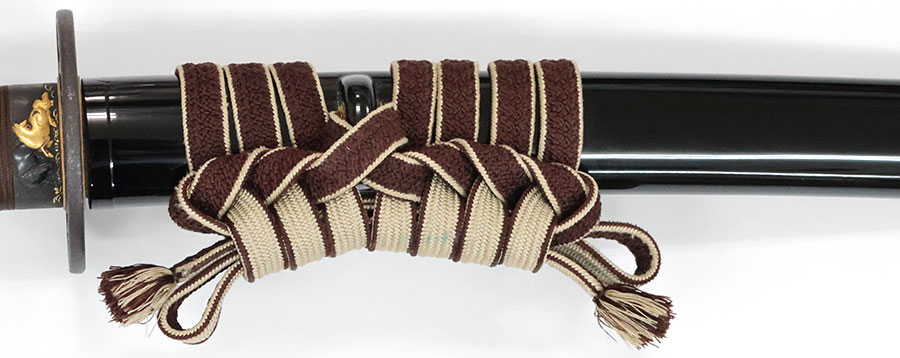
It has arrived, it has arrived! A masterpiece by Hizen no Kuni Tadayoshi, the object of desire for the entire sword world, has appeared. Hizen no Kuni Tadayoshi is the grand yokozuna of Keicho Shinto, a name known to everyone in the sword community. In the rokkyoku (narrative singing) of "Jirocho Sangokushi" by Hirosawa Torazo, Mori no Ishimatsu goes on a pilgrimage on behalf of Shimizu no Jirocho to offer a sword by Hizen no Kuni Tadayoshi to Konpira-sama in Sanuki. (The Kotohira-gu shrine in Kotohira Town, Kagawa Prefecture, Shikoku, is located halfway up Mount Zozu. After climbing long stone steps, one reaches the main shrine. Since ancient times, the mountain served as a landmark for ships navigating the Seto Inland Sea and was worshipped as a god of the sea. During the Edo period, pilgrimages to Konpira became a massive boom alongside pilgrimages to Ise, drawing deep faith from sailors and travelers alike.)

When Mori no Ishimatsu was on the boat crossing the Seto Inland Sea to dedicate the Hizen no Kuni Tadayoshi sword to Konpira-sama, he asked who the number one boss of the Tokaido was. He was told it was Shimizu no Jirocho, followed by Omasa and Komasa. Then, the speaker added, "Oh, I forgot, Mori no Ishimatsu is the strongest of all." Overjoyed, Ishimatsu uttered the famous lines, "Brother, eat some sushi," "Eat some sushi!" This rokkyoku became a massive hit, and the popularity of Hizen no Kuni Tadayoshi's swords skyrocketed, taking the world by storm. As a sequel to the story, because there was actually no sword by Hizen no Kuni Tadayoshi at Konpira-sama at that time, and because it had become so famous, a search was conducted nationwide for a genuine Hizen no Kuni Tadayoshi sword; one was successfully found and is now enshrined at Konpira-sama.

Hizen no Kuni Tadayoshi traveled to Kyoto in the 1st year of Keicho (1596) at the age of 25 by order of the Saga Nabeshima Clan to study under Umetada Myoju. He returned in the 3rd year of Keicho as a clan smith for the Saga Nabeshima, becoming the master who built the foundation of the Tadayoshi lineage that lasted for nine generations. This sword specifically bears the Junin Tadayoshi mei and was made around the 20th year of Keicho (1615) (411 years ago) when Tadayoshi was about 44 years old. This represents the golden age of Hizen no Kuni Tadayoshi, when he was crafting swords aiming to emulate all the great koto (old swords).

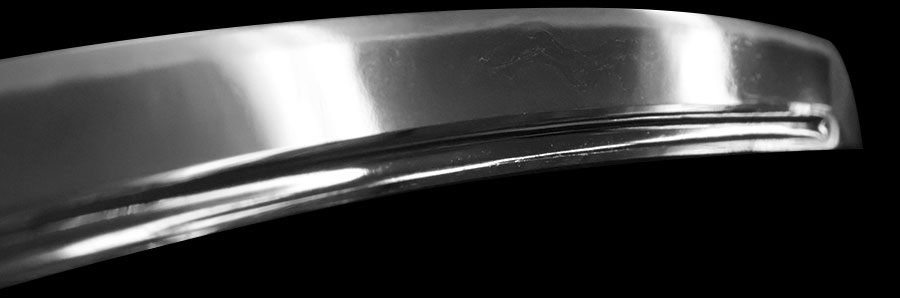
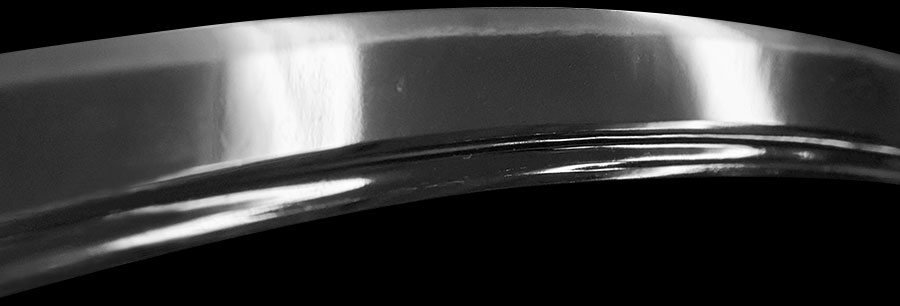
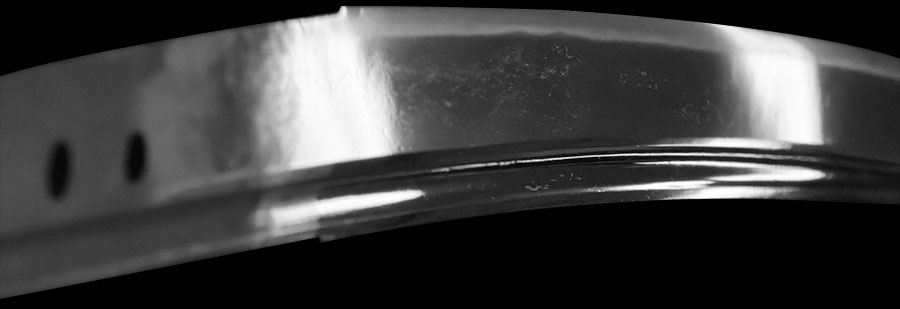
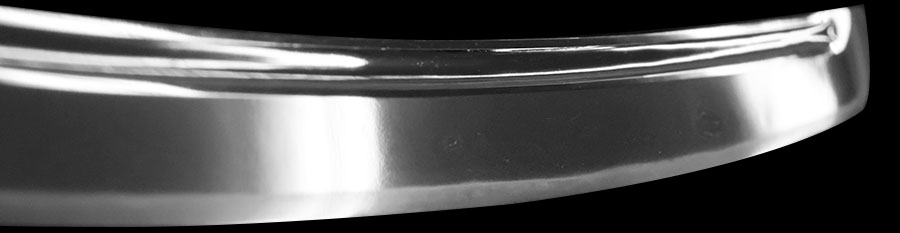
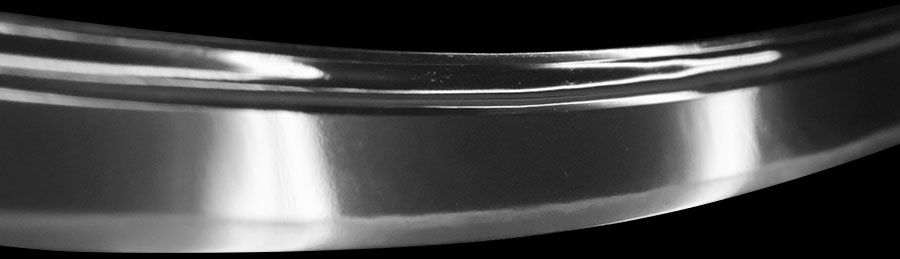
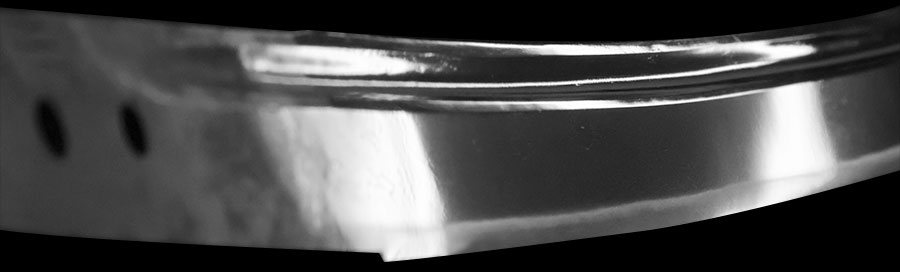
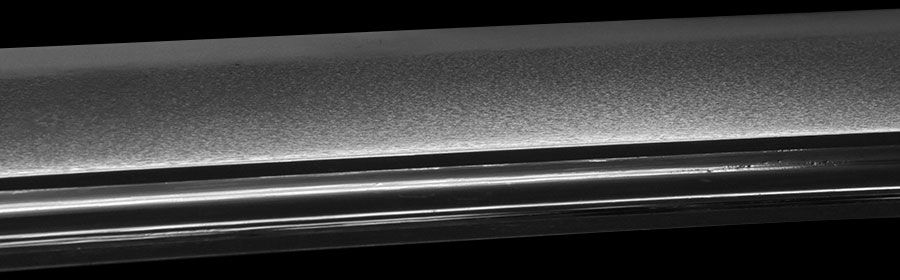
This blade is a masterpiece modeled after the famous Kamakura period Yamashiro smith, Rai Kunimitsu. The sugata is magnificent with a difference between the moto-mihaba and saki-mihaba, showing a slight suriage of about 5 bu. The jigane is a finely packed ko-itame hada, forging a powerful jitetsu reminiscent of koto. The horimono consists of a bo-hi boldly carved through to the nakago-jiri, executed with great skill. The hamon is a suguba style in the tradition of Yamashiro Rai Kunimitsu, with a slightly tightened nioiguchi and fine ko-nie, tempered brightly and uniformly with masterful execution.

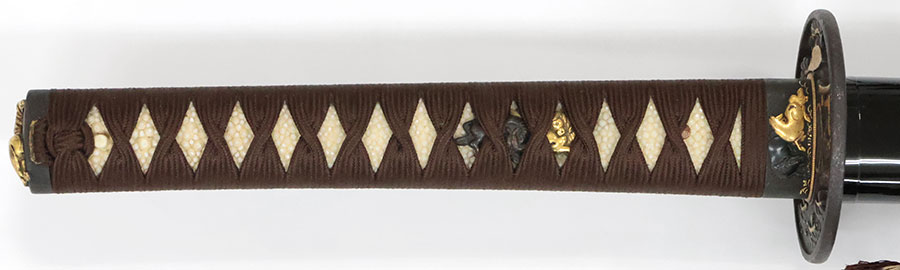
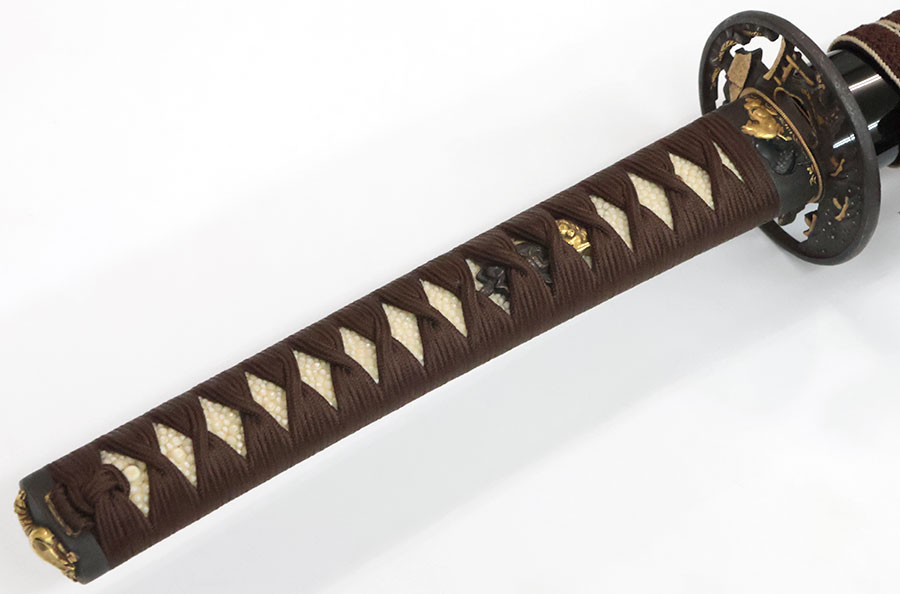
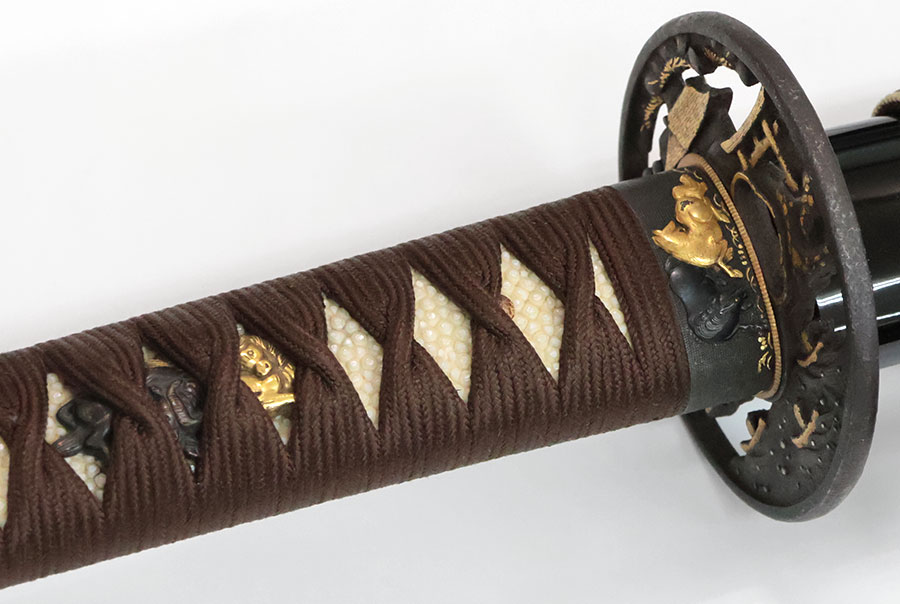
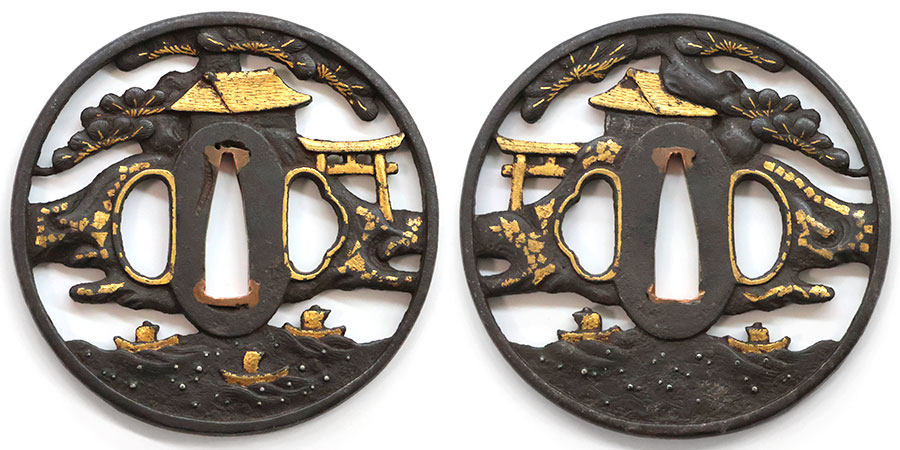
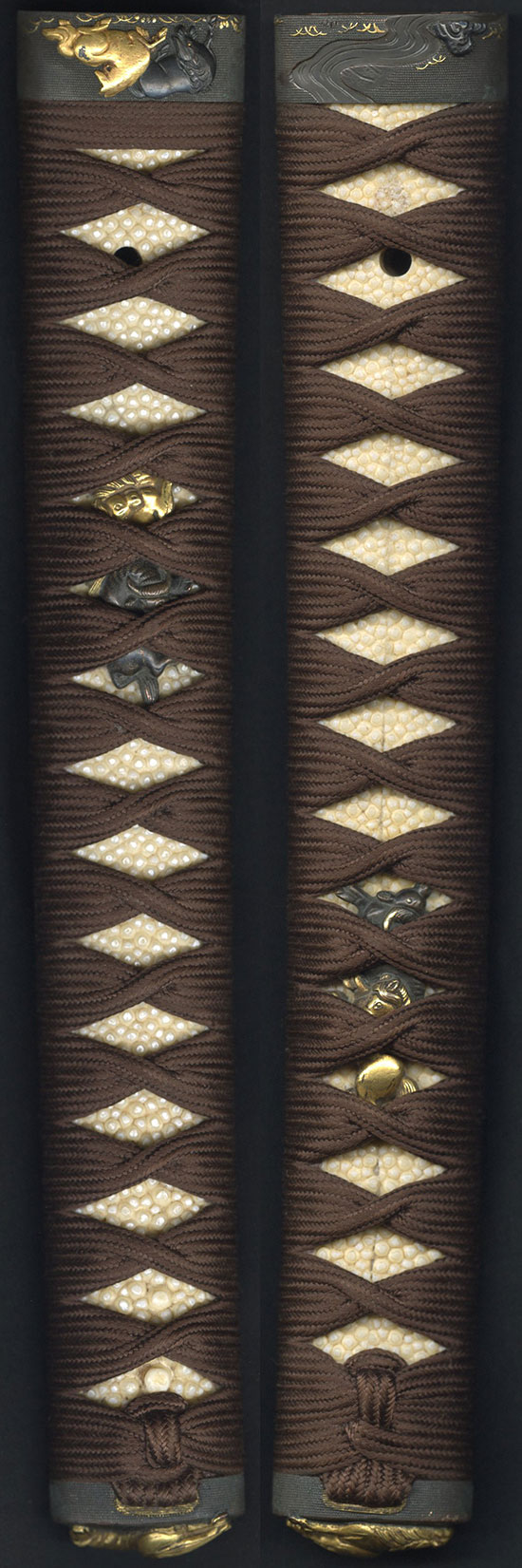
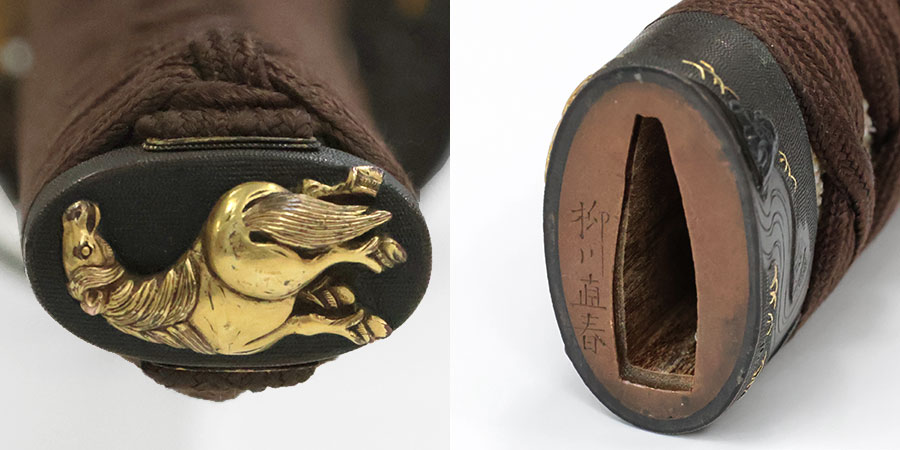
The koshirae is also luxurious, featuring an Edo-period kuro-ro (black lacquer) saya with fuchi-kashira and menuki depicting horse motifs, adding further elegance to this Hizen no Kuni Junin Tadayoshi sword. Swords with the Hizen no Kuni Junin Tadayoshi mei have long been particularly favored by sukisha (connoisseurs) and are known as "connoisseur's swords." However, Hizen no Kuni Junin Tadayoshi blades have been extremely expensive since ancient times, making them a dream sword that is difficult for even dedicated sukisha to obtain. On this occasion, an elderly sukisha who said, "I have grown old; though I acquired this at a high price, please pass it on to a successor at a low price," has entrusted us with it. Therefore, we are offering this coveted masterpiece with the Junin Tadayoshi mei by the first generation Hizen no Kuni Tadayoshi—the yokozuna of Keicho Shinto—at an ultra-bargain price. Please enjoy this opportunity.

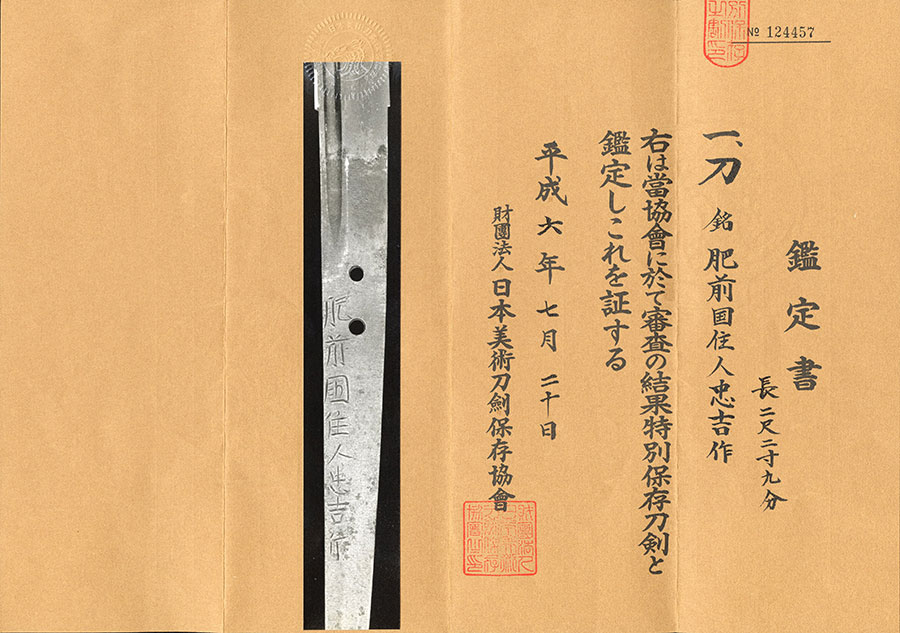
NBTHK Certificate
Tokubetsu Hozon Tōken特別保存刀剣
Sword Especially Worthy of Preservation
›

A Hozon-certified blade judged to show notably superior workmanship and a better state of preservation. The bar is higher: re-tempered blades and most unsigned Muromachi/Edo works are excluded.

About the NBTHK›

The NBTHK (Nihon Bijutsu Tōken Hozon Kyōkai, the Society for the Preservation of Japanese Art Swords) is a public-interest incorporated foundation founded in 1948 and supervised by Japan’s Agency for Cultural Affairs (Bunkachō); it is based at the Japanese Sword Museum in Tokyo. Its expert panels physically examine each submitted work (shinsa) and issue a certificate (kanteishō) ranking it by artistic and historical merit. NBTHK papers are the most widely recognized standard of authentication for Japanese swords and fittings.

NBTHK official site→
Seller
N
Nipponto
Established 1953 · 73 yrs on the market
🇯🇵Ships from Japan
›
✓Verified dealernipponto.co.jp
Settles in JPY
✓Ships worldwide✓English supportPayPalCredit card
Return policy

For returns due to customer circumstances, the cost is the customer's responsibility. For returns due to our mis-shipment or a defective item, we bear the cost.

View all of Nipponto’s listings→View this item on the dealer’s site→

Swords

  • Katana
  • Wakizashi
  • Tantō
  • Tachi
  • Naginata
  • Yari

Fittings

  • Tsuba
  • Fuchi-Kashira
  • Kozuka
  • Menuki

By Certification

  • Tokujū
  • Jūyō
  • Tokuho
  • Hozon

Resources

  • Dealer Directory
  • Artist Directory
  • Glossary
  • Browse All
Nihontowatch© 2026
TermsPrivacyCookiesAbout

Description

It has arrived, it has arrived! A masterpiece by Hizen no Kuni Tadayoshi, the object of desire for the entire sword world, has appeared. Hizen no Kuni Tadayoshi is the grand *yokozuna* of *Keicho Shinto*, a name known to everyone in the sword community. In the *rokkyoku* (narrative singing) of "Jirocho Sangokushi" by Hirosawa Torazo, Mori no Ishimatsu goes on a pilgrimage on behalf of Shimizu no Jirocho to offer a sword by Hizen no Kuni Tadayoshi to Konpira-sama in Sanuki. (The Kotohira-gu shrine in Kotohira Town, Kagawa Prefecture, Shikoku, is located halfway up Mount Zozu. After climbing long stone steps, one reaches the main shrine. Since ancient times, the mountain served as a landmark for ships navigating the Seto Inland Sea and was worshipped as a god of the sea. During the Edo period, pilgrimages to Konpira became a massive boom alongside pilgrimages to Ise, drawing deep faith from sailors and travelers alike.) When Mori no Ishimatsu was on the boat crossing the Seto Inland Sea to dedicate the Hizen no Kuni Tadayoshi sword to Konpira-sama, he asked who the number one boss of the Tokaido was. He was told it was Shimizu no Jirocho, followed by Omasa and Komasa. Then, the speaker added, "Oh, I forgot, Mori no Ishimatsu is the strongest of all." Overjoyed, Ishimatsu uttered the famous lines, "Brother, eat some sushi," "Eat some sushi!" This *rokkyoku* became a massive hit, and the popularity of Hizen no Kuni Tadayoshi's swords skyrocketed, taking the world by storm. As a sequel to the story, because there was actually no sword by Hizen no Kuni Tadayoshi at Konpira-sama at that time, and because it had become so famous, a search was conducted nationwide for a genuine Hizen no Kuni Tadayoshi sword; one was successfully found and is now enshrined at Konpira-sama. Hizen no Kuni Tadayoshi traveled to Kyoto in the 1st year of Keicho (1596) at the age of 25 by order of the Saga Nabeshima Clan to study under Umetada Myoju. He returned in the 3rd year of Keicho as a clan smith for the Saga Nabeshima, becoming the master who built the foundation of the Tadayoshi lineage that lasted for nine generations. This sword specifically bears the *Junin Tadayoshi mei* and was made around the 20th year of Keicho (1615) (411 years ago) when Tadayoshi was about 44 years old. This represents the golden age of Hizen no Kuni Tadayoshi, when he was crafting swords aiming to emulate all the great *koto* (old swords). This blade is a masterpiece modeled after the famous Kamakura period Yamashiro smith, Rai Kunimitsu. The *sugata* is magnificent with a difference between the *moto-mihaba* and *saki-mihaba*, showing a slight *suriage* of about 5 *bu*. The *jigane* is a finely packed *ko-itame hada*, forging a powerful *jitetsu* reminiscent of *koto*. The *horimono* consists of a *bo-hi* boldly carved through to the *nakago-jiri*, executed with great skill. The *hamon* is a *suguba* style in the tradition of Yamashiro Rai Kunimitsu, with a slightly tightened *nioiguchi* and fine *ko-nie*, tempered brightly and uniformly with masterful execution. The *koshirae* is also luxurious, featuring an Edo-period *kuro-ro* (black lacquer) *saya* with *fuchi-kashira* and *menuki* depicting horse motifs, adding further elegance to this Hizen no Kuni Junin Tadayoshi sword. Swords with the *Hizen no Kuni Junin Tadayoshi mei* have long been particularly favored by *sukisha* (connoisseurs) and are known as "connoisseur's swords." However, Hizen no Kuni Junin Tadayoshi blades have been extremely expensive since ancient times, making them a dream sword that is difficult for even dedicated *sukisha* to obtain. On this occasion, an elderly *sukisha* who said, "I have grown old; though I acquired this at a high price, please pass it on to a successor at a low price," has entrusted us with it. Therefore, we are offering this coveted masterpiece with the *Junin Tadayoshi mei* by the first generation Hizen no Kuni Tadayoshi—the *yokozuna* of *Keicho Shinto*—at an ultra-bargain price. Please enjoy this opportunity.

NihontoWatch MonNihontoWatchBETA
MarketAuctionsEncyclopedia
Swords›肥前›Japanese Sword Katana by Hizennokunijunin Tadayoshi (Copy of Raikunimitsu) (Saijo Owazamono)
katanaTokubetsu Hozon
肥前国住人忠吉作 Hizennokunijunin Tadayoshi

Japanese Sword Katana by Hizennokunijunin Tadayoshi (Copy of Raikunimitsu) (Saijo Owazamono)

Kamakura · nagasa 69.4cm · sori 1.4cm

¥2,800,000
Visit seller website →
肥前国住人忠吉作 Hizennokunijunin Tadayoshi — 1 of 33
肥前国住人忠吉作 Hizennokunijunin Tadayoshi — 2 of 33
肥前国住人忠吉作 Hizennokunijunin Tadayoshi — 3 of 33
肥前国住人忠吉作 Hizennokunijunin Tadayoshi — 4 of 33
肥前国住人忠吉作 Hizennokunijunin Tadayoshi — 5 of 33
肥前国住人忠吉作 Hizennokunijunin Tadayoshi — 6 of 33
肥前国住人忠吉作 Hizennokunijunin Tadayoshi — 7 of 33
肥前国住人忠吉作 Hizennokunijunin Tadayoshi — 8 of 33
肥前国住人忠吉作 Hizennokunijunin Tadayoshi — 9 of 33
肥前国住人忠吉作 Hizennokunijunin Tadayoshi — 10 of 33
肥前国住人忠吉作 Hizennokunijunin Tadayoshi — 11 of 33
肥前国住人忠吉作 Hizennokunijunin Tadayoshi — 12 of 33
肥前国住人忠吉作 Hizennokunijunin Tadayoshi — 13 of 33
肥前国住人忠吉作 Hizennokunijunin Tadayoshi — 14 of 33
肥前国住人忠吉作 Hizennokunijunin Tadayoshi — 15 of 33
肥前国住人忠吉作 Hizennokunijunin Tadayoshi — 16 of 33
肥前国住人忠吉作 Hizennokunijunin Tadayoshi — 17 of 33
肥前国住人忠吉作 Hizennokunijunin Tadayoshi — 18 of 33
肥前国住人忠吉作 Hizennokunijunin Tadayoshi — 19 of 33
肥前国住人忠吉作 Hizennokunijunin Tadayoshi — 20 of 33
肥前国住人忠吉作 Hizennokunijunin Tadayoshi — 21 of 33
肥前国住人忠吉作 Hizennokunijunin Tadayoshi — 22 of 33
肥前国住人忠吉作 Hizennokunijunin Tadayoshi — 23 of 33
肥前国住人忠吉作 Hizennokunijunin Tadayoshi — 24 of 33
肥前国住人忠吉作 Hizennokunijunin Tadayoshi — 25 of 33
肥前国住人忠吉作 Hizennokunijunin Tadayoshi — 26 of 33
肥前国住人忠吉作 Hizennokunijunin Tadayoshi — 27 of 33
肥前国住人忠吉作 Hizennokunijunin Tadayoshi — 28 of 33
肥前国住人忠吉作 Hizennokunijunin Tadayoshi — 29 of 33
肥前国住人忠吉作 Hizennokunijunin Tadayoshi — 30 of 33
肥前国住人忠吉作 Hizennokunijunin Tadayoshi — 31 of 33
肥前国住人忠吉作 Hizennokunijunin Tadayoshi — 32 of 33
肥前国住人忠吉作 Hizennokunijunin Tadayoshi — 33 of 33
1 / 33
1 / 33
肥前国住人忠吉作 Hizennokunijunin Tadayoshi — 1 of 33肥前国住人忠吉作 Hizennokunijunin Tadayoshi — 2 of 33肥前国住人忠吉作 Hizennokunijunin Tadayoshi — 3 of 33肥前国住人忠吉作 Hizennokunijunin Tadayoshi — 4 of 33肥前国住人忠吉作 Hizennokunijunin Tadayoshi — 5 of 33肥前国住人忠吉作 Hizennokunijunin Tadayoshi — 6 of 33肥前国住人忠吉作 Hizennokunijunin Tadayoshi — 7 of 33肥前国住人忠吉作 Hizennokunijunin Tadayoshi — 8 of 33肥前国住人忠吉作 Hizennokunijunin Tadayoshi — 9 of 33肥前国住人忠吉作 Hizennokunijunin Tadayoshi — 10 of 33肥前国住人忠吉作 Hizennokunijunin Tadayoshi — 11 of 33肥前国住人忠吉作 Hizennokunijunin Tadayoshi — 12 of 33肥前国住人忠吉作 Hizennokunijunin Tadayoshi — 13 of 33肥前国住人忠吉作 Hizennokunijunin Tadayoshi — 14 of 33肥前国住人忠吉作 Hizennokunijunin Tadayoshi — 15 of 33肥前国住人忠吉作 Hizennokunijunin Tadayoshi — 16 of 33肥前国住人忠吉作 Hizennokunijunin Tadayoshi — 17 of 33肥前国住人忠吉作 Hizennokunijunin Tadayoshi — 18 of 33肥前国住人忠吉作 Hizennokunijunin Tadayoshi — 19 of 33肥前国住人忠吉作 Hizennokunijunin Tadayoshi — 20 of 33肥前国住人忠吉作 Hizennokunijunin Tadayoshi — 21 of 33肥前国住人忠吉作 Hizennokunijunin Tadayoshi — 22 of 33肥前国住人忠吉作 Hizennokunijunin Tadayoshi — 23 of 33肥前国住人忠吉作 Hizennokunijunin Tadayoshi — 24 of 33肥前国住人忠吉作 Hizennokunijunin Tadayoshi — 25 of 33肥前国住人忠吉作 Hizennokunijunin Tadayoshi — 26 of 33肥前国住人忠吉作 Hizennokunijunin Tadayoshi — 27 of 33肥前国住人忠吉作 Hizennokunijunin Tadayoshi — 28 of 33肥前国住人忠吉作 Hizennokunijunin Tadayoshi — 29 of 33肥前国住人忠吉作 Hizennokunijunin Tadayoshi — 30 of 33肥前国住人忠吉作 Hizennokunijunin Tadayoshi — 31 of 33肥前国住人忠吉作 Hizennokunijunin Tadayoshi — 32 of 33肥前国住人忠吉作 Hizennokunijunin Tadayoshi — 33 of 33
Measurements & details
Smith
肥前国住人忠吉作 Hizennokunijunin Tadayoshi
Type
Katana
Period
Kamakura
Province
肥前
Measurements
Nagasa 69.4cmSori 1.4cmMotohaba 3.02cmSakihaba 1.91cmKasane 0.71cm
Description

It has arrived, it has arrived! A masterpiece by Hizen no Kuni Tadayoshi, the object of desire for the entire sword world, has appeared. Hizen no Kuni Tadayoshi is the grand yokozuna of Keicho Shinto, a name known to everyone in the sword community. In the rokkyoku (narrative singing) of "Jirocho Sangokushi" by Hirosawa Torazo, Mori no Ishimatsu goes on a pilgrimage on behalf of Shimizu no Jirocho to offer a sword by Hizen no Kuni Tadayoshi to Konpira-sama in Sanuki. (The Kotohira-gu shrine in Kotohira Town, Kagawa Prefecture, Shikoku, is located halfway up Mount Zozu. After climbing long stone steps, one reaches the main shrine. Since ancient times, the mountain served as a landmark for ships navigating the Seto Inland Sea and was worshipped as a god of the sea. During the Edo period, pilgrimages to Konpira became a massive boom alongside pilgrimages to Ise, drawing deep faith from sailors and travelers alike.)

When Mori no Ishimatsu was on the boat crossing the Seto Inland Sea to dedicate the Hizen no Kuni Tadayoshi sword to Konpira-sama, he asked who the number one boss of the Tokaido was. He was told it was Shimizu no Jirocho, followed by Omasa and Komasa. Then, the speaker added, "Oh, I forgot, Mori no Ishimatsu is the strongest of all." Overjoyed, Ishimatsu uttered the famous lines, "Brother, eat some sushi," "Eat some sushi!" This rokkyoku became a massive hit, and the popularity of Hizen no Kuni Tadayoshi's swords skyrocketed, taking the world by storm. As a sequel to the story, because there was actually no sword by Hizen no Kuni Tadayoshi at Konpira-sama at that time, and because it had become so famous, a search was conducted nationwide for a genuine Hizen no Kuni Tadayoshi sword; one was successfully found and is now enshrined at Konpira-sama.

Hizen no Kuni Tadayoshi traveled to Kyoto in the 1st year of Keicho (1596) at the age of 25 by order of the Saga Nabeshima Clan to study under Umetada Myoju. He returned in the 3rd year of Keicho as a clan smith for the Saga Nabeshima, becoming the master who built the foundation of the Tadayoshi lineage that lasted for nine generations. This sword specifically bears the Junin Tadayoshi mei and was made around the 20th year of Keicho (1615) (411 years ago) when Tadayoshi was about 44 years old. This represents the golden age of Hizen no Kuni Tadayoshi, when he was crafting swords aiming to emulate all the great koto (old swords).

This blade is a masterpiece modeled after the famous Kamakura period Yamashiro smith, Rai Kunimitsu. The sugata is magnificent with a difference between the moto-mihaba and saki-mihaba, showing a slight suriage of about 5 bu. The jigane is a finely packed ko-itame hada, forging a powerful jitetsu reminiscent of koto. The horimono consists of a bo-hi boldly carved through to the nakago-jiri, executed with great skill. The hamon is a suguba style in the tradition of Yamashiro Rai Kunimitsu, with a slightly tightened nioiguchi and fine ko-nie, tempered brightly and uniformly with masterful execution.

The koshirae is also luxurious, featuring an Edo-period kuro-ro (black lacquer) saya with fuchi-kashira and menuki depicting horse motifs, adding further elegance to this Hizen no Kuni Junin Tadayoshi sword. Swords with the Hizen no Kuni Junin Tadayoshi mei have long been particularly favored by sukisha (connoisseurs) and are known as "connoisseur's swords." However, Hizen no Kuni Junin Tadayoshi blades have been extremely expensive since ancient times, making them a dream sword that is difficult for even dedicated sukisha to obtain. On this occasion, an elderly sukisha who said, "I have grown old; though I acquired this at a high price, please pass it on to a successor at a low price," has entrusted us with it. Therefore, we are offering this coveted masterpiece with the Junin Tadayoshi mei by the first generation Hizen no Kuni Tadayoshi—the yokozuna of Keicho Shinto—at an ultra-bargain price. Please enjoy this opportunity.

NBTHK Certificate
Tokubetsu Hozon Tōken特別保存刀剣
Sword Especially Worthy of Preservation
›

A Hozon-certified blade judged to show notably superior workmanship and a better state of preservation. The bar is higher: re-tempered blades and most unsigned Muromachi/Edo works are excluded.

About the NBTHK›

The NBTHK (Nihon Bijutsu Tōken Hozon Kyōkai, the Society for the Preservation of Japanese Art Swords) is a public-interest incorporated foundation founded in 1948 and supervised by Japan’s Agency for Cultural Affairs (Bunkachō); it is based at the Japanese Sword Museum in Tokyo. Its expert panels physically examine each submitted work (shinsa) and issue a certificate (kanteishō) ranking it by artistic and historical merit. NBTHK papers are the most widely recognized standard of authentication for Japanese swords and fittings.

NBTHK official site→
Seller
N
Nipponto
Established 1953 · 73 yrs on the market
🇯🇵Ships from Japan
›
✓Verified dealernipponto.co.jp
Settles in JPY
✓Ships worldwide✓English supportPayPalCredit card
Return policy

For returns due to customer circumstances, the cost is the customer's responsibility. For returns due to our mis-shipment or a defective item, we bear the cost.

View all of Nipponto’s listings→View this item on the dealer’s site→

Swords

  • Katana
  • Wakizashi
  • Tantō
  • Tachi
  • Naginata
  • Yari

Fittings

  • Tsuba
  • Fuchi-Kashira
  • Kozuka
  • Menuki

By Certification

  • Tokujū
  • Jūyō
  • Tokuho
  • Hozon

Resources

  • Dealer Directory
  • Artist Directory
  • Glossary
  • Browse All
Nihontowatch© 2026
TermsPrivacyCookiesAbout
NihontoWatch Mon

NihontoWatchBETA

MarketAuctions
Encyclopedia
NihontoWatch Mon

NihontoWatchBETA

MarketAuctions
Encyclopedia