NihontoWatch MonNihontoWatchBETA
MarketEncyclopedia
NihontoWatch Mon

NihontoWatchBETA

Market
Encyclopedia
Overview·Kantei·Designations·Provenance·Blade Forms·Signatures·Lineage·School
OverviewKanteiDesignationsProvenanceBlade FormsSignaturesLineageSchool
  1. Schools
  2. Hizen Tadayoshi
  3. Tadayoshi

Hizen Tadayoshi

忠吉

Tokujū
Vol. 8, No. 36 · Katana

Hizen Tadayoshi

忠吉

125 ranked works

ProvinceHizenEraKeicho (1596–1615)PeriodEdoSchoolHizen TadayoshiTraditionShintoGeneration1stTeacherMyojuFujishiroSai-jo saku(Supreme Work)Toko Taikan1,500(top 5%)TypeSwordsmithCodeTAD286
1Jūyō Bunkazai
5Jūyō Bijutsuhin
3Gyobutsu
9Tokubetsu Jūyō107Jūyō Tōken

Overview

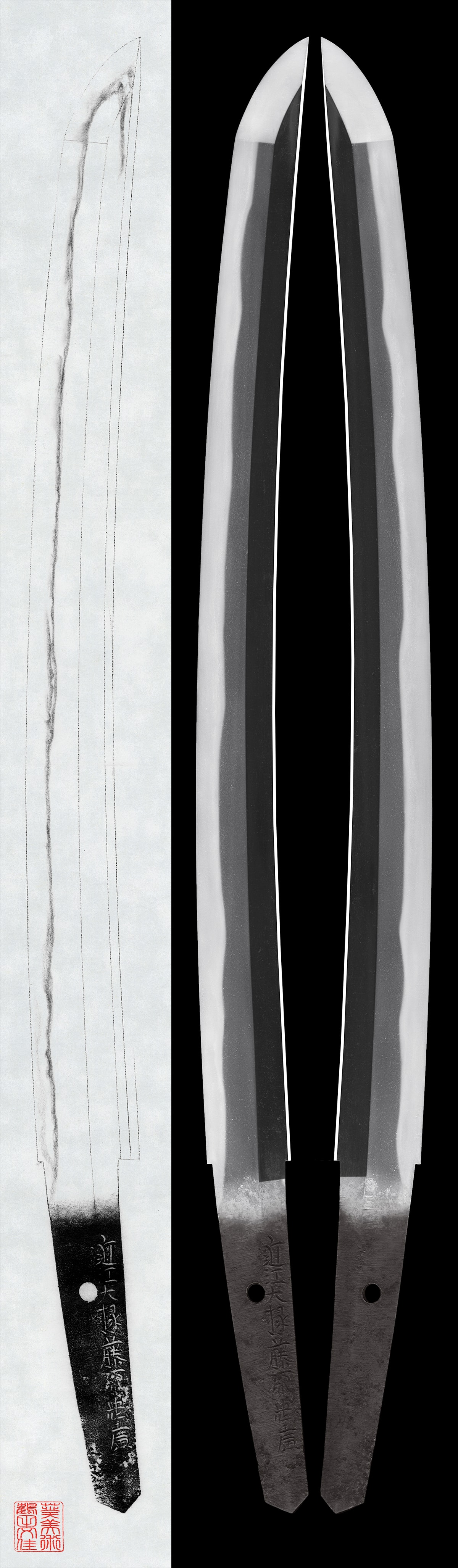
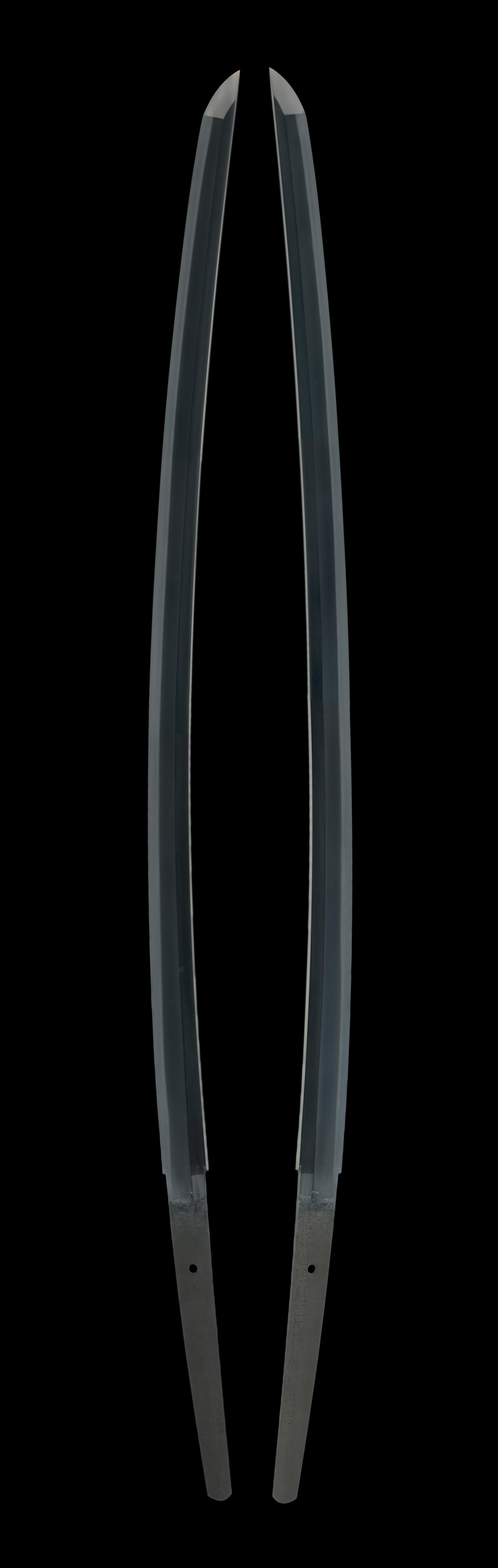
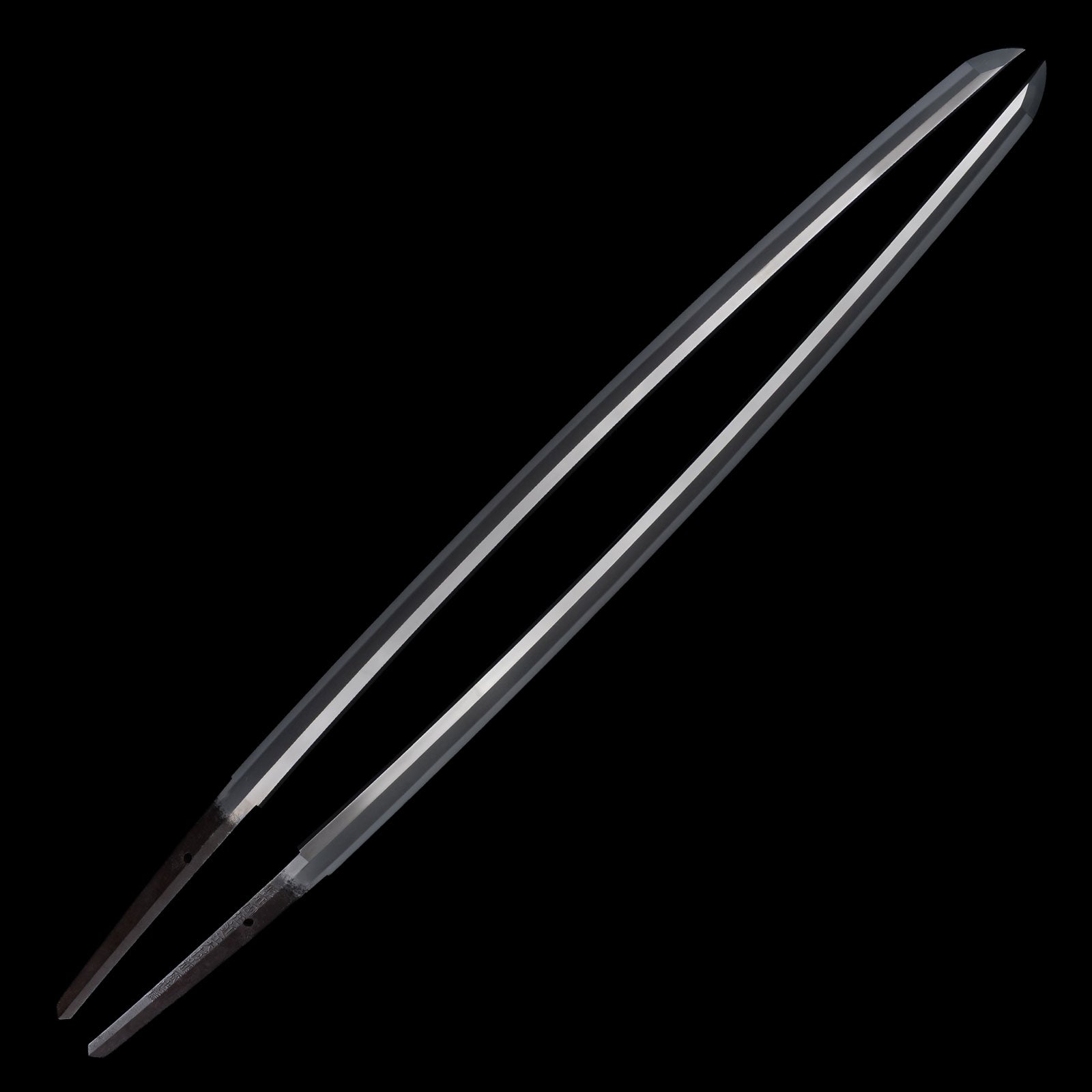
The first-generation of , the published sources record, styled himself Hashimoto Shinzaemon and served as a retained smith of the Nabeshima of . By domain order in Keicho 1 (1596) he went up to Kyoto together with the carver Munenaga and entered the school of Myoju, where he studied sword forging while Munenaga learned carving; they returned to their province in Keicho 3 (1598), and settled in the castle town below Saga, where under the domain's patronage the line flourished greatly. His dated work begins from the eighth month of Keicho 5 (1600) and runs to the eighth month of 'ei 9 (1632), the year he died, a working career the published sources reckon at thirty-two years. In Genna 10 (1624) he went up to Kyoto a second time, received the court title Daijo, and changed his name from to Tadahiro, altering his clan name from Minamoto to Fujiwara. He is the founder of -to, and the school he raised under Nabeshima patronage came to dominate the sword-making of Kyushu.

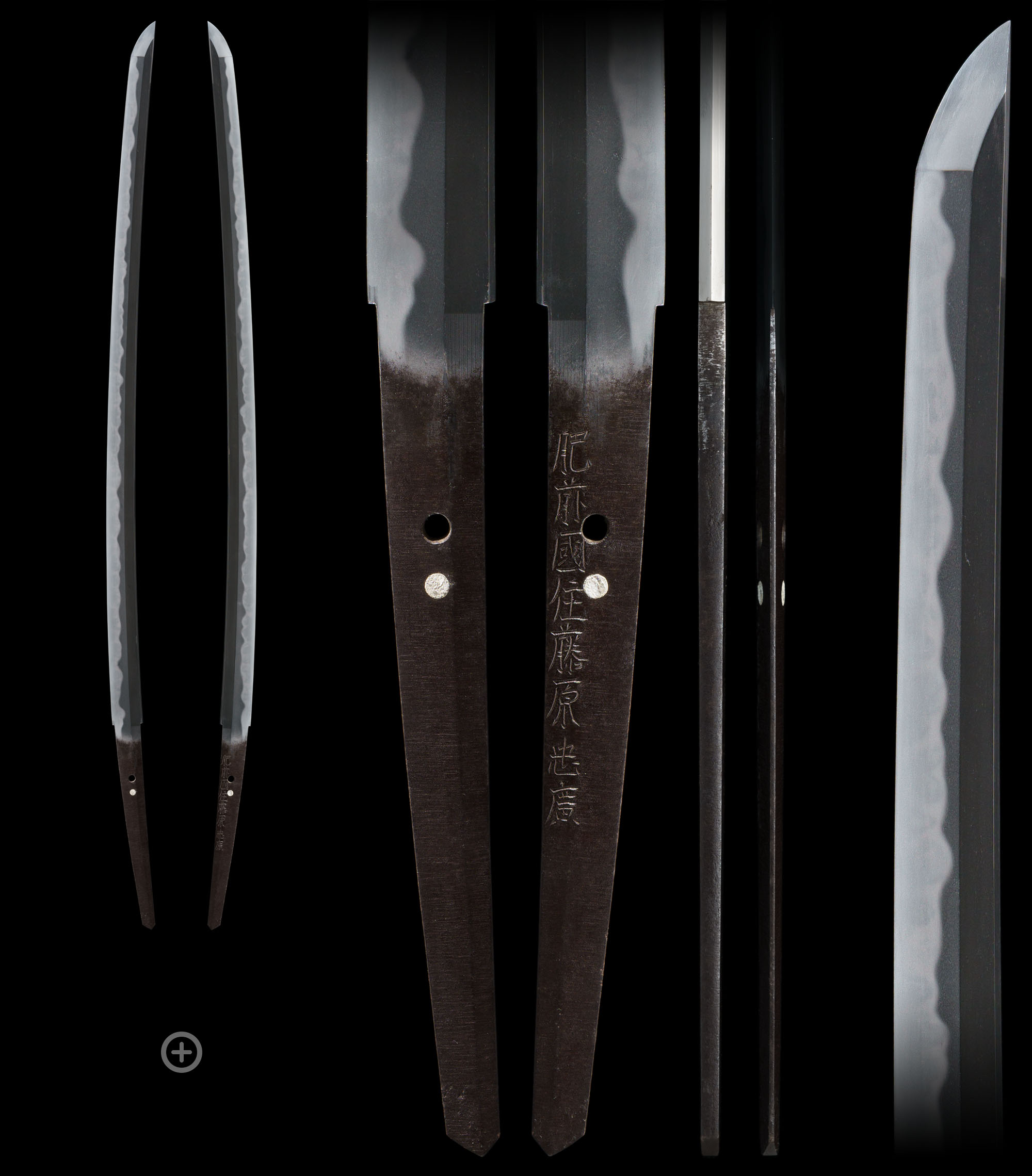
His mainstay is a bright, tight tempered upon the fine that is the signature of work. The published sources describe it plainly: "his favored is tempered upon a well-knit , the distinctive commonly called , and in it he aimed at the manner of the school" (得意とする直刃の作は小板目のよくつんだいわゆる米糠肌と呼ばれる独得な地鉄に直刃を焼いて来一門の作を狙ったものの様にも思わ). The temper is a or carrying only a shallow , at times mixed with , into which and enter; the is deep with finely clustered , and it tightens to a bright clarity. Yet, the sources note, the work departs from the originals it looks to: the is tighter and brighter, fine enter the abundantly, and the forging "has rather more vigor than the pieces" (鍛はむしろ来一派のものよりも覇気があり). The temper and the steel together carry the recognition.

That steel is the heart of the matter. The forging is a dense, well-knit , at times with mixed in, over which gathers as the finest particles and lies thickly; fine enter intricately and the steel is notably clear. The published sources give it its name as a feature peculiar to his hand, the surface taking on the "distinctive " (特有の米糠肌), the fine, bright, rice-bran texture that no other school produces. Upon it the runs straight and turns back in a quiet , the regular finish of a point. This combination, the clear konuka- beneath a tight bright , is what the published record returns to again and again as the founder's proper manner, the work that places his at the head of the tradition.

His early years are another matter, and the published sources read them as a period of copies. The constant formula is repeated almost verbatim from blade to blade: "his early manner comprises a wide range, full of -mono" (様々な写し物があって多岐にわたっている), naming Naoe-, old Yamato work, and the and masters. In the Naoe- vein he forges a mixed with , entering and running, the slightly tightened, a manner the sources say inherits the that was Myoju's particular forte and is "commonly called Naoe- " (世に直江志津写しと称せられるものである). In the old-Yamato vein the grows larger and flows toward the edge, and mix in with and frequent , and even the finishes with a touch of ; of one such piece the sources say it shows "the most archaic manner among 's works, with deep, lingering appeal" (忠吉中最も古雅な作風を示して味わいが深い), the standing as the exception to the rule that the point turns back in a quiet . He admired the masters as well, above all Kunimitsu, and copied the Kagemitsu on occasion, one being an of a Kagemitsu transmitted in the Nabeshima house.

The through-line of his career is the signature itself, which the published sources divide into three forms by period. He cut " no " in five characters, the so-called five-character ; he signed in eight characters as " no junin ," the junin ; and after the Daijo title of Genna 10 (1624) he used the " Daijo Tadahiro" signature, the rename being a single hand's chronology and not a change of person. The presentation pieces signed " no ju Fujiwara Tadahiro" without the title are the kenjo-, ordered by the Nabeshima, who held the title-signature unnecessary on a blade made for the house. The pieces common in his years, the sources note, become rare under the Tadahiro name. The is cut on the , the practice of and his line; almost all of his recorded work is signed, 125 of 129 records carrying his hand, so the signature is itself part of the appraisal, though the five-character form, imitated by the later Tosa-no-kami and the third-generation Mutsu-no-kami, dates a piece only together with the rest of the workmanship.

From him descends the whole school. His son the second-generation Omi Daijo Tadahiro carried on the konuka- and the to become the most prolific of the smiths, and the line continued through the third-generation Mutsu-no-kami and the Tosa-no-kami branch, the published sources noting that the third generation in particular returned in style toward his grandfather the founder, especially accomplished in and skilled also at . is Sai-jo in Fujishiro's grading. The weight of designation behind his name runs to one Important Cultural Property, ten and a large body of , one hundred and eighteen blades in the and tiers, with a single prewar Bijutsuhin piece and no National Treasures; one hundred and twenty-seven of his works survive with an official record. His blades carry a Nabeshima provenance and pass through notable hands, the recorded transmissions naming the Owari Tokugawa Family, the Satake Family and the Imperial Family among others, with a cutting-test inscription on one and a Myoju on another that documents his discipleship. The bulk of what survives is held in long-standing collections and institutions such as the Takamatsu Historical Museum, and most are kept rather than traded; one comes to open hands only from time to time, and as the founder's own work it is a landmark of the tradition when it does.

Kantei

the period-and-register model the texts themselves draw: an early Keicho phase of varied utsushi-mono (the texts call it 様々な写し物があって多岐にわたる, naming Naoe-Shizu, old Yamato and the Rai and Kamakura masters), settling into his prime suguha on konuka-hada aimed at the Rai school, and a Musashi Daijo register from Genna 10 (1624) once the name turned to Tadahiro; the suguha mainstay and a midare copy-pole run through all of it

Hashimoto Shinzaemon, the first-generation , was the held smith of the Nabeshima of . In Keicho 1 (1596) the clan sent him with the carver Munenaga to study under Myoju in Kyoto; he returned in Keicho 3, settled below Saga castle, and under the clan's patronage raised the line that would dominate Kyushu sword-making. His dated work runs from Keicho 5 (1600) to his death in Kanei 9 (1632). In Genna 10 (1624) he went up to Kyoto a second time, received the title Daijo, and changed his name from to Tadahiro, so a single hand signs across three forms in turn: the five-character -no- , the eight-character jūnin , and Daijo Tadahiro. The published sources treat him as the founder of -to: a dense, fine called konuka- and a bright tight are his mainstay, aimed at the school, while his early years are filled with copies of older work, Naoe-, old Yamato, and the masters.

Diagnostic discriminators

61% of his works · 2.2× vs Horikawa Kunihiro and Yasutsugu, the Soshu-revival Shinto smiths

74% of his works

16% of his works

the dating axis is the signature: the five-character 肥前国忠吉 (named in 72% of his texts), the eight-character jūnin 肥前国住人忠吉作 (26%), and after Genna 10 (1624) the Musashi Daijo Tadahiro mei (64%); 125 of his 129 records are signed, and the mei is cut on the ura, which the published sources note as the practice of Tadayoshi and his line

Observation by phase

The early Keicho copies (five-character and jūnin Tadayoshi mei)

the 肥前国忠吉 five-character mei and 肥前国住人忠吉作 jūnin mei of the Keicho years (the five-character form is named in 72% of his texts); the early dated pieces run from Keicho 5 (1600)

The texts repeat that his early manner is varied, full of copies. He looked to Naoe- with a carrying , a slightly tightened and ; to old Yamato work with flowing toward the edge, and , and and a that sweeps out in , which the published sources call his most archaic and tasteful manner; and to the masters such as Kunimitsu. The forging is a well-knit small with and fine , the running to .

Jigane 地鉄
Hamon 刃文
Bōshi 帽子
The Naoe-Shizu copies— the Keicho 11 to 17/18 pieces the texts read as Naoe-Shizu utsushi, a ko-notare with gunome and a tightening nioiguchi (named in 14% of his texts)
The old-Yamato and Rai copies— the pieces aimed at old Yamato work (kuichigaiba and nijuba, hakikake boshi) and at the Rai school, above all Rai Kunimitsu (named in 9% of his texts)

The prime: bright suguha on konuka-hada (his mainstay)

the suguha he is said to have most favored; the texts repeatedly tie it to the well-knit konuka-hada and read it as aimed at the Rai school, though distinguished from the originals by a tighter, brighter nioiguchi and a more spirited forging

His signature work, a or with little waving, sometimes carrying and and , the deep with fine , tight and bright. The forging is the proper: a dense small , the konuka- the texts name for him, with fine laid on microscopically thick ( ) and running finely throughout, the steel clear and bright. The runs into a , occasionally with a faint . The published sources say he aimed at the school in this manner but that the steel has more spirit than the originals.

Jigane 地鉄
Hamon 刃文
Bōshi 帽子

The Musashi Daijo Tadahiro register (Genna 10 / 1624 onward)

the 武蔵大掾藤原忠広 mei taken up after the second journey to Kyoto in Genna 10 (1624), named in 64% of his texts; the 肥前国住藤原忠広 form without the title is the kenjo-mei, the Nabeshima presentation signature

After the rename the hand continues both his and his manners. The texts note that pieces, common in his years, become rare under the Tadahiro name. The presentation pieces signed 肥前国住藤原忠広 without the Daijo title are the kenjo-, ordered by the Nabeshima who held the title-signature unnecessary. The construction is the Keicho- build, wide and shallow-curved with an extended point, the forging the fine konuka- and the temper his bright or a with .

Jigane 地鉄
Hamon 刃文
Bōshi 帽子
Scholarship

The varied-copy reading of his early years is the published sources' own constant formula, repeated almost verbatim: his early manner is full of utsushi-mono and ranges widely, naming Naoe-Shizu, old Yamato work, and the Rai and Kamakura masters.

The Tadayoshi-to-Tadahiro change of name at the Musashi Daijo title in Genna 10 (1624) is documented in the texts as a single hand's mei chronology, not a change of person, so the five-character Tadayoshi and Musashi Daijo Tadahiro signatures are dated registers of one career.

Designations

Kokuhō—
Jūyō Bunkazai1
Jūyō Bijutsuhin5
Gyobutsu3
Tokubetsu Jūyō9
Jūyō Tōken107

Elite Standing

0.37 across 125 designated works

Top 7% among smiths

Provenance

14 documented provenances across certified works by Tadayoshi

Provenance Standing

8 works held in elite collections across 14 documented provenances

Top 9% among smiths

Raw score: 2.62 / 10

Blade Forms

Distribution across 125 ranked works

Signatures

Signature types across 125 ranked works

Currently Available

Lineage

TeacherMyoju
Tadayoshi
Students (27)
  1. 1.Tadayoshi忠吉4 for sale60designated
  2. 2.Tadahiro忠廣7 for sale169designated
  3. 3.Yoshiie吉家4designated
  4. 4.Yoshinobu吉信4designated
  5. 5.Hironori廣則3designated
  6. 6.Tosa no Kami Tadayoshi忠吉3designated
  7. 7.Hirosada廣貞1designated
  8. 8.Hiroshige廣重
  9. 9.Moritoshi守俊
  10. 10.Munetsugu宗次1 for sale7designated
  11. 11.Munetsugu宗次9designated
  12. 12.Tadamasa忠正
  13. 13.Tadanawa忠繩
  14. 14.Tadayoshi忠吉2 for sale
  15. 15.Tadayoshi忠吉2 for sale2designated
  16. 16.Tadayoshi忠吉
  17. 17.Tadayoshi忠吉2 for sale
  18. 18.Tadayoshi忠吉
  19. 19.Tadayoshi忠吉4 for sale
  20. 20.Tadayoshi忠吉1 for sale
  21. 21.Tadayoshi忠吉
  22. 22.Tadayoshi忠吉
  23. 23.Tadakiyo忠清1designated
  24. 24.Yoshihiro吉廣2 for sale1designated
  25. 25.Yoshinaga吉長
  26. 26.Yoshisada吉貞2designated
  27. 27.Yukihiro行廣

Hizen Tadayoshi School

Other artisans of the Hizen Tadayoshi school

  1. 1.Tadayoshi忠吉4 for sale60designated
  2. 2.Tadahiro忠廣7 for sale169designated
  3. 3.Tadakuni忠國1 for sale32designated
  4. 4.Masahiro正廣3 for sale32designated
  5. 5.Masahiro正廣4 for sale24designated
  6. 6.Yukihiro行廣1 for sale16designated
  7. 7.Yoshiie吉家4designated
  8. 8.Muneyasu宗安4designated
  9. 9.Yoshinobu吉信4designated
  10. 10.Yoshifusa吉房3designated
  11. 11.Hironori廣則3designated
  12. 12.Tosa no Kami Tadayoshi忠吉3designated