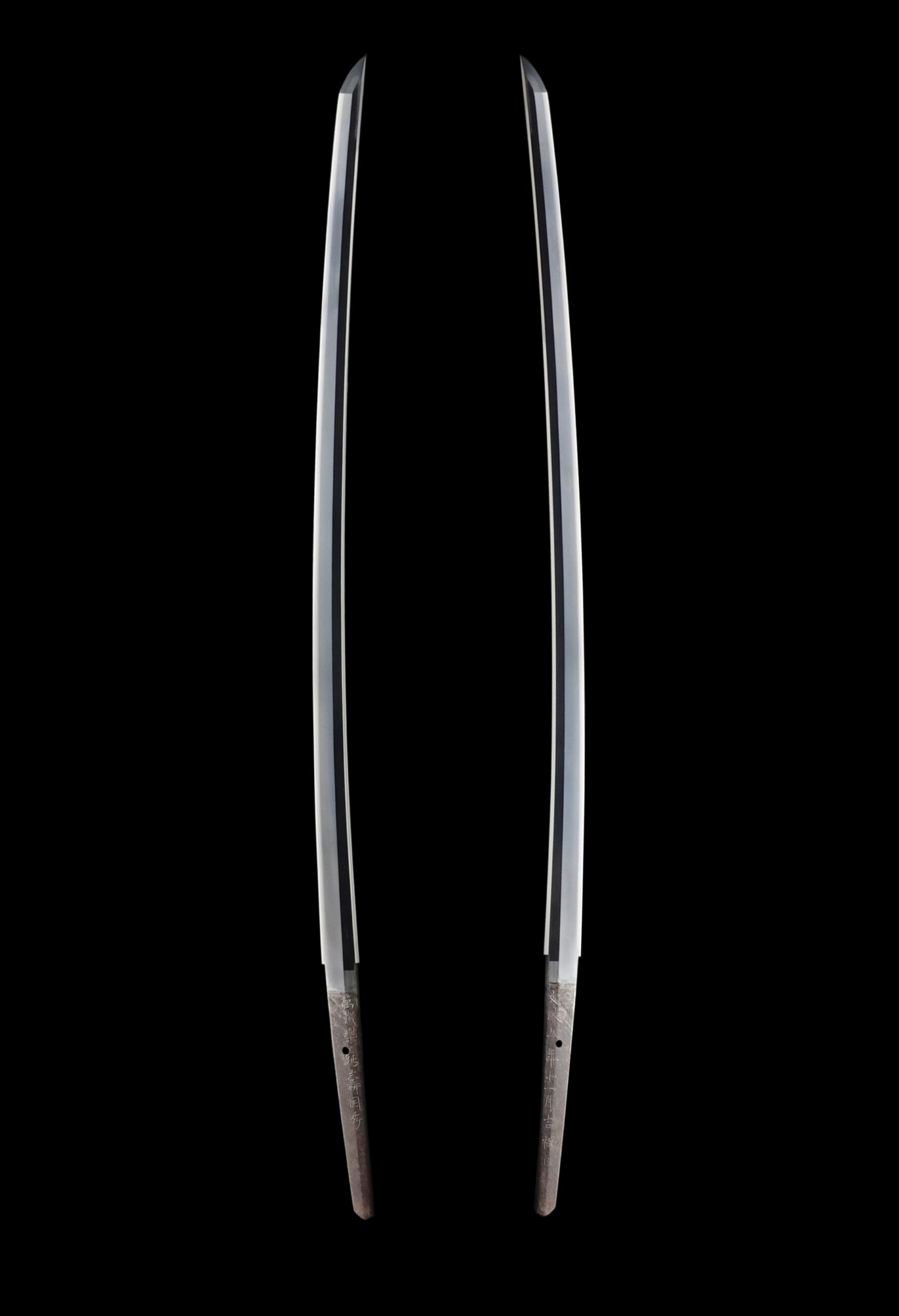
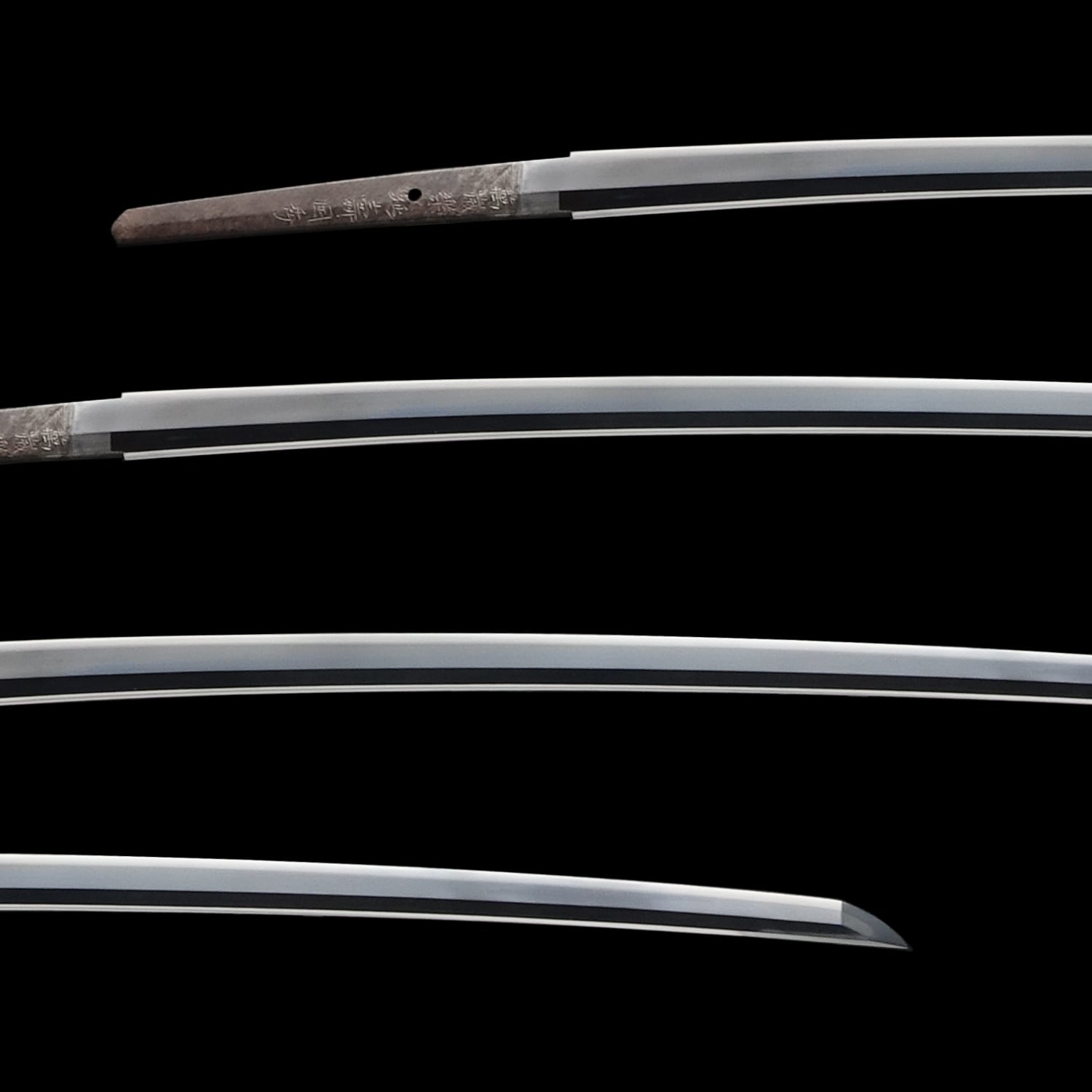
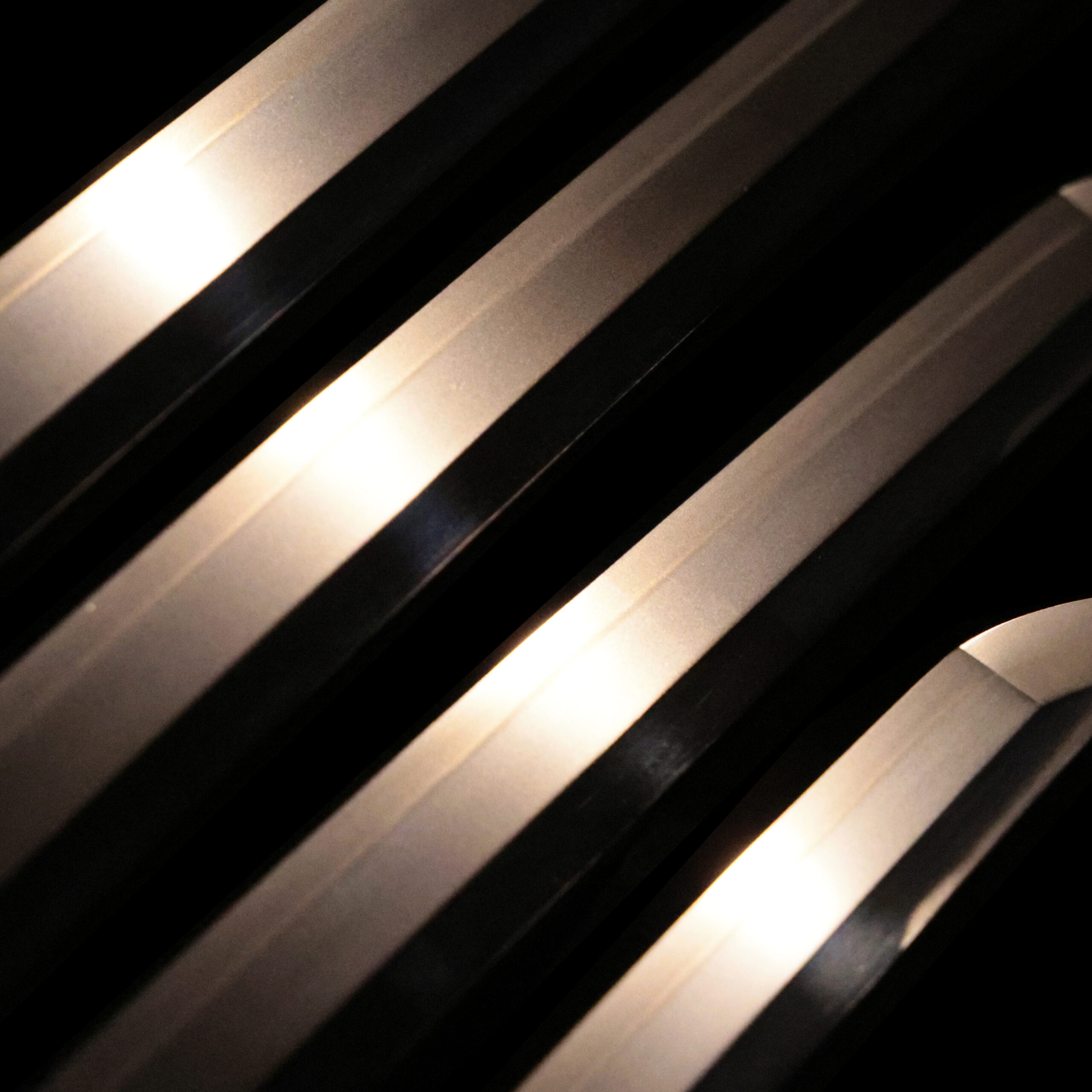
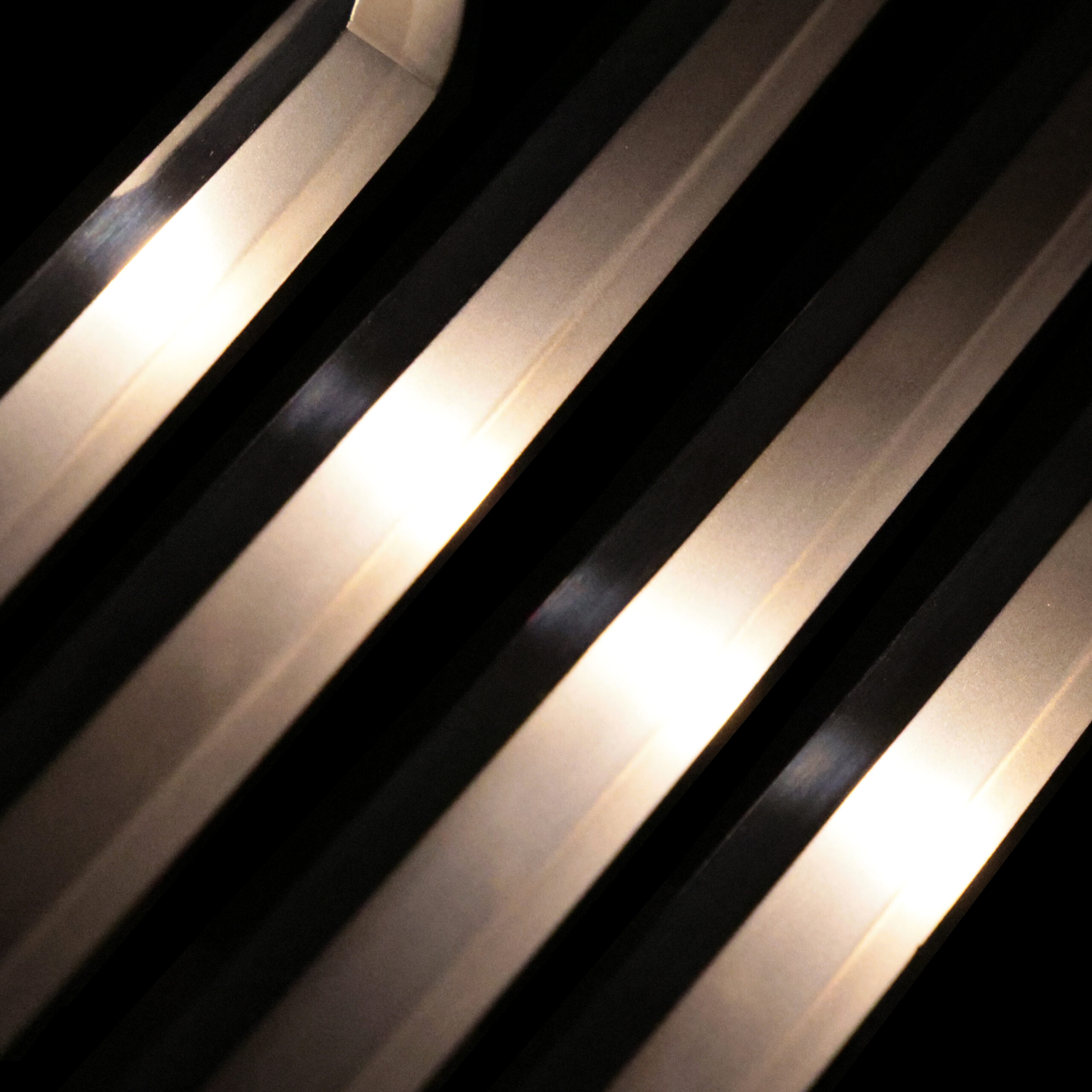
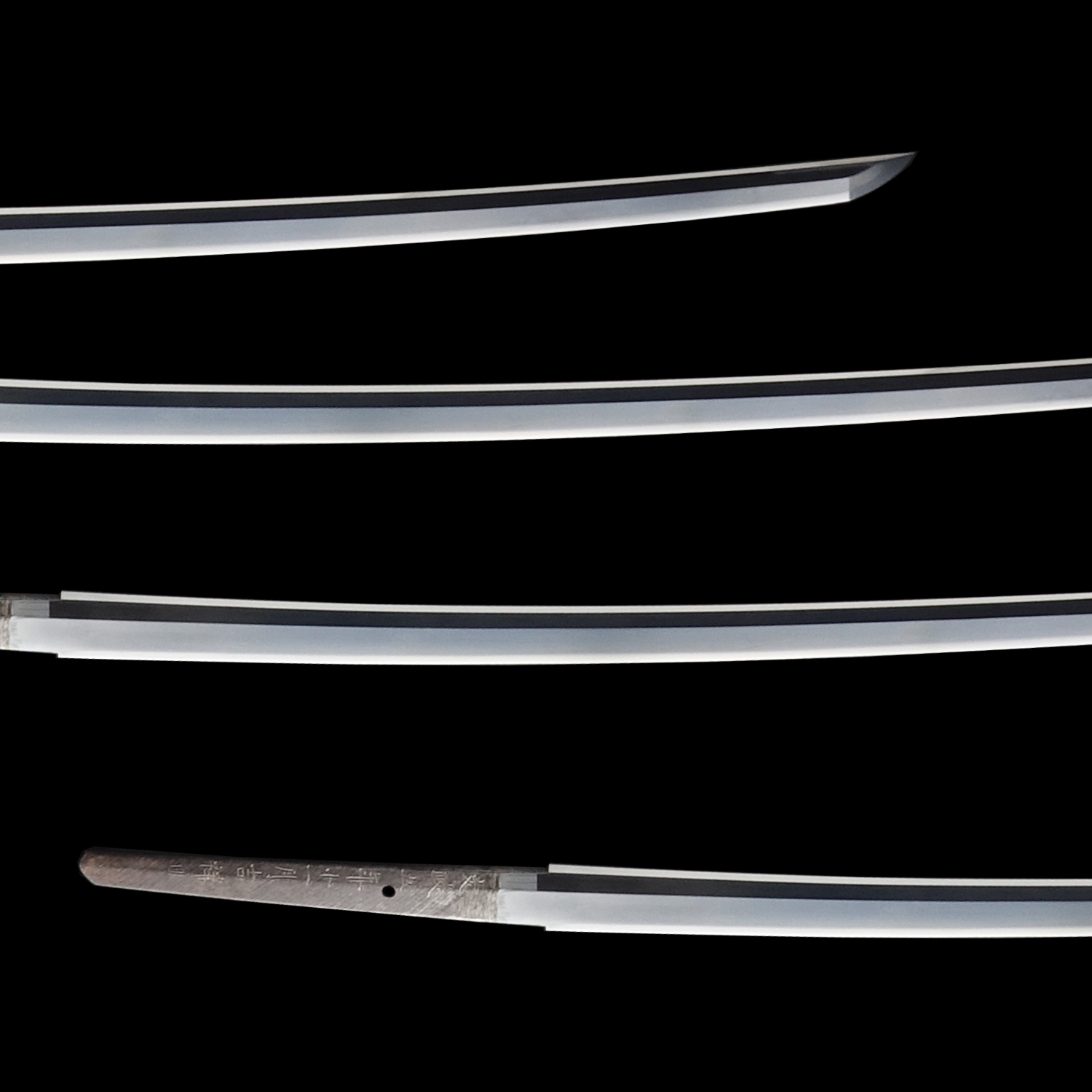
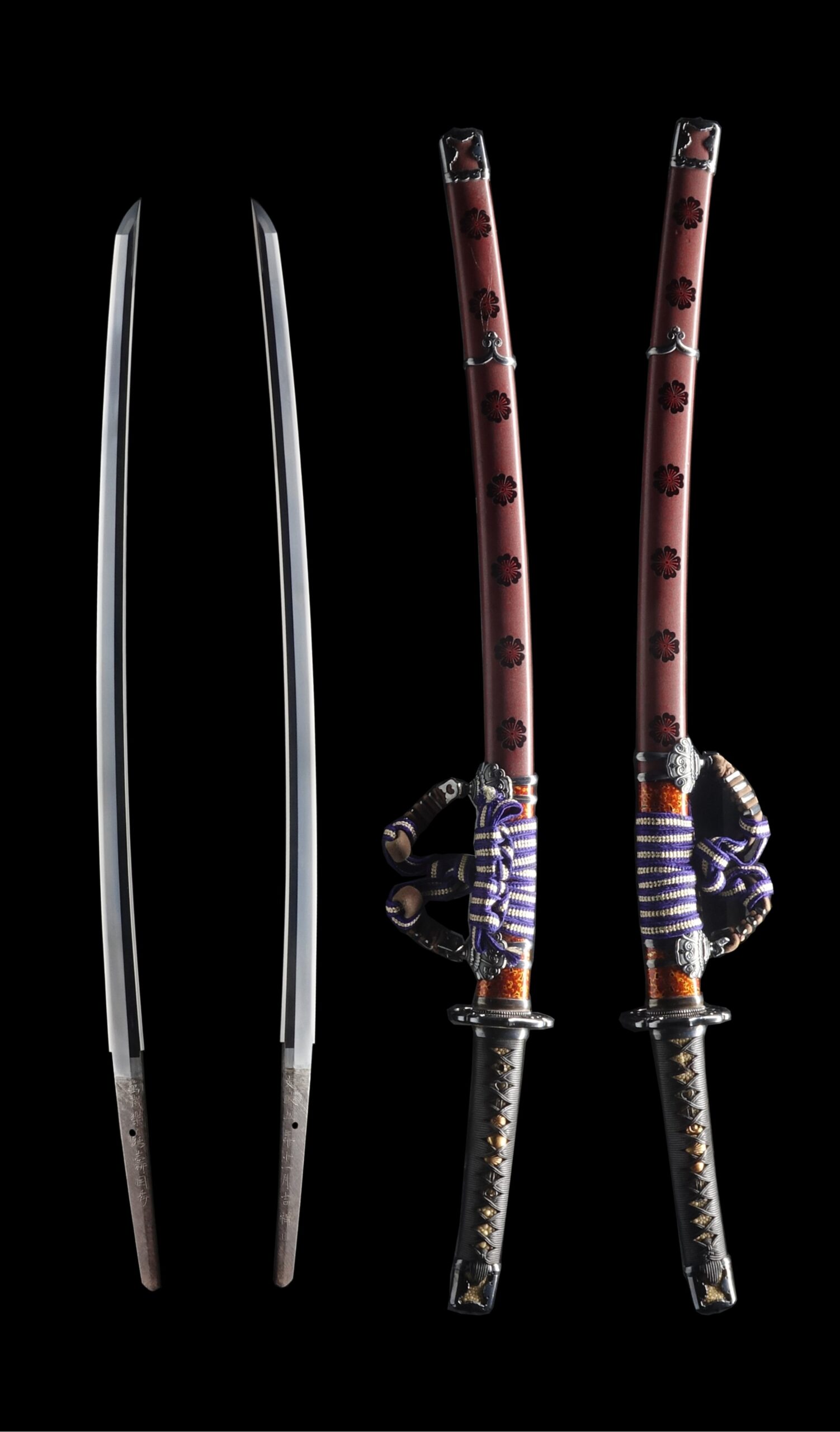
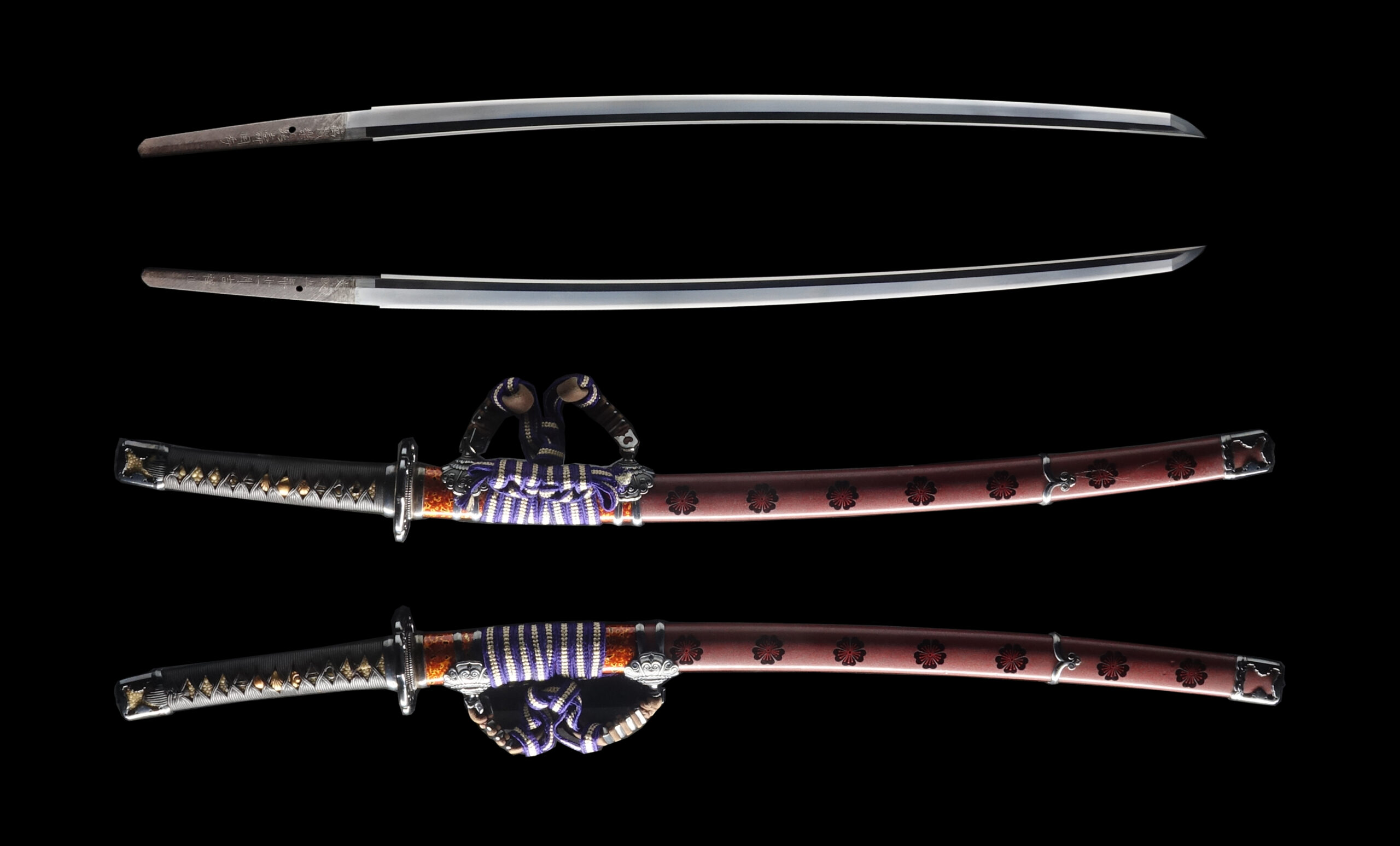
Around 1800 Suishinshi Masahide argued in his writings that the craft must return to the old masters’ methods: the fukkotō revival. His greatest successor Naotane worked convincingly in Bizen and Sōshū manners that had been dead for centuries.
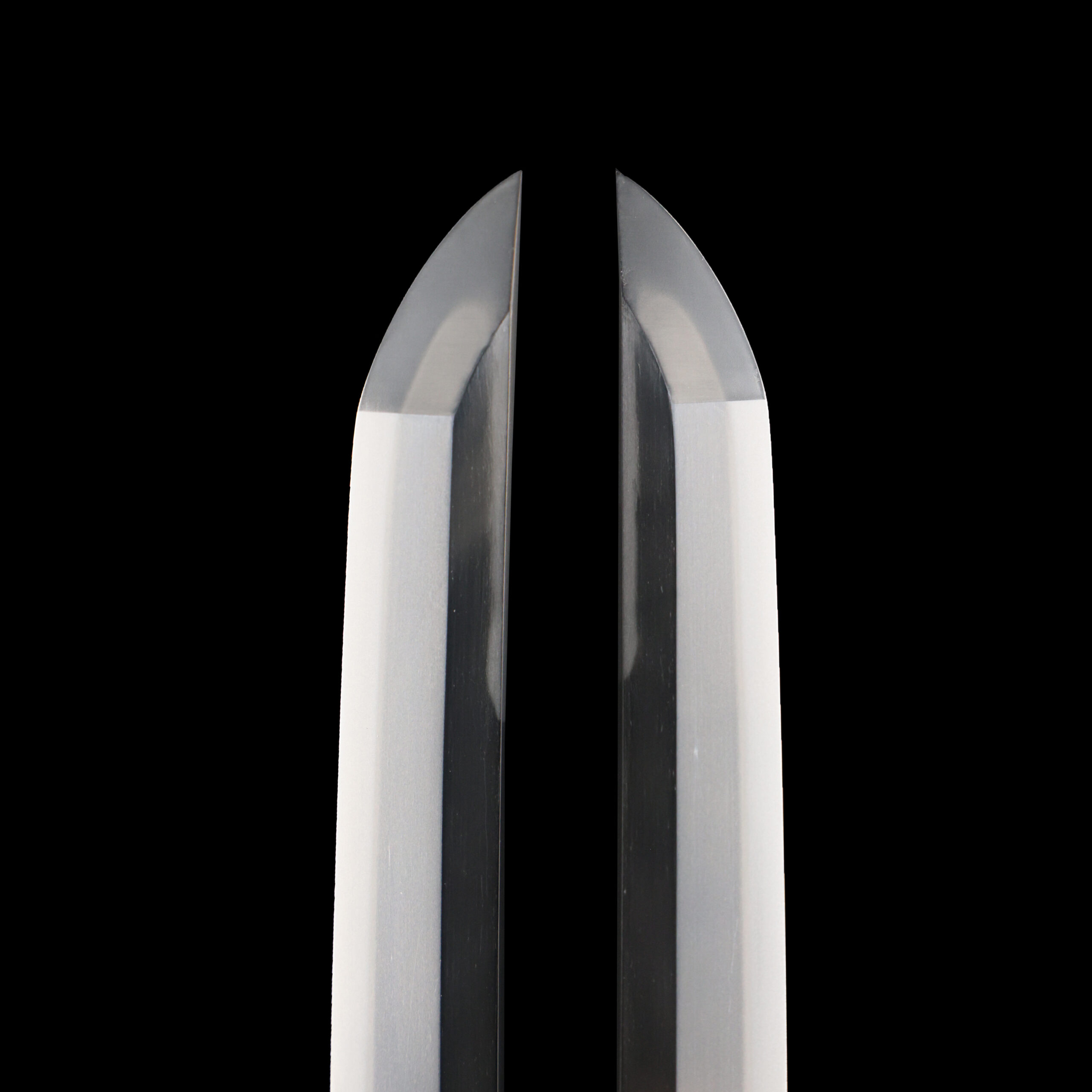
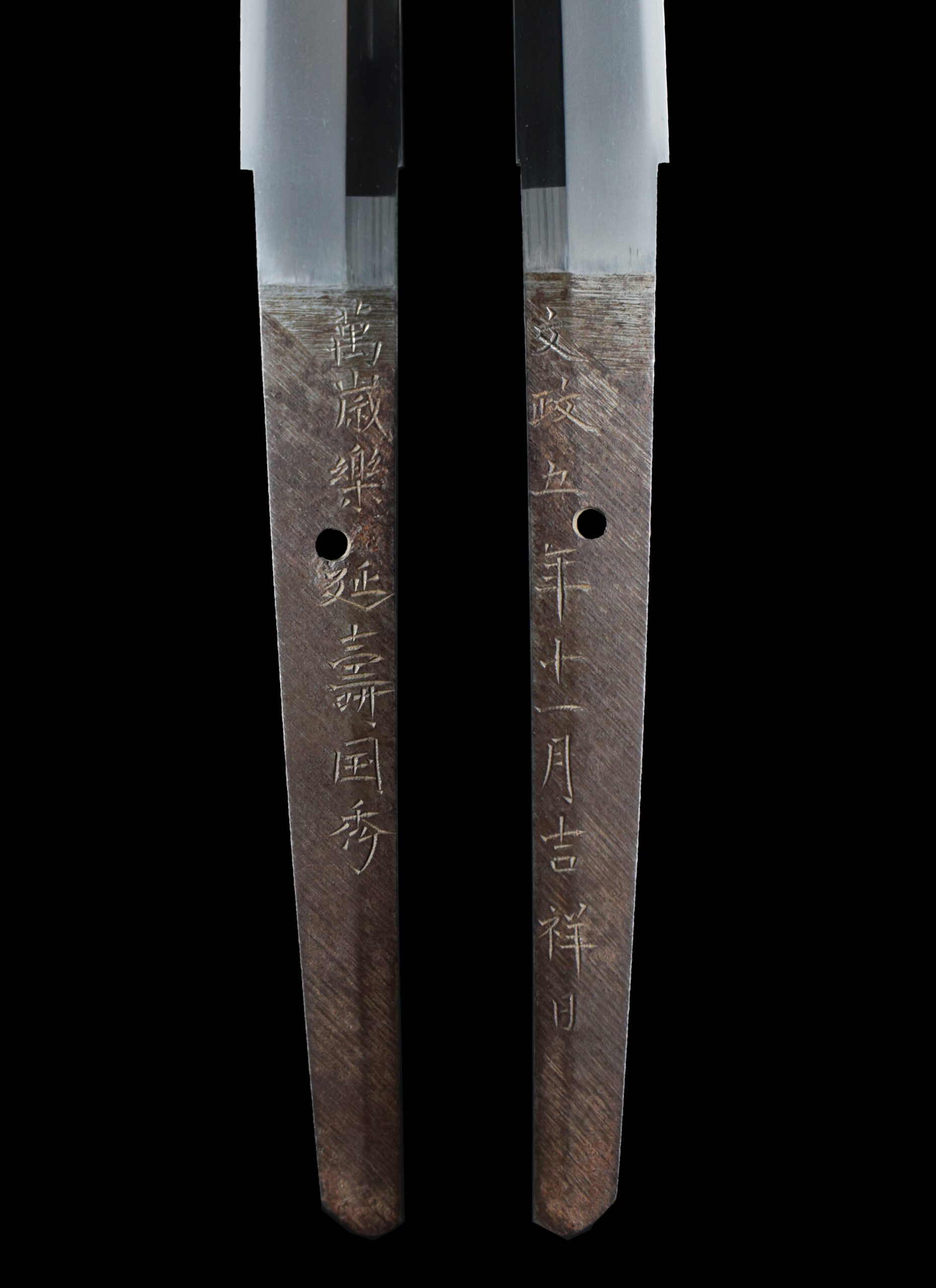
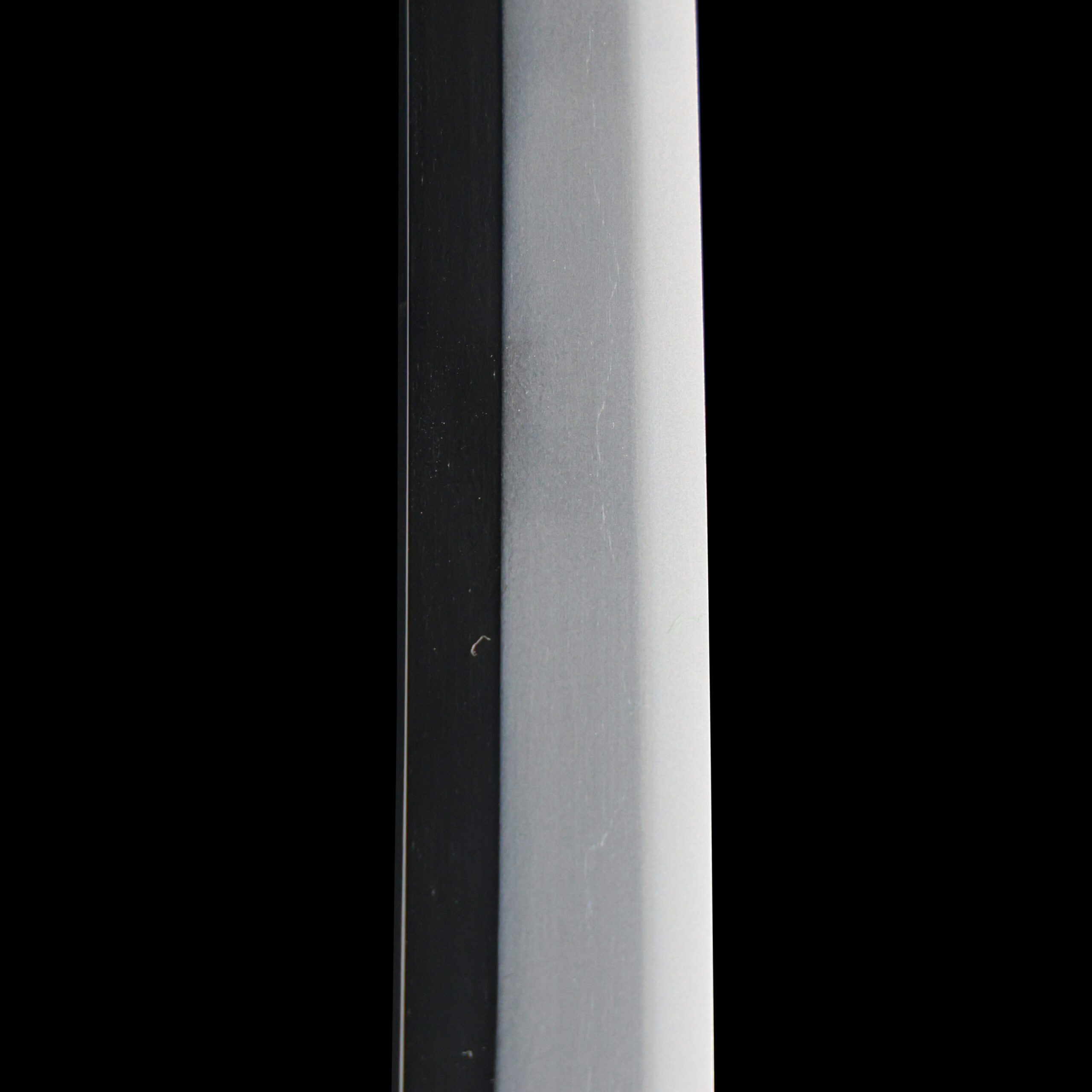
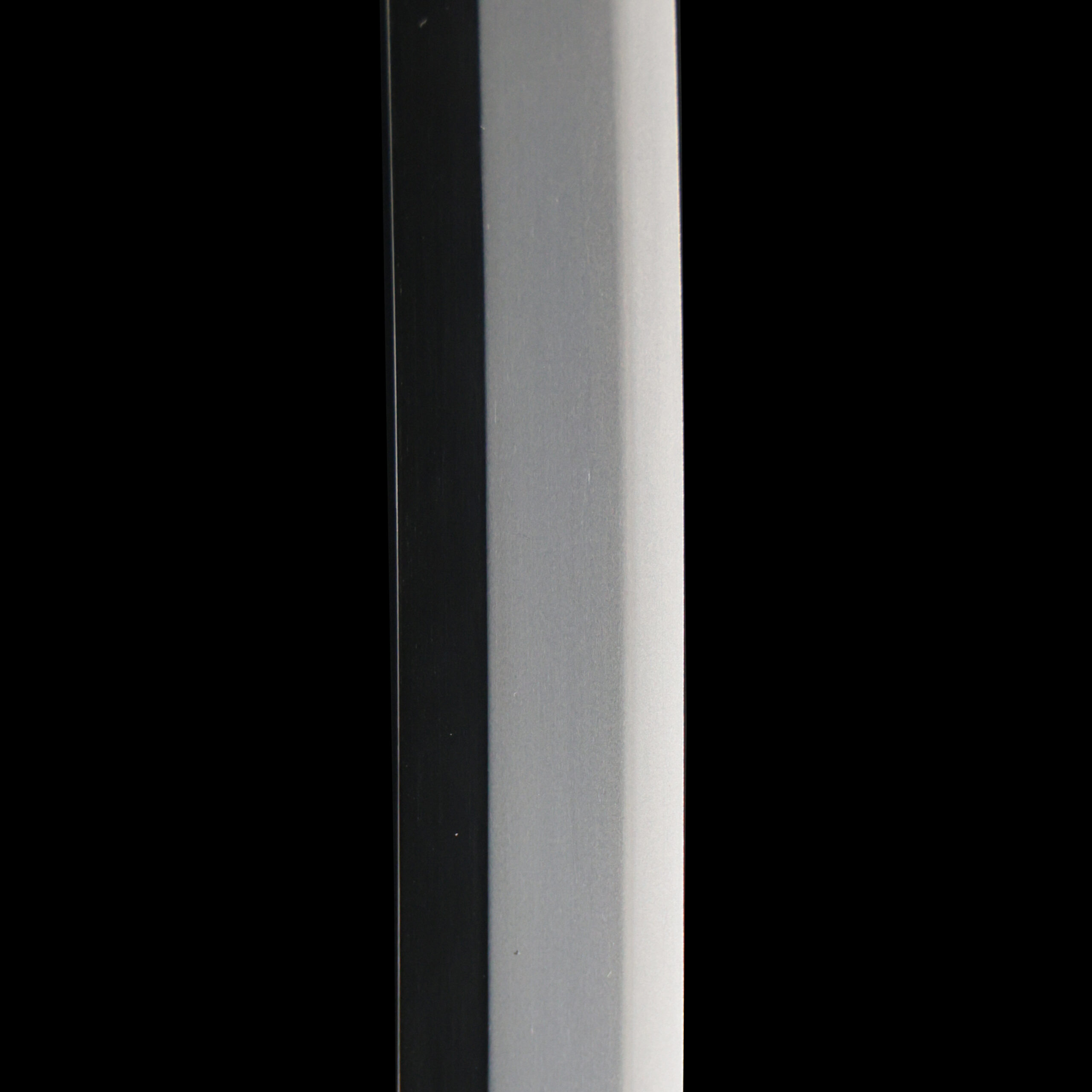
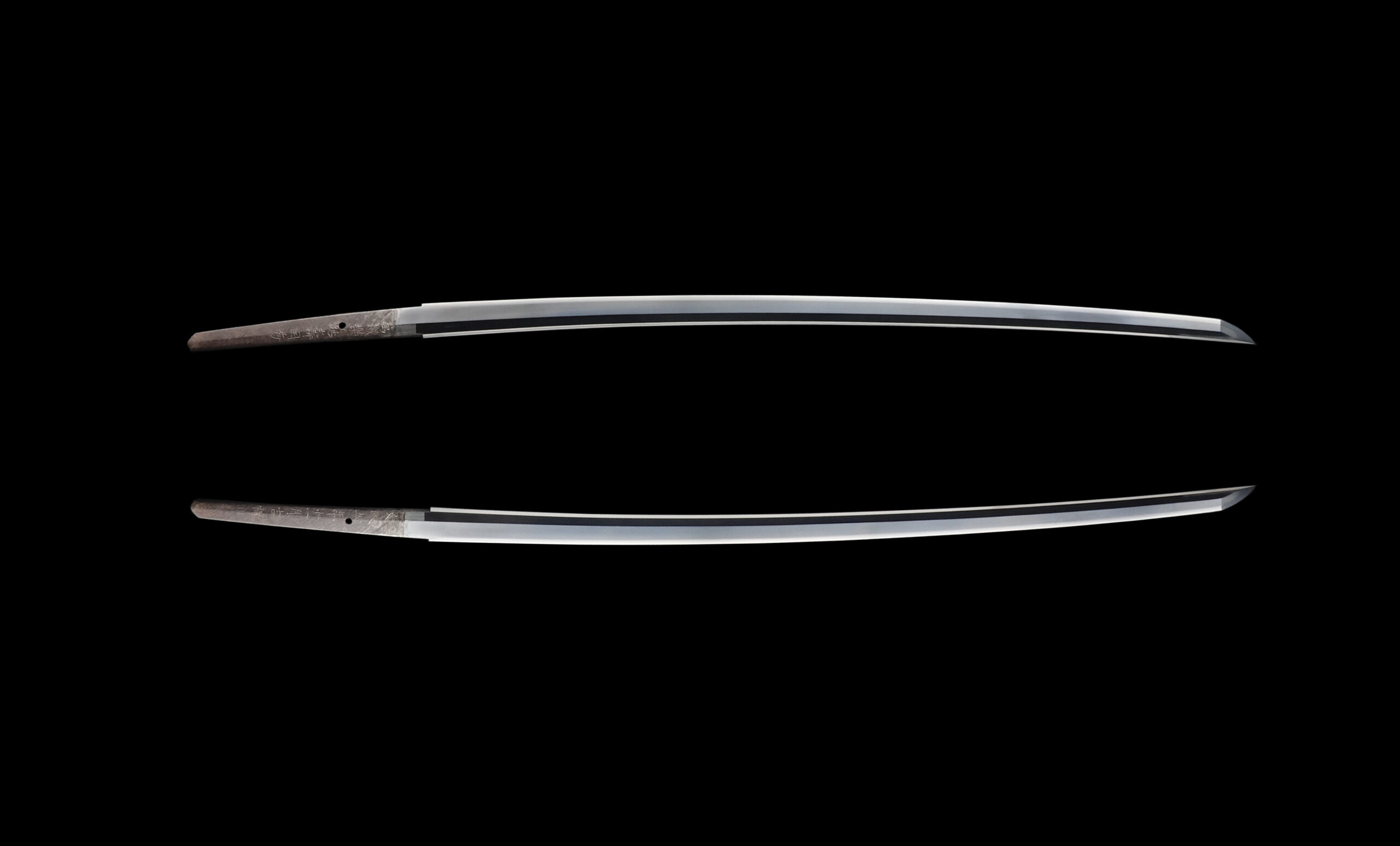
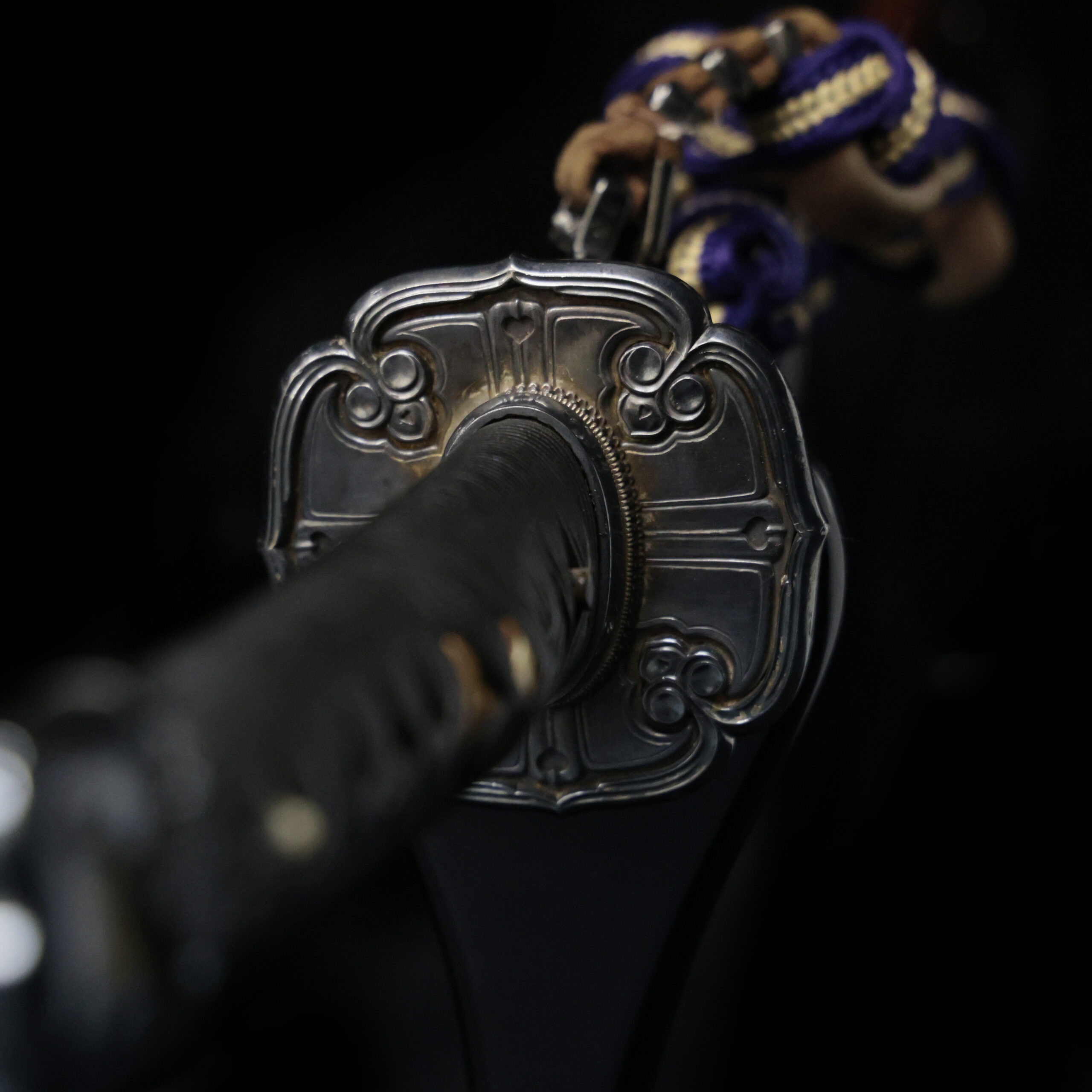
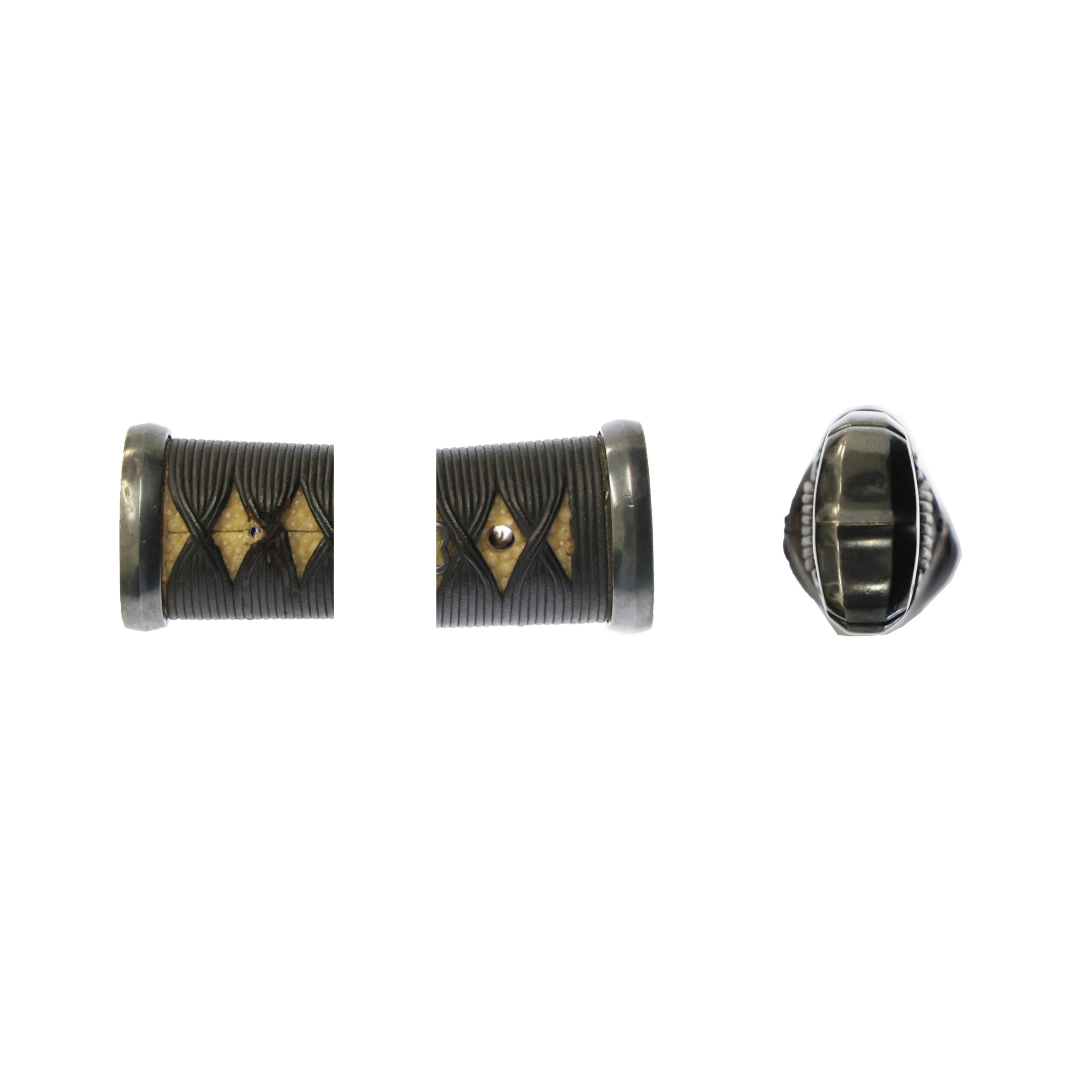
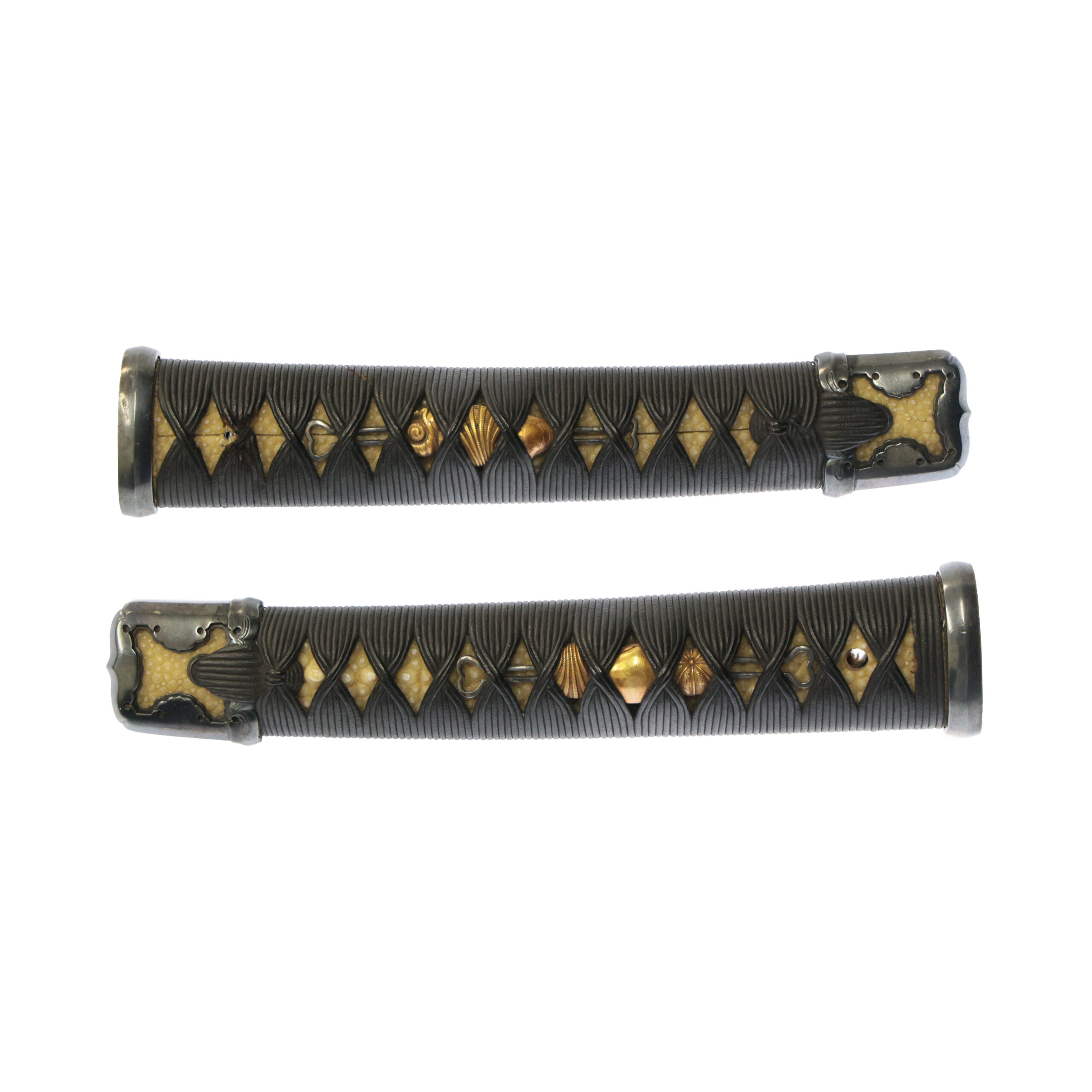
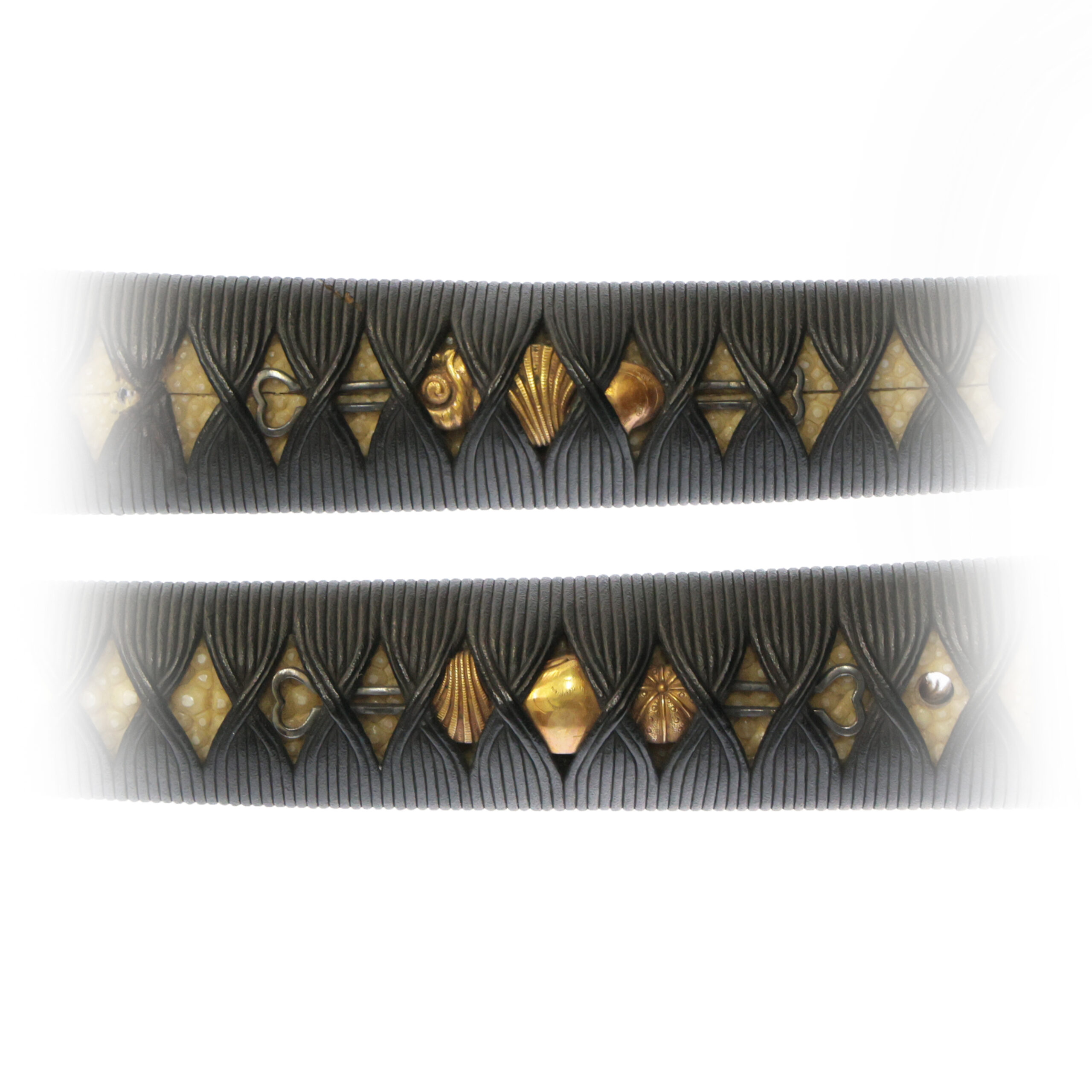
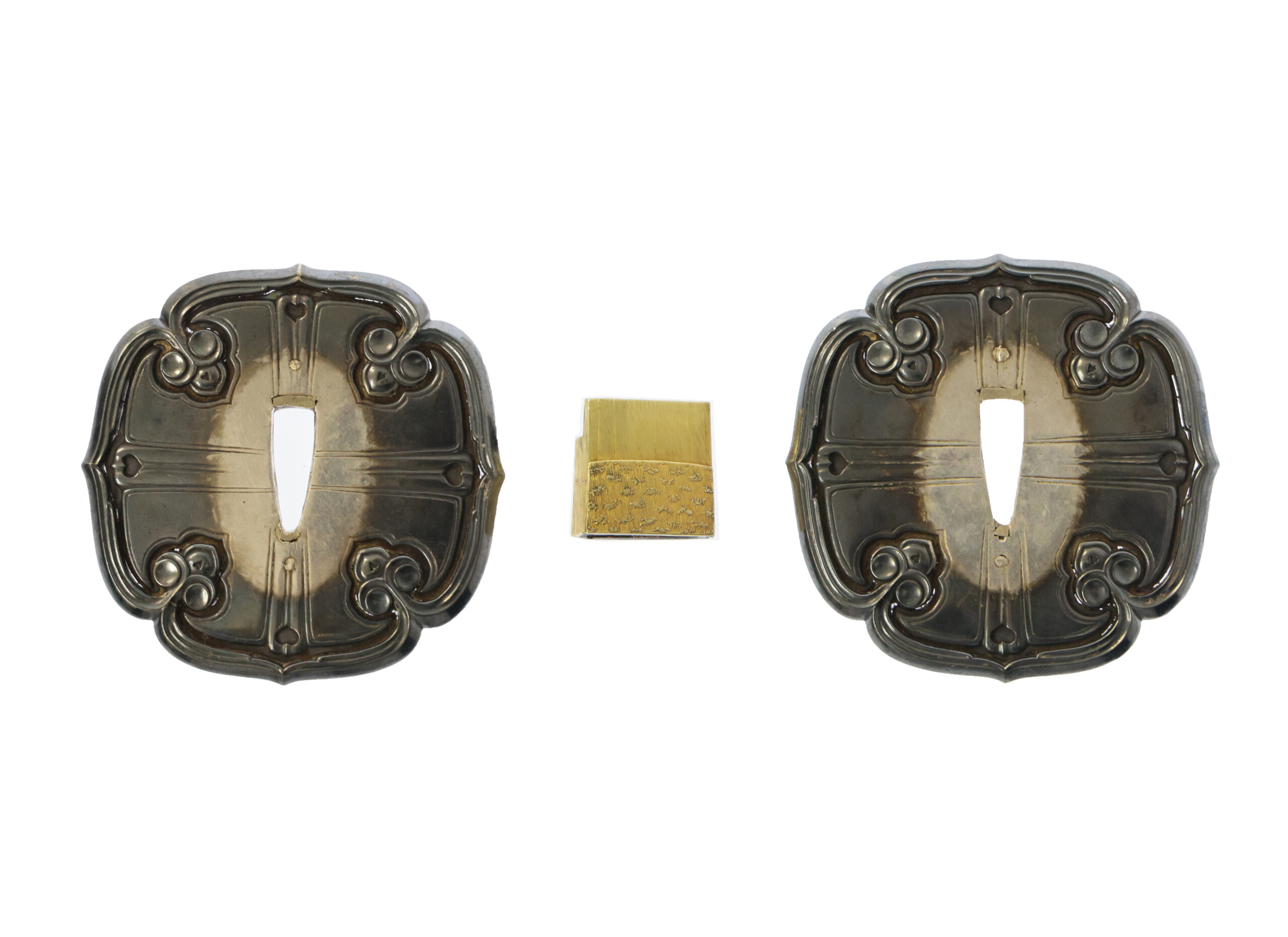
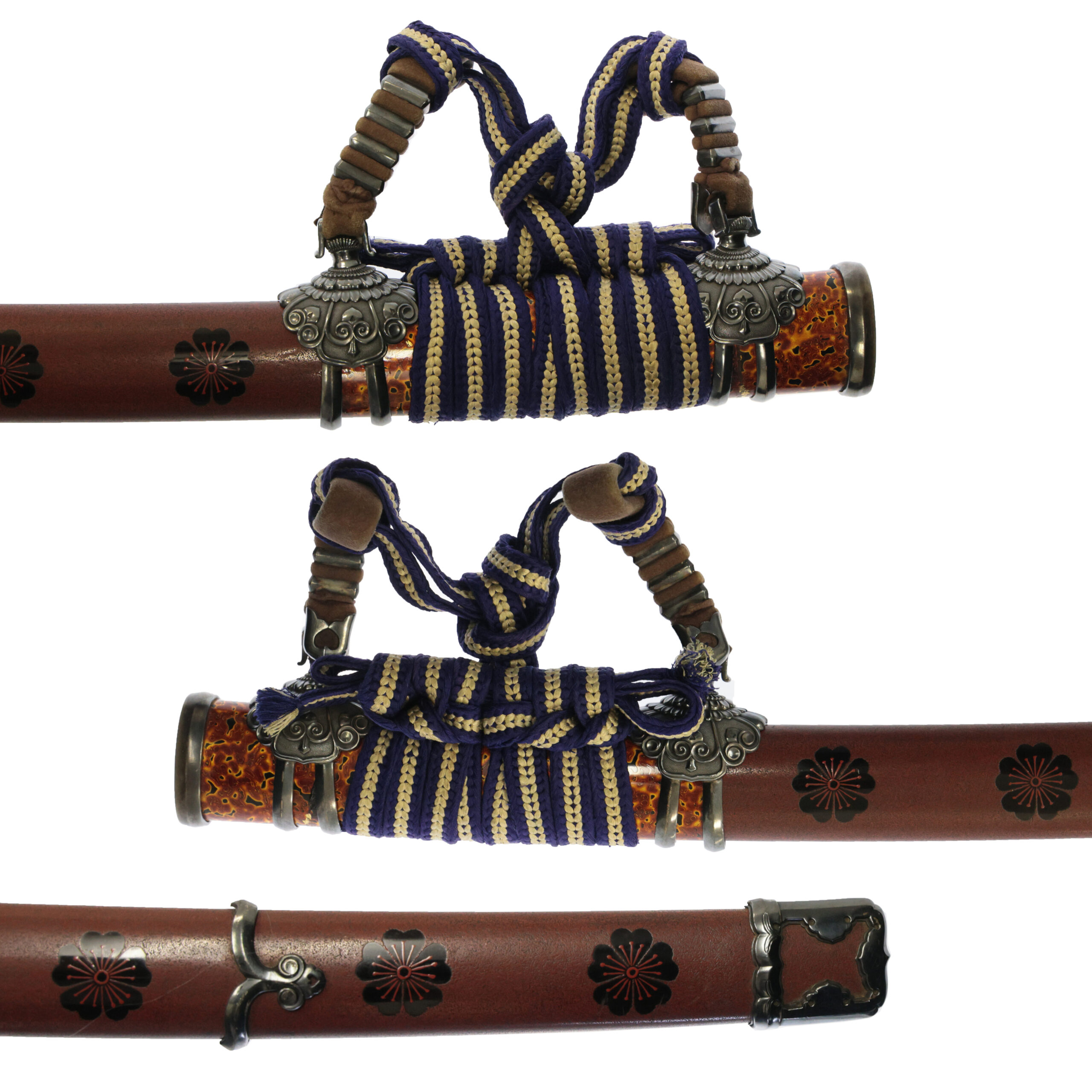
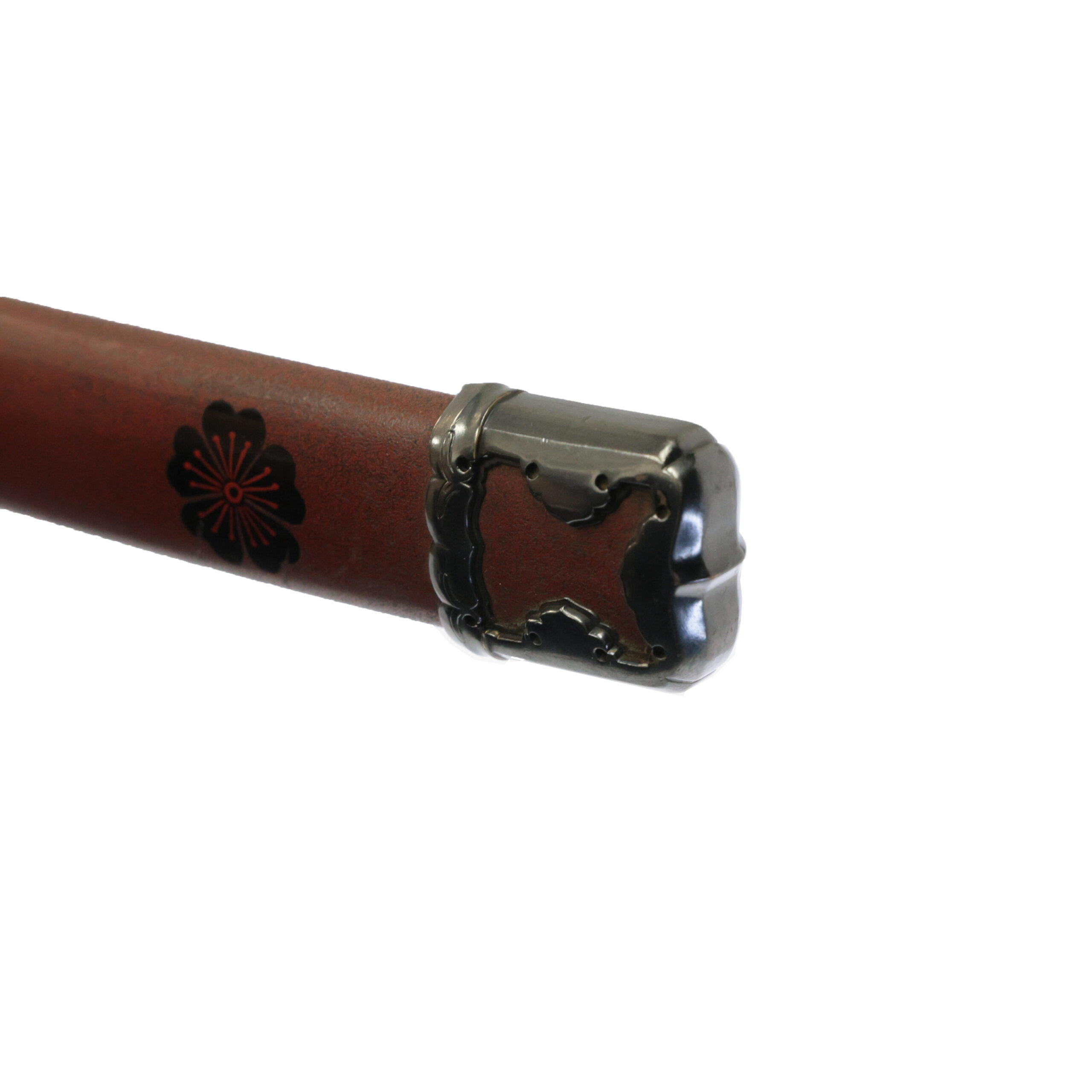
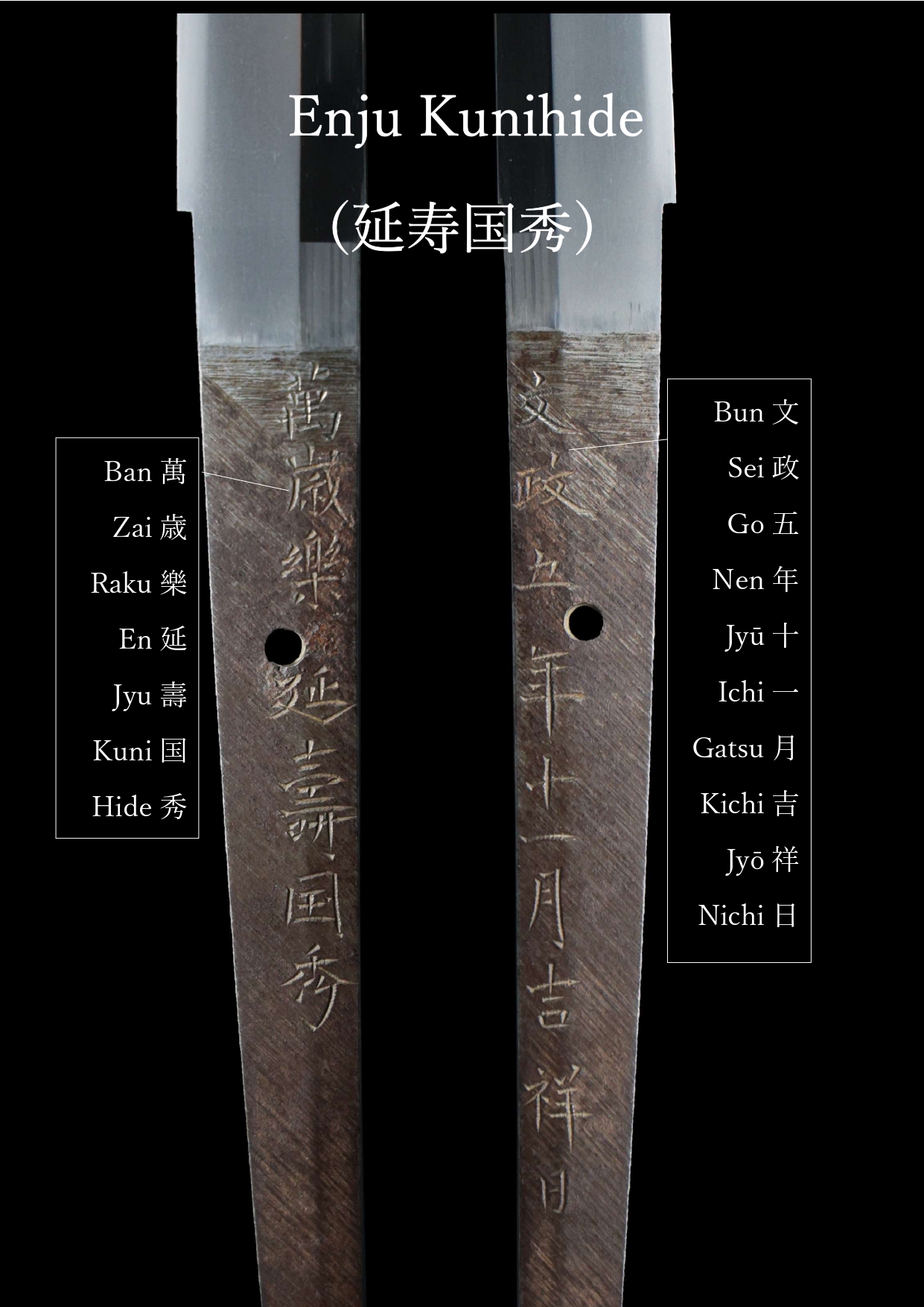
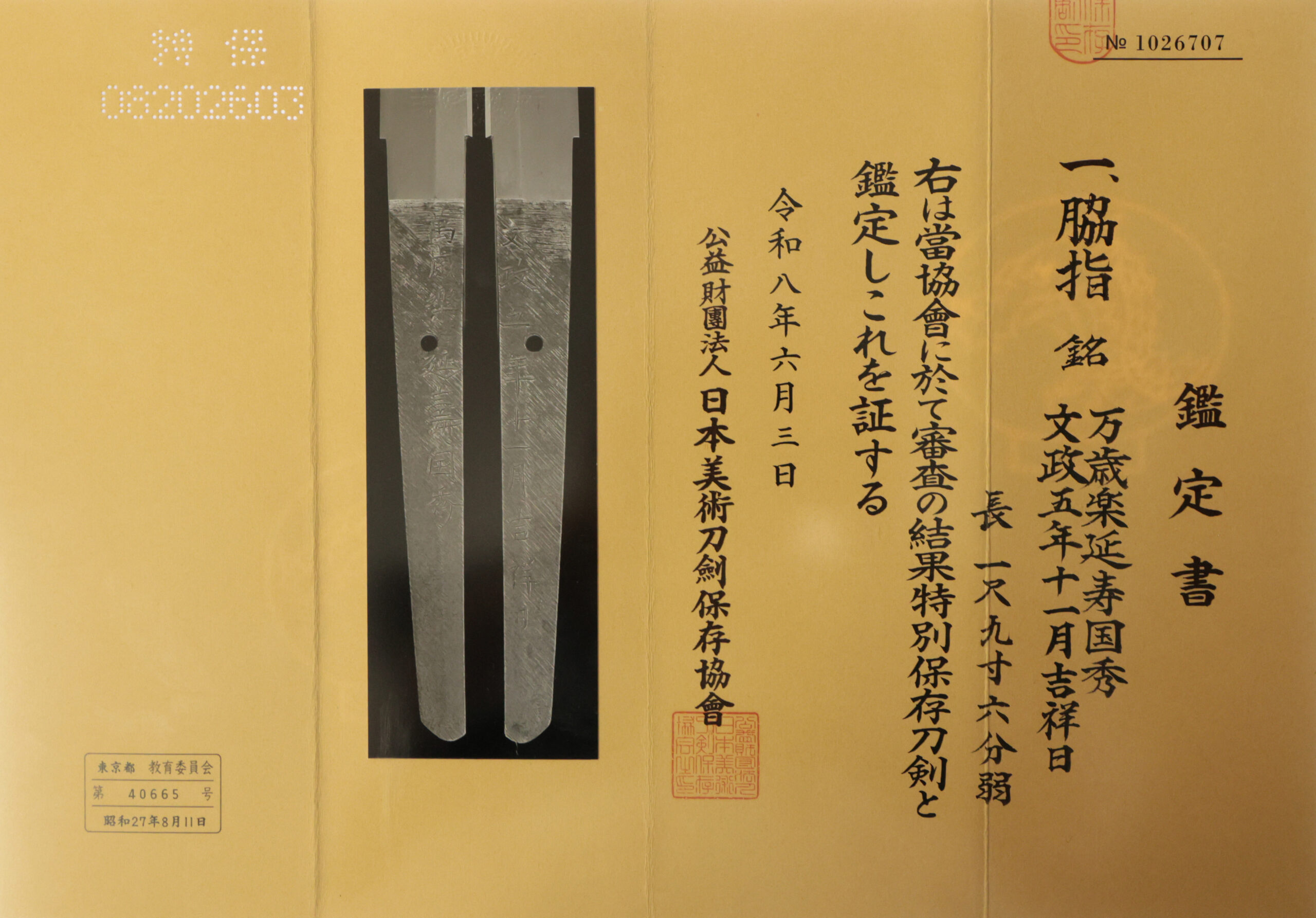
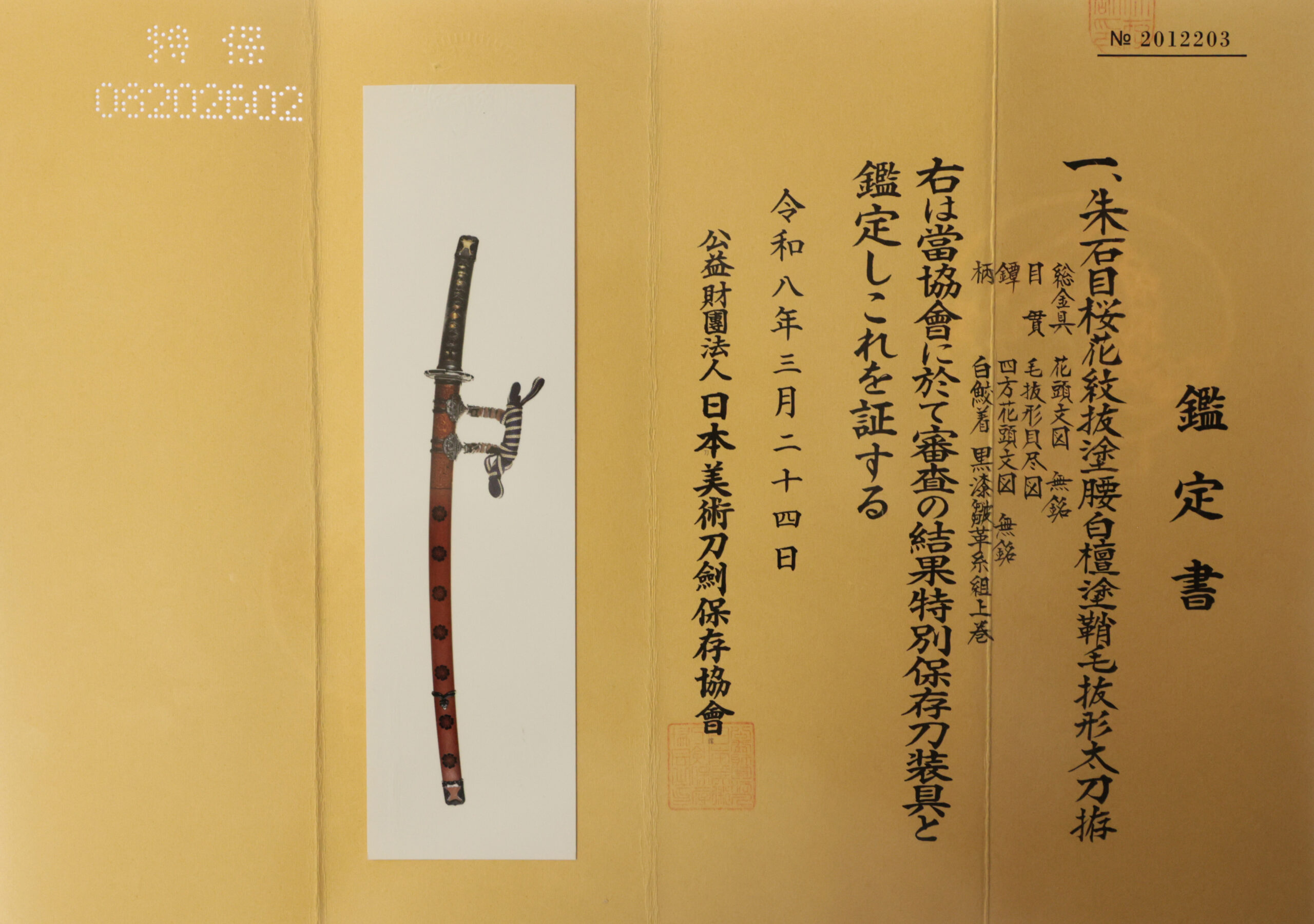
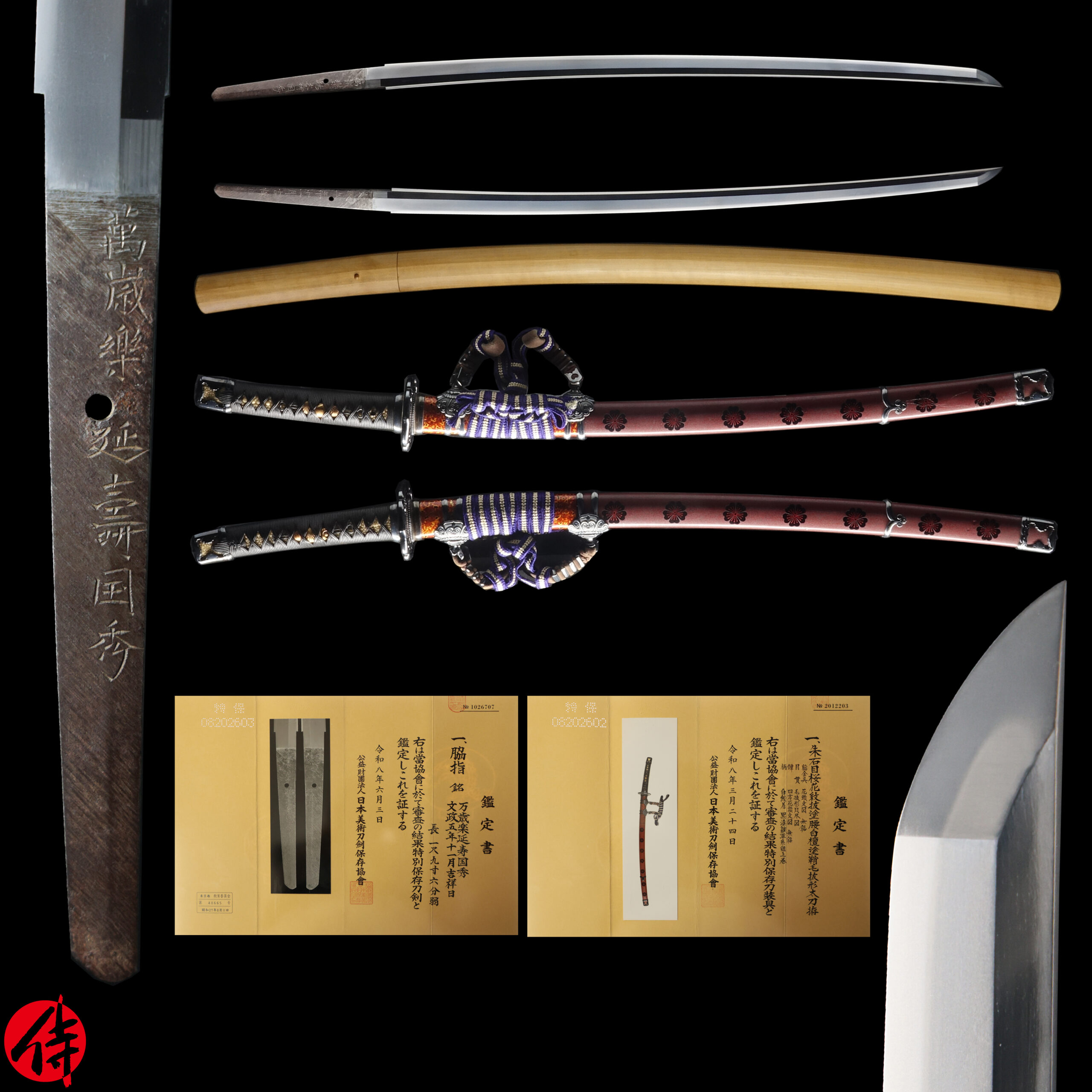
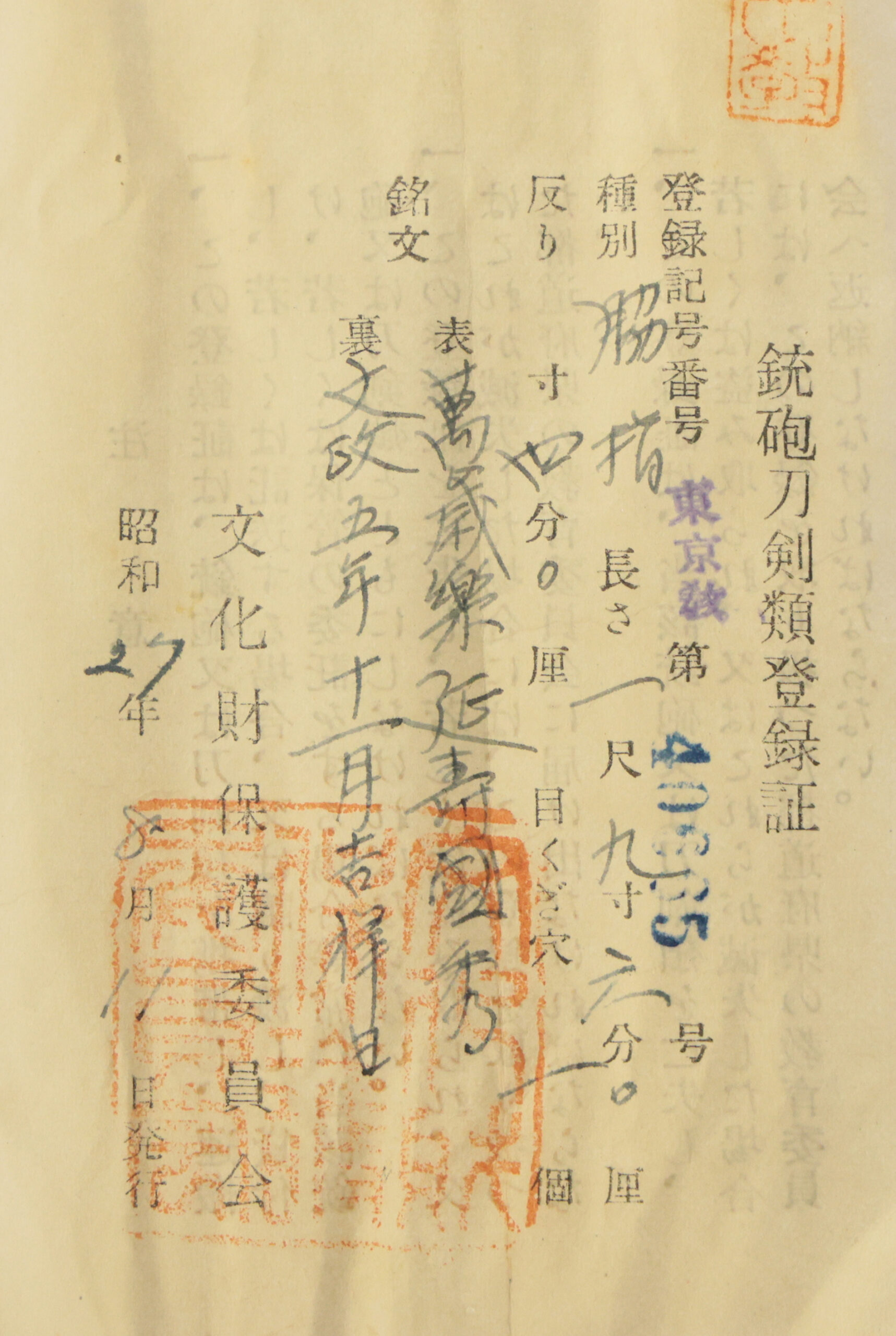
This blade was signed by Manzairaku Enju Kunihide (万歳楽延寿国秀) and is dated the eleventh month of Bunsei 5 (1822). Kunihide was a swordsmith from Higo province (today’s Kumamoto prefecture) who worked during the late Edo period, an era of swordmaking known as the Shinshinto period. His real name was Tanaka Jusuke (田中寿助), and later in his career, he also signed his blades using the alternative characters 国日出, likewise read as “Kunihide.” He is regarded as a descendant of the prestigious Enju school, whose roots in the Kikuchi region of Higo date back to the Kamakura period. He initially studied under Hoki no Kami Masayuki (伯耆守正幸), a distinguished swordsmith of the Satsuma domain. He later moved to Edo (present-day Tokyo), where he became a pupil of Suishinshi Masahide (水心子正秀), widely regarded as the founder of the Shinshinto revival. The inscription “Manzairaku” (万歳楽), which precedes his name, carries auspicious associations. It is also the title of a traditional piece in gagaku, the ceremonial music of the Japanese imperial court. Associated with celebratory occasions, the name evokes wishes for longevity and prosperity, making it particularly fitting alongside “Enju” (延寿), which literally means “extending life.” The Enju school flourished in Higo from the late Kamakura period through the Nanbokucho period. Its founder, Kunimura (国村), is traditionally said to have been a grandson of Rai Kuniyuki (来国行), a swordsmith of Yamashiro province (present-day Kyoto Prefecture). According to tradition, Kunimura and his apprentices relocated to Higo at the invitation of the powerful Kikuchi clan. One account connects this invitation to Kikuchi Takefusa (菊池武房), who sought skilled swordsmiths to strengthen the clan’s military preparations during the era of the Mongol invasions of 1274 and 1281. Kunimura and his successors served as the clan’s retained swordsmiths, producing blades for its warriors. The character “Kuni” (国) became a characteristic element of the names used by Enju swordsmiths. The school’s traditions continued through later generations and are also associated with the origins of the Dotanuki (同田貫) school. Swordsmiths claiming the Enju lineage remained active throughout the Edo period, extending its legacy across more than five centuries. When Enju school flourished in the Nanbokucho period, Japan was tumultuous because the imperial court was split into two sides (south and north). There were many conflicts, and many Samurai were deployed. And Enju school must have dedicated themselves to forging high-quality blades for those Samurai who fought in battles. The name “Enjyu” is written as 延寿 in Japanese. If you translate the word literally, it means extending life span, which was construed as good luck among feudal lords. Therefore, the swords were presented among Samurai as good gifts. This blade is appraised as a Tokubetsu Hozon Touken (保存刀剣) issued by NBTHK (Nihon Bijutsu Touken Hozon Kyokai: 日本美術刀剣保存協会). Koshirae This type of Koshirae is called a Tachi-koshirae (太刀拵え), designed to be worn hanging at the waist. It is not intended for practical combat; instead, its purpose was to signify the authority and dignity of the Samurai who carried it, or the powerful figures they served. As a result, it is characterized by the luxurious decorations and colors. Tsuka and Menuki These menuki are crafted in the kenukigata (毛抜形, hair-tweezer-shaped) style and feature the 貝尽図 (Kai Dukushi Zu); it is a combination of various seashells design. And it seems some of them were initially colored with golden paint. You could find several types of seashells in this Tsuba. This motif often designed with a seaside scene or wave pattern. You would feel the refreshing atmosphere of summer. Bivalves, especially clams, their shells cannot be combined with any other clam’s frame; therefore, its pattern represents happy marriage. Seashell is called Kai (貝) in Japanese. Because of its pronunciation, the seashell has another meaning. There is a Japanese word “Yarigai” (やりがい, worthwhile). As a part of this word has the same accent as Kai (貝 is read as Gai in some cases), Japanese people found this meaning. Also, since seashells are hard and combined only with their pair, people thought it represented a robust defense. Due to these meanings that inspire warriors who go to the battlefields, Samurais might have loved this motif. Tsuba and Habaki This tsuba is decorated with a Shihō Katōmon-zu (四方花頭文図) design, featuring stylized floral motifs arranged in four directions. Its symmetrical composition combines gracefully curved outlines with inward-curling details, creating an elegant, balanced appearance. Saya The surface of this saya is finished in Shu Ishime Ōkamon Nuki-nuri, with Koshi Byakudan-nuri (朱石目桜花紋抜塗腰白檀塗). The vermilion lacquer features a fine, stone-like texture, accented with cherry blossom motifs defined by areas where the textured finish is omitted. The lower section is decorated in Byakudan-nuri, a traditional technique in which translucent lacquer is applied over metallic foil. Authentication Paper They authenticated the blade on June 3rd in the 8th year of Reiwa (2026). They appraised it as Tokubetsu Hozon Touken, the blade especially worth preserving for Japanese society. Authentication Paper They authenticated the Koshirae on March 24th in the 8th year of Reiwa (2026). They appraised the Koshirae as Tokubetsu Hozon Tosogu, Koshirae especially worth preserving for Japanese society.
Suishinshi Masahide Kunihide國秀
Offered by Samurai Museum


As written by the shop
Shinshinto · Higo · around 1789-1801
Fujishiro Chu-jo saku · Tōken Taikan top 77%
2 pieces on the market now
Shinshinto · Musashi
67 pieces on the market now
At Hamachō in Edo, in the closing decades of the eighteenth century and the opening ones of the nineteenth, Suishinshi Masahide[[c:1]] gathered the school that would turn Japanese swordmaking back toward its medieval models. Born Kawabe Gihachirō at Akayu in Dewa in 1750, signing first as Suzuki Takahide and then Eikoku, he studied under the Shitahara smith Yoshihide of Musashi, took the name Masahide in An'ei 3, and served the Akimoto house of Yamagata before settling in Edo, where he worked for nearly fifty years. He is the founding figure of the shinshintō and the theorist of the fukko-tō (revival-sword) doctrine, the argument that the sword ought to return to its Kamakura forms. Around that teaching he drew a large body of pupils, among them Taikei Naotane, who would give the revival its fullest practical form, the future second Masayoshi (Hosokawa Morihide), and a wider Edo and provincial following that carried the program into the Mito, Yonezawa, Tsuyama, and Tatebayashi domains. The shared vocabulary of the school is the deliberate reach back into the koto traditions, worked over a tightly forged, often muji-toned ko-itame with thick ji-nie. Masahide's own prime hand was the Ōsaka-utsushi, the surging tōran-midare of Tsuda Sukehiro opening from a long yakidashi and the broad suguha after Inoue Shinkai, betrayed on even his closest copies by a blackish, coarse nie that spills from the ha into the ji. Naotane gave the revival its Bizen and Sōshū faces: a reverse-leaning chōji-midare with angular kaku-gunome and saka-ashi, modeled on the late-Kamakura Osafune masters Kagemitsu and Kanemitsu and anchored by a consciously revived midare-utsuri that no ordinary shinshintō steel carries, set beside a Sōshū notare with its whorled uzumaki-hada and coarse, striped nie. The pupils divided this inheritance along their own lines. Jirōtarō Naokatsu, Naotane's adopted son, took a Bizen-den led by a kataochi-gunome from Kanemitsu with a pervasive saka-gakari slant and chōji- or midare-utsuri in the ji.
Suishinshi Masatsugu reproduced Naotane's two traditions, Sōshū and Bizen, down to the cut of his signature. Through Masayoshi the Bizen current passed to his heir Hosokawa Masamori of Tsuyama, whose chōji clusters mixed with gunome-chōji and togariba. The Osaka wave traveled separately into Mito through Naoe Sukemasa, who set a Shinkai-styled suguha and a Sukehiro tōran over a clear ko-itame, while Chōunsai Tsunatoshi of the Uesugi service carried a nioi-deki chōji mixed with gunome, suguha, and tōran-midare, often with carving by his own hand. To kantei the school is to weigh a tradition consciously copied against the period marks the copy cannot shed: the constant of the line is that the hamon is never the pure nioi-deki of old Bizen but carries nie throughout, a difference the NBTHK names outright as the divide between koto and shinshintō. The revived utsuri in Naotane and Naokatsu, the spilling nie in Masahide, the whorled uzumaki-hada shared across the line, and the broad, thick-kasane late-Edo sugata are the surest tells, narrowed further by the school's habit of full, dated signatures that make these smiths among the most exactly knowable of their age. Masahide stands at the head as the teacher and theorist, his finest work in his Ōsaka copies rather than the doctrine he proclaimed; Naotane stands ahead of him in execution, his Bizen-den held the finest among the shinshintō. Their pupils define the late-Edo Osafune and Sōshū revivals as practiced through Edo and the domains, with Naokatsu and Masatsugu read as the next hands after Naotane and Masayoshi. The provenance of the school runs through domain commission and bestowal (Mito blades forged at the Kōrakuen by lordly order, Tsuyama and Yonezawa fief work, Naotane's Sanada daishō and a tachi recorded in Honma's inventory of the Imperial collection) rather than ancient daimyō transmission, fitting for a movement that, within a single generation at Edo, redrew the direction of nineteenth-century swordmaking by turning it back toward the old models. Learn more →
| Smith | Era | Designated |
|---|---|---|
| Naotane直胤 | 1801-1837 | 40 |
| Masahide正秀 | 1777-1817 | 28 |
| Sukemasa助政 | 1804-1825 | 8 |
| Jirotaro Naokatsu直勝 | 1805-1858 | 7 |
| Masayoshi正義 | 1791-1860 | 5 |
The Shinshintō revival
Around 1800 Suishinshi Masahide argued in his writings that the craft must return to the old masters’ methods: the fukkotō revival. His greatest successor Naotane worked convincingly in Bizen and Sōshū manners that had been dead for centuries.
A Hozon-certified blade judged to show notably superior workmanship and a better state of preservation. The bar is higher: re-tempered blades and most unsigned Muromachi/Edo works are excluded.
The NBTHK (Nihon Bijutsu Tōken Hozon Kyōkai, the Society for the Preservation of Japanese Art Swords) is a public-interest incorporated foundation founded in 1948 and supervised by Japan’s Agency for Cultural Affairs (Bunkachō); it is based at the Japanese Sword Museum in Tokyo. Its expert panels physically examine each submitted work (shinsa) and issue a certificate (kanteishō) ranking it by artistic and historical merit. NBTHK papers are the most widely recognized standard of authentication for Japanese swords and fittings.
NBTHK official siteReturns/exchanges limited to defects caused by shipping (except willful misconduct or gross negligence by the company); customers must contact within 72 hours of receiving the product.
¥3,200,000