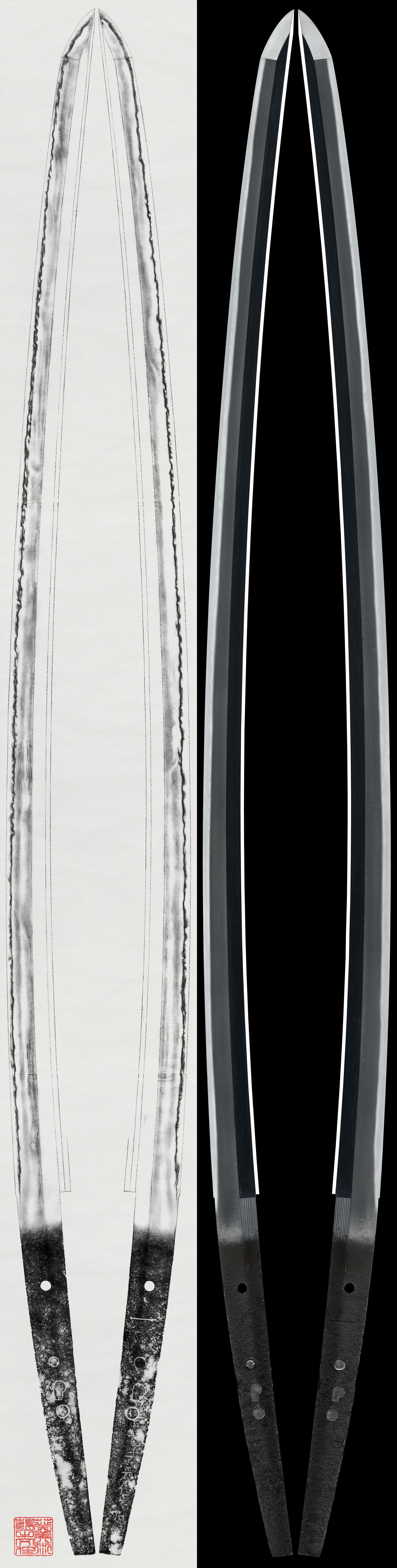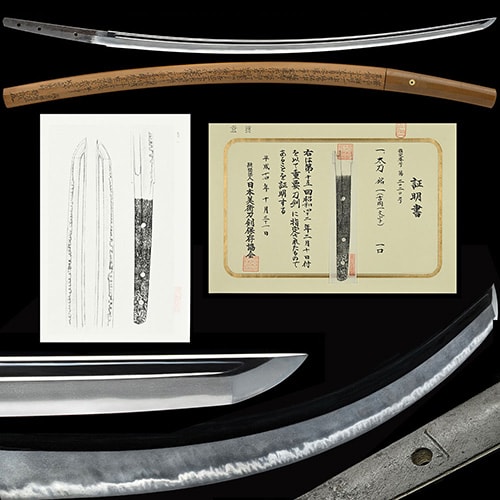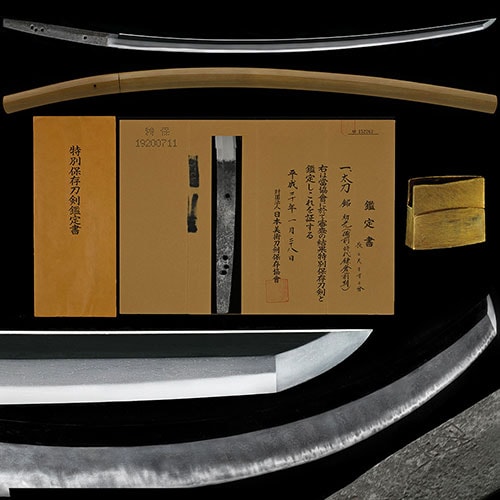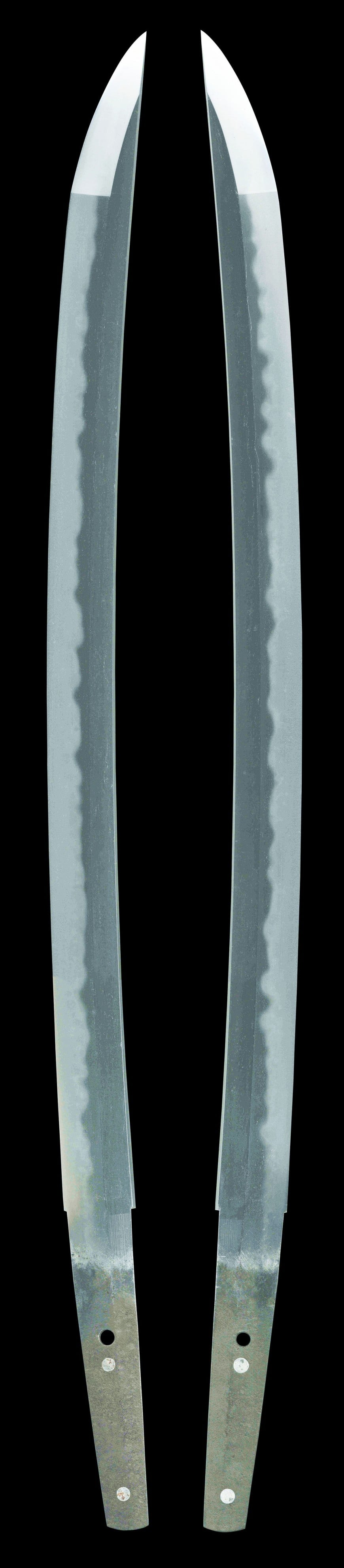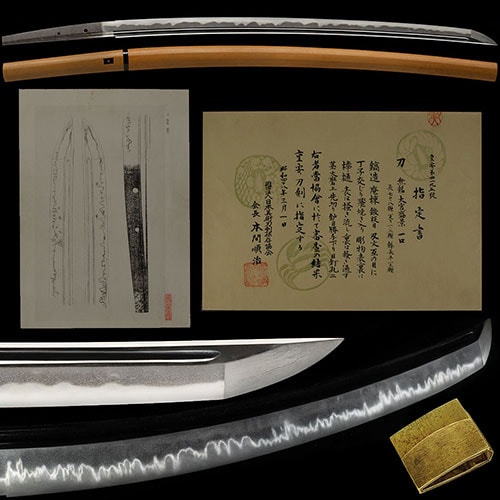
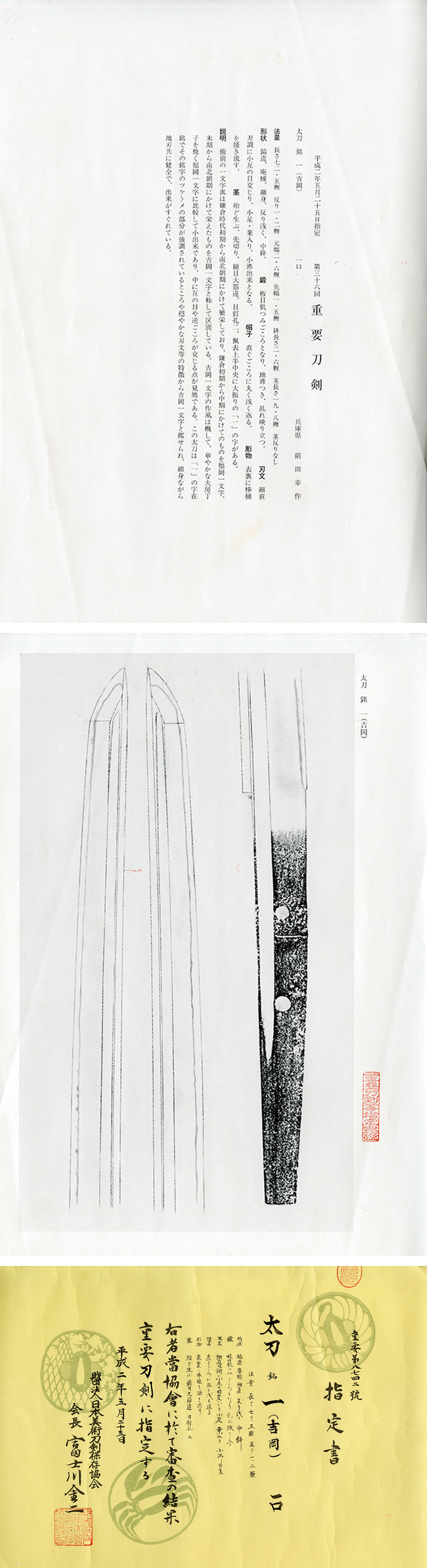

-, 36th Session — Designated May 25, 1990
, : Yoshioka school (吉岡一文字)
Measurements 72.5 cm, 1.2 cm, 2.6 cm, 1.5 cm, 2.6 cm, 19.8 cm, none
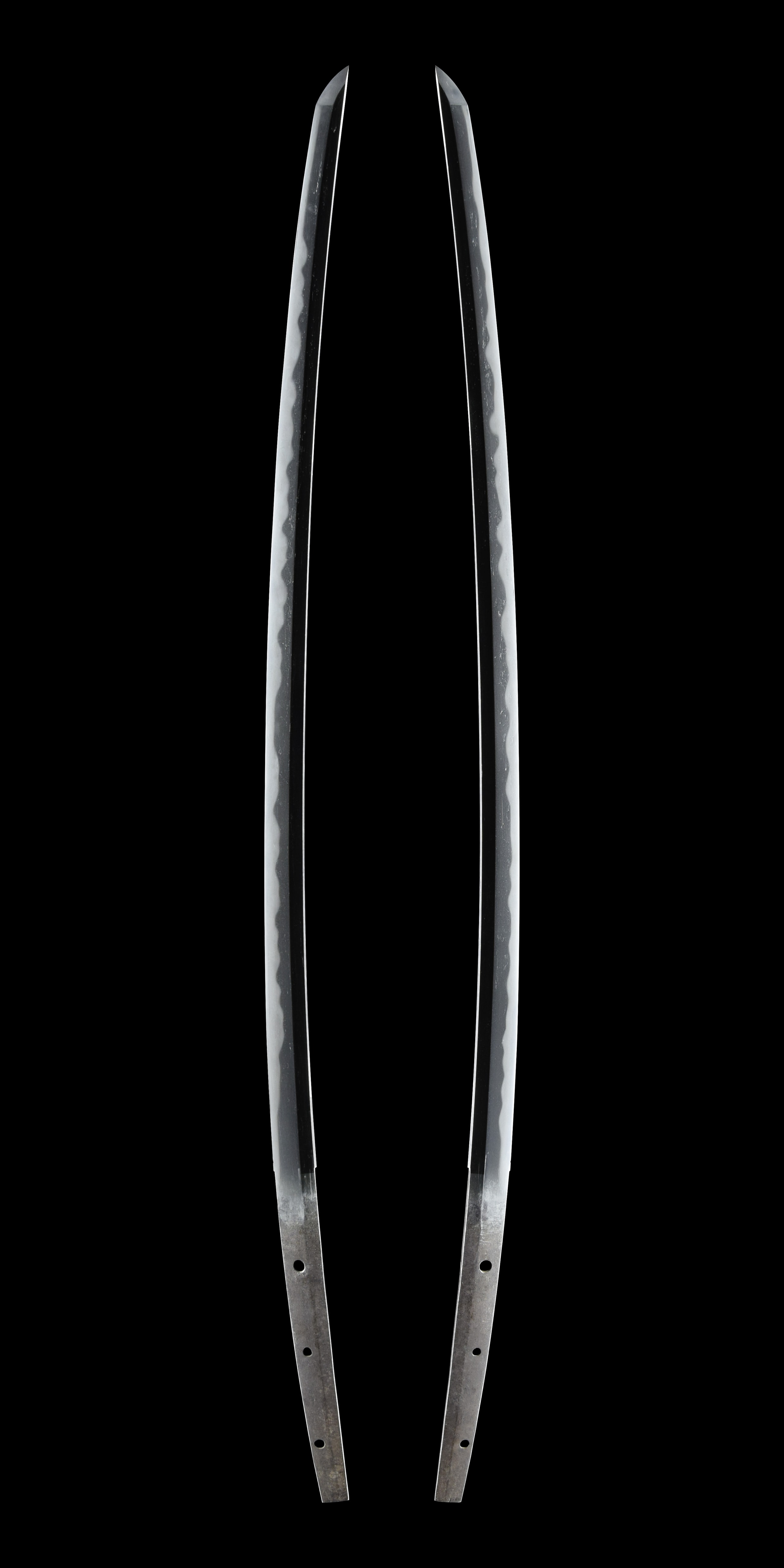
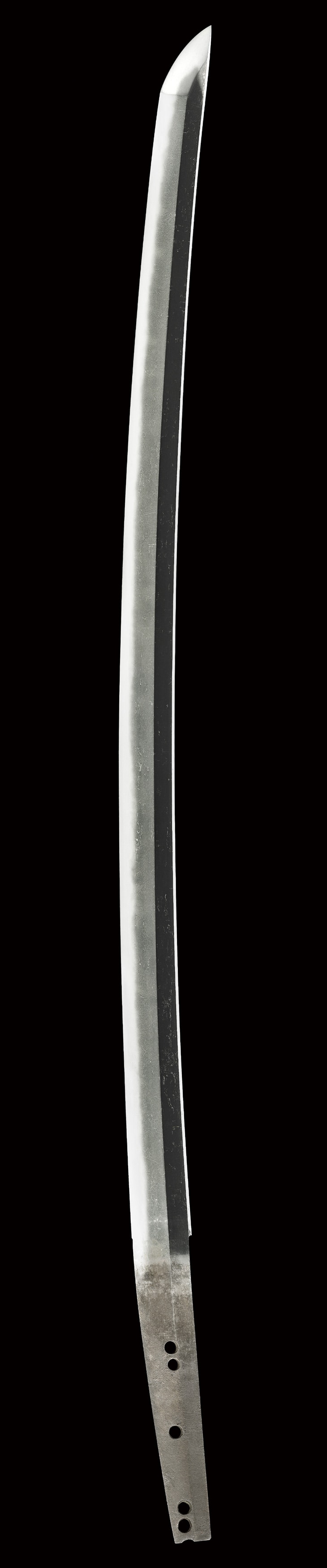
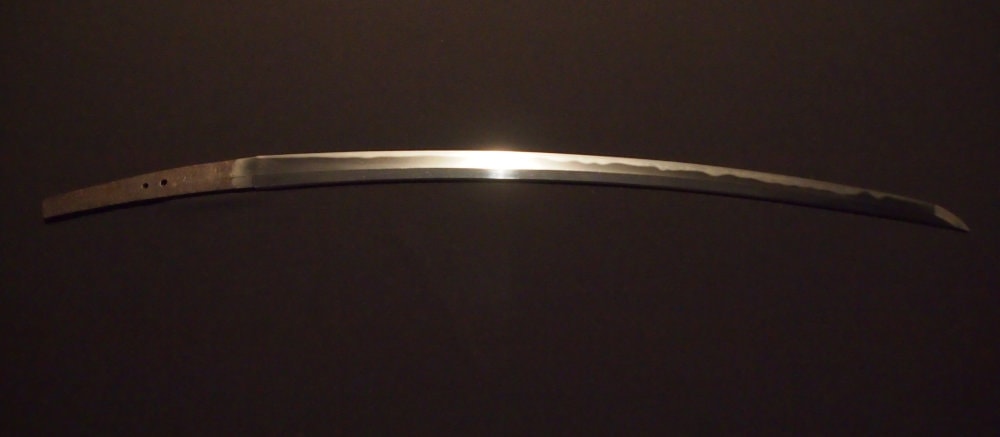
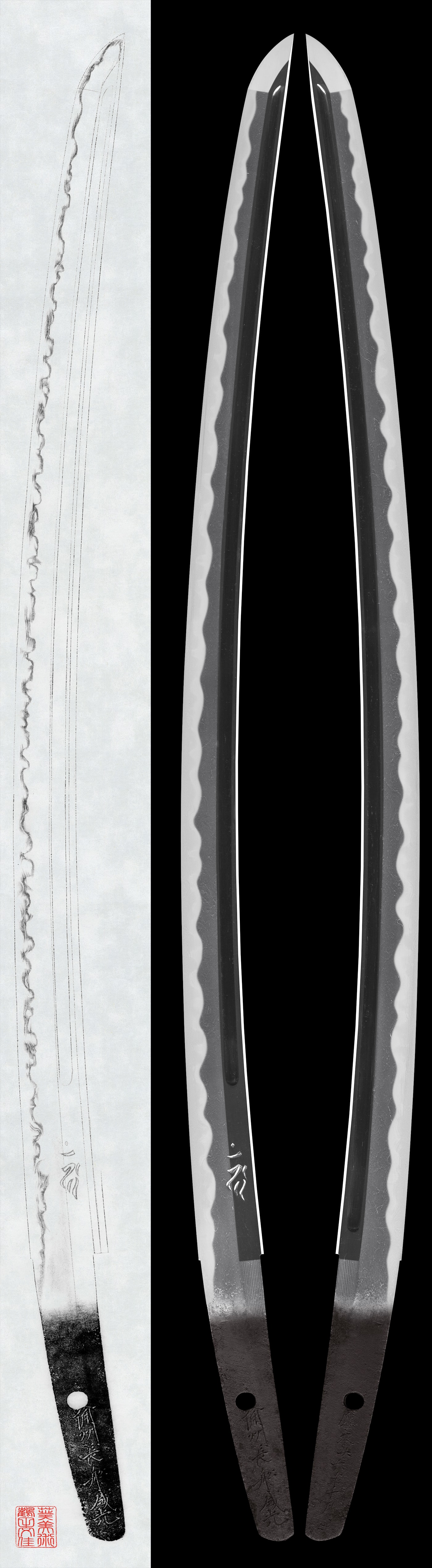
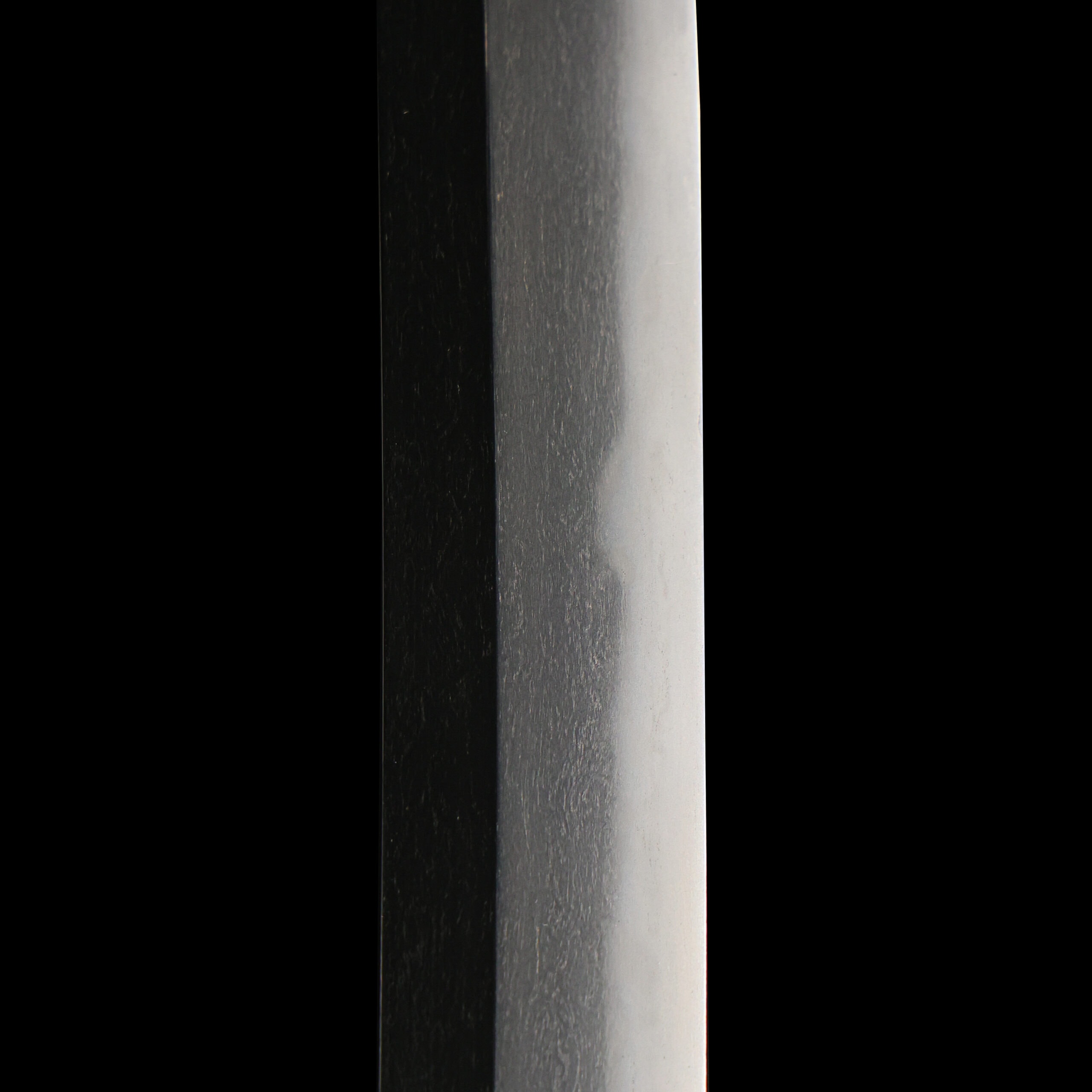
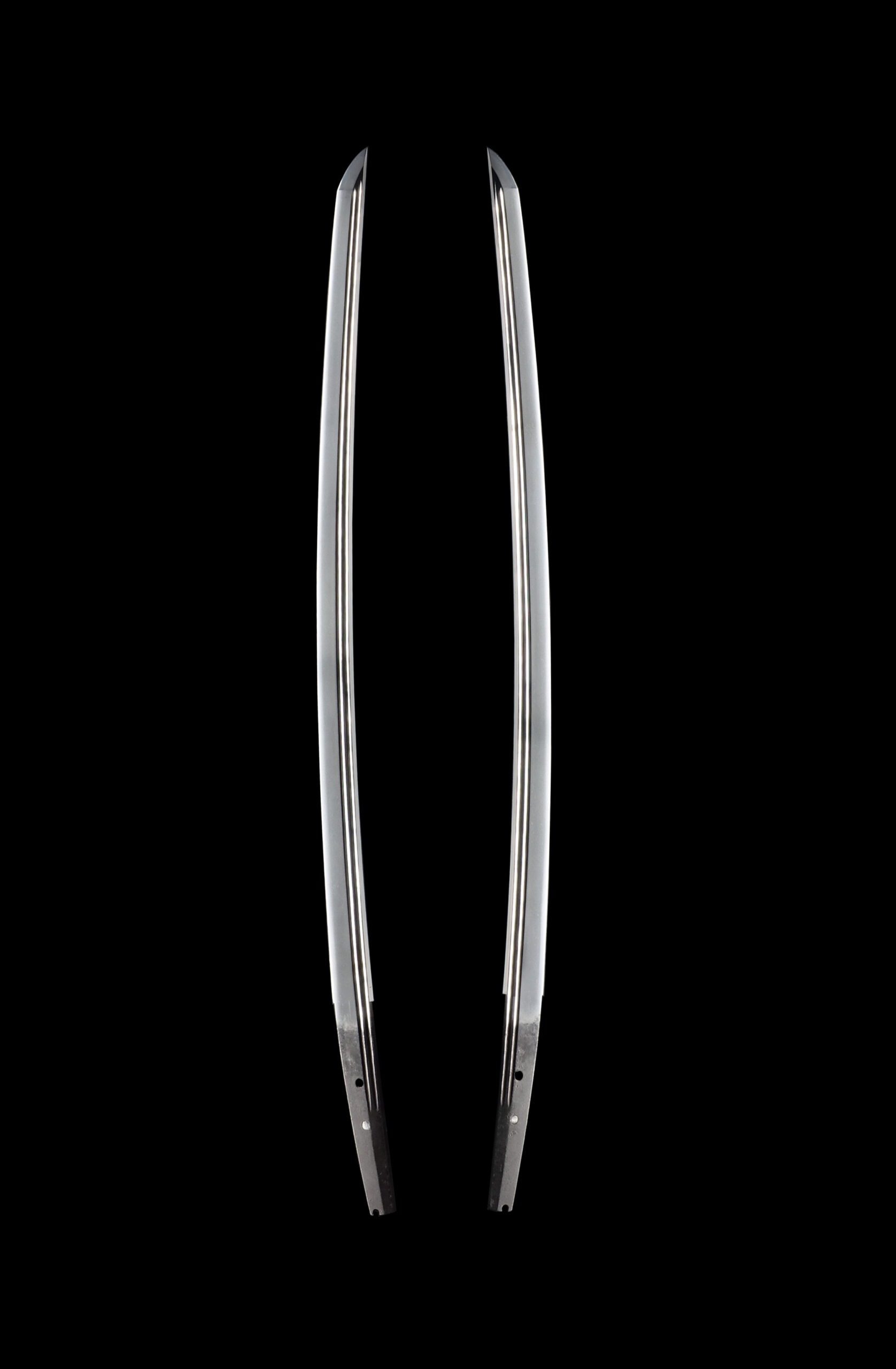
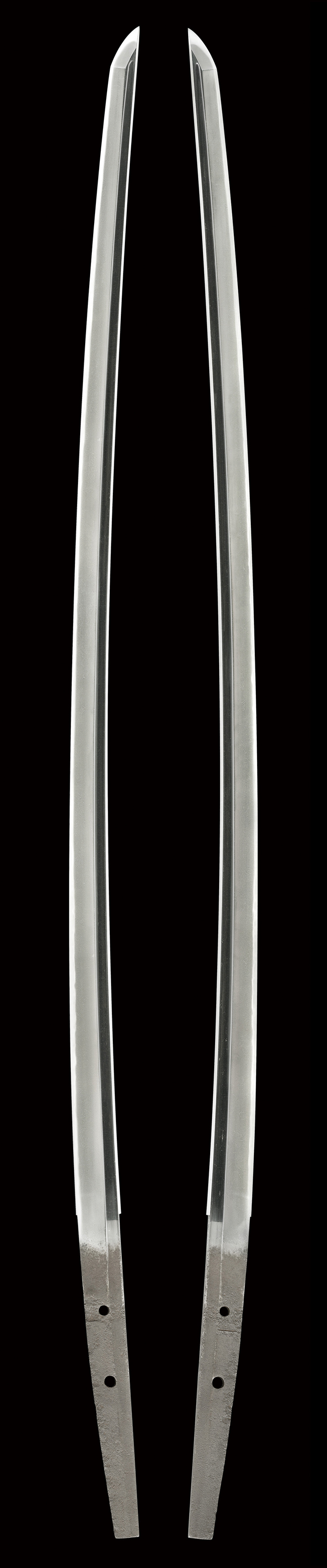
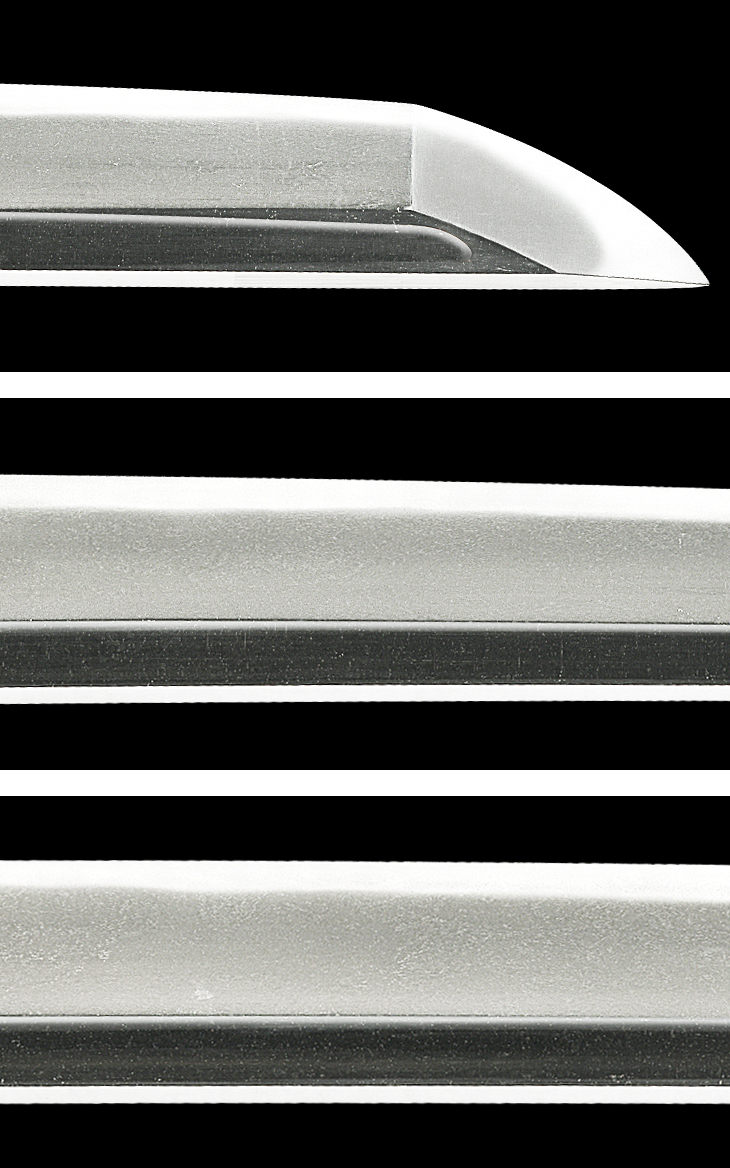
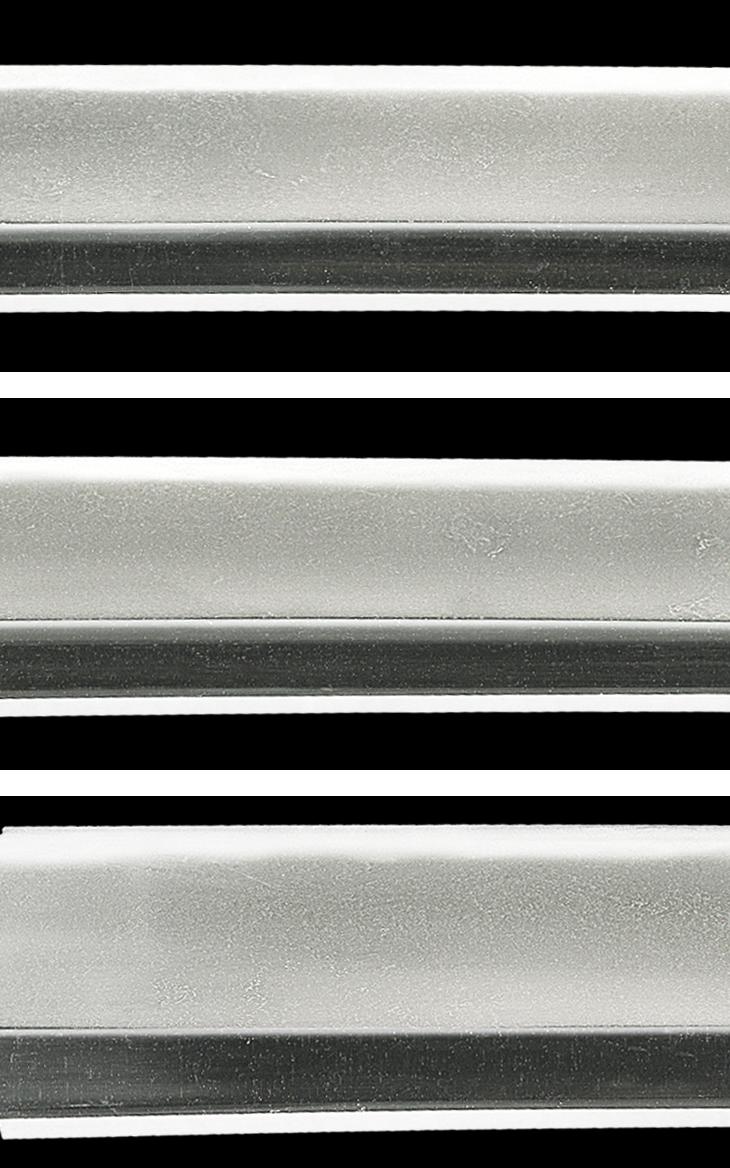
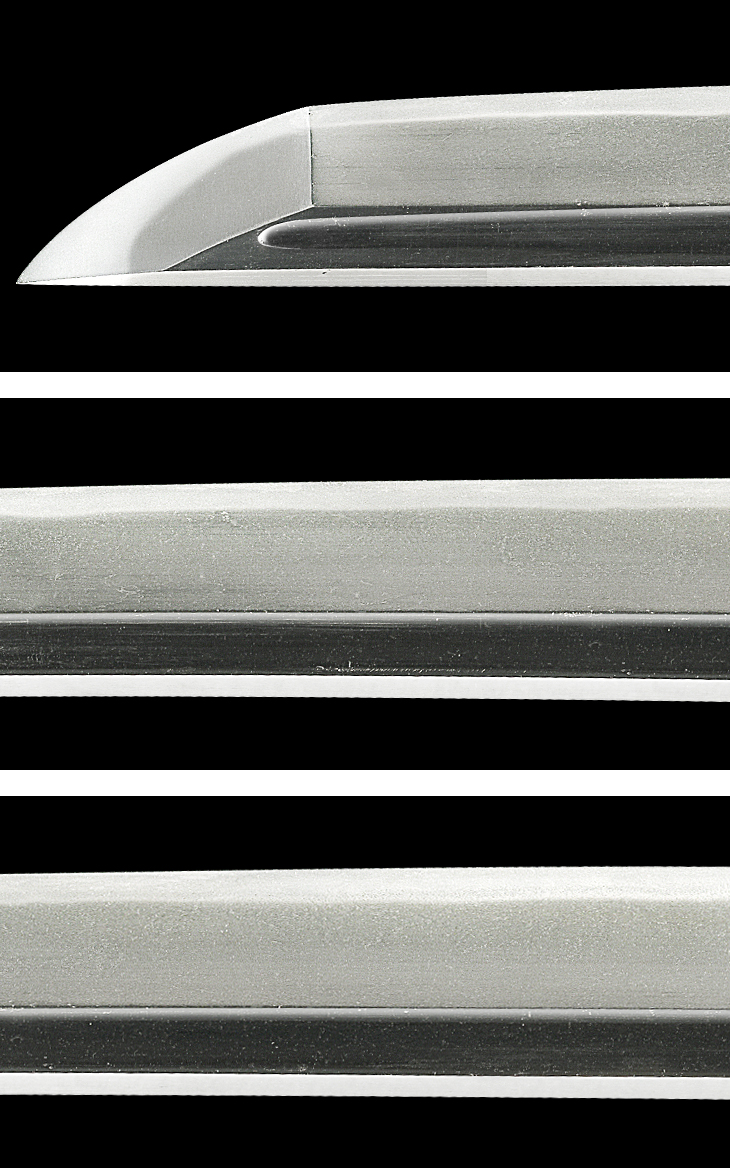
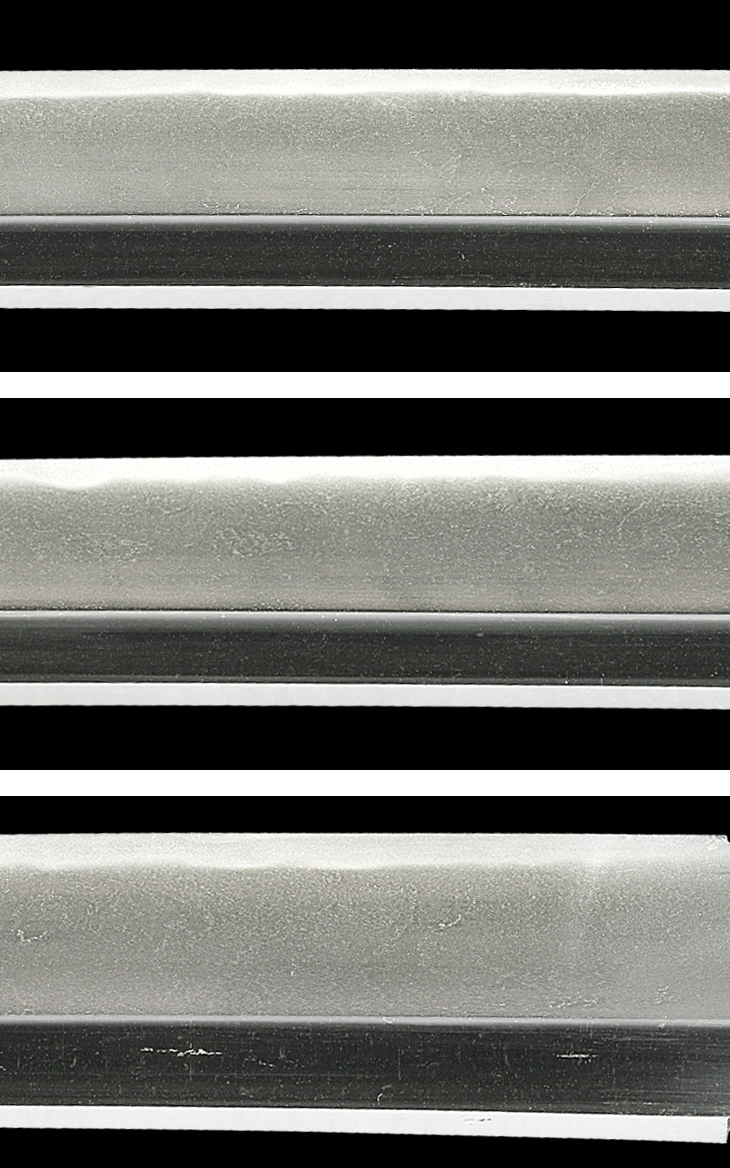
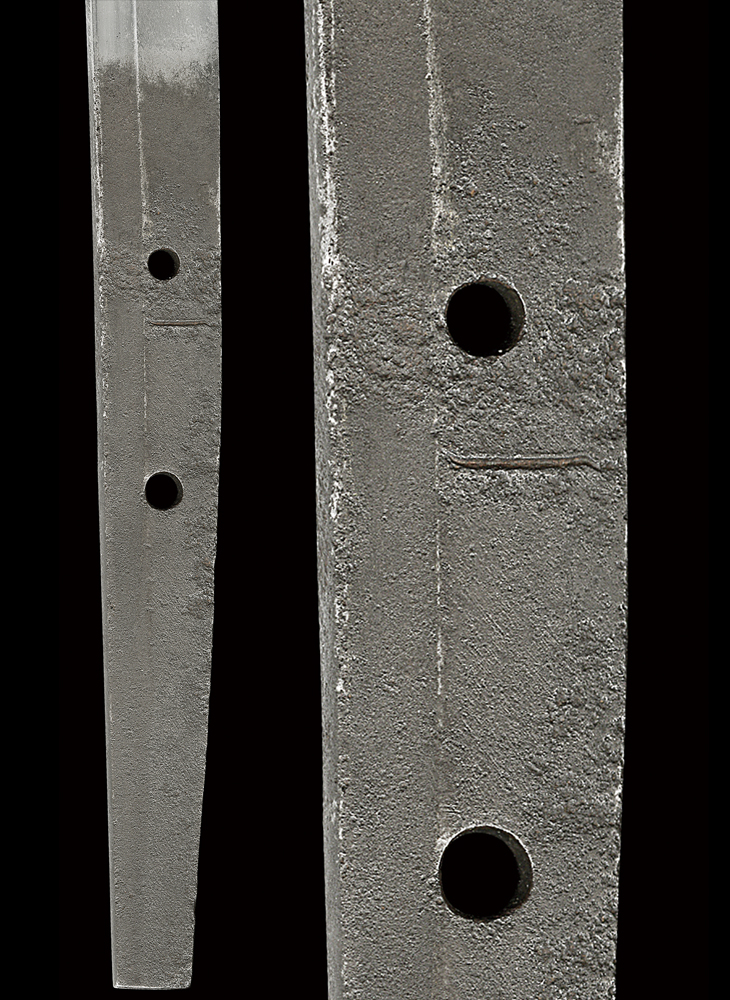
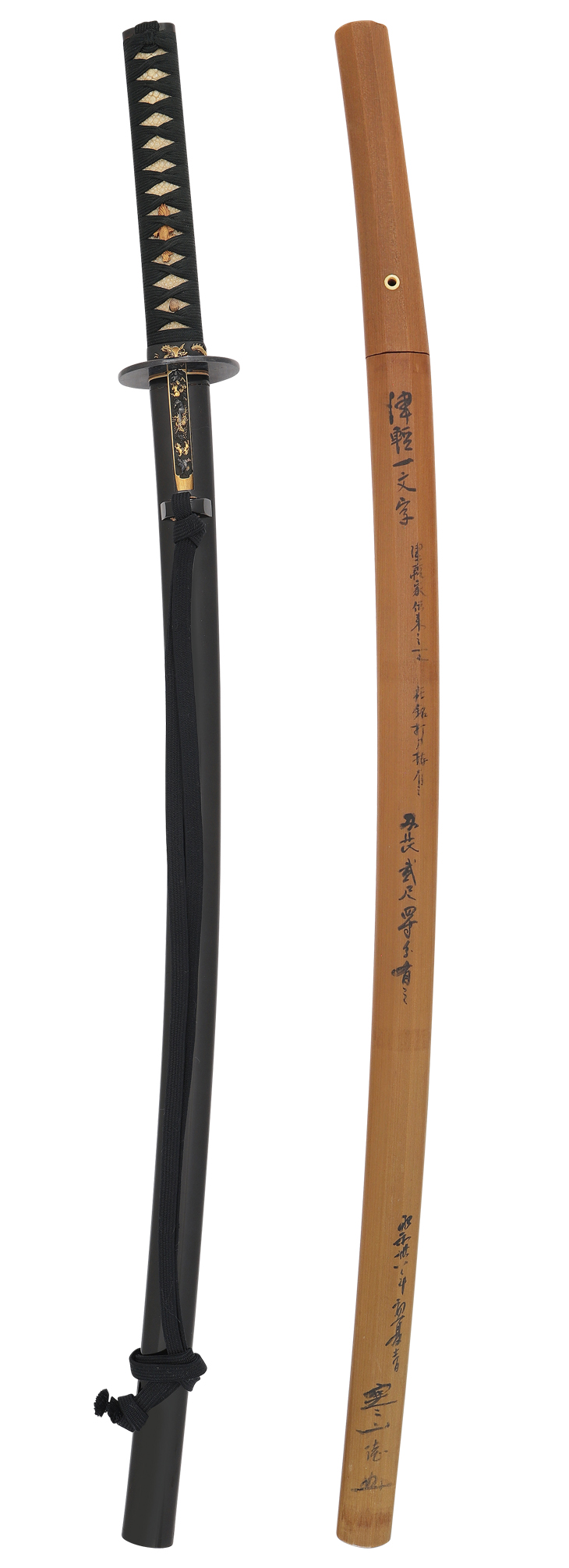
Description Keijō: , , slender () in build, with shallow and a . : with a tightly packed () appearance; adheres, and stands out. : a narrow mixed with small ; with and entering, in . : tendency, turning back in a rounded form with a shallow return. : on both sides, are carved and run off (kaki-nagashi). : almost ; ; are ; two ; on the haeri- (wearing side), in the center of the upper half, there is a large character “” (一).
Artisan Yoshioka school () (吉岡一文字)
Era period
Explanation The school of flourished from the early period through the period. Those works dating from the early to mid- period are distinguished as “Fukuoka ,” whereas those that prospered from the late period into the period are distinguished as “Yoshioka .” In terms of style, Yoshioka works are, on the whole, of a smaller, more restrained construction when compared with the Fukuoka , which temper flamboyant, large-cluster (ōbusa) ; a particular point of interest is that within this generally smaller manner, elements such as and a somewhat (reverse-inclined) tendency may be intermingled.
This bears an “” character signature. From such features as the manner in which the tsuketome portions of the character are emphasized, as well as the gentle nature of the , it is appraised as Yoshioka . Though slender in build, both the and are (sound and well-preserved), and the workmanship is excellent.