江戸は刀の目利きの時代である。本阿弥の鑑定、1719年の享保名物帳、盛んな刀剣書が、戦で抜かれることのなくなった刀を学問の対象へと変えていった。
 NihontoWatchNihontoWatch
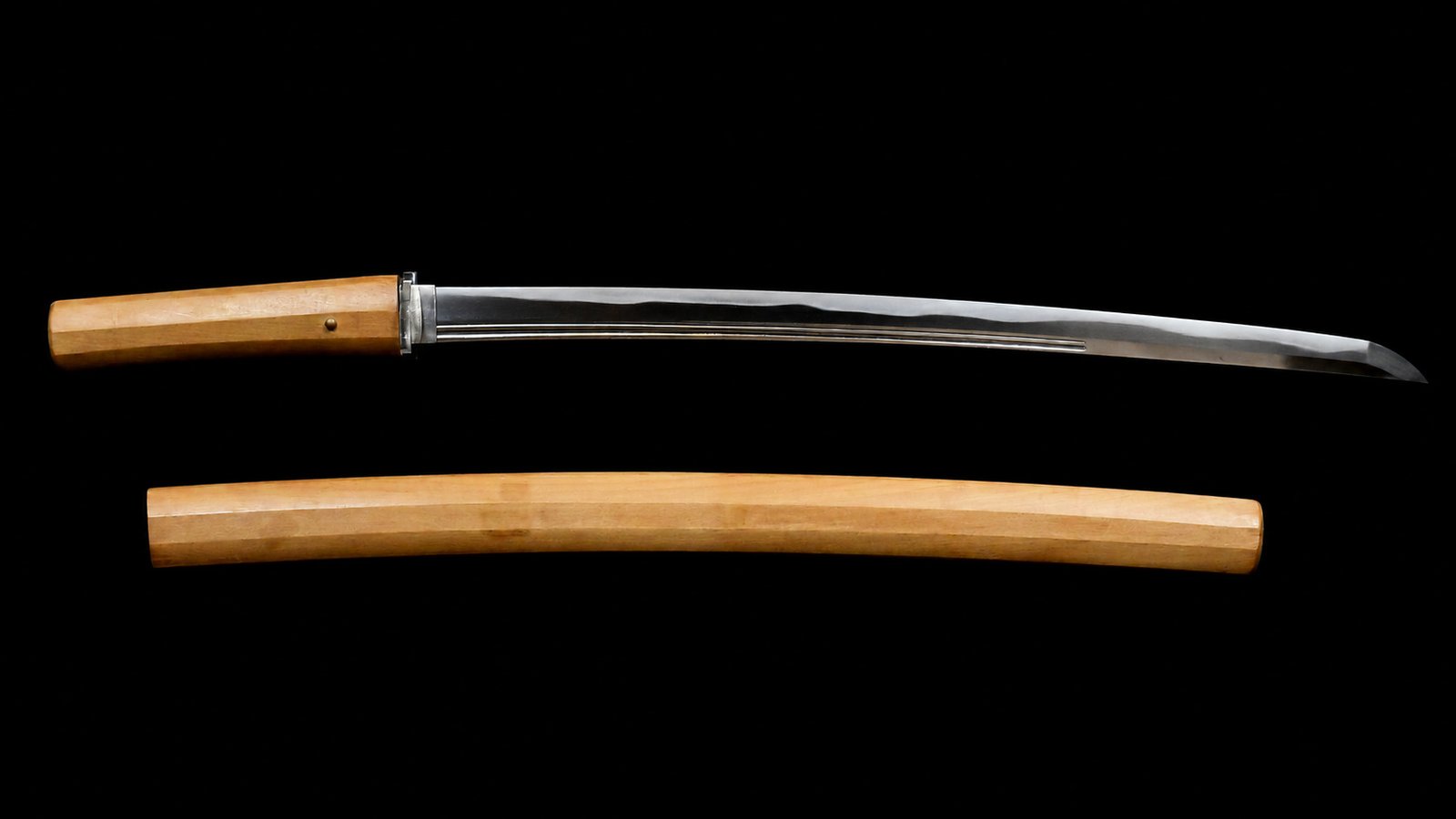
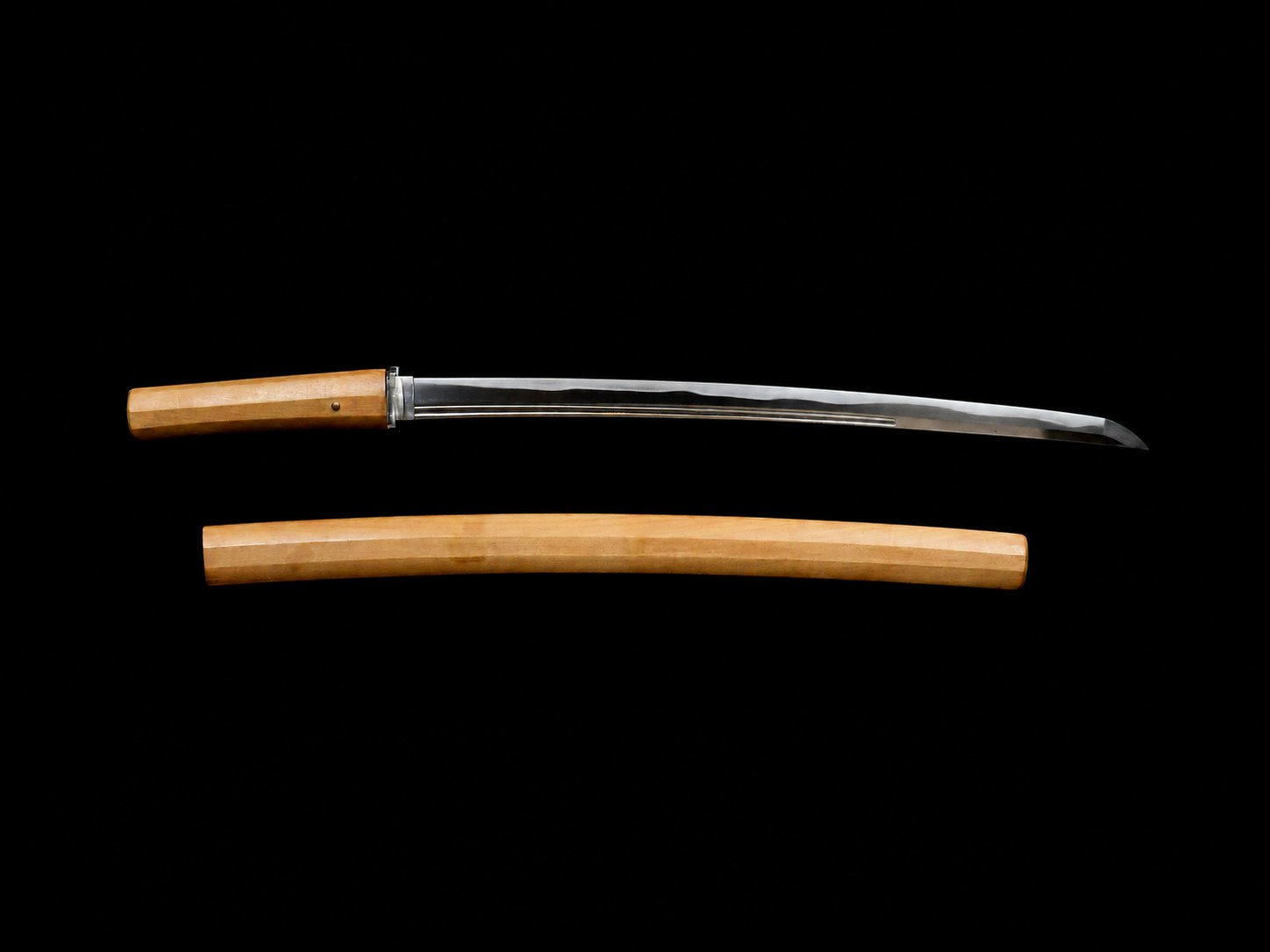
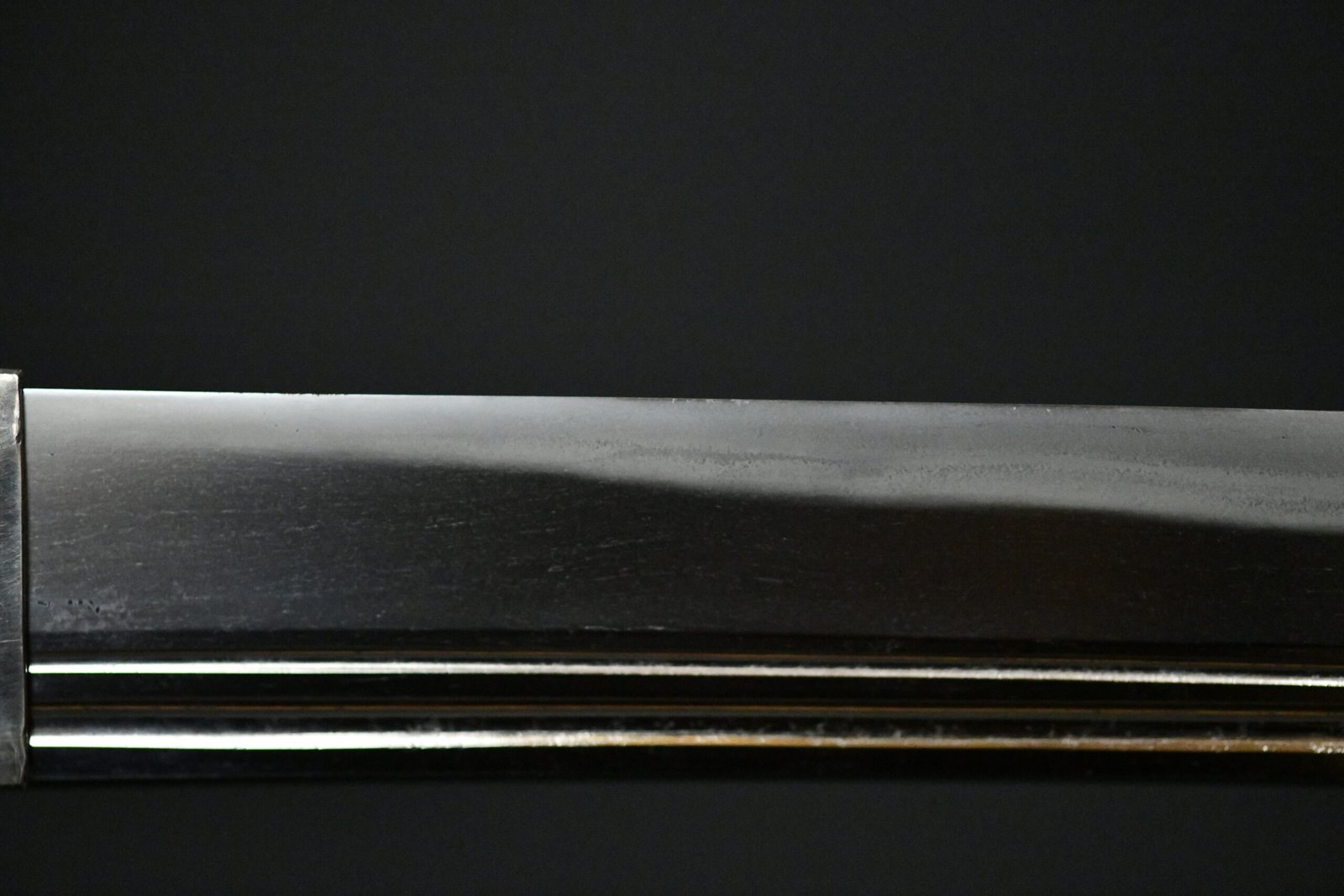
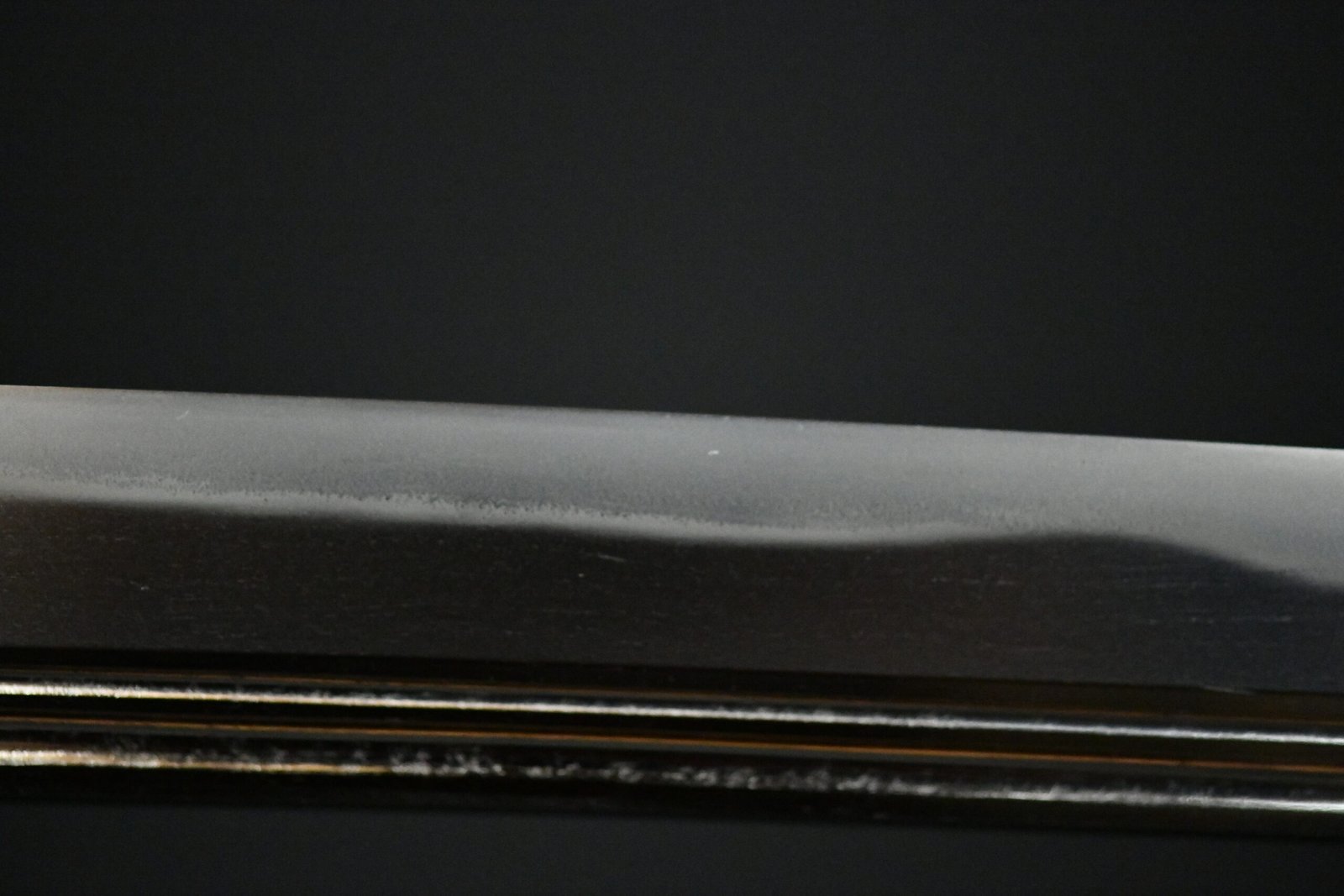
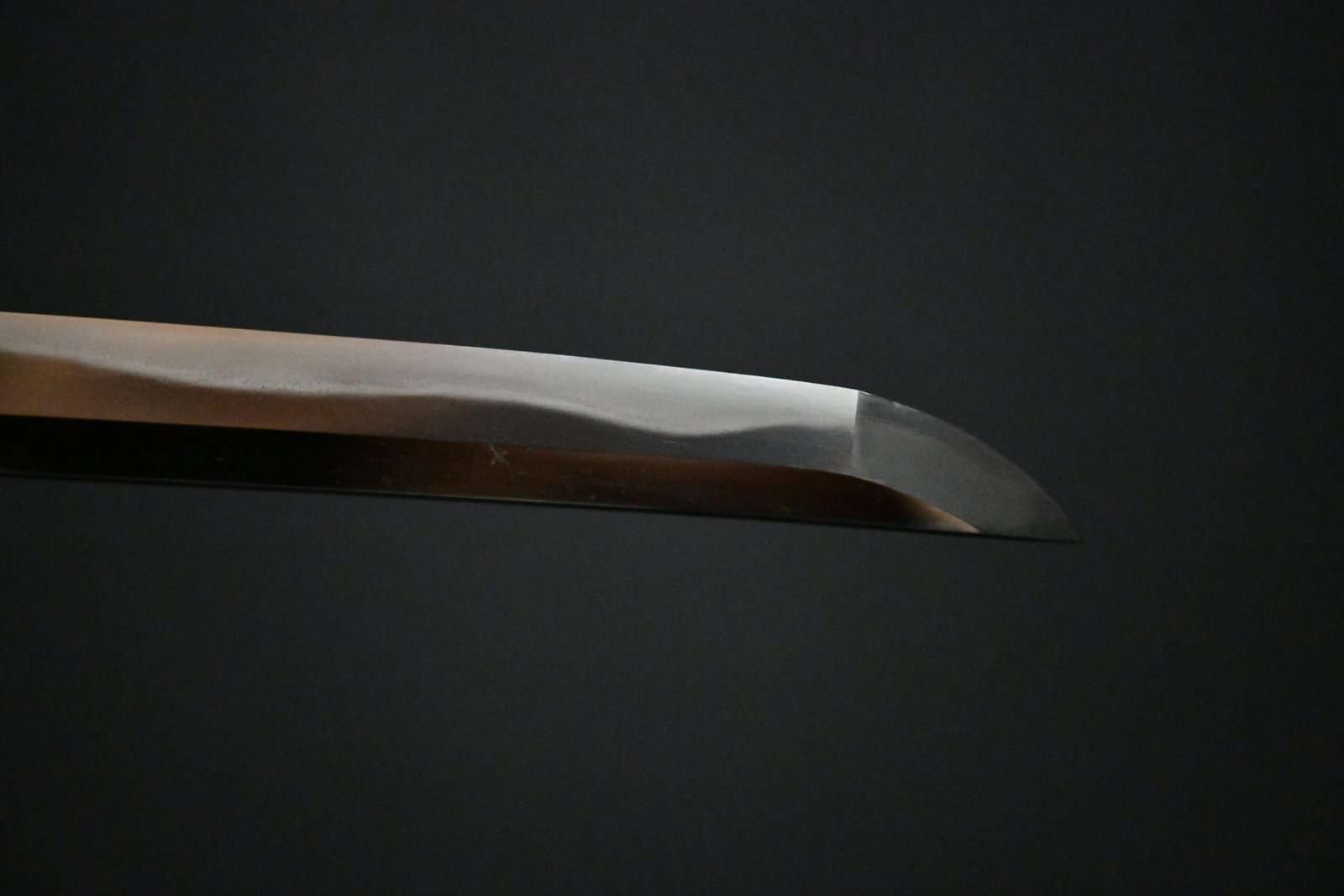
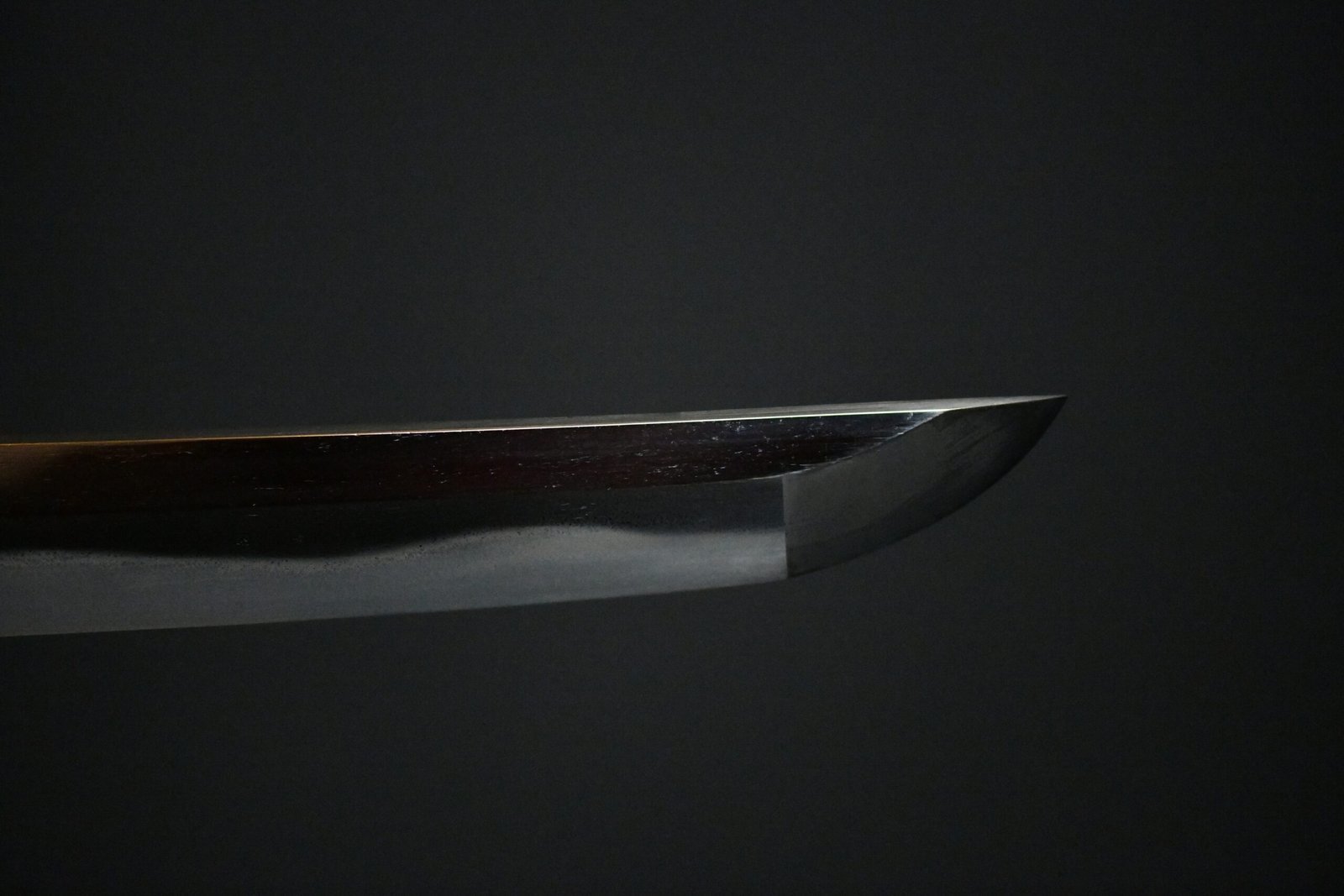
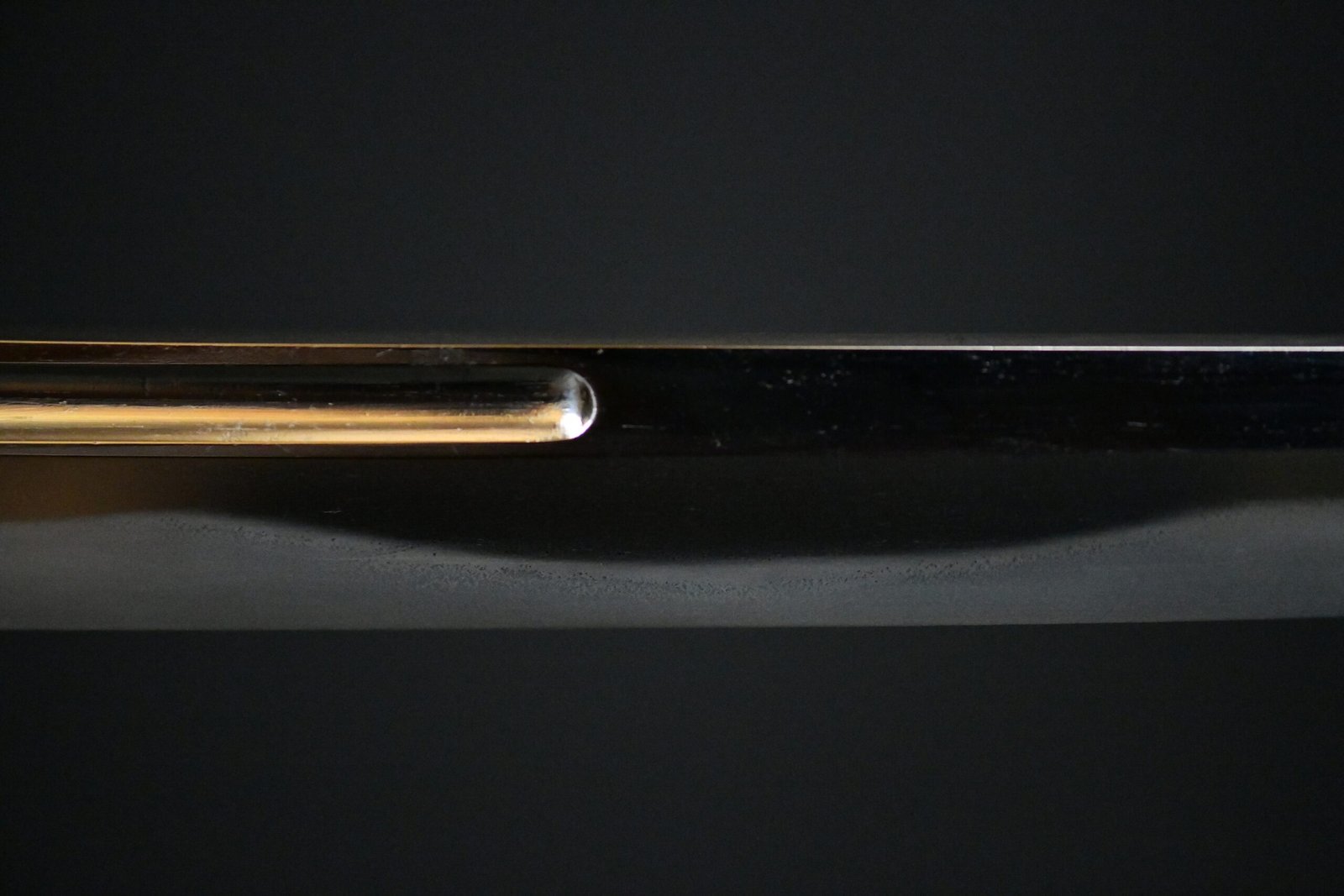
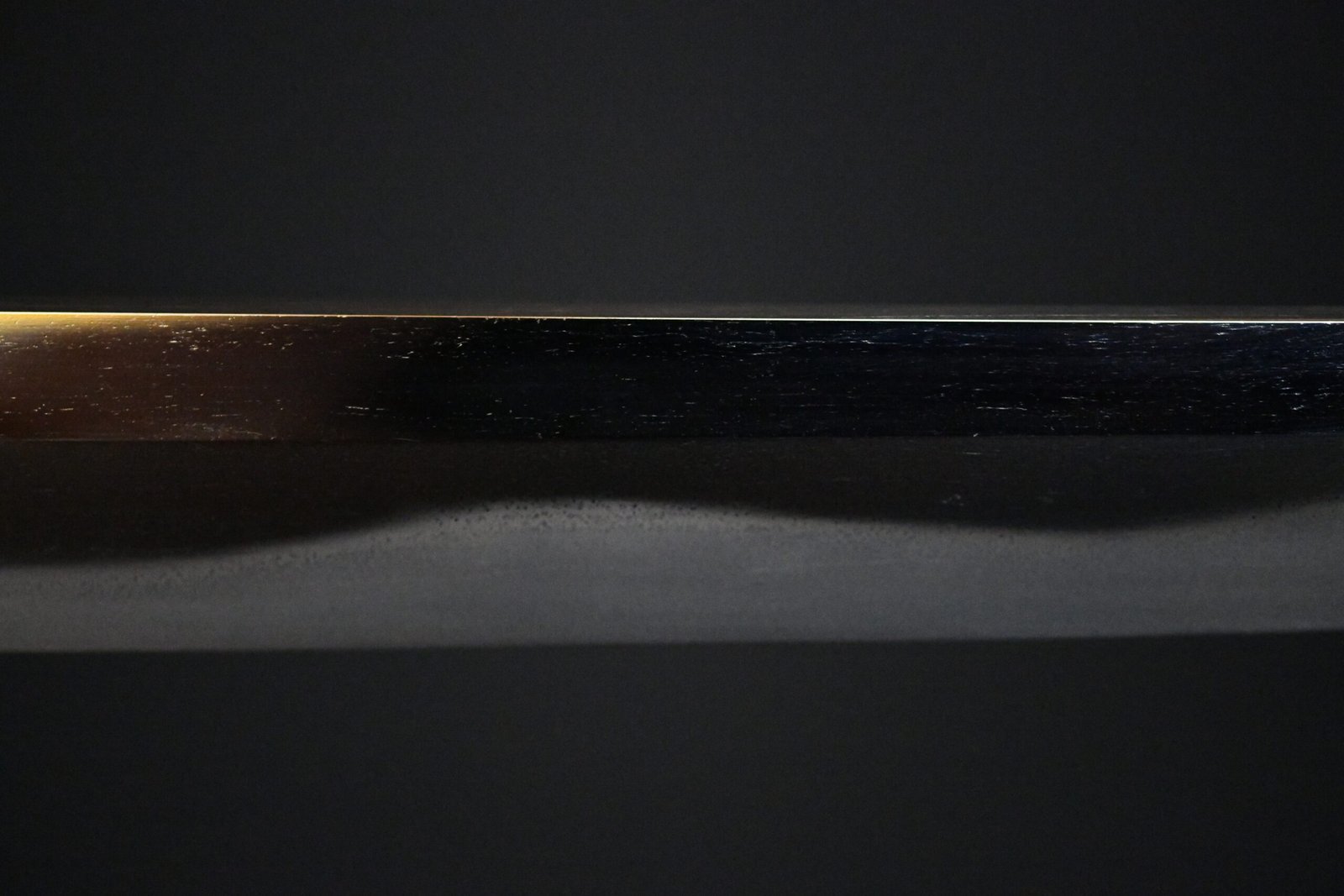
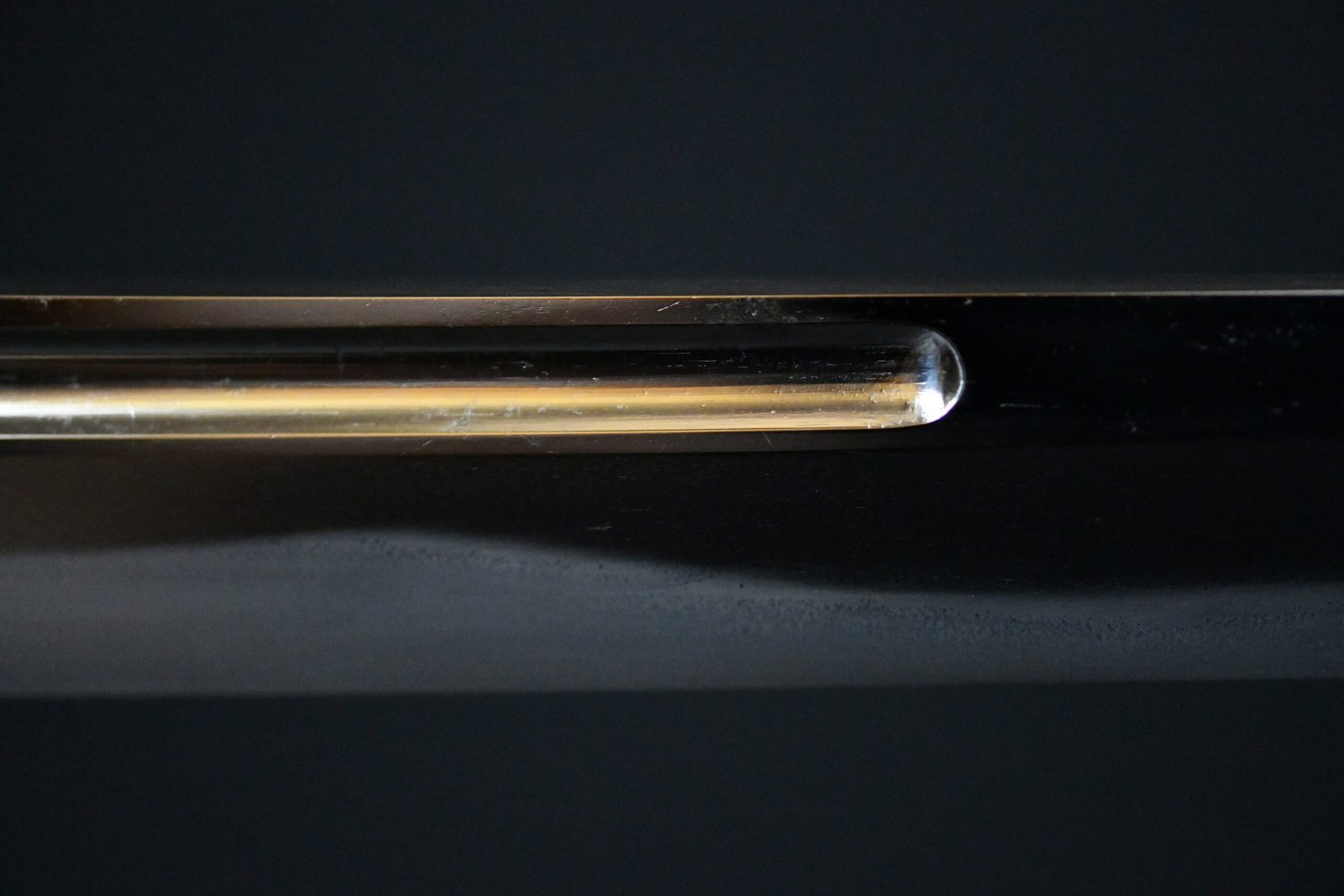
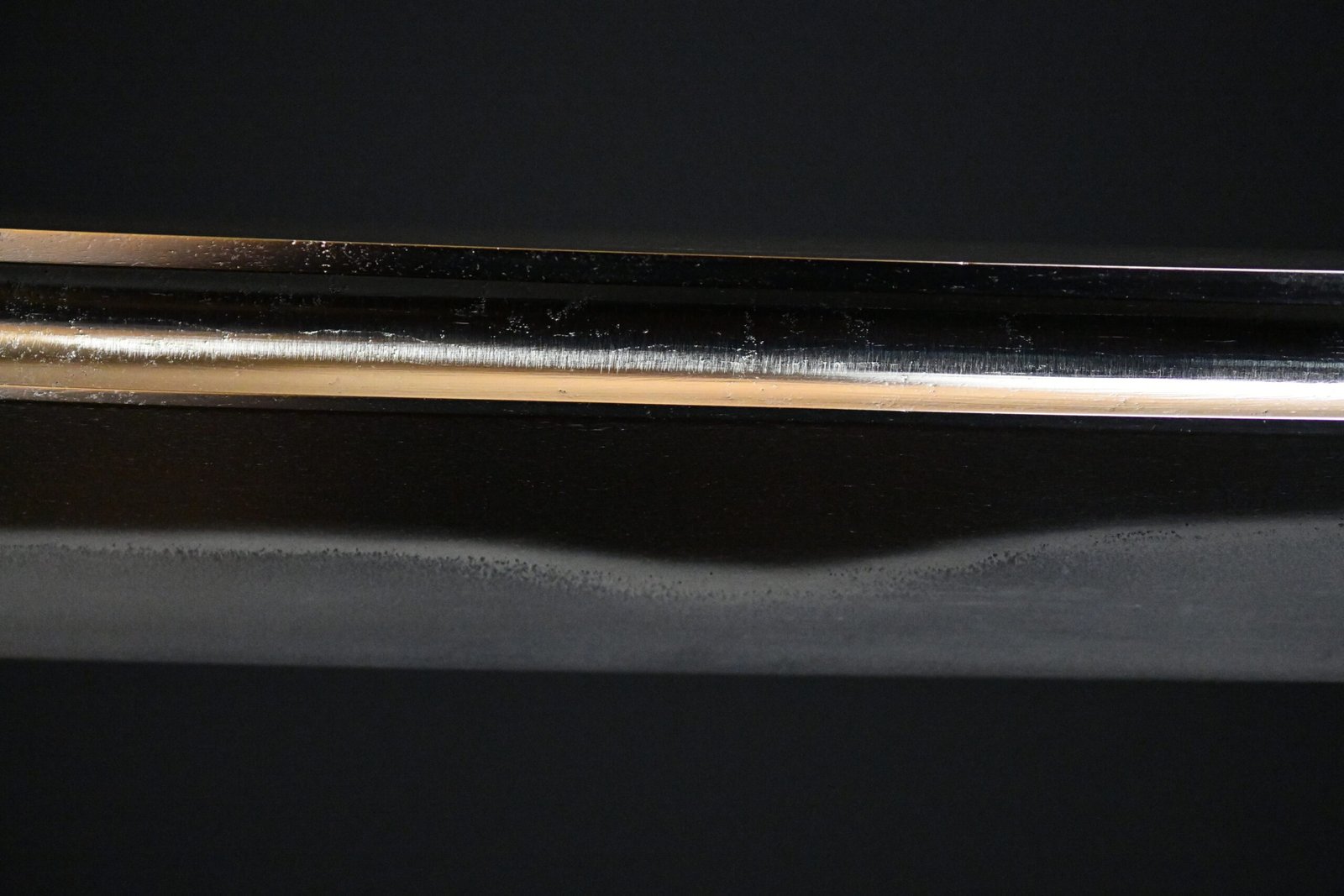
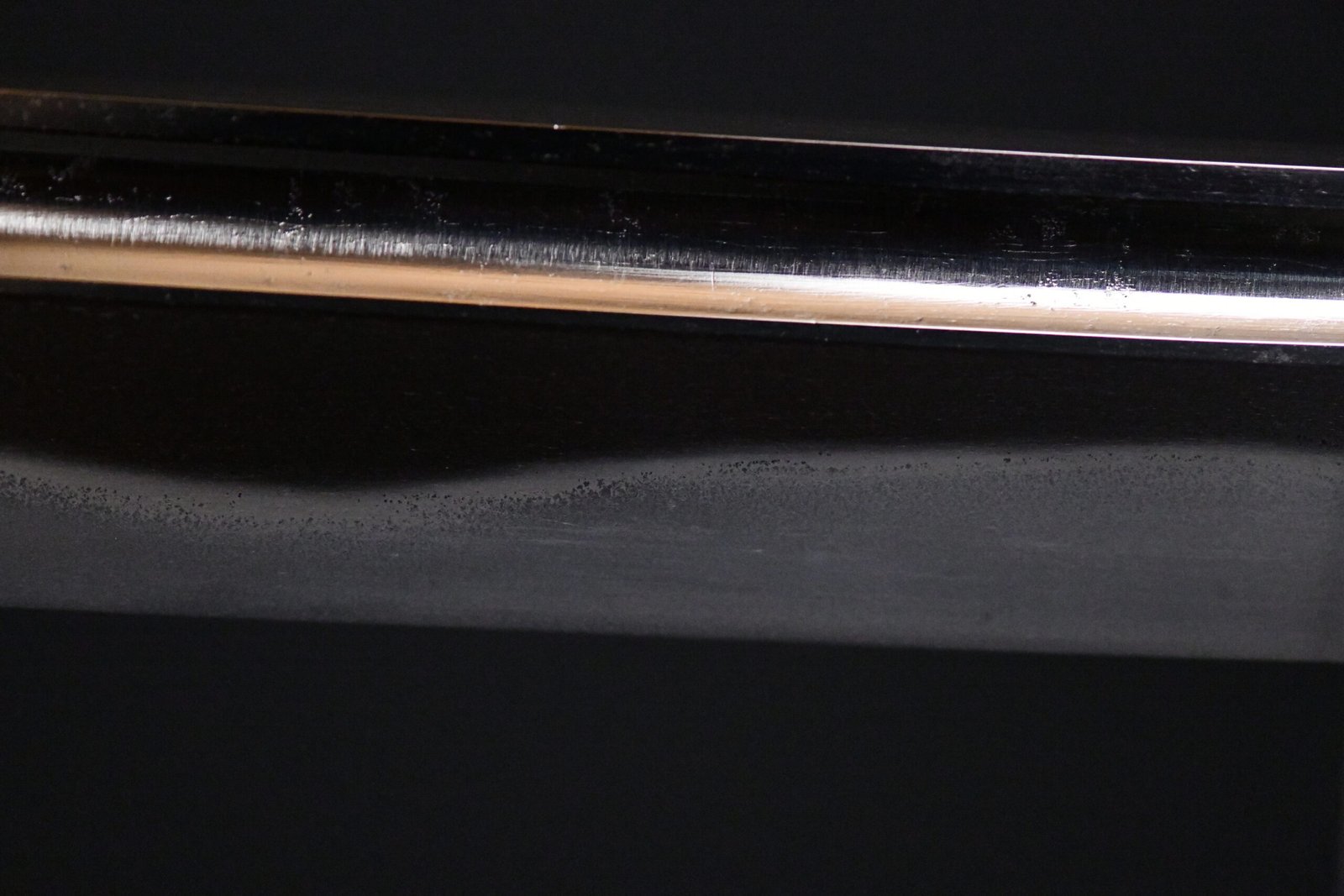
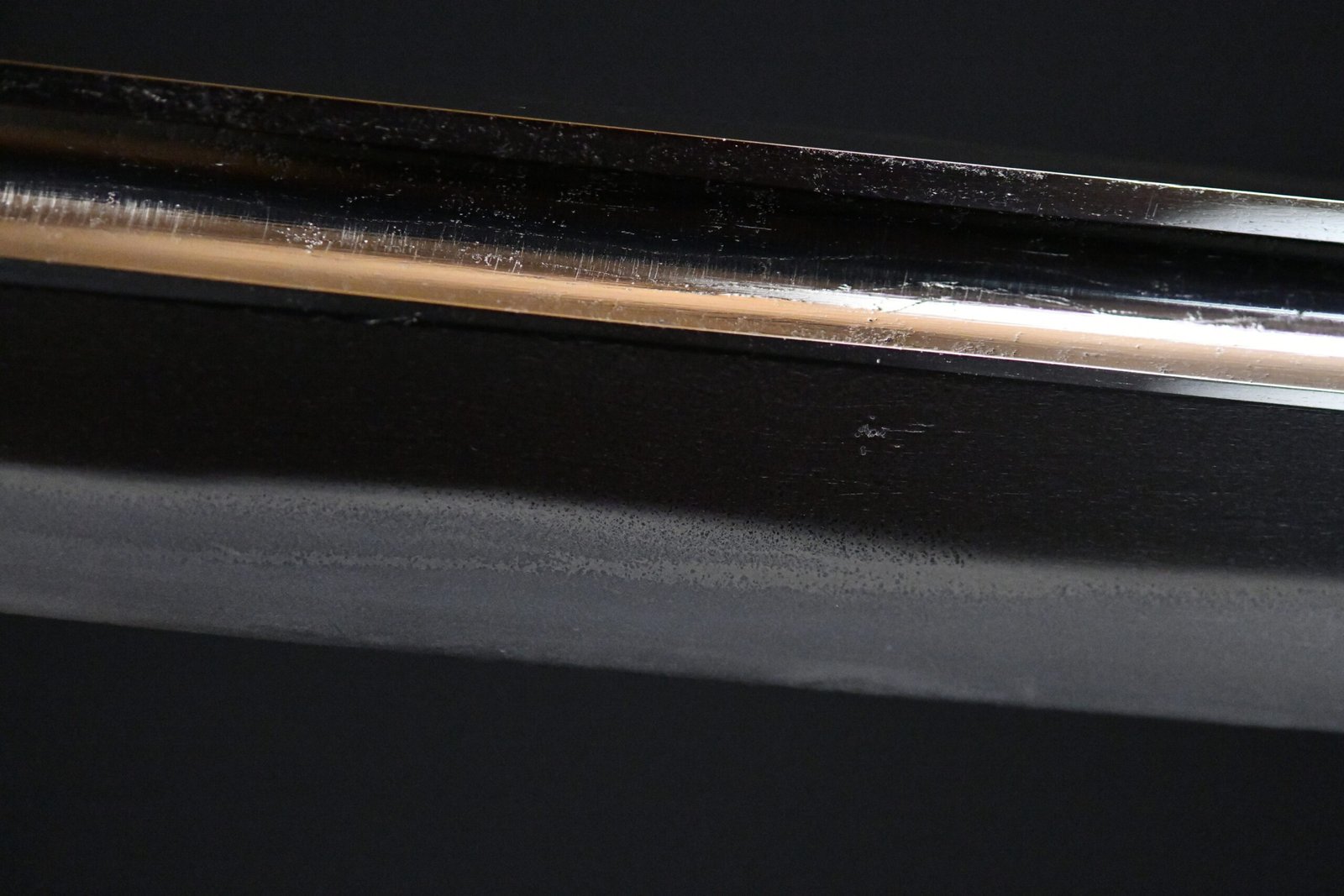
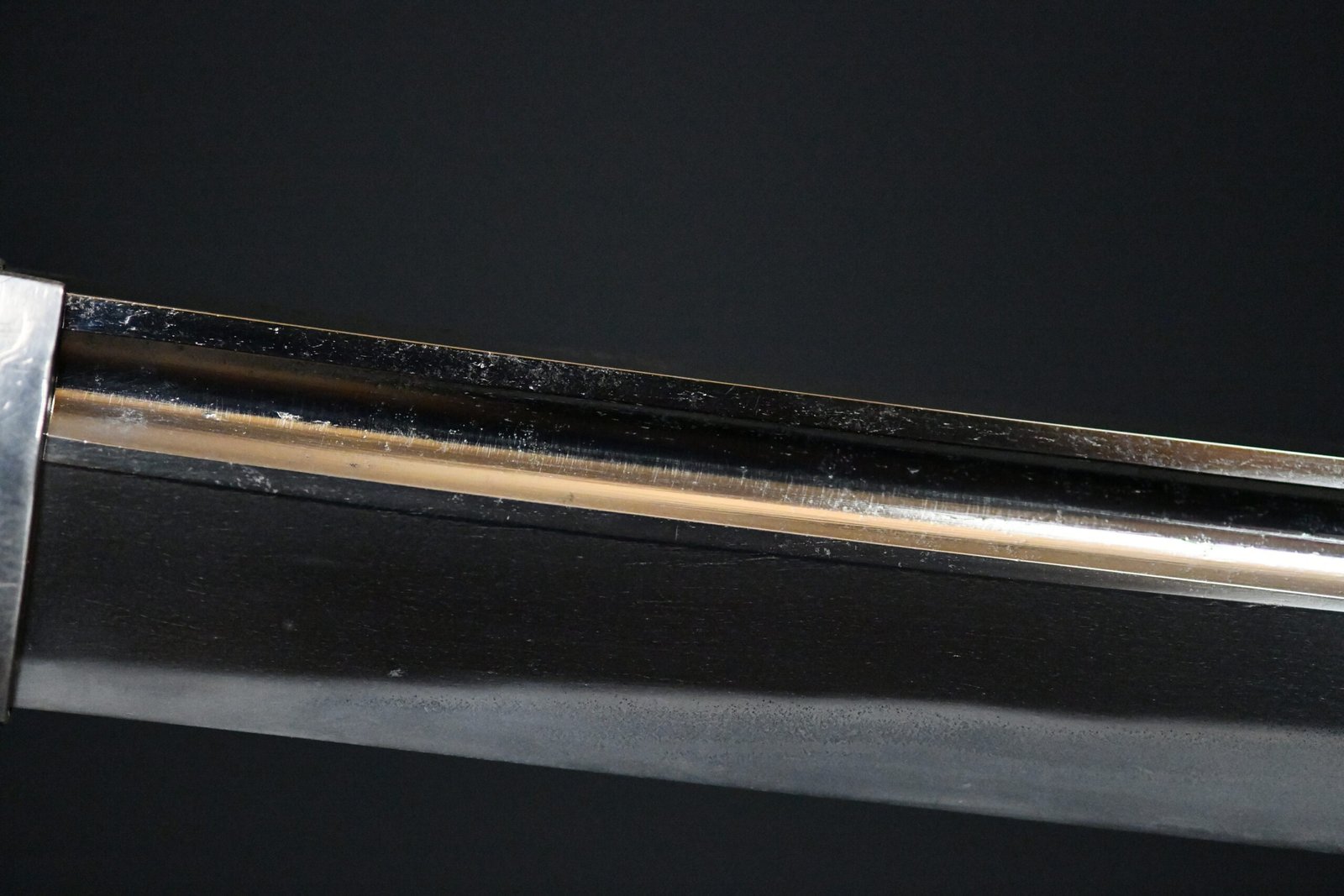
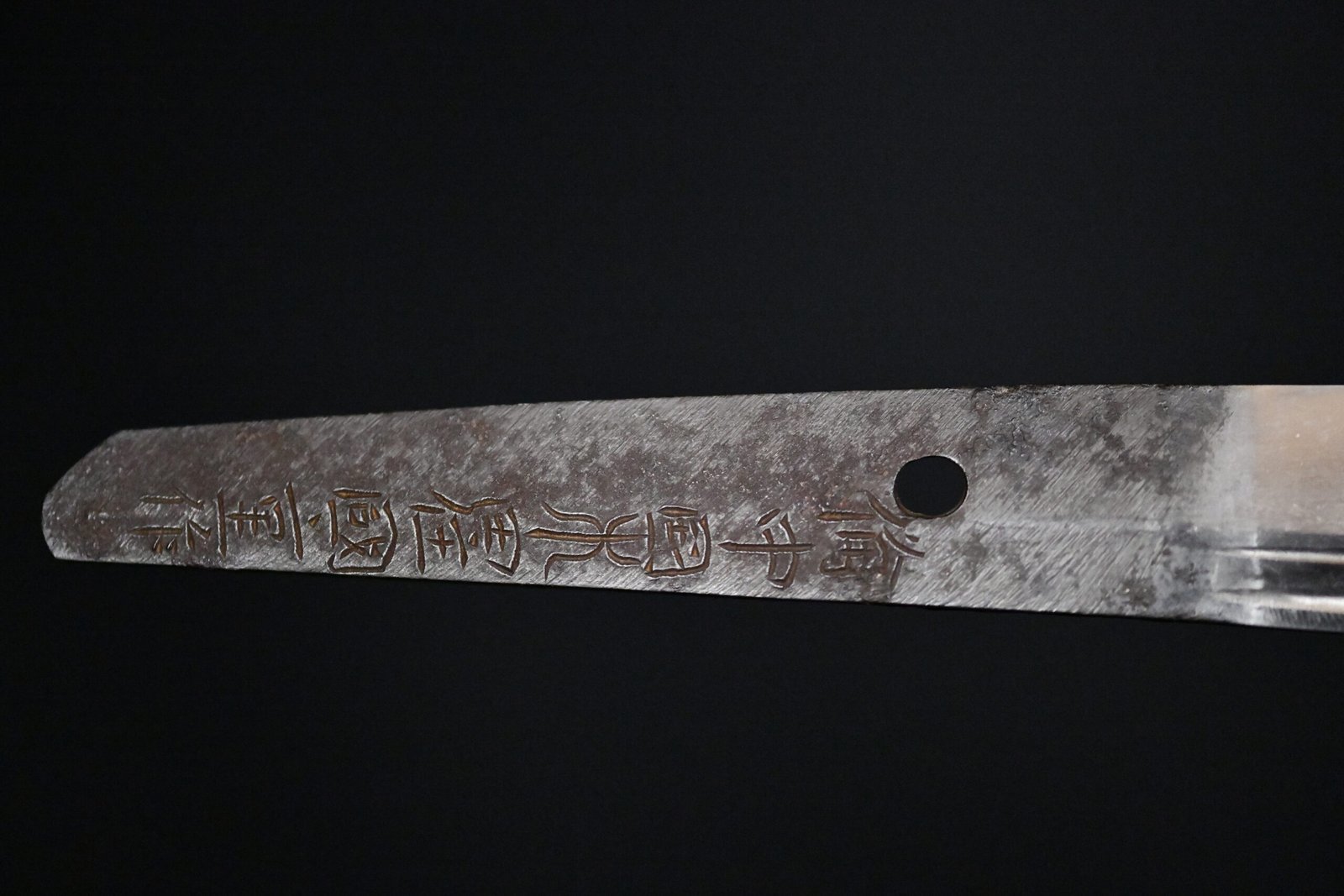
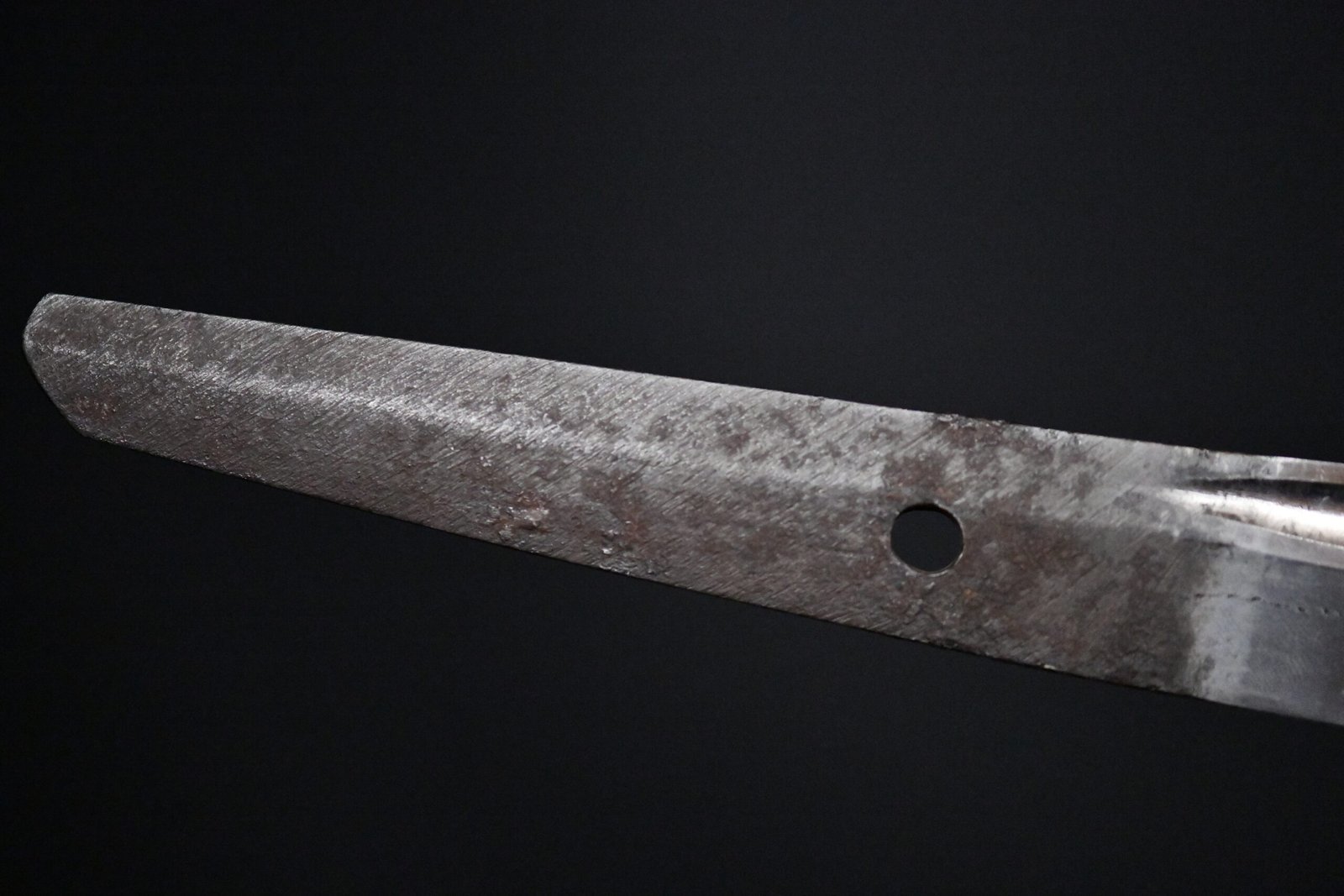
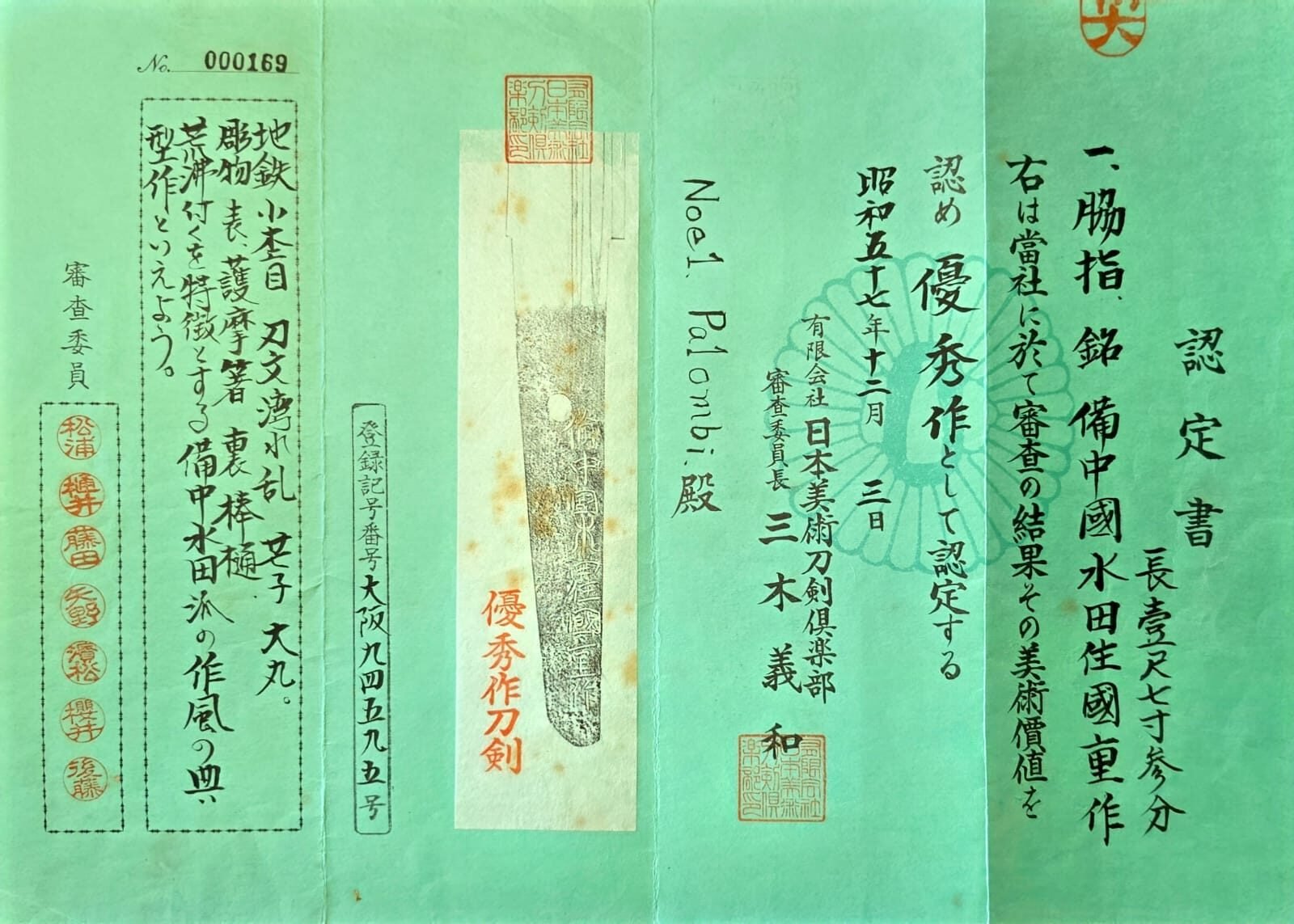
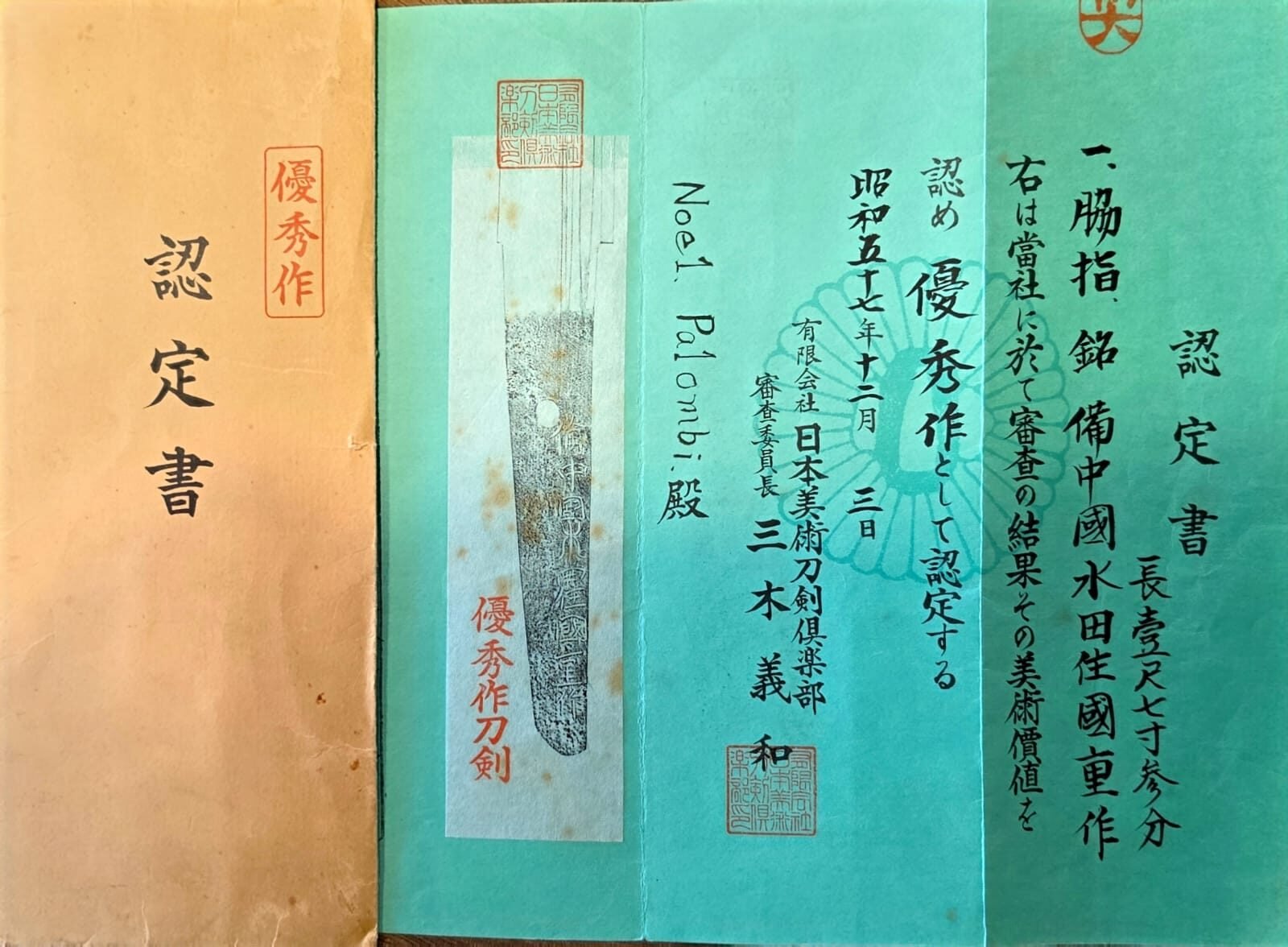
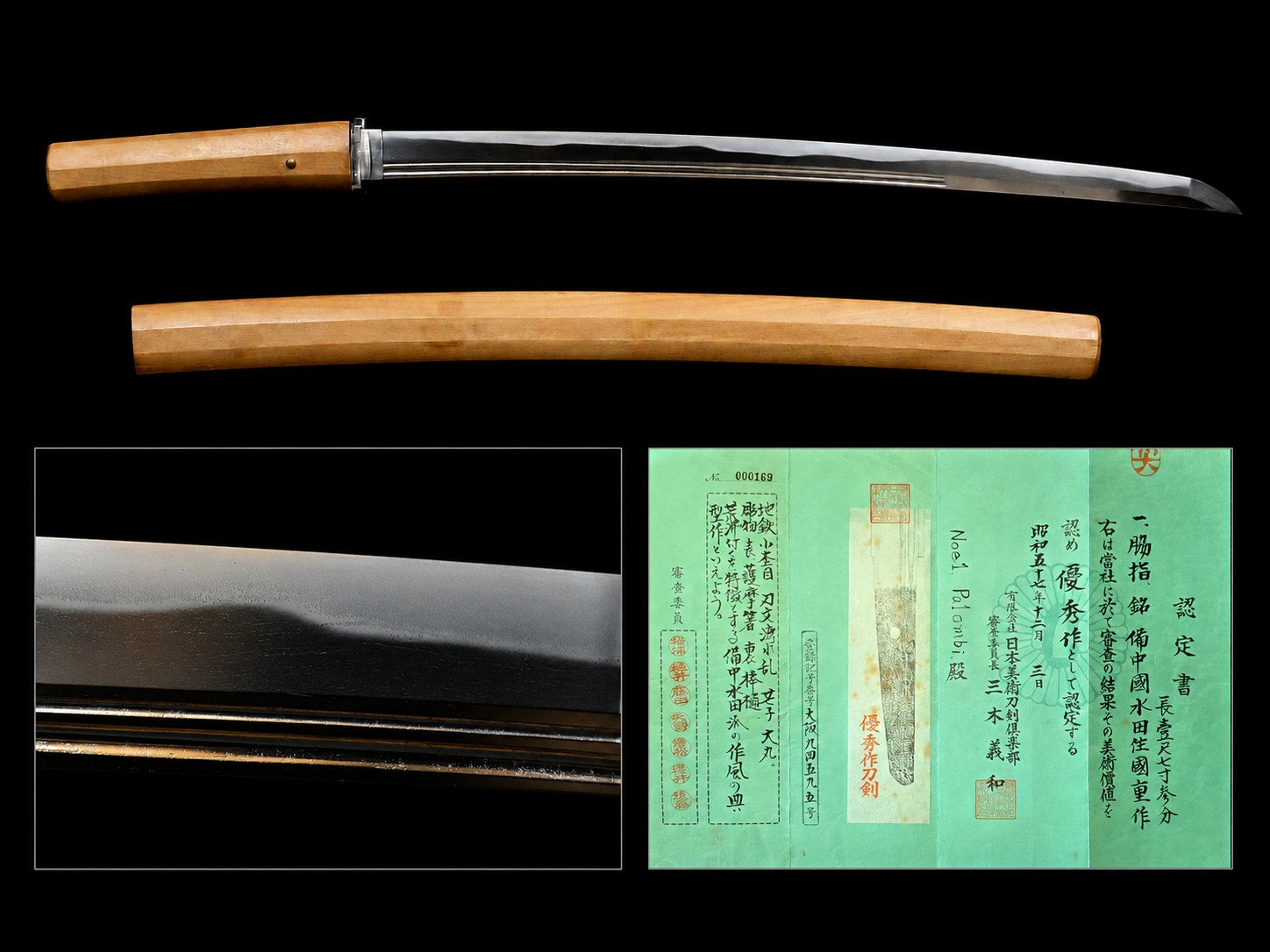
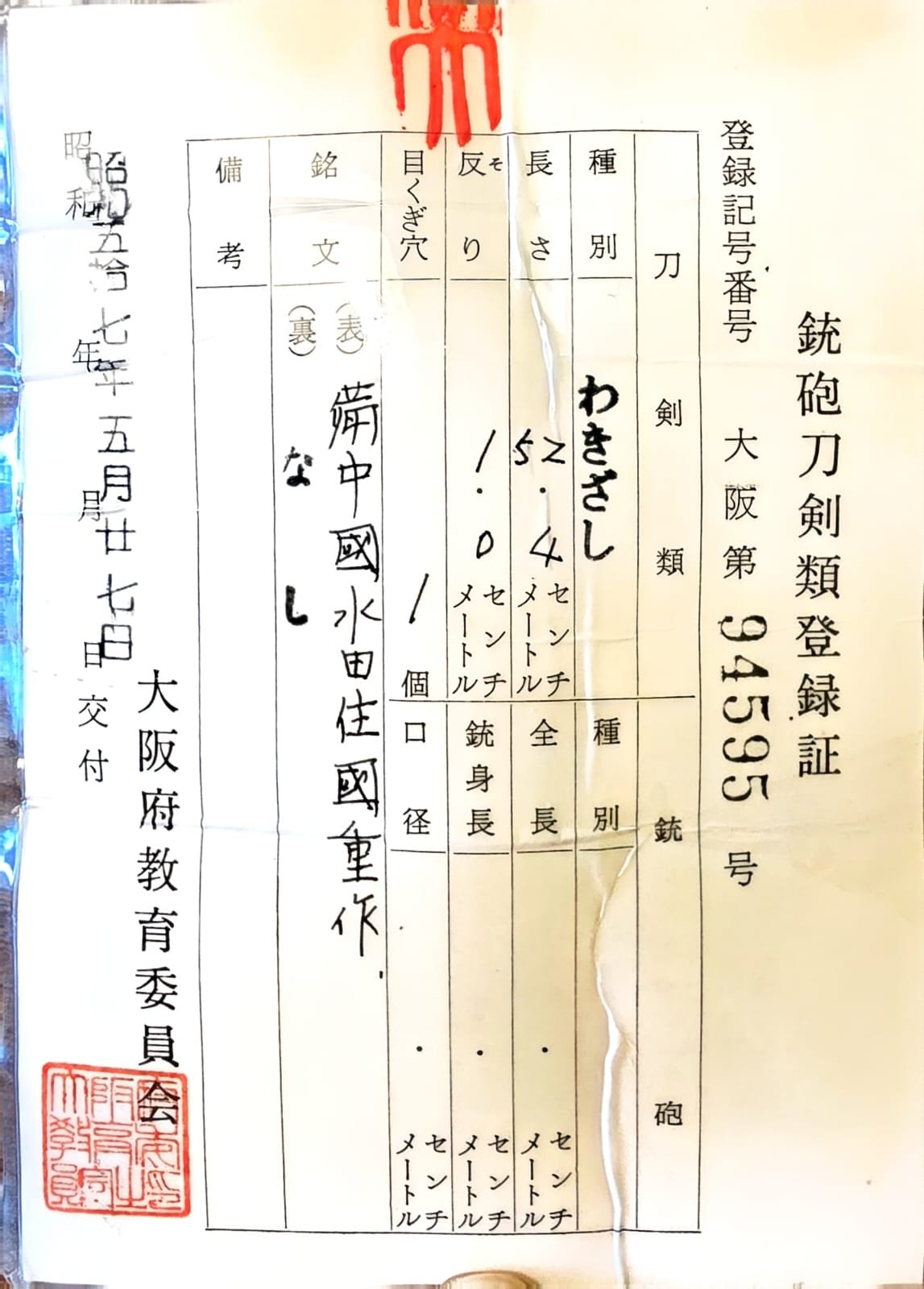
A signed Japanese wakizashi associated with the prolific Mizuta Kunishige group of Bitchū Province, one of the better-known regional swordmaking traditions of western Japan. The blade bears the inscription 備中國水田住國重作 — Bitchū no Kuni Mizuta-jū Kunishige saku — identifying a Kunishige smith working at Mizuta in Bitchū Province. The sword combines a bold overall construction with an active tempering style traditionally associated with the Mizuta group and its strong exposure to Sōshū-den influence. The blade is currently preserved in a plain wooden shirasaya, keeping the focus on the steel itself. Signature – Bitchū Mizuta Kunishige The mei reads: 備中國水田住國重作 Bitchū no Kuni Mizuta-jū Kunishige saku “Made by Kunishige, resident of Mizuta in Bitchū Province” The inscription is located on the omote side of the nakago. The name Kunishige was used across multiple generations within the Mizuta group rather than identifying a single individual smith. Numerous smiths bearing the name are recorded, making Kunishige one of the defining signatures associated with the broader Mizuta tradition. The Mizuta Kunishige Tradition The Mizuta group developed in Bitchū Province and became one of the region’s most productive swordmaking lineages. Traditional accounts of the lineage connect its origins with descendants of the Kōno family of Iyo Province. The family is associated in historical tradition with maritime warfare and later displacement during the political upheavals of the late Sengoku period. According to these accounts, descendants eventually settled in Bitchū under the protection of figures connected with the Mōri sphere and established themselves as swordsmiths. The Mizuta workshops subsequently became highly productive and influential. Smiths connected with the tradition also moved to other centres, giving rise to branches commonly referred to as Edo-Mizuta, Awa-Mizuta and Osaka-Mizuta. Because the Kunishige name was repeated through many generations, evaluation of an individual blade depends not only on the mei but also on workmanship, shape, forging, hamon and surviving documentation. Sōshū-Influenced Temper Style Mizuta Kunishige blades are often associated with a comparatively bold and energetic style that differs from the quieter restraint commonly linked with classical Bizen work. The tempering tradition frequently incorporates strong Sōshū-den influence, including active gunome-midare, often developing from a notare base and enriched with prominent nie activity. The hamon described on this wakizashi follows that expressive character, favouring an irregular and vigorous temper pattern rather than a simple straight line. Such activity gives the blade a visually forceful character while remaining firmly rooted in traditional Japanese differential hardening. Gunome-Midare and Nie Activity The hamon is characterised as gunome-midare, with irregular repeated peaks and variations creating a dynamic rhythm along the cutting edge. The pattern is associated with substantial nie activity, including comparatively coarse ara-nie in the broader Mizuta style. Mizuta work can also show tempering activity extending beyond the main yakiba, including occasional mune-yaki or activity entering the ji. These features are part of the visual vocabulary traditionally associated with the school, although each blade must ultimately be judged by what is directly visible on the individual example. Asymmetric Hi One particularly distinctive feature of the blade is its asymmetric groove treatment. One face carries a single bōhi, while the reverse is described as carrying a pair of parallel hi. This asymmetry gives the blade an immediately individual character and reflects a practical, confident approach to horimono and groove construction. In the photographed view, the long grooves remain clearly visible along the body of the blade, adding strong linear definition to the otherwise restrained geometry. Bold Bitchū Construction The overall form reflects the robust character frequently associated with Mizuta work. Rather than appearing delicate or excessively refined, the blade presents a confident martial geometry intended to retain visual and structural strength. This relationship between powerful shape and active hamon is one of the principal reasons Mizuta blades are readily distinguishable from quieter traditions. The result is a wakizashi whose visual interest comes both from the hardened edge and from the fundamental construction of the blade itself. 1982 Appraisal Documentation The sword is accompanied by historical Japanese documentation dating from 1982. The Nihon Bijutsu Tōken Club appraisal should be understood as documentation from a Japanese sword-appraisal organisation active during that period and is distinct from NBTHK certification. Together with the Osaka registration document, these papers form part of the documented history accompanying the sword. Shirasaya The wakizashi is currently preserved in a plain wooden shirasaya, with matching tsuka and saya. Shirasaya are intended primarily for storage and preservation rather than active wear. Their simple construction keeps attention focused on the blade and provides an appropriate presentation for study and long-term conservation. Key Features Condition The blade is presented in polished condition and preserved in shirasaya. The photographed surface shows the blade geometry, long grooves and temper activity clearly enough for visual study. As with all antique Japanese swords, minor variations in polish, surface condition and signs of age should be evaluated as part of the history of the object rather than as modern manufacturing imperfections. The sword retains its signed nakago and is accompanied by both its Osaka Prefecture registration and its 1982 appraisal documentation. A signed Bitchū Mizuta Kunishige wakizashi combining one of Bitchū Province’s most prolific smithing traditions with the energetic Sōshū-influenced workmanship for which Mizuta blades are known. Its surviving mei, vigorous gunome-midare character, asymmetric hi and 1982 Japanese documentation make it a particularly interesting example for collectors studying regional swordmaking traditions beyond the major classical schools.
取扱店 Supein Nihonto

写真に鑑定書が写っていますが、当サイトの記録にはまだありません。鑑定書は日刀保、日本刀剣保存会、そのほかの団体など、さまざまな団体から発行されます。私たちが第三者による確認として頼りにしているのは、現在有効な日刀保・日本刀剣保存会の審査の鑑定書だけですので、どの団体の鑑定書かを刀剣商にお尋ねください。 — Hoshi
販売中 14点
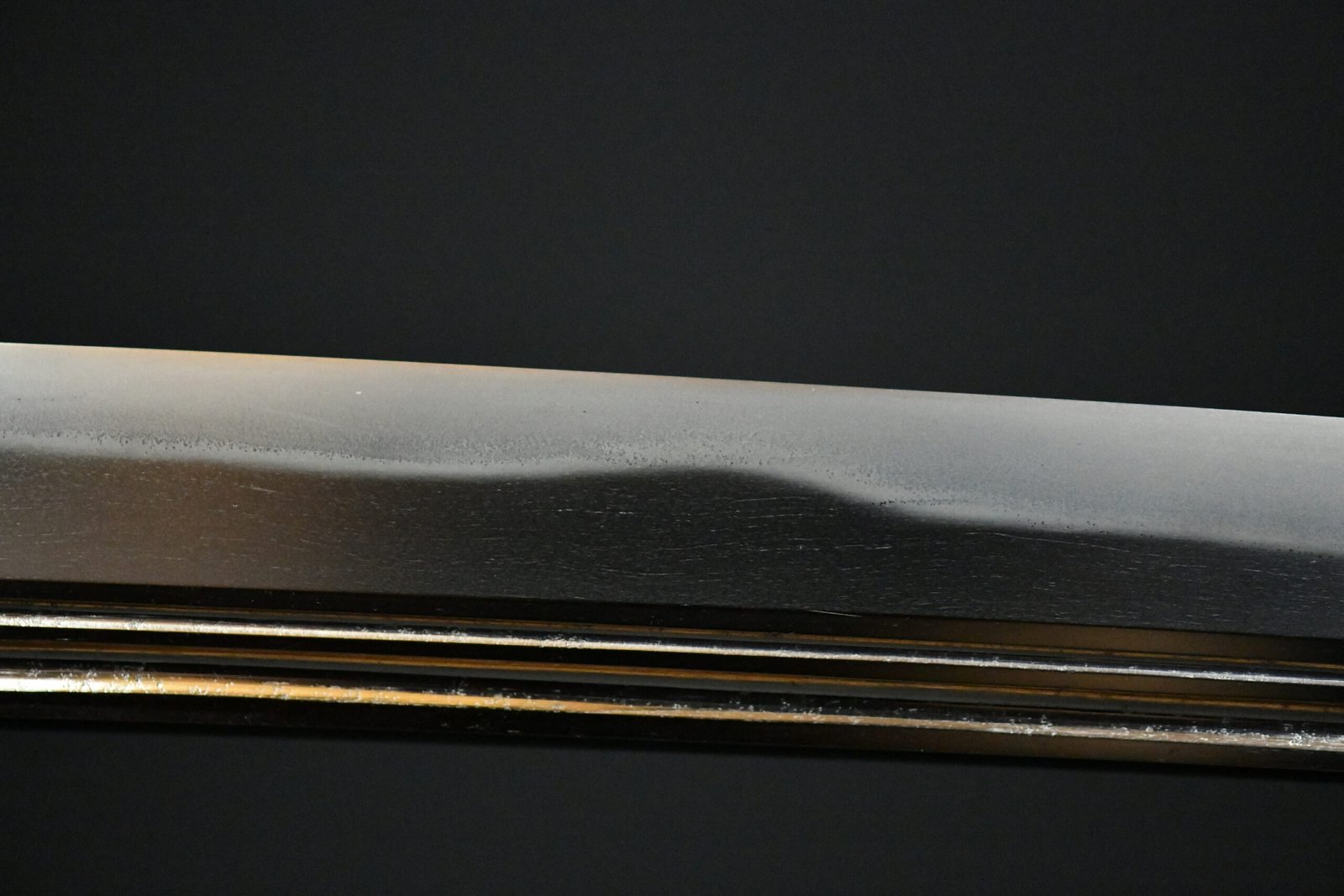
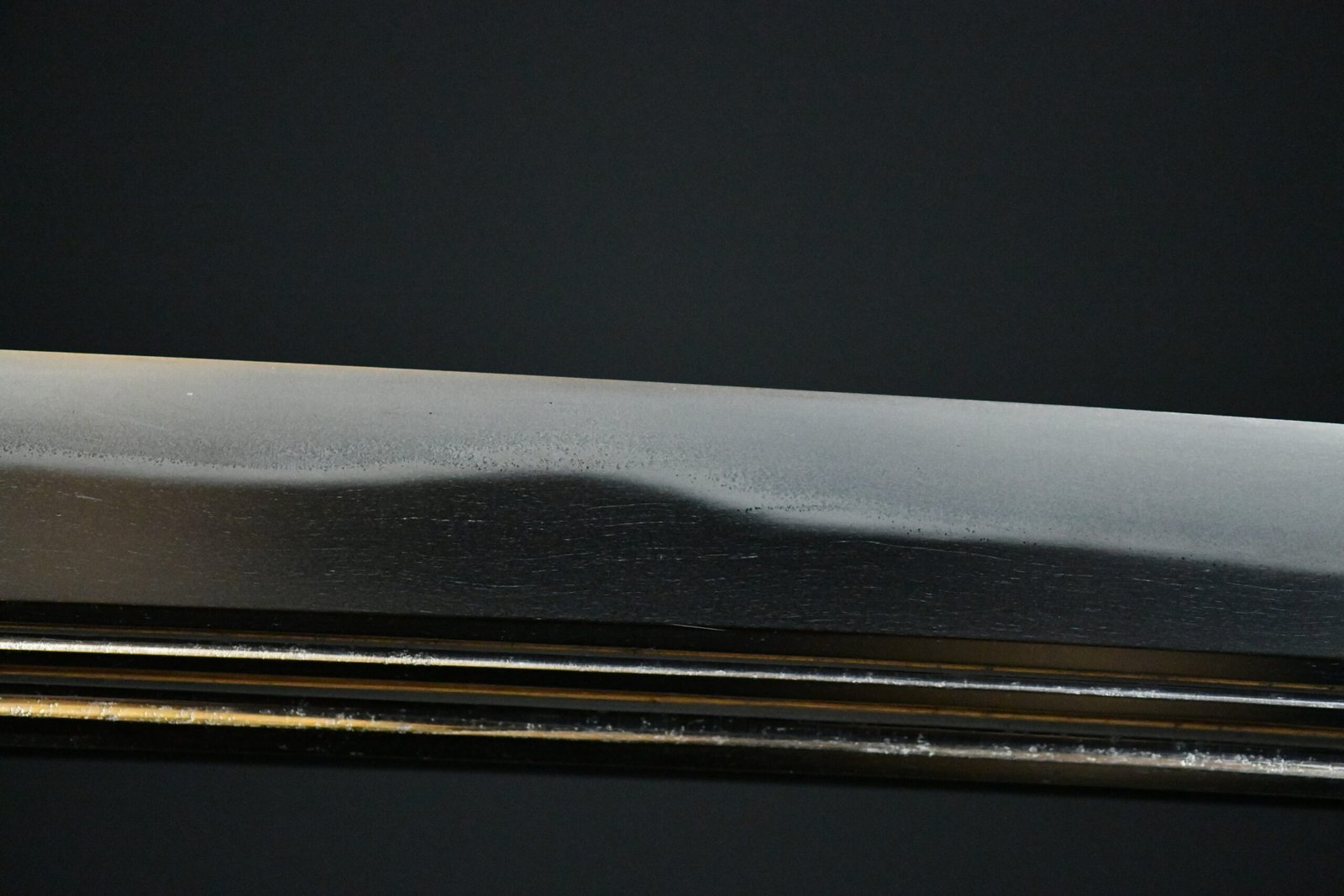
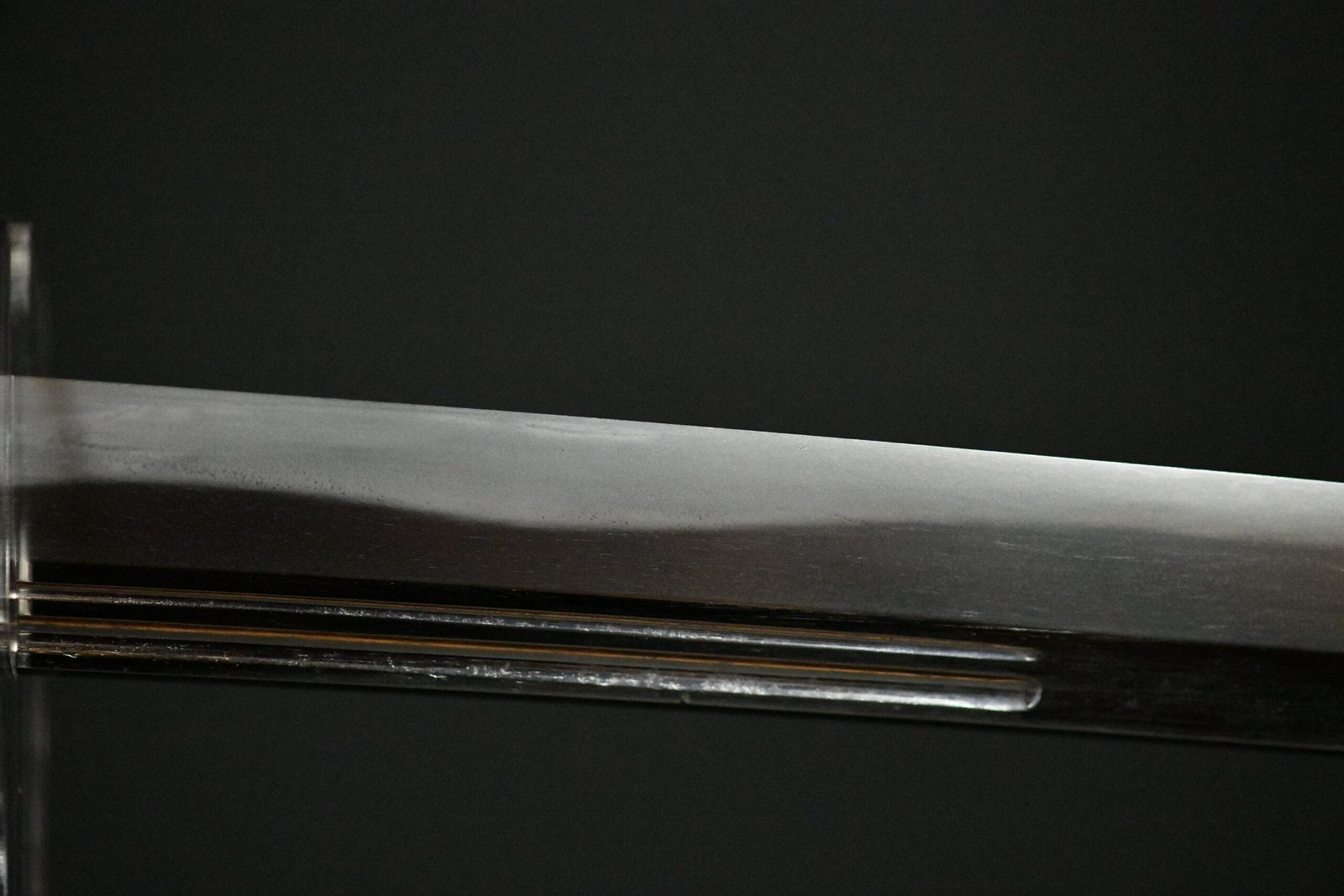
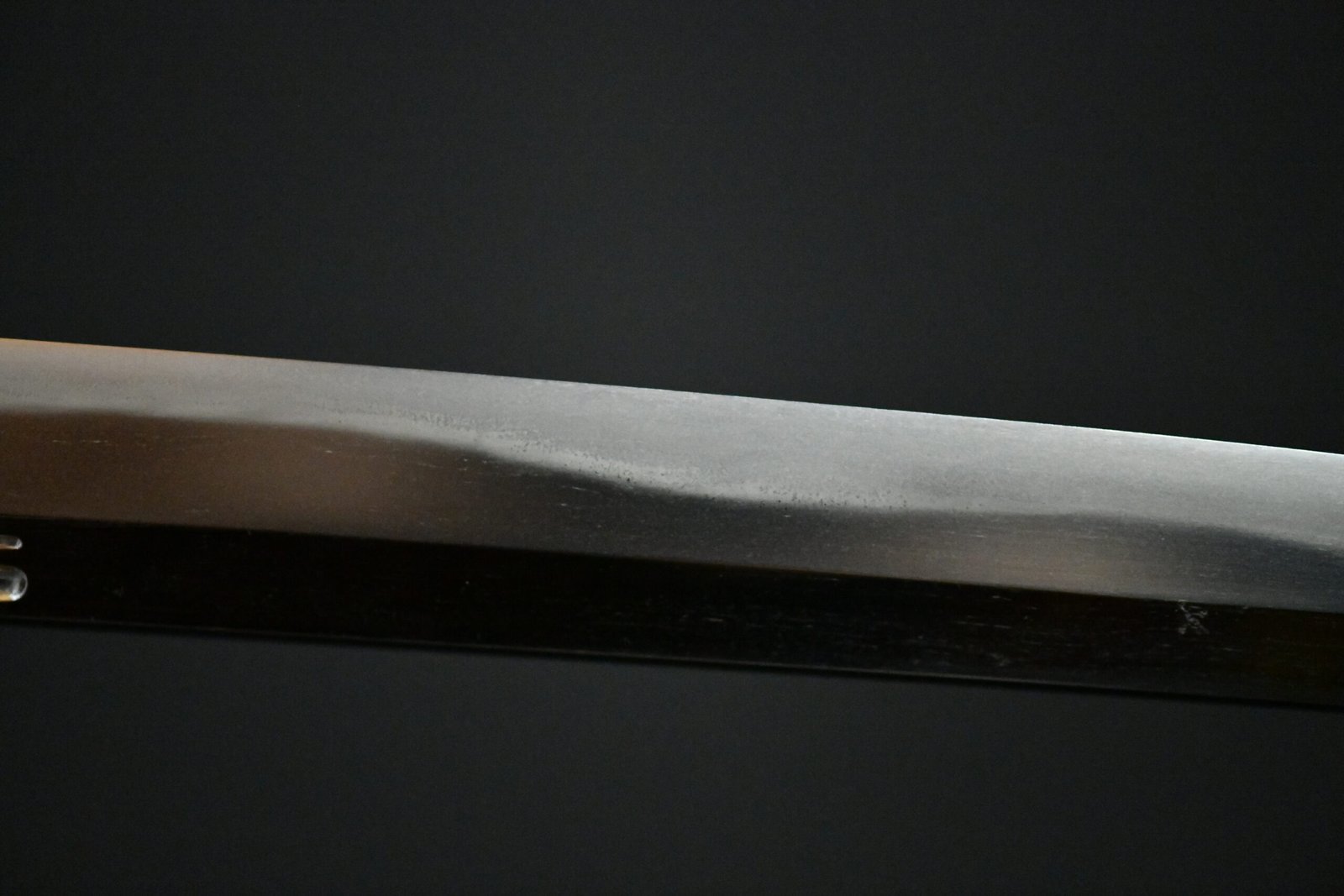
販売店の記載のまま
(翻訳なし)
新刀 · 備中
現在14点販売中
水田派は、室町時代末期の備中国に現れ、国重の名を代々受け継いだ一派である。松山、呰部、井原、荏原、新見など備中各地に拠を構えて作刀し、その勢いは古刀期から新刀期にまで及んだ。説示によれば、新見の国重は銘鑑により備後から備中新見荘に入り、後に松山城主三村家の刀工となったとされ、ほかに備後福山や河波でも作刀した工が知られる。新見住三郎左衛門尉国重、井原住の国重、英賀郡呰部住の大月左兵衛尉国重、水田住の大月与五右衛門国重など、地名と俗名を冠して長銘を切る工が代を重ねて連なり、国重と名乗る刀工が一門に圧倒的に多いことが、この派の大きな特徴をなしている。 作風は古刀期と新刀期とで趣を異にする。古水田と称される作には、腰の開いた互の目乱れを主調として小丁子や小乱れを交え、匂口が締まって小沸がつく、ややこせこせとした趣のものが見られ、茎先が大きく刃上りとなる点が見どころとされる。地鉄は小板目肌つみ、地沸がついて映りが立つ。新刀期の作になると、板目が流れて柾を交じえる鍛えに、小のたれや互の目を焼き、沸が深く、殊に荒沸が激しくつき、相州伝を強く意識した出来となる。地沸厚く地景太く入って湯走りがかかり、砂流し・金筋を頻りに見せ、棟焼がしきりにかかって皆焼風を呈する一群があり、帽子は掃き掛けて火焰風となり、あるいは焼深く一枚風となって長く返る。物打辺に矢筈風の刃を交えること、また小板目に小杢目を交え地沸微塵に厚くついて淡く映り立つ地鉄も、この派を見分ける拠りどころとなる。彫物を巧みにこなす工もあり、棒樋に倶利迦羅や梵字を施した大小の作が残る。 鑑定にあたっては、互の目や角ばる刃を交えた焼高い刃取り、矢筈風の刃、一枚風あるいは火焰風の帽子、棟焼の頻発といった水田特有の見どころが、相州・美濃に寄った実用本位の造込みと相俟って手掛かりとなる。沸の崩れや荒沸の激しさは、よく斬れる実戦の刀としての性格を物語る。在銘の確かな作は数が限られ、なかでも大月与五右衛門国重のごとく一門の他工にも稀なほど出来の優れたものが存する。新見の国重の一作は『光山押形』に所載し、附帯する古鞘に六代将軍徳川家宣すなわち文昭院の御陣刀であった旨が記される伝来の確かなものであって、備中の地に長く栄えた水田派の位置づけを今に伝えている。 詳しく見る →
江戸時代
江戸は刀の目利きの時代である。本阿弥の鑑定、1719年の享保名物帳、盛んな刀剣書が、戦で抜かれることのなくなった刀を学問の対象へと変えていった。
刀剣商の出品ページで鑑定書を確認できませんでした。日本刀および刀装具は通常、NBTHK(または NTHK)の鑑定を受けます。鑑定書がない場合、極めは刀剣商の見解にとどまり、第三者による確認は行われていません。ご購入前に刀剣商へ鑑定書の有無をお問い合わせのうえ、慎重にご判断ください。
14-day return if items arrive damaged or in unexpected condition; customer bears return shipping + insurance; items returned in original condition with all accessories; antique armour non-returnable; only regular priced items refundable; shipping costs non-refundable.
$3,384