1800年前後、水心子正秀は著述をもって、鍛刀は古作の法に立ち返るべしと説いた。復古刀の運動である。最大の後継者直胤は、数百年絶えていた備前伝と相州伝を確信をもって再現した。
 NihontoWatchNihontoWatch
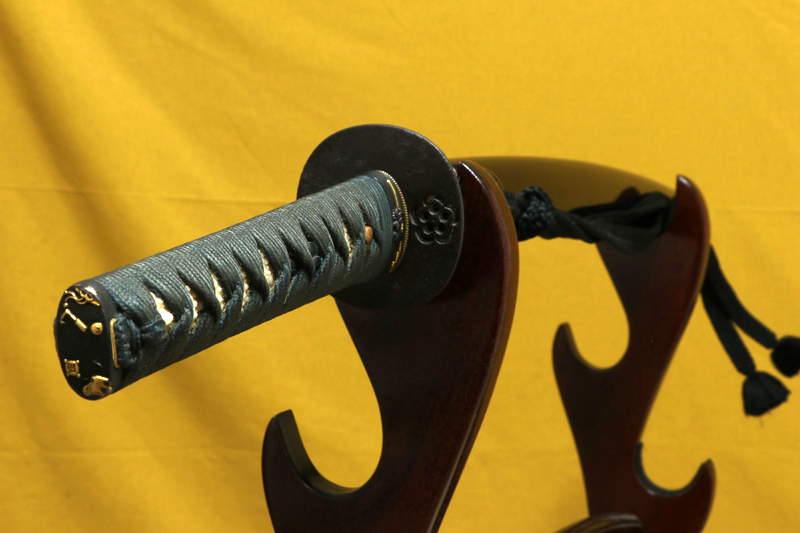
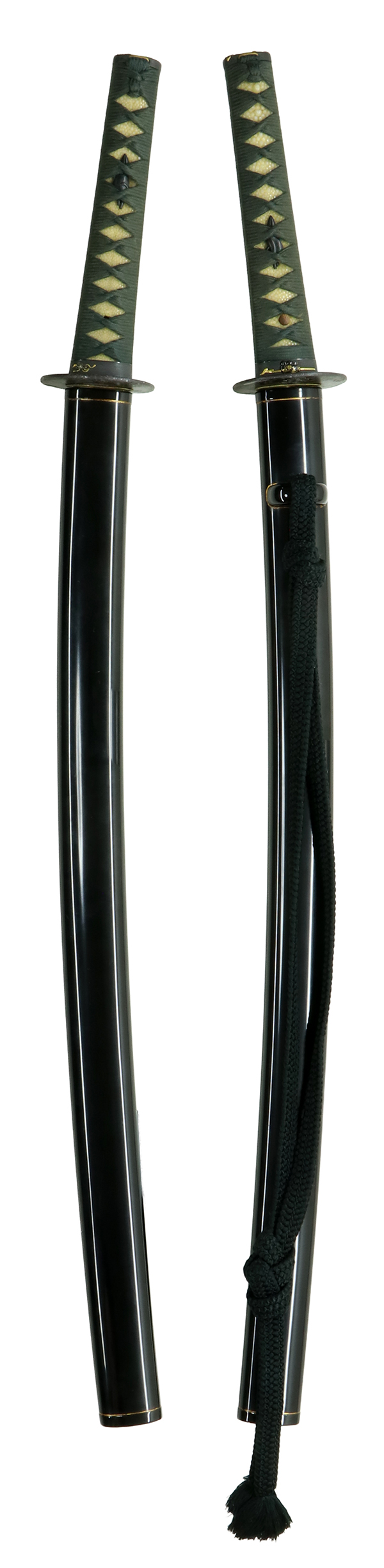
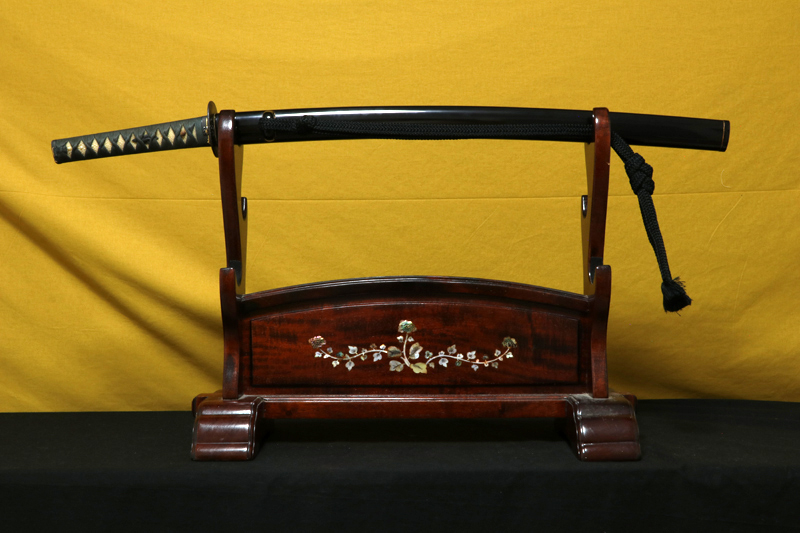
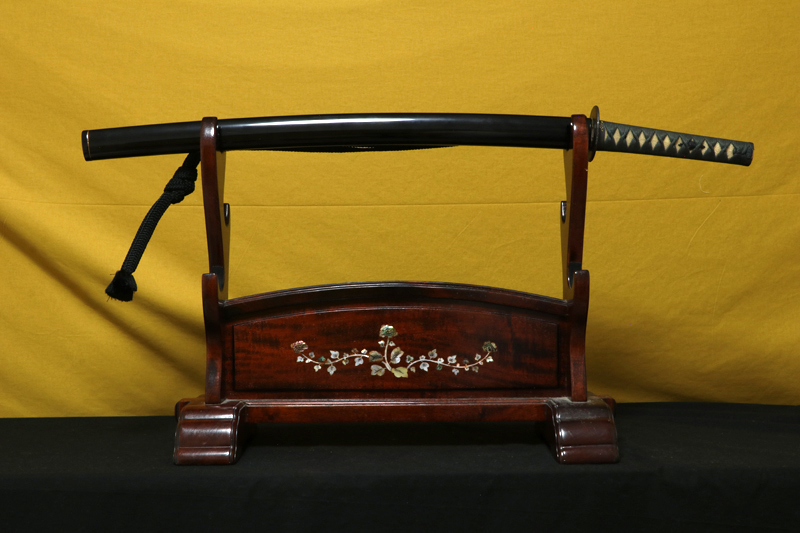
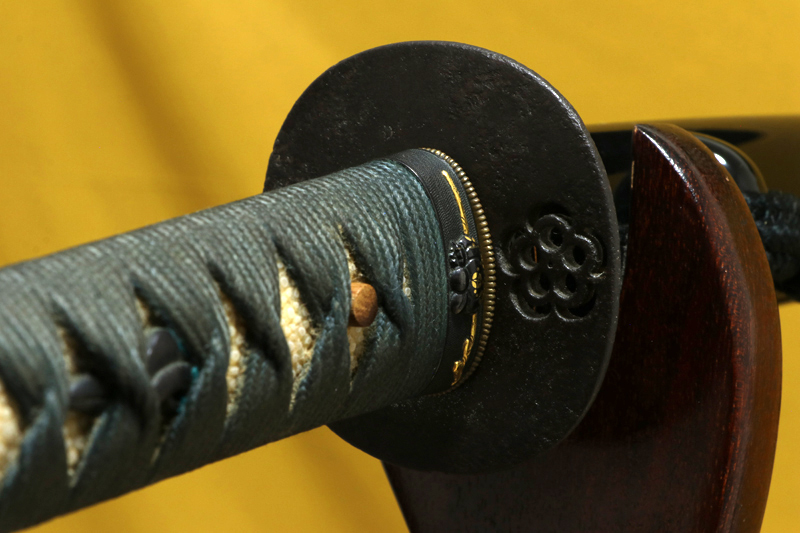
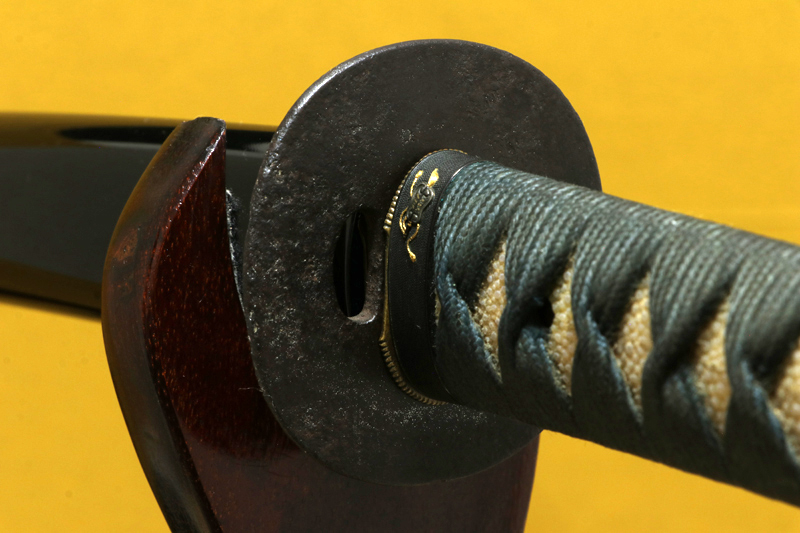
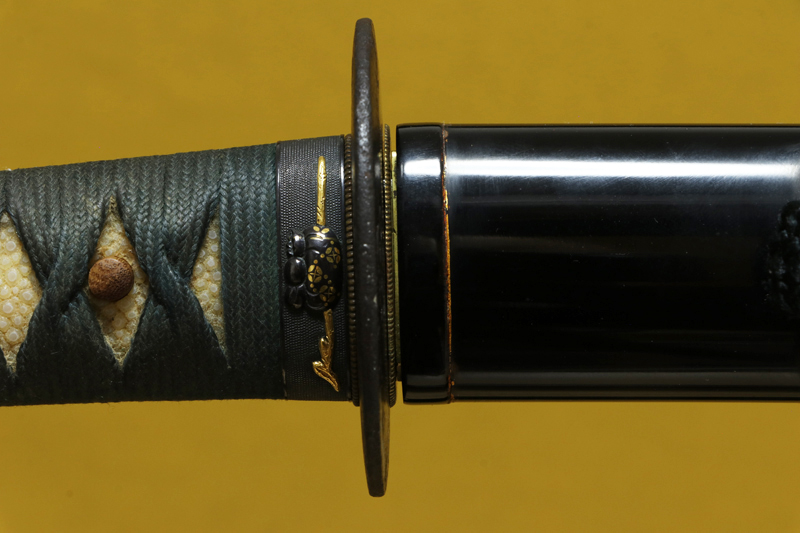
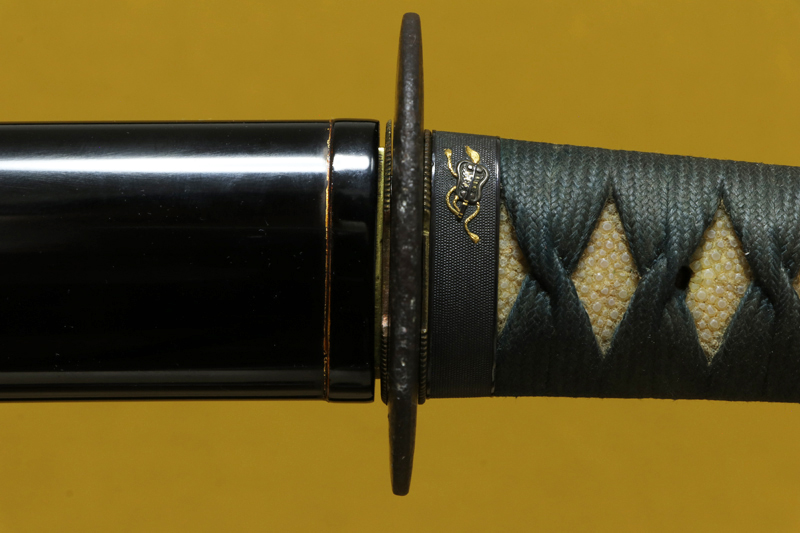
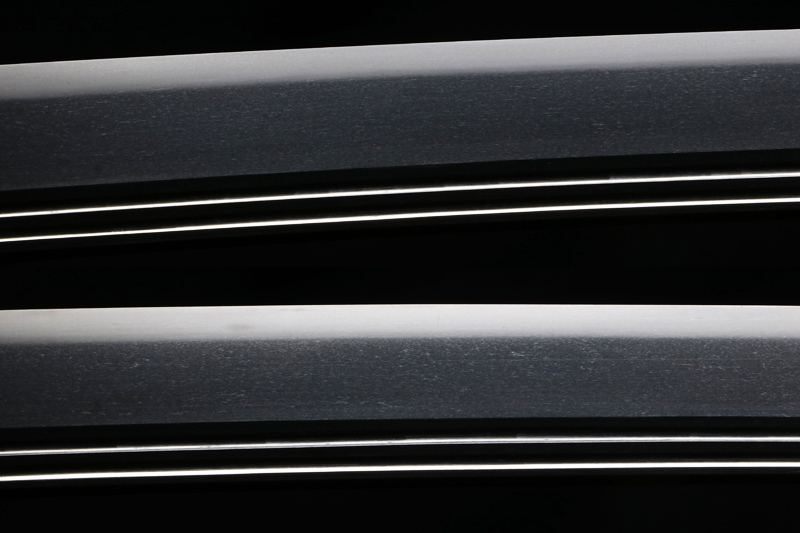
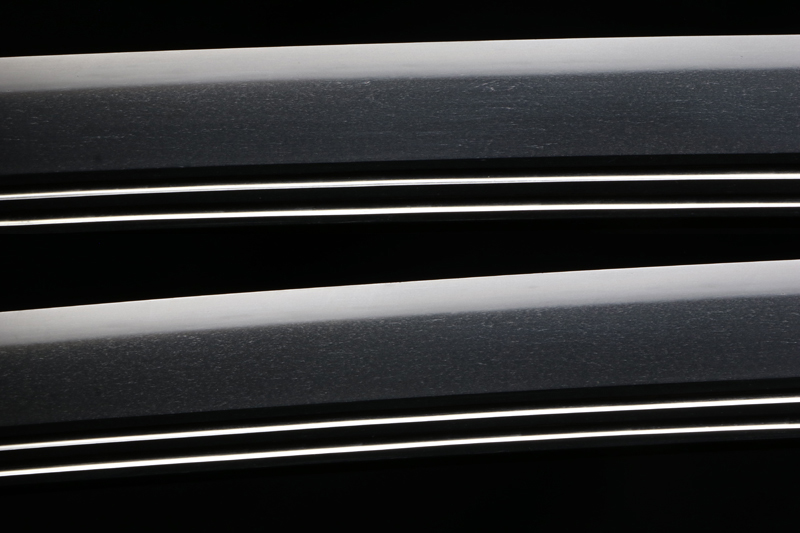
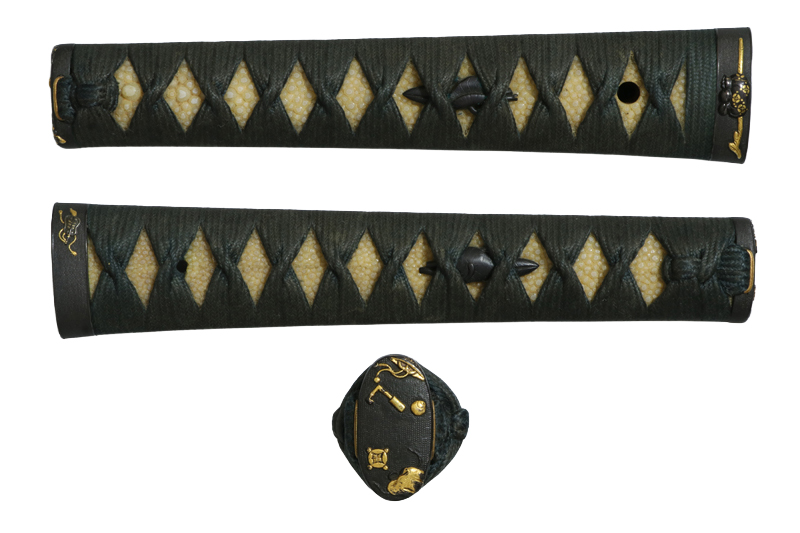
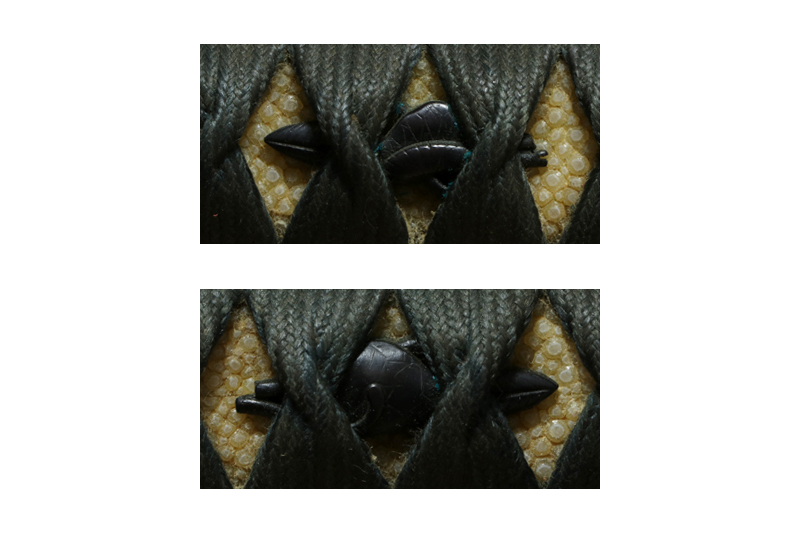
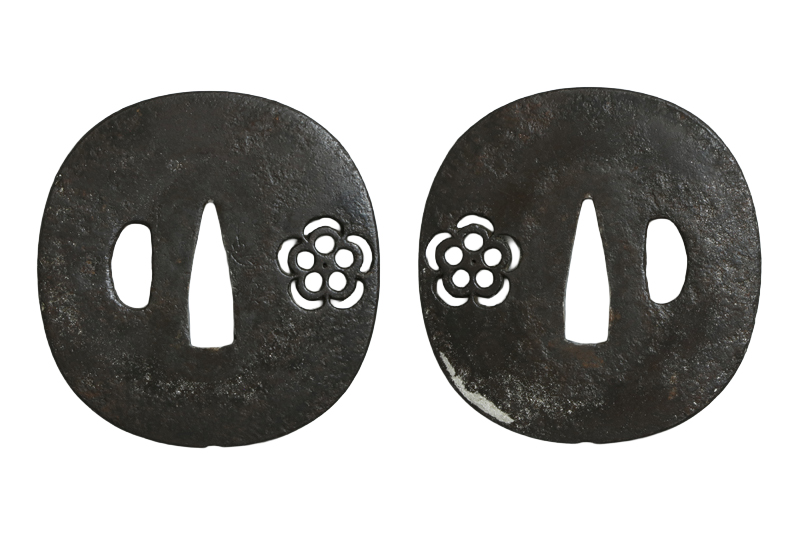
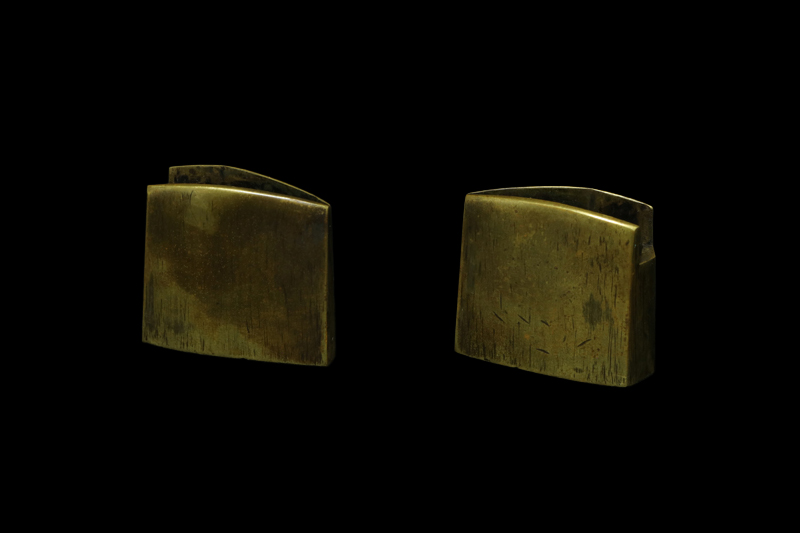
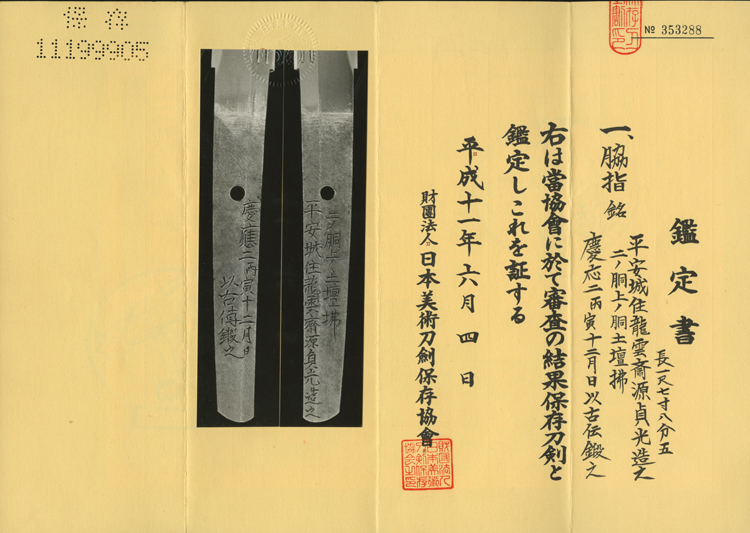
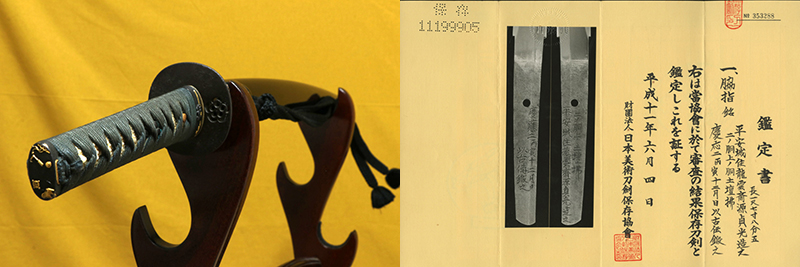
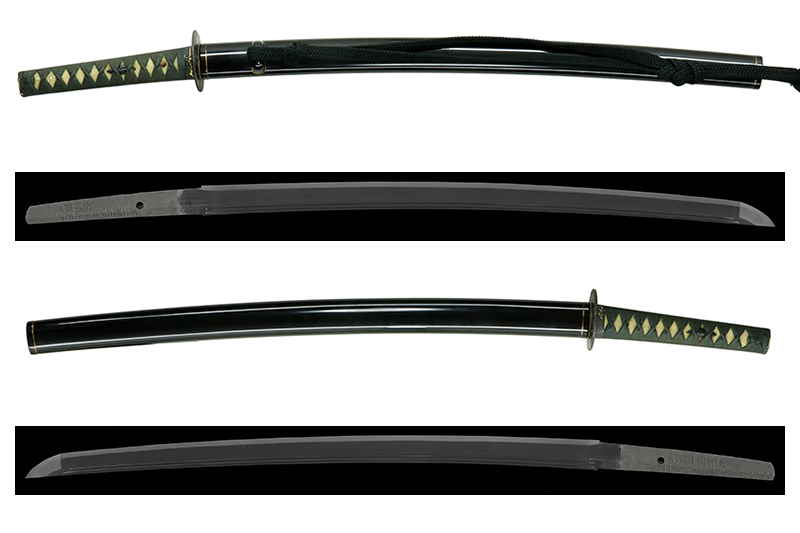
Hozon Token With cutting-test inscription Nino-do kamino-do Dotanbutsu. Heianjo ju Ryuunsai Minamoto Sadamitsu kore tsukuru with Koshirae. 龍雲斎源貞光は、幕末慶応頃の山城(京)の刀工で、初代月山貞一の門人です。 本作は、小板目に柾が交じる地鉄に中直刃を焼いた大和伝の脇差で、状態は良好です。 特に「二ノ胴上ノ胴土壇拂」の裁断銘があり、優れた切れ味を示しています。 品よくまとめられた拵も良好で、コレクションに適した一振です。 Ryuunsai Minamoto Sadamitsu was a swordsmith of Yamashiro Province (Kyoto) active around the Keio era at the end of the Edo period, and was a student of the first-generation Gassan Sadakazu. This piece is a Yamato-tradition wakizashi featuring ko-itame hada mixed with masame, with a chū-suguha hamon. It is in good condition. Of particular note is the cutting test inscription, “Ni-no-do Ue-no-do Dodan-barai,” which demonstrates its excellent cutting ability. The tastefully assembled koshirae is also in good condition, making this a suitable piece for any collection. 「刀姿 sword figure」 鎬造り庵棟、身幅尋常重やや厚く、鳥居反り中鋒。茎は生で化粧鑢がかかり、茎尻は栗尻。 Shinogi-zukuri with an iori-mune. The blade has standard mihaba and a slightly thick kasane, with a torii-zori and a chū-kissaki. The nakago is ubu with keshō yasurime, terminating in a kurijiri. 「彫り物 carving」 彫り物は表裏に二筋樋が入る。 The horimono consists of futasuji-hi (double grooves) carved on both sides of the blade. 「地鉄 jigane」 地鉄は小板目肌に柾交じり、地沸厚く付く。 The jigane shows a ko-itame hada mixed with masame, with thickly abundant ji-nie. 「刃紋 hamon」 刃文は中直刃を焼き、小足入り、匂い口締まりごころに小沸付く。 The hamon is chu-suguha, with ko-ashi, a relatively tight nioiguchi, and ko-nie. 「特徴 detailed」 龍雲斎源貞光は、幕末慶応頃の山城(京)の刀工で、初代月山貞一の門人です。銘は「平安城堀井龍雲斎源貞光」とも切ります。 作例は刀が多く、幅広で豪壮な姿を呈するものが見られます。地鉄は、よく詰んだ小板目鍛えのものや、大和伝による柾目鍛えのものがあり、刃文は直刃、互の目丁子刃などを焼いています。 本作は、小板目鍛えに柾が交じる地鉄に、中直刃を焼いた大和伝の 脇差で、コンディションは良好です。 特筆すべきは、「二ノ胴上ノ胴土壇拂」の裁断銘が切られている点です。これは、重ねた遺体の二体目の胸部、すなわち上ノ胴まで切断したことを意味し、その優れた切れ味を示すものです。 拵は品よくまとめられており、こちらもコンディションは良好です。 裁断銘の入った業物の脇差であり、拵も優れていることから、コレクションに最適な一振です。 Ryūunsai Minamoto Sadamitsu was a swordsmith of Yamashiro (Kyoto) active around the Keiō era at the end of the Edo period. He was a student of the first-generation Gassan Sadakazu. He also signed his works “Heianjō Horii Ryūunsai Minamoto Sadamitsu.” Many of his works are katana, often exhibiting a broad and imposing shape. His jigane includes well-forged ko-itame hada, as well as masame hada in the Yamato tradition. His hamon includes suguha and gunome-chōji. This piece is a wakizashi in the Yamato tradition, featuring ko-itame hada mixed with masame in the jigane, and a chū-suguha hamon. It is in good condition. Of particular note is the cutting test inscription, “Ni-no-dō Ue-no-dō Dodan-barai.” This means that the blade cut through the chest area, namely the Ue-no-dō, of the second body in a stacked-body cutting test, demonstrating its excellent cutting ability. The koshirae is tastefully assembled and is also in good condition. This wakizashi, bearing a cutting test inscription and accompanied by fine koshirae, is an excellent piece for any collection. 「拵 Koshirae」 ハバキ(habaki) :素銅地一重の金鍍金。 鍔(tsuba) :鉄地蓮根影透かし。 縁頭(fhchikashira):赤銅魚子地軍配の図。 目貫(menuki) :赤銅地蓮の図 柄(tsuka) :鮫は親粒が付き巻鮫。柄巻を納戸色の諸捻り巻き。 鞘(saya) :黒呂。 「刀剣の状態 condition of blade」 研:良好です。 傷:欠点に成るような傷はありません。


新々刀 復古の運動
1800年前後、水心子正秀は著述をもって、鍛刀は古作の法に立ち返るべしと説いた。復古刀の運動である。最大の後継者直胤は、数百年絶えていた備前伝と相州伝を確信をもって再現した。
銘が正しい、または無銘でも年代・国・系統を確実に指摘できる、保存に値する真正の作と鑑定されたものです。
日本美術刀剣保存協会(NBTHK)は、1948年に設立され、文化庁の監督を受ける公益財団法人で、東京・刀剣博物館に本部を置きます。専門の審査員が出品作を直接審査し、美術的・歴史的価値に応じた鑑定書を発行します。NBTHKの鑑定書は、日本刀および刀装具の真正性を示す最も広く認知された基準です。
NBTHK公式サイトご購入頂いた商品の到着してから3日以内であれば返金もしくは交換対応をいたします。返品時の送料と返金する際の振込手数料はお客様のご負担とさせていただきます。