 NihontoWatchNihontoWatch
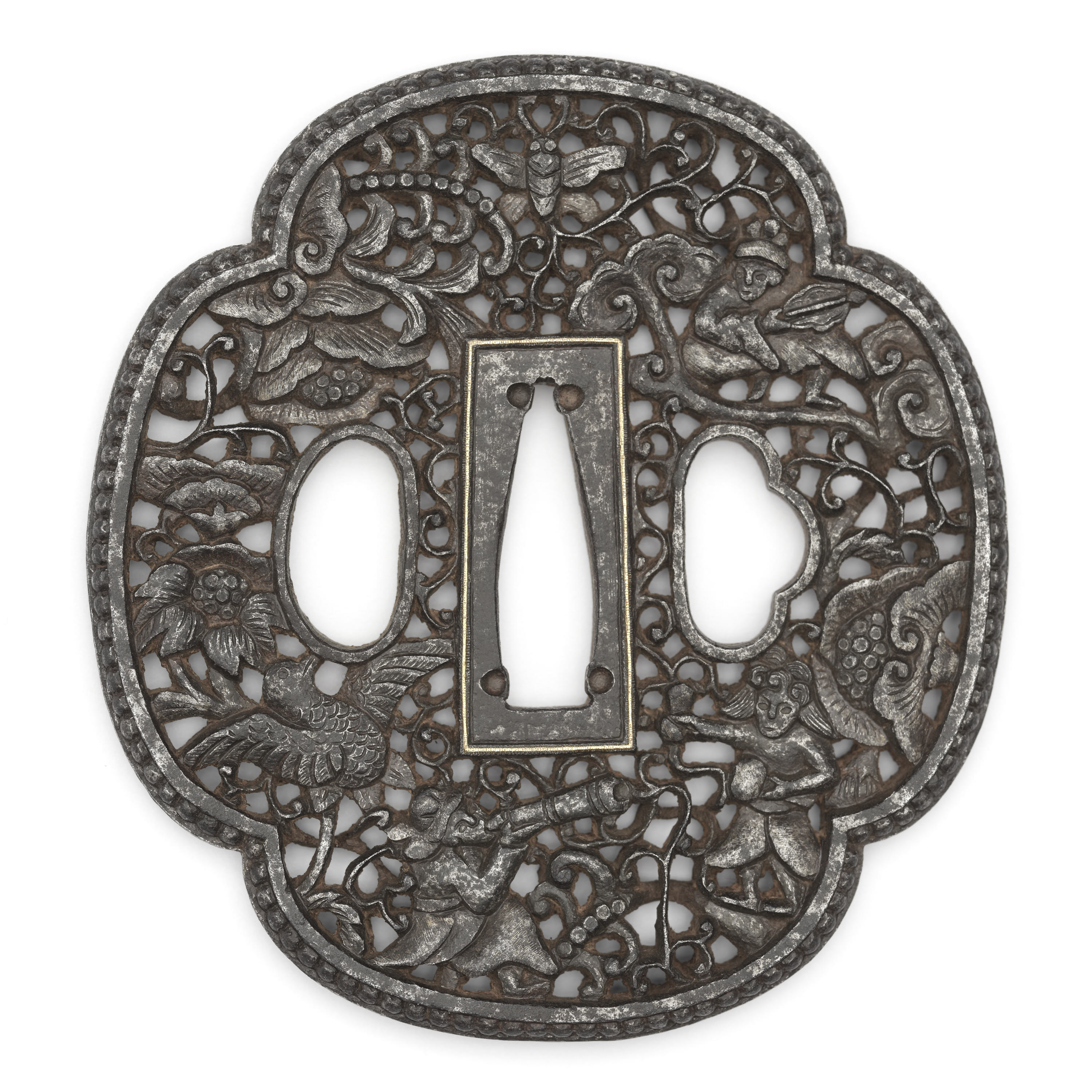
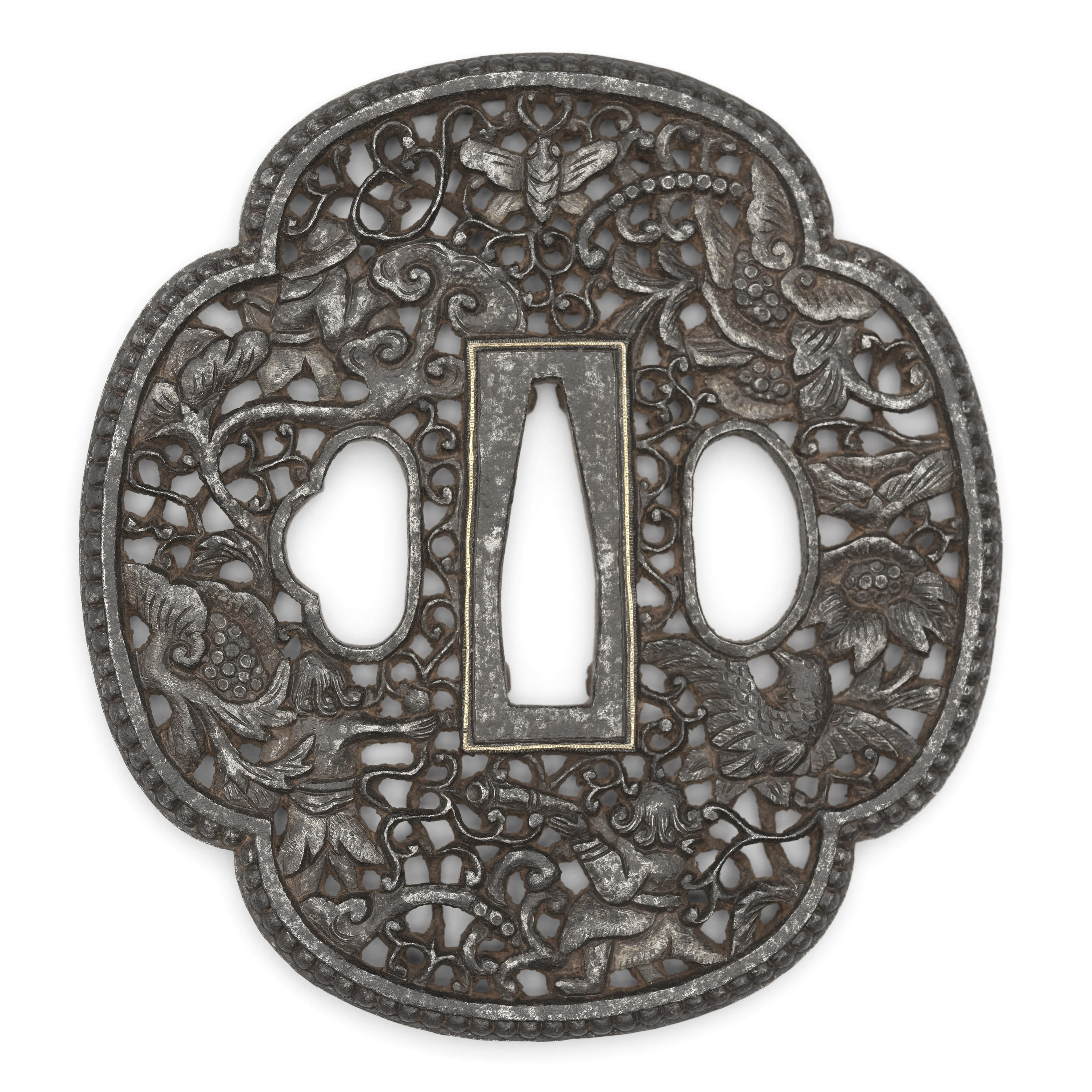
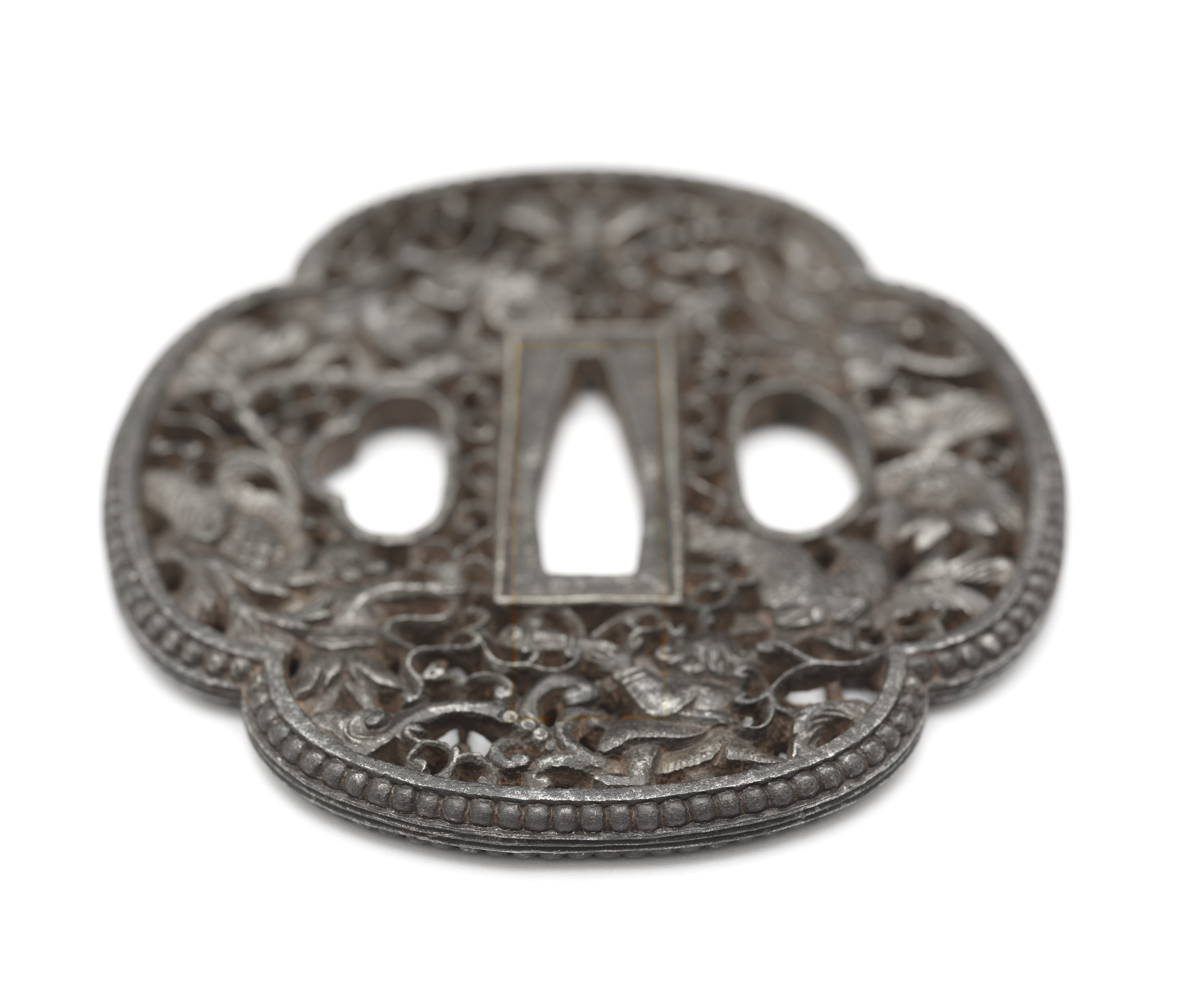
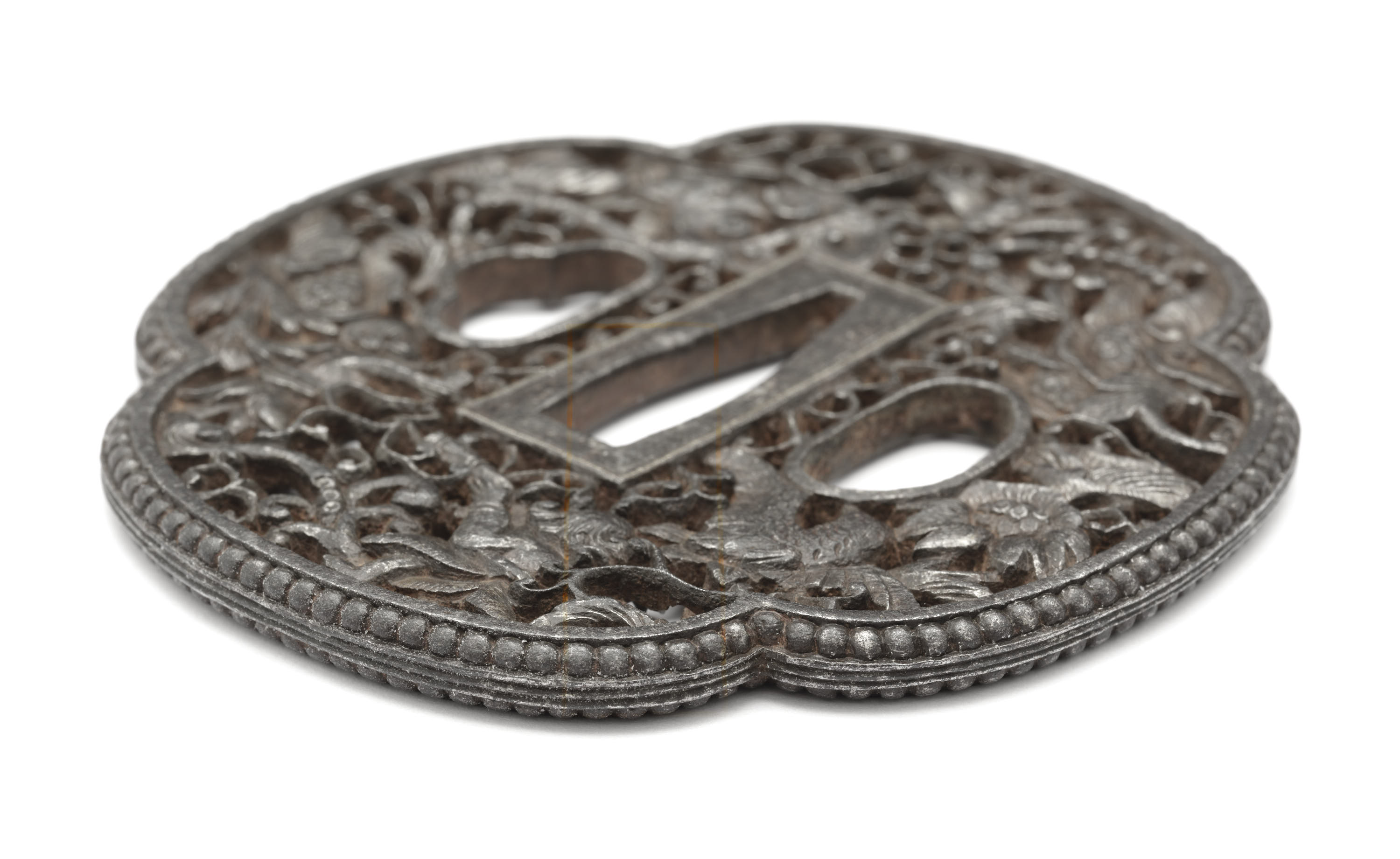
Description A very fine example of a nanban tsuba. Such pieces were made across East and Southeast Asia, partly for the Japanese market. The carving on this particular example is so fine that it was most likely made in Japan, but heavily inspired by the style and work of metalwork from other places. The tendrils for example mimic Qing imperial ironwork, which in turn takes after the fine pierced work from Dergé. The piece is mokka-gata with a nicely worked rim with three ridges with beading on either side. The seppa-dai is rectangular with slightly wider bottom, inspired by Chinese seppa-dai for angular mounted sabers that were popular in the 17th and 18th century. The hitsu-ana are integral to the design, not an afterthought as often seen, and their metal lining is a trait often seen on nanban pieces from the Yagami school in Hizen. Symbolism Its a very busy design with at the top a butterfly, to the its lower right a Chinese figure with a fan. Continueing clockwise, we see a tropical flower, a Western man holding something circular, and another Western figure blowing a flute or horn. This is possible the charumera that the Portuguese introduced into Japan. Then there is a bird, possibly a dove, which was a prized import from Europe. Then some more plants until we end up back on top with the butterfly. Conclusion Many nanban tsuba show somewhat indifferent, mass-produced workmanship but the carving on this piece is exceptional. This, plus the way the hitsu-ana were incorporated into the design makes me think it is work by the Yagami school or someone closely related to them. Their great masters worked around 1750-1825.
NihontoWatch
肥前
販売店の記載のまま
当サイトでご注文いただいた商品が、掲載されている画像や説明と異なる場合、返品を承ります。返品をご希望の際は、商品到着後7日以内にメールにてご連絡ください。返金額は、購入代金から送料、銀行手数料、および通貨換算にかかる費用を差し引いた金額となります。分割払いで購入された商品、および現物を確認された商品の返品・交換は一切お受けできません。