 NihontoWatchNihontoWatch
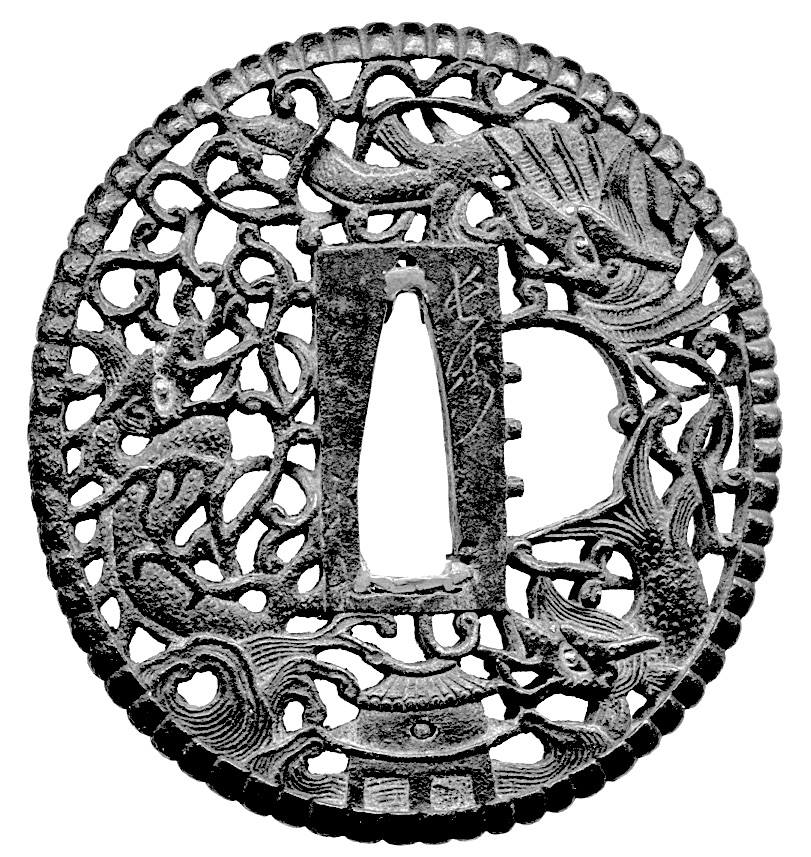
Description A Japanese tsuba showing strong Chinese influence. Round with a smooth rim, the decor consists of complex vine work called karakusa with on each side six articulated peonies. Some of the vines go over and under each other in the undercut work that this kind of metalwork is known for. Each peony is chiseled in relief and decorated with gold leaf applied over cross-hatching. It is the execution of this gold that betrays it is Japanese work, with the cross-hatching done in three directions while Chinese work typically prepares the surface with two-directional cross-hatching. The seppa-dai (washer seat) is rectangular, another hint towards strong Chinese influence, as angular hilts that fitted this shape were common in China primarily in the 17th and 18th century. It has one hitsu-ana for the kozuka, lined with shakudō. Attribution The work reminds somewhat of that seen on a tsuba signed "Tonshu Shinshichi" which is an alias for Hattori Yoshitsugu, a student of Yagami school founder Noda Mitsuhiro. The Yagami school was among others known for the 100 monkeys tsuba. This tsuba, although made in Japan, also retains the angular Chinese style center plate. The kozuka hitsu-ana was probably once lined with soft metal like shakudō, as was common for the Yagami school. The "Tonshu Shinshichi" tsuba. Published in Joly, Soshankenshu, #189. See James McElhinney's article Dragon Gate Tsuba, connoisseurs notebook 2017.
NihontoWatch
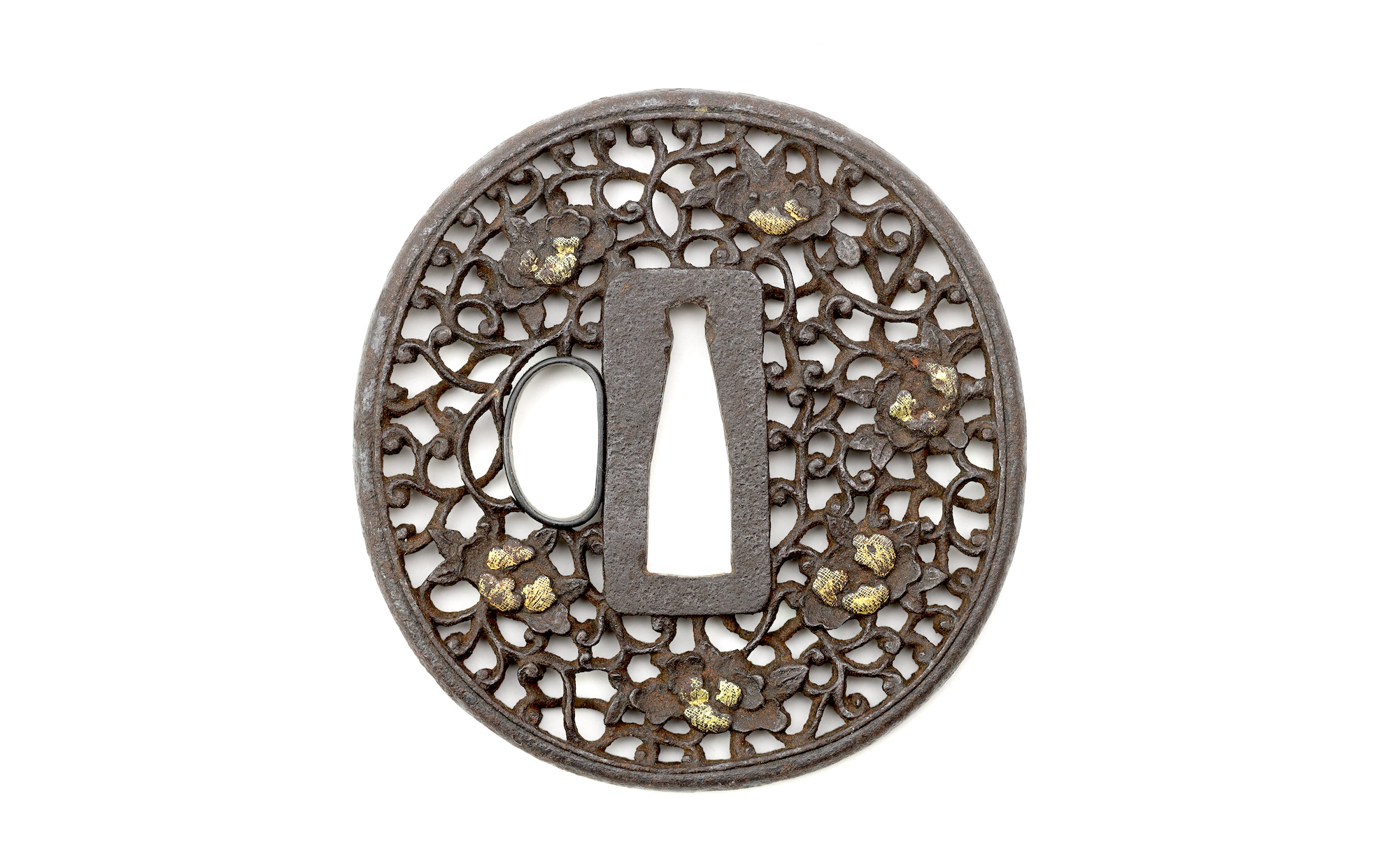
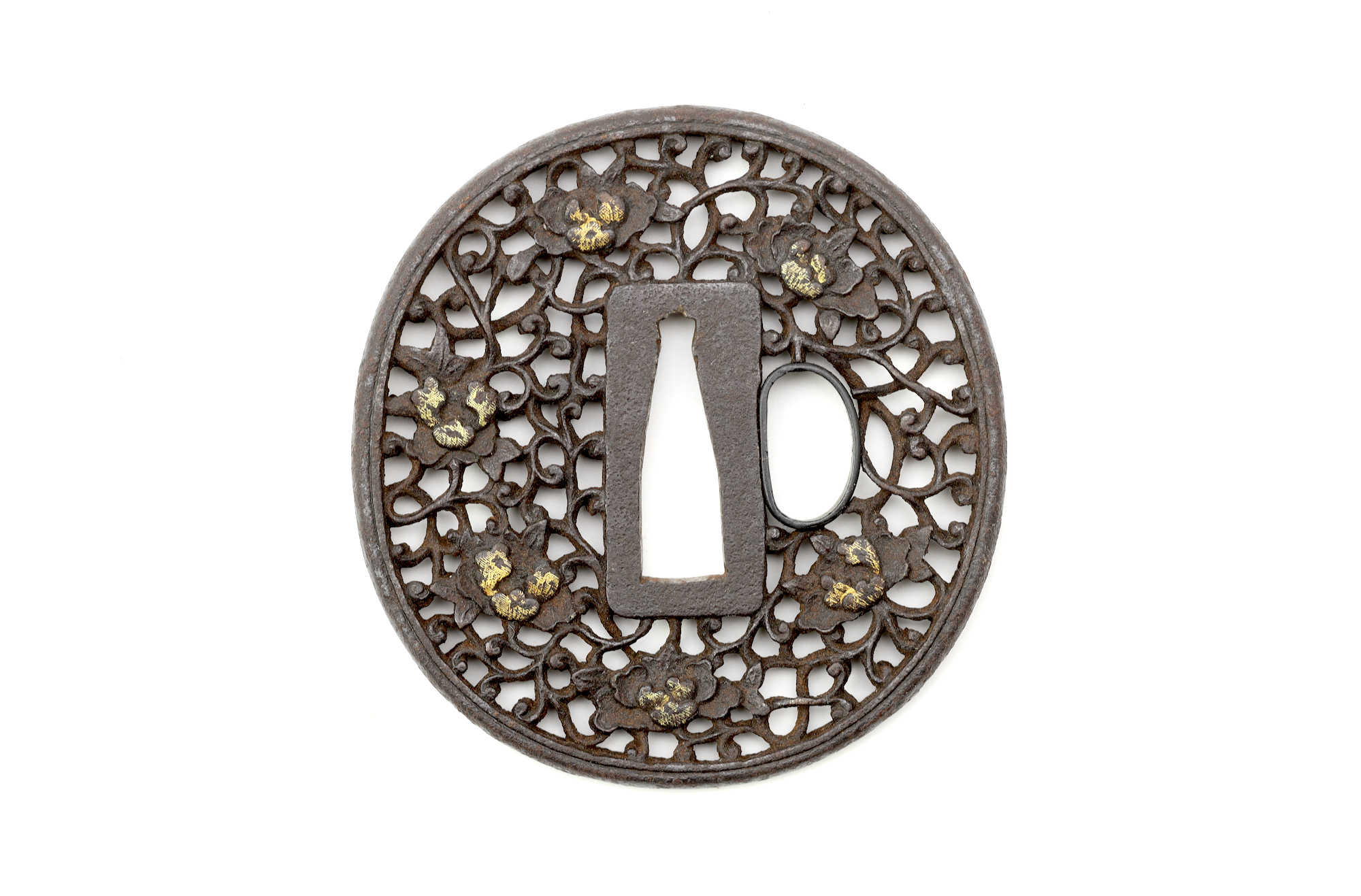
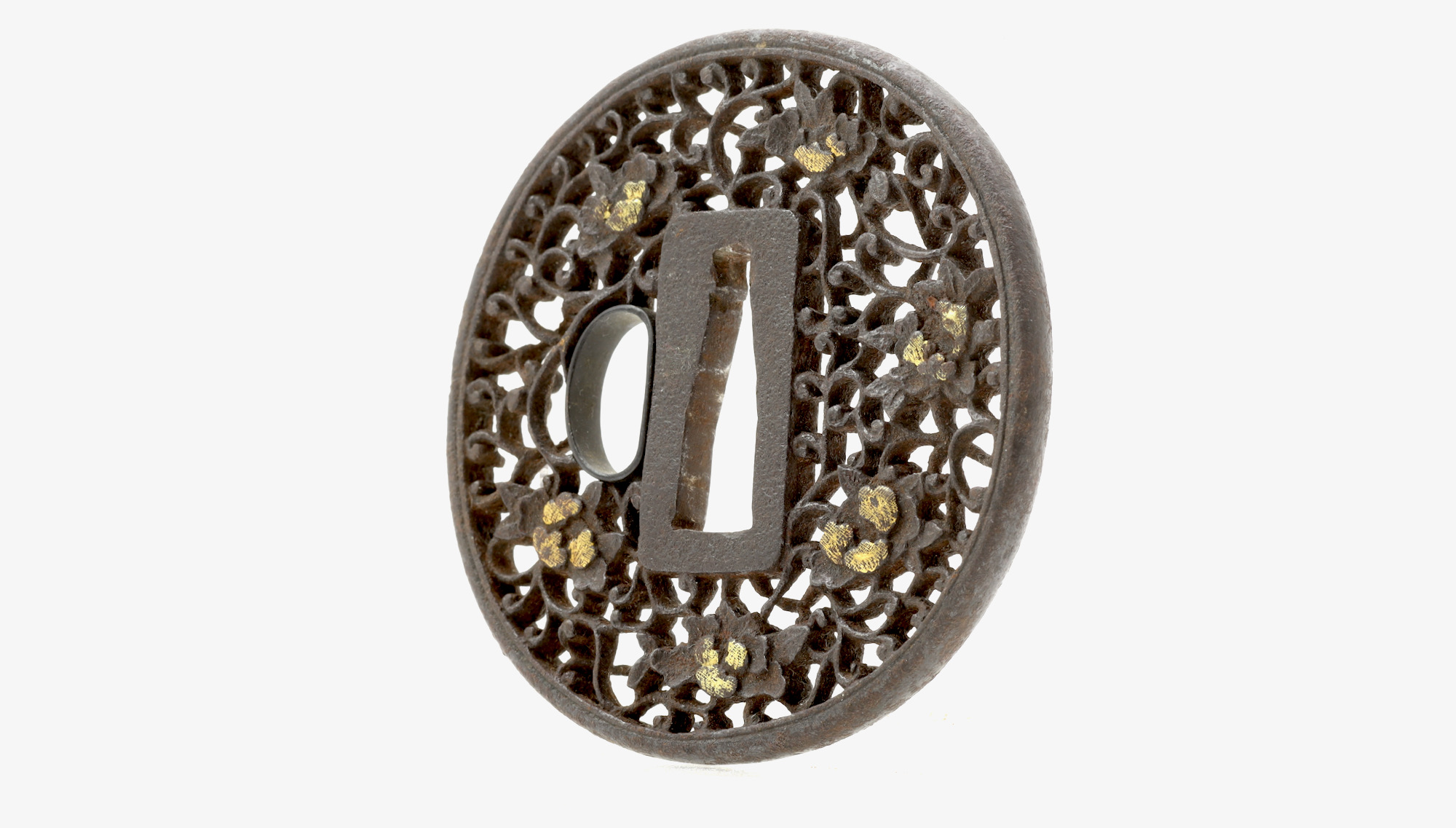
販売店の記載のまま
(翻訳なし)
刀剣商の出品ページで鑑定書を確認できませんでした。日本刀および刀装具は通常、NBTHK(または NTHK)の鑑定を受けます。鑑定書がない場合、極めは刀剣商の見解にとどまり、第三者による確認は行われていません。ご購入前に刀剣商へ鑑定書の有無をお問い合わせのうえ、慎重にご判断ください。

当サイトでご注文いただいた商品が、掲載されている画像や説明と異なる場合、返品を承ります。返品をご希望の際は、商品到着後7日以内にメールにてご連絡ください。返金額は、購入代金から送料、銀行手数料、および通貨換算にかかる費用を差し引いた金額となります。分割払いで購入された商品、および現物を確認された商品の返品・交換は一切お受けできません。