1800年前後、水心子正秀は著述をもって、鍛刀は古作の法に立ち返るべしと説いた。復古刀の運動である。最大の後継者直胤は、数百年絶えていた備前伝と相州伝を確信をもって再現した。
 NihontoWatchNihontoWatch
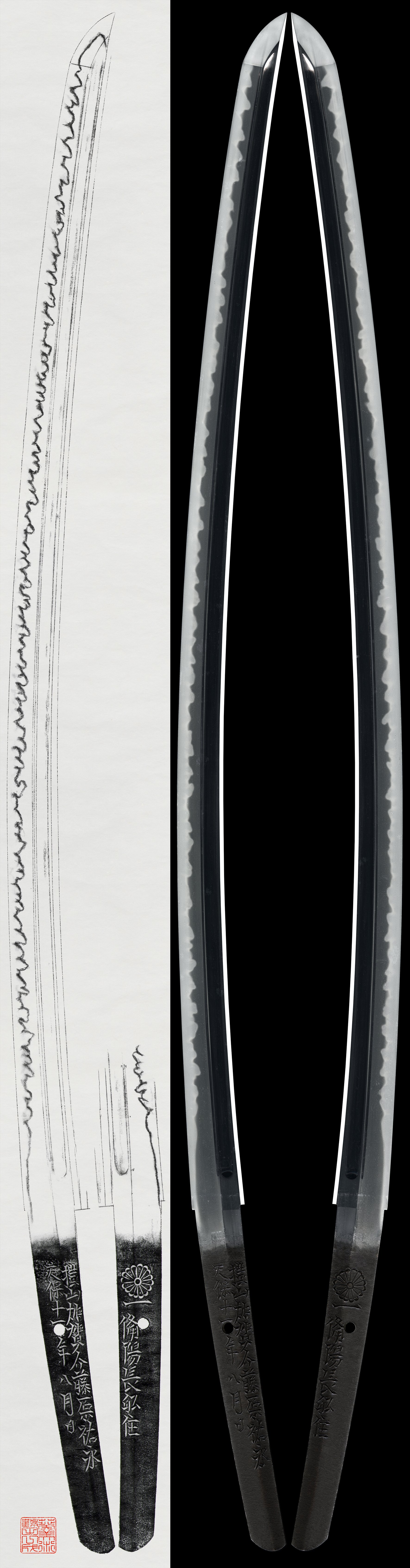
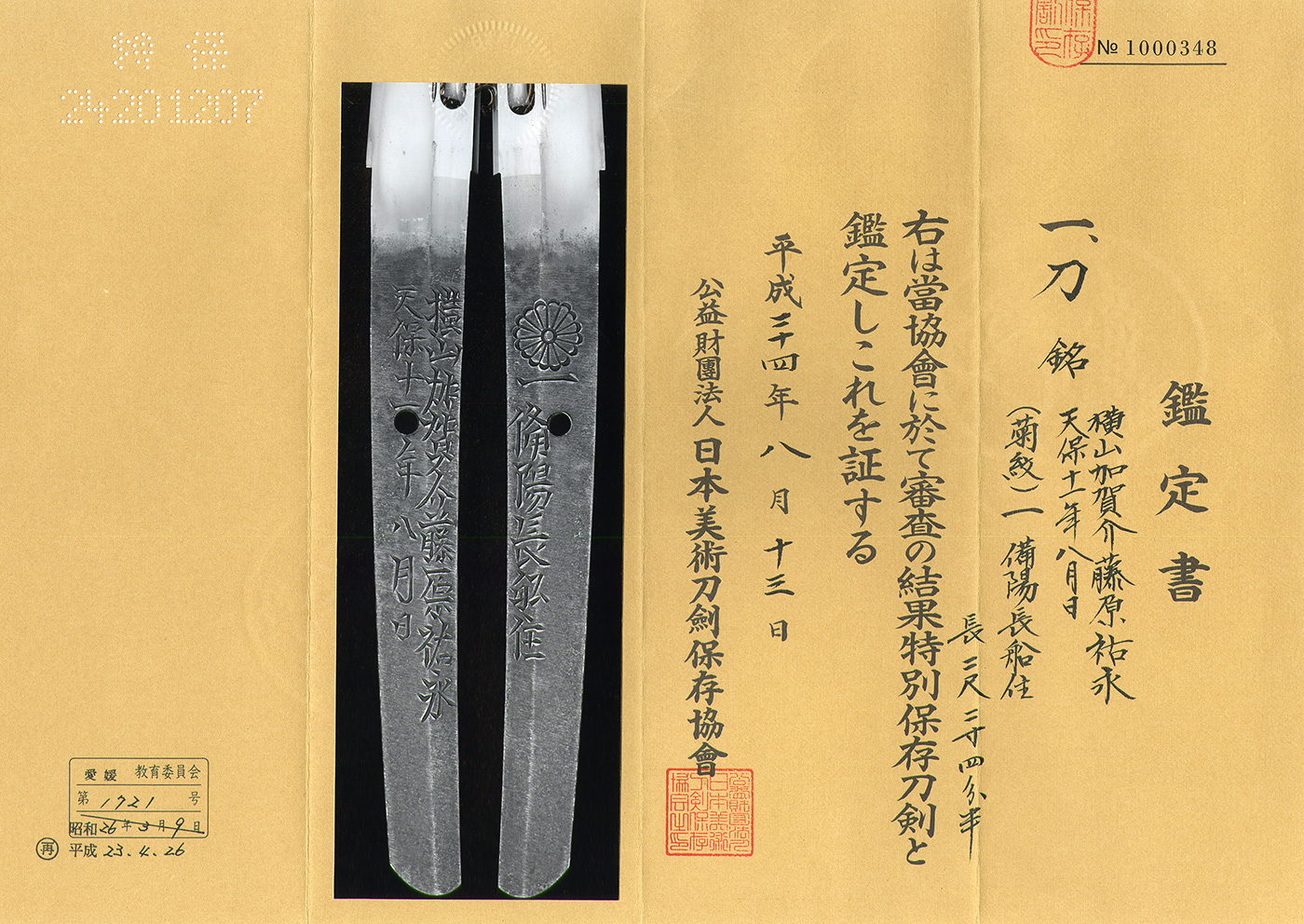
Ordering Number: AS26182Katana in Shirasaya with Koshirae (NBTHK Tokubetsu Hozon Token).Signature: Yokoyama Kaganosuke Fujiwara Sukenaga,August 1840.(Kikumon) Ichibiyo Osafune.横山加賀介藤原祐永天保十一年八月日(菊紋)一備陽長船Shinshinto: Jyo Saku: Bizen.(We divide 4 sections for each sword as Saijyo Saku, Jyojyo Saku, Jyo Saku and Regular Saku).This work is ranked as Jyojyo Saku for Yokoyama Kaganosuke Fujiwara Sukenaga.Habaki: Gold-plated double Habaki.Blade Length: 68.1 cm (26.81 in).Curvature: 2.4 cm (0.94 in).Mekugi Hole: 1.Width at Base (Motohaba): 3.09 cm (1.22 in).Width at Yokote: 2.01 cm (0.79 in).Thickness of rim (Kasane): 0.68 cm (0.27 in).Sword Weight: 650 g.Era: Edo period, Tenpo 11 (1840).Shape: A katana with standard width and thickness.It has a deep curvature and an extended kissaki.Bo-hi and soe-hi grooves are carved on both sides.Jigane: Well-forged ko-itame hada forming a refined and beautiful surface.Hamon: Nie-deki.Starting with suguha from the hamachi, it changes into gunome-midare, creating the beautiful hamon characteristic of the Yokoyama school.The boshi turns back in a rounded form.Features: This distinctive Yokoyama-style hamon could hardly be replicated outside the Yokoyama school.Even modern swordsmiths find it difficult to produce without flaws.Among their works, swords forged during the Tenpo era are especially well made, featuring well-balanced gunome-choji midare.During the Tenpo era of the Edo period, Japanese swords sold very well.This was due to the rise of the Sonnō Jōi movement, as fears of renewed conflict increased the demand for swords.Swordsmiths undoubtedly made every effort to produce works of the highest possible quality.This applied not only to Sukenaga but also to nearly all famous swordsmiths of the time.Therefore, when examining works by renowned smiths made during the Tenpo period, one can clearly see their superior workmanship.This piece is also accompanied by an excellent koshirae.Koshirae:Tsuba: Round shakudo tsuba with openwork carvings
NihontoWatch



備前伝 · 備前
現在24点販売中
新々刀 復古の運動
1800年前後、水心子正秀は著述をもって、鍛刀は古作の法に立ち返るべしと説いた。復古刀の運動である。最大の後継者直胤は、数百年絶えていた備前伝と相州伝を確信をもって再現した。
保存刀剣のうち、出来が一層優れ、保存状態も良好と認められたものです。再刃や、室町・江戸期の多くの無銘作は対象外となり、保存刀剣より高い基準が課されます。
日本美術刀剣保存協会(NBTHK)は、1948年に設立され、文化庁の監督を受ける公益財団法人で、東京・刀剣博物館に本部を置きます。専門の審査員が出品作を直接審査し、美術的・歴史的価値に応じた鑑定書を発行します。NBTHKの鑑定書は、日本刀および刀装具の真正性を示す最も広く認知された基準です。
NBTHK公式サイト返品をご希望の場合、お客様が受領されてから3日以内にお知らせください。この期間を過ぎますとキャンセルはお受けできかねますので何卒ご了承ください。なお当社へのご返送は、5営業日以内の発送をお願いしております。なおキャンセルは販売した当時の状態がそのまま保持されている事が条件となりますのでお取り扱いには十分ご注意下さい。