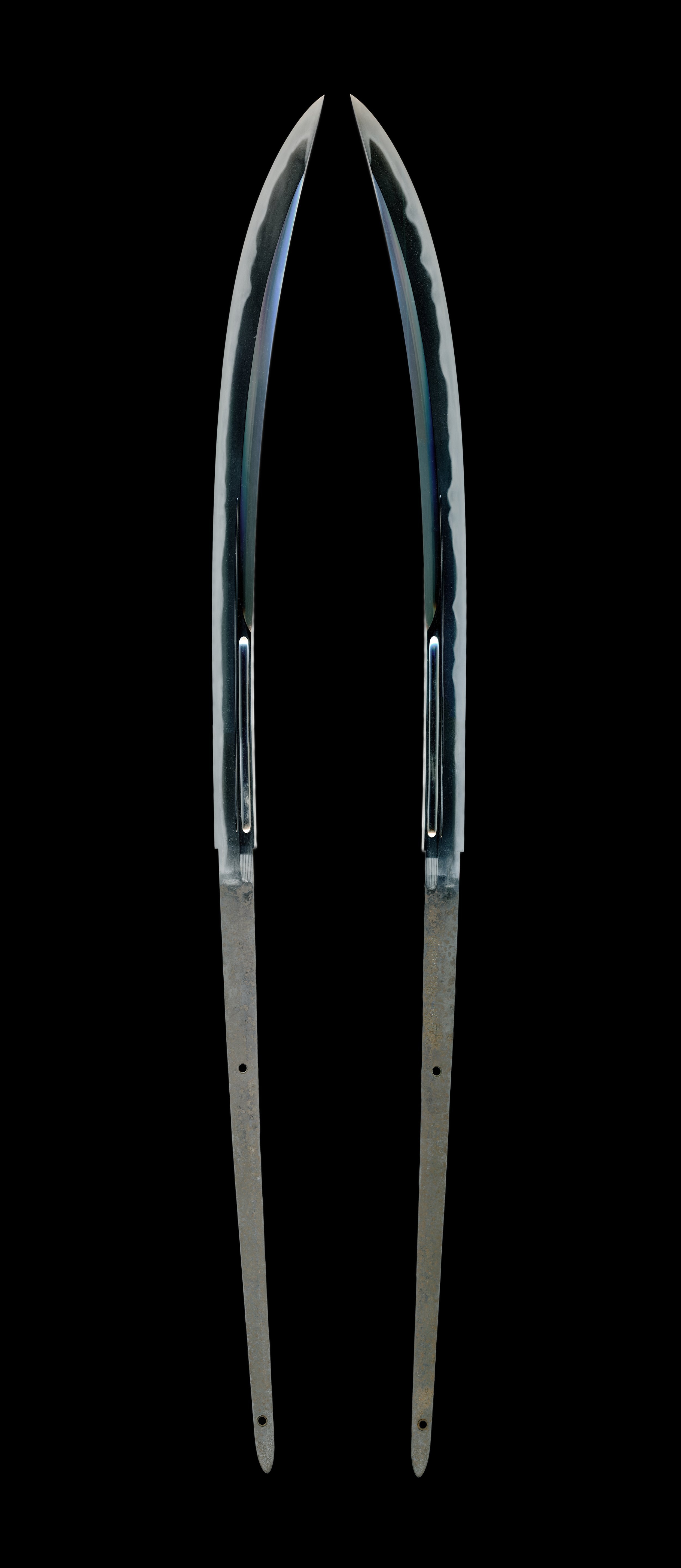
徳川の泰平のもと、大小は法度の定める身分の制服となり、需要は城下町、とりわけ江戸に集まった。工芸は二つに分かれる。目利きのための華やかな鑑賞の作と、截断の結果を金象嵌に刻む実証の刀である。
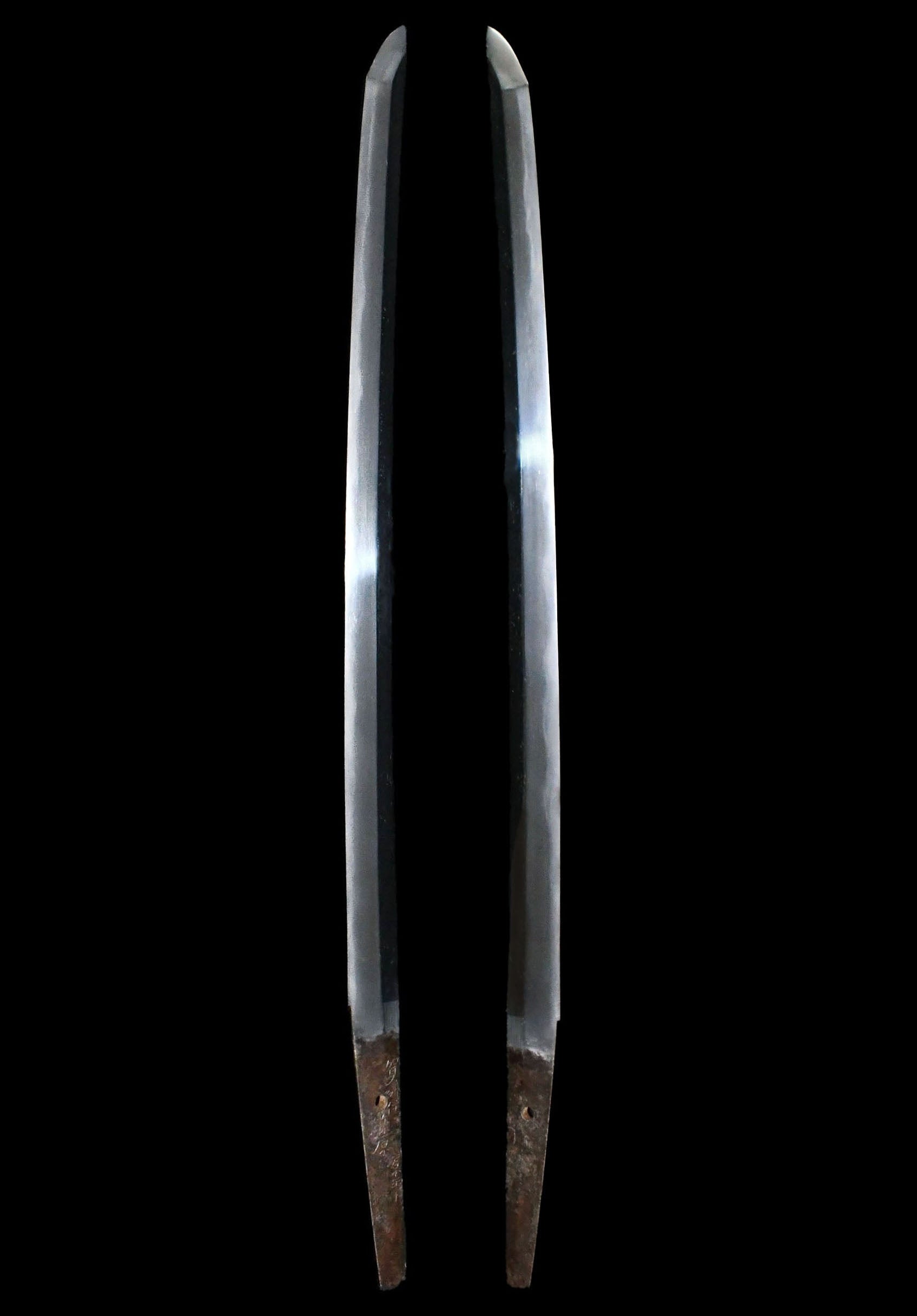
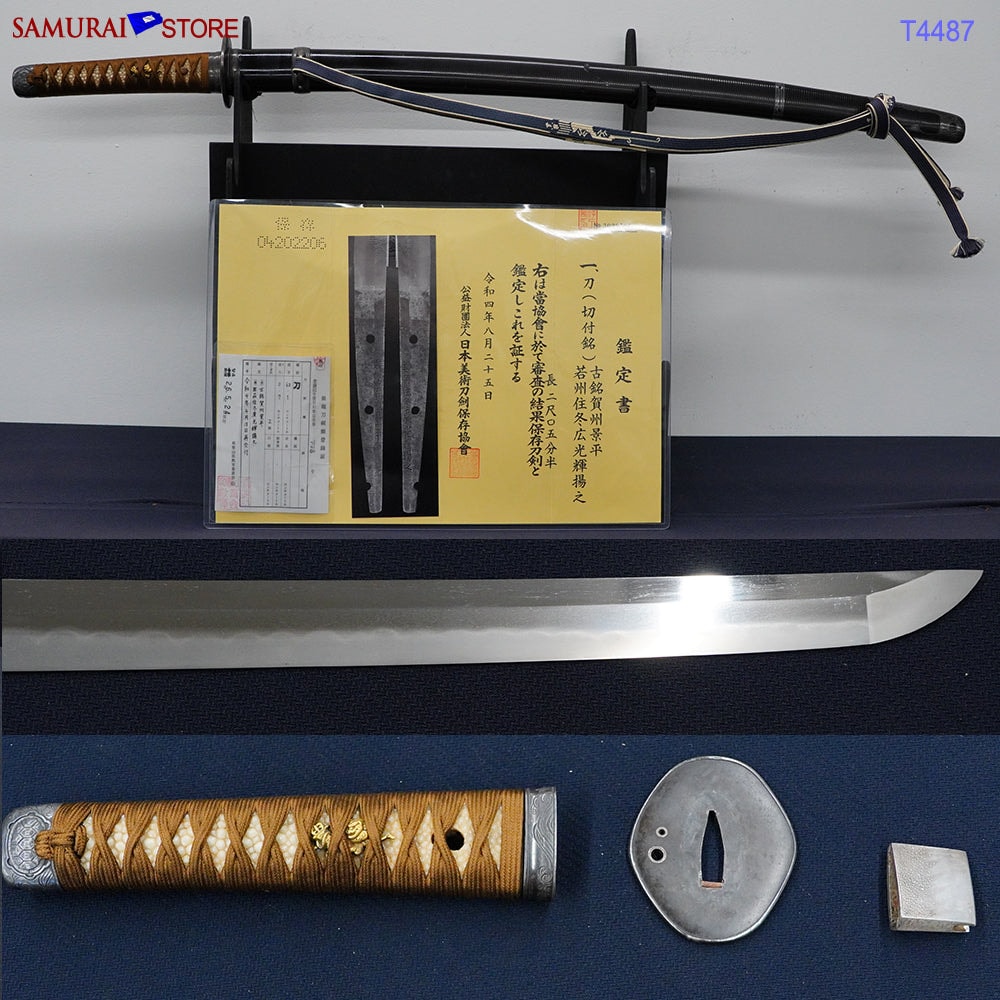
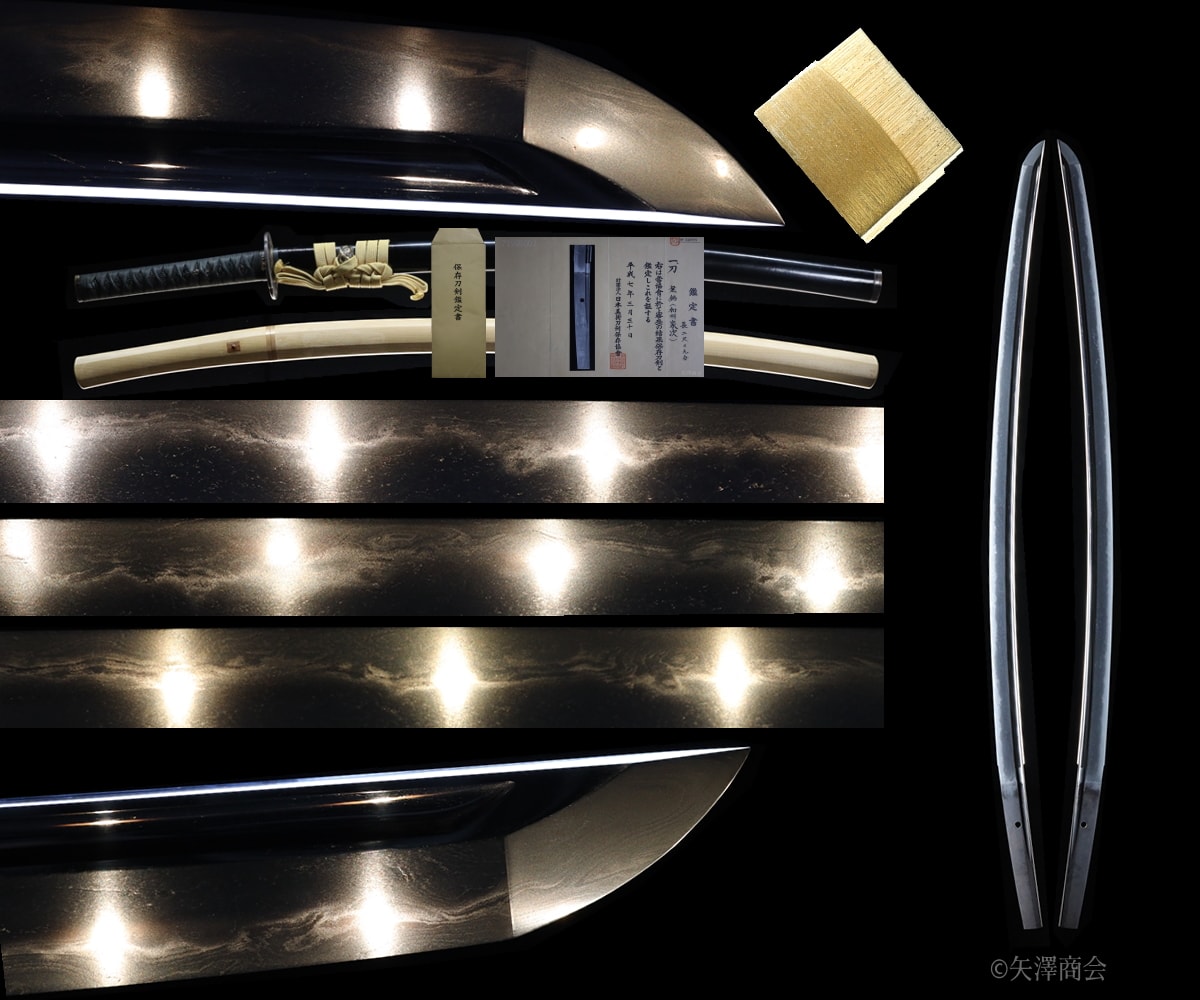
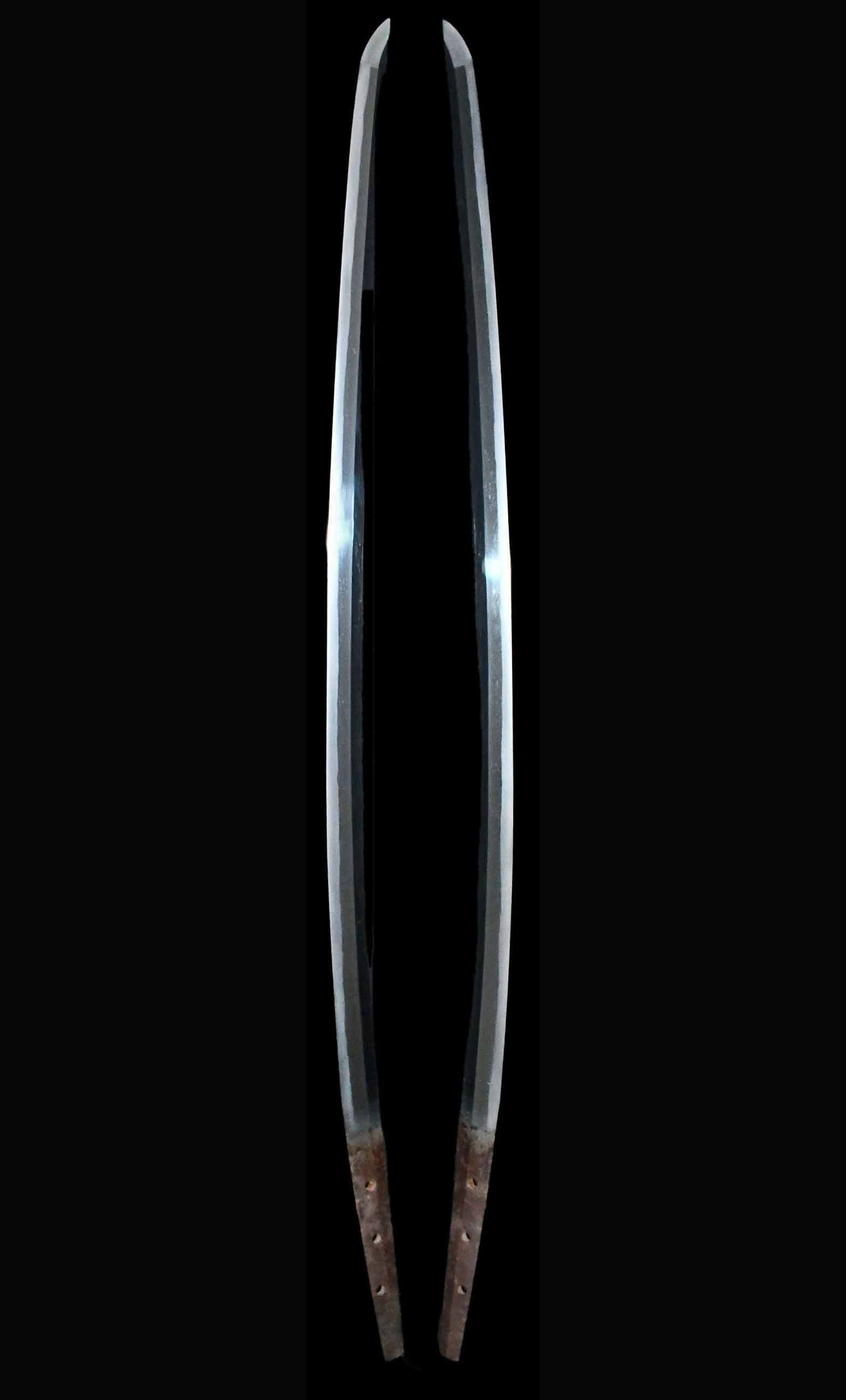
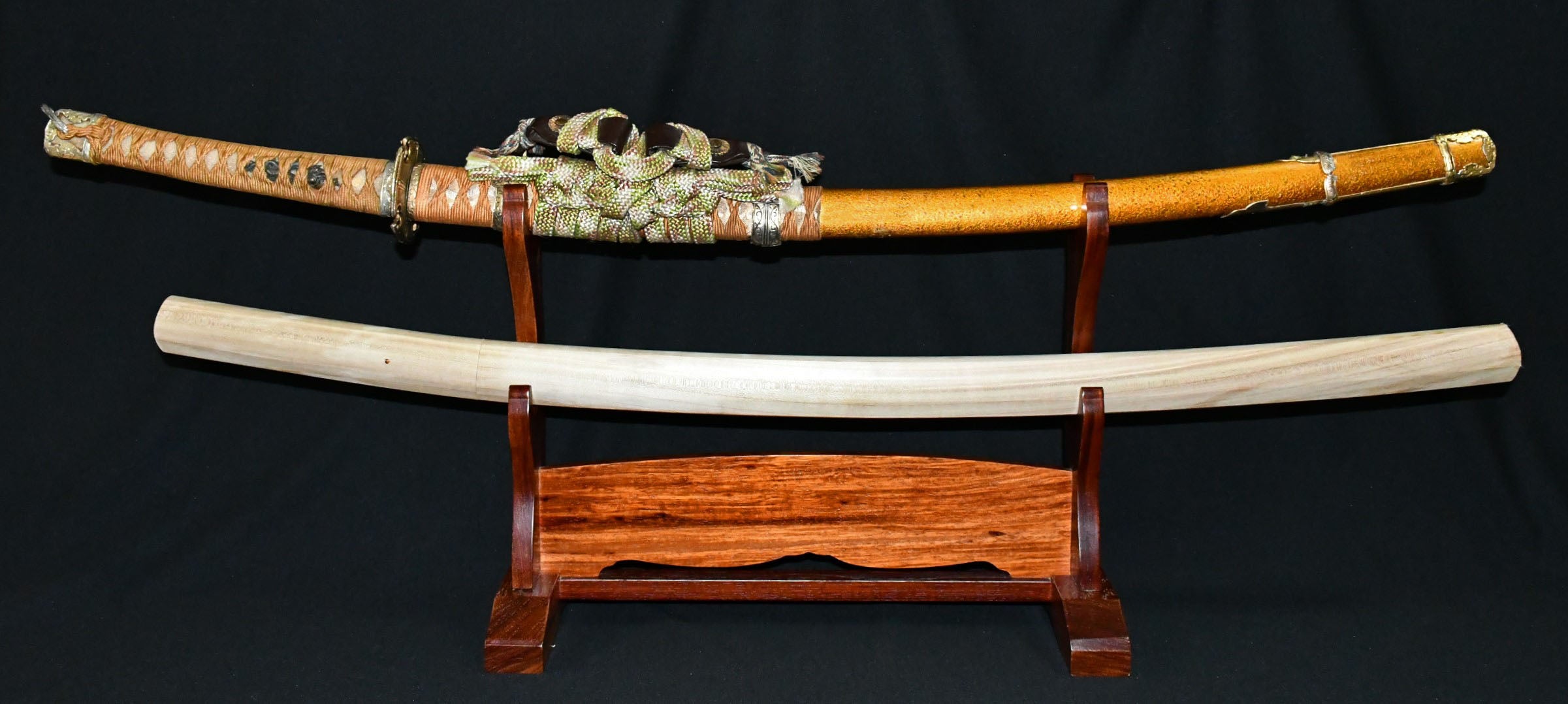
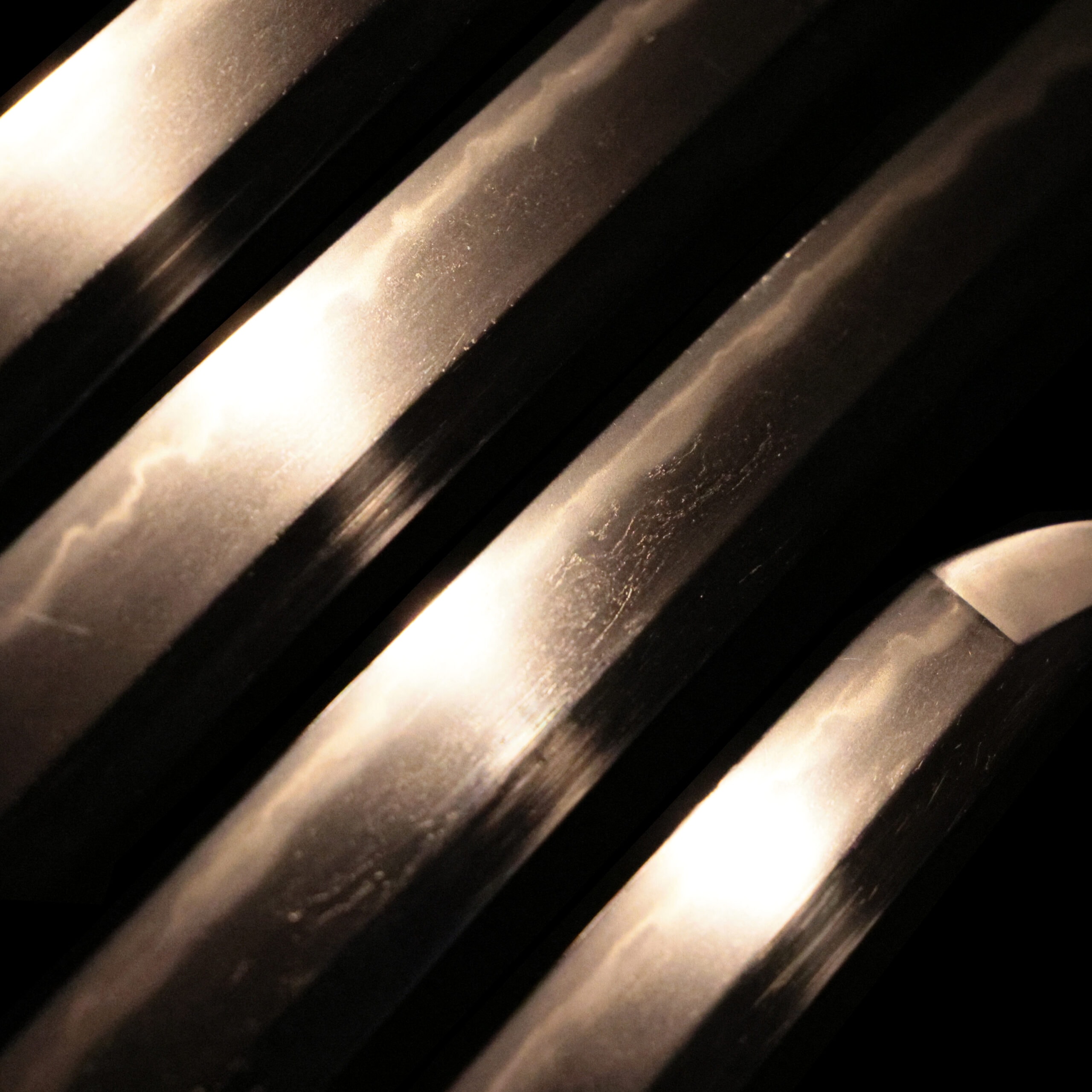
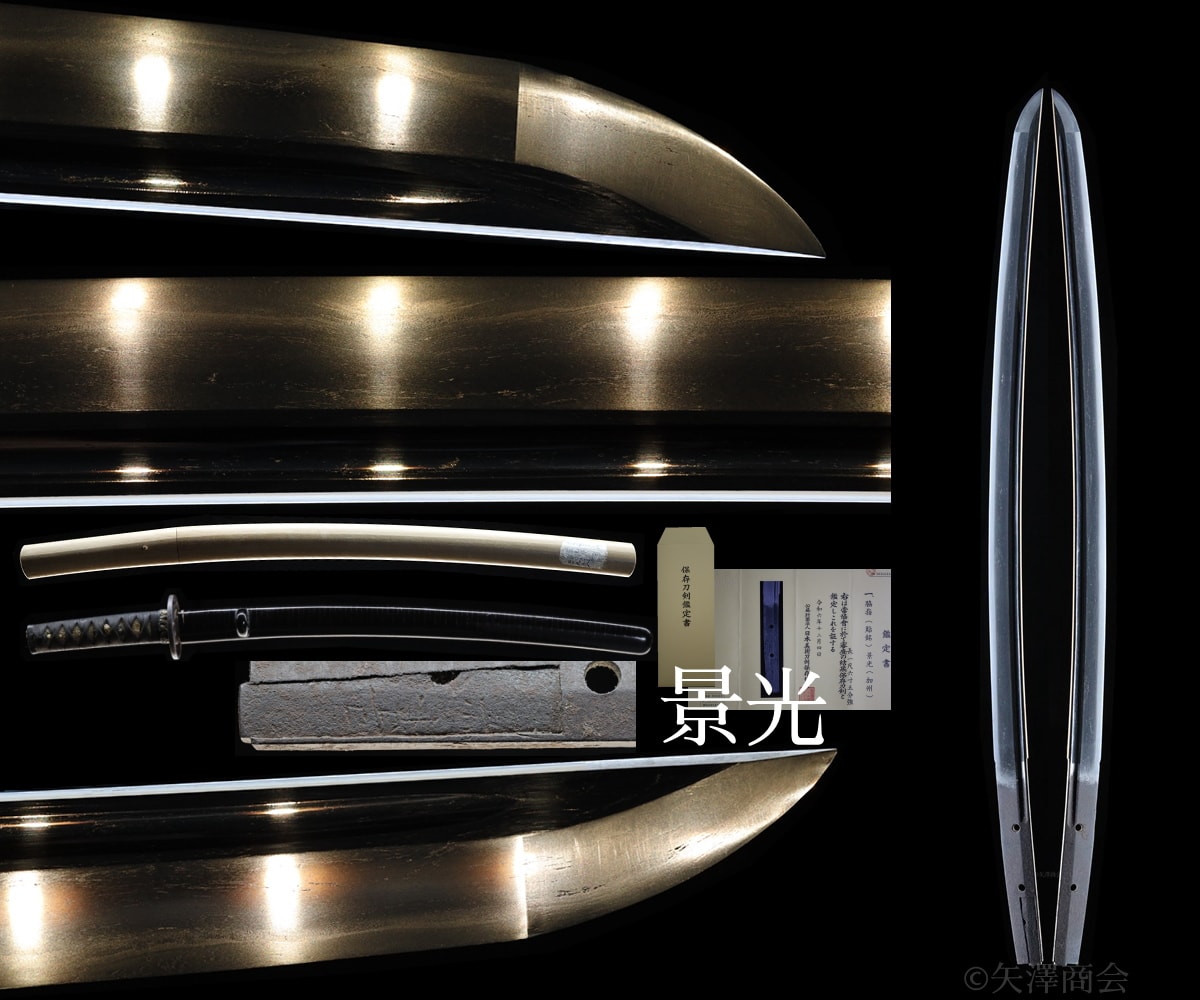
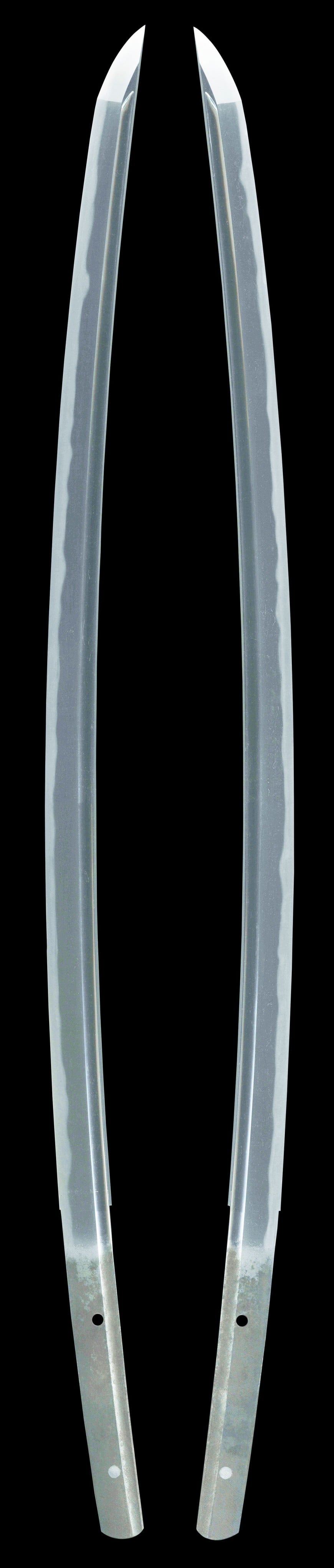
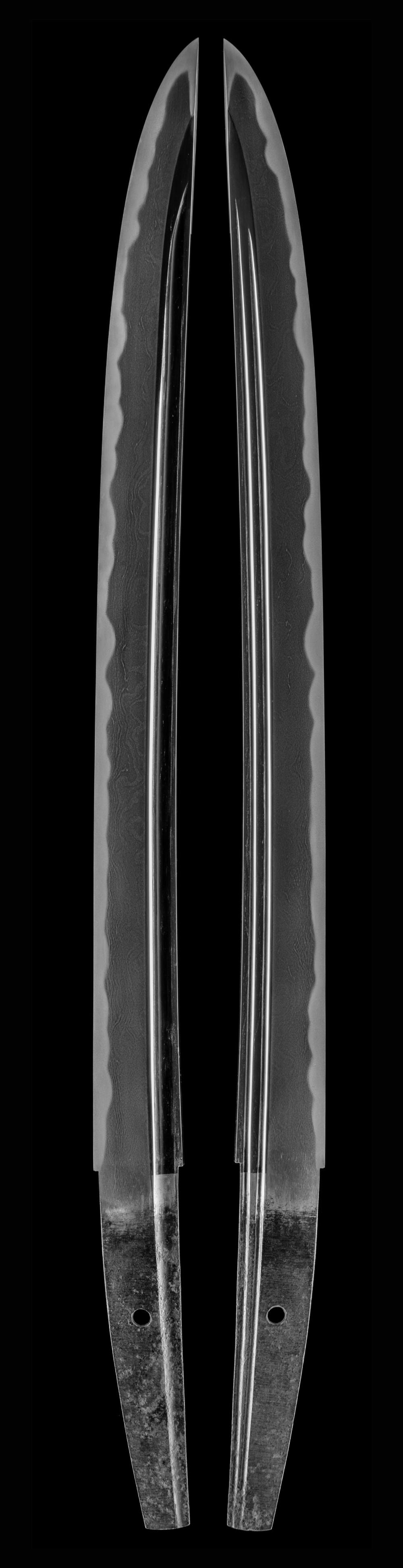
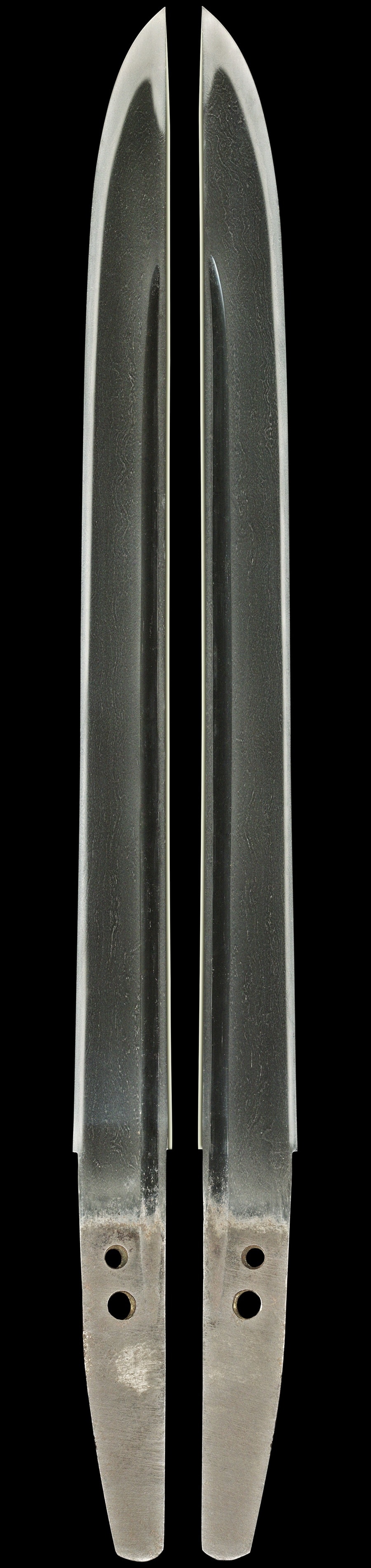
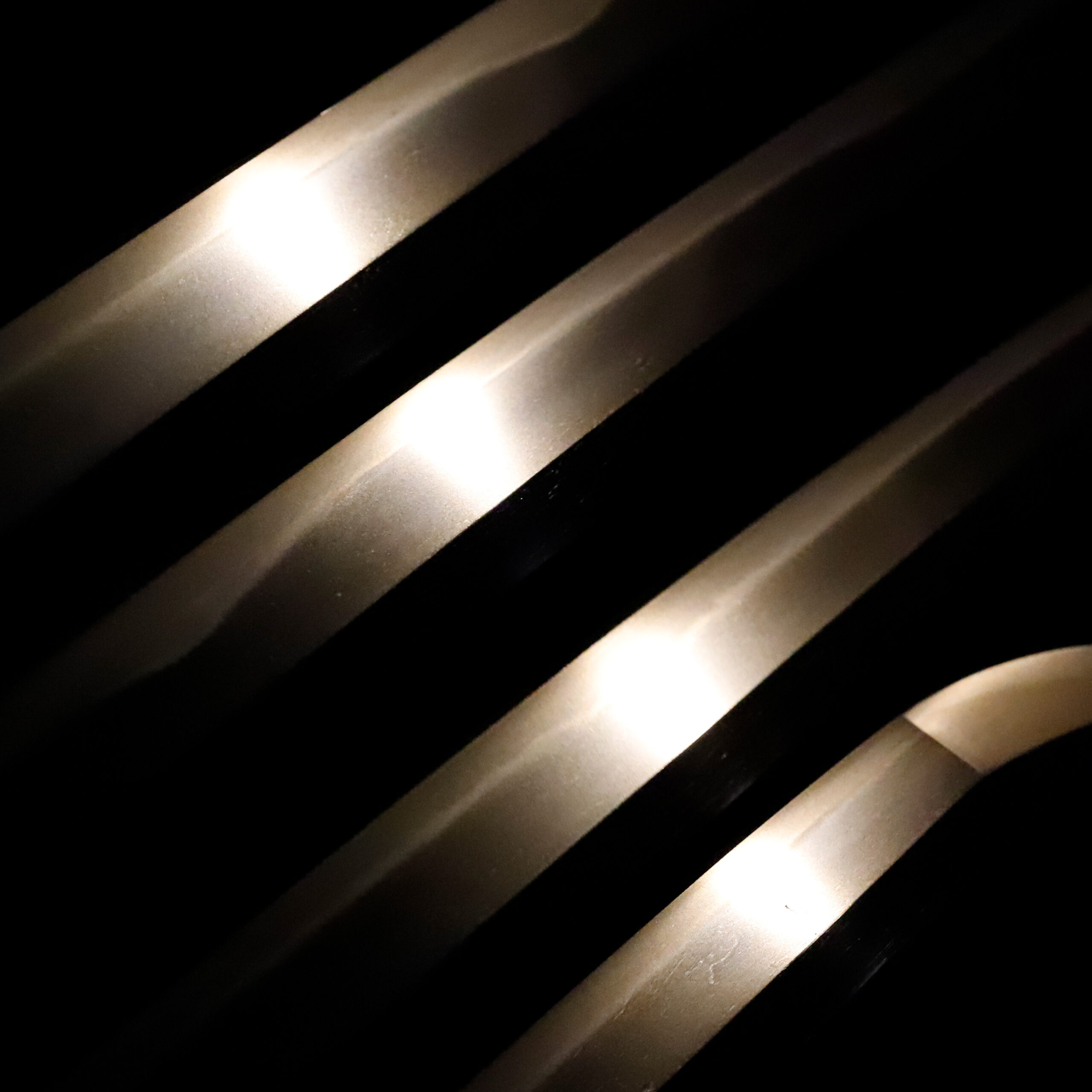
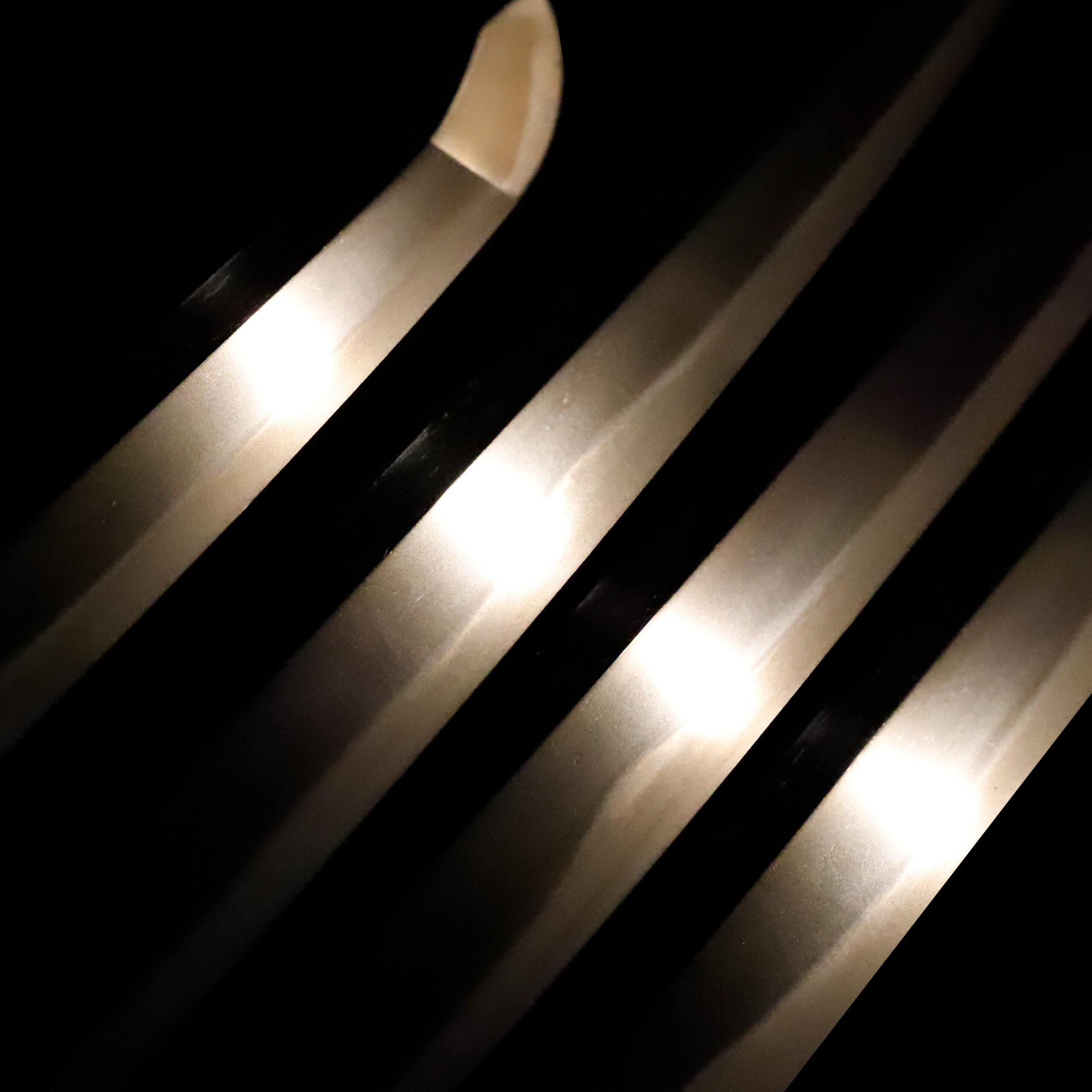
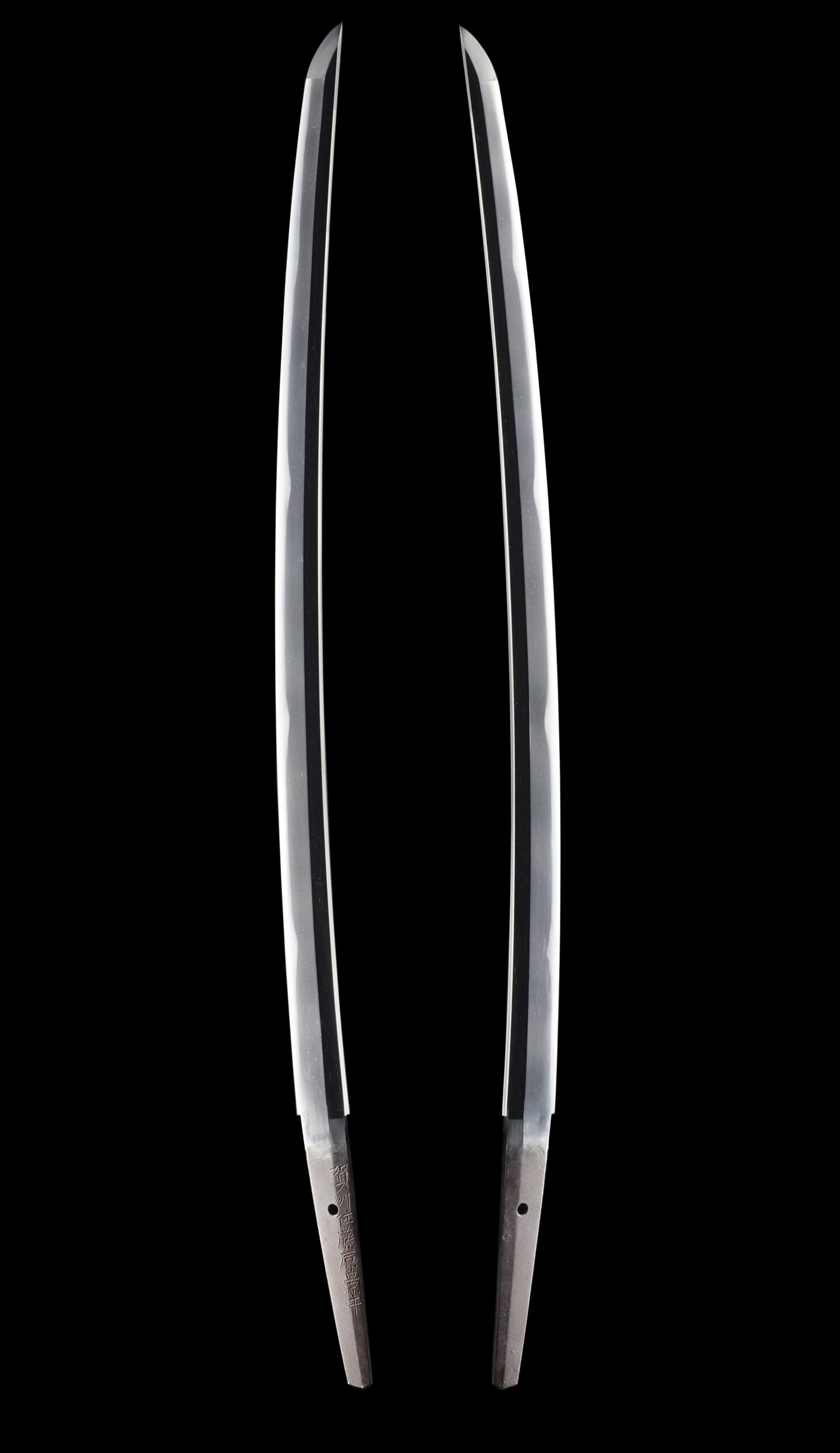
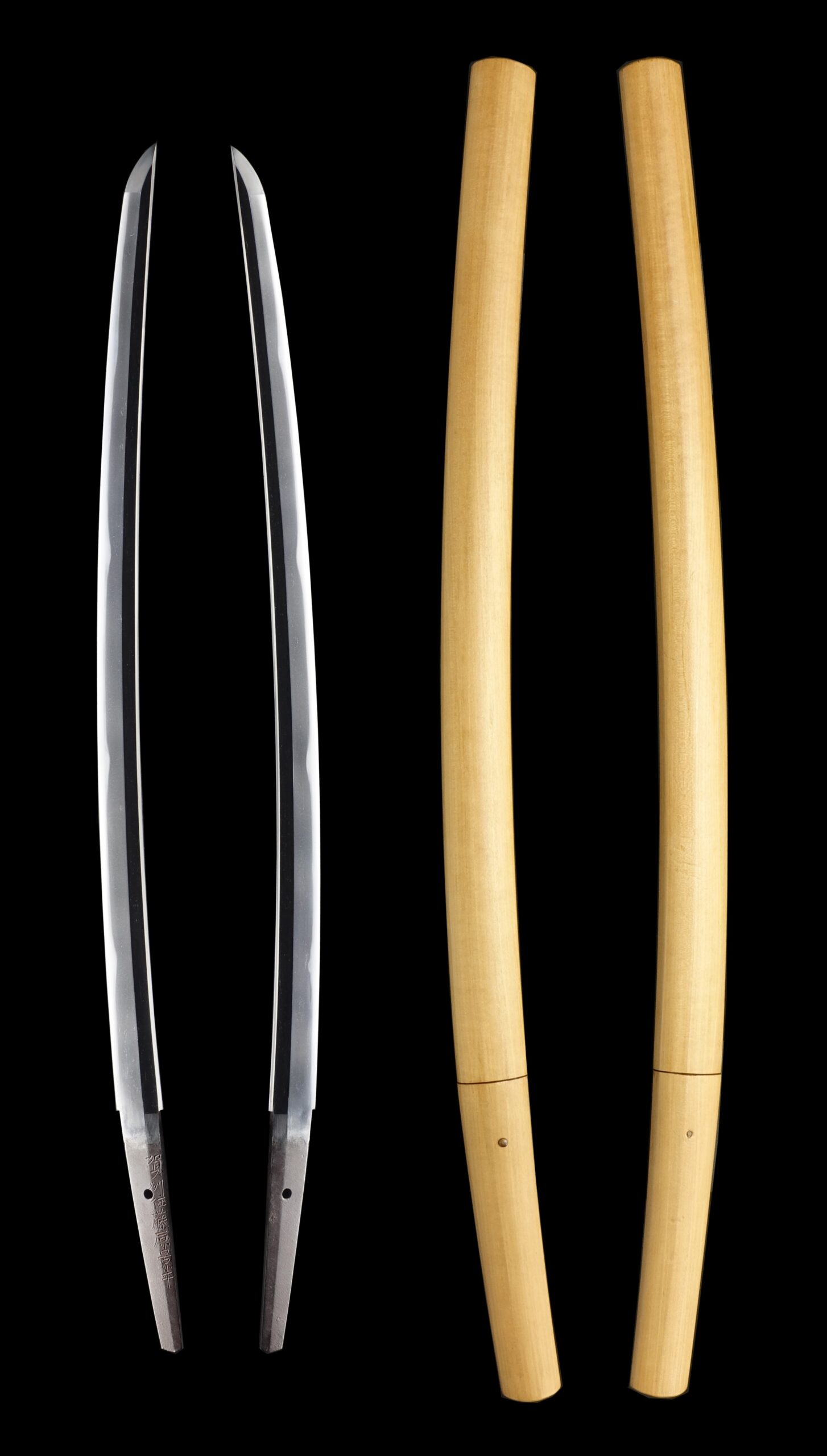
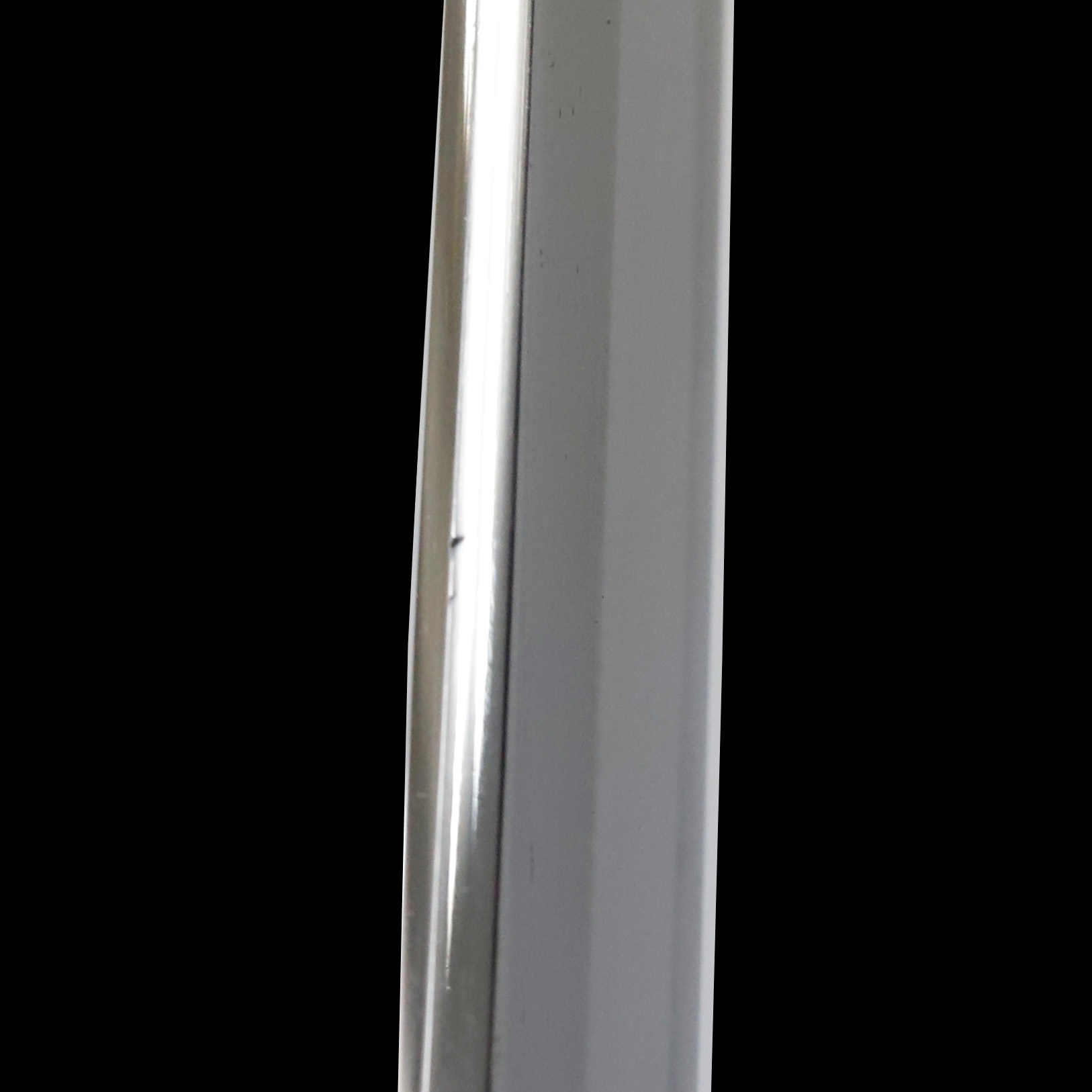
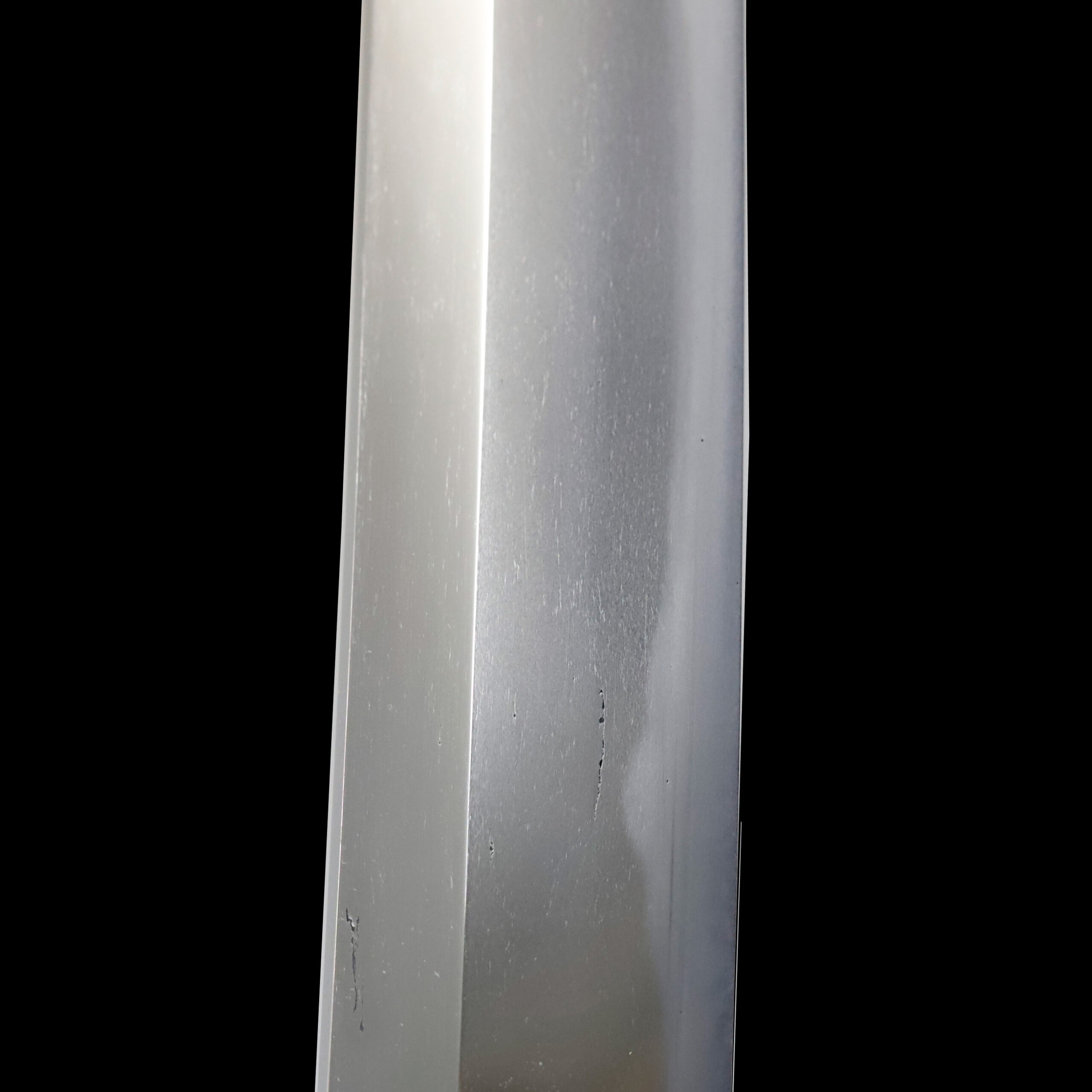
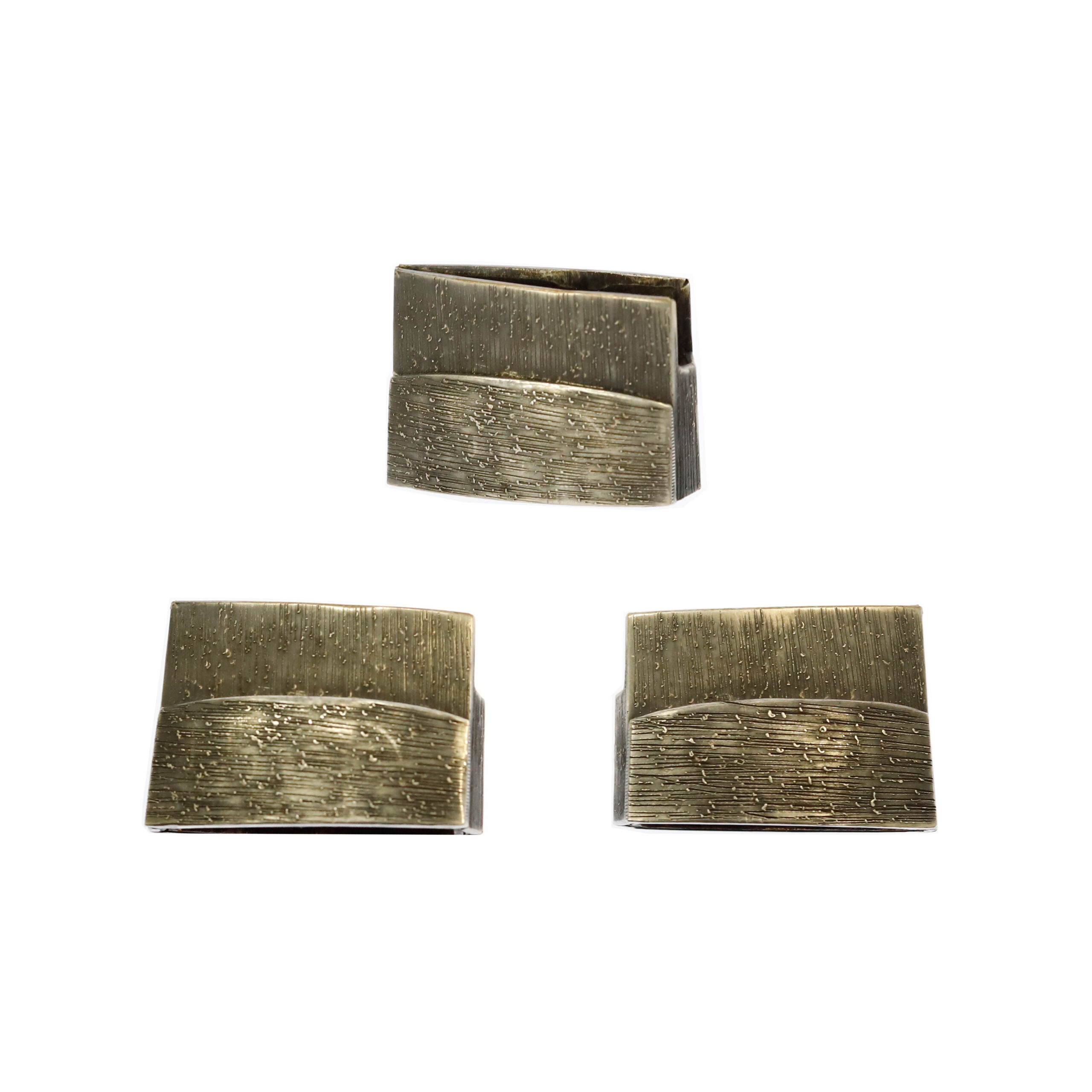
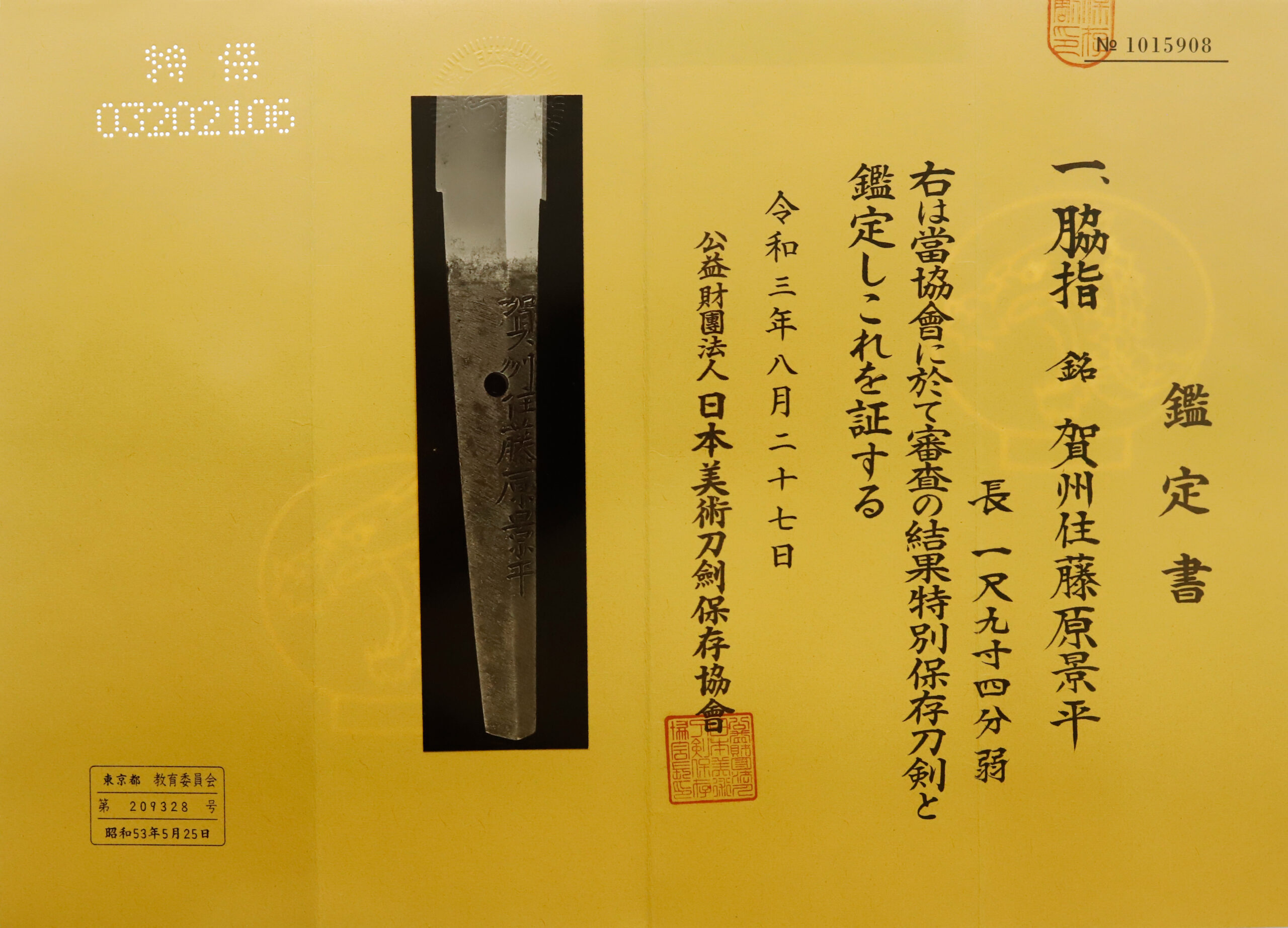
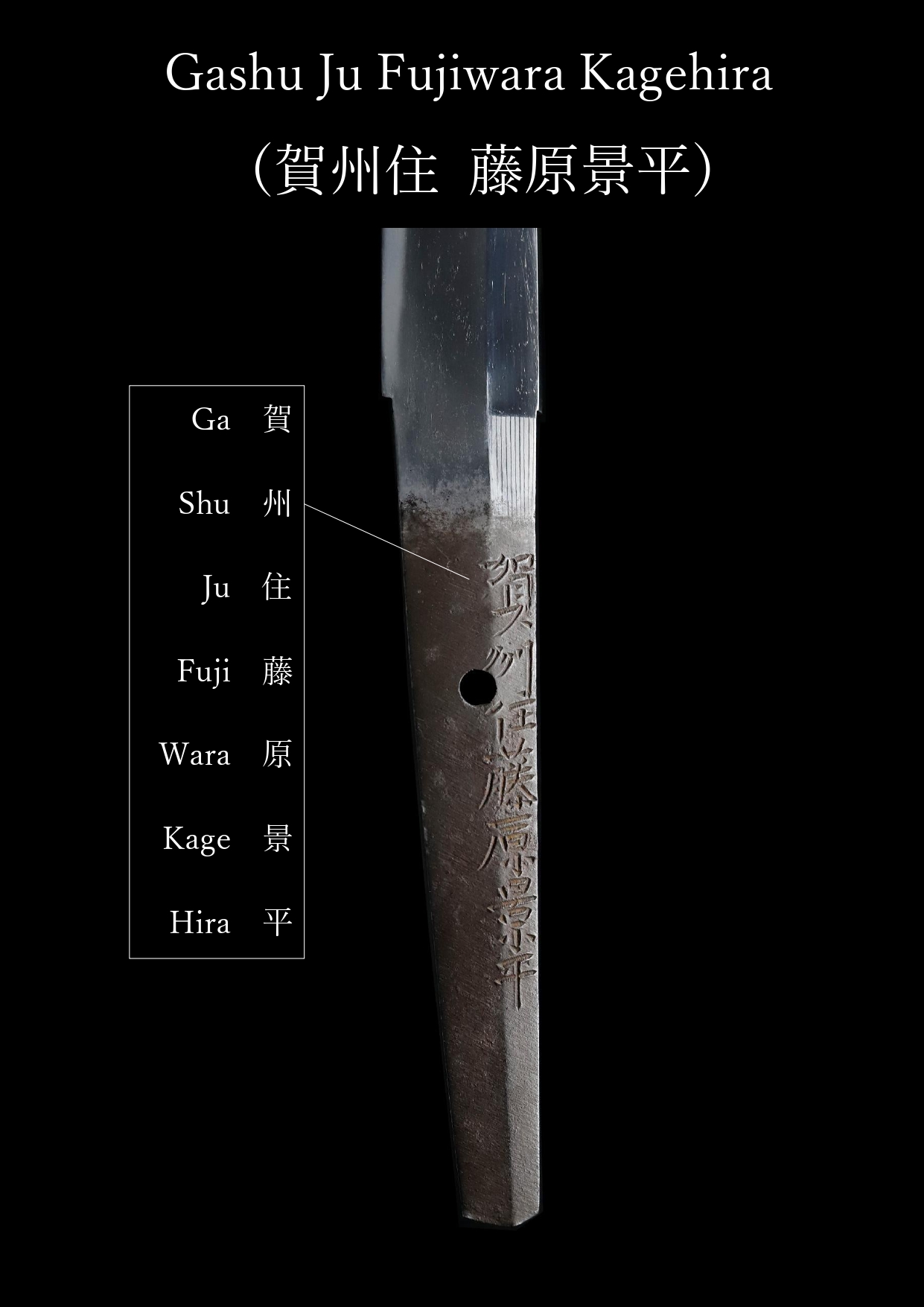
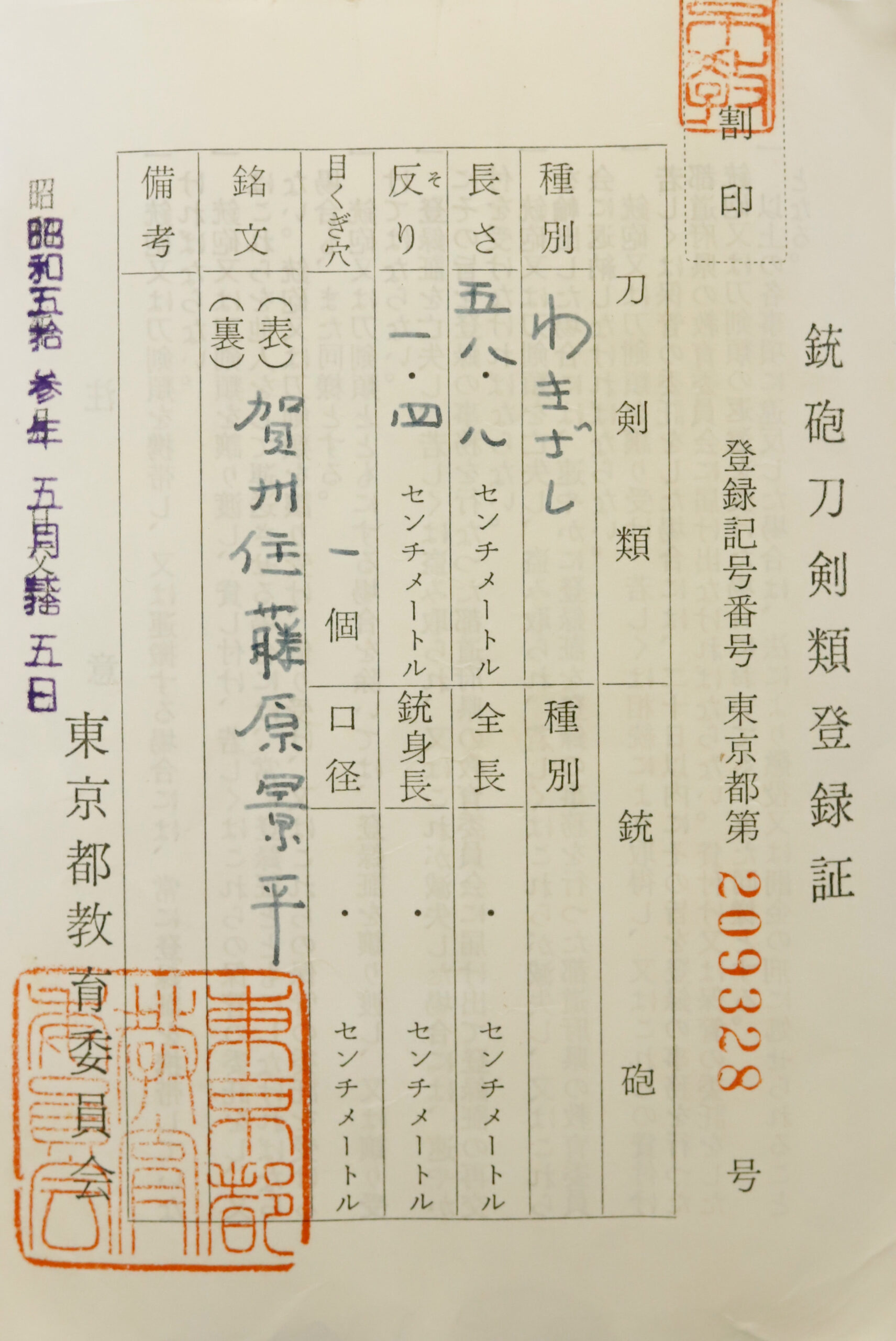
Antique Japanese Sword Wakizashi Signed by Fujiwara Kagehira with NBTHK Tokubestsu Hozon Certificate 【Description】 Summary This blade was signed by Kashu Jyu Fujiwara Kagehira(賀州住藤原景平). Kashu is the domain’s name, located in today’s Ishikawa prefecture. It is also known as Kaga domain. After the signature, there is a Kao (花押: stylized signature). Kagehira was the first son of the first-gen Kanewaka, one of the most famous swordsmiths in Kaga domain during the early Edo period. Kagehira’s birth name was Tsujimura Shirouemon( 辻村四郎右衛門). According to available records, Kagehira was active from 1612 to 1654 (Early Edo period). The first-gen Kanewaka (his father) and Kagehira served Maeda clan, one of the most powerful and influential feudal clans. The maker’s name was usually hereditary, and when the first-gen retired, his son took over his father’s maker’s name. However, this tradition didn’t occur to Kagehira. He dedicated his career to helping his father, and Kagehira’s younger brother eventually inherited Kanawaka’s name. Kagehira was active in the same period as the first-gen Kanewaka. It is said that Kagehira regularly did Daisaku for Kanewaka. Daisaku is a regular act where an apprentice or a child of the swordsmith signs his master’s name with his master’s permission or forges a blade on behalf of the master. That means that his master highly acknowledged Kagehira’s craftsmanship. The first-gen Kanewaka (His father) The first-gen Kanewaka was originally from Mino province(today’s Gifu prefecture). Later, he moved to the Kaga domain(Today’s Ishikawa prefecture) at the beginning of the Edo period after being summoned by Maeda Toshitsune, the third-gen head of the Kaga domain. It is said that Kanewaka forged swords for those who belonged to the Kaga domain under Maeda clan’s control. All the swordsmiths who signed Kanewaka in the Kaga domain were under the auspice of Maeda clan from generation to generation because of their highly skilled craftsmanship. Maeda Clan Maeda clan was originally a retainer of Oda family, who ruled Owari province. (today’s Nagoya area in Aichi prefecture) The first head of the Maeda clan was Toshie Maeda. He climbed the social ladder of Samurai society, and he became the feudal lord of Kaga Province(today’s Ishikawa prefecture). It is said that he had a vast rice fief that fed 100 million grown-up adults, which is called Hyakuman Goku. The Maeda clan was one of the most powerful lines in Samurai history. Toshie Maeda had a close tie with Oda Nobunaga and Hideyoshi Toyotomi. This blade is appraised as a Tokubetsu Hozon Token (特別保存刀剣) issued by NBTHK(Nihon Bijutsu Touken Hozon Kyokai:日本美術刀剣保存協会). This authentication paper was only given to authentic Japanese swords, especially well preserved and high quality with artistic value. *Please keep in mind that there are a couple of minor Kitae Kizu on this blade. If you like to see the detailed condition, please feel free to contact us. 【Blade】 Cutting Edge Length(Nagasa) : 58.8 cm (23.1 inches) Curvature(Sori) : 1 .4 cm (0.55 inches) Hamon : The crystalline structure which forms along the cutting edge of a blade as a result of the hardening process Jimon(Jihada) : visible steel surface pattern created by folding and hammering during forging process Nakago : Nakago is the tang of the Japanese sword. Japanese swordsmiths left the black rust on the tang because it prevents red rust while the tang is in its handle. And the discoloration of the tang was created over time, and it is a great indicator for a Japanese sword specialist to estimate when the sword was forged. Habaki : Habaki is the equipment to make the blade not touch its scabbard inside. It prevents the blade from getting rusty and chipped. Authentication Paper : NBTHK Tokubetsu Hozon Certificate for the blade (No. 1015908) NBTHK , also known as Nihon Bijutsu Touken Hozon Kyokai (the Society for the Preservation of the Japan Art Sword), is one of the oldest Japanese sword appraising organizations in
 NihontoWatch
在銘 · 寛文 · 長さ 58.8cm · 反り 1.4cm
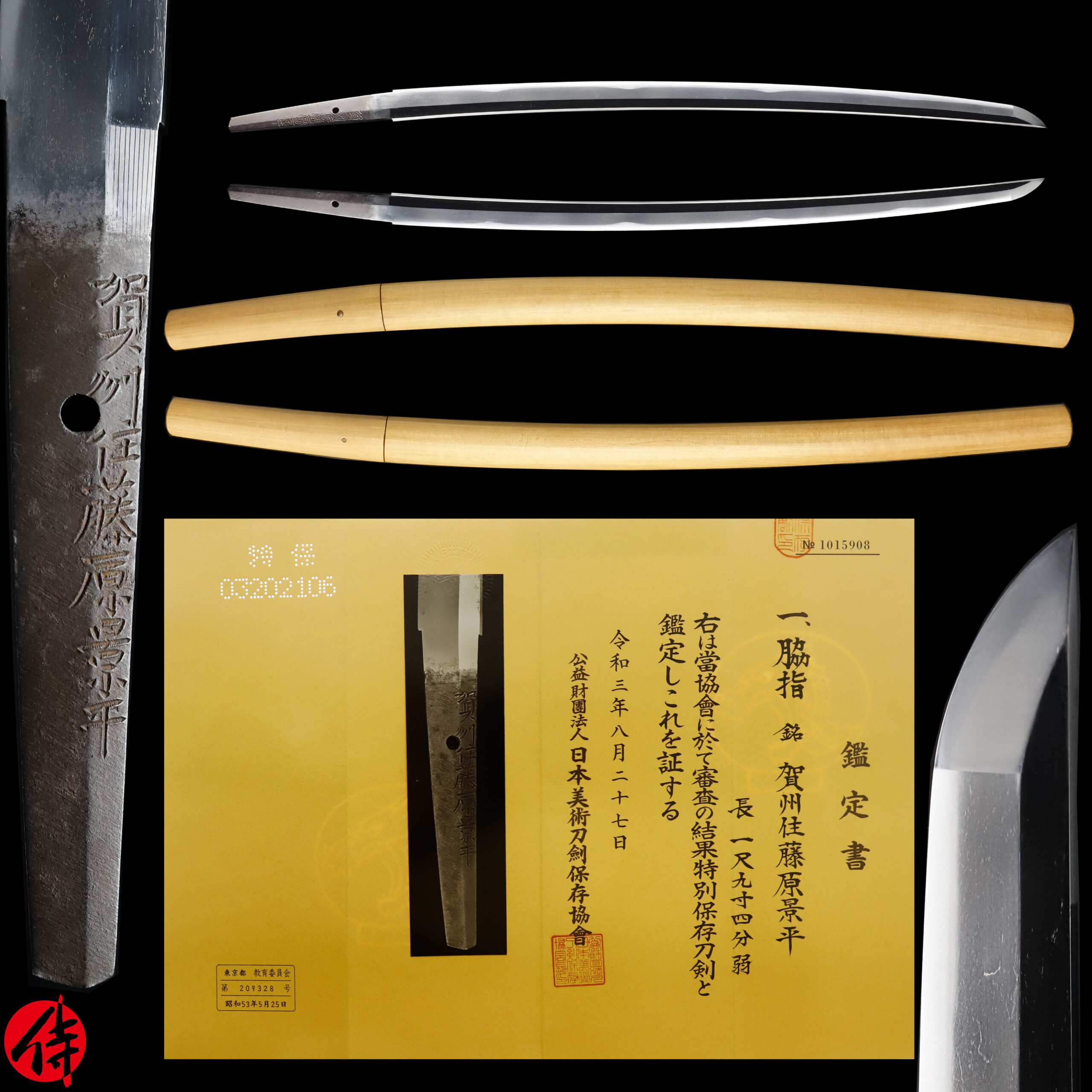
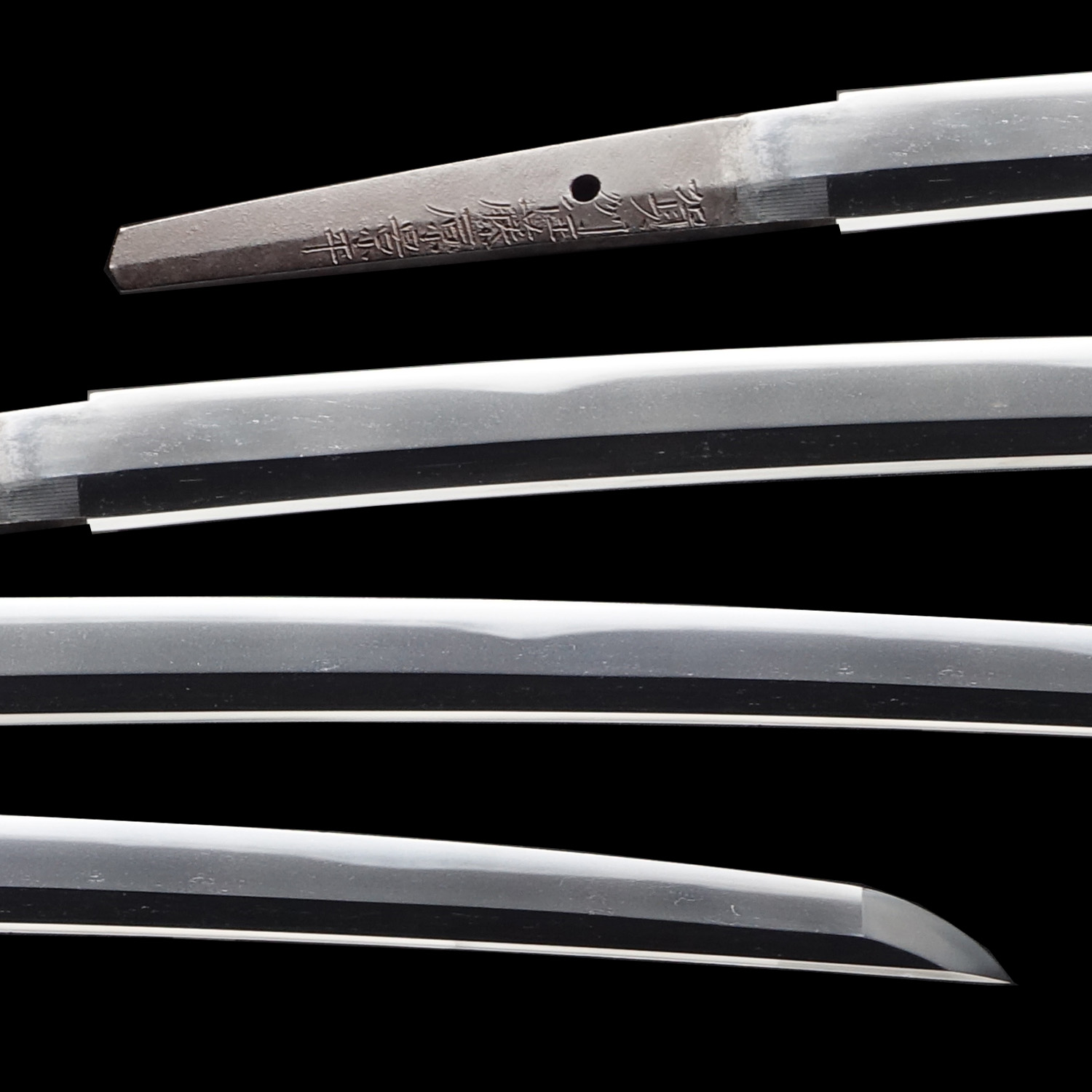
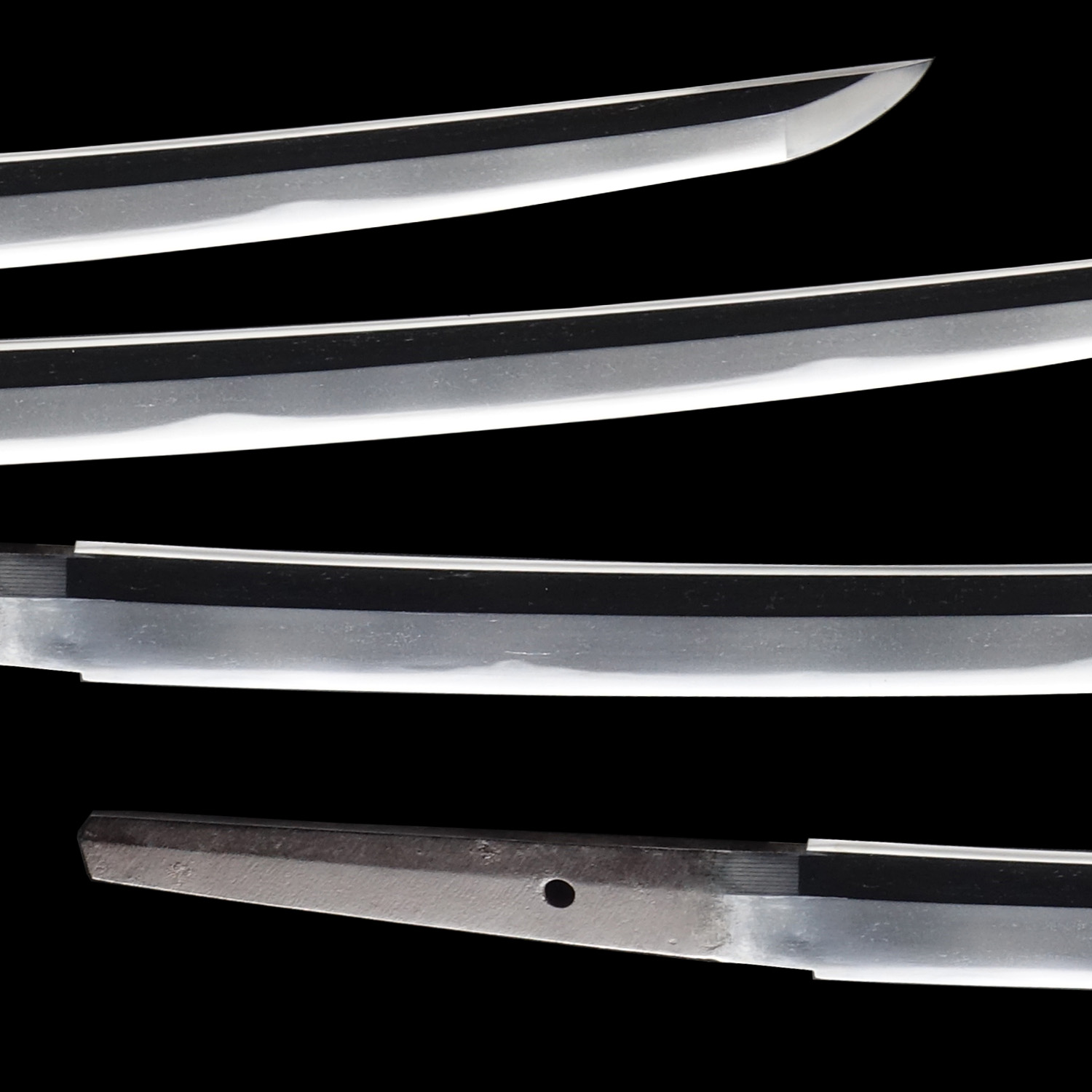
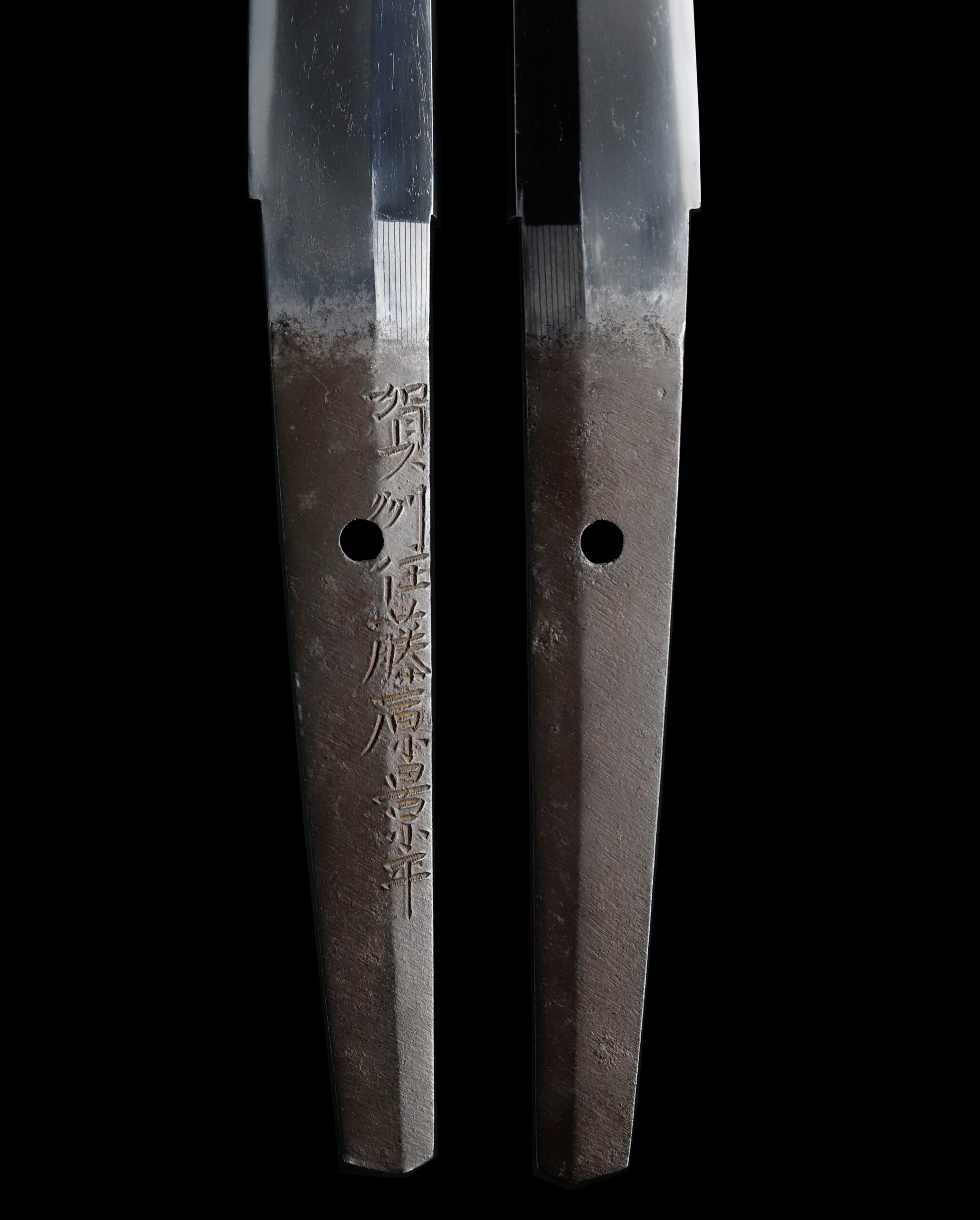
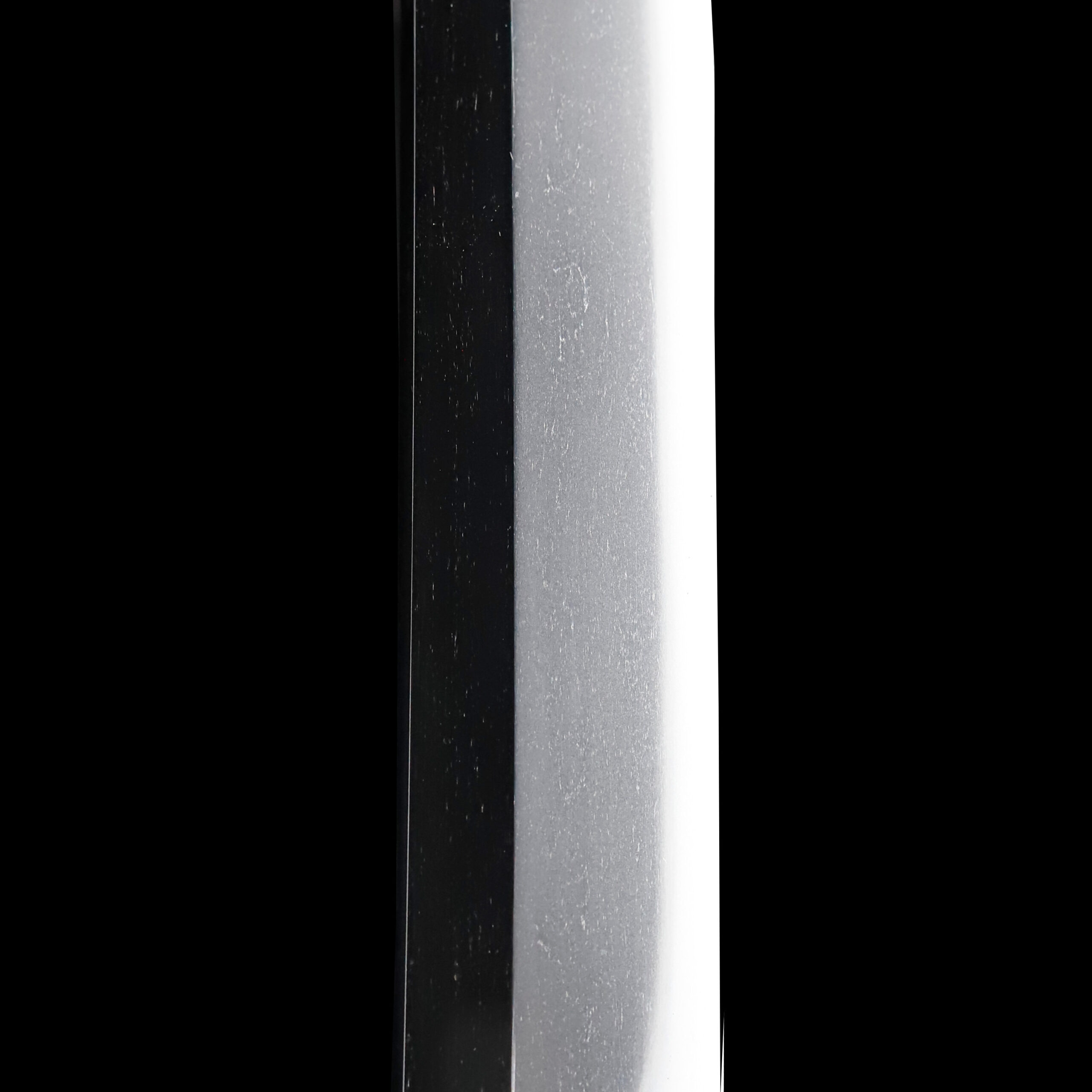
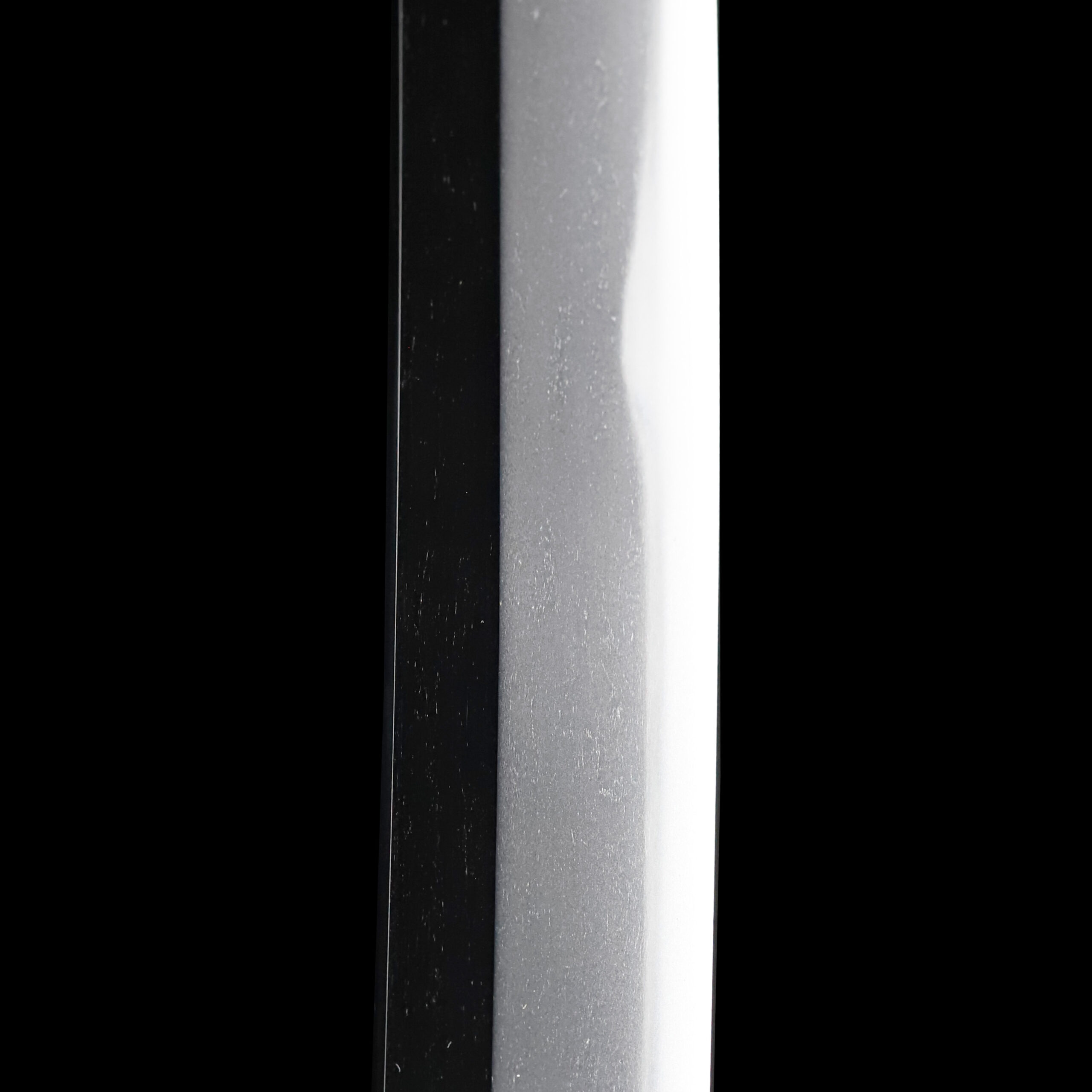
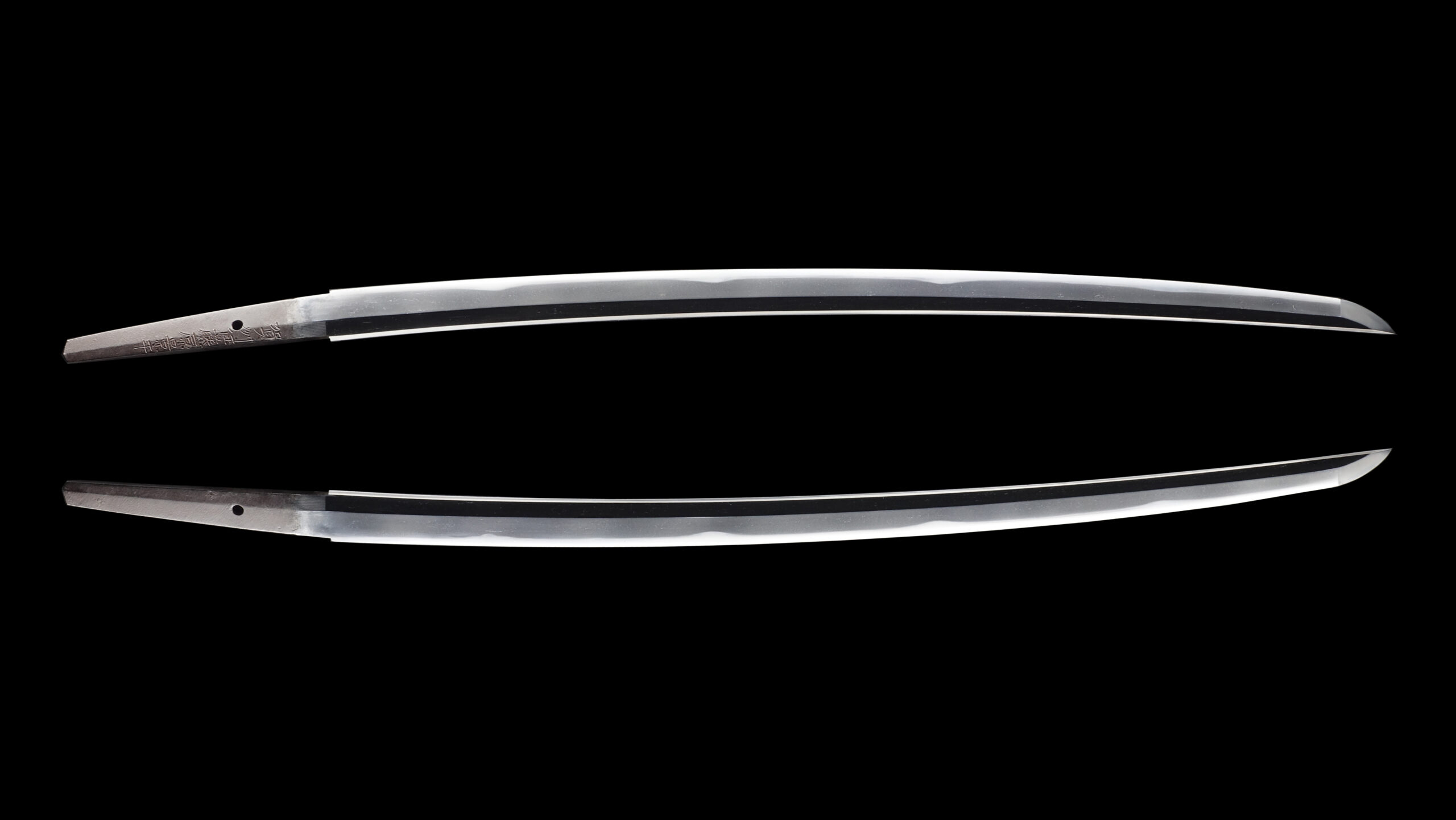
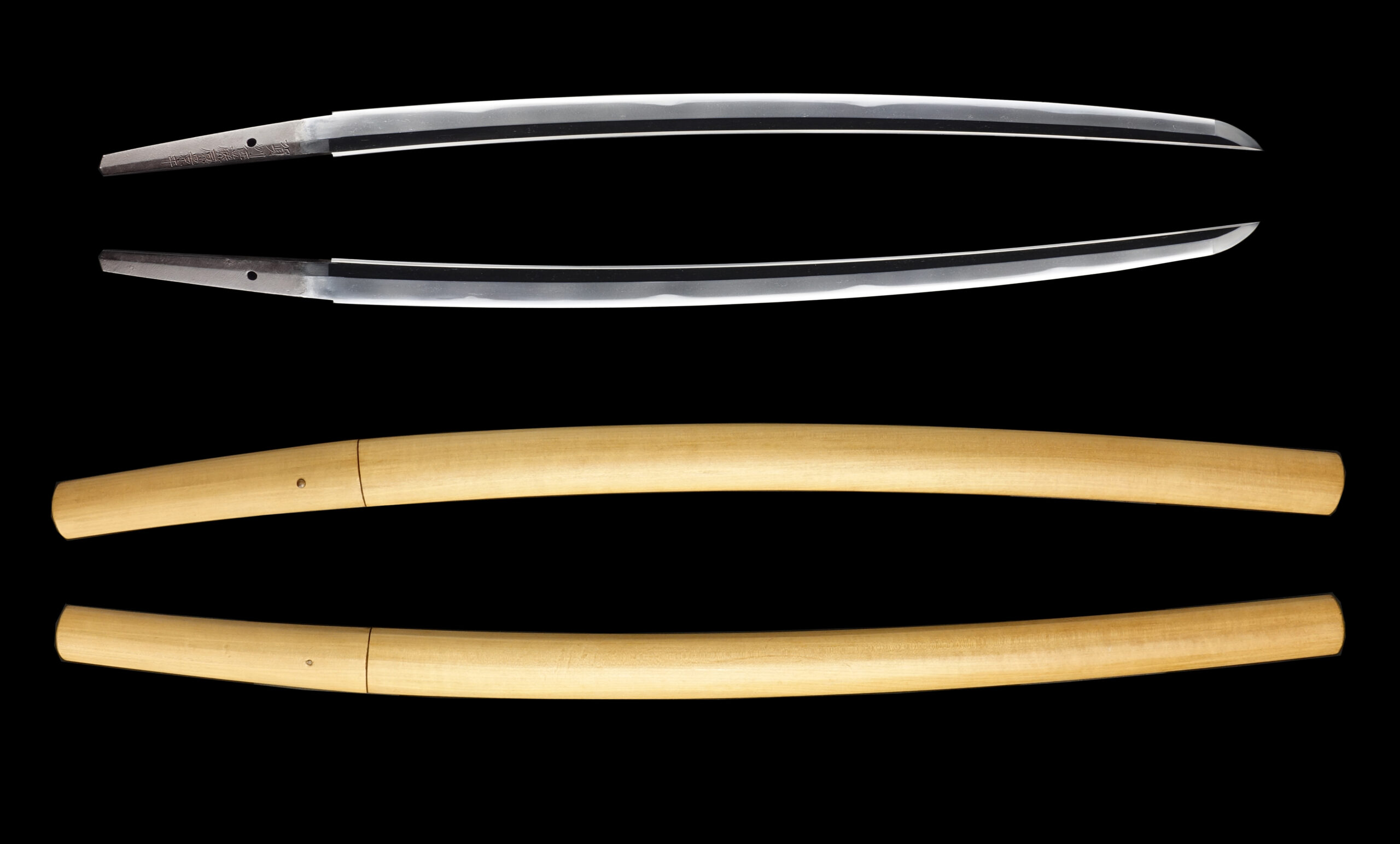
美濃伝 · 加賀 · 1661-1673頃
刀剣大鑑 上位37%
現在2点販売中
景平の位置づけを、日本刀全体および伝統・時代・時期ごとに示します。各位(随一・屈指・有数・著名)は、NBTHK および文化庁による指定に加え、三作や名物帳などの歴史的栄誉を加味したものです。
各項目を選ぶと評価方法が表示されます。
美濃伝 · 加賀
現在26点販売中
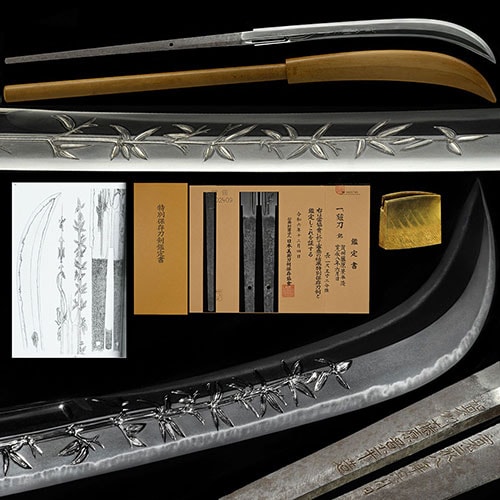
加賀象嵌は、江戸時代初期から享保期にかけて金沢を中心とする加賀国で発達した独特の平象嵌技法である。その起源は、加賀地方の鐙工が行っていた平象嵌を、鐔や刀装具に応用したことに始まるとされる。加賀藩の庇護のもと、献上品として制作された作例も多く、金沢の工芸文化の高い水準を示す技術として栄えた。室町期には鏡師と呼ばれる工人による山金地の鋳出鐔が見られ、これらが後の加賀象嵌の源流の一つとなったと考えられる。 加賀象嵌の技術的特徴は、赤銅、四分一、素銅などの磨地に、金・銀・銅など多種の色金を駆使した精緻な平象嵌にある。漆黒の赤銅磨地に色金を緻密に嵌め込む手法が主流だが、素銅地に明るい色調で景物を表した古調な作例も存在する。構図は絢爛にして巧みであり、秋草蝶図や鴛鴦図など、画面一杯に展開された図案文様化した表現が特徴的である。毛彫を併用し、内覆輪や埋金など細部にまで丁寧な仕上げが施され、未使用のまま伝世した保存状態の良い献上品級の作も少なくない。 鏡師系の作品は、真鍮地や山金地に鋤出高彫で大胆な文様を配し、格子形花文や菊花文など古雅な意匠を持つ。室町末期から桃山初期にかけての作風を示し、土手耳の構造や鋳出による立体的な表現が見られる。加賀象嵌と総称される一群には、こうした鏡師の流れを汲む古式な様相を呈するものから、江戸中期以降の洗練された平象嵌作品まで幅広い作域が含まれ、加賀国における刀装具制作の伝統の深さを物語っている。 詳しく見る →
江戸時代
徳川の泰平のもと、大小は法度の定める身分の制服となり、需要は城下町、とりわけ江戸に集まった。工芸は二つに分かれる。目利きのための華やかな鑑賞の作と、截断の結果を金象嵌に刻む実証の刀である。
保存刀剣のうち、出来が一層優れ、保存状態も良好と認められたものです。再刃や、室町・江戸期の多くの無銘作は対象外となり、保存刀剣より高い基準が課されます。
日本美術刀剣保存協会(NBTHK)は、1948年に設立され、文化庁の監督を受ける公益財団法人で、東京・刀剣博物館に本部を置きます。専門の審査員が出品作を直接審査し、美術的・歴史的価値に応じた鑑定書を発行します。NBTHKの鑑定書は、日本刀および刀装具の真正性を示す最も広く認知された基準です。
NBTHK公式サイトReturns/exchanges limited to defects caused by shipping (except willful misconduct or gross negligence by the company); customers must contact within 72 hours of receiving the product.
Antique Japanese Sword Wakizashi Signed by Fujiwara Kagehira with NBTHK Tokubestsu Hozon Certificate 【Description】 Summary This blade was signed by Kashu Jyu Fujiwara Kagehira(賀州住藤原景平). Kashu is the domain’s name, located in today’s Ishikawa prefecture. It is also known as Kaga domain. After the signature, there is a Kao (花押: stylized signature). Kagehira was the first son of the first-gen Kanewaka, one of the most famous swordsmiths in Kaga domain during the early Edo period. Kagehira’s birth name was Tsujimura Shirouemon( 辻村四郎右衛門). According to available records, Kagehira was active from 1612 to 1654 (Early Edo period). The first-gen Kanewaka (his father) and Kagehira served Maeda clan, one of the most powerful and influential feudal clans. The maker’s name was usually hereditary, and when the first-gen retired, his son took over his father’s maker’s name. However, this tradition didn’t occur to Kagehira. He dedicated his career to helping his father, and Kagehira’s younger brother eventually inherited Kanawaka’s name. Kagehira was active in the same period as the first-gen Kanewaka. It is said that Kagehira regularly did Daisaku for Kanewaka. Daisaku is a regular act where an apprentice or a child of the swordsmith signs his master’s name with his master’s permission or forges a blade on behalf of the master. That means that his master highly acknowledged Kagehira’s craftsmanship. The first-gen Kanewaka (His father) The first-gen Kanewaka was originally from Mino province(today’s Gifu prefecture). Later, he moved to the Kaga domain(Today’s Ishikawa prefecture) at the beginning of the Edo period after being summoned by Maeda Toshitsune, the third-gen head of the Kaga domain. It is said that Kanewaka forged swords for those who belonged to the Kaga domain under Maeda clan’s control. All the swordsmiths who signed Kanewaka in the Kaga domain were under the auspice of Maeda clan from generation to generation because of their highly skilled craftsmanship. Maeda Clan Maeda clan was originally a retainer of Oda family, who ruled Owari province. (today’s Nagoya area in Aichi prefecture) The first head of the Maeda clan was Toshie Maeda. He climbed the social ladder of Samurai society, and he became the feudal lord of Kaga Province(today’s Ishikawa prefecture). It is said that he had a vast rice fief that fed 100 million grown-up adults, which is called Hyakuman Goku. The Maeda clan was one of the most powerful lines in Samurai history. Toshie Maeda had a close tie with Oda Nobunaga and Hideyoshi Toyotomi. This blade is appraised as a Tokubetsu Hozon Token (特別保存刀剣) issued by NBTHK(Nihon Bijutsu Touken Hozon Kyokai:日本美術刀剣保存協会). This authentication paper was only given to authentic Japanese swords, especially well preserved and high quality with artistic value. *Please keep in mind that there are a couple of minor Kitae Kizu on this blade. If you like to see the detailed condition, please feel free to contact us. 【Blade】 Cutting Edge Length(Nagasa) : 58.8 cm (23.1 inches) Curvature(Sori) : 1 .4 cm (0.55 inches) Hamon : The crystalline structure which forms along the cutting edge of a blade as a result of the hardening process Jimon(Jihada) : visible steel surface pattern created by folding and hammering during forging process Nakago : Nakago is the tang of the Japanese sword. Japanese swordsmiths left the black rust on the tang because it prevents red rust while the tang is in its handle. And the discoloration of the tang was created over time, and it is a great indicator for a Japanese sword specialist to estimate when the sword was forged. Habaki : Habaki is the equipment to make the blade not touch its scabbard inside. It prevents the blade from getting rusty and chipped. Authentication Paper : NBTHK Tokubetsu Hozon Certificate for the blade (No. 1015908) NBTHK , also known as Nihon Bijutsu Touken Hozon Kyokai (the Society for the Preservation of the Japan Art Sword), is one of the oldest Japanese sword appraising organizations in
NihontoWatch在銘 · 寛文 · 長さ 58.8cm · 反り 1.4cm
美濃伝 · 加賀 · 1661-1673頃
刀剣大鑑 上位37%
現在2点販売中
景平の位置づけを、日本刀全体および伝統・時代・時期ごとに示します。各位(随一・屈指・有数・著名)は、NBTHK および文化庁による指定に加え、三作や名物帳などの歴史的栄誉を加味したものです。
各項目を選ぶと評価方法が表示されます。
美濃伝 · 加賀
現在26点販売中
加賀象嵌は、江戸時代初期から享保期にかけて金沢を中心とする加賀国で発達した独特の平象嵌技法である。その起源は、加賀地方の鐙工が行っていた平象嵌を、鐔や刀装具に応用したことに始まるとされる。加賀藩の庇護のもと、献上品として制作された作例も多く、金沢の工芸文化の高い水準を示す技術として栄えた。室町期には鏡師と呼ばれる工人による山金地の鋳出鐔が見られ、これらが後の加賀象嵌の源流の一つとなったと考えられる。 加賀象嵌の技術的特徴は、赤銅、四分一、素銅などの磨地に、金・銀・銅など多種の色金を駆使した精緻な平象嵌にある。漆黒の赤銅磨地に色金を緻密に嵌め込む手法が主流だが、素銅地に明るい色調で景物を表した古調な作例も存在する。構図は絢爛にして巧みであり、秋草蝶図や鴛鴦図など、画面一杯に展開された図案文様化した表現が特徴的である。毛彫を併用し、内覆輪や埋金など細部にまで丁寧な仕上げが施され、未使用のまま伝世した保存状態の良い献上品級の作も少なくない。 鏡師系の作品は、真鍮地や山金地に鋤出高彫で大胆な文様を配し、格子形花文や菊花文など古雅な意匠を持つ。室町末期から桃山初期にかけての作風を示し、土手耳の構造や鋳出による立体的な表現が見られる。加賀象嵌と総称される一群には、こうした鏡師の流れを汲む古式な様相を呈するものから、江戸中期以降の洗練された平象嵌作品まで幅広い作域が含まれ、加賀国における刀装具制作の伝統の深さを物語っている。 詳しく見る →
江戸時代
徳川の泰平のもと、大小は法度の定める身分の制服となり、需要は城下町、とりわけ江戸に集まった。工芸は二つに分かれる。目利きのための華やかな鑑賞の作と、截断の結果を金象嵌に刻む実証の刀である。
保存刀剣のうち、出来が一層優れ、保存状態も良好と認められたものです。再刃や、室町・江戸期の多くの無銘作は対象外となり、保存刀剣より高い基準が課されます。
日本美術刀剣保存協会(NBTHK)は、1948年に設立され、文化庁の監督を受ける公益財団法人で、東京・刀剣博物館に本部を置きます。専門の審査員が出品作を直接審査し、美術的・歴史的価値に応じた鑑定書を発行します。NBTHKの鑑定書は、日本刀および刀装具の真正性を示す最も広く認知された基準です。
NBTHK公式サイトReturns/exchanges limited to defects caused by shipping (except willful misconduct or gross negligence by the company); customers must contact within 72 hours of receiving the product.