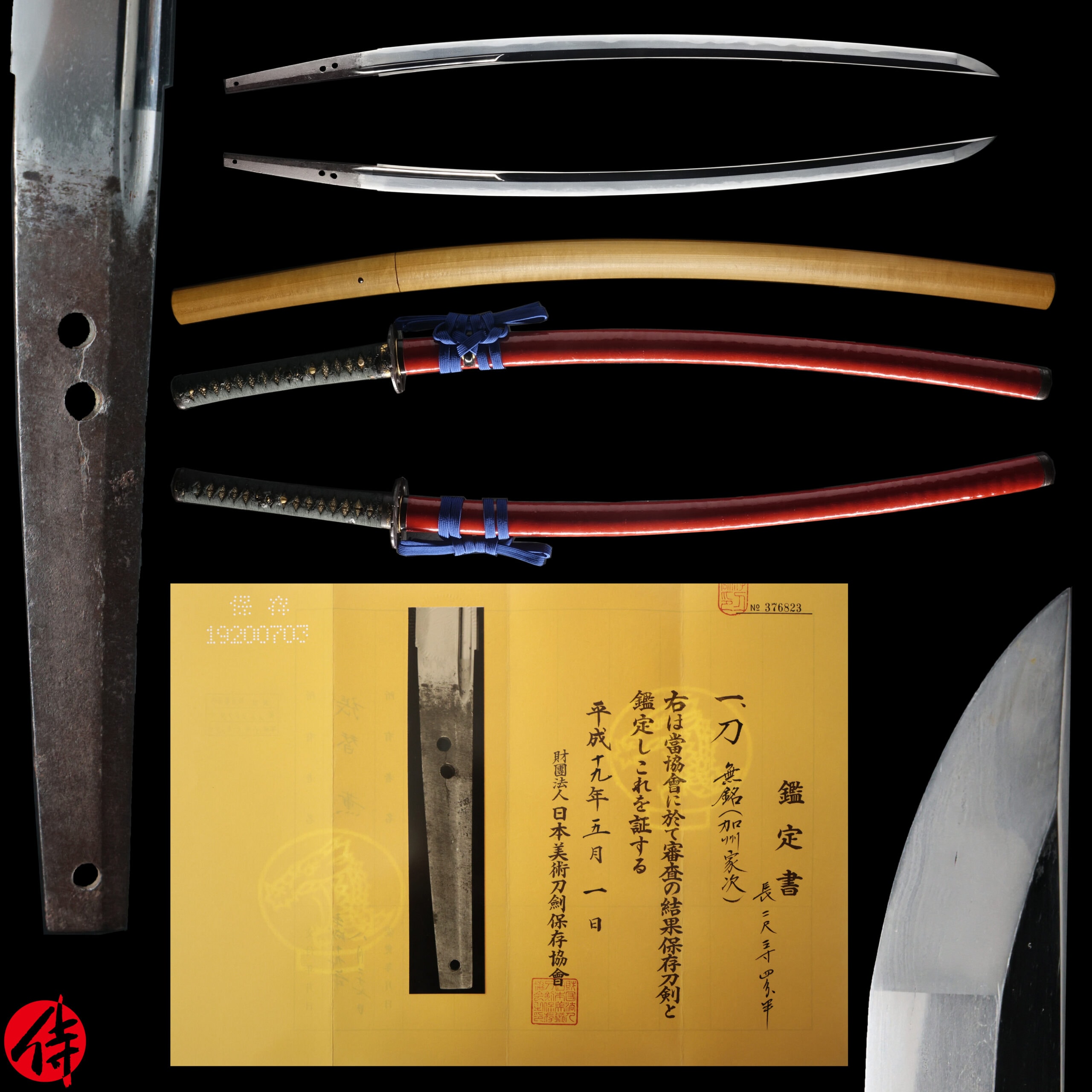
説明
Antique Japanese Sword Katana attributed to Kashu Ietsugu with
Hozon
Certificate
【Description】
This blade is attributed to Kashu Ietsugu (加州家次), a swordsmith active during the late Muromachi period (early 16th century). The term “Kashu” (加州) refers to Kaga Province, an old regional name for what is now Ishikawa Prefecture in central Japan.
Ietsugu lived and worked in Kaga Province, crafting swords as his livelihood. At the time, the region was governed by the Maeda clan (前田家), a powerful samurai family. The Maeda originally served under the warlord Oda Nobunaga (織田信長), one of the most influential figures in Japanese history. As trusted retainers, they eventually rose to prominence in their own right.
The founder of the Maeda clan’s power was Toshiie Maeda (前田利家), a skilled warrior and political figure. Through his alliance with both Nobunaga and later Toyotomi Hideyoshi (豊臣秀吉), he became the feudal lord (daimyo) of Kaga. His domain was famously known as “Kaga Hyakuman Goku” (加賀百万石), meaning “one million koku of rice”—a measurement indicating an amount of rice sufficient to feed approximately one million people. This immense agricultural wealth made the Maeda clan one of the richest and most influential families in feudal Japan.
Thanks to this economic prosperity and political stability, Kaga became a center of culture and craftsmanship. Many skilled artisans, including swordsmiths like Ietsugu, flourished under Maeda patronage. Swords from this period and region are valued not only for their battlefield utility but also for their refined beauty and craftsmanship—symbols of both martial tradition and artistic excellence.
It is appraised as a
Hozon Token
(保存刀剣) issued by NBTHK (Nihon Bijutsu Touken Hozon Kyokai: 日本美術刀剣保存協会). This authentication paper was only given to authentic Japanese swords, well preserved and high quality with artistic value.
*Please keep in mind that there are quite a few Kizu on this blade. If you like to see the detailed condition, please feel free to contact us.
【 Blade】
Cutting Edge Length(Nagasa)
:
71.1 cm (27.9 inches)
Curvature(Sori)
:
2.3 cm (0.9 inches)
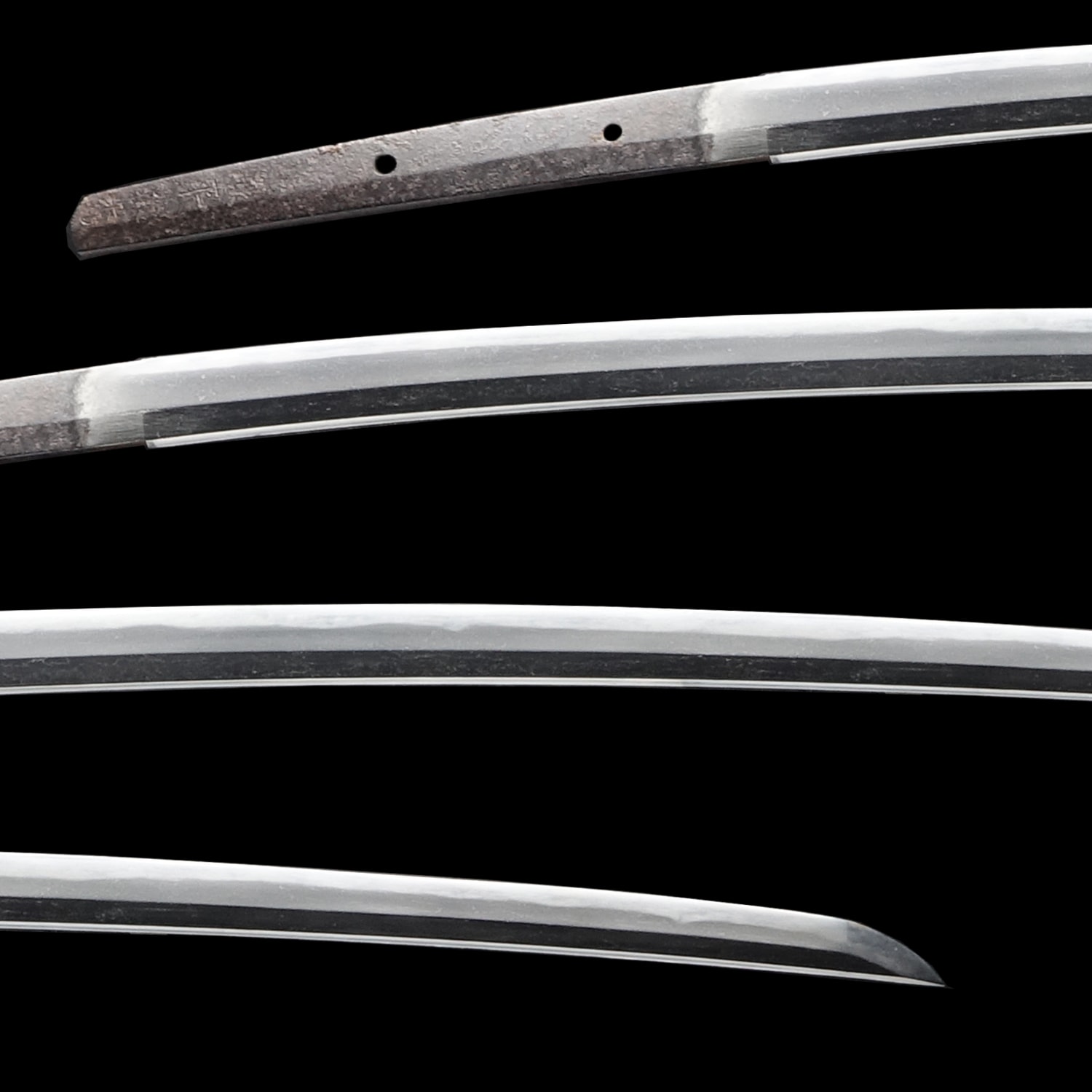
Hamon
:
The crystalline structure which forms along the cutting edge of a blade as a result of the hardening process
Jimon(Jihada)
:
visible steel surface pattern created by folding and hammering during forging process
Kissaki
:
Kissaki is the tip of the Japanese sword.
Nakago
:
Nakago is the tang of the Japanese sword.
Japanese swordsmiths left the black rust on the tang because it prevents red rust while the tang is in its handle. And the discoloration of the tang was created over time, and it is a great indicator for a Japanese sword specialist to estimate when the sword was forged.
Koshirae
:
Koshirae is the mounting of the Japanese sword. There are several parts that consist of Koshirae such as Saya (Scabbard), Tsuka (Handle), Tsuba (Handguard).
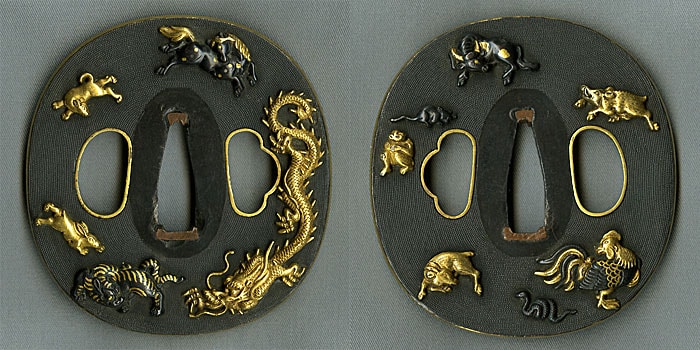
Fuchi-Kashira
:
A pair of matching sword fittings that cover the upper and bottom parts of its sword hilt.
The theme of this Fuchi-Kashira is Genji-guruma (源氏車, court carriage wheels) and cherry blossoms. Genji-guruma refers to the wheels of the elegant ox-drawn carriages used by aristocrats during the Heian period (794–1185). Because these wheels were made of wood, they could crack if left to dry for long periods. To prevent damage, it was customary to remove the wheels and place them in water when the carriage was not in use. This distinctive sight became a popular motif in Japanese art and literature.
Combined with the cherry blossoms, the design evokes the refined elegance of the Heian court and the beauty of Japan’s changing seasons.
Tsuka and Menuki
:
Tsuka is the handle of the Japanese sword and Menuki is its decoration.
The design of this menuki is believed to depict foxtail millet (awa, 粟), one of the oldest cultivated grains in Japan. Before rice became the dominant staple crop, millet played an important role in the Japanese diet and was widely grown throughout the country. Because of its ab


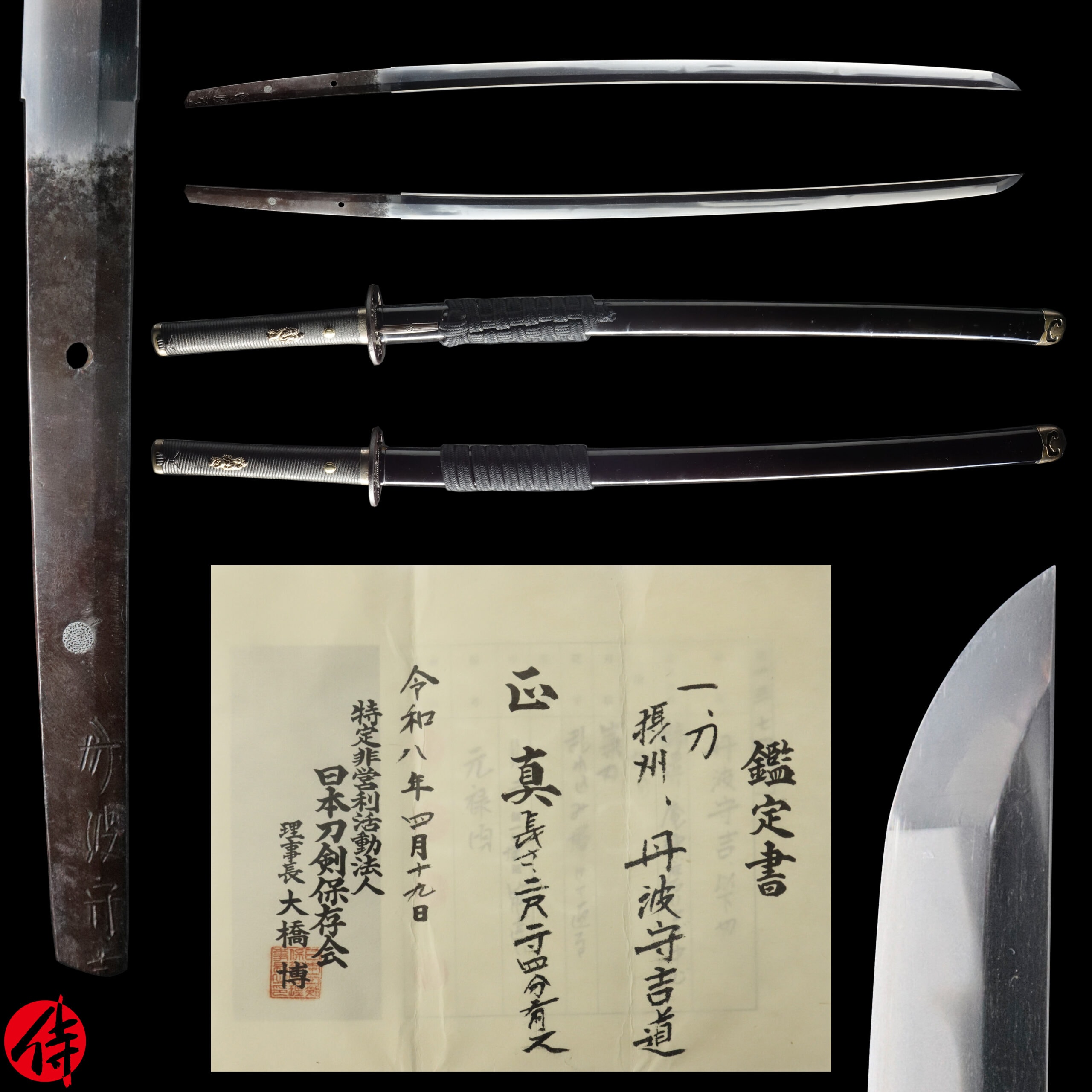
![刀 無銘 ( 加州家次 時代室町前期 ) 保存刀剣鑑定書 katana ( No signature )( Kasyu Ietsugu ) [ NBTHK : Hozon ]](/_next/image?url=https%3A%2F%2Fitbhfhyptogxcjbjfzwx.supabase.co%2Fstorage%2Fv1%2Fobject%2Fpublic%2Flisting-images%2Ftoyuukai%2FL398857%2F00.jpg&w=2560&q=90)
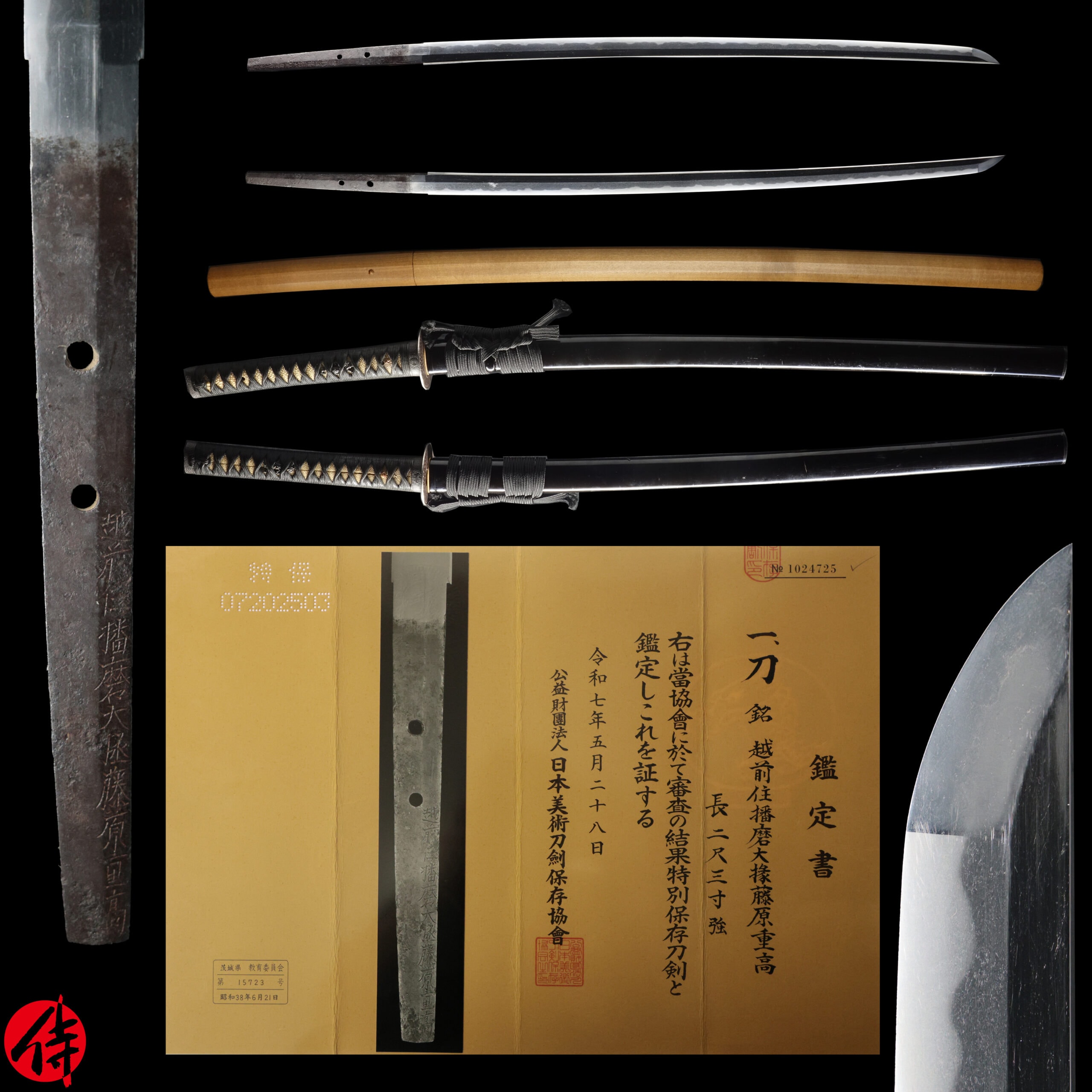
![刀 無銘(加州景光)保存刀剣鑑定書 Katana No signature (Kasyu Kagemitsu) [ NBTHK : Hozon ]](/_next/image?url=https%3A%2F%2Fitbhfhyptogxcjbjfzwx.supabase.co%2Fstorage%2Fv1%2Fobject%2Fpublic%2Flisting-images%2Ftoyuukai%2FL398627%2F00.jpg&w=2560&q=90)