三人の天下人が戦国の世紀を終わらせ、刀は新しい秩序の道具となった。1588年の刀狩は刀を武士の標章とし、名刀は条約のごとく家々の間を行き交い、鑑定は以後この境で古刀と新刀を分かつ。
 NihontoWatchNihontoWatch
Shodai Yamato no Daijô Fujiwara Masanori worked at the cusp – the close of the Kôtô age and the opening of the Shintô. Trained first by his father Norimitsu and later refined in Kyoto, he was retained by the Matsudaira Tadanao clan in Echizen province, where he spent the remainder of his career producing swords celebrated for both their cutting quality and their beauty. Fujishiro ranks him Jô-saku (superior swordsmith), and he carries the Ryô-wazamono designation for sharpness. This Keichô-era pair represents that reputation fully realised. The katana carries a kinzôgan tameshi-mei – a gold-inlaid cutting test inscription – on its nakago, certifying that on May 22, 1679, Shogun-appointed master sword-tester Yamano Kanjûrô Hisahide severed two human bodies with this blade in a single stroke. Futatsu-dô saidan. Above the cutting test, four Buddhist deities are engraved into the steel as horimono: Yakushi-Nyorai (the Medicine Buddha), Bishamonten (warrior-god and one of the Seven Lucky Gods), Kokuzô Bosatsu (the bodhisattva of boundless wisdom), and a sankôzuka suken capped with a renge lotus and a vajra thunderbolt. These are not decoration. They are talismans – spiritual protection cast into the sword itself. The wakizashi, signed by the same Masanori on an ubu nakago and recently polished to a high standard, carries a consistent nio-guchi in gunome midare, busy with sunagashi (streams of sand), kinsen (lines of gold) and ashi spraying toward the edge. The jihada is a beautiful ko-itame with swirling mokume and ji-nie. The katana came to the client already wearing its mid-1800s late Edo koshirae. Once the wakizashi was secured, a matching wakizashi koshirae was commissioned in 2015 – a ‘past meets present’ daishô, in the same spirit as a samurai of the Edo period would have assembled fittings from what could be sourced. The larger tsuba carries a Mizu Aoi Zu water hyacinth design; the smaller, a Noshi congratulatory ribbon signed Itô Masatoyo of the Bushû School (Mid-Edo, circa 1692-1779). The fuchi-kashira, signed Ichinomiya Tsuneyuki (1769-1828), show quails amongst flowers and a Japanese crane on shakudô-nanako in fine high relief. A kogai of a hen with chicks (NBTHK Hozon, attributed to Kyô Kinkô) and a kozuka with a quails-and-village-scene complete the set. Past and present, brought together – and the result, magical.
取扱店 Unique Japan
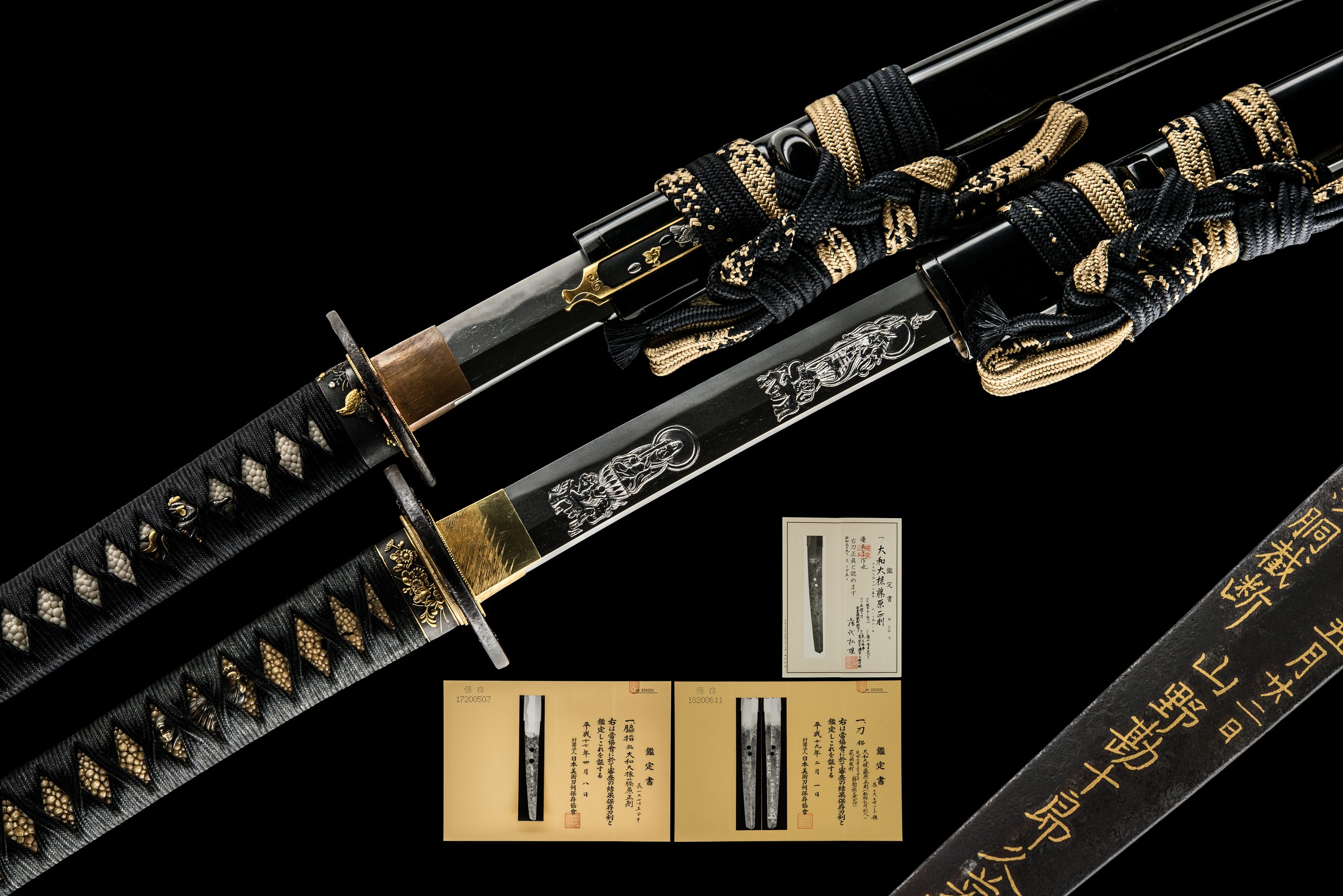
販売店の記載のまま
越前新刀(越前福井)、大和大掾藤原正則と銘す · 越前 · 1596-1615頃
現在2点販売中
正則は作を大和大掾藤原正則と長銘に切り、年紀のもっとも古いものは慶長十三年(一六〇八)で、以後元和二年(一六一六)、寛永元年(一六二四)、慶安四年(一六五一)に及ぶ。この年紀の幅は、彼を江戸時代初期に越前福井に住した越前刀工の初代に位置づけ、初二代の康継と同時代に活躍したことを示す。説明書は一説としてのみ、山城三条吉則の末葉と伝え、本国を丹後国宮津とし、後に越前福井に移り住んだとする。越前康継のごく傍らに置いて恐らくその門人とし、然らずとするも「その影響を受けていることは否定し難い」[[c:2]]と加える。同名は彼の後も数代に続いたが、長銘と生ぶ茎をもってその手を伝えるのは、この初代正則の指定四口である。
常の作風はまず地鉄に読まれる。流れてやや肌立つ板目(四口すべてに板目、三口に肌立ち、二口に流れごころ)に地沸つき、大振りの刀には地景が入り、地鉄は時に黒ずむ。その上を走る刃文は互の目・大互の目・尖り刃・矢筈風の刃を交えた乱刃で、小沸つき、帽子は乱れ込んで小丸に返る。だが説明書が立ち返るのは線の個々の特徴ではなく匂口の性格であり、それはやや沈みごころとなって、総じて「匂口の沈んだ刃で、一般に関物に近い」[[c:3]]とまとめられる。この沈む匂口は、流れて肌立つ地鉄と相俟って、賑やかな作にわたる彼の最も恒常的な見どころである。
すべての作が賑やかなわけではない。薙刀の一口で手は静まり、鍛えは細かな小板目でわずかに肌立ちごころとなり、地沸つき、刃文は足の入る直刃に落ち着いて小沸つき、帽子は直ぐに小丸となる。説明書はこの直刃を乱刃と並べて彼がしばしば焼くものとし、その一口を「地鉄が精美で地刃の出来がよく整った」[[c:4]]と評する。これは流れる乱れの手に対する律された対の作域であり、彼の越前の修練が華やかな作と同様に静かな作域をも備えていたことを示す。
力量の極みはまた別にある。第七回の指定刀、四口中もっとも古いこの一口は彼の野心の極みで、身幅広く大鋒に結び、表は片切刃造、裏は鎬造に造り込み、いわゆる切刃貞宗にならう。棟焼頻りにかかる肌立つ板目の上を双文大乱が走り、足・葉頻りに入り砂流かかり、裏は皆焼となって、帽子は突き上げて掃きかけ沸つく。表には三鈷剣を彫る。この刀について説明書は、出来優れ「殆んど初代康継に迫るものがあり、同作中これに比すべきものがない」[[c:5]]と記す。片切刃の造込はこの一口限りではなく薙刀にも見える彼の記録上の特色だが、貞宗の様式が名指され、その野心が十全に実るのはこの刀においてである。
越前新刀の犇めく中で正則を画するものは、隣人との対比よりも彼自身の地刃の特色から引くのがよい。流れて肌立つ板目と沈む匂口は、説明書が彼の関物への近さと結ぶ印であり、常の作をひとつにまとめる。これに対して片切刃の作と貞宗写しの野心作は、より古くより大きな作風への手の伸ばしである。第二十三回の薙刀について本会は「地刃に正則の特色が濃く」[[c:6]]現れるとし、同じ一口で彫物も見事とする。彼は同派の評にあって、常の作は関物に近く、しかし最上の日には自国新刀の祖たる康継に迫る刀を打ち得た工である。
正則の指定は重要刀剣四口、刀二口・薙刀二口で、いずれも生ぶ茎に長銘を有する。国宝・重要文化財・特別重要刀剣はこのうちになく、四口のいずれにも記録された伝来や所持者の名はない。説明書が同作中比すべきものなしとする貞宗写しの第七回の刀が彼の最も名高い作であり、直刃の静かな一口と彼自身の特色の濃い一口の二薙刀が、小さいながらも一貫した作群を整える。収集家にとって彼の作は時折市場に現れるにとどまり、その最良の一口は出れば画期となる。彼の手になる有銘の越前刀・薙刀は、指定文化財のように手の届かぬものではないが、市場に出ることは稀であり、沈む匂口と流れて肌立つ地鉄の明らかに現れた一口は、追い求めるよりも待つことに報いる。
正則の位置づけを、日本刀全体および伝法・時代・時期ごとに示します。各区分(随一・屈指・有数・著名)は、日刀保および文化庁による指定に加え、三作や名物帳などの歴史的栄誉を加味したものです。
各項目を選ぶと評価方法が表示されます。
桃山時代
三人の天下人が戦国の世紀を終わらせ、刀は新しい秩序の道具となった。1588年の刀狩は刀を武士の標章とし、名刀は条約のごとく家々の間を行き交い、鑑定は以後この境で古刀と新刀を分かつ。
銘が正しい、または無銘でも年代・国・系統を確実に指摘できる、保存に値する真正の作と鑑定されたものです。
日本美術刀剣保存協会(日刀保)は、1948年に設立され、文化庁の監督を受ける公益財団法人で、東京・刀剣博物館に本部を置きます。専門の審査員が出品作を直接審査し、美術的・歴史的価値に応じた鑑定書を発行します。日刀保の鑑定書は、日本刀および刀装具の真正性を示す最も広く認知された基準です。
日刀保公式サイトAll swords come with a three-day inspection period beginning from the date of delivery. If not satisfied, the sword may be returned within this period for a full refund of the purchase price. Outside of this period, all sales are final. Swords purchased on a layaway payment plan are not eligible for the three-day inspection period.