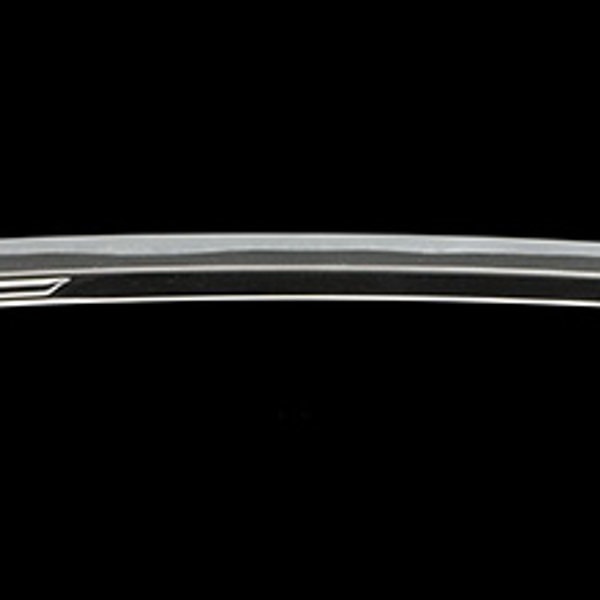
室町は刀剣業を産業に変えた。徒歩の集団戦とともに打刀が興り、長船と関は数打ち物と注文打ちを並行して産し、勘合貿易は日本刀を数万振の単位で海外へ運んだ。
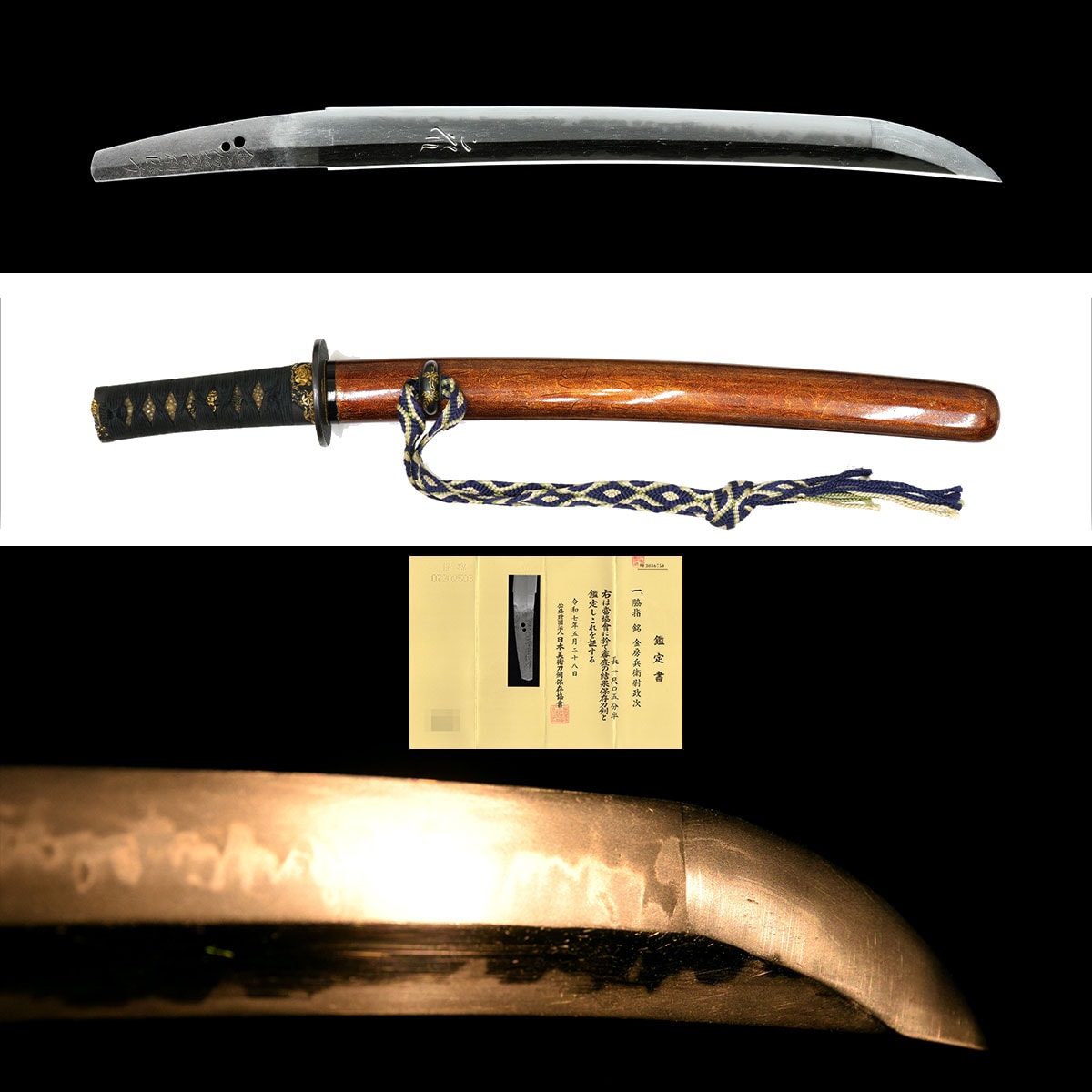
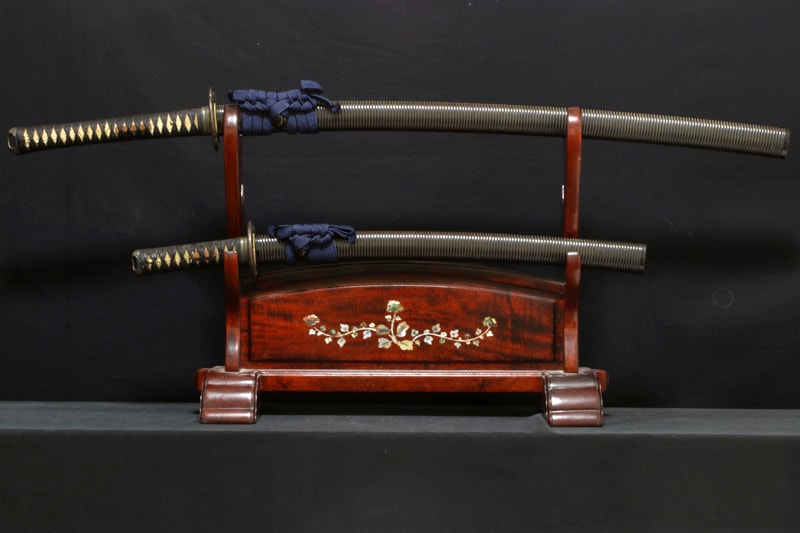
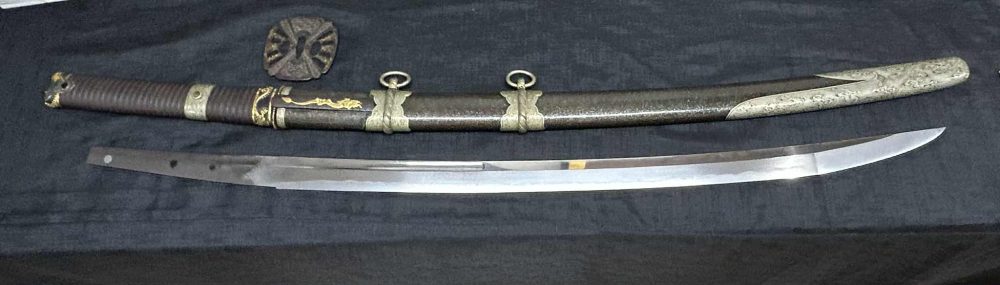
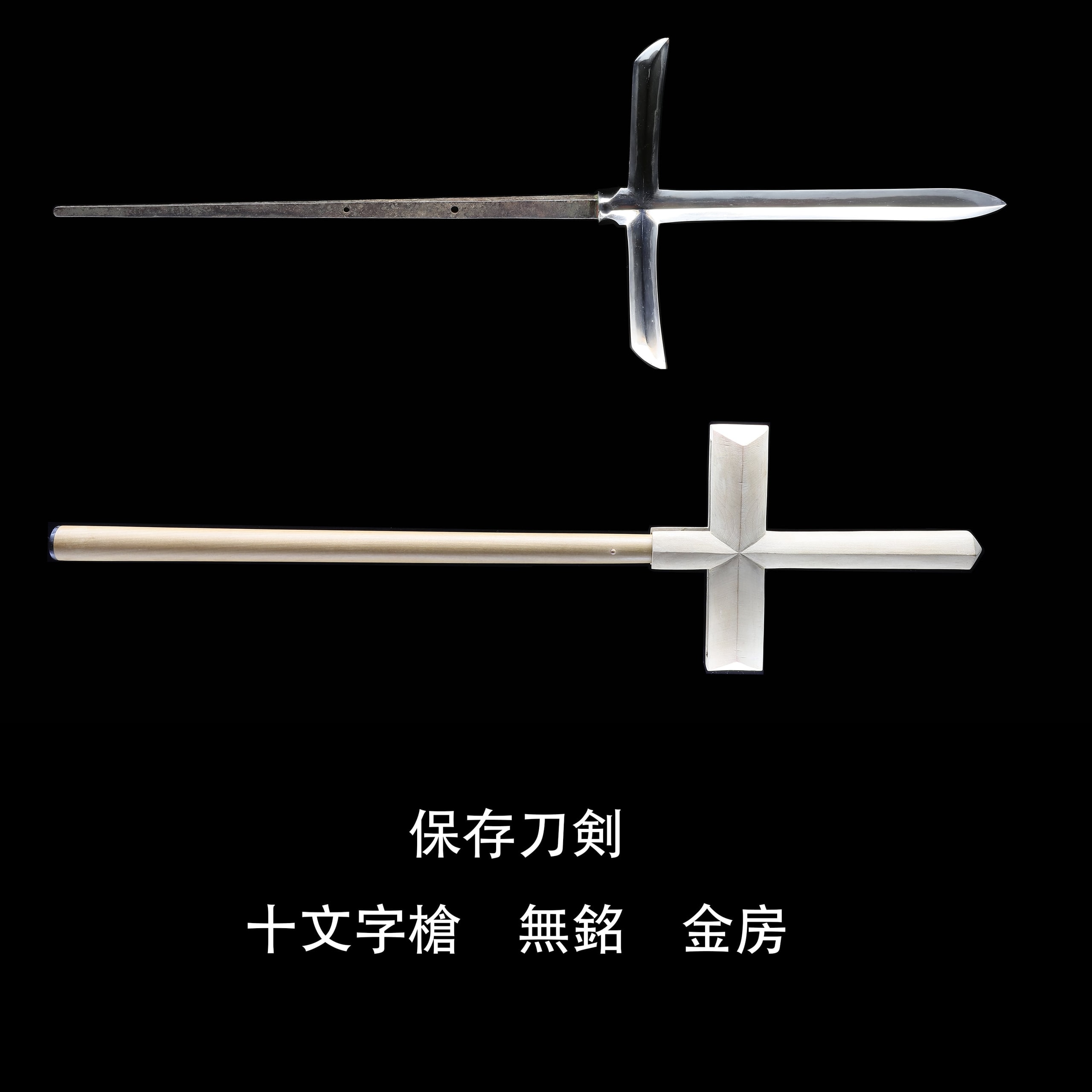
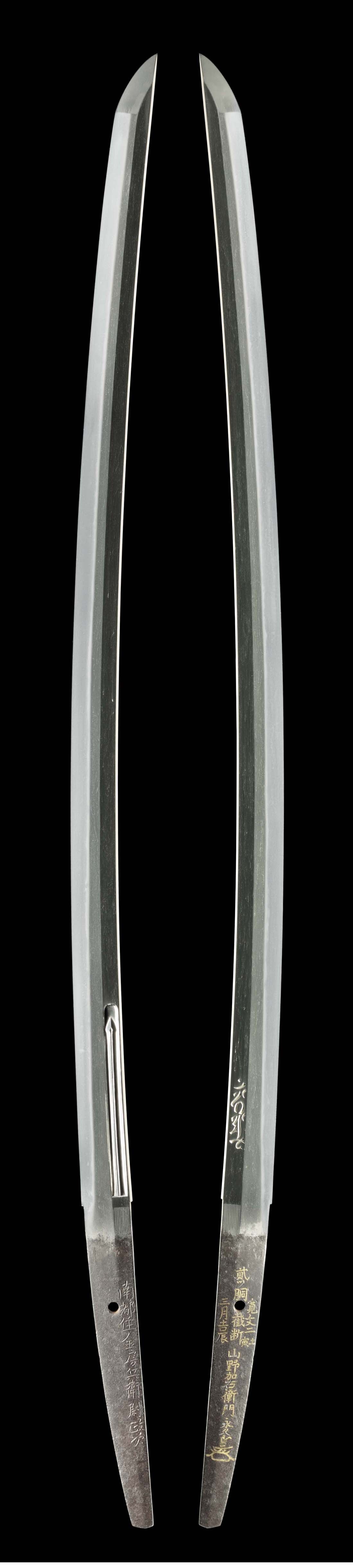
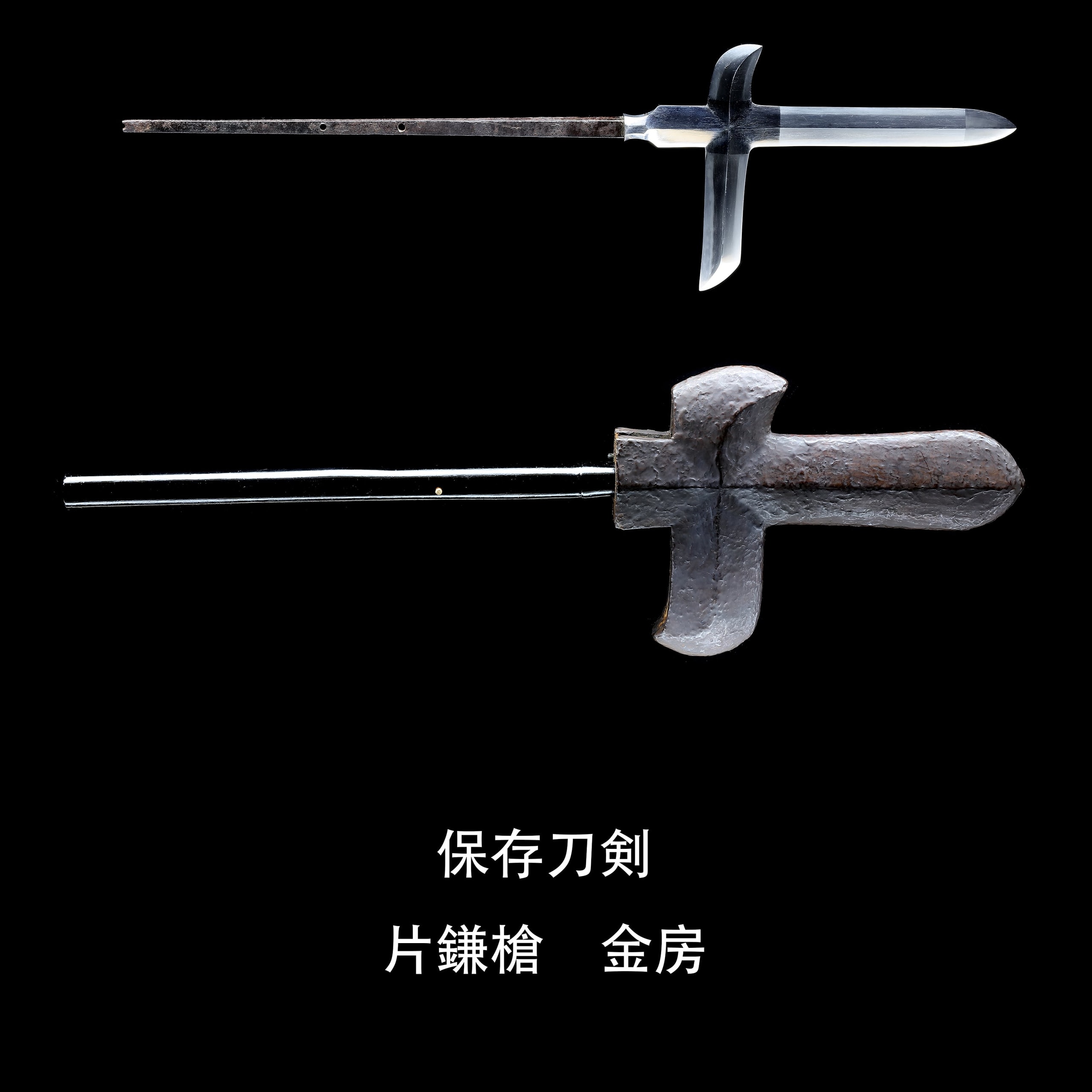
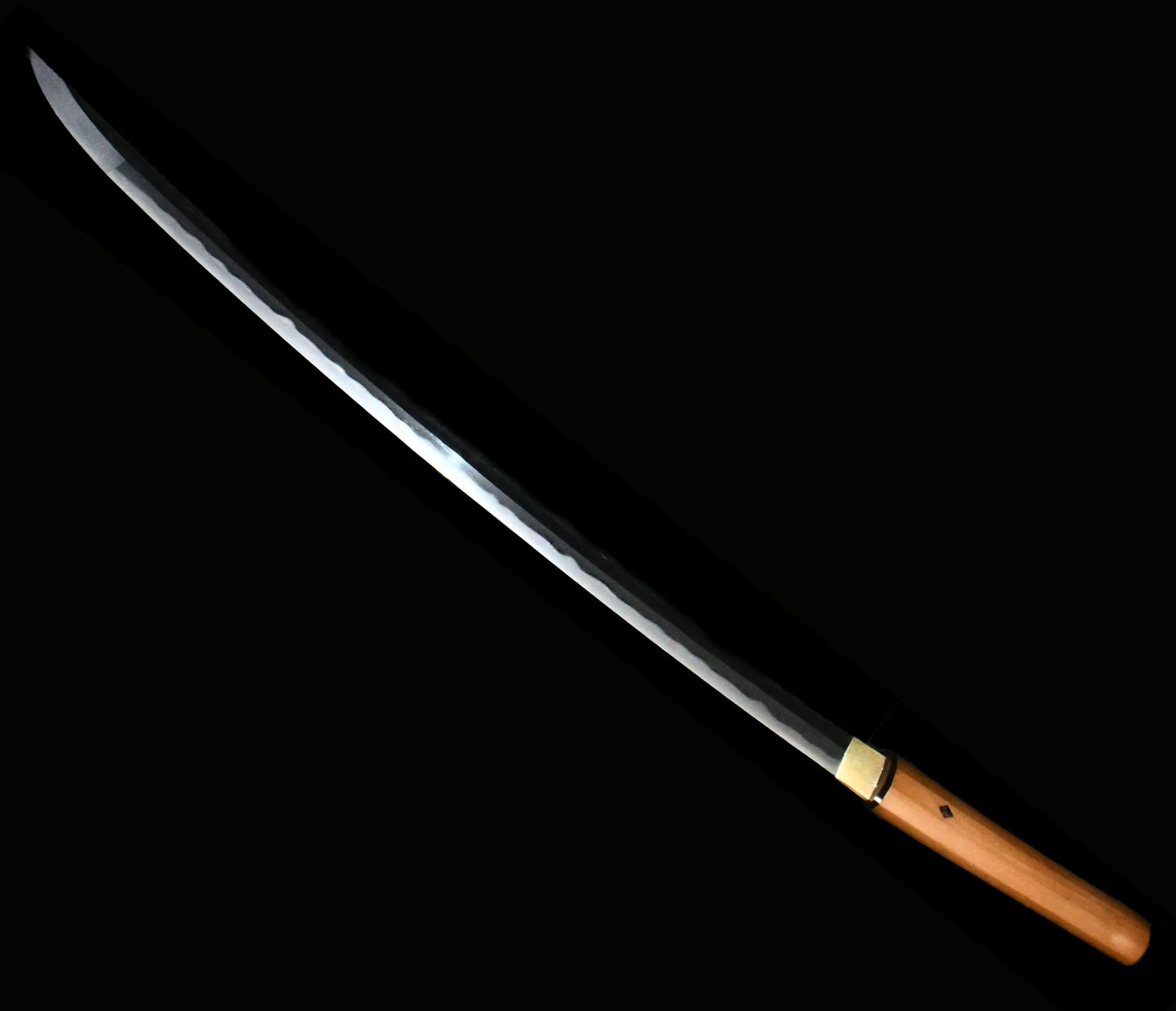
ITEM# UJKA444 – カタログ 41 – 売約済 金房政次 大刀 (金房政次) 金房(かなぼう)派は、大永年間(1521-1528)頃に大和の手掻(てがい)派の流れを汲んで興ったと伝えられています。新屋政長や藤原政長を祖とし、正重、正真、正清、そしてこの政次らが代表的な工として知られています。金房の刀工は槍、特に十文字槍の名手としてその名を馳せましたが、その打刀もまた、実戦に耐えうる堅牢な造りから武士の間で高く評価されました。 金房政次と極められたこの長寸で力強い一振りは、金房の刀がなぜ戦場で重用されたかを如実に物語っています。身幅広く、重ね厚く、反り浅い。そして10cmに迫る豪壮な大切っ先(おおきっさき)を備えたその姿は、正に圧倒的な威容を誇ります。鍛えは美しい柾目肌に、所々渦巻くような杢目肌が交じり、地中には砂流しが勢いよく流れます。刃文は末備前や美濃の作風を彷彿とさせる、変化に富んだ乱れ刃を焼き、室町後期の動乱を象徴するような尖り刃が際立っています。 外装には、江戸時代後期の優れた拵が付属します。鐔は江戸の砂川正親と目される鉄地磨地の透鐔で、雨中を飛ぶ雁の群れを描き、一方の小柄穴は金を用いた精緻な花文様で埋められています。縁頭は赤銅地の名品で、波間を泳ぐ龍を描いた備前正阿弥派の極め。目貫は富貴と守護の象徴である「牡丹に唐獅子」を配した大振りのもので、その意匠を存分に鑑賞できるよう片手巻で仕上げられています。あらゆる日本刀コレクションの中でも、一際存在感を放つ名刀です。 商品番号 UJKA444 種別 刀 極め 金房政次(無銘) 流派 金房 国 大和 時代 古刀 - 室町時代後期(16世紀) 長さ 76.4 cm 反り 1.4 cm 元幅 3.4 cm 先幅 2.9 cm 元重 0.8 cm 先重 0.6 cm 鑑定書 NBTHK 保存刀剣(刀身) NBTHK 保存刀装具(拵)
 NihontoWatch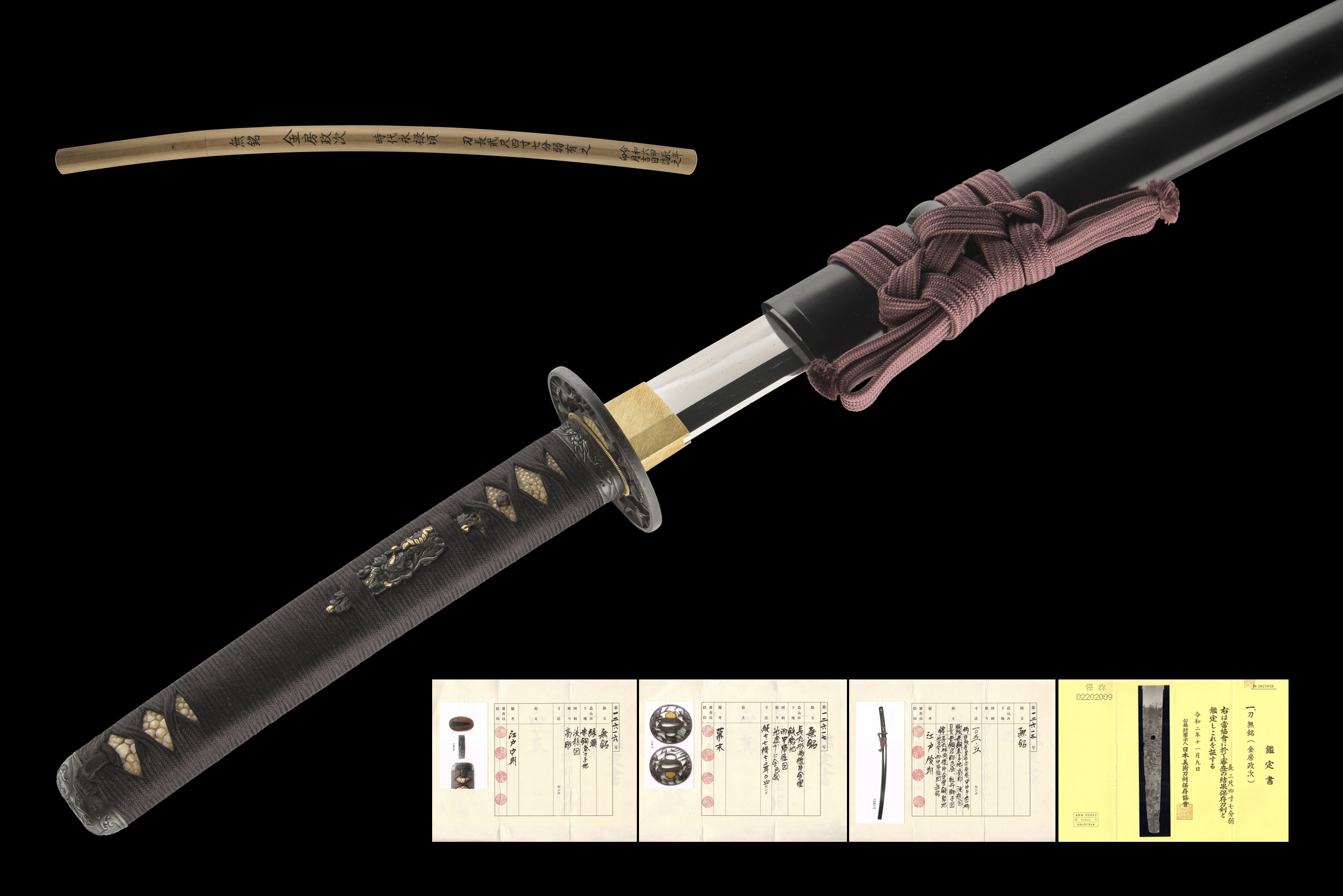
脇物 · 大和
現在8点販売中
金房派は、大和国奈良すなわち南都を本拠として室町末期から新刀期にかけて活動した一群である。説示によれば、金房某と銘する刀工が数多く知られて栄え、永正以降の年紀作をままみるという。同派の代表工としては政次があり、南都住金房兵衛尉政次と長銘を切る。ほかに政定が伝わり、南都住藤原朝臣金房左衛門尉政定作と銘し、永禄二年の年紀を有する作が知られる。大和の伝統的な五派との関係は明らかでないと説示は記しており、同地に拠りながらも別個の一派として隆盛をみたものと位置づけられる。同派に薙刀の遺例が比較的目立つのは、興福寺をはじめとする南都七大寺の僧兵の需要にこたえたものと説示は説く。 作風について説示が共通して挙げるのは、板目が流れて柾がかり、肌立つ鍛であり、地沸のつくもの、白気映りの立つものがみられる点である。刃文は、説示の一には直刃が最も多いとし、ほかにのたれや互の目を焼くと記すが、互の目調の大乱を主とする作も多く、腰の開いた互の目乱れに小足・葉のよく入るもの、足・葉が太く入るものが見受けられる。匂口は締まりごころとなるものを多く挙げ、一方で沈みごころとなるものにも触れる。帽子は乱れ込んで掃きかけ、先尖りごころに返るものや、やや長く焼き下げるものがある。造込みは身幅広く反り浅い大鋒の打刀姿を採り、末備前・末関などと共通する姿を示すと説示は述べ、薙刀造の作と併せて、実用に応じた一派の性格をうかがわせる。彫物には棒樋や倶利迦羅を施す例があり、茎は生ぶ、鑢目は勝手下りや筋違を交える。 鑑定にあたっては、柾がかって流れる板目鍛と、足・葉の目立つ互の目調の刃を要点とし、薙刀を含む実用本位の造込みを併せて見るべきものである。代表作としては政次の長大な薙刀があり、説示はこれを同派中の著名な一典型とする。政定の打刀には永禄の年紀と倶利迦羅の彫を備えた作が伝わる。なお薙刀には朱塗長巻拵などを附帯し、中身の製作に合わせて誂えられ、金具・塗りともそのままに保存される例もある。資料は僅少であるが、説示の記すところに従えば、金房派は大和奈良に拠りつつ伝統的な大和伝とは異なる作風を展開し、僧兵の需要を背景に薙刀と実用の刀槍を手がけた、室町末期を代表する一派として理解される。 詳しく見る →
室町時代
室町は刀剣業を産業に変えた。徒歩の集団戦とともに打刀が興り、長船と関は数打ち物と注文打ちを並行して産し、勘合貿易は日本刀を数万振の単位で海外へ運んだ。
銘が正しい、または無銘でも年代・国・系統を確実に指摘できる、保存に値する真正の作と鑑定されたものです。
日本美術刀剣保存協会(NBTHK)は、1948年に設立され、文化庁の監督を受ける公益財団法人で、東京・刀剣博物館に本部を置きます。専門の審査員が出品作を直接審査し、美術的・歴史的価値に応じた鑑定書を発行します。NBTHKの鑑定書は、日本刀および刀装具の真正性を示す最も広く認知された基準です。
NBTHK公式サイトAll swords come with a three-day inspection period beginning from the date of delivery. If not satisfied, the sword may be returned within this period for a full refund of the purchase price. Outside of this period, all sales are final. Swords purchased on a layaway payment plan are not eligible for the three-day inspection period.
ITEM# UJKA444 – カタログ 41 – 売約済 金房政次 大刀 (金房政次) 金房(かなぼう)派は、大永年間(1521-1528)頃に大和の手掻(てがい)派の流れを汲んで興ったと伝えられています。新屋政長や藤原政長を祖とし、正重、正真、正清、そしてこの政次らが代表的な工として知られています。金房の刀工は槍、特に十文字槍の名手としてその名を馳せましたが、その打刀もまた、実戦に耐えうる堅牢な造りから武士の間で高く評価されました。 金房政次と極められたこの長寸で力強い一振りは、金房の刀がなぜ戦場で重用されたかを如実に物語っています。身幅広く、重ね厚く、反り浅い。そして10cmに迫る豪壮な大切っ先(おおきっさき)を備えたその姿は、正に圧倒的な威容を誇ります。鍛えは美しい柾目肌に、所々渦巻くような杢目肌が交じり、地中には砂流しが勢いよく流れます。刃文は末備前や美濃の作風を彷彿とさせる、変化に富んだ乱れ刃を焼き、室町後期の動乱を象徴するような尖り刃が際立っています。 外装には、江戸時代後期の優れた拵が付属します。鐔は江戸の砂川正親と目される鉄地磨地の透鐔で、雨中を飛ぶ雁の群れを描き、一方の小柄穴は金を用いた精緻な花文様で埋められています。縁頭は赤銅地の名品で、波間を泳ぐ龍を描いた備前正阿弥派の極め。目貫は富貴と守護の象徴である「牡丹に唐獅子」を配した大振りのもので、その意匠を存分に鑑賞できるよう片手巻で仕上げられています。あらゆる日本刀コレクションの中でも、一際存在感を放つ名刀です。 商品番号 UJKA444 種別 刀 極め 金房政次(無銘) 流派 金房 国 大和 時代 古刀 - 室町時代後期(16世紀) 長さ 76.4 cm 反り 1.4 cm 元幅 3.4 cm 先幅 2.9 cm 元重 0.8 cm 先重 0.6 cm 鑑定書 NBTHK 保存刀剣(刀身) NBTHK 保存刀装具(拵)
NihontoWatch脇物 · 大和
現在8点販売中
金房派は、大和国奈良すなわち南都を本拠として室町末期から新刀期にかけて活動した一群である。説示によれば、金房某と銘する刀工が数多く知られて栄え、永正以降の年紀作をままみるという。同派の代表工としては政次があり、南都住金房兵衛尉政次と長銘を切る。ほかに政定が伝わり、南都住藤原朝臣金房左衛門尉政定作と銘し、永禄二年の年紀を有する作が知られる。大和の伝統的な五派との関係は明らかでないと説示は記しており、同地に拠りながらも別個の一派として隆盛をみたものと位置づけられる。同派に薙刀の遺例が比較的目立つのは、興福寺をはじめとする南都七大寺の僧兵の需要にこたえたものと説示は説く。 作風について説示が共通して挙げるのは、板目が流れて柾がかり、肌立つ鍛であり、地沸のつくもの、白気映りの立つものがみられる点である。刃文は、説示の一には直刃が最も多いとし、ほかにのたれや互の目を焼くと記すが、互の目調の大乱を主とする作も多く、腰の開いた互の目乱れに小足・葉のよく入るもの、足・葉が太く入るものが見受けられる。匂口は締まりごころとなるものを多く挙げ、一方で沈みごころとなるものにも触れる。帽子は乱れ込んで掃きかけ、先尖りごころに返るものや、やや長く焼き下げるものがある。造込みは身幅広く反り浅い大鋒の打刀姿を採り、末備前・末関などと共通する姿を示すと説示は述べ、薙刀造の作と併せて、実用に応じた一派の性格をうかがわせる。彫物には棒樋や倶利迦羅を施す例があり、茎は生ぶ、鑢目は勝手下りや筋違を交える。 鑑定にあたっては、柾がかって流れる板目鍛と、足・葉の目立つ互の目調の刃を要点とし、薙刀を含む実用本位の造込みを併せて見るべきものである。代表作としては政次の長大な薙刀があり、説示はこれを同派中の著名な一典型とする。政定の打刀には永禄の年紀と倶利迦羅の彫を備えた作が伝わる。なお薙刀には朱塗長巻拵などを附帯し、中身の製作に合わせて誂えられ、金具・塗りともそのままに保存される例もある。資料は僅少であるが、説示の記すところに従えば、金房派は大和奈良に拠りつつ伝統的な大和伝とは異なる作風を展開し、僧兵の需要を背景に薙刀と実用の刀槍を手がけた、室町末期を代表する一派として理解される。 詳しく見る →
室町時代
室町は刀剣業を産業に変えた。徒歩の集団戦とともに打刀が興り、長船と関は数打ち物と注文打ちを並行して産し、勘合貿易は日本刀を数万振の単位で海外へ運んだ。
銘が正しい、または無銘でも年代・国・系統を確実に指摘できる、保存に値する真正の作と鑑定されたものです。
日本美術刀剣保存協会(NBTHK)は、1948年に設立され、文化庁の監督を受ける公益財団法人で、東京・刀剣博物館に本部を置きます。専門の審査員が出品作を直接審査し、美術的・歴史的価値に応じた鑑定書を発行します。NBTHKの鑑定書は、日本刀および刀装具の真正性を示す最も広く認知された基準です。
NBTHK公式サイトAll swords come with a three-day inspection period beginning from the date of delivery. If not satisfied, the sword may be returned within this period for a full refund of the purchase price. Outside of this period, all sales are final. Swords purchased on a layaway payment plan are not eligible for the three-day inspection period.