徳川の泰平のもと、大小は法度の定める身分の制服となり、需要は城下町、とりわけ江戸に集まった。工芸は二つに分かれる。目利きのための華やかな鑑賞の作と、截断の結果を金象嵌に刻む実証の刀である。
 NihontoWatchNihontoWatch
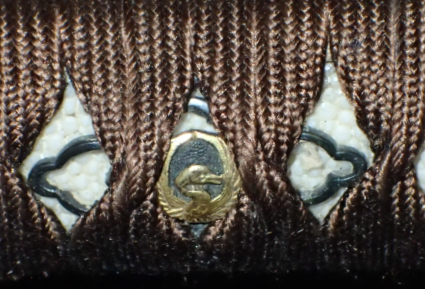
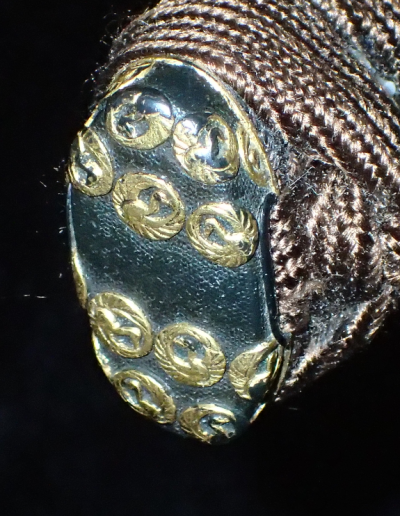
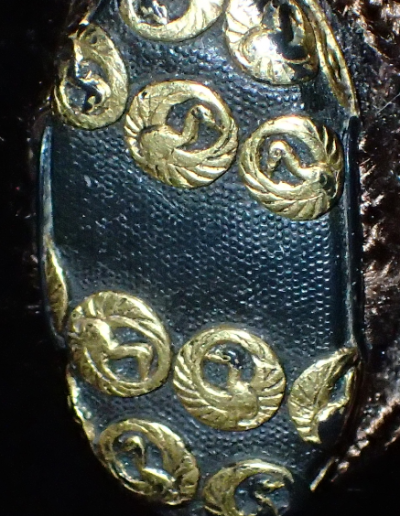
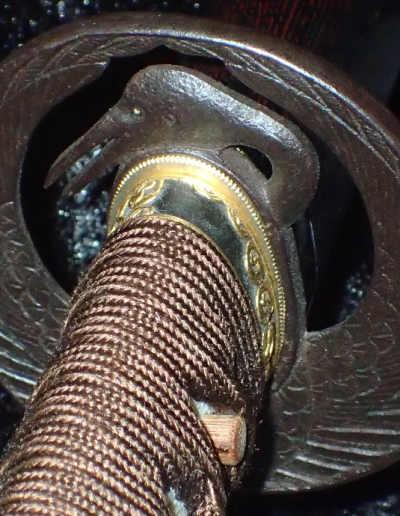
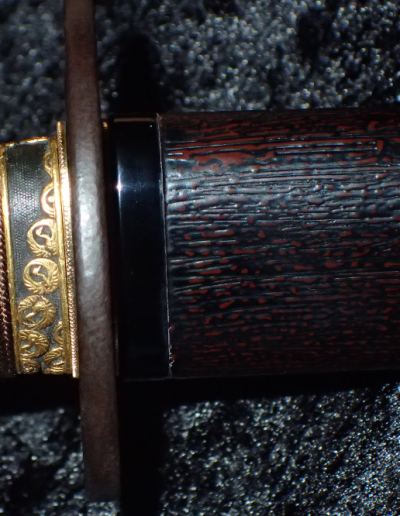
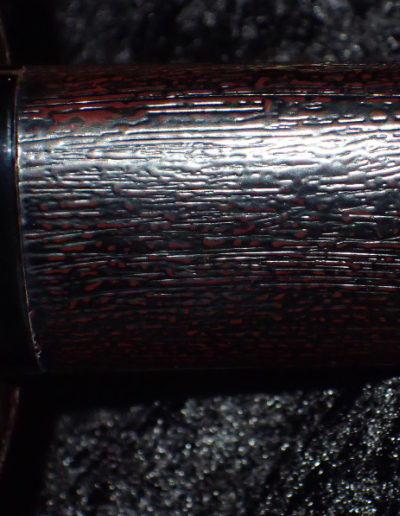
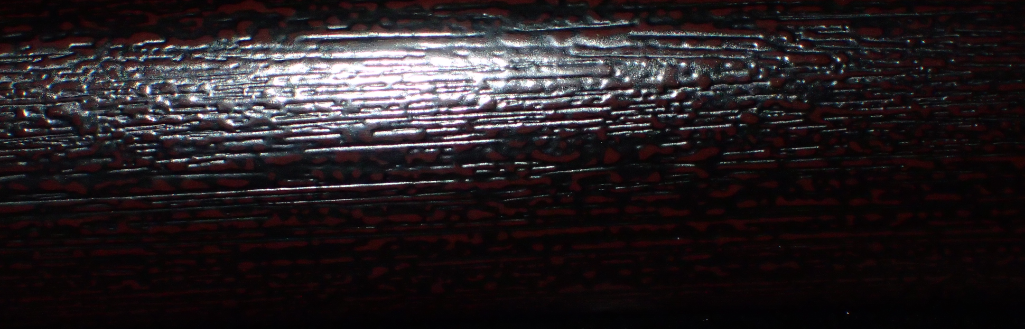
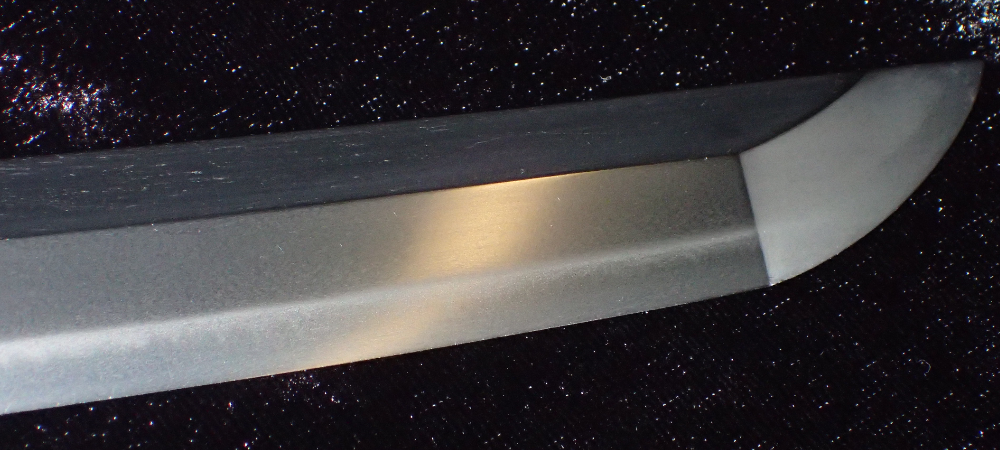
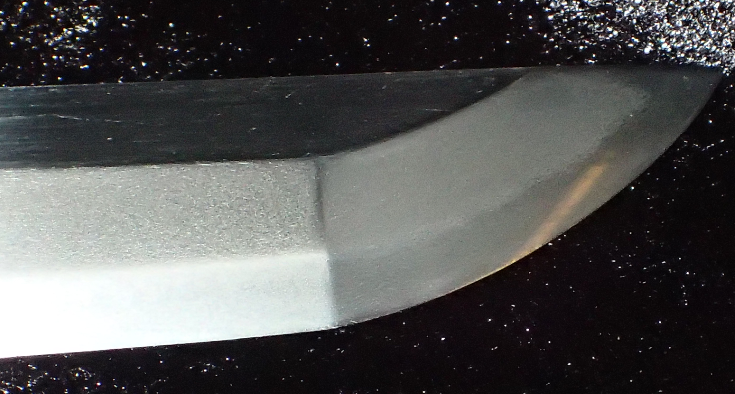
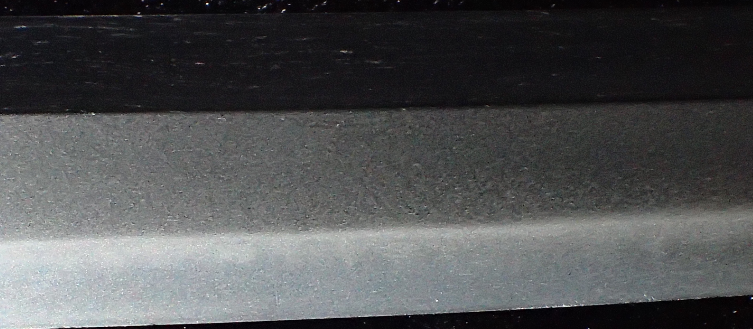
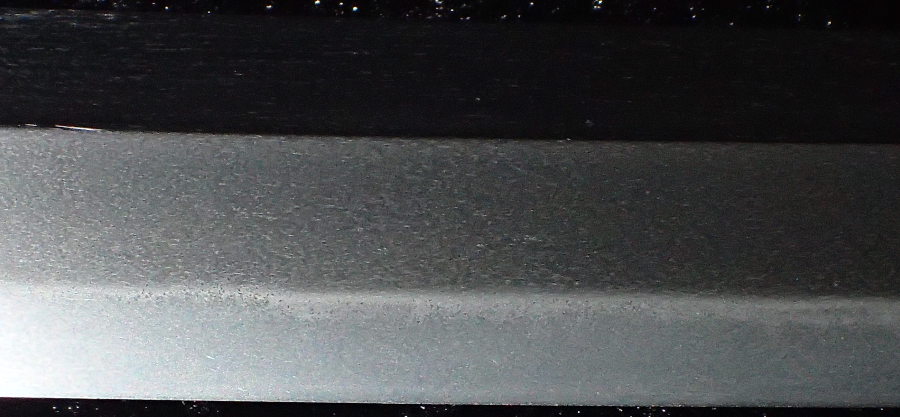
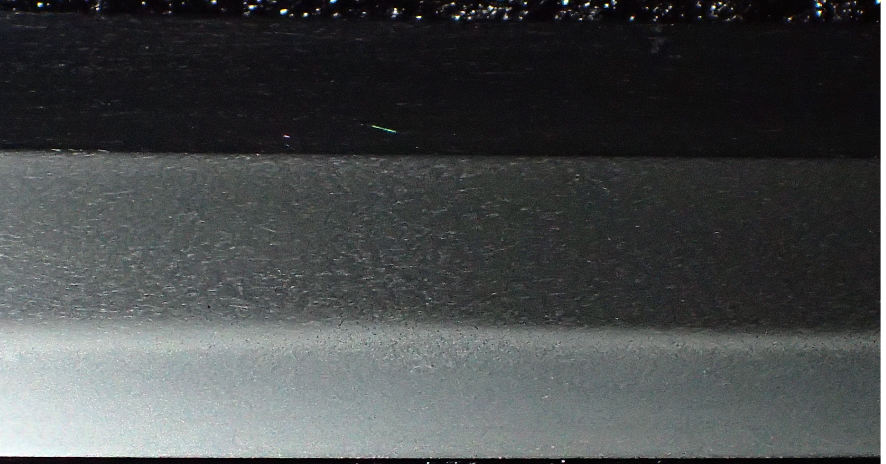
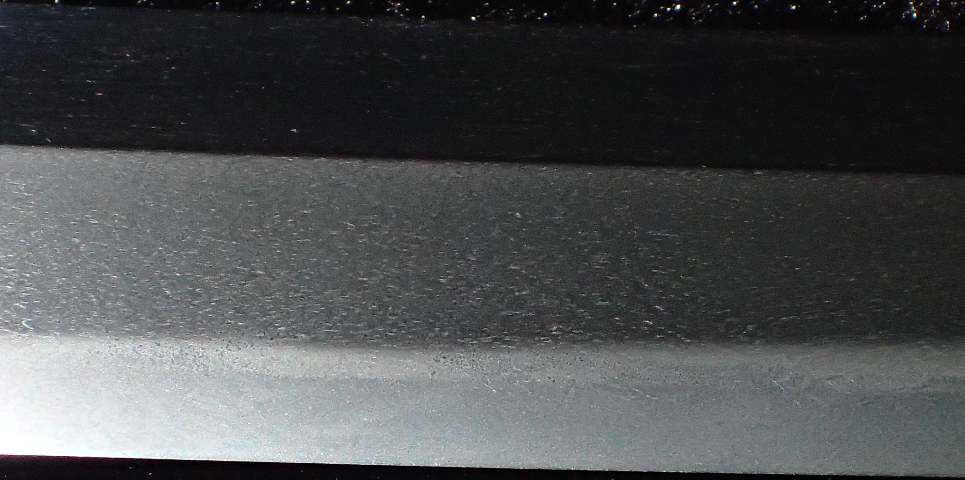
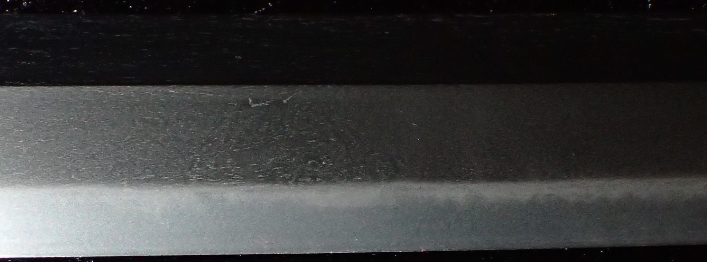
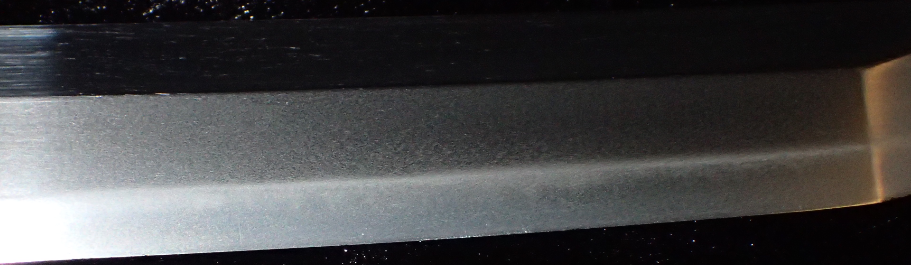
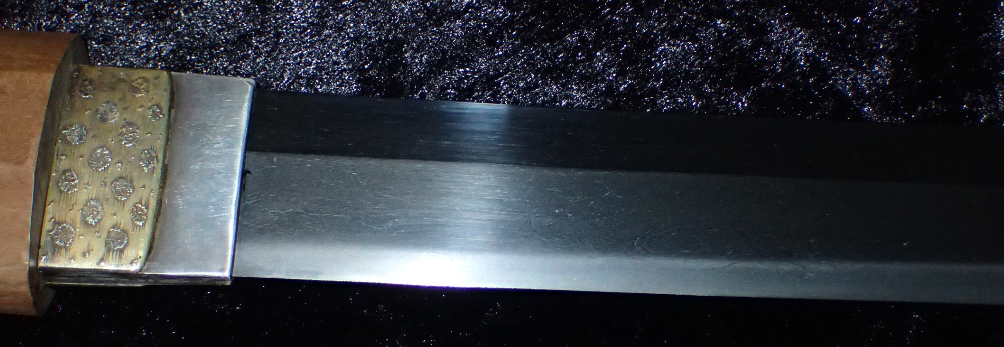
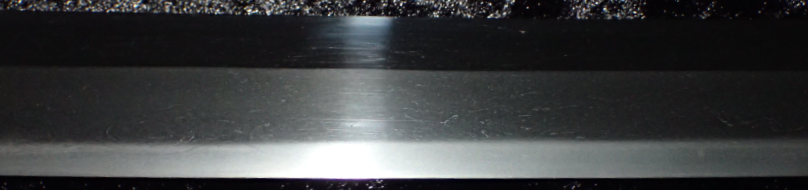
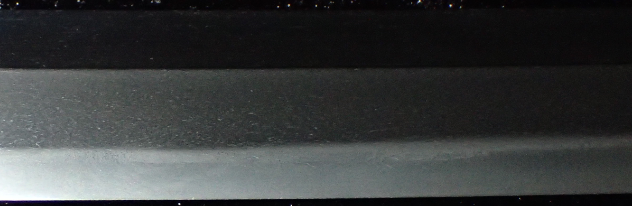
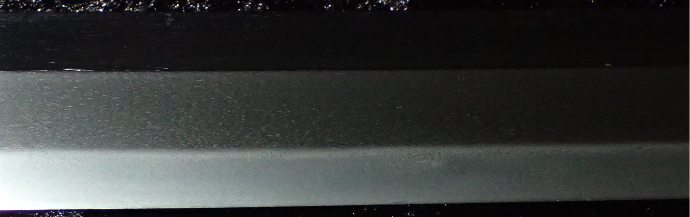
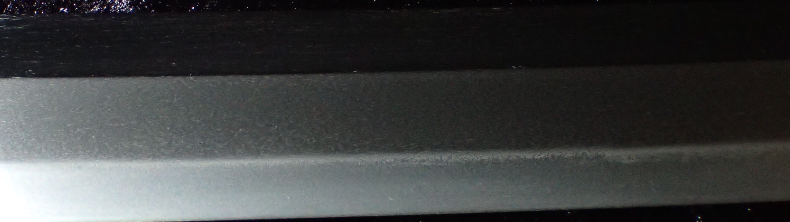
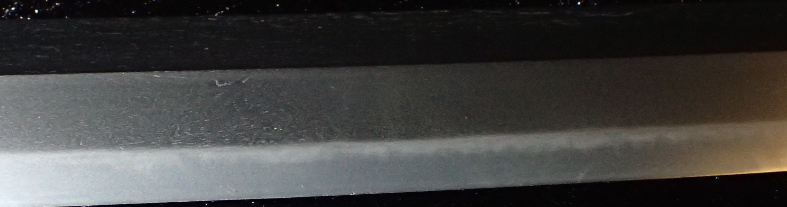
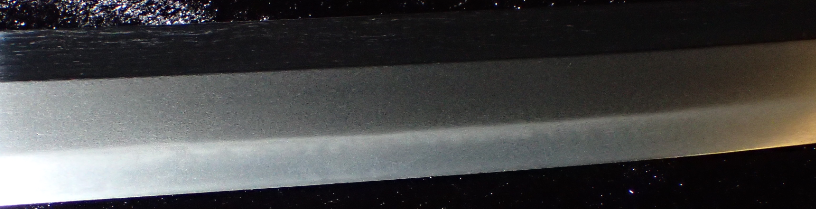
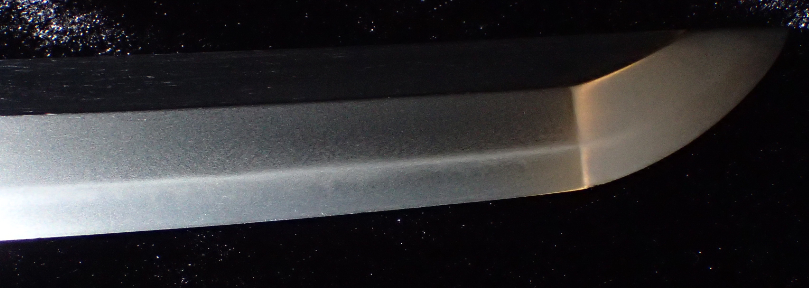
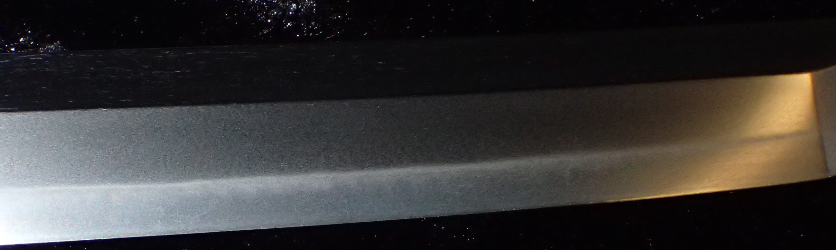
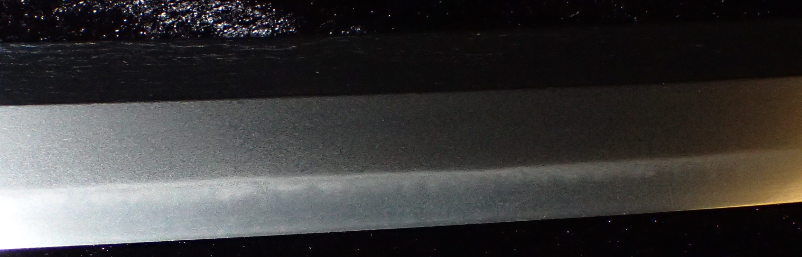
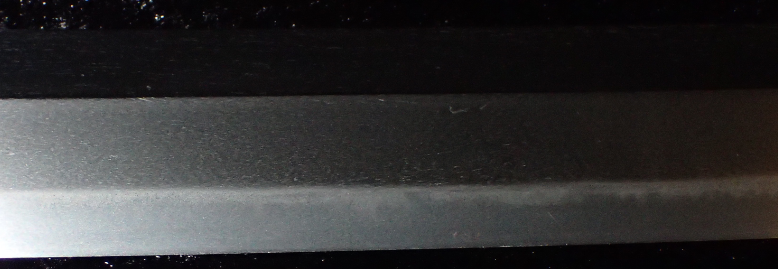
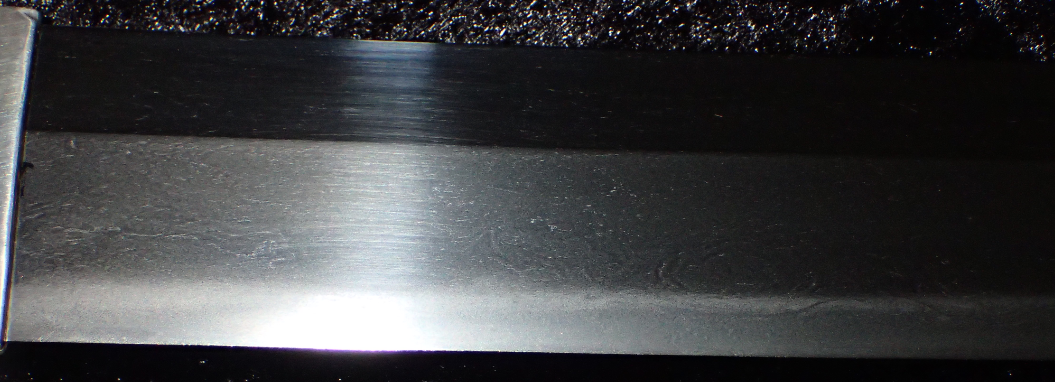
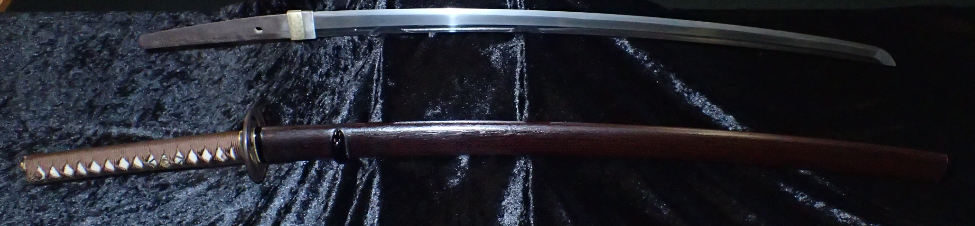
Minamoto Ippō katana with rare gold inlaid saidan mei, Kin Zogan – Nezu Saburōbei no Jō Mitsumasa cut [with this blade] on the sixth day of the twelfth month of Genroku three (1700), year of the horse, through three bodies. Mounted in Shirasaya and also Kohirae with Sukashi iron Crane motif Tsuba. Fuchi Kashira are Shakudo with Gold Mons, Menuki are also Shakudo with Cranes in Gold NTHK NPO Certificate Mei (銘文) ‒ Signature: Gōshū-jūnin Sasaki Nyūdō Minamoto Ippō (江州住人佐々木入道源一峯) ‒ “Layman Sasaki Minamoto Ippō, resident of Ōmi province” Kinzōgan-mei on reverse: Genroku san kanoe-umadoshi jūnigatsu muika ‒ Mitsu-dō otoshi Nezu Saburōbei no Jō Mitsumasa + kaō (元禄三庚午年十二月六日・三ッ胴落、根津三郎兵衛尉光政「花押」) ‒ “Nezu Saburōbei no Jō Mitsumasa cut [with this blade] on the sixth day of the twelfth month of Genroku three (1700), year of the horse, through three bodies.” Tsukurikomi (造り込み) ‒ Shape: shinogi-zukuri, iori-mune Kitae (鍛) ‒ Forging: dense itame, tending towards ko-itame Hamon (刃紋) ‒ Hardening: rather wide chū-suguha Bōshi (鋩子) ‒ Hardening in tip: sugu with a rather pointed kaeri Nakago (中心) ‒ Tang: mekugi-ana (目釘穴) 1, yasurime (鑢): ō-sujikai Made around Tenna (天和, 1681-1684) Nagasa 63.4cm Sori 1.8cm Motohaba 3.05cm Motokasane 0.73cm Sakihaba 21.2cm IPPŌ (一法), Jōō (承応, 1652-1655), Yamashiro – “Jōshū Fujiwara Hokkyō Ippō” (城州藤原法橋一法), “Heki Yamashiro no Daijō Minamoto Ippō” (日置山城大掾源一法), “Heki Yamashiro no Kami Minamoto Ippō” (日置山城守源一法), real name Heki Ichinojō (日置一之丞), he also bore the first name Saburōzaemon (三郎左衛門) and belonged to the school of Ishidō Korekazu (石堂是一), he worked in Kyōto but it is said that he also made some blades in Edo, hiro-suguha with saka-ashi IPPŌ (一法), Genroku (元禄, 1688-1704), Musashi – “Tsushima no Kami Tachibana Ippō” (対馬守橘一法), “Tsushima Nyūdō Tachibana Ippō” (対馬入道橘一法), according to a theory this was the nyūdō-gō of the Ishidō smith Tsushima no Kami Tsunemitsu (常光), other see him as a separate smith, there exists a date signature of the eleventh year of Genroku (1698) with the age of 73 which would support the theory that this was a pseudonym of Tsunemitsu that he used in his later years, other sources list Ippō also with another gō, Chikyū (知休), which was in turn used by Tsunemitsu too IPPŌ (一峯), 1st gen., Keian (慶安, 1648-1652), Ōmi – “Ippō” (一峯), lived in Sasaki (佐々木) in Ōmi province, he belonged to the Ōmi-branch of the Ishidō school (石堂), suguha, gunome-midare, chōji-midare, suguha mixed with midare, notare-midare, also with nie and sunagashi, it is said that he also used nanban-tetsu, wazamono, jō-saku IPPŌ (一峯), 2nd gen., Genroku (元禄, 1688-1704), Ōmi/Edo – “Gōshū-jūnin Sasaki Zenshirō Minamoto Ippō” (江州住人佐々木善四郎源一峯), “Gōshū-jūnin Sasaki Nyōdō Minamoto Ippō” (江州住人佐々木入道源一峯), real name Sasaki Zenshirō (佐々木善四郎), he moved later to Edo and settled there in the Akasaka (赤坂) district, chōji- midare, gunome-midare, suguha mixed with midare, notare-midare, he also hardened a chōji-gunome-midare in the style of the Ichimonji school, it is said that he also used nanban-tetsu, wazamono, jō-saku Nezu Saburōbei Mitsumasa (根津三郎兵衛光政) was student of Yamano Hisahide. Mitsumasa was originally a Rōnin who had the luck of getting employment from the bakufu. There exists a very detailed four-volume tameshigiri hiden-sho (秘伝書, secret initiation script) written by Mitsumasa which is preserved in the Seikadō Bunko Art Museum (静嘉堂文庫), Swords bearing his tameshi-mei are rare. We know one by the swordsmith Izumo no Kami Yoshitake (出雲守吉武, ) and one by Yamashiro no Kami Kunikiyo (山城守国清). Incidentally, Mitsumasa must have trained several students because the term “Nezu-ryū of tameshigiri” (根津流) appears in several documents. As mentioned, we can get a pretty good overview of the tameshigiri terms in use in the early Edo period by looking at the large number of extant swords with cutting test inscriptions from that time, but the very first drawing of a human body with all the cuts and names drawn in dates to the Genroku era (1688-1704) and is found in a record of the curriculum of the Nezu-ryū of tameshigiri, titled Tōryū-shikake-mokuroku (当流仕掛目録). The Nezu-ryū is thought to go back to Nezu Saburō Mitsumasa (根津三郎兵衛 光政) who was a student of the second Yamano-generation Kanjūrō Hisahide. This drawing shows, from top to bottom, and horizontally downover the body, the following 16 cuts (the notation follows the original, the terms in quotation marks are the literal translations): 1. suritsuke (スリ付, “rubbing”) 2. taitai (太々, “very thick”) 3. kenashi (毛ナシ, “no hair”) 4. ō-kenashi (大毛ナシ, “large no hair [cut]”) 5. wakige (脇毛, “armpit hair”) 6. hitowaki (一脇, “one armpit”) 7. ichi no dō (一の胴, “first torso [cut]”) 8. ichi-ni no ai (一二の間, “between first and second [torso cut]”) 9. ni no dō (二の胴, “second torso [cut]”) 10. ni-san no ai (二三の間, “between second and third [torso cut]”) 11. san no dō (三の胴, “third torso [cut]”) 12. hachimai-me (八枚目, “chairman/promoter”) 13. hosogoshi (細腰, “slender hips”) 14. kurumasaki (車先, “tip of the wheel”) 15. ai no kuruma (間の車, “middle wheel”) 16. moro-guruma (両車・諸車, “both wheels”) The Yamada family redefined the Nezu-ryū curriculum of cuts after having the monopoly for the bakufu ́s O-tameshi-goyō post, i.e. from the end of the Kyōhō era onwards (享保, 1716-1736). So, if we follow this approach that the Yamada redefined the Nezu-ryū cuts, it must have taken place somewhere between the end of Kyōhō era and Sudō ́s drawing and thus we can narrow down the process to about fifty years. But it is on the other hand also possible that the 16 Nezu-ryū torso cuts had already been simplified earlier, i.e. before Genroku, and that only this school of tameshigiri stuck to this high number of torso cuts. In other words, and following this approach, the Yamada family had later simply changed the names of the already redefined and reduced 10 torso cuts. Nezu Mitsumasa claimed to recognize the cutting ability of a kotō blade by simply hearing the sound it made when hitting a target, even through a wall. He distinguished between three basic sounds: Decent or good cutters made a sound upon hitting the target which he circumscribed with “san”. Excellent cutters made a sound like “kon,” and when a blade with a superior cutting ability hit a target, it made a “futtsu” sound, like when a string snaps. He added that maybe not even one out of ten blades made “futtsu” and that such a sound upon hitting a target is very rare. Apart from that we read in the Yamada ́s Secret Song that a wide and noticeably curved katana blade with a low shinogi ridge, i.e. with a not so pronounced trapezoid cross-section, does not make much sound upon impact in general, regardless of how good its cutting ability is. And a tachi blade with a high shinogi and thus with a more pronounced trapezoid cross- section in turn makes by default a louder noise. The lines in question read: Haba hiroku shinogi no hikiku sori no ari katana wa kirete oto no kaki mono, deki saete shinogi no takaki tachi wa tada kirete mo oto no araki mono nari. (はばひろ くしのぎのひきくそりの有刀は切れておとのなきもの・出来さへ てしのぎの高き太刀はただ切れてもおとのあらき物也). Mitsumasa also wrote on the feedback a blade gives the sword tester during a cut by referring to the interplay of steel (jigane, 地鉄) and cutting ability. When cutting with a Masamune (正宗) and a Sadamune (貞宗), Mitsumasa felt that the Masamune’s steel is relatively “soft” (shirui, シルイ) and that of the Sadamune relatively “hard” (katai, カタイ). Next he wrote that the very densely forged, almost mirror-like jigane of a shintō blade is “tenacious” (shibutoi, シブトイ) and provides in principle a “medium cutting ability.” Mitsumasa further said that Seki or Yamato swords which are made with the strong mizu-ore (三ツオレ) forging technique are especially good cutters. The Shintō-bengi (新刀弁疑, “Almanac of New Swords”), published in five volumes in the sixth year of An ́ei (安永, 1777) by Kamata Natae (鎌田魚妙, 1727-1797), quotes the term mizu-ore with the characters (水折れ). It explains that with this forging technique the steel, or certain parts of the steel, are heated, thrown into water, and then broken into pieces before been further processed. Another jigane-related term that appears in Mitsumasa ́s records is Uzuha (ウツハ). Uzuha is an older, dialect form for Izuha (出羽), a town in Iwami province (present-day Shimano Prefecture) which was a centre for steel production. The Uzuha steel Mitsumasa refers to is basically a “large-scale” mizu-ore as they threw red-hot tamahagane pieces into a pond to cool them down faster. Forging the somewhat rough Uzuha steel well, says Mitsumasa, makes great cutters. A blade forged with zuku-oroshi (ヅクオロシ・銑卸し), he says, cuts well but is not a superior cutter as it has a somewhat more brittle cutting- edge and is prone to chipping. Zuku-oroshi is pig iron with a high carbon content which is usually only added to a certain extent to the tamahagane when forging a sword. And nanban-tetsu is said to be hard when forging but becomes softer towards the end of the forging process. Thus, such blades were described as cutting nicely the very first time but were not able to maintain a lasting sharp cutting-edge. The Yamada family too recorded their experience with the different kinds of jigane of the swords they tested. The Tōryū-ichiryū tameshimono-kiwame hiden no maki subdivides the hardness and toughness of a blade ́s steel into ten categories, though the descriptions of these categories are ambiguous and are no longer comprehensible. Above information about Mitsumasa is from the Markus Sesko Tameshigiri book.
NihontoWatch
出品ページに日本刀剣保存会の鑑定書の記載がありますが、当サイトの記録にはまだありません。私たちが第三者による確認として頼りにしているのは、現在有効な日刀保・日本刀剣保存会の審査の鑑定書です。鑑定書の鮮明な写真を刀剣商にお求めになるとよいでしょう。 — Hoshi
販売中 2点
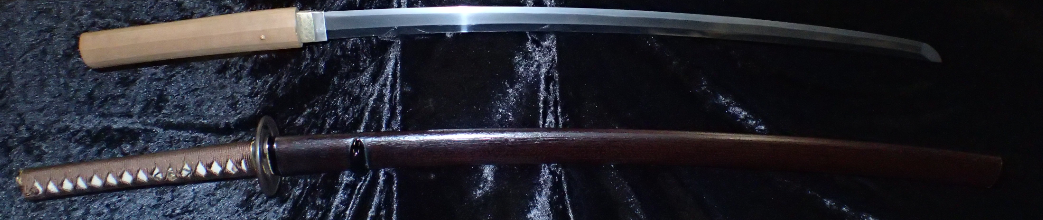
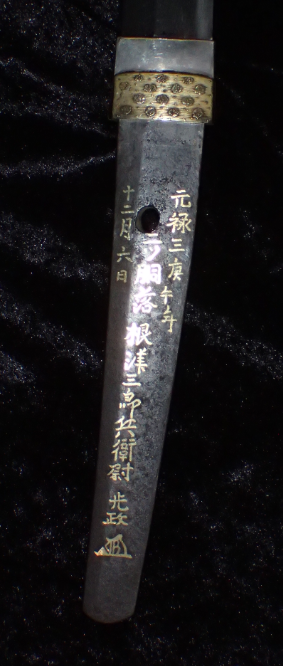
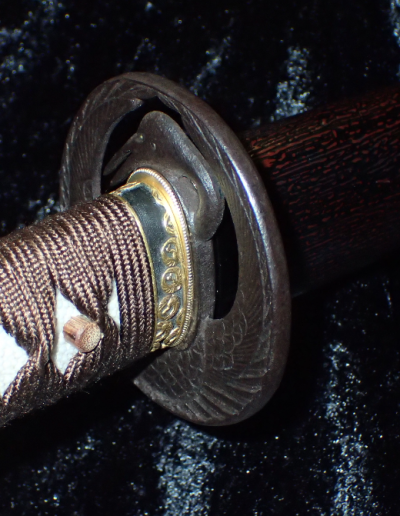
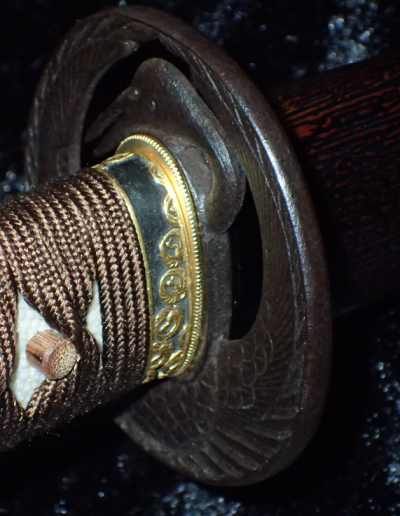








(翻訳なし)
新刀 · 近江 · 1648-1652頃
刀剣大鑑 上位60%
現在2点販売中
新刀 · 近江
現在40点販売中
石堂派は、近江国蒲生郡石堂村の刀工に淵源を有する一門である。慶長から元和・寛永にかけて、これらの刀工は近江よりまず京都へ上り、のちに江戸へ下って一派を成したと伝えられ、これがいわゆる江戸石堂の祖となった。武蔵大掾是一はその祖と称され、日置出羽守光平・常光・越前守宗弘らと共に江戸石堂の名を大いに高めた。中でも対馬守橘常光は、日置を姓とし生国を近江国蒲生郡とする一派の代表工で、従来は光平の兄とされてきたが、年紀作を逆算すると光平の方が六歳年長であり、また常光は橘氏、光平は源氏を名乗っていることから、兄弟であるという通説には疑問がもたれている。一門はやがて各地へ広がり、是一門からは是次が出て九州に活躍し福岡石堂の繁栄をもたらした。紀州にあっては平安城安広が紀州名草郡和歌山に移って作刀し、また備中守橘康広(富田五郎左衛門)が紀州石堂派を代表し、のちに大坂に移って大坂石堂派の始祖となった。河内守康永の門人多々良長幸もまた紀州より大坂に移り、近江には佐々木善四郎一峯らがあって、一派は江戸・大坂・紀州・福岡・近江の各地に系統を伝えた。 石堂派の作風は、御家芸ともいうべき備前伝にあり、映りの立った鍛えに丁子乱れを得意とする点に一貫した特色がある。鍛えは板目つみ、杢・流れ肌を交え、地沸微塵につき、乱れ映りが鮮やかに立つ。刃文は丁子乱れを主調とし、大丁子・頭の丸い丁子・小丁子・互の目・小互の目・尖りごころの刃などを交え、重花丁子・袋丁子をも交えて足・葉よく入り、華やかとなる。常光の作には焼に高低が見られ、焼頭が鎬にかかる程の大出来の丁子を焼くものがあって、古作一文字を髣髴とさせる。安広は互の目・小互の目・箱刃風・尖りごころの刃などを交えて総じて焼高く、棟焼よく入り、金筋・砂流し・沸筋頻りにかかる放胆な焼刃を示す。康広は逆ごころをおびた華やかな丁子乱れを得意とし、長幸は石堂派本来の一文字を狙った丁子乱れの作と、末備前に範をとった腰のひらいた互の目を主調とする作の二様を遺す。総じて匂口の明るく冴える点が、一門諸工に通じる特色である。 評価としては、石堂派は新刀・新々刀の時代にあって備前伝の作風を伝え、丁子乱れの華やかな出来をよく示した点に意義が認められる。常光は焼に高低のある華やかな丁子乱れを焼いて本領を発揮し、その典型作は同工中の優品・最高傑作と称される。安広は長寸・身幅広く重ね厚い堂々たる姿態に放胆な焼刃を加え、新刀を代表する一工としてその技倆が遺憾なく発揮されている。康広は覇気に富んだ作柄を仕上げ、その一口は薩摩国島津家に伝来したものも知られる。長幸は師に優る技量の持主と評され、匂口のふっくらとした出来を遺す。各地に展開しながら備前伝の本領を堅持し、江戸時代初期より長く続いたこの一門は、新刀・新々刀の世にあって備前の作風を伝えた代表的な流派として高く位置づけられている。 詳しく見る →
江戸時代
徳川の泰平のもと、大小は法度の定める身分の制服となり、需要は城下町、とりわけ江戸に集まった。工芸は二つに分かれる。目利きのための華やかな鑑賞の作と、截断の結果を金象嵌に刻む実証の刀である。
刀剣商の出品ページで鑑定書を確認できませんでした。日本刀および刀装具は通常、NBTHK(または NTHK)の鑑定を受けます。鑑定書がない場合、極めは刀剣商の見解にとどまり、第三者による確認は行われていません。ご購入前に刀剣商へ鑑定書の有無をお問い合わせのうえ、慎重にご判断ください。
価格はお問い合わせ