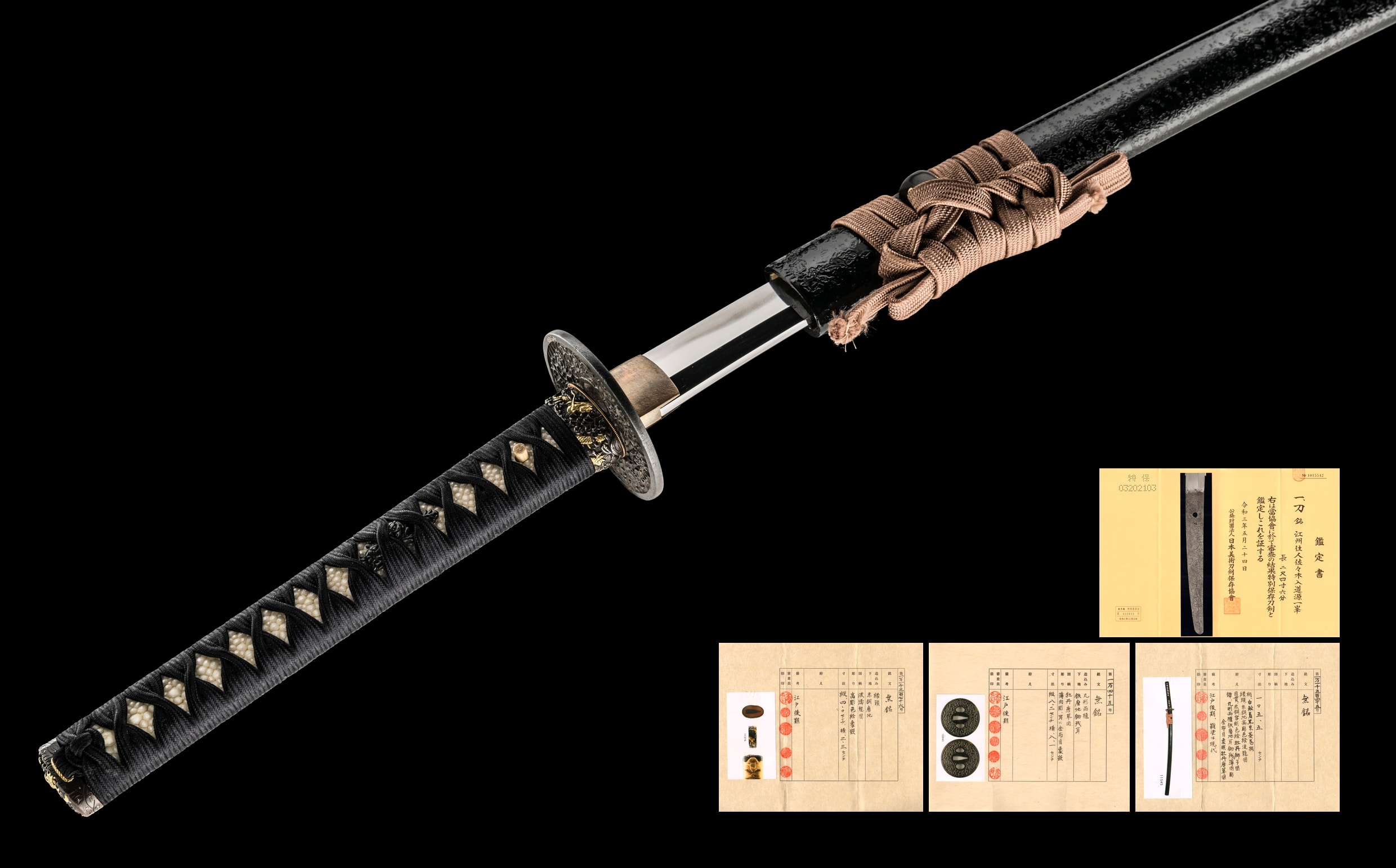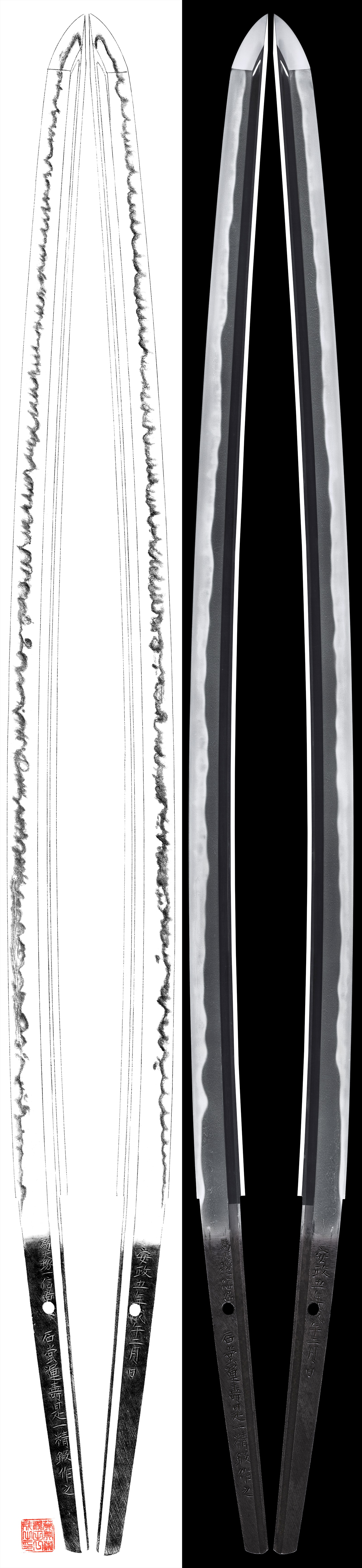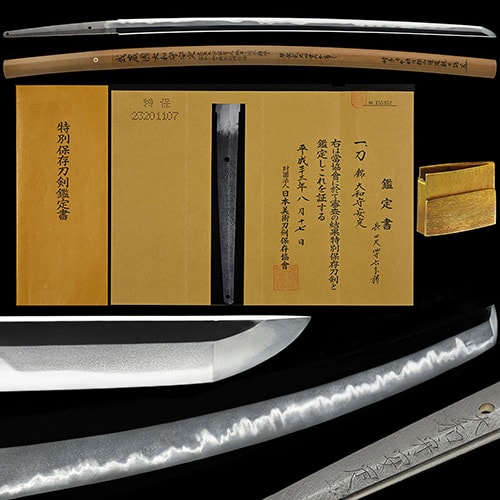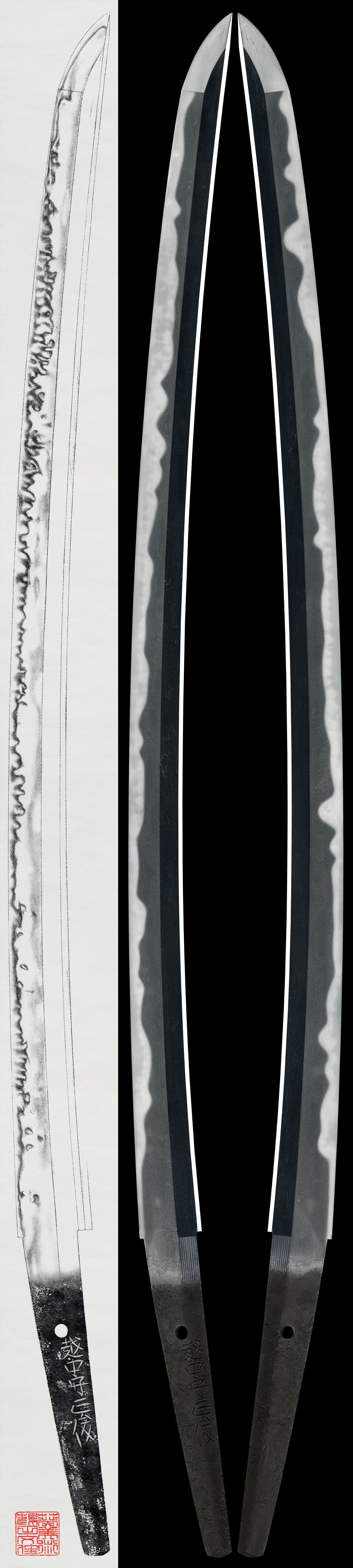
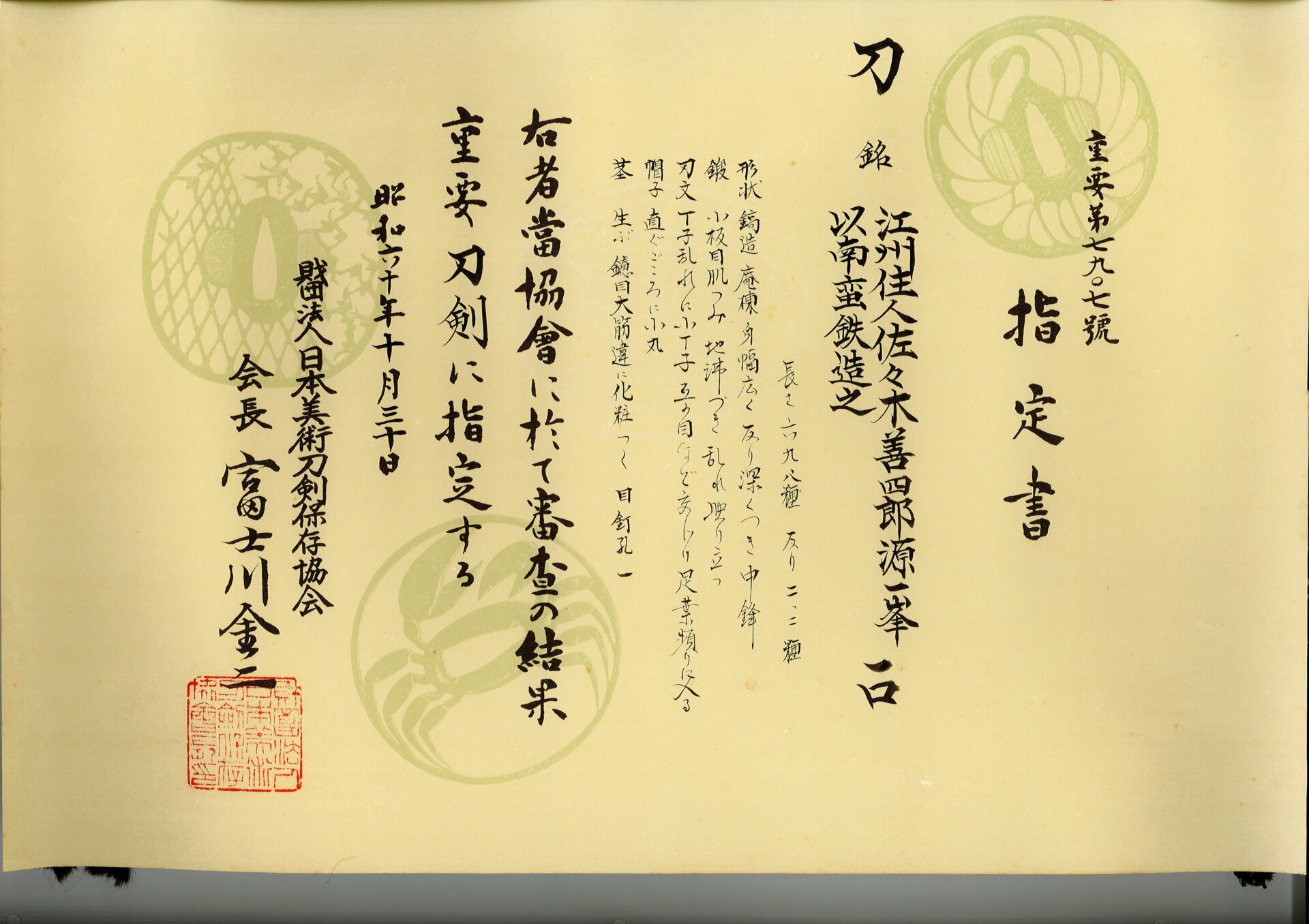
Juyo-Token, 32nd Session — Designated October 30, 1985
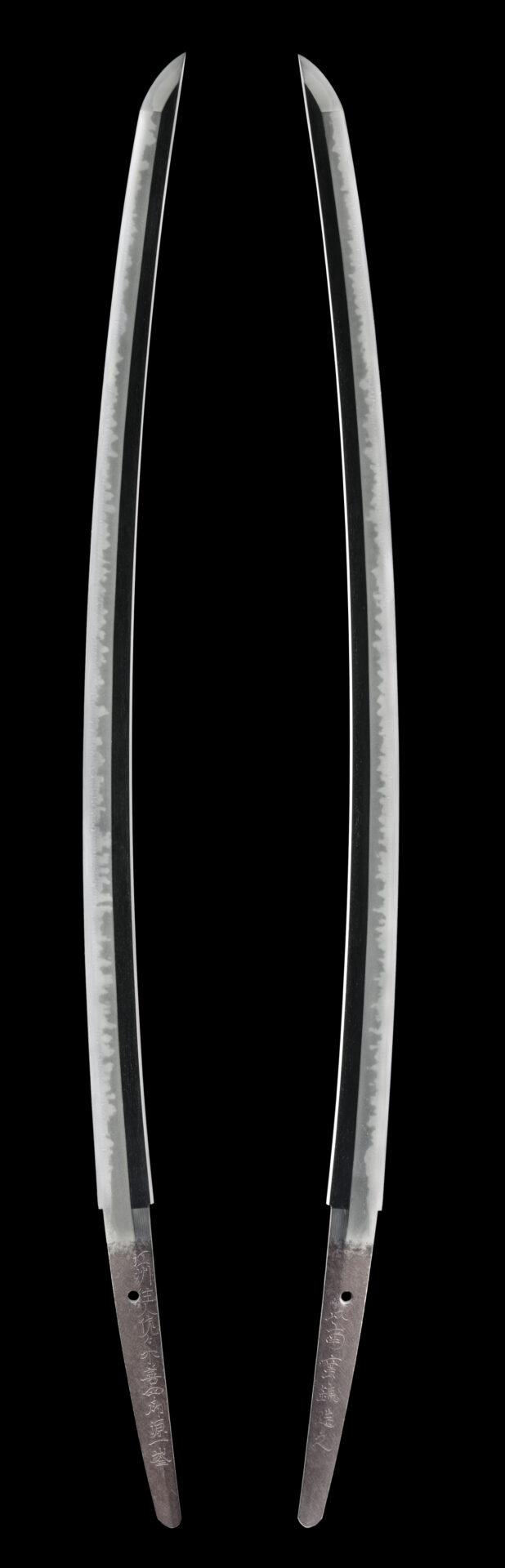
Katana, mei: Sasaki Zenshirō Minamoto Ippō (源一峯)
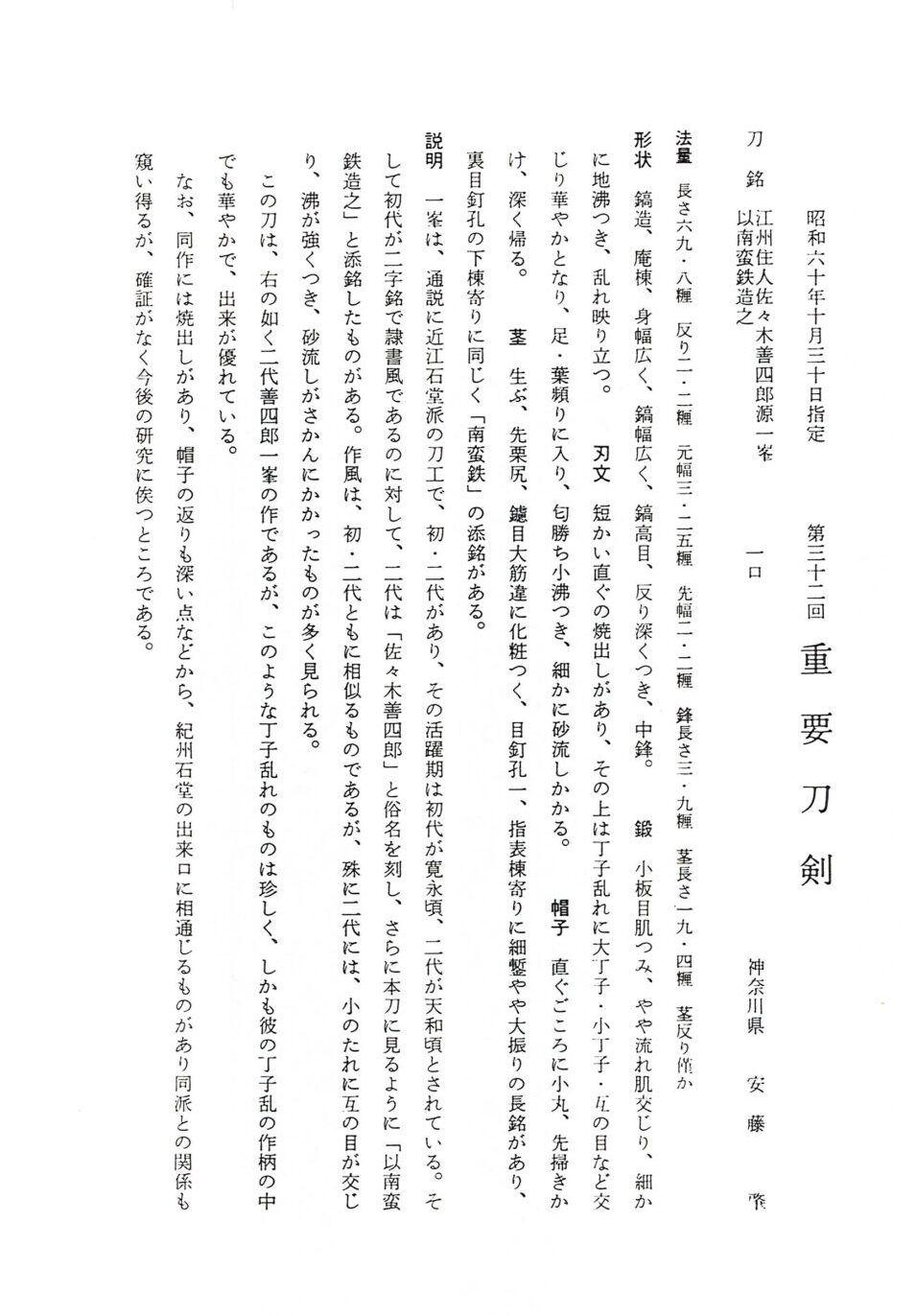
Measurements Nagasa 69.8 cm, sori 2.2 cm, motohaba 3.25 cm, sakihaba 2.2 cm, kissaki-nagasa 3.9 cm, nakago-nagasa 19.4 cm, nakago-sori slight
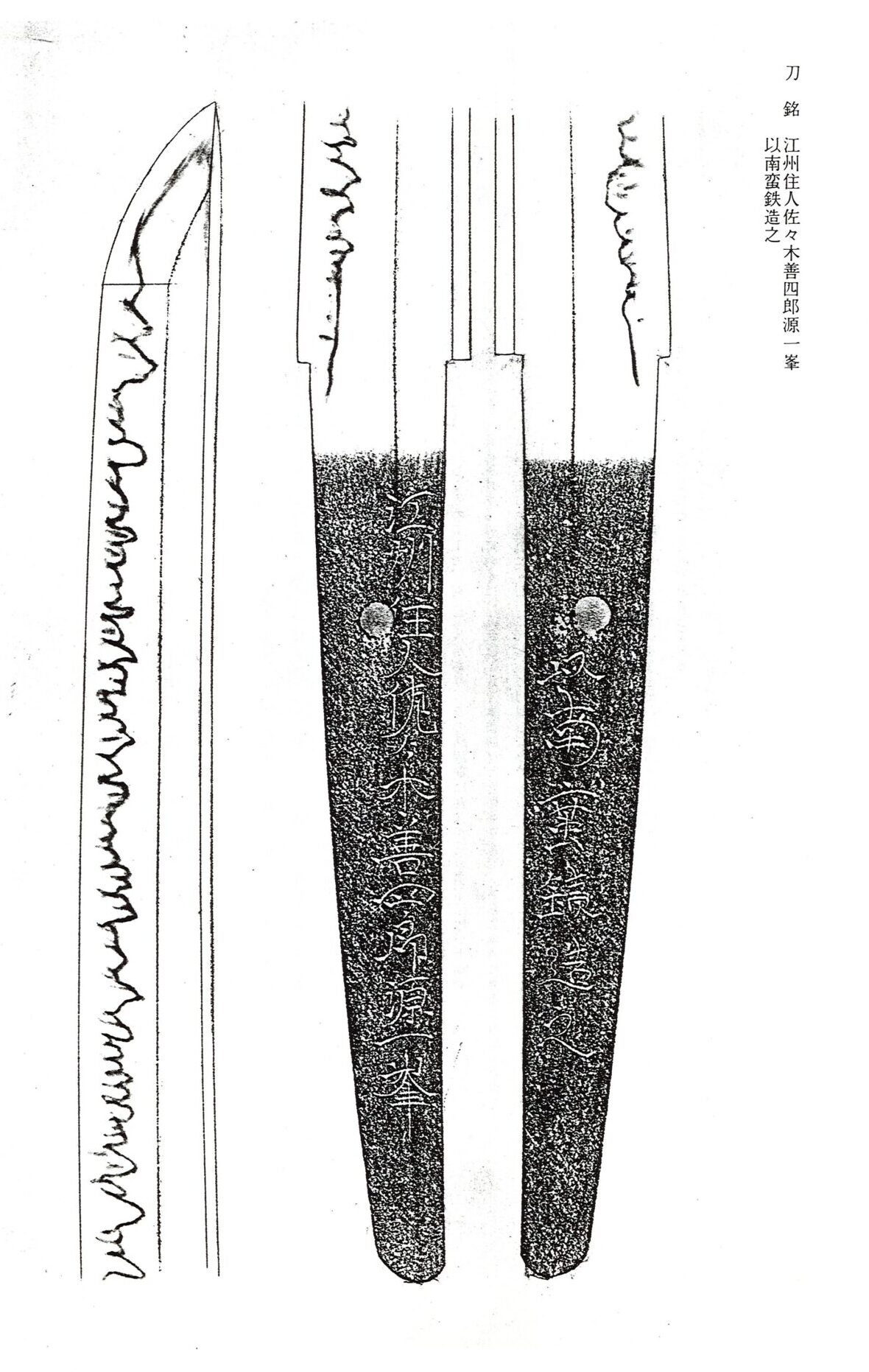
Description Keijo: shinogi-zukuri, iori-mune; wide mihaba with a wide shinogi-ji and rather high shinogi; deep sori; chū-kissaki. Kitae: Dense ko-itame-hada with some nagare-hada mixed in; fine ji-nie; midare-utsuri appears. Hamon: With a short yaki-dashi in straight temper; above that, a flamboyant chōji-midare mixing ō-chōji, ko-chōji, and gunome; ashi and yō enter frequently; nioi-dominant with small nie; fine sunagashi is seen. Boshi: sugu-gokoro with ko-maru; hakikake at the point; turns back deeply. Horimono: None. Nakago: Ubu; kurijiri; ō-sujikai filemarks with kesho finish; one mekugi-ana; on the omote, toward the mune side, a somewhat large, fine-chisel long signature; on the ura, below the mekugi-ana toward the mune side, there is likewise an added inscription reading “Namban-tetsu”.
Artisan Nidai Zenshirō Ippō (Sasaki Zenshirō Minamoto Ippō), Ōmi Ishidō school
Era Early Edo period (conventionally placed around the Tenna era)
Explanation Ippō is generally understood as a swordsmith of the Ōmi Ishidō line, with a shodai and a nidai. Their active periods are commonly given as: the shodai around Kan’ei (1624–1644), and the nidai around Tenna (1681–1684). In contrast to the shodai, who used a two-character signature in a reisho (clerical-script) style, the nidai carved the common name “Sasaki Zenshirō” and, as seen on the present blade, sometimes added the supplementary inscription “I Namban-tetsu kore o tsukuru” (“made this using Namban-tetsu [imported steel]”). While the workmanship of the shodai and nidai is similar overall, works by the nidai in particular are often encountered with small notare mixed with gunome, strongly applied nie, and vigorous sunagashi.
This katana, as described above, is a work of the nidai Zenshirō Ippō. Examples by him in this kind of chōji-midare are rare; moreover, even among his chōji-midare works, this blade is especially brilliant and shows superior workmanship.
In addition, the presence of a yaki-dashi and the deep kaeri in the boshi suggest points of correspondence with characteristic workmanship of the Kishū Ishidō group, allowing one to infer a relationship with that lineage as well. However, since decisive proof is lacking, this remains a matter for future research.