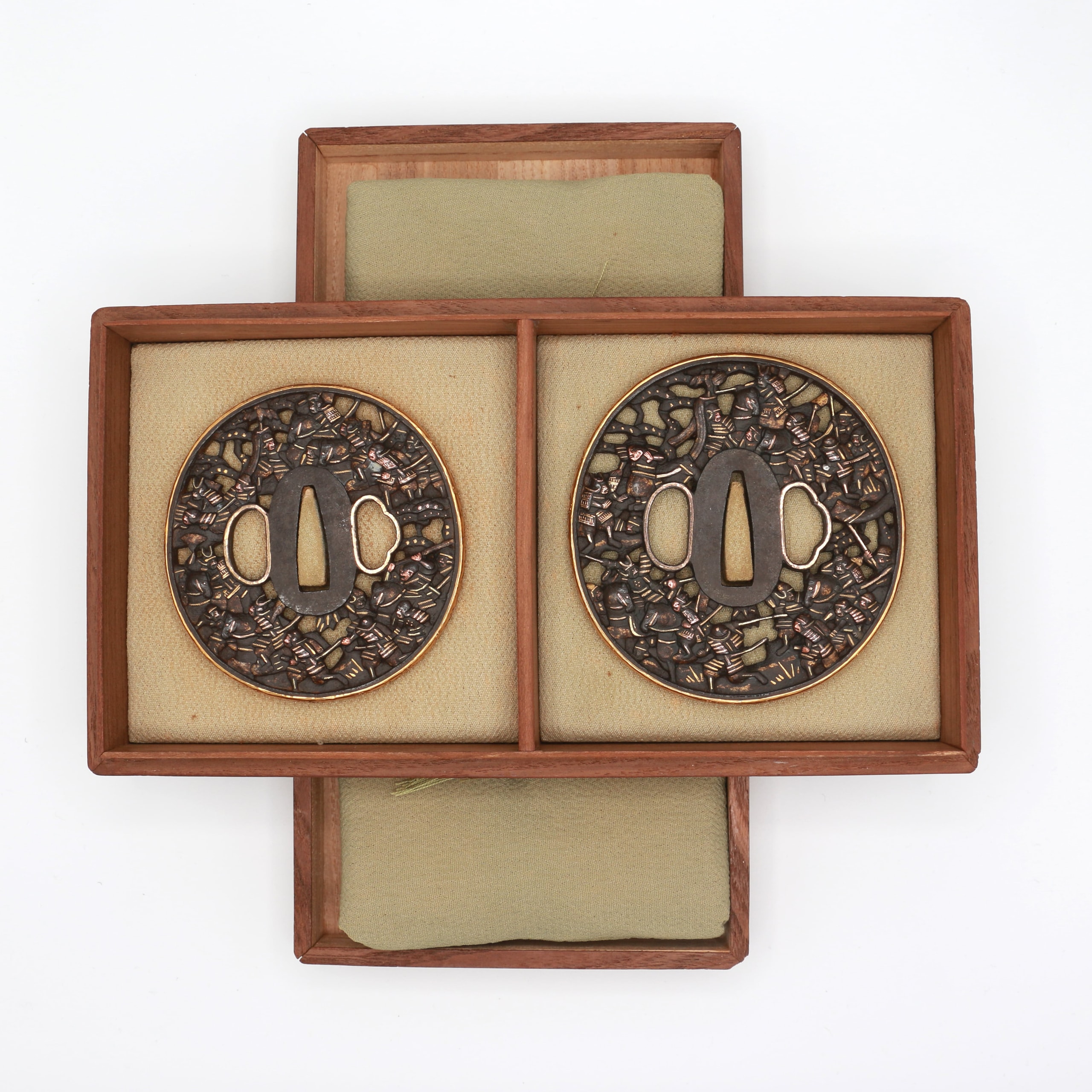
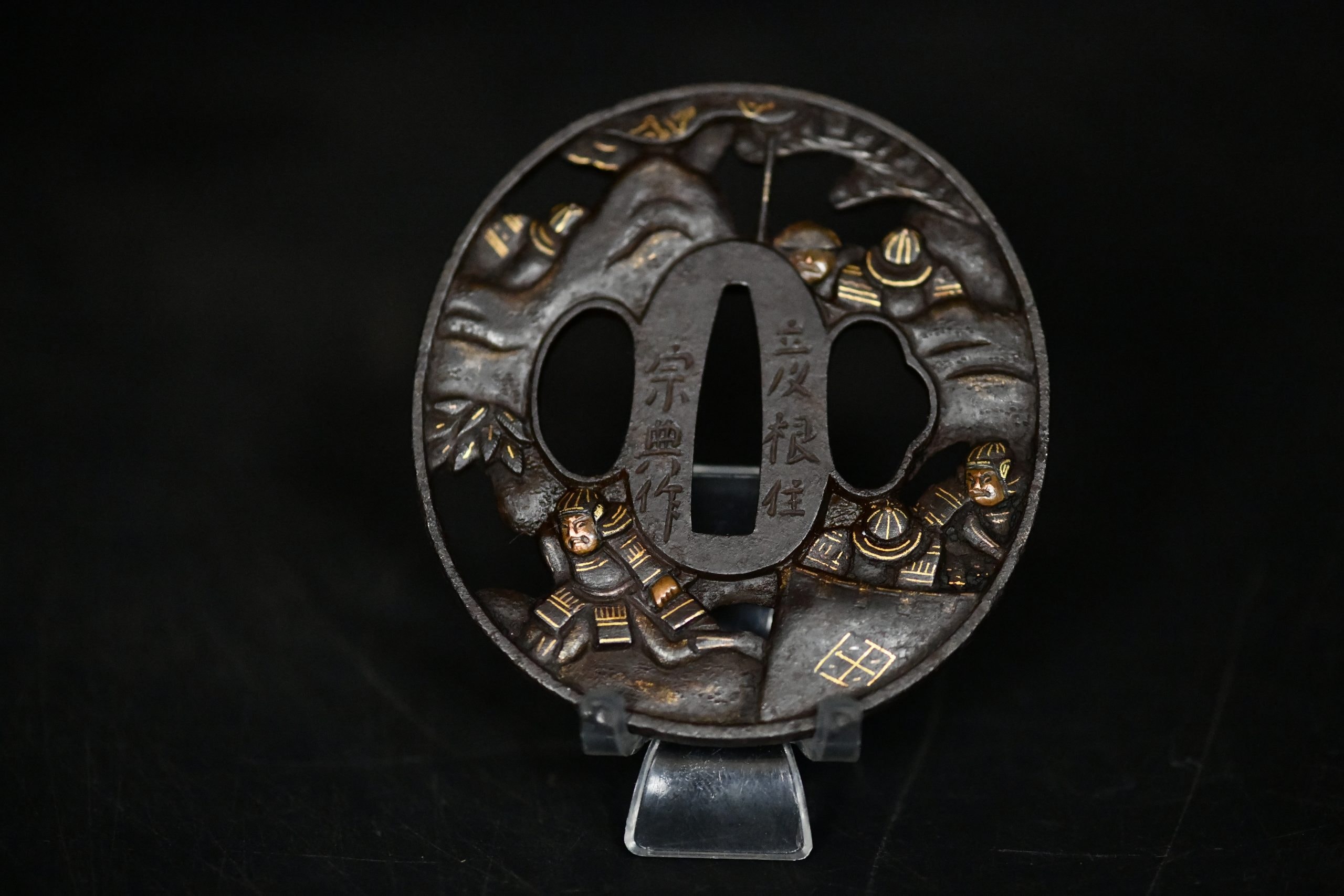
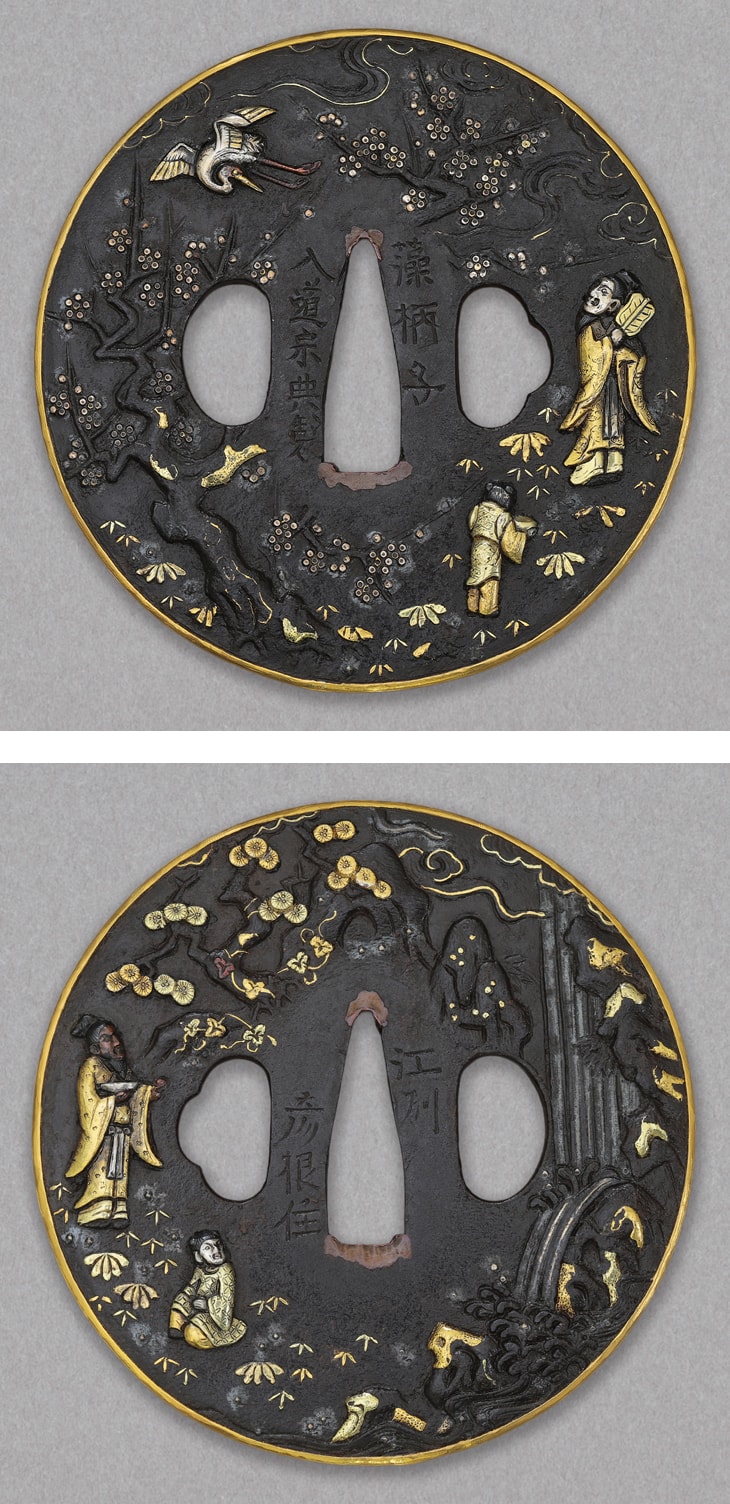
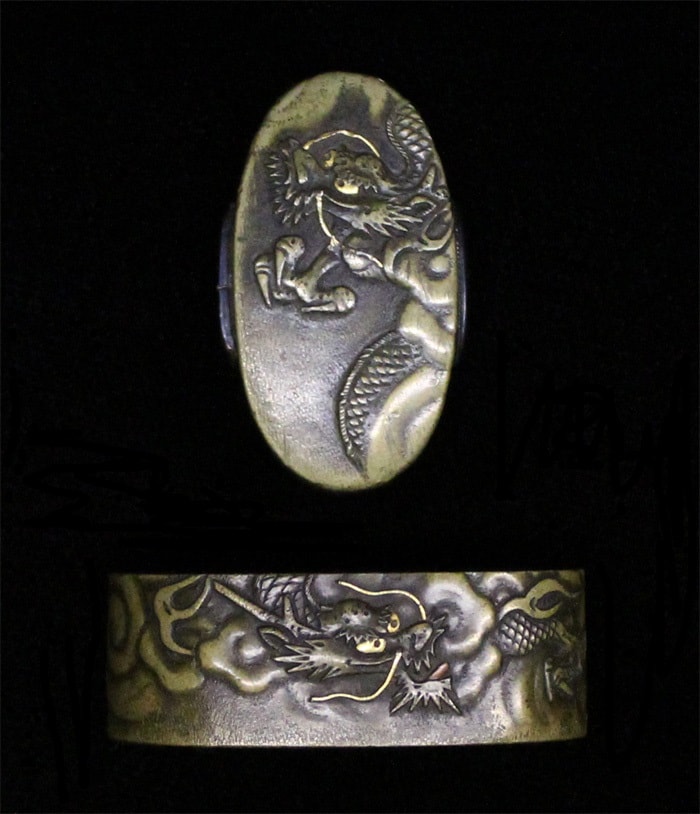
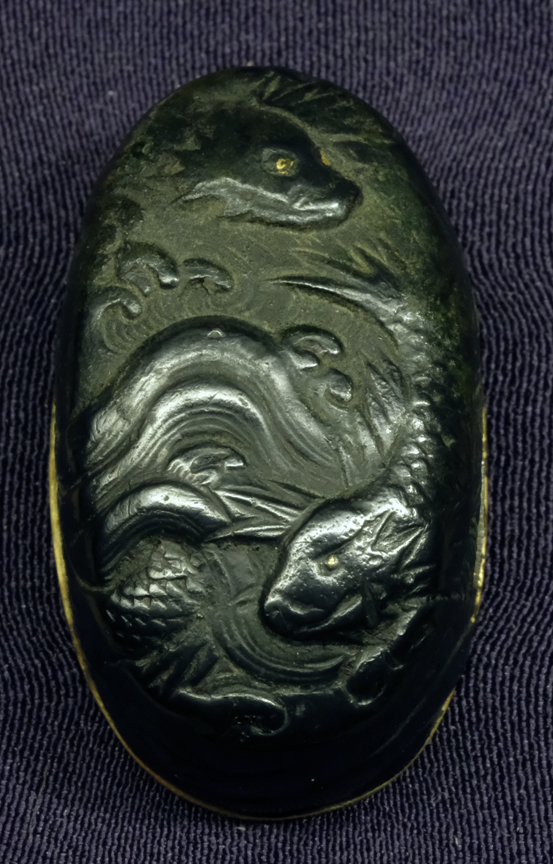
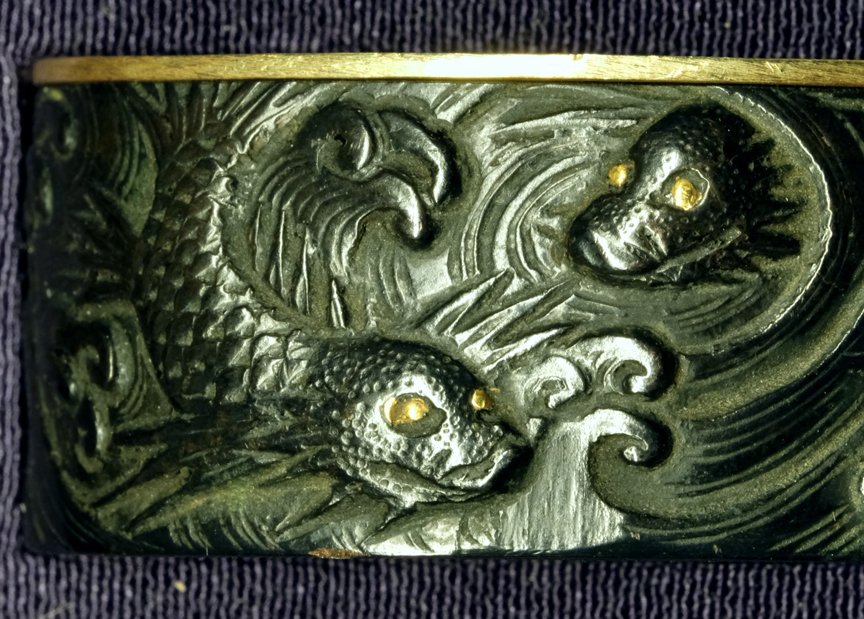
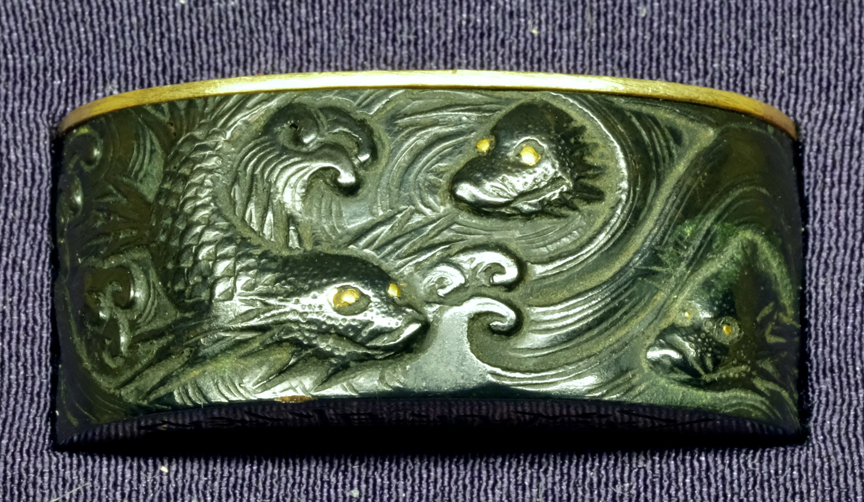
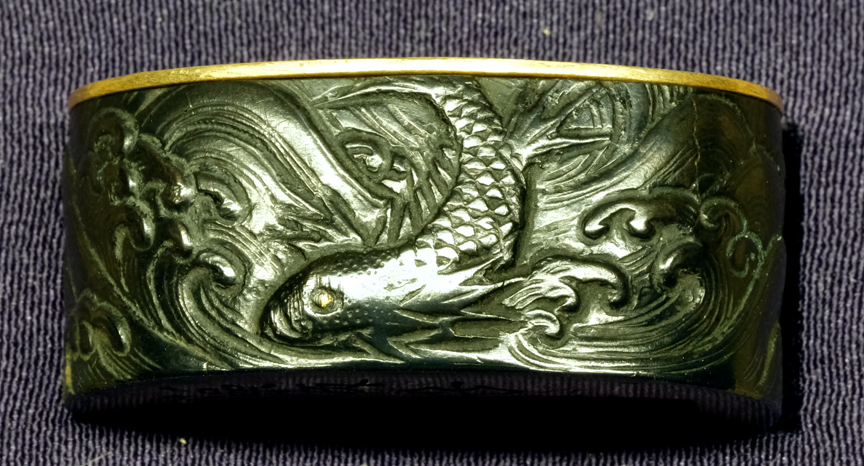
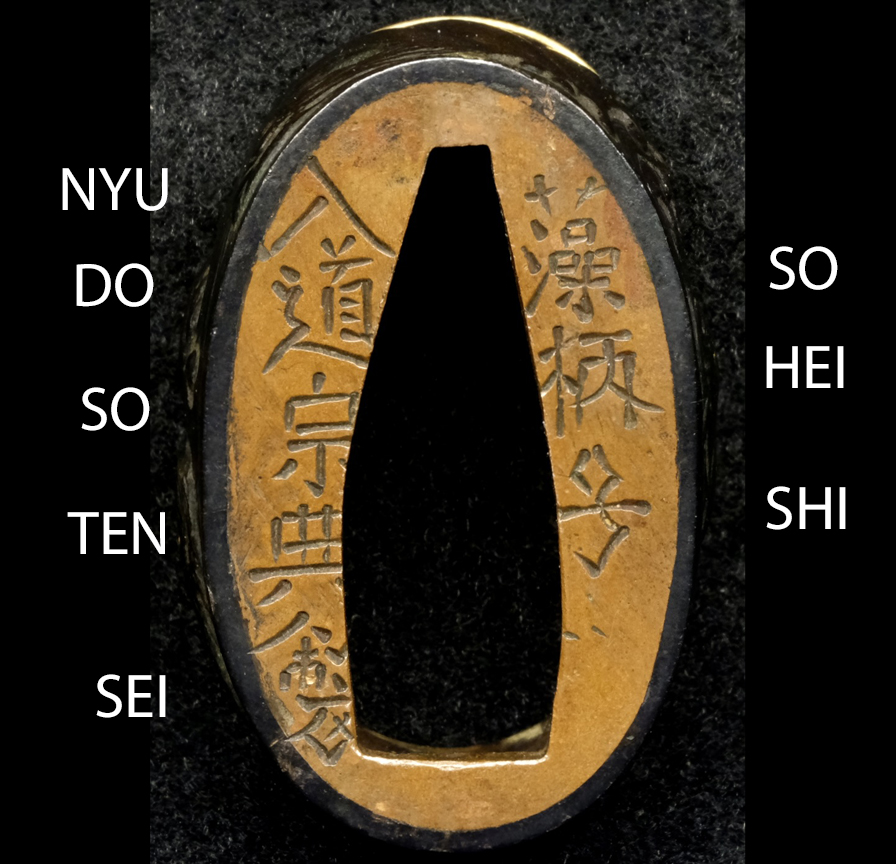
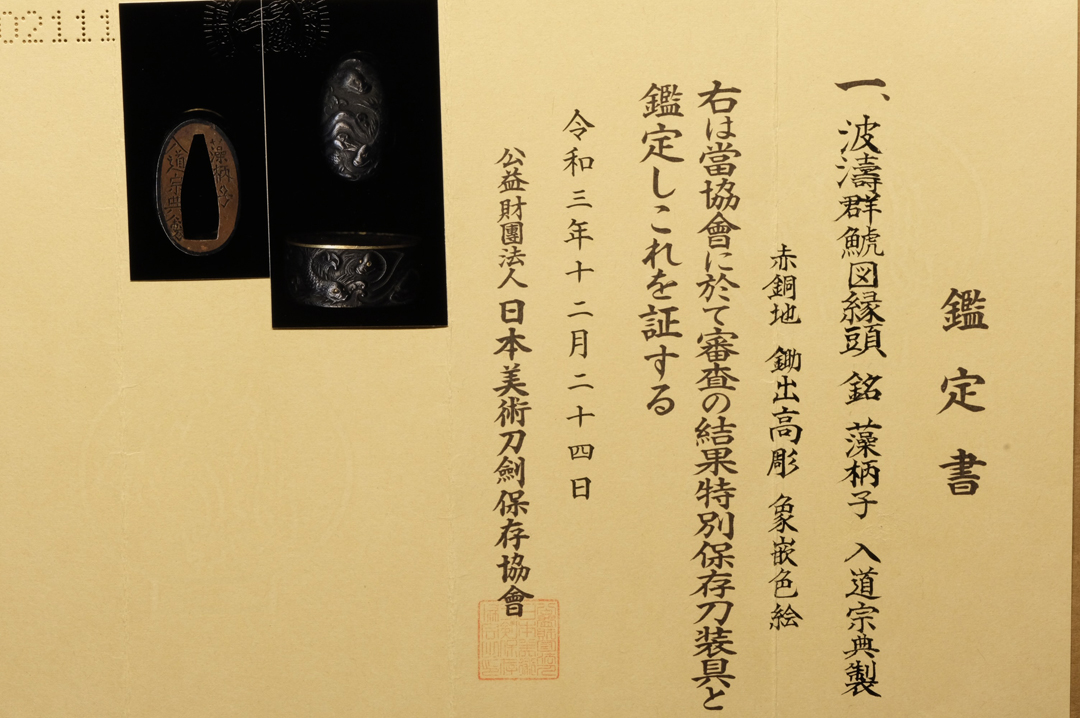
縁頭 / 宗典 / 鯱図 縁頭 大振 宗典 鯱図 日本美術刀剣保存協会(日刀保) 特別保存刀装具 銘:藻柄子入道宗典製 縁:41.3mm x 25.4mm x 19.1mm 中心穴:30.2mm x 9.5mm 頭:38.1mm x 22.2mm ― 宗典派の歴史(マルクス・セスコ著『刀装金工事典』より抜粋) ― 宗典派は一般に、鉄地を主とする「鐔工」に分類されますが、色金(軟質金属)を用いた作品も多く、その作域の広さと多産さから、ここで改めて紹介いたします。 宗典派の祖は、京都八幡町に住した喜多川善五郎(「喜多河」とも記される)です。『装剣奇賞』などの古文献によれば、当初は「秀典」と名乗り、後に近江国彦根の中敷に移り「宗典」と改めたとされています。ただし、秀典と宗典が同一人物であるかについては諸説あります。今日では、当初は職名として「宗典(むねのり)」と名乗り、後に隠居して入道号として「宗典(そうてん)」と称したと考えられています。 鉄地に透かしを入れ、細密な人物像に金色絵を施す宗典特有の様式は「彦根彫」として全国にその名を轟かせ、江戸時代を通じて絶大な人気を博しました。その人気の高さゆえ、当時から多くの模造品や写しが作られることとなりました。また、後代や門人の作には細部の緻密さに欠けるものも見受けられることから、近年の文献では宗典派全体の評価が控えめになされる傾向にあります。 なお、「藻柄子(もがらし/そうへいし)」という号は、おそらく直系の門人や喜多川家の一族によって用いられたものです。銘鑑には二代宗典までの記載がありますが、初代と二代の作風を判別することは事実上困難とされています。
 NihontoWatch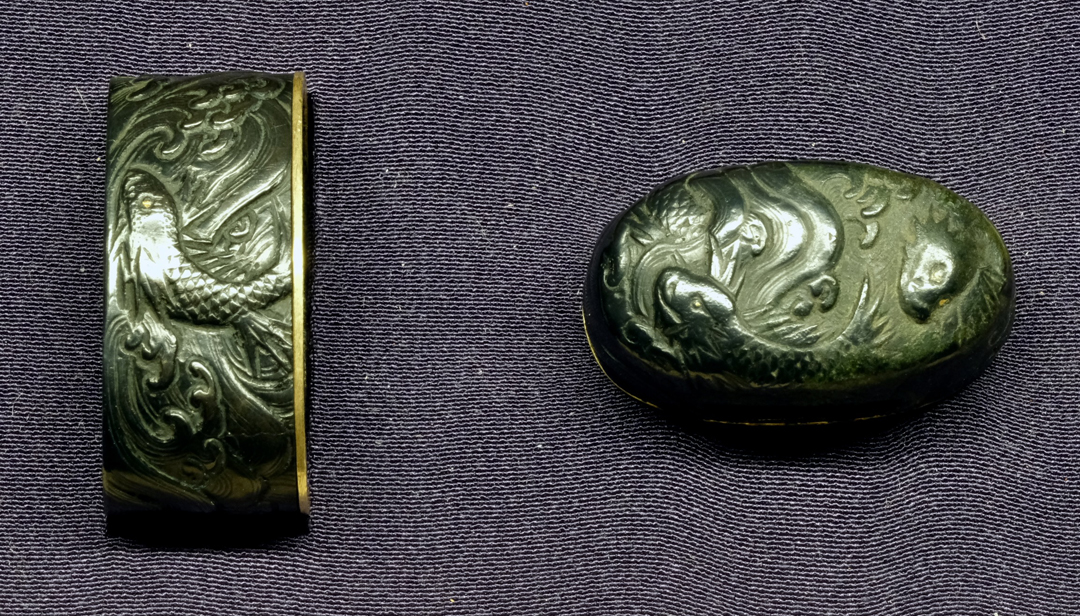
Soten
江戸
在銘
特別保存 (NBTHK)
金工 · 近江
現在34点販売中
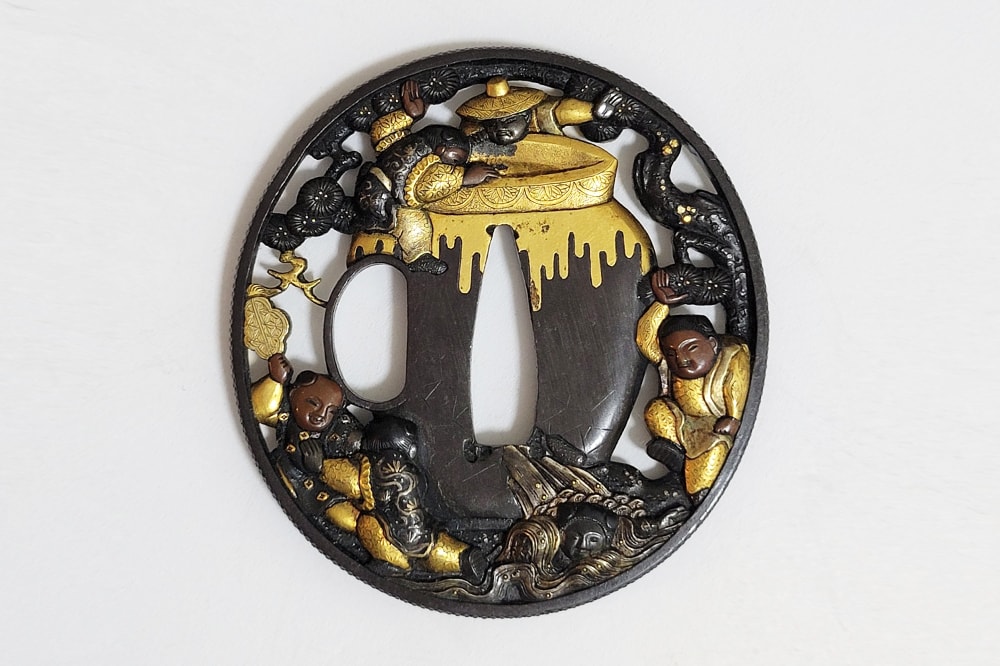
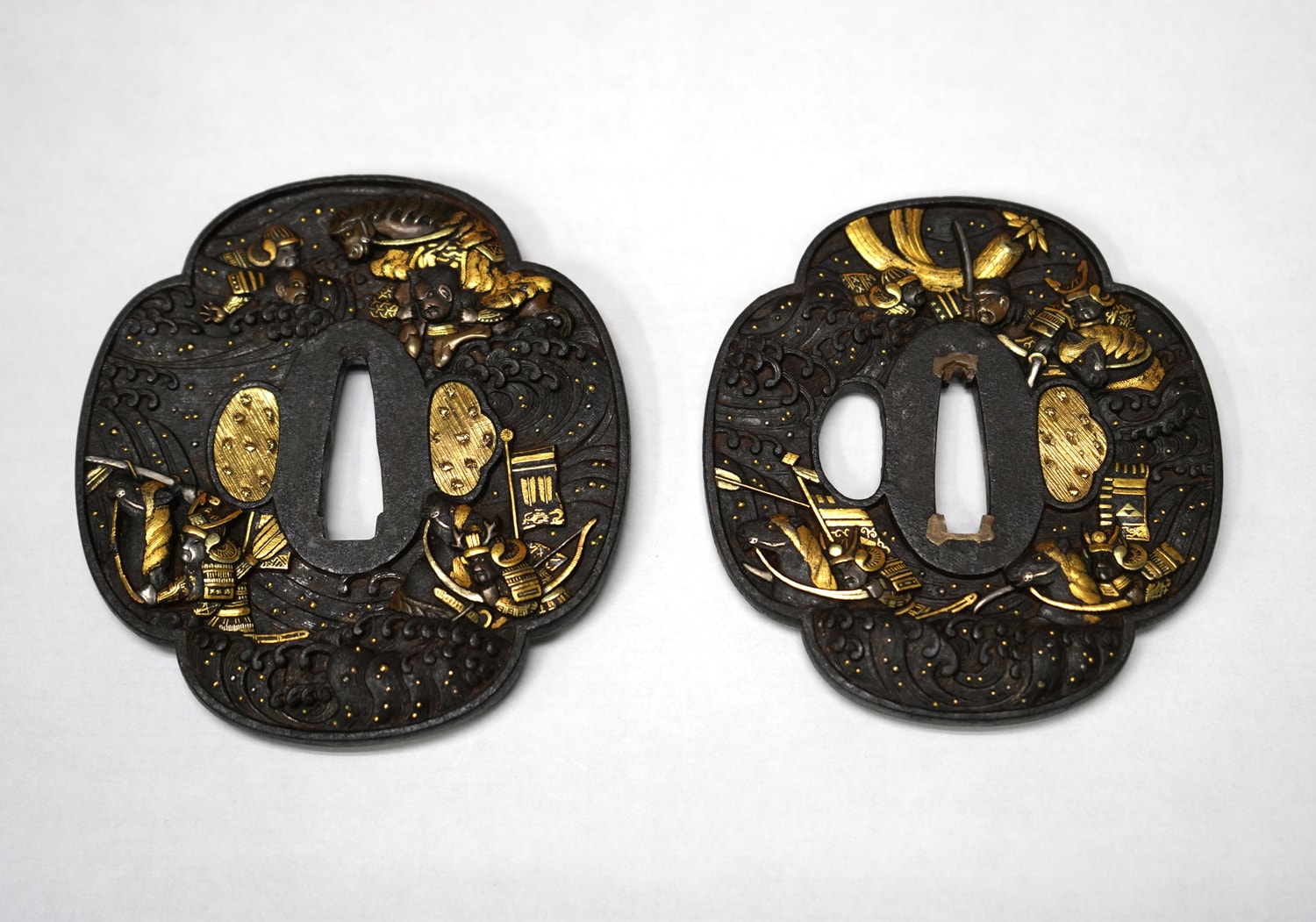
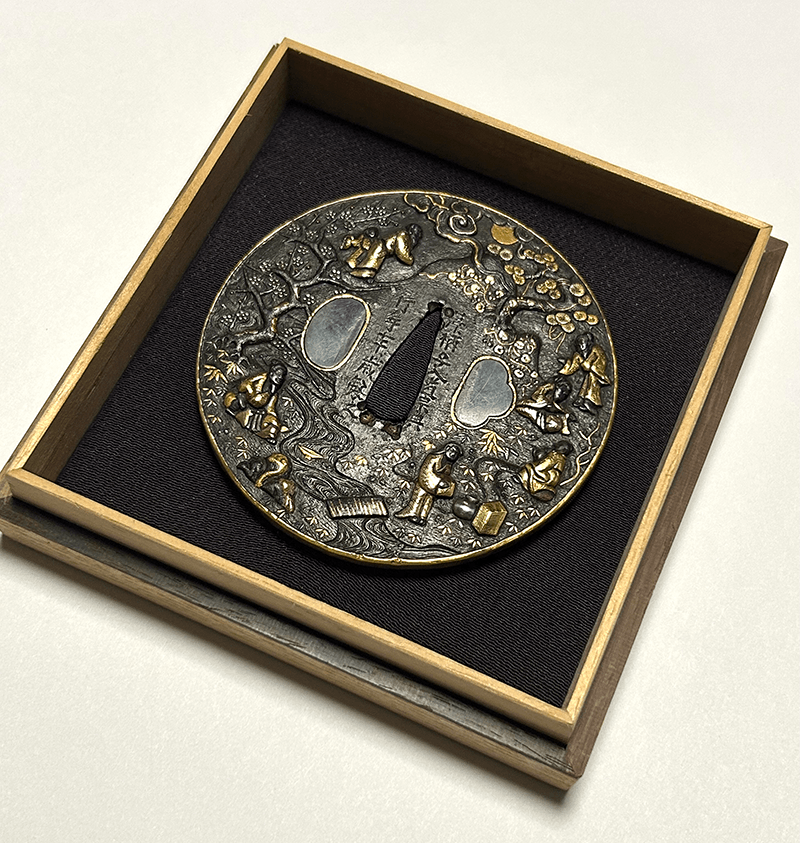
彦根派は、近江国彦根に興った刀装具の一流派であり、その彫法は世に彦根彫の名をもって知られる。開祖は藻柄子入道宗典で、『装剣奇賞』によれば元来は京都の出身と伝えられ、後に江州彦根に移住して彦根彫の祖となったという。彦根御家中川北氏の抱え工となり、氏を喜多川(喜多河)と改め、初銘を秀典と称した。同名二代があるといい、現存する行年紀作などから初代は承応元年に生まれたことが知られ、その活躍期は江戸時代前期から中期にかけてである。美濃彫の流れを汲むとも伝えられ、作風に後藤風、美濃風が見られるとする見解もある。宗典の門からは野村包教をはじめとする有力な作者が輩出し、包教は宗典門第一の上手と称され、同派の有力な分派として独自の地位を確立した。 作風は、鉄地または赤銅魚子地を用い、鋤出高彫に金・銀・赤銅・素銅などの各種の色金を駆使した象嵌色絵をもって飾るものが多い。たっぷりとした地の表裏画面一杯に主題を肉置き豊かな高彫で表し、各種の色金にかつ金の種類をも複数使用して、壮大な画面に仕立てる点に大きな特色がある。題材は武者、竹林の七賢、花鳥、藻貝尽くし、唐人物、群仙図、十二支など多岐にわたり、また『源氏物語』の「明石」や『小督』の物語に取材した作例も見られる。賑やかに華やかに展開する様はまさに宗典の真骨頂であり、その彫口はおおらかでゆったりとしており、観る者を幽玄の世界に誘うと評される。包教もまた、大胆な構成力と繊細な色がね象嵌をもって画面を広く使い物語を演出し、師の作風を継承しつつ独自の魅力を加えた。 彦根派の作は、その濃密な彫法によって名を馳せ、宗典は代表工として多くの鐔好きを魅了した。ともすれば賑々しい鐔は行き過ぎの感を否めないこともあるが、宗典の手にかかると不思議と行き過ぎ感がないばかりか、品格をも兼ね備えた豪華な優鐔となる。包教の作もまた、師である宗典の傑作に勝るとも劣らない出来と評され、その白眉と見られる一枚も伝えられている。一方、宗典の名はあまりにも有名であったために、後代の彦根彫の作品に宗典の刻銘が多用され、土産物といわれる粗悪な作品にまで刻銘されているのが現実である。それゆえ真作においては、賑々しい作柄に品格を兼ね備えた豪華な優鐔が多く、行年銘が貴重であり、保存状態が良いことも好ましい評価の点とされる。 詳しく見る →
保存刀装具のうち、出来・保存状態が一層優れ、銘文や作風に資料的価値の高いものと認められたものです。
日本美術刀剣保存協会(NBTHK)は、1948年に設立され、文化庁の監督を受ける公益財団法人で、東京・刀剣博物館に本部を置きます。専門の審査員が出品作を直接審査し、美術的・歴史的価値に応じた鑑定書を発行します。NBTHKの鑑定書は、日本刀および刀装具の真正性を示す最も広く認知された基準です。
NBTHK公式サイトAll swords sold for $5000 USD or less are considered final! Swords above the $5000 range may be returned for any reason within 48 hrs. Buyer will receive a full refund minus shipping/handling, insurance and or any fees incurred in shipping or sale.