Nomura Kanenori, also known as Saburoji and Saburobei, worked under the go 'eishi and was a resident of Nakayabu in Hikone, Omi Province. He studied under Mogarashi Soten and is regarded as the foremost master among Soten's students, constituting one of the most influential branches of the Mogarashi lineage. Although said to have lived in , no works bearing an -resident signature are known; all signed pieces instead append the place-name "Resident of Hikone in Goshu" to the inscription. While his birth and death dates are unknown, dated works from the Kyoho era (1721-1724) allow his period of activity in the mid- period to be understood with reasonable clarity.
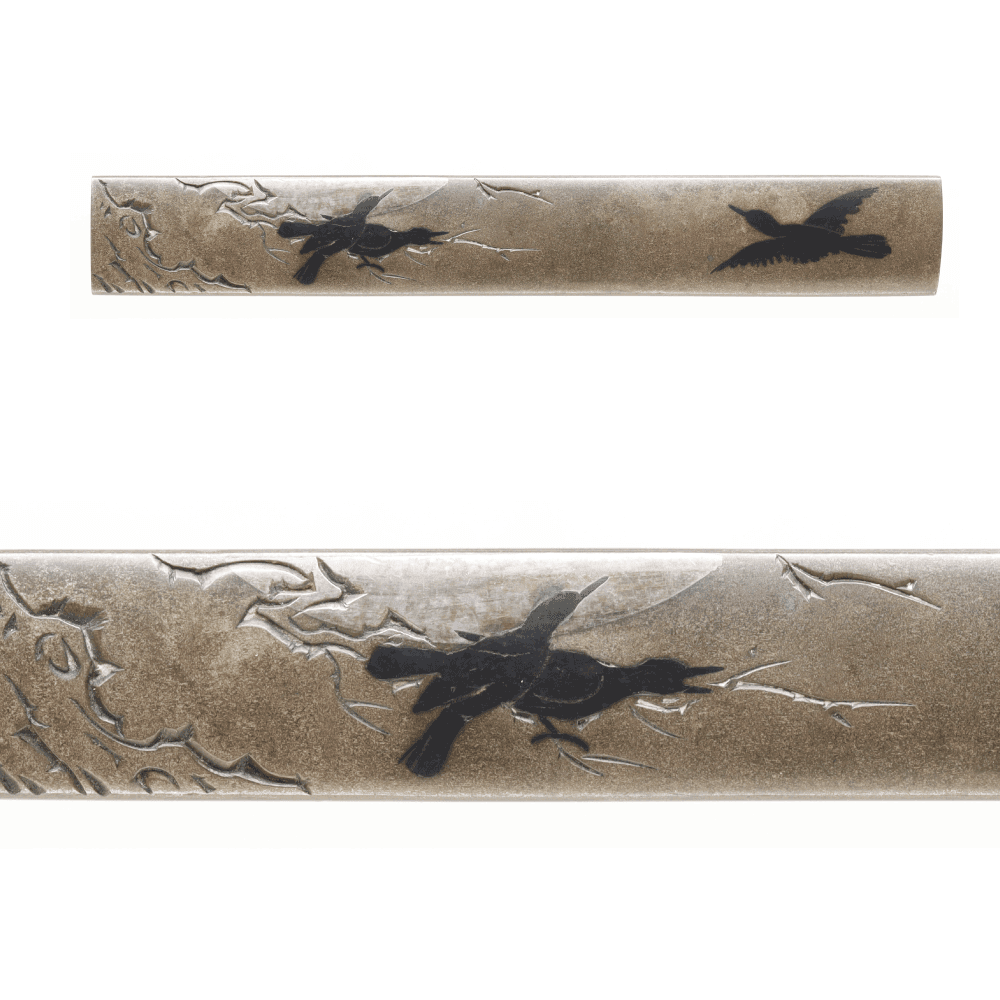
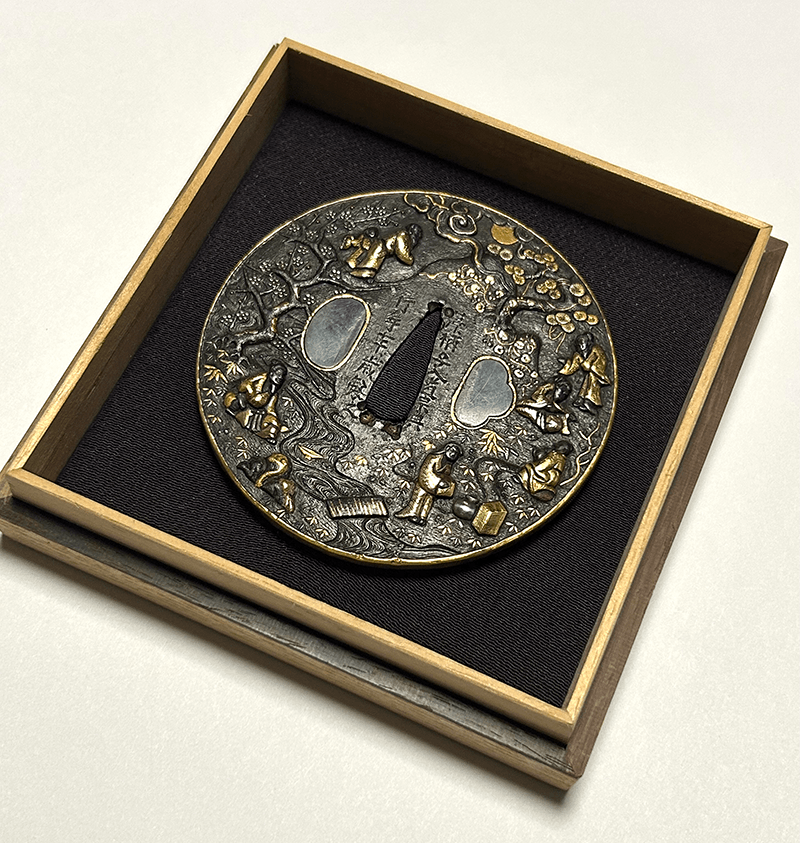
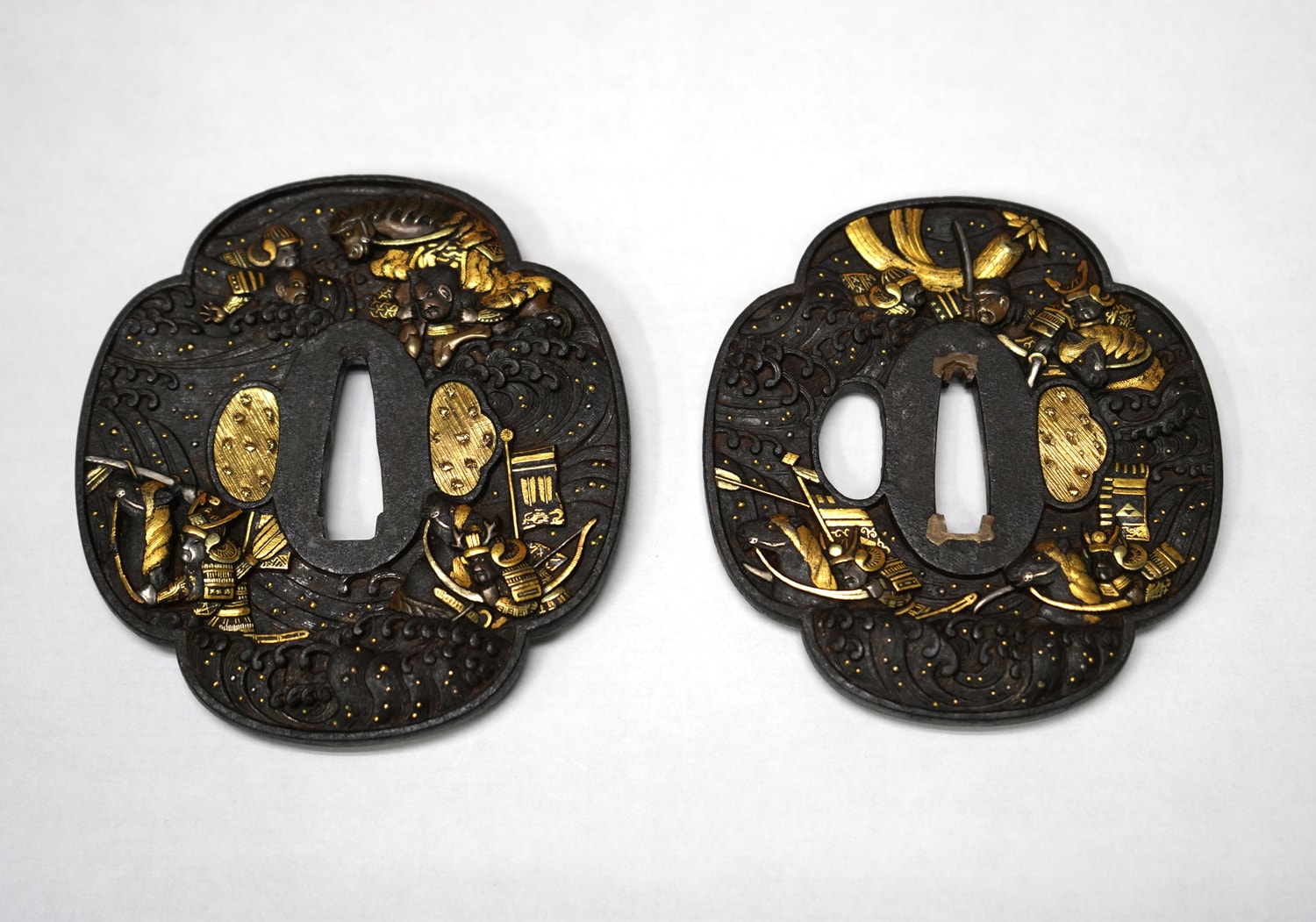
Kanenori produced both and , working in iron and with grounds. His manner of work aligns with that of the Mogarashi group, yet his carving is notably "open and unforced--spacious and leisurely," drawing the viewer into a world of subtle profundity. The consistently emphasizes his "bold compositional power, together with the exquisitely delicate multi-metal inlay," noting that this combination of imposing scale and refined polychrome with effects "fully conveys the distinctive appeal unique to Kanenori." His and nikubori techniques are deployed across ambitious narrative compositions drawn from classical literary and mythological subjects, rendered on generously proportioned guards that serve as broad stages for the unfolding of their themes.
Kanenori's significance within the Mogarashi tradition is affirmed in language that places him at the summit of Soten's school. His workmanship is judged "in no way inferior to the masterworks of his teacher Soten," and his finest pieces are designated --literally "the white eyebrow," the preeminent work among his oeuvre. The further notes that his manner recalls the early Mogarashi masterpieces of such contemporaries as Hidenori and Munenori, while additionally presenting "a sternly dignified bearing" that distinguishes his personal idiom within the broader lineage.