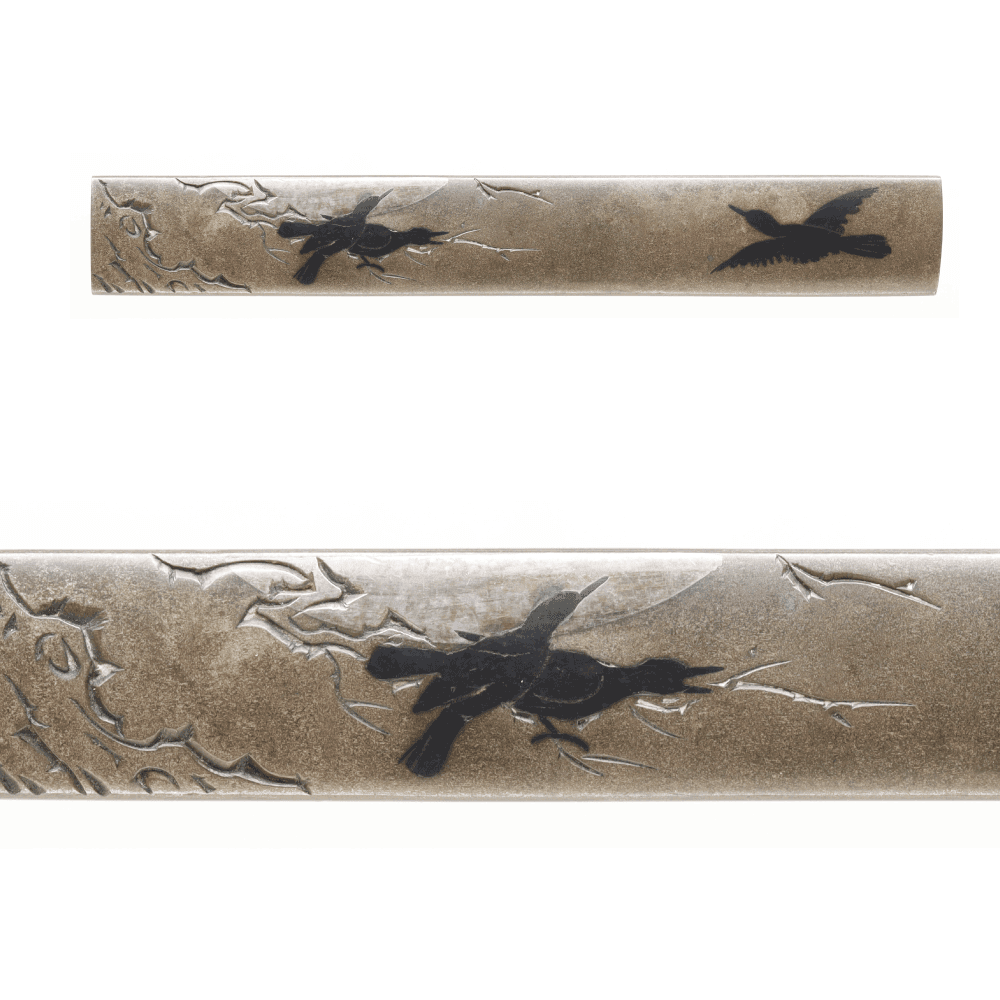
Mogarashi Nyudo Soten, also known by the surname Kitagawa, was originally from Kyoto and later settled at Nakayabu in Hikone, Omi Province. According to the Kisho, he became a retained craftsman of the Kawakita family, a hereditary vassal house of the Hikone domain, and thereupon adopted the Kitagawa surname. His earliest signature name is recorded as Hidenori, and one source states that he initially trained under the Goto family, citing the Kinko Soran for the existence of works signed "made by Kitagawa Hidenori, a disciple of the Goto." He is regarded as the founder of the distinctive carving manner known as Hikone-bori, and his lineage is connected to the traditions of . There were reportedly two generations using the name; from extant works bearing age inscriptions, it is known that the first generation was born in Joo 1 (1652), with a period of activity spanning from the early through the mid- period.
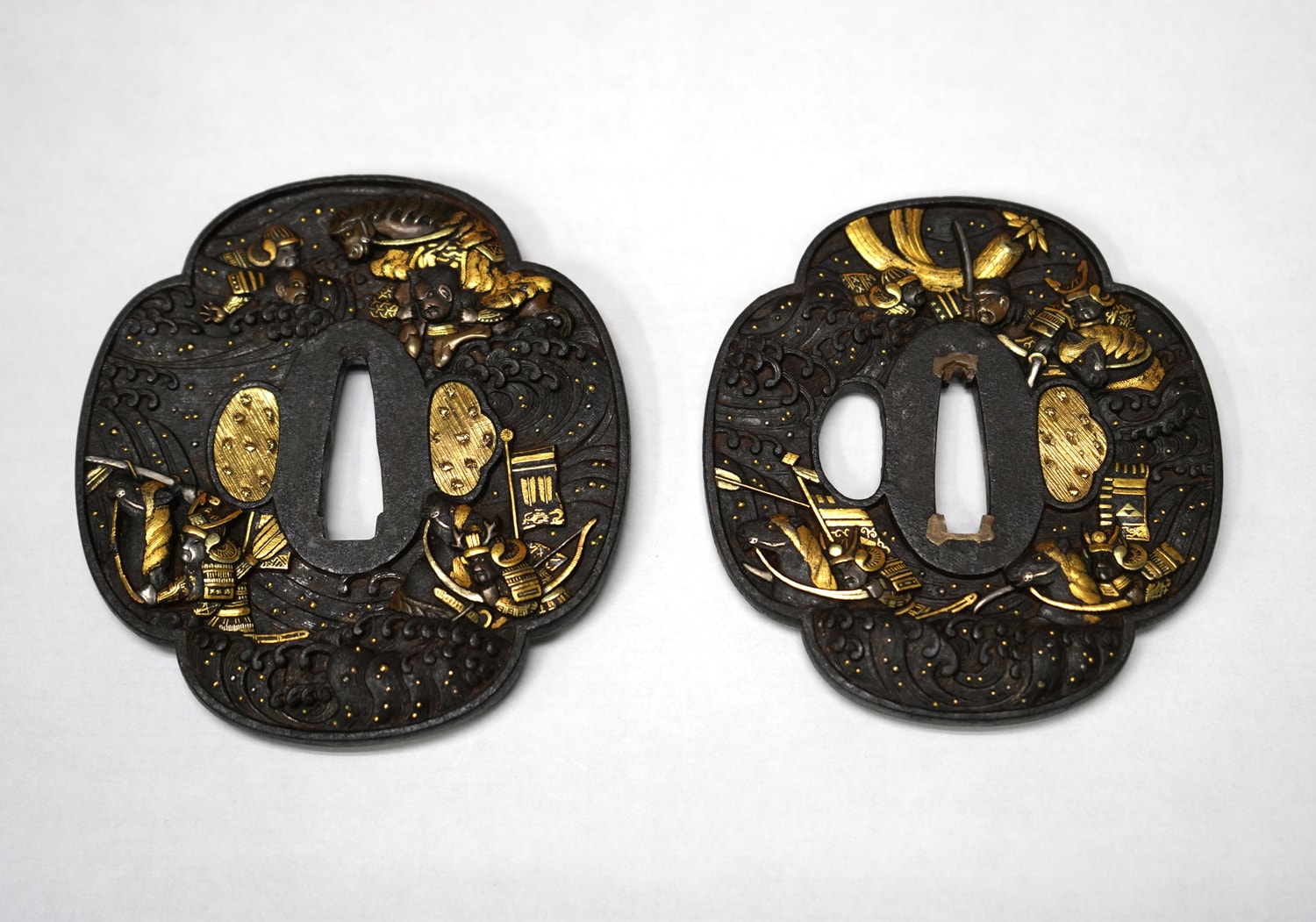
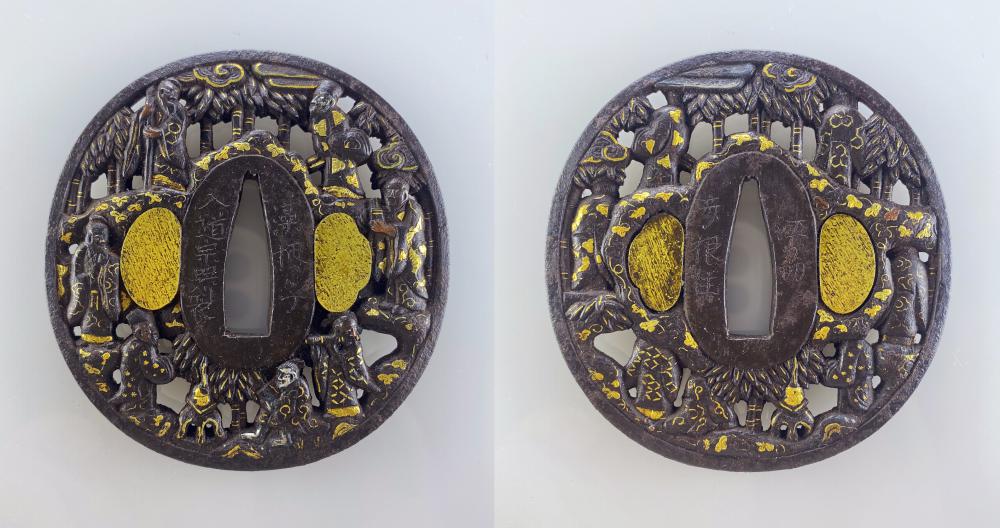
Soten's characteristic technique is -- richly modeled high-relief carving executed on generously proportioned iron plates, further enlivened through employing gold, silver, , and . The notes that even among the gold applications, "multiple types of gold are used," producing expansive pictorial fields of considerable chromatic variety. His subjects encompass warriors, Daoist immortals, elder sages at elegant gatherings, and flowers-and-birds compositions, rendered across the entirety of both surfaces. Alongside these iron works, the recognizes that "many fine works are to be found" among his pieces, including plates with high-relief seaweed-and-shell or wave-ground compositions that display a pronounced Goto-like flavor.
The 's evaluative language for Soten converges on a single defining quality: a "bustling and brilliant unfolding" that constitutes "precisely what S\u014dten excelled at." This animated, celebratory manner is repeatedly described as the artist's "distinctive forte" and "particular strength," one that "has long captivated connoisseurs" and "attracted many admirers." Crucially, when executed by Soten's own hand, this profusion is "remarkably free of any sense of overstatement," achieving instead what the terms "true dignity." The handling of the chisel is characterized as "broad-minded and unhurried," drawing the viewer into a world of yugen. Because of his overwhelming fame, later makers frequently adopted his signature on subsequent Hikone-carved works -- a testament to the enduring authority of his name, and a reminder that authentic examples, with their grand pictorial construction and superb preservation, occupy a position of singular distinction within the tradition.