室町は刀剣業を産業に変えた。徒歩の集団戦とともに打刀が興り、長船と関は数打ち物と注文打ちを並行して産し、勘合貿易は日本刀を数万振の単位で海外へ運んだ。
 NihontoWatchNihontoWatch
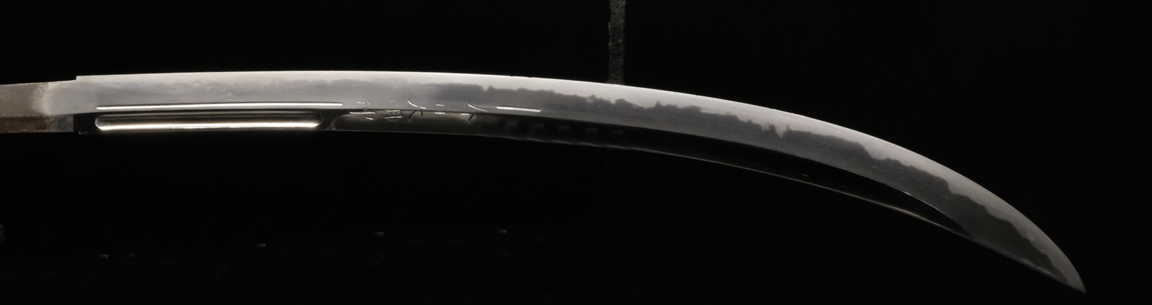
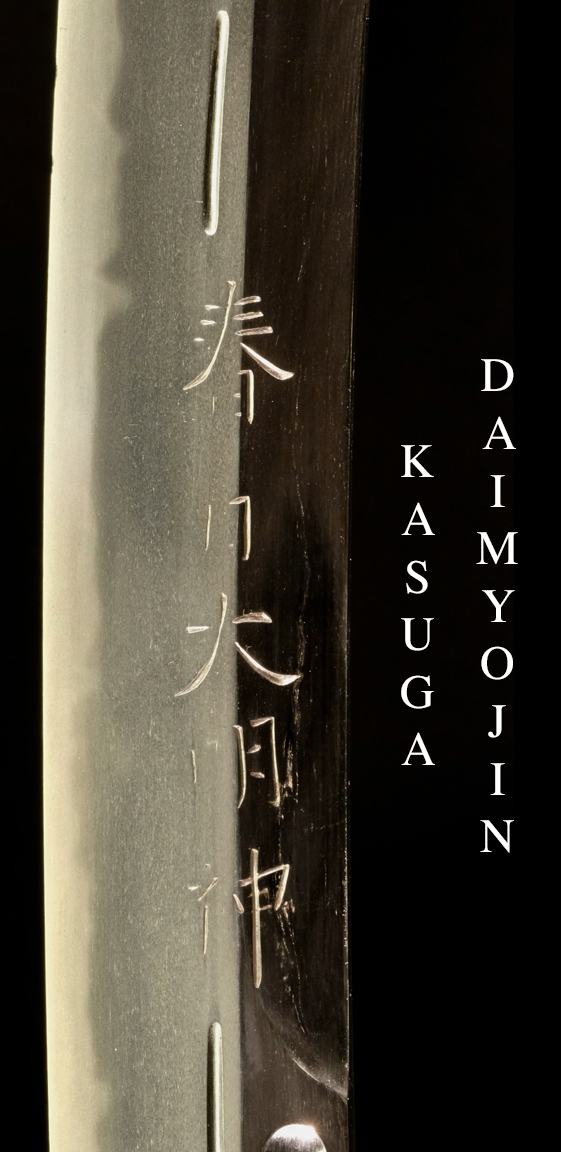
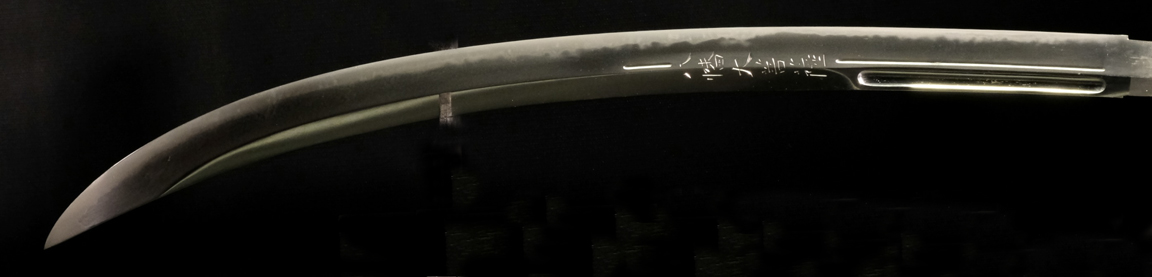
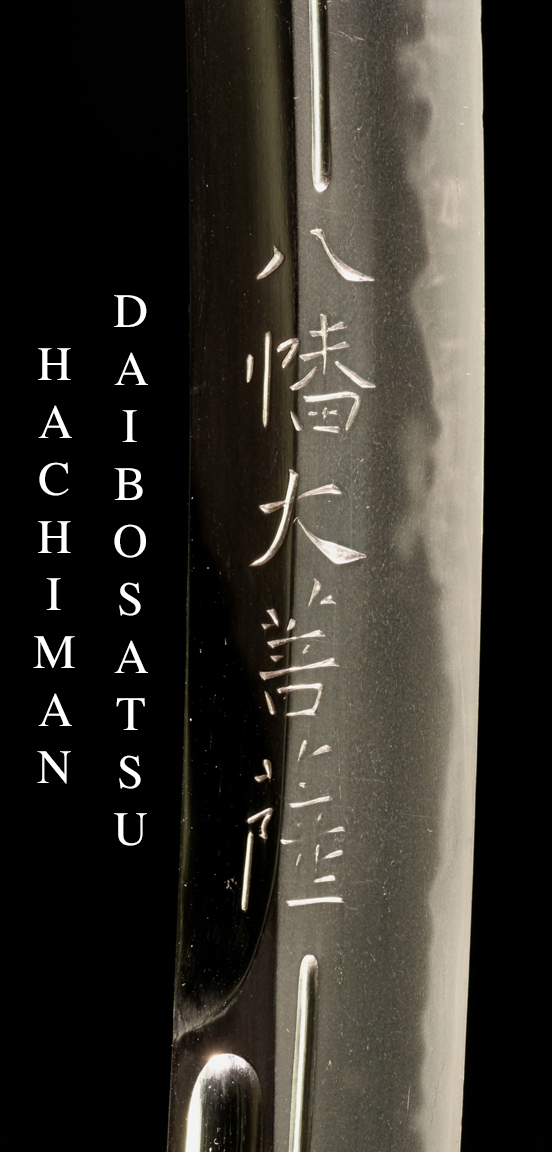
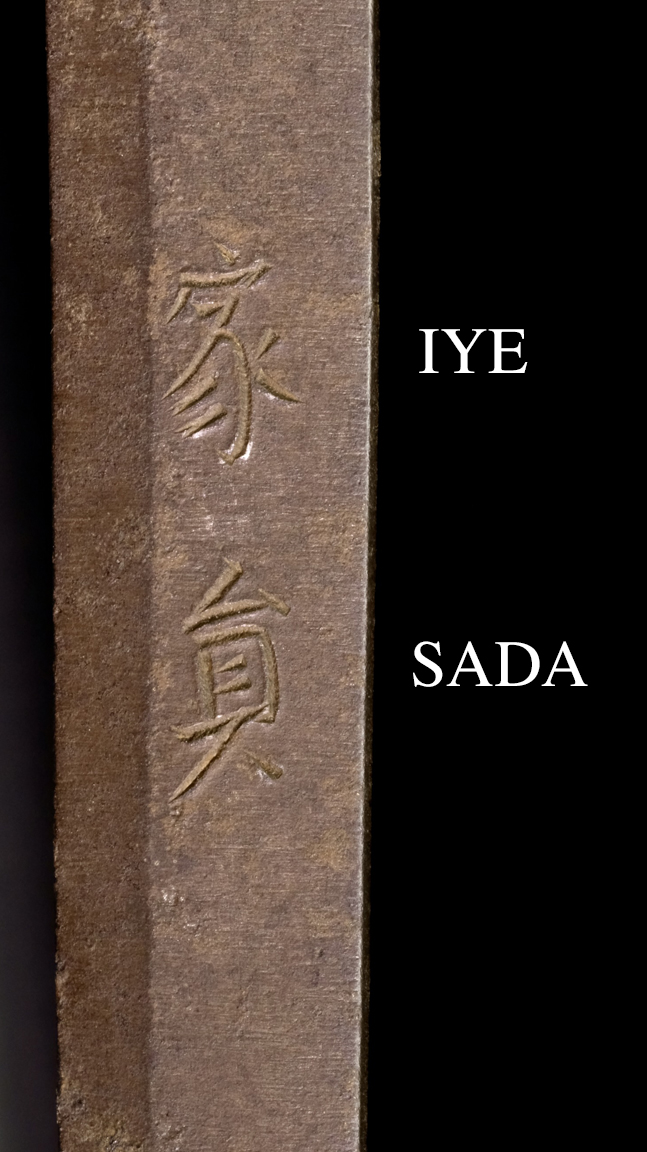
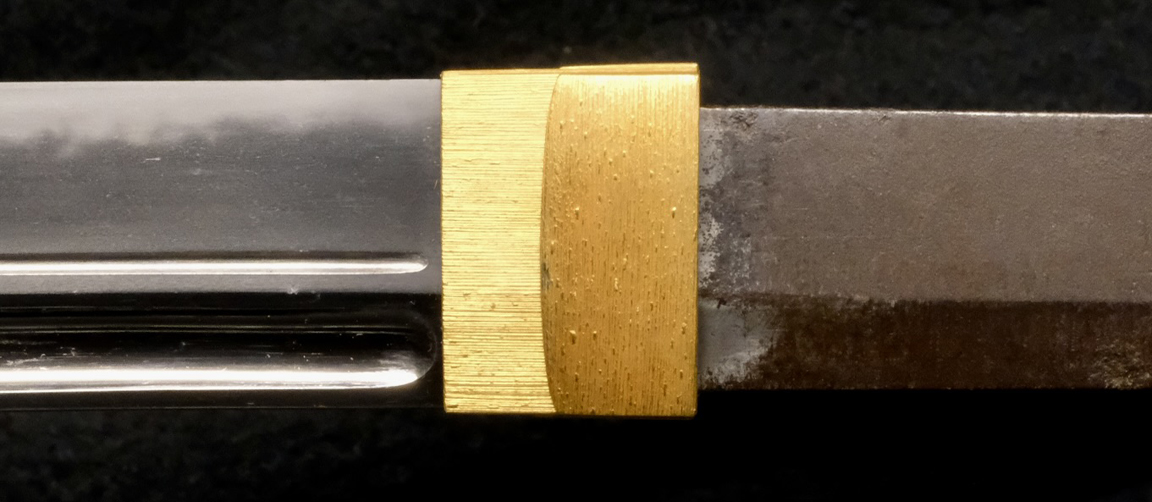
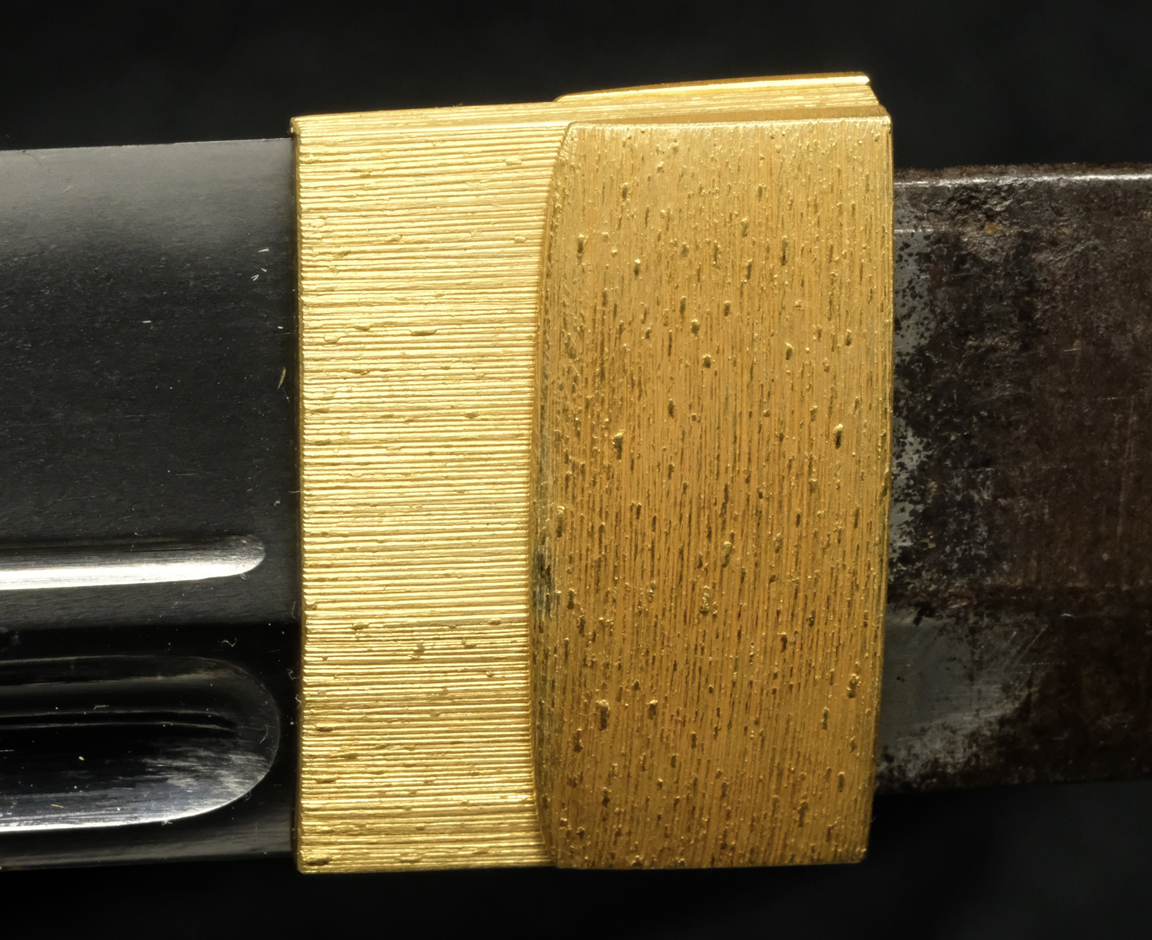
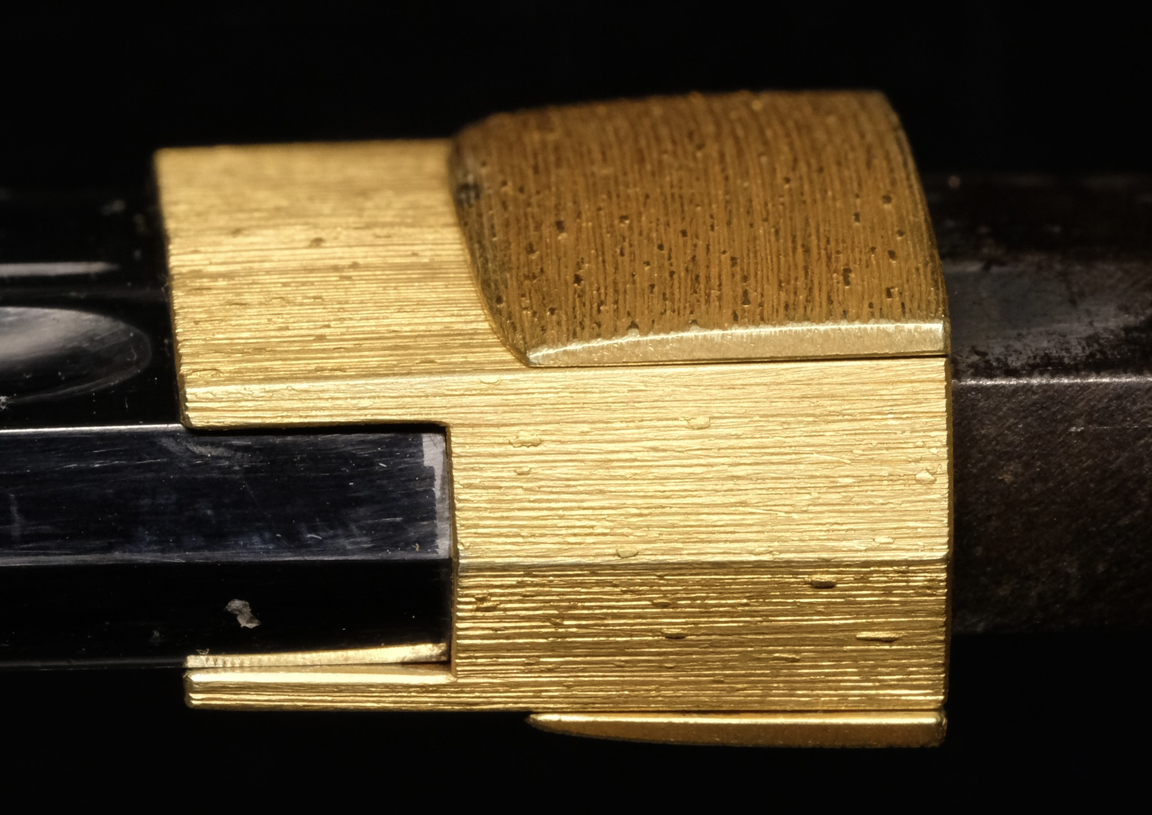
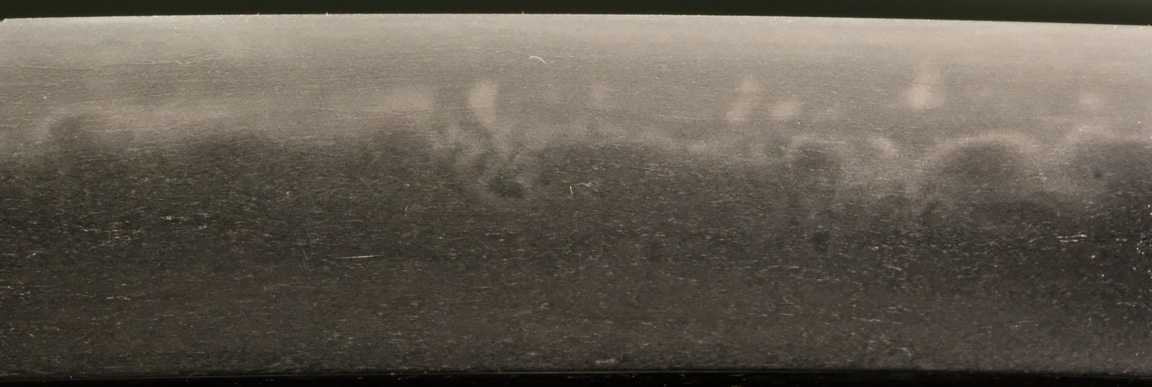
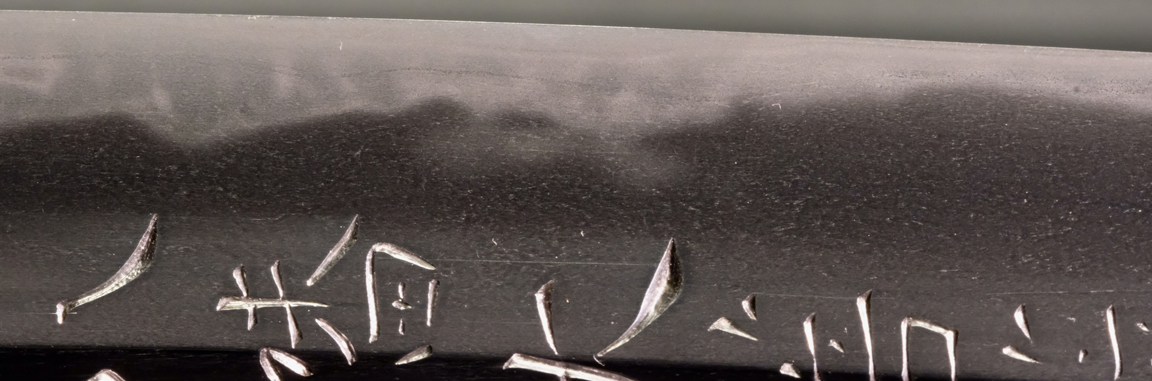
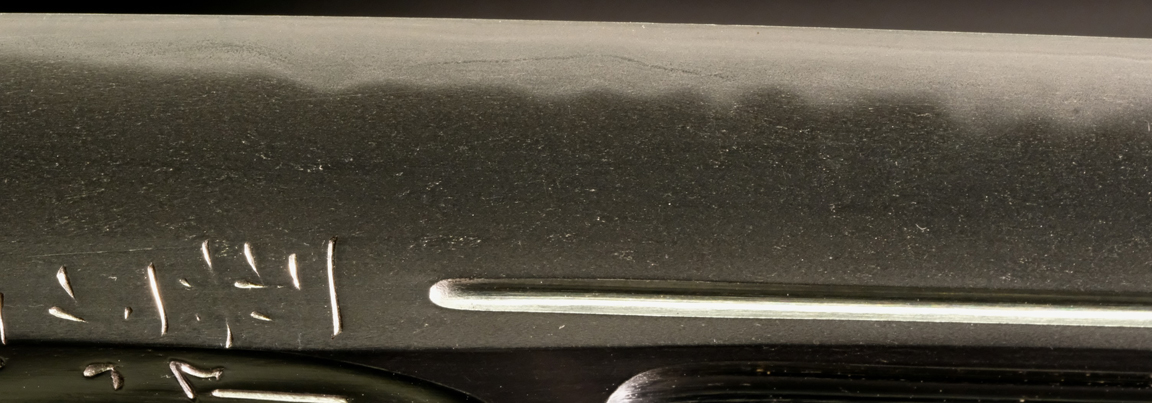
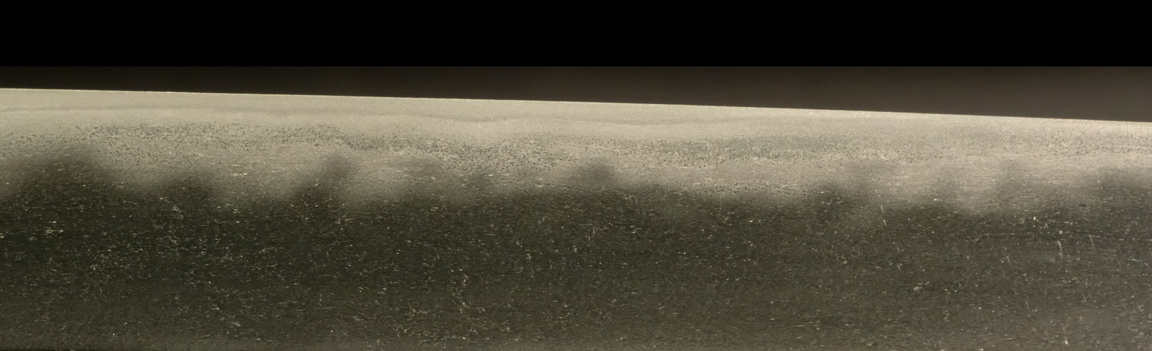
NAGINATA NTHK X 2 SHIRASAYA Outstanding signed, papered, ubu naginata by Takada Iesada, it is signed niji mei (two character). It is so nice to find naginata which have not been cut down. This flawless naginata is in excellent condition and polish. The hada is Itame with chikei. The hamon is an extremely active gunome midare with tons of hataraki guaranteed to provide endless study pleasures. There are clouds of nio with nie, ashi, yo, inazuma, yubashiri etc., etc. There is naginata hi and on both sides there are Myogo inscribed. One side reads: Hachiman Daibosatsu (Great Buddha to be), known as the God of War or the Tutelary God Warriors is inscribed on the left side. During the age of the samurai, descendants of both samurai clans, Seiwa Genji (清和源氏 Seiwa Gen-ji, a line of the Minamoto clan descended from Emperor Seiwa) and Kanmu Taira (桓武平氏 Kanmu Taira’u-ji/ Hei-shi/ Hei-ji, a line of the Taira clan descended from Emperor Kanmu) honored Hachiman, from which the tradition is derived nationwide in which samurai clans (武家 “buke” in Japanese) honor Hachiman as the deity sacred to them. His other roles include determining a samurai’s fate—i.e., whether they are a success or failure in battle; controlling and protecting the martial arts; and proclaiming the victory of an army.1 The other side reads: Kasuga Daimyojin which is reference to both the Kasuga-taisha or shrine as well as the collective deities (Kami) associated with the shrine is inscribed on the right side. The birth of the Kasuga-taisha shrine, according to legend, began when the first kami of Kasuga-taisha, Takemikazuchi, rode on the back of a white deer to the top of Mount Mikasa in 768 BC. This kami is said to have traveled from the Kashima Jingu Shrine in order to protect Nara. The shrine location first received favor from the Imperial government in the Heian period as a result of the power from the Fujiwara family as well as Empress Shōtoku.1 The four main kami enshrined here are Ame no koyane, Himegami, Futsunushi no mikoto, and Takemikazuchi no mikoto. Though these are the primary divine beings of Kasuga taisha, they are often grouped together as a syncretic, combined deity known as Kasuga Daimyōjin. Kasuga Daimyōjin is composed of five divine beings and each consists of a Buddhist deity and Shinto kami counterpart. The fifth deity, Ame-no-Oshikumone, was added much later and is said to be the divine child of Ame no koyane and Himegami. The importance of the multifaceted kami was that it became a template for future worshipers who wanted to combine several deities to pray to at once.1 Forged in a period steeped in war prior to the unification of Japan by Oda Nobunaga, Toyotomi Hideyoshi, and Tokagawa Ieyasu. While a beautiful work of art, make no mistake this blade was made for battle and carried prayers of victory and protection for whoever wielded it. This naginata comes with not one, but two sets of papers. Both NTHK & NTHK-NPO authenticated this mei as shoshin. The NTHK-NPO gave this naginata an outstanding 77 pts., which is equivalent to the NBTHK Tokubetsu Hozon. An added benefit is the two piece gold habaki made the master maker Brian Tschernega. This sword comes with a 48-hr. inspection period. Please refer to the Policy Page for complete details. NLA






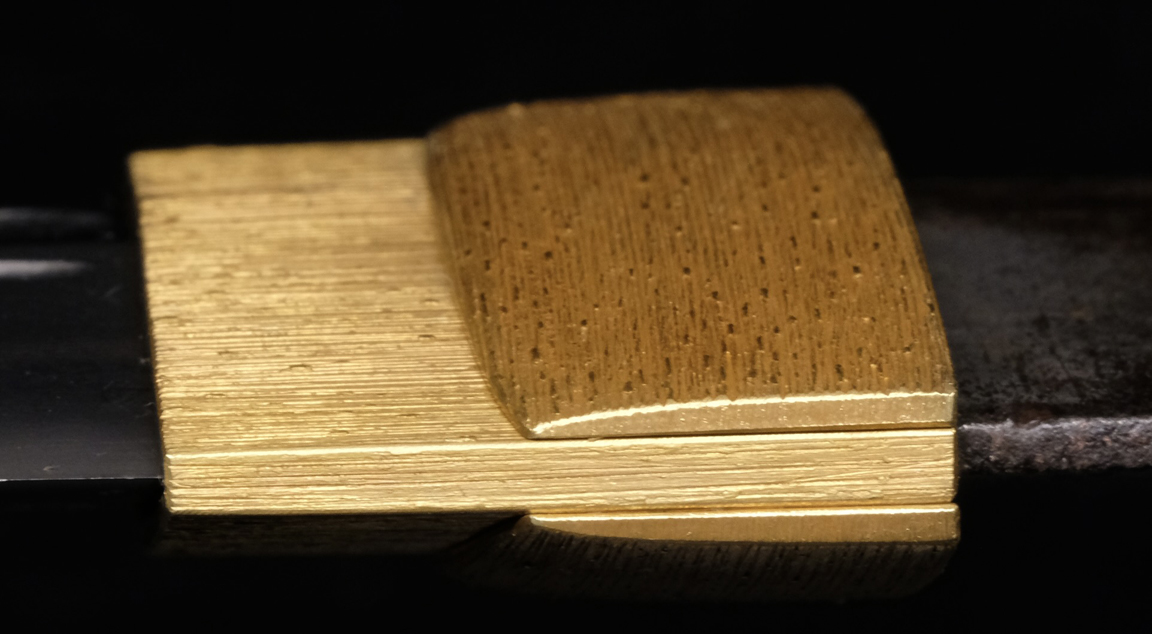
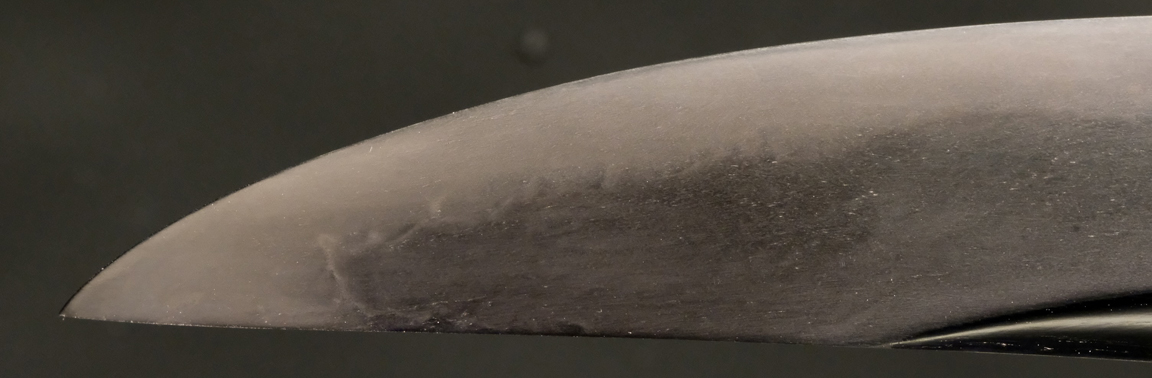
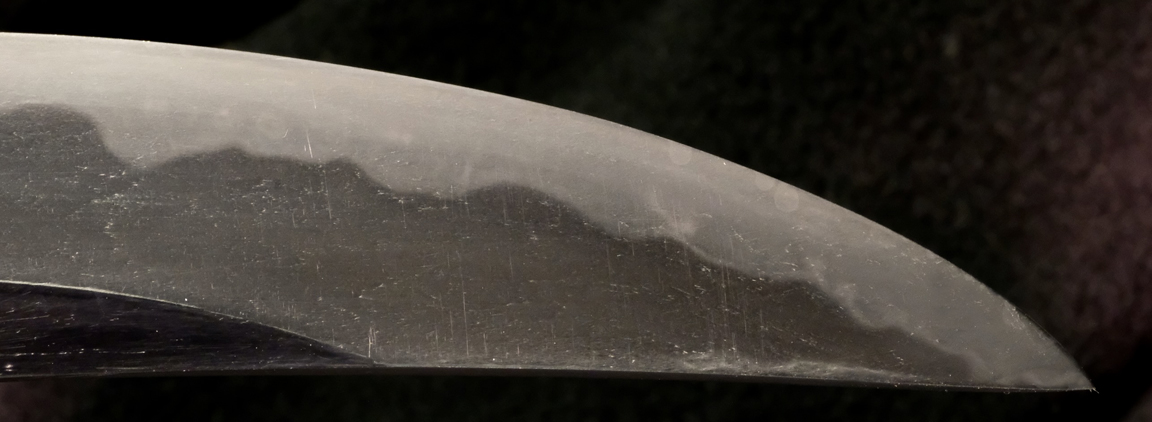
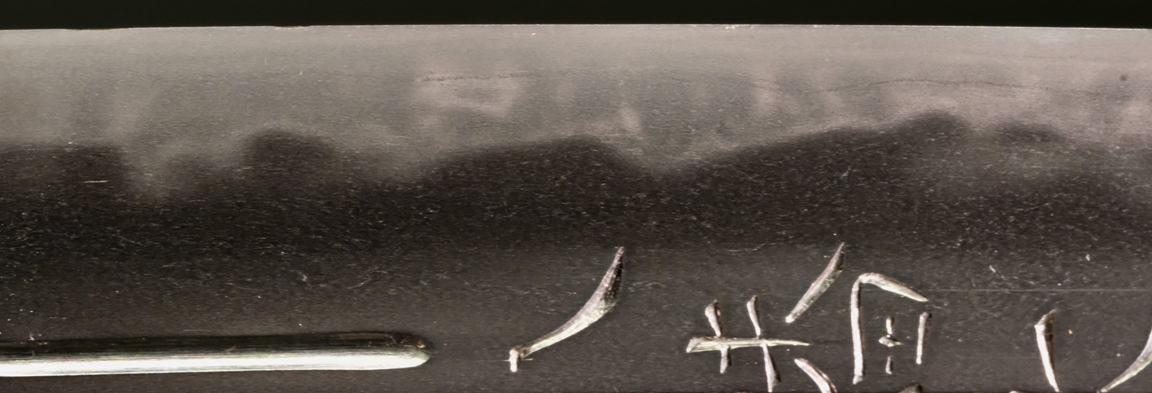
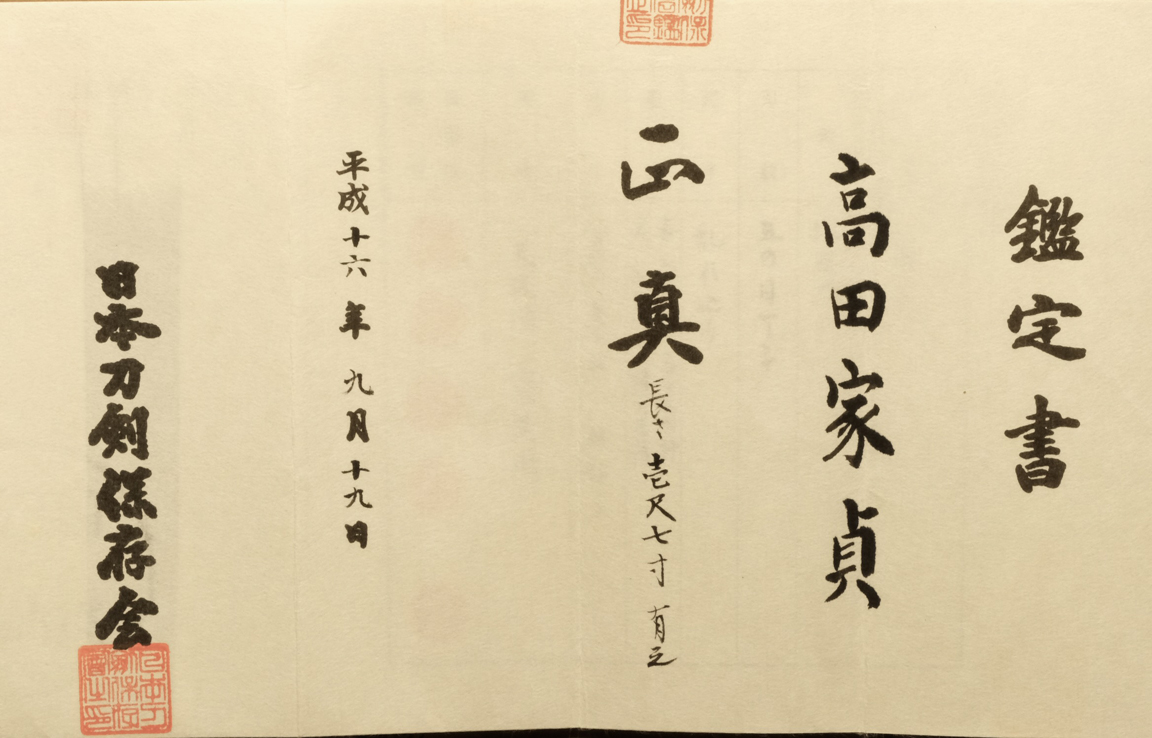
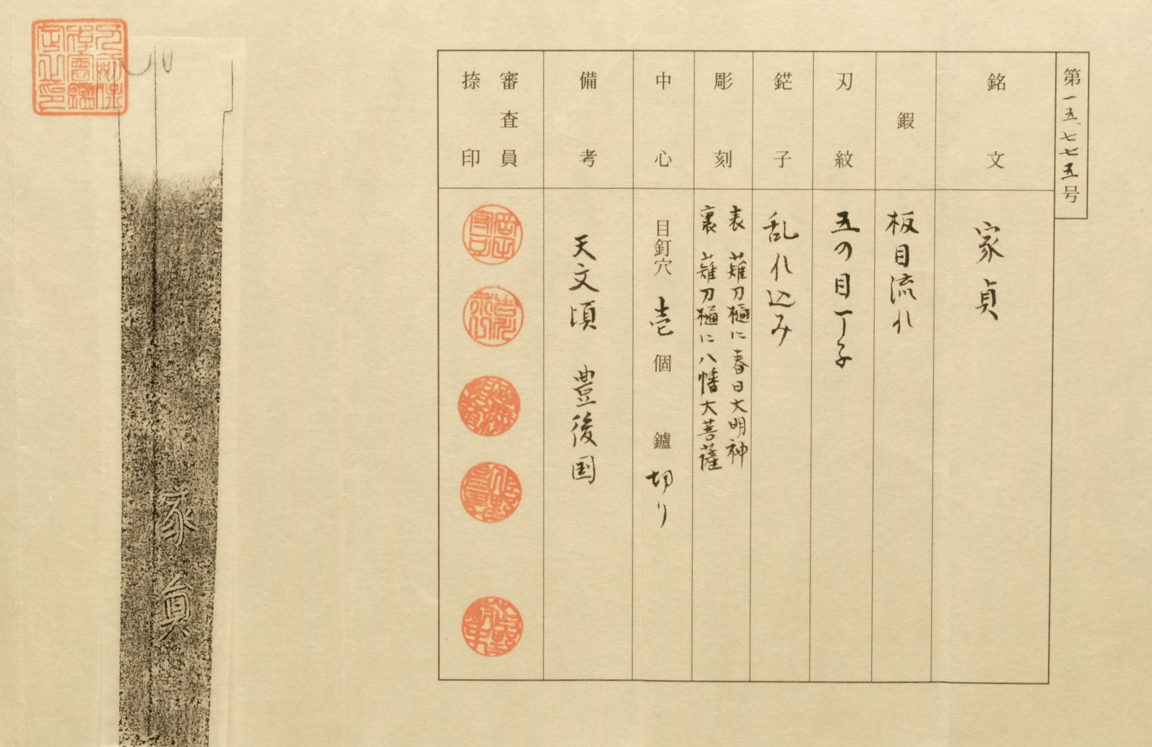
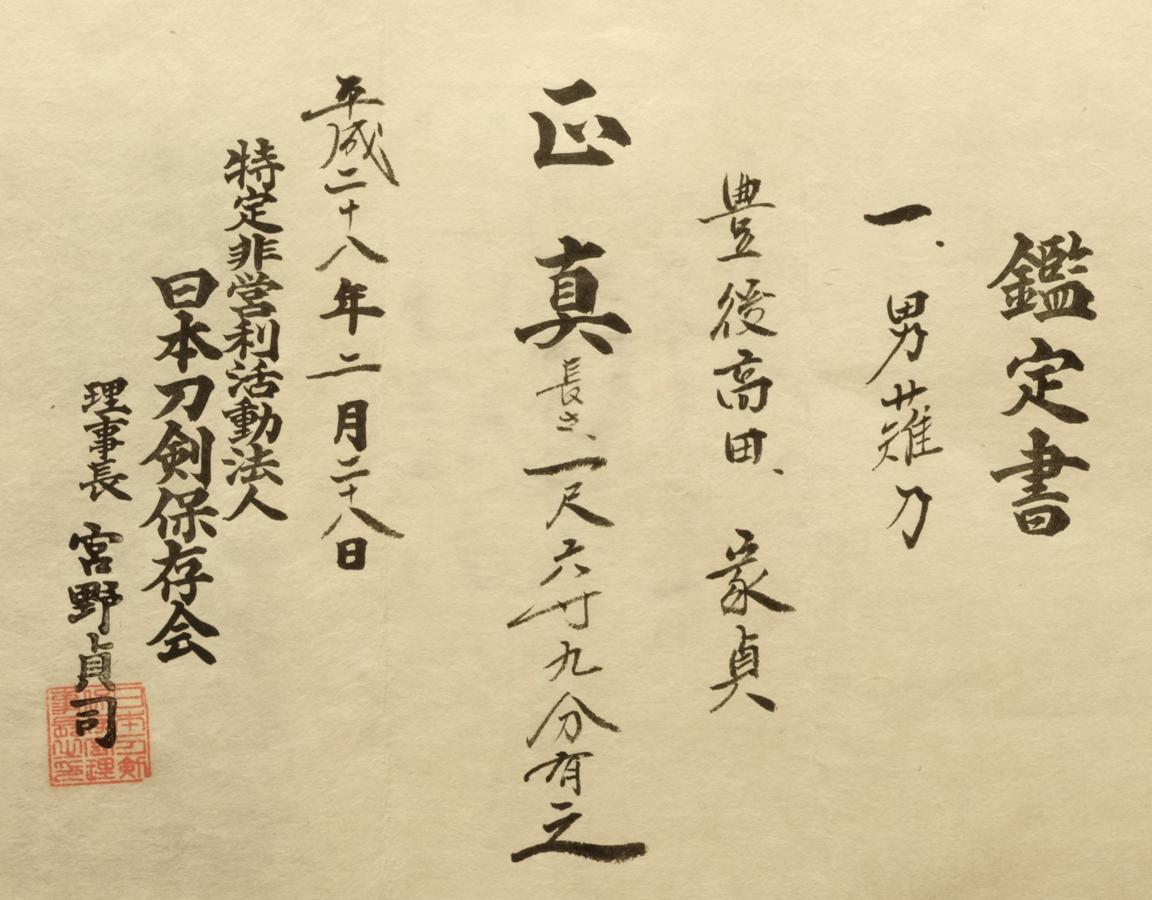
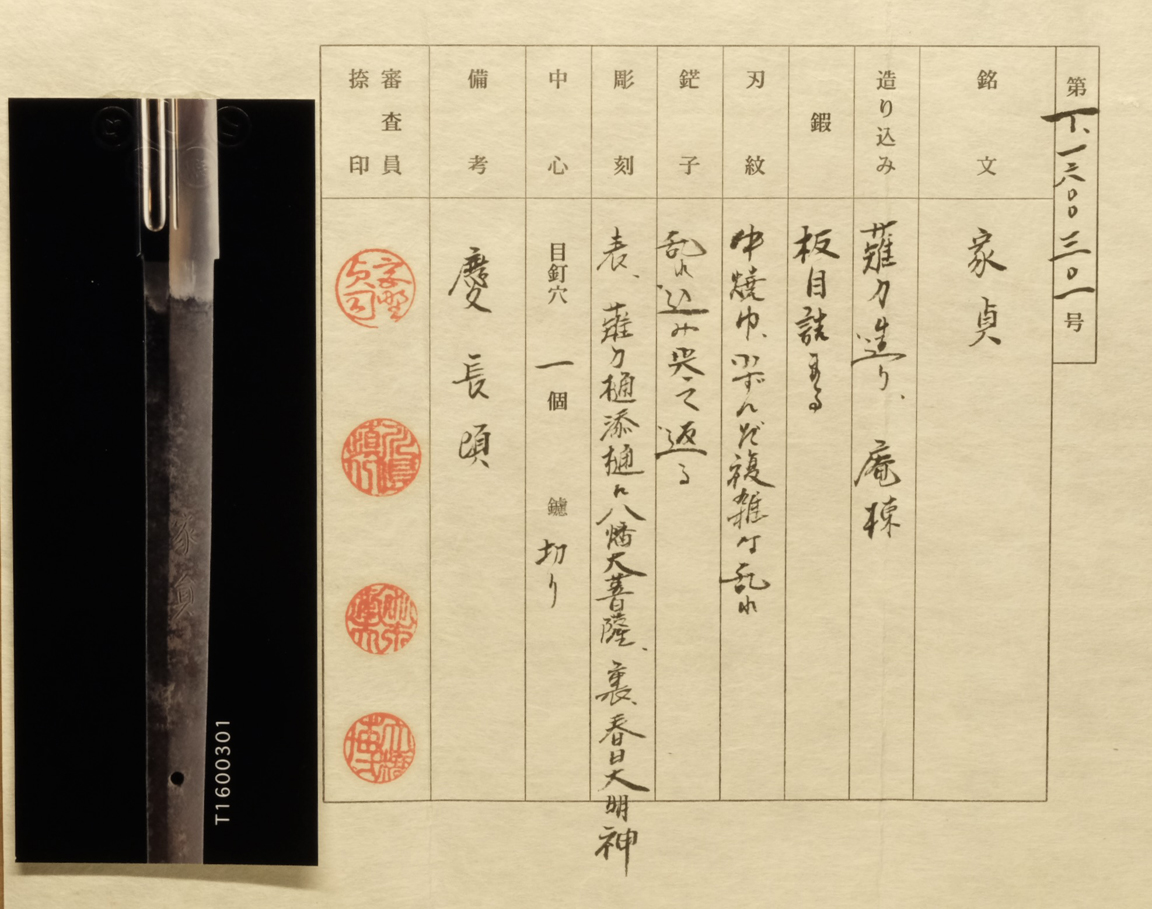
販売店の記載のまま
脇物 · 豊後
豊後派は九州豊後国を本拠とする一群の刀工であり、ここに収める作はその古い時代から室町期に及ぶ複数の系統にわたる。最も上代に位置するのは長円で、銘鑑に豊前あるいは豊後の人と伝え、永延頃とも元暦以前とも云われ、正倉院刀剣に通ずる古典的作風を墨守した九州古鍛冶として、経眼される同名の工中でも最も古い作に数えられる。中心をなすのは平安時代末期から鎌倉時代初期にかけて活躍した行平で、紀新太夫と称し、彦山の僧定秀の弟子とも師とも伝え、元久二年の紀年銘を有する太刀の現存によってその活躍期がほぼ定まる。定秀もまた英彦山の住僧と伝え、年紀のある作は知られないが、銘字の資料性が重んじられる。このほか行平に酷似する神息、行平の孫と伝える筑紫正恒があり、いずれも古豊後の範疇に属する。これに対し則貞は豊後国直入郡朽網郷の宝徳頃の工で、後代の高田一派に連なる作風を示し、上代の行平らとは時代も系統も隔たる。 作風の核には、九州古典派に共通する地鉄と刃文の特色がある。鍛えは小板目あるいは板目が流れごころを交えてねっとりと練れ、地沸が微塵につき、地景が細かに入って、かねは白けごころを帯びる。一種の色沢を見せ、淡い映りの立つものもある。刃文は直刃調を基本とし、小乱れ・小互の目・小丁子などを交え、小足や葉が入り、匂口は総じてうるみ、小沸がつき、金筋・砂流し・湯走り風の働きを処々に見せる。区上を大きく焼き落とす手癖は行平に顕著であり、定秀・神息ら同時代の工にも通う。帽子は直ぐに小丸、あるいは焼詰め風となる。彫物は行平に多く、倶利迦羅・地蔵菩薩・梵字・松喰鶴・桜花を櫃や棒樋の中に浮彫したものが見られ、この種の彫刻は彼以前の作には見られないとされる。銘は一般の刀工と反対に佩裏に切るのが行平の常法で、定秀の銘振りもこれに近い。後代の則貞に至ると、中直刃に小互の目を交えて匂口がうるみごころに沈む滋味な出来となり、地鉄の流れと淡い映りに古豊後以来の地脈を残しつつ、高田鍛冶の作域へと移る。 鑑定上は、細身で腰反りが高く踏張りがつき、先が伏さりごころとなって小鋒に結ぶ古雅な太刀姿、ねっとりとした地鉄、うるんだ直刃調の刃文、そして区上の焼落しを併せ見ることが眼目となる。行平には元久二年紀の太刀のほか、光山押形・草薙迺舎押形に所載の作があり、徳川将軍家・丹後宮津藩本庄家など伝来の明らかな作も伝わる。本庄家の長円の刀は源氏の宝刀薄緑と伝えられ、本阿弥光忠の折紙を帯びる。定秀には毛利家が後水尾天皇より拝領したと伝える太刀があり、在銘の少ない同工の銘字は資料的価値が高い。則貞は光山押形所載の在銘年紀作として、朽網鍛冶および豊後高田の研究に資する。古豊後の行平を頂点とする系統と、後代高田に連なる則貞とは、九州物としての地刃の脈を共有しながらも、それぞれ別個の時代相を担う工として位置づけられる。 詳しく見る →
室町時代
室町は刀剣業を産業に変えた。徒歩の集団戦とともに打刀が興り、長船と関は数打ち物と注文打ちを並行して産し、勘合貿易は日本刀を数万振の単位で海外へ運んだ。
保存刀剣のうち、出来が一層優れ、保存状態も良好と認められたものです。再刃や、室町・江戸期の多くの無銘作は対象外となり、保存刀剣より高い基準が課されます。
日本美術刀剣保存協会(NBTHK)は、1948年に設立され、文化庁の監督を受ける公益財団法人で、東京・刀剣博物館に本部を置きます。専門の審査員が出品作を直接審査し、美術的・歴史的価値に応じた鑑定書を発行します。NBTHKの鑑定書は、日本刀および刀装具の真正性を示す最も広く認知された基準です。
NBTHK公式サイトAll swords sold for $5000 USD or less are considered final! Swords above the $5000 range may be returned for any reason within 48 hrs. Buyer will receive a full refund minus shipping/handling, insurance and or any fees incurred in shipping or sale.