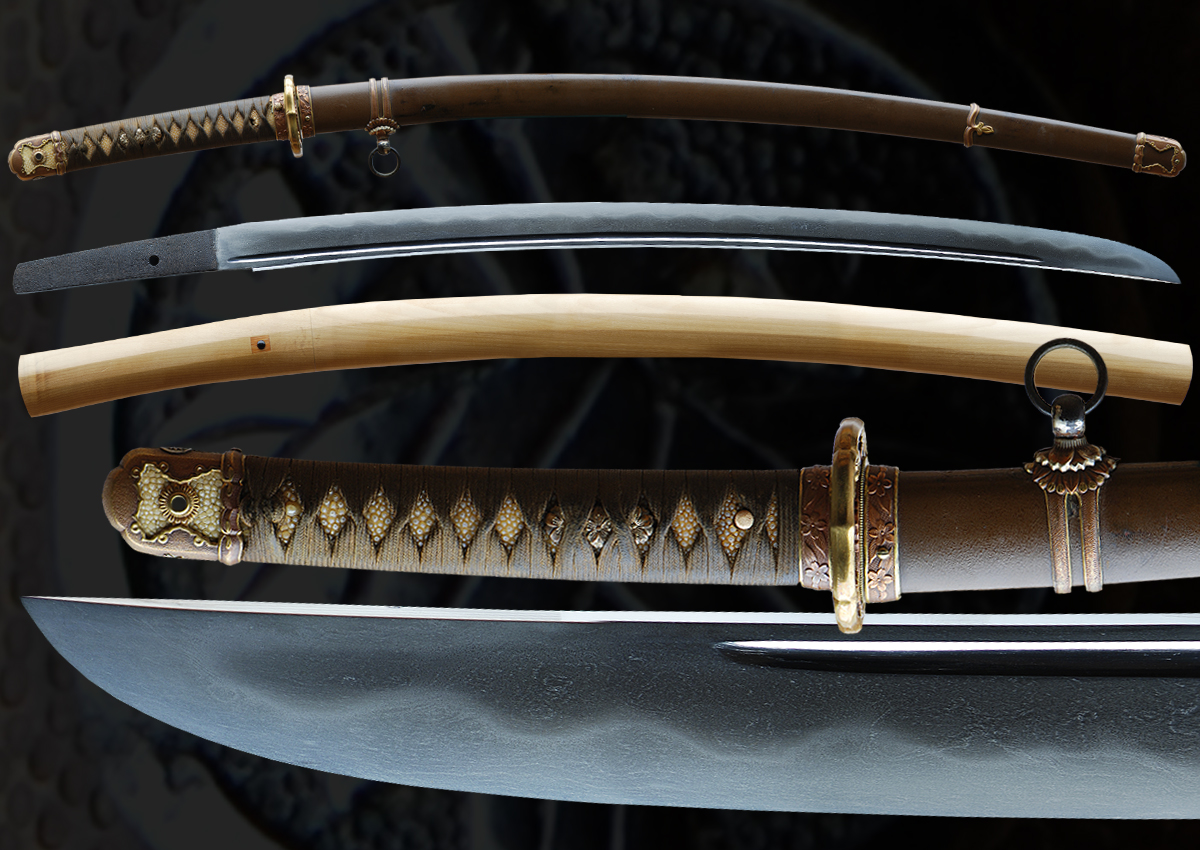
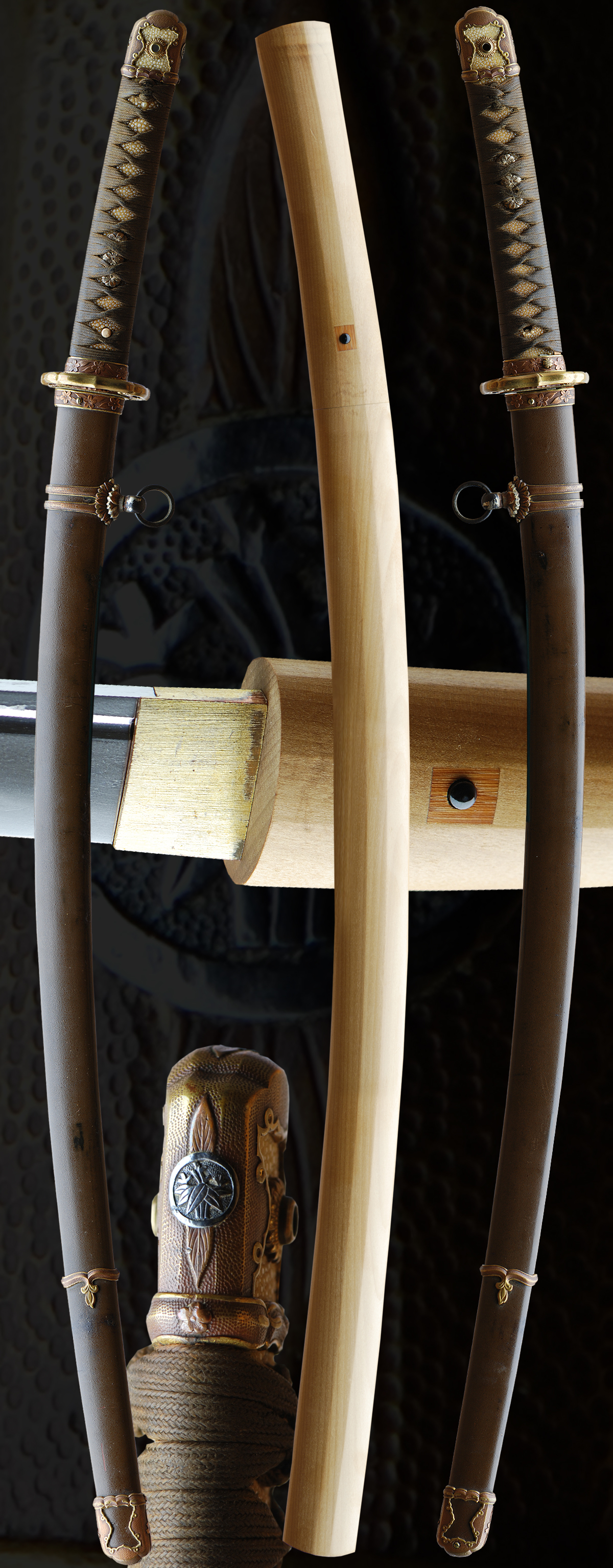
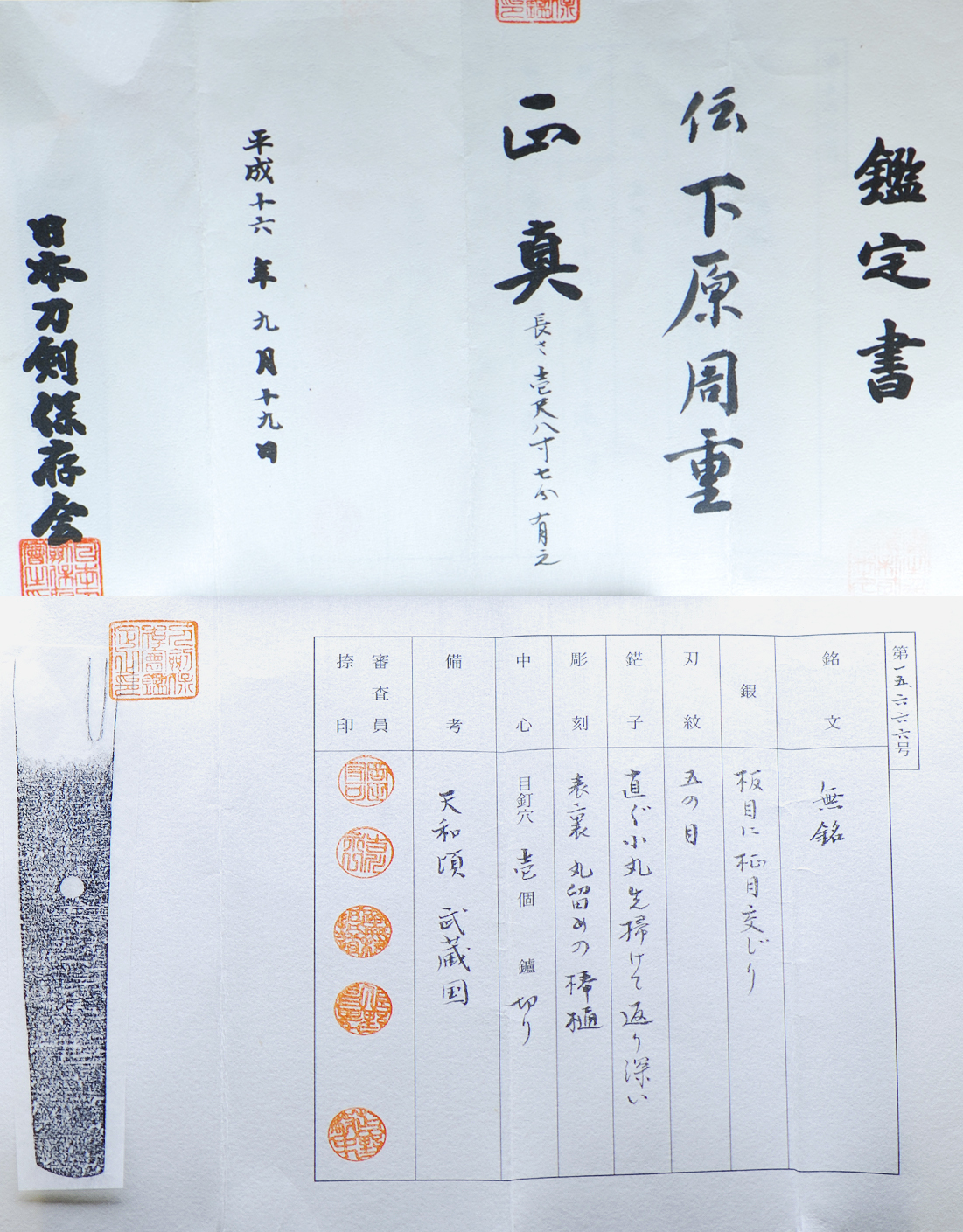
SHITAHARA CHIKASHIGE DEN (fss-811) Item description:This sword has been attributed to the Shitahara school by the NTHK shinsa. There are many details which point this blade to this school, including the unique jihada which has a circular swirling pattern and is known as uzumaki-hada or shitahara hada. The dark jigane is also found in Shitahara blades and is a trait of this school. The Shitahara school is a well regarded school with great smiths. A rare longish Hirazukiri blade almost Katana in length this blade sports an attractive Bohi on both sides. Technically an O-Wakazashi this blade feels and looks like a katana. It is very light and well balance. The hamon is full of hataraki such as sunagashi, kinsugi and more.The hamon is an O-gunome based in Notare. The swirling mokume or Uzumaki-hada is a sight to see and appreciate. The tang is text book Shitahara and a solid kantei point. A beautiful and unique rare blade by the founders of this school. The blade is in shirasaya and there is a full set of high ranking military mounts that the blade was originally found in. The tsuka is adorned with a family mon of bamboo theme.History on the Shitahara school:Founded around the Eisho (1504) and Kyoroku (1528) eras in the later Muromachi period, a swordsmith named Tajima (no) Kami Chikashige from the Yamamoto clan, is credited with the foundation of the Shitahara school in what is now the Hajioji district of Metropolitan Tokyo. It is thought that he was employed by Oishi Sadahisa, a high ranking retainer of the Yamaouchi. Uesugi family. He later came under the patronage of Hojo Ujiteru who occupied Hachioji castle, this blade was attributed to the Chikashige den. When Hideyoshi ejected the Hojo from the Kanto area in 1590, the group of swordsmiths were relocated to Shitahara and when Tokugawa Ieyasu occupied Edo castle, they became direct retainers of the Tokugawa family and were permanently established there. They made blades for the battles of Sekigahara which took place in 1600 and the Osaka castle battles of 1614. During the Edo period, there were 10 branches of the Yamamoto clan and it has been estimated that there were approximately 165 swordsmiths from this extended family and some 5,000 blades extant in Japan today. Consequently, there are many Shitahara blades from the shinto period, often with picturesque hamon such as sanbon-sugi, sudare-ba and Fujiyama. They were also skilled carvers of horimono but very few swords were made from 1780 onwards. Both Chikashige and another named Chikahiro, studied swordmaking under Tsuguhiro, a Soshu smith from Kamakura and later under the shodai Masatoshi of Odawara. Not surprisingly,therefore, it is said that the Shitahara school was influenced by the Soshu school of Kamakura, the Sengo school of Ise (ubu nakago are often tanagobara-gata, similar to those of Muramasa) and both the Shimada and Odawara Soshu schools. Such Soshu-den influences may be seen in the present example by the comparatively large jihada as well.. However, the predominantly nioi based hamon shows only later affiliations and cast doubt over the claim of direct descent from Masamune, sometimes claimed for this school.The current sword gives the impression of being a koto blade when the nagasa, jihada and nakago are considered. This may indicate, that although only attributed to the school, that the smith Chikashige was the smith who forged this blade. Mei:MumeiDate:koto 1500’sNagasa:22-1/4 inchesSori:17.0 mmWidth at the ha-machi:29.9 mmThickness at the mune-machi:6.0 mmConstruction:Hira zukuriMune:IoriNakago:UbuKitae:Itame/mokumeHamon:Midare GunomeBoshi:MaruCondition:Good polish Subscribe for the Latest Updates!Join our mailing list to receive the latest News & Updates fromNihonto Antiques.SUBSCRIBEYou have Successfully Subscribed!Your email address will be kept private & will only be used to send updates from this site!
無銘 · Shitahara · Eiroku (1558-1570) · 長さ 56.52cm · 反り 1.7cm


Shinto · 武蔵
現在7点販売中
下原派は武蔵国八王子の地に拠った刀工の一群で、室町末期に興り、以後江戸末期に至るまで作刀を続けた。古刀期の武蔵国を代表する鍛冶とされ、説示では周重・康重・照重・広重の四工を著名な工として挙げる。なかでも照重は康重・広重と並んで一派を代表する存在で、山本源二郎照重、山本与五郎康重のように山本姓を称した工も知られる。照重については銘鑑が初代を享禄、二代を永禄、三代を天正に充てており、永禄から天正の頃の作がもっとも時代の上がるものと鑑せられている。甲州の注文に応じて鍛えた薙刀も伝わり、地方を越えて求められた様子がうかがえる。 作風は末相州および村正一派の風に末関風を加味したものと説かれる。鍛えは板目に杢がしきりに交じって肌立ち、刃寄りが流れて綾杉風となり、渦を巻いたような肌があらわれる点に地がねの特色がある。刃文は湾れを基調に互の目が二つ三つ連れて尖り刃を交え、やや規則的に乱れて小沸がつき、砂流しのかかるものもある。帽子は乱れ込んで丸く返るものや先の尖って返るものがみられる。細かに肌立った杢目の地がねと、規則的に連れる互の目乱れにのたれを交えた刃文の組み合わせが、この一派を見分ける手がかりとなる。 鑑定にあたっては、肌立った地がねに綾杉風の流れと渦巻く肌があらわれること、互の目が規則的に連れて乱れる刃文の調子を要点とする。彫物では表に棒樋を掻き、倶利迦羅竜や不動、梵字を添えるものが多く、倶利迦羅竜の尾の巻き方に一派らしさが出るとされる。茎は栗尻に切鑢を施し、棟寄りに長銘を切るものが多い。室町末期の打刀や薙刀を代表する優品が重要刀剣に列せられており、照重の薙刀は両刃造という珍しい形状を伝える。武蔵国の在地鍛冶として実用に応えつつ、相州と関の風を併せ呑んだ独自の地刃を築いた点に、下原一派の位置づけがある。
NTHKの中心的な鑑定書で、相応の出来を備えた作に発行されます。在銘作は銘の正真を、無銘作は審査員による刀工・流派の極めを示します。点数を記す詳細な審査表が付されます。
NTHK(日本刀剣保存会)は、NBTHK(1948年設立)に先立つ1910年に創立された、日本で最も古い刀剣鑑定団体です。長く会を率いた会長の没後、NTHKとNTHK-NPOの二つに分かれ、いずれも審査を続けています。NTHKの鑑定書は、点数と審査員の所見を併記する詳細な審査表が特徴で、特に無銘作の極めに定評があります。
We offer a 48 hour inspection period for all Antique items shipped within the United States only. If the item is not to your satisfaction, we will gladly refund your money less any shipping and handling fees. All sales are final after the 48 hour inspection period. Please note that all discounted items are a final sale and not returnable.
SHITAHARA CHIKASHIGE DEN (fss-811) Item description:This sword has been attributed to the Shitahara school by the NTHK shinsa. There are many details which point this blade to this school, including the unique jihada which has a circular swirling pattern and is known as uzumaki-hada or shitahara hada. The dark jigane is also found in Shitahara blades and is a trait of this school. The Shitahara school is a well regarded school with great smiths. A rare longish Hirazukiri blade almost Katana in length this blade sports an attractive Bohi on both sides. Technically an O-Wakazashi this blade feels and looks like a katana. It is very light and well balance. The hamon is full of hataraki such as sunagashi, kinsugi and more.The hamon is an O-gunome based in Notare. The swirling mokume or Uzumaki-hada is a sight to see and appreciate. The tang is text book Shitahara and a solid kantei point. A beautiful and unique rare blade by the founders of this school. The blade is in shirasaya and there is a full set of high ranking military mounts that the blade was originally found in. The tsuka is adorned with a family mon of bamboo theme.History on the Shitahara school:Founded around the Eisho (1504) and Kyoroku (1528) eras in the later Muromachi period, a swordsmith named Tajima (no) Kami Chikashige from the Yamamoto clan, is credited with the foundation of the Shitahara school in what is now the Hajioji district of Metropolitan Tokyo. It is thought that he was employed by Oishi Sadahisa, a high ranking retainer of the Yamaouchi. Uesugi family. He later came under the patronage of Hojo Ujiteru who occupied Hachioji castle, this blade was attributed to the Chikashige den. When Hideyoshi ejected the Hojo from the Kanto area in 1590, the group of swordsmiths were relocated to Shitahara and when Tokugawa Ieyasu occupied Edo castle, they became direct retainers of the Tokugawa family and were permanently established there. They made blades for the battles of Sekigahara which took place in 1600 and the Osaka castle battles of 1614. During the Edo period, there were 10 branches of the Yamamoto clan and it has been estimated that there were approximately 165 swordsmiths from this extended family and some 5,000 blades extant in Japan today. Consequently, there are many Shitahara blades from the shinto period, often with picturesque hamon such as sanbon-sugi, sudare-ba and Fujiyama. They were also skilled carvers of horimono but very few swords were made from 1780 onwards. Both Chikashige and another named Chikahiro, studied swordmaking under Tsuguhiro, a Soshu smith from Kamakura and later under the shodai Masatoshi of Odawara. Not surprisingly,therefore, it is said that the Shitahara school was influenced by the Soshu school of Kamakura, the Sengo school of Ise (ubu nakago are often tanagobara-gata, similar to those of Muramasa) and both the Shimada and Odawara Soshu schools. Such Soshu-den influences may be seen in the present example by the comparatively large jihada as well.. However, the predominantly nioi based hamon shows only later affiliations and cast doubt over the claim of direct descent from Masamune, sometimes claimed for this school.The current sword gives the impression of being a koto blade when the nagasa, jihada and nakago are considered. This may indicate, that although only attributed to the school, that the smith Chikashige was the smith who forged this blade. Mei:MumeiDate:koto 1500’sNagasa:22-1/4 inchesSori:17.0 mmWidth at the ha-machi:29.9 mmThickness at the mune-machi:6.0 mmConstruction:Hira zukuriMune:IoriNakago:UbuKitae:Itame/mokumeHamon:Midare GunomeBoshi:MaruCondition:Good polish Subscribe for the Latest Updates!Join our mailing list to receive the latest News & Updates fromNihonto Antiques.SUBSCRIBEYou have Successfully Subscribed!Your email address will be kept private & will only be used to send updates from this site!
無銘 · Shitahara · Eiroku (1558-1570) · 長さ 56.52cm · 反り 1.7cm


Shinto · 武蔵
現在7点販売中
下原派は武蔵国八王子の地に拠った刀工の一群で、室町末期に興り、以後江戸末期に至るまで作刀を続けた。古刀期の武蔵国を代表する鍛冶とされ、説示では周重・康重・照重・広重の四工を著名な工として挙げる。なかでも照重は康重・広重と並んで一派を代表する存在で、山本源二郎照重、山本与五郎康重のように山本姓を称した工も知られる。照重については銘鑑が初代を享禄、二代を永禄、三代を天正に充てており、永禄から天正の頃の作がもっとも時代の上がるものと鑑せられている。甲州の注文に応じて鍛えた薙刀も伝わり、地方を越えて求められた様子がうかがえる。 作風は末相州および村正一派の風に末関風を加味したものと説かれる。鍛えは板目に杢がしきりに交じって肌立ち、刃寄りが流れて綾杉風となり、渦を巻いたような肌があらわれる点に地がねの特色がある。刃文は湾れを基調に互の目が二つ三つ連れて尖り刃を交え、やや規則的に乱れて小沸がつき、砂流しのかかるものもある。帽子は乱れ込んで丸く返るものや先の尖って返るものがみられる。細かに肌立った杢目の地がねと、規則的に連れる互の目乱れにのたれを交えた刃文の組み合わせが、この一派を見分ける手がかりとなる。 鑑定にあたっては、肌立った地がねに綾杉風の流れと渦巻く肌があらわれること、互の目が規則的に連れて乱れる刃文の調子を要点とする。彫物では表に棒樋を掻き、倶利迦羅竜や不動、梵字を添えるものが多く、倶利迦羅竜の尾の巻き方に一派らしさが出るとされる。茎は栗尻に切鑢を施し、棟寄りに長銘を切るものが多い。室町末期の打刀や薙刀を代表する優品が重要刀剣に列せられており、照重の薙刀は両刃造という珍しい形状を伝える。武蔵国の在地鍛冶として実用に応えつつ、相州と関の風を併せ呑んだ独自の地刃を築いた点に、下原一派の位置づけがある。
NTHKの中心的な鑑定書で、相応の出来を備えた作に発行されます。在銘作は銘の正真を、無銘作は審査員による刀工・流派の極めを示します。点数を記す詳細な審査表が付されます。
NTHK(日本刀剣保存会)は、NBTHK(1948年設立)に先立つ1910年に創立された、日本で最も古い刀剣鑑定団体です。長く会を率いた会長の没後、NTHKとNTHK-NPOの二つに分かれ、いずれも審査を続けています。NTHKの鑑定書は、点数と審査員の所見を併記する詳細な審査表が特徴で、特に無銘作の極めに定評があります。
We offer a 48 hour inspection period for all Antique items shipped within the United States only. If the item is not to your satisfaction, we will gladly refund your money less any shipping and handling fees. All sales are final after the 48 hour inspection period. Please note that all discounted items are a final sale and not returnable.