徳川の泰平のもと、大小は法度の定める身分の制服となり、需要は城下町、とりわけ江戸に集まった。工芸は二つに分かれる。目利きのための華やかな鑑賞の作と、截断の結果を金象嵌に刻む実証の刀である。
 NihontoWatchNihontoWatch
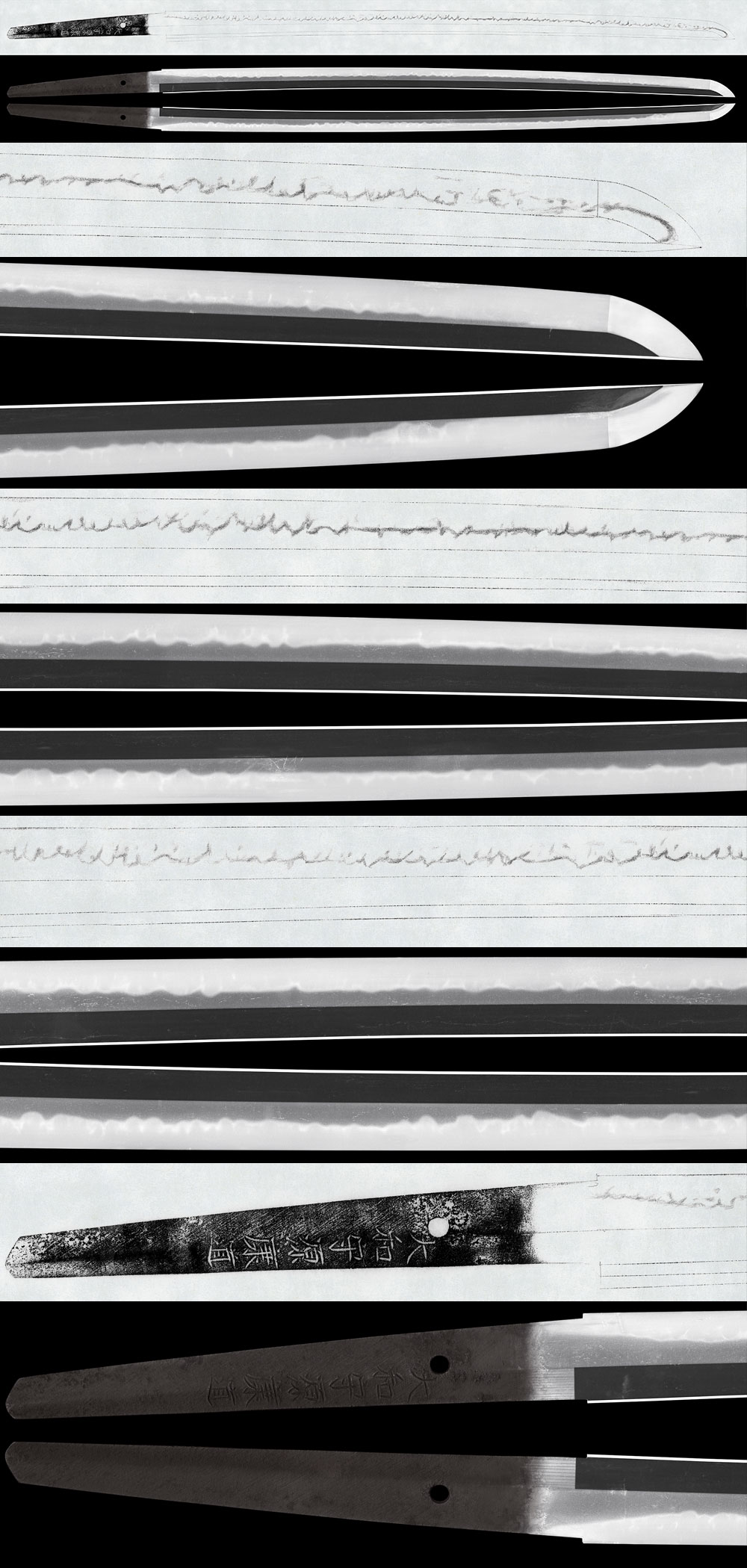
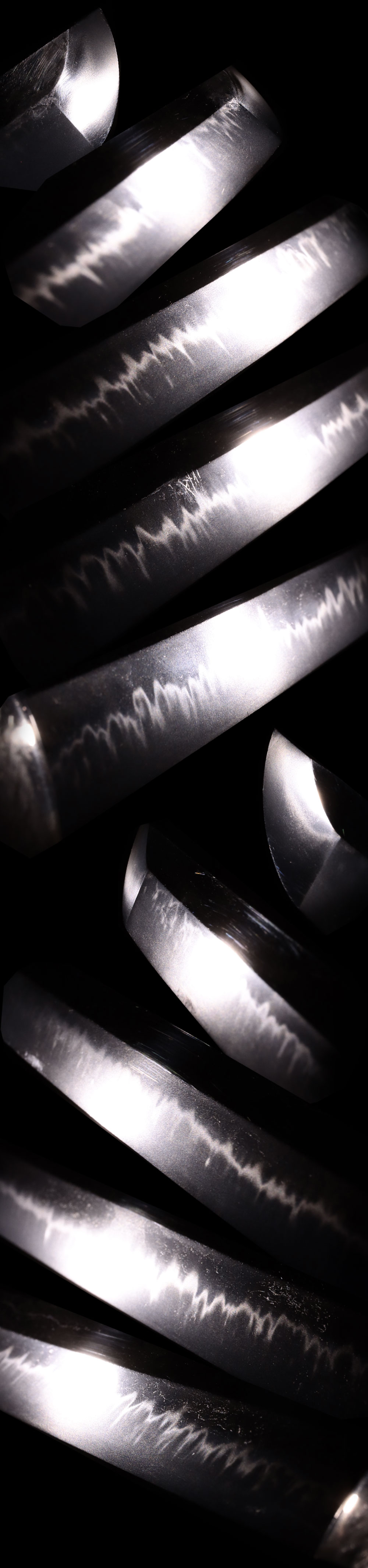
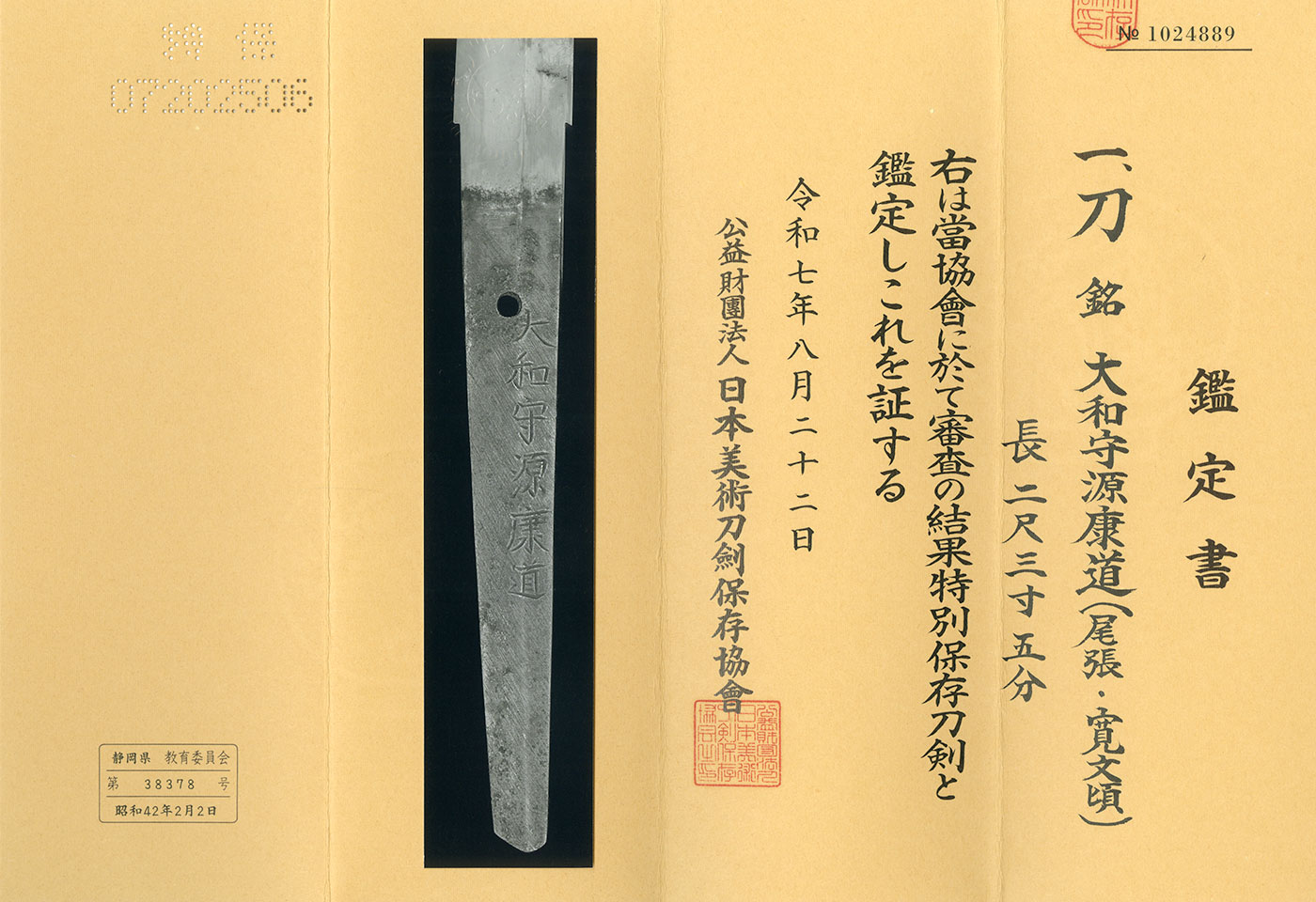
Katana in Shirasaya with Koshirae (NBTHK Tokubetsu Hozon Token) (We divide 4 sections for each sword as Saijyo Saku, Jyojyo Saku, Jyo Saku and Regular Saku). This blade is ranked as Jyo Saku among the works of Yamato no Kami Minamoto Yasumichi. Shape: The blade has an ubu-nakago (original, unshortened tang), with standard mihaba and kasane. The kissaki is slightly elongated, and the curvature is shallow, giving the blade an appearance suggestive of excellent cutting ability. Jigane: Beautifully forged and well-refined ko-itame hada. Hamon: The hamon begins with suguha at the hamachi and develops into choji-midare farther along the blade. The nioiguchi is deep, and the hamon from the hamachi to approximately the middle of the blade displays a pronounced Ichimonji-style choji-midare pattern. Features: Yamato no Kami Yasumichi was a swordsmith of Mino Province active around the Kanbun era (1661–1673). He belonged to the Akasaka Senjuin lineage and also forged swords in Owari Province. This blade is an exceptionally fine example of his workmanship, displaying an impressive Ichimonji-style hamon. The temper pattern from the hamachi to the middle of the blade is particularly well executed. Beyond this point, the hamon rises high enough to reach the shinogi-ji. The boshi is almost ichimai in appearance, with a rounded turnback. Aoi Art’s Comment: This is an exceptionally well-forged blade featuring a beautifully executed Ichimonji-style choji hamon. Both the hamon and jigane are of excellent quality. Masame hada can also be observed in the shinogi-ji. Historical Background: As Japan transitioned from the Muromachi period to the Edo period, the shape of Japanese swords underwent significant changes. The characteristic Kanbun Shinto style emerged, featuring relatively shallow curvature and an elongated kissaki. In Mino Province, the production of tanto declined dramatically as demand for these short blades diminished. Swordsmiths increasingly shifted their attention to the production of katana and wakizashi. It was during this period that swordsmiths attempted to reproduce the magnificent Ichimonji-style hamon of earlier times. This particular blade demonstrates remarkable skill in achieving that style. Swordsmiths of the period likely had to adapt to changing circumstances and seek out locations where they could continue their craft and earn a living. Yasumichi appears to have been one such craftsman, producing outstanding swords while responding to the demands of his time. NBTHK Tokubetsu Hozon Token. AoiArt estimation paper.



販売店の記載のまま
(翻訳なし)
美濃 · 1661-1673頃
藤代 中作 · 刀剣大鑑 上位97%
現在2点販売中
江戸時代
徳川の泰平のもと、大小は法度の定める身分の制服となり、需要は城下町、とりわけ江戸に集まった。工芸は二つに分かれる。目利きのための華やかな鑑賞の作と、截断の結果を金象嵌に刻む実証の刀である。
保存刀剣のうち、出来が一層優れ、保存状態も良好と認められたものです。再刃や、室町・江戸期の多くの無銘作は対象外となり、保存刀剣より高い基準が課されます。
日本美術刀剣保存協会(NBTHK)は、1948年に設立され、文化庁の監督を受ける公益財団法人で、東京・刀剣博物館に本部を置きます。専門の審査員が出品作を直接審査し、美術的・歴史的価値に応じた鑑定書を発行します。NBTHKの鑑定書は、日本刀および刀装具の真正性を示す最も広く認知された基準です。
NBTHK公式サイト返品をご希望の場合、お客様が受領されてから3日以内にお知らせください。この期間を過ぎますとキャンセルはお受けできかねますので何卒ご了承ください。なお当社へのご返送は、5営業日以内の発送をお願いしております。なおキャンセルは販売した当時の状態がそのまま保持されている事が条件となりますのでお取り扱いには十分ご注意下さい。
Auction status: live on sword-auction.com.