 NihontoWatchNihontoWatch
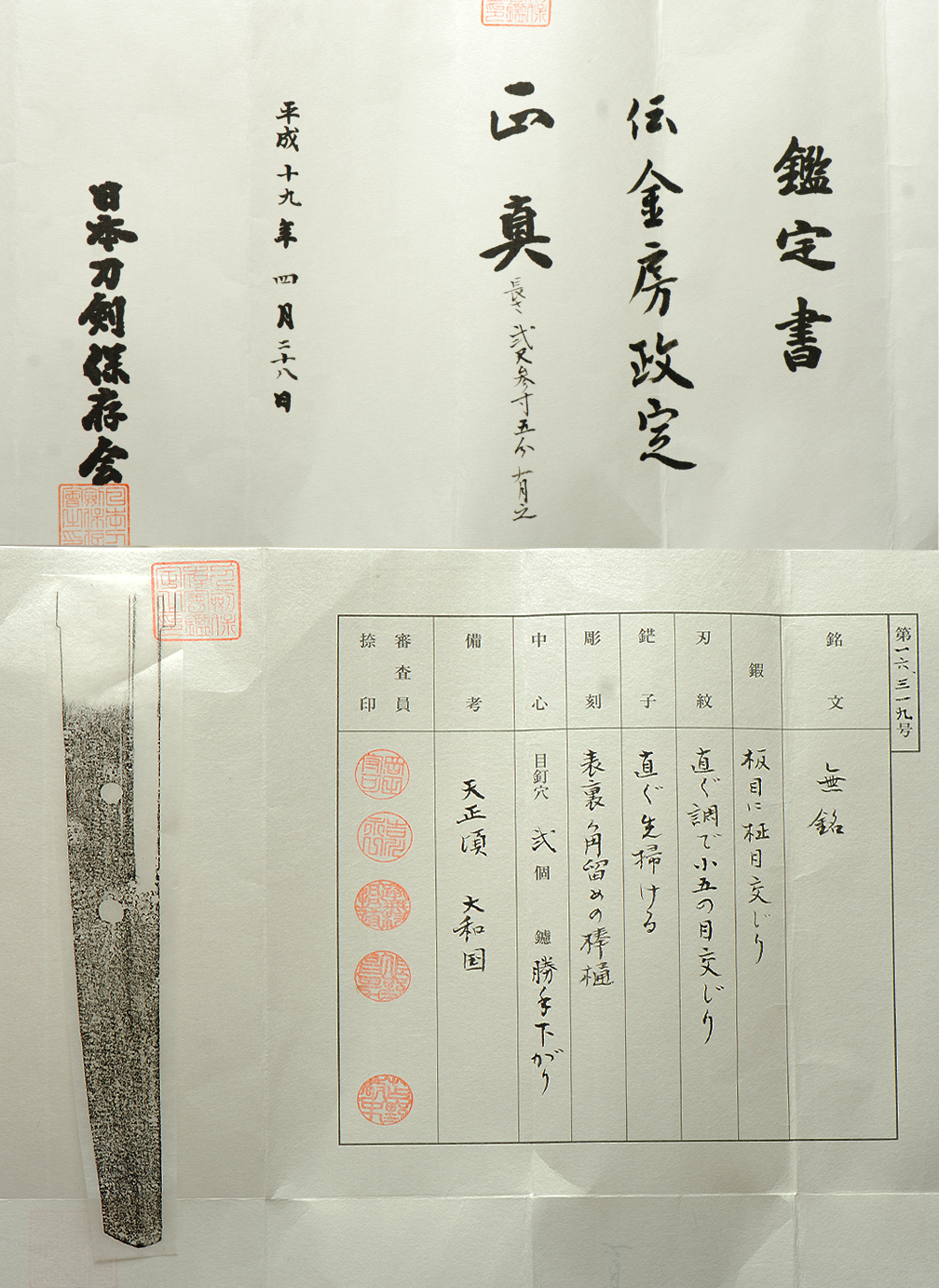
A beautiful mounted koto katana in the Yamato tradition. This blade was attributed to the Kanabo school and is stunning. The blade has bohi and the remnants of a soe hi also on one side. This blade is inundated with hataraki. There are many ashi and yo up and down the blade Based in sugu-ha midare with much choji/gunome within. The hada is an itame nagare with utsuri to be found. About the smith: The meikan list one earlier Masasada (see info below) of whom it seems more blades are going round. Also possible that these were the same guy but who just got listed twice.MASASADA (政定), Tenshō (天正, 1573-1592), Yamato – “Kanabō Saemon no Jō Masasada” (金房左衛門尉政定), Kanabō school. MASASADA (政定), Eiroku (永禄, 1558-1570), Yamato – “Yamato no Kuni Fujiwara Masasada” (大和国藤原政定), “Nanto-jū Fujiwara Ason Kanabō Saemon no Jō Masasada saku” (南都住藤原朝臣金房左衛門尉政定作), Kanabō school (金房), ko-itame mixed with masame and ji-nie, the hamon is a suguha or gunome-midare in ko-nie-deki, wazamono The mounts are ensuite with a dragon theme from tsuba to menuki. The Tsuka-ito and sageo are blue with a stunning red ishime style lacquer finished saya. An attractive koshirae this intricately mounted sword is all of dragons, finished in a red lacquer. This is a rare and exciting mounting for a unique blade. This blade is to be enjoyed for its fine activity and rarity as they are seldom found in such good condition. The legend of the Dragon: Many Chinese believed the dragon held, or at least chased, the sun, and many drawings depict this as a flaming red ball. However, over the years, this sun changed color from red to a silvery-pearl color, and gradually the ball came to be considered a flaming pearl, known as the night shining pearl. It is with this that the dragon is almost invariably associated in art. The link between serpentine shaped dragons and the pearl is reflected in a legend that states that Chi Liang, the Marquis of Sui, who was a Minister of State, was out walking one day, and found a wounded snake to which he gave medicine and saved its life. Sometime later, he saw the snake with a brilliant pearl in its mouth. The snake said ‘I am the son of His Majesty the Dragon, and I am indebted to you for the preservation of my life, and I have brought this pearl to thank you for your kindness.’ The Minister accepted the pearl and, being a dutiful subject, presented it to his sovereign, who placed it in his hall. This sword is on consignment. kantei-sho (鑑定書) – Appraisal Den Kanabô Masasada (伝金房政定) shôshin (正真) – Authentic nagasa 2 shaku 3 sun 5 bu kore ari (長さ弐尺参寸五分有之) – Blade length ~ 71.2 cm Heisei 19 nen 4 gatsu 28 nichi (平成十九年四月二十八日) – April 28th 2007 Nihon Tôken Hozon Kai (日本刀剣保存会) – NTHK No 16,319 meibun (銘文) – Signature: mumei kitae (鍛) – Forging: itame mixed with masame hamon (刃紋) – Hardening: sugu-chô mixed with ko-gunome bôshi (鋩子) – Hardening in tip: sugu with hakikake at the tip chôkoku (彫刻) – Engravings: on both sides a bôhi that ends in kakudome nakago (中心) – Tang: mekugi-ana (目釘穴) 2, yasurime (鑢): katte-sagari bikô (備考) – Remarks: around Tenshô (天正, 1573-1592), Yamato province shinsa’in natsu’in (審査員捺印) – Seals of Judges: 5 seals

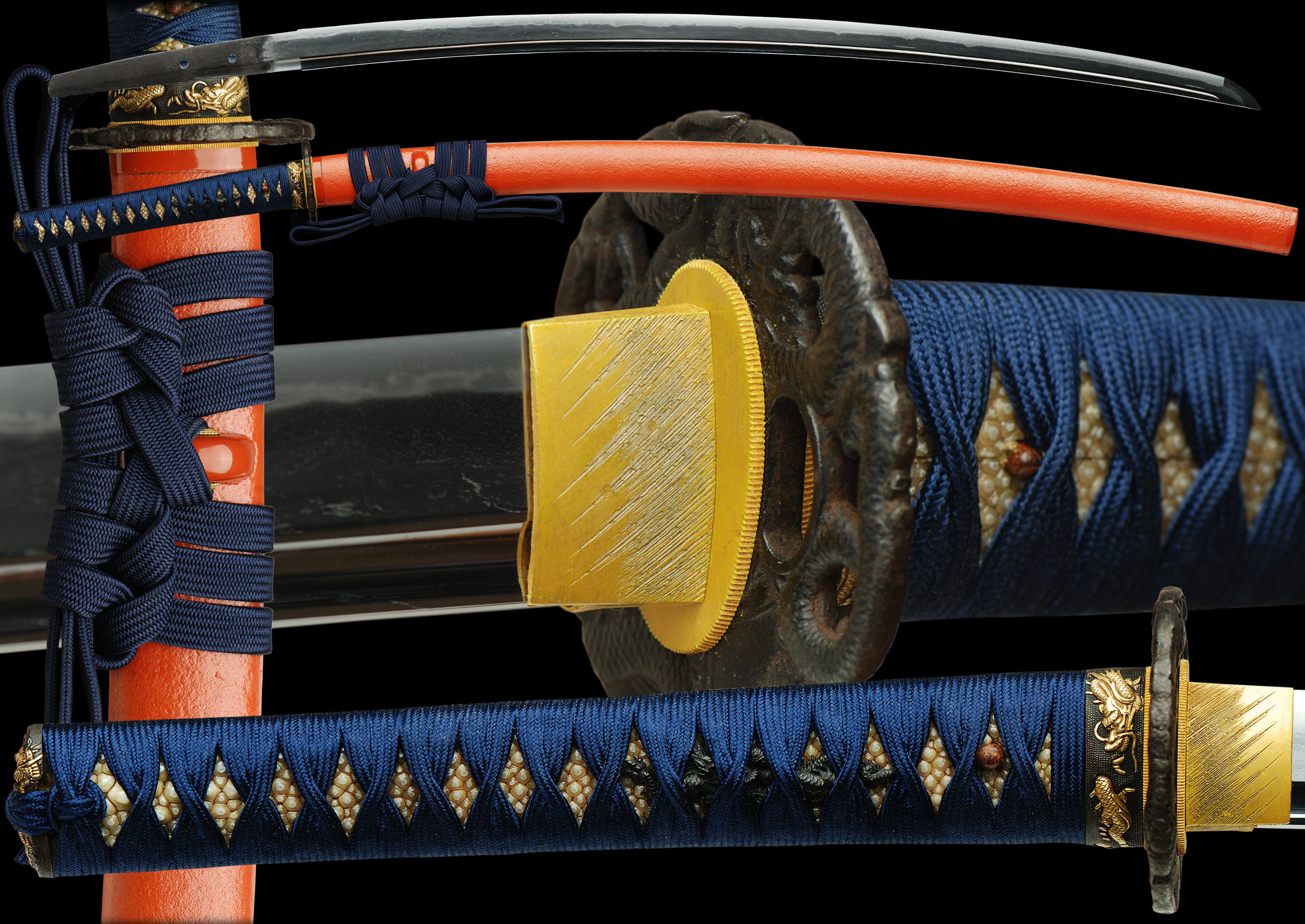

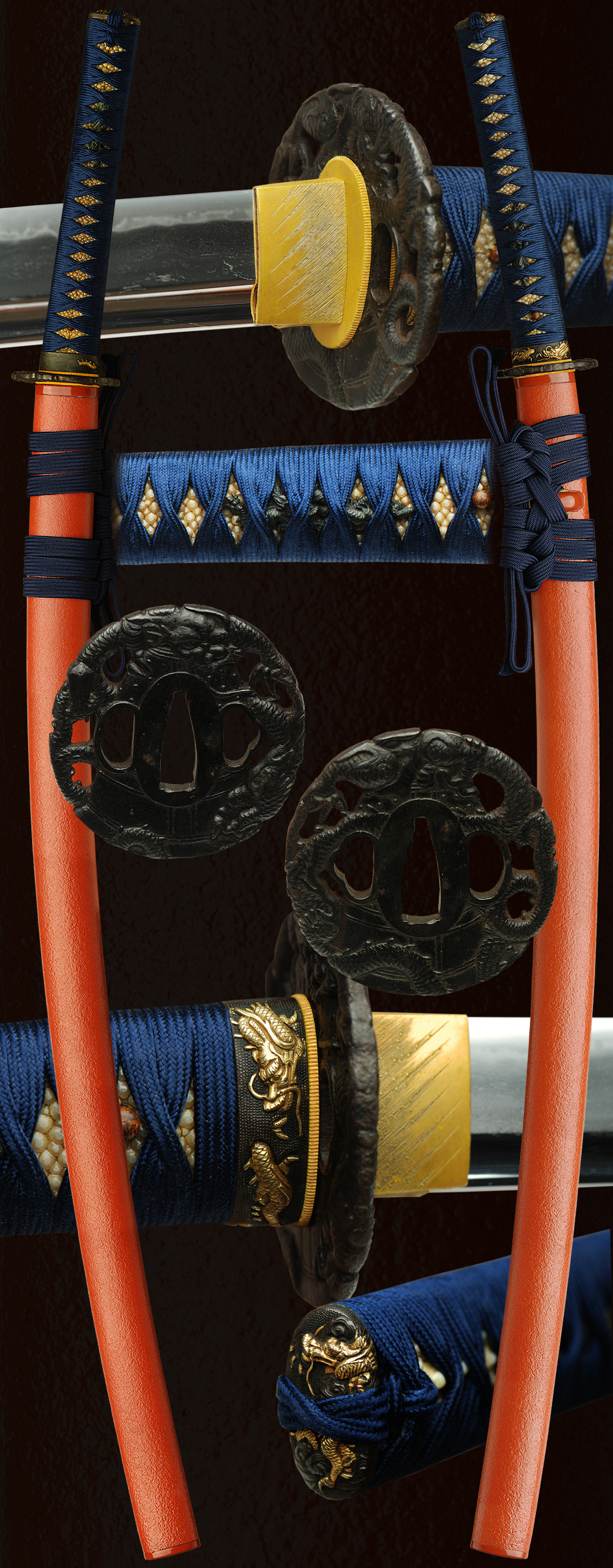
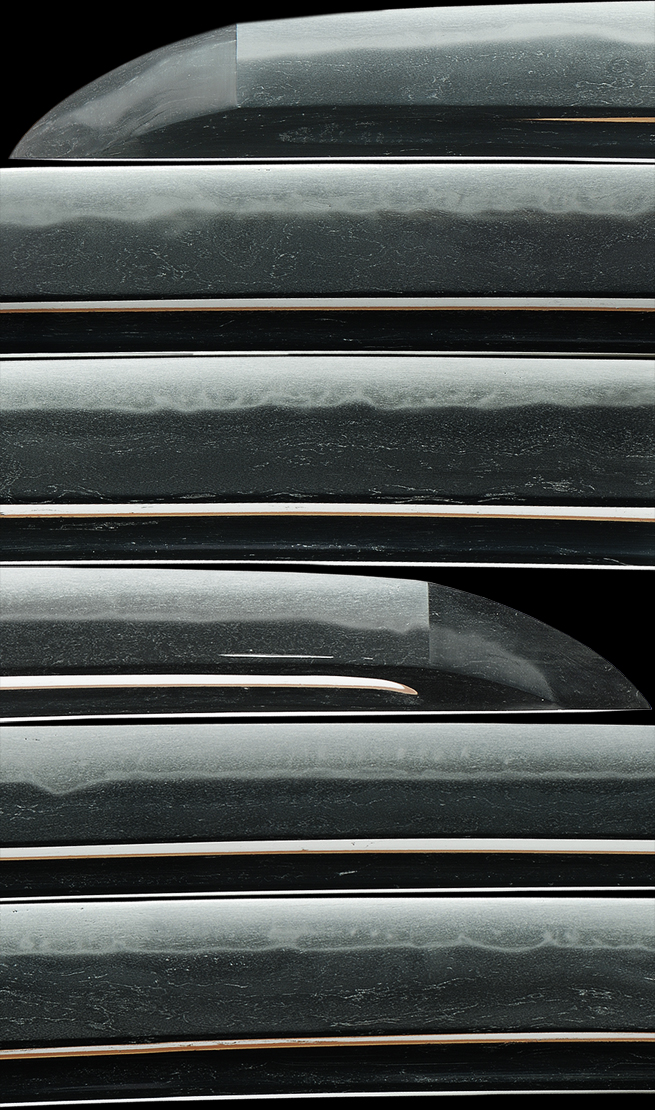
販売店の記載のまま
脇物 · 大和
現在9点販売中
金房派は、大和国奈良すなわち南都を本拠として室町末期から新刀期にかけて活動した一群である。説示によれば、金房某と銘する刀工が数多く知られて栄え、永正以降の年紀作をままみるという。同派の代表工としては政次があり、南都住金房兵衛尉政次と長銘を切る。ほかに政定が伝わり、南都住藤原朝臣金房左衛門尉政定作と銘し、永禄二年の年紀を有する作が知られる。大和の伝統的な五派との関係は明らかでないと説示は記しており、同地に拠りながらも別個の一派として隆盛をみたものと位置づけられる。同派に薙刀の遺例が比較的目立つのは、興福寺をはじめとする南都七大寺の僧兵の需要にこたえたものと説示は説く。 作風について説示が共通して挙げるのは、板目が流れて柾がかり、肌立つ鍛であり、地沸のつくもの、白気映りの立つものがみられる点である。刃文は、説示の一には直刃が最も多いとし、ほかにのたれや互の目を焼くと記すが、互の目調の大乱を主とする作も多く、腰の開いた互の目乱れに小足・葉のよく入るもの、足・葉が太く入るものが見受けられる。匂口は締まりごころとなるものを多く挙げ、一方で沈みごころとなるものにも触れる。帽子は乱れ込んで掃きかけ、先尖りごころに返るものや、やや長く焼き下げるものがある。造込みは身幅広く反り浅い大鋒の打刀姿を採り、末備前・末関などと共通する姿を示すと説示は述べ、薙刀造の作と併せて、実用に応じた一派の性格をうかがわせる。彫物には棒樋や倶利迦羅を施す例があり、茎は生ぶ、鑢目は勝手下りや筋違を交える。 鑑定にあたっては、柾がかって流れる板目鍛と、足・葉の目立つ互の目調の刃を要点とし、薙刀を含む実用本位の造込みを併せて見るべきものである。代表作としては政次の長大な薙刀があり、説示はこれを同派中の著名な一典型とする。政定の打刀には永禄の年紀と倶利迦羅の彫を備えた作が伝わる。なお薙刀には朱塗長巻拵などを附帯し、中身の製作に合わせて誂えられ、金具・塗りともそのままに保存される例もある。資料は僅少であるが、説示の記すところに従えば、金房派は大和奈良に拠りつつ伝統的な大和伝とは異なる作風を展開し、僧兵の需要を背景に薙刀と実用の刀槍を手がけた、室町末期を代表する一派として理解される。 詳しく見る →
NTHKの中心的な鑑定書で、相応の出来を備えた作に発行されます。在銘作は銘の正真を、無銘作は審査員による刀工・流派の極めを示します。点数を記す詳細な審査表が付されます。
NTHK(日本刀剣保存会)は、NBTHK(1948年設立)に先立つ1910年に創立された、日本で最も古い刀剣鑑定団体です。長く会を率いた会長の没後、NTHKとNTHK-NPOの二つに分かれ、いずれも審査を続けています。NTHKの鑑定書は、点数と審査員の所見を併記する詳細な審査表が特徴で、特に無銘作の極めに定評があります。
We offer a 48 hour inspection period for all Antique items shipped within the United States only. If the item is not to your satisfaction, we will gladly refund your money less any shipping and handling fees. All sales are final after the 48 hour inspection period. Please note that all discounted items are a final sale and not returnable.