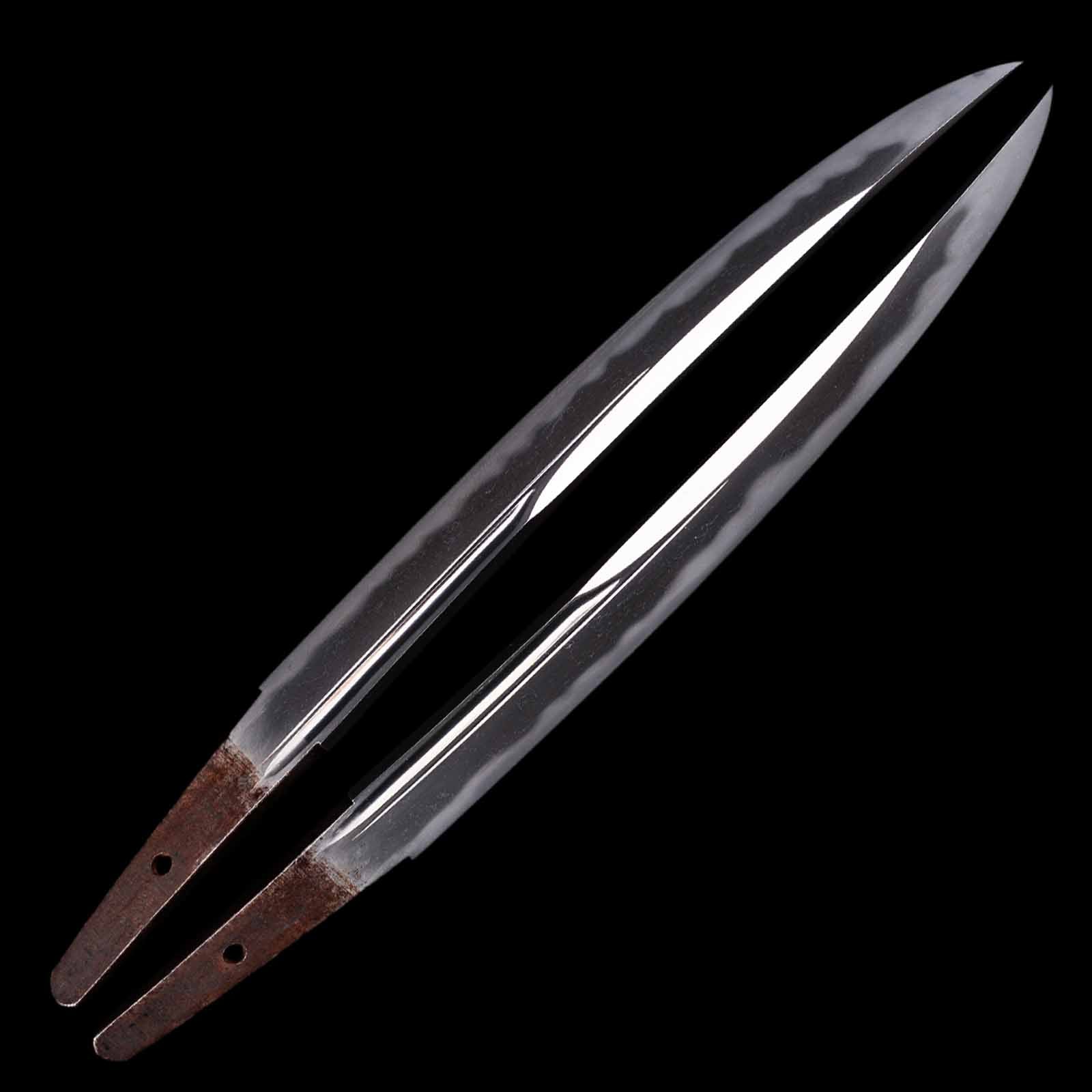
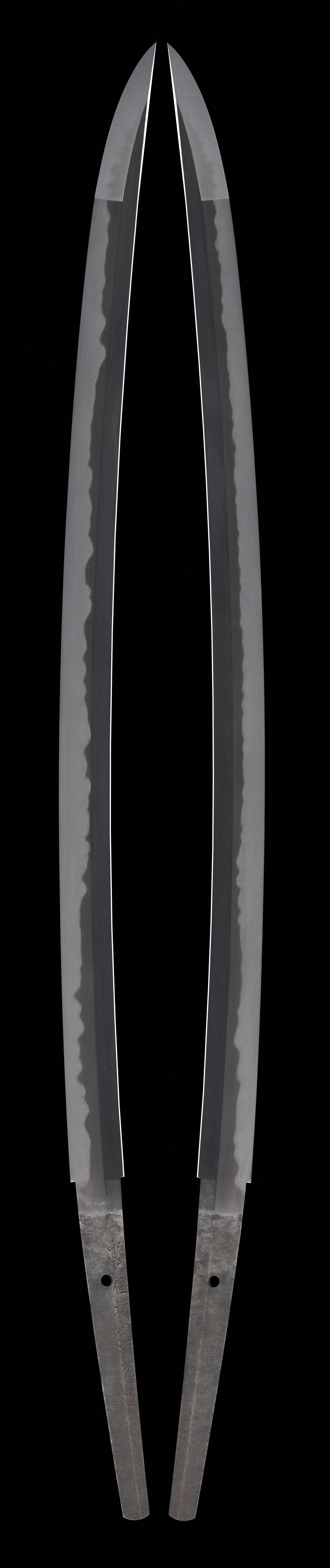
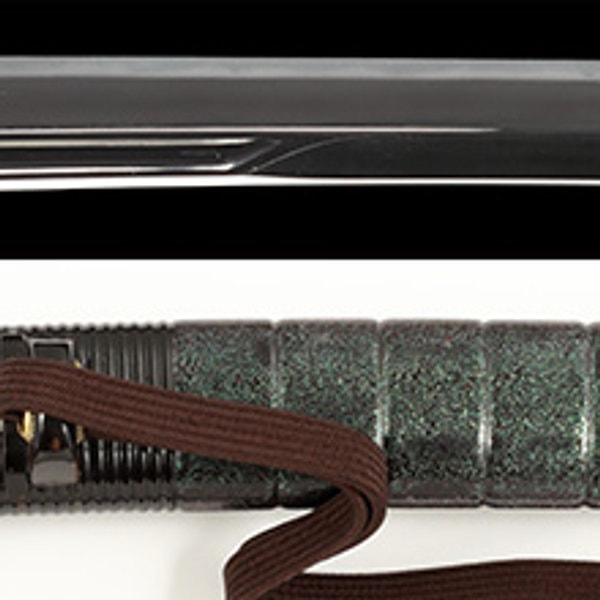
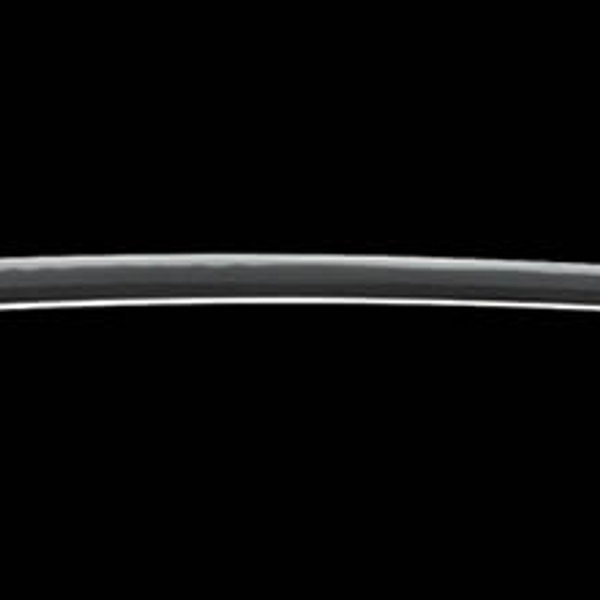
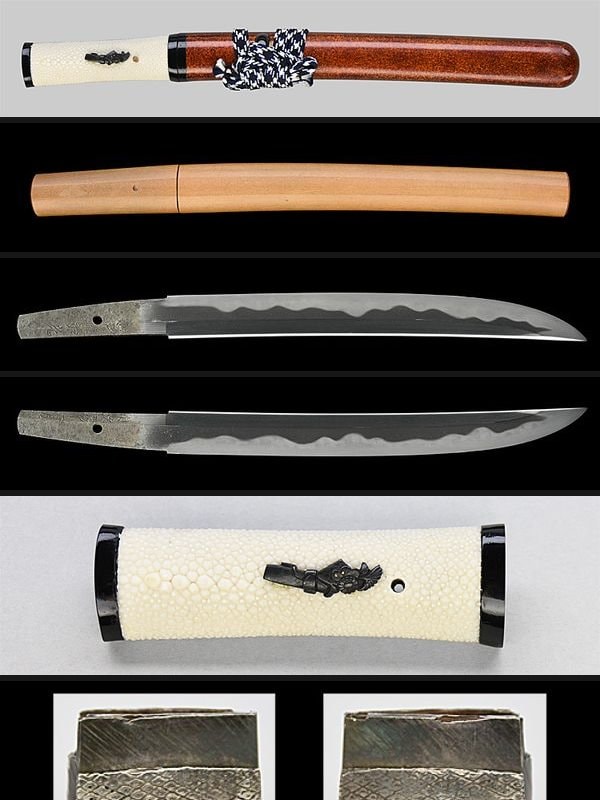
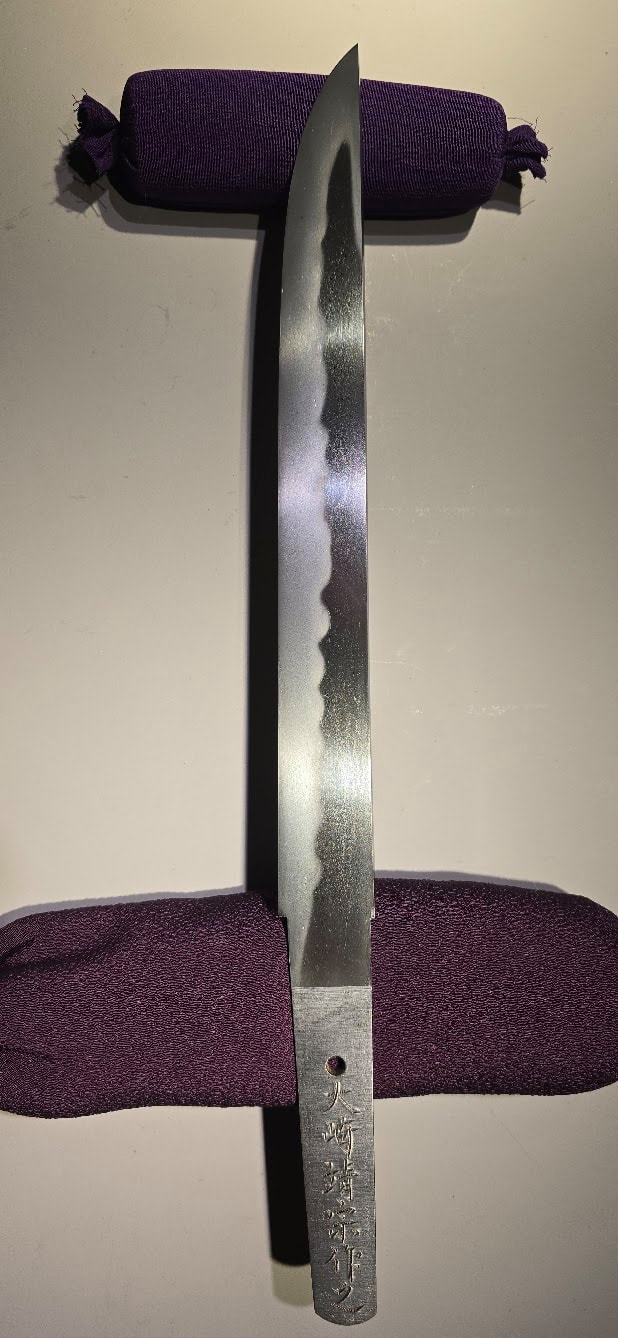
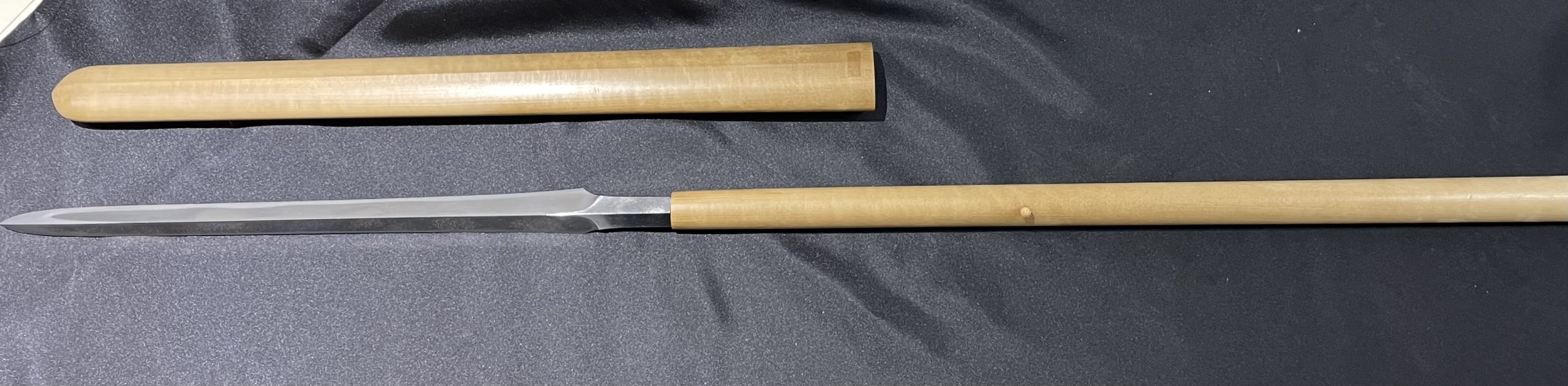
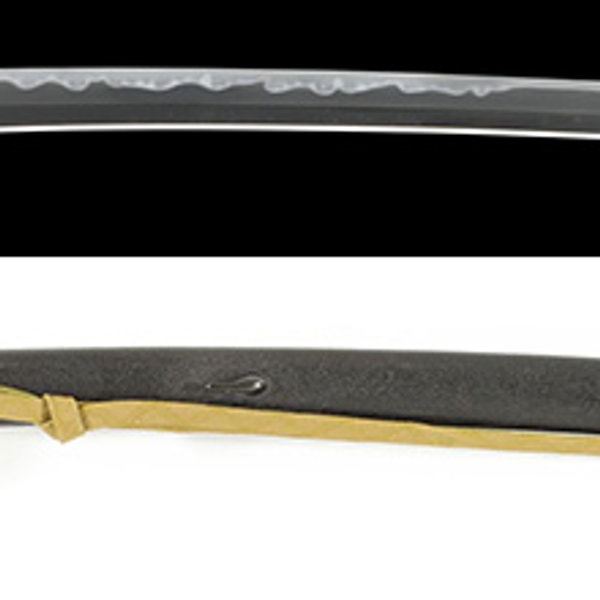
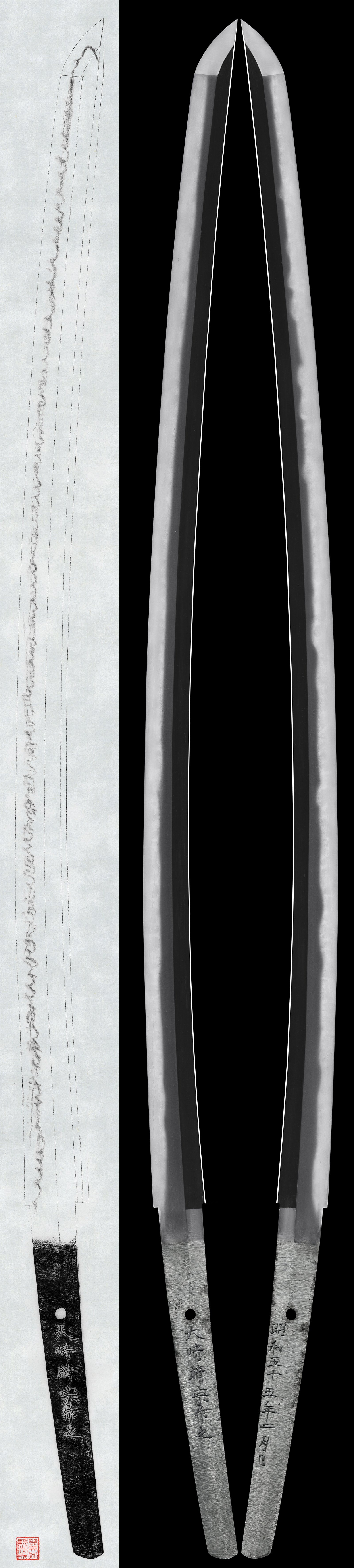
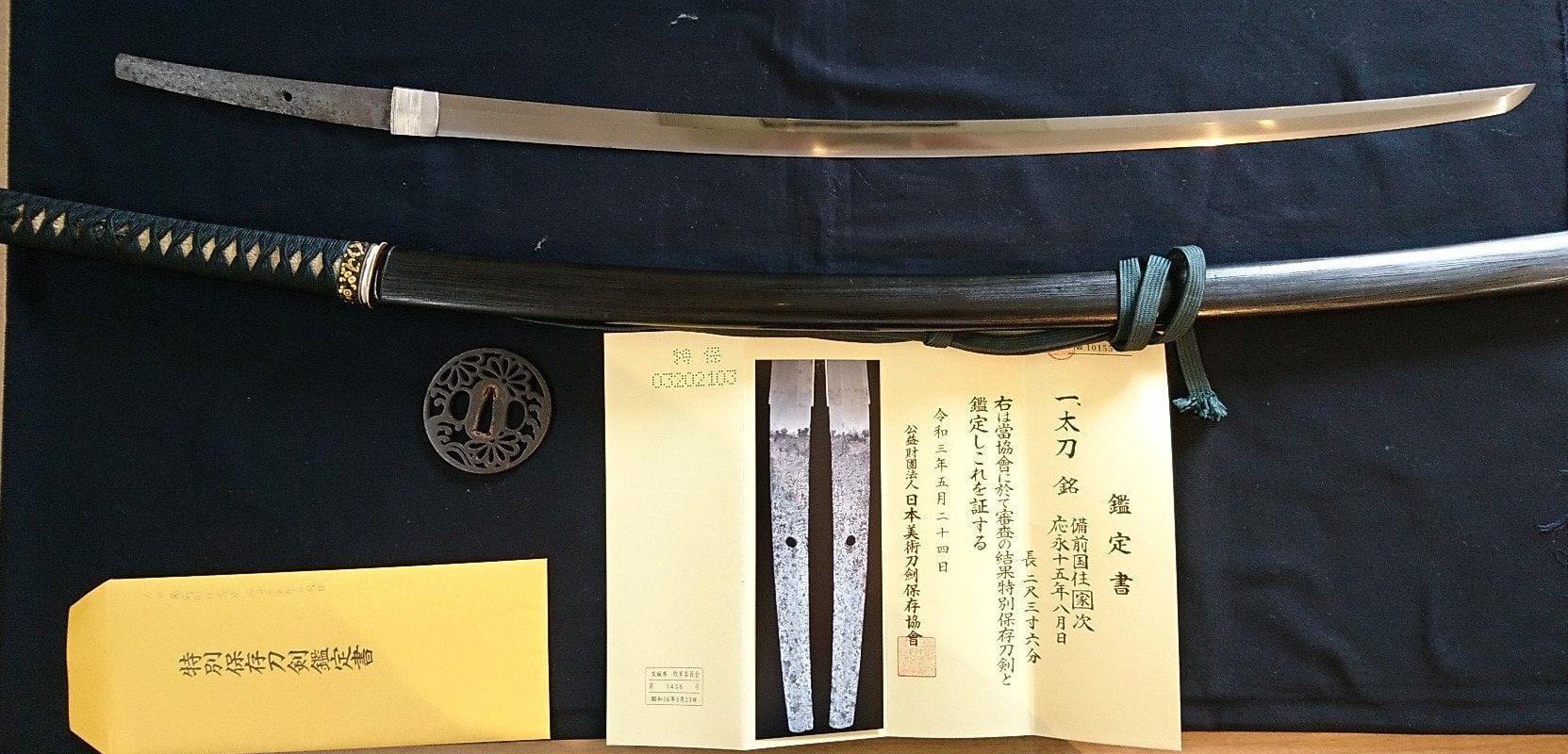
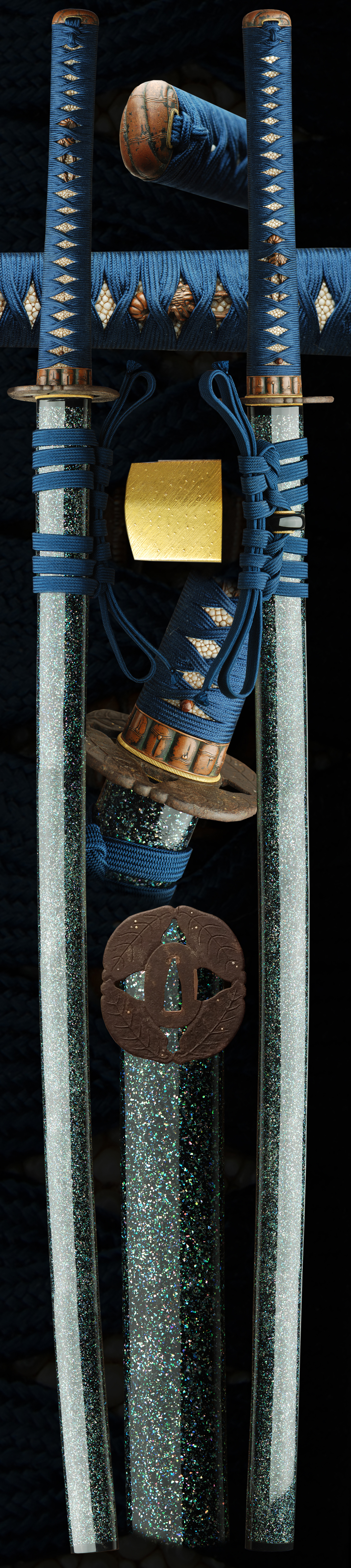
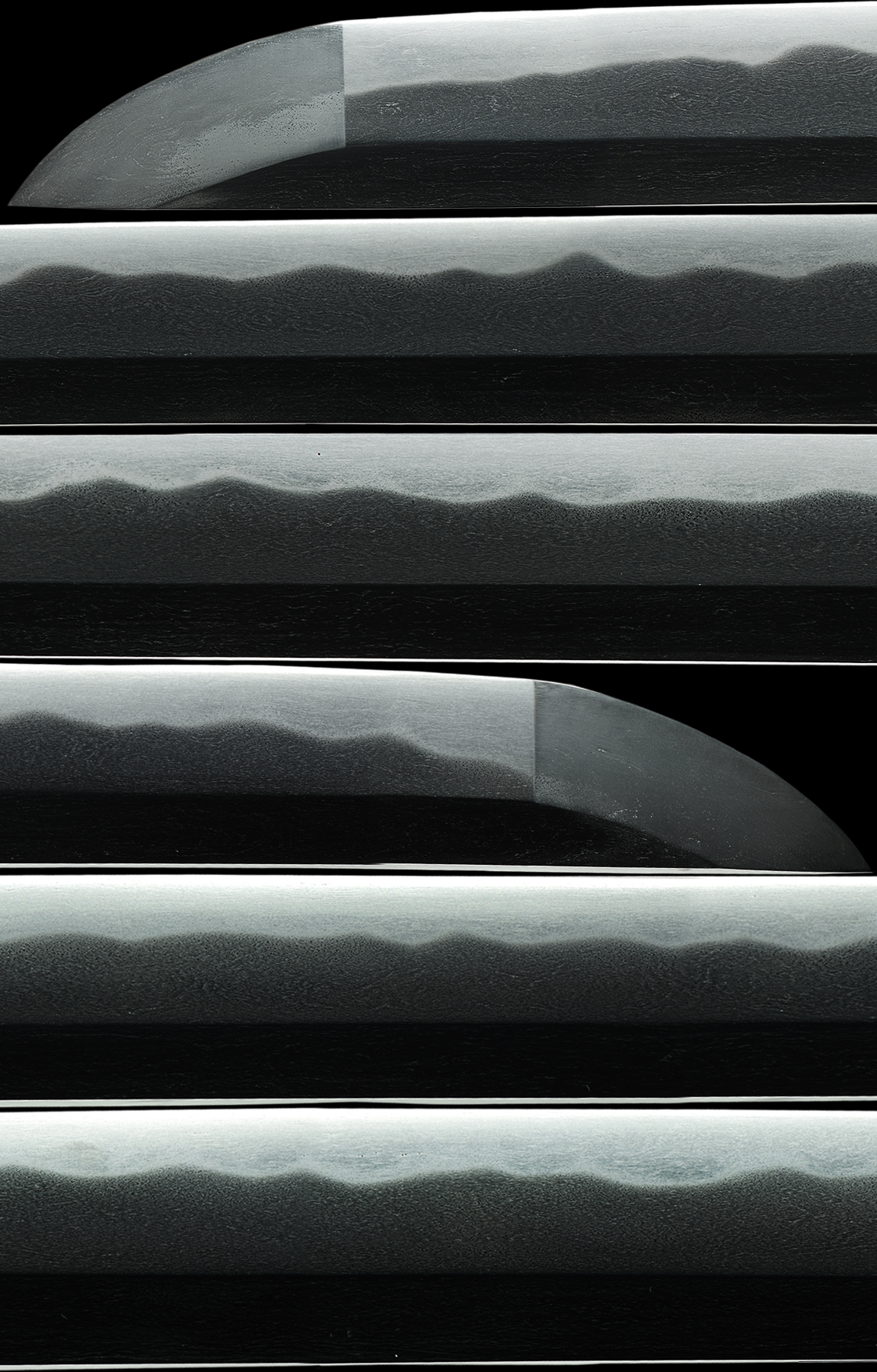
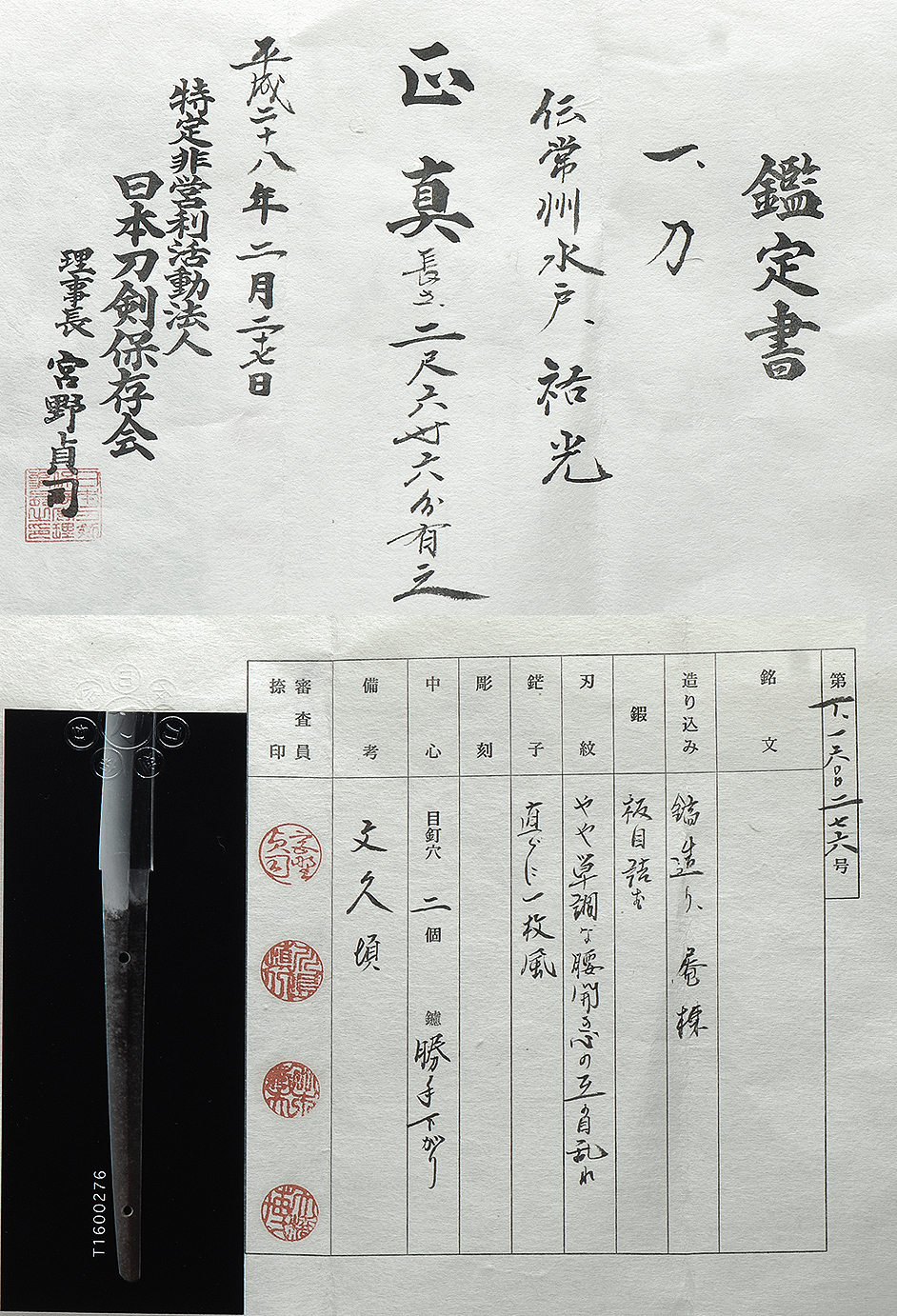
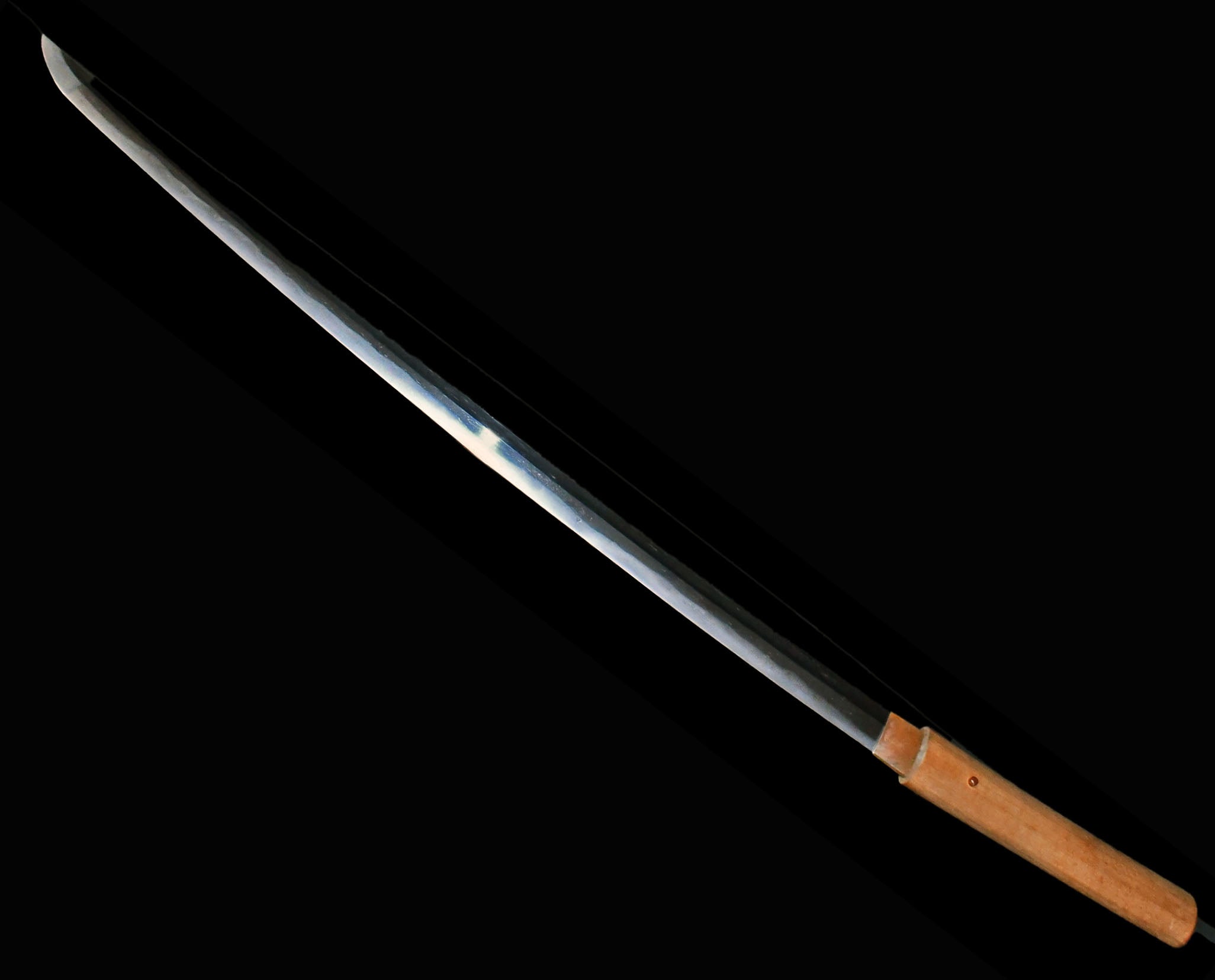
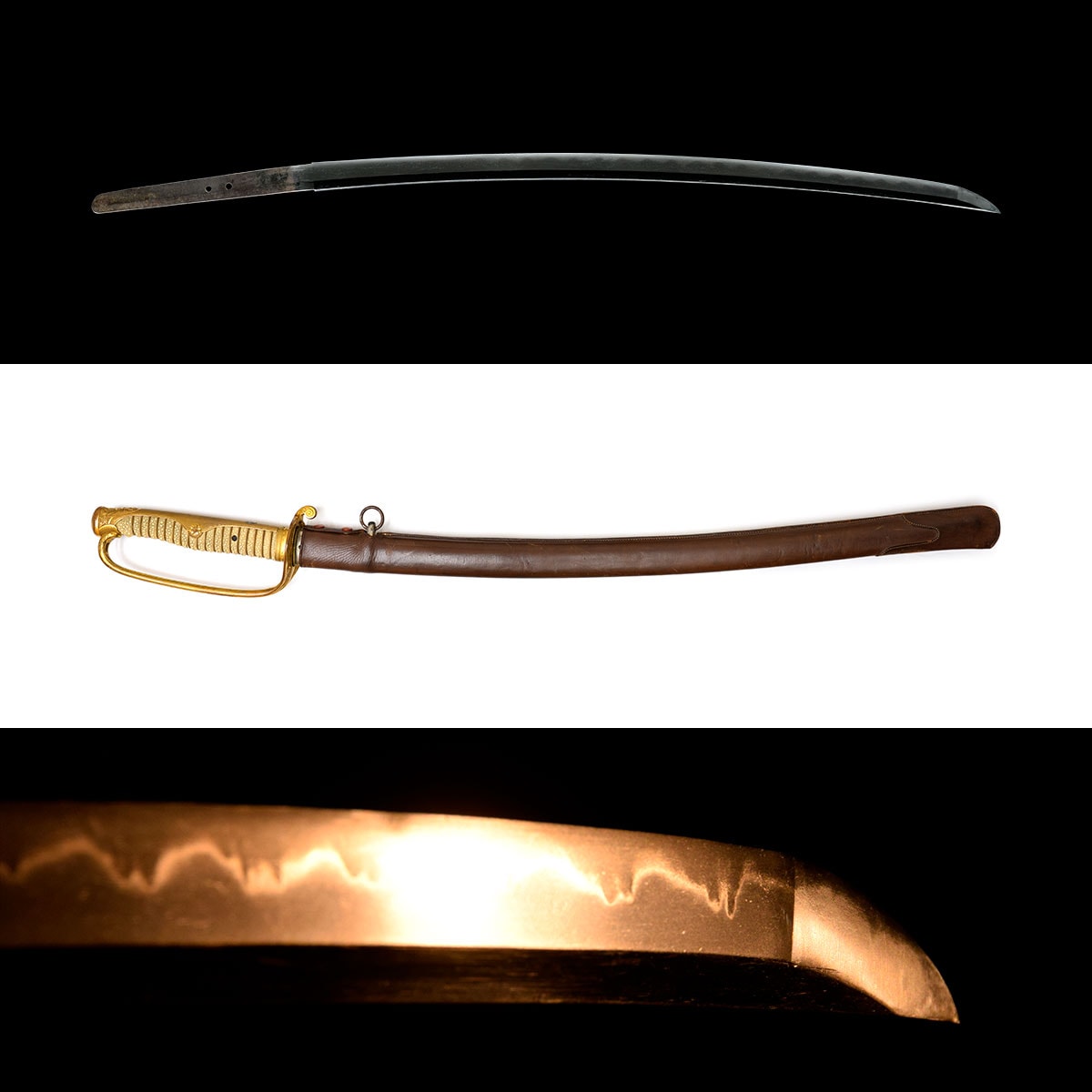
Jôshû Mito, Sukemitsu (fss-727) A beautiful katana in the tradition of the Bizen school this sword exemplifies the late Bizen school of the Shinshinto era. As you can see in our new High Resolution photographs the hamon is an active mixture of large midare/gunome with an overall elegant shape. There is ara-nie in abundance and hotsure. The boshi is a sugu that tends to ichimai on one side. A very nice feature to study. The hada is a ko-itame with mokume mix and ji-nie appears, a beautiful tight hada to accentuate this glowing hamon. The sword has a wonderful curvature and the overall sugata suggests a time forgotten. A long sword at 31+” katana like this one is not always easily found in flawless condition.The swordsmith:SUKEMITSU (祐光), Ansei (安政, 1854-1860), Hitachi – “Suifu ni oite Yokoyama Sukemitsu saku” (於水府横山祐光作), “Mito-jū Sukemitsu kore o tsukuru” (水戸住祐光造之), “Suifu-jū Yokoyama Fujiwara Sukemitsu saku” (水府住横山藤原祐光作), real name Yokoyama Kajūrō (横山嘉十郎, the first name can also read Yoshijūrō), he is also listed with the first name Kijūrō (喜十郎), he was born in the third year of Bunsei (文政, 1820) as third son of a certain Taguchi Gon ́emon (田口権右衛門) in Edo, there he studied under a not further specified Yokoya smith and was allowed the use the family name Yokoyama (横山), in the second year of Kaei (嘉永, 1849) he was employed by the Mito fief (水戸藩) by recommendation of Norikatsu (徳勝) and received a stipend for the support of seven persons, he died on the 13th day of the seventh month Meiji six (明治, 1873) in his house in Mito ́s Hachiman (八幡) at the age of 54, suguha, gunome-midare, chūjō-sakuThe koshirae is clean and fundamental with menuki of crayfish against a beautiful pattern of Same. The tsuba is iron and very strong. An incredible full lacquered saya of crushed Abalone shell to finish the mounts in true samurai style. The blade is in full polish.The koshirae:These are clean solid mounts with copper menuki of Ebi/lobster against a beautiful pattern of Same. The tsuba is a clean design of bamboo leaves. The fuchi and kashira are also copper in a bamboo motif. An incredible full lacquered saya of crushed Abalone shell to finish the mounts in true samurai style. The blade is in full polish and is fully restored adding to its overall value. The Sageo is in blue to match the tsuka ito. The habaki, seppa and shitidome are all finished in a gold patina to match. Mei:Mumei, Attributed to Jôshû Mito, Sukemitsu (伝常州水戸、祐光)Date:Edo (1800’s)Nagasa:31-3/4inchesSori:10.0 mmWidth at the ha-machi:30.7 mmWidth at the yokote:20.5 mmThickness at the mune-machi:8.3 mmConstruction:Shinogi zukuriMune:IoriNakago:UbuKitae:Ko-ItameHamon:Midare GunomeBoshi:sugu that tends to ichimaiCondition:New polish kantei-sho (鑑定書) – Appraisal katana (刀)Den Jôshû Mito, Sukemitsu (伝常州水戸、祐光)shôshin (正真) – Authenticnagasa 2 shaku 6 sun 6 bu kore ari (長さ二尺六寸六分有之) – Blade length ~80.6 cmHeisei 28 nen 2 gatsu 27 nichi (平成二十八年二月二十七日) – February 27th 2016Non Profit Organization (特定非営利活動法人)Nihon Tôken Hozon Kai (日本刀剣保存会) – NTHKBoard Chairman (理事長): Miyano Teiji (宮野貞司)No T-1600276meibun (銘文) – Signature: Mumeitsukurikomi (造り込み) – Shape: shinogi-zukuri, iori-munekitae (鍛) – Forging: dense itamehamon (刃紋) – Hardening: gunome-midare that tends to koshi no hiraitabôshi (鋩子) – Hardening in tip: sugu that tends to ichimaichôkoku (彫刻) – Engravings:nakago (中心) – Tang: mekugi-ana (目釘穴) 2, yasurime (鑢): katte-sagaribikô (備考) – Remarks: around Bunkyû (文久, 1861-1864) shinsa’in natsu’in (審査員捺印) – Seals of Judges: 4 seals Subscribe for the Latest Updates!Join our mailing list to receive the latest News & Updates fromNihonto Antiques.SUBSCRIBEYou have Successfully Subscribed!Your email address will be kept private & will only be used to send updates from this site!
 NihontoWatchBETA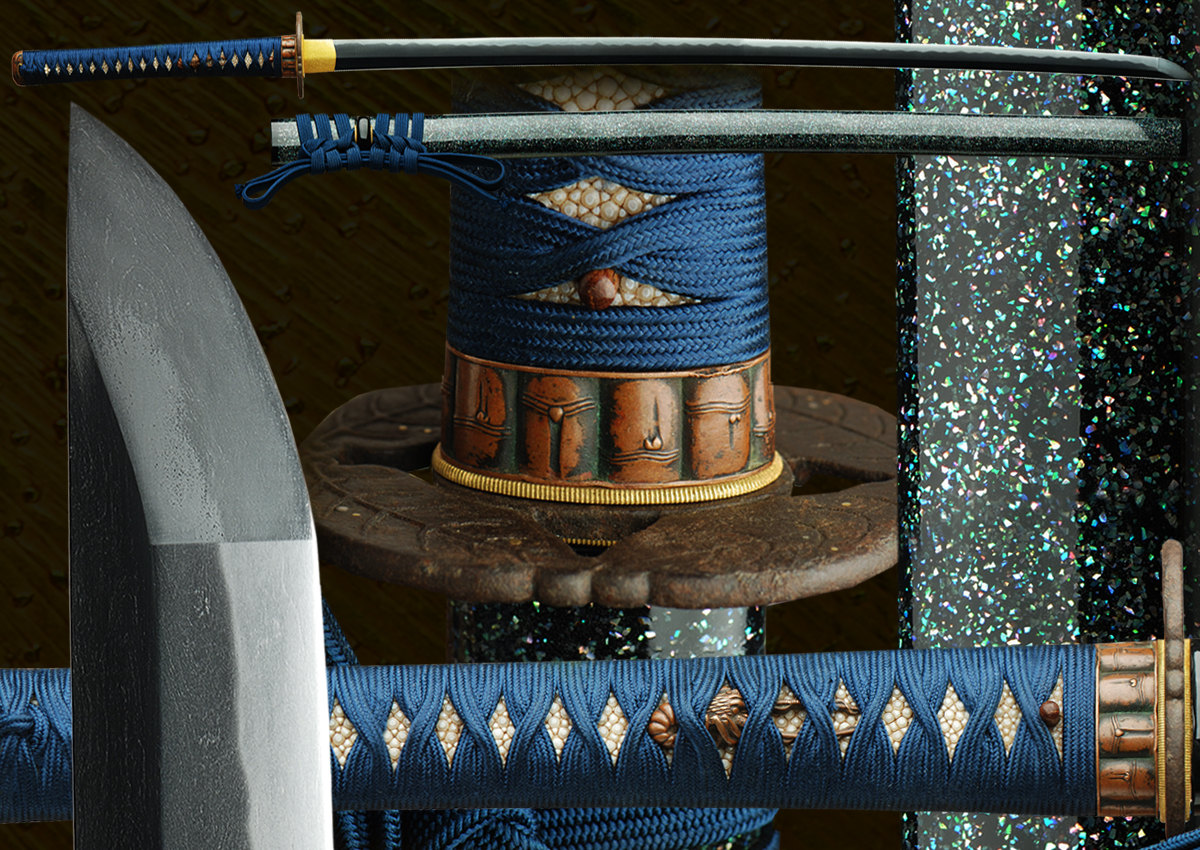

常陸 · 1854-1860頃
藤代 Chu saku · 刀剣大鑑 上位95%
現在1点販売中
NTHKの中心的な鑑定書で、相応の出来を備えた作に発行されます。在銘作は銘の正真を、無銘作は審査員による刀工・流派の極めを示します。点数を記す詳細な審査表が付されます。
NTHK(日本刀剣保存会)は、NBTHK(1948年設立)に先立つ1910年に創立された、日本で最も古い刀剣鑑定団体です。長く会を率いた会長の没後、NTHKとNTHK-NPOの二つに分かれ、いずれも審査を続けています。NTHKの鑑定書は、点数と審査員の所見を併記する詳細な審査表が特徴で、特に無銘作の極めに定評があります。
We offer a 48 hour inspection period for all Antique items shipped within the United States only. If the item is not to your satisfaction, we will gladly refund your money less any shipping and handling fees. All sales are final after the 48 hour inspection period. Please note that all discounted items are a final sale and not returnable.
Jôshû Mito, Sukemitsu (fss-727) A beautiful katana in the tradition of the Bizen school this sword exemplifies the late Bizen school of the Shinshinto era. As you can see in our new High Resolution photographs the hamon is an active mixture of large midare/gunome with an overall elegant shape. There is ara-nie in abundance and hotsure. The boshi is a sugu that tends to ichimai on one side. A very nice feature to study. The hada is a ko-itame with mokume mix and ji-nie appears, a beautiful tight hada to accentuate this glowing hamon. The sword has a wonderful curvature and the overall sugata suggests a time forgotten. A long sword at 31+” katana like this one is not always easily found in flawless condition.The swordsmith:SUKEMITSU (祐光), Ansei (安政, 1854-1860), Hitachi – “Suifu ni oite Yokoyama Sukemitsu saku” (於水府横山祐光作), “Mito-jū Sukemitsu kore o tsukuru” (水戸住祐光造之), “Suifu-jū Yokoyama Fujiwara Sukemitsu saku” (水府住横山藤原祐光作), real name Yokoyama Kajūrō (横山嘉十郎, the first name can also read Yoshijūrō), he is also listed with the first name Kijūrō (喜十郎), he was born in the third year of Bunsei (文政, 1820) as third son of a certain Taguchi Gon ́emon (田口権右衛門) in Edo, there he studied under a not further specified Yokoya smith and was allowed the use the family name Yokoyama (横山), in the second year of Kaei (嘉永, 1849) he was employed by the Mito fief (水戸藩) by recommendation of Norikatsu (徳勝) and received a stipend for the support of seven persons, he died on the 13th day of the seventh month Meiji six (明治, 1873) in his house in Mito ́s Hachiman (八幡) at the age of 54, suguha, gunome-midare, chūjō-sakuThe koshirae is clean and fundamental with menuki of crayfish against a beautiful pattern of Same. The tsuba is iron and very strong. An incredible full lacquered saya of crushed Abalone shell to finish the mounts in true samurai style. The blade is in full polish.The koshirae:These are clean solid mounts with copper menuki of Ebi/lobster against a beautiful pattern of Same. The tsuba is a clean design of bamboo leaves. The fuchi and kashira are also copper in a bamboo motif. An incredible full lacquered saya of crushed Abalone shell to finish the mounts in true samurai style. The blade is in full polish and is fully restored adding to its overall value. The Sageo is in blue to match the tsuka ito. The habaki, seppa and shitidome are all finished in a gold patina to match. Mei:Mumei, Attributed to Jôshû Mito, Sukemitsu (伝常州水戸、祐光)Date:Edo (1800’s)Nagasa:31-3/4inchesSori:10.0 mmWidth at the ha-machi:30.7 mmWidth at the yokote:20.5 mmThickness at the mune-machi:8.3 mmConstruction:Shinogi zukuriMune:IoriNakago:UbuKitae:Ko-ItameHamon:Midare GunomeBoshi:sugu that tends to ichimaiCondition:New polish kantei-sho (鑑定書) – Appraisal katana (刀)Den Jôshû Mito, Sukemitsu (伝常州水戸、祐光)shôshin (正真) – Authenticnagasa 2 shaku 6 sun 6 bu kore ari (長さ二尺六寸六分有之) – Blade length ~80.6 cmHeisei 28 nen 2 gatsu 27 nichi (平成二十八年二月二十七日) – February 27th 2016Non Profit Organization (特定非営利活動法人)Nihon Tôken Hozon Kai (日本刀剣保存会) – NTHKBoard Chairman (理事長): Miyano Teiji (宮野貞司)No T-1600276meibun (銘文) – Signature: Mumeitsukurikomi (造り込み) – Shape: shinogi-zukuri, iori-munekitae (鍛) – Forging: dense itamehamon (刃紋) – Hardening: gunome-midare that tends to koshi no hiraitabôshi (鋩子) – Hardening in tip: sugu that tends to ichimaichôkoku (彫刻) – Engravings:nakago (中心) – Tang: mekugi-ana (目釘穴) 2, yasurime (鑢): katte-sagaribikô (備考) – Remarks: around Bunkyû (文久, 1861-1864) shinsa’in natsu’in (審査員捺印) – Seals of Judges: 4 seals Subscribe for the Latest Updates!Join our mailing list to receive the latest News & Updates fromNihonto Antiques.SUBSCRIBEYou have Successfully Subscribed!Your email address will be kept private & will only be used to send updates from this site!
NihontoWatchBETA常陸 · 1854-1860頃
藤代 Chu saku · 刀剣大鑑 上位95%
現在1点販売中
NTHKの中心的な鑑定書で、相応の出来を備えた作に発行されます。在銘作は銘の正真を、無銘作は審査員による刀工・流派の極めを示します。点数を記す詳細な審査表が付されます。
NTHK(日本刀剣保存会)は、NBTHK(1948年設立)に先立つ1910年に創立された、日本で最も古い刀剣鑑定団体です。長く会を率いた会長の没後、NTHKとNTHK-NPOの二つに分かれ、いずれも審査を続けています。NTHKの鑑定書は、点数と審査員の所見を併記する詳細な審査表が特徴で、特に無銘作の極めに定評があります。
We offer a 48 hour inspection period for all Antique items shipped within the United States only. If the item is not to your satisfaction, we will gladly refund your money less any shipping and handling fees. All sales are final after the 48 hour inspection period. Please note that all discounted items are a final sale and not returnable.