室町は刀剣業を産業に変えた。徒歩の集団戦とともに打刀が興り、長船と関は数打ち物と注文打ちを並行して産し、勘合貿易は日本刀を数万振の単位で海外へ運んだ。
 NihontoWatchNihontoWatch
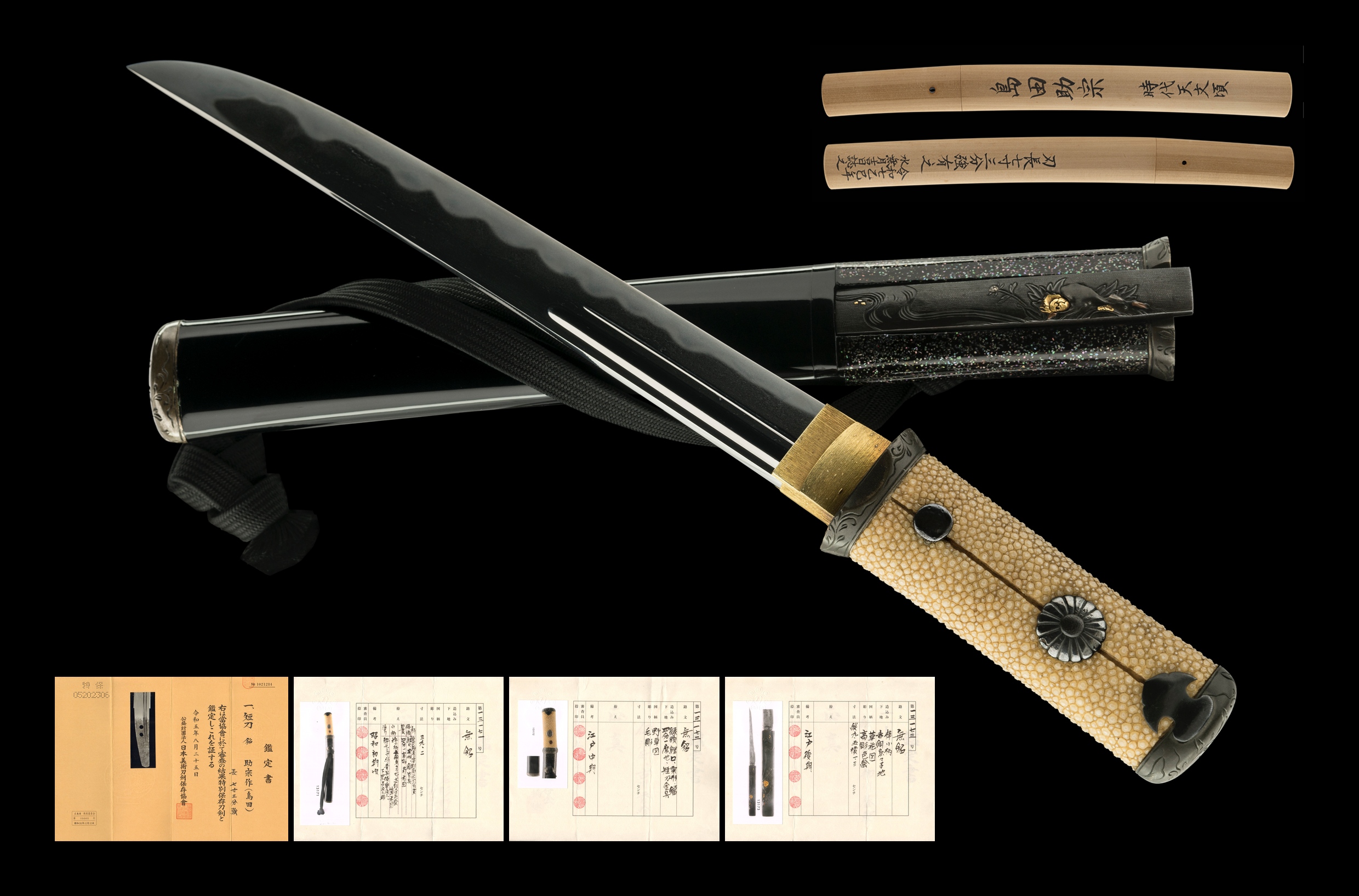
Active in the mid-16th century, during the Tenbun to Eiroku eras of the late Muromachi period, Shimada Sukemune was a wazamono-ranked swordsmith based in Shimada of Suruga province. He flourished under the Imagawa clan and contributed significantly to the development of the Shimada school. Tradition holds that he was the younger brother of the famed Shimada Yoshisuke, and there are accounts of Sukemune forging swords in Kai province under the patronage of Takeda Shingen, a sign that powerful warlords valued his work. This sharp tantô has a wide hirazukuri form with well-forged itame-hada mixed with mokume. The bright, lively hamon of gunome and chôji-midare opens into a flamboyant hitatsura, with patches of muneyaki, scattered tobiyaki in the ji and nie crystals visible to the naked eye. Suruga’s proximity to Sagami, the home of the Sôshû-den, shows in this all-over hardening, in the bold bôhi paired with a slender soebi, and in the bulging funagata (boat-shaped) nakago, a form famously seen in Masamune’s Hôchô tantô. The boshi enters with a gentle midare-komi and returns deeply along the mune with a touch of hakikake, while a light midare-utsuri adds a Bizen twist to this remarkable blade. The tantô is complemented by a regal aikuchi koshirae from the early Shôwa period (1926-1940). Matching shibuichi fittings carry hairline engravings of plants, the menuki feature the chrysanthemum crest (kikumon), and the lacquered saya is sprinkled with mother-of-pearl. A rarely seen screw-style mekugi secures the tsuka. Certification includes an NBTHK Tokubetsu Hozon paper issued in 2023 and NTHK-NPO Kanteisho for the soroi-kanagu, kozuka and koshirae. The shirasaya carries a sayagaki by Nozomi-san dating the blade to around the Tenbun era, and the gold ni-ju habaki shows crisp file marks. A vibrant, energetic tantô with plenty of nihontô character to cherish.
販売店の記載のまま
駿河 · 1532-1555頃
藤代 上作 · 刀剣大鑑 上位37%
室町時代
室町は刀剣業を産業に変えた。徒歩の集団戦とともに打刀が興り、長船と関は数打ち物と注文打ちを並行して産し、勘合貿易は日本刀を数万振の単位で海外へ運んだ。
保存刀剣のうち、出来が一層優れ、保存状態も良好と認められたものです。再刃や、室町・江戸期の多くの無銘作は対象外となり、保存刀剣より高い基準が課されます。
日本美術刀剣保存協会(NBTHK)は、1948年に設立され、文化庁の監督を受ける公益財団法人で、東京・刀剣博物館に本部を置きます。専門の審査員が出品作を直接審査し、美術的・歴史的価値に応じた鑑定書を発行します。NBTHKの鑑定書は、日本刀および刀装具の真正性を示す最も広く認知された基準です。
NBTHK公式サイトAll swords come with a three-day inspection period beginning from the date of delivery. If not satisfied, the sword may be returned within this period for a full refund of the purchase price. Outside of this period, all sales are final. Swords purchased on a layaway payment plan are not eligible for the three-day inspection period.