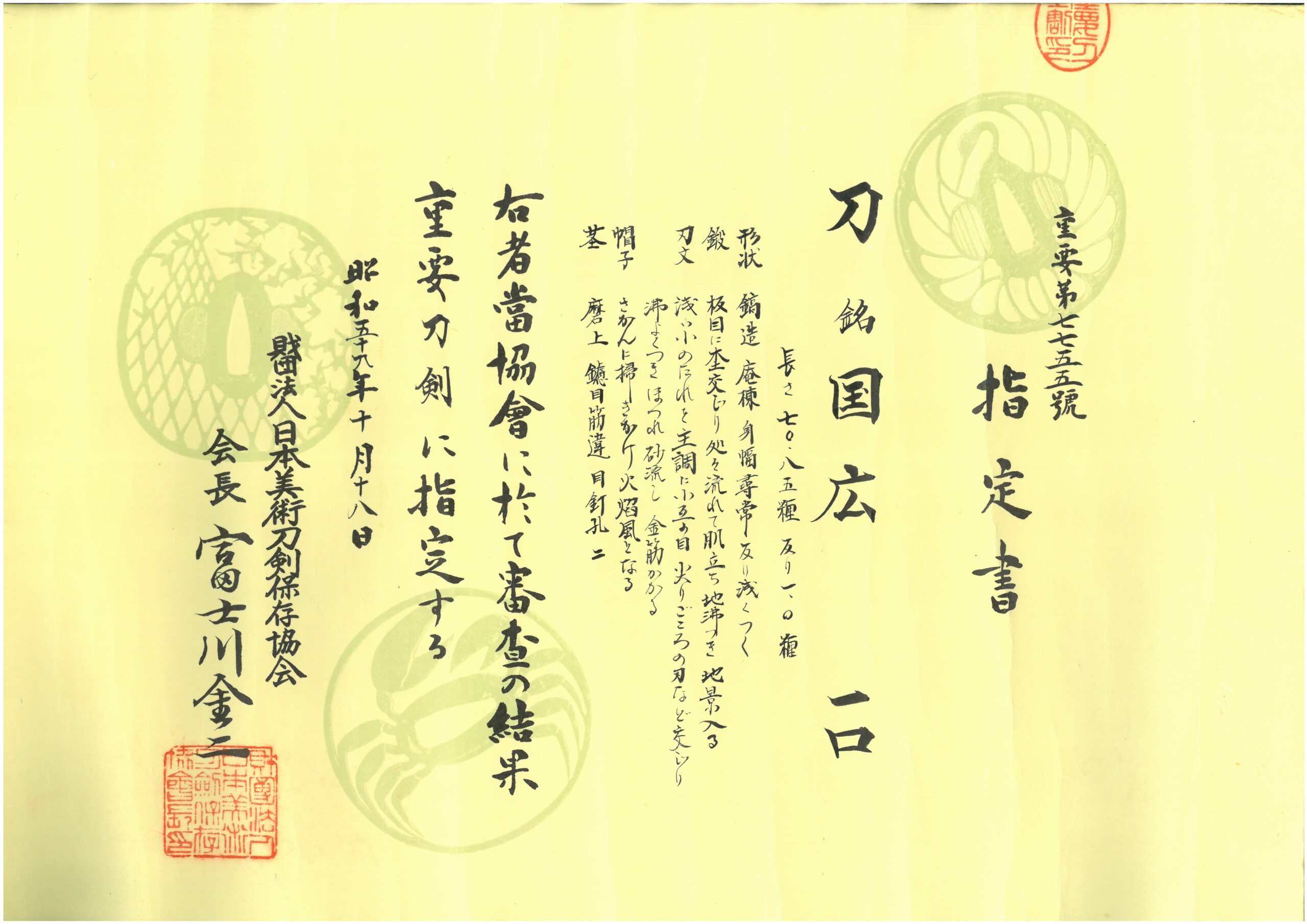
Echigo no Kami Kunitsugu was a disciple of Horikawa Kunihiro, and one tradition holds that he was Kunihiro's nephew. The Kokon Kaji Biko records that he was "born in Obi in Hyuga Province and resided at Ichijo Horikawa in Joshu" and was "a maker of good workmanship." The Shinto Shokan Yoroku adds that "Masahiro and Kunitsugu appear to have been disciples who followed from Hyuga to the capital region." He is regarded as the youngest among Kunihiro's disciples and is seen as, in effect, the mentor who guided fellow-school smiths Izumi no Kami Kunisada and Kawachi no Kami Kunisuke -- an inference drawn from the close resemblance of their early workmanship and signature mannerisms to Kunitsugu's own. A separate smith of the same line, Echizen Daijo Kunitsugu, was among the outstanding students of Dewa Daijo Kunimichi, and it is conjectured that in Kunimichi's later years this Kunitsugu likely served in the capacity of producing daisaku (substitute forging) and dai-mei (substitute signing). A further tradition connects the same individual with the name Hokyo Rai Kunitsugu Nyudo Jutetsu.
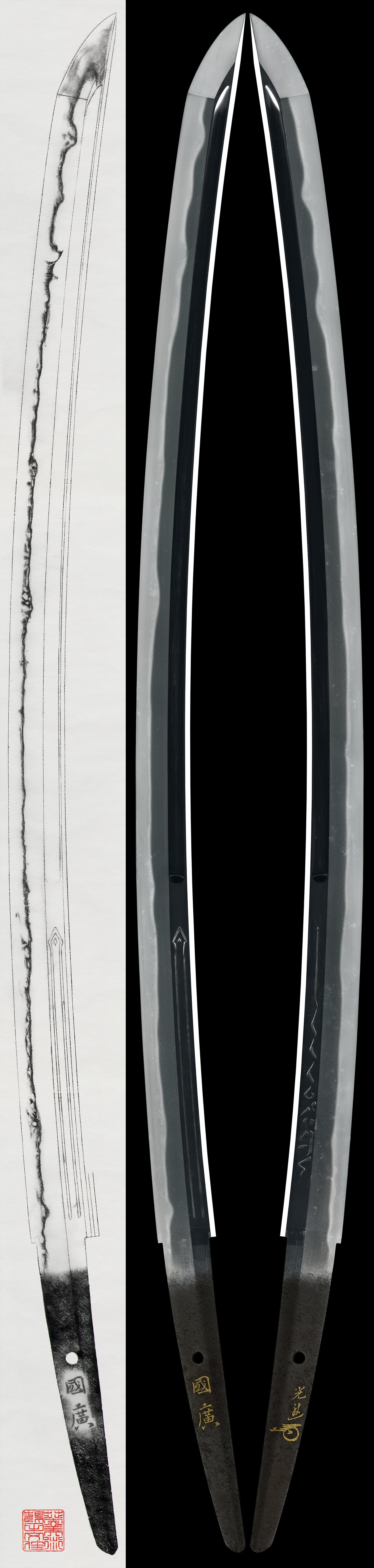
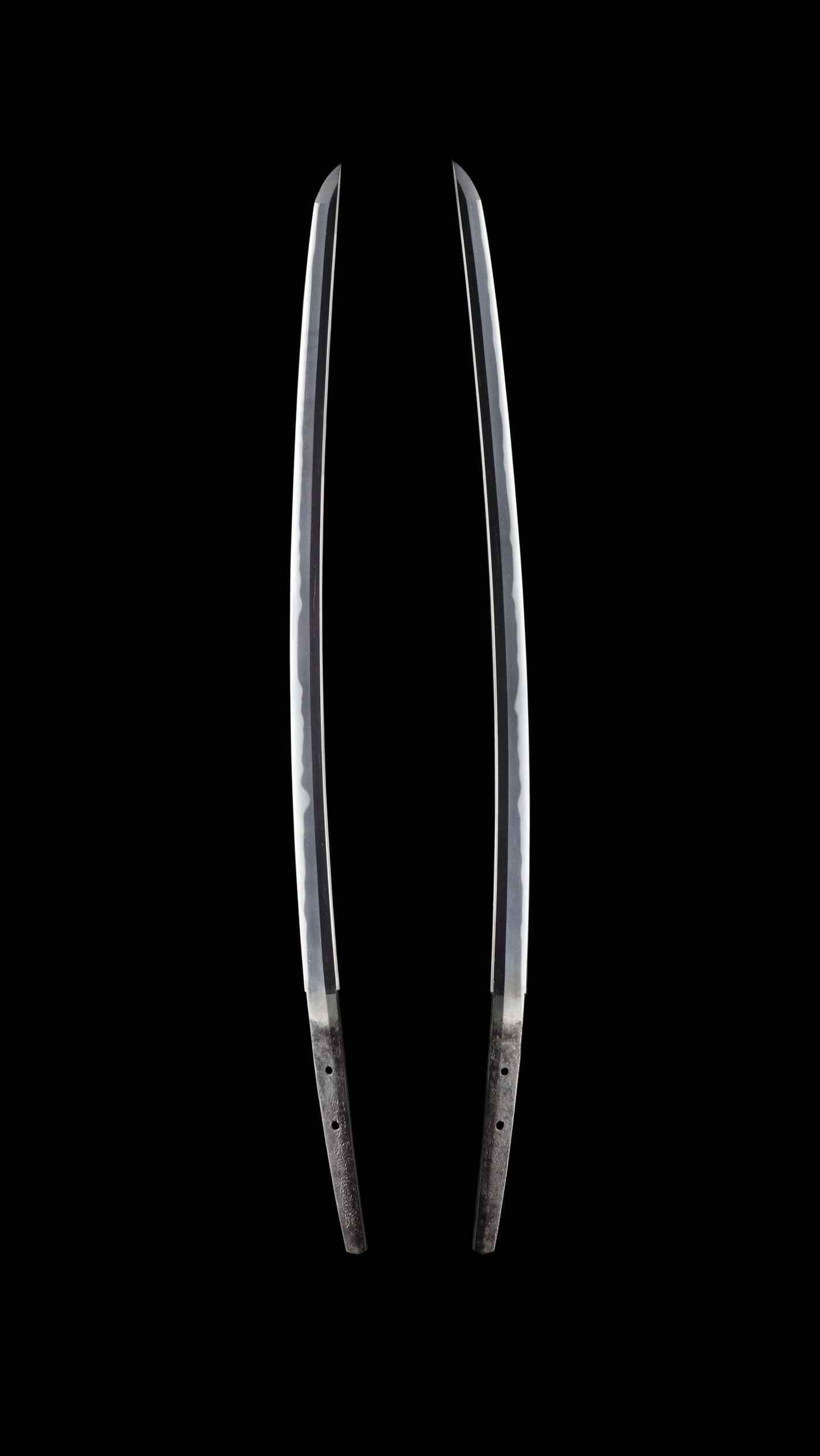
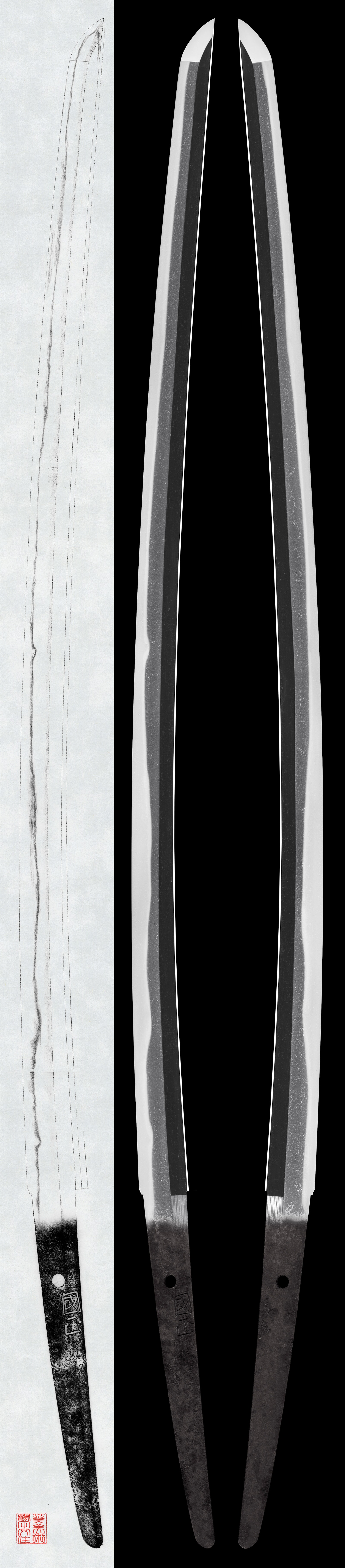
While many Horikawa works are understood as aiming toward the manner of higher-ranked Soshu-den masters such as Shizu and Sadamune, Kunitsugu is distinctive in presenting a style strongly imbued with Mino character -- particularly suggesting an emulation of Izumi no Kami Kaneyuki and the late-Seki mode. His forging shows two broad types: one with prominent grain and a rough zanguri texture typical of Horikawa works generally, and another with more tightly forged jigane in dense ko-itame. The hamon characteristically begins with a suguha yakidashi, followed by ko-notare mixed with gunome, angular, and pointed elements. The nioiguchi tends to tighten and shows a shizumi (subdued) tendency, with nie adhering and fine sunagashi running through. The boshi forms a shallow notare, returning roundly and deeply, often with hakikake. Horimono of koshi-bi, naginata-hi, gomabashi, and suken are frequently encountered.
His signature is invariably cut as the seven characters "Echigo no Kami Fujiwara Kunitsugu," and no dated works are known. The arrangement of the signature is slightly distorted, with characters gradually growing larger as they descend -- a point especially worth noting in his tang construction. Relative to the blade, the tang tends to be short, and within the Horikawa group his chisel is described as the finest. Forms such as unokubi-zukuri and kanmuri-otoshi-zukuri are frequently encountered in his output, and blades in which "both ji and ha are kenzen (sound and well-preserved)" recur as a consistent note of praise. The NBTHK has assessed individual works as "a masterpiece among Kunitsugu's oeuvre," and collectively his production demonstrates a smith whose individuality is fully expressed within the Horikawa tradition.