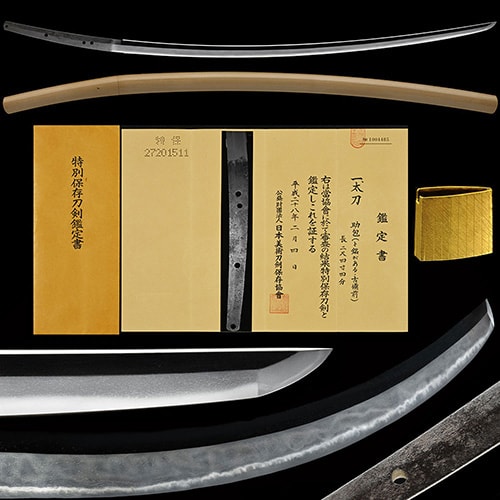
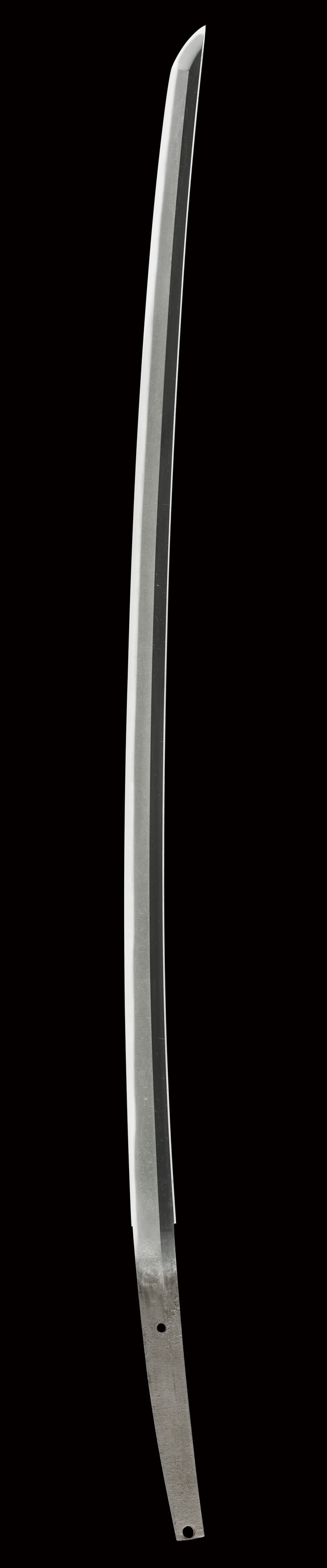
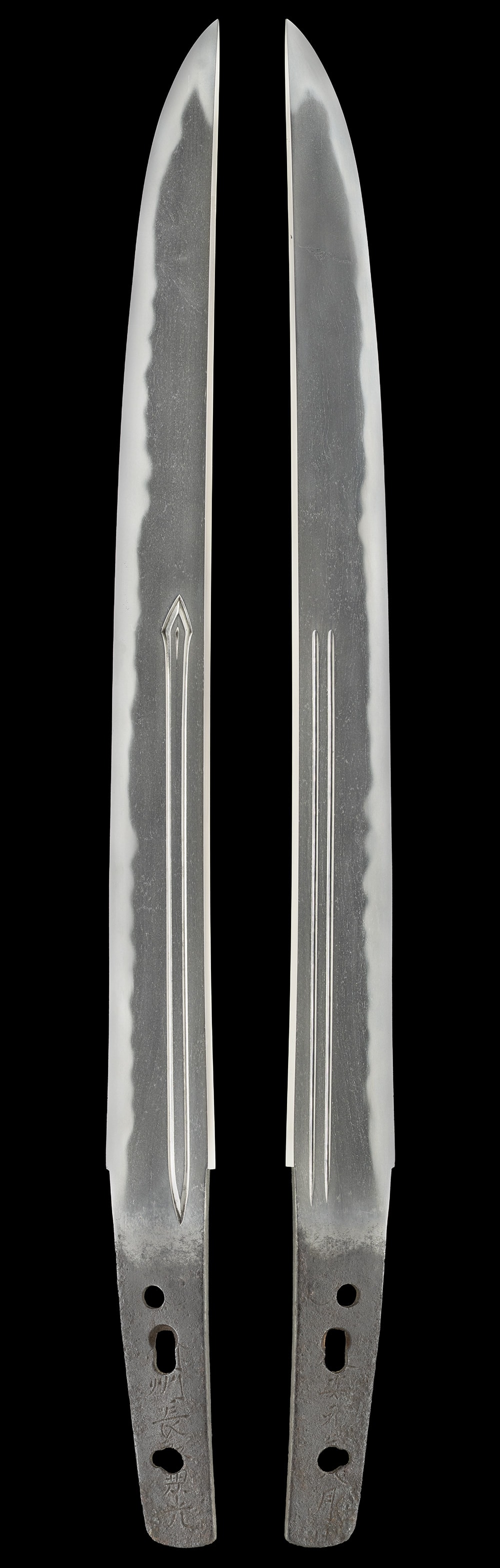
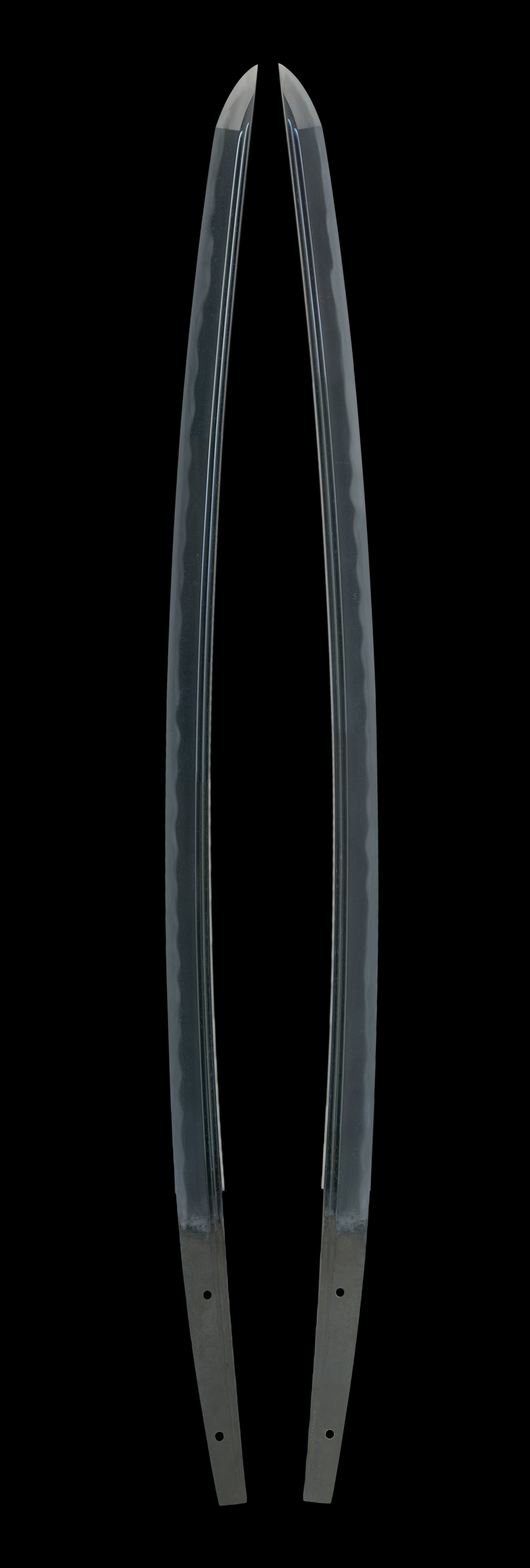
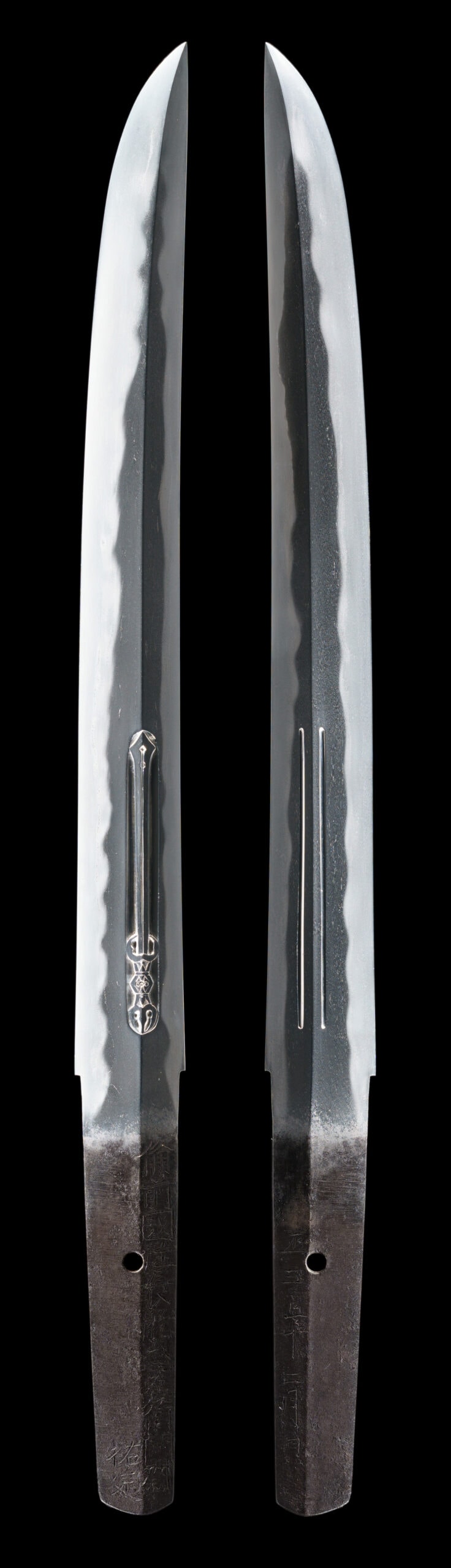
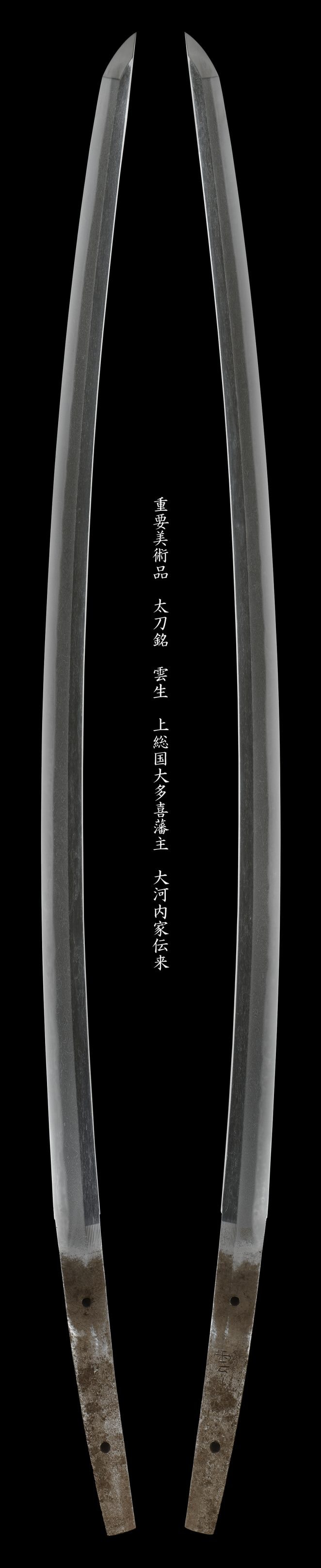
Masatsugu is a smith of the group in Province, active from the late into the early period. Sword reference compilations record him only as "Motomae," and the assessments consistently identify him as a smith of the Masatsune lineage. His precise dates remain uncertain; the places him before the Genryaku era (1184--1185), while one designation associates him with the Bunryaku era (1234--1235), suggesting either a broad working period or successive generations bearing the same name. Reliably signed extant works are extremely rare, lending particular scholarly weight to each surviving example.
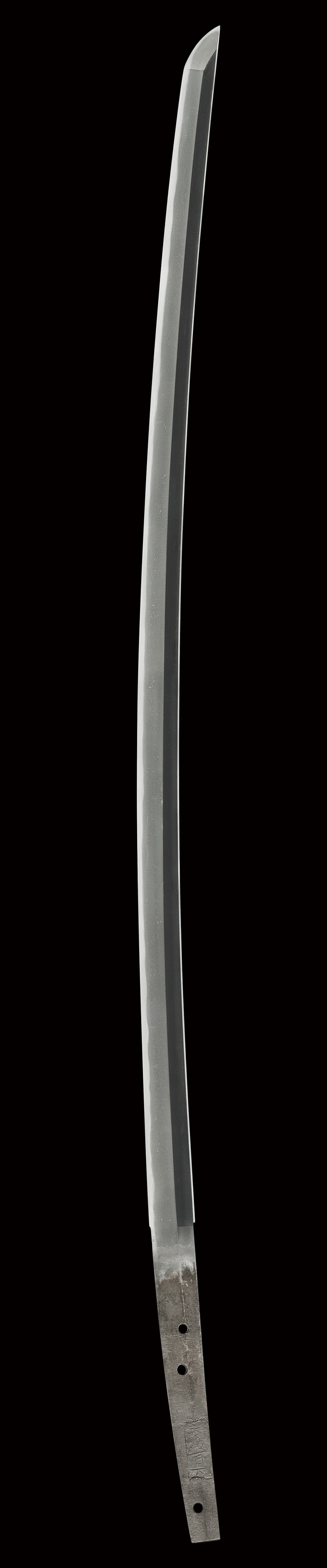
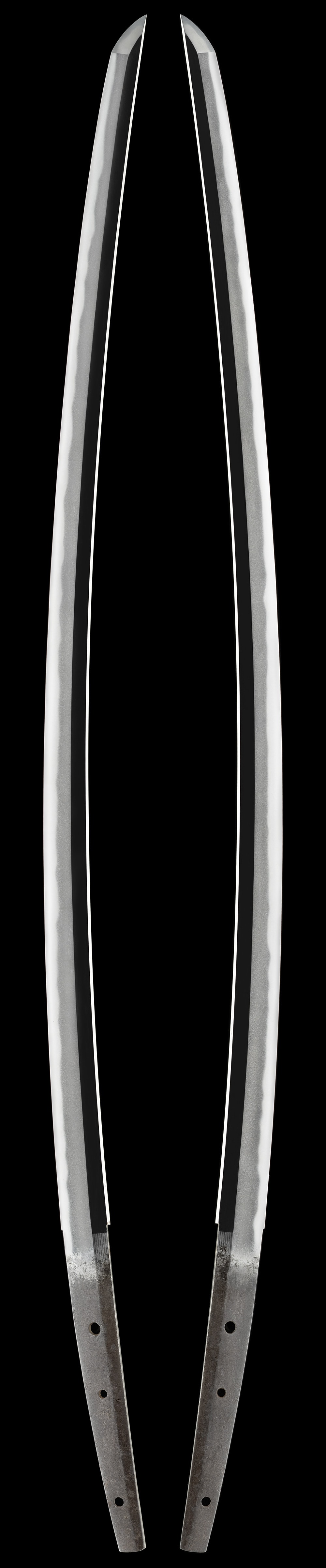
Masatsugu's characteristic forging is a tightly worked ko-itame-hada with abundant ji-nie and chikei, occasionally showing a tendency toward utsuri. His hamon is typically a suguha-toned ko-midare mixed with gunome, executed with deep nioi and well-adhering ko-nie; ashi enter frequently and effectively. One blade exhibits a ko-nie-deki temper forming a shallow notare-like line mixed with ko-midare and ko-ashi. The boshi characteristically turns in a deeply formed ko-maru, a hallmark that the NBTHK identifies as diagnostic of the Masatsune line2. Blades that retain original proportions display a shallow koshizori with a compact ko-kissaki, consistent with the classical Ko-Bizen profile.
The NBTHK evaluations repeatedly emphasize the exceptional quality of Masatsugu's surviving work within the Ko-Bizen corpus. One blade is described as "the finest in workmanship among blades bearing the same name," while another is judged "an excellent work even among examples of the same group." Both assessments further note that the blades clearly exhibit the characteristic features of the Ko-Bizen school and are in kenzen -- sound and well-preserved -- condition1. The provenance of the finest example, transmitted within the Matsudaira family of Tsuyama, underscores the esteem in which these works have been held. Though his oeuvre is exceedingly small, Masatsugu stands as an important representative of the Masatsune current within the foundational Ko-Bizen tradition.
Historical importance
Where Masatsugu stands among comparable artisans: across all of nihontō, and within tradition, era, and period. The tiers (Foremost · Leading · Major · Notable) weigh official designations from the NBTHK and Japan's Agency for Cultural Affairs, together with historical honors of lasting repute such as the Sansaku and Meibutsu-chō.
随一
Foremost
屈指
Leading
有数
Major
All nihontō
著名
Notable
BizenKotōHeian
Select a lens to see how it's measured.
Designations
Kokuhō—
Jūyō Bunkazai—
Jūyō Bijutsuhin1
Gyobutsu—
Tokubetsu Jūyō1
Jūyō Tōken1
Elite Standing
0.00 across 3 designated works
Top 100% among smiths
Provenance
2 documented provenances across certified works by Masatsugu
Imperial—
Shogunal—
▸Premier Daimyō1
Major Daimyō—
▸Other Daimyō1
Zaibatsu—
Institutions—
Named Collectors—
Provenance Standing
1 works held in elite collections across 2 documented provenances