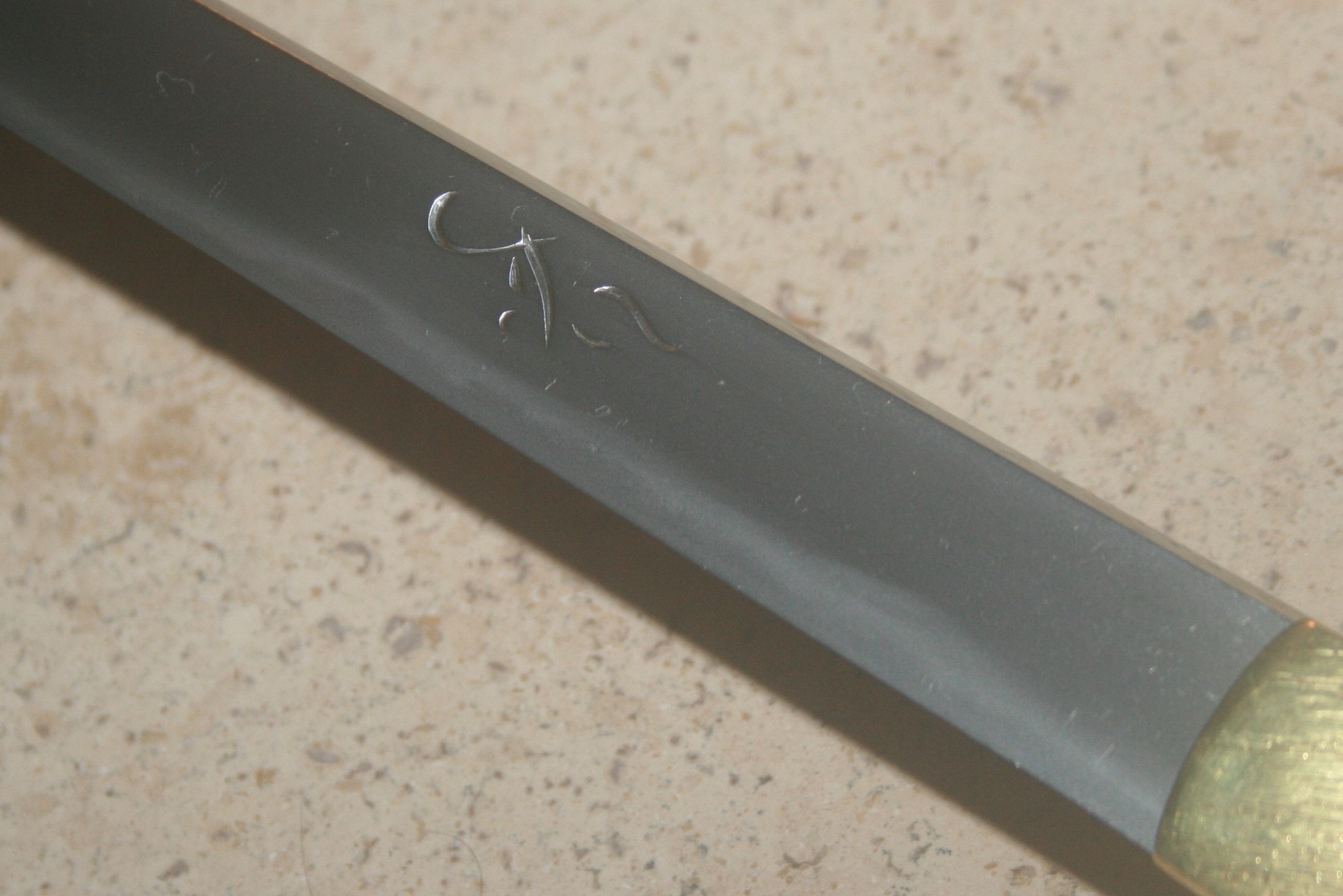
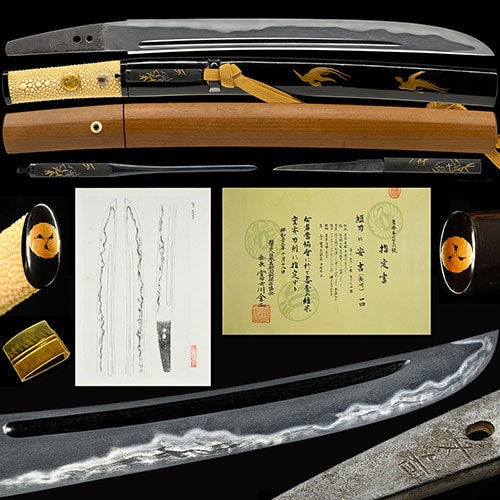
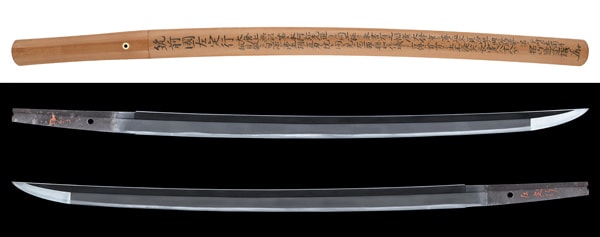
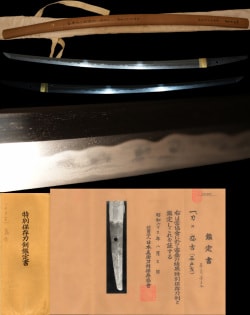
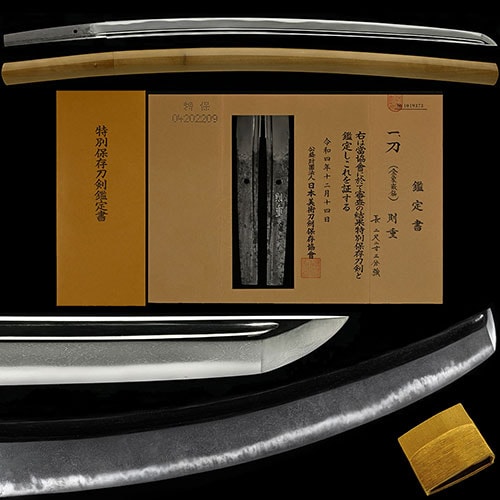
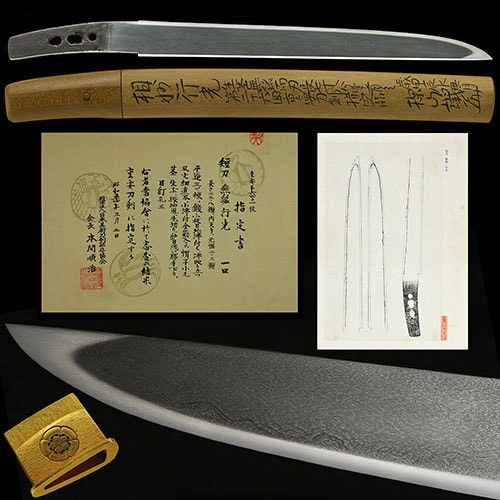
Akikuni (顯國), second generation, worked in Nagato Province (Choshu) during the era (1368-1375) and is transmitted as a disciple from after Yasuyoshi relocated to Choshu. Reference works on signatures list six smiths of this name, beginning with a smith of the Bunwa era said to have belonged to the Yasuyoshi lineage, and continuing through a smith described as the son of Choshu Yasuyoshi who was active around the Oei era. The earliest extant dated works bear from the Oei period, and later examples dated Bun'an are also recorded. Among the Oei-dated group, some pieces carry the title "Saemon no Jo," while others explicitly state the place of residence as "Choshu Setozaki junin." Signed works are comparatively few, lending particular documentary value to surviving examples. Fujishiro rates this smith jo .
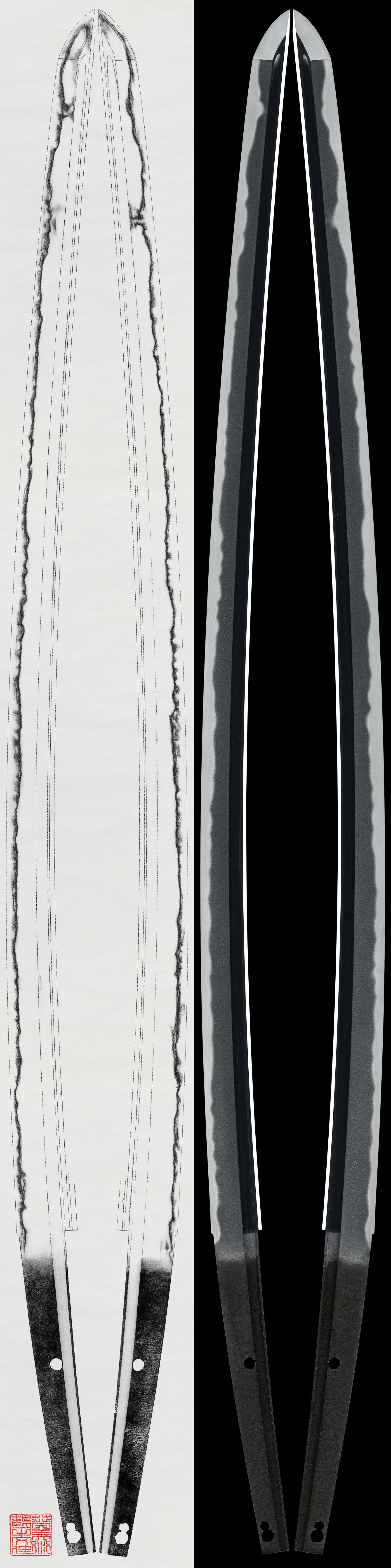
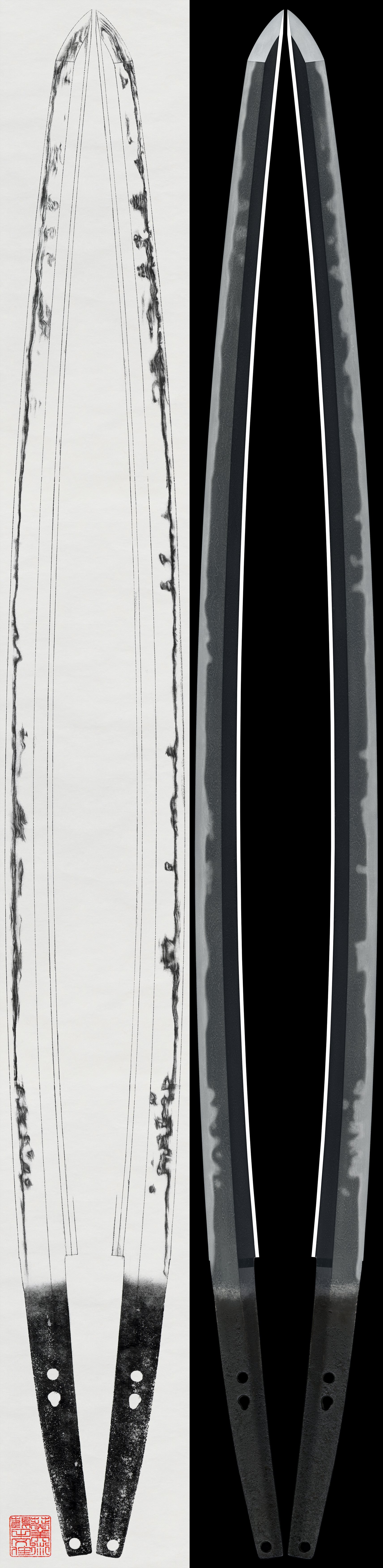
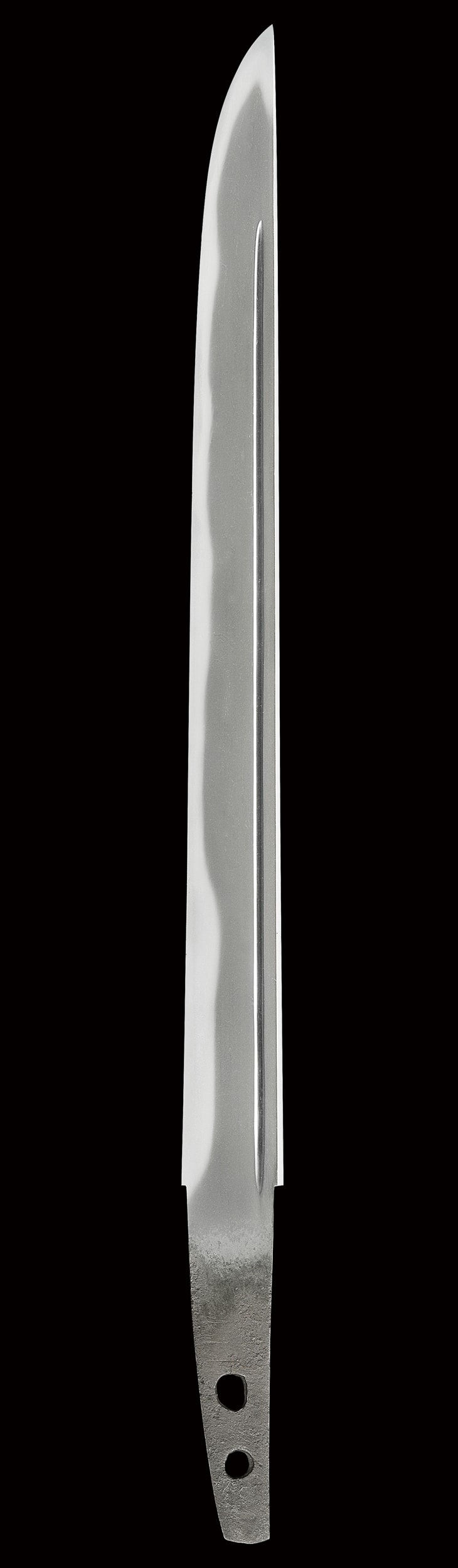
Akikuni's manner of working encompasses several distinct modes: blades in , works mixing small and , and in which runs in a continuous, connected pattern (described as ). The characteristically shows mixed with and , often tending toward , with dense and fine -like lines of steel. A faint whitish -like effect or frequently appears, and the ground steel often shows a somewhat dark, iron-like tone. In the , adheres well, with , , and running prominently. The tends to show a character. Overall, the workmanship conveys a rustic (yashu) and vigorous quality rooted in the school tradition.
Akikuni occupies a noteworthy position among the swordsmiths of the Choshu Yasuyoshi group, preserving a current of workmanship descending from Yasuyoshi while displaying an independent, robust character. The range of surviving work spans both restrained compositions and powerful pieces of commanding presence, and large-scale blades within the oeuvre are scarce, making such examples especially valuable for understanding the chronology of production. Both and in the finest examples are , and the abundant internal activities -- , , and emerging distinctly within the temper -- attest to accomplished skill. As a smith whose signed works remain rare, each surviving piece carries considerable importance as reference material for the study of the Choshu school.