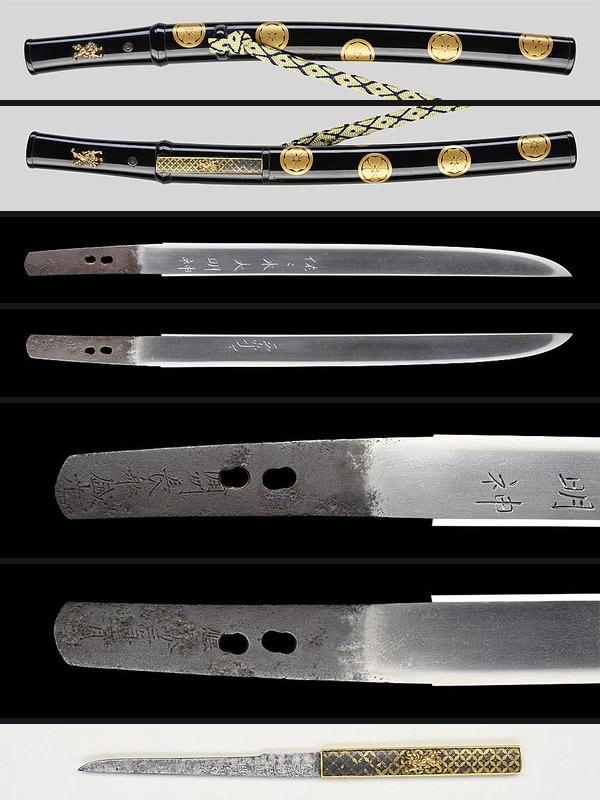
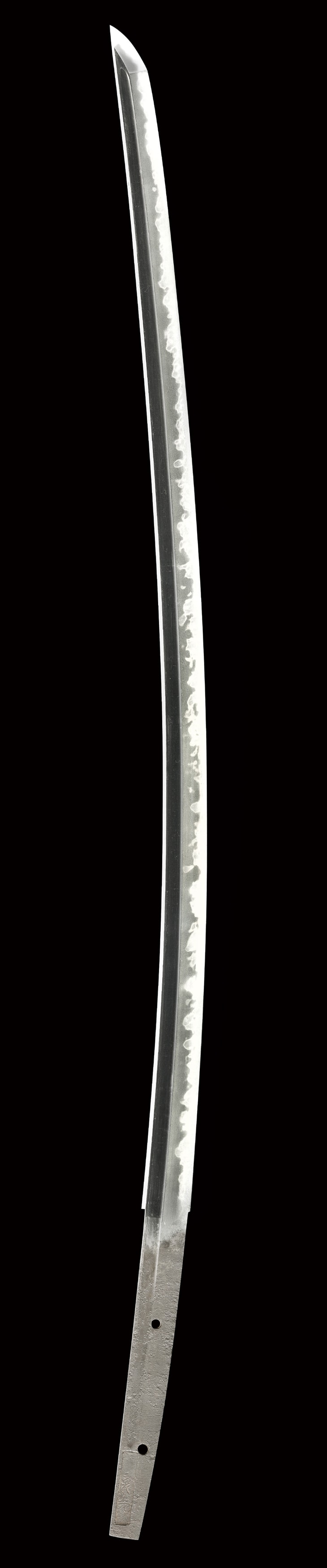
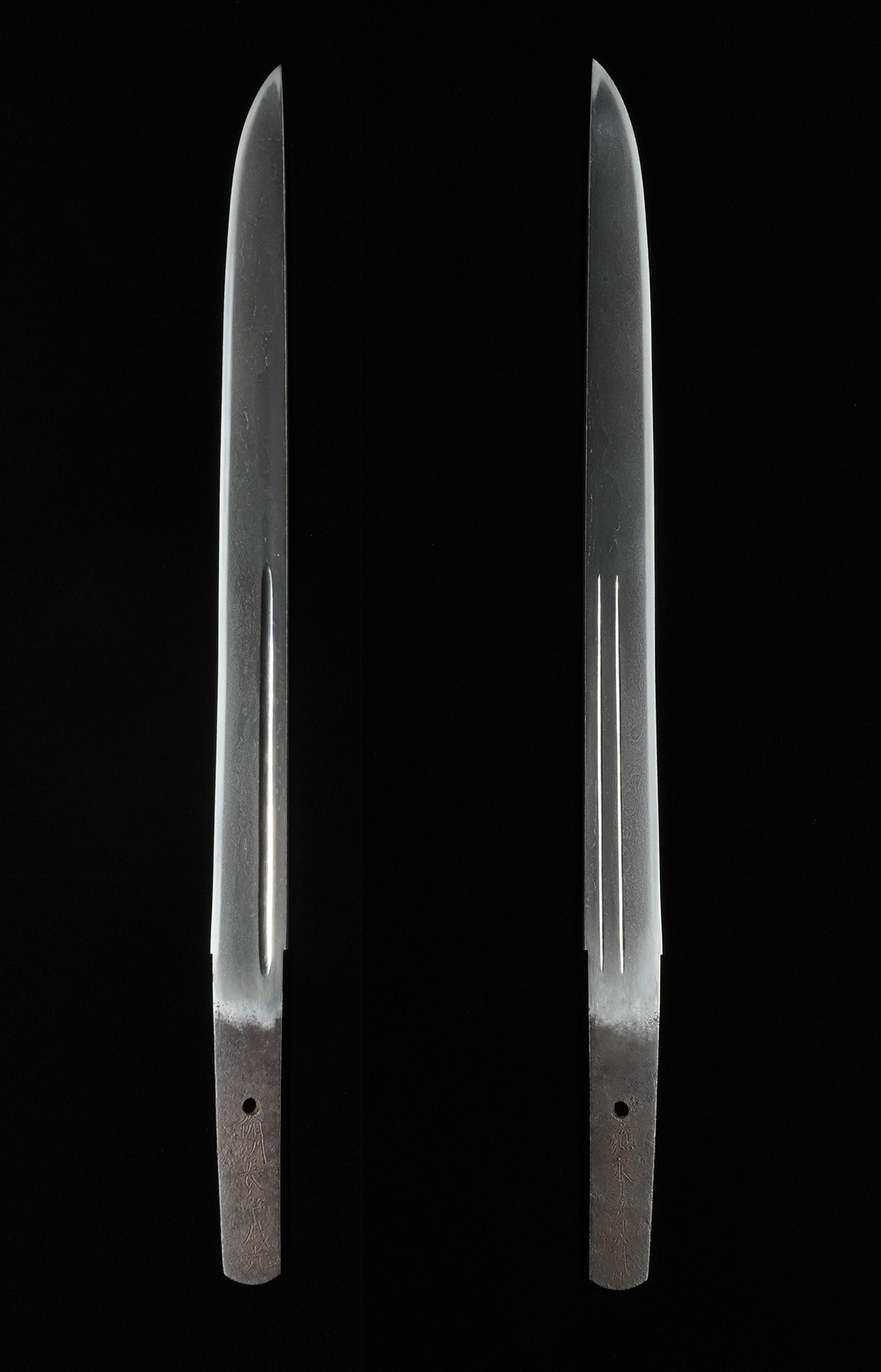
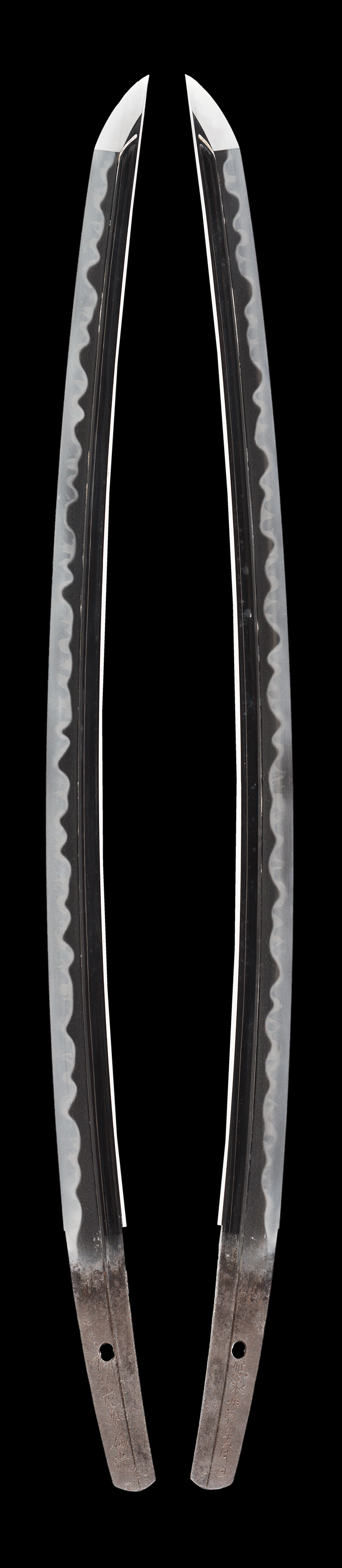
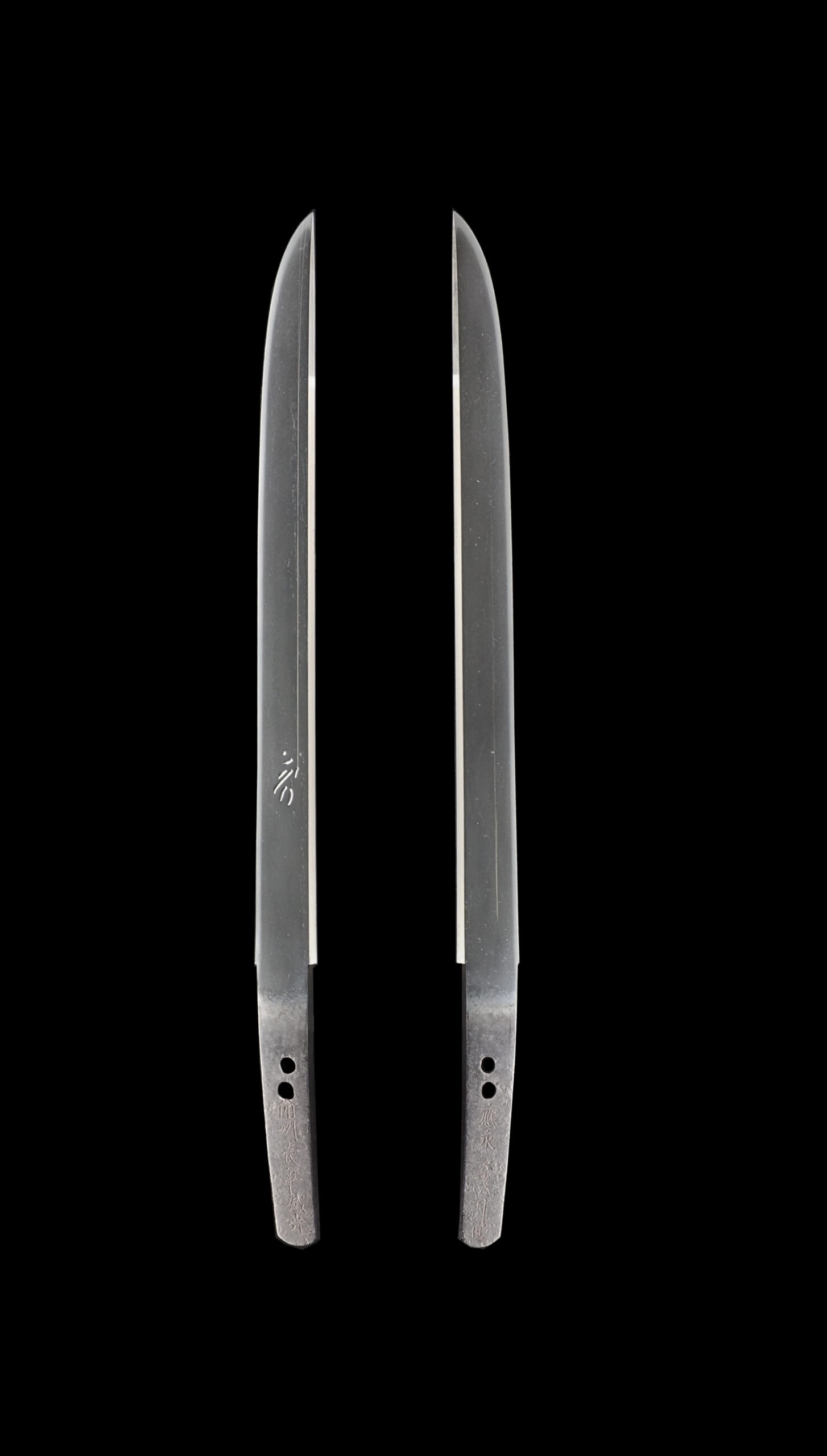
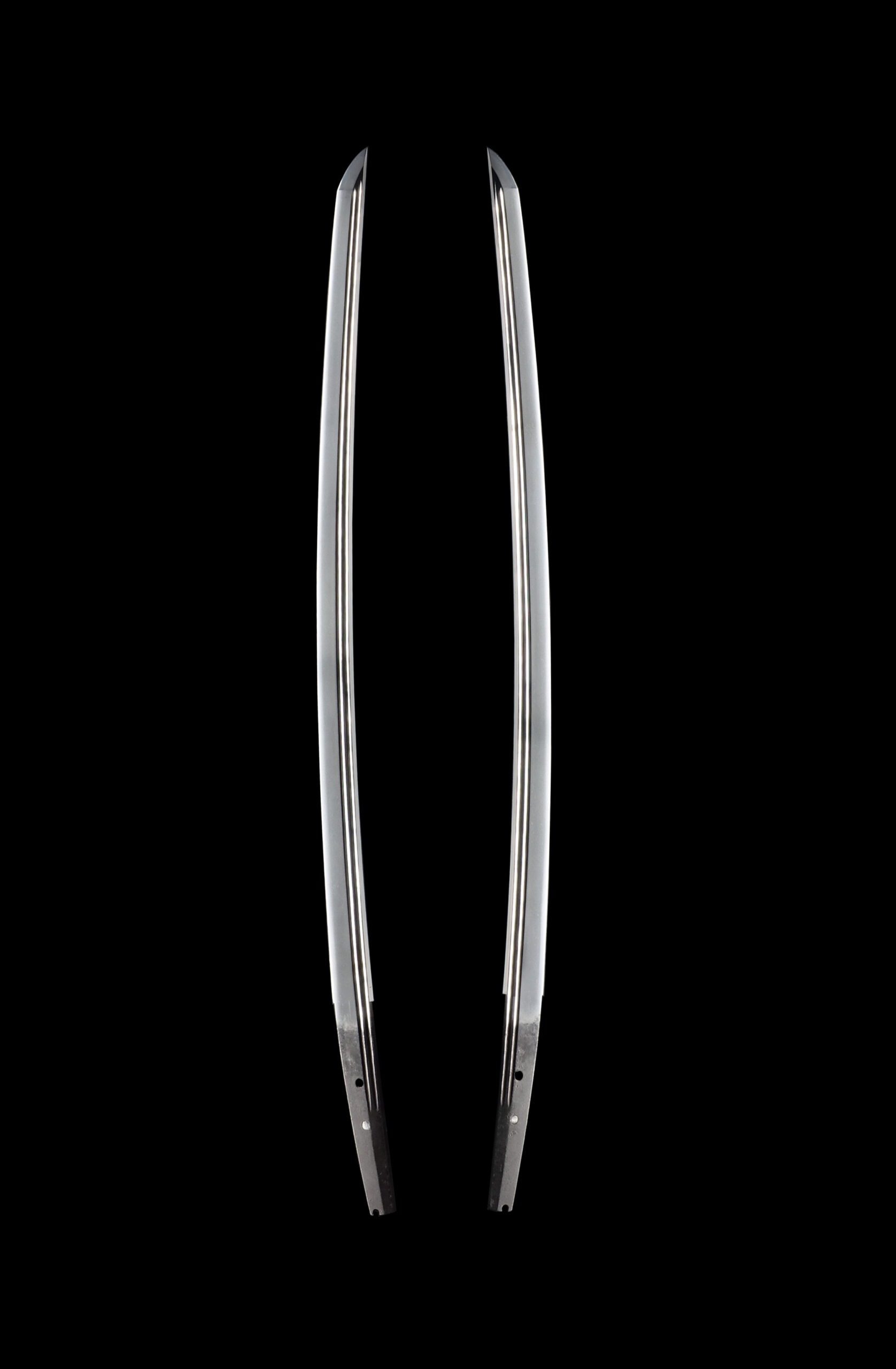
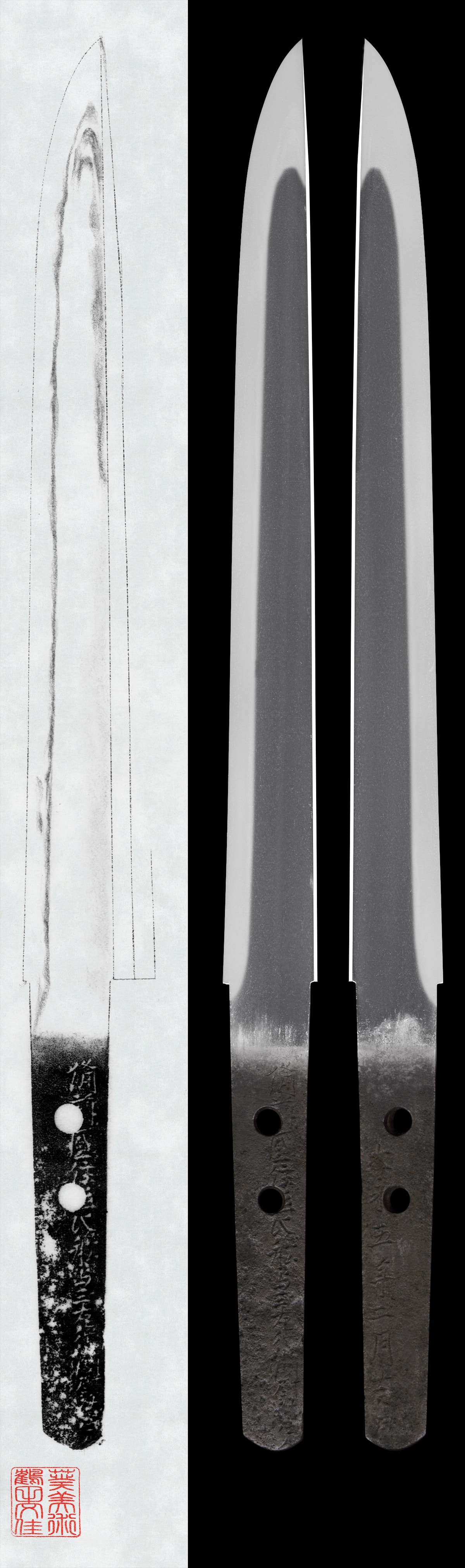
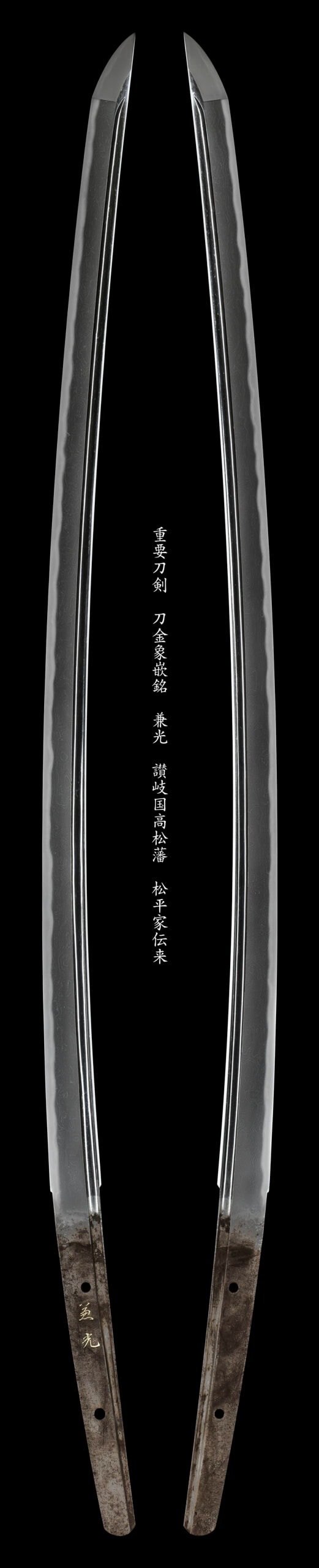
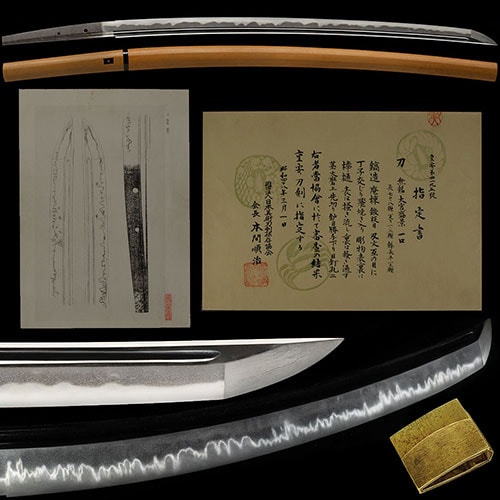
Moromitsu is a smith of the late period whose dated run from the Eiwa and eras through Meitoku and into the Ōei era. The published sources record him in the as 'the son of Rinkō and the father of Morimitsu', the elder name standing one generation before the Ōei- master, and they place him among the late- smiths grouped together as the , the small-curvature makers: he is read as 'one of the representative smiths of the later group commonly described as the small- makers'. Two generations worked under the name, and the Ōei-dated blades are read as the second, though the commentary grants that strict separation of the hands awaits further study. He is a documentary smith above all, an , signed and dated witness to a quiet corner of at the threshold of the age.
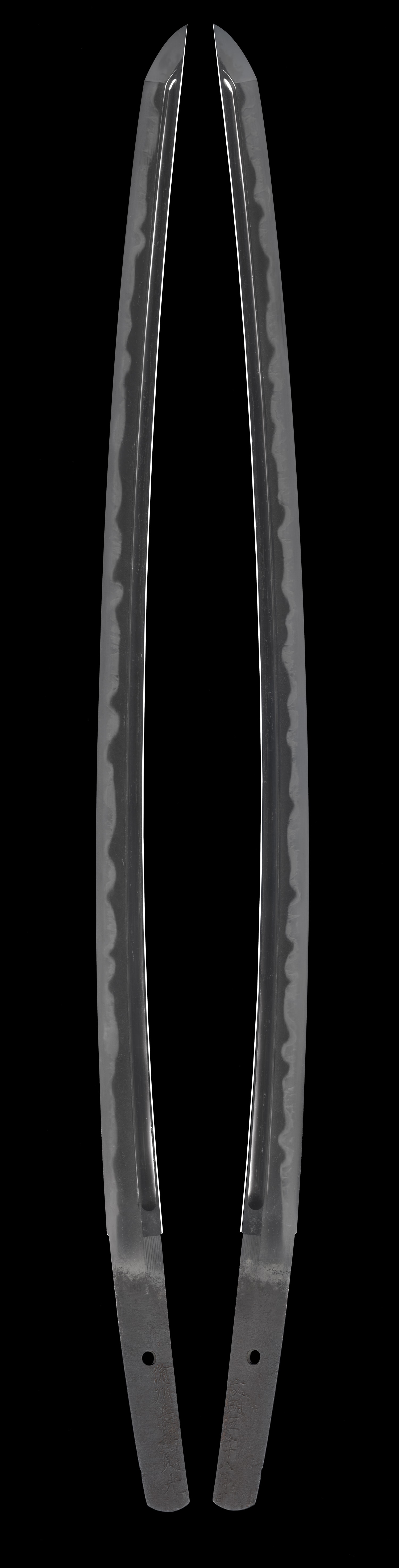
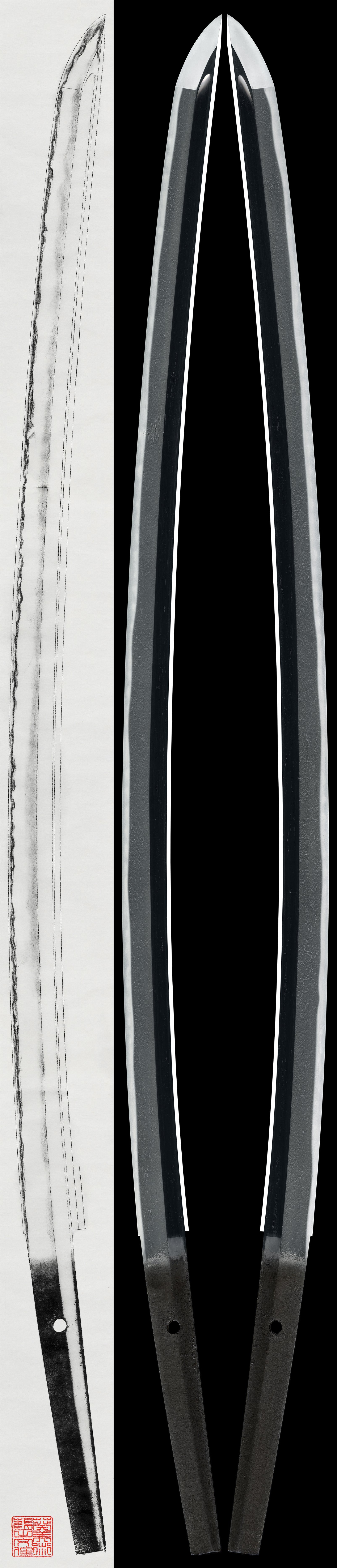
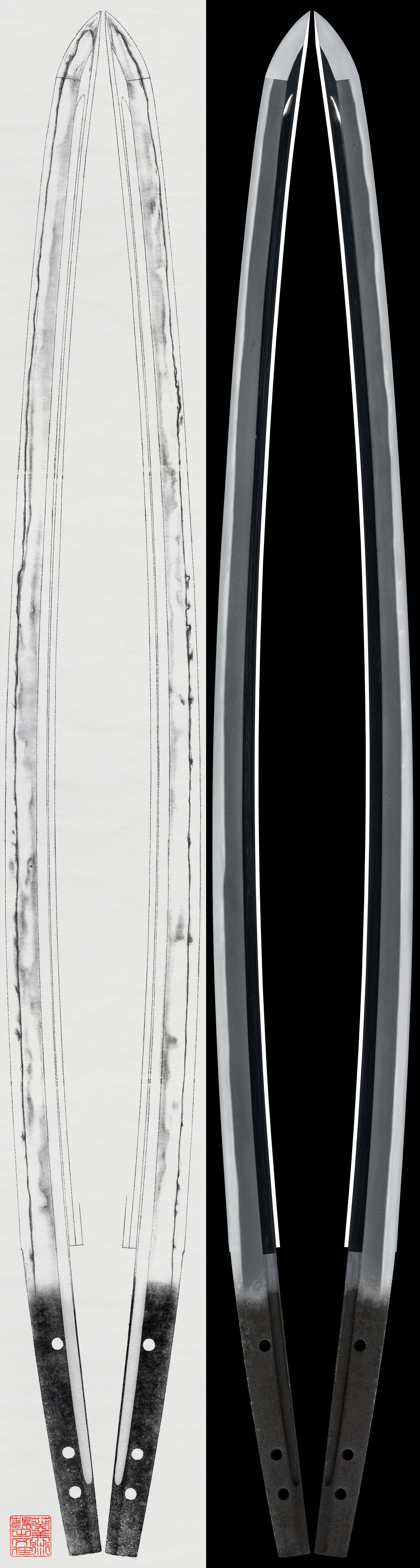
His characteristic hand is a small-patterned whose valleys open toward the . Over the body of the temper he sets , , pointed and angular elements and a little , the whole running small and subdued, what the published sources call , with and entering, the temper -dominant and laid with , and fine sweeping through. The runs in and turns back with a pointed tendency or a small . It is a manner of restraint rather than display, and the judges name that restraint directly: his work, they write, 'is more subdued in comparison with makers such as Morimitsu and Yasumitsu', the idea tempered on a smaller, plainer scale than the Ōei masters who came after him.
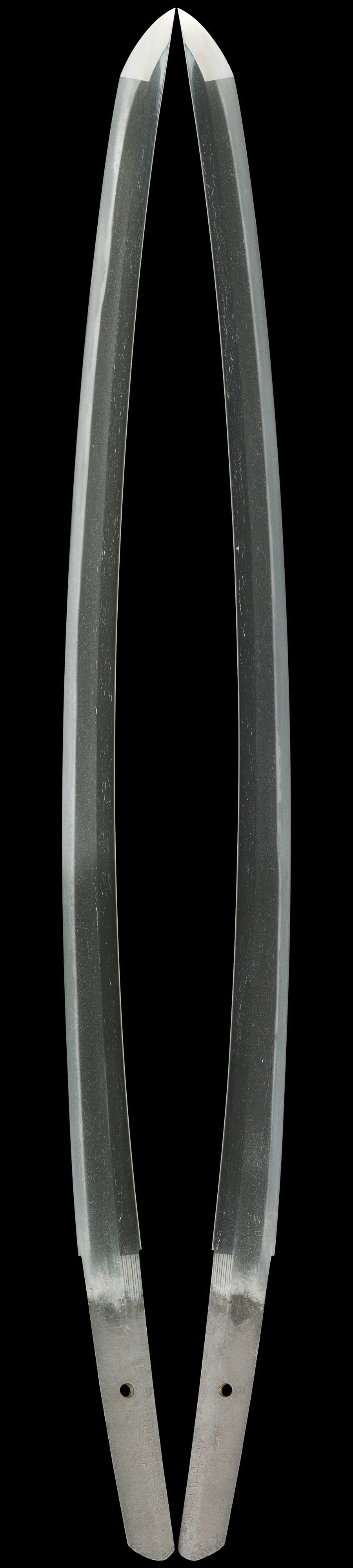
The is the constant beneath that quiet edge. He forges an , frequently flowing and mixed with and standing grain, the steel taking and at its best a clear running straight along the blade, while on his fuller late pieces a stands and a darkened, -like iron enters the . The reflection is the old tell, here read in the smaller key of the late period. Over it the keeps to its small irregular line, the inclined to tightness, the activity carried in and and in rather than in towering clusters of clove-flower, so that and together present the irregular, finely worked surface the sources hold typical of the group.
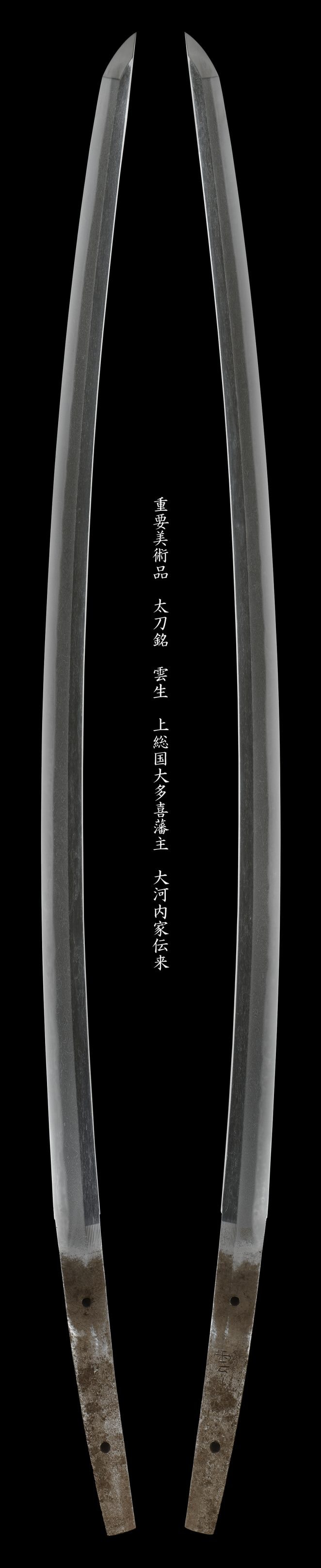
His record divides into more than one register. Most of his signed blades are of the type, but a smaller body of work abandons the for a -toned temper carrying and a -like manner, the finishing in with a . This quieter register is seen on his small , which often add devotional carving of and a sankozuke-, and on a rare , of which the published sources observe that 'examples of are few in any period' and call it 'a notably rare piece as a by Moromitsu'. On his finest late the manner instead widens: the valleys open further and and appear, features the judges read as 'already showing signs that foreshadow the style of Ōei-'.
What sets Moromitsu apart is exactly this threshold position. He works in a smaller, plainer pattern than the masters of the height, and his temper is held more subdued than that of his son Morimitsu and of Yasumitsu in the next age; yet his own -open , his straight and the opening of his late look forward to the Ōei flowering of the school. The published commentary draws the point as connoisseurship: because his , dated blades carry a signature 'sharing points in common with works of the Ōei era, this piece constitutes valuable source material for research into smiths of this period'. He is, in short, the documented hinge between the mainstream and Ōei-.
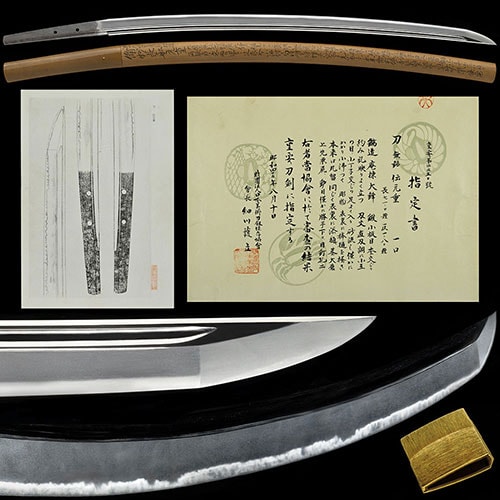
For the collector Moromitsu survives chiefly as signed, dated , with three of his works designated Important Cultural Property and a body of others passed at the rank; he has no National Treasures. His provenance is real and notable: a of his is held in the Imperial collection, one dated passed by shogunal bestowal in Hōreki 9 to the Iwaki house, lords of Kameda Castle, and one of his superior late the sources call 'a fine work among his oeuvre' and record as 'a sword transmitted in the Kuroda family'. His blades are held today in the Imperial collection and in long-held private and lines rather than offered openly, and only a modest number fall in the and tiers, so a signed Moromitsu of the type comes to light only from time to time. A privately held example is a quiet but rewarding thing for a collector to encounter, an exactly dated document of how late turned toward Ōei-.