NihontoWatch MonNihontoWatch
Market
Encyclopedia
Kantei
NihontoWatch MonNihontoWatch
Market
Encyclopedia
Kantei

Description

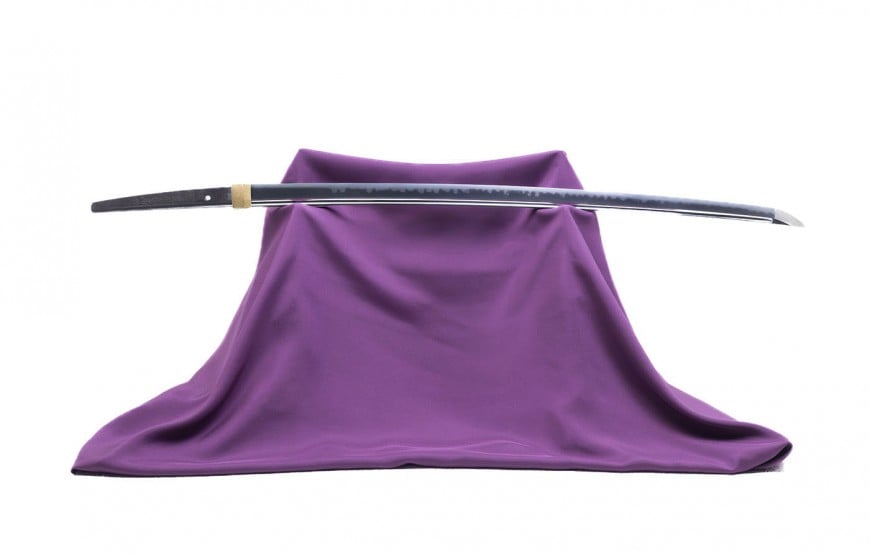
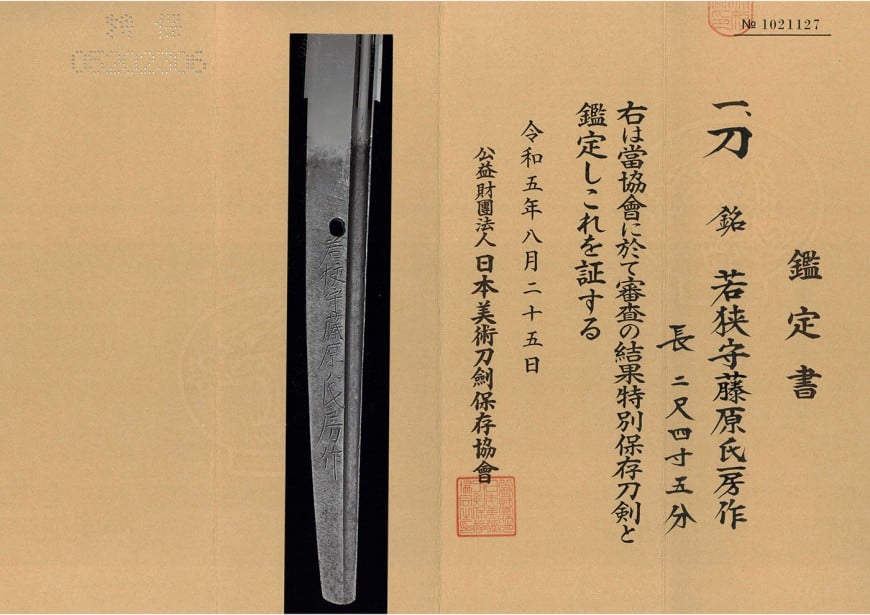
This katana is a work by Wakasanokami Fujiwara Ujifusa, active during the late Muromachi period (Tensho era) in Owari province. It features a well-forged itame hada with fine ji-nie and a gunome-choji midare hamon with bright nioi-guchi. The blade is accompanied by an NBTHK Tokubetsu Hozon certificate, confirming its quality as a masterpiece by the smith.

NihontoWatch MonNihontoWatch
MarketEncyclopediaKantei
Swords›Mino-den›Seki›Ujifusa›Katana: Wakasanokami Fujiwara Ujifusa Saku
katanaTokubetsu Hozon
Ujifusa

Katana: Wakasanokami Fujiwara Ujifusa Saku

mei · Muromachi · nagasa 74.3cm · sori 1.35cm

¥2,800,000
Visit seller website →
Ujifusa (氏房) · Muromachi9 works for sale · median ask ¥1,170,000 →
Katana
Could you name the smith from the blade alone? Today’s kantei →
Ujifusa — 1 of 7
Ujifusa — 2 of 7
Ujifusa — 3 of 7
Ujifusa — 4 of 7
Ujifusa — 5 of 7
Ujifusa — 6 of 7
Ujifusa — 7 of 7
1 / 7
1 / 7
Ujifusa — 1 of 7Ujifusa — 2 of 7Ujifusa — 3 of 7Ujifusa — 4 of 7Ujifusa — 5 of 7Ujifusa — 6 of 7Ujifusa — 7 of 7
Ujifusa (氏房) · Muromachi9 works for sale · median ask ¥1,170,000 →
Katana
Could you name the smith from the blade alone? Today’s kantei →
Measurements & details
Smith
Ujifusa
Type
Katana
School
Ujifusa
Period
Around 1596–1615(Keicho)
Province
Owari
Signature
Signed(94% of this smith's designated works are signed)
Measurements
Nagasa 74.3cmSori 1.35cmMotohaba 3.07cmSakihaba 2.3cmKasane 0.76cm
Description

This katana is a work by Wakasanokami Fujiwara Ujifusa, active during the late Muromachi period (Tensho era) in Owari province. It features a well-forged itame hada with fine ji-nie and a gunome-choji midare hamon with bright nioi-guchi. The blade is accompanied by an NBTHK Tokubetsu Hozon certificate, confirming its quality as a masterpiece by the smith.

About the maker

Ujifusa

氏房

Owari-Seki (Mino-derived Owari shinto; retained by the Owari Tokugawa) · Owari · around 1596-1615

Fujishiro Jo saku · Tōken Taikan top 26%

9 pieces on the market now

›

Hida no Kami Fujiwara Ujifusa was the son of Wakasa no Kami Ujifusa, born at Seki in Mino in Eiroku 10 and first called Kawamura Isechiyo, later Heijuro. The published sources follow his career closely: a page to Oda Nobutaka who became a ronin after his lord's death, then a retainer of Sakuma Masakatsu in Owari, he moved to Kiyosu and began forging swords from about Tensho 17. In Tensho 19, when the Kampaku Toyotomi Hidetsugu took Kiyosu, Ujifusa, Masatsune and Nobutaka were received at Jurakudai and each presented a blade, and Ujifusa was granted the title Hida no Kami. Those three smiths were counted in later generations as the Owari Sansaku, the makers who established Owari shinto under the Tokugawa. About Keicho 15 to 16 he moved to Nagoya and served Tokugawa Yoshinao as a retained smith; he passed the headship to Bizen no Kami Ujifusa in Kan'ei 8 and died that year at sixty-five. Three generations worked under the name, the first holding Hida no Kami, the second Bizen no Kami, and the third again Hida no Kami, and it is the first generation, the founder, who carries the line's reputation.

His characteristic hand is a broad, unrestrained notare, the temper the published sources name his particular forte. On a wide-bodied katana with shallow sori and an extended large kissaki, the shape they call the archetypal Keicho-shinto sugata, he tempers a generous o-notare as the main tone, mixing gunome and small notare into it, with ashi and yo entering, ko-nie well attached, and patches of uneven mura-nie and yubashiri breaking the line. The same broad manner runs across his naginata and, on his sun-nobi hira-zukuri wakizashi, widens into a box-tinged hako-gatta notare. One such wakizashi the sources call a temper that 'fully and without reserve displays this smith's forte'[[c:1]]. On a dated Keicho 11 katana the same open notare mixed with gunome is named a typical work that clearly shows Ujifusa's own character.

The jigane under that temper is a standing one. Over an itame that tends to rise, at times a large itame or a coarse zanguri jigane, mixed with mokume and flowing toward masame along the shinogi-ji, the ji-nie gathers. It is the grain of the Mino Seki body from which he came, and on his best signed katana the published sources read in it the Shizu manner, calling one blade the finest of his work and the piece that 'most clearly manifests the Shizu style of his native Mino'[[c:2]]. The boshi over this ji is tempered deeply, turning in notare-komi to a ko-maru or o-maru with a long return and hakikake; on his tanto and several other blades it rises instead in tsukiage to a pointed tip, the Sanpin manner of the Mino Mishina smiths. His katana carry a plain bo-hi run through, his naginata a naginata-hi with soe-hi, while figural and devotional carving, which the sources call rare for him, appears only on the hira-zukuri wakizashi.

Within this one hand the published sources draw out two further faces. The first is his most numerous, the wide, shallow-curved, large-pointed body that recalls the look of greatly shortened Nanbokucho blades, qualified, the judges caution, by the sakizori that fixes it as Keicho work; among such pieces some, they note, resemble at a glance the work of Muramasa. The second is rare, and the sources twice mark it as unusual for him: a bright chu-suguha worked with hotsure, nijuba and fine kinsuji over a finely applied ji-nie jigane, the boshi deep and pointed. On these suguha katana the judges read a private aspiration to the superior Soshu masters, naming Go and Samonji, and find a forging well refined and carrying 'an archaic flavor as though he had privately aspired to the superior Sagami masters'[[c:3]]. A Keicho 7 tanto presents the Sanpin boshi in a way that calls Echizen Yasutsugu to mind, yet the larger-scale notare and the stronger, unevenly gathered nie are read as Ujifusa's own.

What sets him apart is the combination the judges keep returning to. He is a Seki smith by descent, and the standing, flowing jigane with masame along the shinogi-ji, the pointed Sanpin boshi and the broad notare all carry that Mino root; but the wide, powerful Keicho-shinto body, the deep nie, and the reach toward Soshu in his suguha work mark the Owari master who served the Tokugawa rather than the provincial Seki hand. His broad open notare distinguishes him from the tighter Mino gunome, and his bright deep-nie suguha from the plainer straight tempers of his peers; the documented careers of Ujifusa, Masatsune and Nobutaka together, received at Jurakudai and remembered as the Owari Sansaku, place him at the founding of a new tradition rather than at the end of an old one.

For the collector he is a well-documented founder rather than a rarity of legend. Fujishiro grades him Jo saku. He has no National Treasures and no Important Cultural Properties; his record runs instead through the Juyo tier, where signed and frequently dated katana, wakizashi, tanto and naginata of the first generation survive in some number, several bearing Keicho-era dates that the published sources prize, calling them 'valuable material for the study of Hida no Kami Ujifusa'[[c:4]]. Because his blades with a Fujiwara Ason signature and a dated tang are uncommon, those dated pieces are held the most instructive of all. Provenance for his work is little recorded, so it is best described simply as held in private hands; a signed first-generation Ujifusa, broad and vigorous and clearly cut with its long signature, comes to market only from time to time, and a dated example is the one a student of Owari shinto would most wish to encounter.

Historical importance

Where Ujifusa stands among comparable artisans: across all of nihontō, and within tradition, era, and period. The tiers (Foremost · Leading · Major · Notable) weigh official designations from the NBTHK and Japan's Agency for Cultural Affairs, together with historical honors of lasting repute such as the Sansaku and Meibutsu-chō.

随一
Foremost
屈指
Leading
有数
Major
著名
Notable

Select a lens to see how it's measured.

Designation record
16 designated works
Jūyō
16
9 works by Ujifusa on the market→
Ujifusa — full profileOwari-Seki (Mino-derived Owari shinto; retained by the Owari Tokugawa) school

Dated Works

Years he was demonstrably active, proven by signed-and-dated blades

Active period
1604–1612Editorial estimate: 1596–1615
4 of 15 designated works carry a date
1600
1610
1620

Study this maker →

About the school

Ujifusa

氏房

Mino-den · Owari

18 pieces on the market now

›

Rooted in Owari province at the boundary between the kotō and shintō eras, the Ujifusa line carried Mino-den forging into the late Momoyama and early Edo decades, working under the Tokugawa establishment of Owari at Nagoya. The setsumei here cover several hands of the group. Wakasa no Kami Ujifusa and Hida no Kami Ujifusa stand as the reference points against which the others are read. Echigo no Kami Fujiwara Ujitsune, recorded in the Meikan and the Mino-tō Taikan as the second son of Wakasa no Kami Ujifusa, first signed Ujishige, received the Echigo no Kami title in Genna 6 (1620), and died at Nagoya in Meireki 2 (1656). Ujisada, who took the court title Izumo no Kami and signed Sakon Shōshō and Sakon Gonshōshō, is transmitted as a son of the first-generation Ujifusa and younger brother of the second-generation Wakasa no Kami Ujifusa; one of his tantō carries a date of Tenshō 5 (1577). The shared hand begins in the kitae: a dense itame mixed with mokume and nagare-hada, carrying ji-nie and, in the fuller work, fine chikei. The temper draws on the Mino-den vocabulary, a notare mixed with gunome, ko-gunome in tsure, large gunome, and pointed togari-leaning forms, the notare often taking angular turns (kado-gakari).

Ko-ashi and yō enter; nie attaches, at times slightly coarse and unevenly applied, with kinsuji and sunagashi in the lower body and tobiyaki and muneyaki scattered through, so that some blades verge on hitatsura and minayaki. The nioiguchi can incline toward shizumi. The bōshi is tempered deeply and far down (yakisage) with hakikake, the point sometimes drawn into a sanpin-style sharpness on one face and an ō-maru on the other. Ujitsune's signed katana reads as a near-textbook gathering of these traits; Ujisada's tantō tightens the nioiguchi (shimarigokoro) toward his master's manner. For kantei, the angular notare, the patchy nie, the shizumi-inclined nioiguchi, and the sanpin-pointed bōshi with long yakisage mark the Wakasa no Kami group; the larger work adds broad mihaba, ō-kissaki, and thick kasane. Carving belongs to the record: a "grass" kurikara and gomabashi with rendai appear on Ujisada's tantō. The Ujitsune katana, by a smith the setsumei call a scant producer, is named his representative work, holding coherence across a great nagasa. Learn more →

4 recorded smiths33 designated works
Leading smiths
SmithEraDesignated
Ujifusa氏房1596-161516
Ujifusa氏房1571-15929
Ujitsune氏恒1596-16151
Ujisada氏貞1558-15927
Ujifusa氏房1624-16440
Explore the Ujifusa school →

Historical context

Mino in the Muromachi period

›

Sengoku Seki was an industry: smiths organized under their tutelary Kasuga shrine, arming the war bands of central Japan. Magoroku Kanemoto’s sanbonsugi and the finest Kanesada work prove quality survived inside mass production.

Mino in the Muromachi period →

NBTHK Certificate
Tokubetsu Hozon Tōken特別保存刀剣
Sword Especially Worthy of Preservation
›

A Hozon-certified blade judged to show notably superior workmanship and a better state of preservation. The bar is higher: re-tempered blades and most unsigned Muromachi/Edo works are excluded.

About the NBTHK›

The NBTHK (Nihon Bijutsu Tōken Hozon Kyōkai, the Society for the Preservation of Japanese Art Swords) is a public-interest incorporated foundation founded in 1948 and supervised by Japan’s Agency for Cultural Affairs (Bunkachō); it is based at the Japanese Sword Museum in Tokyo. Its expert panels physically examine each submitted work (shinsa) and issue a certificate (kanteishō) ranking it by artistic and historical merit. NBTHK papers are the most widely recognized standard of authentication for Japanese swords and fittings.

NBTHK official site→
Seller
W
Wakeidou
Established 1953 · 73 yrs on the market
🇯🇵Ships from Japan
›
✓Verified dealerwakeidou.com
Settles in JPY
Wire transferPayPalCredit card
Return policy

Returns accepted within 7 days for internet purchases.

View all of Wakeidou’s listings→View this item on the dealer’s site→

More works by Ujifusa

View all →
Choshuya
Tokuho
Katana - Tokuho - by Ujifusa - Signed Hida no Kami Fujiwara no UjifusaKatana - Tokuho - by Ujifusa - Signed Hida no Kami Fujiwara no Ujifusa

Katana

ByUjifusa
Ask
Aoi Art
Tokuho
Wakizashi - Tokuho - by Ujifusa - Hida-no-kami Fujiwara UjifusaWakizashi - Tokuho - by Ujifusa - Hida-no-kami Fujiwara Ujifusa

Wakizashi

ByUjifusa
¥500,000
Sanmei
Tokuho
Katana - Tokuho - by Ujifusa - Bizen-no-kami Fujiwara UjifusaKatana - Tokuho - by Ujifusa - Bizen-no-kami Fujiwara Ujifusa

Katana

ByUjifusa
¥1,350,000
Aoi Art
Tokuho
Tanto - Tokuho - by Ujifusa - Hida-no-Kami Fujiwara UjifusaTanto - Tokuho - by Ujifusa - Hida-no-Kami Fujiwara Ujifusa

Tantō

ByUjifusa
¥800,000
Nihontocraft
Tokuho
Tanto - Tokuho - by Ujifusa - Hida no Kami UjifusaTanto - Tokuho - by Ujifusa - Hida no Kami Ujifusa

Tantō

ByUjifusa
¥7,500
Choshuya
Hozon
Wakizashi - Hozon - by Ujifusa - Wakizashi (Katagiriha): Unsigned (O-suriage) Hida no kami Fujiwara no UjifusaWakizashi - Hozon - by Ujifusa - Wakizashi (Katagiriha): Unsigned (O-suriage) Hida no kami Fujiwara no Ujifusa

Wakizashi

ByUjifusa
Ask
Choshuya
Wakizashi - by Ujifusa - Katagiriba-zukuri Wakizashi: O-suriage Mumei Hida no Kami Fujiwara Ujifusa (Wazamono)Wakizashi - by Ujifusa - Katagiriba-zukuri Wakizashi: O-suriage Mumei Hida no Kami Fujiwara Ujifusa (Wazamono)

Wakizashi

ByUjifusa
Ask
Token-Net
Tokuho
Katana - Tokuho - by Ujifusa - Hida no Kami Fujiwara Ujifusa (Owari)Katana - Tokuho - by Ujifusa - Hida no Kami Fujiwara Ujifusa (Owari)

Katana

ByUjifusa
Ask

Previously sold by Ujifusa

View all →
Choshuya
Katana - by Ujifusa - Japanese Sword for Sale | Ginza Choshuya | Signed Hida no Kami Fujiwara Ujifusa (Wazamono), 139Katana - by Ujifusa - Japanese Sword for Sale | Ginza Choshuya | Signed Hida no Kami Fujiwara Ujifusa (Wazamono), 139
Sold

Katana

ByUjifusa
SOLD
Tozando
Wakizashi - by Ujifusa - UjifusaWakizashi - by Ujifusa - Ujifusa
Sold

Wakizashi

ByUjifusa
SOLD
Choshuya
Naginata - by Ujifusa - Hida no Kami Fujiwara Ujifusa (Wazamono)Naginata - by Ujifusa - Hida no Kami Fujiwara Ujifusa (Wazamono)
Sold

Naginata

ByUjifusa
SOLD
Tokka Biz
Hozon
Wakizashi - Hozon - by Ujifusa - Hida no kami Fujiwara UjifusaWakizashi - Hozon - by Ujifusa - Hida no kami Fujiwara Ujifusa
Sold

Wakizashi

ByUjifusa
SOLD
Eirakudo
Tokuho
Tanto - Tokuho - by Ujifusa - Hidanokami Ujifusa - Tokubetsu Hozon TokenTanto - Tokuho - by Ujifusa - Hidanokami Ujifusa - Tokubetsu Hozon Token
Sold

Tantō

ByUjifusa
SOLD
Eirakudo
Hozon
Katana - Hozon - by Ujifusa - Wakasanokami Ujifusa - Hozon TokenKatana - Hozon - by Ujifusa - Wakasanokami Ujifusa - Hozon Token
Sold

Katana

ByUjifusa
SOLD
Yakiba
Wakizashi - by Ujifusa - Ujifusa with KoshiraeWakizashi - by Ujifusa - Ujifusa with Koshirae
Sold

Wakizashi

ByUjifusa
SOLD
Samurai Museum
Hozon
Katana - Hozon - by Ujifusa - Antique Japanese Sword Katana Unsigned Hidano Kami Ujifusa NBTHK Hozon CertificateKatana - Hozon - by Ujifusa - Antique Japanese Sword Katana Unsigned Hidano Kami Ujifusa NBTHK Hozon Certificate
Sold

Katana

ByUjifusa
SOLD

More from the Seki school

View all →
Token-Net
Tokuho
Wakizashi - Tokuho - by Kanemoto - Kanemoto (Mino) (2nd Gen. Magoroku)Wakizashi - Tokuho - by Kanemoto - Kanemoto (Mino) (2nd Gen. Magoroku)

Wakizashi

ByKanemoto
¥3,200,000
World Seiyudo
Hozon
Tanto - Hozon - by Seki School - Ujifusa - NBTHK Hozon TokenTanto - Hozon - by Seki School - Ujifusa - NBTHK Hozon Token

Tantō

BySeki School
¥1,300,000
Choshuya
Hozon
Yari - Hozon - by Seki Kanefusa - Ryo-shinogi Sugu-yari: Signed KanefusaYari - Hozon - by Seki Kanefusa - Ryo-shinogi Sugu-yari: Signed Kanefusa

Yari

BySeki Kanefusa
Ask
Connoisseur Arms
Jūyō
Katana - Jūyō - by Kanemoto - Historic Katana by Sekino Magoroku KanemotoKatana - Jūyō - by Kanemoto - Historic Katana by Sekino Magoroku Kanemoto

Katana

ByKanemoto
Ask
Samurai Museum
Hozon
Tachi - Hozon - by Seki School - Antique Japanese Sword Tachi Signed by Kaneyoshi NBTHK Hozon CertificateTachi - Hozon - by Seki School - Antique Japanese Sword Tachi Signed by Kaneyoshi NBTHK Hozon Certificate

Tachi

BySeki School
¥4,685
Aoi Art
Katana - by Aizu Kanesada - Izumi no Kami Fujiwara Kanesada (No Guarantee)Katana - by Aizu Kanesada - Izumi no Kami Fujiwara Kanesada (No Guarantee)

Katana

ByAizu Kanesada
Starting Bid¥420,000
Toushin
Tokuho
Wakizashi - Tokuho - by Seki Kanefusa - Kanefusa - 3-916Wakizashi - Tokuho - by Seki Kanefusa - Kanefusa - 3-916

Wakizashi

BySeki Kanefusa
¥3,300,000
Bushido Antique Japanese Swords
Tokuho
Wakizashi - Tokuho - by Seki School - Koto Kanetsune Mino School WakizashiWakizashi - Tokuho - by Seki School - Koto Kanetsune Mino School Wakizashi

Wakizashi

BySeki School
¥4,000

More from the Mino tradition

View all →
Wakeidou
Tokuho
Katana - Tokuho - by Naoe Shizu School - Mumei Naoe ShizuKatana - Tokuho - by Naoe Shizu School - Mumei Naoe Shizu

Katana

ByNaoe Shizu School
¥1,500,000
Aoi Art
Tokuho
Katana - Tokuho - by Naoe Shizu School - Mumei (Attributed to Naoe Shizu)Katana - Tokuho - by Naoe Shizu School - Mumei (Attributed to Naoe Shizu)

Katana

ByNaoe Shizu School
¥2,200,000
Choshuya
Tokuho
Katana - Tokuho - by Naoe Shizu School - O-suriage Mumei, attributed to Naoe ShizuKatana - Tokuho - by Naoe Shizu School - O-suriage Mumei, attributed to Naoe Shizu

Katana

ByNaoe Shizu School
¥2,500,000
Toukentakarado
Tokuho
Naginata - Tokuho - by Aki Teruhiro School - Harima no Kami Fujiwara TeruhiroNaginata - Tokuho - by Aki Teruhiro School - Harima no Kami Fujiwara Teruhiro

Naginata

ByAki Teruhiro School
¥850,000
Samurai Nippon
Jūyō
Katana - Jūyō - by Shizu Kaneuji - Shizu (Mumei)Katana - Jūyō - by Shizu Kaneuji - Shizu (Mumei)

Katana

ByShizu Kaneuji
¥9,500,000
Shoubudou
Tokuho
Wakizashi - Tokuho - by Naoe Shizu School - Mumei (Naoeshizu)Wakizashi - Tokuho - by Naoe Shizu School - Mumei (Naoeshizu)

Wakizashi

ByNaoe Shizu School
¥1,200,000
Aoi Art
Jūyō
Katana - Jūyō - by Yamato Shizu School - Mumei (Unsigned) Yamato-ShizuKatana - Jūyō - by Yamato Shizu School - Mumei (Unsigned) Yamato-Shizu

Katana

ByYamato Shizu School
¥2,700,000
Sanmei
Tokuho
Katana - Tokuho - by Naoe Shizu School - Katana unsigned attributed to a work of Naoe-ShizuKatana - Tokuho - by Naoe Shizu School - Katana unsigned attributed to a work of Naoe-Shizu

Katana

ByNaoe Shizu School
¥1,350,000

Swords

  • Katana
  • Wakizashi
  • Tantō
  • Tachi
  • Naginata
  • Yari
  • Japanese Swords
  • Samurai Swords

Fittings

  • Tsuba
  • Fuchi-Kashira
  • Kozuka
  • Menuki
  • Sword Guards (Tsuba)

Armor

  • Kabuto
  • Samurai Armor
  • All Samurai Armor

By Certification

  • Tokujū
  • Jūyō
  • Tokuho
  • Hozon

Resources

  • Dealer Directory
  • Artist Directory
  • The Daily Kantei
  • Glossary
  • Browse All
Nihontowatch© 2026
TermsPrivacyCookiesAbout

¥2,800,000

View on Wakeidou

Description

This katana is a work by Wakasanokami Fujiwara Ujifusa, active during the late Muromachi period (Tensho era) in Owari province. It features a well-forged itame hada with fine ji-nie and a gunome-choji midare hamon with bright nioi-guchi. The blade is accompanied by an NBTHK Tokubetsu Hozon certificate, confirming its quality as a masterpiece by the smith.

NihontoWatch MonNihontoWatch
MarketEncyclopediaKantei
Swords›Mino-den›Seki›Ujifusa›Katana: Wakasanokami Fujiwara Ujifusa Saku
katanaTokubetsu Hozon
Ujifusa

Katana: Wakasanokami Fujiwara Ujifusa Saku

mei · Muromachi · nagasa 74.3cm · sori 1.35cm

¥2,800,000
Visit seller website →
Ujifusa (氏房) · Muromachi9 works for sale · median ask ¥1,170,000 →
Katana
Could you name the smith from the blade alone? Today’s kantei →
Ujifusa — 1 of 7
Ujifusa — 2 of 7
Ujifusa — 3 of 7
Ujifusa — 4 of 7
Ujifusa — 5 of 7
Ujifusa — 6 of 7
Ujifusa — 7 of 7
1 / 7
1 / 7
Ujifusa — 1 of 7Ujifusa — 2 of 7Ujifusa — 3 of 7Ujifusa — 4 of 7Ujifusa — 5 of 7Ujifusa — 6 of 7Ujifusa — 7 of 7
Ujifusa (氏房) · Muromachi9 works for sale · median ask ¥1,170,000 →
Katana
Could you name the smith from the blade alone? Today’s kantei →
Measurements & details
Smith
Ujifusa
Type
Katana
School
Ujifusa
Period
Around 1596–1615(Keicho)
Province
Owari
Signature
Signed(94% of this smith's designated works are signed)
Measurements
Nagasa 74.3cmSori 1.35cmMotohaba 3.07cmSakihaba 2.3cmKasane 0.76cm
Description

This katana is a work by Wakasanokami Fujiwara Ujifusa, active during the late Muromachi period (Tensho era) in Owari province. It features a well-forged itame hada with fine ji-nie and a gunome-choji midare hamon with bright nioi-guchi. The blade is accompanied by an NBTHK Tokubetsu Hozon certificate, confirming its quality as a masterpiece by the smith.

About the maker

Ujifusa

氏房

Owari-Seki (Mino-derived Owari shinto; retained by the Owari Tokugawa) · Owari · around 1596-1615

Fujishiro Jo saku · Tōken Taikan top 26%

9 pieces on the market now

›

Hida no Kami Fujiwara Ujifusa was the son of Wakasa no Kami Ujifusa, born at Seki in Mino in Eiroku 10 and first called Kawamura Isechiyo, later Heijuro. The published sources follow his career closely: a page to Oda Nobutaka who became a ronin after his lord's death, then a retainer of Sakuma Masakatsu in Owari, he moved to Kiyosu and began forging swords from about Tensho 17. In Tensho 19, when the Kampaku Toyotomi Hidetsugu took Kiyosu, Ujifusa, Masatsune and Nobutaka were received at Jurakudai and each presented a blade, and Ujifusa was granted the title Hida no Kami. Those three smiths were counted in later generations as the Owari Sansaku, the makers who established Owari shinto under the Tokugawa. About Keicho 15 to 16 he moved to Nagoya and served Tokugawa Yoshinao as a retained smith; he passed the headship to Bizen no Kami Ujifusa in Kan'ei 8 and died that year at sixty-five. Three generations worked under the name, the first holding Hida no Kami, the second Bizen no Kami, and the third again Hida no Kami, and it is the first generation, the founder, who carries the line's reputation.

His characteristic hand is a broad, unrestrained notare, the temper the published sources name his particular forte. On a wide-bodied katana with shallow sori and an extended large kissaki, the shape they call the archetypal Keicho-shinto sugata, he tempers a generous o-notare as the main tone, mixing gunome and small notare into it, with ashi and yo entering, ko-nie well attached, and patches of uneven mura-nie and yubashiri breaking the line. The same broad manner runs across his naginata and, on his sun-nobi hira-zukuri wakizashi, widens into a box-tinged hako-gatta notare. One such wakizashi the sources call a temper that 'fully and without reserve displays this smith's forte'[[c:1]]. On a dated Keicho 11 katana the same open notare mixed with gunome is named a typical work that clearly shows Ujifusa's own character.

The jigane under that temper is a standing one. Over an itame that tends to rise, at times a large itame or a coarse zanguri jigane, mixed with mokume and flowing toward masame along the shinogi-ji, the ji-nie gathers. It is the grain of the Mino Seki body from which he came, and on his best signed katana the published sources read in it the Shizu manner, calling one blade the finest of his work and the piece that 'most clearly manifests the Shizu style of his native Mino'[[c:2]]. The boshi over this ji is tempered deeply, turning in notare-komi to a ko-maru or o-maru with a long return and hakikake; on his tanto and several other blades it rises instead in tsukiage to a pointed tip, the Sanpin manner of the Mino Mishina smiths. His katana carry a plain bo-hi run through, his naginata a naginata-hi with soe-hi, while figural and devotional carving, which the sources call rare for him, appears only on the hira-zukuri wakizashi.

Within this one hand the published sources draw out two further faces. The first is his most numerous, the wide, shallow-curved, large-pointed body that recalls the look of greatly shortened Nanbokucho blades, qualified, the judges caution, by the sakizori that fixes it as Keicho work; among such pieces some, they note, resemble at a glance the work of Muramasa. The second is rare, and the sources twice mark it as unusual for him: a bright chu-suguha worked with hotsure, nijuba and fine kinsuji over a finely applied ji-nie jigane, the boshi deep and pointed. On these suguha katana the judges read a private aspiration to the superior Soshu masters, naming Go and Samonji, and find a forging well refined and carrying 'an archaic flavor as though he had privately aspired to the superior Sagami masters'[[c:3]]. A Keicho 7 tanto presents the Sanpin boshi in a way that calls Echizen Yasutsugu to mind, yet the larger-scale notare and the stronger, unevenly gathered nie are read as Ujifusa's own.

What sets him apart is the combination the judges keep returning to. He is a Seki smith by descent, and the standing, flowing jigane with masame along the shinogi-ji, the pointed Sanpin boshi and the broad notare all carry that Mino root; but the wide, powerful Keicho-shinto body, the deep nie, and the reach toward Soshu in his suguha work mark the Owari master who served the Tokugawa rather than the provincial Seki hand. His broad open notare distinguishes him from the tighter Mino gunome, and his bright deep-nie suguha from the plainer straight tempers of his peers; the documented careers of Ujifusa, Masatsune and Nobutaka together, received at Jurakudai and remembered as the Owari Sansaku, place him at the founding of a new tradition rather than at the end of an old one.

For the collector he is a well-documented founder rather than a rarity of legend. Fujishiro grades him Jo saku. He has no National Treasures and no Important Cultural Properties; his record runs instead through the Juyo tier, where signed and frequently dated katana, wakizashi, tanto and naginata of the first generation survive in some number, several bearing Keicho-era dates that the published sources prize, calling them 'valuable material for the study of Hida no Kami Ujifusa'[[c:4]]. Because his blades with a Fujiwara Ason signature and a dated tang are uncommon, those dated pieces are held the most instructive of all. Provenance for his work is little recorded, so it is best described simply as held in private hands; a signed first-generation Ujifusa, broad and vigorous and clearly cut with its long signature, comes to market only from time to time, and a dated example is the one a student of Owari shinto would most wish to encounter.

Historical importance

Where Ujifusa stands among comparable artisans: across all of nihontō, and within tradition, era, and period. The tiers (Foremost · Leading · Major · Notable) weigh official designations from the NBTHK and Japan's Agency for Cultural Affairs, together with historical honors of lasting repute such as the Sansaku and Meibutsu-chō.

随一
Foremost
屈指
Leading
有数
Major
著名
Notable

Select a lens to see how it's measured.

Designation record
16 designated works
Jūyō
16
9 works by Ujifusa on the market→
Ujifusa — full profileOwari-Seki (Mino-derived Owari shinto; retained by the Owari Tokugawa) school

Dated Works

Years he was demonstrably active, proven by signed-and-dated blades

Active period
1604–1612Editorial estimate: 1596–1615
4 of 15 designated works carry a date
1600
1610
1620

Study this maker →

About the school

Ujifusa

氏房

Mino-den · Owari

18 pieces on the market now

›

Rooted in Owari province at the boundary between the kotō and shintō eras, the Ujifusa line carried Mino-den forging into the late Momoyama and early Edo decades, working under the Tokugawa establishment of Owari at Nagoya. The setsumei here cover several hands of the group. Wakasa no Kami Ujifusa and Hida no Kami Ujifusa stand as the reference points against which the others are read. Echigo no Kami Fujiwara Ujitsune, recorded in the Meikan and the Mino-tō Taikan as the second son of Wakasa no Kami Ujifusa, first signed Ujishige, received the Echigo no Kami title in Genna 6 (1620), and died at Nagoya in Meireki 2 (1656). Ujisada, who took the court title Izumo no Kami and signed Sakon Shōshō and Sakon Gonshōshō, is transmitted as a son of the first-generation Ujifusa and younger brother of the second-generation Wakasa no Kami Ujifusa; one of his tantō carries a date of Tenshō 5 (1577). The shared hand begins in the kitae: a dense itame mixed with mokume and nagare-hada, carrying ji-nie and, in the fuller work, fine chikei. The temper draws on the Mino-den vocabulary, a notare mixed with gunome, ko-gunome in tsure, large gunome, and pointed togari-leaning forms, the notare often taking angular turns (kado-gakari).

Ko-ashi and yō enter; nie attaches, at times slightly coarse and unevenly applied, with kinsuji and sunagashi in the lower body and tobiyaki and muneyaki scattered through, so that some blades verge on hitatsura and minayaki. The nioiguchi can incline toward shizumi. The bōshi is tempered deeply and far down (yakisage) with hakikake, the point sometimes drawn into a sanpin-style sharpness on one face and an ō-maru on the other. Ujitsune's signed katana reads as a near-textbook gathering of these traits; Ujisada's tantō tightens the nioiguchi (shimarigokoro) toward his master's manner. For kantei, the angular notare, the patchy nie, the shizumi-inclined nioiguchi, and the sanpin-pointed bōshi with long yakisage mark the Wakasa no Kami group; the larger work adds broad mihaba, ō-kissaki, and thick kasane. Carving belongs to the record: a "grass" kurikara and gomabashi with rendai appear on Ujisada's tantō. The Ujitsune katana, by a smith the setsumei call a scant producer, is named his representative work, holding coherence across a great nagasa. Learn more →

4 recorded smiths33 designated works
Leading smiths
SmithEraDesignated
Ujifusa氏房1596-161516
Ujifusa氏房1571-15929
Ujitsune氏恒1596-16151
Ujisada氏貞1558-15927
Ujifusa氏房1624-16440
Explore the Ujifusa school →

Historical context

Mino in the Muromachi period

›

Sengoku Seki was an industry: smiths organized under their tutelary Kasuga shrine, arming the war bands of central Japan. Magoroku Kanemoto’s sanbonsugi and the finest Kanesada work prove quality survived inside mass production.

Mino in the Muromachi period →

NBTHK Certificate
Tokubetsu Hozon Tōken特別保存刀剣
Sword Especially Worthy of Preservation
›

A Hozon-certified blade judged to show notably superior workmanship and a better state of preservation. The bar is higher: re-tempered blades and most unsigned Muromachi/Edo works are excluded.

About the NBTHK›

The NBTHK (Nihon Bijutsu Tōken Hozon Kyōkai, the Society for the Preservation of Japanese Art Swords) is a public-interest incorporated foundation founded in 1948 and supervised by Japan’s Agency for Cultural Affairs (Bunkachō); it is based at the Japanese Sword Museum in Tokyo. Its expert panels physically examine each submitted work (shinsa) and issue a certificate (kanteishō) ranking it by artistic and historical merit. NBTHK papers are the most widely recognized standard of authentication for Japanese swords and fittings.

NBTHK official site→
Seller
W
Wakeidou
Established 1953 · 73 yrs on the market
🇯🇵Ships from Japan
›
✓Verified dealerwakeidou.com
Settles in JPY
Wire transferPayPalCredit card
Return policy

Returns accepted within 7 days for internet purchases.

View all of Wakeidou’s listings→View this item on the dealer’s site→

More works by Ujifusa

View all →
Choshuya
Tokuho
Katana - Tokuho - by Ujifusa - Signed Hida no Kami Fujiwara no UjifusaKatana - Tokuho - by Ujifusa - Signed Hida no Kami Fujiwara no Ujifusa

Katana

ByUjifusa
Ask
Aoi Art
Tokuho
Wakizashi - Tokuho - by Ujifusa - Hida-no-kami Fujiwara UjifusaWakizashi - Tokuho - by Ujifusa - Hida-no-kami Fujiwara Ujifusa

Wakizashi

ByUjifusa
¥500,000
Sanmei
Tokuho
Katana - Tokuho - by Ujifusa - Bizen-no-kami Fujiwara UjifusaKatana - Tokuho - by Ujifusa - Bizen-no-kami Fujiwara Ujifusa

Katana

ByUjifusa
¥1,350,000
Aoi Art
Tokuho
Tanto - Tokuho - by Ujifusa - Hida-no-Kami Fujiwara UjifusaTanto - Tokuho - by Ujifusa - Hida-no-Kami Fujiwara Ujifusa

Tantō

ByUjifusa
¥800,000
Nihontocraft
Tokuho
Tanto - Tokuho - by Ujifusa - Hida no Kami UjifusaTanto - Tokuho - by Ujifusa - Hida no Kami Ujifusa

Tantō

ByUjifusa
¥7,500
Choshuya
Hozon
Wakizashi - Hozon - by Ujifusa - Wakizashi (Katagiriha): Unsigned (O-suriage) Hida no kami Fujiwara no UjifusaWakizashi - Hozon - by Ujifusa - Wakizashi (Katagiriha): Unsigned (O-suriage) Hida no kami Fujiwara no Ujifusa

Wakizashi

ByUjifusa
Ask
Choshuya
Wakizashi - by Ujifusa - Katagiriba-zukuri Wakizashi: O-suriage Mumei Hida no Kami Fujiwara Ujifusa (Wazamono)Wakizashi - by Ujifusa - Katagiriba-zukuri Wakizashi: O-suriage Mumei Hida no Kami Fujiwara Ujifusa (Wazamono)

Wakizashi

ByUjifusa
Ask
Token-Net
Tokuho
Katana - Tokuho - by Ujifusa - Hida no Kami Fujiwara Ujifusa (Owari)Katana - Tokuho - by Ujifusa - Hida no Kami Fujiwara Ujifusa (Owari)

Katana

ByUjifusa
Ask

Previously sold by Ujifusa

View all →
Choshuya
Katana - by Ujifusa - Japanese Sword for Sale | Ginza Choshuya | Signed Hida no Kami Fujiwara Ujifusa (Wazamono), 139Katana - by Ujifusa - Japanese Sword for Sale | Ginza Choshuya | Signed Hida no Kami Fujiwara Ujifusa (Wazamono), 139
Sold

Katana

ByUjifusa
SOLD
Tozando
Wakizashi - by Ujifusa - UjifusaWakizashi - by Ujifusa - Ujifusa
Sold

Wakizashi

ByUjifusa
SOLD
Choshuya
Naginata - by Ujifusa - Hida no Kami Fujiwara Ujifusa (Wazamono)Naginata - by Ujifusa - Hida no Kami Fujiwara Ujifusa (Wazamono)
Sold

Naginata

ByUjifusa
SOLD
Tokka Biz
Hozon
Wakizashi - Hozon - by Ujifusa - Hida no kami Fujiwara UjifusaWakizashi - Hozon - by Ujifusa - Hida no kami Fujiwara Ujifusa
Sold

Wakizashi

ByUjifusa
SOLD
Eirakudo
Tokuho
Tanto - Tokuho - by Ujifusa - Hidanokami Ujifusa - Tokubetsu Hozon TokenTanto - Tokuho - by Ujifusa - Hidanokami Ujifusa - Tokubetsu Hozon Token
Sold

Tantō

ByUjifusa
SOLD
Eirakudo
Hozon
Katana - Hozon - by Ujifusa - Wakasanokami Ujifusa - Hozon TokenKatana - Hozon - by Ujifusa - Wakasanokami Ujifusa - Hozon Token
Sold

Katana

ByUjifusa
SOLD
Yakiba
Wakizashi - by Ujifusa - Ujifusa with KoshiraeWakizashi - by Ujifusa - Ujifusa with Koshirae
Sold

Wakizashi

ByUjifusa
SOLD
Samurai Museum
Hozon
Katana - Hozon - by Ujifusa - Antique Japanese Sword Katana Unsigned Hidano Kami Ujifusa NBTHK Hozon CertificateKatana - Hozon - by Ujifusa - Antique Japanese Sword Katana Unsigned Hidano Kami Ujifusa NBTHK Hozon Certificate
Sold

Katana

ByUjifusa
SOLD

More from the Seki school

View all →
Token-Net
Tokuho
Wakizashi - Tokuho - by Kanemoto - Kanemoto (Mino) (2nd Gen. Magoroku)Wakizashi - Tokuho - by Kanemoto - Kanemoto (Mino) (2nd Gen. Magoroku)

Wakizashi

ByKanemoto
¥3,200,000
World Seiyudo
Hozon
Tanto - Hozon - by Seki School - Ujifusa - NBTHK Hozon TokenTanto - Hozon - by Seki School - Ujifusa - NBTHK Hozon Token

Tantō

BySeki School
¥1,300,000
Choshuya
Hozon
Yari - Hozon - by Seki Kanefusa - Ryo-shinogi Sugu-yari: Signed KanefusaYari - Hozon - by Seki Kanefusa - Ryo-shinogi Sugu-yari: Signed Kanefusa

Yari

BySeki Kanefusa
Ask
Connoisseur Arms
Jūyō
Katana - Jūyō - by Kanemoto - Historic Katana by Sekino Magoroku KanemotoKatana - Jūyō - by Kanemoto - Historic Katana by Sekino Magoroku Kanemoto

Katana

ByKanemoto
Ask
Samurai Museum
Hozon
Tachi - Hozon - by Seki School - Antique Japanese Sword Tachi Signed by Kaneyoshi NBTHK Hozon CertificateTachi - Hozon - by Seki School - Antique Japanese Sword Tachi Signed by Kaneyoshi NBTHK Hozon Certificate

Tachi

BySeki School
¥4,685
Aoi Art
Katana - by Aizu Kanesada - Izumi no Kami Fujiwara Kanesada (No Guarantee)Katana - by Aizu Kanesada - Izumi no Kami Fujiwara Kanesada (No Guarantee)

Katana

ByAizu Kanesada
Starting Bid¥420,000
Toushin
Tokuho
Wakizashi - Tokuho - by Seki Kanefusa - Kanefusa - 3-916Wakizashi - Tokuho - by Seki Kanefusa - Kanefusa - 3-916

Wakizashi

BySeki Kanefusa
¥3,300,000
Bushido Antique Japanese Swords
Tokuho
Wakizashi - Tokuho - by Seki School - Koto Kanetsune Mino School WakizashiWakizashi - Tokuho - by Seki School - Koto Kanetsune Mino School Wakizashi

Wakizashi

BySeki School
¥4,000

More from the Mino tradition

View all →
Wakeidou
Tokuho
Katana - Tokuho - by Naoe Shizu School - Mumei Naoe ShizuKatana - Tokuho - by Naoe Shizu School - Mumei Naoe Shizu

Katana

ByNaoe Shizu School
¥1,500,000
Aoi Art
Tokuho
Katana - Tokuho - by Naoe Shizu School - Mumei (Attributed to Naoe Shizu)Katana - Tokuho - by Naoe Shizu School - Mumei (Attributed to Naoe Shizu)

Katana

ByNaoe Shizu School
¥2,200,000
Choshuya
Tokuho
Katana - Tokuho - by Naoe Shizu School - O-suriage Mumei, attributed to Naoe ShizuKatana - Tokuho - by Naoe Shizu School - O-suriage Mumei, attributed to Naoe Shizu

Katana

ByNaoe Shizu School
¥2,500,000
Toukentakarado
Tokuho
Naginata - Tokuho - by Aki Teruhiro School - Harima no Kami Fujiwara TeruhiroNaginata - Tokuho - by Aki Teruhiro School - Harima no Kami Fujiwara Teruhiro

Naginata

ByAki Teruhiro School
¥850,000
Samurai Nippon
Jūyō
Katana - Jūyō - by Shizu Kaneuji - Shizu (Mumei)Katana - Jūyō - by Shizu Kaneuji - Shizu (Mumei)

Katana

ByShizu Kaneuji
¥9,500,000
Shoubudou
Tokuho
Wakizashi - Tokuho - by Naoe Shizu School - Mumei (Naoeshizu)Wakizashi - Tokuho - by Naoe Shizu School - Mumei (Naoeshizu)

Wakizashi

ByNaoe Shizu School
¥1,200,000
Aoi Art
Jūyō
Katana - Jūyō - by Yamato Shizu School - Mumei (Unsigned) Yamato-ShizuKatana - Jūyō - by Yamato Shizu School - Mumei (Unsigned) Yamato-Shizu

Katana

ByYamato Shizu School
¥2,700,000
Sanmei
Tokuho
Katana - Tokuho - by Naoe Shizu School - Katana unsigned attributed to a work of Naoe-ShizuKatana - Tokuho - by Naoe Shizu School - Katana unsigned attributed to a work of Naoe-Shizu

Katana

ByNaoe Shizu School
¥1,350,000

Swords

  • Katana
  • Wakizashi
  • Tantō
  • Tachi
  • Naginata
  • Yari
  • Japanese Swords
  • Samurai Swords

Fittings

  • Tsuba
  • Fuchi-Kashira
  • Kozuka
  • Menuki
  • Sword Guards (Tsuba)

Armor

  • Kabuto
  • Samurai Armor
  • All Samurai Armor

By Certification

  • Tokujū
  • Jūyō
  • Tokuho
  • Hozon

Resources

  • Dealer Directory
  • Artist Directory
  • The Daily Kantei
  • Glossary
  • Browse All
Nihontowatch© 2026
TermsPrivacyCookiesAbout

¥2,800,000

View on Wakeidou
NihontoWatch MonNihontoWatch
Market
Encyclopedia
Kantei
NihontoWatch MonNihontoWatch
Market
Encyclopedia
Kantei