NihontoWatch Mon

NihontoWatch

Market
Encyclopedia
Kantei
NihontoWatch Mon

NihontoWatch

Market
Encyclopedia
Kantei

Description

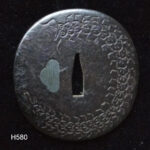
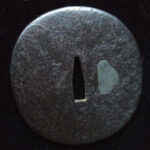
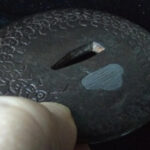
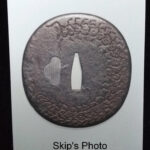
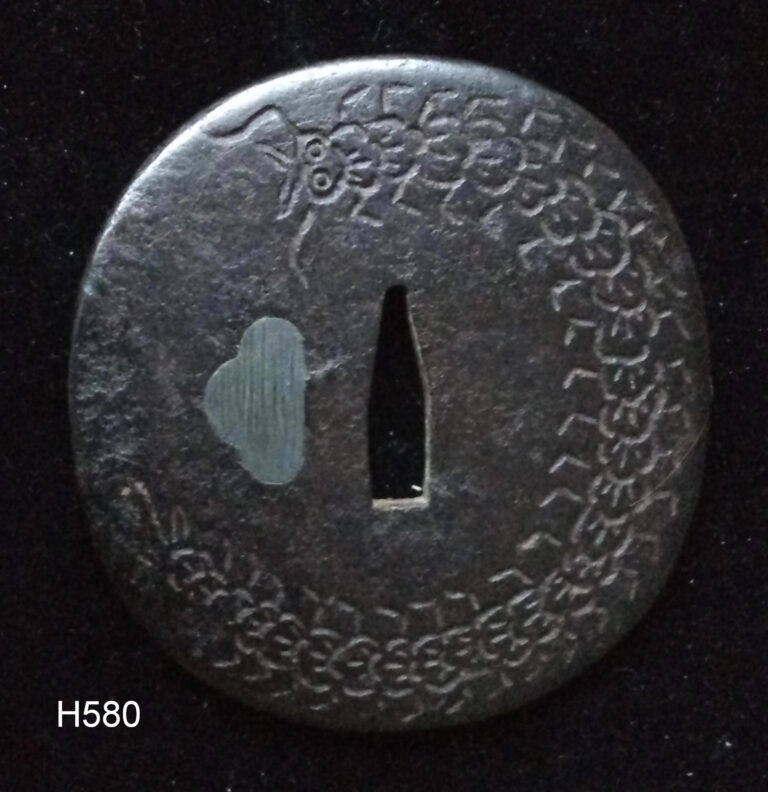
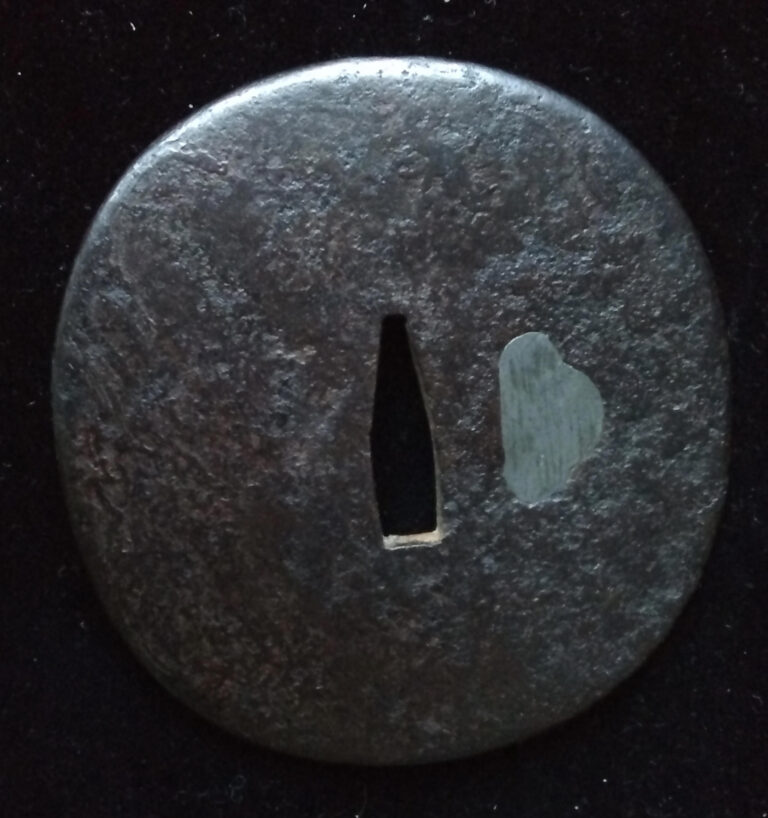
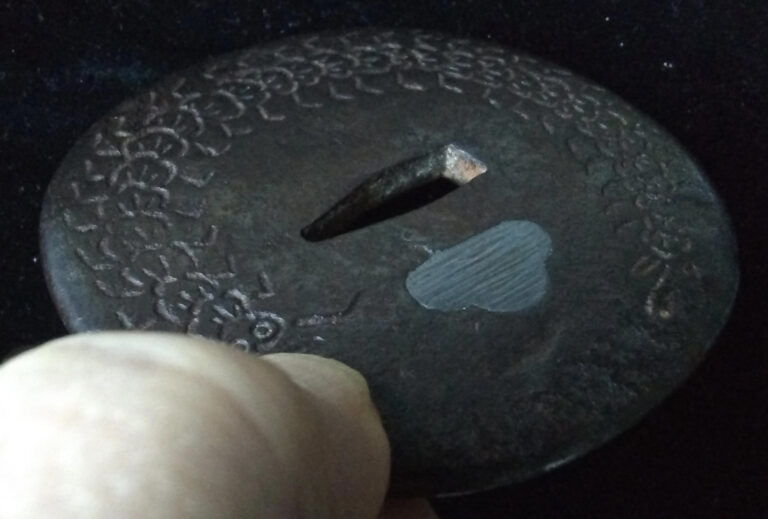
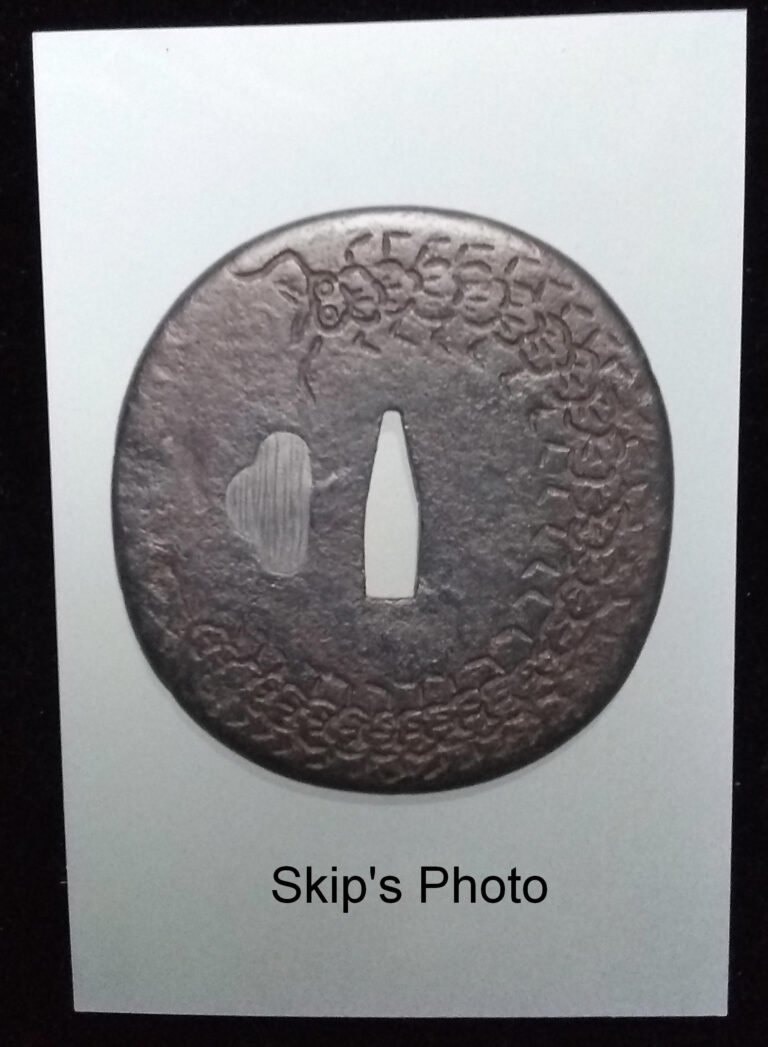
This is an iron tsuba featuring a nicely carved centipede on the front, with hammer work (tsuchime) on the reverse. It measures 7.8 x 8.3 x 0.5 cm. The piece is attributed to Hoan and is in excellent condition.

NihontoWatch MonNihontoWatch
MarketEncyclopediaKantei
Fittings›Owari›Hoan›Iron Tsuba with Carved Centipede
tsuba
Hoan

Iron Tsuba with Carved Centipede

Edo

SOLD
Hoan — 1 of 10
Hoan — 2 of 10
Hoan — 3 of 10
Hoan — 4 of 10
Hoan — 5 of 10
Hoan — 6 of 10
Hoan — 7 of 10
Hoan — 8 of 10
Hoan — 9 of 10
Hoan — 10 of 10
1 / 10
1 / 10
Hoan — 1 of 10Hoan — 2 of 10Hoan — 3 of 10Hoan — 4 of 10Hoan — 5 of 10Hoan — 6 of 10Hoan — 7 of 10Hoan — 8 of 10Hoan — 9 of 10Hoan — 10 of 10
Measurements & details
Maker

Hoan

Era

Edo

Description

This is an iron tsuba featuring a nicely carved centipede on the front, with hammer work (tsuchime) on the reverse. It measures 7.8 x 8.3 x 0.5 cm. The piece is attributed to Hoan and is in excellent condition.

About the maker

Hoan

法安

Iron-tsuba · Owari

›

Hoan was an arms-smith (bugu-kaji) of Kiyosu in Owari Province, whose personal name was Kawaguchi Saburomon. He served as a retained craftsman to the Asano family, residing first at Fuchu in Kai Province and later in Wakayama in Kii Province, and died on the twentieth day of the fifth month of Keicho 18 (1613); his posthumous Buddhist name was Honpoin Soan Nisshin Koji. The family burial ground remains at Kokuzen-ji Temple in Hiroshima, where his son-in-law Hisatsugu and others relocated during the Genna era in connection with the Asano clan's transfer of fief. Hoan is grouped with Yamakichi and Nobuie as the foremost Owari tsuba makers: the three share certain common stylistic features, though in comparison with Nobuie, Hoan's work tends to be somewhat more technical in execution, and compared with Yamakichi, it appears a step more polished and sophisticated.

Hoan's plate iron is famed for its toughness, to the extent that it was known by the sobriquet uwabami-gane ("great-serpent iron"). The iron of his tsuba is consistently described as exceptionally fine, possessing a dense, nettori ("viscous") quality, with kitae-hada emerging in places with a lively appearance. His specialty technique of yakite-kusarashi produces abstruse and subtle variations over the flat ground, deepening the work's elegant flavor. Amida-yasuri filing is employed with striking effect, and in his celebrated kuruma-sukashi (wheel openwork) compositions, the iron bones (tekkotsu) are revealed prominently[[c:1]], imparting a bold and vigorous character. The balance between pierced openwork and surface treatment is especially intriguing, with both composition and carving described as outstanding.

The NBTHK has praised Hoan's tsuba for their distinctive gloss and moist luster, their notable sense of weight, and the richly varied rims that become visual landscapes in their own right. Within a single tsuba, the examiners observe, "a world uniquely characteristic of Hoan is vividly realized." His ability to exploit a seemingly straightforward carving method to produce works of solemn dignity and refined charm -- uniting the beauty and strength of well-forged iron with kusarashi-te surface effects -- secures Hoan's place among the most esteemed tsuba makers of the Momoyama period, an artisan whose iron plate work remains unsurpassed in the Owari tradition.

Historical importance

Where Hoan stands among comparable artisans: across all of nihontō, and within tradition, era, and period. The tiers (Foremost · Leading · Major · Notable) weigh official designations from the NBTHK and Japan's Agency for Cultural Affairs, together with historical honors of lasting repute such as the Sansaku and Meibutsu-chō.

随一
Foremost
屈指
Leading
有数
Major
著名
Notable

Select a lens to see how it's measured.

Designation record
5 designated works
Jūyō
5
Hoan — full profileIron-tsuba school
About the school

Hoan

法安

Iron-tsuba · Owari

4 pieces on the market now

›

The Hoan school takes its name from its founder Hoan (法安), whose personal name was Kawaguchi Saburuemon, an arms-smith (bugu-kaji) active in Kiyosu, Owari Province, from the late Muromachi into the Momoyama period. Originally an armorer by trade, Hoan entered the service of the Asano family as a retained craftsman, residing successively at Kofu in Kai Province and at Wakayama in Kii Province before his death on the twentieth day of the fifth month of Keicho 18 (1613). His posthumous Buddhist name was Honpoin Soan Nisshin Koji. " Within this triad, Hoan is distinguished as "somewhat more technical in execution" than Nobuie and "a step more polished and sophisticated" than Yamakichi[[c:2]]. Following Hoan's death, his son-in-law Hisatsugu relocated to Hiroshima in Aki Province during the Genna era in connection with the Asano family's transfer of fief, establishing the Hiroshima branch of the lineage; the family cemetery remains at Kokuzen-ji Temple in that city. Hoan's plate iron was celebrated for its extraordinary toughness, "to the extent that it was also known by the epithet uwabami-tetsu" ("great-serpent iron").

Across the designated corpus, this iron is described as possessing a distinctive "viscous" (nettori) and tenacious character, with the forged texture (kitae-hada) emerging "here and there with lively animation" and tekkotsu (iron bones) appearing prominently at the surface. " This technique was deployed both for surface treatment across the ji and for the depiction of figural subjects, as in the long-eared rabbit rendered at the rim of one designated tsuba. Hoan's repertoire further embraced kuruma-sukashi (wheel openwork), amida-yasuri file-mark patterning employed as a deliberate design element, tsuchime-ji (hammered ground), and sukidashi-bori (raised carving). " The Hoan school occupies a position of high regard within the Owari iron-tsuba tradition. The NBTHK observes that "because there exist fine examples of kuruma-sukashi, the name Hoan is held in high regard[[c:4]]," and the designated works consistently display what the examiners characterize as a unique artistic world realized within a single tsuba. Learn more →

1 recorded smiths5 designated works
Leading smiths
SmithEraDesignated
Hoan法安—5
Hoan法安—0
Kanenobu兼信—0
Hisatsugu久次—0
Explore the Hoan school →
Warning — certificate not found

We could not find an authenticity certificate on the seller’s listing. Japanese swords and fittings are normally papered by the NBTHK (or the NTHK). Without one, the attribution is the seller’s own assessment and has not been independently verified — treat it with caution and ask the dealer about certification before buying.

Seller
J
Japanese Sword Books and Tsuba
Established 1990 · 36 yrs on the market
🇺🇸Ships from United States
›
✓Verified dealerjapaneseswordbooksandtsuba.com
✓Ships worldwide✓English supportWire transferPayPal
Return policy

3-day return window from receipt.

View all of Japanese Sword Books and Tsuba’s listings→View this item on the dealer’s site→

Previously sold by Hoan

Japanese Sword Books and Tsuba
Tsuba - by Hoan - Finely Carved Iron TsubaTsuba - by Hoan - Finely Carved Iron Tsuba
Sold

Tsuba

ByHoan
SOLD
Nihontocraft
Tokuho
Tsuba - Tokuho - by Hoan - Shodai Hoan TsubaTsuba - Tokuho - by Hoan - Shodai Hoan Tsuba
Sold

Tsuba

ByHoan
SOLD
Eirakudo
Hozon
Tsuba - Hozon - by Hoan - Houan Tsuba with Wisteria Trellis DesignTsuba - Hozon - by Hoan - Houan Tsuba with Wisteria Trellis Design
Sold

Tsuba

ByHoan
SOLD
Choshuya
Tokuho
Tsuba - Tokuho - by Hoan - Heaven and Earth Suhama Design - Signed HouanTsuba - Tokuho - by Hoan - Heaven and Earth Suhama Design - Signed Houan
Sold

Tsuba

ByHoan
SOLD
Choshuya
Tokuho
Tsuba - Tokuho - by Hoan - Pine Tree, Horse, and Kikusui Design - Signed HoanTsuba - Tokuho - by Hoan - Pine Tree, Horse, and Kikusui Design - Signed Hoan
Sold

Tsuba

ByHoan
SOLD

More from the Owari school

View all →
Wakeidou
Jūyō
Tsuba - Jūyō - by Nobuie - Nobuie - Gourd and Karakusa DesignTsuba - Jūyō - by Nobuie - Nobuie - Gourd and Karakusa Design

Tsuba

ByNobuie
¥7,000,000
Samurai Nippon
Jūyō
Tsuba - Jūyō - by Yamakichi Yamakichibei - Kuruma Sukashi ZuTsuba - Jūyō - by Yamakichi Yamakichibei - Kuruma Sukashi Zu

Tsuba

ByYamakichi Yamakichibei
Ask
Samurai Nippon
Tokuho
Tsuba - Tokuho - by Owari Norisuke - Mon Chirashi Sukashi ZuTsuba - Tokuho - by Owari Norisuke - Mon Chirashi Sukashi Zu

Tsuba

ByOwari Norisuke
¥210,000
Nihontocraft
Tokuho
Tsuba - Tokuho - by Kanayama School - Kanayama TsubaTsuba - Tokuho - by Kanayama School - Kanayama Tsuba

Tsuba

ByKanayama School
¥2,500
Iida Koendo
Jūyō
Tsuba - Jūyō - by Nobuie - Tosogu: NobuieTsuba - Jūyō - by Nobuie - Tosogu: Nobuie

Tsuba

ByNobuie
Ask
Iida Koendo
Tokuho
Tsuba - Tokuho - by Nobuie - Nobuie - Momoyama Period, Owari ProvinceTsuba - Tokuho - by Nobuie - Nobuie - Momoyama Period, Owari Province

Tsuba

ByNobuie
¥3,850,000
Iida Koendo
Tokuho
Tsuba - Tokuho - by Nobuie - Tosogu: NBTHK Tokubetsu Hozon Tsuba by NobuieTsuba - Tokuho - by Nobuie - Tosogu: NBTHK Tokubetsu Hozon Tsuba by Nobuie

Tsuba

ByNobuie
¥3,300,000
Samurai Nippon
Tokuho
Tsuba - Tokuho - by Owari School - Shochiku Sekka Sukashi ZuTsuba - Tokuho - by Owari School - Shochiku Sekka Sukashi Zu

Tsuba

ByOwari School
¥330,000

Swords

  • Katana
  • Wakizashi
  • Tantō
  • Tachi
  • Naginata
  • Yari

Fittings

  • Tsuba
  • Fuchi-Kashira
  • Kozuka
  • Menuki

Armor

  • Kabuto
  • Samurai Armor

By Certification

  • Tokujū
  • Jūyō
  • Tokuho
  • Hozon

Resources

  • Dealer Directory
  • Artist Directory
  • The Daily Kantei
  • Glossary
  • Browse All
Nihontowatch© 2026
TermsPrivacyCookiesAbout

Description

This is an iron tsuba featuring a nicely carved centipede on the front, with hammer work (tsuchime) on the reverse. It measures 7.8 x 8.3 x 0.5 cm. The piece is attributed to Hoan and is in excellent condition.

NihontoWatch MonNihontoWatch
MarketEncyclopediaKantei
Fittings›Owari›Hoan›Iron Tsuba with Carved Centipede
tsuba
Hoan

Iron Tsuba with Carved Centipede

Edo

SOLD
Hoan — 1 of 10
Hoan — 2 of 10
Hoan — 3 of 10
Hoan — 4 of 10
Hoan — 5 of 10
Hoan — 6 of 10
Hoan — 7 of 10
Hoan — 8 of 10
Hoan — 9 of 10
Hoan — 10 of 10
1 / 10
1 / 10
Hoan — 1 of 10Hoan — 2 of 10Hoan — 3 of 10Hoan — 4 of 10Hoan — 5 of 10Hoan — 6 of 10Hoan — 7 of 10Hoan — 8 of 10Hoan — 9 of 10Hoan — 10 of 10
Measurements & details
Maker

Hoan

Era

Edo

Description

This is an iron tsuba featuring a nicely carved centipede on the front, with hammer work (tsuchime) on the reverse. It measures 7.8 x 8.3 x 0.5 cm. The piece is attributed to Hoan and is in excellent condition.

About the maker

Hoan

法安

Iron-tsuba · Owari

›

Hoan was an arms-smith (bugu-kaji) of Kiyosu in Owari Province, whose personal name was Kawaguchi Saburomon. He served as a retained craftsman to the Asano family, residing first at Fuchu in Kai Province and later in Wakayama in Kii Province, and died on the twentieth day of the fifth month of Keicho 18 (1613); his posthumous Buddhist name was Honpoin Soan Nisshin Koji. The family burial ground remains at Kokuzen-ji Temple in Hiroshima, where his son-in-law Hisatsugu and others relocated during the Genna era in connection with the Asano clan's transfer of fief. Hoan is grouped with Yamakichi and Nobuie as the foremost Owari tsuba makers: the three share certain common stylistic features, though in comparison with Nobuie, Hoan's work tends to be somewhat more technical in execution, and compared with Yamakichi, it appears a step more polished and sophisticated.

Hoan's plate iron is famed for its toughness, to the extent that it was known by the sobriquet uwabami-gane ("great-serpent iron"). The iron of his tsuba is consistently described as exceptionally fine, possessing a dense, nettori ("viscous") quality, with kitae-hada emerging in places with a lively appearance. His specialty technique of yakite-kusarashi produces abstruse and subtle variations over the flat ground, deepening the work's elegant flavor. Amida-yasuri filing is employed with striking effect, and in his celebrated kuruma-sukashi (wheel openwork) compositions, the iron bones (tekkotsu) are revealed prominently[[c:1]], imparting a bold and vigorous character. The balance between pierced openwork and surface treatment is especially intriguing, with both composition and carving described as outstanding.

The NBTHK has praised Hoan's tsuba for their distinctive gloss and moist luster, their notable sense of weight, and the richly varied rims that become visual landscapes in their own right. Within a single tsuba, the examiners observe, "a world uniquely characteristic of Hoan is vividly realized." His ability to exploit a seemingly straightforward carving method to produce works of solemn dignity and refined charm -- uniting the beauty and strength of well-forged iron with kusarashi-te surface effects -- secures Hoan's place among the most esteemed tsuba makers of the Momoyama period, an artisan whose iron plate work remains unsurpassed in the Owari tradition.

Historical importance

Where Hoan stands among comparable artisans: across all of nihontō, and within tradition, era, and period. The tiers (Foremost · Leading · Major · Notable) weigh official designations from the NBTHK and Japan's Agency for Cultural Affairs, together with historical honors of lasting repute such as the Sansaku and Meibutsu-chō.

随一
Foremost
屈指
Leading
有数
Major
著名
Notable

Select a lens to see how it's measured.

Designation record
5 designated works
Jūyō
5
Hoan — full profileIron-tsuba school
About the school

Hoan

法安

Iron-tsuba · Owari

4 pieces on the market now

›

The Hoan school takes its name from its founder Hoan (法安), whose personal name was Kawaguchi Saburuemon, an arms-smith (bugu-kaji) active in Kiyosu, Owari Province, from the late Muromachi into the Momoyama period. Originally an armorer by trade, Hoan entered the service of the Asano family as a retained craftsman, residing successively at Kofu in Kai Province and at Wakayama in Kii Province before his death on the twentieth day of the fifth month of Keicho 18 (1613). His posthumous Buddhist name was Honpoin Soan Nisshin Koji. " Within this triad, Hoan is distinguished as "somewhat more technical in execution" than Nobuie and "a step more polished and sophisticated" than Yamakichi[[c:2]]. Following Hoan's death, his son-in-law Hisatsugu relocated to Hiroshima in Aki Province during the Genna era in connection with the Asano family's transfer of fief, establishing the Hiroshima branch of the lineage; the family cemetery remains at Kokuzen-ji Temple in that city. Hoan's plate iron was celebrated for its extraordinary toughness, "to the extent that it was also known by the epithet uwabami-tetsu" ("great-serpent iron").

Across the designated corpus, this iron is described as possessing a distinctive "viscous" (nettori) and tenacious character, with the forged texture (kitae-hada) emerging "here and there with lively animation" and tekkotsu (iron bones) appearing prominently at the surface. " This technique was deployed both for surface treatment across the ji and for the depiction of figural subjects, as in the long-eared rabbit rendered at the rim of one designated tsuba. Hoan's repertoire further embraced kuruma-sukashi (wheel openwork), amida-yasuri file-mark patterning employed as a deliberate design element, tsuchime-ji (hammered ground), and sukidashi-bori (raised carving). " The Hoan school occupies a position of high regard within the Owari iron-tsuba tradition. The NBTHK observes that "because there exist fine examples of kuruma-sukashi, the name Hoan is held in high regard[[c:4]]," and the designated works consistently display what the examiners characterize as a unique artistic world realized within a single tsuba. Learn more →

1 recorded smiths5 designated works
Leading smiths
SmithEraDesignated
Hoan法安—5
Hoan法安—0
Kanenobu兼信—0
Hisatsugu久次—0
Explore the Hoan school →
Warning — certificate not found

We could not find an authenticity certificate on the seller’s listing. Japanese swords and fittings are normally papered by the NBTHK (or the NTHK). Without one, the attribution is the seller’s own assessment and has not been independently verified — treat it with caution and ask the dealer about certification before buying.

Seller
J
Japanese Sword Books and Tsuba
Established 1990 · 36 yrs on the market
🇺🇸Ships from United States
›
✓Verified dealerjapaneseswordbooksandtsuba.com
✓Ships worldwide✓English supportWire transferPayPal
Return policy

3-day return window from receipt.

View all of Japanese Sword Books and Tsuba’s listings→View this item on the dealer’s site→

Previously sold by Hoan

Japanese Sword Books and Tsuba
Tsuba - by Hoan - Finely Carved Iron TsubaTsuba - by Hoan - Finely Carved Iron Tsuba
Sold

Tsuba

ByHoan
SOLD
Nihontocraft
Tokuho
Tsuba - Tokuho - by Hoan - Shodai Hoan TsubaTsuba - Tokuho - by Hoan - Shodai Hoan Tsuba
Sold

Tsuba

ByHoan
SOLD
Eirakudo
Hozon
Tsuba - Hozon - by Hoan - Houan Tsuba with Wisteria Trellis DesignTsuba - Hozon - by Hoan - Houan Tsuba with Wisteria Trellis Design
Sold

Tsuba

ByHoan
SOLD
Choshuya
Tokuho
Tsuba - Tokuho - by Hoan - Heaven and Earth Suhama Design - Signed HouanTsuba - Tokuho - by Hoan - Heaven and Earth Suhama Design - Signed Houan
Sold

Tsuba

ByHoan
SOLD
Choshuya
Tokuho
Tsuba - Tokuho - by Hoan - Pine Tree, Horse, and Kikusui Design - Signed HoanTsuba - Tokuho - by Hoan - Pine Tree, Horse, and Kikusui Design - Signed Hoan
Sold

Tsuba

ByHoan
SOLD

More from the Owari school

View all →
Wakeidou
Jūyō
Tsuba - Jūyō - by Nobuie - Nobuie - Gourd and Karakusa DesignTsuba - Jūyō - by Nobuie - Nobuie - Gourd and Karakusa Design

Tsuba

ByNobuie
¥7,000,000
Samurai Nippon
Jūyō
Tsuba - Jūyō - by Yamakichi Yamakichibei - Kuruma Sukashi ZuTsuba - Jūyō - by Yamakichi Yamakichibei - Kuruma Sukashi Zu

Tsuba

ByYamakichi Yamakichibei
Ask
Samurai Nippon
Tokuho
Tsuba - Tokuho - by Owari Norisuke - Mon Chirashi Sukashi ZuTsuba - Tokuho - by Owari Norisuke - Mon Chirashi Sukashi Zu

Tsuba

ByOwari Norisuke
¥210,000
Nihontocraft
Tokuho
Tsuba - Tokuho - by Kanayama School - Kanayama TsubaTsuba - Tokuho - by Kanayama School - Kanayama Tsuba

Tsuba

ByKanayama School
¥2,500
Iida Koendo
Jūyō
Tsuba - Jūyō - by Nobuie - Tosogu: NobuieTsuba - Jūyō - by Nobuie - Tosogu: Nobuie

Tsuba

ByNobuie
Ask
Iida Koendo
Tokuho
Tsuba - Tokuho - by Nobuie - Nobuie - Momoyama Period, Owari ProvinceTsuba - Tokuho - by Nobuie - Nobuie - Momoyama Period, Owari Province

Tsuba

ByNobuie
¥3,850,000
Iida Koendo
Tokuho
Tsuba - Tokuho - by Nobuie - Tosogu: NBTHK Tokubetsu Hozon Tsuba by NobuieTsuba - Tokuho - by Nobuie - Tosogu: NBTHK Tokubetsu Hozon Tsuba by Nobuie

Tsuba

ByNobuie
¥3,300,000
Samurai Nippon
Tokuho
Tsuba - Tokuho - by Owari School - Shochiku Sekka Sukashi ZuTsuba - Tokuho - by Owari School - Shochiku Sekka Sukashi Zu

Tsuba

ByOwari School
¥330,000

Swords

  • Katana
  • Wakizashi
  • Tantō
  • Tachi
  • Naginata
  • Yari

Fittings

  • Tsuba
  • Fuchi-Kashira
  • Kozuka
  • Menuki

Armor

  • Kabuto
  • Samurai Armor

By Certification

  • Tokujū
  • Jūyō
  • Tokuho
  • Hozon

Resources

  • Dealer Directory
  • Artist Directory
  • The Daily Kantei
  • Glossary
  • Browse All
Nihontowatch© 2026
TermsPrivacyCookiesAbout
NihontoWatch Mon

NihontoWatch

Market
Encyclopedia
Kantei
NihontoWatch Mon

NihontoWatch

Market
Encyclopedia
Kantei