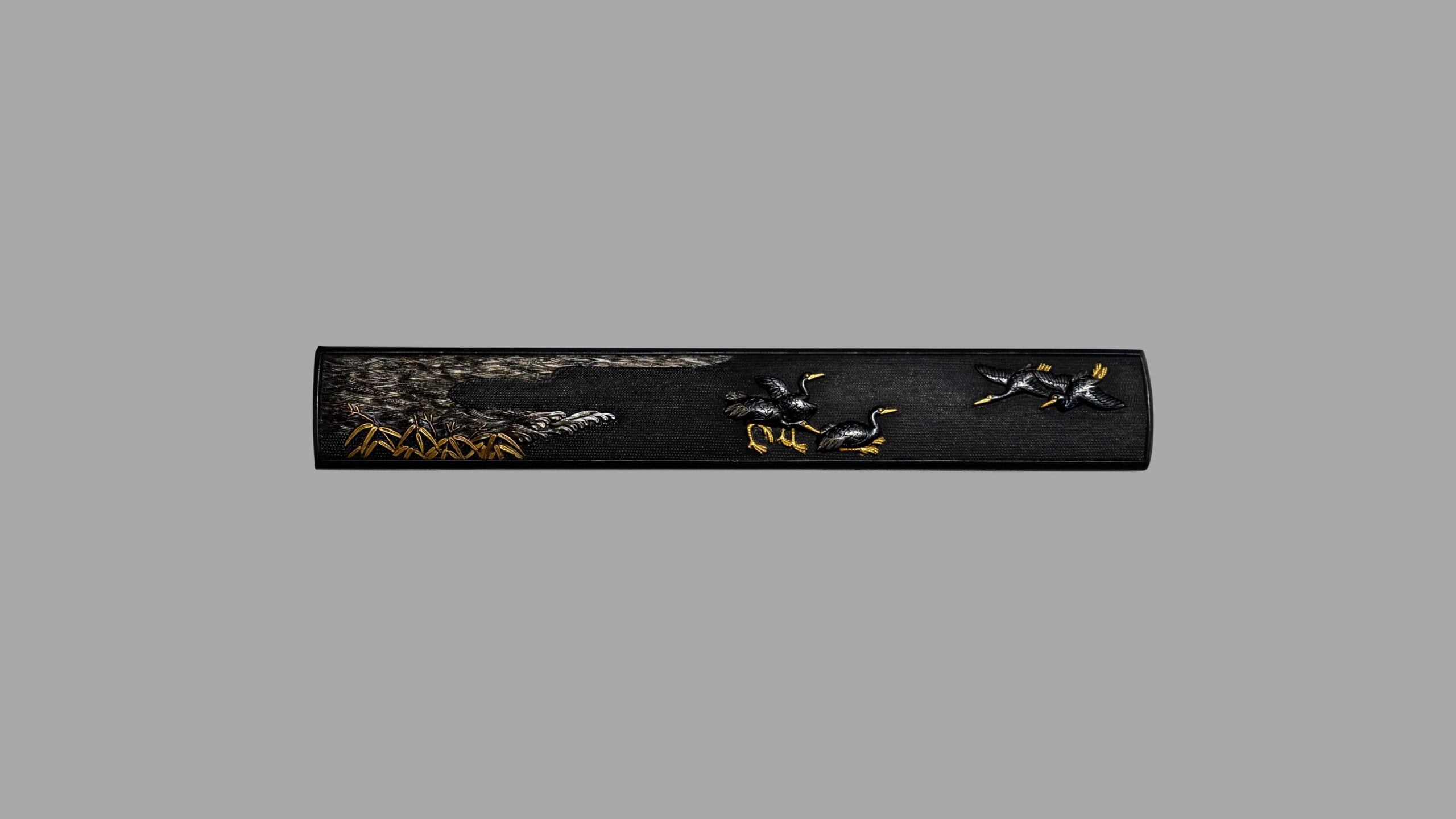
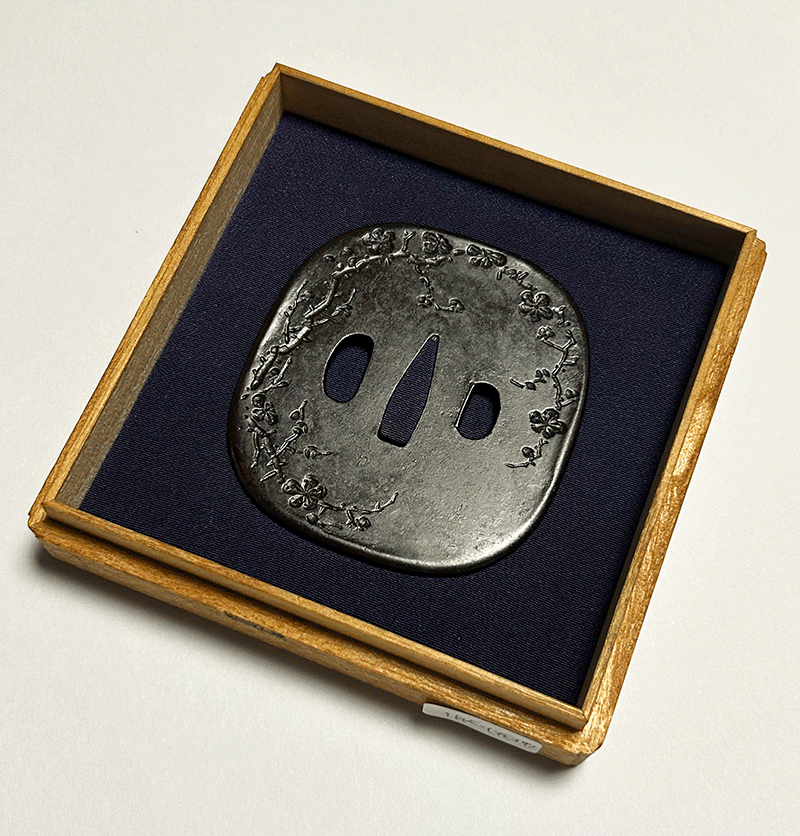
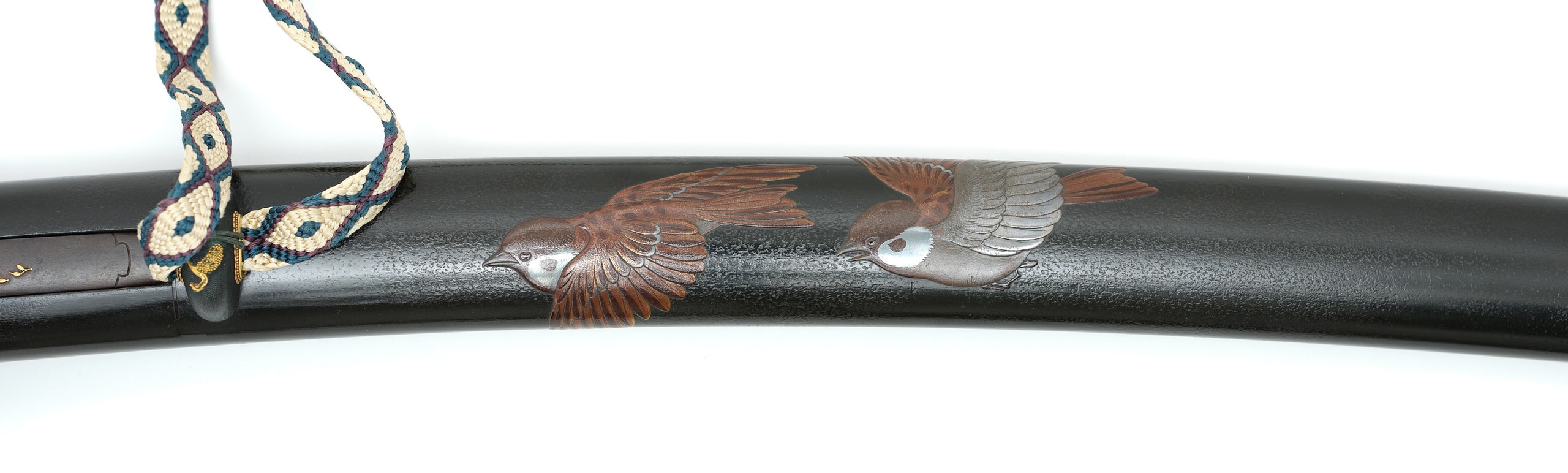
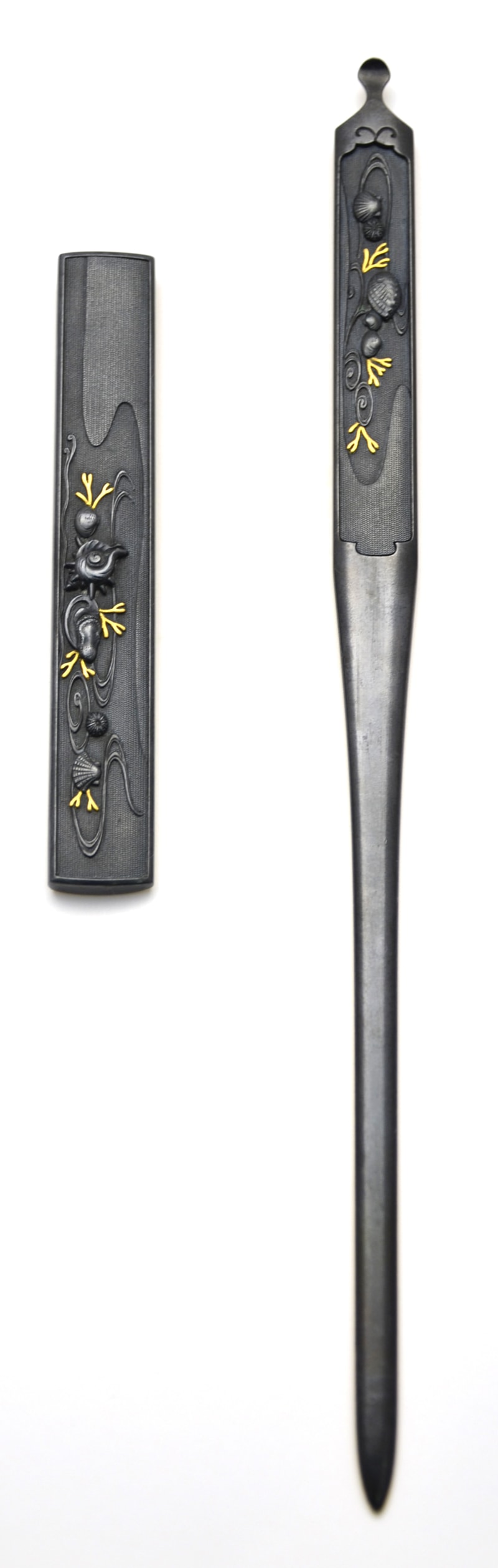
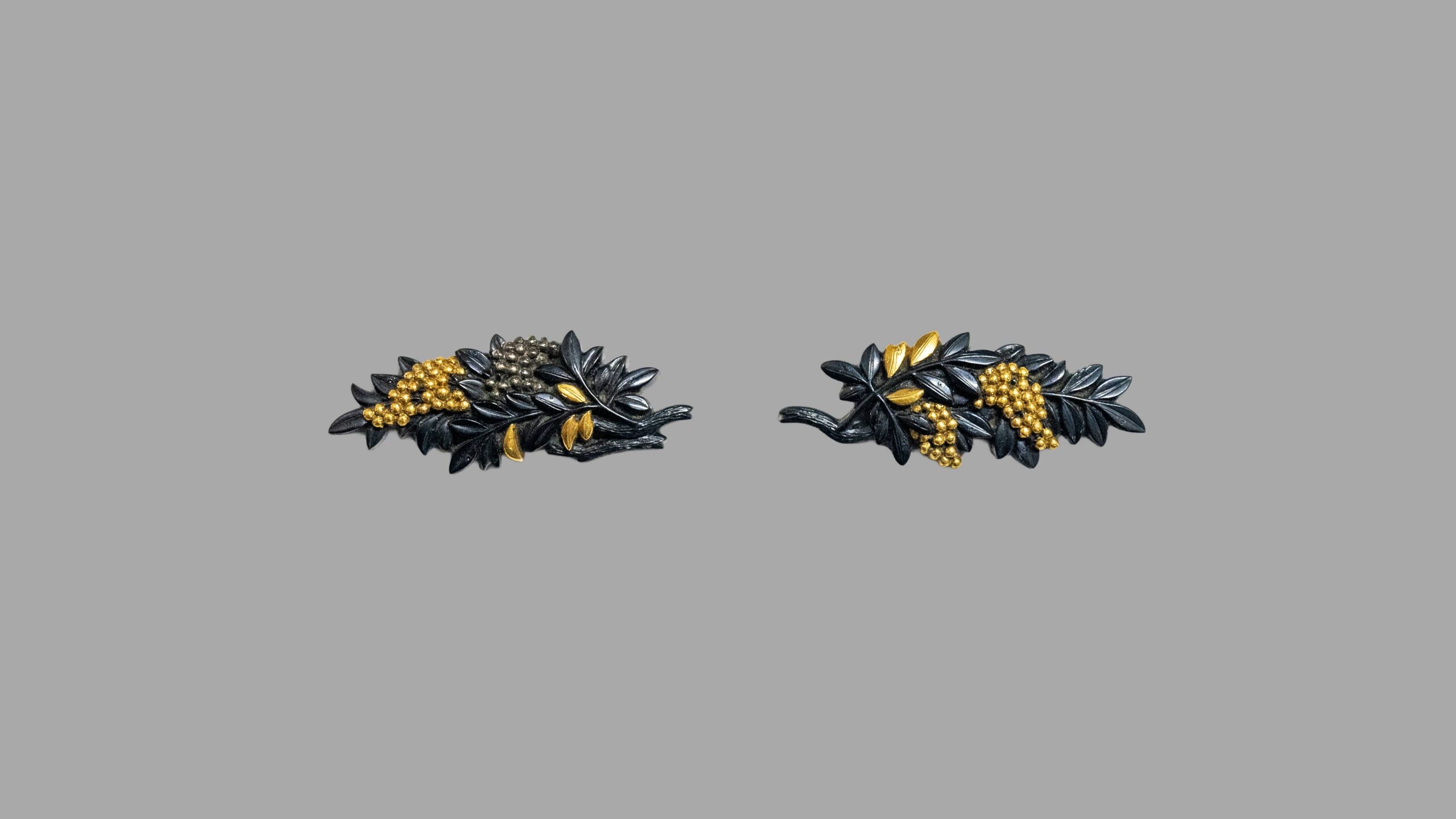
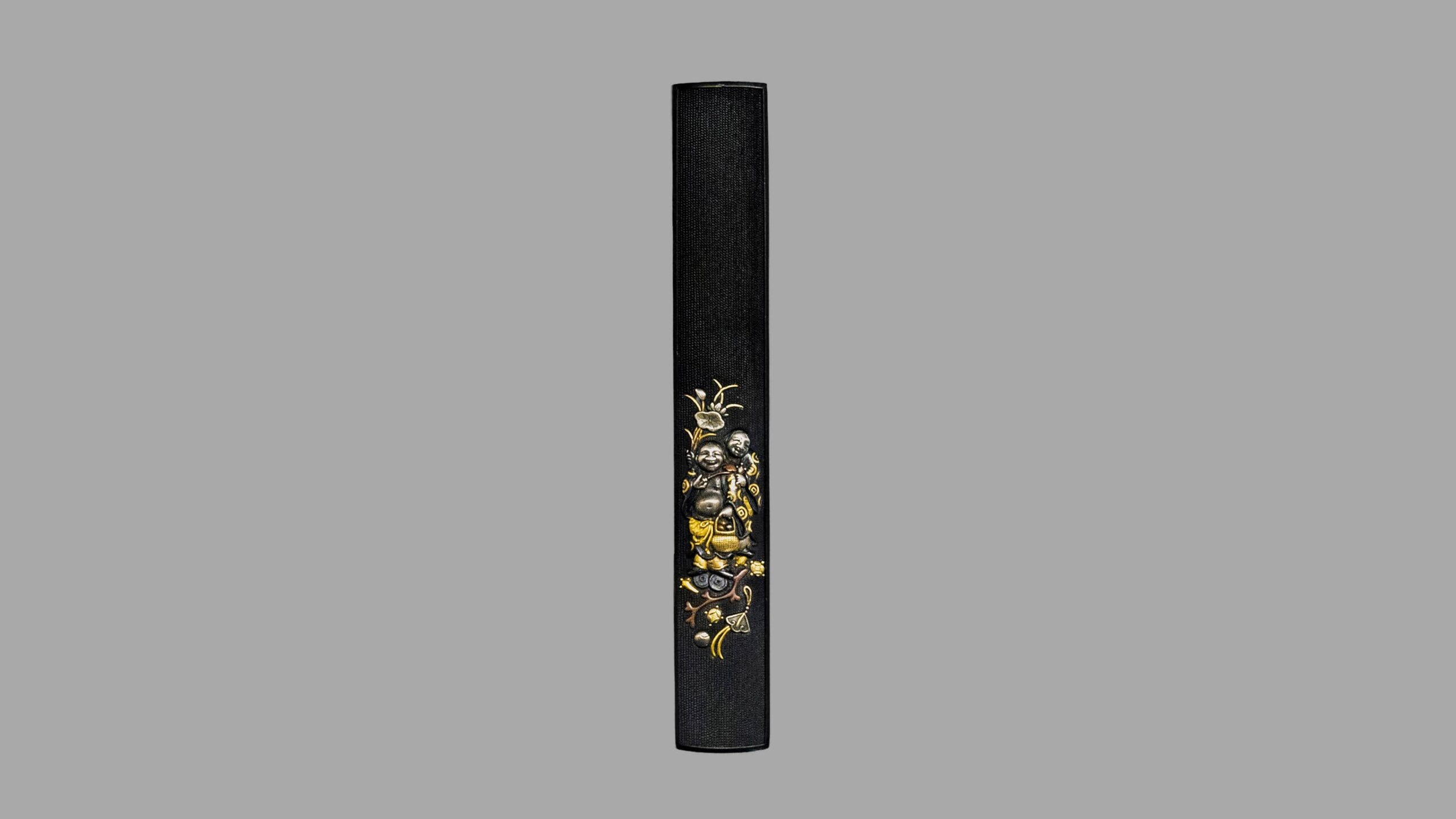
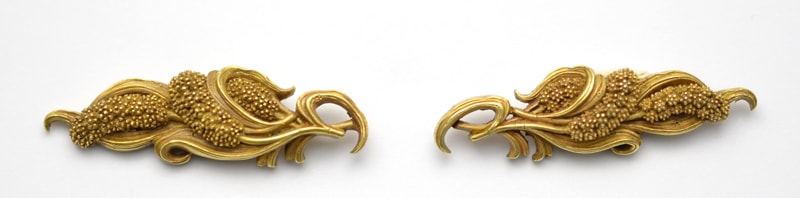
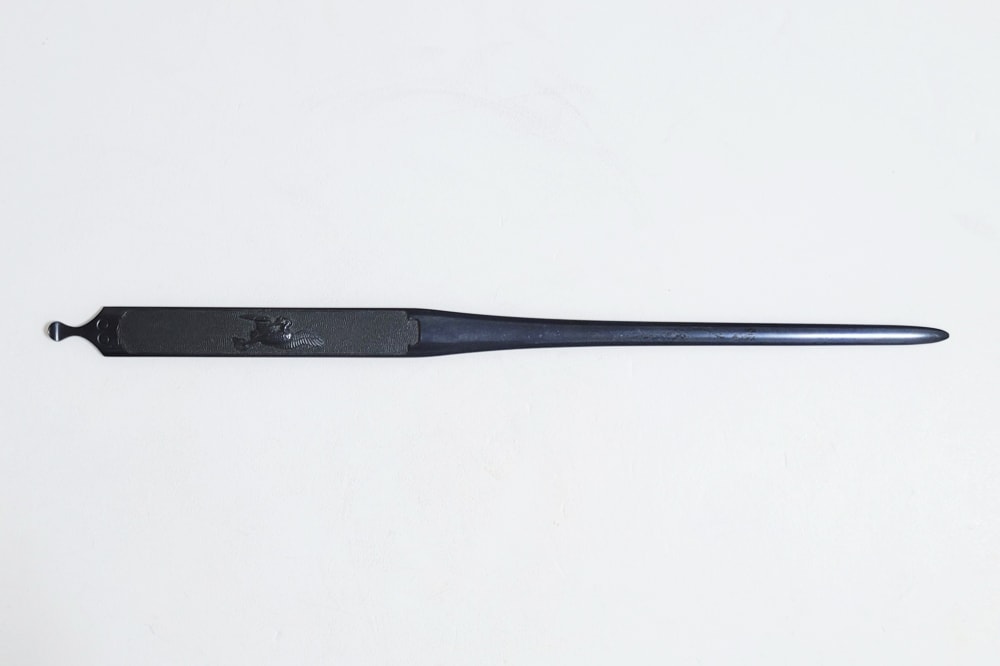
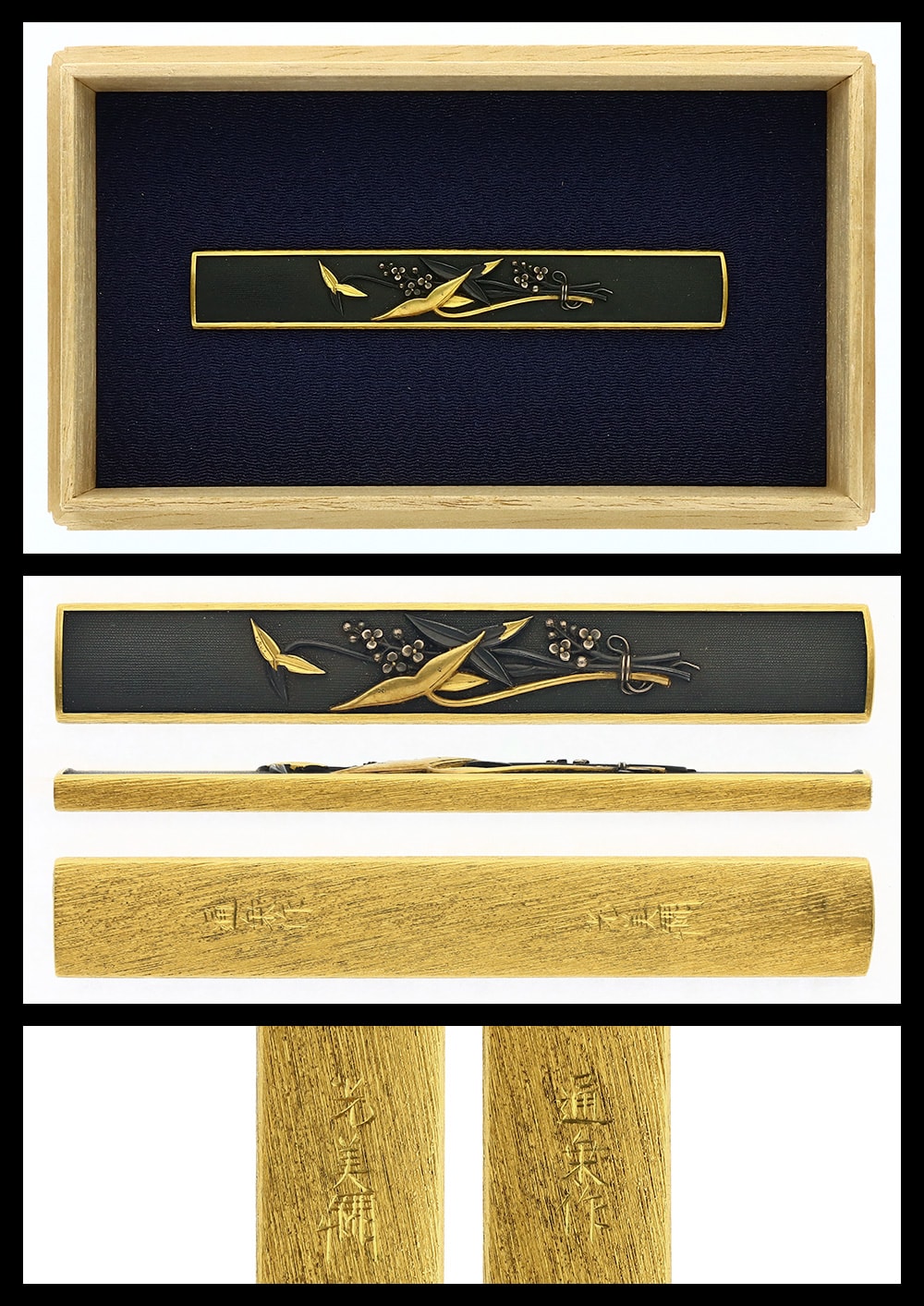
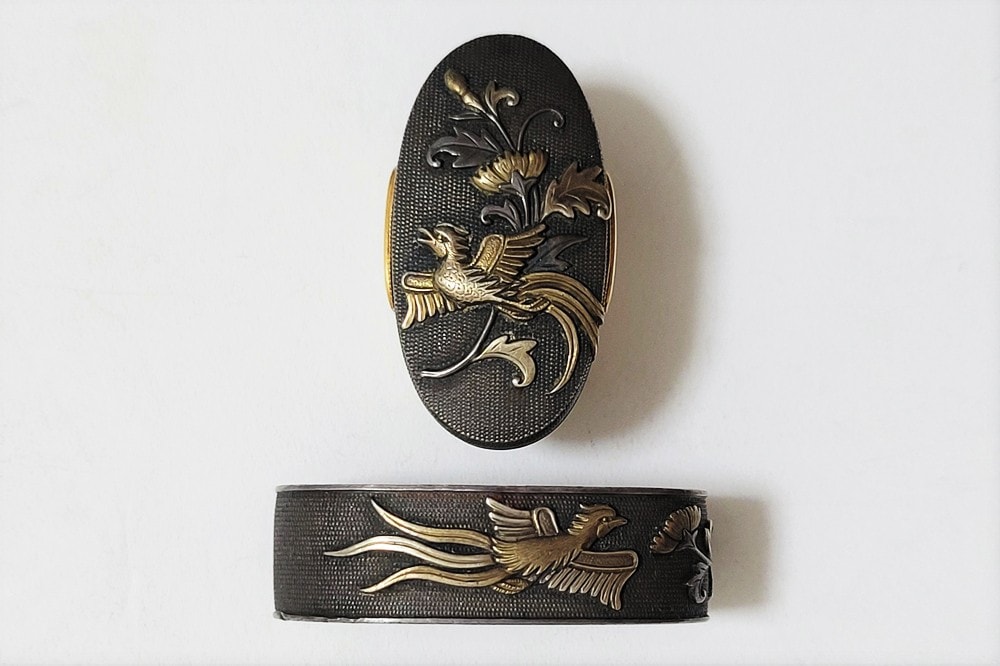
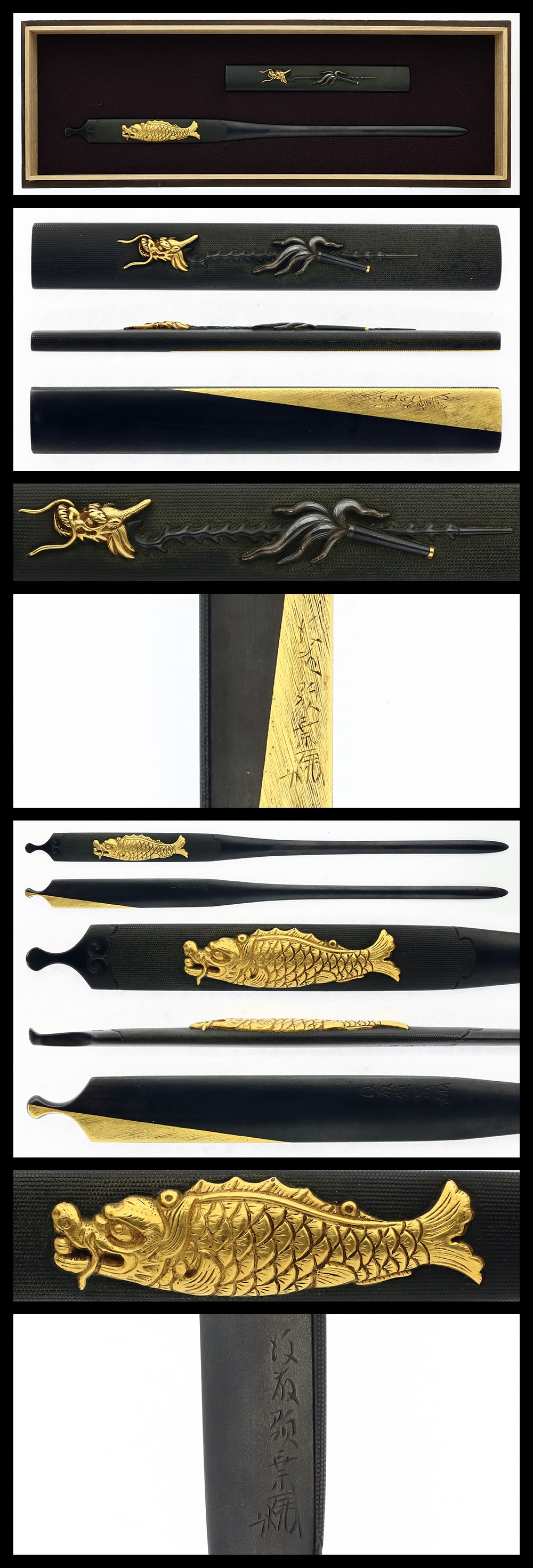
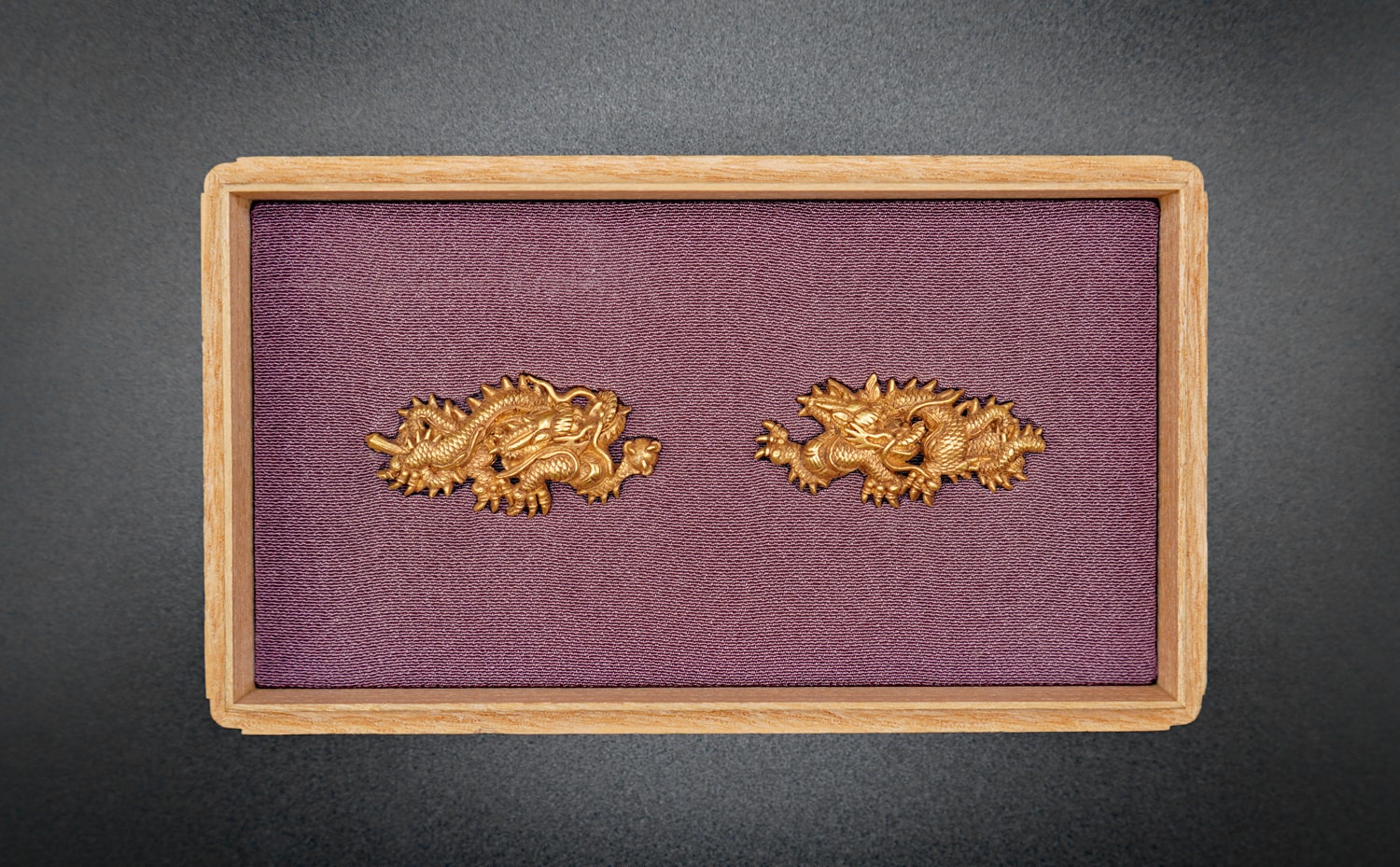
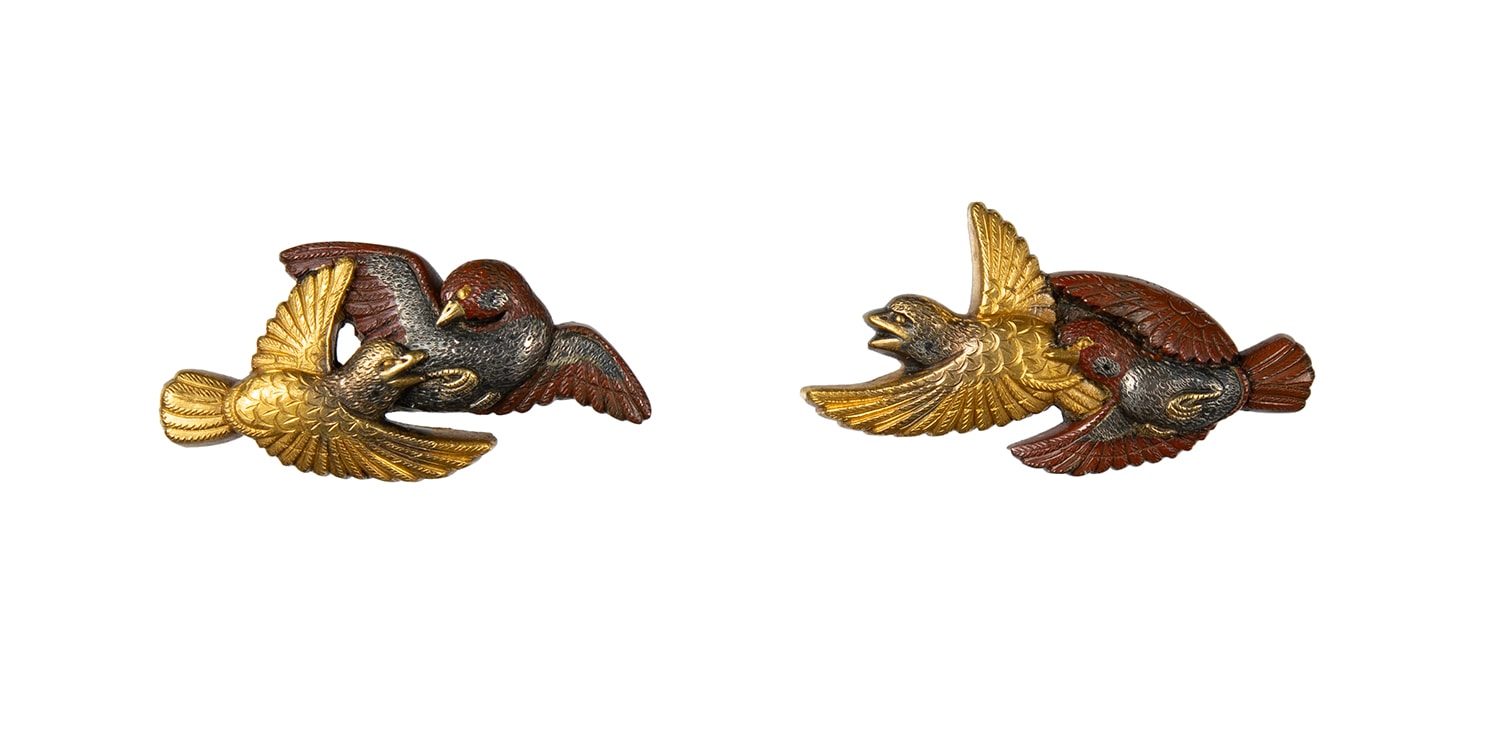
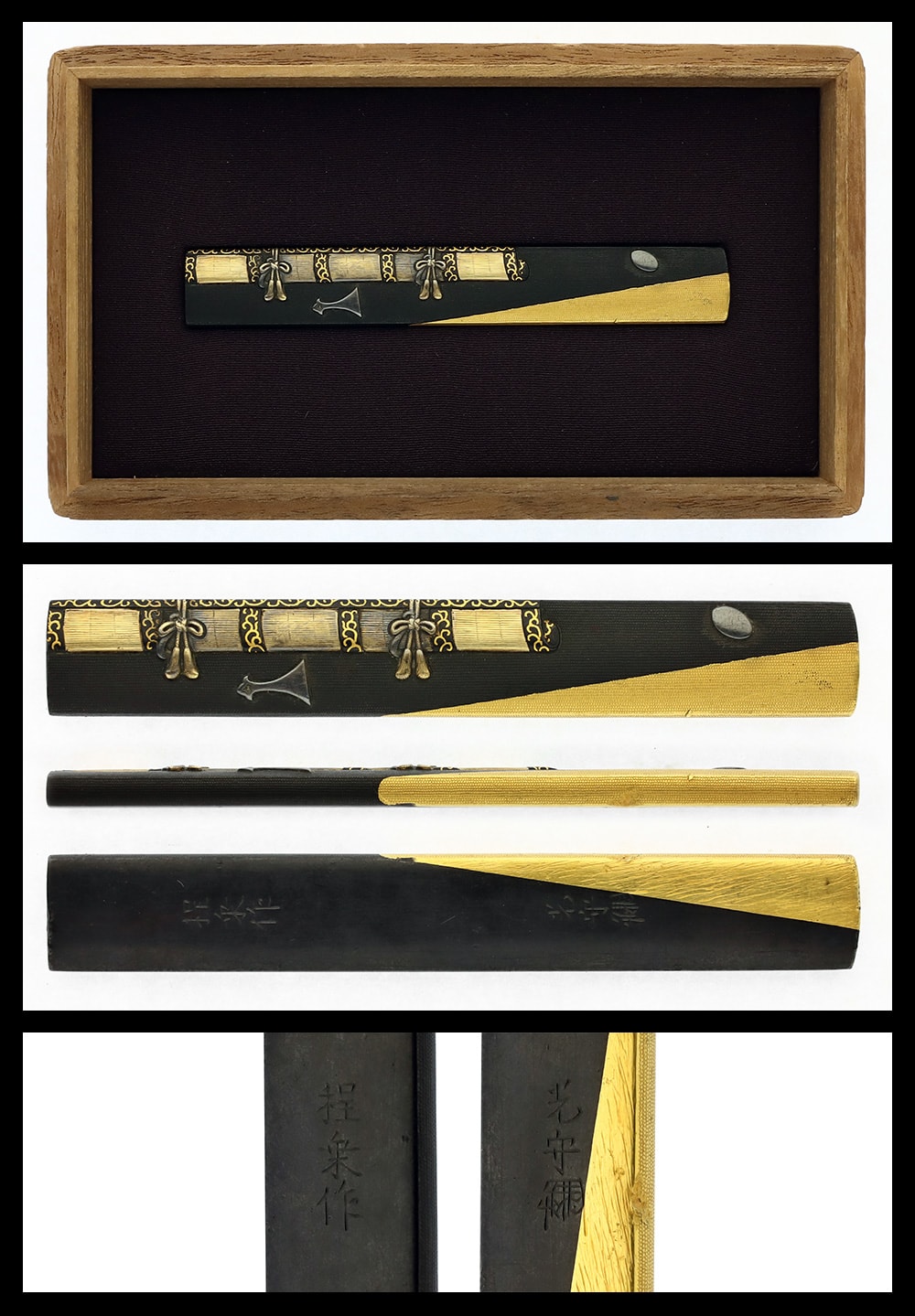
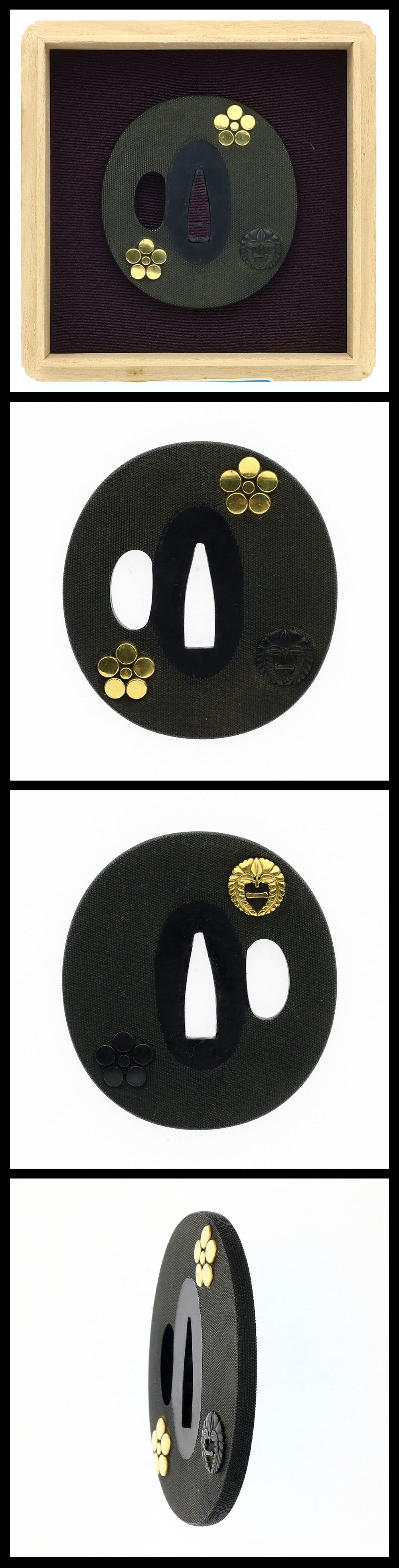
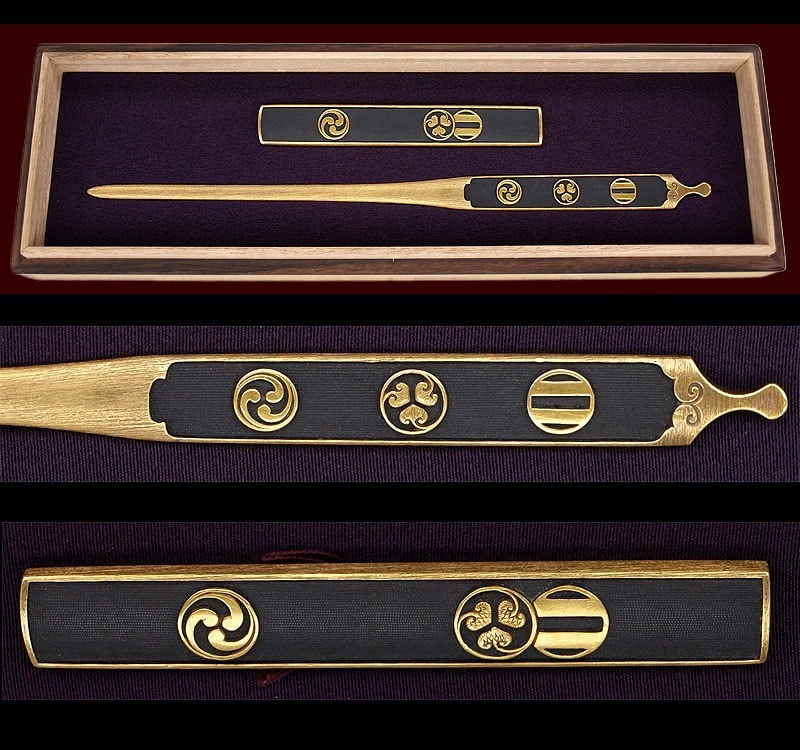
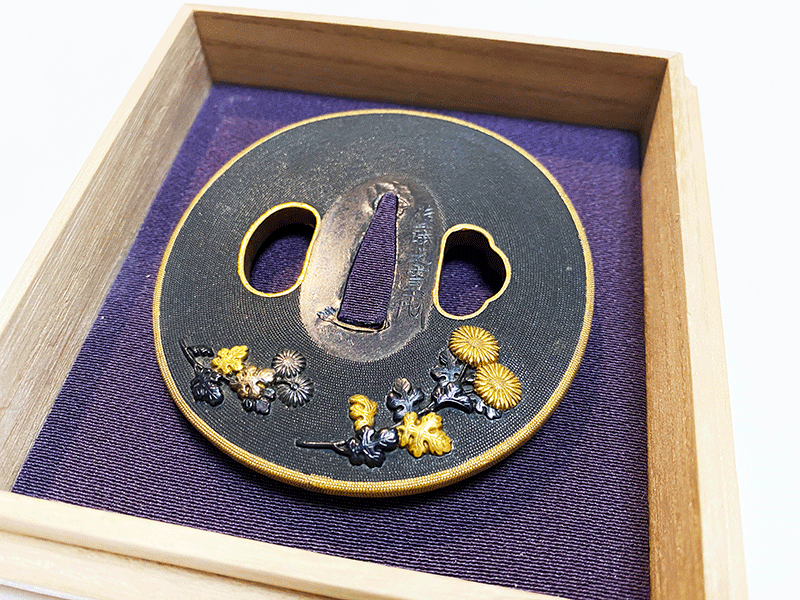
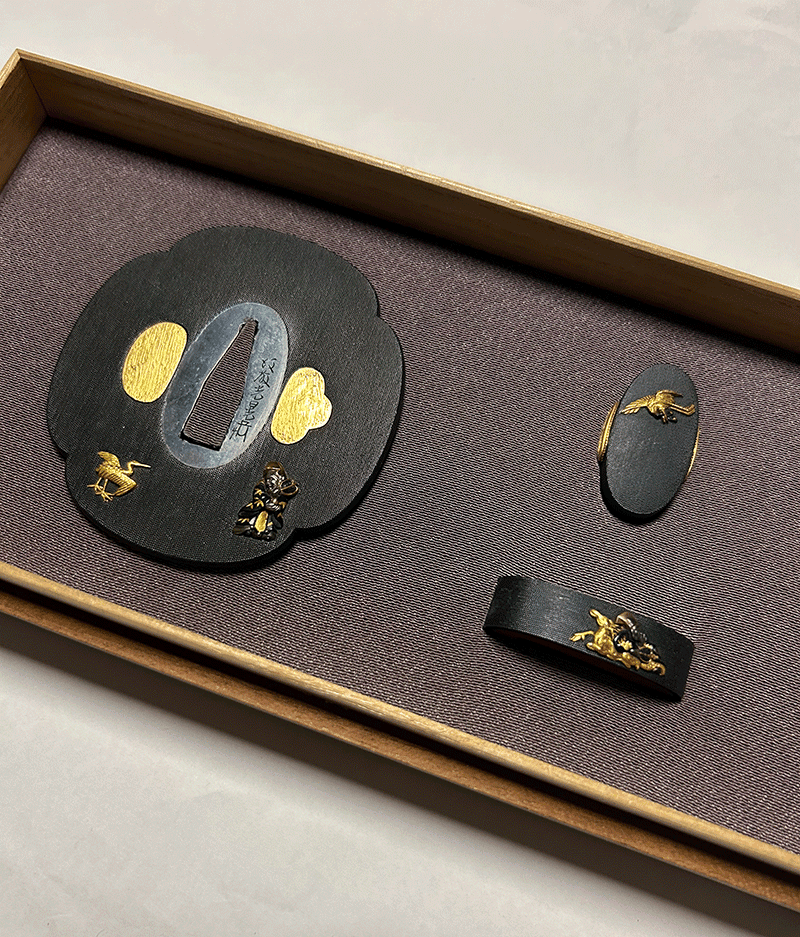
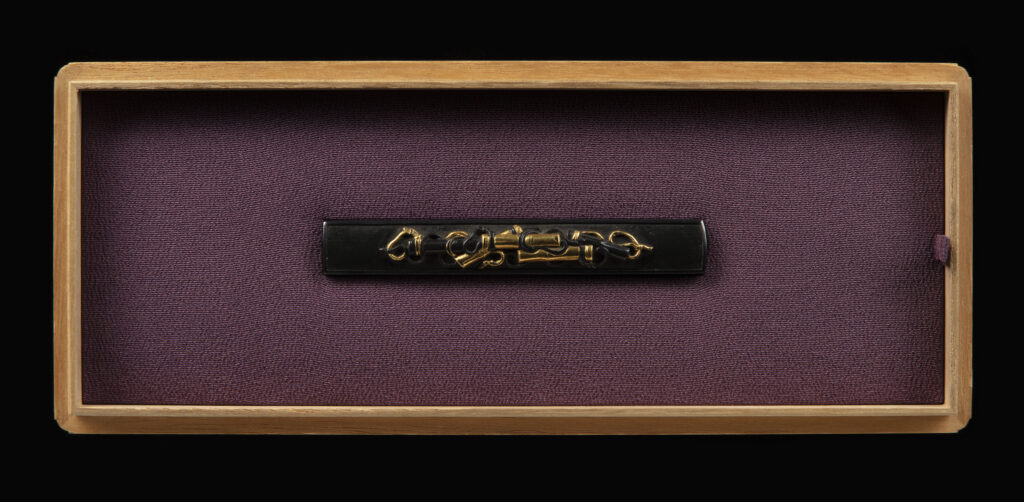
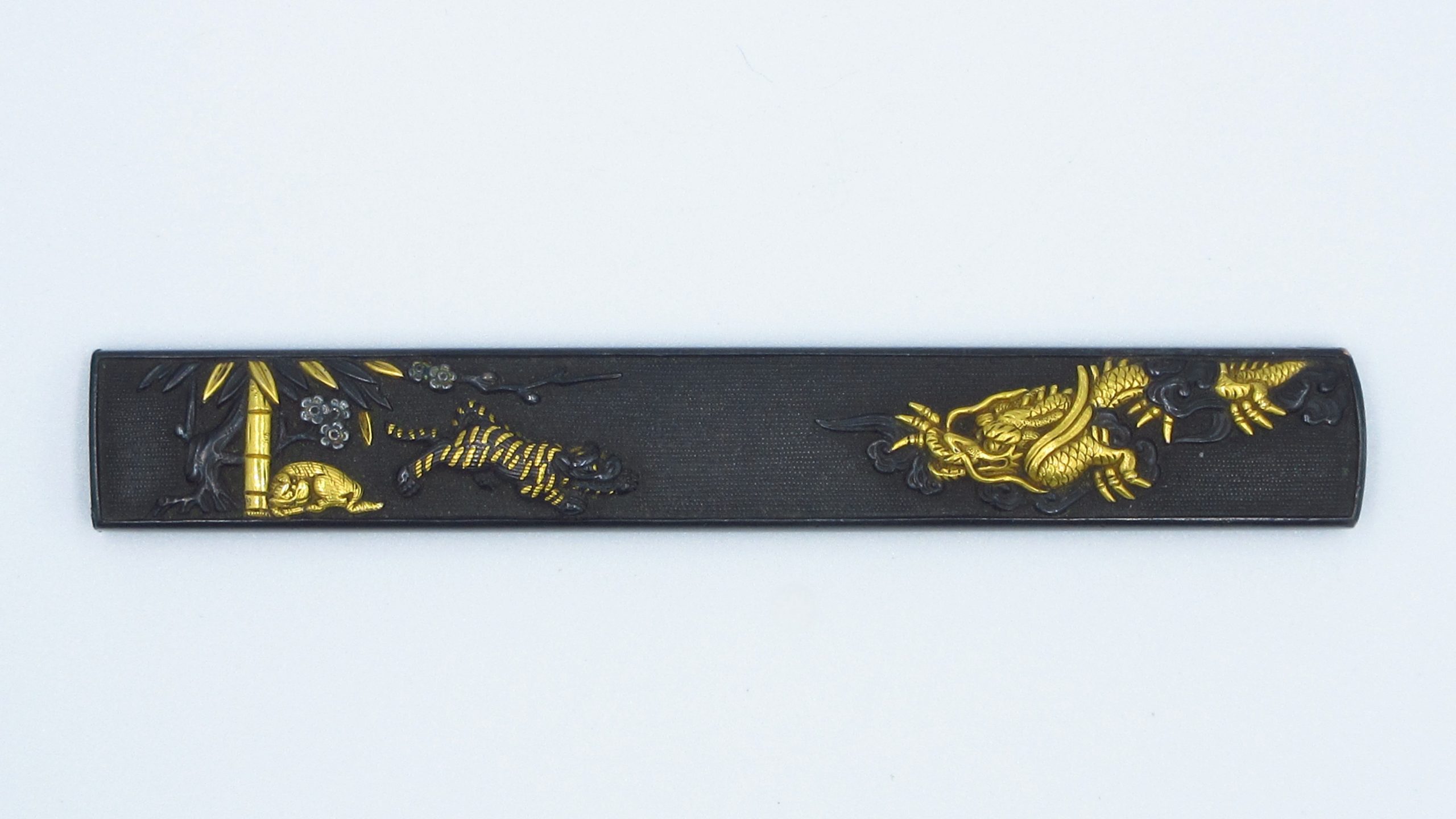
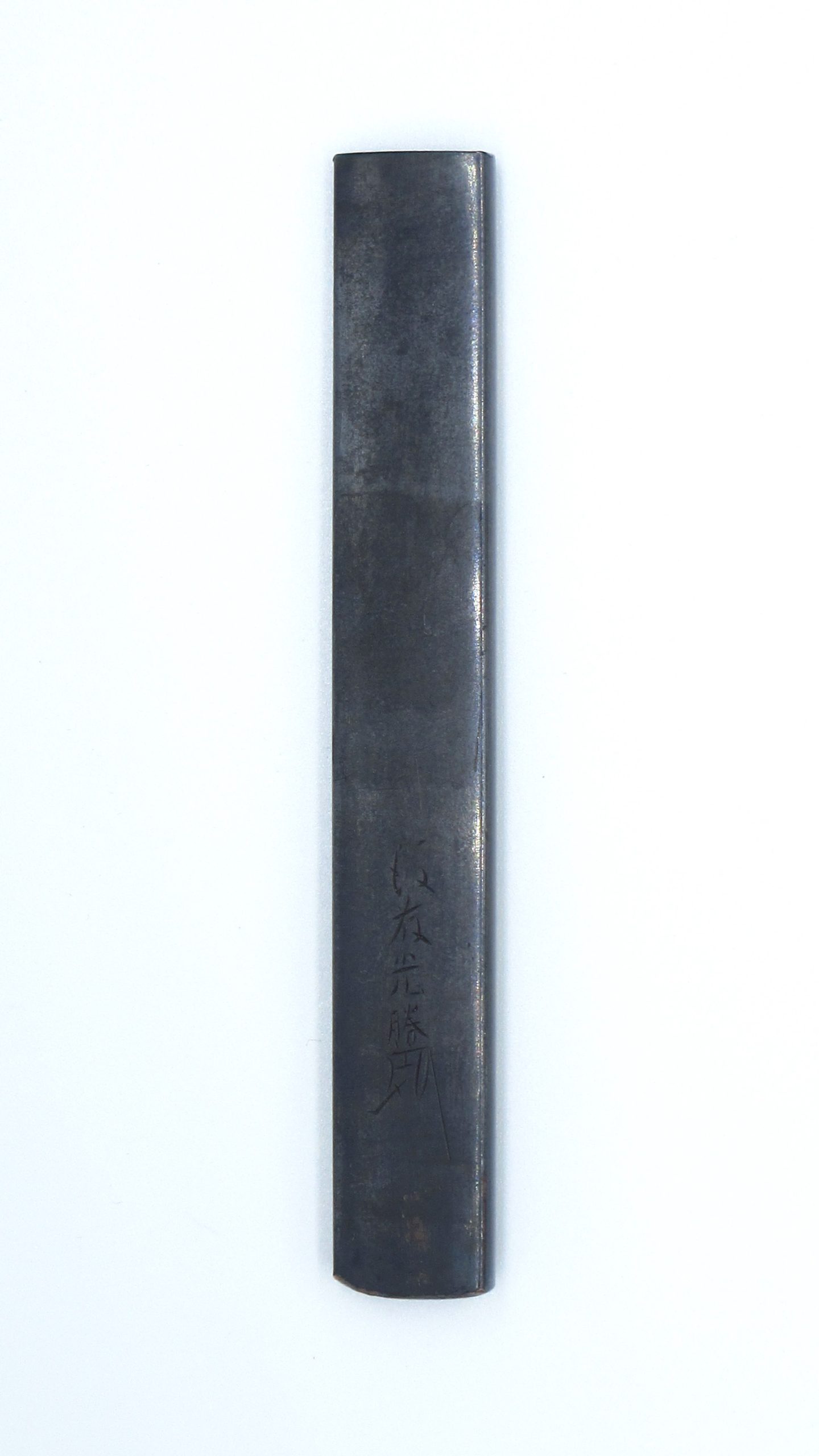
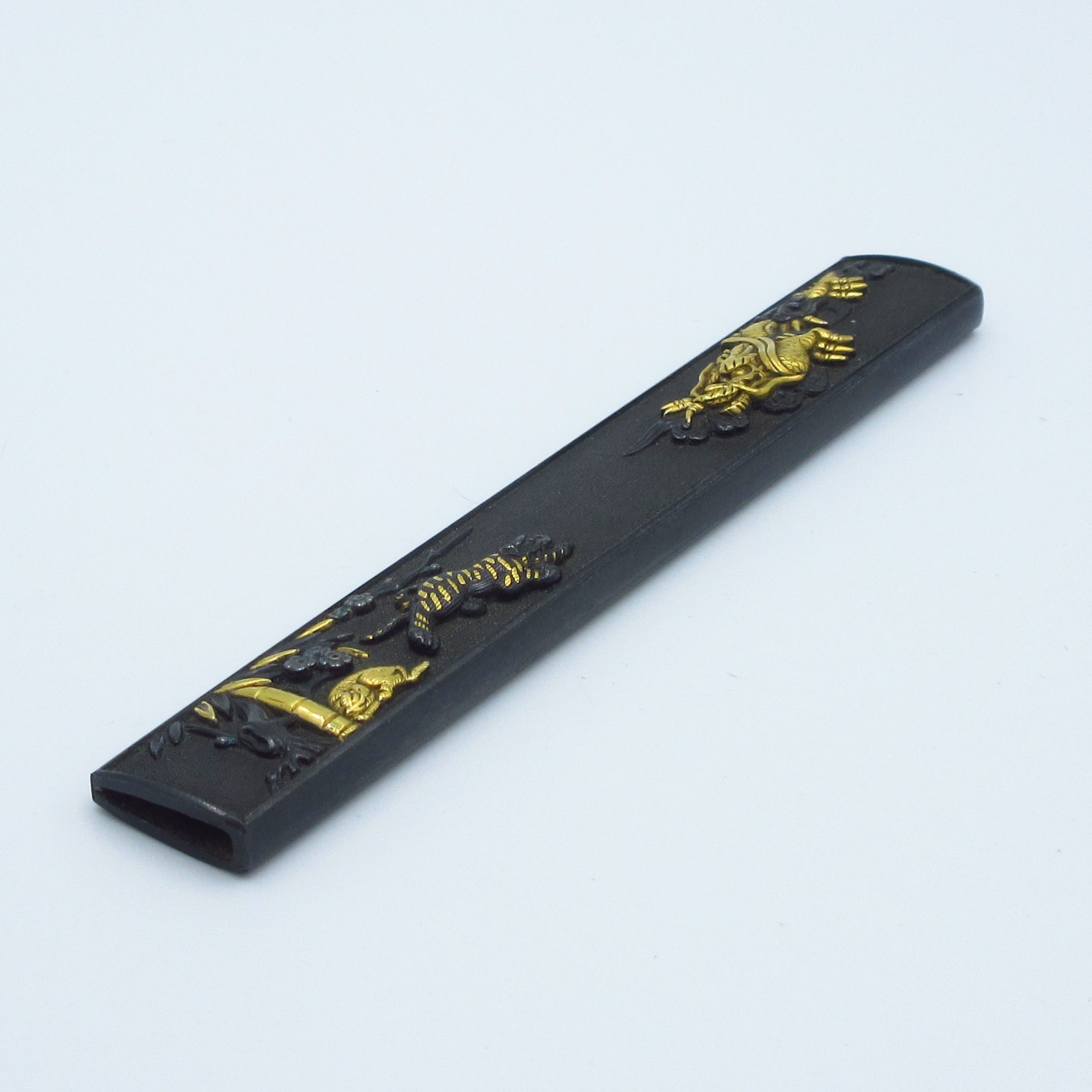
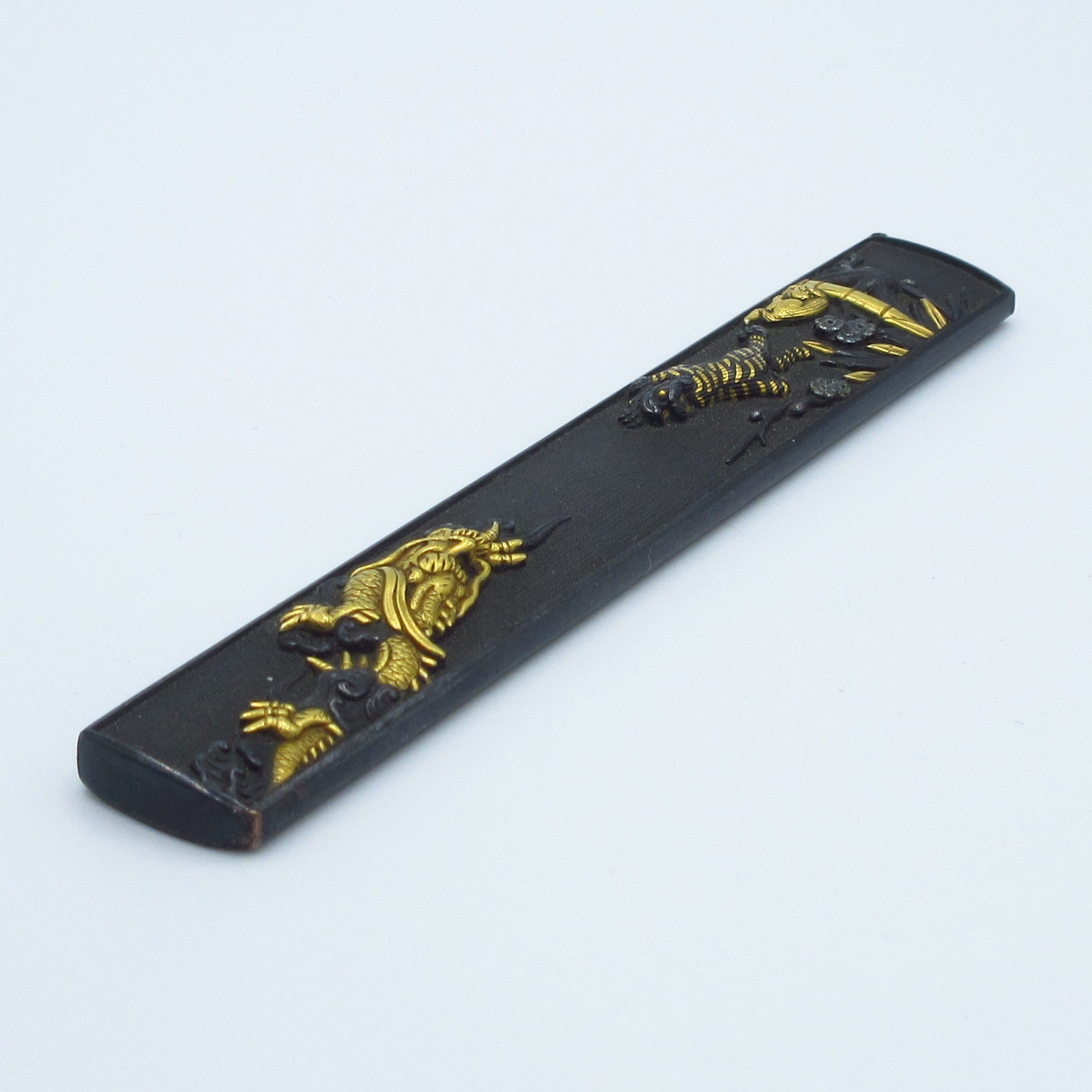
This is a kozuka (small knife handle) featuring a design of a dragon and tiger. It is signed by Mitsukatsu with a kao (stylized signature). The kozuka is made of shakudo nanako ground with gold inlay.
 NihontoWatch
mei
Waki-Goto Kaijo
Signed
Iebori · Yamashiro
1 piece on the market now
Iebori · Kyoto
74 pieces on the market now
The Waki-Goto tradition designates the branch and collateral lines of the Goto mainline (soke) that sustained the family's metalworking legacy across generations while extending its reach beyond the central house in Kyoto and later Edo. The Goto family itself constituted the preeminent dynasty of sword-fitting craftsmen in Japanese history, serving successive shogunal families from the Muromachi period through the Edo era. Learn more →
| Smith | Era | Designated |
|---|---|---|
| Kojo光乗 | 1480-1670 | 5 |
| Munetomo/Sochi宗知 | — | 0 |
| Morimura Atsutaka守邨厚隆 | — | 0 |
| Taijo泰乗 | — | 0 |
| Mitsuharu光治 | — | 0 |
We could not find an authenticity certificate on the seller’s listing. Japanese swords and fittings are normally papered by the NBTHK (or the NTHK). Without one, the attribution is the seller’s own assessment and has not been independently verified — treat it with caution and ask the dealer about certification before buying.
This is a kozuka (small knife handle) featuring a design of a dragon and tiger. It is signed by Mitsukatsu with a kao (stylized signature). The kozuka is made of shakudo nanako ground with gold inlay.
NihontoWatchmei
Waki-Goto Kaijo
Signed
Iebori · Yamashiro
1 piece on the market now
Iebori · Kyoto
74 pieces on the market now
The Waki-Goto tradition designates the branch and collateral lines of the Goto mainline (soke) that sustained the family's metalworking legacy across generations while extending its reach beyond the central house in Kyoto and later Edo. The Goto family itself constituted the preeminent dynasty of sword-fitting craftsmen in Japanese history, serving successive shogunal families from the Muromachi period through the Edo era. Learn more →
| Smith | Era | Designated |
|---|---|---|
| Kojo光乗 | 1480-1670 | 5 |
| Munetomo/Sochi宗知 | — | 0 |
| Morimura Atsutaka守邨厚隆 | — | 0 |
| Taijo泰乗 | — | 0 |
| Mitsuharu光治 | — | 0 |
We could not find an authenticity certificate on the seller’s listing. Japanese swords and fittings are normally papered by the NBTHK (or the NTHK). Without one, the attribution is the seller’s own assessment and has not been independently verified — treat it with caution and ask the dealer about certification before buying.