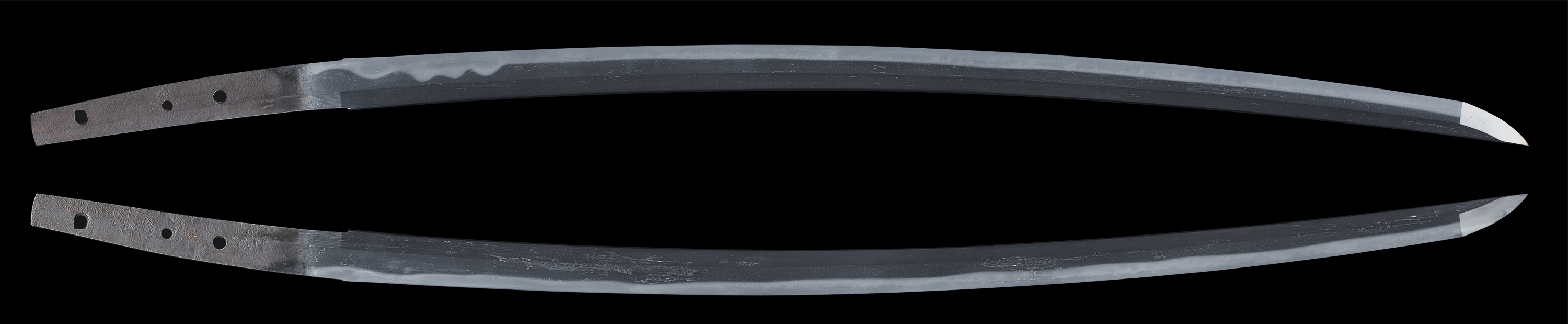
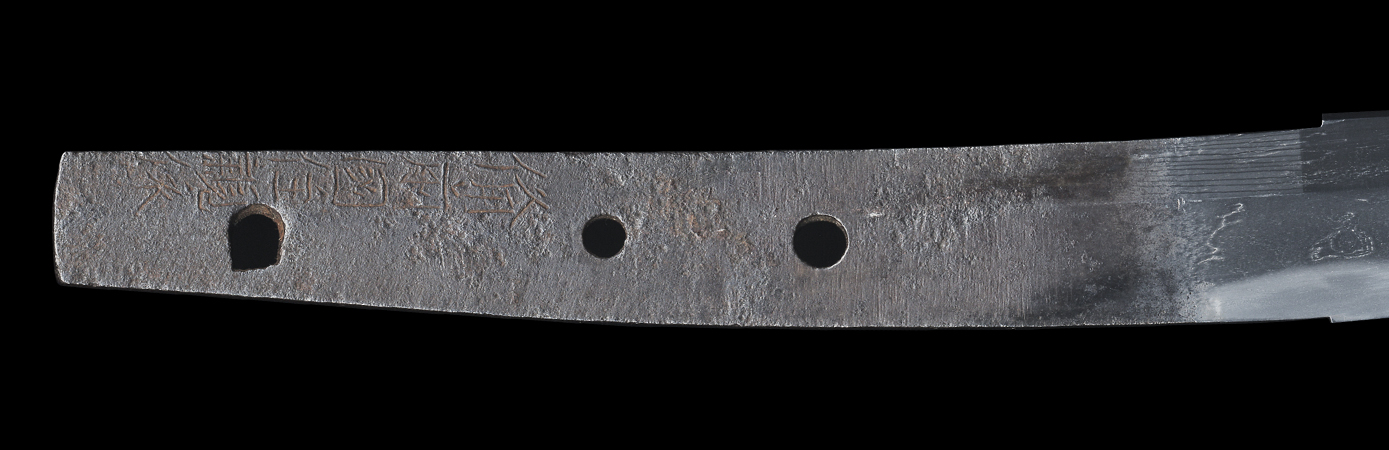
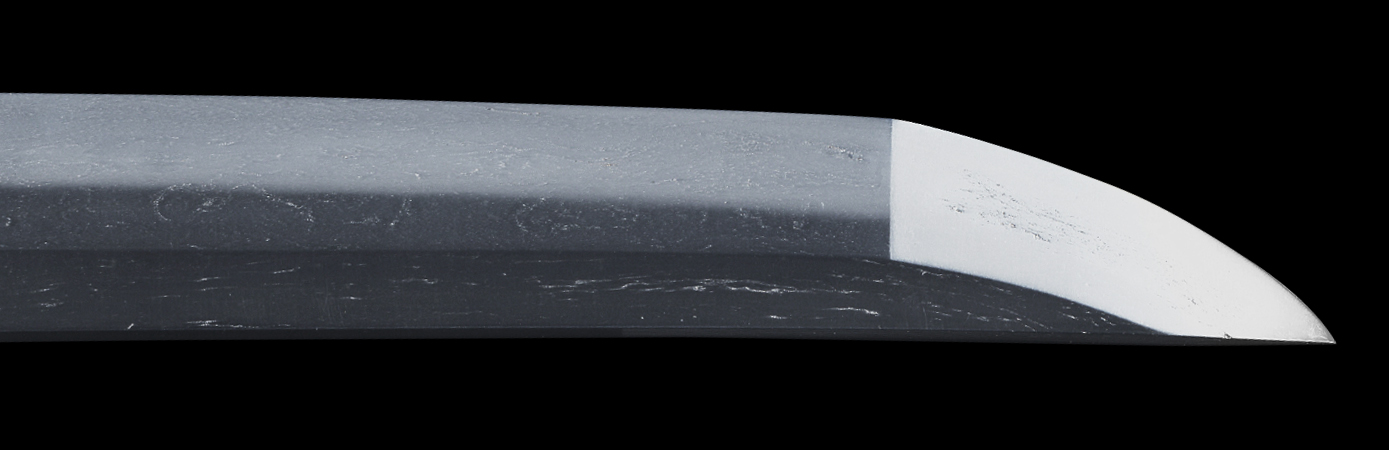
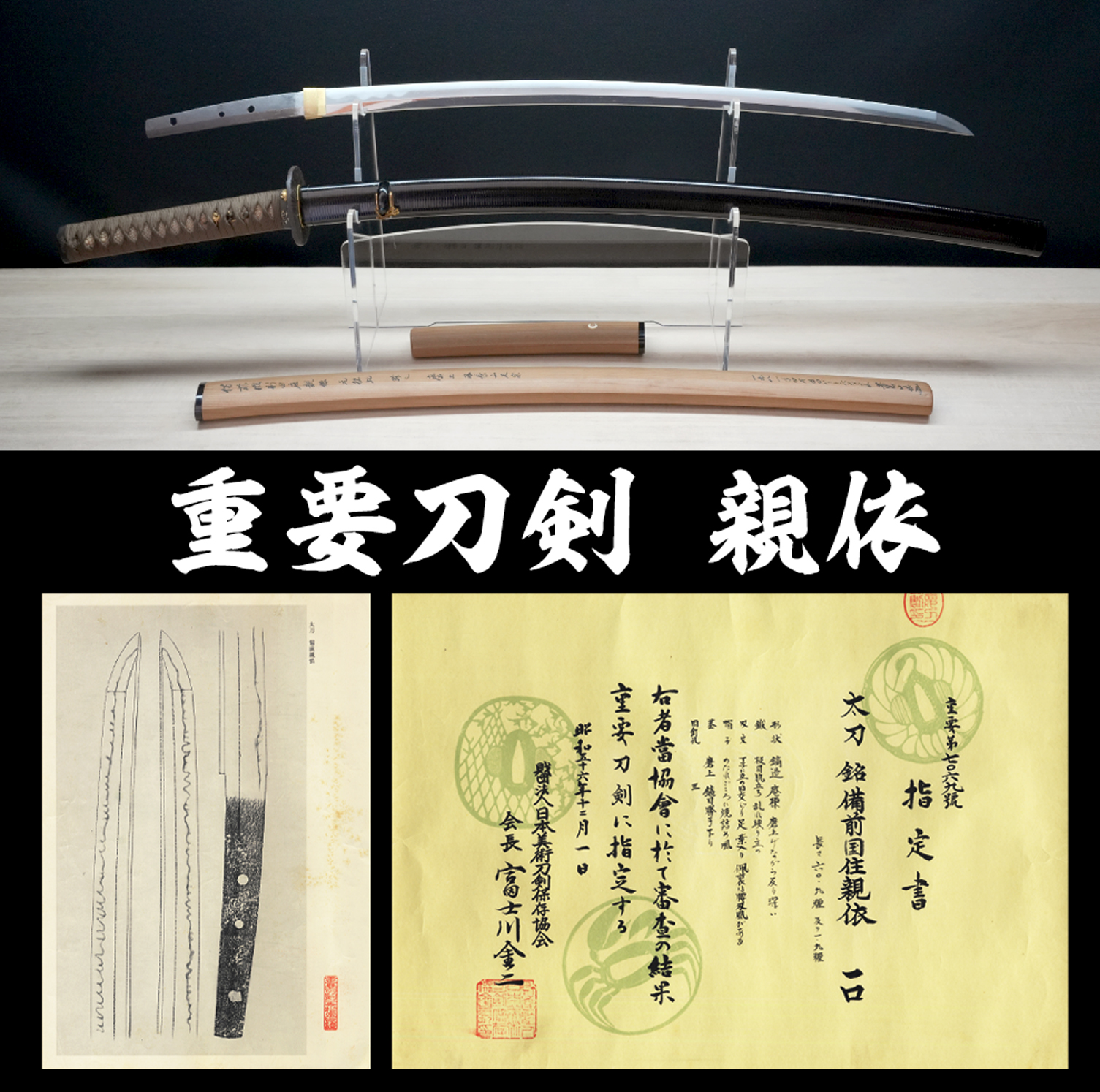
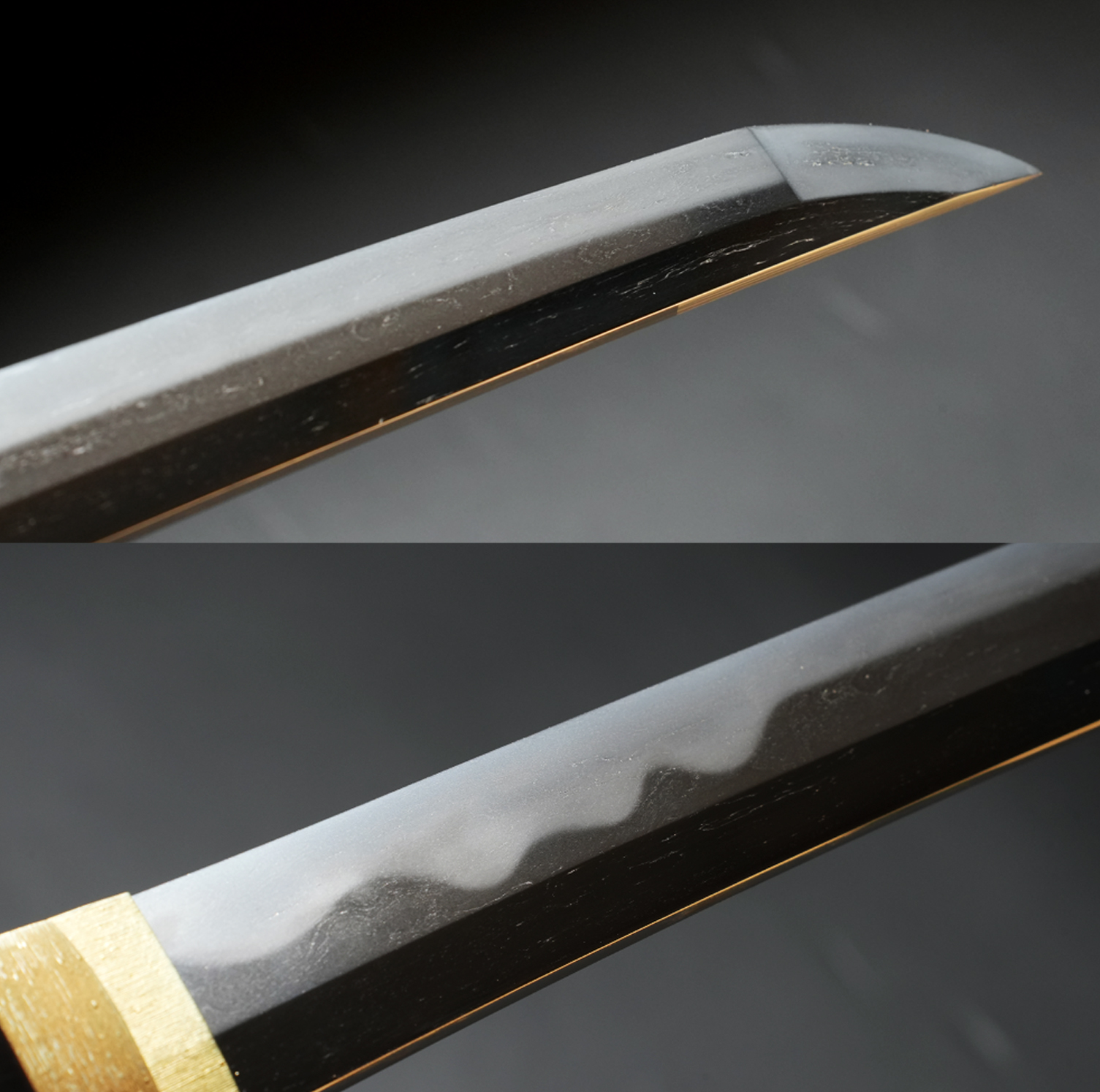
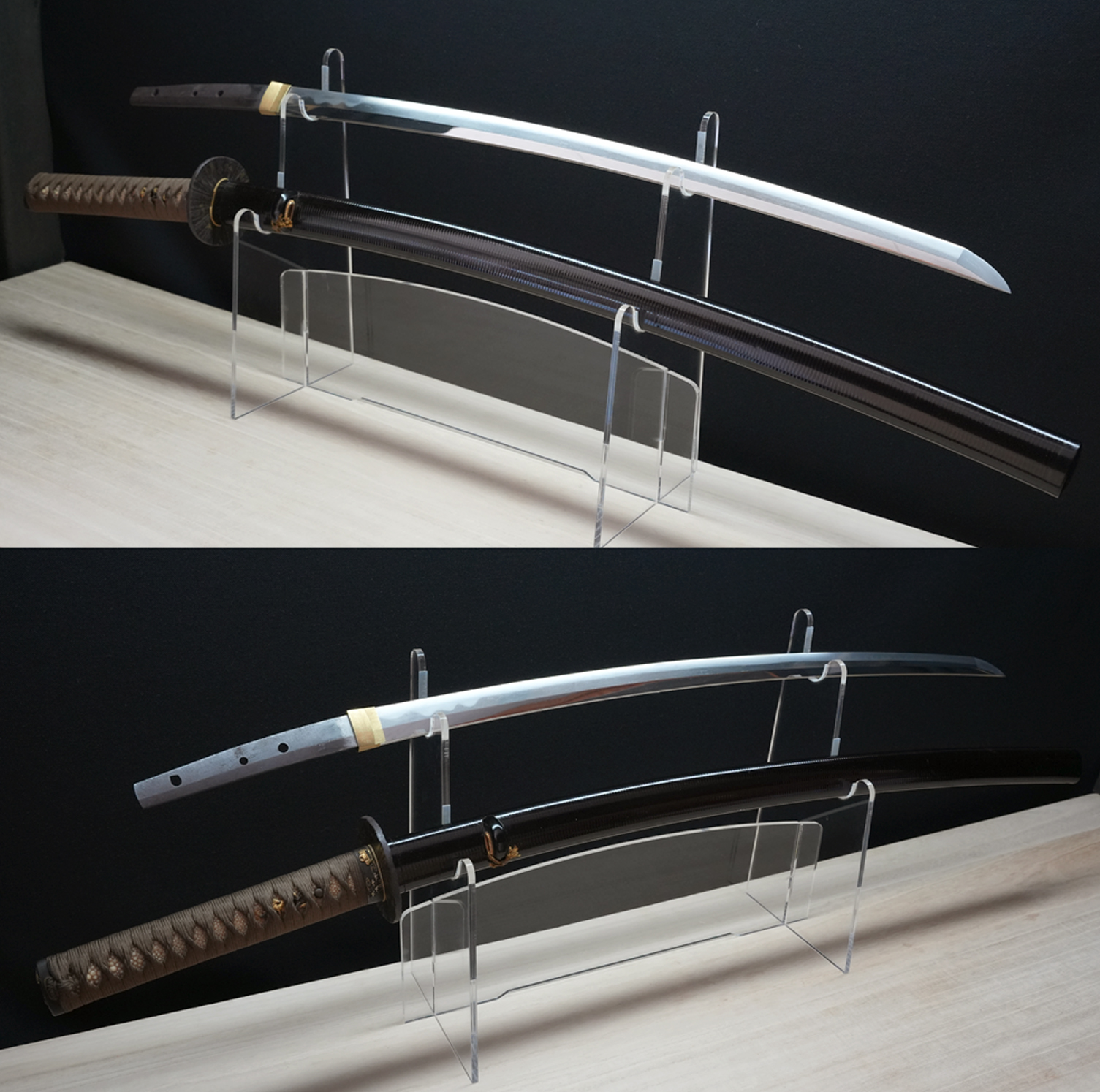
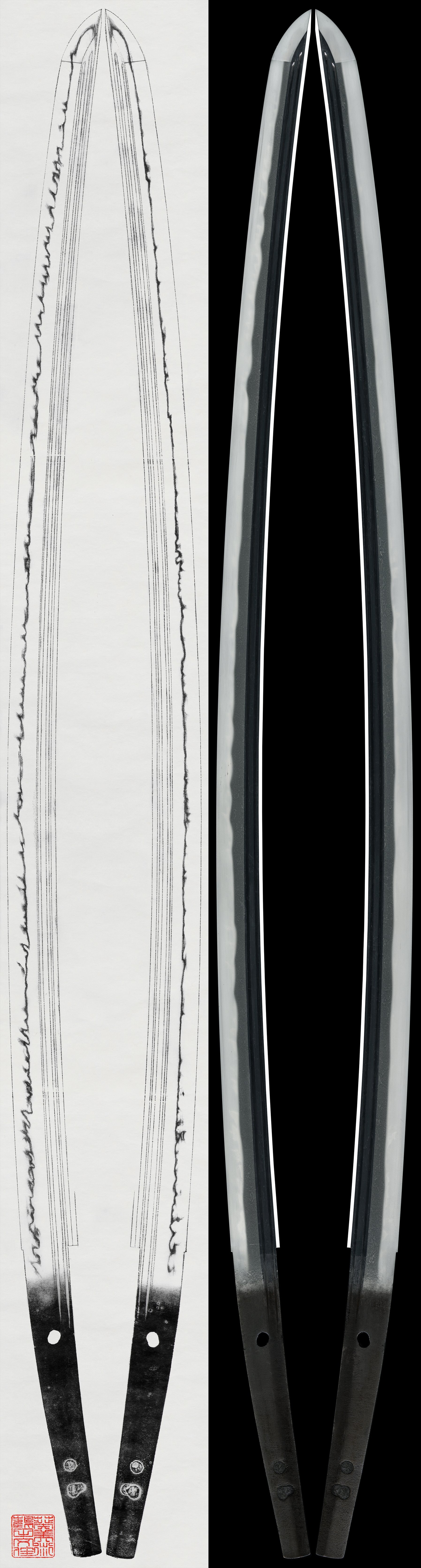
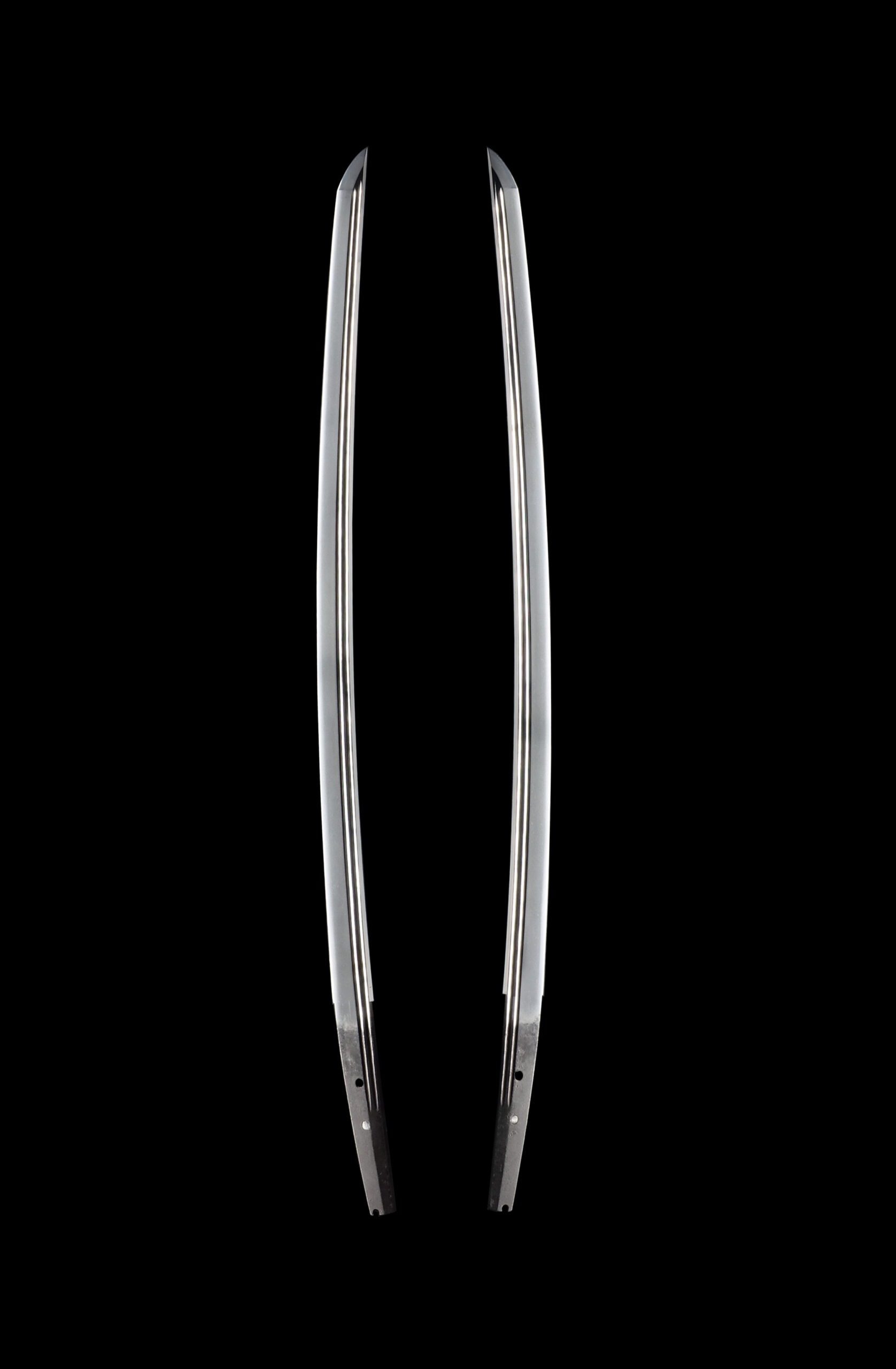
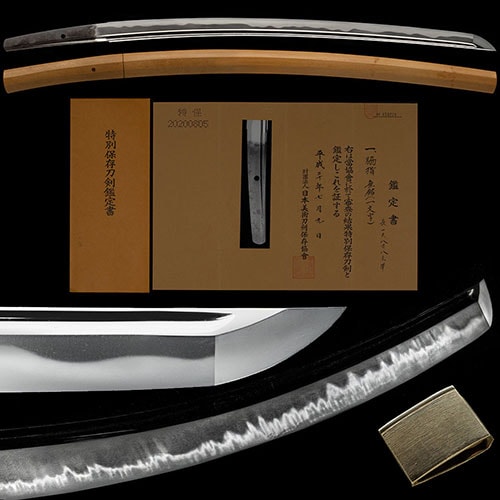
This is a tachi made by Chikayori, who resided in Bizen Province during the late Kamakura period. It is accompanied by koshirae and a shirasaya. The blade has been designated as a Juyo Token by the NBTHK at its 28th session and was previously owned by American collector Robert Benson.
mei · Showa (1312-1317) · nagasa 60.9cm · sori 1.9cm


Bizen-den · Bizen · around 1312-1332
Fujishiro Jo saku · Tōken Taikan top 10%
1 piece on the market now
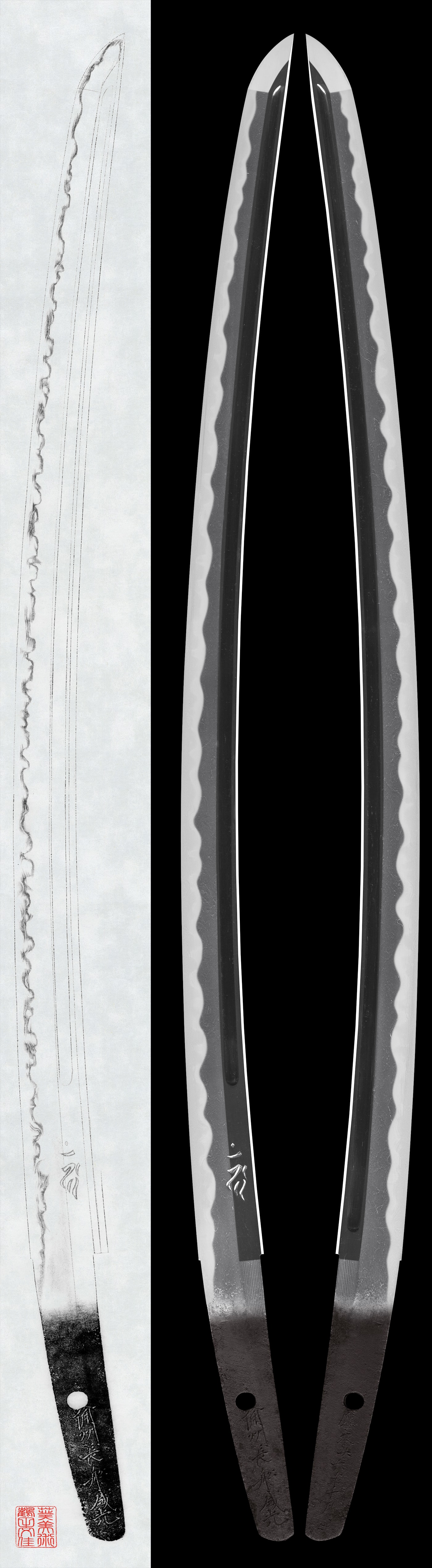
Chikayori was a swordsmith who resided at Nitta-sho in Bizen Province during the late Kamakura period. He is documented alongside Noritsugu as one of the smiths active in that estate, though works by Noritsugu are exceedingly rare while extant examples by Chikayori are encountered from time to time. Surviving dated works bear era names including Bunpo, Gen'o, and Gentoku, establishing his period of production with clarity. The Gen'o 2 (1320) example carries the title Uemon-no-jo, indicating a degree of official standing. In skill, smiths of the Nitta-sho lineage — along with related groups such as Karakawa and Haji — are regarded as somewhat inferior when compared with Osafune works of the same period, yet their rarity lends them considerable documentary significance.
Chikayori's characteristic workmanship centers on a slender tachi sugata with ko-kissaki and pronounced koshizori, yielding an elegant archaic profile. The jigane is typically itame with a tendency toward standing grain (hada-dachi), and ji-nie attaches; a faint utsuri frequently appears. The hamon in most examples is a quiet suguha in nioi-deki with a somewhat subdued nioiguchi and the introduction of small ashi. A minority of works depart from this restrained manner, displaying a more flamboyant character with choji mixed with gunome and the tempering of koshiba on the reverse — demonstrating a broader range of capability than the typical production might suggest.
Chikayori's importance rests on his position as the principal documented smith of the Nitta-sho tradition within Bizen, a lineage distinct from the dominant Osafune mainstream. His dated inscriptions provide fixed chronological reference points for late Kamakura Bizen workmanship, and blades retaining their original nakago with crisp, clearly cut signatures are of particular value for the study of this provincial school. Works exhibiting both his characteristic restrained style and his occasional bolder manner together constitute essential material for understanding the full scope of swordsmithing activity in Bizen beyond the Osafune mainstream.
Where Chikayori stands among comparable artisans: across all of nihontō, and within tradition, era, and period. The tiers (Foremost · Leading · Major · Notable) weigh official designations from the NBTHK and Japan's Agency for Cultural Affairs, together with historical honors of lasting repute such as the Sansaku and Meibutsu-chō.
Select a lens to see how it's measured.
Years he was demonstrably active, proven by signed-and-dated blades
Bizen-den · Bizen
1 piece on the market now
The smiths gathered under the Nitta-shō (新田庄) name were Bizen-den makers who resided in the Nitta estate of Bizen Province across the late Kamakura period and into the Nanbokuchō era. The setsumei document a small circle of signed hands rather than a single descent line. Learn more →
| Smith | Era | Designated |
|---|---|---|
| Chikayori親依 | 1312-1332 | 4 |
| Noritsugu則次 | 1352-1356 | 2 |
| Ujiyori氏依 | 1303-1306 | 2 |
| Yasunori保則 | 1319-1333 | 1 |
A blade of top-grade workmanship and condition, formally judged to rank with a nationally recognized Important Art Object (Jūyō Bijutsuhin). Awarded only at the NBTHK’s competitive annual examination.
Of Japan’s roughly 2.5 million registered swords, only 12,307 (about 1 in 203) have ever attained Jūyō.
The NBTHK (Nihon Bijutsu Tōken Hozon Kyōkai, the Society for the Preservation of Japanese Art Swords) is a public-interest incorporated foundation founded in 1948 and supervised by Japan’s Agency for Cultural Affairs (Bunkachō); it is based at the Japanese Sword Museum in Tokyo. Its expert panels physically examine each submitted work (shinsa) and issue a certificate (kanteishō) ranking it by artistic and historical merit. NBTHK papers are the most widely recognized standard of authentication for Japanese swords and fittings.
NBTHK official siteThis is a tachi made by Chikayori, who resided in Bizen Province during the late Kamakura period. It is accompanied by koshirae and a shirasaya. The blade has been designated as a Juyo Token by the NBTHK at its 28th session and was previously owned by American collector Robert Benson.
mei · Showa (1312-1317) · nagasa 60.9cm · sori 1.9cm


Bizen-den · Bizen · around 1312-1332
Fujishiro Jo saku · Tōken Taikan top 10%
1 piece on the market now
Chikayori was a swordsmith who resided at Nitta-sho in Bizen Province during the late Kamakura period. He is documented alongside Noritsugu as one of the smiths active in that estate, though works by Noritsugu are exceedingly rare while extant examples by Chikayori are encountered from time to time. Surviving dated works bear era names including Bunpo, Gen'o, and Gentoku, establishing his period of production with clarity. The Gen'o 2 (1320) example carries the title Uemon-no-jo, indicating a degree of official standing. In skill, smiths of the Nitta-sho lineage — along with related groups such as Karakawa and Haji — are regarded as somewhat inferior when compared with Osafune works of the same period, yet their rarity lends them considerable documentary significance.
Chikayori's characteristic workmanship centers on a slender tachi sugata with ko-kissaki and pronounced koshizori, yielding an elegant archaic profile. The jigane is typically itame with a tendency toward standing grain (hada-dachi), and ji-nie attaches; a faint utsuri frequently appears. The hamon in most examples is a quiet suguha in nioi-deki with a somewhat subdued nioiguchi and the introduction of small ashi. A minority of works depart from this restrained manner, displaying a more flamboyant character with choji mixed with gunome and the tempering of koshiba on the reverse — demonstrating a broader range of capability than the typical production might suggest.
Chikayori's importance rests on his position as the principal documented smith of the Nitta-sho tradition within Bizen, a lineage distinct from the dominant Osafune mainstream. His dated inscriptions provide fixed chronological reference points for late Kamakura Bizen workmanship, and blades retaining their original nakago with crisp, clearly cut signatures are of particular value for the study of this provincial school. Works exhibiting both his characteristic restrained style and his occasional bolder manner together constitute essential material for understanding the full scope of swordsmithing activity in Bizen beyond the Osafune mainstream.
Where Chikayori stands among comparable artisans: across all of nihontō, and within tradition, era, and period. The tiers (Foremost · Leading · Major · Notable) weigh official designations from the NBTHK and Japan's Agency for Cultural Affairs, together with historical honors of lasting repute such as the Sansaku and Meibutsu-chō.
Select a lens to see how it's measured.
Years he was demonstrably active, proven by signed-and-dated blades
Bizen-den · Bizen
1 piece on the market now
The smiths gathered under the Nitta-shō (新田庄) name were Bizen-den makers who resided in the Nitta estate of Bizen Province across the late Kamakura period and into the Nanbokuchō era. The setsumei document a small circle of signed hands rather than a single descent line. Learn more →
| Smith | Era | Designated |
|---|---|---|
| Chikayori親依 | 1312-1332 | 4 |
| Noritsugu則次 | 1352-1356 | 2 |
| Ujiyori氏依 | 1303-1306 | 2 |
| Yasunori保則 | 1319-1333 | 1 |
A blade of top-grade workmanship and condition, formally judged to rank with a nationally recognized Important Art Object (Jūyō Bijutsuhin). Awarded only at the NBTHK’s competitive annual examination.
Of Japan’s roughly 2.5 million registered swords, only 12,307 (about 1 in 203) have ever attained Jūyō.
The NBTHK (Nihon Bijutsu Tōken Hozon Kyōkai, the Society for the Preservation of Japanese Art Swords) is a public-interest incorporated foundation founded in 1948 and supervised by Japan’s Agency for Cultural Affairs (Bunkachō); it is based at the Japanese Sword Museum in Tokyo. Its expert panels physically examine each submitted work (shinsa) and issue a certificate (kanteishō) ranking it by artistic and historical merit. NBTHK papers are the most widely recognized standard of authentication for Japanese swords and fittings.
NBTHK official site