Noritsugu was a swordsmith resident in Nitta-sho in province, active from the very end of the period through the period. While sword reference works do not fully clarify the succession of smiths bearing this name, a Noritsugu is known to have resided in Nitta-sho around the Ryakuo era (1338--1342), and subsequent generations appear to have continued the line into the mid- period. The earliest dated works bear Ryakuo-era inscriptions headed by the court title "-hyoe no Jo," while a later Noritsugu is documented through an inscription recording a collaborative forging in Hotoku 2 (1450), indicating that the name was transmitted across at least several generations. In workmanship, the lineage shows stylistic affinity with the Unrui group, making these smiths valuable subjects for the study of the Unsho lineage.
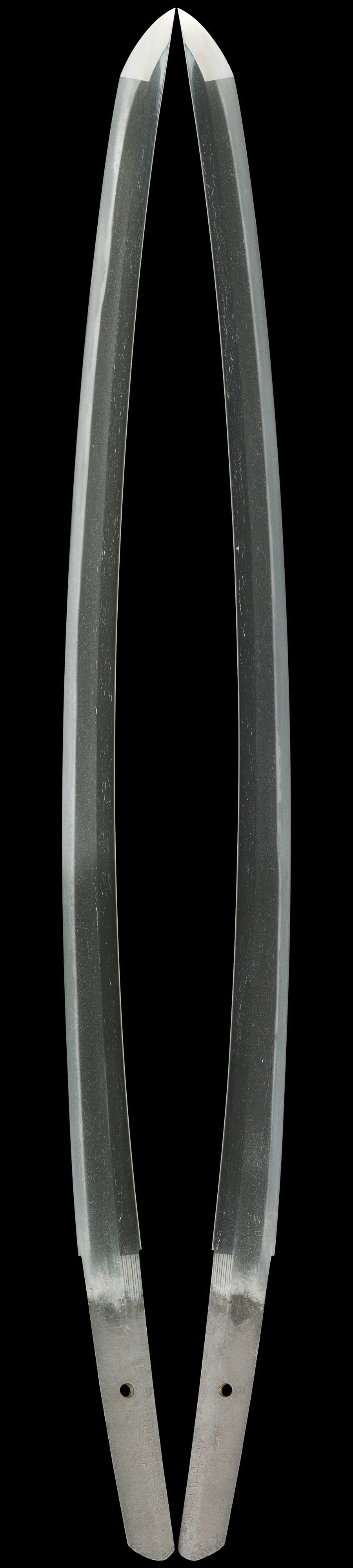
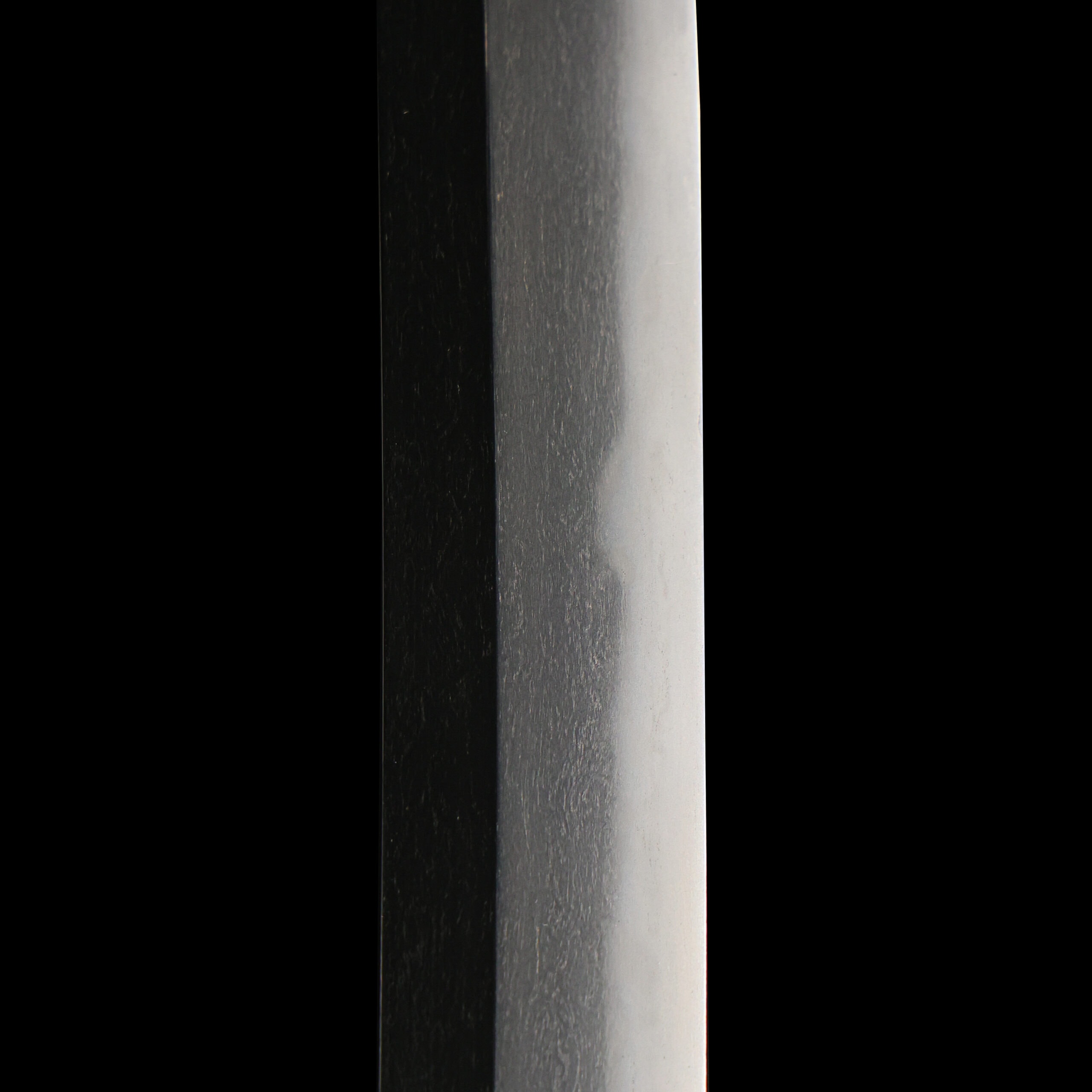
Noritsugu's are forged in with , exhibiting well-proportioned , sometimes with pronounced , and graceful curvature. The forging is typically --ranging from large to finely packed with mixed in--and a faint, whitish appears in the . The is characteristically in with , into which and enter, while the tends toward a tight, occasionally subdued () quality. The finishes in with . Among the most extraordinary works attributed to this lineage is a monumental exceeding eight in blade length, forged collaboratively by Noritsugu and five other smiths over twenty-five days and dedicated to Tsuma Shrine in province.
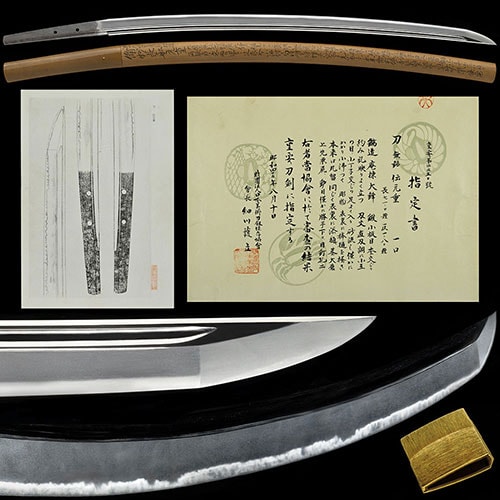
Noritsugu's works hold exceptionally high documentary value. The dated inscriptions--including the Bunna 3 (1354) and the Hotoku 2 with its detailed dedicatory record--provide precious chronological anchors for the study of swordsmithing during the and periods. The , accompanied by iron fittings and an iron of the period, constitutes an unusually complete ensemble. Works formerly in distinguished collections, including that of the Unshu Matsudaira family, further underscore the regard in which this smith's production has been held by successive generations of connoisseurs.