NihontoWatch MonNihontoWatch
Market
Encyclopedia
Kantei
NihontoWatch MonNihontoWatch
Market
Encyclopedia
Kantei

Description

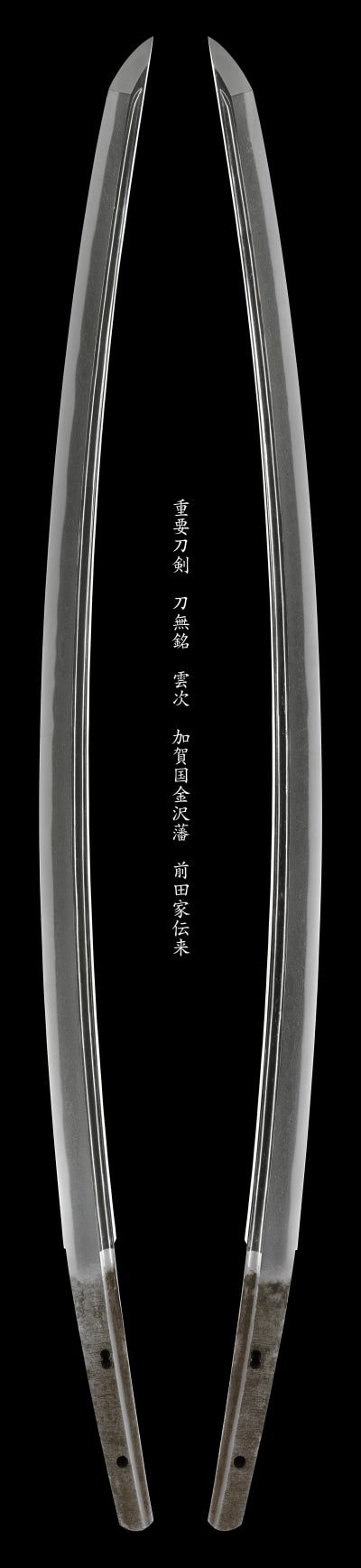
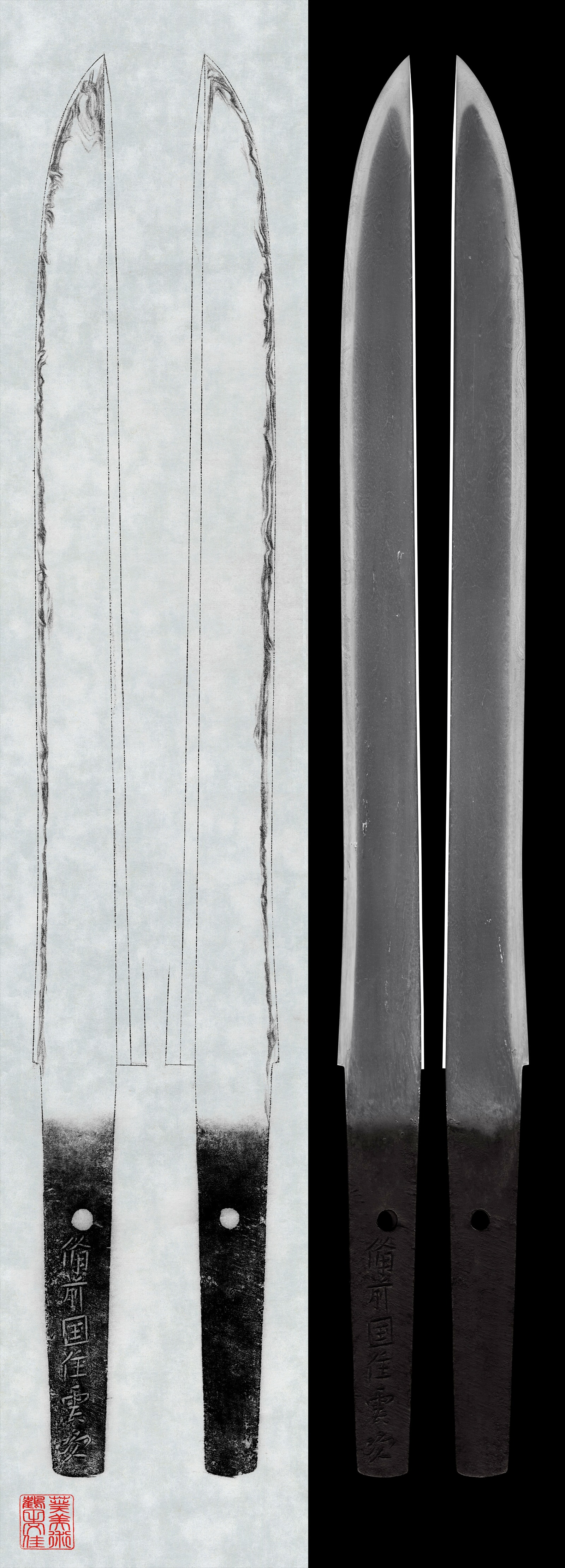
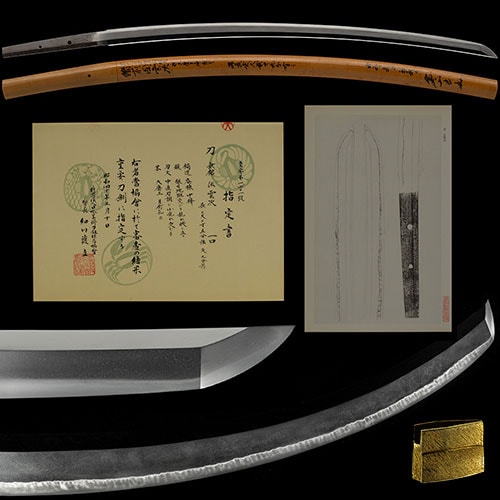
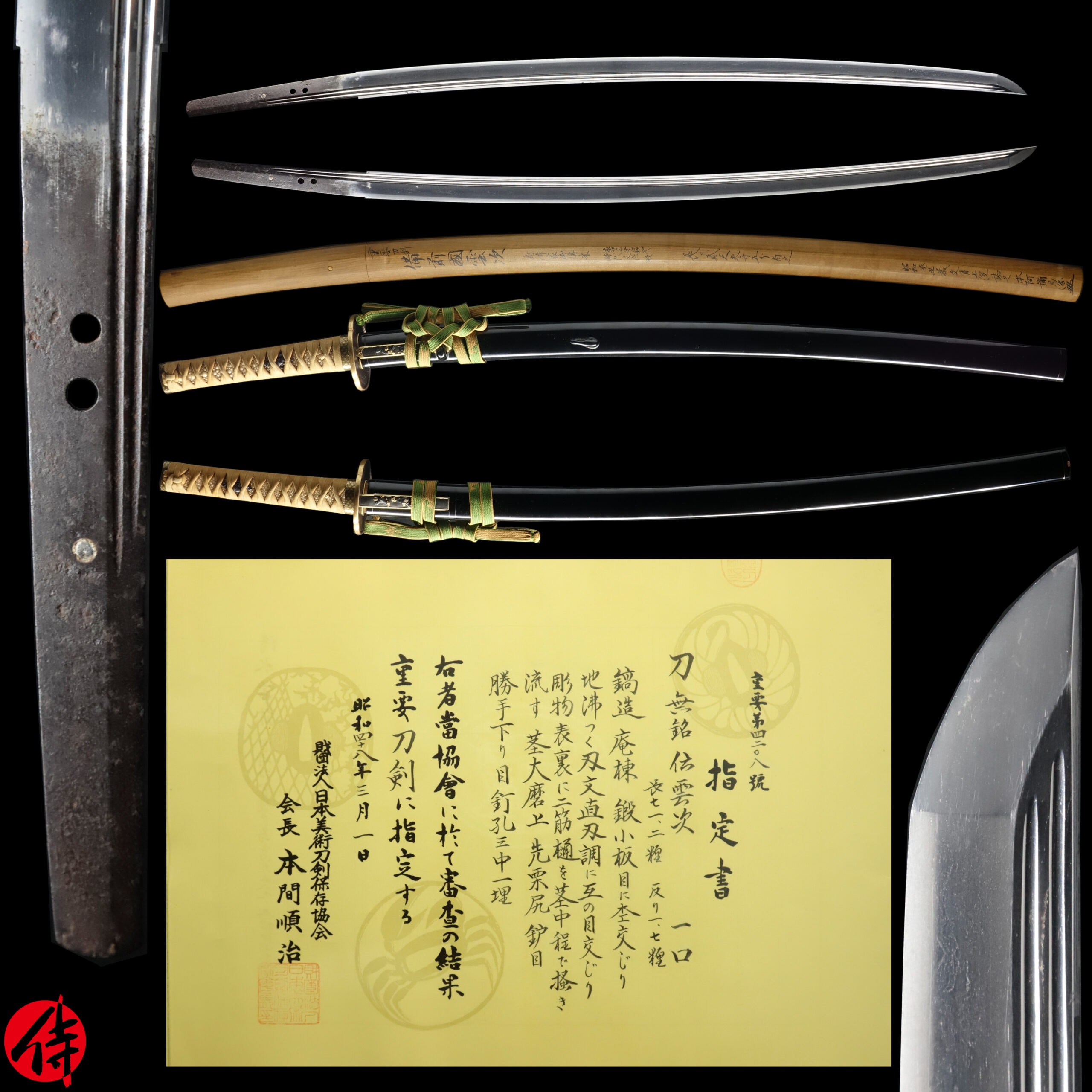
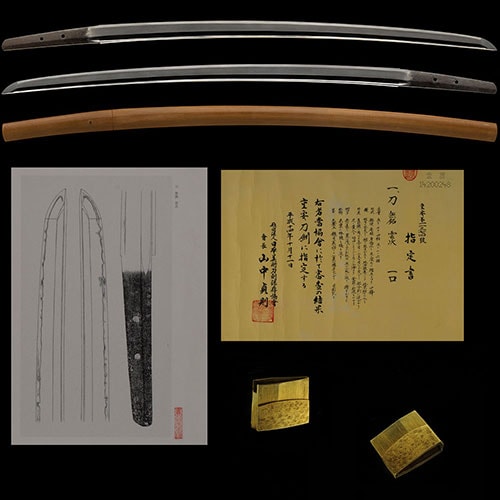
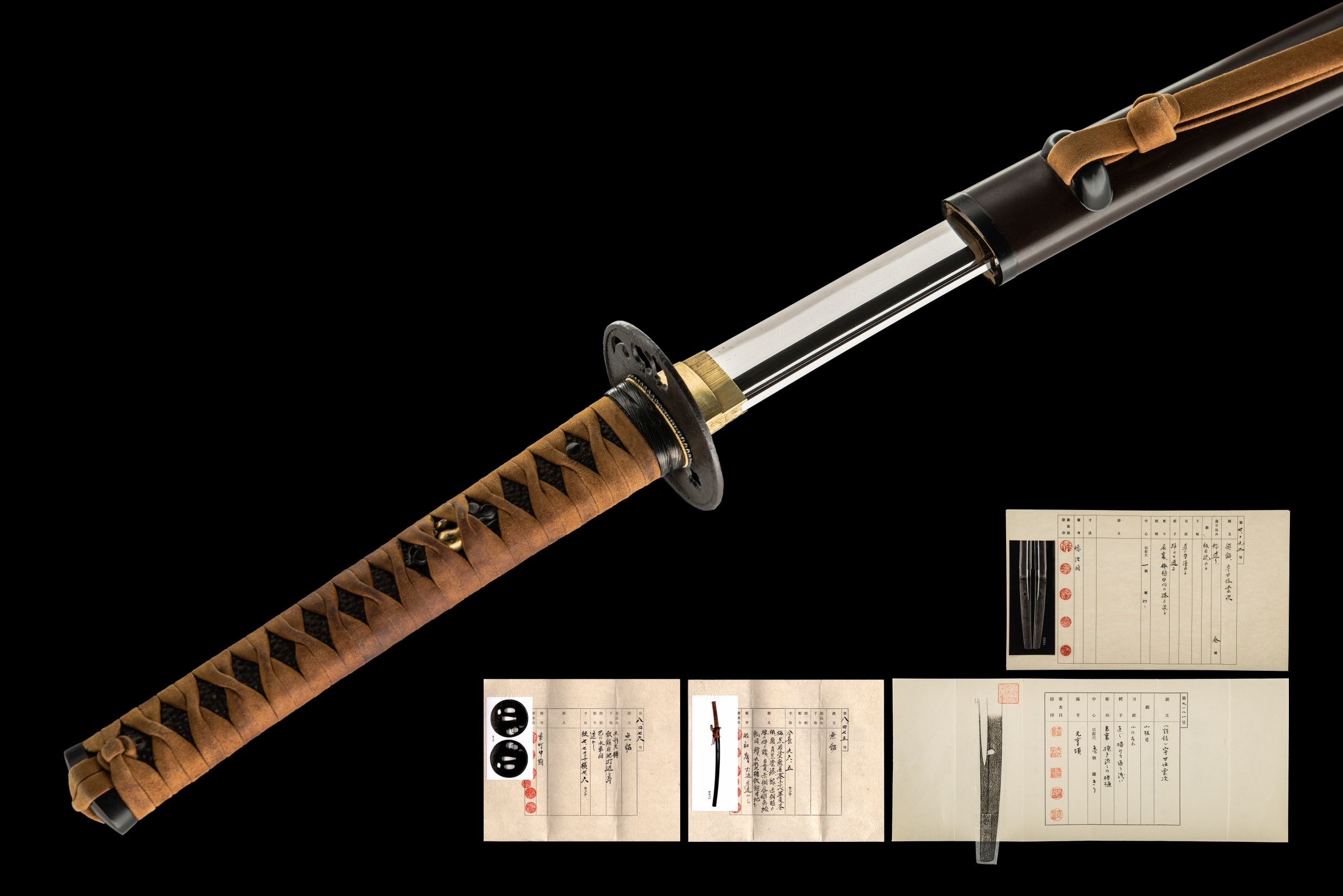
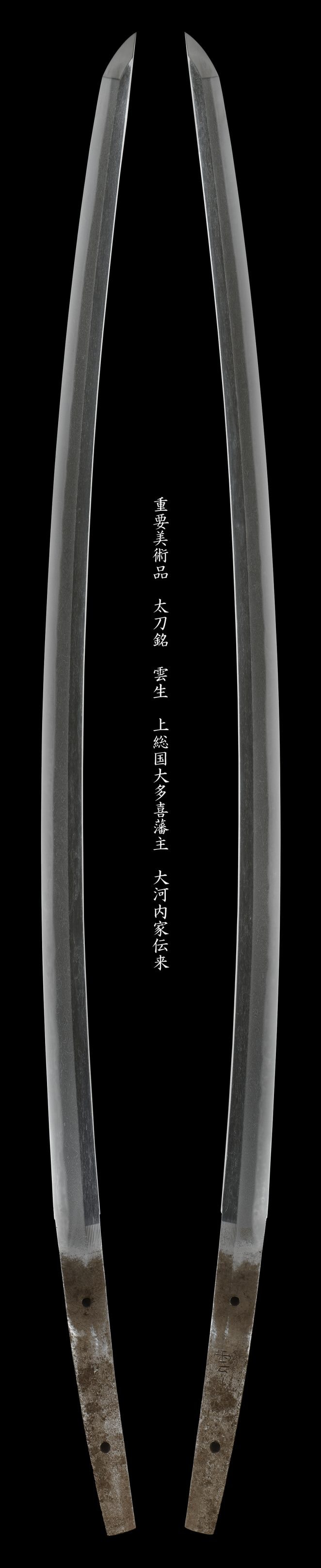
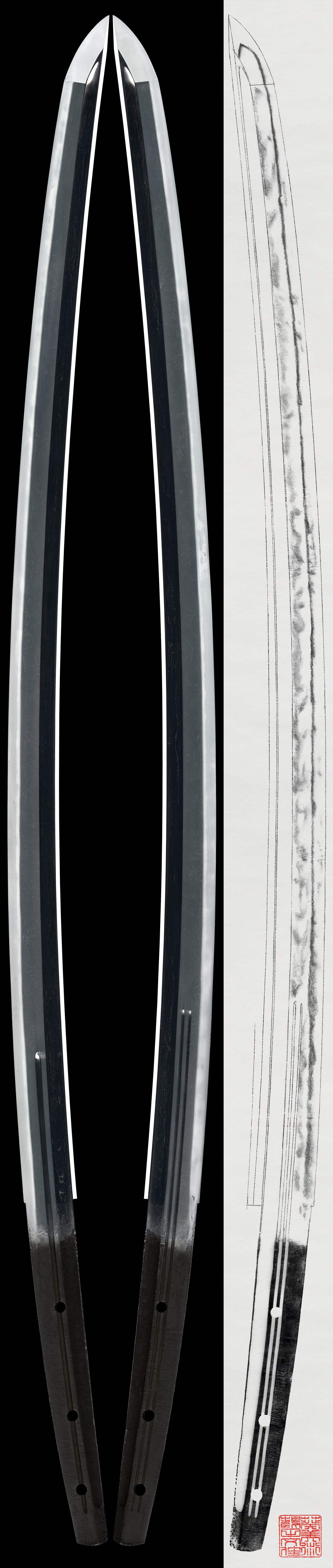
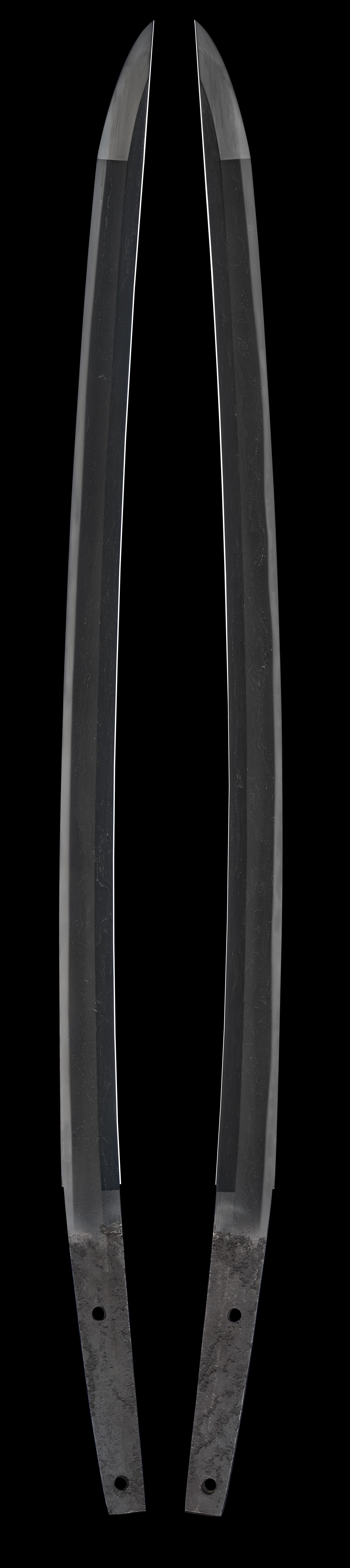
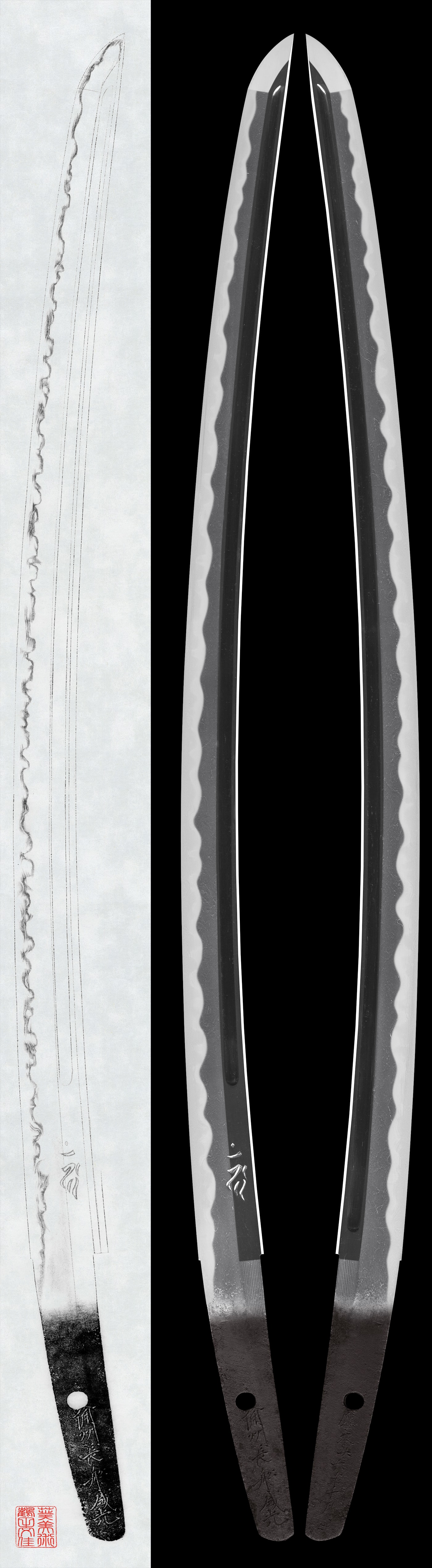
This is a rare Tachi by Unji, bearing his two-character signature and a Karyaku era date from the late Kamakura period. It features a magnificent form with a wide mihaba, deep sori, and koshizori. The jigane displays mokumehada with thick jinie and chikei, while the hamon is notare mixed with gunome and small gunome, with frequent small ashi, nie, kinsuji, niesuji, and sunagashi, resulting in a bright and clear nioikuchi. This masterpiece is a candidate for Juyo Token designation.

NihontoWatch MonNihontoWatch
MarketEncyclopediaKantei
Swords›Bizen-den›Ukai›Unji›Mei Unji Tachi Tokubetsu Hozon Token
tachiTokubetsu Hozon
Ukai Unji

Mei Unji Tachi Tokubetsu Hozon Token

mei · Ukai · Kamakura · nagasa 73.5cm · sori 2.3cm

SOLD
Ukai Unji (雲次) · Ukai · Kamakura3 works for sale →
Tachi
Could you name the smith from the blade alone? Today’s kantei →
Ukai Unji — 1 of 1
Ukai Unji — 1 of 1
Ukai Unji (雲次) · Ukai · Kamakura3 works for sale →
Tachi
Could you name the smith from the blade alone? Today’s kantei →
Measurements & details
Smith
Ukai Unji
Type
Tachi
School
Ukai
Period
Around 1315–1335(Bunpo)
Province
Bizen
Signature
Signed(33% of this smith's designated works are signed)
Measurements
Nagasa 73.5cmSori 2.3cmMotohaba 3.1cmSakihaba 2.1cmKasane 0.54cmWeight 863g
Description

This is a rare Tachi by Unji, bearing his two-character signature and a Karyaku era date from the late Kamakura period. It features a magnificent form with a wide mihaba, deep sori, and koshizori. The jigane displays mokumehada with thick jinie and chikei, while the hamon is notare mixed with gunome and small gunome, with frequent small ashi, nie, kinsuji, niesuji, and sunagashi, resulting in a bright and clear nioikuchi. This masterpiece is a candidate for Juyo Token designation.

About the maker

Unji

雲次

Ukai / Unrui (Bizen) · Bizen · around 1315-1335

Fujishiro Jo-jo saku · Tōken Taikan top 5%

3 pieces on the market now

›

From the end of the Kamakura period into the first years of Nanbokucho, the smiths of Ukan-no-sho in Bizen Province, a place name later written Ukai, all set the character Un, the cloud, at the head of their names, and the published sources know them as the Ukai school or the Unrui. Unji is the chronological anchor of the line. Tradition makes him the son of the first Unsho, and he alone left dated work: blades of the Showa, Bunpo and Kenmu eras survive, among them pieces dated Showa 4 (1315) and Kenmu 2 (1335), and the NBTHK repeats that "his period of activity is plain"[[c:1]]. Since no dated blade of Unsho exists, the years of the whole school are fixed through these. Their make stands apart from the Osafune mainstream: within the Bizen tradition a Yamashiro cast intermingles with no small influence from neighboring Bitchu Aoe, and the published sources call the line "a distinctive presence among Bizen works"[[c:2]]. Fujishiro grades Unji Jo-jo saku.

The work leans away from Osafune at every point the published record names. His tachi are of standard width, the curvature tending to wa-zori, an even arch the papers read as Kyoto-like, the shinogi set somewhat high; ubu pieces keep funbari. Where the Osafune mainline of his generation tempers choji, Unji tempers suguha: a narrow to medium line with ko-gunome, ko-choji and ko-midare mingled, the ashi and yo entering thickly and slanting in reverse in the Aoe way. The papers state that kinship outright: "the tight suguha with saka-ashi entering passes to Bitchu work"[[c:3]]. The nioiguchi is now tight and nioi-led, now sinking subdued under ko-nie, and kinsuji, sunagashi and hotsure work along the edge. One paper gathers the recognition into a single sentence: "the points of this smith are shown in the uniquely dark utsuri, the boshi that turns back round, and the o-sujikai yasurime"[[c:4]]. To these the published sources add the habit of the chisel: the reverse-slanted strokes (逆鏨) emphasized in the mei are the hand of the whole school, not of Unji alone.

The jigane is itame mixed with mokume, knit to ko-itame on the finer blades, in places flowing toward the edge, with thick ji-nie, fine chikei, and a steel color that tends somewhat blackish. Across it stands a midare-utsuri, and characteristically the dark jifu the papers call peculiar to the Unrui mingles in the ji, and paper after paper describes "a black utsuri as if pressed in with a finger"[[c:5]]. The utsuri is old-fashioned[[c:6]] and answers to the temper: of one strongly nie-laden tachi the record observes that "the nie of ji and ha is strong, and for that reason the utsuri of the ji hardly stands at all"[[c:7]].

The NBTHK's own division of his work is twofold: "broadly the workmanship comes in two manners"[[c:8]]. In the first the ko-itame is well knit and the suguha nioiguchi tightens, the make that can be taken for Kyoto work or for Aoe; in the second the itame stands, a reverse-slanting midare mingles into the suguha, and the nie comes on strongly. On either jigane the archaic utsuri rises, "though it is the clearer in the former"[[c:9]]. The nie-laden manner carries hotsure and sunagashi and a swept boshi, and the same paper reads these as a borrowing from a third tradition: "a Yamato flavor is added"[[c:10]]. A register of form crosses both: nineteen of his hundred and thirty-seven papers are naginata or blades reworked from them, the mune of the point stoned away in the conversion so that the boshi runs off the end in yakitsume, the naginata-hi with its companion groove often remaining. From the unsigned naginata-naoshi works attributed to Unji and Unju (雲重), the papers conclude that "they were also skilled in the production of naginata"[[c:11]]. One fully intact signed naginata stands among his Juyo; signed tanto, by contrast, are rare.

The discrimination from his father is drawn by the papers themselves. Judging a mumei katana, one Juyo paper decides: "compared with Unsho of the same school, hotsure and the like enter the edge and the nie is felt somewhat stronger"[[c:12]], and the attribution falls to Unji. He is the school's nie hand: the flowing, at times masa-tinged hada belongs to him rather than to his father, his sunagashi and kinsuji run more freely, while the tightened nioiguchi is the more Unsho's. A court legend attaches to both: "Unsho and Unji are said to have gone up to the capital and served Emperor Go-Daigo, and among Bizen works theirs is the style closest to Kyoto work" (雲生・雲次は京に出て後醍醐天皇の御用を勤めたと伝え, 備前物の中では最も京物に近い作風をみせている); another paper notes that "there is a tachi by Unji with a sixteen-petal chrysanthemum crest on the tang"[[c:13]]. The NBTHK attributes simply to Unji and lets the nengo divide the generations: one or two namesakes are recognized into Nanbokucho, and Honma writes that "the long-signed Unji I have examined seem in the main to be the first generation, but among the two-character signatures there are those in which the first and second generations are hard to tell apart"[[c:14]].

His designated record stands at one hundred and thirty-eight works: seven Important Cultural Properties, six Tokubetsu Juyo, one hundred and twelve Juyo and thirteen Juyo Bijutsuhin, with no National Treasure among them. Forty-seven are signed against eighty-eight unsigned, nearly all of them tachi, with either the long signature Bizen no kuni ju Unji[[c:15]], at times dated, or the two-character Unji (雲次); the tachi dated Showa 4 is itself an Important Cultural Property. The seven Important Cultural Properties are patrimony and do not trade. Of recorded whereabouts his blades rest at the Kyoto National Museum, Atsuta Jingu, Itsukushima Jinja and the Tokugawa Art Museum; the prewar certifications add the Tokugawa Reimeikai, the Nezu Museum and the Yomei Bunko, holder of the long-signed tachi from Konoe Fumimaro. The provenance roll runs through the Ikeda family of Bizen, the Maeda, Akimoto and Mitsui families and the Imperial Family, and one suriage tachi carries on its tang a later possession inscription, an owner's cutting and not a signature, made in Tenbun 3 (1534) for Takeda Mutsu no kami Minamoto no ason Nobutora, of which the record says "the inscription is precious also as a document"[[c:16]]. With one hundred and eighteen blades in the Tokubetsu Juyo and Juyo tiers, Unji is, among the Unrui, the name a collector is likeliest to meet; even so, designated pieces are held far more often than traded; an example reaches the market only from time to time, most often a mumei katana or a naginata-naoshi wakizashi, a signed tachi rarer still.

Historical importance

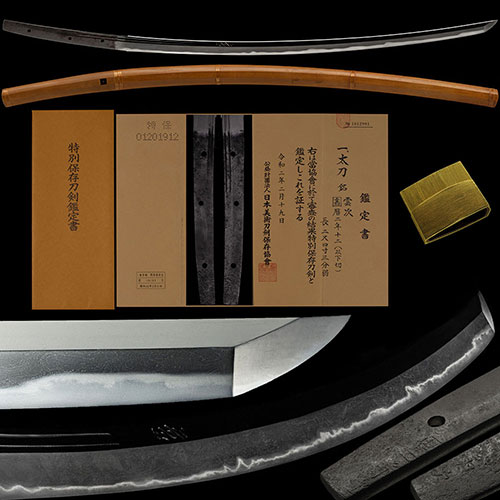
Where Unji stands among comparable artisans: across all of nihontō, and within tradition, era, and period. The tiers (Foremost · Leading · Major · Notable) weigh official designations from the NBTHK and Japan's Agency for Cultural Affairs, together with historical honors of lasting repute such as the Sansaku and Meibutsu-chō.

随一
Foremost
屈指
Leading
有数
Major
著名
Notable

Select a lens to see how it's measured.

Designation record
131 designated works
Jūyō Bunkazai
7
Jūyō Bijutsuhin
7
Tokubetsu Jūyō
6
Jūyō
111
3 works by Unji on the market→
Unji — full profileUkai / Unrui (Bizen) school

Dated Works

Years he was demonstrably active, proven by signed-and-dated blades

Active period
1315–1318Editorial estimate: 1315–1335
2 of 42 designated works carry a date
1310
1320
1330

Study this maker →

About the school

Ukai

鵜飼

Bizen-den · Bizen

7 pieces on the market now

›

At Ukan-no-shō in Bizen Province, a place name later written Ukai, a small group of smiths worked from the close of the Kamakura period into the first decades of Nanbokuchō, every one of them setting the character Un, the cloud, at the head of his name; for that habit the published sources know them equally as the Ukai school and as the Unrui, the cloud group. Unshō is named the line's de facto founder, his years fixed around Kengen and Kagen (1302 to 1306) through the dated blades of his son Unji, who alone among the early hands left work inscribed with eras, the Shōwa, Bunpō and Kenmu nengō; Unju, read also Unshige, carries the line a third remove into the mid-Nanbokuchō, his dated Jōji tachi of 1368 set against the founders before him. Tradition holds that Unshō and Unji went up to the capital, learned forging from the Yamashiro smiths, and served Retired Emperor Go-Daigo as duty smiths, and the rare blades with a sixteen-petal chrysanthemum crest below the habaki lend that account its weight. The make that resulted stands apart from the Osafune mainstream: within an essentially Bizen body the members describe a Yamashiro cast intermingled, with no small influence from the Aoe school of neighboring Bitchū besides, so that the published sources call the line a distinctive presence among Bizen works. The shared vocabulary begins with the curvature: a slender tachi with funbari at the base and a small point, arching evenly in a high wa-zori where the Osafune work of the same generation runs koshizori, the papers reading that even arch as close to Kyoto work. Against the chōji of the mainline the Ukai hands temper suguha, narrow to medium, mixed with ko-gunome, ko-chōji, shallow notare and a small midare, the ashi and yō entering thickly and slanting in reverse in the Aoe manner; kinsuji, sunagashi and hotsure work along the edge, and the nioiguchi now tightens under ko-nie, now sinks subdued. The jigane is itame mixed with mokume, knit to ko-itame on the finer blades, with ji-nie, fine chikei and a steel color tending blackish, across which stands a midare-utsuri; the group's own signature is what the papers call the black jifu-utsuri peculiar to the Unrui, as if pressed in with the pad of a finger.

The bōshi turns back round, ko-maru, and the round turn that does not point is held the school's particularity even where the make breathes Aoe. Within that common ground the members divide by temper: Unshō's yakiba is mostly low and quiet in its activity; Unji is the nie hand, his line wider and strongly nie-laden with ashi and yō standing out, his hada flowing and at times masa-tinged; Unju presses the idiom toward the Nanbokuchō with deepening nie and a scantier utsuri, his most Yamato-leaning blades running almost into masame with kuichigai-ba and a yakizume sweep. To kantei Ukai work is to read the line as the closest to Kyoto work among Bizen products: the wa-zori and even arch, the dark jifu-utsuri, the suguha laced with saka-ashi, and the round bōshi that settles a blade which might at first sight be confounded with the Rai school or with neighboring Aoe. The judges separate the hands by the activity of the ha, hotsure and stronger nie carrying an unsigned blade to Unji rather than Unshō, the reverse-chisel strokes of the mei and the date cut straight beneath a long signature answering to Aoe practice on Unju's signed pieces. Among the members Unji is the name a collector is likeliest to meet and the chronological anchor of the whole group, Unshō the founder whose stronger blades approach his successor, Unju the rare and individual third hand. What survives privately is most often an ō-suriage mumei katana attributed on the silhouette and the cloud-group traits, or, far less often, a signed tachi; provenance runs through the Uesugi hand-picked thirty-five, the Mōri, Ikeda, Maeda and Date houses and the Imperial Family, while the patrimonial pieces and museum holdings do not move. Learn more →

6 recorded smiths268 designated works
Leading smiths
SmithEraDesignated
Unsho雲生1303-130672
Unji雲次1315-1335131
Unju雲重1352-137560
Unsho雲生1317-13190
Unju雲重1384-13940
Explore the Ukai school →

Historical context

Bizen in the Kamakura period

›

Kamakura was Bizen’s summit. Tradition places Ichimonji smiths among Go-Toba’s goban kaji, Mitsutada founded the Osafune line at mid-century, and orders flowed from the court and the warrior government alike. No province holds more National Treasure blades.

Bizen in the Kamakura period →

NBTHK Certificate
Tokubetsu Hozon Tōken特別保存刀剣
Sword Especially Worthy of Preservation
›

A Hozon-certified blade judged to show notably superior workmanship and a better state of preservation. The bar is higher: re-tempered blades and most unsigned Muromachi/Edo works are excluded.

About the NBTHK›

The NBTHK (Nihon Bijutsu Tōken Hozon Kyōkai, the Society for the Preservation of Japanese Art Swords) is a public-interest incorporated foundation founded in 1948 and supervised by Japan’s Agency for Cultural Affairs (Bunkachō); it is based at the Japanese Sword Museum in Tokyo. Its expert panels physically examine each submitted work (shinsa) and issue a certificate (kanteishō) ranking it by artistic and historical merit. NBTHK papers are the most widely recognized standard of authentication for Japanese swords and fittings.

NBTHK official site→
Seller
E
Eirakudo
🇯🇵Ships from Japan
›
✓Verified dealereirakudo.shop
✓Ships worldwide✓English supportWire transferCredit card
Return policy

Returns/exchanges/cancellations not accepted after shipment except for significant defects; if defective, return/exchange possible within 3 days of arrival (return shipping paid by customer).

View all of Eirakudo’s listings→View this item on the dealer’s site→

More works by Ukai Unji

View all →
Token-Net
Jūyō
Wakizashi - Jūyō - by Ukai Unji - Mumei (Unji) (Bizen) (Sanyodo)Wakizashi - Jūyō - by Ukai Unji - Mumei (Unji) (Bizen) (Sanyodo)

Wakizashi

ByUkai Unji
¥2,500,000
Goushuya
Jūyō
Katana - Jūyō - by Ukai Unji - Juyo Token: Mumei (unsigned) KumonjiKatana - Jūyō - by Ukai Unji - Juyo Token: Mumei (unsigned) Kumonji

Katana

ByUkai Unji
Ask
Token-Net
Jūyō
Wakizashi - Jūyō - by Ukai Unji - Mumei (Unji) (Bizen) (Sanyodo)Wakizashi - Jūyō - by Ukai Unji - Mumei (Unji) (Bizen) (Sanyodo)

Wakizashi

ByUkai Unji
¥2,500,000

Previously sold by Ukai Unji

View all →
Aoi Art
Tokuho
Tanto - Tokuho - by Ukai Unji - Bizen Koku Ju UnjiTanto - Tokuho - by Ukai Unji - Bizen Koku Ju Unji
Sold

Tantō

ByUkai Unji
SOLD
Eirakudo
Tokuho
Katana - Tokuho - by Ukai Unji - Unji - Tokubetsu Hozon TokenKatana - Tokuho - by Ukai Unji - Unji - Tokubetsu Hozon Token
Sold

Katana

ByUkai Unji
SOLD
Samurai Museum
Jūyō
Katana - Jūyō - by Ukai Unji - Attributed to Den Unji - NBTHK Juyo Token CertificateKatana - Jūyō - by Ukai Unji - Attributed to Den Unji - NBTHK Juyo Token Certificate
Sold

Katana

ByUkai Unji
SOLD
World Seiyudo
Jūyō
Katana - Jūyō - by Ukai Unji - Unji - NBTHK Juyo TokenKatana - Jūyō - by Ukai Unji - Unji - NBTHK Juyo Token
Sold

Katana

ByUkai Unji
SOLD
Eirakudo
Jūyō
Katana - Jūyō - by Ukai Unji - Unji Katana Juyo TokenKatana - Jūyō - by Ukai Unji - Unji Katana Juyo Token
Sold

Katana

ByUkai Unji
SOLD
World Seiyudo
Jūyō
Wakizashi - Jūyō - by Ukai Unji - Unji - NBTHK Juyo TokenWakizashi - Jūyō - by Ukai Unji - Unji - NBTHK Juyo Token
Sold

Wakizashi

ByUkai Unji
SOLD
Unique Japan
Katana - by Ukai Unji - An Unji KatanaKatana - by Ukai Unji - An Unji Katana
Sold

Katana

ByUkai Unji
SOLD

More from the Ukai school

View all →
Goushuya
Jūyō Bijutsuhin
Tachi - Jubi - by Ukai Unsho - Kumoio - From the collection of the Okouchi family, lord of Otaki Domain, Kazusa ProvinceTachi - Jubi - by Ukai Unsho - Kumoio - From the collection of the Okouchi family, lord of Otaki Domain, Kazusa Province

Tachi

ByUkai Unsho
Ask
Aoi Art
Tokuho
Katana - Tokuho - by Ukai School - Mumei (Unju) - NBTHK Tokubetsu Hozon TokenKatana - Tokuho - by Ukai School - Mumei (Unju) - NBTHK Tokubetsu Hozon Token

Katana

ByUkai School
¥1,750,000
Katanahanbai
Tokuho
Katana - Tokuho - by Ukai School - Mumei UnjuKatana - Tokuho - by Ukai School - Mumei Unju

Katana

ByUkai School
¥1,350,000
Choshuya
by Ukai School - Naginata-naoshi: Mumei Unjiby Ukai School - Naginata-naoshi: Mumei Unji

Naginata-naoshi: Mumei Unji

ByUkai School
Ask

More from the Bizen tradition

View all →
Nihonto.com
Jūyō
Tanto - Jūyō - by Osafune Kagemitsu - Juyo Tanto by Bizen KagemitsuTanto - Jūyō - by Osafune Kagemitsu - Juyo Tanto by Bizen Kagemitsu

Tantō

ByOsafune Kagemitsu
¥89,500
Aoi Art
Jūyō Bijutsuhin
Daisho - Jubi - by Osafune Nagamitsu - Dai Sho: Katana (Important Art Object): Mumei (Attributed to Nagamitsu) / Wakizashi: Mumei (Attributed to Sekishu Naotsuna)Daisho - Jubi - by Osafune Nagamitsu - Dai Sho: Katana (Important Art Object): Mumei (Attributed to Nagamitsu) / Wakizashi: Mumei (Attributed to Sekishu Naotsuna)

Daishō

ByOsafune Nagamitsu
Ask
Tsuruginoya
Jūyō
Katana - Jūyō - by Fukuoka Ichimonji School - Mumei Fukuoka IchimonjiKatana - Jūyō - by Fukuoka Ichimonji School - Mumei Fukuoka Ichimonji

Katana

ByFukuoka Ichimonji School
Ask
Hyozaemon
Tokuho
Tokuho - by Fukuoka Ichimonji Yoshifusa - Naginata Naoshi Wakizashi by Fukuoka Ichimonji Yoshifusa, a Master of IchimonjiTokuho - by Fukuoka Ichimonji Yoshifusa - Naginata Naoshi Wakizashi by Fukuoka Ichimonji Yoshifusa, a Master of Ichimonji

Naginata Naoshi Wakizashi by Fukuoka Ichimonji Yoshifusa, a Master of Ichimonji

ByFukuoka Ichimonji Yoshifusa
Ask
Aoi Art
Tokuho
Wakizashi - Tokuho - by Oei-Bizen Morimitsu - Bishū Osafune Morimitsu, dated Ōei 26 (1419) - NBTHK Tokubetsu Hozon TokenWakizashi - Tokuho - by Oei-Bizen Morimitsu - Bishū Osafune Morimitsu, dated Ōei 26 (1419) - NBTHK Tokubetsu Hozon Token

Wakizashi

ByOei-Bizen Morimitsu
Starting Bid¥1,500,000
Eirakudo
Tokuho
Katana - Tokuho - by Katayama Ichimonji School - Katayama Ichimonji - Tokubetsu Hozon TokenKatana - Tokuho - by Katayama Ichimonji School - Katayama Ichimonji - Tokubetsu Hozon Token

Katana

ByKatayama Ichimonji School
¥4,500,000
Eirakudo
Jūyō
Katana - Jūyō - by Motoshige - Motoshige - Juyo TokenKatana - Jūyō - by Motoshige - Motoshige - Juyo Token

Katana

ByMotoshige
¥6,000,000
Giheiya
Hozon
Katana - Hozon - by Takada School - Mumei (Hira Takada) - 72.1cm, with Koshirae and ShirasayaKatana - Hozon - by Takada School - Mumei (Hira Takada) - 72.1cm, with Koshirae and Shirasaya

Katana

ByTakada School
¥350,000

Swords

  • Katana
  • Wakizashi
  • Tantō
  • Tachi
  • Naginata
  • Yari
  • Japanese Swords
  • Samurai Swords

Fittings

  • Tsuba
  • Fuchi-Kashira
  • Kozuka
  • Menuki
  • Sword Guards (Tsuba)

Armor

  • Kabuto
  • Samurai Armor
  • All Samurai Armor

By Certification

  • Tokujū
  • Jūyō
  • Tokuho
  • Hozon

Resources

  • Dealer Directory
  • Artist Directory
  • The Daily Kantei
  • Glossary
  • Browse All
Nihontowatch© 2026
TermsPrivacyCookiesAbout
Sold

Description

This is a rare Tachi by Unji, bearing his two-character signature and a Karyaku era date from the late Kamakura period. It features a magnificent form with a wide mihaba, deep sori, and koshizori. The jigane displays mokumehada with thick jinie and chikei, while the hamon is notare mixed with gunome and small gunome, with frequent small ashi, nie, kinsuji, niesuji, and sunagashi, resulting in a bright and clear nioikuchi. This masterpiece is a candidate for Juyo Token designation.

NihontoWatch MonNihontoWatch
MarketEncyclopediaKantei
Swords›Bizen-den›Ukai›Unji›Mei Unji Tachi Tokubetsu Hozon Token
tachiTokubetsu Hozon
Ukai Unji

Mei Unji Tachi Tokubetsu Hozon Token

mei · Ukai · Kamakura · nagasa 73.5cm · sori 2.3cm

SOLD
Ukai Unji (雲次) · Ukai · Kamakura3 works for sale →
Tachi
Could you name the smith from the blade alone? Today’s kantei →
Ukai Unji — 1 of 1
Ukai Unji — 1 of 1
Ukai Unji (雲次) · Ukai · Kamakura3 works for sale →
Tachi
Could you name the smith from the blade alone? Today’s kantei →
Measurements & details
Smith
Ukai Unji
Type
Tachi
School
Ukai
Period
Around 1315–1335(Bunpo)
Province
Bizen
Signature
Signed(33% of this smith's designated works are signed)
Measurements
Nagasa 73.5cmSori 2.3cmMotohaba 3.1cmSakihaba 2.1cmKasane 0.54cmWeight 863g
Description

This is a rare Tachi by Unji, bearing his two-character signature and a Karyaku era date from the late Kamakura period. It features a magnificent form with a wide mihaba, deep sori, and koshizori. The jigane displays mokumehada with thick jinie and chikei, while the hamon is notare mixed with gunome and small gunome, with frequent small ashi, nie, kinsuji, niesuji, and sunagashi, resulting in a bright and clear nioikuchi. This masterpiece is a candidate for Juyo Token designation.

About the maker

Unji

雲次

Ukai / Unrui (Bizen) · Bizen · around 1315-1335

Fujishiro Jo-jo saku · Tōken Taikan top 5%

3 pieces on the market now

›

From the end of the Kamakura period into the first years of Nanbokucho, the smiths of Ukan-no-sho in Bizen Province, a place name later written Ukai, all set the character Un, the cloud, at the head of their names, and the published sources know them as the Ukai school or the Unrui. Unji is the chronological anchor of the line. Tradition makes him the son of the first Unsho, and he alone left dated work: blades of the Showa, Bunpo and Kenmu eras survive, among them pieces dated Showa 4 (1315) and Kenmu 2 (1335), and the NBTHK repeats that "his period of activity is plain"[[c:1]]. Since no dated blade of Unsho exists, the years of the whole school are fixed through these. Their make stands apart from the Osafune mainstream: within the Bizen tradition a Yamashiro cast intermingles with no small influence from neighboring Bitchu Aoe, and the published sources call the line "a distinctive presence among Bizen works"[[c:2]]. Fujishiro grades Unji Jo-jo saku.

The work leans away from Osafune at every point the published record names. His tachi are of standard width, the curvature tending to wa-zori, an even arch the papers read as Kyoto-like, the shinogi set somewhat high; ubu pieces keep funbari. Where the Osafune mainline of his generation tempers choji, Unji tempers suguha: a narrow to medium line with ko-gunome, ko-choji and ko-midare mingled, the ashi and yo entering thickly and slanting in reverse in the Aoe way. The papers state that kinship outright: "the tight suguha with saka-ashi entering passes to Bitchu work"[[c:3]]. The nioiguchi is now tight and nioi-led, now sinking subdued under ko-nie, and kinsuji, sunagashi and hotsure work along the edge. One paper gathers the recognition into a single sentence: "the points of this smith are shown in the uniquely dark utsuri, the boshi that turns back round, and the o-sujikai yasurime"[[c:4]]. To these the published sources add the habit of the chisel: the reverse-slanted strokes (逆鏨) emphasized in the mei are the hand of the whole school, not of Unji alone.

The jigane is itame mixed with mokume, knit to ko-itame on the finer blades, in places flowing toward the edge, with thick ji-nie, fine chikei, and a steel color that tends somewhat blackish. Across it stands a midare-utsuri, and characteristically the dark jifu the papers call peculiar to the Unrui mingles in the ji, and paper after paper describes "a black utsuri as if pressed in with a finger"[[c:5]]. The utsuri is old-fashioned[[c:6]] and answers to the temper: of one strongly nie-laden tachi the record observes that "the nie of ji and ha is strong, and for that reason the utsuri of the ji hardly stands at all"[[c:7]].

The NBTHK's own division of his work is twofold: "broadly the workmanship comes in two manners"[[c:8]]. In the first the ko-itame is well knit and the suguha nioiguchi tightens, the make that can be taken for Kyoto work or for Aoe; in the second the itame stands, a reverse-slanting midare mingles into the suguha, and the nie comes on strongly. On either jigane the archaic utsuri rises, "though it is the clearer in the former"[[c:9]]. The nie-laden manner carries hotsure and sunagashi and a swept boshi, and the same paper reads these as a borrowing from a third tradition: "a Yamato flavor is added"[[c:10]]. A register of form crosses both: nineteen of his hundred and thirty-seven papers are naginata or blades reworked from them, the mune of the point stoned away in the conversion so that the boshi runs off the end in yakitsume, the naginata-hi with its companion groove often remaining. From the unsigned naginata-naoshi works attributed to Unji and Unju (雲重), the papers conclude that "they were also skilled in the production of naginata"[[c:11]]. One fully intact signed naginata stands among his Juyo; signed tanto, by contrast, are rare.

The discrimination from his father is drawn by the papers themselves. Judging a mumei katana, one Juyo paper decides: "compared with Unsho of the same school, hotsure and the like enter the edge and the nie is felt somewhat stronger"[[c:12]], and the attribution falls to Unji. He is the school's nie hand: the flowing, at times masa-tinged hada belongs to him rather than to his father, his sunagashi and kinsuji run more freely, while the tightened nioiguchi is the more Unsho's. A court legend attaches to both: "Unsho and Unji are said to have gone up to the capital and served Emperor Go-Daigo, and among Bizen works theirs is the style closest to Kyoto work" (雲生・雲次は京に出て後醍醐天皇の御用を勤めたと伝え, 備前物の中では最も京物に近い作風をみせている); another paper notes that "there is a tachi by Unji with a sixteen-petal chrysanthemum crest on the tang"[[c:13]]. The NBTHK attributes simply to Unji and lets the nengo divide the generations: one or two namesakes are recognized into Nanbokucho, and Honma writes that "the long-signed Unji I have examined seem in the main to be the first generation, but among the two-character signatures there are those in which the first and second generations are hard to tell apart"[[c:14]].

His designated record stands at one hundred and thirty-eight works: seven Important Cultural Properties, six Tokubetsu Juyo, one hundred and twelve Juyo and thirteen Juyo Bijutsuhin, with no National Treasure among them. Forty-seven are signed against eighty-eight unsigned, nearly all of them tachi, with either the long signature Bizen no kuni ju Unji[[c:15]], at times dated, or the two-character Unji (雲次); the tachi dated Showa 4 is itself an Important Cultural Property. The seven Important Cultural Properties are patrimony and do not trade. Of recorded whereabouts his blades rest at the Kyoto National Museum, Atsuta Jingu, Itsukushima Jinja and the Tokugawa Art Museum; the prewar certifications add the Tokugawa Reimeikai, the Nezu Museum and the Yomei Bunko, holder of the long-signed tachi from Konoe Fumimaro. The provenance roll runs through the Ikeda family of Bizen, the Maeda, Akimoto and Mitsui families and the Imperial Family, and one suriage tachi carries on its tang a later possession inscription, an owner's cutting and not a signature, made in Tenbun 3 (1534) for Takeda Mutsu no kami Minamoto no ason Nobutora, of which the record says "the inscription is precious also as a document"[[c:16]]. With one hundred and eighteen blades in the Tokubetsu Juyo and Juyo tiers, Unji is, among the Unrui, the name a collector is likeliest to meet; even so, designated pieces are held far more often than traded; an example reaches the market only from time to time, most often a mumei katana or a naginata-naoshi wakizashi, a signed tachi rarer still.

Historical importance

Where Unji stands among comparable artisans: across all of nihontō, and within tradition, era, and period. The tiers (Foremost · Leading · Major · Notable) weigh official designations from the NBTHK and Japan's Agency for Cultural Affairs, together with historical honors of lasting repute such as the Sansaku and Meibutsu-chō.

随一
Foremost
屈指
Leading
有数
Major
著名
Notable

Select a lens to see how it's measured.

Designation record
131 designated works
Jūyō Bunkazai
7
Jūyō Bijutsuhin
7
Tokubetsu Jūyō
6
Jūyō
111
3 works by Unji on the market→
Unji — full profileUkai / Unrui (Bizen) school

Dated Works

Years he was demonstrably active, proven by signed-and-dated blades

Active period
1315–1318Editorial estimate: 1315–1335
2 of 42 designated works carry a date
1310
1320
1330

Study this maker →

About the school

Ukai

鵜飼

Bizen-den · Bizen

7 pieces on the market now

›

At Ukan-no-shō in Bizen Province, a place name later written Ukai, a small group of smiths worked from the close of the Kamakura period into the first decades of Nanbokuchō, every one of them setting the character Un, the cloud, at the head of his name; for that habit the published sources know them equally as the Ukai school and as the Unrui, the cloud group. Unshō is named the line's de facto founder, his years fixed around Kengen and Kagen (1302 to 1306) through the dated blades of his son Unji, who alone among the early hands left work inscribed with eras, the Shōwa, Bunpō and Kenmu nengō; Unju, read also Unshige, carries the line a third remove into the mid-Nanbokuchō, his dated Jōji tachi of 1368 set against the founders before him. Tradition holds that Unshō and Unji went up to the capital, learned forging from the Yamashiro smiths, and served Retired Emperor Go-Daigo as duty smiths, and the rare blades with a sixteen-petal chrysanthemum crest below the habaki lend that account its weight. The make that resulted stands apart from the Osafune mainstream: within an essentially Bizen body the members describe a Yamashiro cast intermingled, with no small influence from the Aoe school of neighboring Bitchū besides, so that the published sources call the line a distinctive presence among Bizen works. The shared vocabulary begins with the curvature: a slender tachi with funbari at the base and a small point, arching evenly in a high wa-zori where the Osafune work of the same generation runs koshizori, the papers reading that even arch as close to Kyoto work. Against the chōji of the mainline the Ukai hands temper suguha, narrow to medium, mixed with ko-gunome, ko-chōji, shallow notare and a small midare, the ashi and yō entering thickly and slanting in reverse in the Aoe manner; kinsuji, sunagashi and hotsure work along the edge, and the nioiguchi now tightens under ko-nie, now sinks subdued. The jigane is itame mixed with mokume, knit to ko-itame on the finer blades, with ji-nie, fine chikei and a steel color tending blackish, across which stands a midare-utsuri; the group's own signature is what the papers call the black jifu-utsuri peculiar to the Unrui, as if pressed in with the pad of a finger.

The bōshi turns back round, ko-maru, and the round turn that does not point is held the school's particularity even where the make breathes Aoe. Within that common ground the members divide by temper: Unshō's yakiba is mostly low and quiet in its activity; Unji is the nie hand, his line wider and strongly nie-laden with ashi and yō standing out, his hada flowing and at times masa-tinged; Unju presses the idiom toward the Nanbokuchō with deepening nie and a scantier utsuri, his most Yamato-leaning blades running almost into masame with kuichigai-ba and a yakizume sweep. To kantei Ukai work is to read the line as the closest to Kyoto work among Bizen products: the wa-zori and even arch, the dark jifu-utsuri, the suguha laced with saka-ashi, and the round bōshi that settles a blade which might at first sight be confounded with the Rai school or with neighboring Aoe. The judges separate the hands by the activity of the ha, hotsure and stronger nie carrying an unsigned blade to Unji rather than Unshō, the reverse-chisel strokes of the mei and the date cut straight beneath a long signature answering to Aoe practice on Unju's signed pieces. Among the members Unji is the name a collector is likeliest to meet and the chronological anchor of the whole group, Unshō the founder whose stronger blades approach his successor, Unju the rare and individual third hand. What survives privately is most often an ō-suriage mumei katana attributed on the silhouette and the cloud-group traits, or, far less often, a signed tachi; provenance runs through the Uesugi hand-picked thirty-five, the Mōri, Ikeda, Maeda and Date houses and the Imperial Family, while the patrimonial pieces and museum holdings do not move. Learn more →

6 recorded smiths268 designated works
Leading smiths
SmithEraDesignated
Unsho雲生1303-130672
Unji雲次1315-1335131
Unju雲重1352-137560
Unsho雲生1317-13190
Unju雲重1384-13940
Explore the Ukai school →

Historical context

Bizen in the Kamakura period

›

Kamakura was Bizen’s summit. Tradition places Ichimonji smiths among Go-Toba’s goban kaji, Mitsutada founded the Osafune line at mid-century, and orders flowed from the court and the warrior government alike. No province holds more National Treasure blades.

Bizen in the Kamakura period →

NBTHK Certificate
Tokubetsu Hozon Tōken特別保存刀剣
Sword Especially Worthy of Preservation
›

A Hozon-certified blade judged to show notably superior workmanship and a better state of preservation. The bar is higher: re-tempered blades and most unsigned Muromachi/Edo works are excluded.

About the NBTHK›

The NBTHK (Nihon Bijutsu Tōken Hozon Kyōkai, the Society for the Preservation of Japanese Art Swords) is a public-interest incorporated foundation founded in 1948 and supervised by Japan’s Agency for Cultural Affairs (Bunkachō); it is based at the Japanese Sword Museum in Tokyo. Its expert panels physically examine each submitted work (shinsa) and issue a certificate (kanteishō) ranking it by artistic and historical merit. NBTHK papers are the most widely recognized standard of authentication for Japanese swords and fittings.

NBTHK official site→
Seller
E
Eirakudo
🇯🇵Ships from Japan
›
✓Verified dealereirakudo.shop
✓Ships worldwide✓English supportWire transferCredit card
Return policy

Returns/exchanges/cancellations not accepted after shipment except for significant defects; if defective, return/exchange possible within 3 days of arrival (return shipping paid by customer).

View all of Eirakudo’s listings→View this item on the dealer’s site→

More works by Ukai Unji

View all →
Token-Net
Jūyō
Wakizashi - Jūyō - by Ukai Unji - Mumei (Unji) (Bizen) (Sanyodo)Wakizashi - Jūyō - by Ukai Unji - Mumei (Unji) (Bizen) (Sanyodo)

Wakizashi

ByUkai Unji
¥2,500,000
Goushuya
Jūyō
Katana - Jūyō - by Ukai Unji - Juyo Token: Mumei (unsigned) KumonjiKatana - Jūyō - by Ukai Unji - Juyo Token: Mumei (unsigned) Kumonji

Katana

ByUkai Unji
Ask
Token-Net
Jūyō
Wakizashi - Jūyō - by Ukai Unji - Mumei (Unji) (Bizen) (Sanyodo)Wakizashi - Jūyō - by Ukai Unji - Mumei (Unji) (Bizen) (Sanyodo)

Wakizashi

ByUkai Unji
¥2,500,000

Previously sold by Ukai Unji

View all →
Aoi Art
Tokuho
Tanto - Tokuho - by Ukai Unji - Bizen Koku Ju UnjiTanto - Tokuho - by Ukai Unji - Bizen Koku Ju Unji
Sold

Tantō

ByUkai Unji
SOLD
Eirakudo
Tokuho
Katana - Tokuho - by Ukai Unji - Unji - Tokubetsu Hozon TokenKatana - Tokuho - by Ukai Unji - Unji - Tokubetsu Hozon Token
Sold

Katana

ByUkai Unji
SOLD
Samurai Museum
Jūyō
Katana - Jūyō - by Ukai Unji - Attributed to Den Unji - NBTHK Juyo Token CertificateKatana - Jūyō - by Ukai Unji - Attributed to Den Unji - NBTHK Juyo Token Certificate
Sold

Katana

ByUkai Unji
SOLD
World Seiyudo
Jūyō
Katana - Jūyō - by Ukai Unji - Unji - NBTHK Juyo TokenKatana - Jūyō - by Ukai Unji - Unji - NBTHK Juyo Token
Sold

Katana

ByUkai Unji
SOLD
Eirakudo
Jūyō
Katana - Jūyō - by Ukai Unji - Unji Katana Juyo TokenKatana - Jūyō - by Ukai Unji - Unji Katana Juyo Token
Sold

Katana

ByUkai Unji
SOLD
World Seiyudo
Jūyō
Wakizashi - Jūyō - by Ukai Unji - Unji - NBTHK Juyo TokenWakizashi - Jūyō - by Ukai Unji - Unji - NBTHK Juyo Token
Sold

Wakizashi

ByUkai Unji
SOLD
Unique Japan
Katana - by Ukai Unji - An Unji KatanaKatana - by Ukai Unji - An Unji Katana
Sold

Katana

ByUkai Unji
SOLD

More from the Ukai school

View all →
Goushuya
Jūyō Bijutsuhin
Tachi - Jubi - by Ukai Unsho - Kumoio - From the collection of the Okouchi family, lord of Otaki Domain, Kazusa ProvinceTachi - Jubi - by Ukai Unsho - Kumoio - From the collection of the Okouchi family, lord of Otaki Domain, Kazusa Province

Tachi

ByUkai Unsho
Ask
Aoi Art
Tokuho
Katana - Tokuho - by Ukai School - Mumei (Unju) - NBTHK Tokubetsu Hozon TokenKatana - Tokuho - by Ukai School - Mumei (Unju) - NBTHK Tokubetsu Hozon Token

Katana

ByUkai School
¥1,750,000
Katanahanbai
Tokuho
Katana - Tokuho - by Ukai School - Mumei UnjuKatana - Tokuho - by Ukai School - Mumei Unju

Katana

ByUkai School
¥1,350,000
Choshuya
by Ukai School - Naginata-naoshi: Mumei Unjiby Ukai School - Naginata-naoshi: Mumei Unji

Naginata-naoshi: Mumei Unji

ByUkai School
Ask

More from the Bizen tradition

View all →
Nihonto.com
Jūyō
Tanto - Jūyō - by Osafune Kagemitsu - Juyo Tanto by Bizen KagemitsuTanto - Jūyō - by Osafune Kagemitsu - Juyo Tanto by Bizen Kagemitsu

Tantō

ByOsafune Kagemitsu
¥89,500
Aoi Art
Jūyō Bijutsuhin
Daisho - Jubi - by Osafune Nagamitsu - Dai Sho: Katana (Important Art Object): Mumei (Attributed to Nagamitsu) / Wakizashi: Mumei (Attributed to Sekishu Naotsuna)Daisho - Jubi - by Osafune Nagamitsu - Dai Sho: Katana (Important Art Object): Mumei (Attributed to Nagamitsu) / Wakizashi: Mumei (Attributed to Sekishu Naotsuna)

Daishō

ByOsafune Nagamitsu
Ask
Tsuruginoya
Jūyō
Katana - Jūyō - by Fukuoka Ichimonji School - Mumei Fukuoka IchimonjiKatana - Jūyō - by Fukuoka Ichimonji School - Mumei Fukuoka Ichimonji

Katana

ByFukuoka Ichimonji School
Ask
Hyozaemon
Tokuho
Tokuho - by Fukuoka Ichimonji Yoshifusa - Naginata Naoshi Wakizashi by Fukuoka Ichimonji Yoshifusa, a Master of IchimonjiTokuho - by Fukuoka Ichimonji Yoshifusa - Naginata Naoshi Wakizashi by Fukuoka Ichimonji Yoshifusa, a Master of Ichimonji

Naginata Naoshi Wakizashi by Fukuoka Ichimonji Yoshifusa, a Master of Ichimonji

ByFukuoka Ichimonji Yoshifusa
Ask
Aoi Art
Tokuho
Wakizashi - Tokuho - by Oei-Bizen Morimitsu - Bishū Osafune Morimitsu, dated Ōei 26 (1419) - NBTHK Tokubetsu Hozon TokenWakizashi - Tokuho - by Oei-Bizen Morimitsu - Bishū Osafune Morimitsu, dated Ōei 26 (1419) - NBTHK Tokubetsu Hozon Token

Wakizashi

ByOei-Bizen Morimitsu
Starting Bid¥1,500,000
Eirakudo
Tokuho
Katana - Tokuho - by Katayama Ichimonji School - Katayama Ichimonji - Tokubetsu Hozon TokenKatana - Tokuho - by Katayama Ichimonji School - Katayama Ichimonji - Tokubetsu Hozon Token

Katana

ByKatayama Ichimonji School
¥4,500,000
Eirakudo
Jūyō
Katana - Jūyō - by Motoshige - Motoshige - Juyo TokenKatana - Jūyō - by Motoshige - Motoshige - Juyo Token

Katana

ByMotoshige
¥6,000,000
Giheiya
Hozon
Katana - Hozon - by Takada School - Mumei (Hira Takada) - 72.1cm, with Koshirae and ShirasayaKatana - Hozon - by Takada School - Mumei (Hira Takada) - 72.1cm, with Koshirae and Shirasaya

Katana

ByTakada School
¥350,000

Swords

  • Katana
  • Wakizashi
  • Tantō
  • Tachi
  • Naginata
  • Yari
  • Japanese Swords
  • Samurai Swords

Fittings

  • Tsuba
  • Fuchi-Kashira
  • Kozuka
  • Menuki
  • Sword Guards (Tsuba)

Armor

  • Kabuto
  • Samurai Armor
  • All Samurai Armor

By Certification

  • Tokujū
  • Jūyō
  • Tokuho
  • Hozon

Resources

  • Dealer Directory
  • Artist Directory
  • The Daily Kantei
  • Glossary
  • Browse All
Nihontowatch© 2026
TermsPrivacyCookiesAbout
Sold
NihontoWatch MonNihontoWatch
Market
Encyclopedia
Kantei
NihontoWatch MonNihontoWatch
Market
Encyclopedia
Kantei