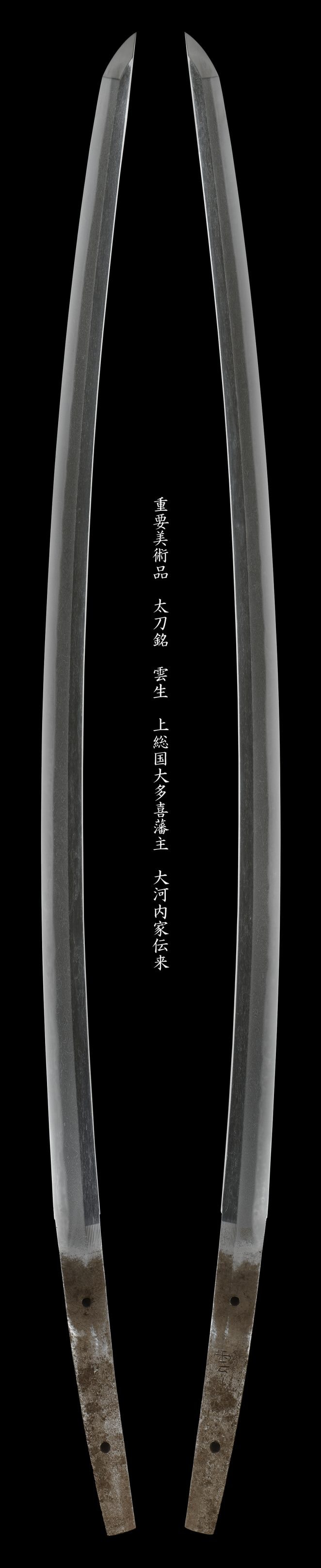
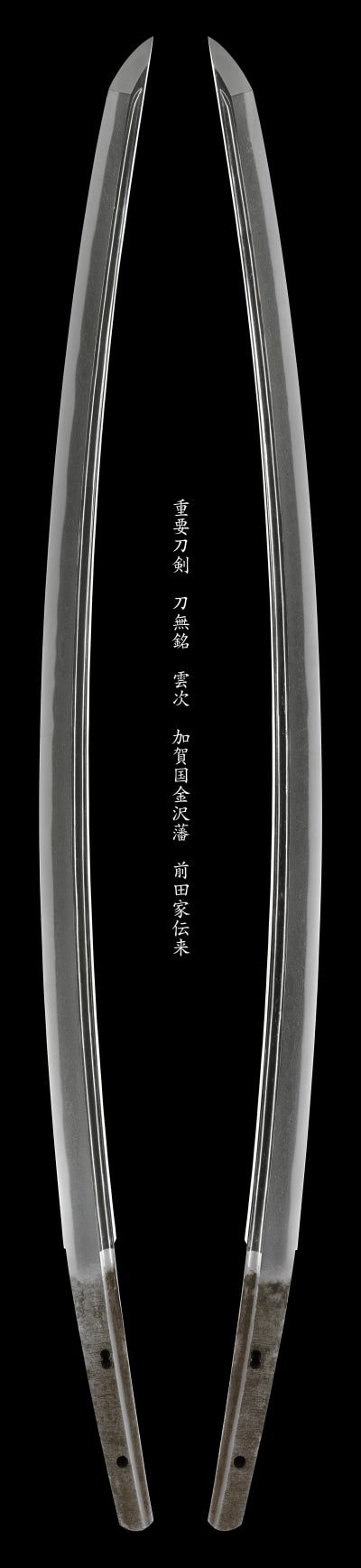
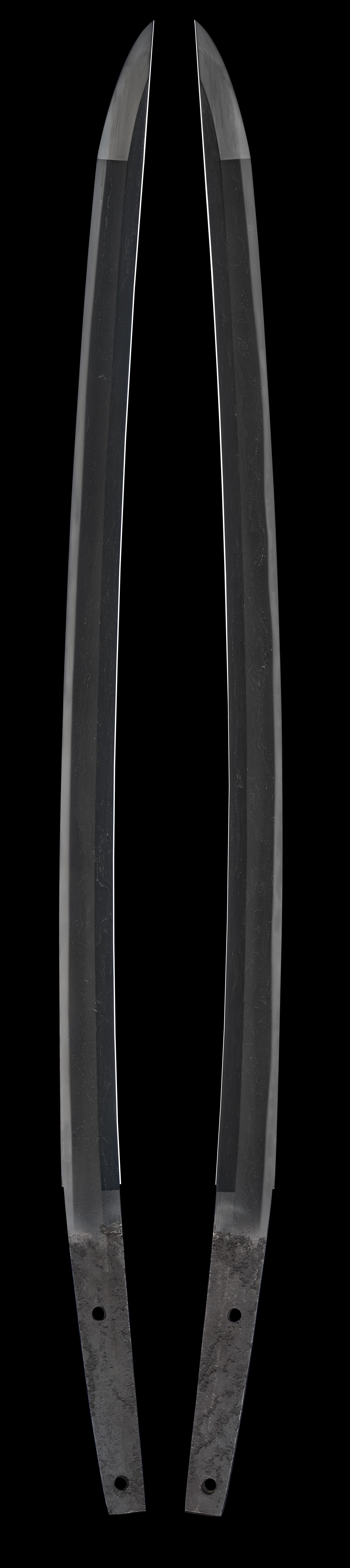
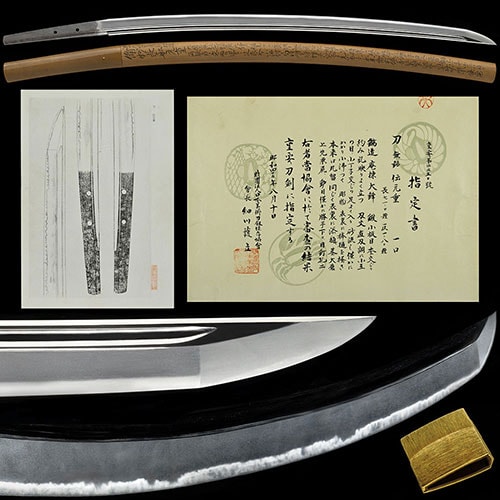
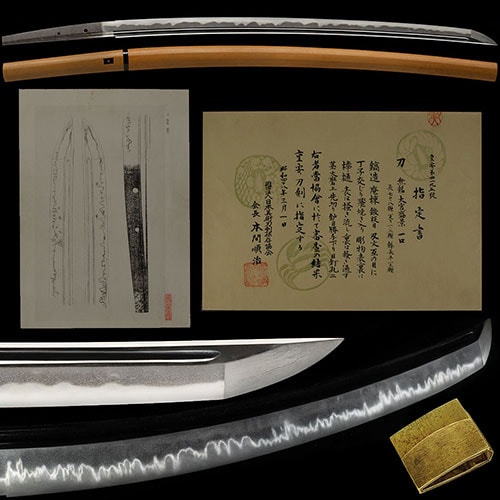
Unju, whose name is read variously as Unshige and Kumoshige, was the third-generation hand of the Ukai group, the smiths of Ukan-shō whose signatures begin with the character for cloud and who are therefore called the Unrui, the cloud group. The single dated , inscribed Jōji 7 in the second month of 1368, fixes him squarely in the mid-, succeeding the line's founder Unshō and his successor Unji. The published sources set the group apart from everything around it: their manner, they write, differs from the mainstream work of the day and stands instead close to the Yamashiro school and the Bitchū Aoe school, so that within an essentially character there is mixed the flavor of Kyoto and of Bitchū Aoe, a temperament strong enough that they call the cloud group plainly the most unusual presence among swords. The records Unju as a son of the second Unshō, and dated work survives bearing the Bunwa, Jōji and eras.
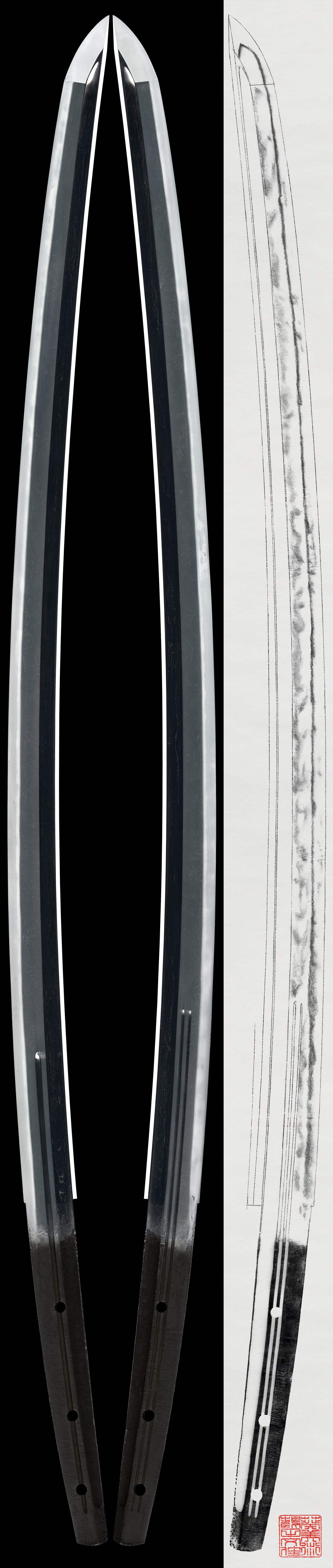
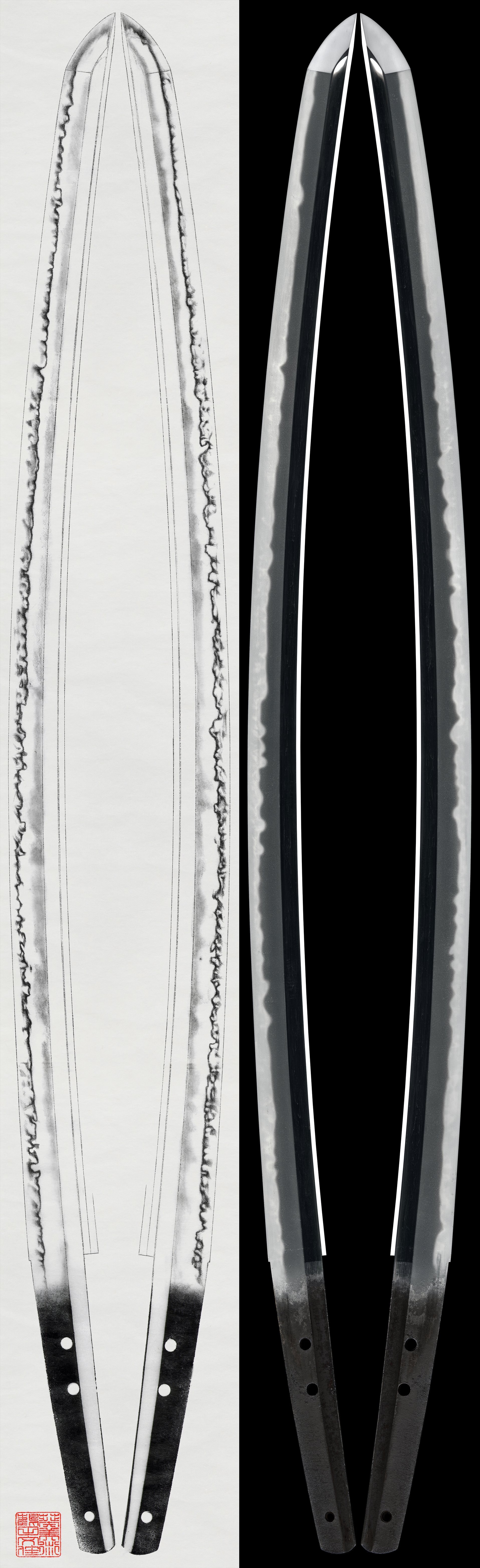
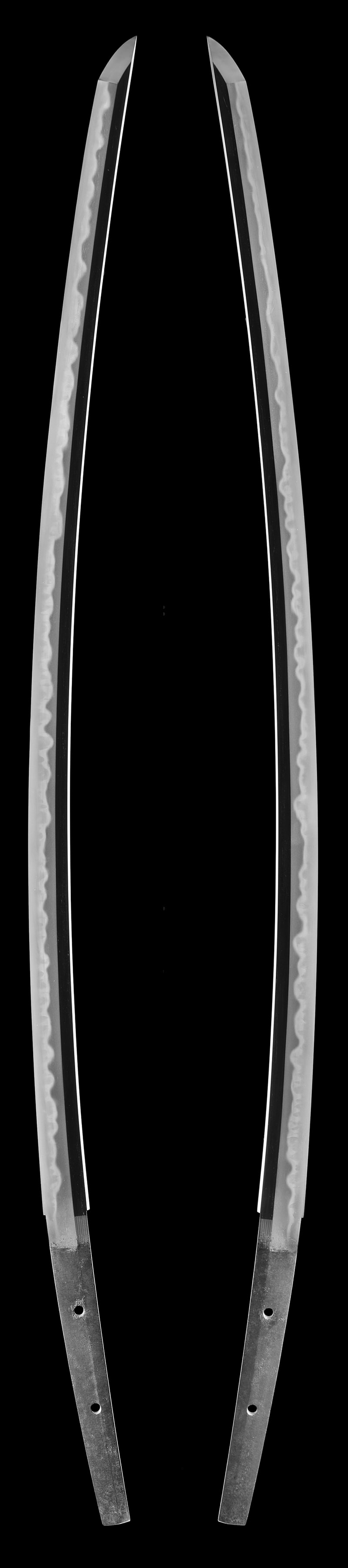
His characteristic hand is the opposite of the flamboyant clove-flower for which mid- is known. Unju's forte is the and the -toned line, shallowly , on which ride , and a small , with and entering and adhering. What lifts that quiet edge out of plain is the activity worked through it: and run frequently in the , with , and uchi-noke, an activity foreign to the -based and proper instead to the and Yamato strains the sources attach to his group. On the Jōji 7 the temper crowds in , , uchi-noke, and , with deep and vigorous , some of it coarse. The is a or, on the Yamato-cast pieces, a sweep.
The is where the group's Kyoto leaning shows most plainly. Unju forges an , frequently mixed with and standing somewhat, with well applied and entering, and over it a faint rather than the bright of standard . The published sources note that the cloud group's steel differs from other contemporary in its cast, its and its scant , the inheritance of a line that, in the persons of Unshō and Unji, is said to have gone up to Kyoto to train and afterward served Retired Emperor Go-Daigo. On the most Yamato-leaning blades the forging runs almost entirely into , the edge breaks into and , and the finishes , a strain the published sources read as Yamato workmanship within an otherwise body.
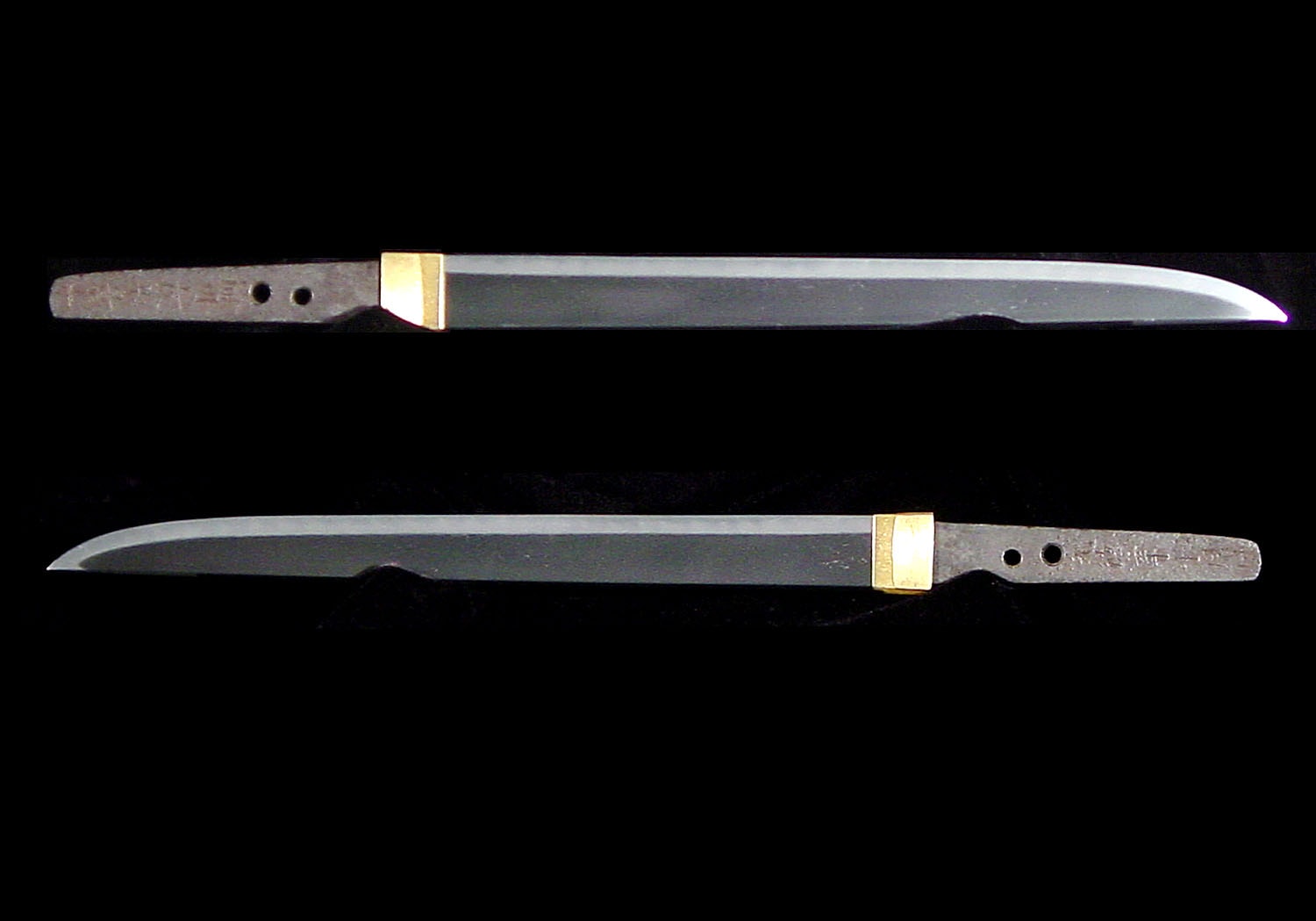
He survives in two faces. The first is the small group of , signed pieces, several carrying a written-down date: the Jōji 7 , a Jōji 6 , a Bunwa , a Jōji . On these the deep, thickly built tang on the edge side, the steeply angled file marks, the reverse-chisel emphasis of the signature characters, and above all the practice of cutting the date straight down beneath the long signature are, the sources say, features that answer entirely to practice, "matters entirely in accord with work". The second face, far the larger, is the body of attributed to him, broad blades with shallow and extended points, the silhouette of greatly shortened . On these the published commentary accepts the traditional attribution from period and lineage, observing that the rounded and the with small chōji-ashi are points of appreciation of the cloud group, "the things to look for in Unrui", rather than a feature unique to Unju alone.
What sets Unju apart is exactly what the judges name when they reach for a comparison. His and are repeatedly said to be of a kind that at a glance could be taken for , "a workmanship that, at first sight, could be mistaken for ", and his group is placed close to the Yamashiro school, so that the dated 's quiet over a tight, faintly reflective reads almost as a piece until the and the cloud-group signature settle it. The sources sum the whole effect in a single phrase: that within a temperament are mixed the airs of Kyoto and Bitchū Aoe, "an individuality so strong it is distinctive among works". He stands at the third remove from the Kyoto-trained founders, carrying their restrained idiom forward while the broadening shapes and deepening of his own generation, touched by the transmitted manner, press it toward the .
For the collector Unju is a rare and individual name rather than a flowing supply. Fujishiro grades him Jō-jō . He has no National Treasures and no Important Cultural Properties; his record runs instead through a single , a body of , and three prewar Jūyō Bijutsuhin, some fifty-seven blades across the and tiers and sixty designated works on record in all. Only thirteen of these are signed, and dated signed work is rarer still, which is why the published sources prize the inscribed pieces for their documentary value as much as their quality. His blades are preserved in long-held collections and institutions, among them the Kurokawa Institute of Ancient Cultures; one carries a mounting said to descend in the Date family, and the prewar designations passed through the Nanbu and Iwasaki houses. Because almost none can ever trade, and because his surface only seldom and his signed and dated pieces seldomer, a privately held Unju is a notable thing for a collector to encounter, a document of the most Kyoto-inflected corner of .