Edo was the sword’s age of connoisseurship: the Hon’ami appraisers, the shogunal register of famous blades of 1719, and a thriving literature turned the sword into an object of study even as it ceased to be drawn in war.
 NihontoWatchNihontoWatch
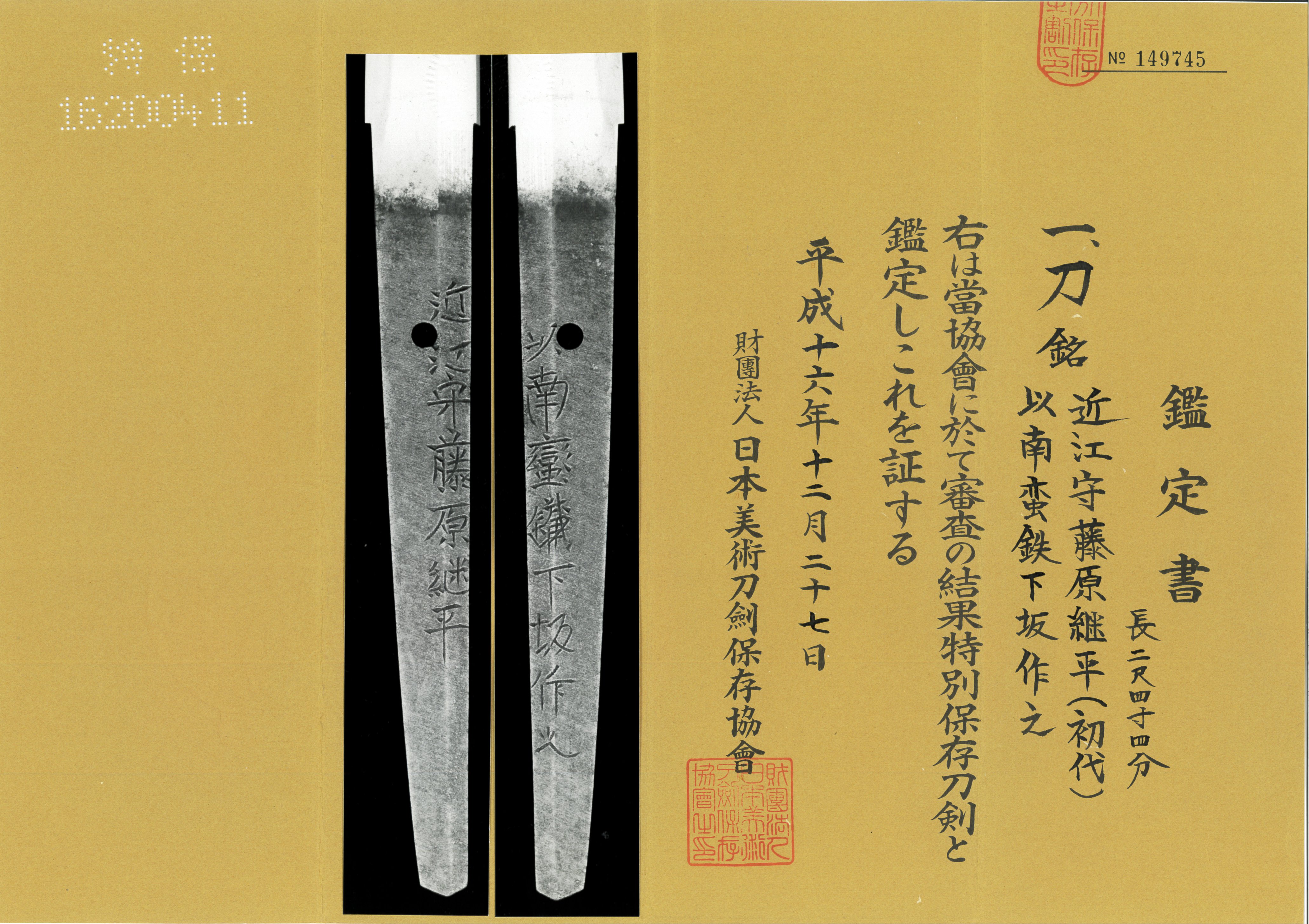
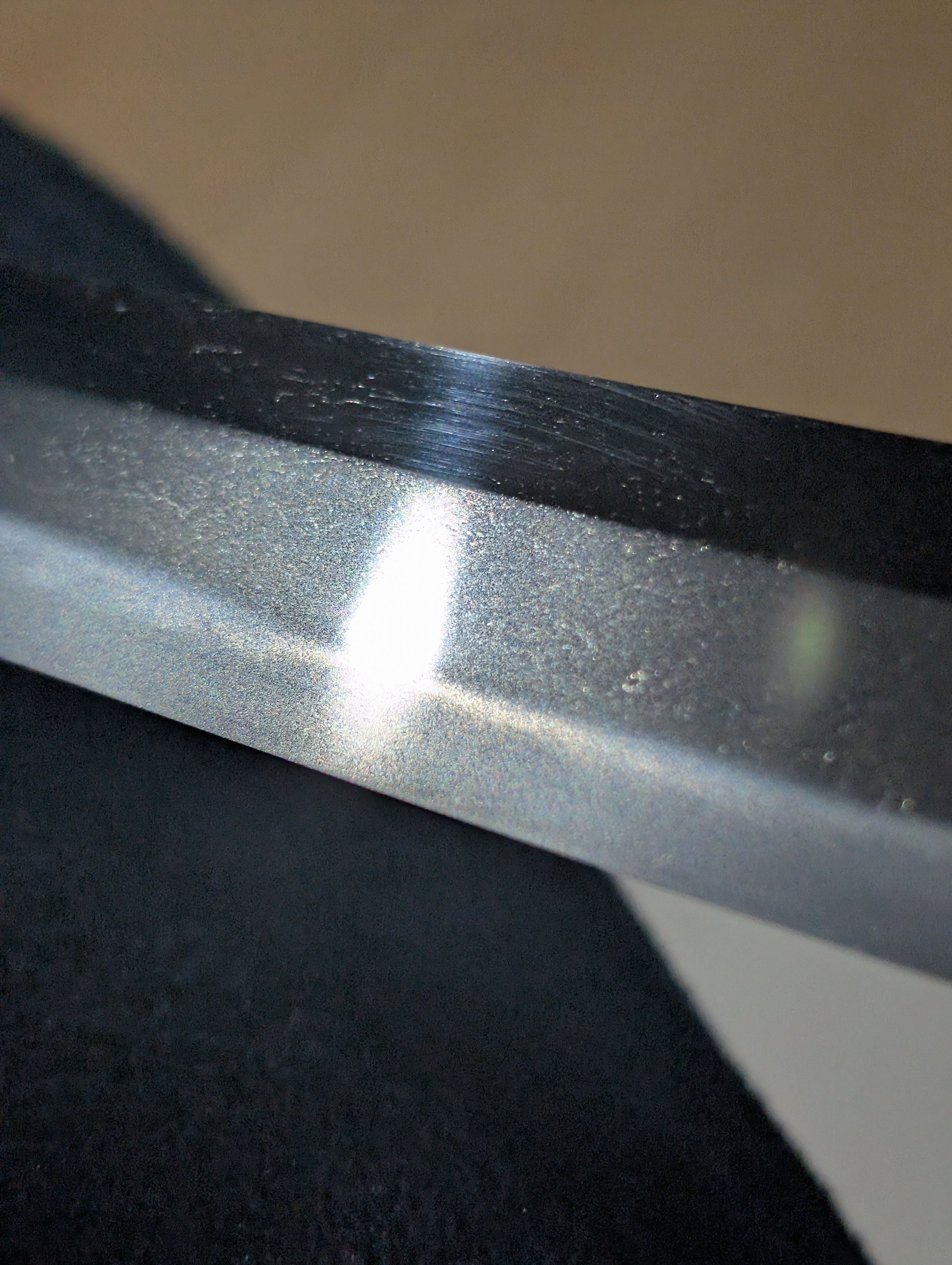
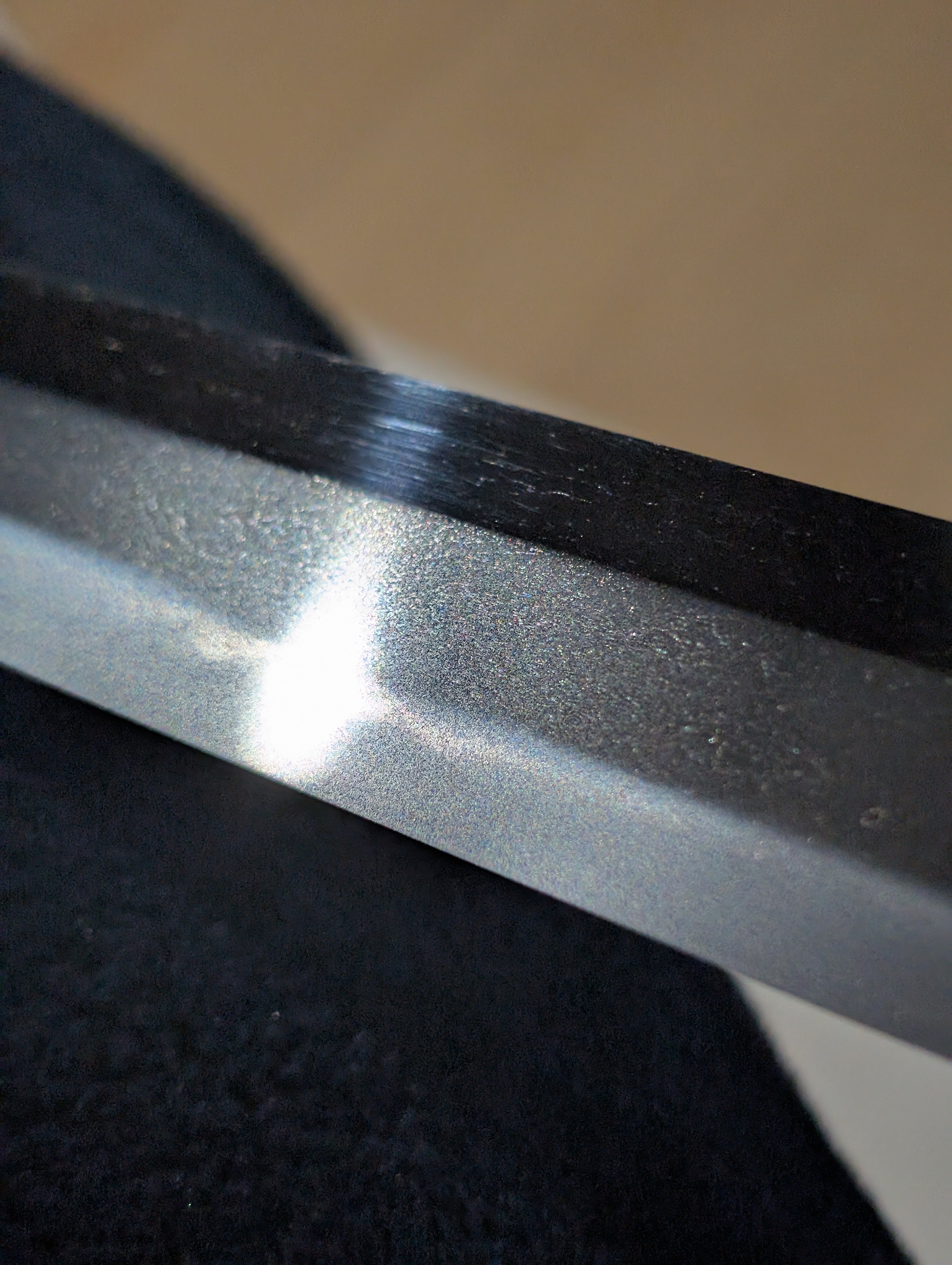
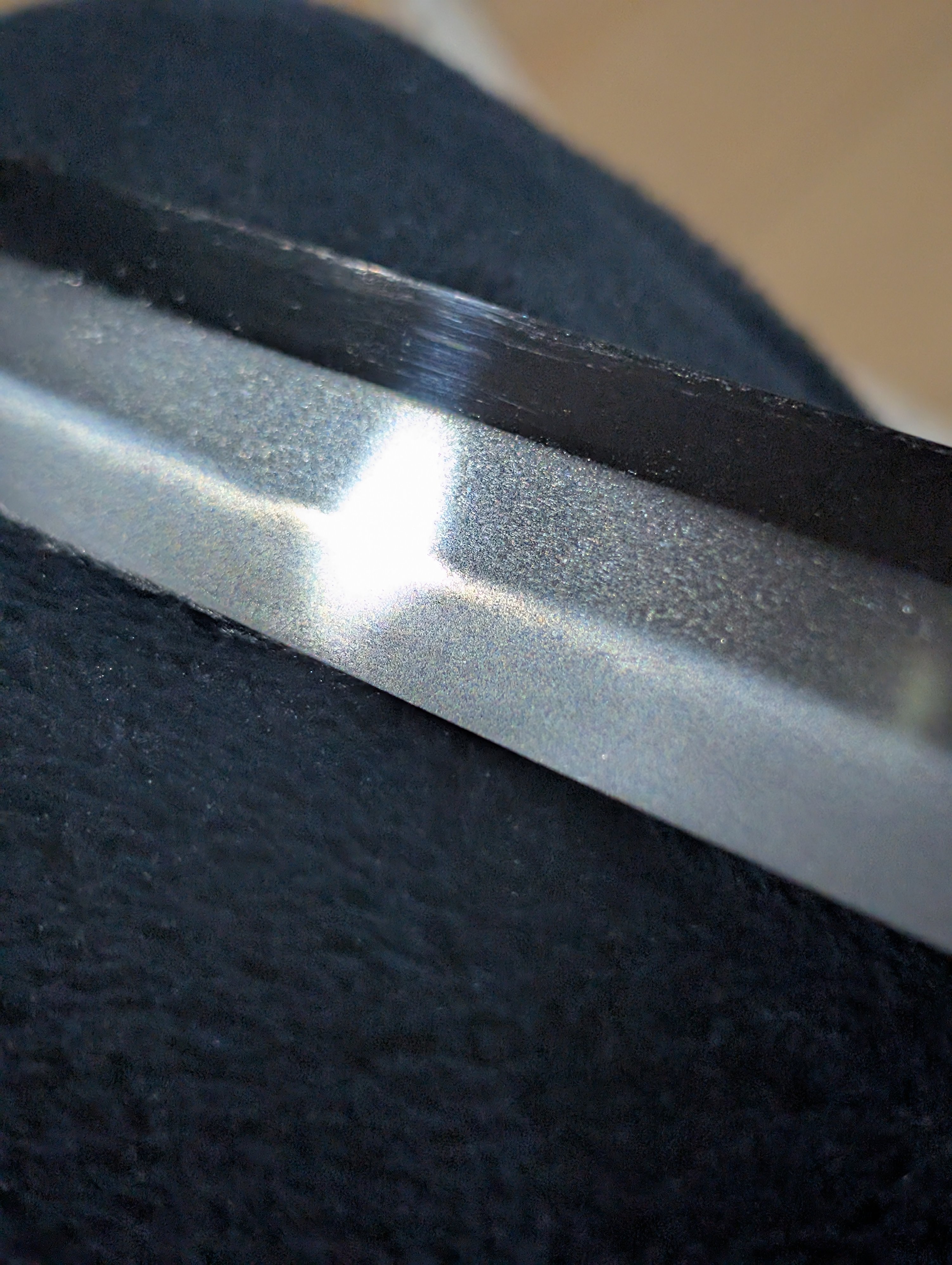
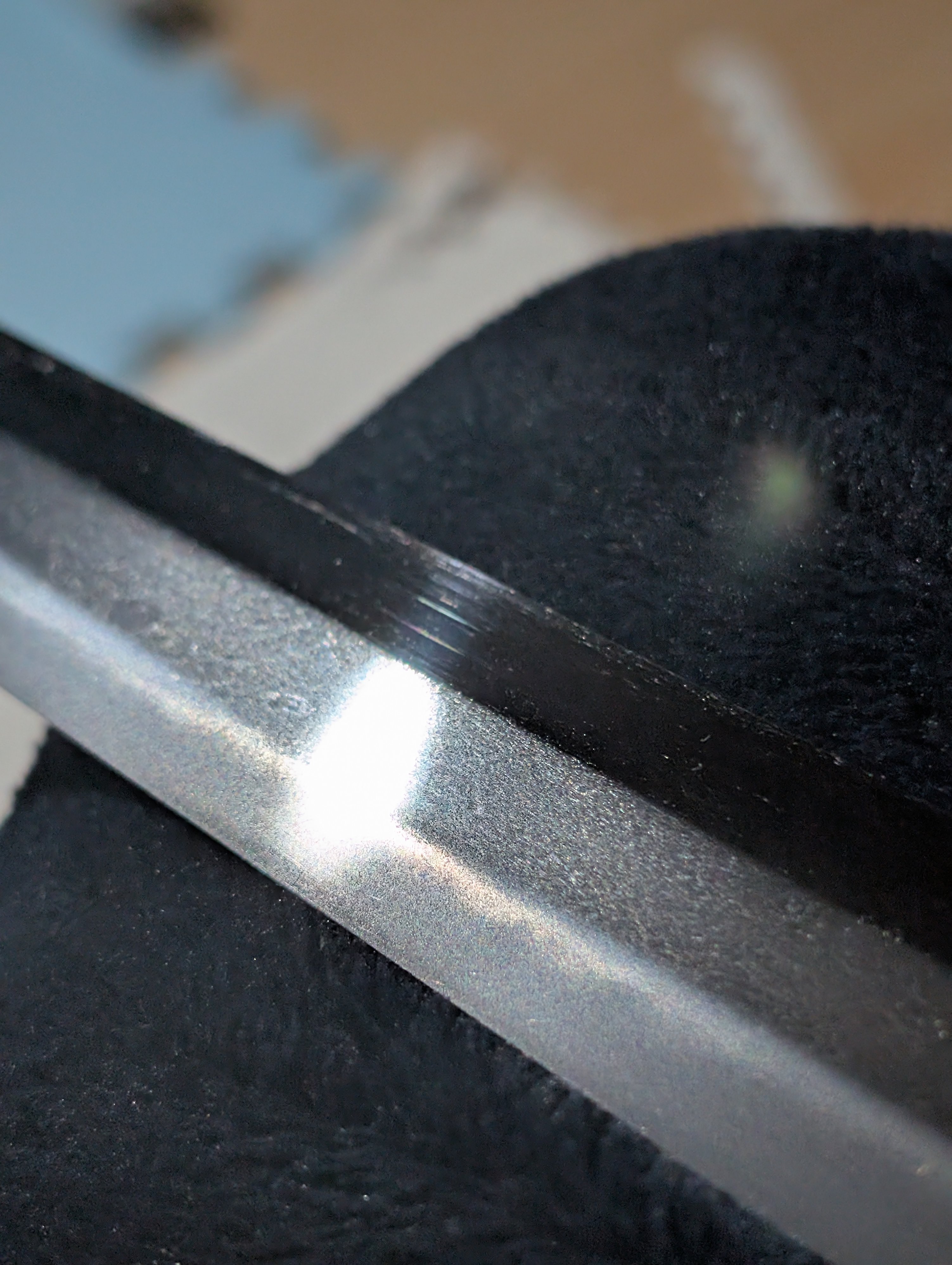
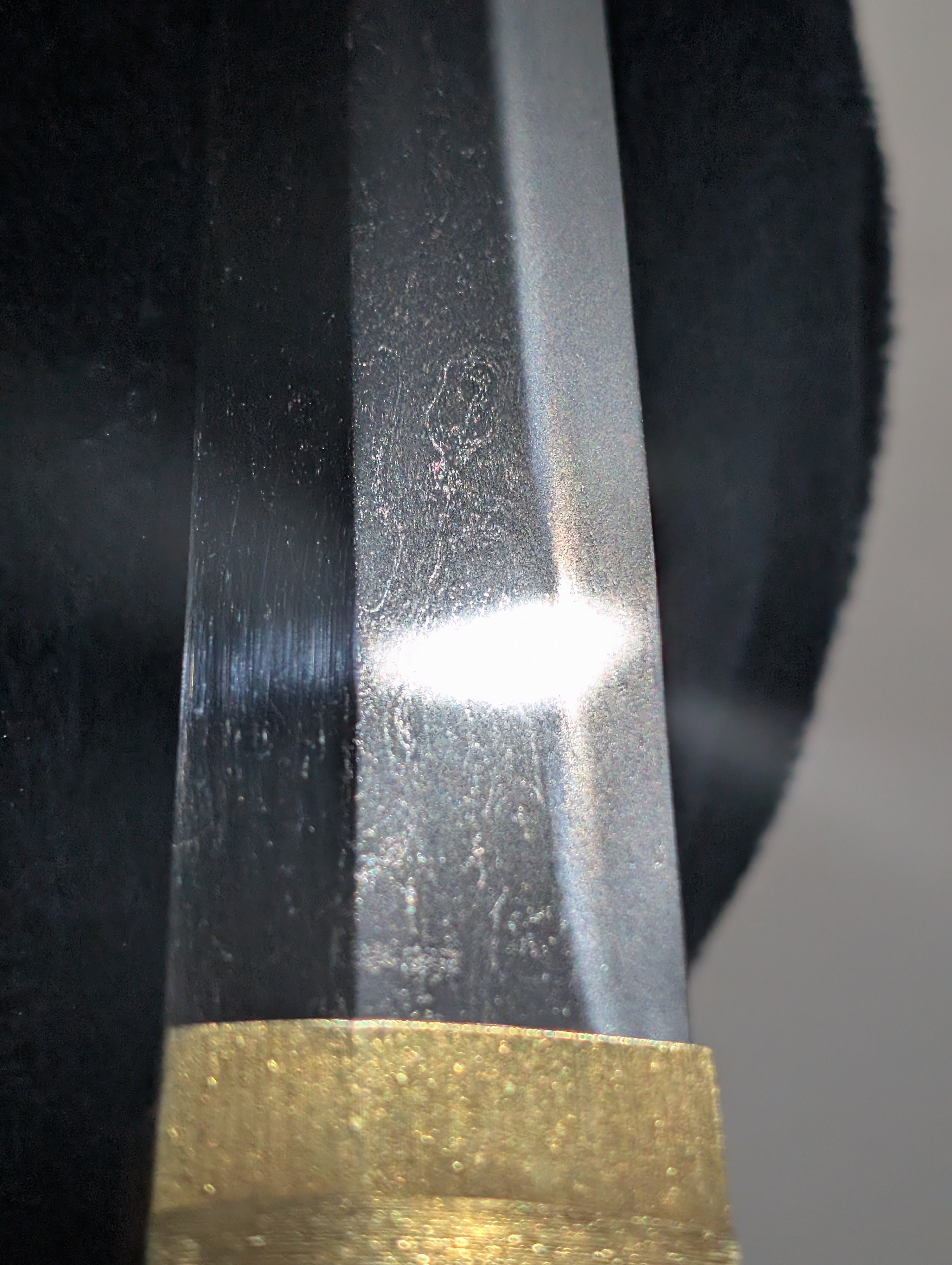
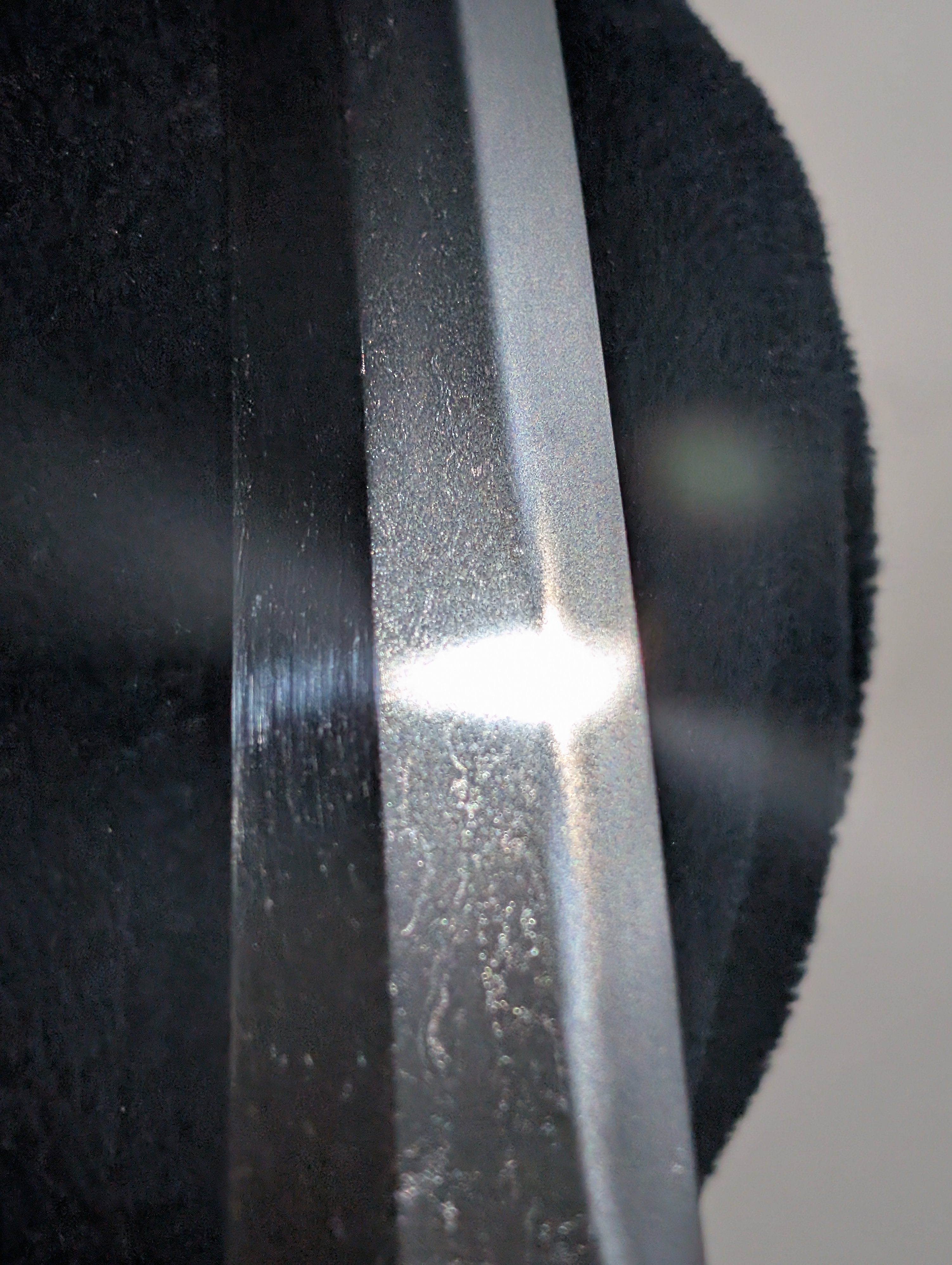
Following the coming of the Edo Period with the ascension of the Tokugawa Shogunate, new faces representing refinement and class in the swordsmithing world were necessary. As such, the first shogun, Ieyasu, enlisted the efforts of Echizen Yasutsugu of the Shimosaka School, alongside his descendants, who inherited the same name. As the smiths gained fame for their works, alongside the restoration of burned masterpieces, the school expanded its influence, taking on unrelated smiths as students and assistants within Echizen Province. Among these smiths was the Echizen Seki School master, Omi no Kami Tsuguhira, whose work will be analyzed in this article through an uchigatana forged by him. The blade itself has a textbook Kanbun Shinto frame, being a long, straight blade with intermediate proportions falling between the slender works of early Koto and the wider frames made popular by the Soshu masters. Looking at the metallurgy, what is most interesting is that the blade is not forged using tamahagane, but instead with European steel, which was imported through the city of Nagasaki by Dutch traders and missionaries, resulting in the blade having a brighter, more silver-like appearance. Looking at the surface grain, the blade is forged in rougher mokume with abundant masame running throughout the entire length. Ji-nie is less abundant, resulting in a slightly bluer steel than more magnificent works of the period. Moving into the temper, the cutting edge is decorated in a wide o-notare within a suguha base in nioi-deki. Ko-gunome can also be spotted throughout the work, with the gunome transforming into togari-ba when approaching the monouchi, producing a more aggressive appearance near the tip. Few hataraki are present, mostly comprising horizontal nie formations, such as sunagashi, inazuma, and kinsuji, although near the kissaki, ashi are present where togari form. The hamon ends in a similarly sharp manner, ending in a ko-maru-togari style, which includes a sharp kaeri turnback. With the metallurgical features discussed above, relevant measurements are listed for brevity’s sake. The nakago of the blade is ubu with a kengyo-jiri tip. The blade’s tang is inscribed on both sides, granting not only the identity of the smith but also the method in which it was forged. On the katana-omote, the naga-mei signature “Tsuguhira of the Fujiwara, Lord of Omi” (近江守藤原継平) is inscribed, while on the katana-ura, the inscription “Made Using Southern Barbarian Iron at the Shimosaka Workshop” ( 以南 蛮鉄下坂作之) can be found, indicating that the sword was forged using imported steel from the Netherlands. The blade has only a single mekugi-ana, indicating a completely unaltered state from the date of forging into the modern day. The blade’s shape is in shinogi-zukuri, with an iori-mune. This is the most common form of geometry seen in Japanese blades, being seen in the earliest nihonto. As the sword was forged in the Edo Period, Japanese swordsmiths would have already had a millennium to perfect this style. Unlike other swords of the period, the sword foregoes elaborate horimono, instead retaining a simple character and greater weight, which was useful in tameshigiri cutting practices. The blade is rated “Tokubetsu Hozon” by the NBTHK, confirming the legitimacy of the blade’s signature, alongside highlighting a greater level of workmanship than is expected for Japanese blades. This appraisal represents centuries of careful preservation and reverence given by various owners, alongside the careful efforts of the swordsmith himself in producing high-quality work. Included with this piece is a classic set of mid-Edo Period uchigatana koshirae. The saya is of a simple aesthetic, being formed solely of a kuro-urushi lacquer. This lacquerwork is only complemented by the koiguchi, kojiri, and kurigata, which are carved from black horn, perfectly matching the hue of the lacquered scabbard. Carefully tied along the saya is a fine mustard sageo formed of braided silk, adding a pop of color to the dark koshirae. Looking to the hilt, the tsuka is formed of a black-dyed same wrapped in tsumami-maki using a matching black silk. Unlike the cohesive saya, the fuchi and kashira are of a more luxurious make, being formed of a shakudo nanako with depictions of high-relief centipedes in gold. The menuki are of a similar earthen theme, being carved into beetles in gilded copper. Finally, the koshirae is complete with a glamorous octagonal tsuba. The guard is formed of blackened copper with silver inlay of wisteria flowers, alongside operwork depictions of masakari war axes, which are filled in with gold, producing a powerful, militaristic atmosphere to the fittings. The Tokugawa Clan, having taken power in the early 17th century, found it necessary to establish cultural dominance through the enactment of strict laws, the reform of pre-Edo Period social norms, and the expression of refinement in the arts. In this third category, it quickly became necessary for the Tokugawa Shogunate to enlist master swordsmiths to not only set the standard for the next generation of Japanese swords but also to restore various ancient masterpieces, many of which were catastrophically burned during the 1615 Siege of Osaka. Echizen Yasutsugu of the Shimosaka School was selected for this purpose, gaining wide acclaim for his expert restorations, alongside his experimentation with European steel products. This allowed the Yasutsugu Branch of the school to expand, with various generations of Yasutsugu following him. At the time of the third-generation, the Shimosaka School began its expansion, with various Echizen Seki smiths entering their ranks and assisting in the forging of katanas for the Tokugawa Shogunate. Among these smiths was Omi no Kami Tsuguhira, born Fujita Kyohei-bei (藤田興 兵衛), who operated between 1661 CE and 1681 CE between both Echizen and Omi Province. Tsuguhira was a direct pupil of the third-generation Yasutsugu, moving with him to Edo after Yasutsugu was summoned, alongside adopting his style of forging and blending it with the traditions seen in Muromachi Period Seki craftsmanship, primarily through the use of togari-ba and other gunome formations. During this time, Tsuguhira began mentoring his own branch of the Shimosaka School, which found great success in both provinces, noted by his working alongside the later generations of Yasutsugu smiths and surviving up into the late 1700s CE, as well as the rating of his swords as “Wazamono” by the executioner Yamada Asaemon Yoshimutsu. The large number of nanban-tetsu blades discovered in Tsuguhira’s name is of vital importance, as it indicates a high level of renown both as a Shimosaka smith and as a craftsman for the Tokugawa. Nanban-tetsu required extra costs, as it was a foreign item, and as such, only high-level swordsmiths were granted the privilege of using it to the degree that he did. Following his stint as a master of the Shimosaka School, his descendant, the second-generation Tsuguhira, found prominence in his commission by Tokugawa Yoshimune to draw oshigata, or rubbed scrolls of Japanese swords, for the entirety of the Tokugawa Shogunate’s collection. This set of scrolls remains publicly available as the “Tsuguhira Oshigata”, remaining a vital resource for sword connoisseurs into the modern day. Overall, the blade is a fine example of the Tokugawa Shogunate’s rebirth of artisanal swordcrafting, displaying a shape and metallurgical identity distinct to the Edo Period. In addition, the inclusion of a fine set of mountings opens a window into the aesthetics of the period, alongside the personality of the sword’s previous owner, leading to a matched set worthy of appreciation and study as both a unique aspect of the Edo Period as well as an artpiece comprised of various interwoven components.
Offered by Tosa Touken Do
This piece has sold
37 on the market
Get an email when a new Shimosaka Tsuguhira piece hits the market.
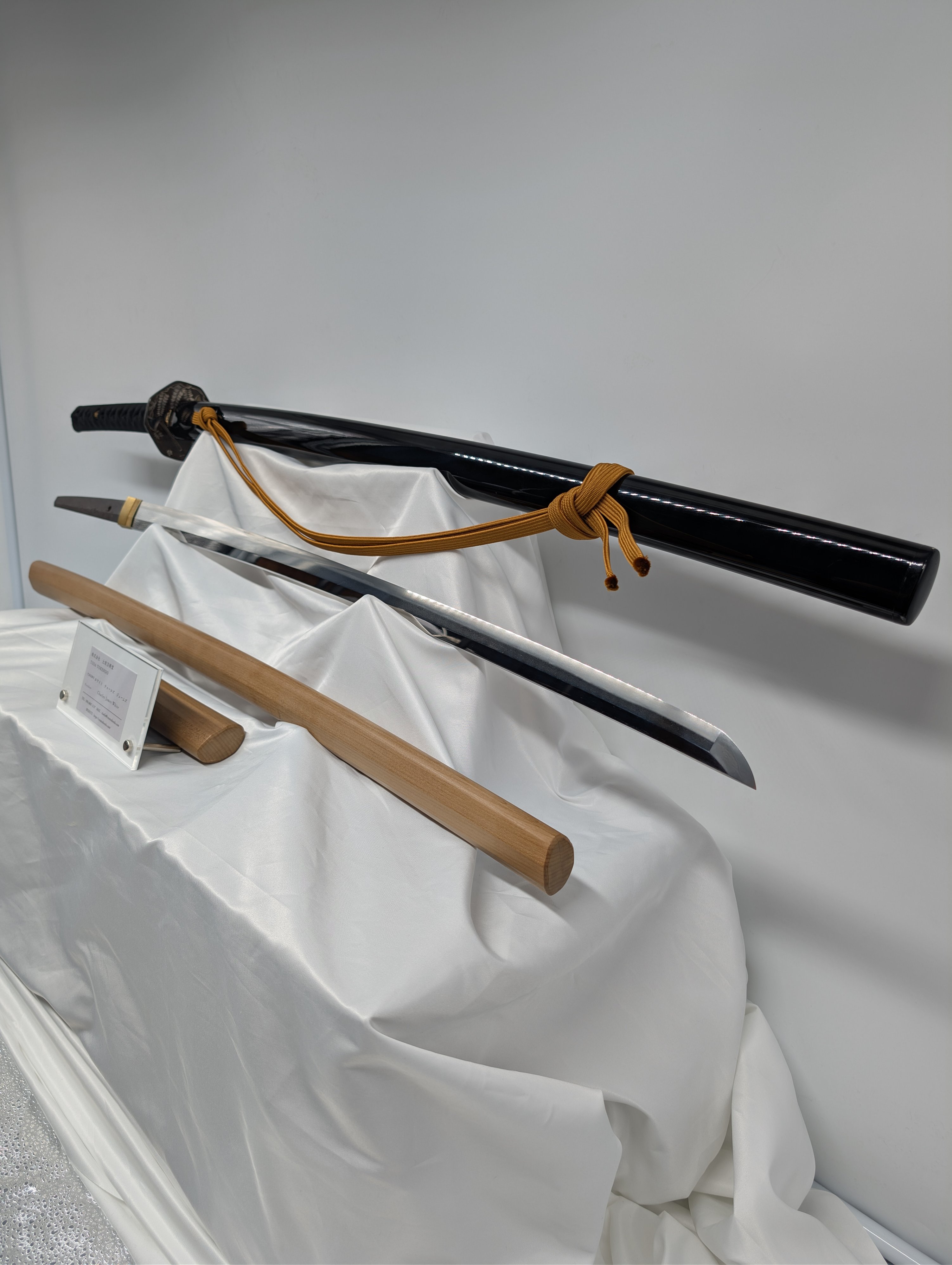
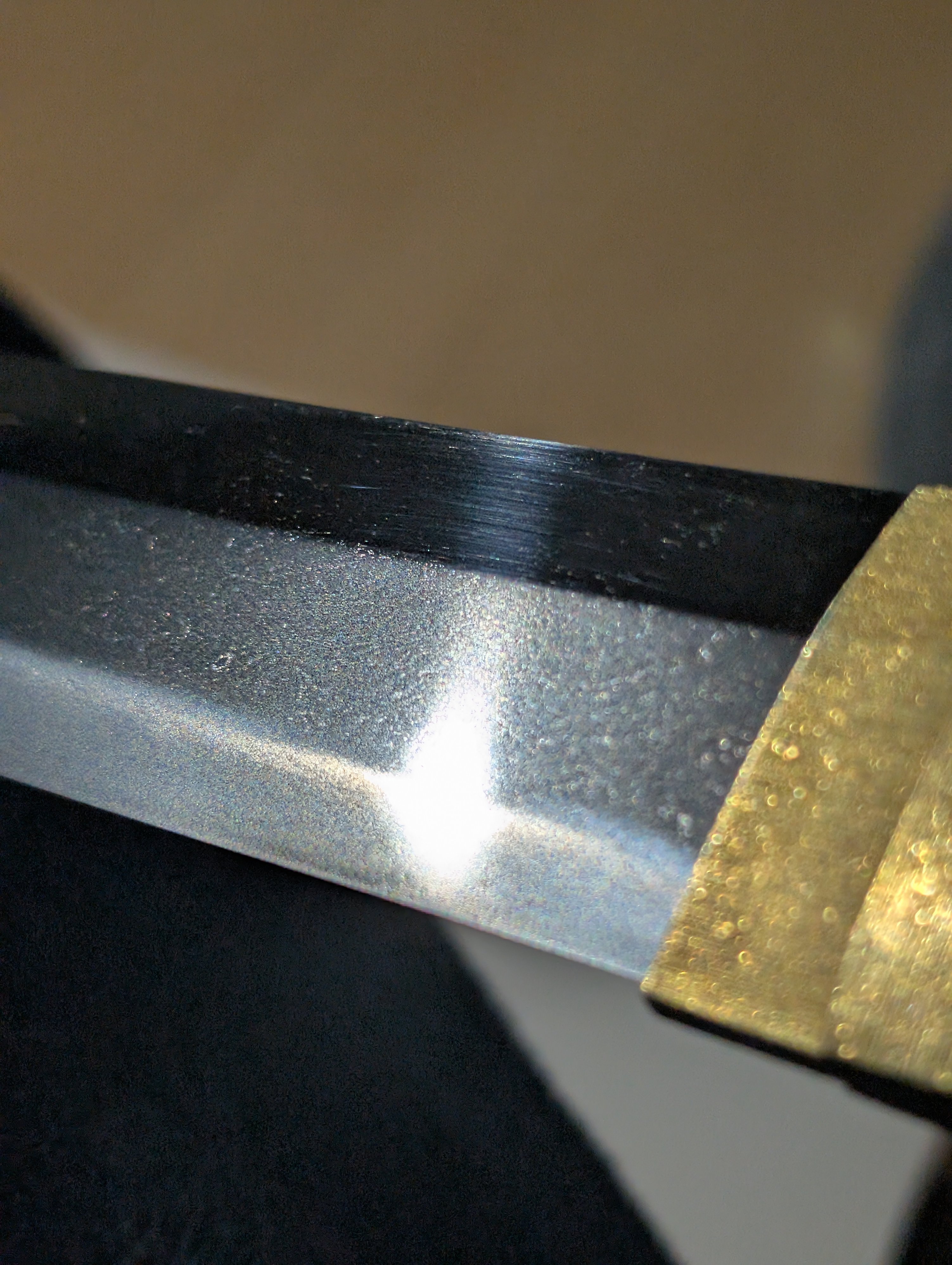
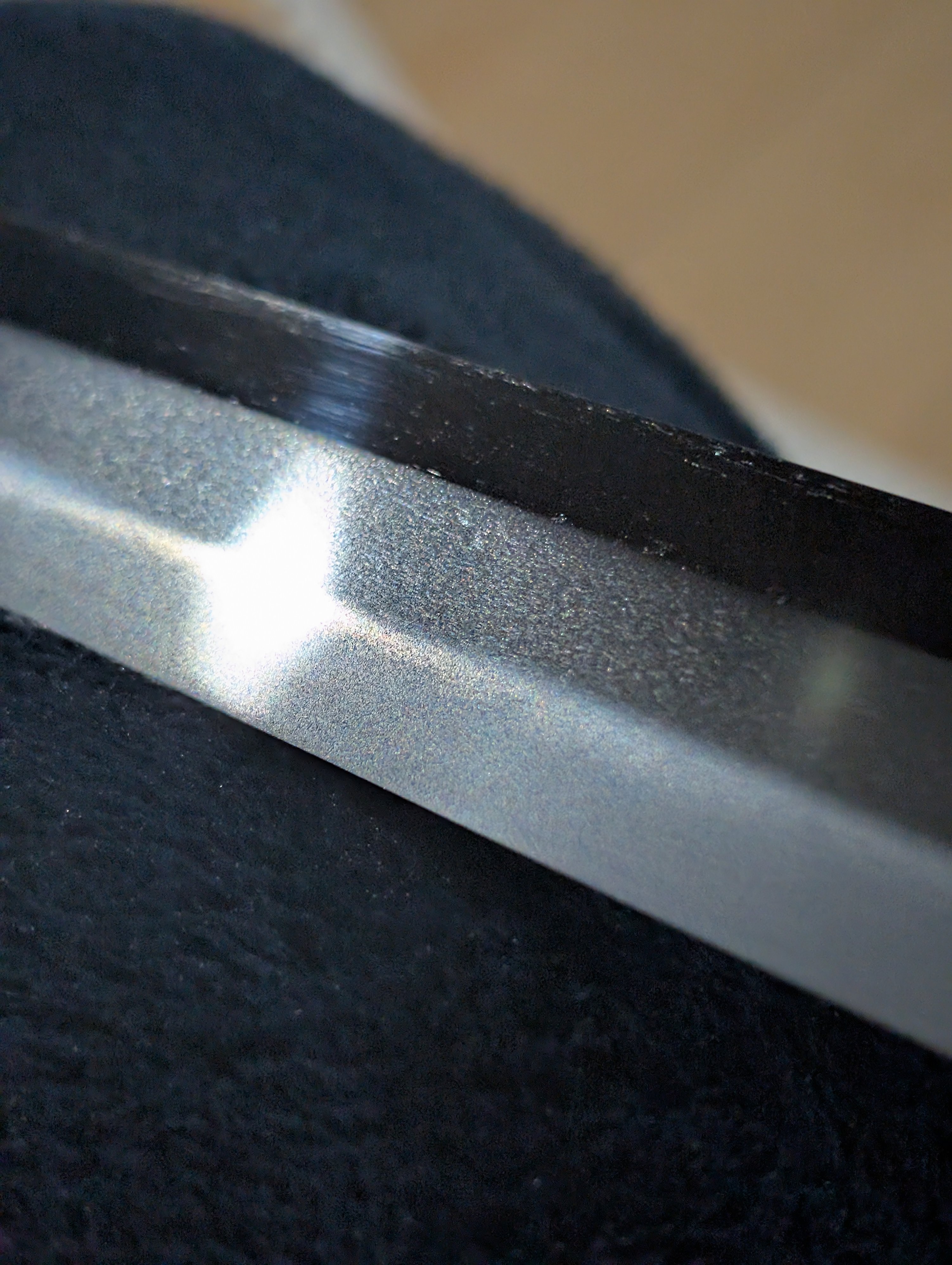
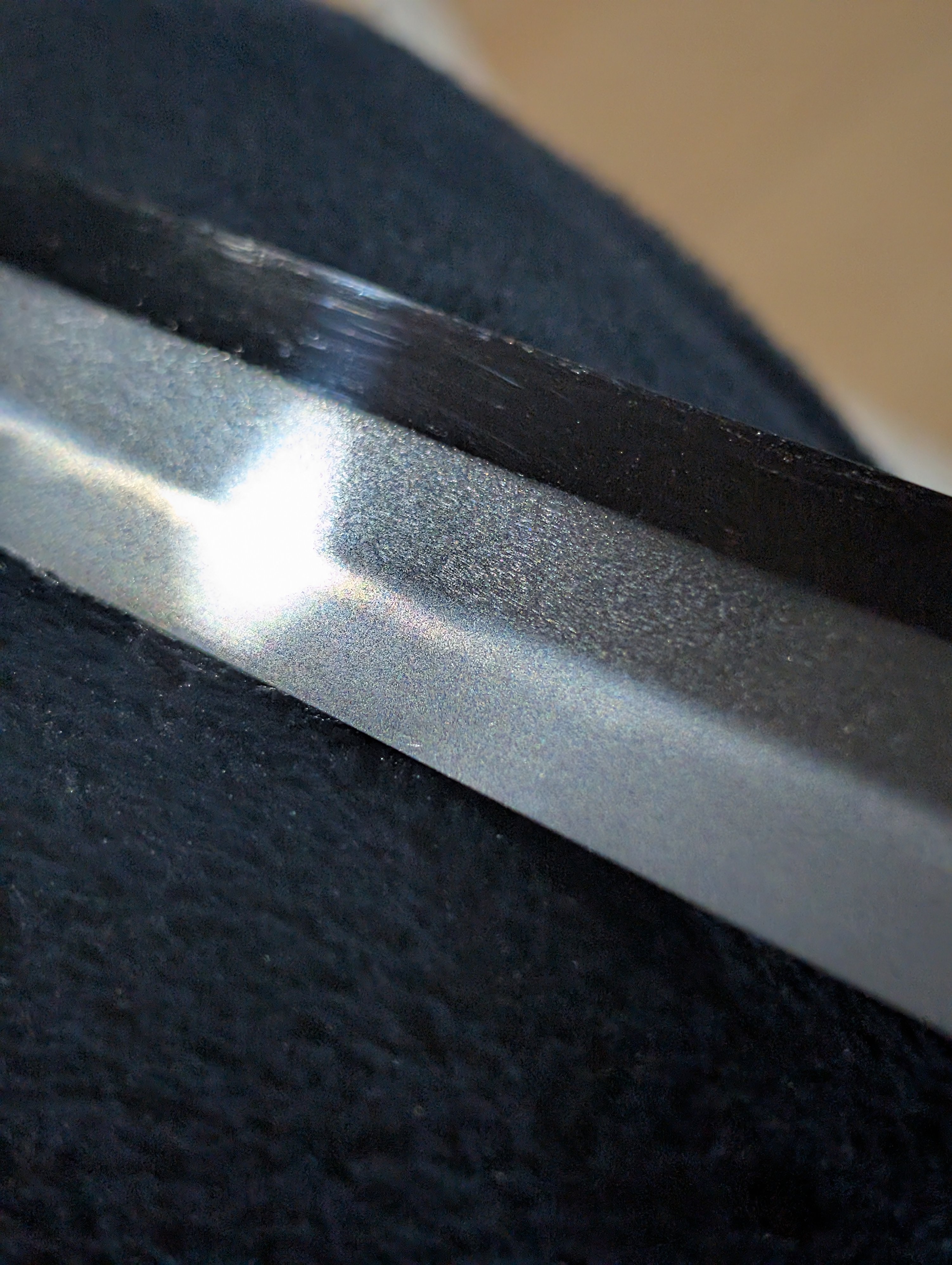
Shinto · Musashi · around 1661-1673
Fujishiro Jo saku · Tōken Taikan top 49%
Where Tsuguhira stands among comparable artisans: across all of nihontō, and within tradition, era, and period. The tiers (Foremost · Leading · Major · Notable) weigh official designations from the NBTHK and Japan's Agency for Cultural Affairs, together with historical honors of lasting repute such as the Sansaku and Meibutsu-chō.
Select a lens to see how it's measured.
Shinto · Echizen
37 pieces on the market now
The Shimosaka name began not as a single hand but as a trademark shared by a band of Echizen smiths at the dawn of the shinto era, and the designated record gathers their work under that one signature rather than parsing it into individuals. The published sources read the early inscriptions, the generic Echizen no Kuni Shimosaka and the titled Higo Daijo Fujiwara Shimosaka, as the product of a group, of which the first-generation Yasutsugu served as the representative. Born in Shimosaka village of Sakata district in Omi, Yasutsugu moved to Echizen under the patronage of Yuki Hideyasu, signing in his early years Higo no Daijo Shimosaka before his Keicho 10 to 11 summons to Edo, where he forged before Ieyasu and Hidetada and received the character Yasu and the right to cut the Tokugawa hollyhock crest on his nakago. The titled signature was carried by several Echizen hands at once, and the texts list Yasutsugu, Sadakuni and Kanenori among the smiths whose chisel movement and brush intent are too alike to part on present evidence. From this band the Echizen Yasutsugu line descended, dividing after the second generation into the Edo and Echizen Shimosaka houses, and around it formed the deep relief carving the province made its own. The school is recognized first in its steel. The forging is itame mixed with mokume that stands and opens, often flowing into nagare, carrying thick ji-nie and fine chikei, the kane taking on the blackish cast the sources name outright as Echizen-gane; the same dark, standing jihada recurs from Yasutsugu through his son, through Sadatsugu, Shigetaka and the unnamed Shimosaka hands, and the commentary returns to it as the group's signature. Over it the hamon favors a suguha to chu-suguha or shallow notare into which linked gunome and ko-gunome mix, ko-ashi and yo entering, the nie thick and gathering unevenly into rough patches, kinsuji and sunagashi streaming through, the nioiguchi tending to a sinking shizumi.
The boshi is the steadiest tell, running to a ko-maru swept in hakikake and turning back long, with a Sanpin-flavored reminiscence of the Mishina and Echizen-Seki inheritance. Yet the house is not uniform: Sadakuni works an austere suguha over an unusually refined ji with little of the blackish mokume, Sadatsugu fires the brightest, most choji-laden midare of the circle, and the third generation cleans the forging and brightens the nioiguchi toward his Edo contemporaries. Binding the registers is the carving, the deep Echizen-bori and Kinai-bori of kurikara, Fudo Myoo, bonji and gomabashi set in relief within the hi, which Sadakuni may have first supplied to Yasutsugu's blades. For the collector the school rewards reading by register rather than by a single famous holding. Yasutsugu is its summit, rated Jo-jo saku, retained smith to the shogunal house, whose Sadamune and Toshiro copies (the Namazuo, the lost Oyako, the Shishi) show his own Echizen hand under the model, and whose best katana carry the possession inscriptions of his patron Honda Hida no Kami Narishige and provenance in the Echizen and Kishu Tokugawa houses. The second generation follows so faithfully that his finest blades part from the father chiefly by the form of the character tsugu; the Edo third generation continues the suguha and ko-notare manners with a straight yakidashi and a Hojoji affinity. Around them the specialists define the edges of the idiom: Sadakuni and his quiet suguha with a pair of tanto recorded in Honma's inventory of the Imperial collection, Sadatsugu with his Narishige-crested cutting-test blades, and Shigetaka, the most skilled of Yasutsugu's pupils, whose chestnut-tailed kurijiri nakago and Kinai carving (the Honebami and Hossho copies among his masterworks) name him at a glance and whose finest work approaches the master. A signed Shimosaka blade, whether a titled Yasutsugu beneath the aoi-mon, a named piece by one of the band, or a Higo Daijo pre-Yasutsugu register, comes to market only from time to time, valued as the wellspring from which the Echizen Yasutsugu line and its carving tradition arose. Learn more →
| Smith | Era | Designated |
|---|---|---|
| Yasutsugu康繼 | 1596-1615 | 76 |
| Yasutsugu康繼 | 1624-1644 | 25 |
| Yasutsugu康繼 | 1661-1673 | 8 |
| Sadakuni貞國 | 1596-1615 | 11 |
| Shigetaka重高 | 1596-1615 | 7 |
The Edo period (1615 to 1868)
Edo was the sword’s age of connoisseurship: the Hon’ami appraisers, the shogunal register of famous blades of 1719, and a thriving literature turned the sword into an object of study even as it ceased to be drawn in war.
A Hozon-certified blade judged to show notably superior workmanship and a better state of preservation. The bar is higher: re-tempered blades and most unsigned Muromachi/Edo works are excluded.
The NBTHK (Nihon Bijutsu Tōken Hozon Kyōkai, the Society for the Preservation of Japanese Art Swords) is a public-interest incorporated foundation founded in 1948 and supervised by Japan’s Agency for Cultural Affairs (Bunkachō); it is based at the Japanese Sword Museum in Tokyo. Its expert panels physically examine each submitted work (shinsa) and issue a certificate (kanteishō) ranking it by artistic and historical merit. NBTHK papers are the most widely recognized standard of authentication for Japanese swords and fittings.
NBTHK official siteAs a rule, we do not accept returns from overseas. Once a deposit is paid, we hold the item for up to 3 months. The deposit is non-refundable.