Edo was the sword’s age of connoisseurship: the Hon’ami appraisers, the shogunal register of famous blades of 1719, and a thriving literature turned the sword into an object of study even as it ceased to be drawn in war.
 NihontoWatchNihontoWatch
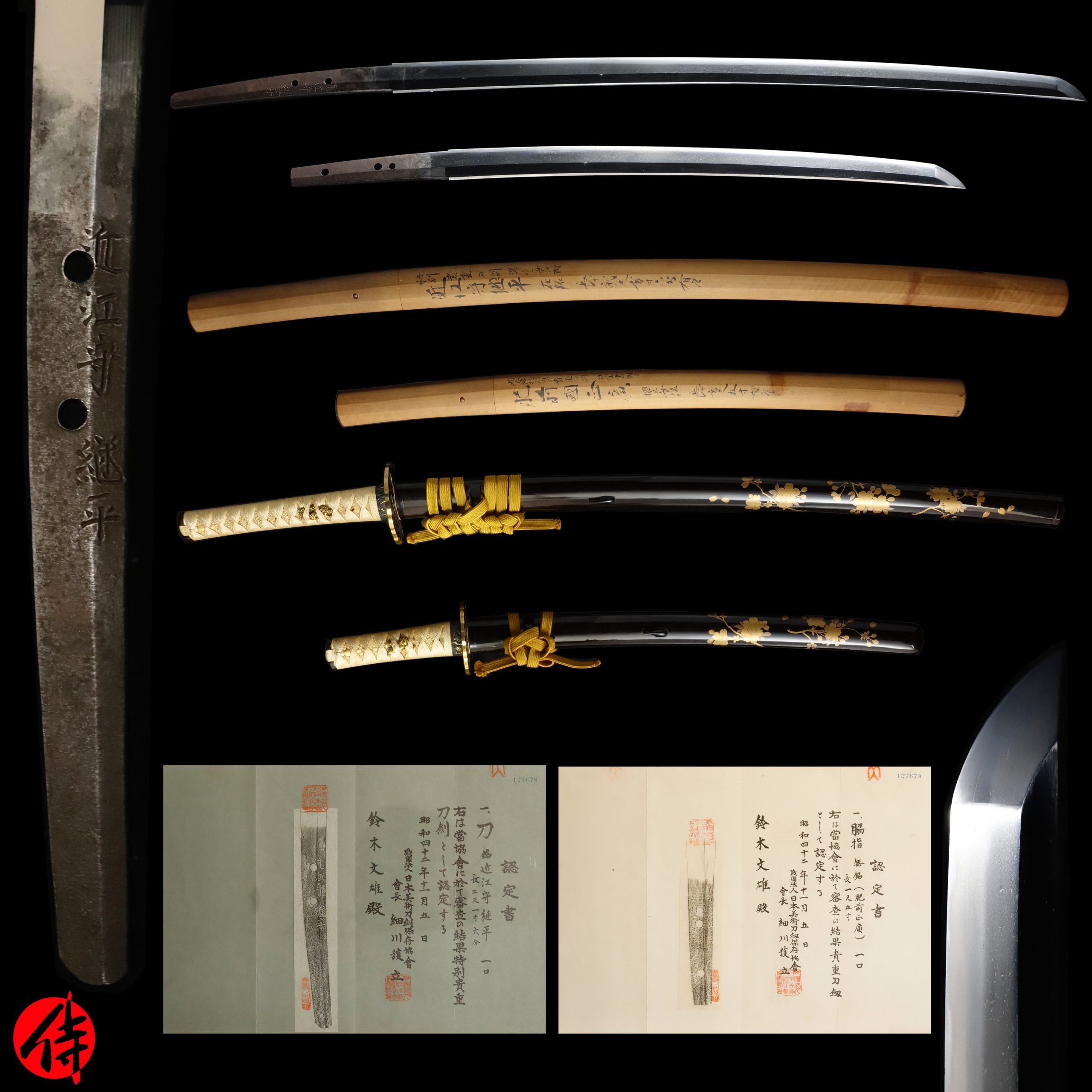
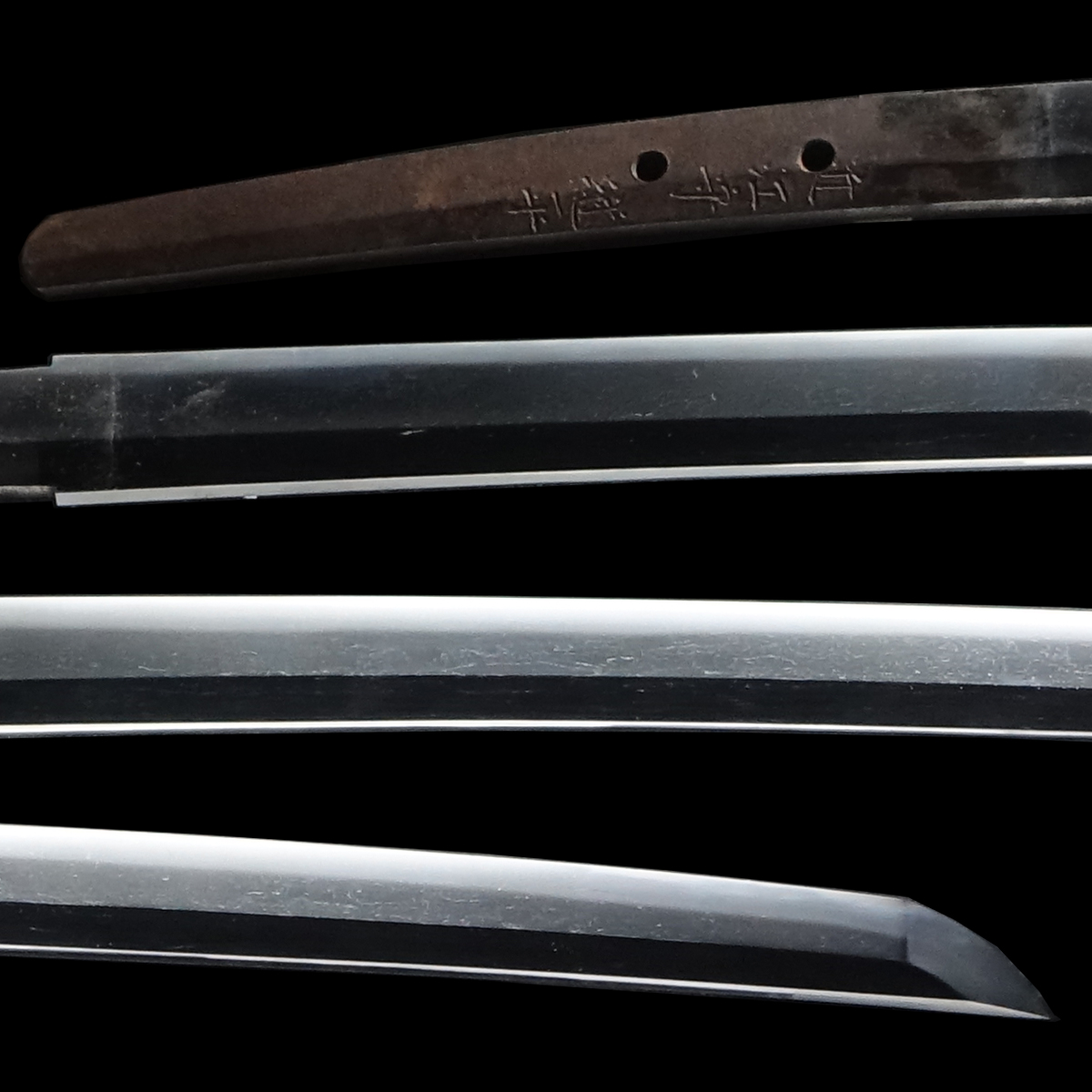
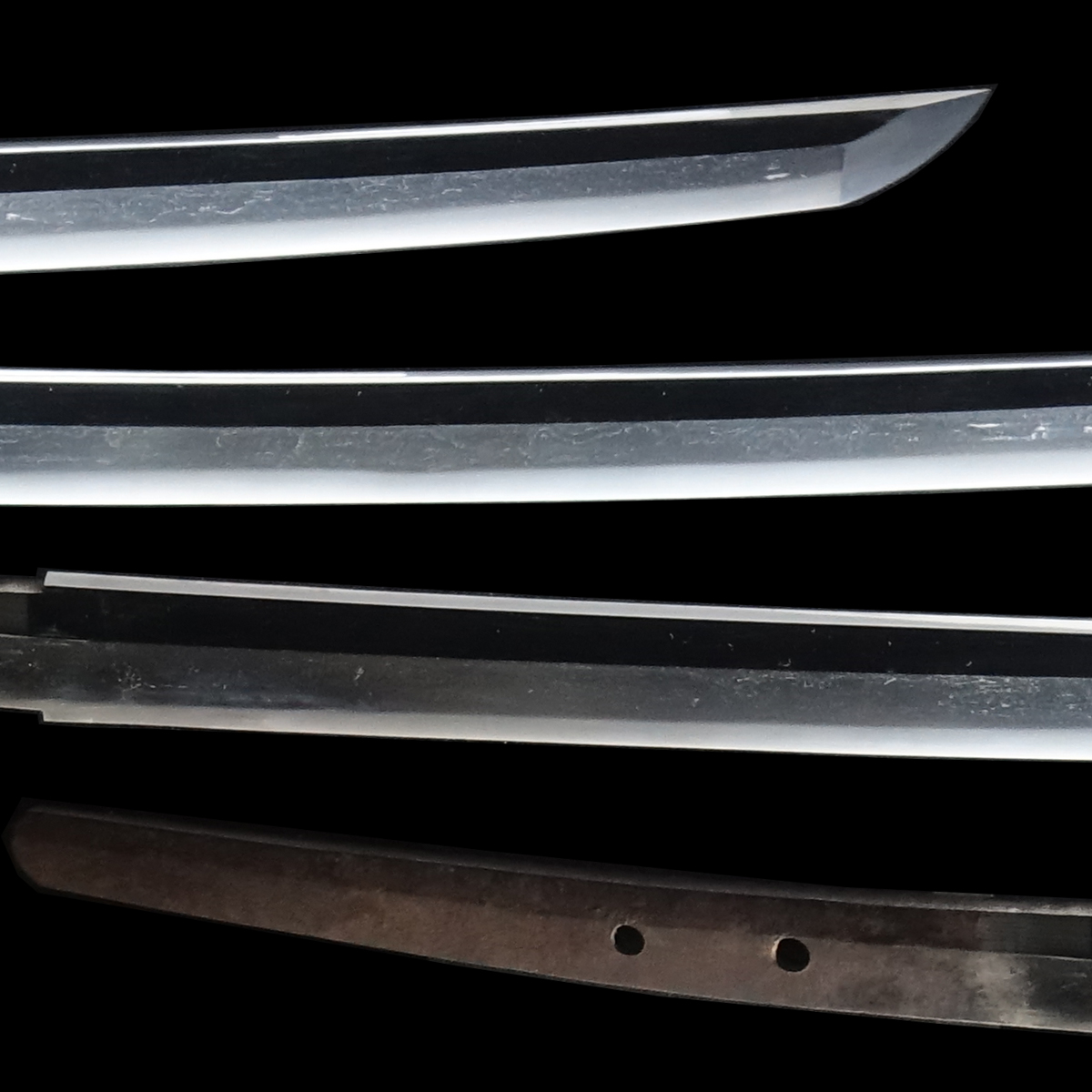
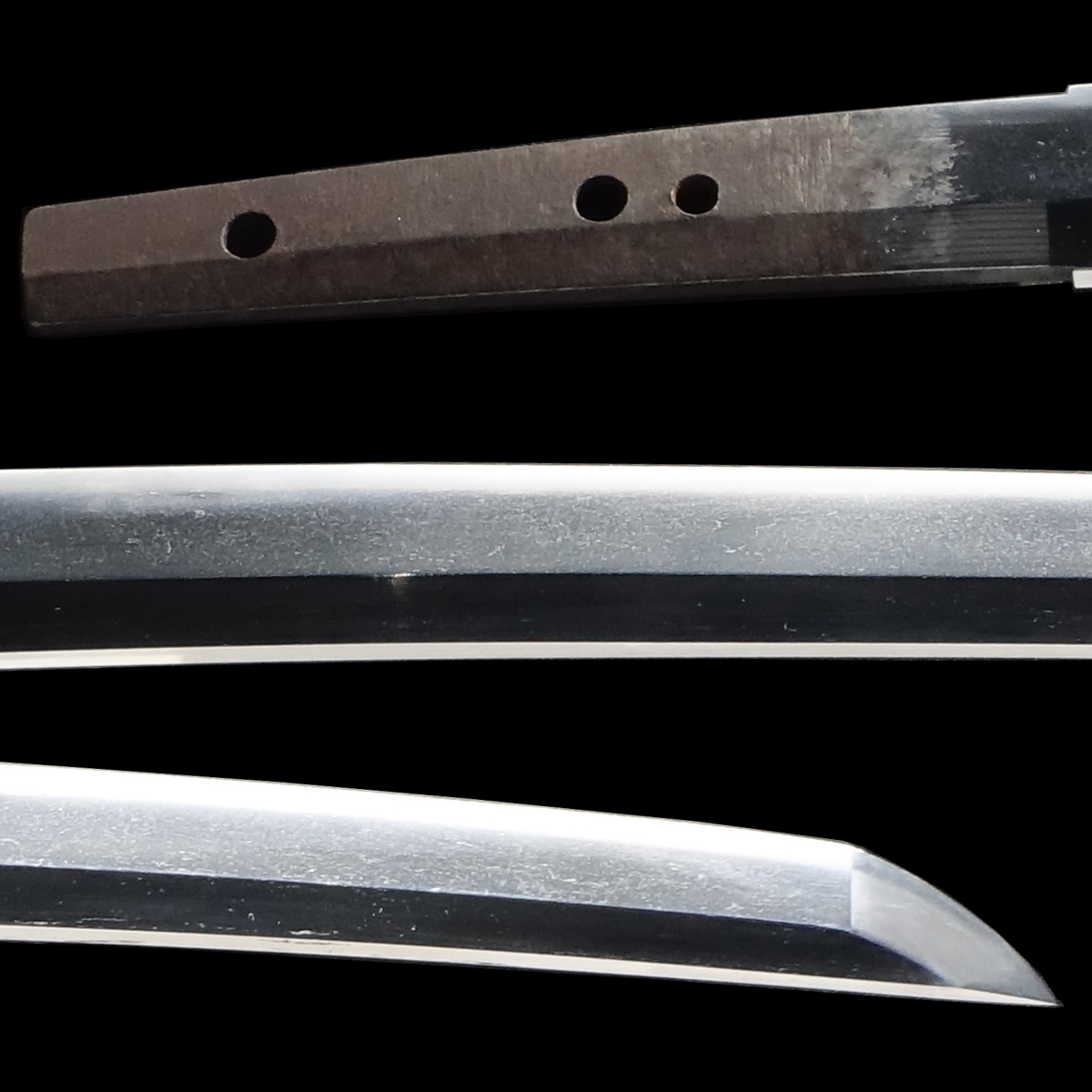
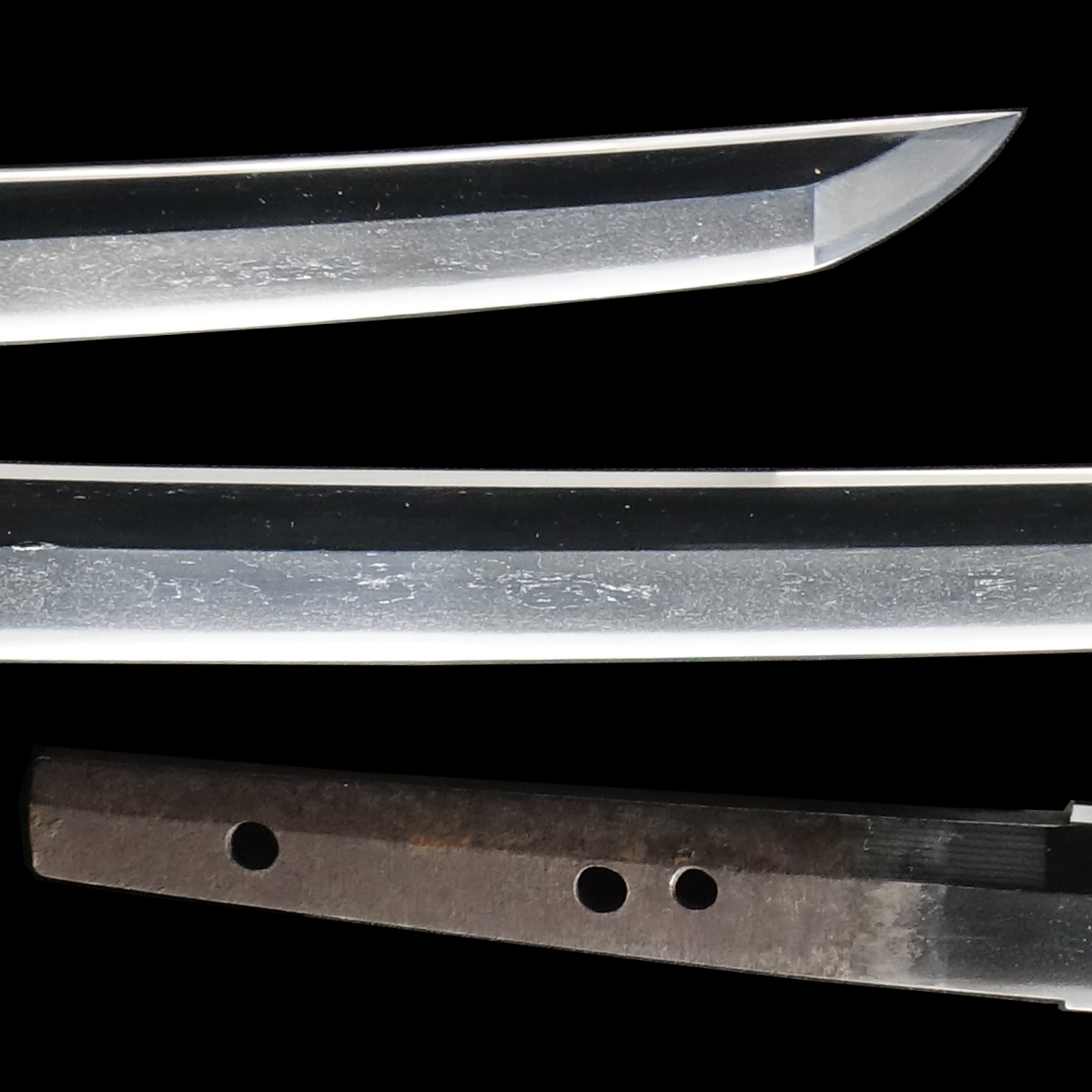
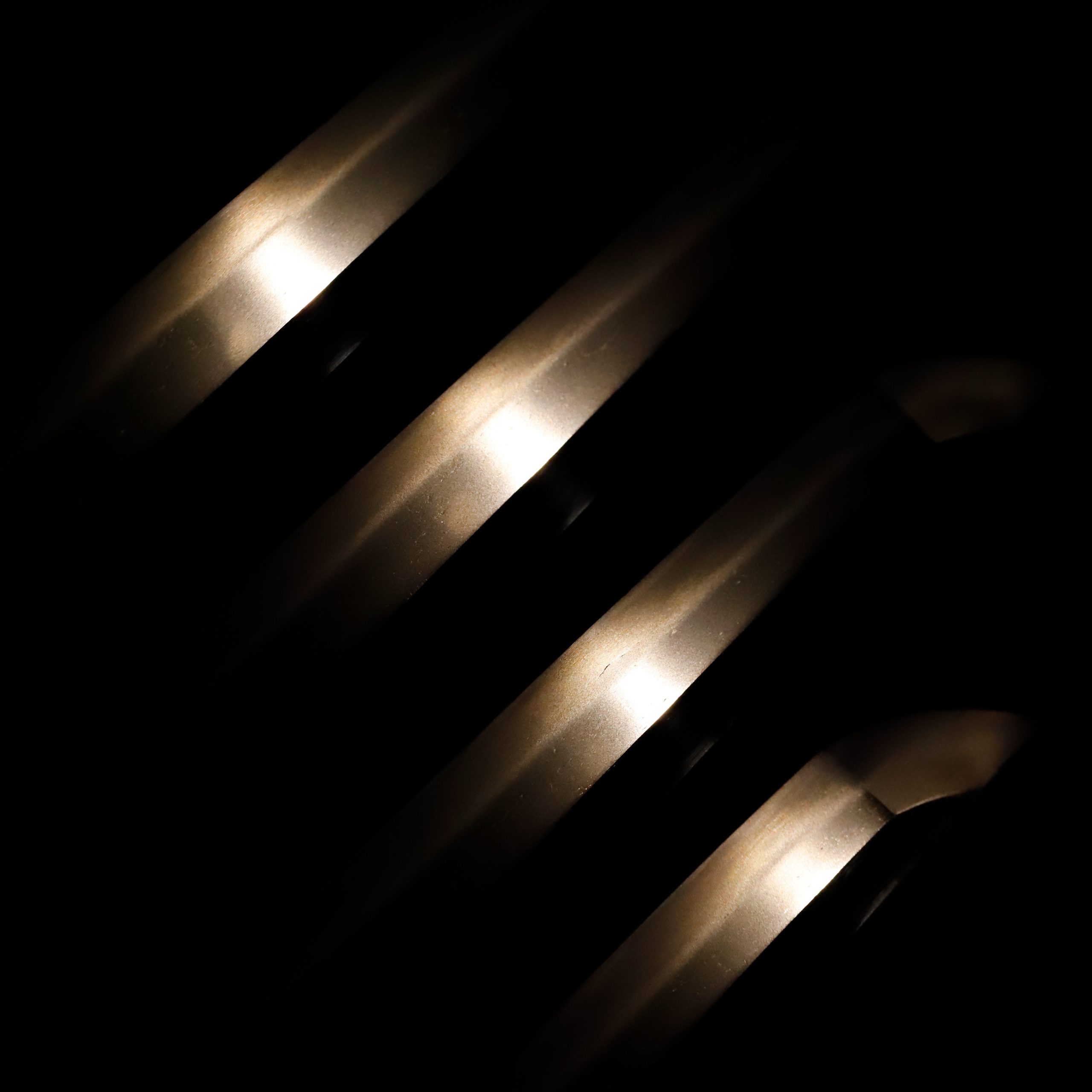
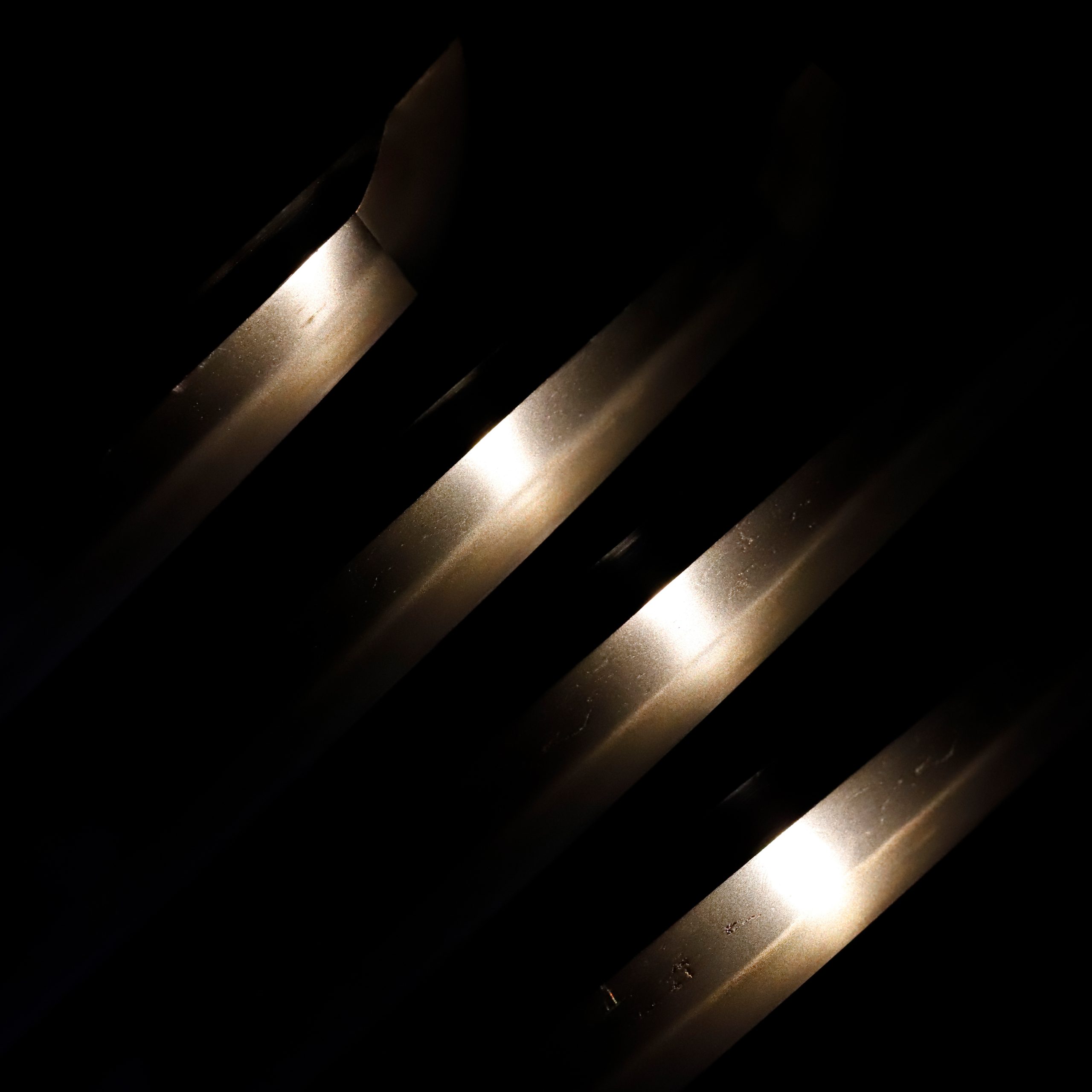
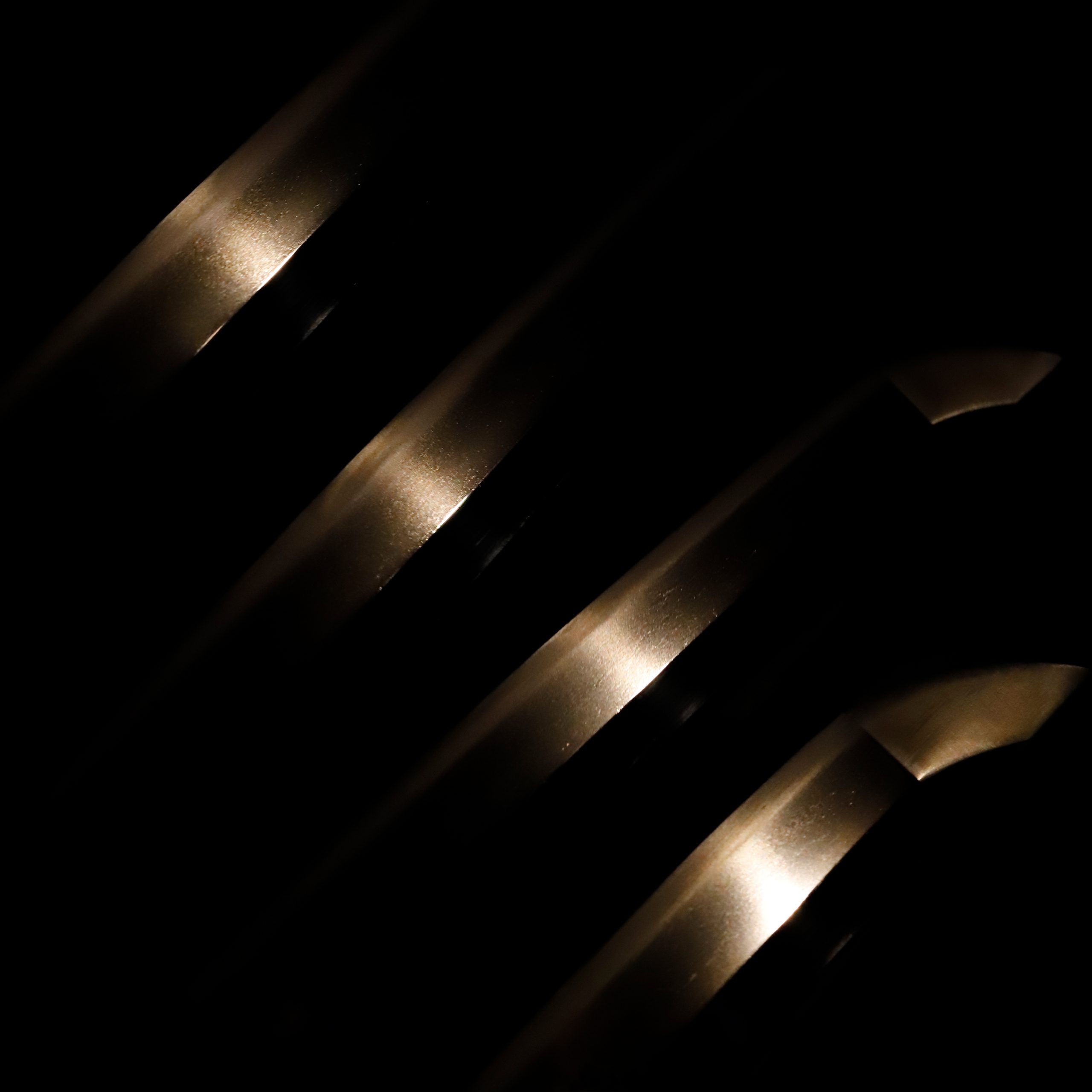
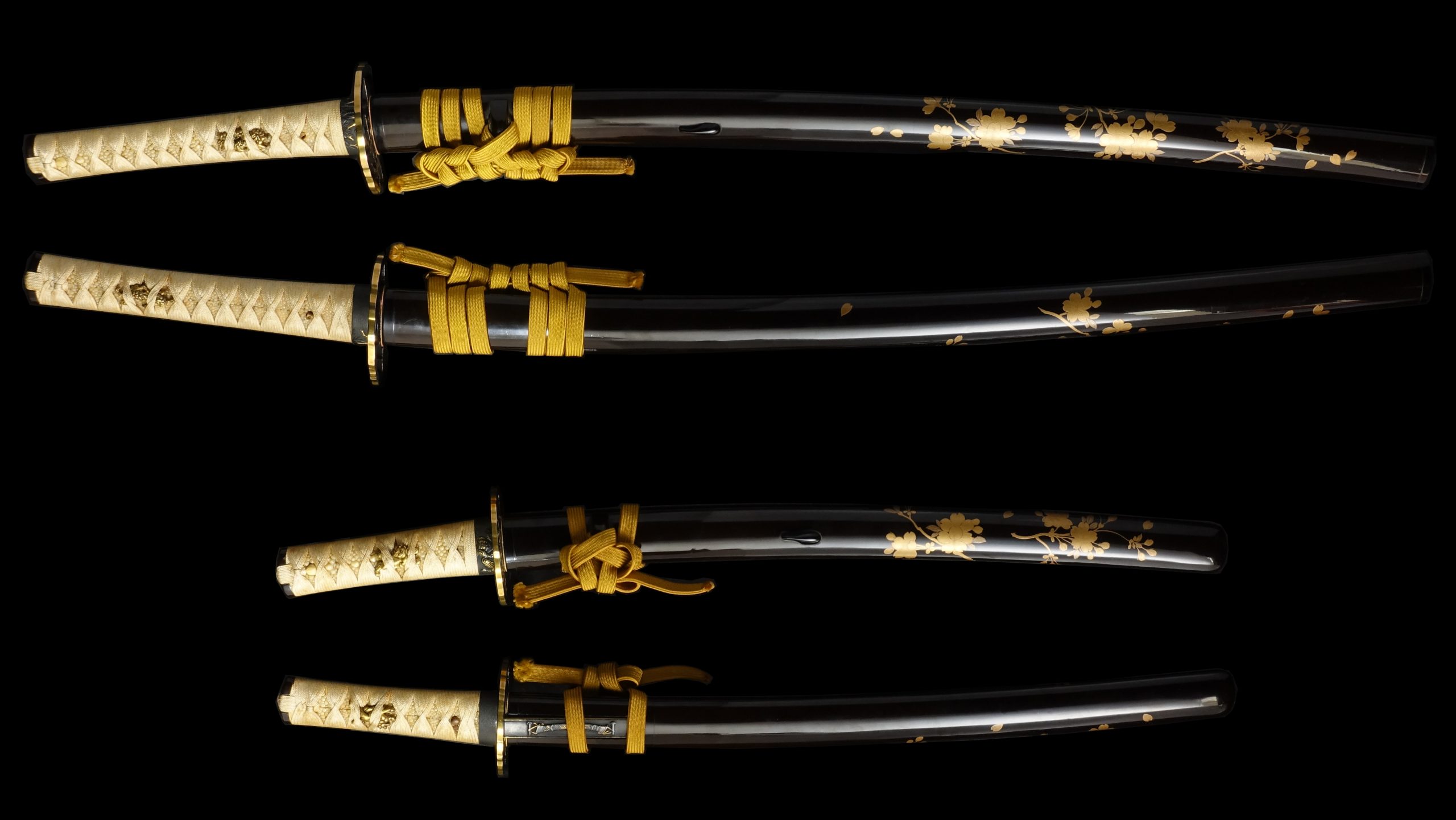
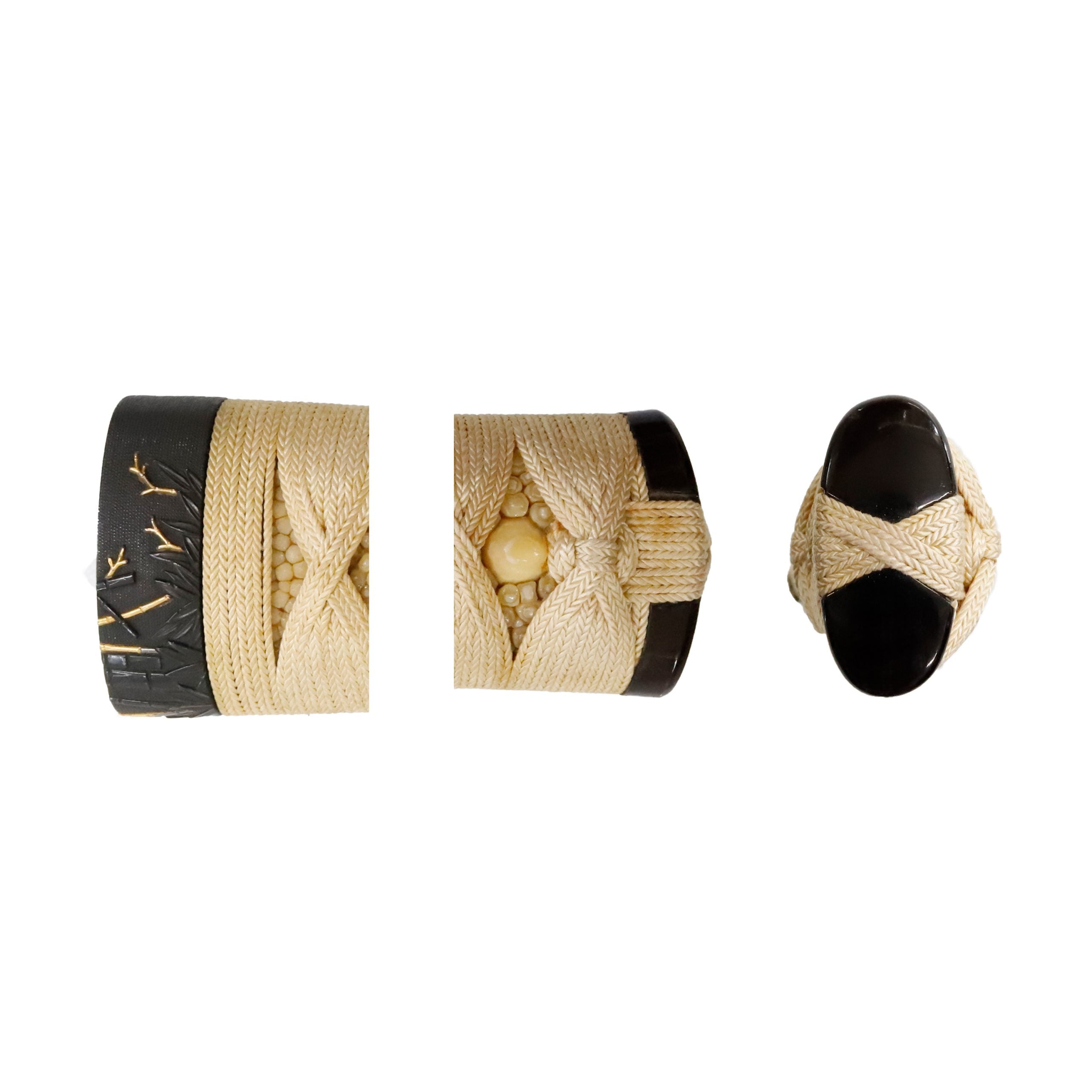
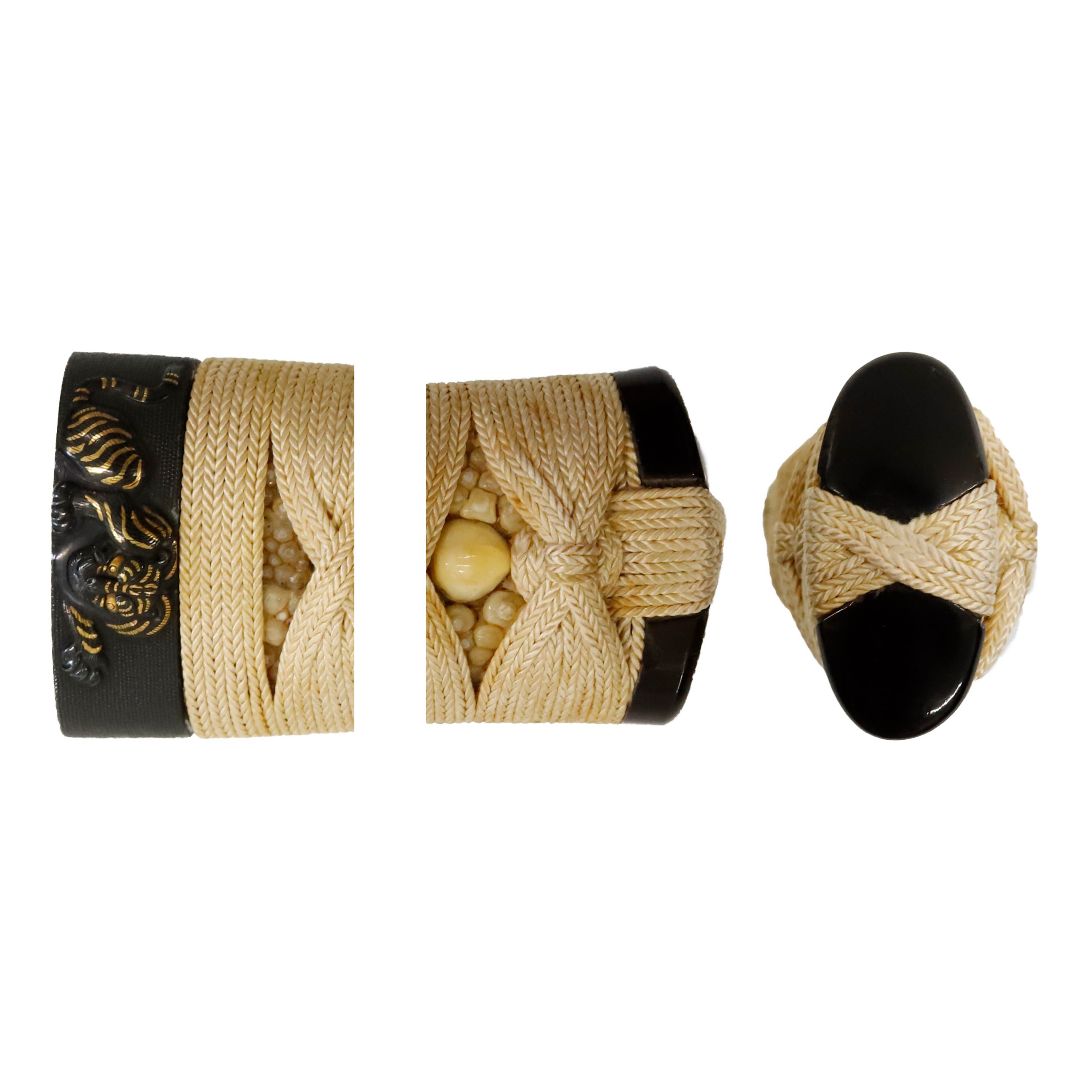
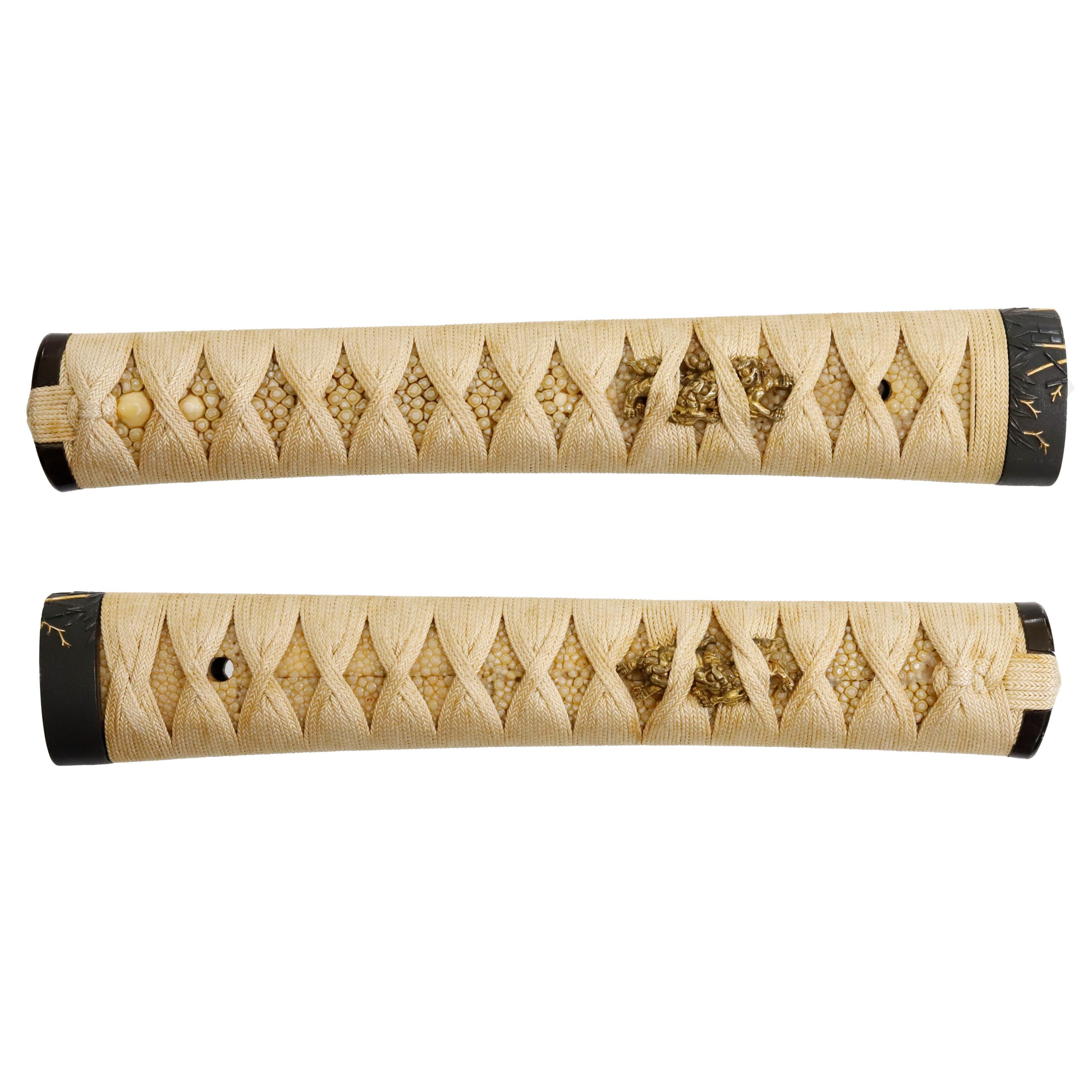
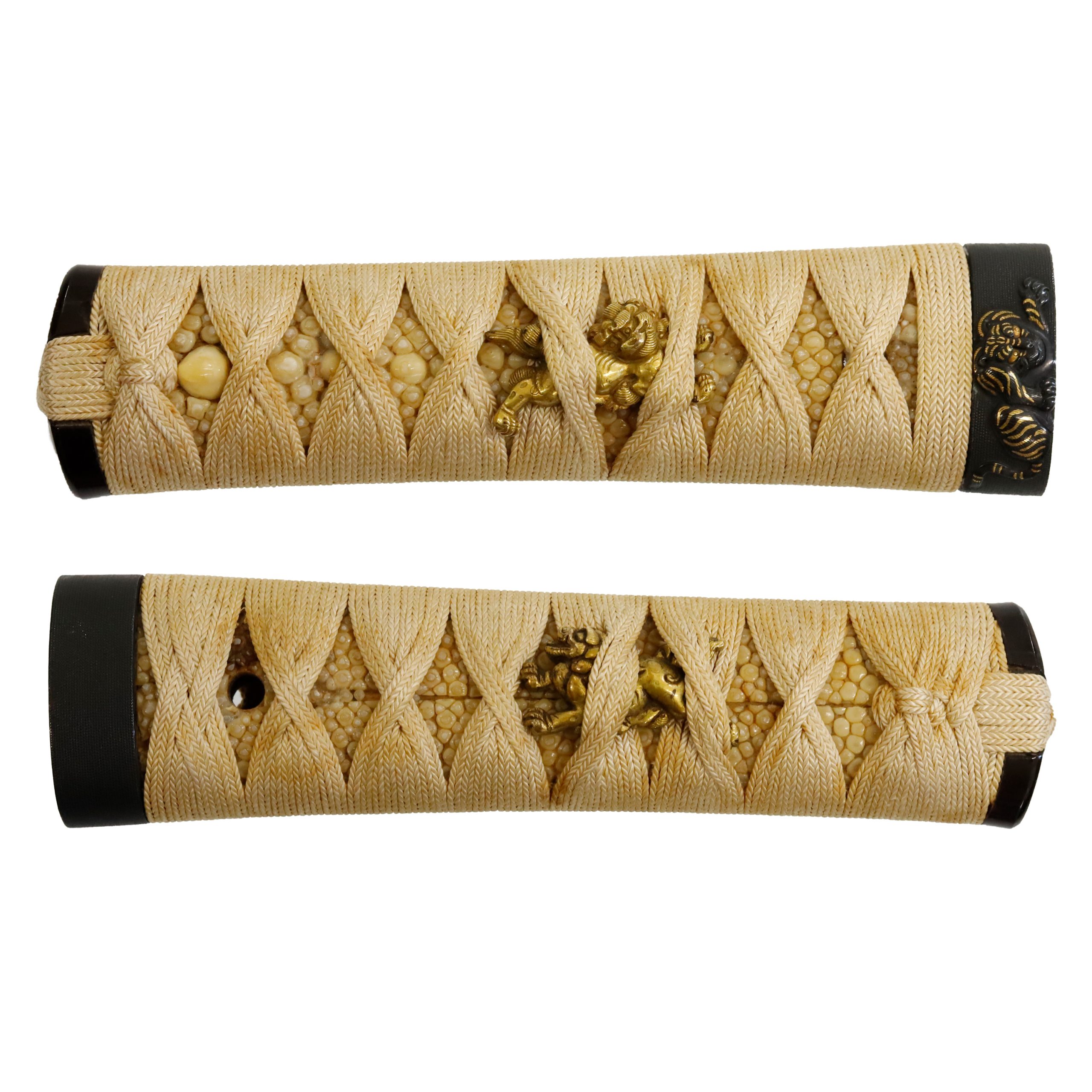
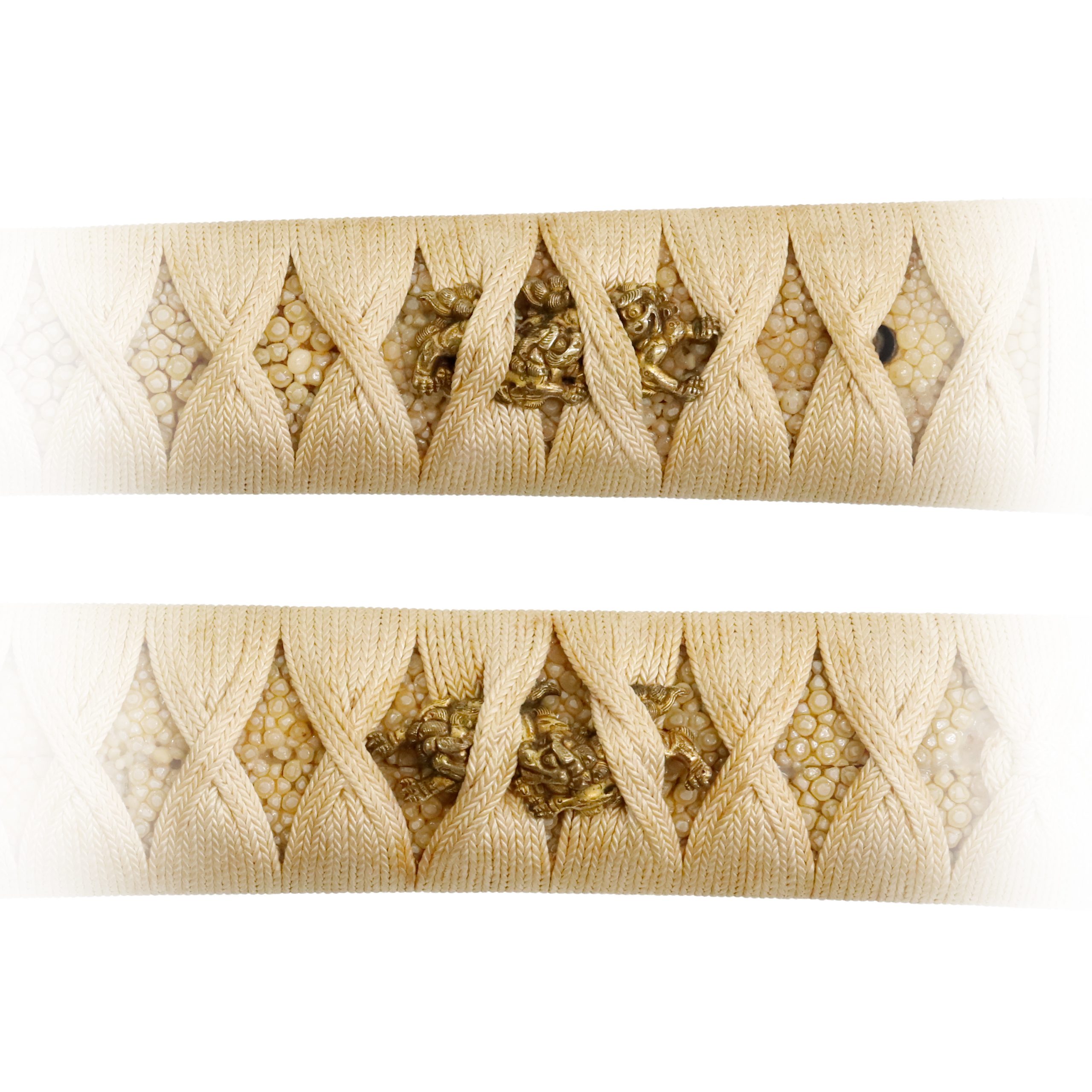
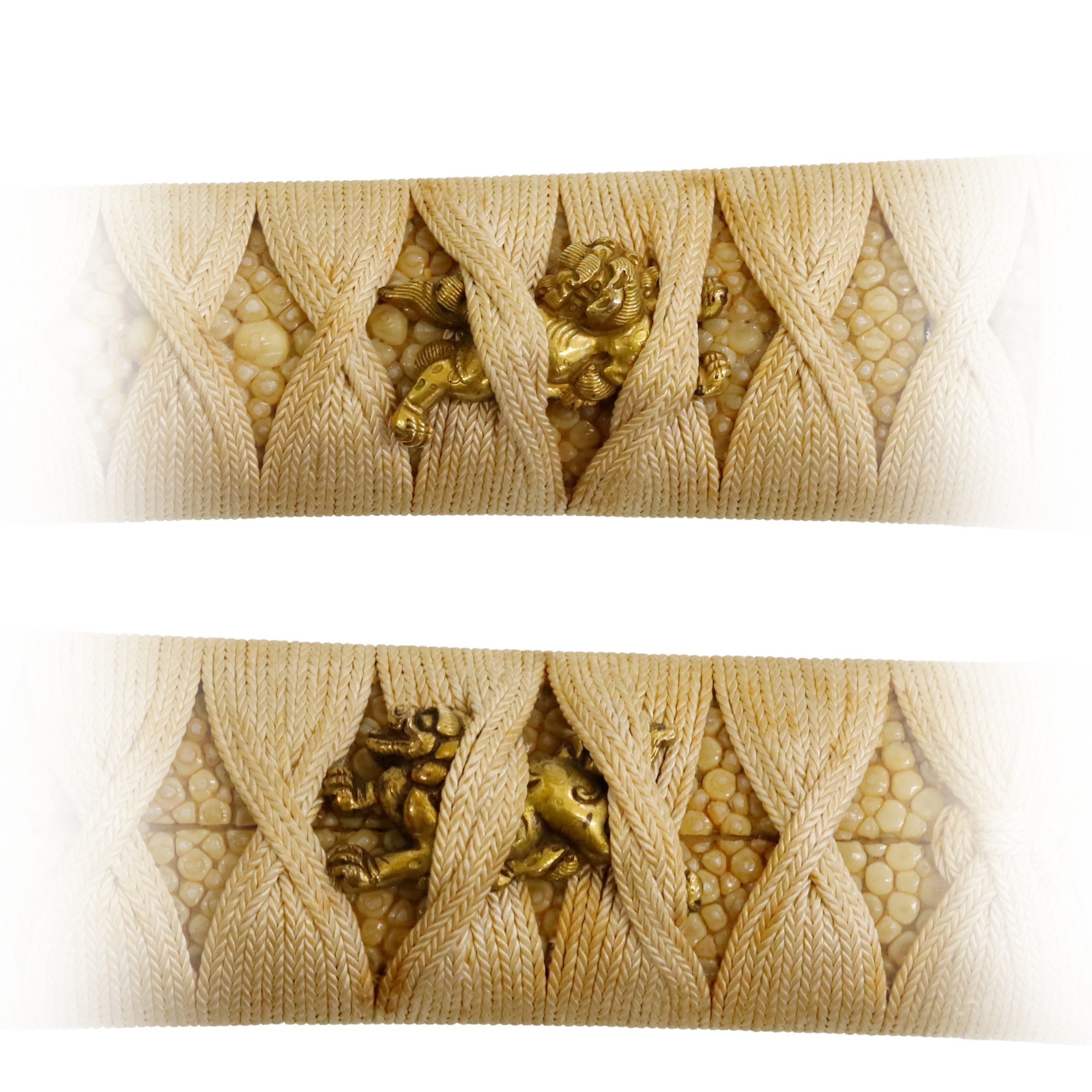
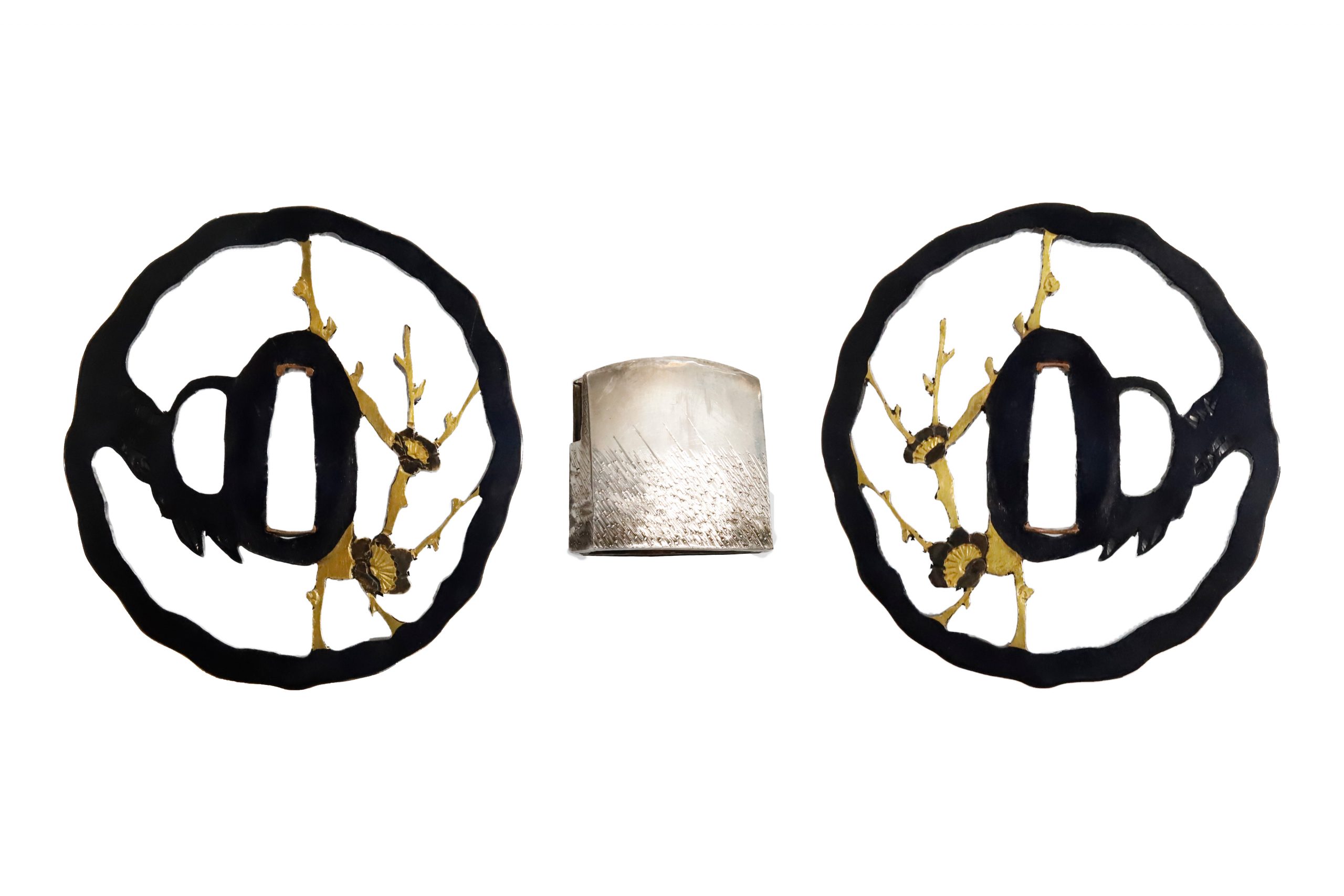
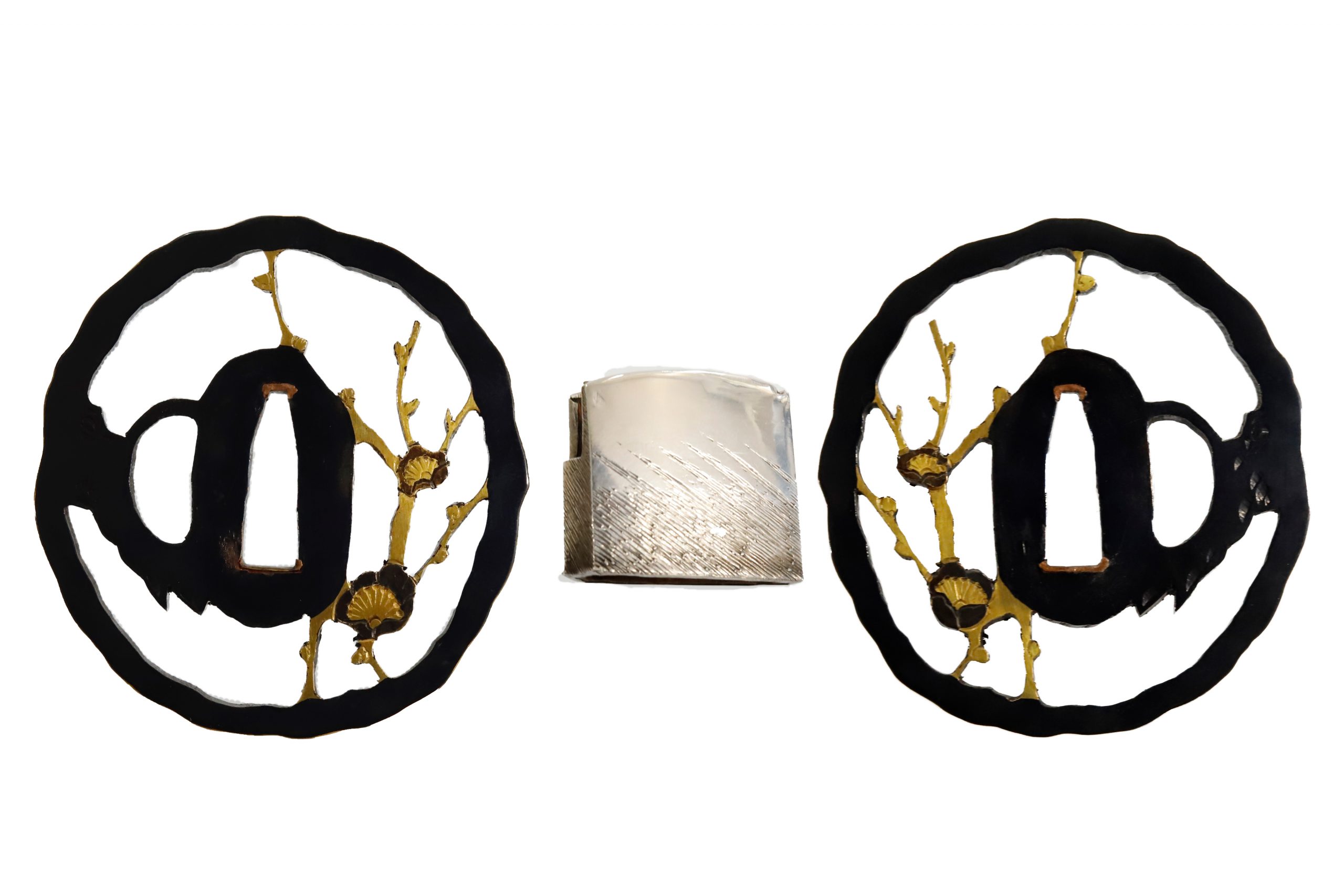
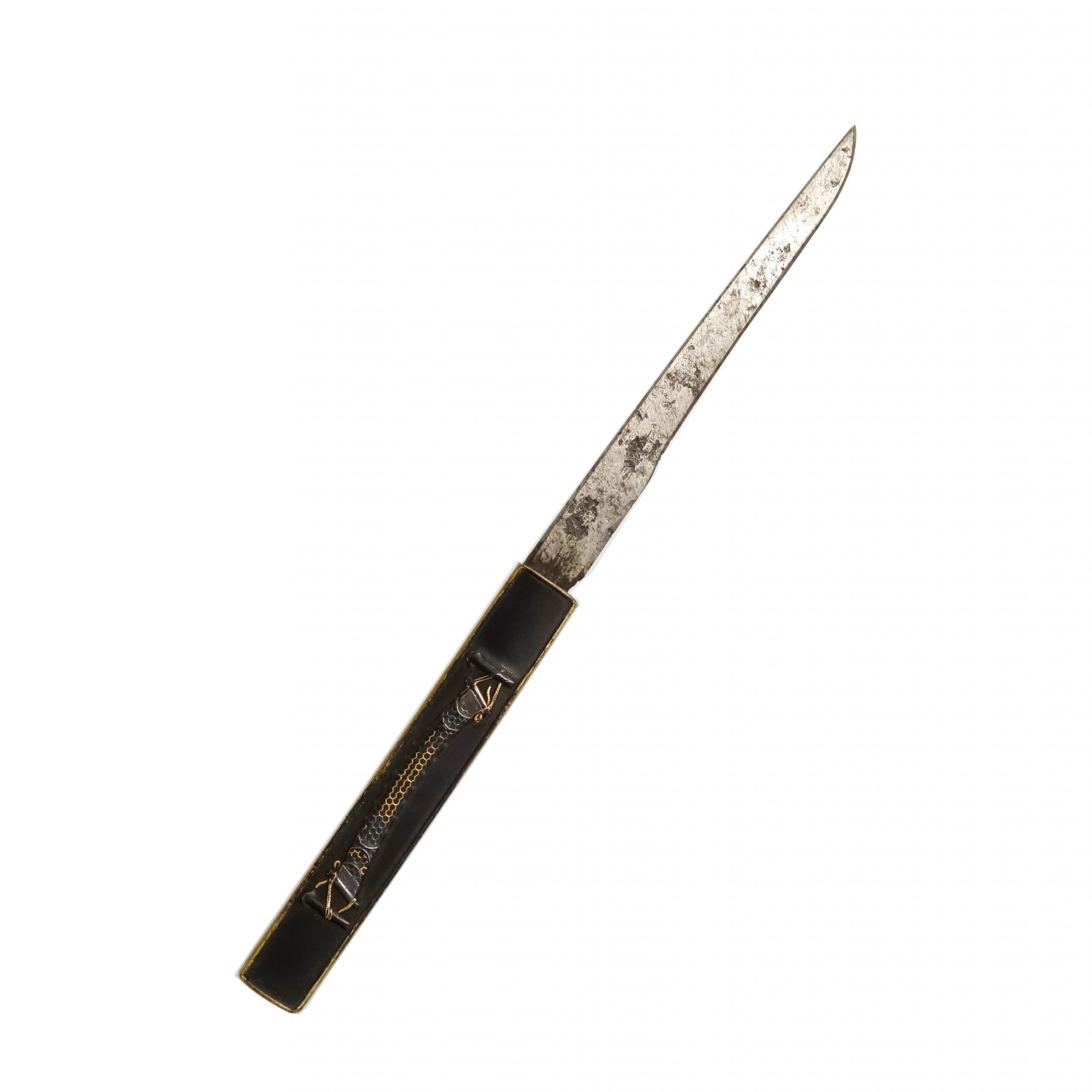
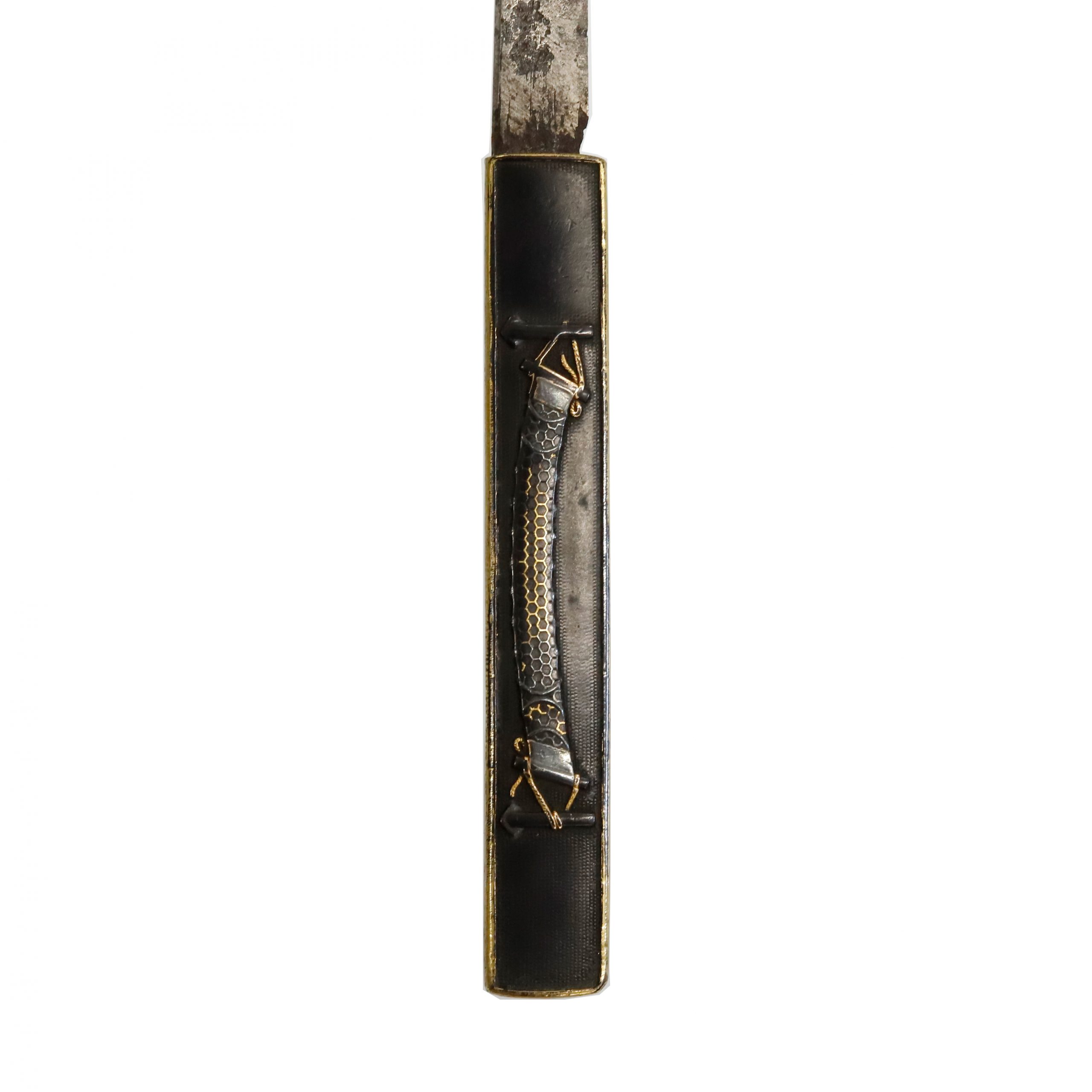
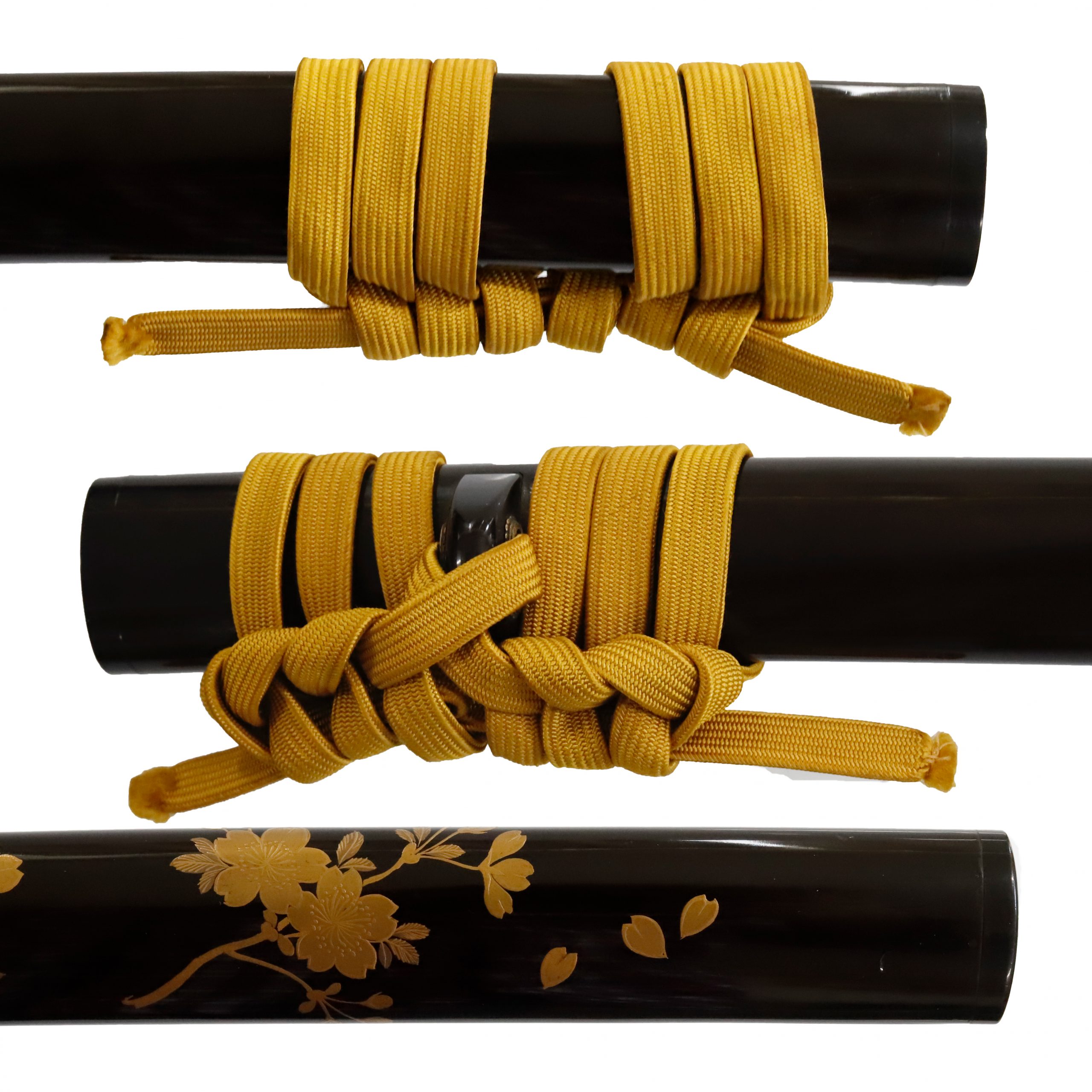
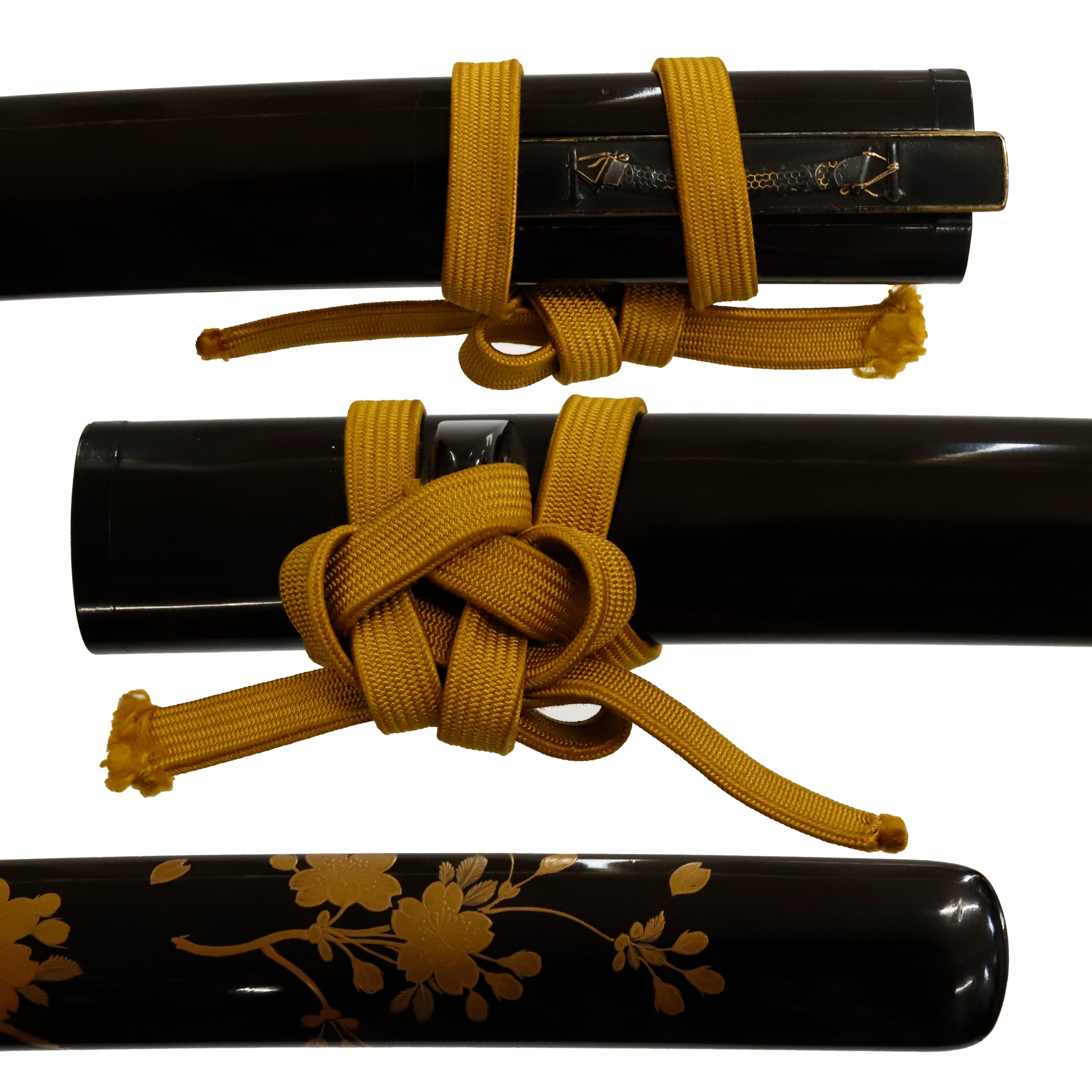
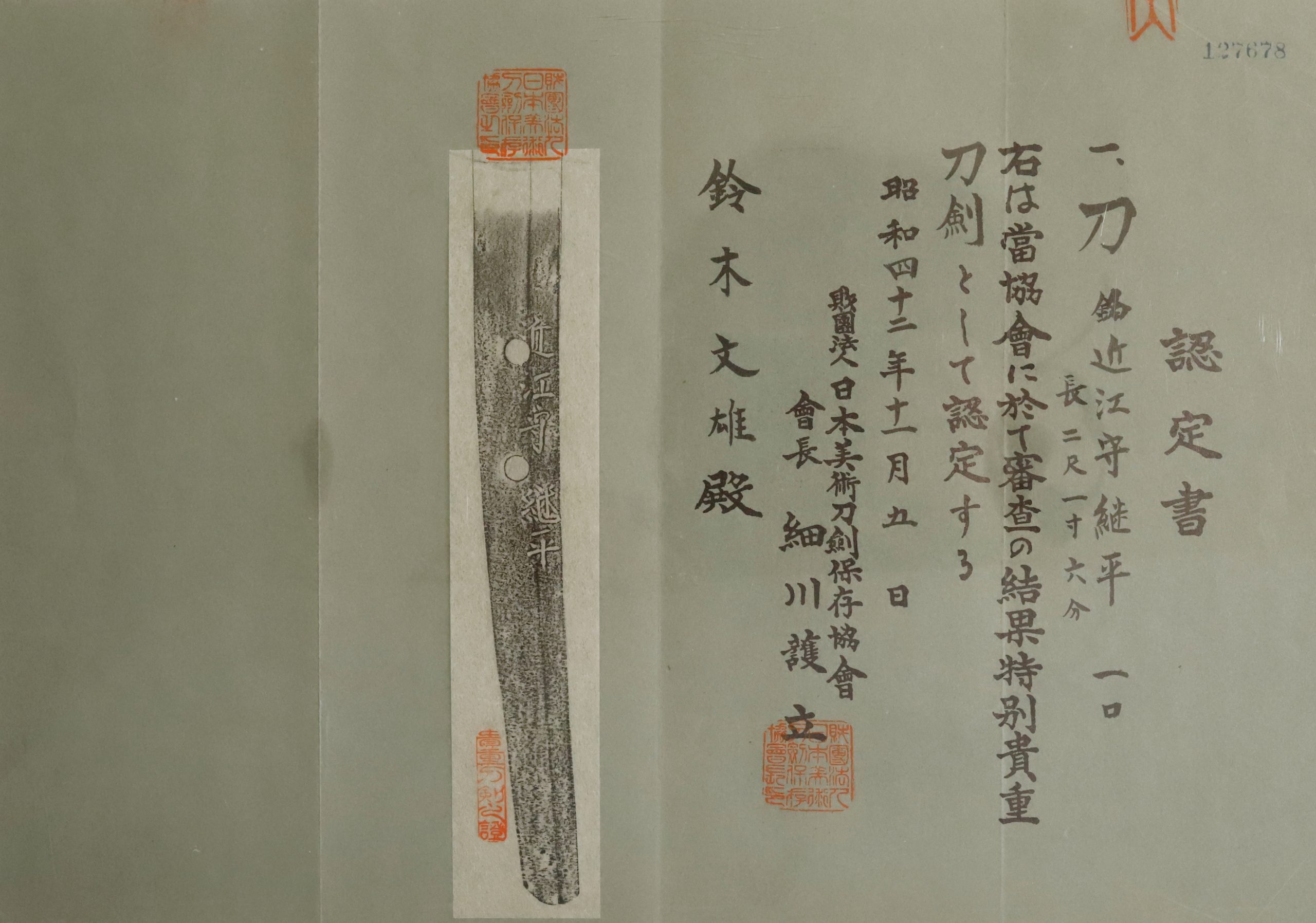
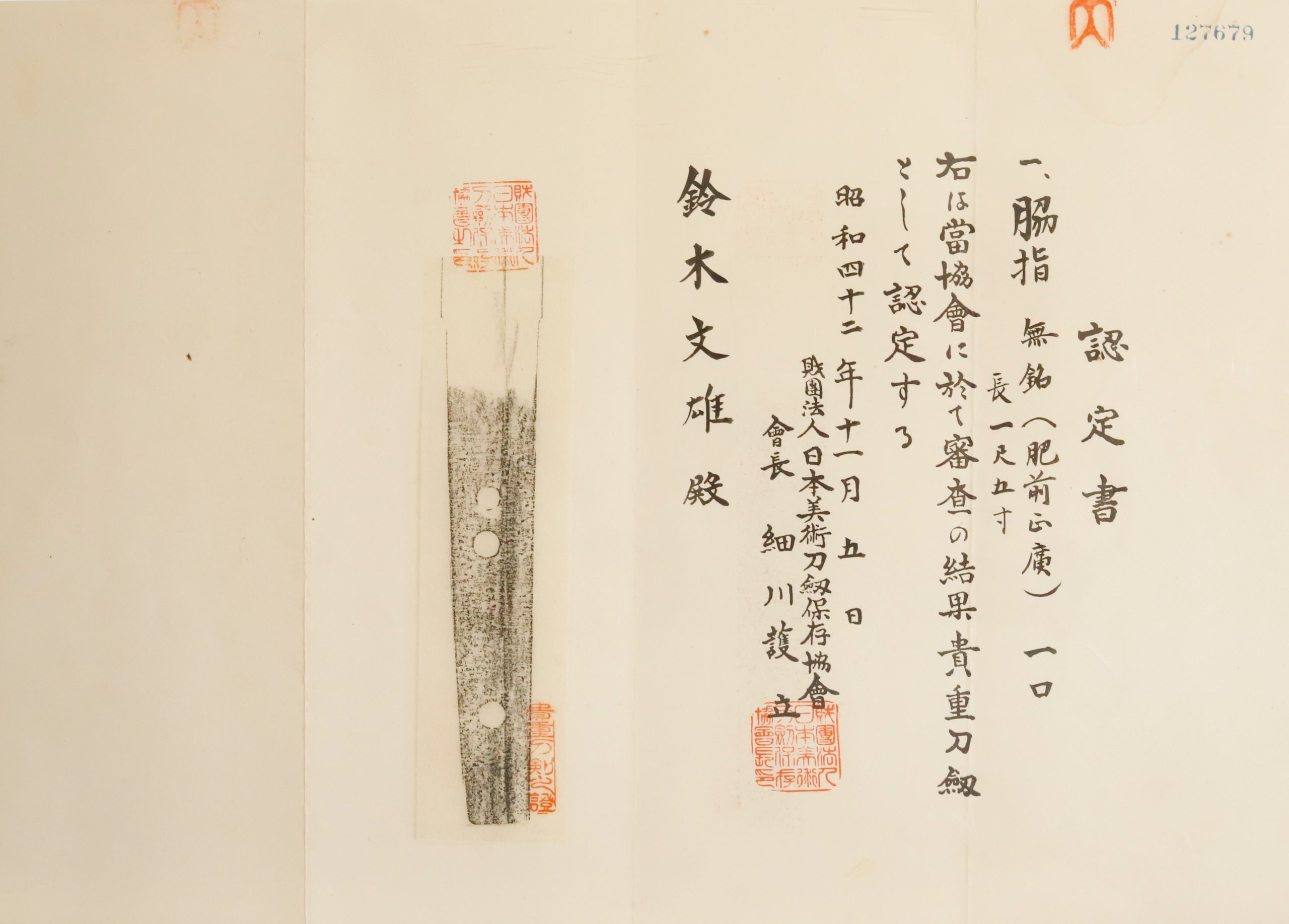
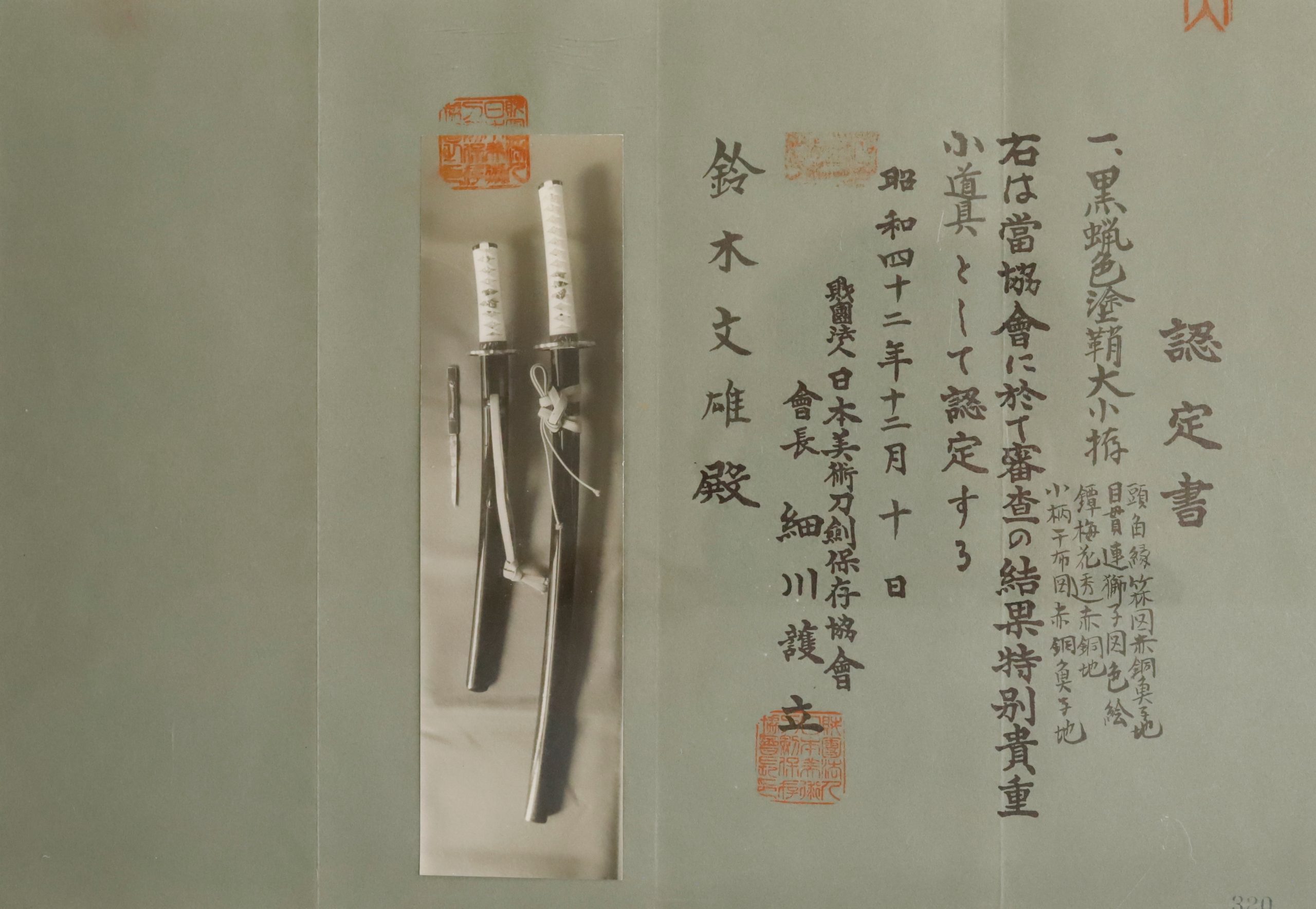
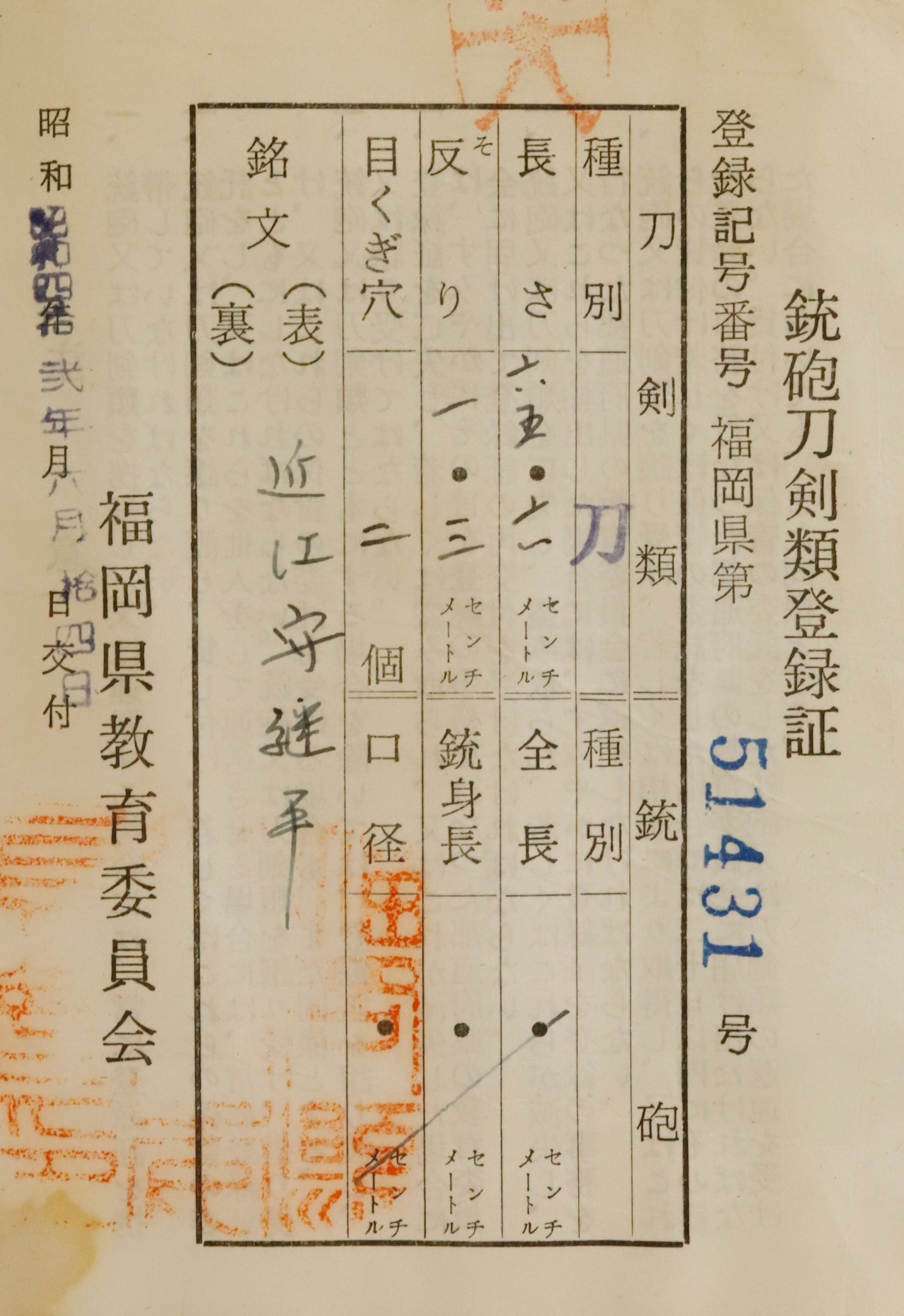
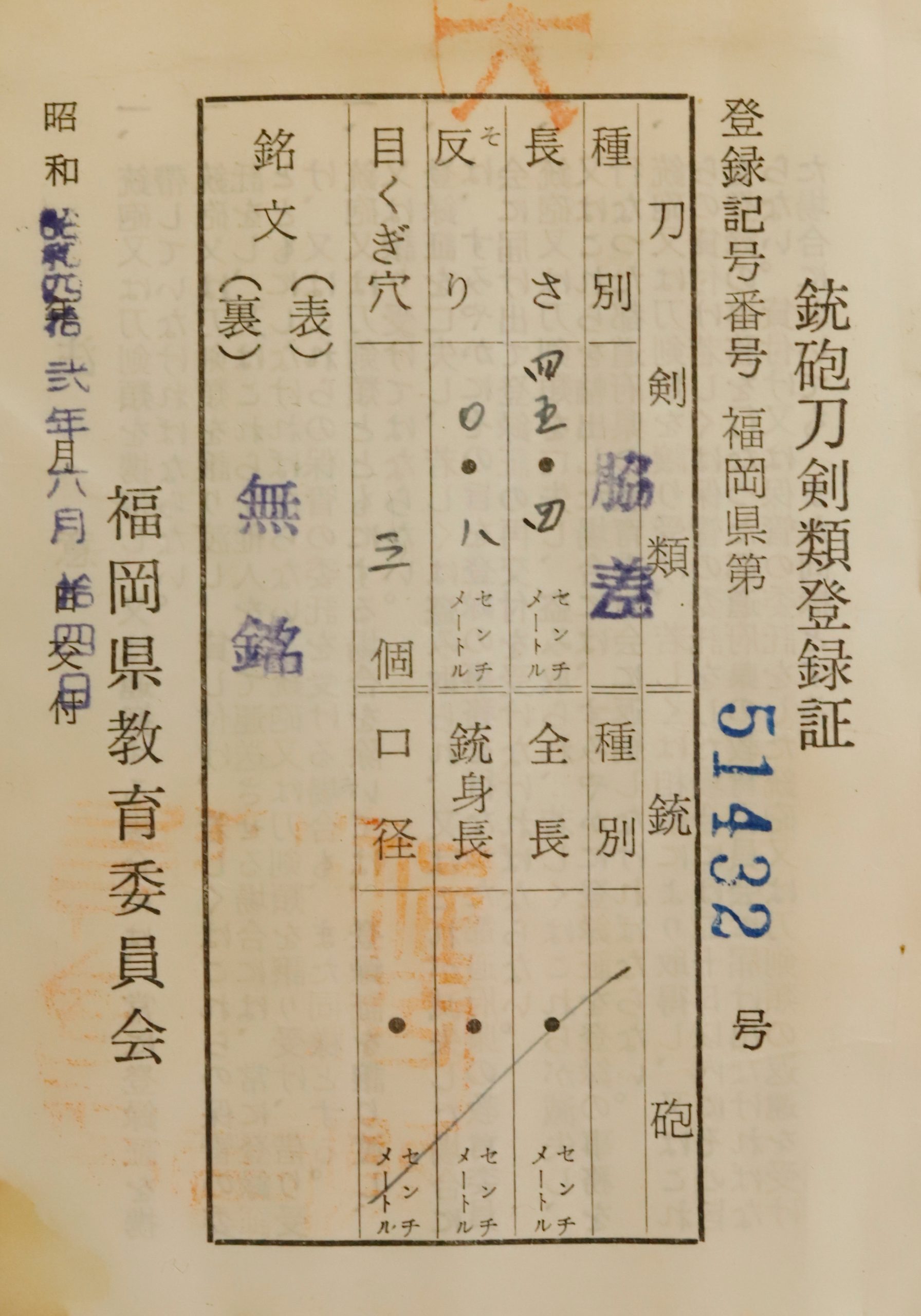
Katana signed by Tsuguhira The first-gen Omi no Kami Fujiwara Tsuguhira(近江守藤原継平) is an apprentice of the second-gen Yasutsugu(康継). The first-gen, Yasutusu, was one of the most famous swordsmiths in Echizen province during the early Edo Period(early 17th century). The master Yasutsu’s metalwork technique was so great that Shogun Ieyasu Tokugawa allowed him to engrave Mitsuba Aoi(a family crest of the Tokugawa) on his forged blades. The first-gen Tsuguhira lived in Echizen Province(today’s Fukui prefecture) first and then moved to Edo city with his master. The sword maker’s name Tsuguhira lasted 6th generations, and we believe this blade was forged by the second-gen Tsuguhira based on how he signed the blade. The second-gen Tsuguhira learned great sword forging techniques from his father. He forged swords during the mid Edo period,(Early 18th century) It is a rare item because there aren’t many remaining work created by the second-gen Tsuguhira today. The second-gen Tsuguhira us famous for having written a book called “Tsuguhira Oshigata,” where he hand-traced swords stored and inherited among Tokugawa shogun family for generations. He was allowed by the eighth Shogun Tokugawa Yoshimune to publish this book. This fact indicates that the second-gen Tsuguhira was a reputable swordsmith trusted by Tokugawa Shogunate family. Echizen Province, this swordsmith’s origin, was famous for forging razor-sharp, practically-designed swords. The Edo government, run by Tokugawa clan, ordered many blades from the swordsmiths in this province during the Edo period(1603-1868). Some swordsmiths moved from Echizen to Edo city because of Shogun’s request. Wakizashi Unsigned Masahiro This Wakizashi is attributed to Hizen Masahiro while there is no remaining signature on the tang. Masahiro is a renowned swordsmith from Hizen province. (today’s Saga prefecture). The smith name “Masahiro” lasted six generations and NBHTK doesn’t specify which Masahiro forged this blade. The first-gen, Masahiro, was the grandson of Tadayoshi, the founder of Tadayoshi school in Hizen province. At the beginning of his career, Masahiro signed as Masanaga and then changed it to Masahiro in 1625 A.D(the second year of Kanei). He was especially highly regarded among the Nabeshima clan, a powerful feudal family in Hizen province. Nabeshima Katsushige is the one who ordered Masahiro to change his maker’s name. Masahiro was selected as Okakae Kaji for Nabeshima clan, meaning he was exclusively forging swords for the feudal family. It was quite honorable for any swordsmiths to be an Okakae Kaji. It is said that Masahiro’s forging technique was so great that he sometimes forged swords on behalf of Tadayoshi. The swords forged in Hizen province are known as Hizen To, famous for their beautiful Jigane (The steel of a constructed blade). You can see a beautiful example of Hizen To from this wakizashi. What is Daisho? Daisho is a pair of two Japanese swords Samurai carried. During the Edo period, having Daisho in public places was considered social status for Samurai. Furthermore, Samurai were required to wear them under the law back then. Daisho is written as 大=Big and 小=Small. Dai part means Katana, and Sho part means Wakizashi. While different swordsmiths forged these two swords, they come with a pair of Daisho Koshirae(sword mountings). Koshirae also got appraised by NBTHK. That means Samurai back then carried these pair of Daisho. They have such a fancy appearance that we believe a high-ranked Samurai owned them. And based on the style of the sword mounitngs, they are categorized as DENCHU KOSHIRAE(Sword mountings for entering a castle), which is very formal style of the mountings. -Katana Jimon(Jihada) -Katana -Wakizashi Fuchi-Kashira The combination of bamboo forest and a tiger is a famous theme brought to Japan from the Continent. It is called Take-Tora Mon (竹虎文) in Japanese. The tiger is a brave animal. According to a theory, people considered the tiger pattern would protect people from evil spirits. Therefore, its pattern has been treated as a talisman. The tiger design has also been regarded as the symbol of life activity when “tiger” is written by a Japanese Kanji character (漢字, a kind of Japanese letter) based on its meaning. It is said people wished boys’ healthy growth by using the tiger pattern. As bamboo keeps its green color throughout the years by withstanding severe cold and heat, this plant pattern represents eternity and longevity. Tsuka and Menuki The Karajishi (唐獅子) is the motif of these Menukis. The gold is applied on their bodies so that the color combination of Fuchi Kashira’s black, Tsuka-Maki thread’ white, and Menuki’s gold makes noble impressions for these swords’ appearances. Shishi (獅子) means a lion in Japanese, and Karajishi is a lion brought from China to Japan in the Toh period (唐, Tang dynasty, 618-907). The Karajishi typically has curly hair for its head, neck, body, and the tale. In Buddhism, Karajishi is regarded as a symbol of wisdom, and Monju Bosatu (文殊菩薩, Manjushri Bodhisattva) rides lions. According to a theory, the Karajishi is the origin of Komainu (狛犬, stone guardian dogs that exorcize evil spirits). Tsuba and Habaki Japanese apricot blossoms are engraved for these Tsubas. Its branches, buds, pistils, and stamens are colored with gold. This flower begins to bloom in winter that snow covers its tree so that this flower tells the arrival of spring. It has been appreciated for a long time ago in Japan. People enjoy its adorable petal shape and scent, gracefully branched tree, and compose many poems. As it comes out in the cold season, it symbolizes the power of perseverance and vitality. Saya Cherry blossoms are designed for these Sayas with the Makie technique. Makie is a typical Japanese lacquer art technique developed uniquely in Japan for about 1200 years. Firstly, it needs to draw a picture with lacquer on the surface with a thin brush. Next, sprinkle the gold powder from above to show the pattern before the lacquer hardens. This technique makes a gorgeous and elegant look to works. This flower is one of the seasonal things of spring, and it has been loved for a long time. Some people believed that the god of grain exists in cherry blossom. Therefore, this flower pattern has been treated as the symbol of a rich harvest. People held a traditional custom under cherry blossom trees to pray for a bumper year in ancient times. According to a theory, it is the origin of the cherry-blossom viewing picnic today. Authentication Paper They authenticated these blades on Nov 5th in the 42th year of Showa (1967). They appraised Katana as Tokubetsu Kicho Token, and Wakizashi as Kicho Token. The sword mountings for these swords were also appraised by NBTHK as Tokubetsu Kicho Kodogu in 1967.
Offered by Samurai Museum
This piece has sold
37 on the market
Get an email when a new Shimosaka Tsuguhira piece hits the market.

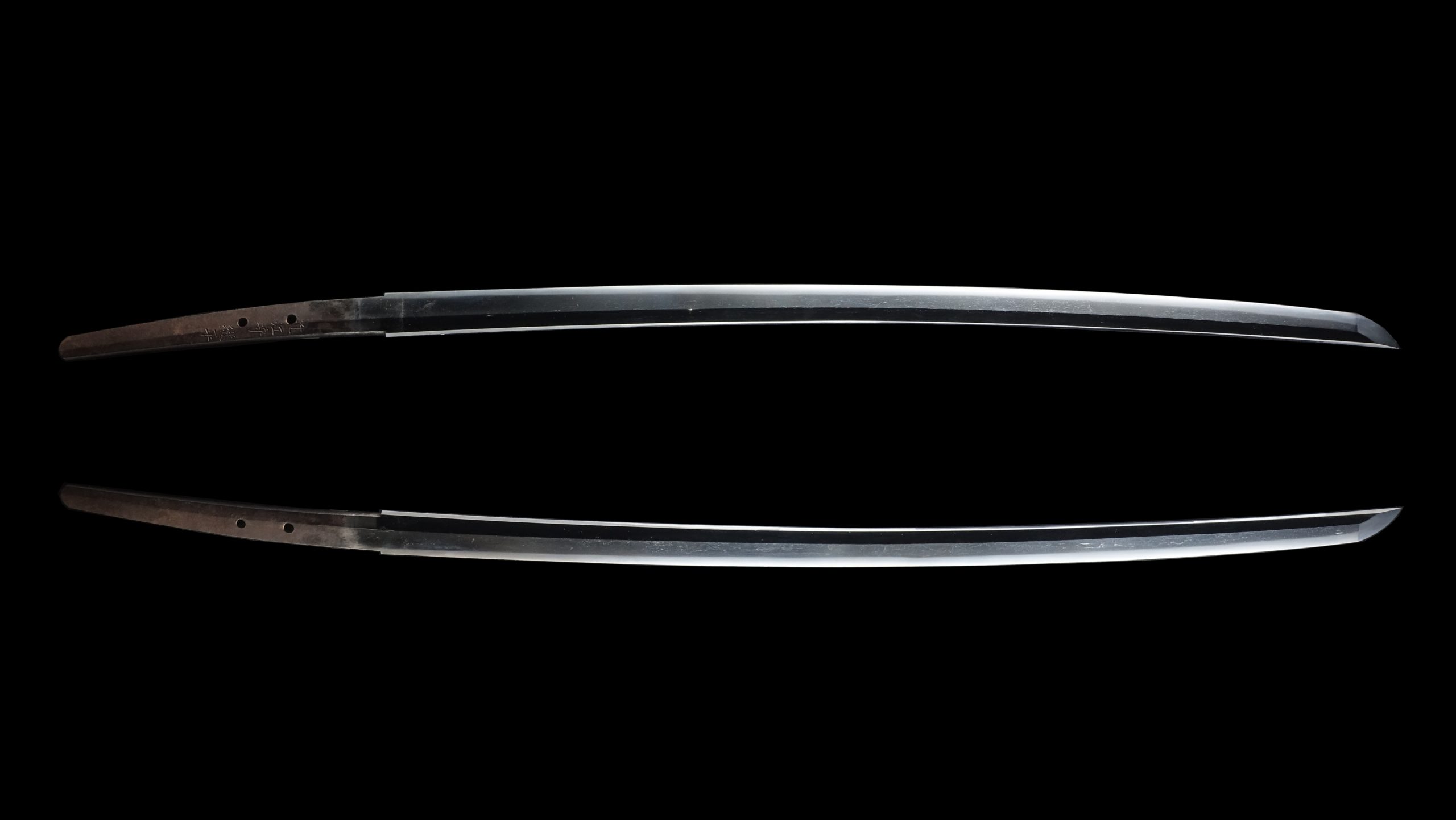
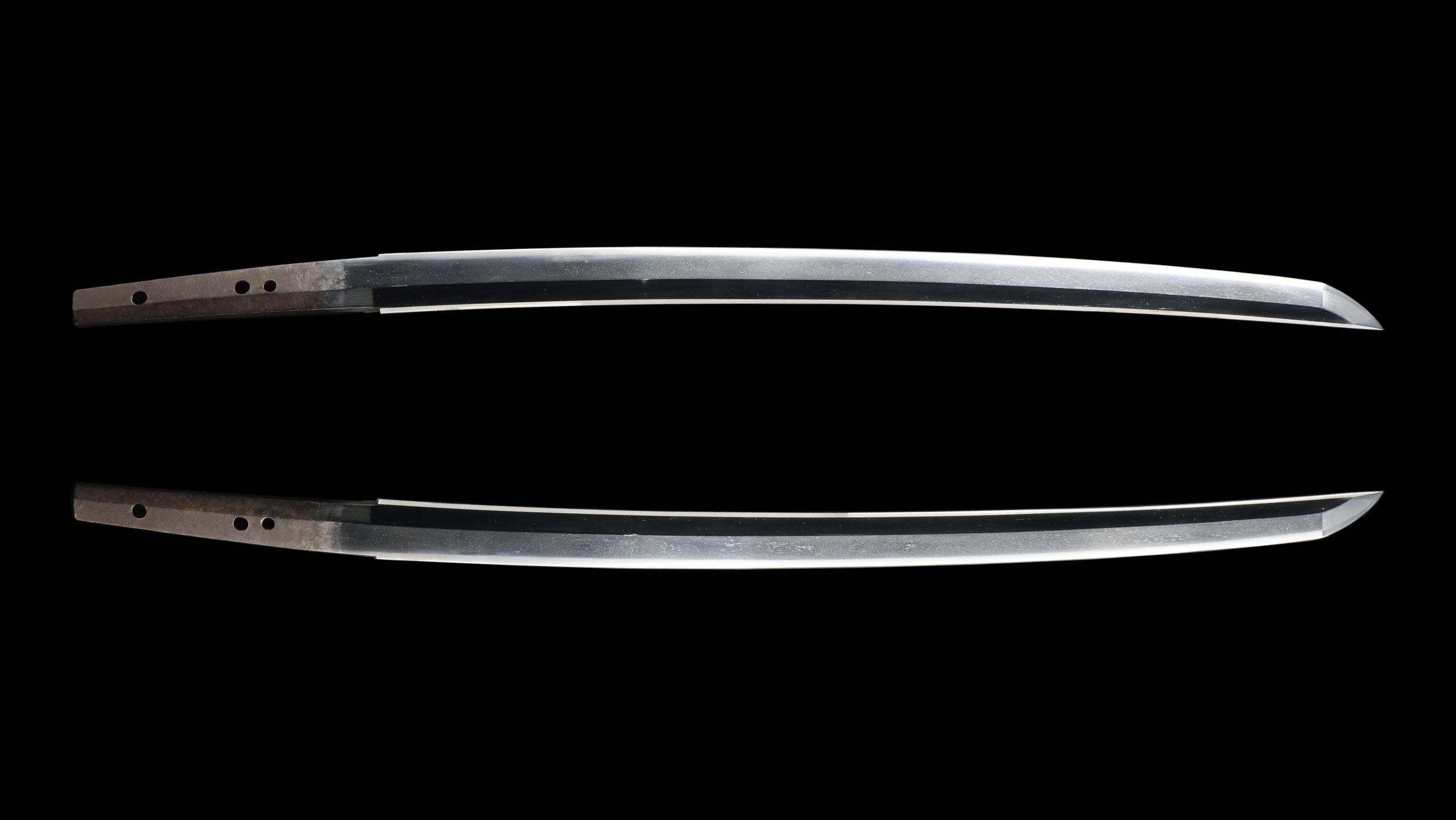
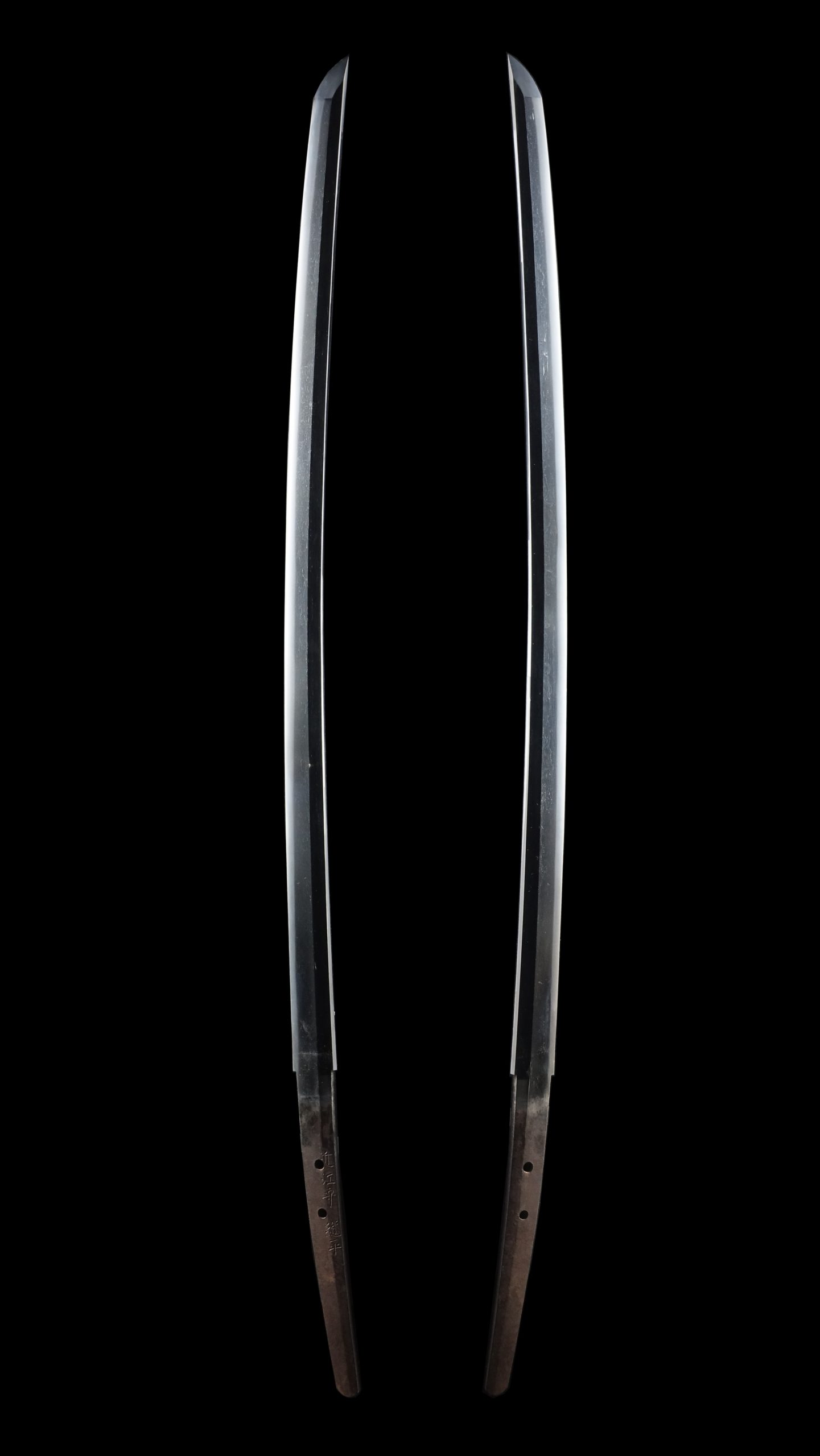
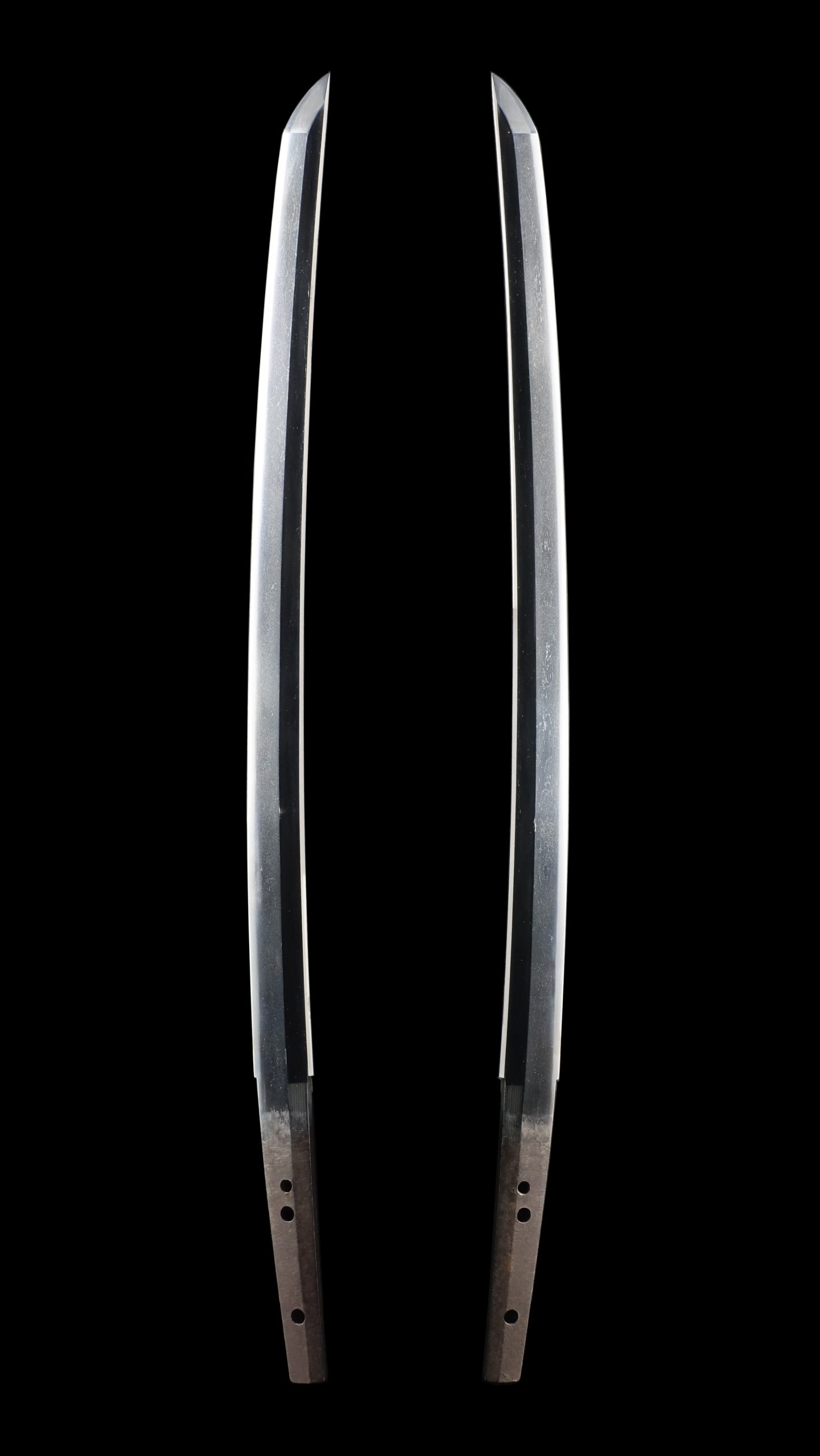
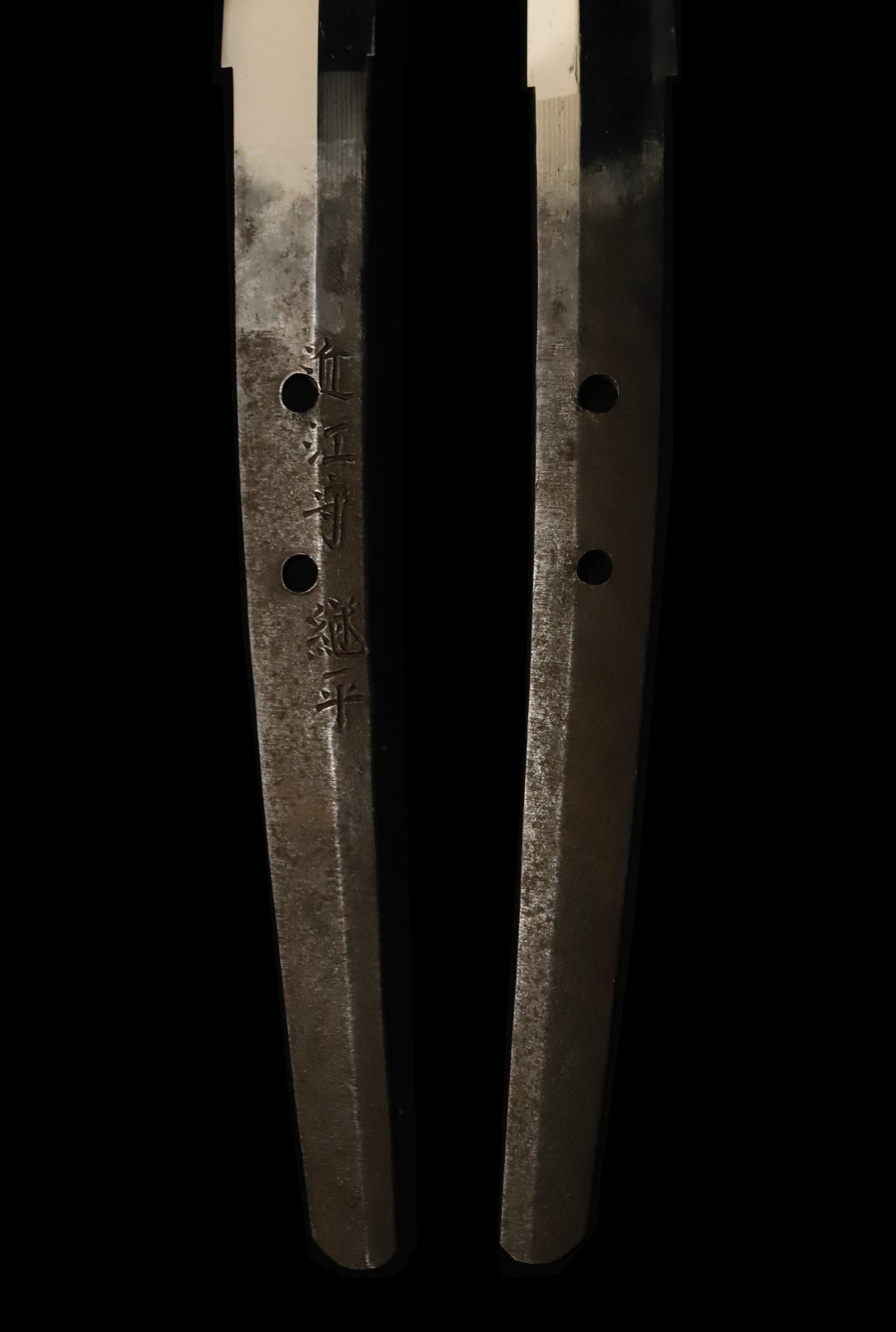
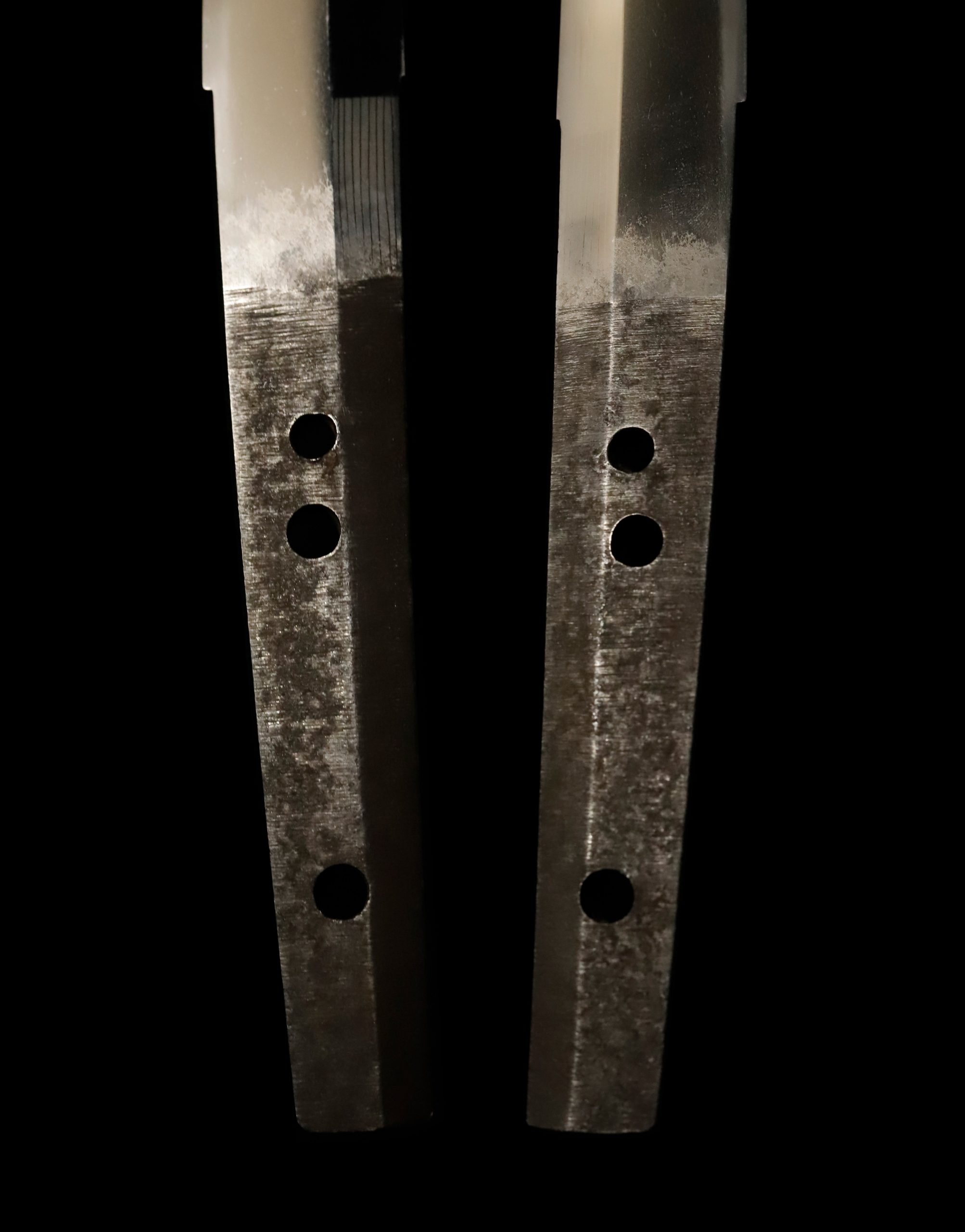
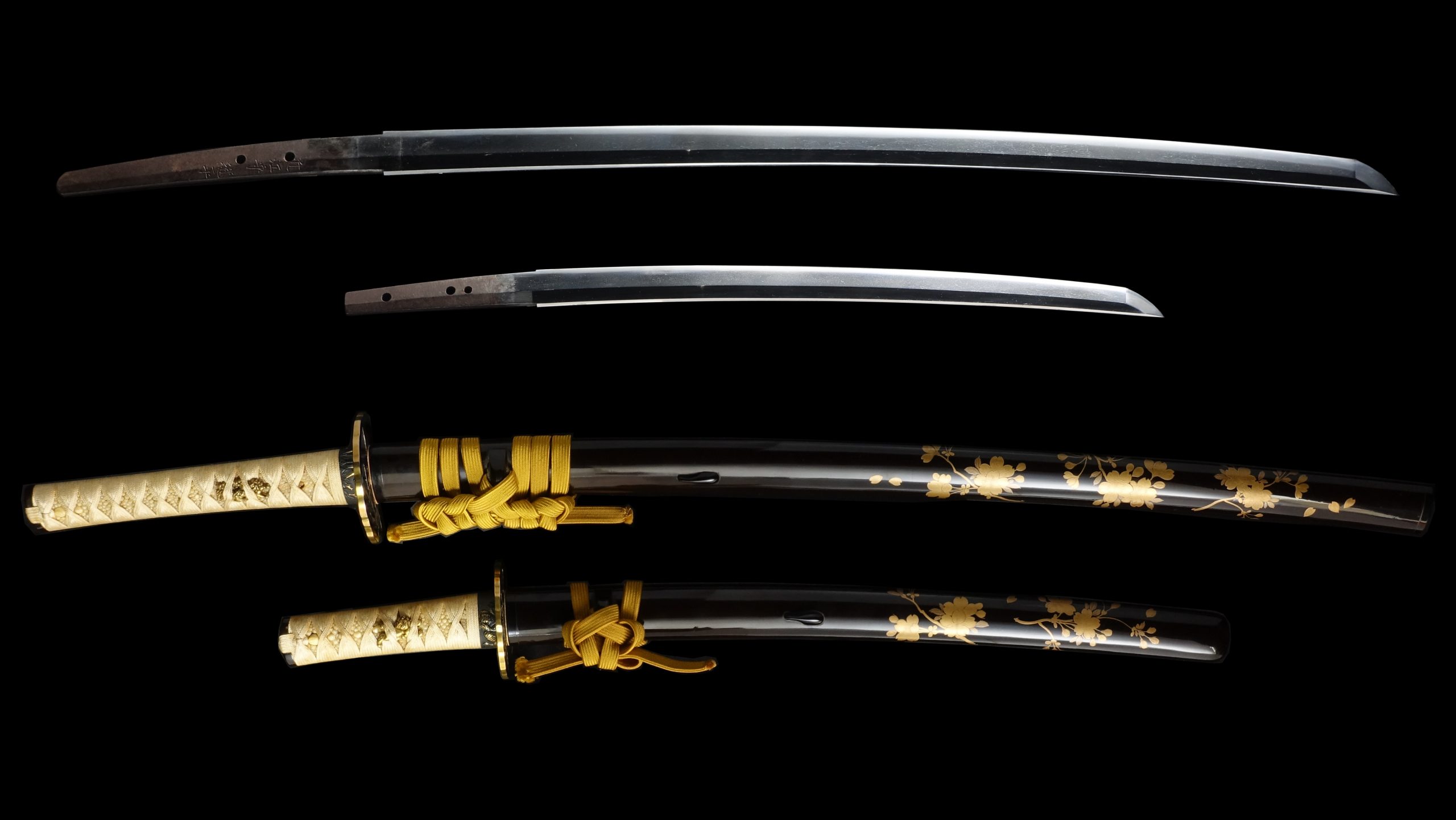
Shinto · Musashi · around 1661-1673
Fujishiro Jo saku · Tōken Taikan top 49%
Where Tsuguhira stands among comparable artisans: across all of nihontō, and within tradition, era, and period. The tiers (Foremost · Leading · Major · Notable) weigh official designations from the NBTHK and Japan's Agency for Cultural Affairs, together with historical honors of lasting repute such as the Sansaku and Meibutsu-chō.
Select a lens to see how it's measured.
Shinto · Echizen
37 pieces on the market now
The Shimosaka name began not as a single hand but as a trademark shared by a band of Echizen smiths at the dawn of the shinto era, and the designated record gathers their work under that one signature rather than parsing it into individuals. The published sources read the early inscriptions, the generic Echizen no Kuni Shimosaka and the titled Higo Daijo Fujiwara Shimosaka, as the product of a group, of which the first-generation Yasutsugu served as the representative. Born in Shimosaka village of Sakata district in Omi, Yasutsugu moved to Echizen under the patronage of Yuki Hideyasu, signing in his early years Higo no Daijo Shimosaka before his Keicho 10 to 11 summons to Edo, where he forged before Ieyasu and Hidetada and received the character Yasu and the right to cut the Tokugawa hollyhock crest on his nakago. The titled signature was carried by several Echizen hands at once, and the texts list Yasutsugu, Sadakuni and Kanenori among the smiths whose chisel movement and brush intent are too alike to part on present evidence. From this band the Echizen Yasutsugu line descended, dividing after the second generation into the Edo and Echizen Shimosaka houses, and around it formed the deep relief carving the province made its own. The school is recognized first in its steel. The forging is itame mixed with mokume that stands and opens, often flowing into nagare, carrying thick ji-nie and fine chikei, the kane taking on the blackish cast the sources name outright as Echizen-gane; the same dark, standing jihada recurs from Yasutsugu through his son, through Sadatsugu, Shigetaka and the unnamed Shimosaka hands, and the commentary returns to it as the group's signature. Over it the hamon favors a suguha to chu-suguha or shallow notare into which linked gunome and ko-gunome mix, ko-ashi and yo entering, the nie thick and gathering unevenly into rough patches, kinsuji and sunagashi streaming through, the nioiguchi tending to a sinking shizumi.
The boshi is the steadiest tell, running to a ko-maru swept in hakikake and turning back long, with a Sanpin-flavored reminiscence of the Mishina and Echizen-Seki inheritance. Yet the house is not uniform: Sadakuni works an austere suguha over an unusually refined ji with little of the blackish mokume, Sadatsugu fires the brightest, most choji-laden midare of the circle, and the third generation cleans the forging and brightens the nioiguchi toward his Edo contemporaries. Binding the registers is the carving, the deep Echizen-bori and Kinai-bori of kurikara, Fudo Myoo, bonji and gomabashi set in relief within the hi, which Sadakuni may have first supplied to Yasutsugu's blades. For the collector the school rewards reading by register rather than by a single famous holding. Yasutsugu is its summit, rated Jo-jo saku, retained smith to the shogunal house, whose Sadamune and Toshiro copies (the Namazuo, the lost Oyako, the Shishi) show his own Echizen hand under the model, and whose best katana carry the possession inscriptions of his patron Honda Hida no Kami Narishige and provenance in the Echizen and Kishu Tokugawa houses. The second generation follows so faithfully that his finest blades part from the father chiefly by the form of the character tsugu; the Edo third generation continues the suguha and ko-notare manners with a straight yakidashi and a Hojoji affinity. Around them the specialists define the edges of the idiom: Sadakuni and his quiet suguha with a pair of tanto recorded in Honma's inventory of the Imperial collection, Sadatsugu with his Narishige-crested cutting-test blades, and Shigetaka, the most skilled of Yasutsugu's pupils, whose chestnut-tailed kurijiri nakago and Kinai carving (the Honebami and Hossho copies among his masterworks) name him at a glance and whose finest work approaches the master. A signed Shimosaka blade, whether a titled Yasutsugu beneath the aoi-mon, a named piece by one of the band, or a Higo Daijo pre-Yasutsugu register, comes to market only from time to time, valued as the wellspring from which the Echizen Yasutsugu line and its carving tradition arose. Learn more →
| Smith | Era | Designated |
|---|---|---|
| Yasutsugu康繼 | 1596-1615 | 76 |
| Yasutsugu康繼 | 1624-1644 | 25 |
| Yasutsugu康繼 | 1661-1673 | 8 |
| Sadakuni貞國 | 1596-1615 | 11 |
| Shigetaka重高 | 1596-1615 | 7 |
The Edo period (1615 to 1868)
Edo was the sword’s age of connoisseurship: the Hon’ami appraisers, the shogunal register of famous blades of 1719, and a thriving literature turned the sword into an object of study even as it ceased to be drawn in war.
This work carries older NBTHK “Kichō”-era papers, which the NBTHK no longer issues and largely disavows today. To confirm the attribution, submission to an official Japanese examination body (such as the NBTHK or NTHK) for modern certification could be considered.
Returns/exchanges limited to defects caused by shipping (except willful misconduct or gross negligence by the company); customers must contact within 72 hours of receiving the product.