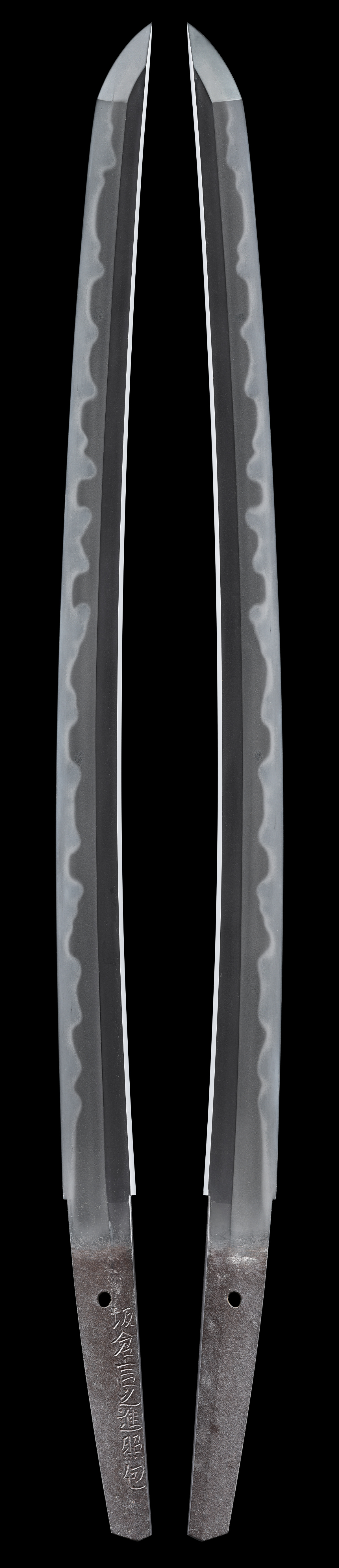
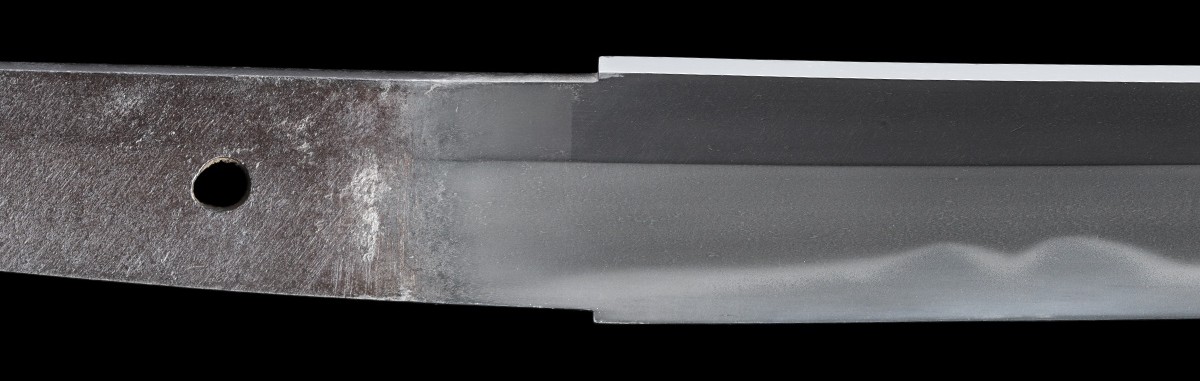
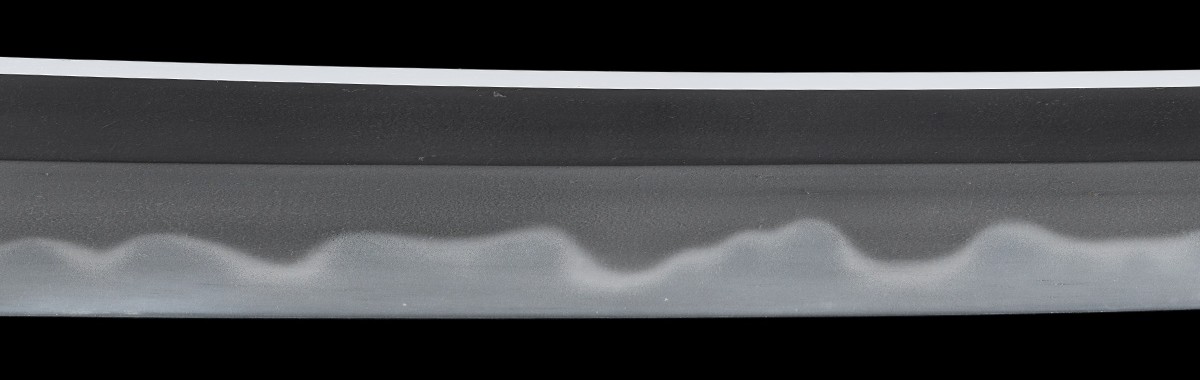
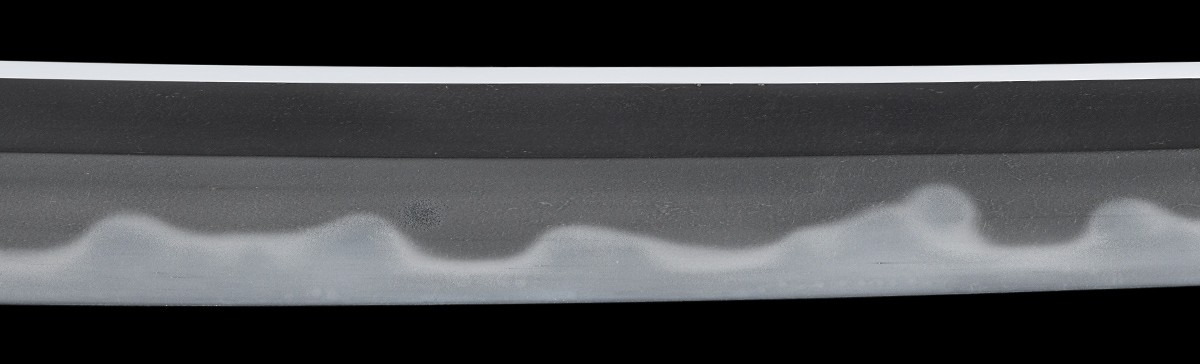
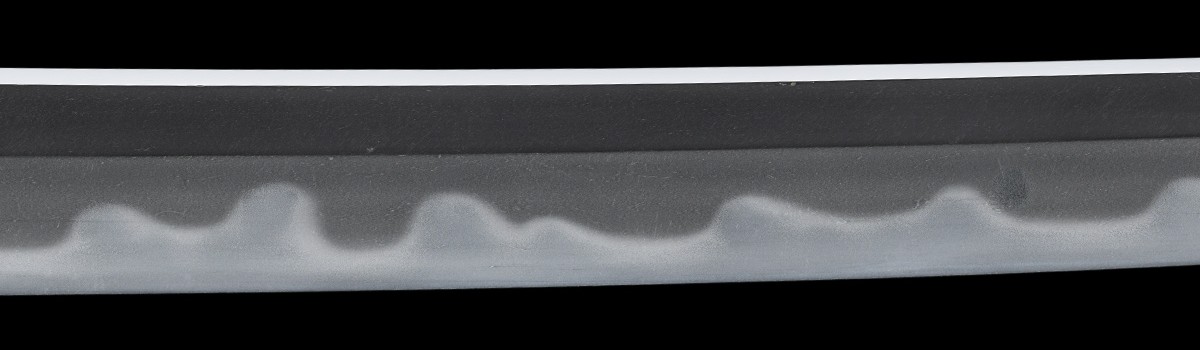
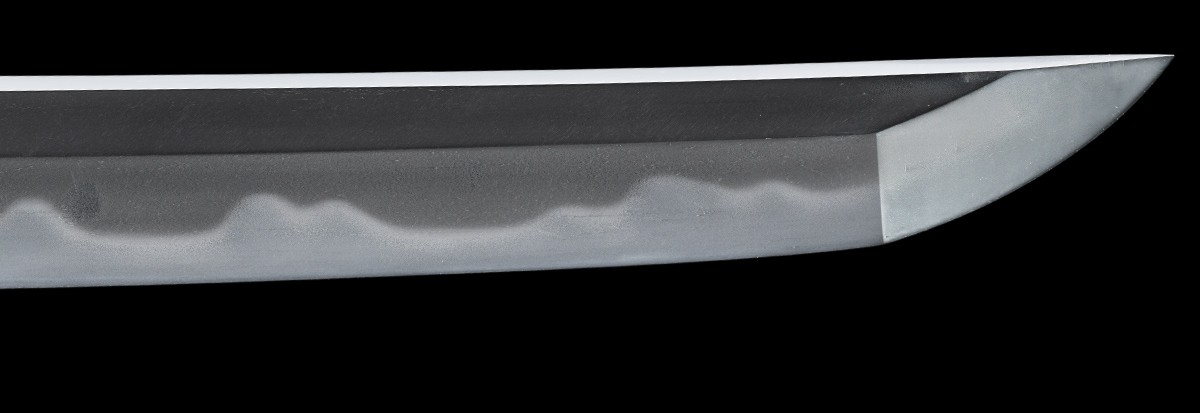
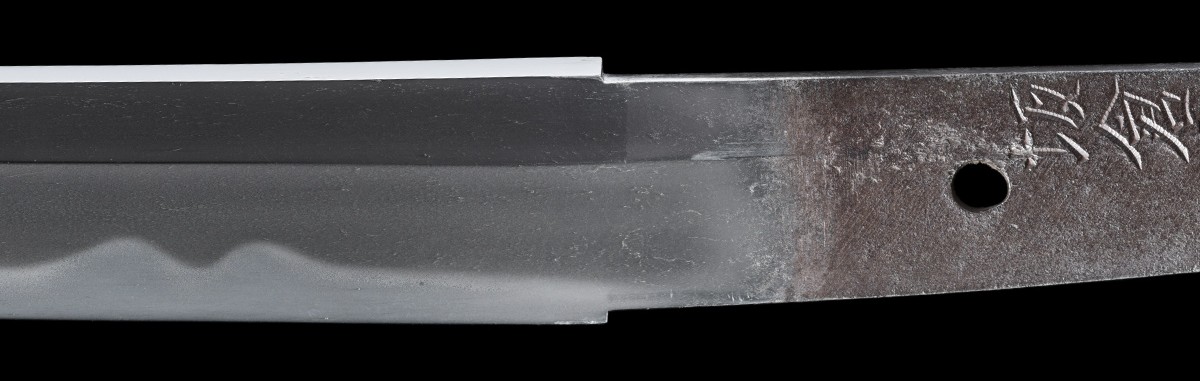
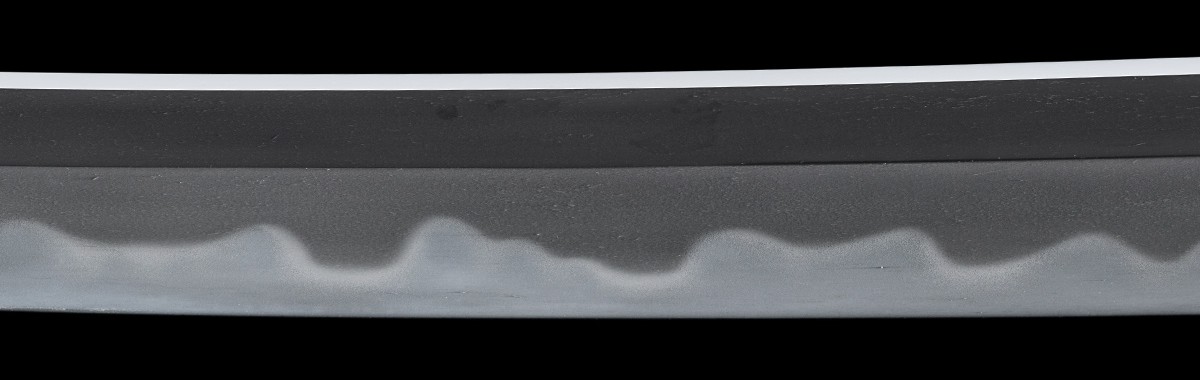
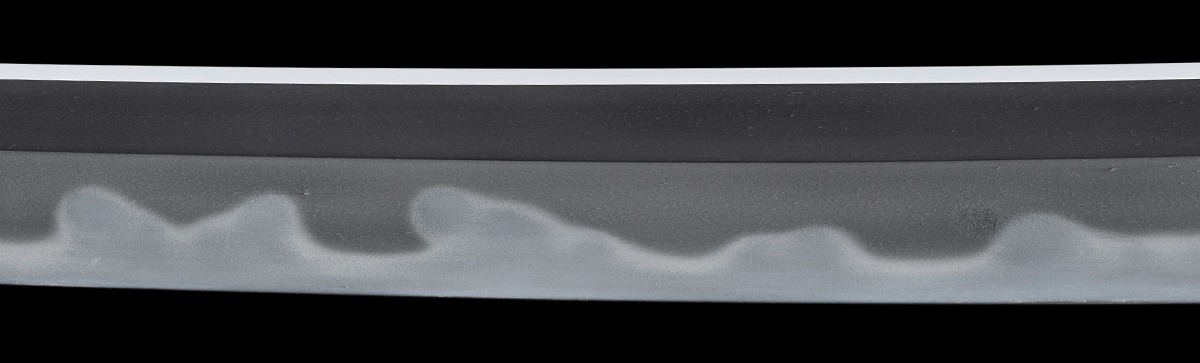
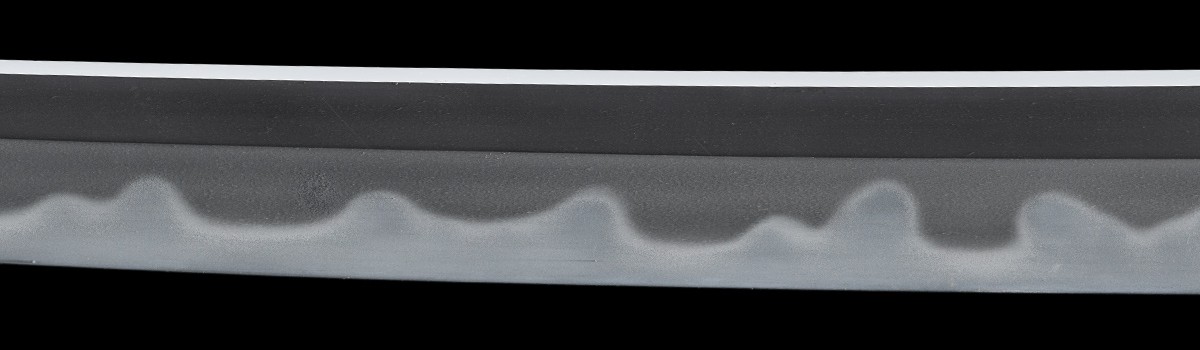
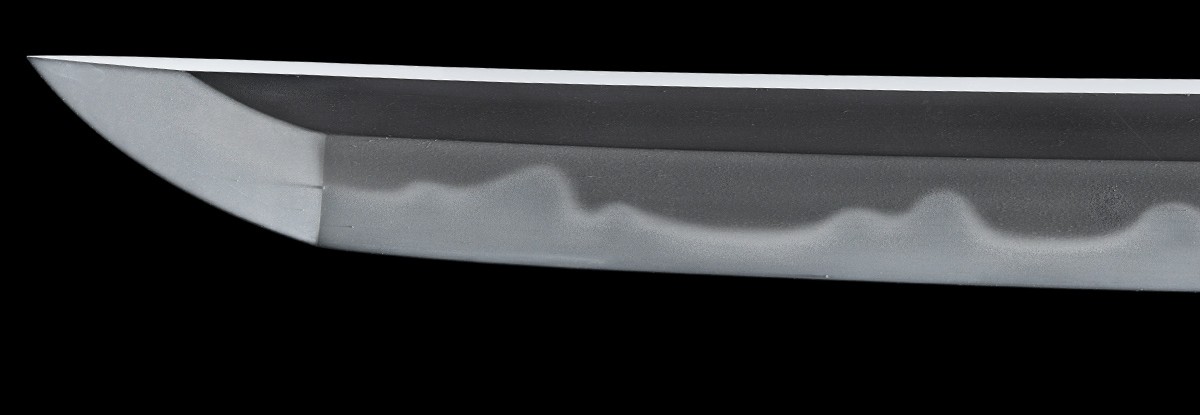
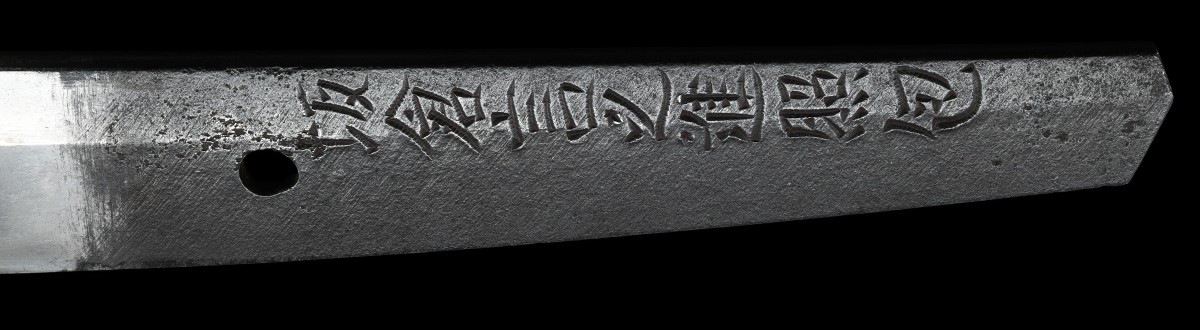
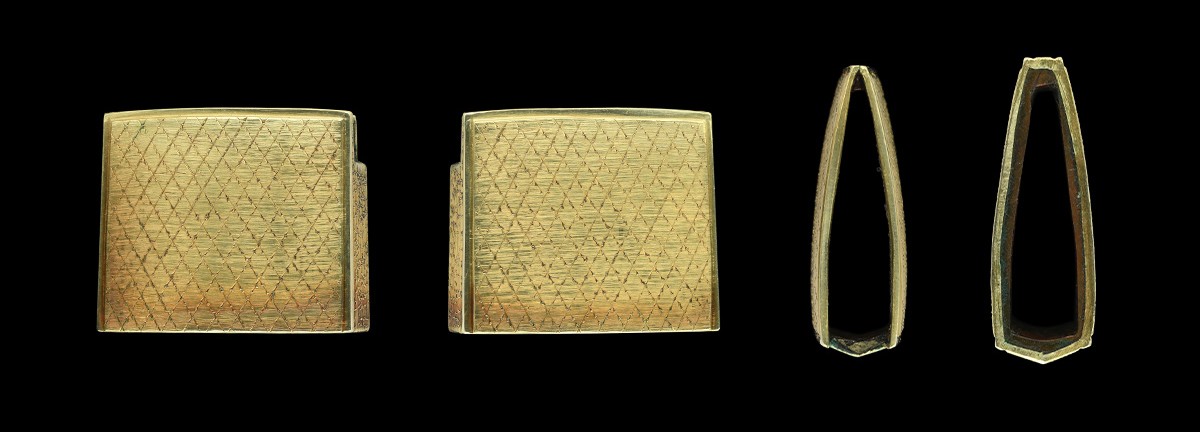
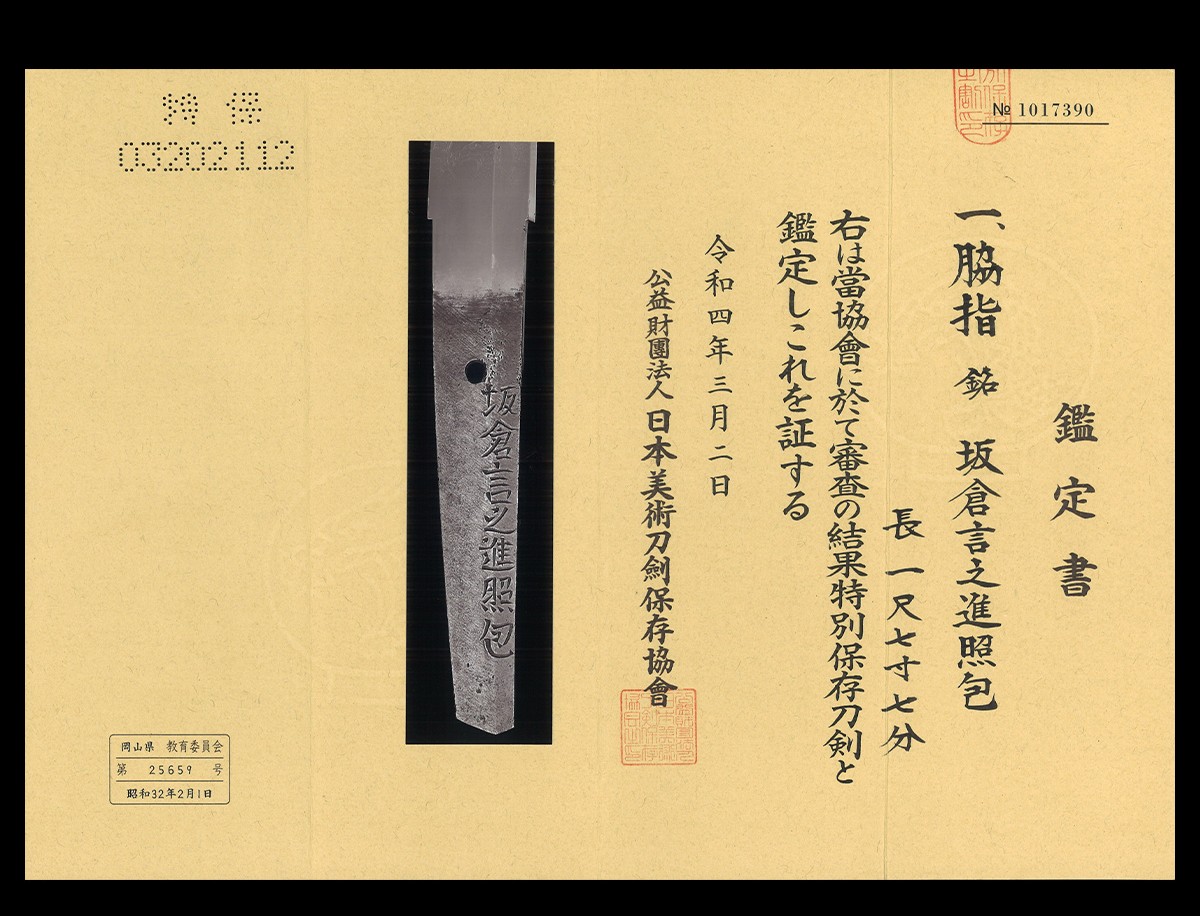
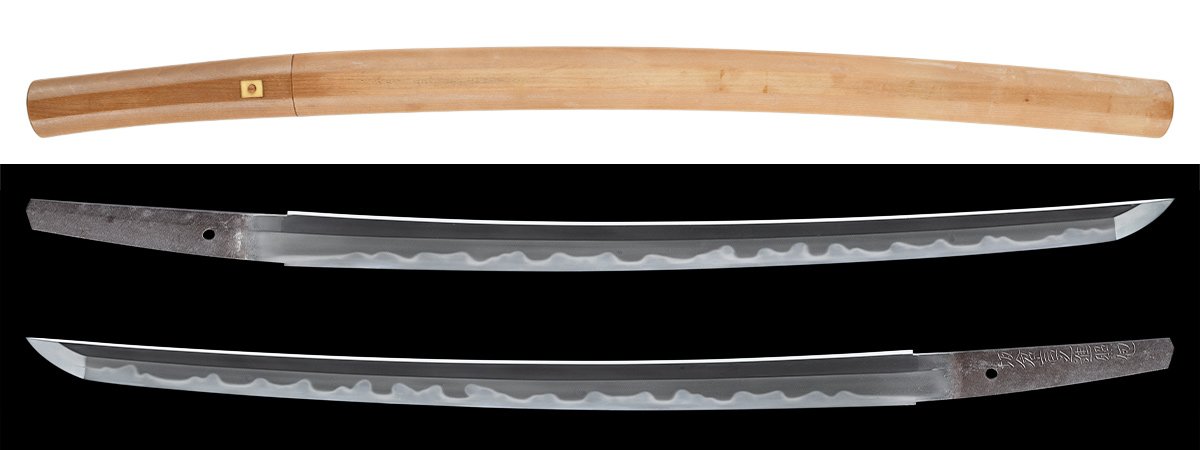
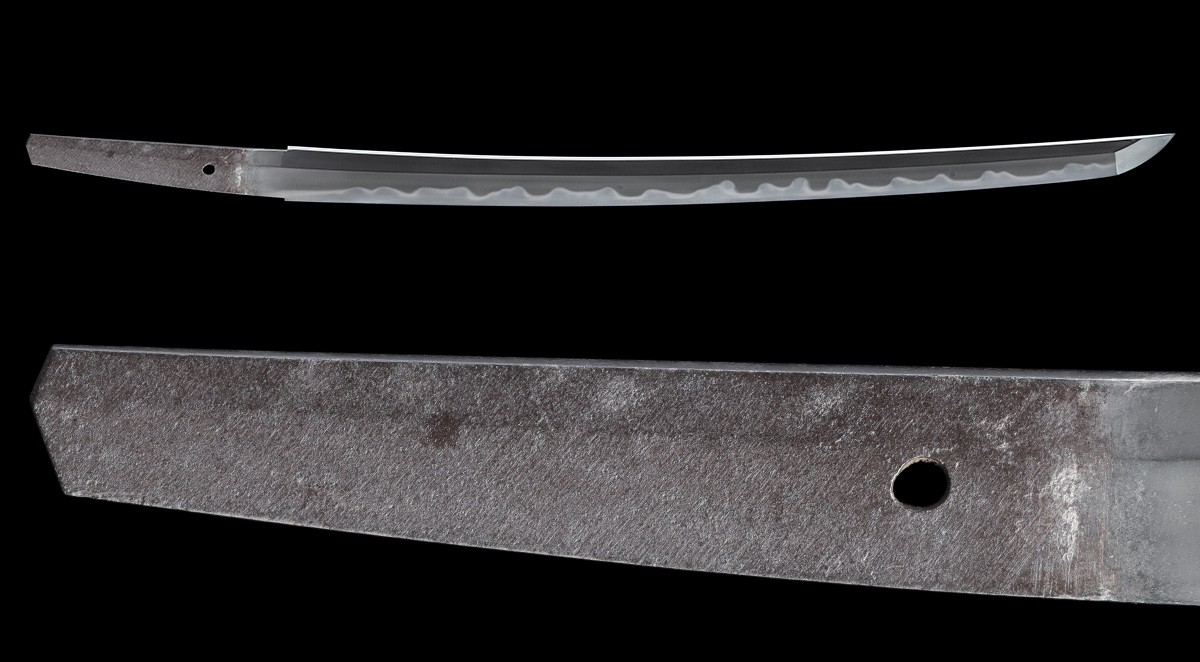
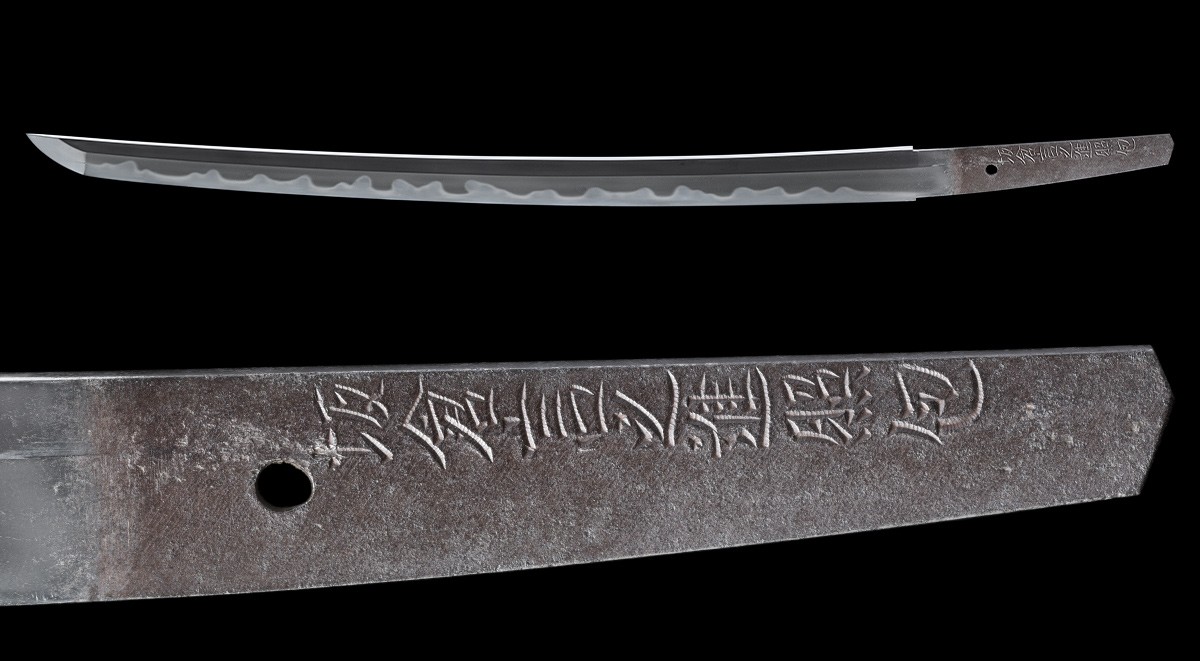
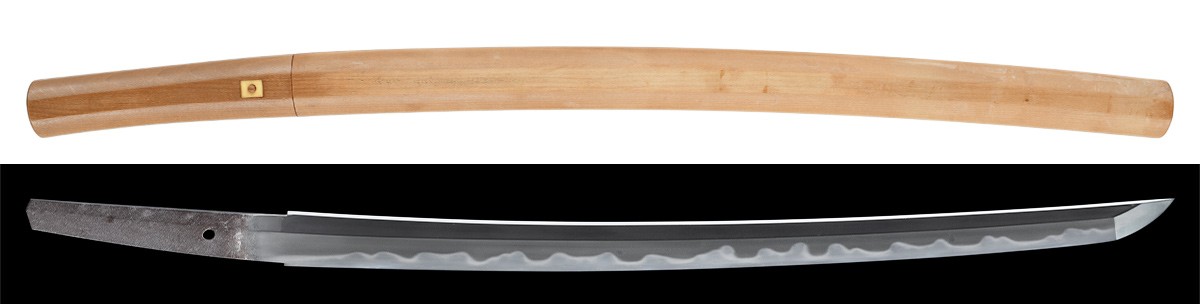
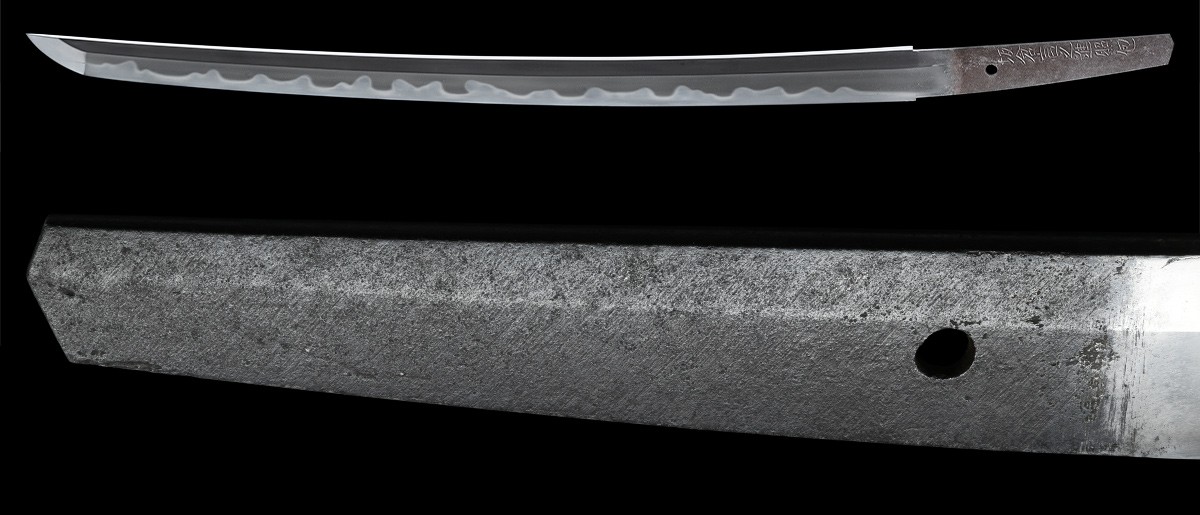
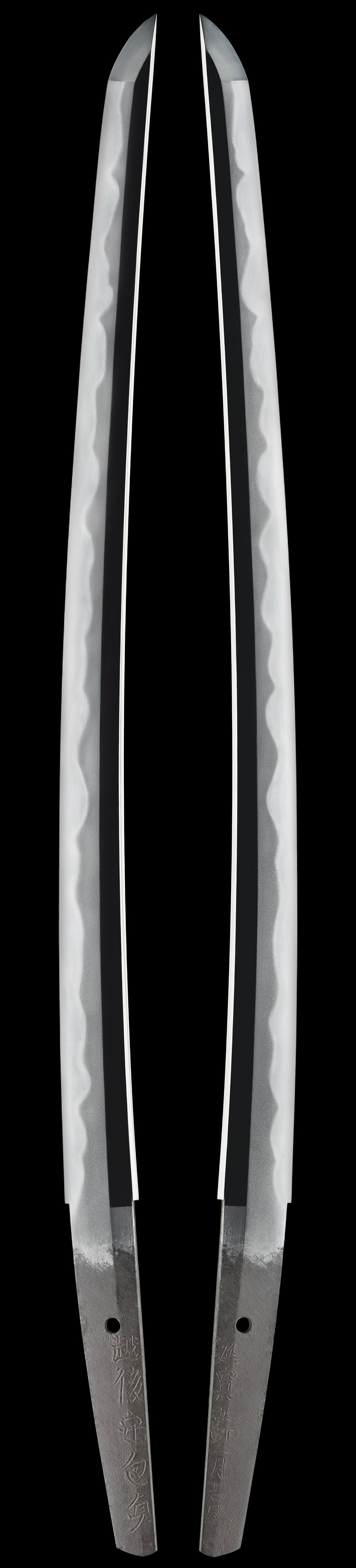
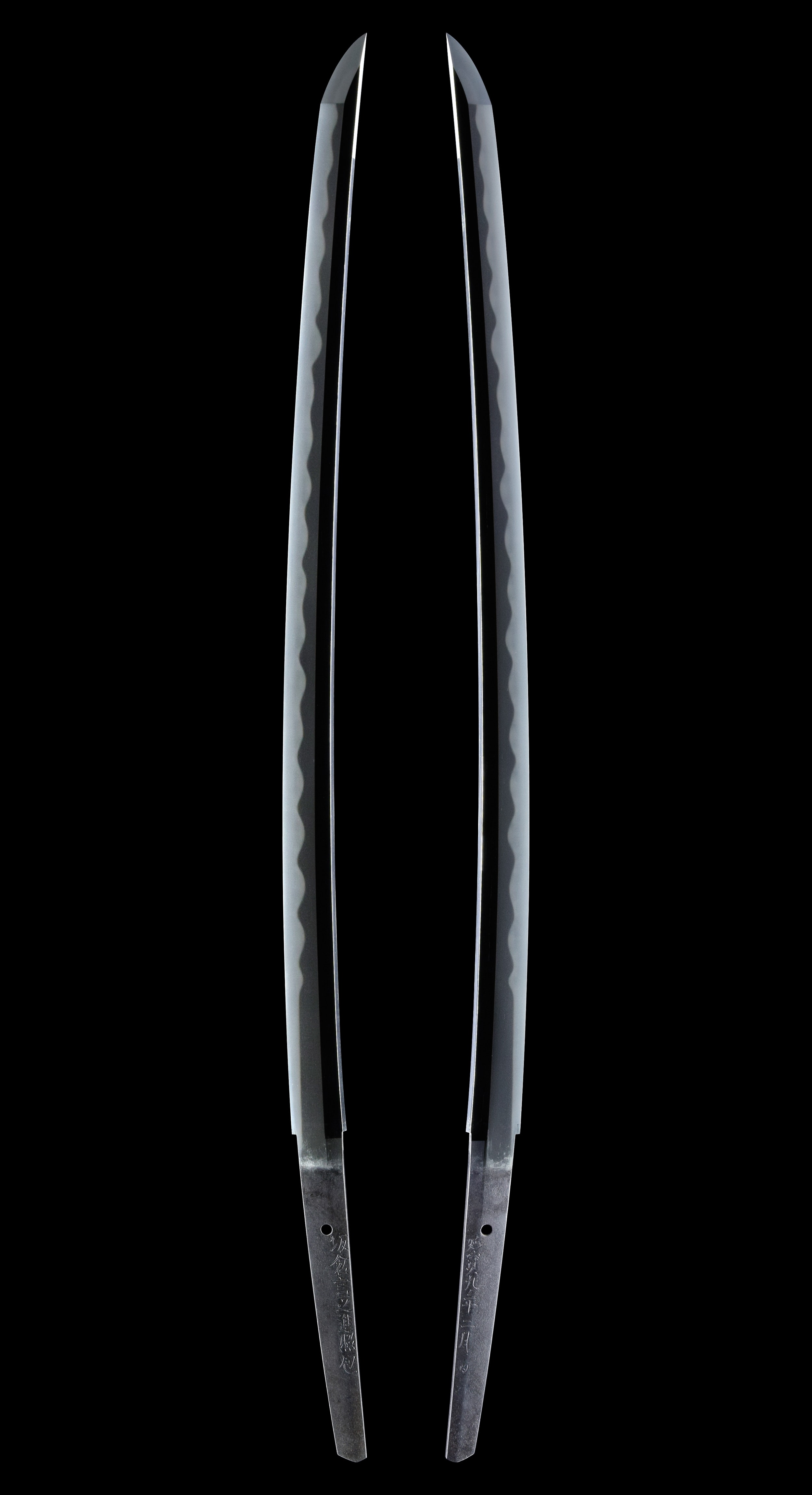
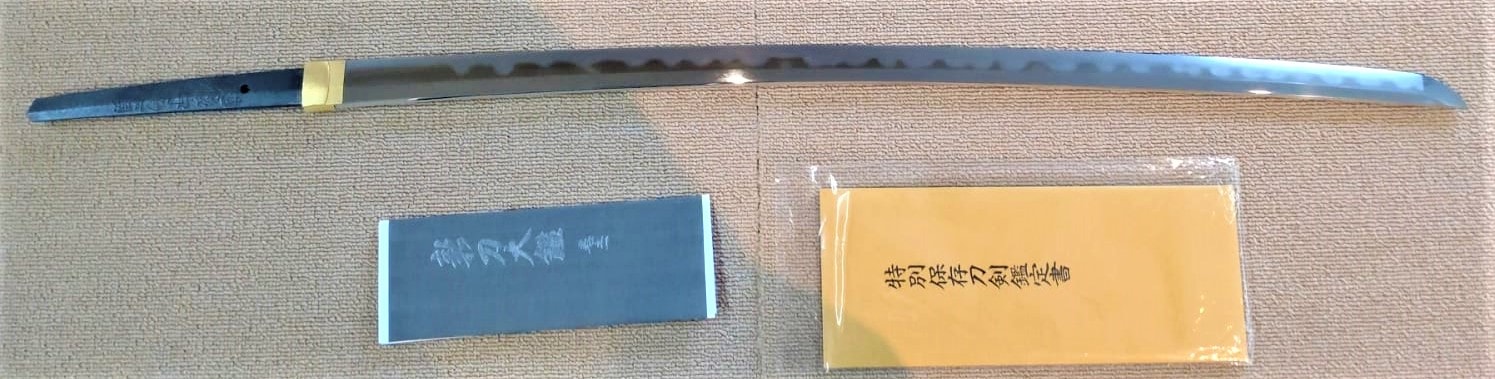
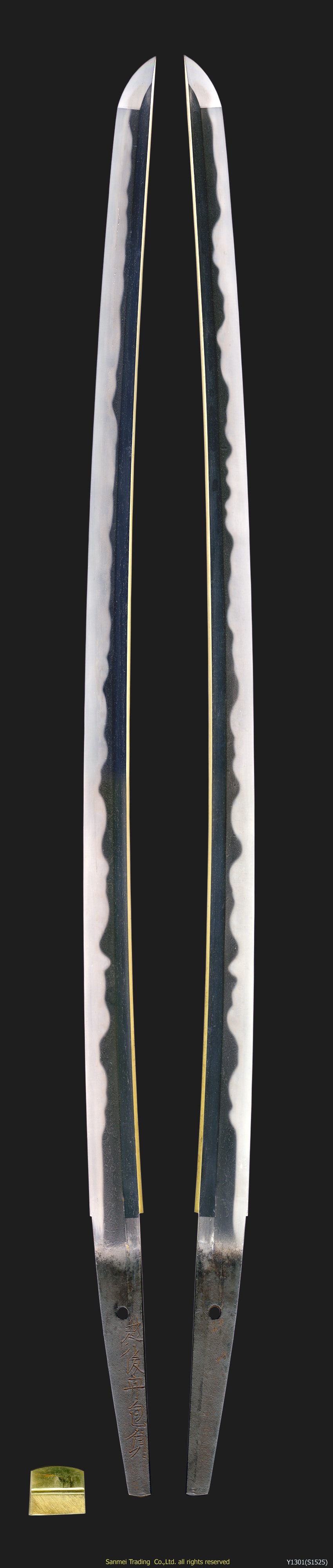
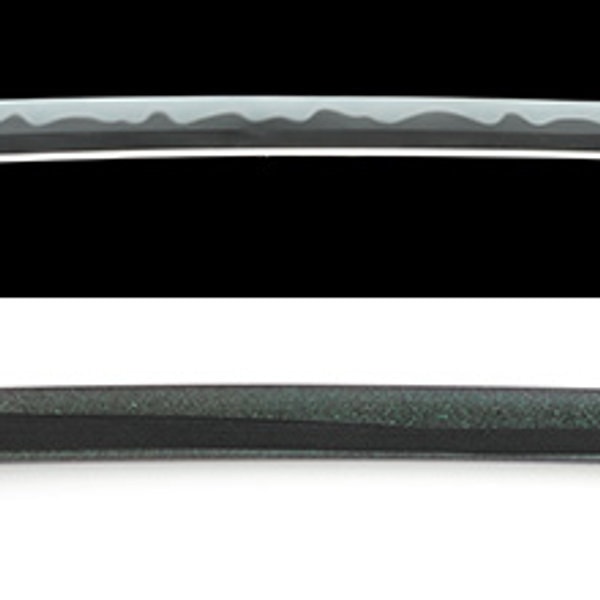
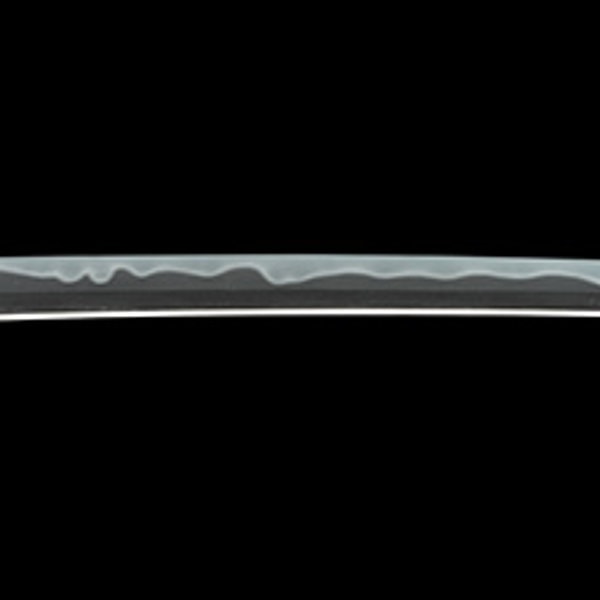
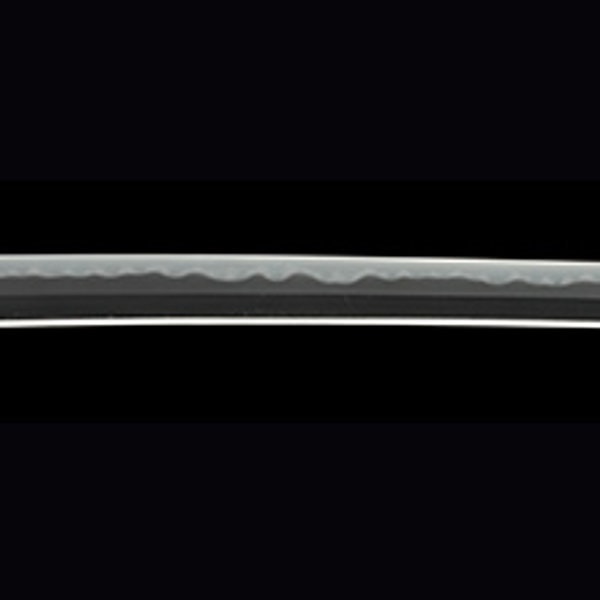
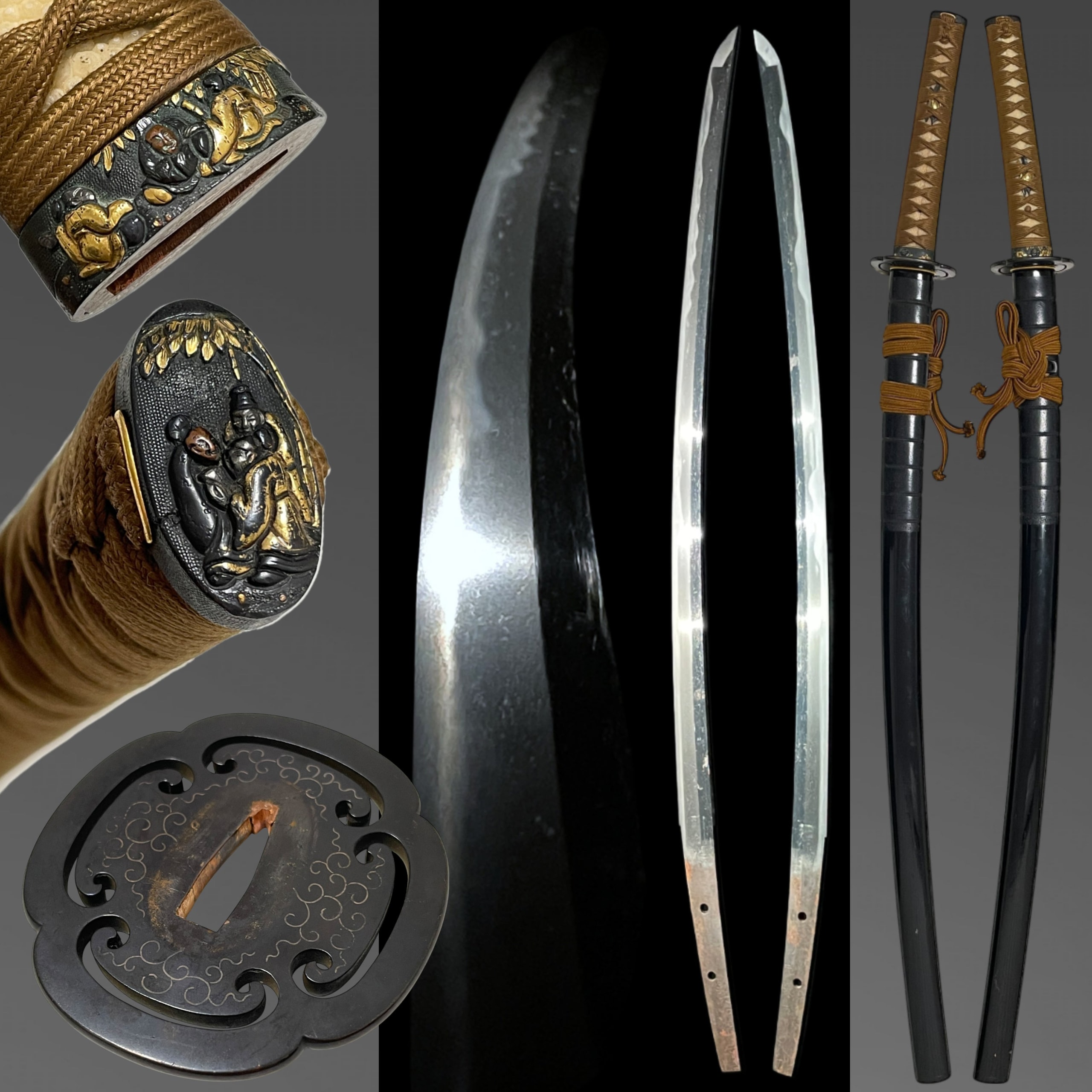
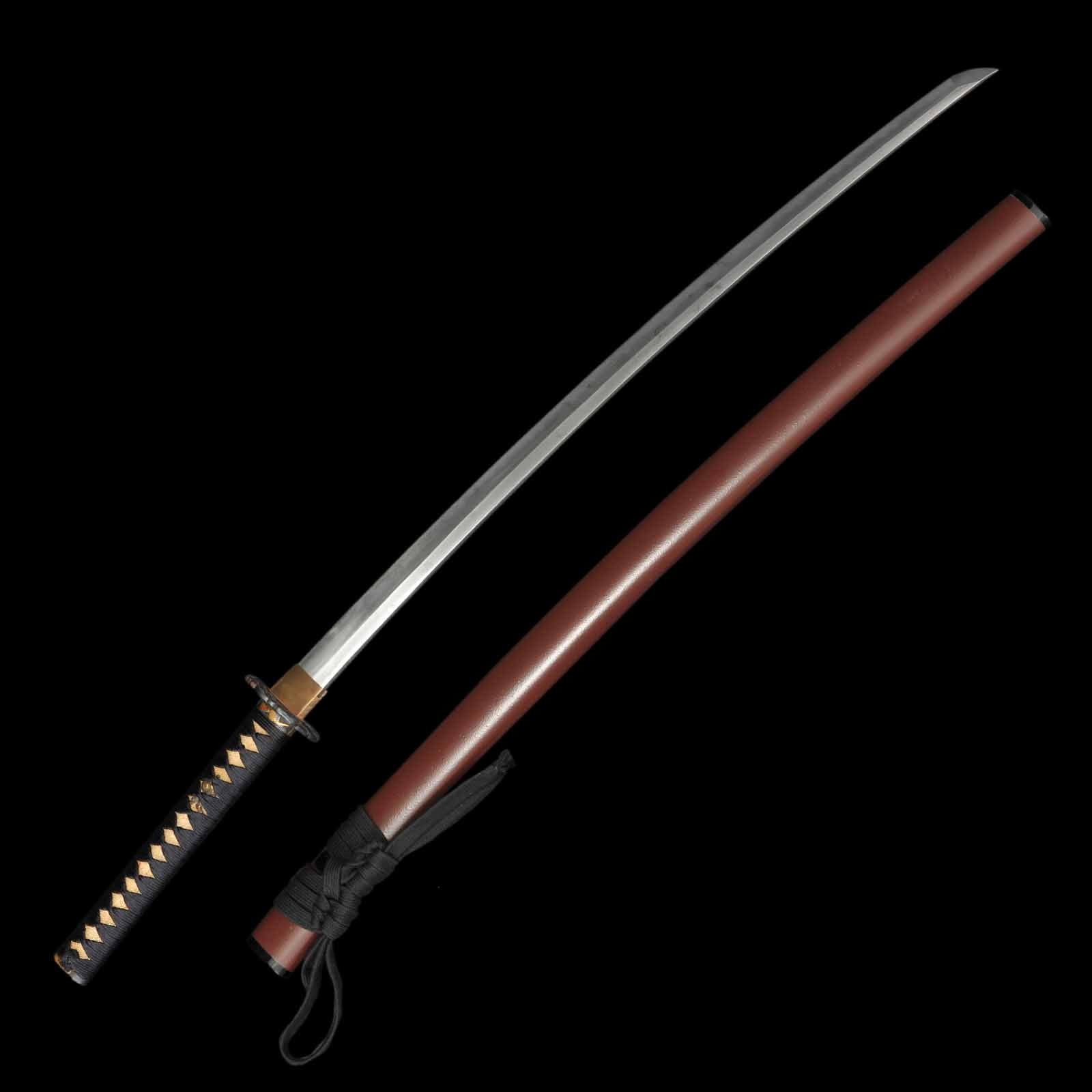
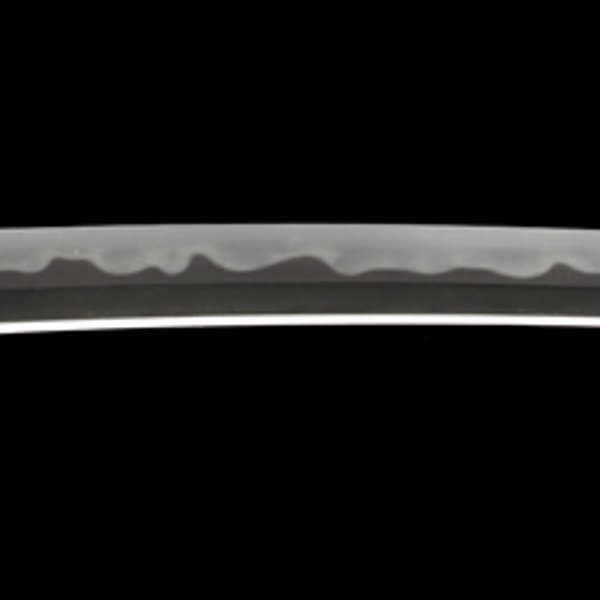
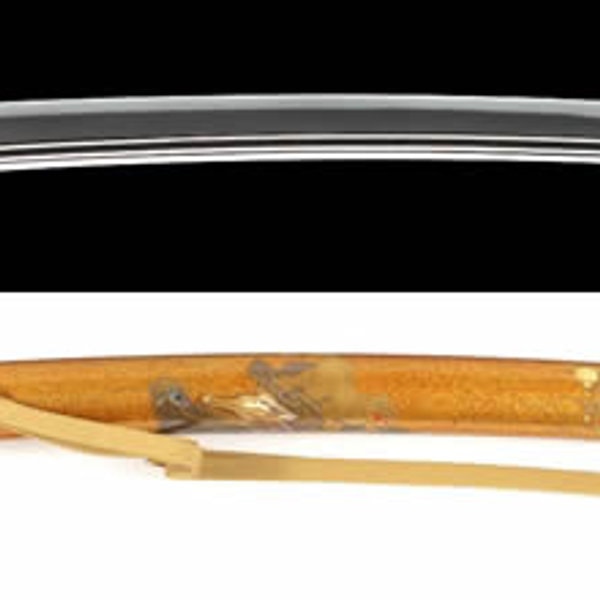
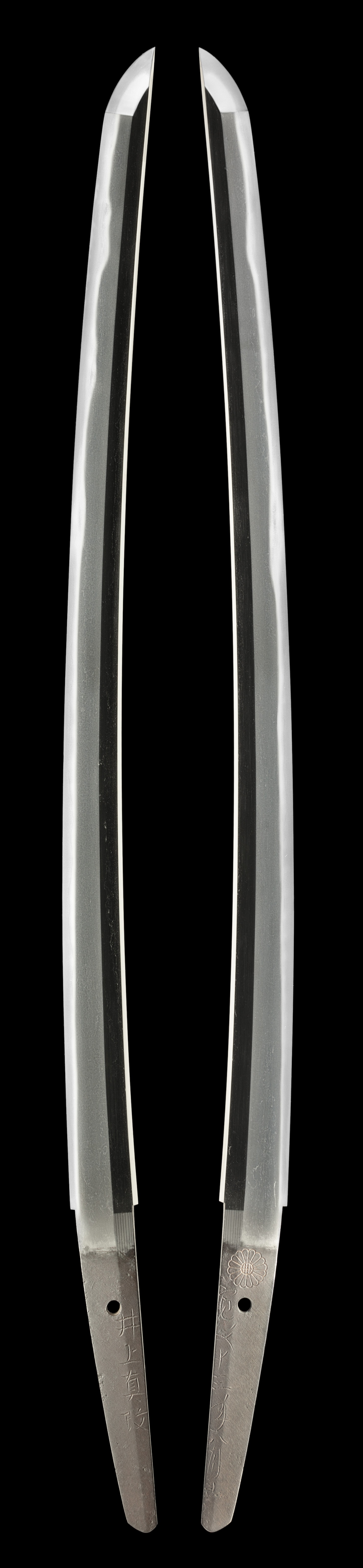
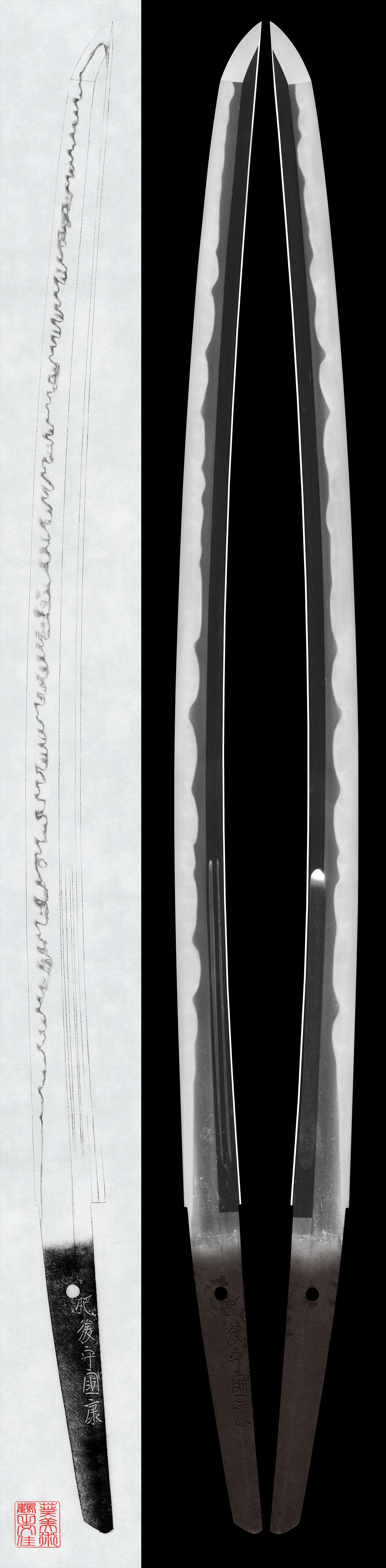
This is a wakizashi by Sakakura Gonnoshin Terukane, a highly skilled smith from Settsu during the Middle Edo period, around 1680. He was a disciple and adopted son of Echizen no Kami Kanesada, known for his dynamic gunome-midare hamon and excellent cutting ability. The blade features a robust form with a wide mihaba, koitame jigane, and a vibrant hamon with yahazuba and ko-notare elements, accompanied by an NBTHK Tokubetsu Hozon Token certificate.

mei · Enpo (1673-1681) · nagasa 53.6cm · sori 1.2cm


Shinto · Settsu · around 1673-1681
Fujishiro Jo-jo saku · Tōken Taikan top 10%
3 pieces on the market now
Sakakura Gon'noshin Terukane was the second-generation Echigo no Kami Kanesada. He studied under the first-generation Echigo no Kami Kanesada, succeeded to his position, and at first signed under that name. However, when the first generation's biological son Iwamatsu came of age, he yielded the Kanesada name and thereafter signed "Sakakura Gon'noshin Terukane." The change is documented by an extant work inscribed "Sakakura Gon'noshin Terukane; Echigo no Kami Kanesada, retired" with a reverse date of "an auspicious day in the second month of Enpō 8" (1680). Among the Osaka shintō smiths, the setsumei consistently place him as possessing "excellent technical ability," with workmanship that is "notably free of unevenness or coarseness." His technical skill "has long been regarded as ranking immediately after Sukehiro and Shinkai."
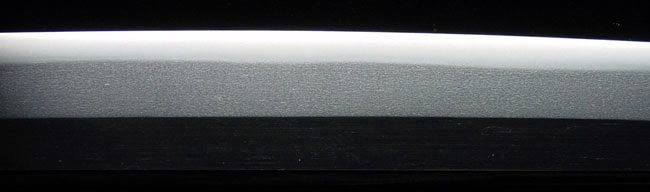
Terukane's dominant mode is the tōran-midare -- the billowing-wave temper modeled after Tsuda Sukehiro -- yet the NBTHK descriptions identify several features that distinguish his interpretation from its prototype. The large ō-gunome-midare characteristically incorporates yahazu-like (arrow-nock) forms and a distinctive hamon shape referred to as katayama-midare, unique to this smith. A habitual mannerism appears below the yokote, where "about three gunome appear in succession." The forging is invariably a tightly packed ko-itame-hada with extremely fine ji-nie adhering thickly and fine chikei entering well. Whatever the chosen pattern -- and more rarely he produced works in large notare, suguha, or even a rosary-bead-like (juzu-ba) temper recalling Nagasone Kotetsu -- "it is typical that the nioi is deep, the nie adheres well, and the nioiguchi is bright." His construction also bears distinctive marks: a steeply formed iori-mune (mune-oroshi), comparatively little hiraniku, and a high shinogi -- features that the NBTHK repeatedly notes as "points of interest" particular to Terukane. The hamon begins consistently with a suguha yakidashi, after which thick, long ashi enter well; sunagashi runs broadly throughout the temper; and kinsuji and nie-suji appear with a frequency that one setsumei notes exceeds "his usual works." In his most accomplished pieces, rounded bead-like tobiyaki "resembling spray" (shibuki) are tempered within the tōran-like pattern, harmonizing with the wave-like rhythm to striking aesthetic effect.
Across nearly twenty Juyo designations spanning three decades, the evaluative consensus is emphatic: Terukane was a master of the Osaka shintō tradition whose output was "consistently high in quality, without marked unevenness." His range extended from the bold tōran-midare that constituted his greatest forte to rarities modeled on Go Yoshihiro and the Sōshū-den, each "finished with consummate skill." The deep nioi, thickly adhering ko-nie, the conspicuous activities of kinsuji and sunagashi, and above all the brightness and clarity of the nioiguchi are cited in every assessment as the hallmarks by which his work may be identified, securing his place as "a solid mainstay within the Osaka shintō tradition" and the foremost heir of the Kanesada line.
Shinto · Settsu
73 pieces on the market now
Osaka in the early-to-mid Edo period was a merchant capital, a city of commerce and capital rather than a castle town tied to a single daimyo house, and the swordsmiths who gathered there worked for a wealthy townsman clientele as much as for warriors. The grouping known as Osaka Shinto (大坂新刀) took shape in Settsu from two feeder currents. Learn more →
| Smith | Era | Designated |
|---|---|---|
| Shinkai真改 | 1649-1682 | 79 |
| Tadatsuna忠綱 | 1673-1717 | 53 |
| Kanesada包貞 | 1673-1682 | 78 |
| Kanesada包貞 | 1648-1652 | 10 |
| Kunisuke國助 | 1658-1663 | 10 |
A Hozon-certified blade judged to show notably superior workmanship and a better state of preservation. The bar is higher: re-tempered blades and most unsigned Muromachi/Edo works are excluded.
The NBTHK (Nihon Bijutsu Tōken Hozon Kyōkai, the Society for the Preservation of Japanese Art Swords) is a public-interest incorporated foundation founded in 1948 and supervised by Japan’s Agency for Cultural Affairs (Bunkachō); it is based at the Japanese Sword Museum in Tokyo. Its expert panels physically examine each submitted work (shinsa) and issue a certificate (kanteishō) ranking it by artistic and historical merit. NBTHK papers are the most widely recognized standard of authentication for Japanese swords and fittings.
NBTHK official siteNo cooling-off period or returns; refund only if the purchased sword is proven fake, capped at purchase price (excludes commission sales, accessories, auction items).
This is a wakizashi by Sakakura Gonnoshin Terukane, a highly skilled smith from Settsu during the Middle Edo period, around 1680. He was a disciple and adopted son of Echizen no Kami Kanesada, known for his dynamic gunome-midare hamon and excellent cutting ability. The blade features a robust form with a wide mihaba, koitame jigane, and a vibrant hamon with yahazuba and ko-notare elements, accompanied by an NBTHK Tokubetsu Hozon Token certificate.
mei · Enpo (1673-1681) · nagasa 53.6cm · sori 1.2cm


Shinto · Settsu · around 1673-1681
Fujishiro Jo-jo saku · Tōken Taikan top 10%
3 pieces on the market now
Sakakura Gon'noshin Terukane was the second-generation Echigo no Kami Kanesada. He studied under the first-generation Echigo no Kami Kanesada, succeeded to his position, and at first signed under that name. However, when the first generation's biological son Iwamatsu came of age, he yielded the Kanesada name and thereafter signed "Sakakura Gon'noshin Terukane." The change is documented by an extant work inscribed "Sakakura Gon'noshin Terukane; Echigo no Kami Kanesada, retired" with a reverse date of "an auspicious day in the second month of Enpō 8" (1680). Among the Osaka shintō smiths, the setsumei consistently place him as possessing "excellent technical ability," with workmanship that is "notably free of unevenness or coarseness." His technical skill "has long been regarded as ranking immediately after Sukehiro and Shinkai."
Terukane's dominant mode is the tōran-midare -- the billowing-wave temper modeled after Tsuda Sukehiro -- yet the NBTHK descriptions identify several features that distinguish his interpretation from its prototype. The large ō-gunome-midare characteristically incorporates yahazu-like (arrow-nock) forms and a distinctive hamon shape referred to as katayama-midare, unique to this smith. A habitual mannerism appears below the yokote, where "about three gunome appear in succession." The forging is invariably a tightly packed ko-itame-hada with extremely fine ji-nie adhering thickly and fine chikei entering well. Whatever the chosen pattern -- and more rarely he produced works in large notare, suguha, or even a rosary-bead-like (juzu-ba) temper recalling Nagasone Kotetsu -- "it is typical that the nioi is deep, the nie adheres well, and the nioiguchi is bright." His construction also bears distinctive marks: a steeply formed iori-mune (mune-oroshi), comparatively little hiraniku, and a high shinogi -- features that the NBTHK repeatedly notes as "points of interest" particular to Terukane. The hamon begins consistently with a suguha yakidashi, after which thick, long ashi enter well; sunagashi runs broadly throughout the temper; and kinsuji and nie-suji appear with a frequency that one setsumei notes exceeds "his usual works." In his most accomplished pieces, rounded bead-like tobiyaki "resembling spray" (shibuki) are tempered within the tōran-like pattern, harmonizing with the wave-like rhythm to striking aesthetic effect.
Across nearly twenty Juyo designations spanning three decades, the evaluative consensus is emphatic: Terukane was a master of the Osaka shintō tradition whose output was "consistently high in quality, without marked unevenness." His range extended from the bold tōran-midare that constituted his greatest forte to rarities modeled on Go Yoshihiro and the Sōshū-den, each "finished with consummate skill." The deep nioi, thickly adhering ko-nie, the conspicuous activities of kinsuji and sunagashi, and above all the brightness and clarity of the nioiguchi are cited in every assessment as the hallmarks by which his work may be identified, securing his place as "a solid mainstay within the Osaka shintō tradition" and the foremost heir of the Kanesada line.
Shinto · Settsu
73 pieces on the market now
Osaka in the early-to-mid Edo period was a merchant capital, a city of commerce and capital rather than a castle town tied to a single daimyo house, and the swordsmiths who gathered there worked for a wealthy townsman clientele as much as for warriors. The grouping known as Osaka Shinto (大坂新刀) took shape in Settsu from two feeder currents. Learn more →
| Smith | Era | Designated |
|---|---|---|
| Shinkai真改 | 1649-1682 | 79 |
| Tadatsuna忠綱 | 1673-1717 | 53 |
| Kanesada包貞 | 1673-1682 | 78 |
| Kanesada包貞 | 1648-1652 | 10 |
| Kunisuke國助 | 1658-1663 | 10 |
A Hozon-certified blade judged to show notably superior workmanship and a better state of preservation. The bar is higher: re-tempered blades and most unsigned Muromachi/Edo works are excluded.
The NBTHK (Nihon Bijutsu Tōken Hozon Kyōkai, the Society for the Preservation of Japanese Art Swords) is a public-interest incorporated foundation founded in 1948 and supervised by Japan’s Agency for Cultural Affairs (Bunkachō); it is based at the Japanese Sword Museum in Tokyo. Its expert panels physically examine each submitted work (shinsa) and issue a certificate (kanteishō) ranking it by artistic and historical merit. NBTHK papers are the most widely recognized standard of authentication for Japanese swords and fittings.
NBTHK official siteNo cooling-off period or returns; refund only if the purchased sword is proven fake, capped at purchase price (excludes commission sales, accessories, auction items).