NihontoWatch Mon

NihontoWatch

MarketAuctions
Encyclopedia
NihontoWatch Mon

NihontoWatch

MarketAuctions
Encyclopedia

Description

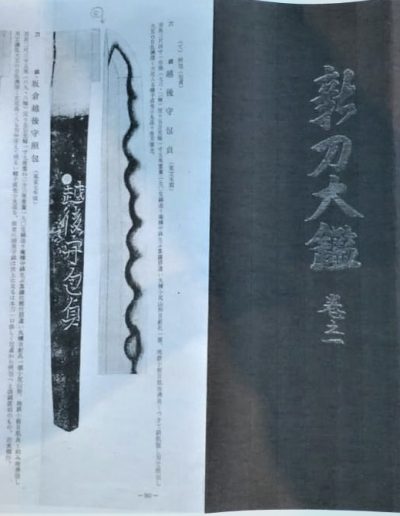
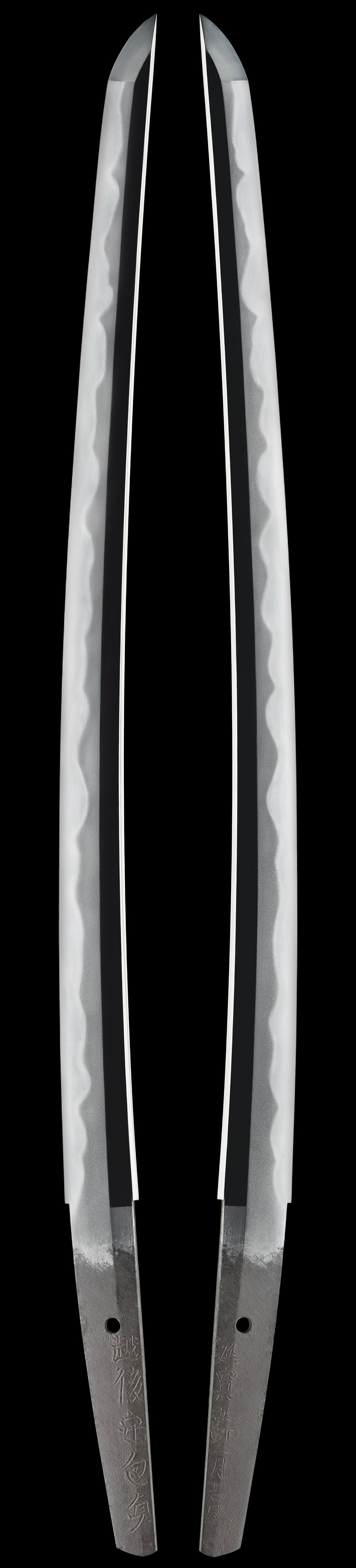
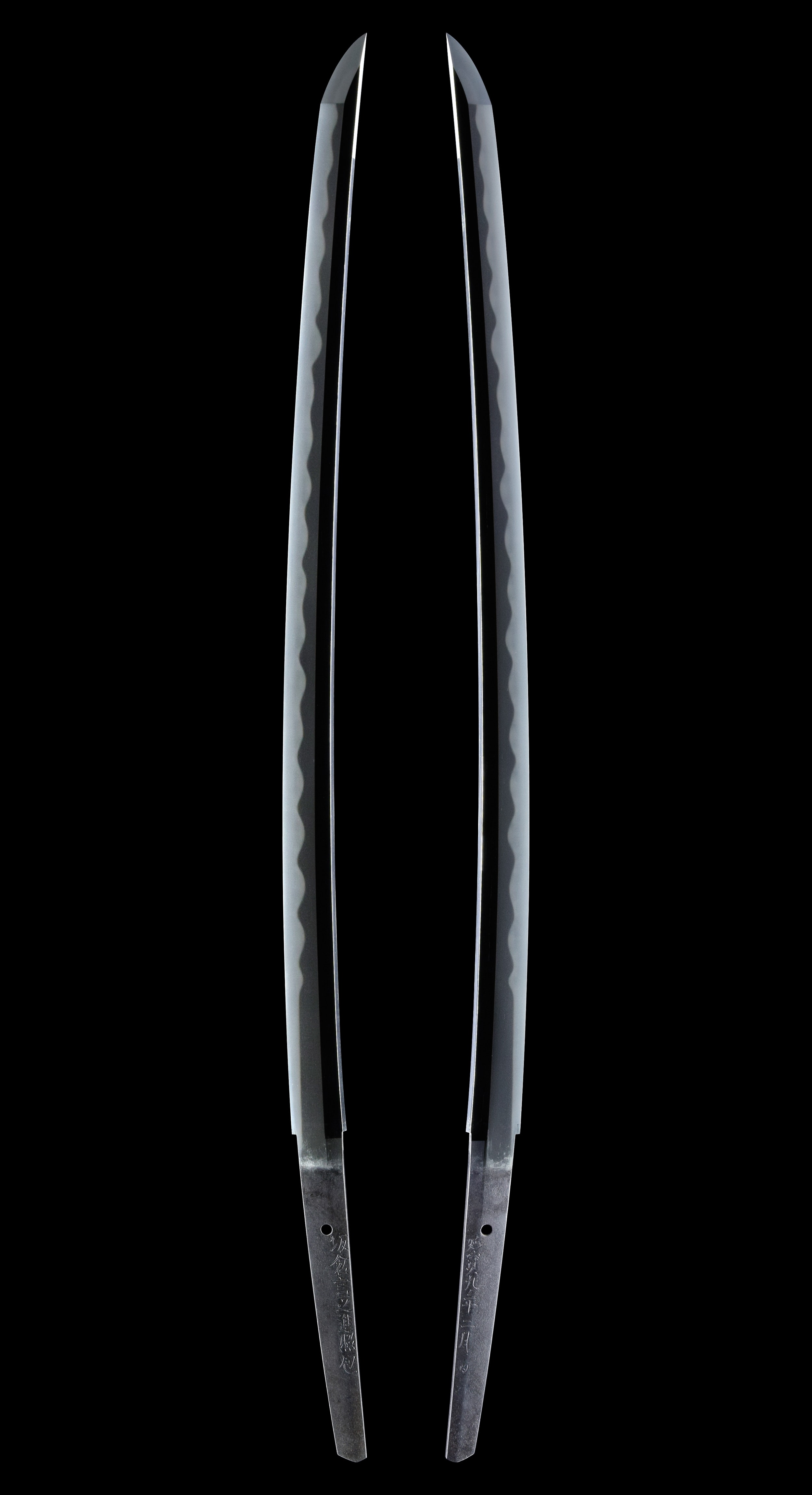
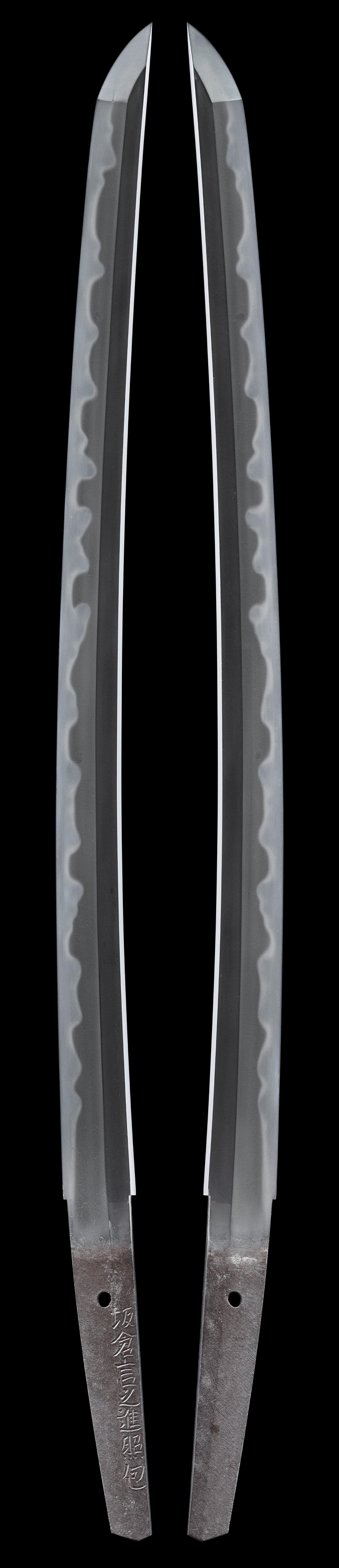
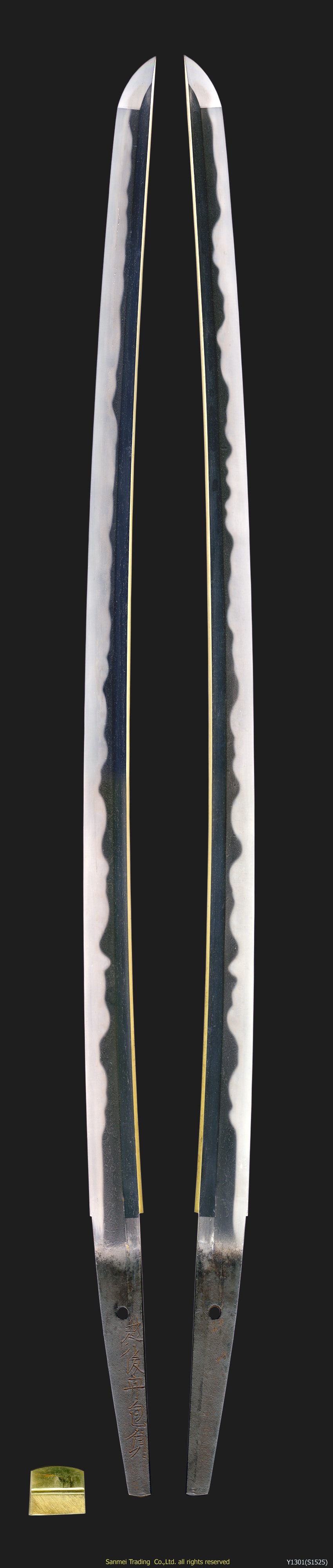
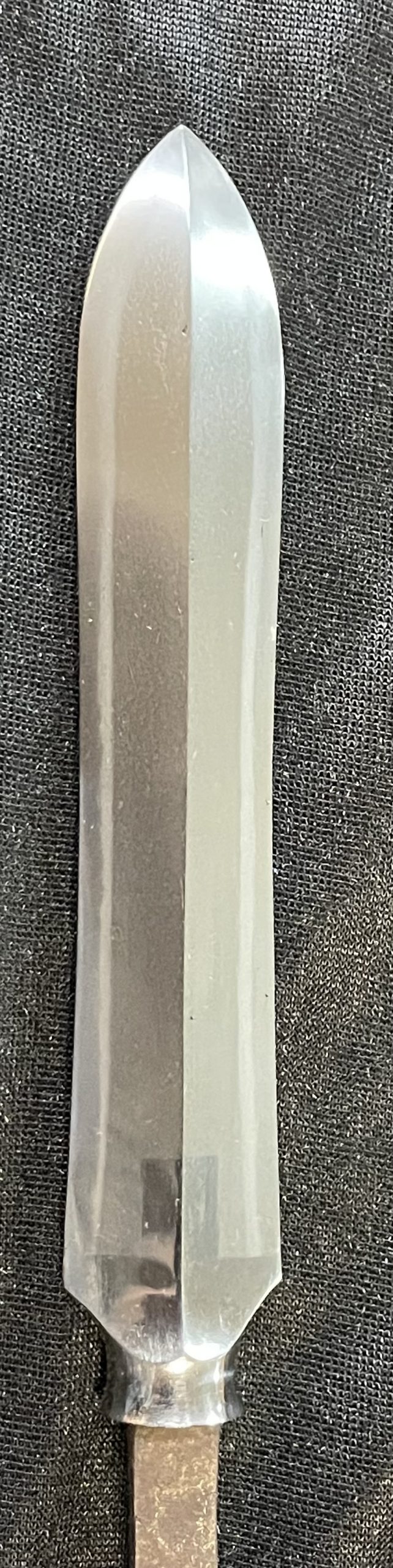
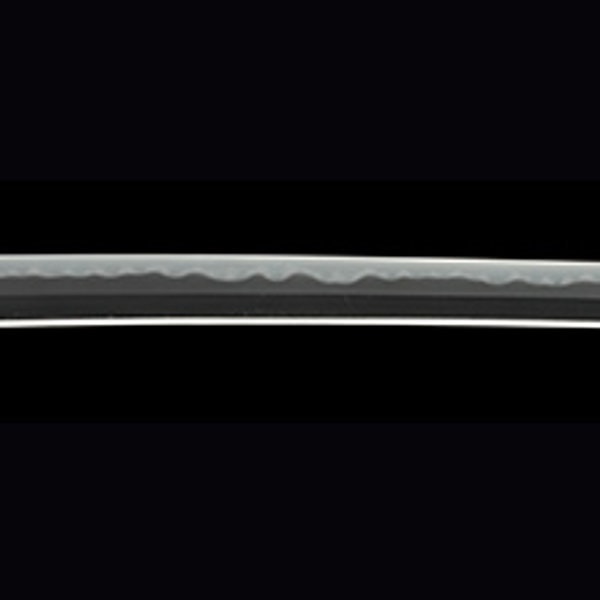
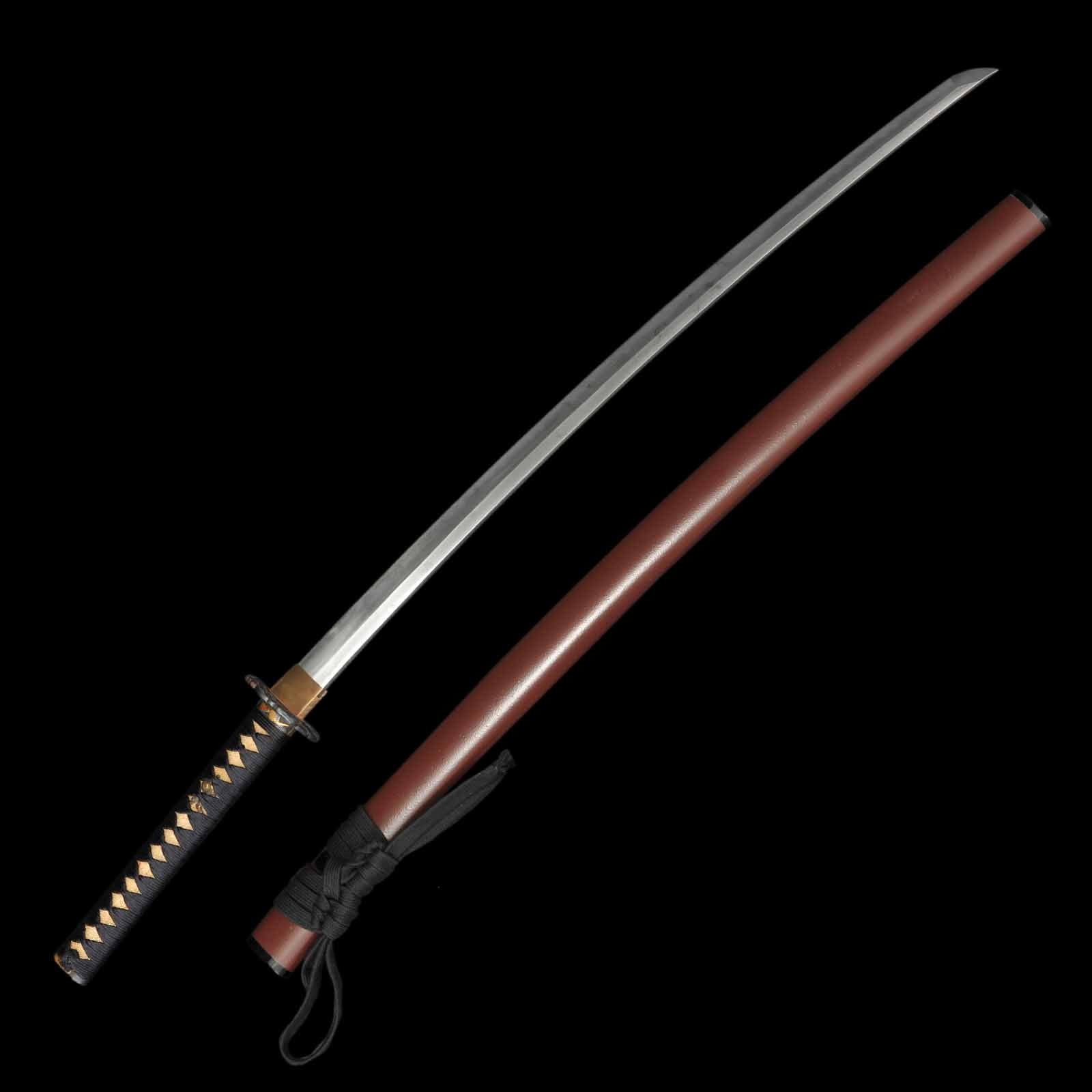
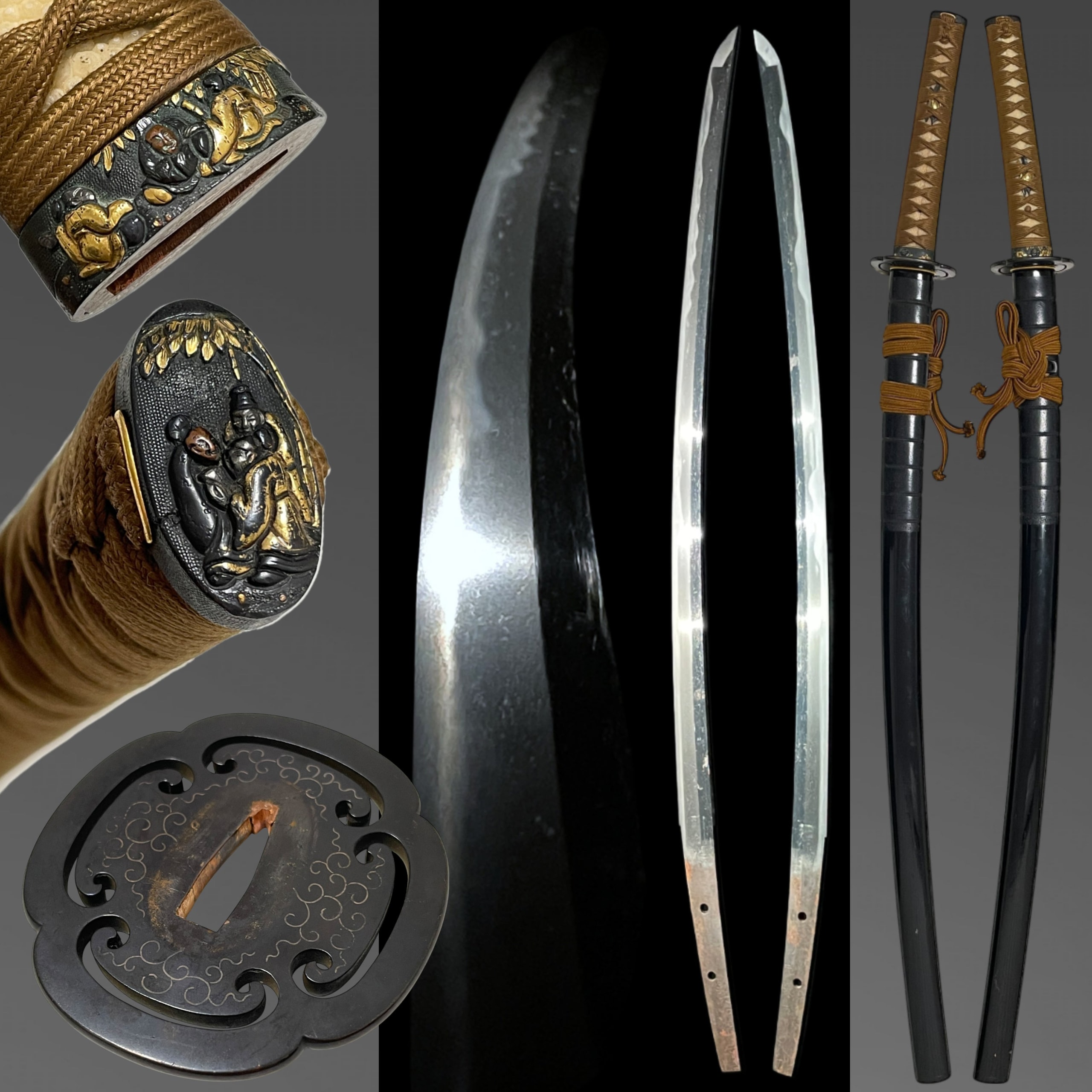
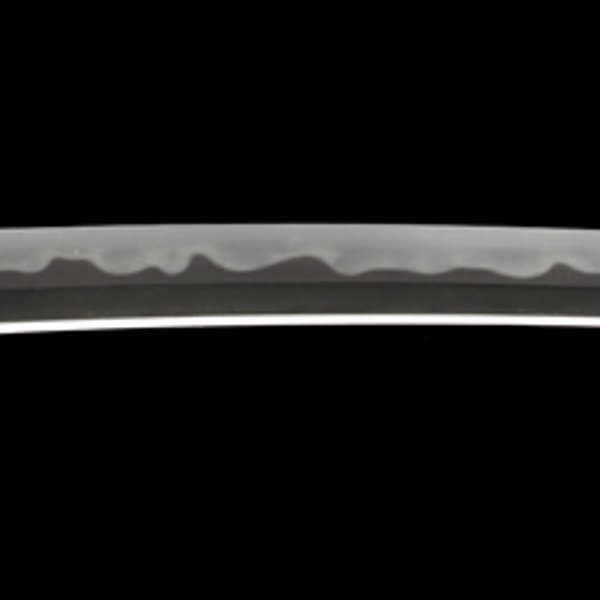
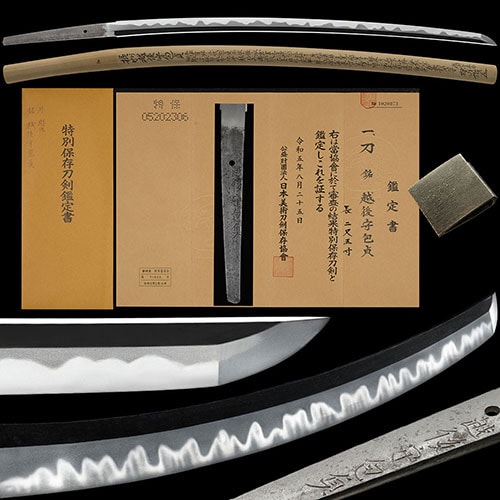
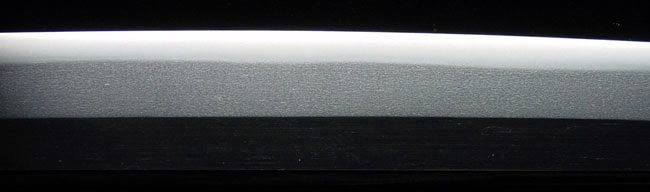
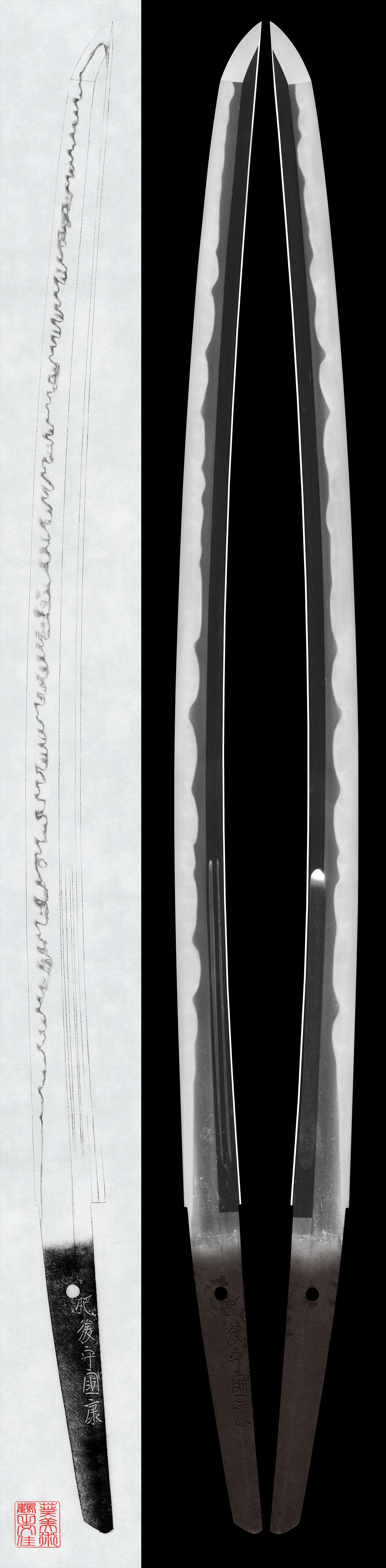
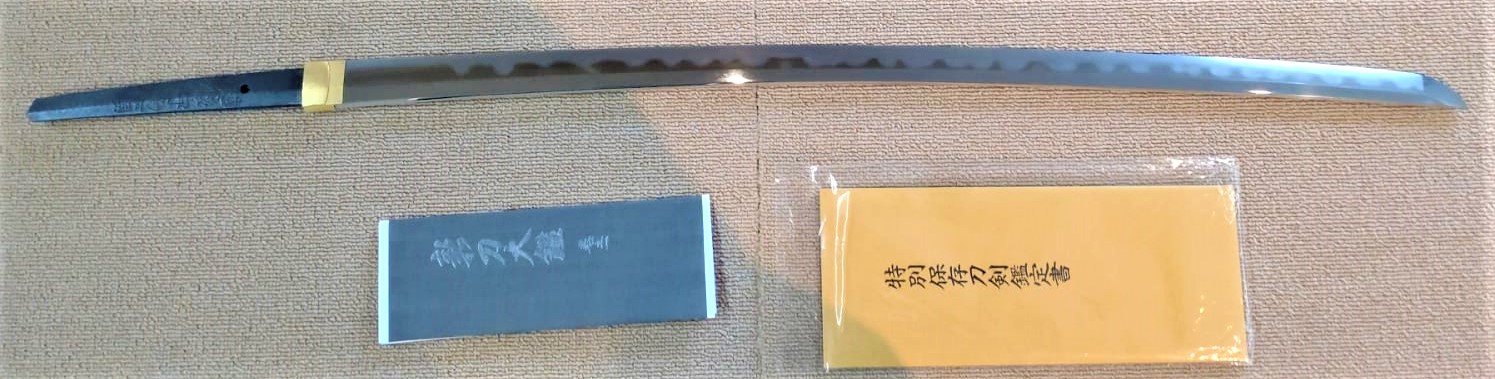
This is a katana made by Echigo No Kami Kanesada during the Shinto period. It is published in the Shinto Taikan. Further details about its features and condition are available upon inquiry.

Certificate Reading

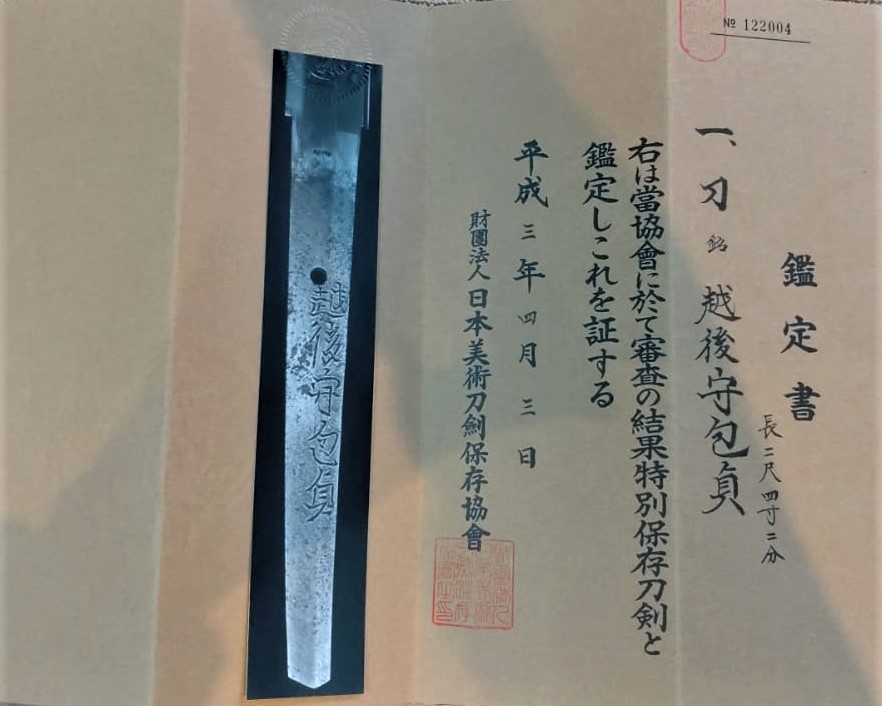
Certificate reading — 銘 越後守包貞

NihontoWatch MonNihontoWatch
MarketAuctionsEncyclopedia
Swords›Osaka Shinto›Kanesada›Katana: Echigo No Kami Kanesada - Published in the Shinto Taikan
katanaTokubetsu Hozon
Shinto Kanesada

Katana: Echigo No Kami Kanesada - Published in the Shinto Taikan

mei · Enpo (1673-1681)

Price on request
Visit seller website →
Shinto Kanesada — 1 of 3
Shinto Kanesada — 2 of 3
Shinto Kanesada — 3 of 3
1 / 3
1 / 3
Shinto Kanesada — 1 of 3Shinto Kanesada — 2 of 3Shinto Kanesada — 3 of 3
Measurements & details
Smith
Shinto Kanesada
Type
Katana
School
Osaka Shinto
Period
Around 1673–1682(Enpo)
Signature
Signed(100% of this smith's designated works are signed)
Description
About the maker

Kanesada

包貞

Ōsaka Shintō, the nidai Echigo no Kami Kanesada / Sakakura Gonnoshin Terukane (Settsu) · Settsu · around 1673-1682

Tōken Taikan top 11%

12 pieces on the market now

›

The nidai Echigo no Kami Kanesada signed two katana dated Enpō 4 (1676), and both rose to Tokubetsu Jūyō, the pair the most highly placed works of his hand on record. He is the second generation of the Kanesada line of Ōsaka, working through the Enpō and Tenna years among the leading smiths of the Ōsaka Shintō. The published sources tell a single, consistent biography across his blades. He studied under the shodai Echigo no Kami Kanesada, became his successor and adopted son, and at first signed Echigo no Kami Kanesada himself; but when the shodai's natural son Iwamatsu came of age, he yielded the Kanesada name to the boy and thereafter signed Sakakura Gonnoshin Terukane. A surviving blade inscribed Sakakura Gonnoshin Terukane, with Echigo no Kami Kanesada retired on the reverse and dated the second month of Enpō 8, fixes that change to about 1680. Of the man behind the two names the NBTHK is direct: "the nidai Kanesada was a master who surpassed the shodai"[[c:1]].

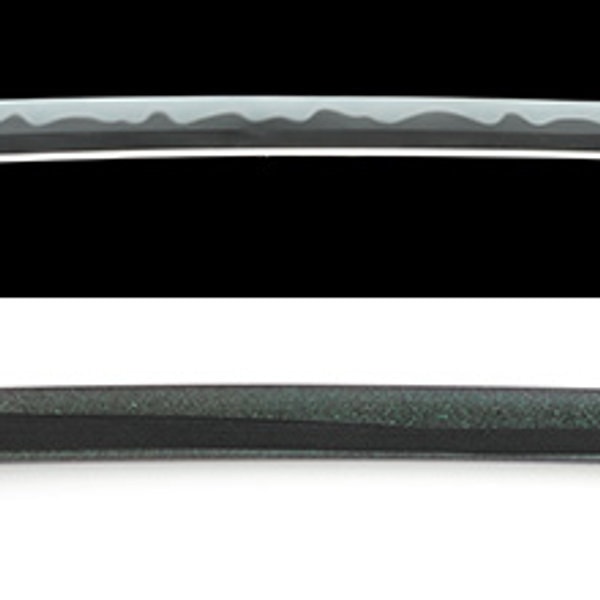
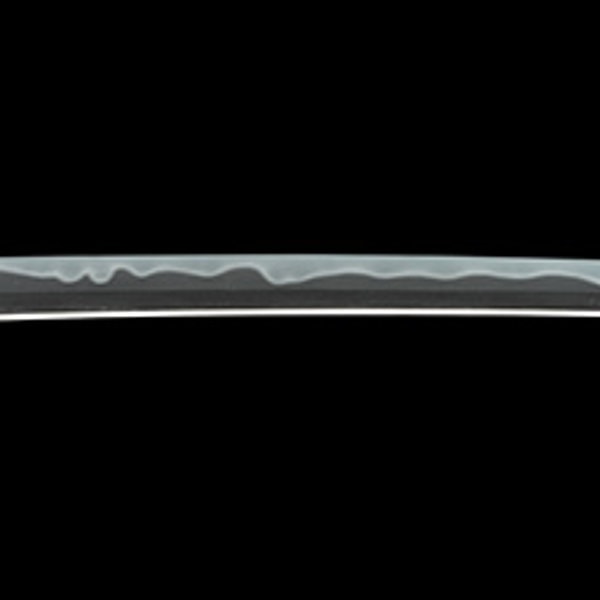
His hand is read first in the surging tōran-midare, the billowing-wave temper the published sources call his greatest forte, learned in emulation of Tsuda Echizen no Kami Sukehiro of the same Ōsaka generation. The temper opens at the base from a straight suguha yakidashi and then rises into a large ō-gunome-midare, mixing ko-notare, gunome and yahazu-like teeth, that crests into the wave. Within it the judges single out a hamon they treat as his own: "the katayama-midare, a hamon distinctive to this smith"[[c:2]], the one-sided, leaning wave he carries often with a run of three linked gunome below the yokote. Long ashi enter well, the nioi is deep, the ko-nie thick, fine sunagashi runs throughout and kinsuji appear, the nioiguchi bright and clear, the bōshi sugu to a small ko-maru. Beside this he keeps the aligned gunome of his background, and the recurring fine sunagashi through the temper the sources read as "a feature of the Monju lineage that forms his background"[[c:3]].

The jigane is the constant beneath every manner. It is a tightly packed ko-itame, sometimes mixed with mokume, over which very fine ji-nie lies thickly and fine chikei enter well, the steel bright and clear. On the finest blades a mizukage rises at the machi. The published sources praise this forging as refined and of excellent quality, bright in steel tone, and it is the brightness of both ji and ha together that they repeatedly name as the mark of his work. The construction supports the kantei as much as the activity does: the mune-oroshi drops steeply, the hiraniku is scant, the body broad with a Kanbun-Shintō taper, points of make the judges note as his own.

His range divides into three faces the swordbooks list together. The earliest, carried on the two Enpō 4 Tokubetsu Jūyō, is the aligned ō-gunome with somewhat chōji-like elements, a manner close to the shodai's but already brighter in nioi and firmer in ko-nie, the talent read as surpassing the teacher. The mature and most personal face is the tōran with its katayama lean, judged at its best as bolder, more varied and more dynamic than usual. The third is a quiet suguha, comparatively uncommon on his signed work, which one Jūyō reads as modeled on a high master of the Sōshū tradition, particularly the manner of Gō Yoshihiro, the intention discernible above all in the state of the hardened edge. Dated pieces are few, so the Enpō 4 katana are valued as documentary material for placing the rest.

What sets the nidai apart from the wider Ōsaka school is exactly what the judges name as his own. His bright deep-nioi tōran, with its leaning katayama form and the three linked gunome below the yokote, distinguishes him from the symmetrical wave of his contemporaries, while the steep mune-oroshi and scant hiraniku mark the make. The fine sunagashi threading the temper carries the Monju descent forward into the Ōsaka idiom, and the rarer suguha shows him reaching back to Sōshū. He stands as the second pillar of the Kanesada house, the smith who took his father's manner and, in the judgment of the published record, carried it past him.

For the collector the nidai is a substantial but bounded name. Seventy-six of his blades stand in the Tokubetsu Jūyō and Jūyō tiers, but only the two Enpō 4 katana reach the higher rank, so a top example surfaces seldom and a more typical Jūyō from time to time, with patience. The published sources call one of the dated katana "one of his representative works"[[c:4]] and another, of recorded whereabouts, "an outstanding piece within the second generation Kanesada's oeuvre"[[c:5]]. His blades are held in collections grounded in their own provenance: a wakizashi signed Sakakura Gonnoshin Terukane, carrying his katayama-midare and the three linked gunome, descends through the Yamauchi family of Tosa, and two of his works are recorded in the Imperial collection. A signed nidai Kanesada, bright in ji and ha and bearing his leaning wave, is among the more attainable of the first-rank Ōsaka Shintō names, not beyond reach, but a landmark when a fine dated example does appear.

Historical importance

Where Kanesada stands among comparable artisans: across all of nihontō, and within tradition, era, and period. The tiers (Foremost · Leading · Major · Notable) weigh official designations from the NBTHK and Japan's Agency for Cultural Affairs, together with historical honors of lasting repute such as the Sansaku and Meibutsu-chō.

随一
Foremost
屈指
Leading
有数
Major
著名
Notable

Select a lens to see how it's measured.

Designation record
78 designated works
Gyobutsu (Imperial)
2
Tokubetsu Jūyō
2
Jūyō
74
12 works by Kanesada on the market→
Kanesada — full profileŌsaka Shintō, the nidai Echigo no Kami Kanesada / Sakakura Gonnoshin Terukane (Settsu) school

Dated Works

Years he was demonstrably active, proven by signed-and-dated blades

Active period
1676–1682Editorial estimate: 1673–1682
21 of 76 designated works carry a date
1670
1680
1690
About the school

Osaka Shinto

大坂新刀

Shinto · Settsu

75 pieces on the market now

›

Osaka in the early-to-mid Edo period was a merchant capital, a city of commerce and capital rather than a castle town tied to a single daimyo house, and the swordsmiths who gathered there worked for a wealthy townsman clientele as much as for warriors. The grouping known as Osaka Shinto (大坂新刀) took shape in Settsu from two feeder currents. Learn more →

17 recorded smiths255 designated works
Leading smiths
SmithEraDesignated
Shinkai真改1649-168279
Tadatsuna忠綱1673-171753
Kanesada包貞1673-168278
Kanesada包貞1648-165210
Kunisuke國助1658-166310
Explore the Osaka Shinto school →
NBTHK Certificate
Tokubetsu Hozon Tōken特別保存刀剣
Sword Especially Worthy of Preservation
›

A Hozon-certified blade judged to show notably superior workmanship and a better state of preservation. The bar is higher: re-tempered blades and most unsigned Muromachi/Edo works are excluded.

Signed: 越後守包貞 (Shinto Kanesada)
As written on the certificate
About the NBTHK›

The NBTHK (Nihon Bijutsu Tōken Hozon Kyōkai, the Society for the Preservation of Japanese Art Swords) is a public-interest incorporated foundation founded in 1948 and supervised by Japan’s Agency for Cultural Affairs (Bunkachō); it is based at the Japanese Sword Museum in Tokyo. Its expert panels physically examine each submitted work (shinsa) and issue a certificate (kanteishō) ranking it by artistic and historical merit. NBTHK papers are the most widely recognized standard of authentication for Japanese swords and fittings.

NBTHK official site→
Seller
N
Nihonto Australia
🇦🇺Ships from Australia
›
✓Verified dealernihonto.com.au
Credit card
View all of Nihonto Australia’s listings→View this item on the dealer’s site→

More works by Shinto Kanesada

View all →
World Seiyudo
Tokuho
Wakizashi - Tokuho - by Shinto Kanesada - Sakakura Gonnoshin TerukaneWakizashi - Tokuho - by Shinto Kanesada - Sakakura Gonnoshin Terukane

Wakizashi

ByShinto Kanesada
¥1,900,000
Aoi Art
Tokuho
Wakizashi - Tokuho - by Shinto Kanesada - Sakura Gonnoshin TerukaneWakizashi - Tokuho - by Shinto Kanesada - Sakura Gonnoshin Terukane

Wakizashi

ByShinto Kanesada
¥1,200,000
Toushin
Tokubetsu Kichō
Katana - Tokubetsu Kichō - by Shinto Kanesada - Sakakura Gonnoshin TerukaneKatana - Tokubetsu Kichō - by Shinto Kanesada - Sakakura Gonnoshin Terukane

Katana

ByShinto Kanesada
¥2,970,000
Choshuya
Tokuho
Wakizashi - Tokuho - by Shinto Kanesada - Sakakura Gonnoshin Terukane (O Wazamono)Wakizashi - Tokuho - by Shinto Kanesada - Sakakura Gonnoshin Terukane (O Wazamono)

Wakizashi

ByShinto Kanesada
Ask
Sanmei
Tokuho
Katana - Tokuho - by Shinto Kanesada - Echigo-no-kami KanesadaKatana - Tokuho - by Shinto Kanesada - Echigo-no-kami Kanesada

Katana

ByShinto Kanesada
Ask
Nihonto Australia
Yari - by Shinto Kanesada - Kawachi No Kami Monju Kanesada in ShirasayaYari - by Shinto Kanesada - Kawachi No Kami Monju Kanesada in Shirasaya

Yari

ByShinto Kanesada
¥2,000
Choshuya
Katana - by Shinto Kanesada - Sakakura Gennojo TerukaneKatana - by Shinto Kanesada - Sakakura Gennojo Terukane

Katana

ByShinto Kanesada
Ask
Choshuya
Wakizashi - by Shinto Kanesada - Echigo no Kami Kanesada (O-Wazamono)Wakizashi - by Shinto Kanesada - Echigo no Kami Kanesada (O-Wazamono)

Wakizashi

ByShinto Kanesada
Ask

Previously sold by Shinto Kanesada

Aoi Art
Jūyō
Katana - Jūyō - by Shinto Kanesada - Echigo no Kami KanesadaKatana - Jūyō - by Shinto Kanesada - Echigo no Kami Kanesada
Sold

Katana

ByShinto Kanesada
SOLD
Choshuya
Wakizashi - by Shinto Kanesada - Echigo no Kami Kanesada (O-wazamono)Wakizashi - by Shinto Kanesada - Echigo no Kami Kanesada (O-wazamono)
Sold

Wakizashi

ByShinto Kanesada
SOLD
Aoi Art
Tokuho
Daisho - Tokuho - by Shinto Kanesada - Daisho: Echigo-no-kami Kanesada (2nd gen), Kawachi-no-kami Kunisuke (1st gen)Daisho - Tokuho - by Shinto Kanesada - Daisho: Echigo-no-kami Kanesada (2nd gen), Kawachi-no-kami Kunisuke (1st gen)
Sold

Daishō

ByShinto Kanesada
SOLD
World Seiyudo
Hozon
Katana - Hozon - by Shinto Kanesada - 2nd Generation Kanesada (Sakakura Gon-no-shin Terukane) - Owazamono, NBTHK Hozon TokenKatana - Hozon - by Shinto Kanesada - 2nd Generation Kanesada (Sakakura Gon-no-shin Terukane) - Owazamono, NBTHK Hozon Token
Sold

Katana

ByShinto Kanesada
SOLD
Aoi Art
Katana - by Shinto Kanesada - Echigo Kami KanesadaKatana - by Shinto Kanesada - Echigo Kami Kanesada
Sold

Katana

ByShinto Kanesada
SOLD
Tozando
Katana - by Shinto Kanesada - TerukaneKatana - by Shinto Kanesada - Terukane
Sold

Katana

ByShinto Kanesada
SOLD
Tokyo Sword
Katana - by Shinto Kanesada - Suzuki Kaganokami Sada - August 1692, InrokizamisayaKatana - by Shinto Kanesada - Suzuki Kaganokami Sada - August 1692, Inrokizamisaya
Sold

Katana

ByShinto Kanesada
SOLD
Eirakudo
Tokuho
Katana - Tokuho - by Shinto Kanesada - Echigonokami Kanesada - Tokubetsu Hozon TokenKatana - Tokuho - by Shinto Kanesada - Echigonokami Kanesada - Tokubetsu Hozon Token
Sold

Katana

ByShinto Kanesada
SOLD

More from the Osaka Shinto school

View all →
Touken Komachi
Tokuho
Katana - Tokuho - by Osaka Shinkai - 1st Generation Izumi-no-kami KunisadaKatana - Tokuho - by Osaka Shinkai - 1st Generation Izumi-no-kami Kunisada

Katana

ByOsaka Shinkai
¥1,200,000
World Seiyudo
Tokuho
Wakizashi - Tokuho - by Shinto Tadatsuna - Awataguchi Omi-no-kami Tadatsuna (Ikkanshi Tadatsuna) - Tokubetsu Hozon TokenWakizashi - Tokuho - by Shinto Tadatsuna - Awataguchi Omi-no-kami Tadatsuna (Ikkanshi Tadatsuna) - Tokubetsu Hozon Token

Wakizashi

ByShinto Tadatsuna
¥1,500,000
Toushin
Tokuho
Daisho - Tokuho - by Shinto Kuniyasu - Daisho: Higo no kami KuniyasuDaisho - Tokuho - by Shinto Kuniyasu - Daisho: Higo no kami Kuniyasu

Daishō

ByShinto Kuniyasu
¥2,640,000
Iida Koendo
Tokuho
Wakizashi - Tokuho - by Osaka Shinkai - Inoue Shinkai (Kiku Seal) Enpo 8th Year, AugustWakizashi - Tokuho - by Osaka Shinkai - Inoue Shinkai (Kiku Seal) Enpo 8th Year, August

Wakizashi

ByOsaka Shinkai
¥8,800,000
Iida Koendo
Tokuho
Katana - Tokuho - by Osaka Shinkai - Inoue Shinkai (Kiku Seal) - Enpo 6th Year, AugustKatana - Tokuho - by Osaka Shinkai - Inoue Shinkai (Kiku Seal) - Enpo 6th Year, August

Katana

ByOsaka Shinkai
¥13,200,000
Aoi Art
Hozon
Katana - Hozon - by Shinto Kuniyasu - Higo Kami KuniyasuKatana - Hozon - by Shinto Kuniyasu - Higo Kami Kuniyasu

Katana

ByShinto Kuniyasu
¥2,700,000
Bushido Antique Japanese Swords
Tokuho
Wakizashi - Tokuho - by Shinto Tadatsuna - Awataguchi Omi No Kami Tadatsuna WakizashiWakizashi - Tokuho - by Shinto Tadatsuna - Awataguchi Omi No Kami Tadatsuna Wakizashi

Wakizashi

ByShinto Tadatsuna
¥24,000
Yamasiroya
Tokuho
Katana - Tokuho - by Osaka Shinkai - Inoue ShinkaiKatana - Tokuho - by Osaka Shinkai - Inoue Shinkai

Katana

ByOsaka Shinkai
Ask

Swords

  • Katana
  • Wakizashi
  • Tantō
  • Tachi
  • Naginata
  • Yari

Fittings

  • Tsuba
  • Fuchi-Kashira
  • Kozuka
  • Menuki

By Certification

  • Tokujū
  • Jūyō
  • Tokuho
  • Hozon

Resources

  • Dealer Directory
  • Artist Directory
  • Glossary
  • Browse All
Nihontowatch© 2026
TermsPrivacyCookiesAbout

Description

This is a katana made by Echigo No Kami Kanesada during the Shinto period. It is published in the Shinto Taikan. Further details about its features and condition are available upon inquiry.

Certificate Reading

Certificate reading — 銘 越後守包貞

NihontoWatch MonNihontoWatch
MarketAuctionsEncyclopedia
Swords›Osaka Shinto›Kanesada›Katana: Echigo No Kami Kanesada - Published in the Shinto Taikan
katanaTokubetsu Hozon
Shinto Kanesada

Katana: Echigo No Kami Kanesada - Published in the Shinto Taikan

mei · Enpo (1673-1681)

Price on request
Visit seller website →
Shinto Kanesada — 1 of 3
Shinto Kanesada — 2 of 3
Shinto Kanesada — 3 of 3
1 / 3
1 / 3
Shinto Kanesada — 1 of 3Shinto Kanesada — 2 of 3Shinto Kanesada — 3 of 3
Measurements & details
Smith
Shinto Kanesada
Type
Katana
School
Osaka Shinto
Period
Around 1673–1682(Enpo)
Signature
Signed(100% of this smith's designated works are signed)
Description
About the maker

Kanesada

包貞

Ōsaka Shintō, the nidai Echigo no Kami Kanesada / Sakakura Gonnoshin Terukane (Settsu) · Settsu · around 1673-1682

Tōken Taikan top 11%

12 pieces on the market now

›

The nidai Echigo no Kami Kanesada signed two katana dated Enpō 4 (1676), and both rose to Tokubetsu Jūyō, the pair the most highly placed works of his hand on record. He is the second generation of the Kanesada line of Ōsaka, working through the Enpō and Tenna years among the leading smiths of the Ōsaka Shintō. The published sources tell a single, consistent biography across his blades. He studied under the shodai Echigo no Kami Kanesada, became his successor and adopted son, and at first signed Echigo no Kami Kanesada himself; but when the shodai's natural son Iwamatsu came of age, he yielded the Kanesada name to the boy and thereafter signed Sakakura Gonnoshin Terukane. A surviving blade inscribed Sakakura Gonnoshin Terukane, with Echigo no Kami Kanesada retired on the reverse and dated the second month of Enpō 8, fixes that change to about 1680. Of the man behind the two names the NBTHK is direct: "the nidai Kanesada was a master who surpassed the shodai"[[c:1]].

His hand is read first in the surging tōran-midare, the billowing-wave temper the published sources call his greatest forte, learned in emulation of Tsuda Echizen no Kami Sukehiro of the same Ōsaka generation. The temper opens at the base from a straight suguha yakidashi and then rises into a large ō-gunome-midare, mixing ko-notare, gunome and yahazu-like teeth, that crests into the wave. Within it the judges single out a hamon they treat as his own: "the katayama-midare, a hamon distinctive to this smith"[[c:2]], the one-sided, leaning wave he carries often with a run of three linked gunome below the yokote. Long ashi enter well, the nioi is deep, the ko-nie thick, fine sunagashi runs throughout and kinsuji appear, the nioiguchi bright and clear, the bōshi sugu to a small ko-maru. Beside this he keeps the aligned gunome of his background, and the recurring fine sunagashi through the temper the sources read as "a feature of the Monju lineage that forms his background"[[c:3]].

The jigane is the constant beneath every manner. It is a tightly packed ko-itame, sometimes mixed with mokume, over which very fine ji-nie lies thickly and fine chikei enter well, the steel bright and clear. On the finest blades a mizukage rises at the machi. The published sources praise this forging as refined and of excellent quality, bright in steel tone, and it is the brightness of both ji and ha together that they repeatedly name as the mark of his work. The construction supports the kantei as much as the activity does: the mune-oroshi drops steeply, the hiraniku is scant, the body broad with a Kanbun-Shintō taper, points of make the judges note as his own.

His range divides into three faces the swordbooks list together. The earliest, carried on the two Enpō 4 Tokubetsu Jūyō, is the aligned ō-gunome with somewhat chōji-like elements, a manner close to the shodai's but already brighter in nioi and firmer in ko-nie, the talent read as surpassing the teacher. The mature and most personal face is the tōran with its katayama lean, judged at its best as bolder, more varied and more dynamic than usual. The third is a quiet suguha, comparatively uncommon on his signed work, which one Jūyō reads as modeled on a high master of the Sōshū tradition, particularly the manner of Gō Yoshihiro, the intention discernible above all in the state of the hardened edge. Dated pieces are few, so the Enpō 4 katana are valued as documentary material for placing the rest.

What sets the nidai apart from the wider Ōsaka school is exactly what the judges name as his own. His bright deep-nioi tōran, with its leaning katayama form and the three linked gunome below the yokote, distinguishes him from the symmetrical wave of his contemporaries, while the steep mune-oroshi and scant hiraniku mark the make. The fine sunagashi threading the temper carries the Monju descent forward into the Ōsaka idiom, and the rarer suguha shows him reaching back to Sōshū. He stands as the second pillar of the Kanesada house, the smith who took his father's manner and, in the judgment of the published record, carried it past him.

For the collector the nidai is a substantial but bounded name. Seventy-six of his blades stand in the Tokubetsu Jūyō and Jūyō tiers, but only the two Enpō 4 katana reach the higher rank, so a top example surfaces seldom and a more typical Jūyō from time to time, with patience. The published sources call one of the dated katana "one of his representative works"[[c:4]] and another, of recorded whereabouts, "an outstanding piece within the second generation Kanesada's oeuvre"[[c:5]]. His blades are held in collections grounded in their own provenance: a wakizashi signed Sakakura Gonnoshin Terukane, carrying his katayama-midare and the three linked gunome, descends through the Yamauchi family of Tosa, and two of his works are recorded in the Imperial collection. A signed nidai Kanesada, bright in ji and ha and bearing his leaning wave, is among the more attainable of the first-rank Ōsaka Shintō names, not beyond reach, but a landmark when a fine dated example does appear.
Historical importance

Where Kanesada stands among comparable artisans: across all of nihontō, and within tradition, era, and period. The tiers (Foremost · Leading · Major · Notable) weigh official designations from the NBTHK and Japan's Agency for Cultural Affairs, together with historical honors of lasting repute such as the Sansaku and Meibutsu-chō.

随一
Foremost
屈指
Leading
有数
Major
著名
Notable

Select a lens to see how it's measured.

Designation record
78 designated works
Gyobutsu (Imperial)
2
Tokubetsu Jūyō
2
Jūyō
74
12 works by Kanesada on the market→
Kanesada — full profileŌsaka Shintō, the nidai Echigo no Kami Kanesada / Sakakura Gonnoshin Terukane (Settsu) school

Dated Works

Years he was demonstrably active, proven by signed-and-dated blades

Active period
1676–1682Editorial estimate: 1673–1682
21 of 76 designated works carry a date
1670
1680
1690
About the school

Osaka Shinto

大坂新刀

Shinto · Settsu

75 pieces on the market now

›

Osaka in the early-to-mid Edo period was a merchant capital, a city of commerce and capital rather than a castle town tied to a single daimyo house, and the swordsmiths who gathered there worked for a wealthy townsman clientele as much as for warriors. The grouping known as Osaka Shinto (大坂新刀) took shape in Settsu from two feeder currents. Learn more →

17 recorded smiths255 designated works
Leading smiths
SmithEraDesignated
Shinkai真改1649-168279
Tadatsuna忠綱1673-171753
Kanesada包貞1673-168278
Kanesada包貞1648-165210
Kunisuke國助1658-166310
Explore the Osaka Shinto school →
NBTHK Certificate
Tokubetsu Hozon Tōken特別保存刀剣
Sword Especially Worthy of Preservation
›

A Hozon-certified blade judged to show notably superior workmanship and a better state of preservation. The bar is higher: re-tempered blades and most unsigned Muromachi/Edo works are excluded.

Signed: 越後守包貞 (Shinto Kanesada)
As written on the certificate
About the NBTHK›

The NBTHK (Nihon Bijutsu Tōken Hozon Kyōkai, the Society for the Preservation of Japanese Art Swords) is a public-interest incorporated foundation founded in 1948 and supervised by Japan’s Agency for Cultural Affairs (Bunkachō); it is based at the Japanese Sword Museum in Tokyo. Its expert panels physically examine each submitted work (shinsa) and issue a certificate (kanteishō) ranking it by artistic and historical merit. NBTHK papers are the most widely recognized standard of authentication for Japanese swords and fittings.

NBTHK official site→
Seller
N
Nihonto Australia
🇦🇺Ships from Australia
›
✓Verified dealernihonto.com.au
Credit card
View all of Nihonto Australia’s listings→View this item on the dealer’s site→

More works by Shinto Kanesada

View all →
World Seiyudo
Tokuho
Wakizashi - Tokuho - by Shinto Kanesada - Sakakura Gonnoshin TerukaneWakizashi - Tokuho - by Shinto Kanesada - Sakakura Gonnoshin Terukane

Wakizashi

ByShinto Kanesada
¥1,900,000
Aoi Art
Tokuho
Wakizashi - Tokuho - by Shinto Kanesada - Sakura Gonnoshin TerukaneWakizashi - Tokuho - by Shinto Kanesada - Sakura Gonnoshin Terukane

Wakizashi

ByShinto Kanesada
¥1,200,000
Toushin
Tokubetsu Kichō
Katana - Tokubetsu Kichō - by Shinto Kanesada - Sakakura Gonnoshin TerukaneKatana - Tokubetsu Kichō - by Shinto Kanesada - Sakakura Gonnoshin Terukane

Katana

ByShinto Kanesada
¥2,970,000
Choshuya
Tokuho
Wakizashi - Tokuho - by Shinto Kanesada - Sakakura Gonnoshin Terukane (O Wazamono)Wakizashi - Tokuho - by Shinto Kanesada - Sakakura Gonnoshin Terukane (O Wazamono)

Wakizashi

ByShinto Kanesada
Ask
Sanmei
Tokuho
Katana - Tokuho - by Shinto Kanesada - Echigo-no-kami KanesadaKatana - Tokuho - by Shinto Kanesada - Echigo-no-kami Kanesada

Katana

ByShinto Kanesada
Ask
Nihonto Australia
Yari - by Shinto Kanesada - Kawachi No Kami Monju Kanesada in ShirasayaYari - by Shinto Kanesada - Kawachi No Kami Monju Kanesada in Shirasaya

Yari

ByShinto Kanesada
¥2,000
Choshuya
Katana - by Shinto Kanesada - Sakakura Gennojo TerukaneKatana - by Shinto Kanesada - Sakakura Gennojo Terukane

Katana

ByShinto Kanesada
Ask
Choshuya
Wakizashi - by Shinto Kanesada - Echigo no Kami Kanesada (O-Wazamono)Wakizashi - by Shinto Kanesada - Echigo no Kami Kanesada (O-Wazamono)

Wakizashi

ByShinto Kanesada
Ask

Previously sold by Shinto Kanesada

Aoi Art
Jūyō
Katana - Jūyō - by Shinto Kanesada - Echigo no Kami KanesadaKatana - Jūyō - by Shinto Kanesada - Echigo no Kami Kanesada
Sold

Katana

ByShinto Kanesada
SOLD
Choshuya
Wakizashi - by Shinto Kanesada - Echigo no Kami Kanesada (O-wazamono)Wakizashi - by Shinto Kanesada - Echigo no Kami Kanesada (O-wazamono)
Sold

Wakizashi

ByShinto Kanesada
SOLD
Aoi Art
Tokuho
Daisho - Tokuho - by Shinto Kanesada - Daisho: Echigo-no-kami Kanesada (2nd gen), Kawachi-no-kami Kunisuke (1st gen)Daisho - Tokuho - by Shinto Kanesada - Daisho: Echigo-no-kami Kanesada (2nd gen), Kawachi-no-kami Kunisuke (1st gen)
Sold

Daishō

ByShinto Kanesada
SOLD
World Seiyudo
Hozon
Katana - Hozon - by Shinto Kanesada - 2nd Generation Kanesada (Sakakura Gon-no-shin Terukane) - Owazamono, NBTHK Hozon TokenKatana - Hozon - by Shinto Kanesada - 2nd Generation Kanesada (Sakakura Gon-no-shin Terukane) - Owazamono, NBTHK Hozon Token
Sold

Katana

ByShinto Kanesada
SOLD
Aoi Art
Katana - by Shinto Kanesada - Echigo Kami KanesadaKatana - by Shinto Kanesada - Echigo Kami Kanesada
Sold

Katana

ByShinto Kanesada
SOLD
Tozando
Katana - by Shinto Kanesada - TerukaneKatana - by Shinto Kanesada - Terukane
Sold

Katana

ByShinto Kanesada
SOLD
Tokyo Sword
Katana - by Shinto Kanesada - Suzuki Kaganokami Sada - August 1692, InrokizamisayaKatana - by Shinto Kanesada - Suzuki Kaganokami Sada - August 1692, Inrokizamisaya
Sold

Katana

ByShinto Kanesada
SOLD
Eirakudo
Tokuho
Katana - Tokuho - by Shinto Kanesada - Echigonokami Kanesada - Tokubetsu Hozon TokenKatana - Tokuho - by Shinto Kanesada - Echigonokami Kanesada - Tokubetsu Hozon Token
Sold

Katana

ByShinto Kanesada
SOLD

More from the Osaka Shinto school

View all →
Touken Komachi
Tokuho
Katana - Tokuho - by Osaka Shinkai - 1st Generation Izumi-no-kami KunisadaKatana - Tokuho - by Osaka Shinkai - 1st Generation Izumi-no-kami Kunisada

Katana

ByOsaka Shinkai
¥1,200,000
World Seiyudo
Tokuho
Wakizashi - Tokuho - by Shinto Tadatsuna - Awataguchi Omi-no-kami Tadatsuna (Ikkanshi Tadatsuna) - Tokubetsu Hozon TokenWakizashi - Tokuho - by Shinto Tadatsuna - Awataguchi Omi-no-kami Tadatsuna (Ikkanshi Tadatsuna) - Tokubetsu Hozon Token

Wakizashi

ByShinto Tadatsuna
¥1,500,000
Toushin
Tokuho
Daisho - Tokuho - by Shinto Kuniyasu - Daisho: Higo no kami KuniyasuDaisho - Tokuho - by Shinto Kuniyasu - Daisho: Higo no kami Kuniyasu

Daishō

ByShinto Kuniyasu
¥2,640,000
Iida Koendo
Tokuho
Wakizashi - Tokuho - by Osaka Shinkai - Inoue Shinkai (Kiku Seal) Enpo 8th Year, AugustWakizashi - Tokuho - by Osaka Shinkai - Inoue Shinkai (Kiku Seal) Enpo 8th Year, August

Wakizashi

ByOsaka Shinkai
¥8,800,000
Iida Koendo
Tokuho
Katana - Tokuho - by Osaka Shinkai - Inoue Shinkai (Kiku Seal) - Enpo 6th Year, AugustKatana - Tokuho - by Osaka Shinkai - Inoue Shinkai (Kiku Seal) - Enpo 6th Year, August

Katana

ByOsaka Shinkai
¥13,200,000
Aoi Art
Hozon
Katana - Hozon - by Shinto Kuniyasu - Higo Kami KuniyasuKatana - Hozon - by Shinto Kuniyasu - Higo Kami Kuniyasu

Katana

ByShinto Kuniyasu
¥2,700,000
Bushido Antique Japanese Swords
Tokuho
Wakizashi - Tokuho - by Shinto Tadatsuna - Awataguchi Omi No Kami Tadatsuna WakizashiWakizashi - Tokuho - by Shinto Tadatsuna - Awataguchi Omi No Kami Tadatsuna Wakizashi

Wakizashi

ByShinto Tadatsuna
¥24,000
Yamasiroya
Tokuho
Katana - Tokuho - by Osaka Shinkai - Inoue ShinkaiKatana - Tokuho - by Osaka Shinkai - Inoue Shinkai

Katana

ByOsaka Shinkai
Ask

Swords

  • Katana
  • Wakizashi
  • Tantō
  • Tachi
  • Naginata
  • Yari

Fittings

  • Tsuba
  • Fuchi-Kashira
  • Kozuka
  • Menuki

By Certification

  • Tokujū
  • Jūyō
  • Tokuho
  • Hozon

Resources

  • Dealer Directory
  • Artist Directory
  • Glossary
  • Browse All
Nihontowatch© 2026
TermsPrivacyCookiesAbout
NihontoWatch Mon

NihontoWatch

MarketAuctions
Encyclopedia
NihontoWatch Mon

NihontoWatch

MarketAuctions
Encyclopedia