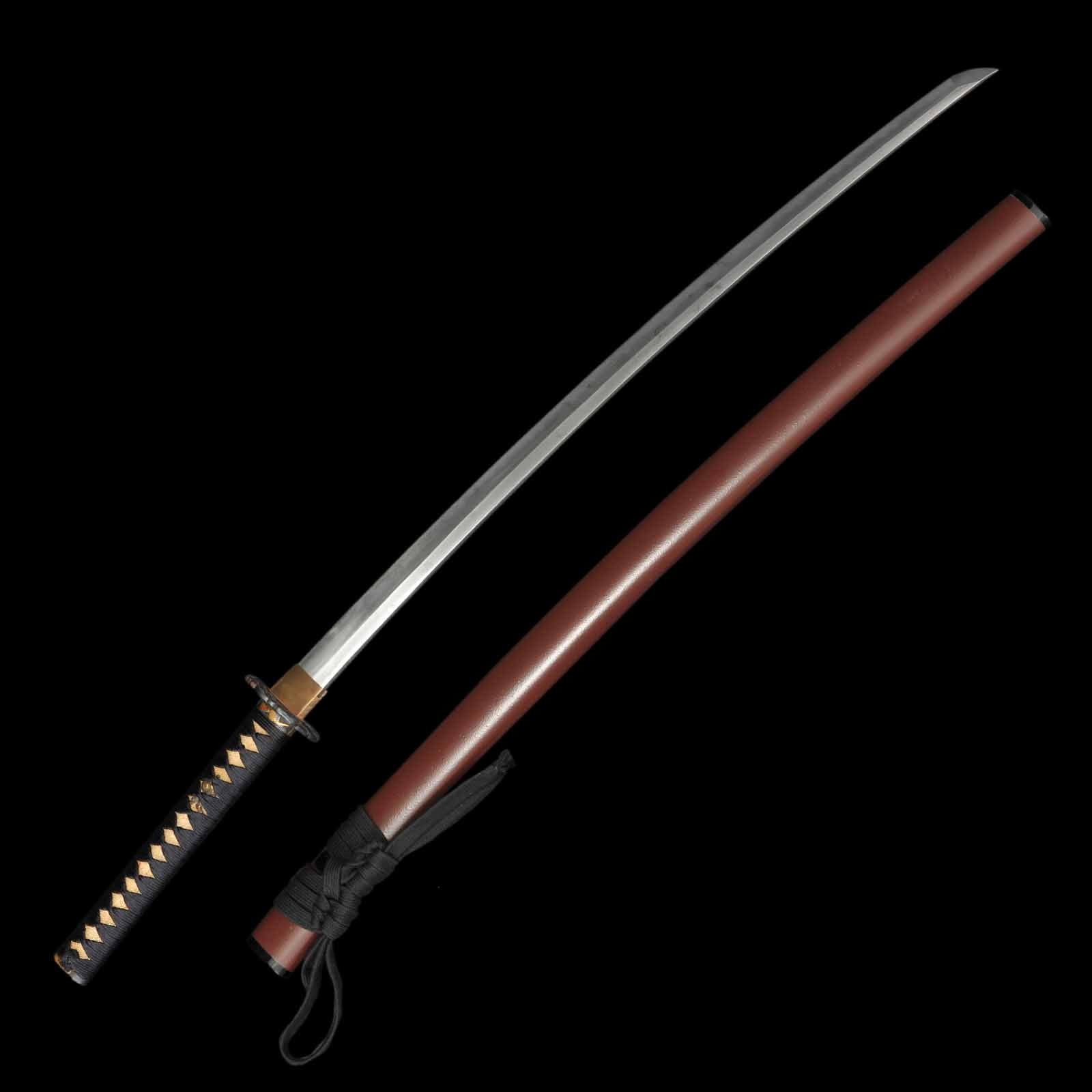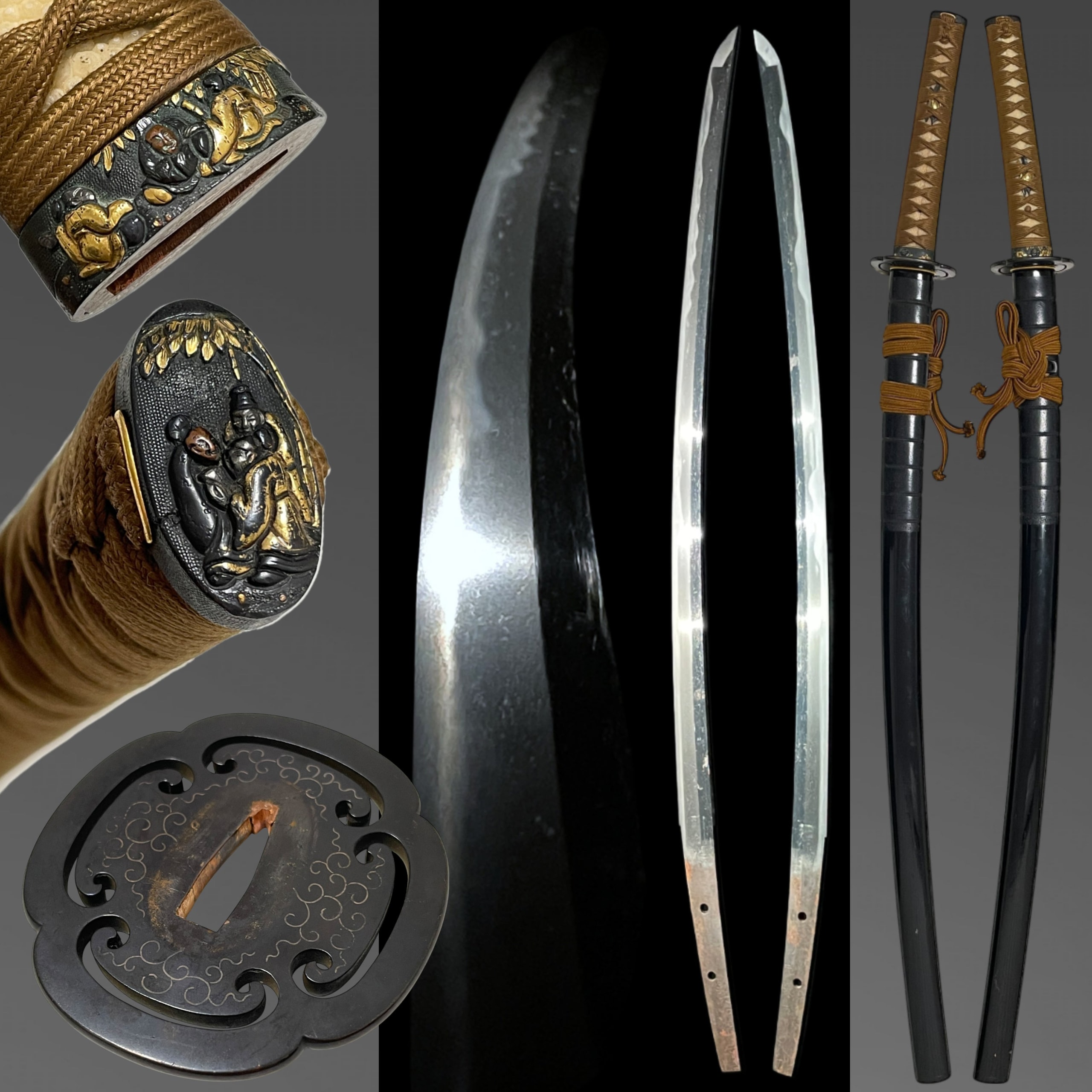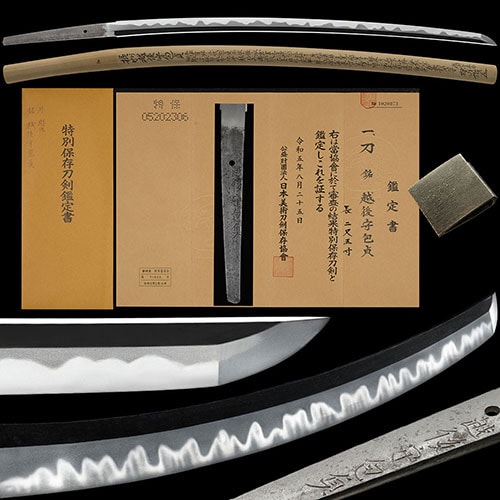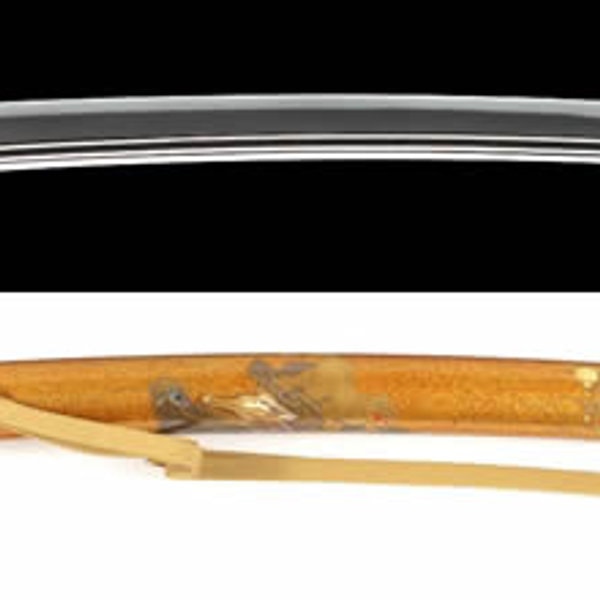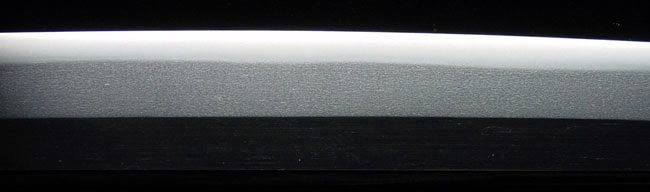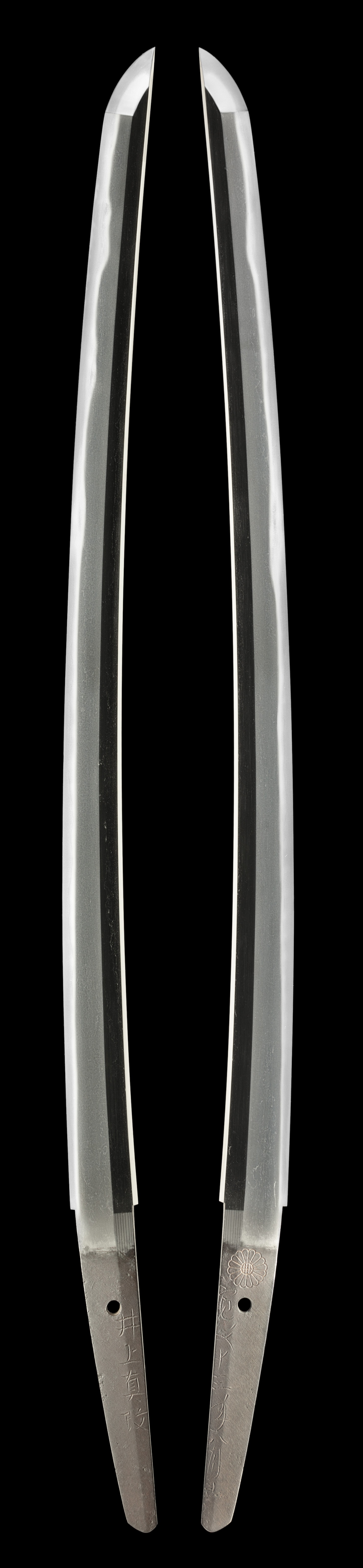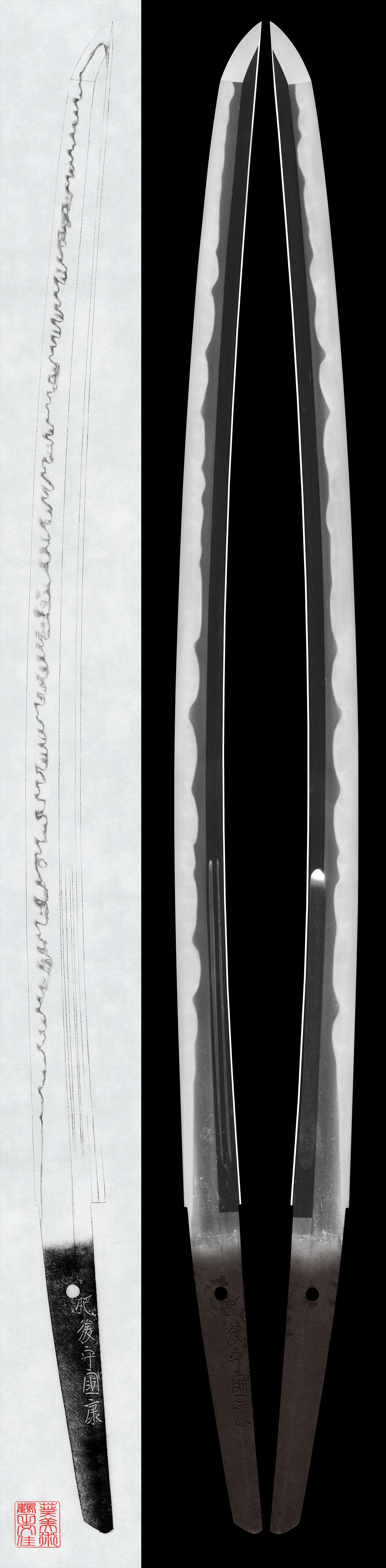


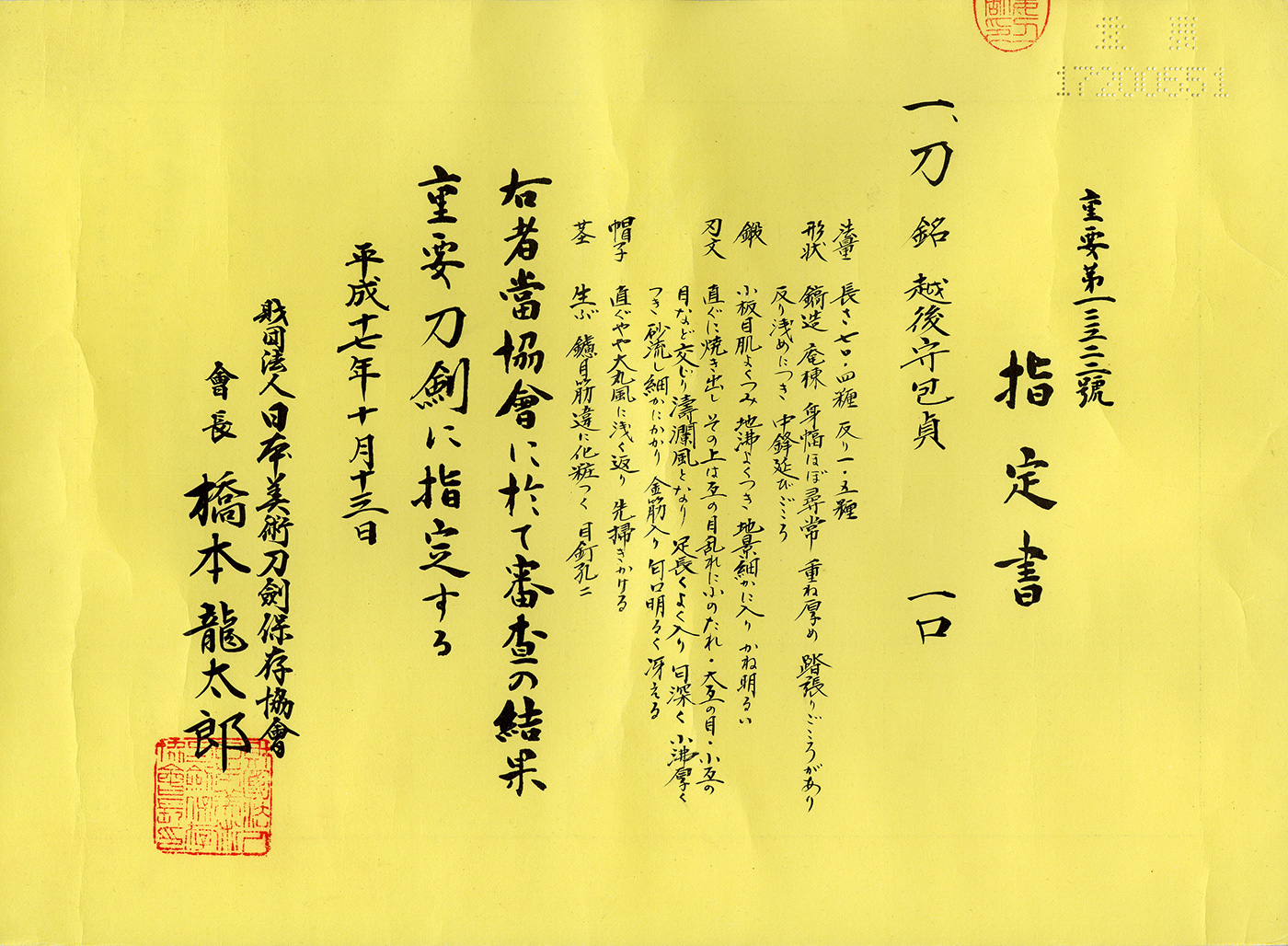
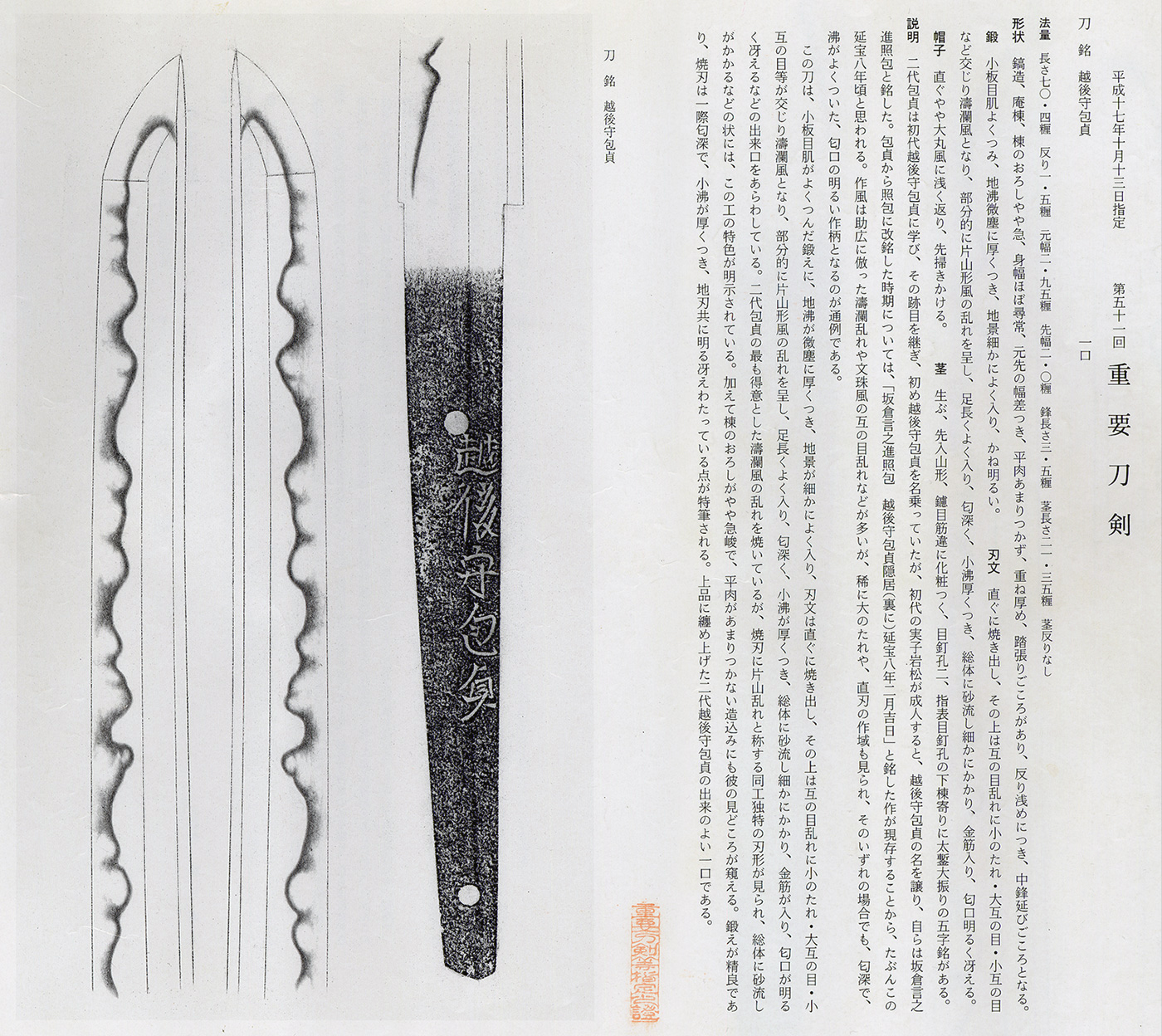
-, 51st Session — Designated October 13, 2005
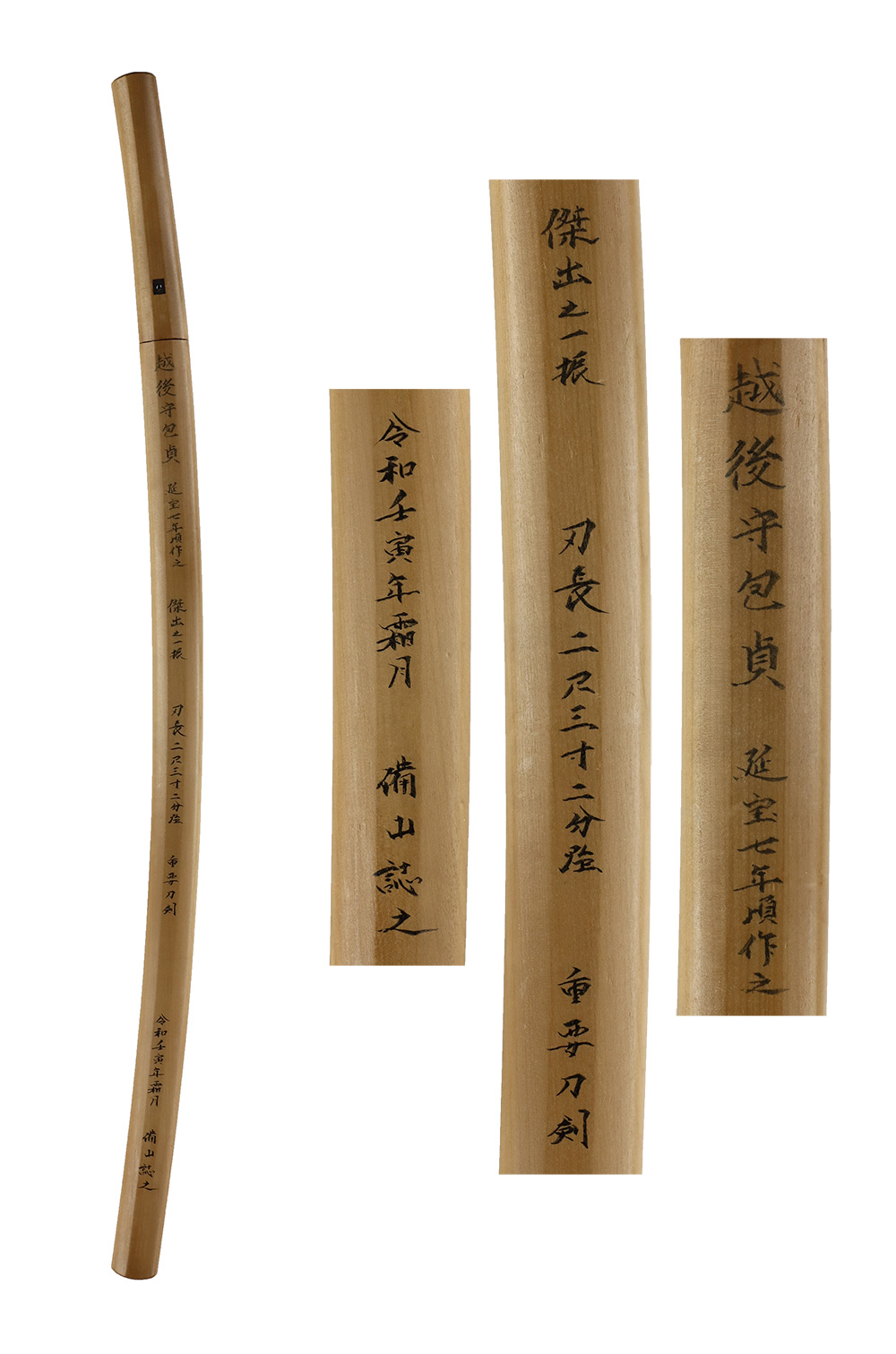
, : Echigo no Kami Kanesada (越後守包貞)
Measurements 70.4 cm, 1.5 cm, 2.95 cm, 2.0 cm, 3.5 cm, 23.5 cm
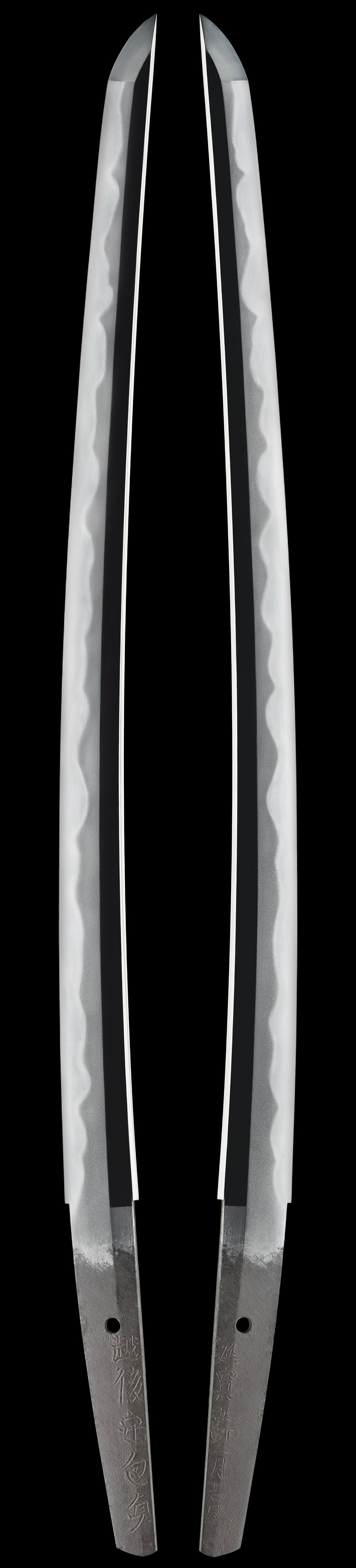
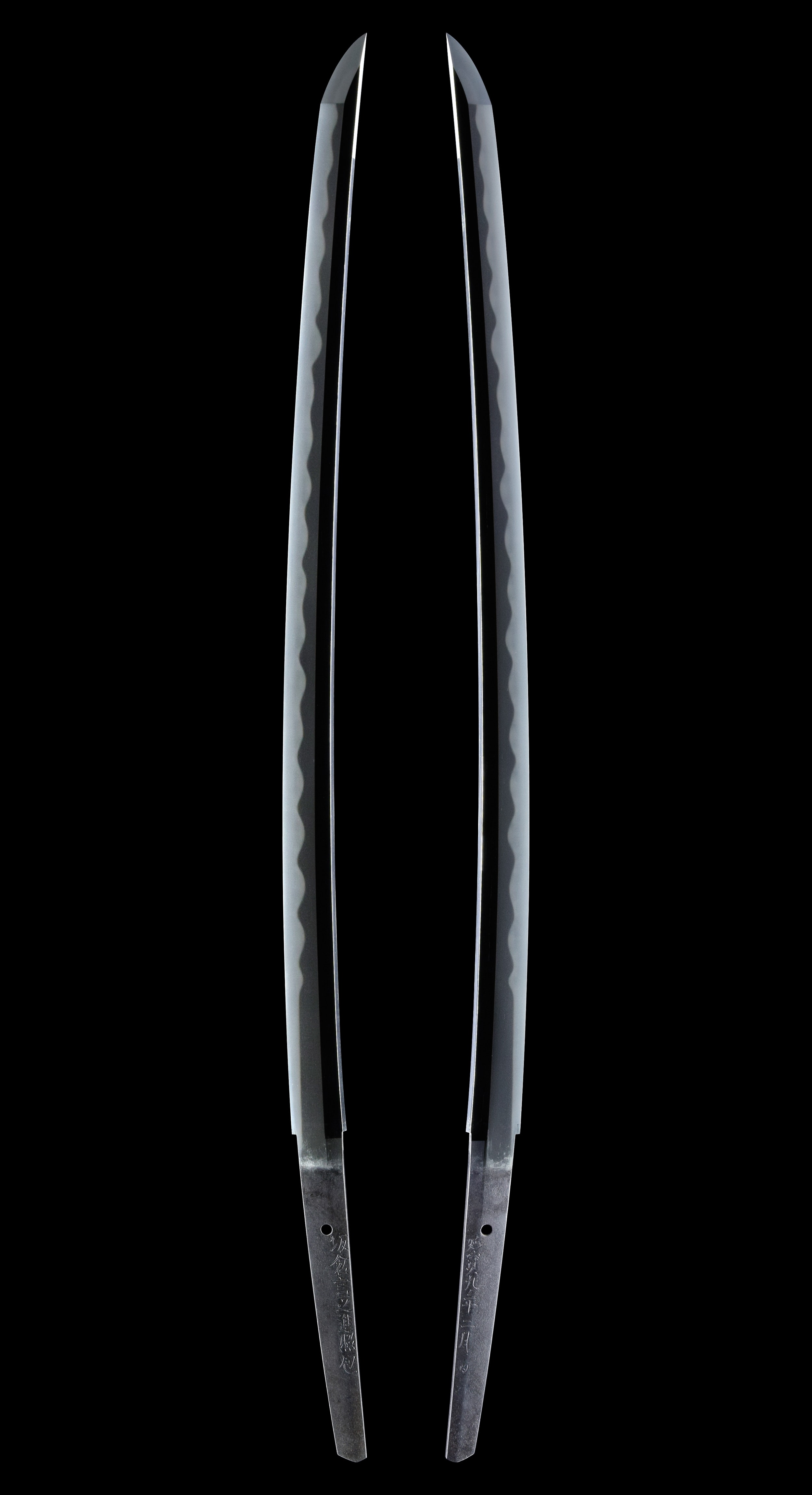
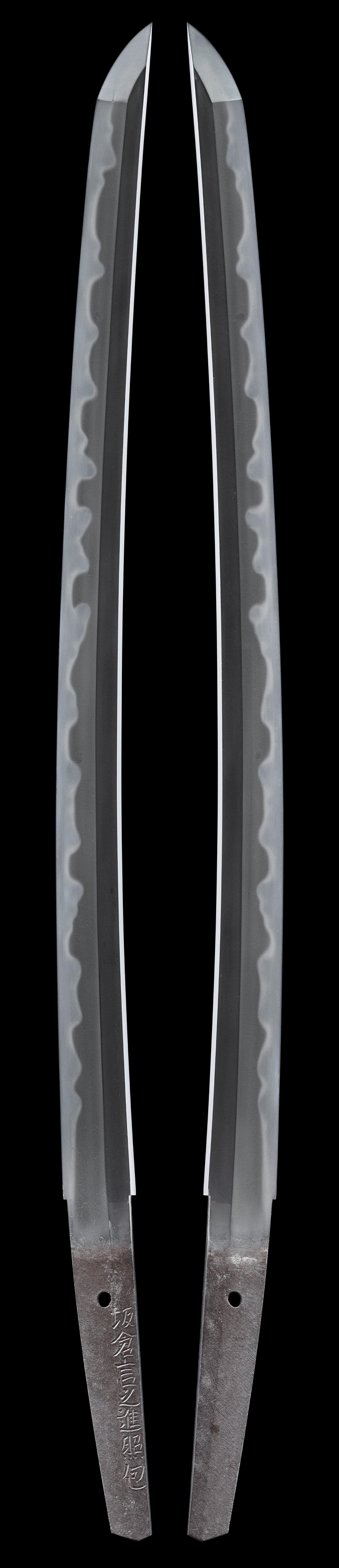
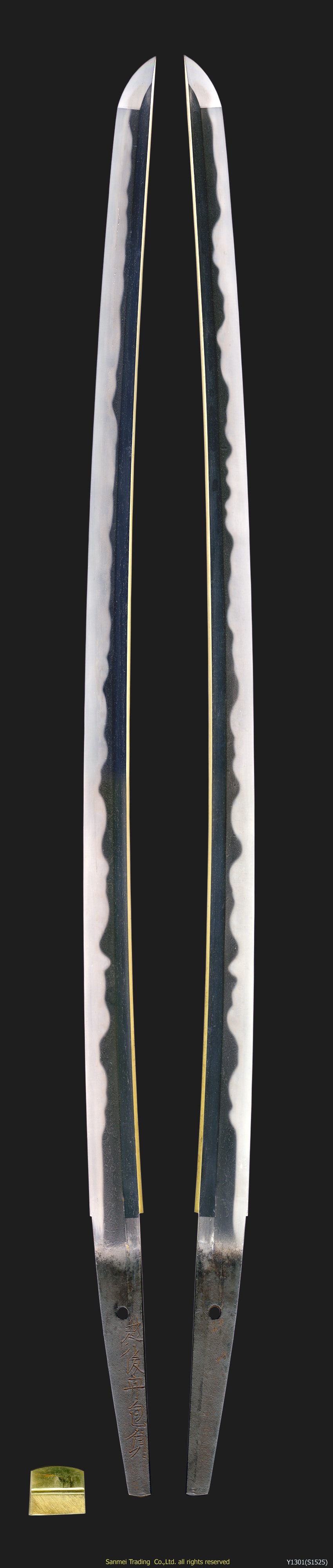
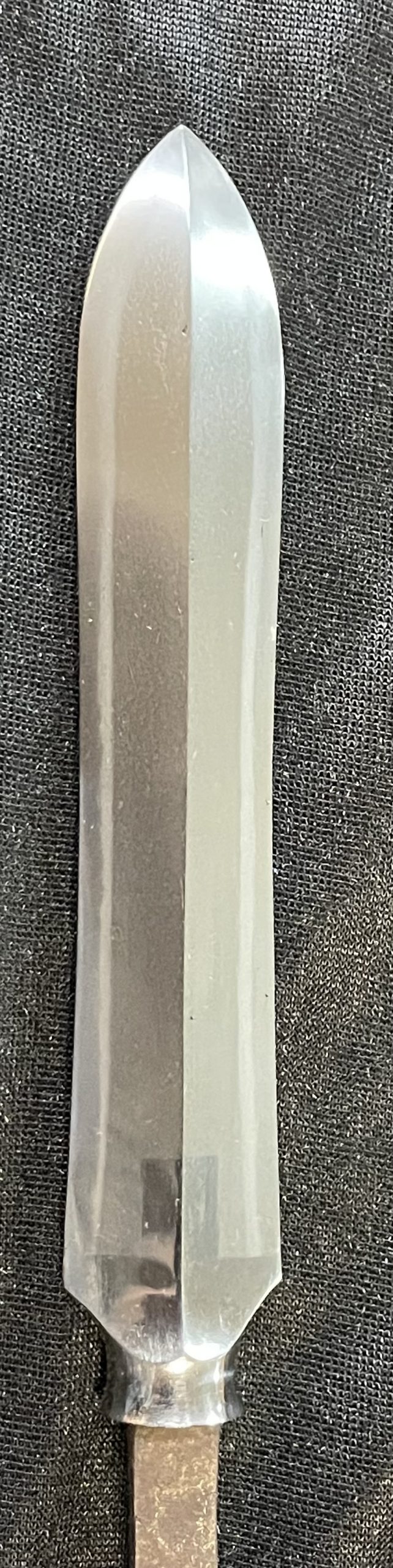
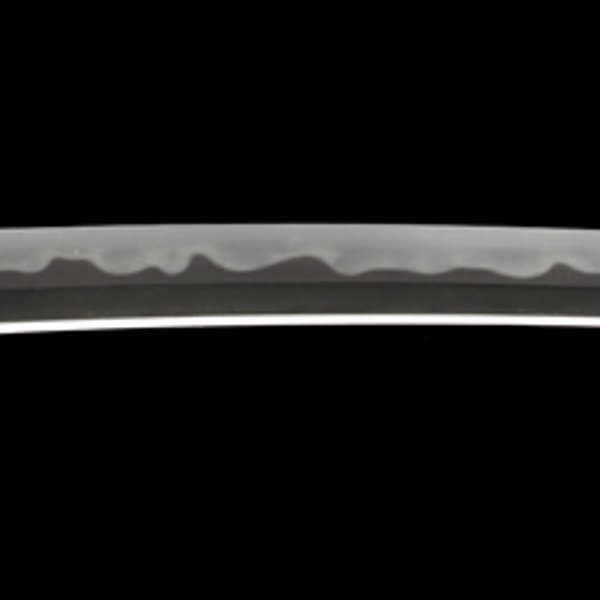
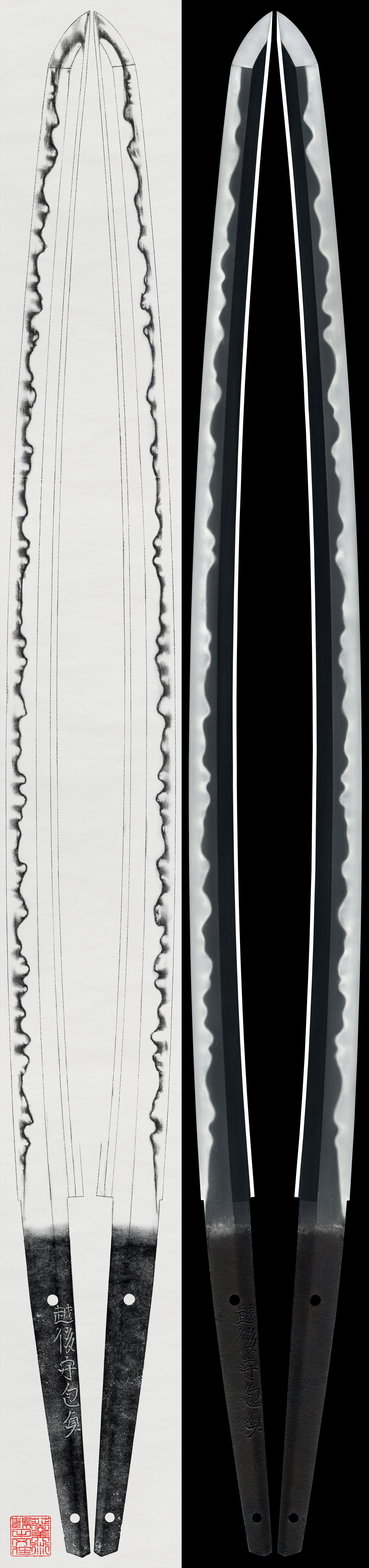
Description Keijō: , ; the ridge of the back drops rather steeply; is essentially standard; there is a noticeable difference between base- and tip-width; little ; the is somewhat thick; there is a sense of ; the curvature is shallow, and the shows a slightly extended impression. : tightly forged ; adheres densely in fine granules and rather thickly; fine enter well; the steel appears bright. : begins with ; above that, a mixed with , large , small , and the like, forming a billowing, tōran-like (ranpū) effect; in places it shows a katayama-shaped style of irregularity; enter long and well; the is deep; thick adheres; overall fine run throughout, with ; the is bright and clear. : with a slightly -like tendency, turning back shallowly; the tip shows . : None. : ; ; ; two ; on the , below the and toward the side, there is a bold five-character signature cut with a thick chisel.
Artisan Echigo no Kami Kanesada, second generation (二代越後守包貞)
Era Mid period (–Enpō era),
Explanation The second-generation Kanesada studied under the first-generation Echigo no Kami Kanesada and succeeded him. At first he used the name Echigo no Kami Kanesada; however, when Iwamatsu—said to have been the first generation’s biological son—came of age, he ceded the name Echigo no Kami Kanesada to him and thereafter signed himself Sakakura Gonnojō Terukane (坂倉言之進照包).
As for the time when he changed his name from Kanesada to Terukane, an extant work is known bearing the inscription “Sakakura Gonnojō Terukane” and “Echigo no Kami Kanesada retired” (on the reverse), together with the date “an auspicious day in the second month of Enpō 8.” From this, the change of name is thought to have occurred probably around Enpō 8.
In terms of workmanship, he often produced tōran-midare in imitation of Sukehiro, as well as “Monju-style” ; more rarely, works in large or in are also seen. In any of these approaches, it is typical for his blades to exhibit deep , plentiful , and a bright .
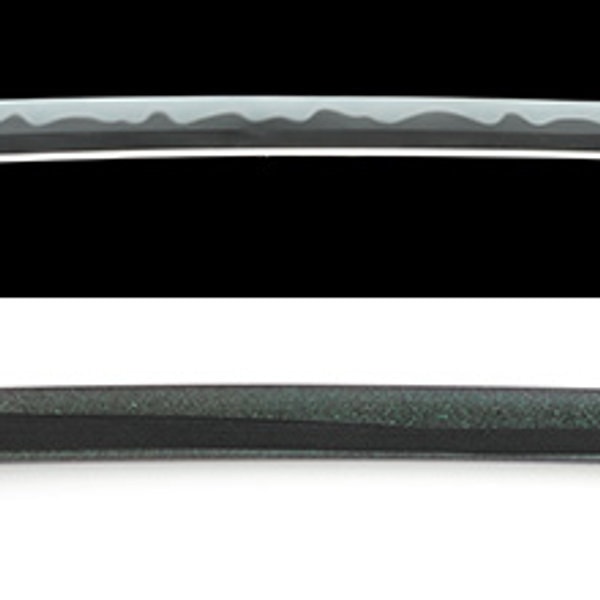
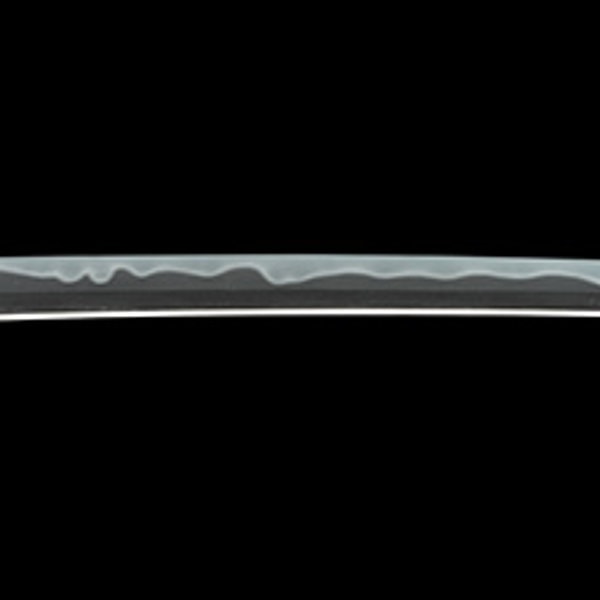
This shows a tightly packed forging in which fine-granular adheres thickly and fine appear well, yielding a bright ground. The starts with and then develops into a mixed with , large and small , producing a billowing, tōran-like (ranpū) impression; in places it presents a katayama-shaped irregularity. Long enter well; the is deep; thick adheres; fine run throughout the temper, and appear, while the remains notably bright and clear.
Although the blade chiefly displays the tōran-like irregularity that was this smith’s greatest forte, it also shows the distinctive shapes known as katayama-, characteristic of his work; the overall presence of likewise clearly indicates his personal traits. In addition, the somewhat steeply dropped and the construction with little reveal further points of interest particular to him. Especially noteworthy is that the forging is of excellent quality, and the tempered area is exceptionally deep in with thick , such that both and are bright and clear throughout. This is a fine example by the second-generation Echigo no Kami Kanesada, composed with an elegant restraint.