NihontoWatch Mon

NihontoWatchBETA

MarketAuctions
Encyclopedia
NihontoWatch Mon

NihontoWatchBETA

MarketAuctions
Encyclopedia

Description

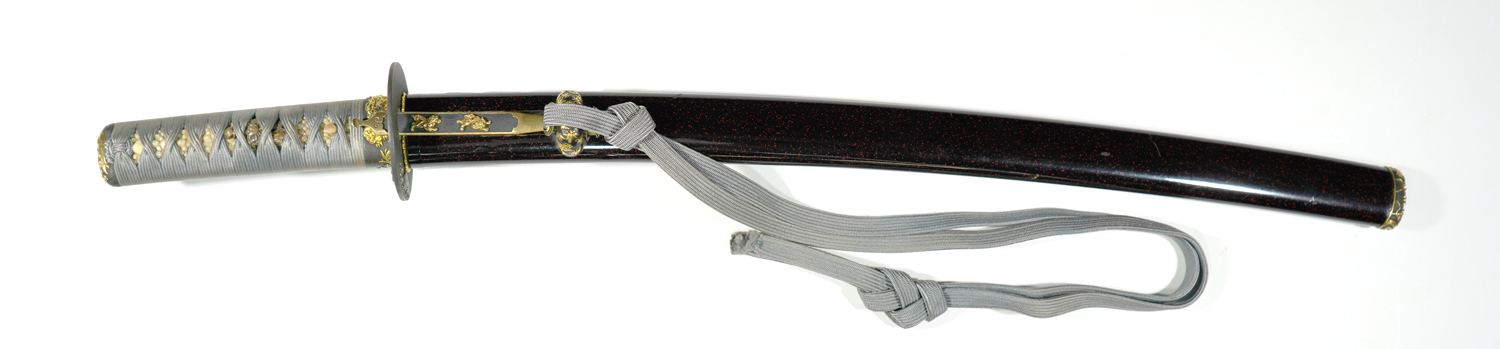
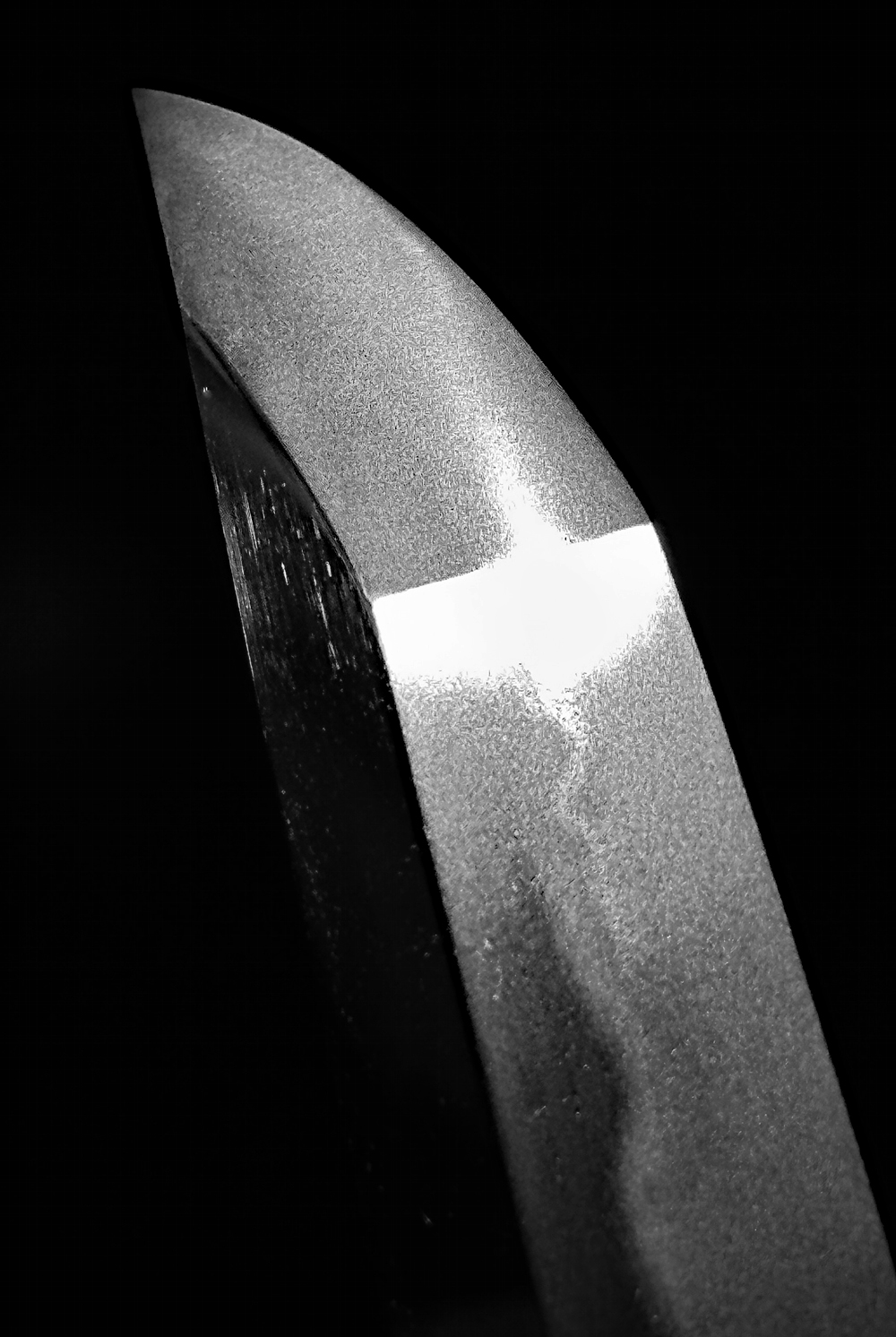
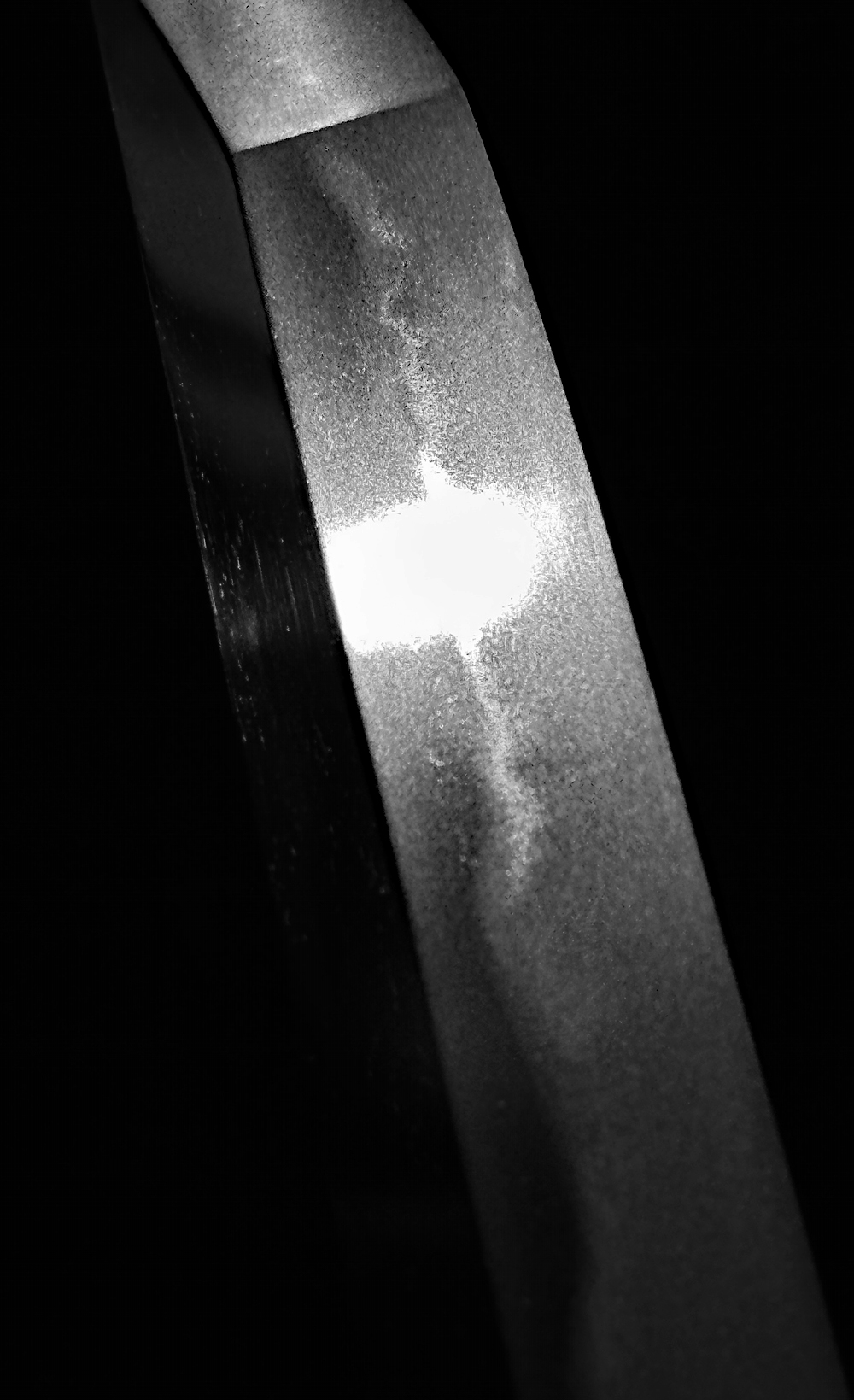
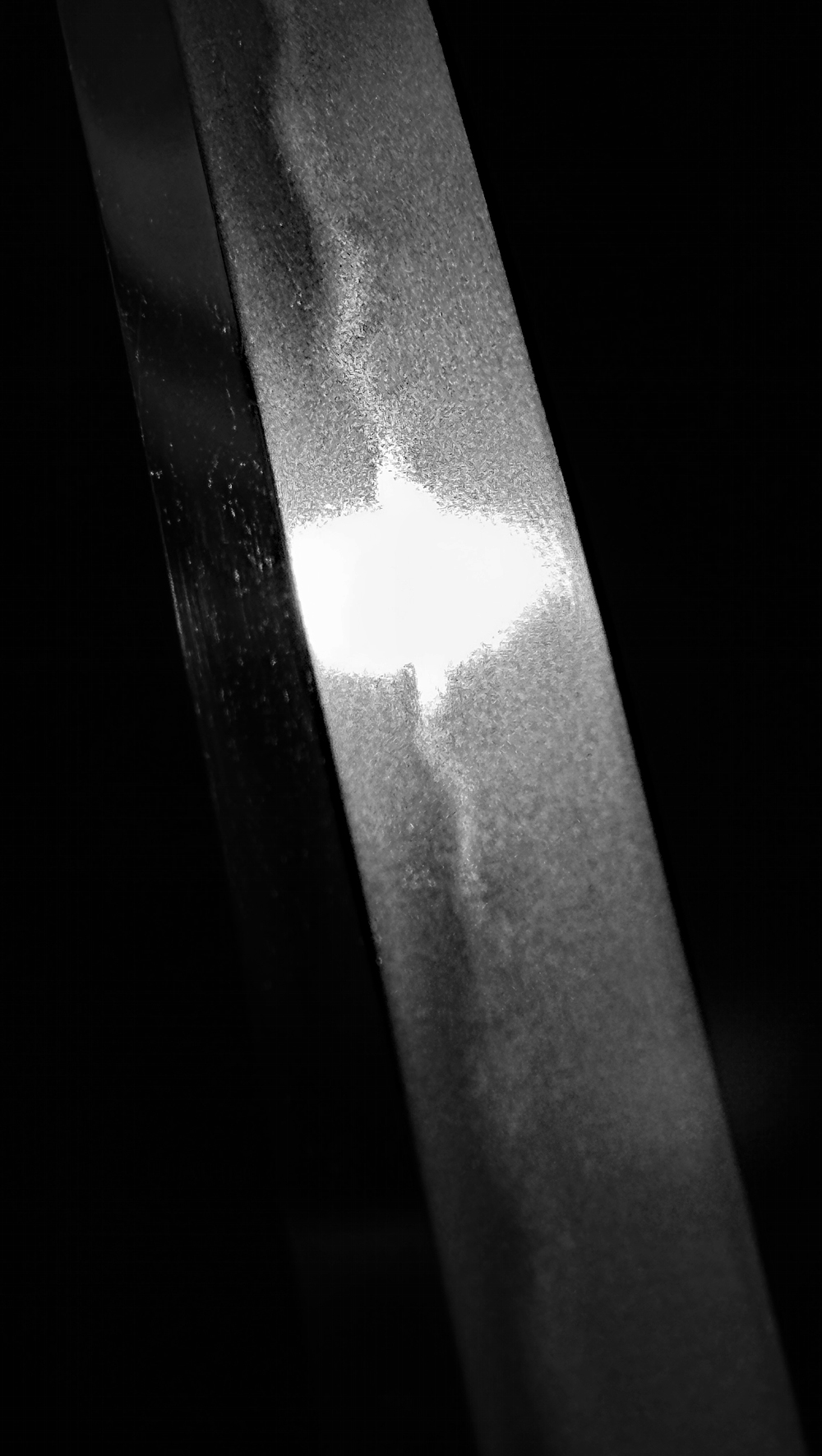
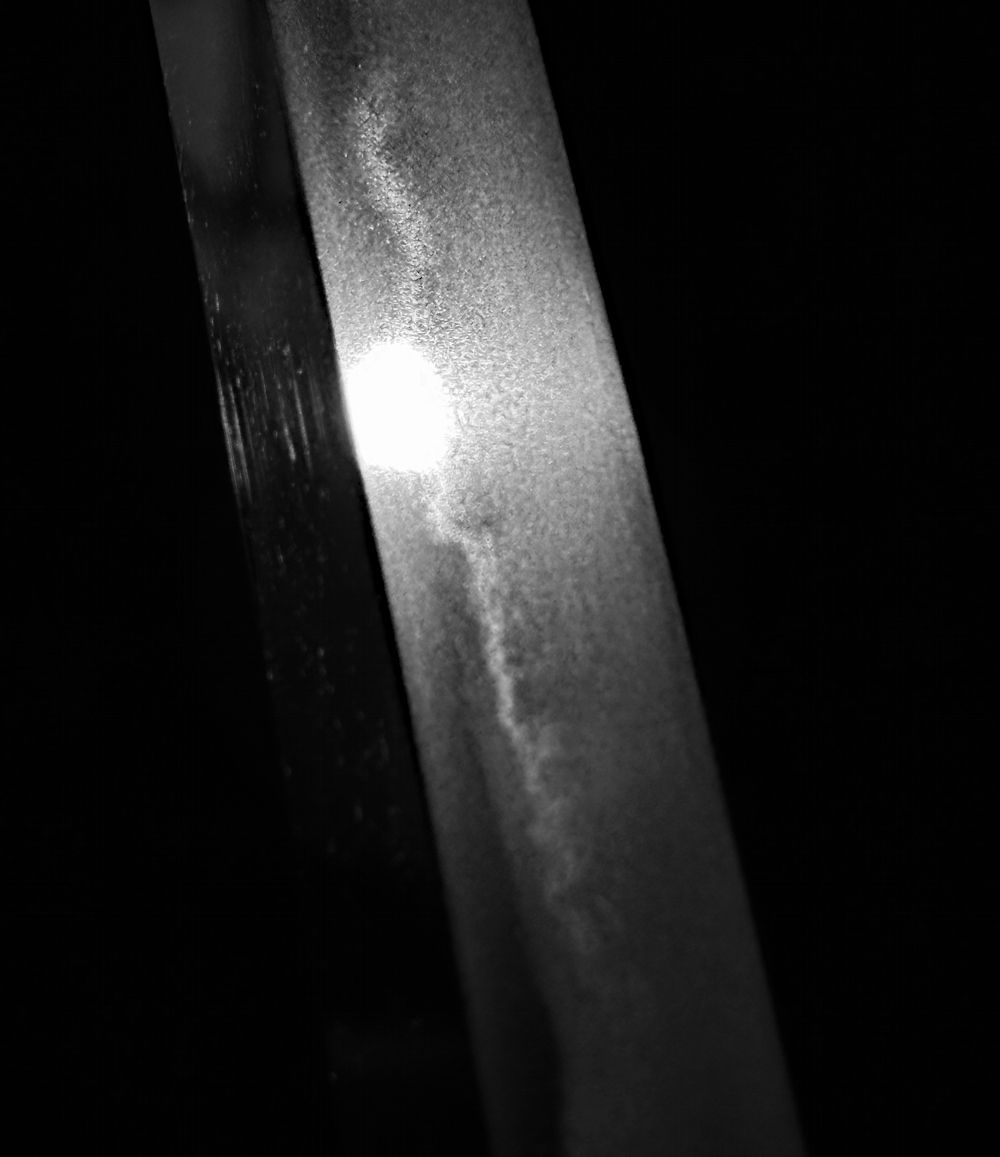
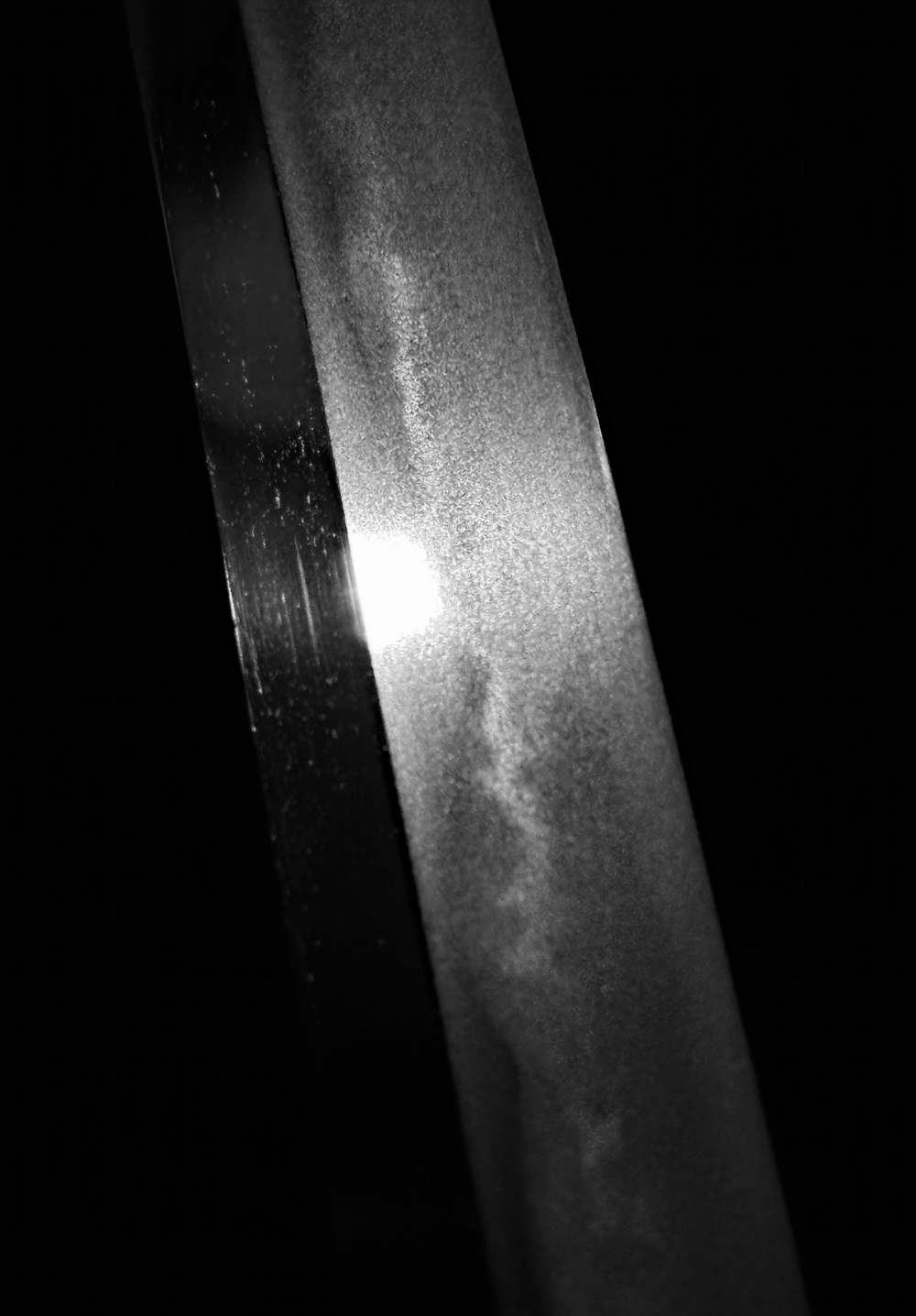
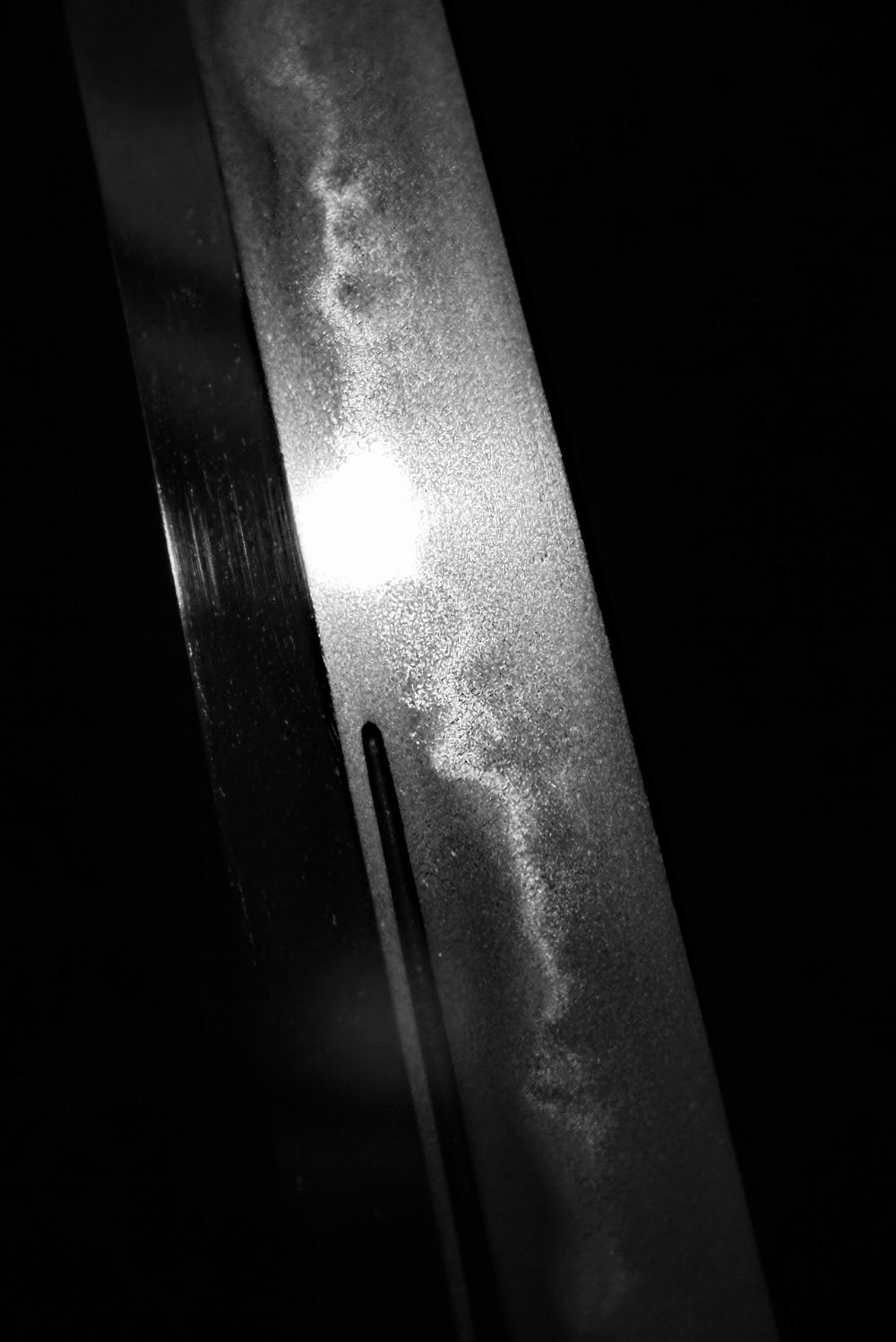
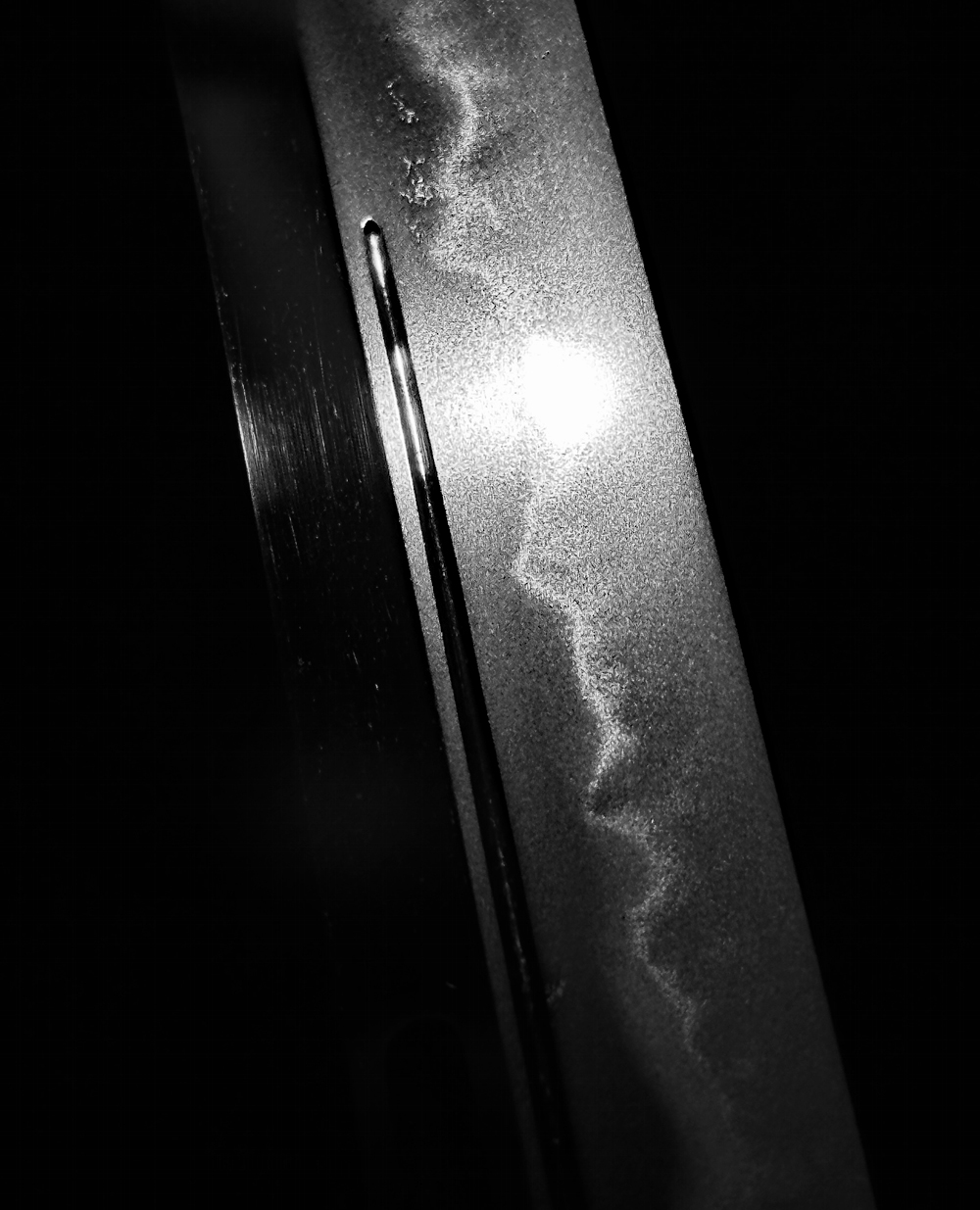
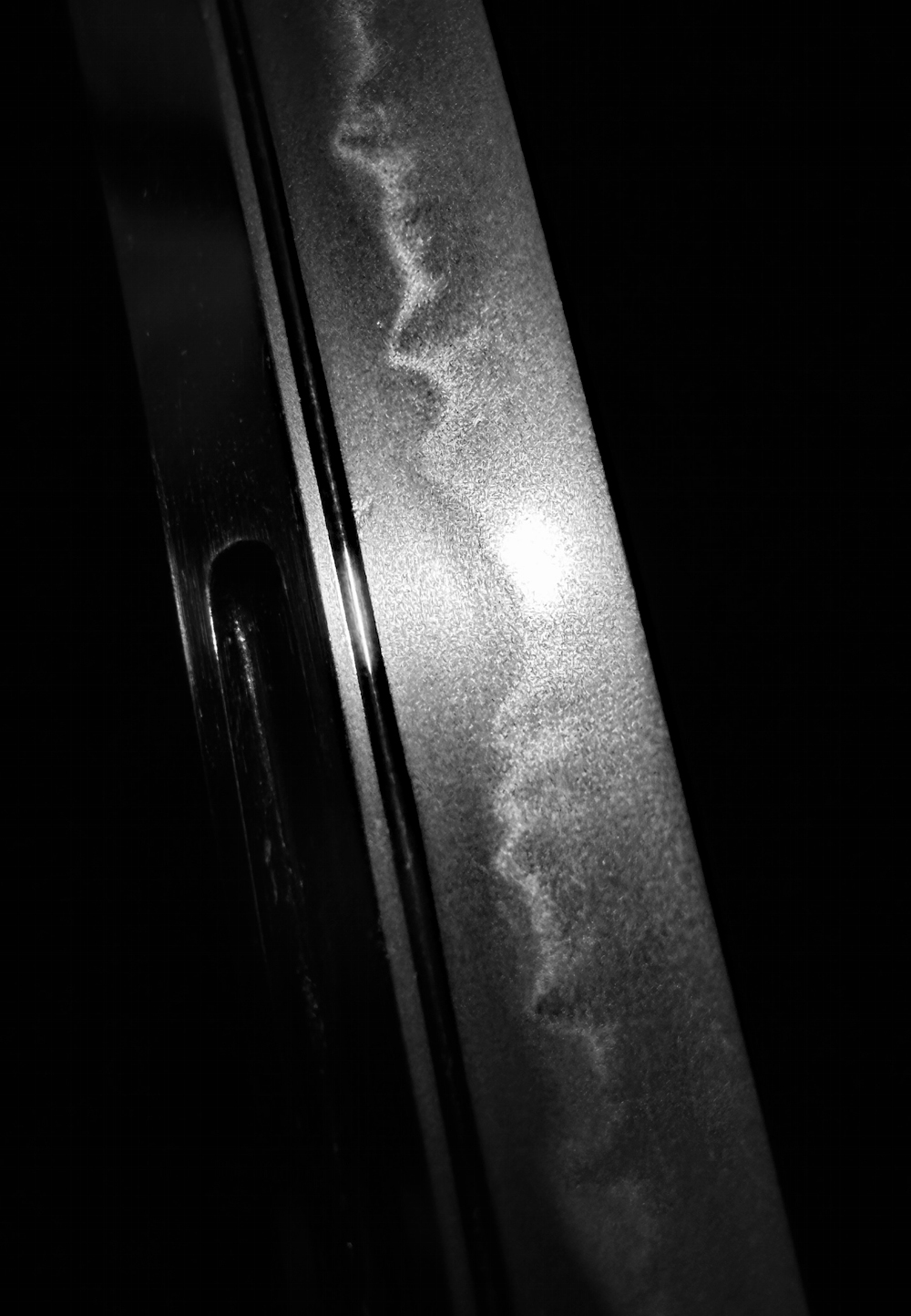
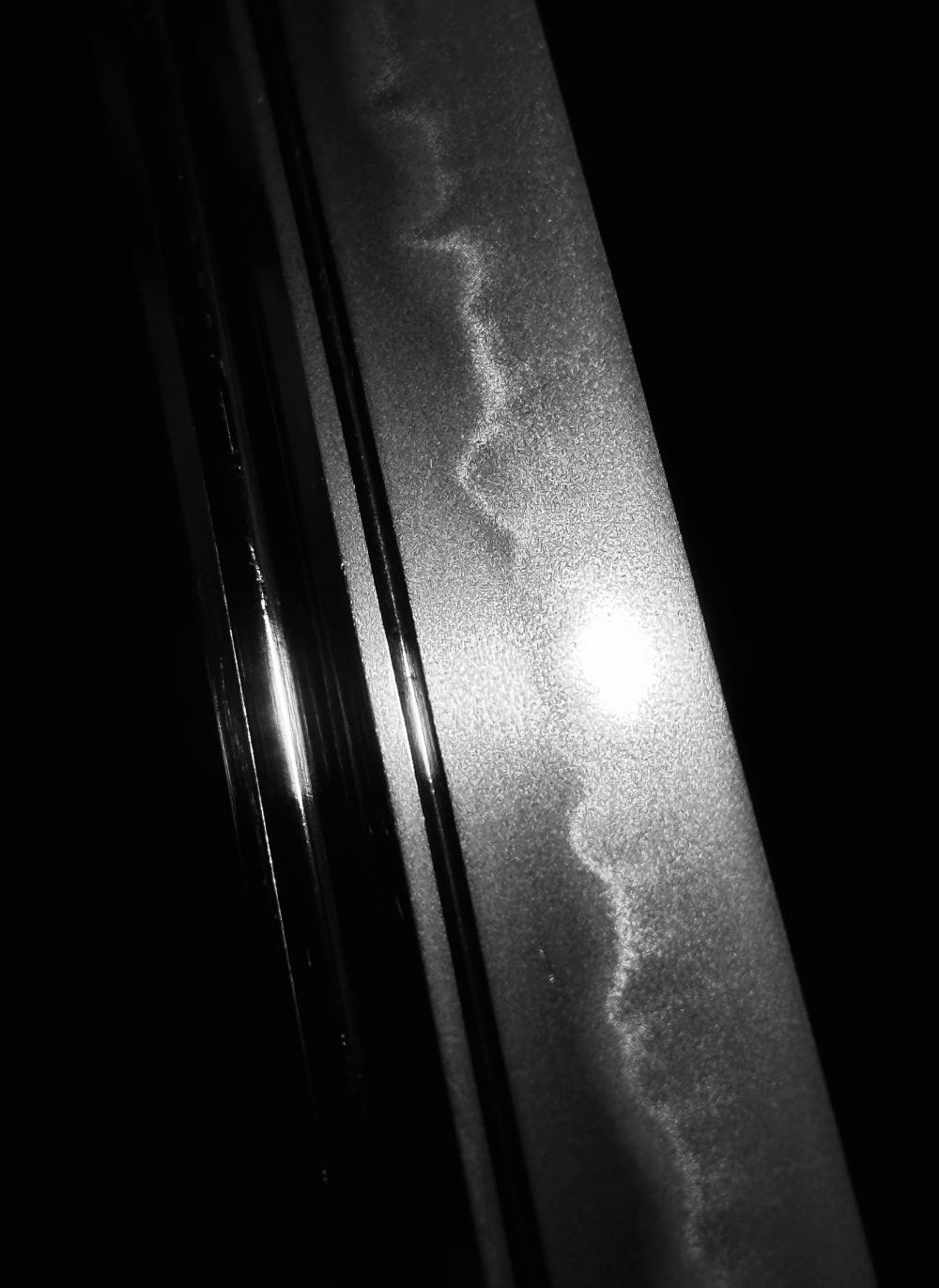
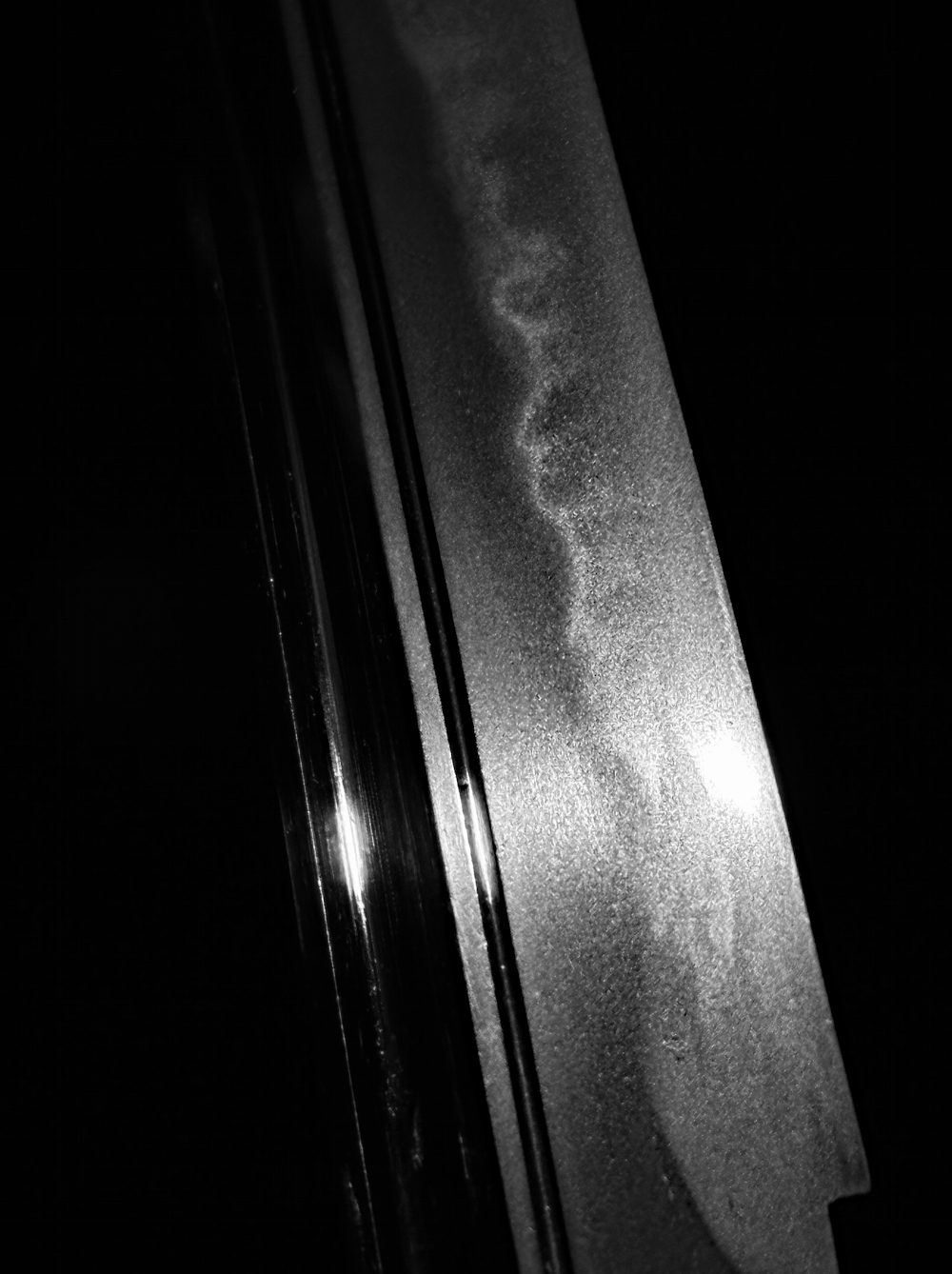
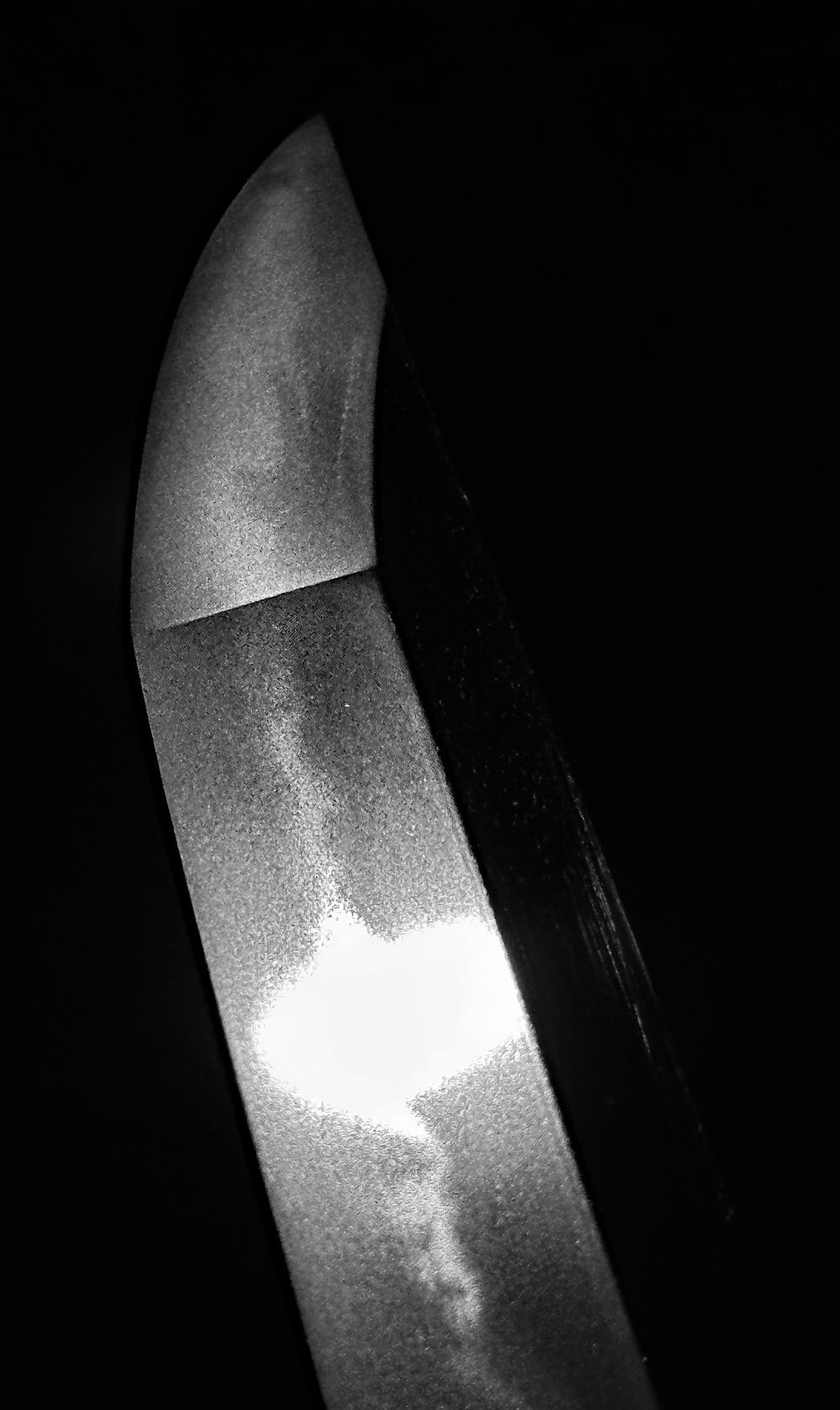
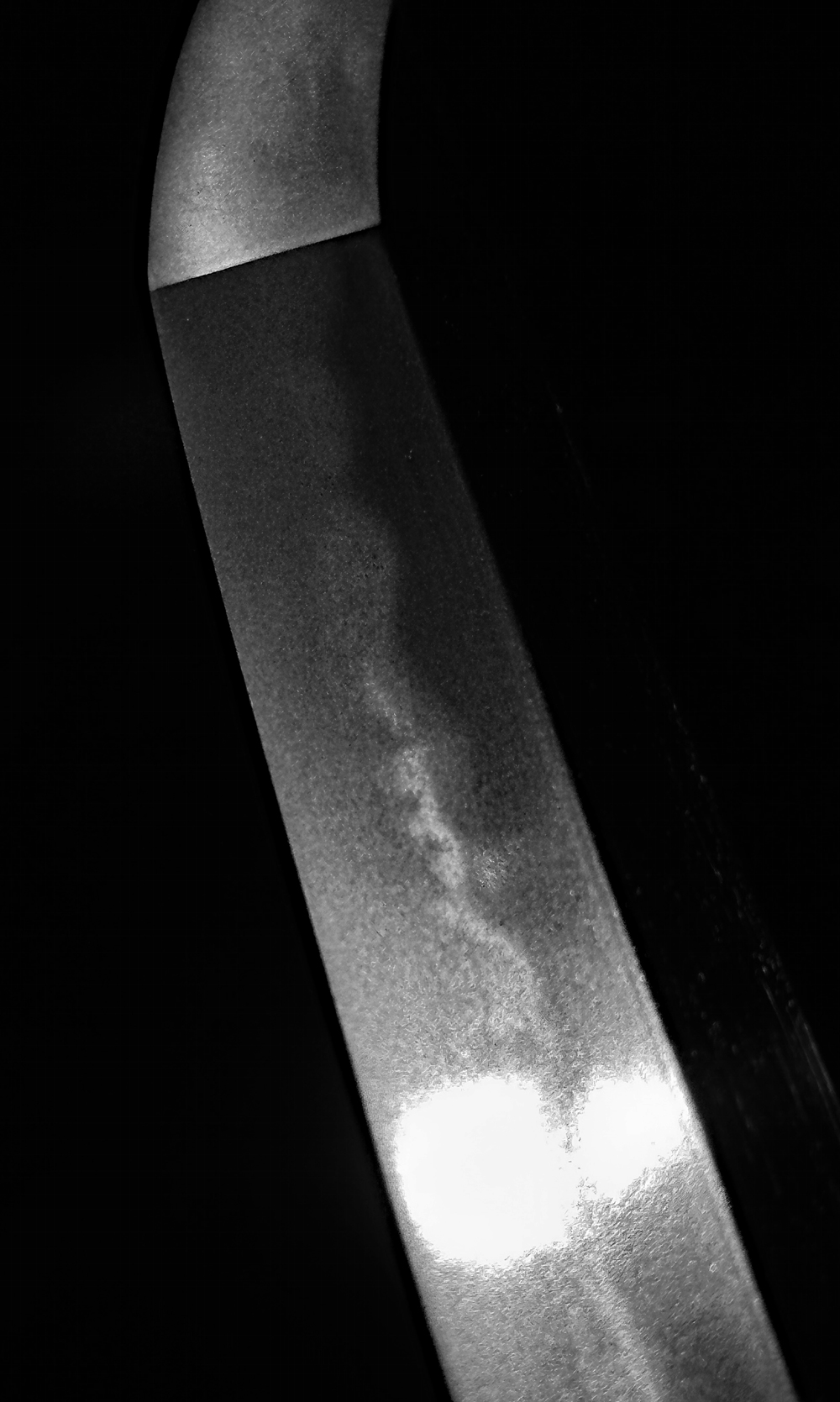
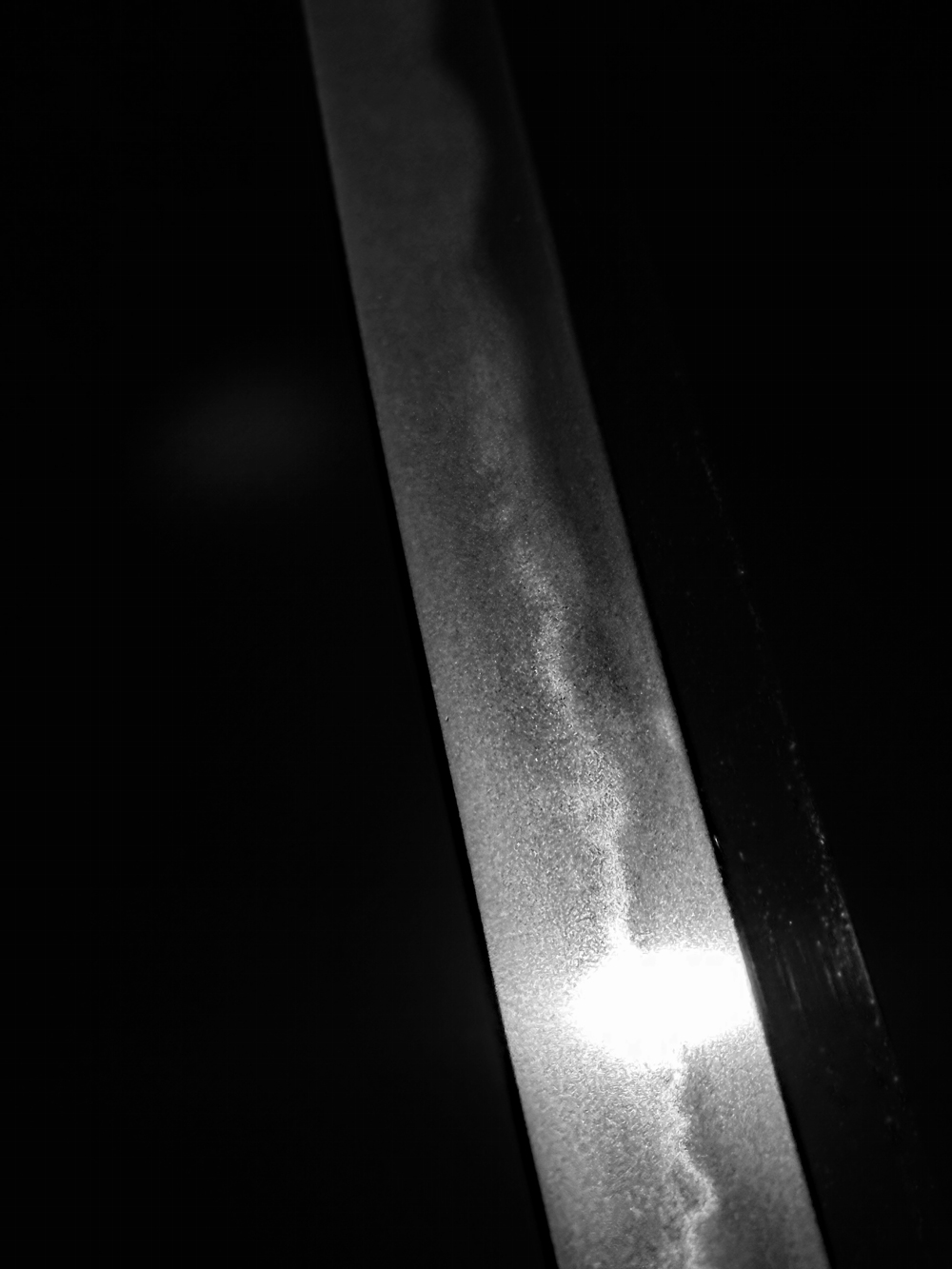
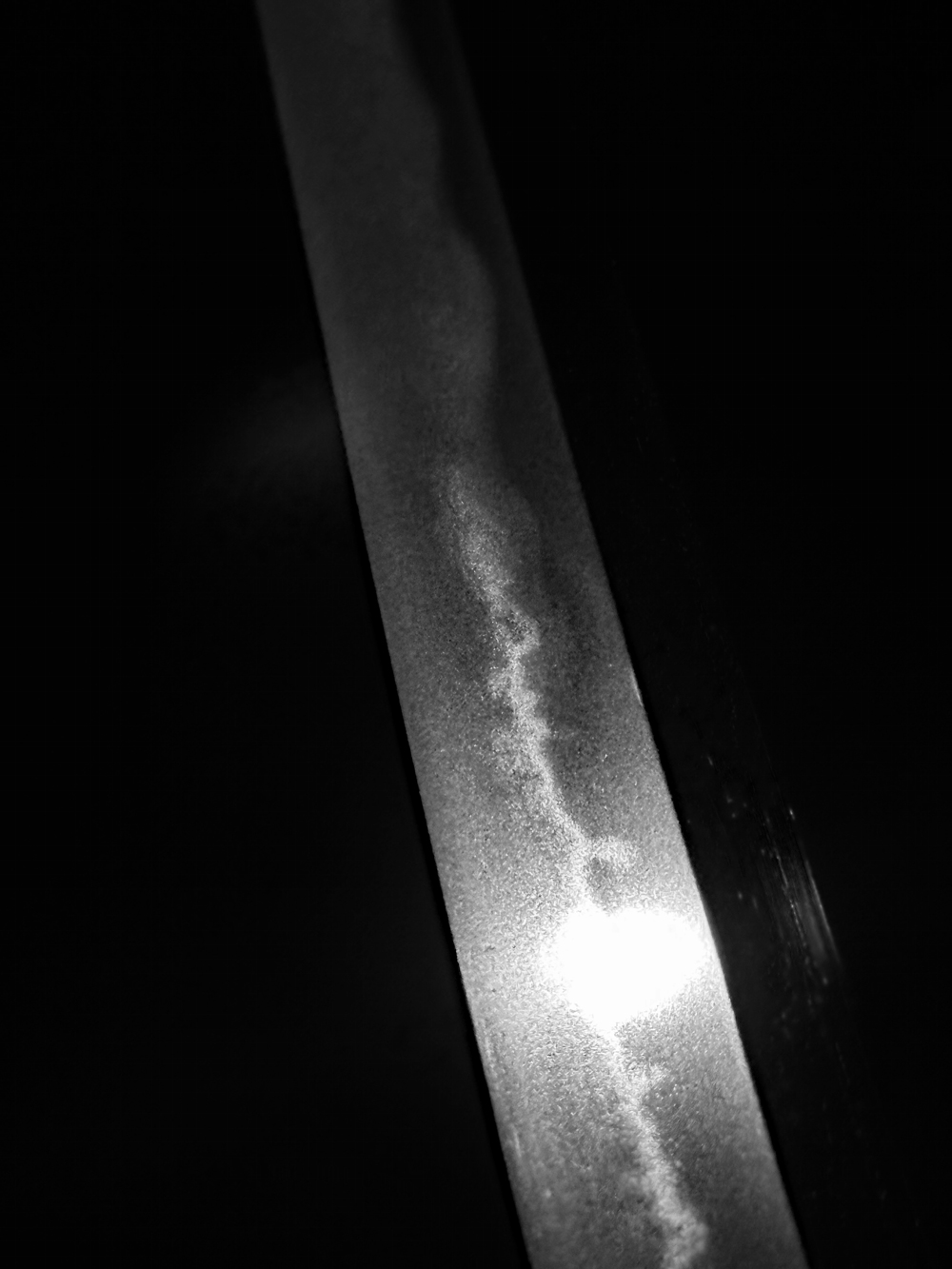
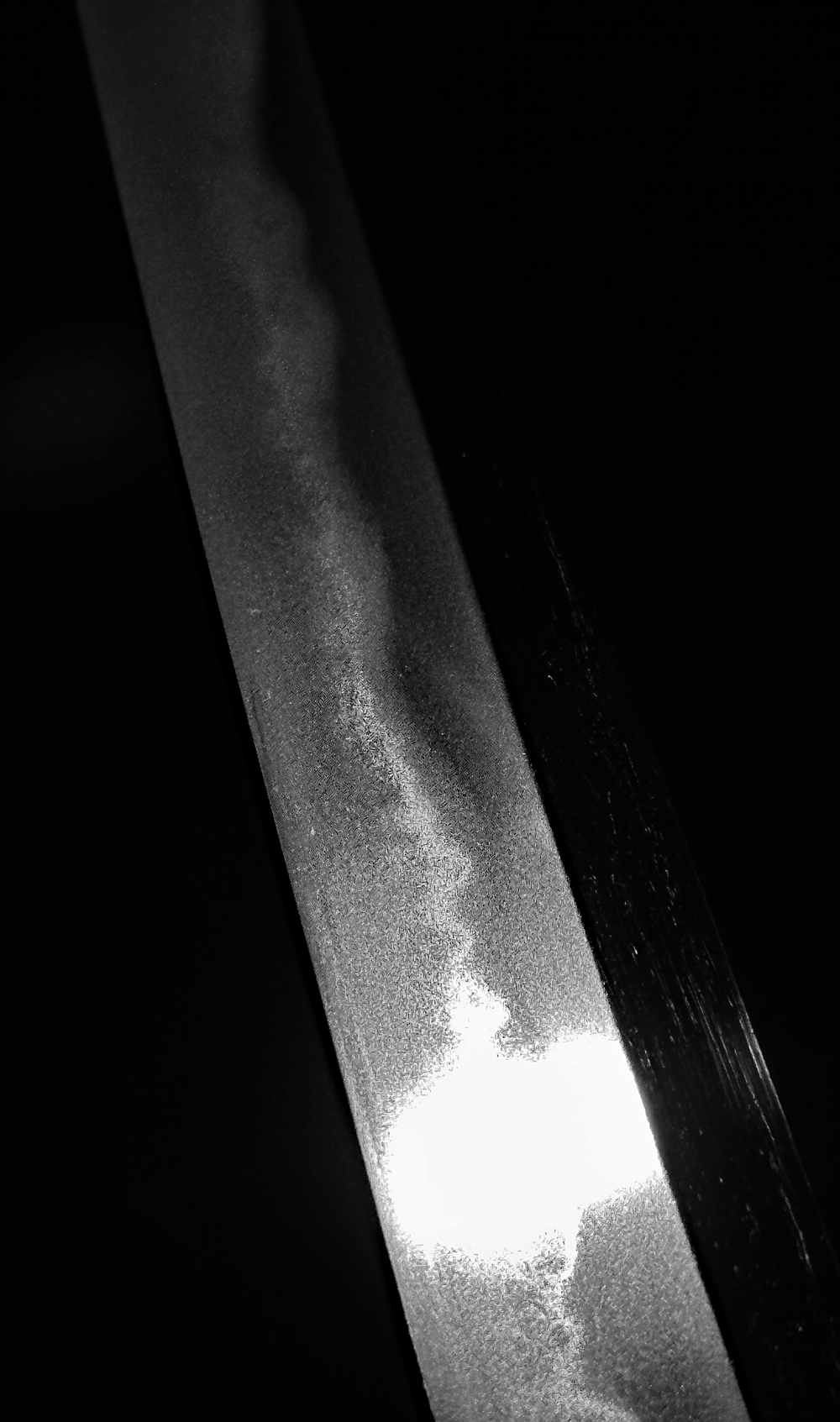
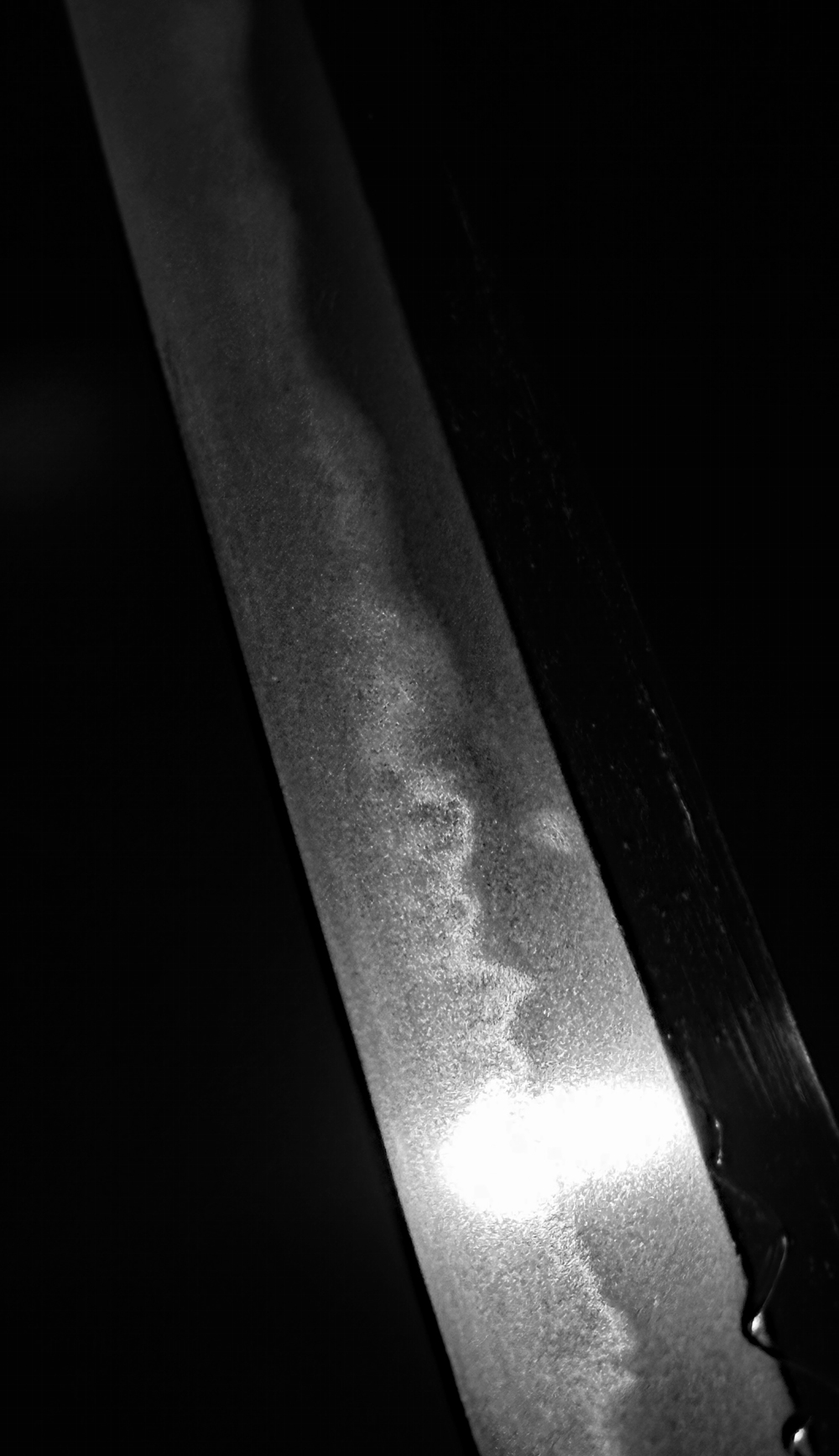
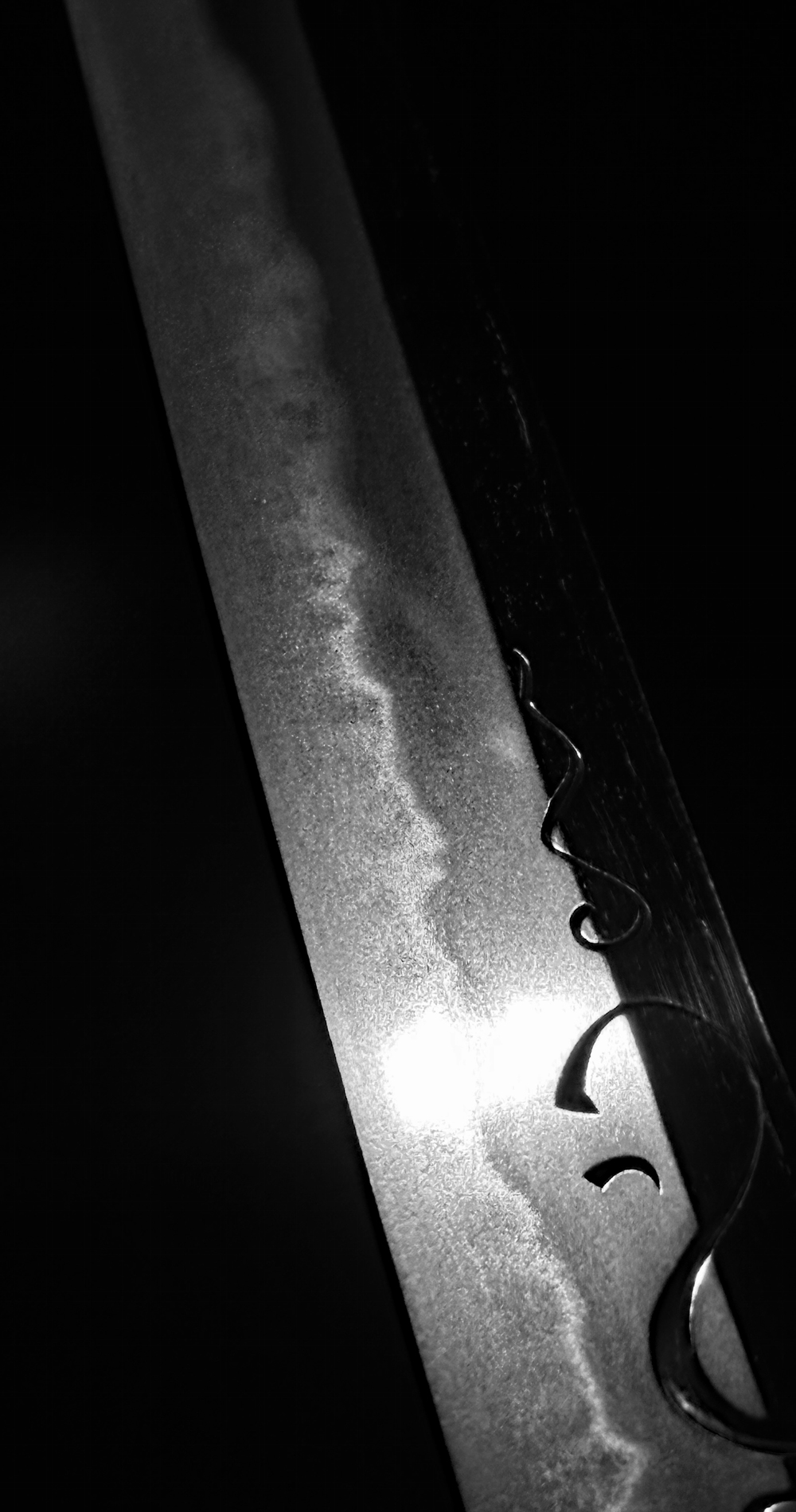
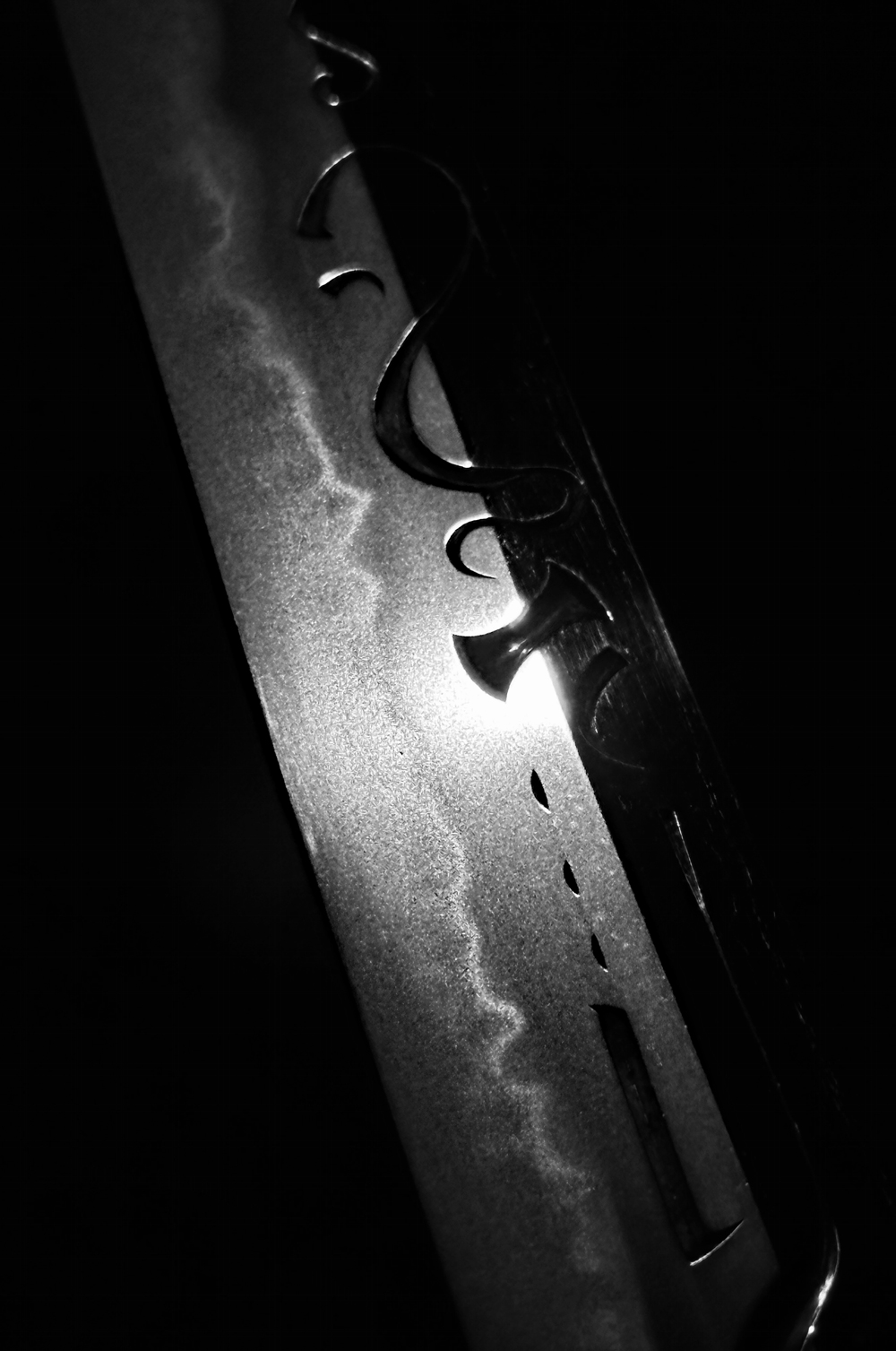
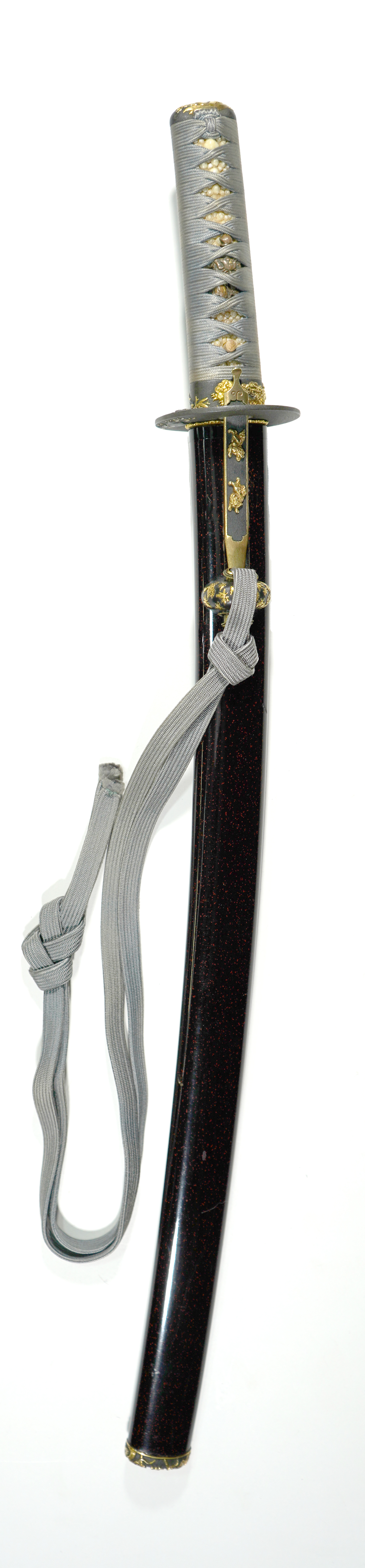
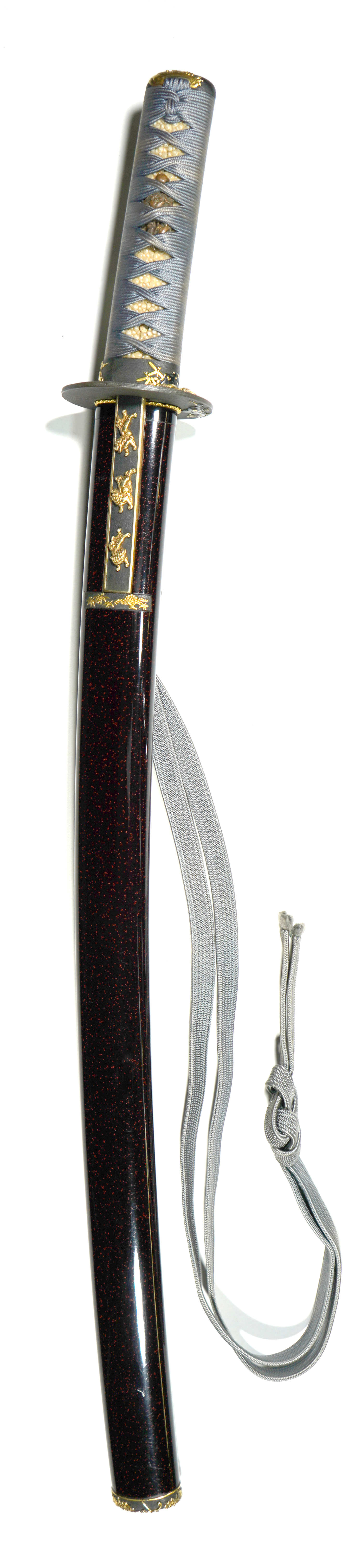
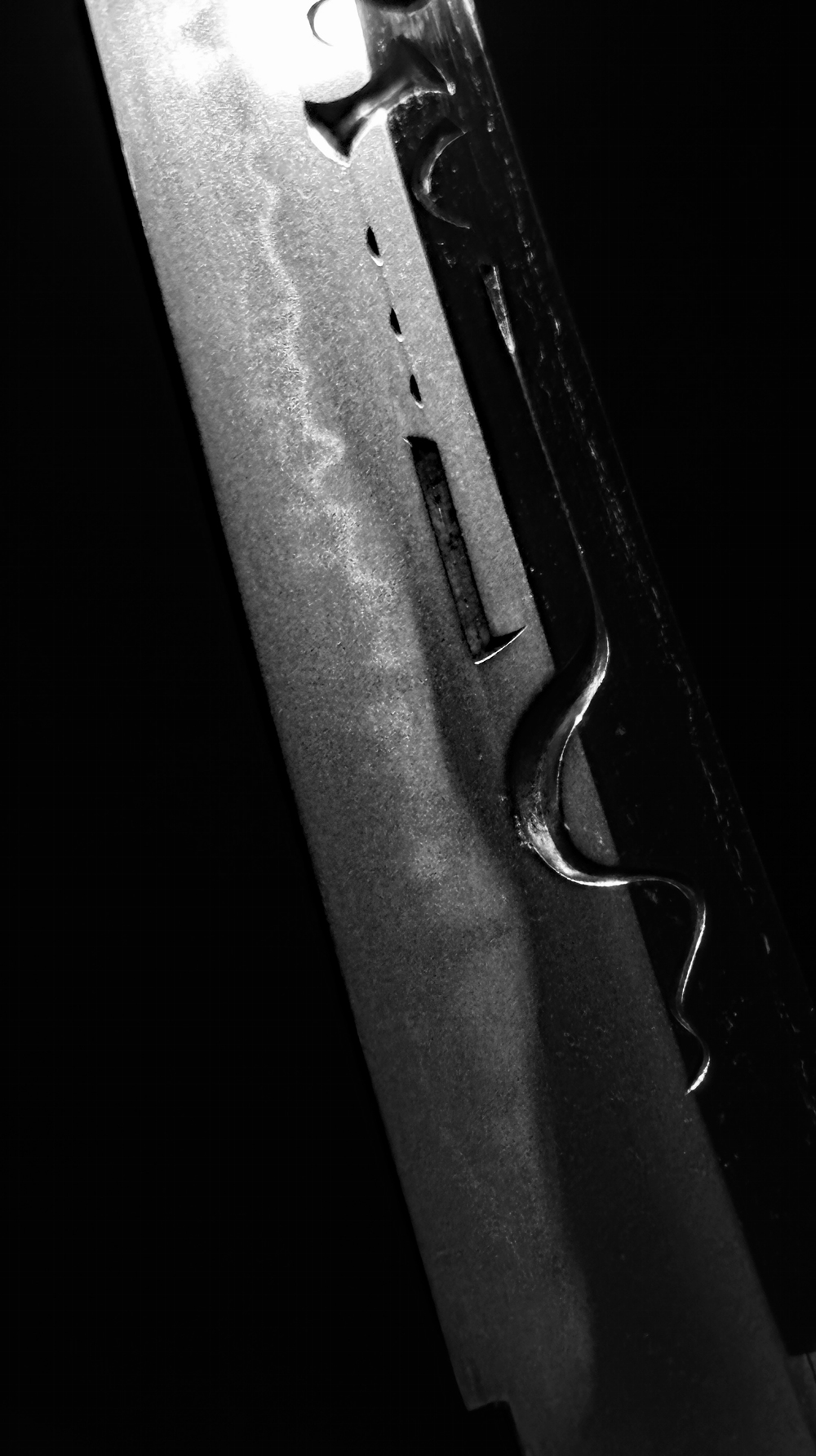
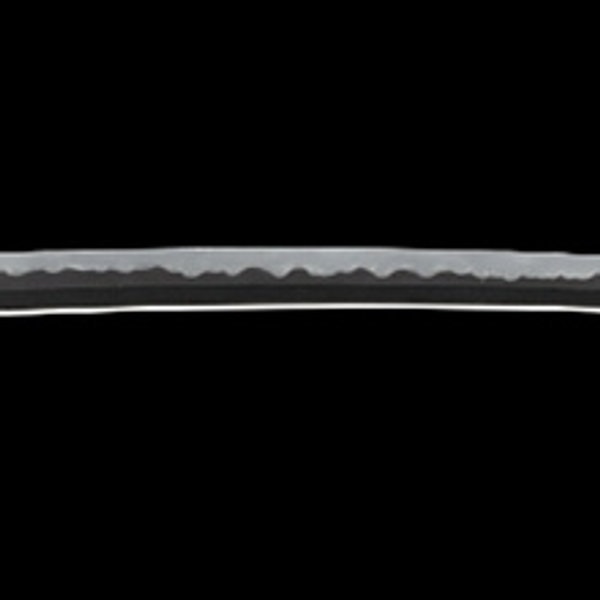
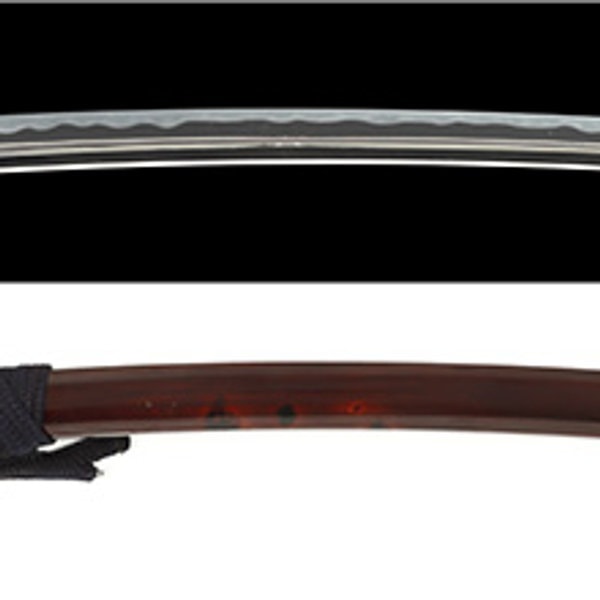
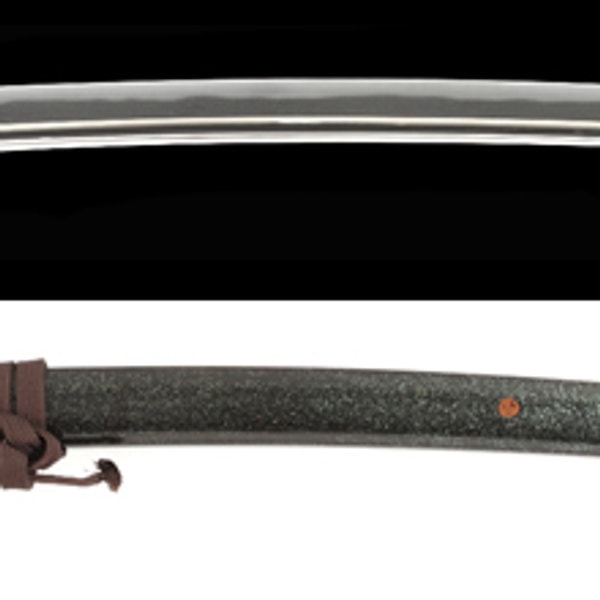
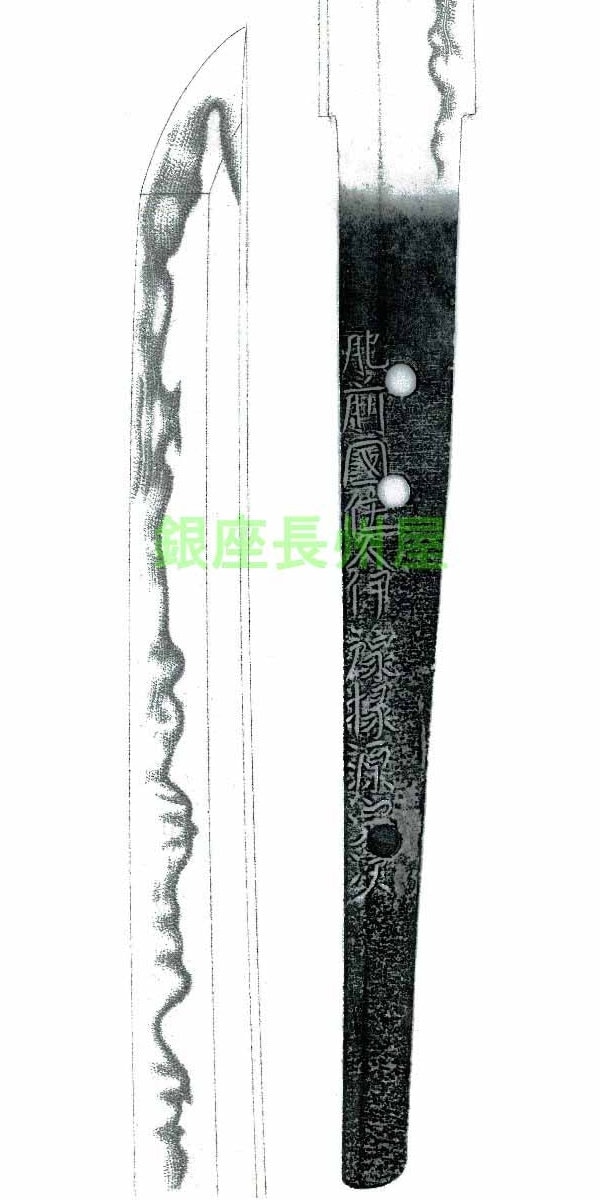
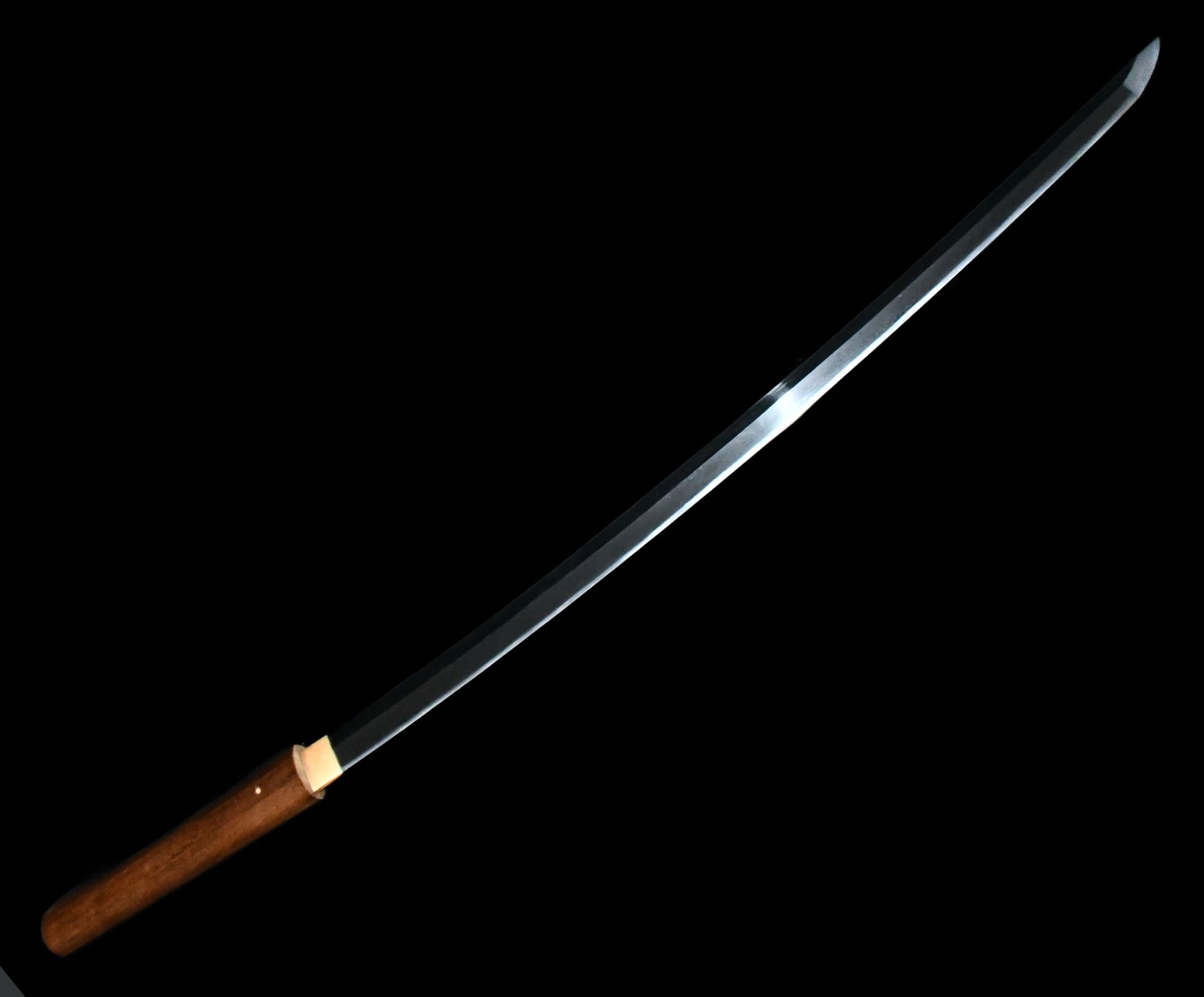
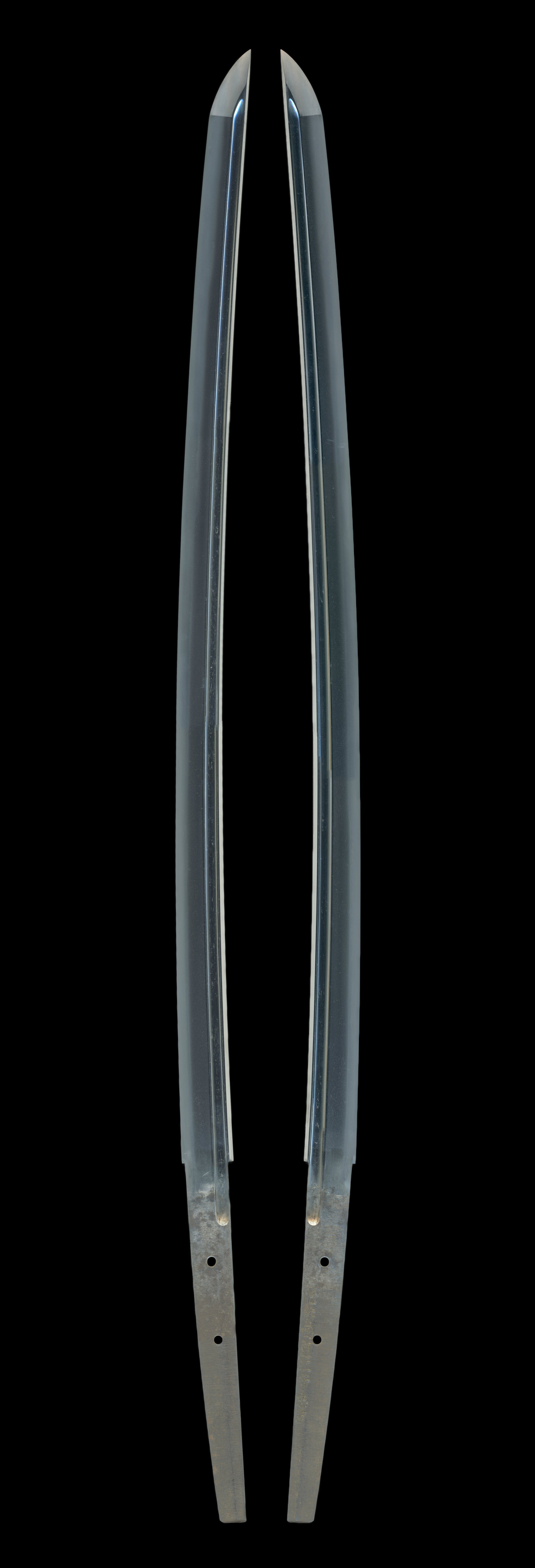
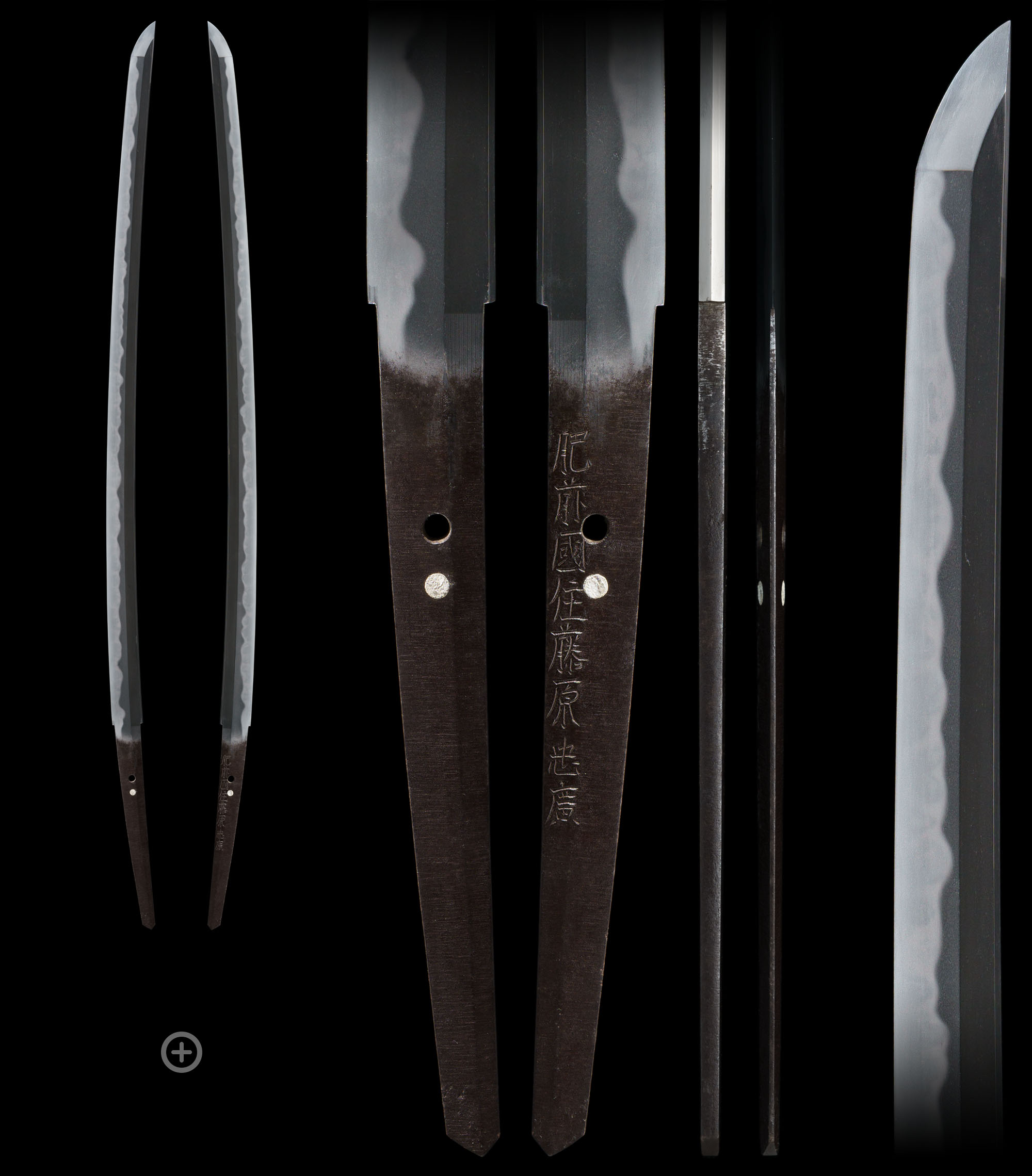
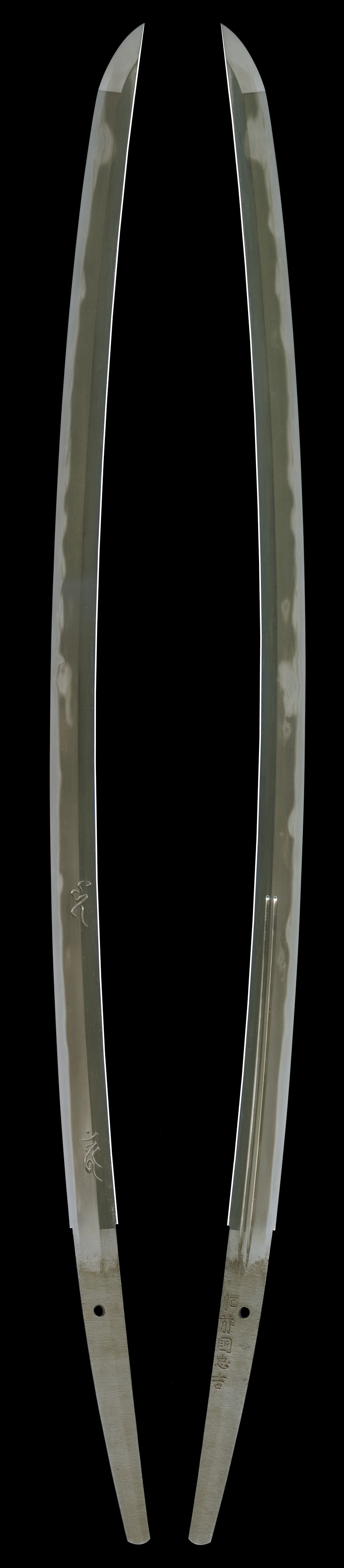
This wakizashi is a work by the first generation Iyonojo Munetsugu, known for his distinctive Hizen-style blades with strong Soshu-den influence. It features a vibrant hamon with gunome and choji mixed with sunagashi, and a unique tang shape. The blade also boasts valuable carvings by Yoshinaga, including a grass kurikara on the omote and koshi-hi with soe-hi on the ura.

NihontoWatch MonNihontoWatchBETA
MarketAuctionsEncyclopedia
Swords›Hizen Tadayoshi›Munetsugu›Wakizashi: Iyonojo Munetsugu - Carving by Fujiwara Yoshinaga
wakizashiTokubetsu Hozon
Tadayoshi Munetsugu

Wakizashi: Iyonojo Munetsugu - Carving by Fujiwara Yoshinaga

mei · Hizen · Genna (1615-1624) · nagasa 47.6cm · sori 0.6cm

Price on request
Visit seller website →
Tadayoshi Munetsugu — 1 of 40
Tadayoshi Munetsugu — 2 of 40
Tadayoshi Munetsugu — 3 of 40
Tadayoshi Munetsugu — 4 of 40
Tadayoshi Munetsugu — 5 of 40
Tadayoshi Munetsugu — 6 of 40
Tadayoshi Munetsugu — 7 of 40
Tadayoshi Munetsugu — 8 of 40
Tadayoshi Munetsugu — 9 of 40
Tadayoshi Munetsugu — 10 of 40
Tadayoshi Munetsugu — 11 of 40
Tadayoshi Munetsugu — 12 of 40
Tadayoshi Munetsugu — 13 of 40
Tadayoshi Munetsugu — 14 of 40
Tadayoshi Munetsugu — 15 of 40
Tadayoshi Munetsugu — 16 of 40
Tadayoshi Munetsugu — 17 of 40
Tadayoshi Munetsugu — 18 of 40
Tadayoshi Munetsugu — 19 of 40
Tadayoshi Munetsugu — 20 of 40
Tadayoshi Munetsugu — 21 of 40
Tadayoshi Munetsugu — 22 of 40
Tadayoshi Munetsugu — 23 of 40
Tadayoshi Munetsugu — 24 of 40
Tadayoshi Munetsugu — 25 of 40
Tadayoshi Munetsugu — 26 of 40
Tadayoshi Munetsugu — 27 of 40
Tadayoshi Munetsugu — 28 of 40
Tadayoshi Munetsugu — 29 of 40
Tadayoshi Munetsugu — 30 of 40
Tadayoshi Munetsugu — 31 of 40
Tadayoshi Munetsugu — 32 of 40
Tadayoshi Munetsugu — 33 of 40
Tadayoshi Munetsugu — 34 of 40
Tadayoshi Munetsugu — 35 of 40
Tadayoshi Munetsugu — 36 of 40
Tadayoshi Munetsugu — 37 of 40
Tadayoshi Munetsugu — 38 of 40
Tadayoshi Munetsugu — 39 of 40
Tadayoshi Munetsugu — 40 of 40
1 / 40
1 / 40
Tadayoshi Munetsugu — 1 of 40Tadayoshi Munetsugu — 2 of 40Tadayoshi Munetsugu — 3 of 40Tadayoshi Munetsugu — 4 of 40Tadayoshi Munetsugu — 5 of 40Tadayoshi Munetsugu — 6 of 40Tadayoshi Munetsugu — 7 of 40Tadayoshi Munetsugu — 8 of 40Tadayoshi Munetsugu — 9 of 40Tadayoshi Munetsugu — 10 of 40Tadayoshi Munetsugu — 11 of 40Tadayoshi Munetsugu — 12 of 40Tadayoshi Munetsugu — 13 of 40Tadayoshi Munetsugu — 14 of 40Tadayoshi Munetsugu — 15 of 40Tadayoshi Munetsugu — 16 of 40Tadayoshi Munetsugu — 17 of 40Tadayoshi Munetsugu — 18 of 40Tadayoshi Munetsugu — 19 of 40Tadayoshi Munetsugu — 20 of 40Tadayoshi Munetsugu — 21 of 40Tadayoshi Munetsugu — 22 of 40Tadayoshi Munetsugu — 23 of 40Tadayoshi Munetsugu — 24 of 40Tadayoshi Munetsugu — 25 of 40Tadayoshi Munetsugu — 26 of 40Tadayoshi Munetsugu — 27 of 40Tadayoshi Munetsugu — 28 of 40Tadayoshi Munetsugu — 29 of 40Tadayoshi Munetsugu — 30 of 40Tadayoshi Munetsugu — 31 of 40Tadayoshi Munetsugu — 32 of 40Tadayoshi Munetsugu — 33 of 40Tadayoshi Munetsugu — 34 of 40Tadayoshi Munetsugu — 35 of 40Tadayoshi Munetsugu — 36 of 40Tadayoshi Munetsugu — 37 of 40Tadayoshi Munetsugu — 38 of 40Tadayoshi Munetsugu — 39 of 40Tadayoshi Munetsugu — 40 of 40
Measurements & details
Smith
Tadayoshi Munetsugu
Type
Wakizashi
School
Hizen Tadayoshi
Period
Around 1615–1624(Genna)
Province
Hizen
Signature
Signed(100% of this smith's designated works are signed)
Measurements
Nagasa 47.6cmSori 0.6cmMotohaba 2.3cmSakihaba 2.2cmKasane 0.6cm
Description

This wakizashi is a work by the first generation Iyonojo Munetsugu, known for his distinctive Hizen-style blades with strong Soshu-den influence. It features a vibrant hamon with gunome and choji mixed with sunagashi, and a unique tang shape. The blade also boasts valuable carvings by Yoshinaga, including a grass kurikara on the omote and koshi-hi with soe-hi on the ura.

About the maker

Munetsugu

宗次

Hizen (Iyo no Jo Munetsugu line, out of the Tadayoshi school) · Hizen · around 1615-1624

Fujishiro Jo-jo saku · Tōken Taikan top 18%

1 piece on the market now

›

Iyo no Jo Minamoto Munetsugu worked at Isahaya in Hizen as a pupil of the first-generation Tadayoshi, and the published sources rank him with that founder as one of the pioneers of early-modern Hizen forging. He belongs to a school remembered for the calmest of refinements, the fine konuka-hada and quiet suguha that Nabeshima patronage made the Hizen standard, and within it he is the deliberate exception. Where the main line tempered a straight hamon that turns into a small round ko-maru, Munetsugu forged a vigorous irregular temper in an emphasized Soshu-den manner, and the commentaries return again and again to that contrast as the thing that fixes a blade in his hand. The early name Muneyasu, which the old reference works treated as that of a disciple of the first Iyo no Jo, is held in the prevailing view to be the first signature of the second generation, named by the lord Nabeshima Katsushige in the ninth month of Kan'ei 9.

His characteristic hand is a midareba built on gunome and notare, conspicuous for the pointed togariba mixed within it. The published sources name the togari as a hallmark of his varied temper, and it is the Soshu-den point, not the soft clove-head of Bizen, that separates him from the orthodox Hizen suguha. Over the temper run vigorous sunagashi and frequent kinsuji, the nioi deep and the nie thick, with tobiyaki, yubashiri and muneyaki breaking out above the yakigashira; the upper half characteristically turns more floridly than the lower. The boshi is the surest tell of all. The mainline Hizen point runs straight and rounds in ko-maru, but Munetsugu's almost always enters midare-komi and sweeps back in hakikake, at times flame-like, so that the NBTHK can say of one of his katana that the irregular boshi makes his work unmistakable among other Hizen blades[[c:1]].

The jigane carries the school's fineness without its restraint. He forges a fine itame, often a closely packed ko-itame that takes on a flowing tendency, the surface covered with thick ji-nie and threaded with chikei; on the broader pieces the grain stands a little, and a touch of larger hada appears. The steel reads as the refined Hizen material the published sources describe as excellent in quality, but it is made to serve a Soshu-den temper rather than a quiet suguha, and the ji and ha together are read as richly covered in nie and assertive in spirit. Even the tang is part of the portrait: he thins the flesh on the edge side to give a tanago-bara fish-belly tendency, and against the Hizen habit of signing the ura he cuts a bold long signature on the sashi-omote, in fine chisel yet large and expansive, a hand the commentaries call distinctive on sight.

The corpus divides cleanly by name across two generations who share a single manner. The first generation signs Munetsugu, most fully as Iyo no Jo Minamoto Munetsugu of Hizen, and the published record makes him the maker of the line's finest pieces. The second generation signs the early name Muneyasu before assuming the Iyo no Jo Munetsugu title, and his blades, few in number, are valued as much for what they settle as for their quality. The Muneyasu commentaries quote the Shinto Bengi, which says only 「伊予掝(初代)門人ならむか」, perhaps a disciple of the first Iyo no Jo, and the Shinto Ichiran and Kokon Kajibiko, which likewise treat him as that disciple, then set the modern reading against them: that Muneyasu is the second generation's first signature, corroborated by a surviving naming warrant from Nabeshima Katsushige. The reverse sujikai file marks are the other generational divider the texts name. What does not change between the two is the workmanship, which the published sources treat as a single shared range, so that a Muneyasu and a Munetsugu read alike to the eye.

That shared range has a stated model. The published sources say the first generation customarily took old Shizu works as his pattern, and they describe the Muneyasu pieces as aiming at Shizu in the same Soshu-den style, the fine nie giving the nioiguchi a soft, luminous brightness and an unforced, archaic taste. The model places Munetsugu against his own school by his own grounded traits rather than by anyone else's. His is the bright, nie-laden Soshu-den midare with conspicuous togari and an irregular swept boshi, set inside the very school whose name stands for refined suguha, and the resulting individuality is exactly what the commentaries mean when they call him the most distinctive of the Hizen smiths and his work unmistakable among them. The togari hallmark and the midare-komi boshi carry across both generations, which is why the second generation's Muneyasu blades are read as confirmation of the first generation's hand rather than as a departure from it.

He is a Jo-jo saku smith with a thin but high record: one katana in the Tokubetsu Juyo and ten in the Juyo, against no National Treasure and no Important Cultural Property, so that the designated blades on record number around a dozen and reach the market only rarely. The summit of that record, and of his life's work, is the Tokubetsu Juyo katana forged through the silver that the third shogun Tokugawa Iemitsu bestowed within Kyoto on his Kan'ei 11 visit to the capital; Nawa Sotan, of the lineage of Nawa Doen, a senior retainer of Tokugawa Yorinobu of Kii, applied part of that bestowed silver to commission it, and the order inscription with its date of 1634 makes the piece, in the words of the published commentary, his finest achievement across his lifetime[[c:2]] and a document of exceptional value. Beyond that named sword, provenance is sparse and best left as recorded rather than embellished; no current museum or shrine holding is on record for his blades. For a collector, a Munetsugu or a Muneyasu is among the more individual things early Hizen can offer, a Soshu-den exception inside a suguha school, encountered from time to time and with patience among the Juyo blades, a landmark of the line when one appears.

Historical importance

Where Munetsugu stands among comparable artisans: across all of nihontō, and within tradition, era, and period. The tiers (Foremost · Leading · Major · Notable) weigh official designations from the NBTHK and Japan's Agency for Cultural Affairs, together with historical honors of lasting repute such as the Sansaku and Meibutsu-chō.

随一
Foremost
屈指
Leading
有数
Major
著名
Notable

Select a lens to see how it's measured.

Designation record
9 designated works
Gyobutsu (Imperial)
2
Tokubetsu Jūyō
1
Jūyō
6
1 work by Munetsugu on the market→
Munetsugu — full profileHizen (Iyo no Jo Munetsugu line, out of the Tadayoshi school) school

Dated Works

Years he was demonstrably active, proven by signed-and-dated blades

Active period
1630Editorial estimate: 1615–1624
1 of 7 designated works carry a date
About the school

Hizen Tadayoshi

肥前忠吉

Shinto · Hizen

114 pieces on the market now

›

The Hizen Tadayoshi school began with a single domain commission. In Keicho 1 (1596) the Nabeshima of Hizen ordered Hashimoto Shinzaemon, the smith who would sign Tadayoshi, up to Kyoto with the carver Munenaga; there he entered the gate of Umetada Myoju and studied forging while Munenaga learned the chisel. The two returned to the province in Keicho 3 (1598), and Tadayoshi settled in the castle town below Saga, where under the domain's patronage the line grew into the dominant sword-making house of Kyushu. Learn more →

27 recorded smiths510 designated works
Leading smiths
SmithEraDesignated
Tadayoshi忠吉1596-1632124
Tadayoshi忠吉1662-168159
Tadahiro忠廣1624-1693170
Masahiro正廣1624-165532
Tadakuni忠國1648-165232
Explore the Hizen Tadayoshi school →
NBTHK Certificate
Tokubetsu Hozon Tōken特別保存刀剣
Sword Especially Worthy of Preservation
›

A Hozon-certified blade judged to show notably superior workmanship and a better state of preservation. The bar is higher: re-tempered blades and most unsigned Muromachi/Edo works are excluded.

About the NBTHK›

The NBTHK (Nihon Bijutsu Tōken Hozon Kyōkai, the Society for the Preservation of Japanese Art Swords) is a public-interest incorporated foundation founded in 1948 and supervised by Japan’s Agency for Cultural Affairs (Bunkachō); it is based at the Japanese Sword Museum in Tokyo. Its expert panels physically examine each submitted work (shinsa) and issue a certificate (kanteishō) ranking it by artistic and historical merit. NBTHK papers are the most widely recognized standard of authentication for Japanese swords and fittings.

NBTHK official site→
Seller
K
Katanahanbai
🇯🇵Ships from Japan
›
✓Verified dealerkatanahanbai.com
✓Ships worldwide✓English supportWire transferPayPalCredit card
Return policy

For cooling-off, contact us within 3 days including the day you received the item, and ship it so that it arrives within 8 days. After 8 days a return cannot be accepted. Returning an item after 8 days will be treated as a buy-back.

View all of Katanahanbai’s listings→View this item on the dealer’s site→

Previously sold by Tadayoshi Munetsugu

Ikeda Art
Katana - by Tadayoshi Munetsugu - Hizen Minamoto Munetsugu, Long Blade with Good Hi Groove ResonanceKatana - by Tadayoshi Munetsugu - Hizen Minamoto Munetsugu, Long Blade with Good Hi Groove Resonance
Sold

Katana

ByTadayoshi Munetsugu
SOLD
Tokyo Sword
Katana - by Tadayoshi Munetsugu - Iyonojo Munetsugu - Wide and thick Hizen school, early Edo periodKatana - by Tadayoshi Munetsugu - Iyonojo Munetsugu - Wide and thick Hizen school, early Edo period
Sold

Katana

ByTadayoshi Munetsugu
SOLD

More from the Hizen Tadayoshi school

View all →
Katanahanbai
Tokuho
Wakizashi - Tokuho - by Hizen Tadayoshi - Hizen Kuni Ju Tadayoshi SakuWakizashi - Tokuho - by Hizen Tadayoshi - Hizen Kuni Ju Tadayoshi Saku

Wakizashi

ByHizen Tadayoshi
¥1,650,000
Tozando
Tokuho
Katana - Tokuho - by Hizen Tadahiro - Japanese Katana, signed Hizen no Kuni jū Ōmi Daijō Fujiwara Tadahiro — early Edo period — NBTHK Tokubetsu Hozon TōkenKatana - Tokuho - by Hizen Tadahiro - Japanese Katana, signed Hizen no Kuni jū Ōmi Daijō Fujiwara Tadahiro — early Edo period — NBTHK Tokubetsu Hozon Tōken

Katana

ByHizen Tadahiro
¥3,800,000
Aoi Art
Tokuho
Wakizashi - Tokuho - by Tadayoshi Masahiro - Hizen Koku Kawachi no Kami Fujiwara Masahiro - Tested-cutting inscription from Kanbun 6 (1666)Wakizashi - Tokuho - by Tadayoshi Masahiro - Hizen Koku Kawachi no Kami Fujiwara Masahiro - Tested-cutting inscription from Kanbun 6 (1666)

Wakizashi

ByTadayoshi Masahiro
Starting Bid¥3,000,000
Katanahanbai
Tokuho
Wakizashi - Tokuho - by Hizen Tadayoshi School - Musashidaijo Fujiwara TadahiroWakizashi - Tokuho - by Hizen Tadayoshi School - Musashidaijo Fujiwara Tadahiro

Wakizashi

ByHizen Tadayoshi School
¥1,600,000
Toukentakarado
Jūyō
Katana - Jūyō - by Hizen Tadahiro - Hizen no Kuni-jū Ōmi Daijō Fujiwara TadahiroKatana - Jūyō - by Hizen Tadahiro - Hizen no Kuni-jū Ōmi Daijō Fujiwara Tadahiro

Katana

ByHizen Tadahiro
Ask
Swords of Japan
Tokuho
Wakizashi - Tokuho - by Tadayoshi Masahiro - Kawachi no Kami MasahiroWakizashi - Tokuho - by Tadayoshi Masahiro - Kawachi no Kami Masahiro

Wakizashi

ByTadayoshi Masahiro
¥3,950
Aoi Art
Tokuho
Katana - Tokuho - by Hizen Tadahiro - Hizen no Kuni Ju Omi Daijo Fujiwara TadahiroKatana - Tokuho - by Hizen Tadahiro - Hizen no Kuni Ju Omi Daijo Fujiwara Tadahiro

Katana

ByHizen Tadahiro
¥1,100,000
Choshuya
Tokuho
Wakizashi - Tokuho - by Hizen Tadayoshi - Hira-zukuri Wakizashi: Omi Daijo Fujiwara no TadahiroWakizashi - Tokuho - by Hizen Tadayoshi - Hira-zukuri Wakizashi: Omi Daijo Fujiwara no Tadahiro

Wakizashi

ByHizen Tadayoshi
¥1,200,000

Swords

  • Katana
  • Wakizashi
  • Tantō
  • Tachi
  • Naginata
  • Yari

Fittings

  • Tsuba
  • Fuchi-Kashira
  • Kozuka
  • Menuki

By Certification

  • Tokujū
  • Jūyō
  • Tokuho
  • Hozon

Resources

  • Dealer Directory
  • Artist Directory
  • Glossary
  • Browse All
Nihontowatch© 2026
TermsPrivacyCookiesAbout

Description

This wakizashi is a work by the first generation Iyonojo Munetsugu, known for his distinctive Hizen-style blades with strong Soshu-den influence. It features a vibrant hamon with gunome and choji mixed with sunagashi, and a unique tang shape. The blade also boasts valuable carvings by Yoshinaga, including a grass kurikara on the omote and koshi-hi with soe-hi on the ura.

NihontoWatch MonNihontoWatchBETA
MarketAuctionsEncyclopedia
Swords›Hizen Tadayoshi›Munetsugu›Wakizashi: Iyonojo Munetsugu - Carving by Fujiwara Yoshinaga
wakizashiTokubetsu Hozon
Tadayoshi Munetsugu

Wakizashi: Iyonojo Munetsugu - Carving by Fujiwara Yoshinaga

mei · Hizen · Genna (1615-1624) · nagasa 47.6cm · sori 0.6cm

Price on request
Visit seller website →
Tadayoshi Munetsugu — 1 of 40
Tadayoshi Munetsugu — 2 of 40
Tadayoshi Munetsugu — 3 of 40
Tadayoshi Munetsugu — 4 of 40
Tadayoshi Munetsugu — 5 of 40
Tadayoshi Munetsugu — 6 of 40
Tadayoshi Munetsugu — 7 of 40
Tadayoshi Munetsugu — 8 of 40
Tadayoshi Munetsugu — 9 of 40
Tadayoshi Munetsugu — 10 of 40
Tadayoshi Munetsugu — 11 of 40
Tadayoshi Munetsugu — 12 of 40
Tadayoshi Munetsugu — 13 of 40
Tadayoshi Munetsugu — 14 of 40
Tadayoshi Munetsugu — 15 of 40
Tadayoshi Munetsugu — 16 of 40
Tadayoshi Munetsugu — 17 of 40
Tadayoshi Munetsugu — 18 of 40
Tadayoshi Munetsugu — 19 of 40
Tadayoshi Munetsugu — 20 of 40
Tadayoshi Munetsugu — 21 of 40
Tadayoshi Munetsugu — 22 of 40
Tadayoshi Munetsugu — 23 of 40
Tadayoshi Munetsugu — 24 of 40
Tadayoshi Munetsugu — 25 of 40
Tadayoshi Munetsugu — 26 of 40
Tadayoshi Munetsugu — 27 of 40
Tadayoshi Munetsugu — 28 of 40
Tadayoshi Munetsugu — 29 of 40
Tadayoshi Munetsugu — 30 of 40
Tadayoshi Munetsugu — 31 of 40
Tadayoshi Munetsugu — 32 of 40
Tadayoshi Munetsugu — 33 of 40
Tadayoshi Munetsugu — 34 of 40
Tadayoshi Munetsugu — 35 of 40
Tadayoshi Munetsugu — 36 of 40
Tadayoshi Munetsugu — 37 of 40
Tadayoshi Munetsugu — 38 of 40
Tadayoshi Munetsugu — 39 of 40
Tadayoshi Munetsugu — 40 of 40
1 / 40
1 / 40
Tadayoshi Munetsugu — 1 of 40Tadayoshi Munetsugu — 2 of 40Tadayoshi Munetsugu — 3 of 40Tadayoshi Munetsugu — 4 of 40Tadayoshi Munetsugu — 5 of 40Tadayoshi Munetsugu — 6 of 40Tadayoshi Munetsugu — 7 of 40Tadayoshi Munetsugu — 8 of 40Tadayoshi Munetsugu — 9 of 40Tadayoshi Munetsugu — 10 of 40Tadayoshi Munetsugu — 11 of 40Tadayoshi Munetsugu — 12 of 40Tadayoshi Munetsugu — 13 of 40Tadayoshi Munetsugu — 14 of 40Tadayoshi Munetsugu — 15 of 40Tadayoshi Munetsugu — 16 of 40Tadayoshi Munetsugu — 17 of 40Tadayoshi Munetsugu — 18 of 40Tadayoshi Munetsugu — 19 of 40Tadayoshi Munetsugu — 20 of 40Tadayoshi Munetsugu — 21 of 40Tadayoshi Munetsugu — 22 of 40Tadayoshi Munetsugu — 23 of 40Tadayoshi Munetsugu — 24 of 40Tadayoshi Munetsugu — 25 of 40Tadayoshi Munetsugu — 26 of 40Tadayoshi Munetsugu — 27 of 40Tadayoshi Munetsugu — 28 of 40Tadayoshi Munetsugu — 29 of 40Tadayoshi Munetsugu — 30 of 40Tadayoshi Munetsugu — 31 of 40Tadayoshi Munetsugu — 32 of 40Tadayoshi Munetsugu — 33 of 40Tadayoshi Munetsugu — 34 of 40Tadayoshi Munetsugu — 35 of 40Tadayoshi Munetsugu — 36 of 40Tadayoshi Munetsugu — 37 of 40Tadayoshi Munetsugu — 38 of 40Tadayoshi Munetsugu — 39 of 40Tadayoshi Munetsugu — 40 of 40
Measurements & details
Smith
Tadayoshi Munetsugu
Type
Wakizashi
School
Hizen Tadayoshi
Period
Around 1615–1624(Genna)
Province
Hizen
Signature
Signed(100% of this smith's designated works are signed)
Measurements
Nagasa 47.6cmSori 0.6cmMotohaba 2.3cmSakihaba 2.2cmKasane 0.6cm
Description

This wakizashi is a work by the first generation Iyonojo Munetsugu, known for his distinctive Hizen-style blades with strong Soshu-den influence. It features a vibrant hamon with gunome and choji mixed with sunagashi, and a unique tang shape. The blade also boasts valuable carvings by Yoshinaga, including a grass kurikara on the omote and koshi-hi with soe-hi on the ura.

About the maker

Munetsugu

宗次

Hizen (Iyo no Jo Munetsugu line, out of the Tadayoshi school) · Hizen · around 1615-1624

Fujishiro Jo-jo saku · Tōken Taikan top 18%

1 piece on the market now

›

Iyo no Jo Minamoto Munetsugu worked at Isahaya in Hizen as a pupil of the first-generation Tadayoshi, and the published sources rank him with that founder as one of the pioneers of early-modern Hizen forging. He belongs to a school remembered for the calmest of refinements, the fine konuka-hada and quiet suguha that Nabeshima patronage made the Hizen standard, and within it he is the deliberate exception. Where the main line tempered a straight hamon that turns into a small round ko-maru, Munetsugu forged a vigorous irregular temper in an emphasized Soshu-den manner, and the commentaries return again and again to that contrast as the thing that fixes a blade in his hand. The early name Muneyasu, which the old reference works treated as that of a disciple of the first Iyo no Jo, is held in the prevailing view to be the first signature of the second generation, named by the lord Nabeshima Katsushige in the ninth month of Kan'ei 9.

His characteristic hand is a midareba built on gunome and notare, conspicuous for the pointed togariba mixed within it. The published sources name the togari as a hallmark of his varied temper, and it is the Soshu-den point, not the soft clove-head of Bizen, that separates him from the orthodox Hizen suguha. Over the temper run vigorous sunagashi and frequent kinsuji, the nioi deep and the nie thick, with tobiyaki, yubashiri and muneyaki breaking out above the yakigashira; the upper half characteristically turns more floridly than the lower. The boshi is the surest tell of all. The mainline Hizen point runs straight and rounds in ko-maru, but Munetsugu's almost always enters midare-komi and sweeps back in hakikake, at times flame-like, so that the NBTHK can say of one of his katana that the irregular boshi makes his work unmistakable among other Hizen blades[[c:1]].

The jigane carries the school's fineness without its restraint. He forges a fine itame, often a closely packed ko-itame that takes on a flowing tendency, the surface covered with thick ji-nie and threaded with chikei; on the broader pieces the grain stands a little, and a touch of larger hada appears. The steel reads as the refined Hizen material the published sources describe as excellent in quality, but it is made to serve a Soshu-den temper rather than a quiet suguha, and the ji and ha together are read as richly covered in nie and assertive in spirit. Even the tang is part of the portrait: he thins the flesh on the edge side to give a tanago-bara fish-belly tendency, and against the Hizen habit of signing the ura he cuts a bold long signature on the sashi-omote, in fine chisel yet large and expansive, a hand the commentaries call distinctive on sight.

The corpus divides cleanly by name across two generations who share a single manner. The first generation signs Munetsugu, most fully as Iyo no Jo Minamoto Munetsugu of Hizen, and the published record makes him the maker of the line's finest pieces. The second generation signs the early name Muneyasu before assuming the Iyo no Jo Munetsugu title, and his blades, few in number, are valued as much for what they settle as for their quality. The Muneyasu commentaries quote the Shinto Bengi, which says only 「伊予掝(初代)門人ならむか」, perhaps a disciple of the first Iyo no Jo, and the Shinto Ichiran and Kokon Kajibiko, which likewise treat him as that disciple, then set the modern reading against them: that Muneyasu is the second generation's first signature, corroborated by a surviving naming warrant from Nabeshima Katsushige. The reverse sujikai file marks are the other generational divider the texts name. What does not change between the two is the workmanship, which the published sources treat as a single shared range, so that a Muneyasu and a Munetsugu read alike to the eye.

That shared range has a stated model. The published sources say the first generation customarily took old Shizu works as his pattern, and they describe the Muneyasu pieces as aiming at Shizu in the same Soshu-den style, the fine nie giving the nioiguchi a soft, luminous brightness and an unforced, archaic taste. The model places Munetsugu against his own school by his own grounded traits rather than by anyone else's. His is the bright, nie-laden Soshu-den midare with conspicuous togari and an irregular swept boshi, set inside the very school whose name stands for refined suguha, and the resulting individuality is exactly what the commentaries mean when they call him the most distinctive of the Hizen smiths and his work unmistakable among them. The togari hallmark and the midare-komi boshi carry across both generations, which is why the second generation's Muneyasu blades are read as confirmation of the first generation's hand rather than as a departure from it.

He is a Jo-jo saku smith with a thin but high record: one katana in the Tokubetsu Juyo and ten in the Juyo, against no National Treasure and no Important Cultural Property, so that the designated blades on record number around a dozen and reach the market only rarely. The summit of that record, and of his life's work, is the Tokubetsu Juyo katana forged through the silver that the third shogun Tokugawa Iemitsu bestowed within Kyoto on his Kan'ei 11 visit to the capital; Nawa Sotan, of the lineage of Nawa Doen, a senior retainer of Tokugawa Yorinobu of Kii, applied part of that bestowed silver to commission it, and the order inscription with its date of 1634 makes the piece, in the words of the published commentary, his finest achievement across his lifetime[[c:2]] and a document of exceptional value. Beyond that named sword, provenance is sparse and best left as recorded rather than embellished; no current museum or shrine holding is on record for his blades. For a collector, a Munetsugu or a Muneyasu is among the more individual things early Hizen can offer, a Soshu-den exception inside a suguha school, encountered from time to time and with patience among the Juyo blades, a landmark of the line when one appears.

Historical importance

Where Munetsugu stands among comparable artisans: across all of nihontō, and within tradition, era, and period. The tiers (Foremost · Leading · Major · Notable) weigh official designations from the NBTHK and Japan's Agency for Cultural Affairs, together with historical honors of lasting repute such as the Sansaku and Meibutsu-chō.

随一
Foremost
屈指
Leading
有数
Major
著名
Notable

Select a lens to see how it's measured.

Designation record
9 designated works
Gyobutsu (Imperial)
2
Tokubetsu Jūyō
1
Jūyō
6
1 work by Munetsugu on the market→
Munetsugu — full profileHizen (Iyo no Jo Munetsugu line, out of the Tadayoshi school) school

Dated Works

Years he was demonstrably active, proven by signed-and-dated blades

Active period
1630Editorial estimate: 1615–1624
1 of 7 designated works carry a date
About the school

Hizen Tadayoshi

肥前忠吉

Shinto · Hizen

114 pieces on the market now

›

The Hizen Tadayoshi school began with a single domain commission. In Keicho 1 (1596) the Nabeshima of Hizen ordered Hashimoto Shinzaemon, the smith who would sign Tadayoshi, up to Kyoto with the carver Munenaga; there he entered the gate of Umetada Myoju and studied forging while Munenaga learned the chisel. The two returned to the province in Keicho 3 (1598), and Tadayoshi settled in the castle town below Saga, where under the domain's patronage the line grew into the dominant sword-making house of Kyushu. Learn more →

27 recorded smiths510 designated works
Leading smiths
SmithEraDesignated
Tadayoshi忠吉1596-1632124
Tadayoshi忠吉1662-168159
Tadahiro忠廣1624-1693170
Masahiro正廣1624-165532
Tadakuni忠國1648-165232
Explore the Hizen Tadayoshi school →
NBTHK Certificate
Tokubetsu Hozon Tōken特別保存刀剣
Sword Especially Worthy of Preservation
›

A Hozon-certified blade judged to show notably superior workmanship and a better state of preservation. The bar is higher: re-tempered blades and most unsigned Muromachi/Edo works are excluded.

About the NBTHK›

The NBTHK (Nihon Bijutsu Tōken Hozon Kyōkai, the Society for the Preservation of Japanese Art Swords) is a public-interest incorporated foundation founded in 1948 and supervised by Japan’s Agency for Cultural Affairs (Bunkachō); it is based at the Japanese Sword Museum in Tokyo. Its expert panels physically examine each submitted work (shinsa) and issue a certificate (kanteishō) ranking it by artistic and historical merit. NBTHK papers are the most widely recognized standard of authentication for Japanese swords and fittings.

NBTHK official site→
Seller
K
Katanahanbai
🇯🇵Ships from Japan
›
✓Verified dealerkatanahanbai.com
✓Ships worldwide✓English supportWire transferPayPalCredit card
Return policy

For cooling-off, contact us within 3 days including the day you received the item, and ship it so that it arrives within 8 days. After 8 days a return cannot be accepted. Returning an item after 8 days will be treated as a buy-back.

View all of Katanahanbai’s listings→View this item on the dealer’s site→

Previously sold by Tadayoshi Munetsugu

Ikeda Art
Katana - by Tadayoshi Munetsugu - Hizen Minamoto Munetsugu, Long Blade with Good Hi Groove ResonanceKatana - by Tadayoshi Munetsugu - Hizen Minamoto Munetsugu, Long Blade with Good Hi Groove Resonance
Sold

Katana

ByTadayoshi Munetsugu
SOLD
Tokyo Sword
Katana - by Tadayoshi Munetsugu - Iyonojo Munetsugu - Wide and thick Hizen school, early Edo periodKatana - by Tadayoshi Munetsugu - Iyonojo Munetsugu - Wide and thick Hizen school, early Edo period
Sold

Katana

ByTadayoshi Munetsugu
SOLD

More from the Hizen Tadayoshi school

View all →
Katanahanbai
Tokuho
Wakizashi - Tokuho - by Hizen Tadayoshi - Hizen Kuni Ju Tadayoshi SakuWakizashi - Tokuho - by Hizen Tadayoshi - Hizen Kuni Ju Tadayoshi Saku

Wakizashi

ByHizen Tadayoshi
¥1,650,000
Tozando
Tokuho
Katana - Tokuho - by Hizen Tadahiro - Japanese Katana, signed Hizen no Kuni jū Ōmi Daijō Fujiwara Tadahiro — early Edo period — NBTHK Tokubetsu Hozon TōkenKatana - Tokuho - by Hizen Tadahiro - Japanese Katana, signed Hizen no Kuni jū Ōmi Daijō Fujiwara Tadahiro — early Edo period — NBTHK Tokubetsu Hozon Tōken

Katana

ByHizen Tadahiro
¥3,800,000
Aoi Art
Tokuho
Wakizashi - Tokuho - by Tadayoshi Masahiro - Hizen Koku Kawachi no Kami Fujiwara Masahiro - Tested-cutting inscription from Kanbun 6 (1666)Wakizashi - Tokuho - by Tadayoshi Masahiro - Hizen Koku Kawachi no Kami Fujiwara Masahiro - Tested-cutting inscription from Kanbun 6 (1666)

Wakizashi

ByTadayoshi Masahiro
Starting Bid¥3,000,000
Katanahanbai
Tokuho
Wakizashi - Tokuho - by Hizen Tadayoshi School - Musashidaijo Fujiwara TadahiroWakizashi - Tokuho - by Hizen Tadayoshi School - Musashidaijo Fujiwara Tadahiro

Wakizashi

ByHizen Tadayoshi School
¥1,600,000
Toukentakarado
Jūyō
Katana - Jūyō - by Hizen Tadahiro - Hizen no Kuni-jū Ōmi Daijō Fujiwara TadahiroKatana - Jūyō - by Hizen Tadahiro - Hizen no Kuni-jū Ōmi Daijō Fujiwara Tadahiro

Katana

ByHizen Tadahiro
Ask
Swords of Japan
Tokuho
Wakizashi - Tokuho - by Tadayoshi Masahiro - Kawachi no Kami MasahiroWakizashi - Tokuho - by Tadayoshi Masahiro - Kawachi no Kami Masahiro

Wakizashi

ByTadayoshi Masahiro
¥3,950
Aoi Art
Tokuho
Katana - Tokuho - by Hizen Tadahiro - Hizen no Kuni Ju Omi Daijo Fujiwara TadahiroKatana - Tokuho - by Hizen Tadahiro - Hizen no Kuni Ju Omi Daijo Fujiwara Tadahiro

Katana

ByHizen Tadahiro
¥1,100,000
Choshuya
Tokuho
Wakizashi - Tokuho - by Hizen Tadayoshi - Hira-zukuri Wakizashi: Omi Daijo Fujiwara no TadahiroWakizashi - Tokuho - by Hizen Tadayoshi - Hira-zukuri Wakizashi: Omi Daijo Fujiwara no Tadahiro

Wakizashi

ByHizen Tadayoshi
¥1,200,000

Swords

  • Katana
  • Wakizashi
  • Tantō
  • Tachi
  • Naginata
  • Yari

Fittings

  • Tsuba
  • Fuchi-Kashira
  • Kozuka
  • Menuki

By Certification

  • Tokujū
  • Jūyō
  • Tokuho
  • Hozon

Resources

  • Dealer Directory
  • Artist Directory
  • Glossary
  • Browse All
Nihontowatch© 2026
TermsPrivacyCookiesAbout
NihontoWatch Mon

NihontoWatchBETA

MarketAuctions
Encyclopedia
NihontoWatch Mon

NihontoWatchBETA

MarketAuctions
Encyclopedia