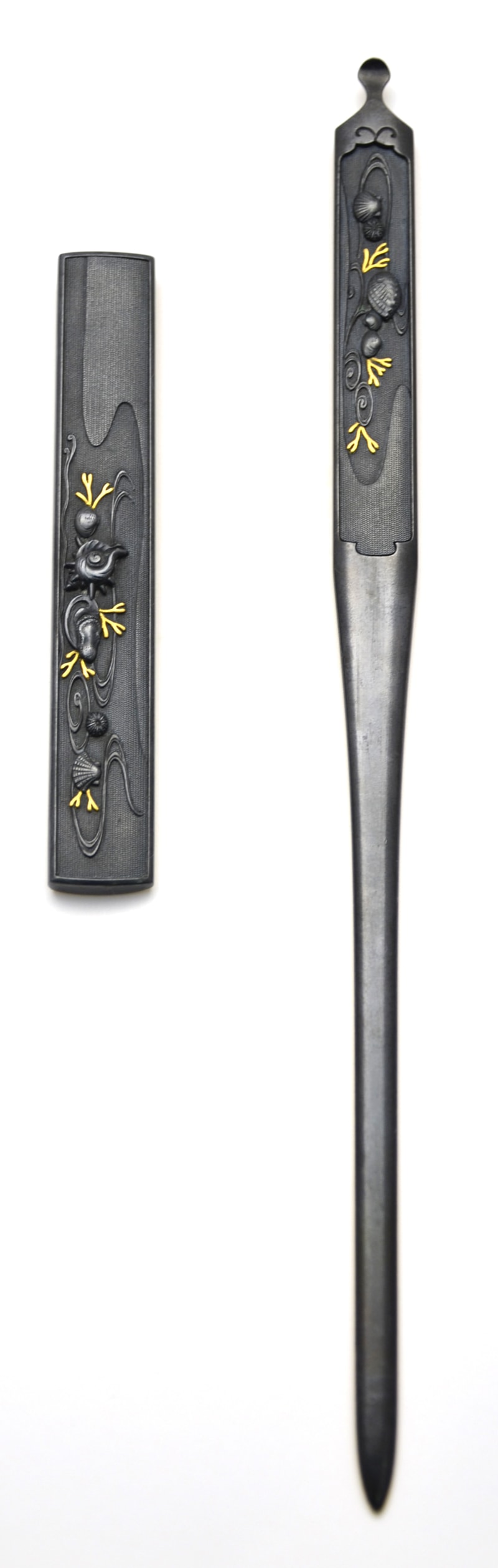
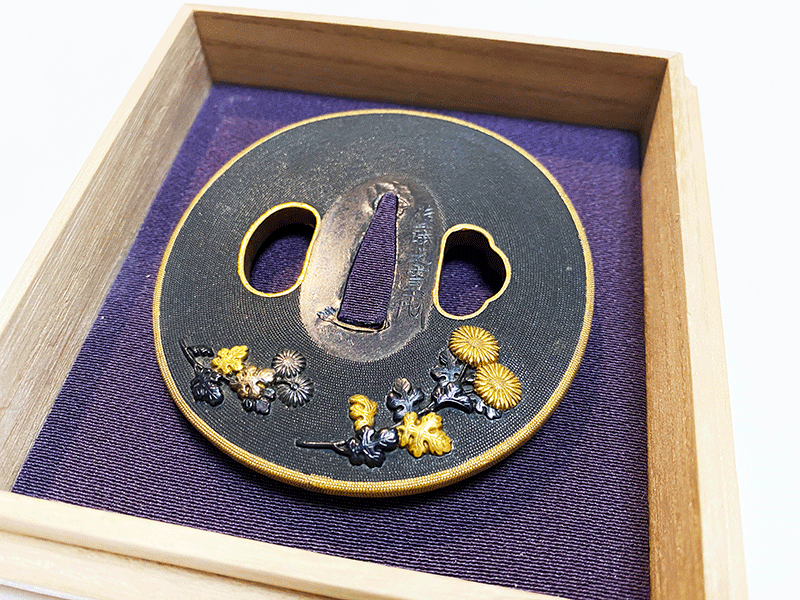
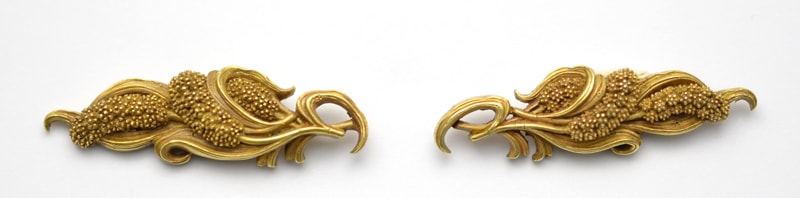
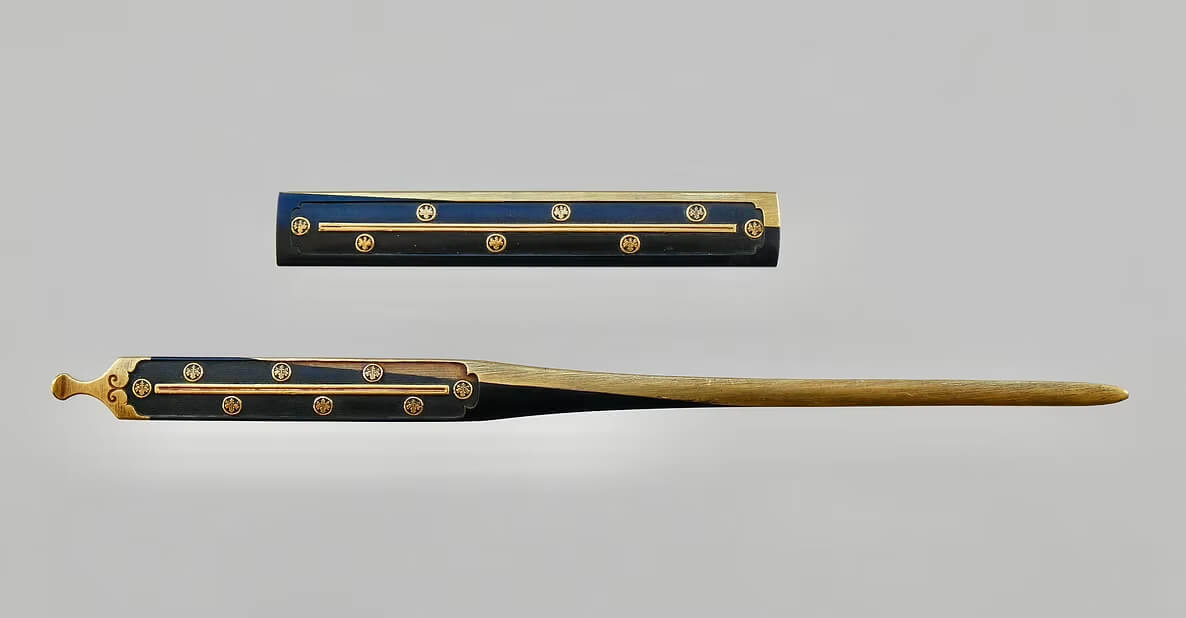
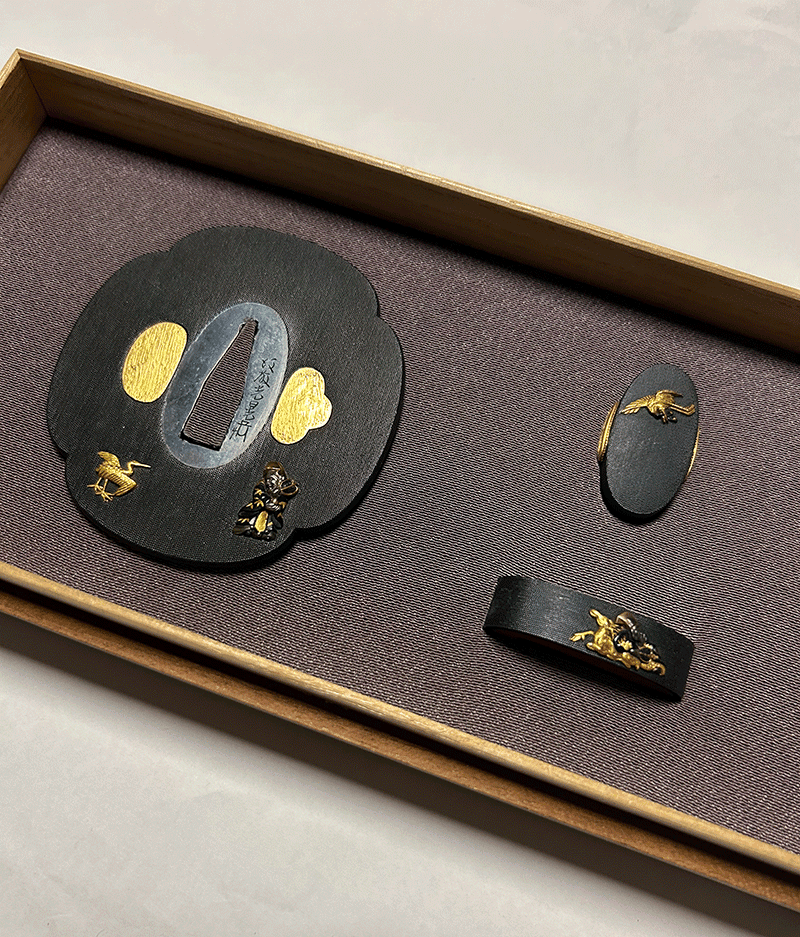
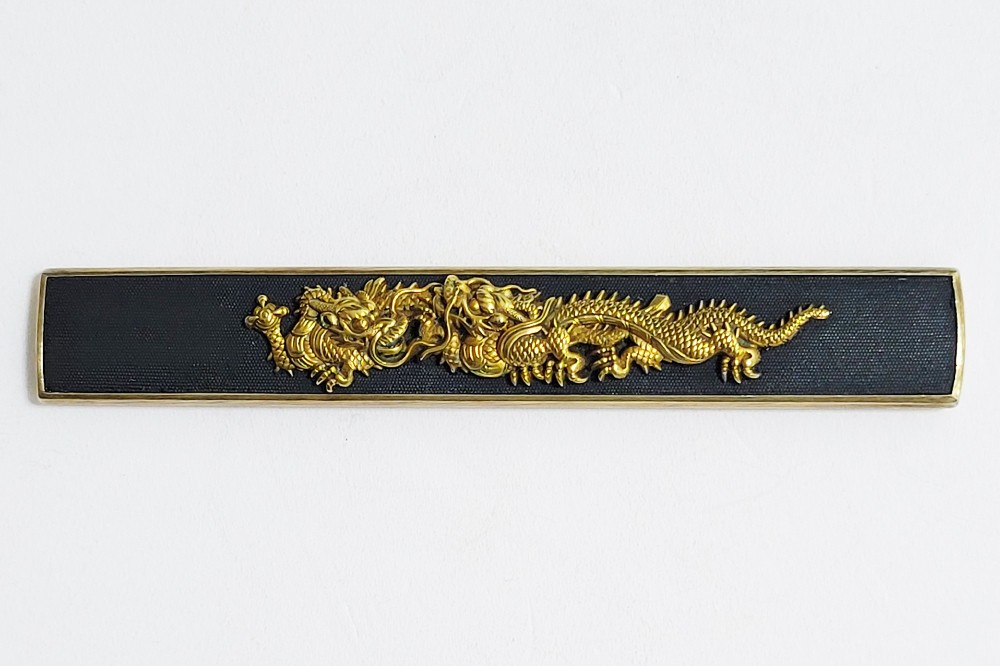
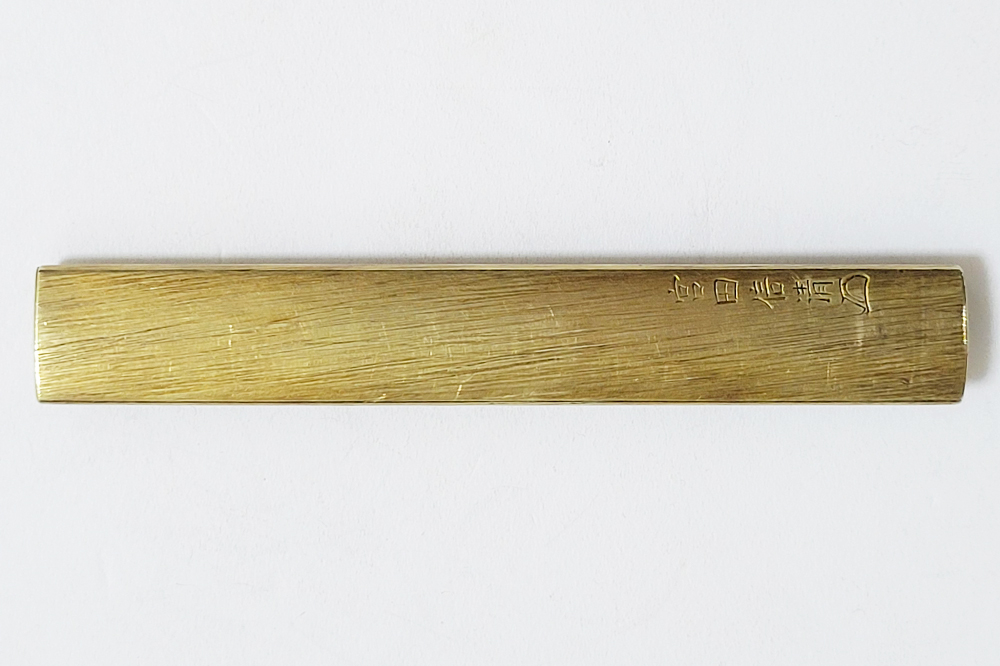
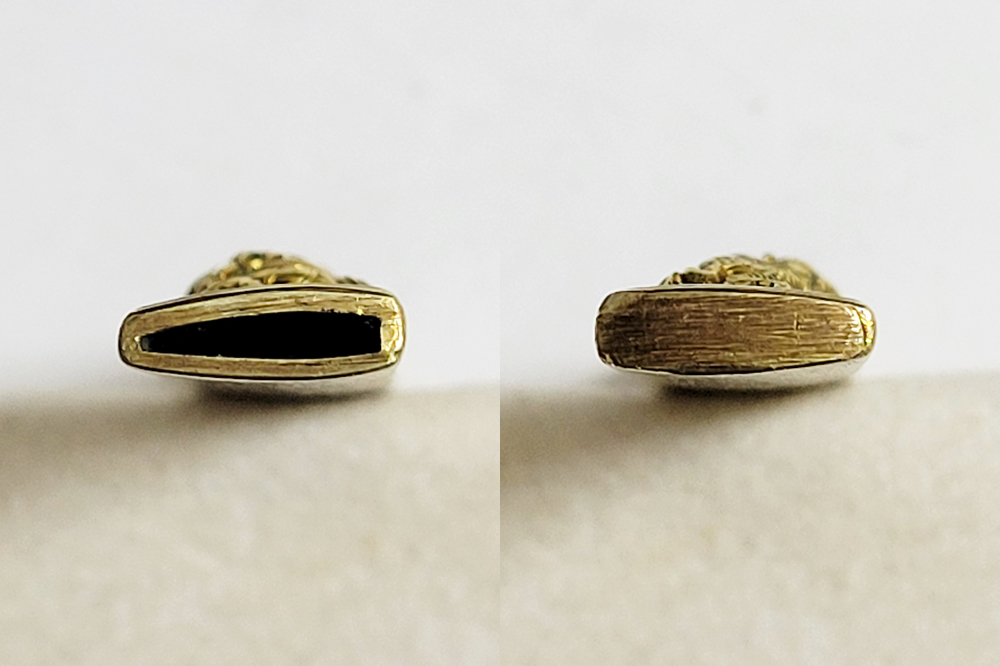
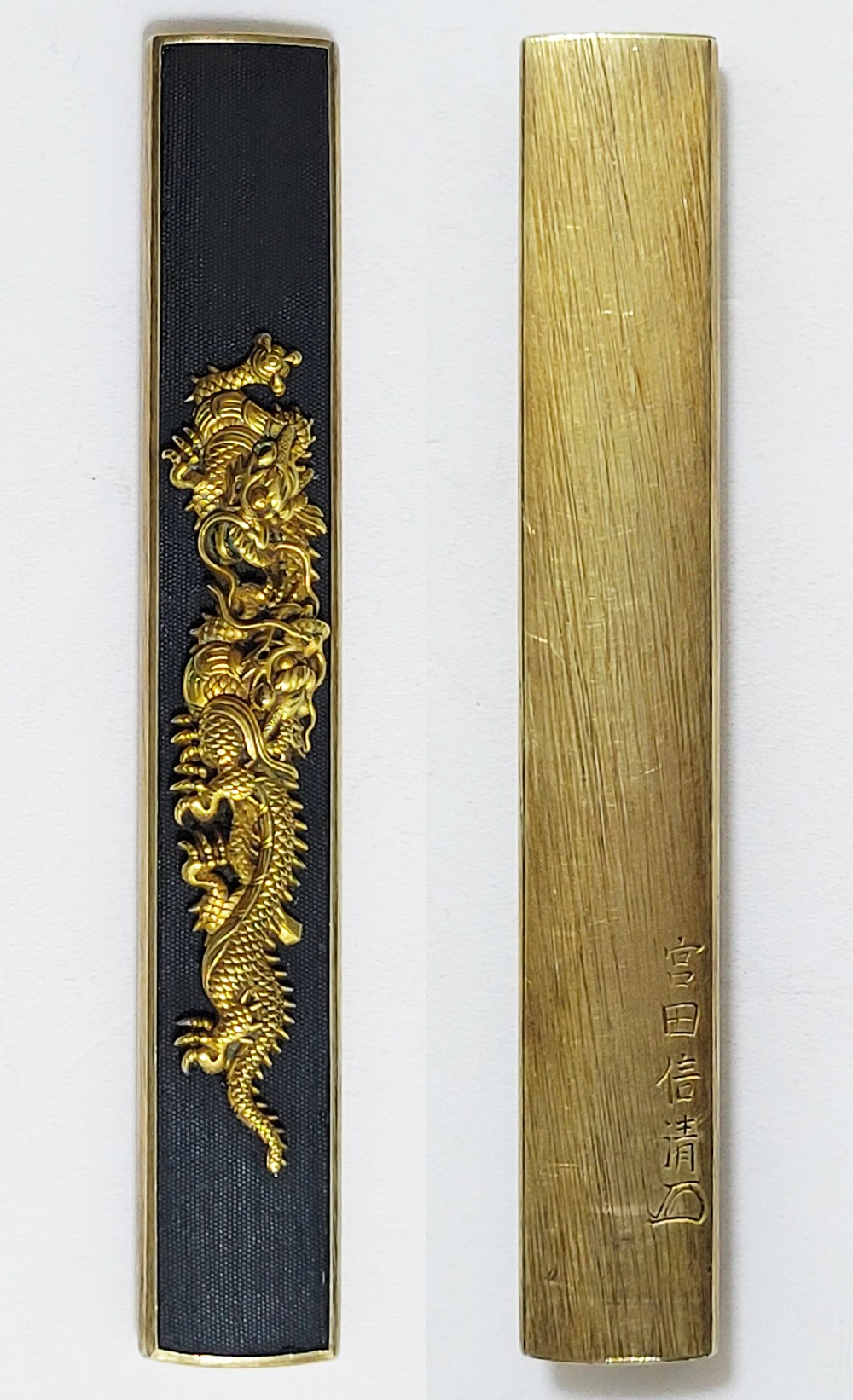
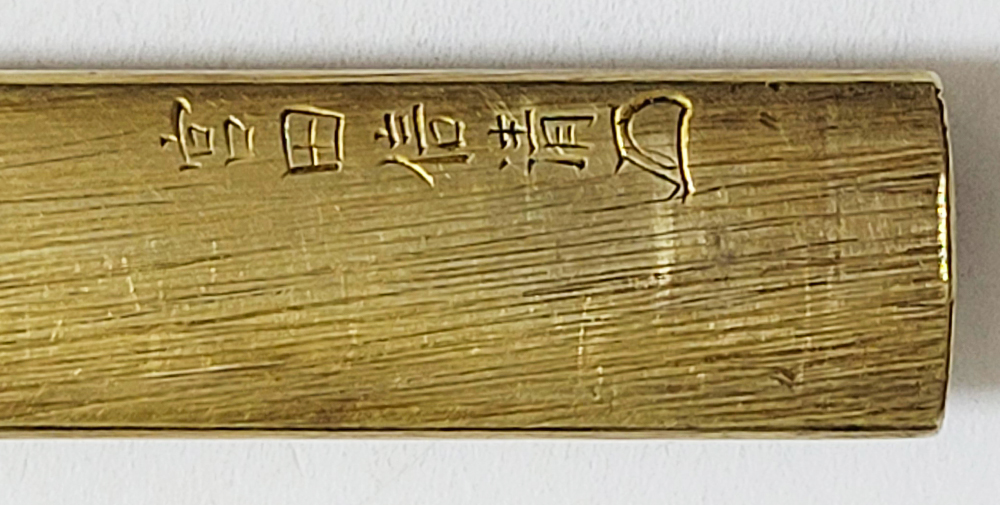
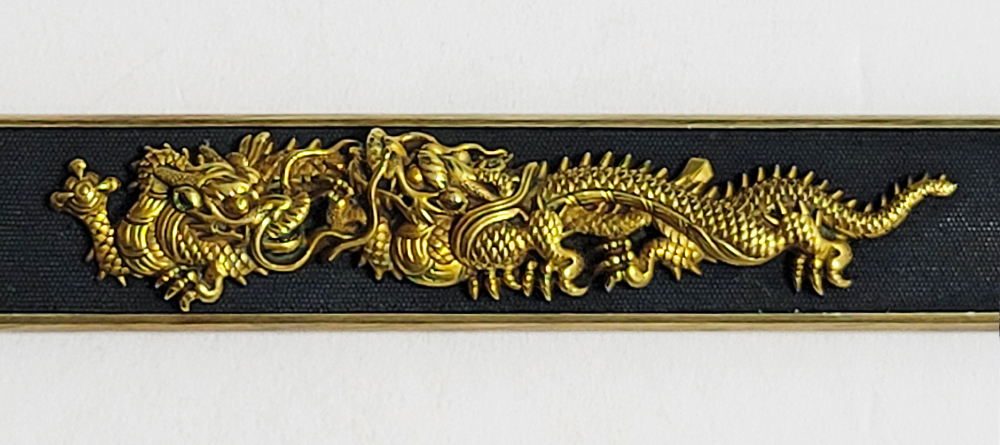
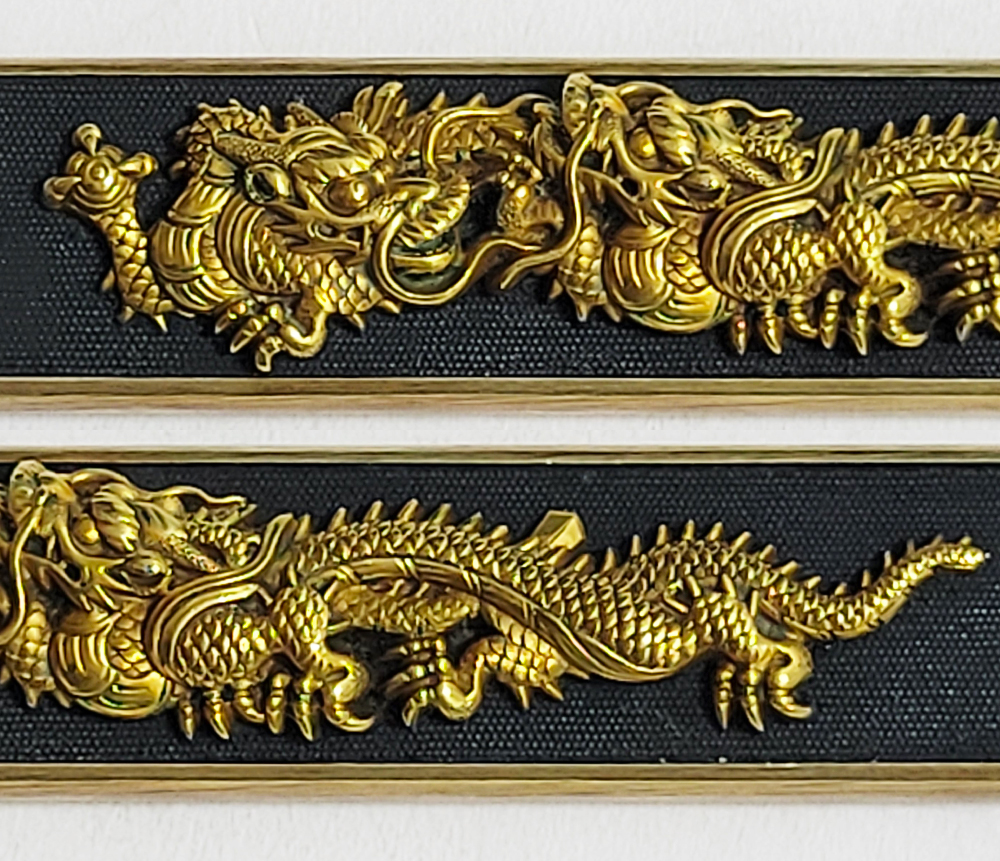
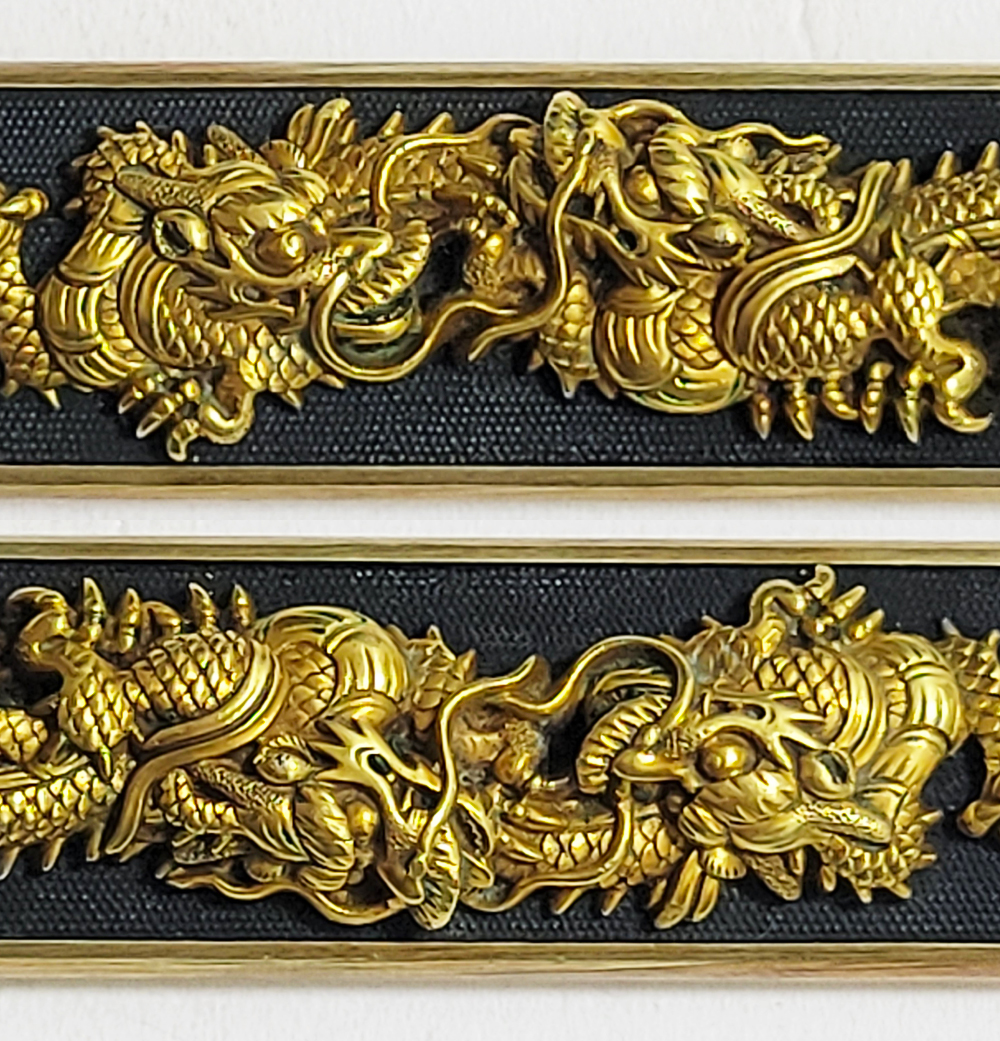
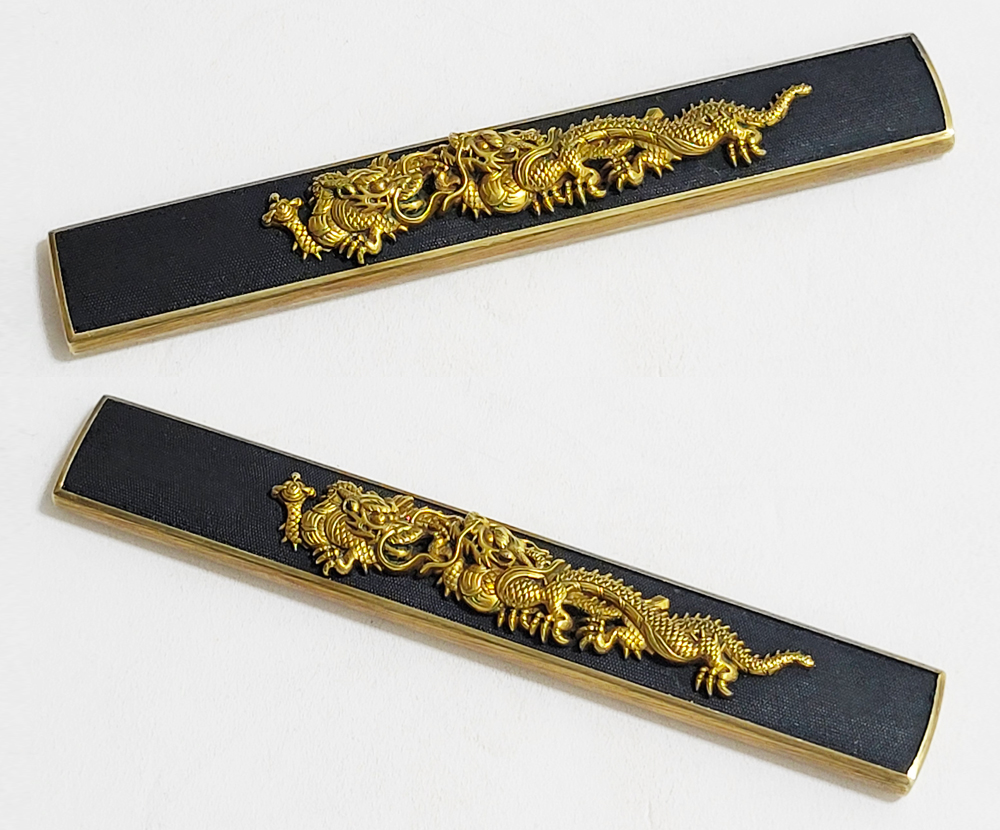
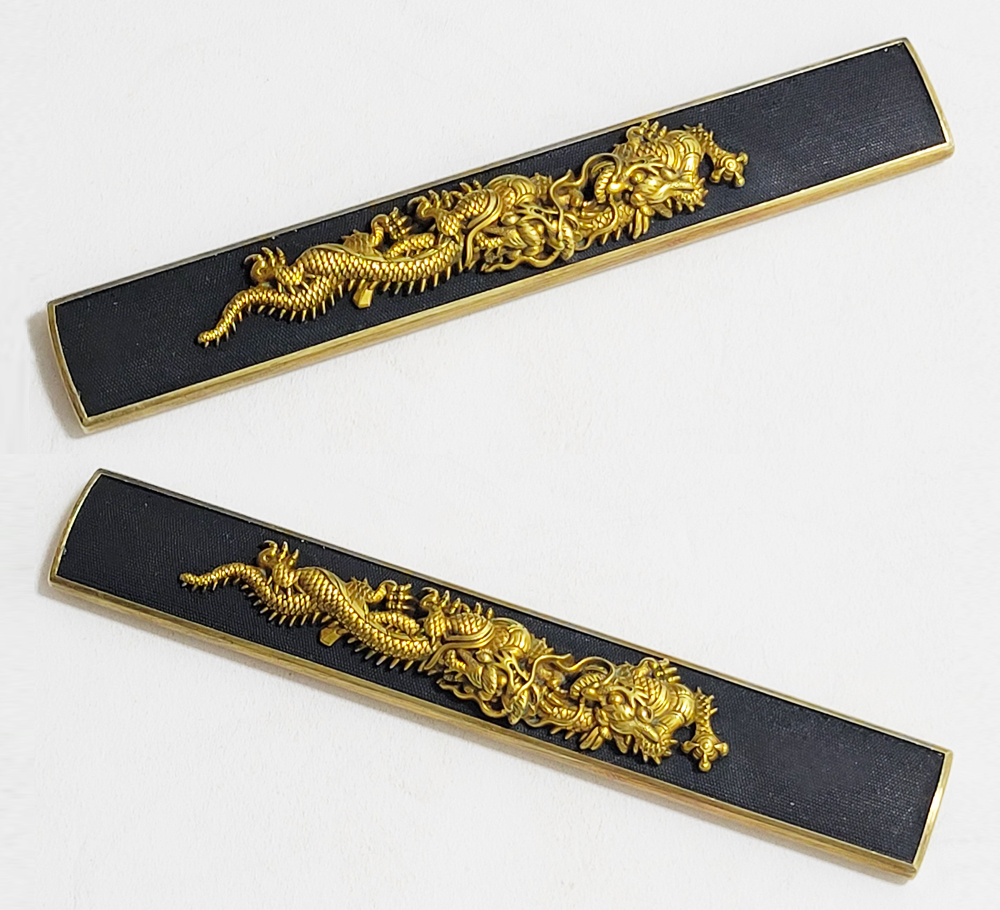
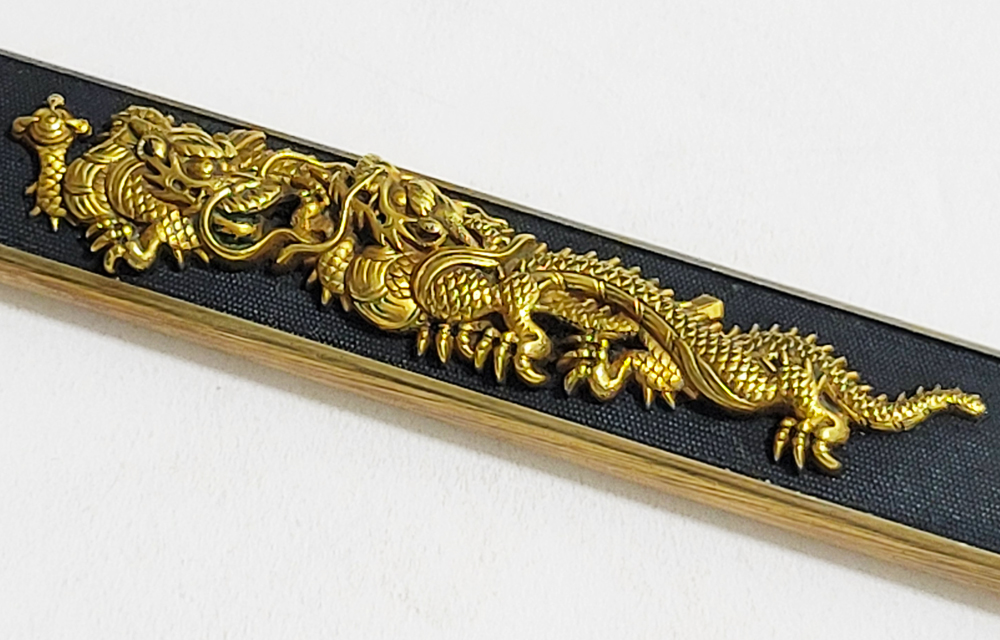
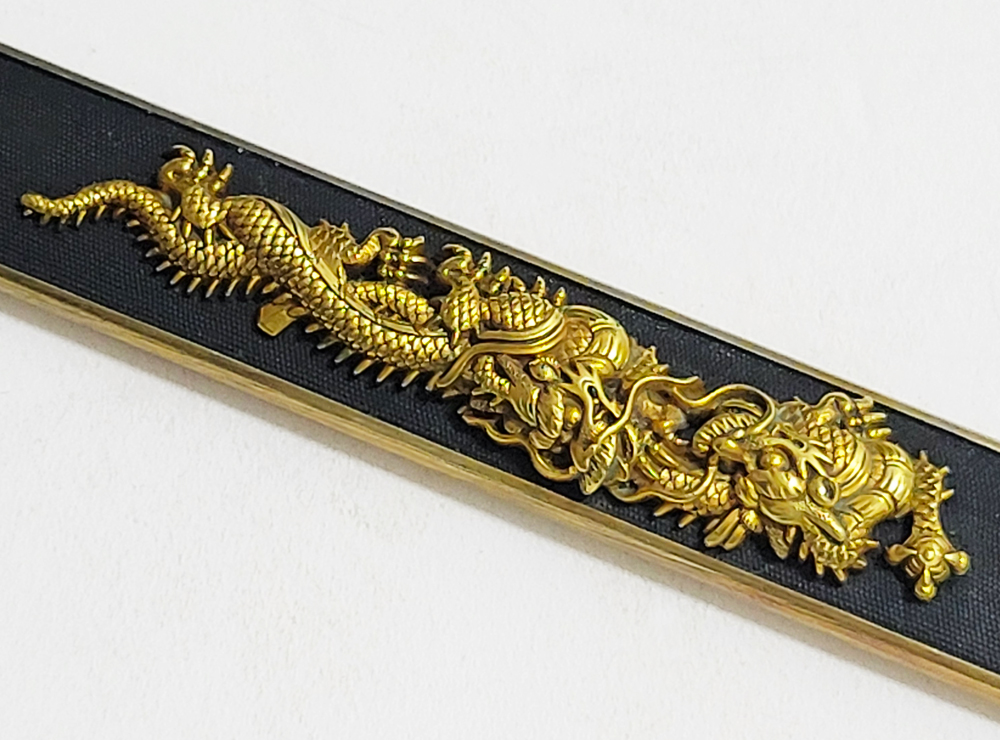
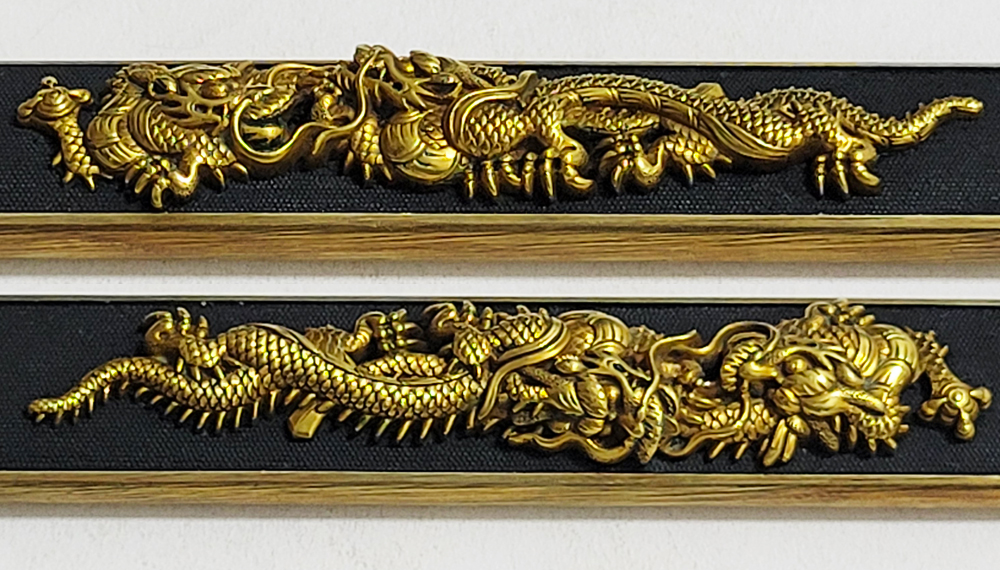
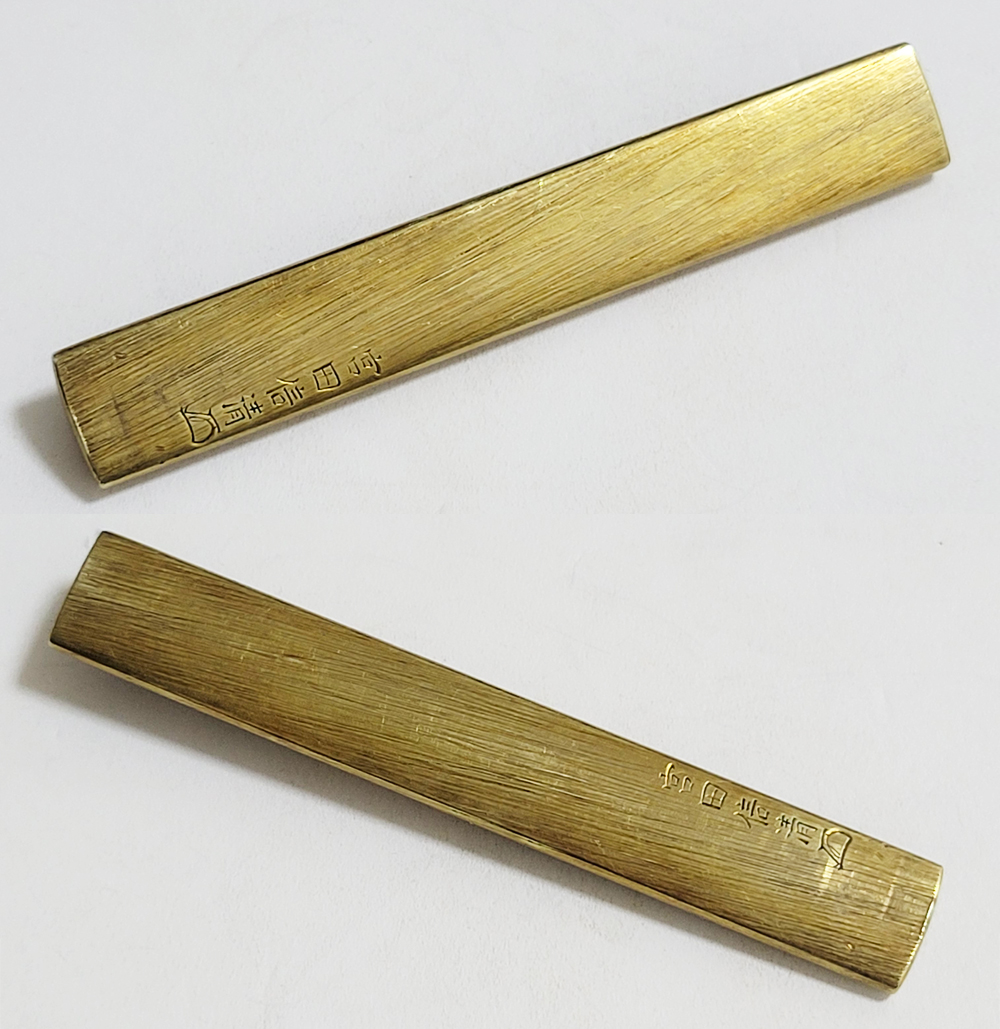
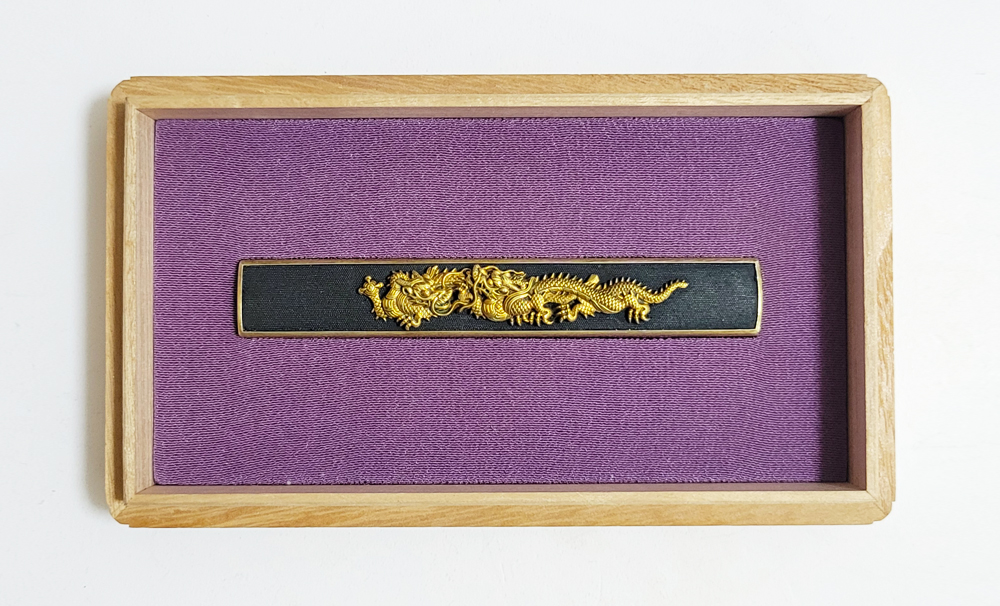
This is a kozuka featuring a design of two crawling dragons by Miyata Nobukiyo. Nobukiyo was a pupil of Goto Mitsuaki, the 16th generation head of the Goto main line. Born in Kyoto in 1817, he later became a retainer craftsman for the Nanbu clan. The kozuka is made of shakudo nanako ground with gold inlay and ura-kin (gold backing), showcasing exquisite and precise carving. It passed Tokubetsu Hozon Tosogu appraisal in February 2026.
 NihontoWatchBETA
mei · Goto · Edo
Goto Nobukiyo
Edo
Kyoto
Signed
Tokuho (NBTHK)
Iebori · around 1670
2 pieces on the market now
Miyata Nobukiyo (宮田信清), art name Kakumeisai, was born in Kyoto in Bunka 14 (1817) under the surname Kinoshita. At fifteen he was adopted into the Miyata family, hereditary shrine priests of Kamo Shrine. The following year he entered the school of Gotō Kakujō Mitsuyasu, sixth-generation head of the Gotō Rihee branch, where he received his foundational training in o-iebori (official-house carving). At twenty-three he traveled to Edo and studied under Gotō Mitsuaki, sixteenth head of the mainline Gotō house, deepening his command of orthodox Gotō technique. He became independent in Tenpō 14 (1843), establishing a workshop at Kayabachō in Nihonbashi, and later served as a retained metalworker to the Nanbu clan. He died in Meiji 17 (1884) at the age of sixty-eight.
Nobukiyo's work is distinguished by its faithful transmission of Gotō-school methods executed with refined precision. His characteristic idiom employs shakudō nanako-ji grounds of exceptional density, producing the deep "wet crow-feather" luster prized in superior shakudō. Upon these grounds he renders figural and heraldic subjects — dragons and tigers, auspicious creatures, seasonal flower roundels, vine arabesques — in sukidashi takabori high relief, finished with restrained kin-iroe and occasional gin-iroe accents. His complete issaku ensembles frequently encompass fuchi-kashira, kozuka, kogai, menuki, kurikata, and kojiri, unified by a single decorative program. The menuki often feature yōbori (modeled carving) on gold grounds, while his tsuba range from signed shakudō nadekaku-gata guards to iron-cored leather constructions finished in tomo maki-e.
Nobukiyo occupies a distinctive position among late-Edo metalworkers as a practitioner who absorbed roughly a decade of disciplined Gotō-school training and channeled it into complete koshirae ensembles of elevated, formal character. His surviving works are comparatively few, making preserved matched sets especially valuable for understanding the full scope of his style. The consistently careful workmanship, dignified compositional planning, and chromatic restraint across his oeuvre exemplify the highest standards of Gotō-lineage metalwork in the closing decades of the Edo period.
Where Nobukiyo stands among comparable artisans: across all of nihontō, and within tradition, era, and period. The tiers (Foremost · Leading · Major · Notable) weigh official designations from the NBTHK and Japan's Agency for Cultural Affairs, together with historical honors of lasting repute such as the Sansaku and Meibutsu-chō.
Select a lens to see how it's measured.
Iebori · Yamashiro
280 pieces on the market now
The Goto house stands as the preeminent dynasty of sword-fitting makers in the history of Japanese metalwork, an unbroken lineage of seventeen generations spanning from the founding master Yujo (1440--1512), who served Ashikaga Yoshimasa amid the refined culture of Higashiyama, through the final head Hojo (1816--1856) in the closing years of the Tokugawa shogunate. Learn more →
| Smith | Era | Designated |
|---|---|---|
| Goto Joshin後藤乗真 | 1512-1562 | 69 |
| Goto Yujo後藤祐乗 | 1440-1512 | 41 |
| Goto Sojo後藤宗乗 | 1461-1538 | 55 |
| Goto Kenjo後藤顕乗 | 1586-1663 | 46 |
| Goto Eijo後藤栄乗 | 1577-1617 | 35 |
A Hozon-certified fitting of notably superior craftsmanship and condition, often with signature or workmanship of high reference value.
The NBTHK (Nihon Bijutsu Tōken Hozon Kyōkai, the Society for the Preservation of Japanese Art Swords) is a public-interest incorporated foundation founded in 1948 and supervised by Japan’s Agency for Cultural Affairs (Bunkachō); it is based at the Japanese Sword Museum in Tokyo. Its expert panels physically examine each submitted work (shinsa) and issue a certificate (kanteishō) ranking it by artistic and historical merit. NBTHK papers are the most widely recognized standard of authentication for Japanese swords and fittings.
NBTHK official siteDomestic: items may be returned within 7 days in original condition for a full refund (buyer covers transport). Overseas orders: no-refunds, no-returns.
This is a kozuka featuring a design of two crawling dragons by Miyata Nobukiyo. Nobukiyo was a pupil of Goto Mitsuaki, the 16th generation head of the Goto main line. Born in Kyoto in 1817, he later became a retainer craftsman for the Nanbu clan. The kozuka is made of shakudo nanako ground with gold inlay and ura-kin (gold backing), showcasing exquisite and precise carving. It passed Tokubetsu Hozon Tosogu appraisal in February 2026.
NihontoWatchBETAmei · Goto · Edo
Goto Nobukiyo
Edo
Kyoto
Signed
Tokuho (NBTHK)
Iebori · around 1670
2 pieces on the market now
Miyata Nobukiyo (宮田信清), art name Kakumeisai, was born in Kyoto in Bunka 14 (1817) under the surname Kinoshita. At fifteen he was adopted into the Miyata family, hereditary shrine priests of Kamo Shrine. The following year he entered the school of Gotō Kakujō Mitsuyasu, sixth-generation head of the Gotō Rihee branch, where he received his foundational training in o-iebori (official-house carving). At twenty-three he traveled to Edo and studied under Gotō Mitsuaki, sixteenth head of the mainline Gotō house, deepening his command of orthodox Gotō technique. He became independent in Tenpō 14 (1843), establishing a workshop at Kayabachō in Nihonbashi, and later served as a retained metalworker to the Nanbu clan. He died in Meiji 17 (1884) at the age of sixty-eight.
Nobukiyo's work is distinguished by its faithful transmission of Gotō-school methods executed with refined precision. His characteristic idiom employs shakudō nanako-ji grounds of exceptional density, producing the deep "wet crow-feather" luster prized in superior shakudō. Upon these grounds he renders figural and heraldic subjects — dragons and tigers, auspicious creatures, seasonal flower roundels, vine arabesques — in sukidashi takabori high relief, finished with restrained kin-iroe and occasional gin-iroe accents. His complete issaku ensembles frequently encompass fuchi-kashira, kozuka, kogai, menuki, kurikata, and kojiri, unified by a single decorative program. The menuki often feature yōbori (modeled carving) on gold grounds, while his tsuba range from signed shakudō nadekaku-gata guards to iron-cored leather constructions finished in tomo maki-e.
Nobukiyo occupies a distinctive position among late-Edo metalworkers as a practitioner who absorbed roughly a decade of disciplined Gotō-school training and channeled it into complete koshirae ensembles of elevated, formal character. His surviving works are comparatively few, making preserved matched sets especially valuable for understanding the full scope of his style. The consistently careful workmanship, dignified compositional planning, and chromatic restraint across his oeuvre exemplify the highest standards of Gotō-lineage metalwork in the closing decades of the Edo period.
Where Nobukiyo stands among comparable artisans: across all of nihontō, and within tradition, era, and period. The tiers (Foremost · Leading · Major · Notable) weigh official designations from the NBTHK and Japan's Agency for Cultural Affairs, together with historical honors of lasting repute such as the Sansaku and Meibutsu-chō.
Select a lens to see how it's measured.
Iebori · Yamashiro
280 pieces on the market now
The Goto house stands as the preeminent dynasty of sword-fitting makers in the history of Japanese metalwork, an unbroken lineage of seventeen generations spanning from the founding master Yujo (1440--1512), who served Ashikaga Yoshimasa amid the refined culture of Higashiyama, through the final head Hojo (1816--1856) in the closing years of the Tokugawa shogunate. Learn more →
| Smith | Era | Designated |
|---|---|---|
| Goto Joshin後藤乗真 | 1512-1562 | 69 |
| Goto Yujo後藤祐乗 | 1440-1512 | 41 |
| Goto Sojo後藤宗乗 | 1461-1538 | 55 |
| Goto Kenjo後藤顕乗 | 1586-1663 | 46 |
| Goto Eijo後藤栄乗 | 1577-1617 | 35 |
A Hozon-certified fitting of notably superior craftsmanship and condition, often with signature or workmanship of high reference value.
The NBTHK (Nihon Bijutsu Tōken Hozon Kyōkai, the Society for the Preservation of Japanese Art Swords) is a public-interest incorporated foundation founded in 1948 and supervised by Japan’s Agency for Cultural Affairs (Bunkachō); it is based at the Japanese Sword Museum in Tokyo. Its expert panels physically examine each submitted work (shinsa) and issue a certificate (kanteishō) ranking it by artistic and historical merit. NBTHK papers are the most widely recognized standard of authentication for Japanese swords and fittings.
NBTHK official siteDomestic: items may be returned within 7 days in original condition for a full refund (buyer covers transport). Overseas orders: no-refunds, no-returns.